

Laughing Hyena
  • Home
  • Hyena Games
  • Esports
  • NFT Gaming
  • Crypto Trends
  • Game Reviews
  • Game Updates
  • GameFi Guides
  • Shop
Tag:

York

Decrypt logo
NFT Gaming

New York Democratic Lawmakers Want Bitcoin Miners to Pay More Tax. Here’s Why

by admin October 2, 2025


In brief

  • New York lawmakers have introduced a bill aiming to tax Bitcoin miners.
  • Democratic Senator Liz Krueger and Assemblymember Anna Kelles argue that mining operations use too much electricity.
  • If passed, the money would be passed to lower income households in the state.

New York lawmakers are trying to tax Bitcoin miners, citing excessive electricity use driving up bills for ordinary citizens as the reason for a new bill. 

Democratic Senator Liz Krueger and Assemblymember Anna Kelles introduced a bill Wednesday trying to impose an excise tax on proof-of-work crypto miners. 

The proposed law, Senate Bill S8518, wants mining companies to pay—depending on how much energy they consume—to New York’s Energy Affordability Programs, which provide critical assistance to low to moderate income households across the state.

“The bill ensures that the companies driving up New Yorkers’ electricity rates pay their fair share, while providing direct relief to families struggling with rising utility costs,” Senator Krueger said in a statement. 


The statement added that research has shown that the arrival of cryptomining facilities “drives up electricity bills statewide, adding an estimated $79 million annually in costs for individuals and $165 million for small businesses.”

Senate Bill S8518 says that miners consuming between 2.25 and 5 million kilowatt-hours would be taxed at 2 cents per kwH. Operations using between five and 10 million kWh would pay 3 cents, and miners using 10 and 20 million kWh would get hit with 4 cents per kwH. Consumption above 20 million kWh would face a rate of 5 cents per kWh. 

Mining operations using sustainable energy would be exempt from a tax, the bill said, in a bid to “innovation and sustainability within the digital asset sector.”

To process transactions on proof-of-work cryptocurrencies like Bitcoin and Dogecoin, private companies typically run data centers full of expensive computers that use lots of electricity. Crypto critics have frequently spoken about how damaging digital coins can be to the environment. 

Still, the industry of artificial intelligence and high-powered computing uses more energy than Bitcoin mining. The new bill did not mention AI data centers but a press release acknowledged that the industry was growing and using more electricity. 

Decrypt reached out to Senator Krueger’s office for further comment. 

New York State has historically had tougher regulations on the crypto space, prompting a number of crypto startups in the past to move to other parts of the U.S.

Daily Debrief Newsletter

Start every day with the top news stories right now, plus original features, a podcast, videos and more.


Source link

October 2, 2025 0 comments
0 FacebookTwitterPinterestEmail
U.S. Securities and Exchange Commission Chairman Paul Atkins (Jesse Hamilton/CoinDesk)
Crypto Trends

NYDFS Chief Harris to Leave New York Regulator Next Month

by admin September 29, 2025


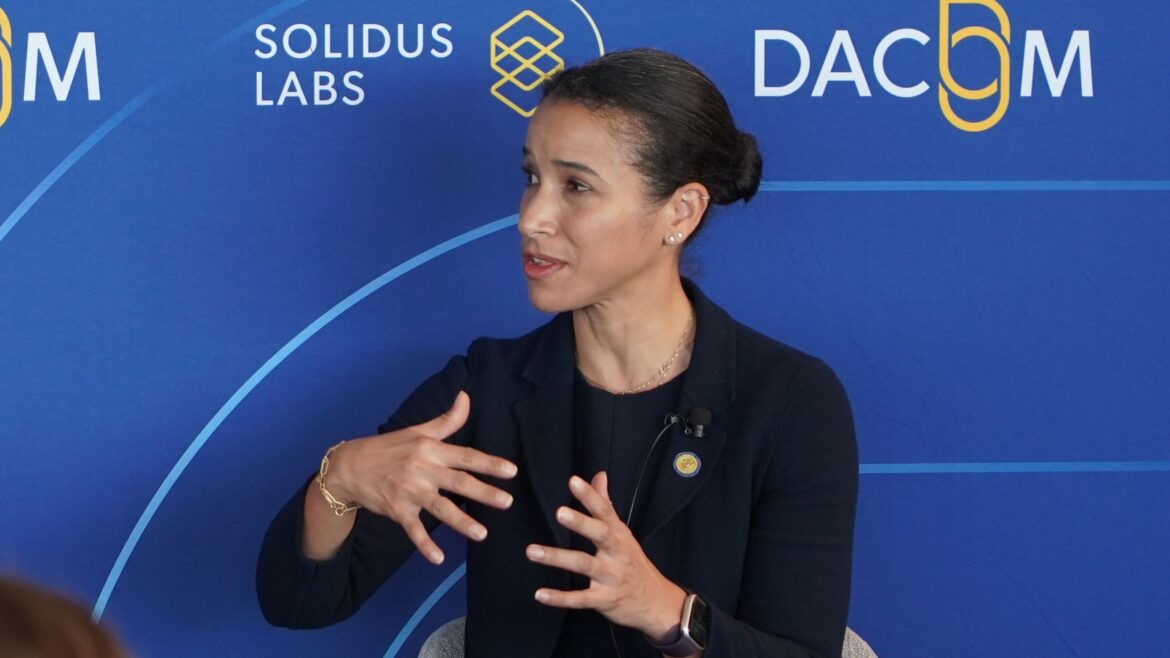
New York Department of Financial Services Superintendent Adrienne Harris will leave the regulator next month, she announced Monday.

Harris, a former White House special assistant under former President Barack Obama, will depart NYDFS on Oct. 17, 2025, New York Governor Kathy Hochul said in a statement. NYDFS Executive Deputy Superintendent of Research and Innovation Kaitlin Asrow will take over as acting head of the agency. NYDFS was the first state regulator to issue specific rules for crypto firms with its landmark BitLicense, which came into effect 10 years ago.

In statements, Hochul and Harris thanked each other, with Hochul saying Harris worked “every day to make our financial system work for New Yorkers, while also rebuilding the Department into a regulator fit for the financial capital of the world.”

Harris first took office as the acting superintendent in August 2021, after Hochul nominated her to the role, and was confirmed by New York’s state senate the following January.

“It feels like yesterday and a lifetime ago, all at the same time,” Harris said of her four-year tenure earlier Monday during an appearance at the Digital Asset Compliance & Market Integrity Summit hosted by Solidus Labs.

In that time, she said, NYDFS had issued 11 different pieces of regulatory guidance to bolster the regulator’s landmark BitLicense.

“The industry had already changed so much from 2015 to 2021 when I came in, it felt really important that we start to add meat to the bones of the regulation,” she said.

This included guidance for dealing with stablecoins, blockchain analytics and coin listings, among other pieces of information, she said.

“I think it’s a real testament to what we’ve done out of DFS that folks in both chambers of Congress, folks on both sides of the aisle, come to us for our technical expertise, for advice, for edits, much of which have been incorporated — not all — but into the current market structure bill,” she said.

NYDFS also undertook investigations and enforcement actions, including into the Binance dollar stablecoin (BUSD) issued by stablecoin firm Paxos following an investigation dating back to 2023.


Source link

September 29, 2025 0 comments
0 FacebookTwitterPinterestEmail
Decrypt logo
NFT Gaming

New York City’s ‘Bitcoin Mayor’ Eric Adams Drops Out of Race for Reelection

by admin September 29, 2025


In brief

  • New York City’s ‘Bitcoin Mayor’ Eric Adams has dropped out of the race for re-election.
  • Adams had publicly tied his image to crypto, from Bitcoin paychecks to calls for BitLicense reform, and many other initiatives.
  • His withdrawal follows legal troubles and questions about whether crypto can anchor political identity.

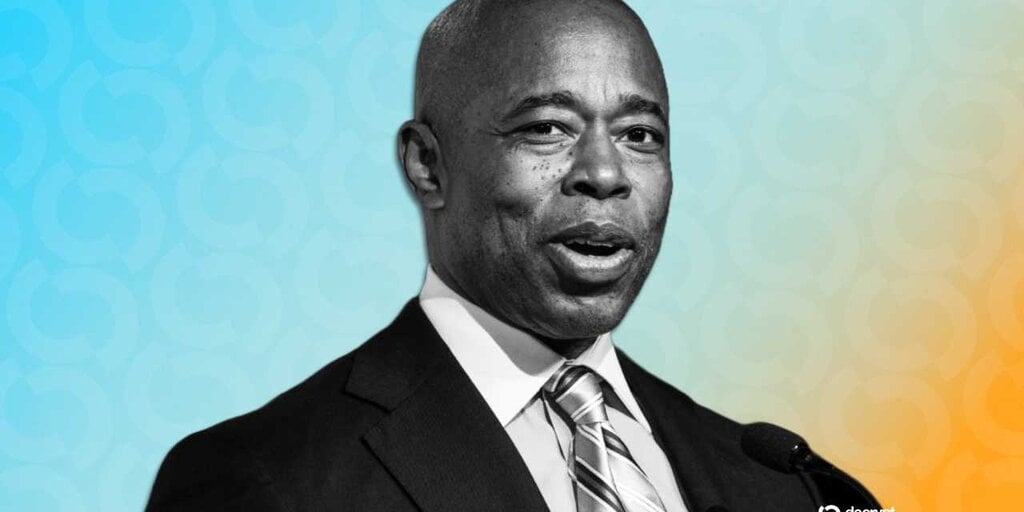
Eric Adams, mayor of New York City, ended his reelection campaign Sunday evening after a term marked by both controversy and his stature as one of the country’s most visible crypto-friendly politicians.

Over the course of his tenure, the self-described ‘Bitcoin Mayor’ had made crypto a key component of his public image: from taking paychecks in Bitcoin three years ago, to calling for the removal of the city’s BitLicense requirements, as well as pitching ways to make New York the “crypto capital” of the world. He also supported integrating blockchain technology into city systems from education to record-keeping.

Yet his efforts often stalled it the face of regulatory limits and political controversies. Almost a year ago, Adams was indicted on federal criminal charges with allegations of his connection to illegal foreign donations for his campaign.

“[…] some remain unsure of me after the unfortunate events surrounding my federal case,” Adams said at one point in his announcement video. “I was wrongfully charged because I fought for this city.”

Crypto’s shifting political tides

While Adams’ exit was shaped by legal battles and low polling, observers say the decision also shows the difficulty of using digital assets as a plank for political identity.

“Adams’ departure is largely symbolic. New York loses a visible crypto advocate, but the industry’s political traction has already been shifting toward states like Texas, Wyoming, and Florida where pro-innovation policies are taking hold,” Mayuko Hamazaki, principal at Willspire Capital, told Decrypt.

Adams’ withdrawal from the mayoral race “reflects his own controversies more than crypto itself,” Hamazaki added. “Politicians can still align with digital assets effectively, but success depends on broader credibility and policy agendas, not just a crypto-friendly stance.”

Others pointed to the crypto industry’s broader inroads into national policy.

“This is a New York story, not a crypto story,” Matt Mudano, co-founder and CEO of Bitcoin-native platform Arch Network, told Decrypt.

While Adams’ was “a loud supporter of crypto adoption,” his withdrawal “had more to do with his own personal controversies and doesn’t change the underlying trend: crypto is becoming more mainstream in U.S. policy,” Mudano said, adding that with “sustained, bipartisan work on broader market rules,” the wider perception of the crypto industry will be shaped by “national wins, not one mayoral race.”

Elsewhere in the U.S., politicians have incorporated crypto into their campaign platforms, such as Ian Calderon in California, who is running for governor with proposals to add Bitcoin to the state’s balance sheet and allow crypto payments for public programs.

Daily Debrief Newsletter

Start every day with the top news stories right now, plus original features, a podcast, videos and more.


Source link

September 29, 2025 0 comments
0 FacebookTwitterPinterestEmail
hacker hands at work with interface around
Gaming Gear

“It could be catastrophic to the city” – US Secret Service takes down massive million-dollar network of SIM cards it says was capable of taking down comms across New York

by admin September 24, 2025


  • A massive communications network was uncovered in New York
  • The network is made of 300 servers containing 100,000 SIM cards
  • Only part of the network was deployed, with more equipment discovered ready to be added to the network

The US Secret Service has uncovered and dismantled a telecommunications network in New York which may have been used by organized criminals to communicate with foreign state-sponsored actors.

The enormous network was made up of over 300 servers that housed a combined 100,000 SIM cards, and allegedly had the potential to disrupt phone networks across the tristate area and facilitate encrypted communications.

The United Nations General Assembly is currently ongoing in New York, and the Secret Service has suggested the network could have been used “to conduct multiple telecommunications-related threats directed towards senior U.S. government officials.”


You may like

Advanced Threat Interdiction Unit

The 300 co-located servers were all within 35 miles of the United Nations and could have been involved in “disabling cell phone towers, enabling denial of services attacks and facilitating anonymous, encrypted communication between potential threat actors and criminal enterprises.”

An investigation is currently ongoing and is being conducted by the Secret Service’s new Advanced Threat Interdiction Unit, which is “dedicated to disrupting the most significant and imminent threats to our protectees.”

While the network included 100,000 active SIM cards being used in encrypted communications, the Secret Service also said that there were many more waiting to be deployed.

Image 1 of 5

A photo provided by the US Secret Service showing a modular server box containing 512 SIM cards.(Image credit: US Secret Service)A photo provided by the US Secret Service showing a collection of SIM servers containing thousands of SIM cards.(Image credit: US Secret Service)A photo provided by the US Secret Service showing a room of confiscated communications equipment.(Image credit: US Secret Service)A photo provided by the US Secret Service showing a desk with a collection of confiscted communications equipment.(Image credit: US Secret Service)A photo provided by the US Secret Service showing a wall of confiscated SIM servers, with tens of thousands of SIM cards visible.(Image credit: US Secret Service)

Matt McCool, special agent in charge of the Secret Service’s New York field office said, “It can’t be understated what this system is capable of doing. It can take down cell towers, so then no longer can people communicate, right? … You can’t text message, you can’t use your cellphone. And if you coupled that with some sort of other event associated with [the UN general assembly], you know, use your imagination there – it could be catastrophic to the city.”

Sign up to the TechRadar Pro newsletter to get all the top news, opinion, features and guidance your business needs to succeed!

The Secret Service has been investigating threats against senior US officials from telecommunications networks, which led to the discovery of the SIM cache network.

Multiple US officials have been targeted in impersonation and ‘smishing’ attacks in recent months.

The SIM cards will be analyzed for phone calls and text messages, with the network capable of sending upwards of 30 million messages in a single minute, McCool said, stating the network was highly organized and would have cost millions of dollars to construct.

“The potential for disruption to our country’s telecommunications posed by this network of devices cannot be overstated,” added Sean Curran, director of the Secret Service.

“The U.S. Secret Service’s protective mission is all about prevention, and this investigation makes it clear to potential bad actors that imminent threats to our protectees will be immediately investigated, tracked down and dismantled.”

You might also like


Source link

September 24, 2025 0 comments
0 FacebookTwitterPinterestEmail
These Are the 15 New York Officials ICE and NYPD Arrested in Manhattan
Gaming Gear

These Are the 15 New York Officials ICE and NYPD Arrested in Manhattan

by admin September 19, 2025


The problems echo a broader pattern across the US, where watchdogs and courts have flagged overcrowding, poor sanitation, and blocked access to counsel in ICE facilities from Arizona to Louisiana.

Advocates say some of the most jarring overcrowding is happening on 26 Federal Plaza’s 10th floor, where detainees have estimated that between 70 and 90 people have been crammed into rooms measuring roughly 215 square feet. That would leave each person with roughly the space of a doormat—less room than a folded bath towel—in an area no bigger than a studio apartment kitchen.

The arrests came as part of a coordinated action by progressive Democrats, timed to amplify demands for Albany to reconvene and pass the New York for All Act. The bill would bar state and local agencies, including police and sheriffs, from sharing information or resources with ICE, aiming to stop what lawmakers describe as abductions of immigrants at court hearings and check-ins. Along with New York City Council’s proposed Trust Act—which would let people sue if city agencies unlawfully cooperate with ICE—the legislation is essential, Democrats say, to defend due process and prevent local governments from becoming de facto extensions of ICE.

Dozens of anti-Immigration and Customs Enforcement protesters are arrested after refusing to leave the Jacob K. Javits Federal Building on September 18, 2025, in New York City.

Photograph: Spencer Platt; Getty Images

“The criminalization, demonization, and state-sponsored violence against immigrants in this country has reached a fever pitch under this administration. All of us, and especially elected leaders, must do more to protect New Yorkers, regardless of when they arrived,” Assembly member Emily Gallagher, a Democrat who represents parts of Brooklyn, said in a statement.

Many elected officials have been arrested while protesting the Trump administration’s immigration enforcement tactics. Among others, in June, Senator Alex Padilla of California was handcuffed after challenging Homeland Security secretary Kristi Noem at a Los Angeles press conference, and in May, Newark mayor Ras Baraka was arrested outside a federal detention center during an attempted oversight visit.

In a statement, Yasmine Farhang, executive director of the Immigrant Defense Project, applauded the lawmakers’ actions Thursday, accusing the US government of “egregious abuses of power,” and imploring New York governor Kathy Hochul to use her clemency powers to shield migrants dealing with overlapping punishments from the courts and immigration authorities.

“New York leaders cannot let this cruelty go unchecked,” she said. “The moment to act is NOW.”

Additional reporting by Andrew Couts.


Source link

September 19, 2025 0 comments
0 FacebookTwitterPinterestEmail
Trump Files a $15 Billion Lawsuit Against New York Times
NFT Gaming

Trump Files a $15 Billion Lawsuit Against New York Times

by admin September 19, 2025


Donald Trump filed a $15 billion defamation lawsuit against the New York Times magazine and Penguin Random House. According to the lawsuit, the NYT’s alleged smear campaign was intended to harm his reputation and business. The token is 70% down after its peak on the second day after the launch in January 2025. Did NYT harm it?

Summary

  • The NYT has been criticizing Donald Trump for years. It endorsed Kamala Harris in the fall of 2024. 
  • Trump believes the magazine breached journalistic ethics to pursue the interests of the Democratic Party.
  • Trump filed a $15 billion defamation lawsuit against the Times and Penguin Random House that published a critical book on Trump, “Lucky Loser.” The book was written by the NYT journalists.
  • Trump believes the book and three NYT articles are full of distorted facts that harmed his reputation and business.

What’s in the lawsuit?

Trump took to Truth Social to announce he is suing The NYT for alleged intended defamation during the 2024 presidential race. The Penguin Random House publisher is another target in the president’s $15 billion lawsuit. The trial is set to take place in a Florida federal court.

The lawsuit is focused on the book published by Penguin and three NYT articles. The book is titled “The Luckiest Loser: How Donald Trump Squandered His Father’s Fortune and Created the Illusion of Success.” It was written by Pulitzer-winning NYT reporters Russ Buettner and Susanne Craig. The articles are:

  1. “The Star-Making Machine That Created ‘Donald Trump, written by the authors of ‘Lucky Loser.’ It outlines how the public image of Trump was enhanced by the producers of ‘The Apprentice’ show. The article was released on Sep. 14, 2024.
  2. “For Trump, a Lifetime of Scandals Heads Toward a Moment of Judgment,” released on Oct. 20, 2024. 
  3. “As Election Nears, Kelly Warns Trump Would Rule Like a Dictator,” released on Oct. 24, 2024. 

Critics have called Lucky Loser – my book with @russbuettner – a gripping page-turner, a multi-generational saga that brings perspective to how we got to this moment. It’s out next week in paperback. 🎉https://t.co/ZmZ1Nui5Pt

— Susanne Craig (@susannecraig) September 17, 2025

According to the lawsuit, The Times betrayed journalist ideals of honesty, objectivity, and accuracy. 

The lawsuit reads:

“The First Amendment has never furnished the Times — or Penguin, or anyone else — with an unqualified privilege to make false, malicious, and defamatory statements about its opponents in order to try and ruin their lives and livelihoods.”

According to the lawsuit, the actions of the publisher and NYT were aimed at harming Trump’s business reputation, sabotaging his candidacy for President, and prejudicing juries and judges in the “unlawful cases brought against President Trump, his family, and his businesses by his political opponents for purposes of election interference.”

The lawsuit suggests that the Harris endorsement article opens with a “hyperbolic line” claiming that Trump is the least fit to serve as the President of the United States. It provides a quotation saying that in the event that Trump gets elected, he will “defy the norms and dismantle the institutions that have made our country strong.” According to the text of the lawsuit, this statement is hypocritical. The text provides several extracts from other NYT articles. One of the articles urges the U.S. people to reject the filibuster tool as anti-democratic. The other one suggests that the U.S. Constitution is “broken” and “dangerous” and calls Americans to “reclaim from constitutionalism.”

The text of the lawsuit reads that repugnant distortions and fabrications about Trump were spread through the NYT and “Lucky Loser” to further the goals of the Times and its Democrat Party backers. 

A substantial portion of the lawsuit is dedicated to listing Donald Trump’s achievements. This segment suggests it was his charisma and “unique business acumen” that propelled him to success in show business and politics. Also, it disputes certain narratives from the book and articles in question. These include depicting Trump as a liar, a weak businessman and unreliable business partner, questioning the quality of his real estate, suggesting Trump has ties with the mafia, accusing Trump’s father of multi-million dollar tax evasion, etc. 

Did NYT and “Lucky Loser” harm Trump’s cryptocurrency business?

While the lawsuit itself contradicts the damage done to Trump’s reputation by stressing his sweeping victory in the 2024 election, it mentions financial damages caused by the journalists in question.

For instance, it associates the articles and the book with the decline of Trump Media’s stock price, which impacted Trump’s stake in the company. According to the lawsuit, Trump’s one-of-a-kind personal brand is worth $100 billion. It means that any damage to his personal brand is evaluated in billions of dollars.

The lawsuit barely mentions the cryptocurrency ventures of Trump and his family. And it’s not surprising, considering the fact that it is focused on the pre-election material. Actually, the lawsuit doesn’t contain any mention of harm caused by the Times to Trump’s crypto business. 

Nevertheless, the legal fight that may cost NYT too much if Trump wins targets the ongoing criticism of the Trump family’s crypto business. The Times has been covering Trump’s controversial crypto business before Trump’s second inauguration. It includes critical coverage of Official Trump memecoin and the entire crypto empire of the Trump family.

The NYT’s point of view often echoes the Democratic Party’s urges to ban crypto business for presidents, vice presidents, and their families. The New York Times continued to publish revelatory and investigative articles on the crypto business of the POTUS after the lawsuit was filed. 

The NYT spokesperson published an answer to Trump’s lawsuit:

“This lawsuit has no merit. It lacks any legitimate legal claims and instead is an attempt to stifle and discourage independent reporting. The New York Times will not be deterred by intimidation tactics. We will continue to pursue the facts without fear or favor and stand up for journalists’ First Amendment right to ask questions on behalf of the American people.”

The NYT publisher, A.G. Sulzberger, sent a note to staff calling the lawsuit “frivolous” and saying that “everyone, regardless of their politics, should be troubled by the growing anti-press campaign led by President Trump and his administration.”

Despite the NYT’s questioning of the legitimacy of Trump’s crypto business, there is no visible correlation between the Trump token market performance and the critical articles. Conflict of interests associated with the Trump memecoin is often mentioned in various publications, including Cointelegraph, or is addressed in the X posts of prominent crypto influencers.

Can Trump win this legal battle?

The legal battle with the NYT and Penguin isn’t the first time the 47th President has sued “biased media.” Some of the sued companies had to pay Trump millions in damages. The lawsuit mentions the battles with ABC, CBS, and The Wall Street Journal.

Trump and his influential supporters successfully ostracized a few of his critics from the media. One of the most recent examples is the indefinite suspension of Jimmy Kimmel’s show by ABC on Sep. 18, 2025. It happened hours after Trump condemned Kimmel’s remarks on the assassination of Charles Kirk, who was a public speaker and high-profile Trump supporter. Earlier, Trump expressed pleasure over the closing of Stephan Colbert’s late-night show. In the message posted on Truth Social, he added that he hopes Kimmel will be next. Both Colbert and Kimmel have been critical of the President. 

Given all that, it is safe to say that the Times and Penguin will have a tough fight. As of the press time, the NYT continues to publish opinion articles criticizing Trump frequently.


Source link

September 19, 2025 0 comments
0 FacebookTwitterPinterestEmail
Crypto Platform Bullish Wins New York BitLicense, Clearing Path for U.S. Expansion
Crypto Trends

Crypto Platform Bullish Wins New York BitLicense, Clearing Path for U.S. Expansion

by admin September 17, 2025


Bullish (BLSH), the parent company of CoinDesk, has secured a coveted BitLicense from the New York State Department of Financial Services (NYDFS), a key regulatory approval that will allow the institutional digital asset platform to offer spot trading and custody services to customers in New York, the company said in a press release on Wednesday.

The BitLicense, also known as a Virtual Currency Business Activity License, is considered one of the most rigorous state-level crypto approvals in the U.S.

With it, Bullish’s U.S. entity, Bullish US Operations LLC, can now cater to institutional clients and advanced traders in the country’s financial capital.

“New York is widely recognized as being at the forefront of virtual currency regulation,” said Tom Farley, CEO of Bullish, in the release.

“Receiving our BitLicense and Money Transmission License from the New York Department of Financial Services is a testament to Bullish’s commitment to regulatory compliance and our dedication to building trusted, institutional-grade digital asset infrastructure in key global markets,” he added.

The license win follows the firm's successful initial public offering in August. It marks the second crypto exchange, after Coinbase (COIN), to go public in the U.S.

Bullish is also among several crypto-native companies that have recently gone public under the Trump administration's more digital asset-friendly regulatory approach. Stablecoin issuer Circle (CRCL) and exchange Gemini (GEMI) also recently IPO'd.

Chris Tyrer, president of Bullish Exchange, called the approval “a significant regulatory milestone” and said it strengthens the company’s credibility with institutions. “We believe that clear regulation drives responsible market evolution and institutional engagement,” Tyrer said in the release.

Key catalyst

The milestone adds to Bullish’s growing list of regulatory credentials.

The exchange is now regulated in the U.S., Germany, Hong Kong and Gibraltar, and positions itself as a venue designed for institutional-grade liquidity, combining a central limit order book with automated market making.

The BitLicense clears the path for the crypto platform to expand in the U.S., which Wall Street analysts noted as a key catalyst for the stock.

Investment bank Canaccord said that with Bullish licensed in Europe and Asia, securing a BitLicense would open access to U.S. institutional clients.

Meanwhile, broker Bernstein said that Bullish could compete with rivals such as Coinbase if the platform successfully launches in the U.S. in 2026. “We expect Bullish to capture ~8% market share in U.S. spot institutional crypto volumes by 2027E, while global spot market share remains at ~7%,” Bernstein's analysts wrote.

Investment bank KBW also said near-term U.S. expansion was a catalyst for growth for Bullish, and the firm's differentiated tech stack, competitive fees and deep liquidity positioning it to gain market share.

Read more: Bullish Gets a New $55 Price Target from KBW With U.S. Entry Seen as Key Catalyst


Source link

September 17, 2025 0 comments
0 FacebookTwitterPinterestEmail
Gemini Secures Nasdaq As Investor Before New York Listing
GameFi Guides

Gemini Secures Nasdaq as Investor Before New York Listing

by admin September 9, 2025


Gemini, the cryptocurrency exchange founded by Tyler and Cameron Winklevoss, has secured Nasdaq as a strategic investor ahead of its New York listing this week.

As per a Reuters report, Nasdaq will buy $50 million worth of Gemini shares during the IPO through a private placement. This investment will also result in a collaboration in which Nasdaq clients can access Gemini’s cryptocurrency custody and staking services.

In return, Gemini’s institutional clients will get access to Nasdaq’s Calypso platform, which helps manage and track trading collateral. Gemini expects its shares to start trading on the Nasdaq exchange on Friday under the ticker “GEMI.” However, the plan could still change depending on market conditions.

The IPO could raise up to $317 million for Gemini. This comes at a time when the U.S. stock market is showing strong demand for new listings. Recently listed IPOs like Figma and Firefly Aerospace performed well on their first day.

If successful, Gemini will be the third publicly traded crypto exchange in the U.S., following Coinbase and Bullish. Coinbase even joined the S&P 500 earlier this year. In recent months, digital asset companies such as Circle and Bullish have launched big IPOs.

Gemini’s Position and Challenges

Gemini is a large U.S. crypto exchange with $21 billion in assets and having traded $285 billion in total volume. It does crypto trading, credit card, and includes assets such as Bitcoin, Ether, and stablecoins.

Despite its size, Gemini has struggled financially. In the first half of 2025, it reported a net loss of $282.5 million on revenue of $68.6 million, compared to a smaller $41.4 million loss a year earlier.

The Winklevoss brothers, sometimes called the “Bitcoin twins,” became early crypto billionaires after investing their Facebook legal settlement into Bitcoin. Now, they’re betting big on Gemini’s public debut with Nasdaq’s backing.

Also Read: Crypto Exchange Gemini Aims $2.2B Valuation for Its U.S. IPO


Source link

September 9, 2025 0 comments
0 FacebookTwitterPinterestEmail
NYT Mini
Gaming Gear

Crossword lovers in mourning as the New York Times commits its latest unspeakable act: Paywalling the Mini puzzle

by admin August 29, 2025


There’s a tweet from early 2021 I think about more often than I should think about any tweet not written by dril, because it really does feel like it speaks to The Times We’re Living In: “Trying to explain to my parents (very gently) that basically nobody under 40 right now expects good things to happen ever again.” Overly broad? Sure: For one thing, this gloomy outlook couldn’t account for the invention of beloved puzzle game Wordle just seven months later, which has made many people happy for up to several seconds at a time.

But on a long enough timeline I’d say it proves out, because the endless march of enshittification guaranteed the New York Times would buy Wordle and eventually slap ads on it, and slowly leverage its growing empire of pleasant daily puzzles into a multi-million dollar profit scheme. We arrive now to the horrible present: The Mini crossword, most frivolous and innocent of all the NYT Games puzzles, is now, without warning, stuck behind the subscriber paywall.

“Miserable buggers. It was tiny and not particularly great, but it was something in this godforsaken capitalist hellscape,” mourns one soulful member of r/crosswords, where Redditors have been coming to terms with the sudden change.


Related articles

The Mini is, indeed, tiny and not particularly great. As a crossword puzzle its defining feature is its simplicity, challenging you to clear its miniature grid in a matter of seconds rather than minutes or hours. But NYT Games has in recent years found great success and millions of dollars in profit from these sorts of snackish puzzles, many of them free to play. At least for now. With time and innovation, even the most frivolous moments of our daily routines can be effectively monetized.

The stages of grief at this dawning revelation are all laid bare in this most human of Reddit reaction threads:

DENIAL: “My guess is that’s it’s an error. In the app it’s still listed under the free games section.” On a desktop browser, a pop-up forces you to subscribe (currently with a button proclaiming you can “Save up to 75%”); using the Internet Archive’s Wayback Machine, I confirmed that a few weeks ago, the pop-up included another button to “Play without an account. Upon updating the NYT Games Android app, the previously free daily mini puzzle appeared with a subscriber lock on its icon.

ANGER: “Gouge! Gouge! Gouge! Gouge! Gouge! Gouge! Gouge! Gouge! Gouge! Gouge! Gouge! Gouge! Gouge! Gouge! Gouge! Gouge! Gouge! Gouge! Gouge! Gouge! Gouge! Gouge! Gouge! Gouge!”

Keep up to date with the most important stories and the best deals, as picked by the PC Gamer team.

BARGAINING: “We should all write a letter to the editor of the nyt. letters@nytimes.com. If the cracker barrel can get their sign back then we can get our free mini back.”

DEPRESSION: “I hate it here. Why can’t we have nice things”

ACCEPTANCE: “I bit the bullet and subscribed. Not just for the mini, but for other features they include with other games. They’re having a sale right now.”

If you receive your news from any source but The New York Times, you may rightly view this as a trifling offense in its recent history of journalism that ranges from embarrassing to gross to, uh, actively heinous. And you might further think, well, I could probably go play some daily puzzles over at Merriam-Webster. The dictionary seems pretty cool and doesn’t pay any opinion writers to chat about eugenics. That’s good thinking. Respectable. Can’t argue with it.

But that 75% off offer isn’t going to last forever, you know. And The Mini? Well, sure there are plenty of other crossword websites around, but that one’s right there in your browser history. It’s right there in the app. A guaranteed easy win. A daily affirmation that you are wise.

What’s a few bucks, the New York Times whispers, to pretend for 48 seconds every day that good things can still happen?


Source link

August 29, 2025 0 comments
0 FacebookTwitterPinterestEmail
New York Yankees announce George Costanza sleeping bobblehead giveaway
Esports

New York Yankees announce George Costanza sleeping bobblehead giveaway

by admin August 22, 2025


The New York Yankees are again honoring their “assistant to the traveling secretary” this season.

Editor’s Picks

1 Related

The first 18,000 fans at the Yankees’ Thursday matchup against the Boston Red Sox received a bobblehead of George Costanza sleeping under his desk. It coincided with “Seinfeld Night” at Yankee Stadium. Fans made sure to arrive as early as five hours before first pitch to snag the bobblehead.

The figurine depicts Costanza, played by Jason Alexander and one of the main characters of the hit show “Seinfeld,” sleeping on the job during the Season 8 episode “The Nap.” Above Costanza sleeping is one of his quotes from the episode: “I love a good nap. Sometimes it’s the only thing getting me out of bed in the morning.”

“I love a good nap. Sometimes it’s the only thing getting me out of bed in the morning.” – George Costanza

Join us at @yankeestadium on Thursday, August 21 for Seinfeld Night! 1st 18,000 guests will receive a George Costanza Bobblehead 🎟️👉https://t.co/9qKKKUfDRJ pic.twitter.com/68dJDkvLZN

— New York Yankees (@Yankees) June 26, 2025

In the 1997 episode, Costanza, played by Jason Alexander, decides to sleep under his desk in his office. He then recruits a handyman to expand the space under his desk for more headroom, a shelf for an alarm clock, a drawer for a blanket and a cup holder.

“This is better than my bed at home,” he says once it’s complete.

Costanza then tests it out and takes a nap. But then-Yankees owner George Steinbrenner — voiced by show co-creator Larry David — soon enters Constanza’s office looking for him. When he can’t find him, he waits inside. Eventually, Costanza phones Jerry Seinfeld and asks him to make a fake emergency call so Steinbrenner will leave the building.

The Yankees also released a bobblehead of Costanza during a game against the Red Sox last season. In that one, Costanza is in his batting stance while wearing a dress shirt and pants combination.

Crowds lined up four hours before first pitch during the Costanza giveaway last season.


Source link

August 22, 2025 0 comments
0 FacebookTwitterPinterestEmail
  • 1
  • 2

Categories

  • Crypto Trends (1,098)
  • Esports (800)
  • Game Reviews (772)
  • Game Updates (906)
  • GameFi Guides (1,058)
  • Gaming Gear (960)
  • NFT Gaming (1,079)
  • Product Reviews (960)

Recent Posts

  • This 5-Star Dell Laptop Bundle (64GB RAM, 2TB SSD) Sees 72% Cut, From Above MacBook Pricing to Practically a Steal
  • Blue Protocol: Star Resonance is finally out in the west and off to a strong start on Steam, but was the MMORPG worth the wait?
  • How to Unblock OpenAI’s Sora 2 If You’re Outside the US and Canada
  • Final Fantasy 7 Remake and Rebirth finally available as physical double pack on PS5
  • The 10 Most Valuable Cards

Recent Posts

  • This 5-Star Dell Laptop Bundle (64GB RAM, 2TB SSD) Sees 72% Cut, From Above MacBook Pricing to Practically a Steal

    October 10, 2025
  • Blue Protocol: Star Resonance is finally out in the west and off to a strong start on Steam, but was the MMORPG worth the wait?

    October 10, 2025
  • How to Unblock OpenAI’s Sora 2 If You’re Outside the US and Canada

    October 10, 2025
  • Final Fantasy 7 Remake and Rebirth finally available as physical double pack on PS5

    October 10, 2025
  • The 10 Most Valuable Cards

    October 10, 2025

Newsletter

About me

Welcome to Laughinghyena.io, your ultimate destination for the latest in blockchain gaming and gaming products. We’re passionate about the future of gaming, where decentralized technology empowers players to own, trade, and thrive in virtual worlds.

Recent Posts

  • This 5-Star Dell Laptop Bundle (64GB RAM, 2TB SSD) Sees 72% Cut, From Above MacBook Pricing to Practically a Steal

    October 10, 2025
  • Blue Protocol: Star Resonance is finally out in the west and off to a strong start on Steam, but was the MMORPG worth the wait?

    October 10, 2025

Newsletter

@2025 laughinghyena- All Right Reserved. Designed and Developed by Pro


Back To Top
Laughing Hyena
  • Home
  • Hyena Games
  • Esports
  • NFT Gaming
  • Crypto Trends
  • Game Reviews
  • Game Updates
  • GameFi Guides
  • Shop

Shopping Cart

Close

No products in the cart.

Close