
Laughing Hyena
  • Home
  • Hyena Games
  • Esports
  • NFT Gaming
  • Crypto Trends
  • Game Reviews
  • Game Updates
  • GameFi Guides
  • Shop
Tag:

wheel

Inside the astonishing development of 1999's The Wheel of Time FPS: 'The fact that we shipped anything at all is kind of a miracle'
Product Reviews

Inside the astonishing development of 1999’s The Wheel of Time FPS: ‘The fact that we shipped anything at all is kind of a miracle’

by admin October 4, 2025


Weird Weekend

Weird Weekend is our regular Saturday column where we celebrate PC gaming oddities: peculiar games, strange bits of trivia, forgotten history. Pop back every weekend to find out what Jeremy, Josh and Rick have become obsessed with this time, whether it’s the canon height of Thief’s Garrett or that time someone in the Vatican pirated Football Manager.

There’s a good chance you haven’t heard of The Wheel of Time. No, not the beloved series of fantasy novels penned by Robert Jordan, or the less beloved but still pretty good TV show cancelled by Amazon, or the recently announced and preposterously ambitious RPG. I am of course referring to the other Wheel of Time, the first-person spell-slinger developed by Legend Entertainment and released in 1999.

The Wheel of Time was praised by critics when it launched, partly due to its association with the popular series of fantasy novels, but equally due to its decent singleplayer campaign and innovative multiplayer mode. Despite this, it sold poorly, fading quickly amid the torrent of first-person shooters that rushed across shelves in the late nineties.

(Image credit: Legend Entertainment)

But if The Wheel of Time has slipped from your memory, it’ll stick like a Heron-marked blade in a Trolloc’s chest once you hear the tale of how it was made. Even in the notoriously difficult world of game development, where projects shift and change more often than the dreamscapes of Tel’aran’rhiod, the story of The Wheel of Time is a wild ride.


Related articles

Indeed, the reason it exists at all is largely down to the determination of one man. Glen Dahlgren is a game developer and, in more recent years, novelist, whose other projects include Unreal 2: The Awakening and Star Trek: Online. But The Wheel of Time remains his favourite, despite the fact that guiding it from conception to birth seems, from the outside, like a five-year long ordeal. “The fact that we shipped anything at all is kind of a miracle,” Dahlgren tells me halfway through our chat. “My old boss at Legend used to say every game you ship is a miracle, and I didn’t really understand that until this game.”

New Spring

(Image credit: Legend Entertainment)

The story of The Wheel of Time’s creation is convoluted to say the least, and Dahlgren gives his own intricate account of it on his website that’s well worth reading. But it starts with a concept that Dahlgren dreamed up after Legend released the 1994 adventure game Death Gate, one which had nothing to do with The Wheel of Time.

His idea was for a fantasy, multiplayer FPS that combined the fast-paced action of Doom with the move/counter-move play of Magic: The Gathering, along with roleplaying elements from the boardgame WizWar. The result would have been a four-way mixture of combat and espionage, straddling the line between a fantasy MMO and something vaguely reminiscent of the Half-Life mod Science and Industry.

Players would control networks of spies from their own customisable fortresses, and engage in complex, reactive spell-based combat. “I’m choosing to do something to you, and you can do something about that if you want … and the more powerful it is, the slower it’s going to be,” Dahlgren says. “I love the idea that it was a strategic choice, not a tactical choice … the interplay of those offensive and defensive artifacts [was] really fun.”

Keep up to date with the most important stories and the best deals, as picked by the PC Gamer team.

(Image credit: Legend Entertainment)

The idea stretched far beyond Legend’s experience making low-budget adventure games, seemingly doomed to obscurity following Legend’s acquisition by the publishing giant Random House, which wanted to exploit Legend’s particular talents for its own suite of books licenses. Unsatisfied with the licenses offered to him by the publisher, Dahlgren made a curious gambit. He suggested that Legend make a game based on The Wheel of Time by Robert Jordan—an author who had no existing relationship with Random House.

“I really wanted to play with that world,” Dahlgren says. More than that, he wanted to ensure the videogame rights for The Wheel of Time ended up in safe hands. “I wanted to save him from Byron Preiss, because that was the other organisation that was after his license, and they made horrible games,” Dahlgren says.

Dahlgren was happy to abandon his multiplayer concept and continue making adventure games provided the stories excited him. Since Dahlgren’s idea gave Random House an excuse to approach Robert Jordan and possibly convince him to sign a book deal with them, the publisher agreed.


Related articles

The Great Hunt

(Image credit: Legend Entertainment)

Reenergised, Dahlgren wrote a design doc for an adventure game set in The Wheel of Time—one that took place in a 3D world, featured real-time puzzles, and included an inventive real-time with pause combat system that let players select blade techniques (known as sword-forms) from a list. Dahlgren sent this to Jordan, elaborating upon the design while waiting for Jordan to reply.

Jordan did reply, but it was less than enthusiastic. Desperate to salvage the idea, Dahlgren flew out to meet Jordan along with Legend’s then-president Bob Bates. Together, they had what Dahlgren believed was a jovial, productive meeting. “He showed us around his house. There were weapons in places, which was really cool. I got to ask him where he likes to work, and he said he does his thinking all over the house,” he says.

Dahlgren returned to work feeling confident the project was saved. Then he received what he calls “The Fax of Doom”. This reiterated all of Jordan’s original concerns in even more definitive fashion, seemingly putting an end to the whole project.

(Image credit: Legend Entertainment)

According to Dahlgren, Jordan’s doubts centred around a general reservation about the marketability of adventure games. “He understood the limitations of the genre,” Dahlgren says. “The genre itself was not doing very well. It was on its way out, and he didn’t want a game that didn’t have a chance to be big.”

But there was a lifeline. During the meeting at Jordan’s house, Dahlgren had wheeled out an alternative game concept that he’d cobbled together on the flight to meet the author, one that took place in a parallel dimension to The Wheel of Time. “One of the ways I convinced Jordan that I can make this game is ‘I’m not going to stomp on his storyline. I’m not going to kill his main character,'” he says.

Jordan expressed interest in this concept, but there wasn’t much else to it. In a mixture of inspiration and desperation, Dahlgren retrofitted his idea for the Doom/Magic/Wizwar FPS onto this concept, with players assuming the roles of various Wheel of Time factions which attempt to steal the magical seals which keep The Dark One (the story’s godlike villain) at bay.

The Gathering Storm

(Image credit: Legend Entertainment)

Dahlgren drew up a design document and an accompanying experience document, and sent them off to Jordan, who approved it. Random House, however, did not, and as part of a growing ambivalence toward gaming in general, pulled its financial support for Legend (while keeping its stake in the company).

Now, Dahlgren had the go ahead from Jordan, but no publisher to fund the game he had just received the nod to make. On top of that, Dahlgren also had no technology to make the game. To solve this problem, he hired an eclectic team of artists, architects and character designers to create detailed concept art and went pitching.

Eventually, the team secured the interest of Epic Games. Mark Rein, Epic’s Vice President, was receptive, and following a meeting with Rein and Tim Sweeney, Dahlgren received a copy of Unreal engine and its level editor to mock up a prototype. Dahlgren produced this himself, then showed them to Epic.

(Image credit: Legend Entertainment)

According to Dahlgren, these prototypes are what convinced Tim Sweeney of the potential of licensing Unreal Engine to third-party developers. It also provided Dahlgren with the opportunity to do something he’d wanted from the start—to shift Legend from being a developer of niche adventure games to a creator of blockbuster first-person shooters.

“What I wanted to be was a version of Raven [Software],” he says. “We would be that for Epic. We would be the one to come in and say ‘Listen, we can make something different than what you’re making, something that has a different soul … even though it’s using your technology.'” This is also why Dahlgren didn’t do what seems so obvious today—make a Wheel of Time CRPG. “Everybody asked me ‘Why don’t you just do an RPG?'” he says. “That’s not what I wanted to do. What I wanted to do was a first-person shooter.”

Among all this, Legend also wrangled a new publisher—GT Interactive. Finally, everything was in place to begin making the game Dahlgren had dreamed of. There was just one small problem. The deal Legend signed didn’t come anywhere near to footing the bill for the game Dahlgren had envisioned.

The Dragon Reborn

(Image credit: Legend Entertainment)

Undeterred, Legend set about building a prototype of its magical multiplayer espionage game for GT Interactive. Through developing this prototype, Dahlgren and The Wheel of Time team realised two things. First, the grand, complex multiplayer experience they had envisioned needed drastically reducing in scope. Second, the prototype itself made for a surprisingly engaging singleplayer adventure.

With this new perspective, and after struggling repeatedly to meet its development milestones for the original vision, Legend opted to redesign The Wheel of Time. This new design stripped out all the espionage and persistent, MMO-like elements from the multiplayer, narrowing the scope to just the customisable citadels and the counter-based magical combat. This multiplayer would be accompanied by a more traditional linear FPS campaign, one with its own Wheel of Time story.

For this new story, Dahlgren abandoned the parallel universe concept and made The Wheel of Time a prequel to Jordan’s novels, allowing for a story that better fit the new structure while upholding Dahlgren’s assurance to Jordan that he wouldn’t mess with the main narrative of the books (years later, Jordan would write his own Wheel of Time prequel—New Spring). The story would revolve around the four playable factions in the multiplayer—The Aes Sedai, the Children of the Light, the Forsaken, and the dark forces within the abandoned city of Shadar Logoth.

(Image credit: Legend Entertainment)

The story would also take players through environments based upon the four citadels in the multiplayer, like Shadar Logoth and the White Tower, allowing Legend to build the singleplayer using the multiplayer’s assets. “Choosing those four factions is what drove most of the environments out of the gate, because I needed their home bases,” Dahlgren says. The central plot came to Dahlgren on a flight to Italy to visit his then-girlfriend. “I couldn’t write it down because I had no piece of paper, I had no pen. So I had to sit there for, I think it was four hours, and just to repeat it over and over.”

Making some of these environments fun to play in proved a significant challenge. In the books, Shadar Logoth is an abandoned, cursed city, with no corporeal enemies to fight. So Legend had to come up with threats and obstacles that felt appropriate for the setting, like a strange mist that attacks the player, and dark tendrils that writhe out and block your path. Dahlgren believes these environments at least partly inspired the look of Shadar Logoth in the recent Wheel of Time TV series. “I think that the TV show guys absolutely played our game,” he says.”

Building the White Tower, meanwhile, was all about trying to provide a sense of scale and detail that evoked the high fantasy setting of the novels. “I want[ed] to bring a piece of fantasy fine art to life,” Dahlgren says. “I don’t think anything in the game was the kind of scale that you would see nowadays … [but] they’re architecturally beautiful. The textures are amazing.”

Lord of Chaos

(Image credit: Legend Entertainment)

By this point, Dahlgren had been working on the project for around four years. With a year to go until launch, Legend had only just put together a team capable of making it. It was at this point Dahlgren was called into a meeting with Legend co-founder Mike Verdu and producer Mark Poesch, who told Dahlgren they planned to cut the singleplayer entirely. “‘We are gonna trash this down to the bare bones'”, Dahlgren recalls. “‘We need to release something, it’s gonna be a multiplayer game, and that’s all it’s gonna be'”.

Dahlgren, desperate to save the story, begged for a chance to revise the scope one more time, and see what he could trim from the whole package to rescue the single-player. Verdu consented, and Mike went back and began cutting yet more spokes off The Wheel of Time.

Levels and ideas were cut. The multiplayer was slimmed from teams to four players working as individuals, and the interactive NPCs Dahlgren had intended to convey the narrative were replaced by straightforward cutscenes. “That became the game that we shipped,” Dahlgren says.

(Image credit: Legend Entertainment)

Even when The Wheel of Time was done, it wasn’t. Dahlgren wasn’t present for the game’s official launch date, as he was getting married in Italy. Yet when he returned from honeymoon, he discovered the game hadn’t shipped after all, while in his absence Legend had put together a demo that Dahlgren says “made no sense”.

“It had no story structure. It had nothing. So I had to just dive in and try to get that demo back on track,” Dahlgren says. “I’m like ‘this is what happens when I leave'”.

A Memory of Light

(Image credit: Legend Entertainment)

The Wheel of Time released on November 9, 1999. Critically it was well received, scoring 90% in PC Gamer US. Commercially, though, it was a flop. Dahlgren puts this down to several factors, such as the marketing. “GT was going under, and they only had so much marketing money to throw at it, and they threw it at Unreal Tournament,” Dahlgren says. “I don’t even know if we were placed on the right section of the Best Buy shelves at the time, which sucks.”

But he also believes that the counter-based spell system inspired by Magic: The Gathering demanded too much learning from players at the time. “It might have been one of the things that made the game less accessible than I would have liked,” he says. “There were so many ter’angreal (the magical items players used to cast spells) that it became hard to mentally map what you needed to do to react to the right thing.”

Nonetheless, The Wheel of Time proved influential in other ways. As it was developed concurrently with Unreal, certain tech and design ideas fed into both Epic’s debut shooter and the engine which supported it. “We made our own particle system. They didn’t have a particle system at the time. We worked to create AI that they had never seen before,” Dahlgren says.

(Image credit: Legend Entertainment)

Even Unreal’s level design appears to have been influenced by Legend’s work on The Wheel of Time. “They were standard levels [for] the time,” he says. “Rather than a full on place that you could explore. As soon as we showed them some of the stuff that we had produced as concept sheets, Tim said ‘I can’t believe this is my engine.’ Then, suddenly, in Unreal you see a lot of half timber buildings. So I think we absolutely influenced them.”

And while it wasn’t a smash hit, The Wheel of Time’s multiplayer did find a core community of players who appreciated its ambition, even in its stripped-down form. “Once the muscle memory was there, people loved it. They loved the idea of bouncing back attacks against each other, or putting on a fire shield before you walk through a bunch of landmines somebody had placed.” Dahlgren says. “I never played my games after they were done, but this one I played forever because it was so fun.”

The Wheel of Time also sowed the seeds for Dahlgren’s emerging career as a fantasy novelist. His first novel, The Child of Chaos, derived from an alternative, Wheel-of-Time-less story concept he used in a pitch to Activision while searching for a new publisher for the game, as Activision wasn’t interested in the Wheel of Time licence. His most recent novel, The Realm of Gods, won numerous awards, including the Dante Rossetti Grand Prize for young adult fiction.

(Image credit: Legend Entertainment)

And what did Jordan himself think of Legend’s game? In the latter stages of development Dahlgren reconvened with Jordan to show him what Legend had spent so many years working on. As Dahlgren guided Jordan through the game’s opening section, he was nervous.

“As we were walking around, he didn’t say anything,” Dahlgren says. “And then he said. ‘Yes, this is beautiful.'”
Source link

October 4, 2025 0 comments
0 FacebookTwitterPinterestEmail
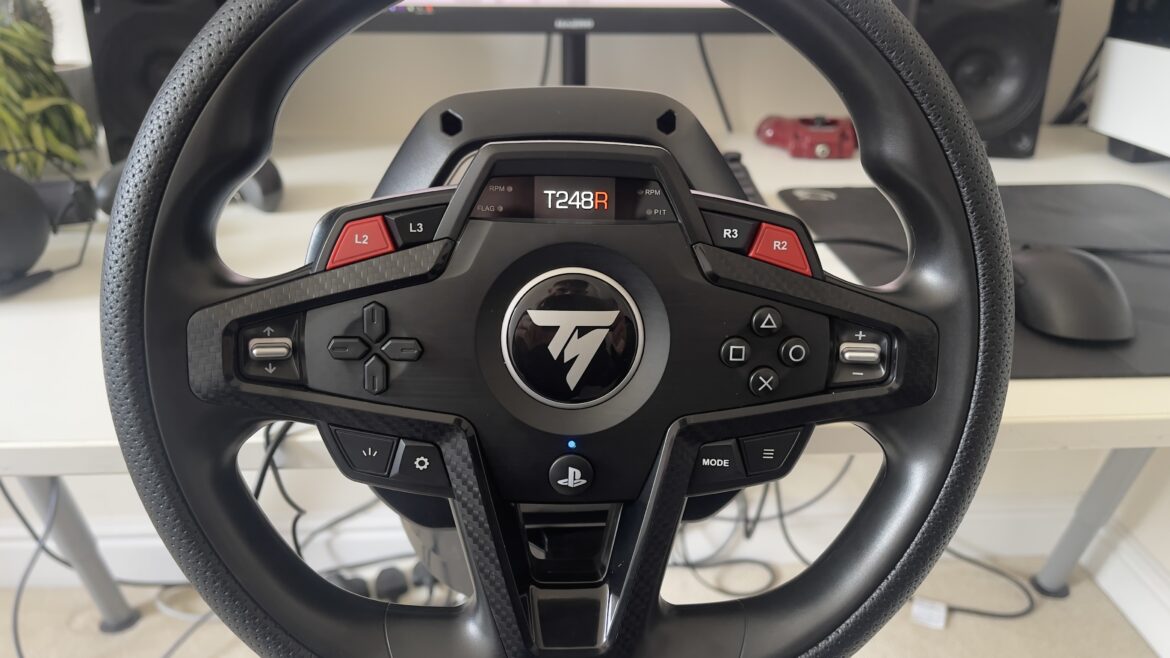
The Thrustmaster T248R set up.
Product Reviews

Thrustmaster T248R wheel review: an updated model that puts pressure on the mighty Logitech G923

by admin September 20, 2025


Why you can trust TechRadar


We spend hours testing every product or service we review, so you can be sure you’re buying the best. Find out more about how we test.

Thrustmaster T248R: One-minute review

It’s not a new racing wheel you’re looking at here, but instead a revamped and thoughtfully tweaked 2025 edition of the existing Thrustmaster T248. The youthful maverick that is the T248R features many small but noticeable improvements, including a visual facelift, upgraded gear shift paddles, and a sharper digital display that offers genuinely useful readouts.

As for the tech powering your driving sensation, that’s a double-edged sword. On one hand, it’s a downside that the T.HD wheelbase is built on a hybrid of gear and belt-driven feedback, which can’t compete with direct drive for smooth, fast, precise feedback.

And with the price of direct drive bundles tumbling down lately into price points not that much more than the price of this bundle, that’s definitely a major consideration for anyone hovering over the ‘add to cart’ button.

(Image credit: Future)

On the other hand, nobody does belt-driven feedback quite like Thrustmaster, so the driving sensation you actually get out of this wheel in your hands isn’t anything as old-fashioned as you might imagine.

It’s plenty powerful for the entry-level sim racer it’s designed for, outputting a peak 3.1Nm of torque, and there’s some subtlety to the feedback too, which doesn’t produce a detrimental amount of cogging (that grindy, stuttering feeling associated with older belt-driven feedback).

Down at your feet, the pedal base is everything you could ask for at this price. It stays where you put it, even on a carpeted floor; the three pedals are well-spaced apart from each other, and the brake has a satisfying amount of stamping force thanks to its stiff load cell.

It’s a wheel to be recommended, ultimately, but it’s a qualified recommendation. If the cheapest direct drive wheels like the Nacon Revosim or the Thrustmaster T598 are out of budget, or you simply don’t race enough to justify the extra outlay for the improved sensation, this bundle makes a lot of sense.

Sign up for breaking news, reviews, opinion, top tech deals, and more.

That’s even factoring in the great Logitech G923, a true titan of non-direct drive wheels at the sub-$300 mark. Logi’s wheel offers slightly better build quality, and its TrueForce feedback offers impressive detail, but those are marginal gains over this dependable and well-priced T248R.

(Image credit: Future)

Thrustmaster T248R: Price and availability

  • List price: $349.99 / £249.99 (around AU$512)
  • Priced cheaper than outbound T248 and Logitech’s G923
  • It may be old tech, but it still offers great bang for buck

Price is a vital bit of context here. It’s true that direct drive (DD) is becoming much more affordable, with bundles like Nacon’s Revosim and the fantastic T598 from Thrustmaster’s own stable bringing high-quality DD sensation to the masses at a price point below $500. But this T248R’s pricing is so far below that $500 threshold that a belt and gear-driven bundle is still a worthwhile consideration.

That does mean the looks and finish quality do feature some obvious compromises compared to the G923. But with a crystal-clear digital display, nice tactile buttons, quiet shifters, and a high-quality set of pedals, there’s real value here. The build quality and driving experience are more than enough for casual racers and even more committed enthusiasts on a budget.

Thrustmaster T248R: Specs

Swipe to scroll horizontally

Weight

12.6lb / 5.7kg

Peak torque

3.1Nm

Features

Digital display, load cell brake pedal, magnetic shifters, cushioned pleather wheel finish

Connection type

USB-A

Compatibility

PC, PS4, PS5

Software

My Thrustmaster

Thrustmaster T248R: Design and features

  • Well built, if a little plasticky
  • Pleather wheel feels great
  • Useful display

Thrustmaster has been making the T248 in its various iterations for long enough to know that its audience isn’t likely to be attaching it to a sim rig, so it’s sensibly built both the wheel and pedals to be used comfortably at a desktop. The pedal base is heavy and grippy, which is absolutely crucial for an enjoyable drive.

The last thing you want when you’re stamping on a load cell brake at 180mph in Assetto Corsa Competizione is to feel the whole base shift position or rotate, and happily, there’s next to none of that with this bundle, despite a relatively stiff load cell on the brake. The aluminium contact points on the pedals are a nice touch at this price, too.

Working our way up, the wheelbase and wheel itself show a few more concessions to the affordable price point. Primarily, all the plastic. Although it’s a definite upgrade versus the outgoing T248 (which will still be on sale in Xbox config, as this new T248R supports PC, PS4, and PS5 only, so is targeting the best PS5 racing wheel market), there is still a lot of quite light, flimsy plastic used on the face, inner wheel, and hub.

Thrustmaster’s done its best to disguise some of this with a carbon fiber-style weave effect, but realistically, it’s fooling no one. Personally, for this price, I can live with it, but it’s worth noting that the slightly pricier G923 does look and feel more substantial and somehow, well, more pro.

Buttons are laid out sensibly around the centre, and at the top there’s a digital display with a sharper resolution now, which can give you some really useful readouts and telemetry – a definite perk for the price.

The biggest weakness in the T248’s overall design comes in the desktop clamp. There’s no major issue here – it does its job in keeping the wheel fixed in position on your desk, but now with the same rigidity or assuredness as the G923, whose two tightening screws at either side of the wheelbase lock it tightly in position. Here, there’s just one central screw, and while it does keep out of the way of your legs, it’s not as secure a contact point as Logitech’s.

(Image credit: Future)

Thrustmaster T248R: Performance

  • Plenty of power
  • A pleasing sensation considering the older tech
  • Buttons, shifters, and pedals all feel great while driving

How does it feel to drive a lap with this updated model?

Well, firstly, it’s pretty straightforward to get onto the track in the first place, since most games recognise this as either the older T248 or the TGT wheel. That means you’ve got default assignments for inputs across the wheel, and pretty good axis and force feedback values from the off. Every title I tried with this new model was recognised enough that all my mappings were done for me, and I didn’t need to calibrate the wheel axis by axis.

On the track, Thrustmaster’s unique hybrid of belt and gear-driven force feedback shows its merits. It does feel very different to direct drive – it’s nowhere near as smooth to rotate the wheel, for starters. But it’s also not coggy or rough in the way that older traditional belt-driven models (remember the MOMO Force?) used to be.

Instead, you’ve got a happy medium between smooth wheel actuation and rumbly feedback that feels about right for the price point. Does it offer the same variety of feedback types as Logitech’s TrueForce-enabled G29? It does not.

The Logi wheel conveys tarmac rumble a little better and gives a more convincing sense of weight to the vehicle you’re driving, but that doesn’t really have a meaningful effect on lap times.

(Image credit: Future)

I noticed how well built the input buttons feel as I was driving, too. It’s common for the face buttons – translated from a traditional console controller and arranged around the wheel – to feel loose and flimsy on a lower-end wheel, but here they feel higher quality. You’re always sure that a button input was registered properly.

It’s a small tweak, but the magnetic paddle shifters have been lavished with some redesign attention to produce a smoother, quieter shift. I’d say more than that, it just feels nicer than it did to change gears on the older T248.

Speaking of, previously the digital display was monochrome and had a limited viewing angle, but it’s much sharper now and thus much more useful. You don’t have a dynamic rev counter, but you do have an RPM light that lets you know when it’s time to upshift. While on the main display, you might have your current lap deltas.

I’m a particular fan of the pedals, and they contribute a lot to the quality of the driving experience in this bundle. It’s great to have a load cell brake that can be adjusted for stiffness by swapping elastomers and springs in, and equally great to feel so planted when you exert a pedal input.

(Image credit: Future)

Should I buy the Thrustmaster T248R?

Buy it if…

Don’t buy it if…

Also consider

If the Thrustmaster T248R doesn’t hit your apex, try these similarly priced rivals.

Swipe to scroll horizontallyRow 0 – Cell 0

Thrustmaster T248R

Logitech G923

Hori Apex

Price

$349.99 / £249.99 (around AU$512)

$299.99 / £299.99

$119.99 / £99.99

Weight

12.6lb / 5.7kg

4.96lbs / 2.3kg

3.09lbs / 1.4kg

Peak torque

3.1Nm

2.2Nm

N/A

Features

Digital display, load cell brake pedal, magnetic shifters, cushioned pleather wheel finish

TrueForce feedback, dial controls, rev display

Textured wheel grip, simple setup

Connection type

USB-A

USB-A

USB-A

Compatibility

PC, PlayStation 4, PlayStation 5

PlayStation 5, PlayStation 4, PC, or Xbox Series X/S, PC

PlayStation 4, PlayStation 5, PC

(Image credit: Future)

How I tested the Thrustmaster T248R

  • Tested in F1 24, F1 25, Rennsport, ACC, and AC Evo
  • Two weeks with a desktop
  • A variety of FF strength settings tried

I loaded up my usual racing titles to test this updated T248R wheel, since I’m already familiar with how they feel with a variety of both belt-driven and direct drive wheels.

Happily, every title recognised the wheel to some degree and offered sensible default mappings and values.

There’s a range of different force feedback strength levels available here via Thrustmaster’s ‘BOOST’ tech, although in practice, that’s no different from adjusting the strength of any other wheel via the in-game settings or manufacturer app. Nevertheless, I adjusted to different strengths during testing.

Finally, and importantly, all testing was conducted at a desktop setup, since this bundle can’t easily be mounted onto a sim rig like my Playseat.

Read more about how we test

First reviewed September 2025

Thrustmaster T248R: Price Comparison


Source link

September 20, 2025 0 comments
0 FacebookTwitterPinterestEmail
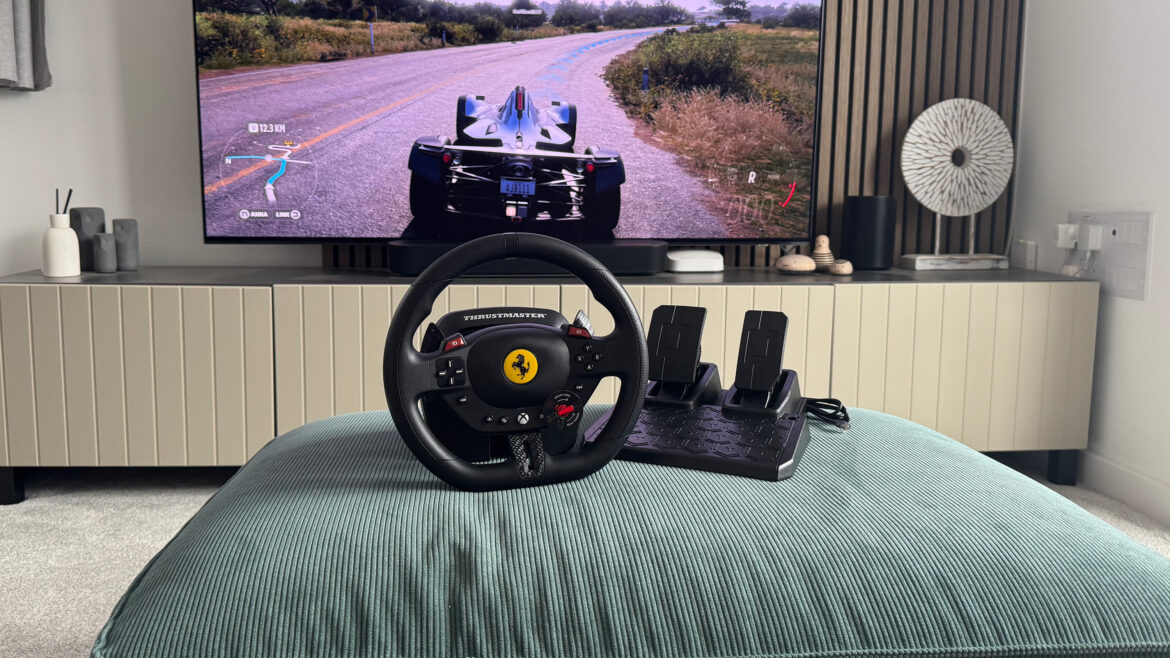
The Thrustmaster T98 on a living room setup.
Gaming Gear

This racing wheel took me back to my childhood, and I can’t wait to grow up

by admin September 19, 2025


Why you can trust TechRadar


We spend hours testing every product or service we review, so you can be sure you’re buying the best. Find out more about how we test.

Thrustmaster T98: One-minute review

The Thrustmaster T98 is about as budget as a budget racing wheel and pedals can get, but that’s by design. This entry-level bundle includes everything a young racer needs to get started with a wheel, pedals, and mounting clamp, but does away with plenty of standard features in order to keep costs down.

Feeling more like a racing toy than a piece of sim racing gear, the T98 is made entirely of plastic but still carries an impressive overall build quality. The wheel itself has all the usual buttons and inputs, but the attached wheelbase offers no force feedback or even simple vibration. Instead, the T98’s wheel has a light, linear resistance from what Thrustmaster calls ‘bungee cord technology’ and will always spin back to centre when let go

The pedals are equally simple, just an accelerator and brake with a short travel distance and no real pushback. Remarkably, though, Thrustmaster has managed to include Hall effect sensors here, which almost feels out of place with the rest of the unit but is certainly a welcome addition.

I’ve hit the track in a few different games, and while racing with the Thrustmaster T98 is more fun than with the stock Xbox Wireless Controller, it’s a very superficial experience. The wheel feels floaty and disconnected from your digital car, making it surprisingly hard to achieve any real control, even with three sensitivity profiles to choose from.

It may be targeted at kids and the entry-level market, and I can see such an audience initially enjoying it, but I’d imagine most will quickly outgrow the T98 and soon be wanting a wheel that offers a little more.

(Image credit: Future)

  • Thrustmaster T98 (Black) at Amazon for $119.99

Thrustmaster T98: Price and availability

  • List price: $109.99 / £89.99 / AU$199.99
  • Available direct from Thrustmaster
  • Great value for money for an entry level wheel

You’re not going to find many full racing bundles much cheaper than the Thrustmaster T98, and that’s worthy of applause in itself.

It’s a refreshing change to see a genuine, modern, entry-level option around that $100 mark. Perhaps more importantly, it’s nice to see brands starting to fill in options at both ends of the market. Beyond the similarly priced Hori Racing Wheel Apex for PlayStation, the numbers quickly increase until you reach the genre staple Logitech G923 racing wheel.

Sign up for breaking news, reviews, opinion, top tech deals, and more.

What’s particularly pleasing is that the T98 is a complete set; there are no asterisks or sold separately disclaimers here. There’s even a desk clamp included, too; one box really is all you need to go from nothing to racing.

This makes shopping easy for parents, just make sure you get the right version, as there are separate Xbox and PlayStation variants with just a single letter differentiating the model names – GTS for Xbox and GTB for PlayStation.

Thrustmaster T98: Specs

Swipe to scroll horizontally

Dimensions

10 x 9.6 x 9.8in / 255 x 245 x 250 mm

Weight

2.9 lbs / 1.3kg

Rotation

240 degrees

Force Feedback

No

Platform Compatibility

Xbox/PC or PlayStation/PC

Box Contents

T98 Ferrari 296, clamping system, T2PM pedal set, instruction manual, and warranty information

Thrustmaster T98: Design and features

  • Complete set with wheel, pedals, and table clamp
  • Three on-board driving profiles
  • H.E.A.R.T. Hall effect sensors in pedals

At this price point, it’s really no surprise that every part of the Thrustmaster T98 bundle is entirely made of plastic. Usually, I’d be critical of this; it’s not exactly the most premium material, but this isn’t a premium bit of kit, so it’s understandable. As far as plastic goes, it’s not bad, though.

Pulling it out of the box, I was immediately struck by just how solid the wheel and wheelbase both feel. There’s no flex or creakiness to either of them; they feel reassuringly sturdy. Thrustmaster’s experience in the genre really shows here, even if this is the closest thing to a toy it’s ever made.

The Thrustmaster T98’s 10” wheel is inspired by the one you’ll find in the Ferrari 296 GTS, and it’s not a bad recreation. The overall shape is sporty, and it’s comfortable enough to hold. There’s a little grip texturing embossed into the plastic on either side, which is a welcome addition, and a few faux carbon fibre accents to break things up.

The standard range of controller buttons is neatly spread across the face of the wheel, with a pair of clicky paddle shifters behind. I could easily reach all of them without adjusting my grip on the wheel, and it’s something I not only appreciated but have regularly not been able to do with more expensive options.

Admittedly, I have reasonably large hands, but they all felt close enough that I imagine smaller users would be able to reach them just as easily.

(Image credit: Future)

The Thrustmaster T98’s wheelbase is simple but stylish enough. It’s a compact little unit that takes its design cues from more ‘grown-up’ options, albeit with considerably less going on inside. The included desk clamp took a little fiddling to correctly line up, but eventually held things firmly in place.

With no force feedback and no vibration or rumble motor, it’s left to essentially a rubber band to impose any sort of resistance. It’s not uncommon for wheels to forego force feedback. Logitech’s Heavy Equipment Bundle will set you back nearly three times as much and offers the same experience, but that doesn’t make me miss it any less.

The pedals are the most basic part of the Thrustmaster T98 bundle, though funnily enough feature the most advanced technology. Both the accelerator and brake feel similar underfoot without much travel distance and an equally small amount of resistance. These are definitely designed with junior racers in mind. If you’re pressing it, you might as well floor it; there’s no real in-between.

That makes the inclusion of Thrustmaster’s H.E.A.R.T. Hall effect sensors in each pedal a little unusual. I’m not complaining, it’s great to see this kind of technology in a budget device, I’m just not sure anyone is going to see the benefit beyond some extra lifespan and no chance of stick – I mean, pedal – drift.

Speaking of which, there’s a good chance you’ll find the whole unit drifting across your floor because while there’s a generously sized heel plate with some texturing on top, the bottom of the pedal box is pretty slick.

There’s no spikey carpet gripper bar to keep things still, and while there are four tiny rubber pads, these didn’t achieve a lot when I tested on my laminate floor.

Thrustmaster T98: Performance

  • Impressive plug-and-play game compatibility
  • No force feedback or rumble
  • Bungee cord resistance has quirks and a learning curve

“It’s not aimed at sim racers, it’s aimed at kids, for first-time steering wheel users”. That’s what Thrustmaster product marketing manager Xavier Pieuchot told us when we got our first look at the T98 at Gamescom in August.

Well, I’m none of those things. I do quite a lot of sim racing, and my usual setup is worth north of $2,000. I know what the top end of the market is like, so I channeled my inner child when I played with the Thrustmaster T98.

Setup was a breeze, and actually an area the T98 performed better than a vast majority of considerably more expensive wheels I’ve tested in recent times.

I plugged in the single, pre-attached cable from the pedals to the wheelbase, and then the USB-C cable from the wheelbase to my Xbox Series X. That’s it. Done. Ready to race. The list of officially compatible games on the Thrustmaster website is surprisingly modest, but pretend-8-year-old Alex doesn’t read product listings, so my first stop was a game not on the list, Forza Motorsport.

Who needs compatibility lists anyway? The Thrustmaster T98 worked perfectly from the moment the game launched. Every button was pre-bound to what I’d have expected it to be, including the pedals, and without even considering an options menu, I was straight out on track and racing.

I can’t overstate how refreshing this was and how many times this hasn’t been the case with ‘premium’ options. It was the same story in almost any other game I tried; Forza Horizon 5, EA Sports WRC, Farming Simulator 25, and even older titles like Wreckfest, everything was fully button-mapped, and the wheel and pedals worked exactly how I’d hoped they would.

(Image credit: Future)

Unfortunately, the actual experience behind the wheel wasn’t quite as positive for either my experienced sim racing side or my childhood alter ego. I can overlook the lack of force feedback; that’s a nice-to-have feature, albeit a basic one, and I remind myself this is a $110 wheel after all. The problem is that while the Thrustmaster T98 was more of a giggle to play with than a controller, even the adult me found the learning curve and overall difficulty much harder than it should have been.

Thrustmaster calls the bungee resistance linear, though I experienced quite a wide physical deadzone before the cord grabbed. For hard corners and aggressive moves, this wasn’t a problem. The 240° max rotation can be a little limiting on some tracks, but I still had a good amount of fun. Across titles, though, it was the gentle, sweeping turns, small adjustments, and overtaking manoeuvres that proved surprisingly difficult.

I’d constantly need to turn the wheel further than I’d like to get the car to respond, and then quickly correct it back the other way when it inevitably went too far. More often than not, this caused me to lose control completely and end up against a wall, even down straights. It was a frustrating experience for me as a 33-year-old; I can’t imagine how much patience a 10-year-old might have before giving up and labelling it dumb and annoying.

There are three ‘driving support profiles’ built into the Thrustmaster T98 that adjust the sensitivity of the wheel. I did notice a clear difference between each setting, and it’s a nice idea to be able to dial down the sensitivity and, in theory, make things easier, though none of them managed to overcome the problem I mentioned before.

It’s also worth noting that these don’t change any physical characteristics of the wheel’s behavior, just how your movements are translated into the game.

(Image credit: Future)

Should I buy the Thrustmaster T98?

Buy it if…

Don’t buy it if…

Also consider

Not sure if the Thrustmaster T98 is your best option? There are plenty of other sim racing wheels available, though not too many at quite such a low price point.

Swipe to scroll horizontallyRow 0 – Cell 0

Thrustmaster T98

Hori Racing Wheel Apex

Logitech G920

Price

$109.99 / £89.99

$119.99 / £99.99

$299.99 / £349.99

Dimensions

10 x 9.6 x 9.8in / 255 x 245 x 250 mm

11 x 10.8 x 11.3in / 280 x 275 x 286mm

10.6 x 10.2 x 10.9in / 270 x 260 x 278mm

Weight

2.9lbs / 1.3kg

3.09lbs / 1.4kg

4.96lbs / 2.25kg

Rotation

240 degrees

270 degrees

900 degrees

Force Feedback

No

No

Dual-motor

(Image credit: Future)

How I tested the Thrustmaster T98

  • I used the T98 on my Xbox Series X for a few days
  • Tested across a range of titles
  • Approached as a complete beginner

I swapped out some of the best Xbox racing wheels and used the Thrustmaster T98 as my primary racing wheel on Xbox Series X for a week. At this time, I reset my expectations, approaching this as a complete novice and casting my mind back to how I’d have felt about this as a child.

I tried a range of different games, including options both on and absent from the official compatibility list.

I jumped into each title blind, avoiding any configuration or settings menus. I aimed for the most plug-and-play experience possible, seeing how the T98 felt in each game out of the box. The only change I made was testing the three on-board driving profiles in each game, often switching multiple times during a single lap to feel the impact this had.

Throughout testing, I had the Thrustmaster T98 clamped to a coffee table with the pedals resting on the floor. Primarily, this was carpeted, though I also moved my setup into the hallway to test movement and feel on a hard, laminate floor.

Read more about how we test

First reviewed September 2025

Thrustmaster T98: Price Comparison


Source link

September 19, 2025 0 comments
0 FacebookTwitterPinterestEmail
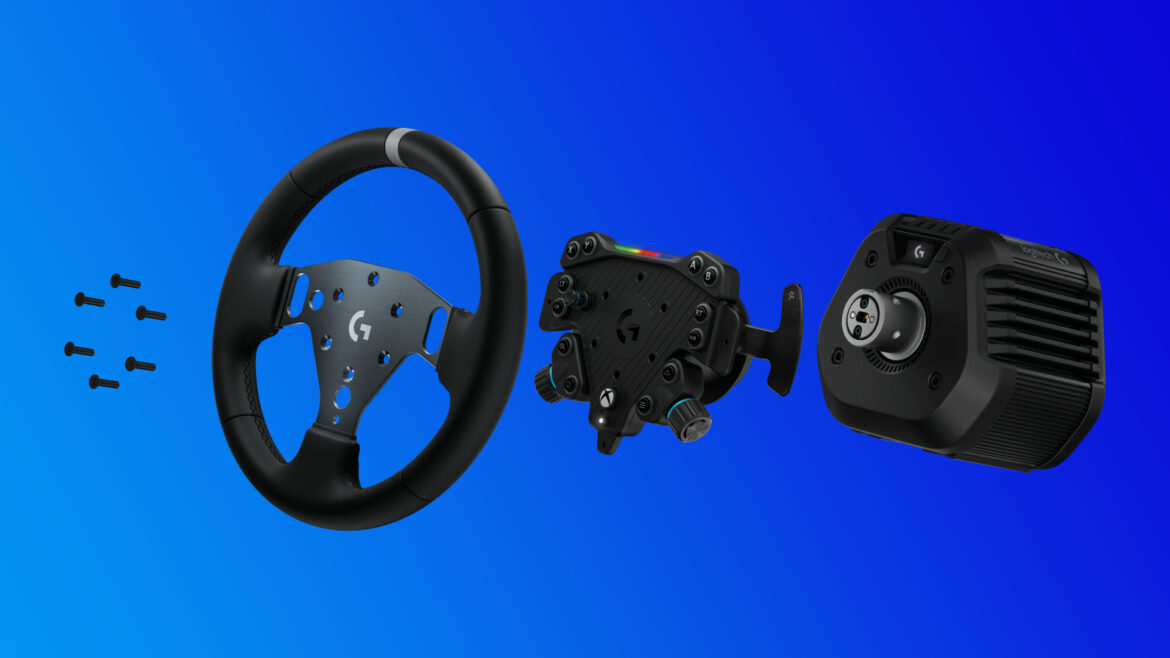
An exploded view of the Logitech G RS50 direct drive racing wheel setup
Gaming Gear

Logitech has announced an affordable 8 Nm direct drive racing wheel setup with full TrueForce support, along with some fancy trick pedals I want to try for myself

by admin September 17, 2025


We’ve long been fans of Logitech’s sim racing lineup, given that you can get in on the ground floor with something affordable, like the gear-driven Logitech G923, or go all the way up to the very expensive (and very brilliant) Logitech G Pro Racing Wheel and G Pro Pedal set. Up until now, however, there’s been a big gaping hole in the middle of the range—which looks to be filled by the newly-announced direct drive RS50 wheelbase and RS Pedals set.

Unlike the 11 Nm G Pro, the RS50 tops out at 8 Nm of torque, a figure that Logitech says was arrived at based on data from their other sim racing products. An 8 Nm maximum is said to be the sweet spot when it comes to the balance between power and driveability, and as someone that’s raced with quite a few different direct drive setups at this point, I’d have a tendency to agree.

Image 1 of 2

(Image credit: Logitech)(Image credit: Logitech)

The wheelbase itself will be available as a standalone unit starting at $350/€300, and comes with full TrueForce support, which uses game data in combination with audio to approximate some of the details that other direct drive wheels can miss, like engine rumble and precise kerb simulation. Our Jacob was very impressed with the TrueForce experience provided by the G Pro, so using the same system in a more affordable direct drive option strikes as a good idea.


Related articles

However, beyond the base unit itself, you’ll still need a wheel and a set of pedals to get yourself started from scratch. The RS50 base will support pre-existing RS Wheel Hub systems and RS wheels, or you can buy the base and a wheel/hub combination together as the Logitech G RS50 System for $700, available in either Xbox or PlayStation versions. Both will support PC, though, so take you’ll be able to take your pick if you’re playing on God’s chosen gaming device.

As for the foot controls, it’d be worth taking a look at Logitech’s other major announcement, the Logitech G RS Pedals. These steel-constructed units look plenty robust, and feature a Hall effect acceleration pedal sensor and a load-cell braking mechanism as standard. Top points to Logitech here, as it’s still a major bugbear of mine when pedal sets don’t include a load-cell brake by default.

Image 1 of 2

(Image credit: Logitech)(Image credit: Logitech)

There’s another clever feature here I’m a big fan of, on sheer design principle alone. The rear of the pedals can be extended backwards to prevent them from tipping over on an unsecured surface, but the tips of the extensions can also be tilted upwards in order to make little feet, which can then be pushed against a rear wall.

Sim racing on a desk-based setup is always a bit of a faff when it comes to securing the pedals for heavy braking, so helping them press against the wall behind your desk seems like a nifty solution. They’re well-priced, too at $160/$150 for the basic set. You’ll pay an extra $45 for a clutch pedal, though, although most sim racers I see these days stick to paddle shifters. Still, I’d say that’s a very reasonable sum for the addition.

Keep up to date with the most important stories and the best deals, as picked by the PC Gamer team.

In fact, this all looks rather promising. Logitech has a knack for designing good sim racing gear, and the fact that all of this new kit seems very modular means it’s quickly building out a direct drive-based ecosystem that might make the likes of Fanatec and Moza sit up and take notice.

In my experience, all sim racers really want out of a direct drive setup is accurate feedback, robust components, and a straightforward racing experience—so if Logitech can do all that for a reasonable sum, I think it might have another success story on its hands.

Best PC gaming kit 2025

All our favorite gear


Source link

September 17, 2025 0 comments
0 FacebookTwitterPinterestEmail
Star Trucker's anniversary update adds wheel and joystick support to the space lorry sim, plus speed cameras
Game Updates

Star Trucker’s anniversary update adds wheel and joystick support to the space lorry sim, plus speed cameras

by admin September 5, 2025


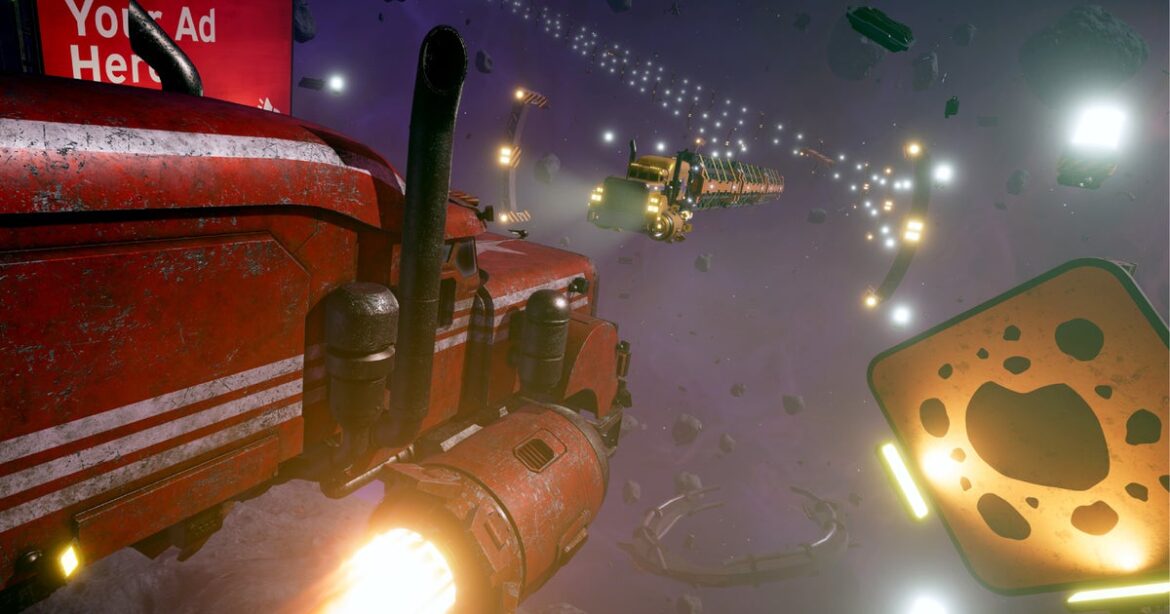
Star Trucker, Raw Fury’s answer to what Euro Truck Simulator might look like in the year 3000, is now a year old, and has celebrated that fact with an update that finally lets you whip out your wheel and pedals.

Ever since I gave it a go with a controller prior to letting my Game Pass subscription crumble into dust, this is a day I’ve yearned for. After all, what good are truck sims, be they Euro, American or something more Snowrunnery, if you’re not operating the controls of your great metal haulage beast by flicking flappy gearbox paddles, or sawing away at a circle clearly designed for something a bit sportier?

That’s what this anniversary update for the interstellar hauler delivers, with wheels like the Thrustmaster T128 and flight sticks like VKB’s Gladiator NXT EVO being early additions to the devs’ handy tracking sheet of tested peripherals. There’s also a guide and FAQ rundown from Raw Fury to help folks get their hardware up, running, and fully bound to all the inputs space trucking requires.

Gear recognised by the game should set itself up with default bindings automatically, but I usually find creating my own basic set of essential buttons not that time-consuming, as long as the game wants to acknowledge your wheel exists. Just remember to bind a pause button, and stick the handbrake somewhere your finger can easily hold it when you want to see if your rig can finish a delivery with a 10/10 skid.

As a counterweight to all the wheel and pedal lorry mischief I planned the minute I clocked this update, it also comes with new speed checks. Yep, cameras, fines, the works. These camera checkpoints along the trails of the galaxy will even show you what speed you’re doing as you pass them, though the notes don’t mention if you get shown a little smiley face for not blasting through a Jupiter school zone at 120mph. You can also disable these checks via the settings, if the threat of having to attend a speeding course with the crowd from the Mos Eisley cantina is just too much.

Aside from that, there are a couple of updates to trailers, and a couple of optional truck goodies to commemorate the game’s first birthday. The latter includes a hologrammatic image of a cake you can display in your cab. Just remember to eat plenty before your next long haul.

If you’ve not given Star Trucker a go, our Nic dubbed it “a game that’s much more about the ‘trucker’ of it all than the stars, but the trucker of it all really does shine” in his review, writing:

When you exit the airlock to patch up hull breaches, little white spanner icons mark the offending damage. The symbol that marks the airlock to return to your truck is a home. I noticed it early, and then I kept noticing it. The more I did, the more perfect it felt.

Now, if you’ll excuse me, I’m off to oversteer that home into an asteroid belt.


Source link

September 5, 2025 0 comments
0 FacebookTwitterPinterestEmail

Categories

  • Crypto Trends (1,098)
  • Esports (800)
  • Game Reviews (772)
  • Game Updates (906)
  • GameFi Guides (1,058)
  • Gaming Gear (960)
  • NFT Gaming (1,079)
  • Product Reviews (960)

Recent Posts

  • This 5-Star Dell Laptop Bundle (64GB RAM, 2TB SSD) Sees 72% Cut, From Above MacBook Pricing to Practically a Steal
  • Blue Protocol: Star Resonance is finally out in the west and off to a strong start on Steam, but was the MMORPG worth the wait?
  • How to Unblock OpenAI’s Sora 2 If You’re Outside the US and Canada
  • Final Fantasy 7 Remake and Rebirth finally available as physical double pack on PS5
  • The 10 Most Valuable Cards

Recent Posts

  • This 5-Star Dell Laptop Bundle (64GB RAM, 2TB SSD) Sees 72% Cut, From Above MacBook Pricing to Practically a Steal

    October 10, 2025
  • Blue Protocol: Star Resonance is finally out in the west and off to a strong start on Steam, but was the MMORPG worth the wait?

    October 10, 2025
  • How to Unblock OpenAI’s Sora 2 If You’re Outside the US and Canada

    October 10, 2025
  • Final Fantasy 7 Remake and Rebirth finally available as physical double pack on PS5

    October 10, 2025
  • The 10 Most Valuable Cards

    October 10, 2025

Newsletter

About me

Welcome to Laughinghyena.io, your ultimate destination for the latest in blockchain gaming and gaming products. We’re passionate about the future of gaming, where decentralized technology empowers players to own, trade, and thrive in virtual worlds.

Recent Posts

  • This 5-Star Dell Laptop Bundle (64GB RAM, 2TB SSD) Sees 72% Cut, From Above MacBook Pricing to Practically a Steal

    October 10, 2025
  • Blue Protocol: Star Resonance is finally out in the west and off to a strong start on Steam, but was the MMORPG worth the wait?

    October 10, 2025

Newsletter

@2025 laughinghyena- All Right Reserved. Designed and Developed by Pro


Back To Top
Laughing Hyena
  • Home
  • Hyena Games
  • Esports
  • NFT Gaming
  • Crypto Trends
  • Game Reviews
  • Game Updates
  • GameFi Guides
  • Shop

Shopping Cart

Close

No products in the cart.

Close