Laughing Hyena
  • Home
  • Hyena Games
  • Esports
  • NFT Gaming
  • Crypto Trends
  • Game Reviews
  • Game Updates
  • GameFi Guides
  • Shop
Tag:

updated

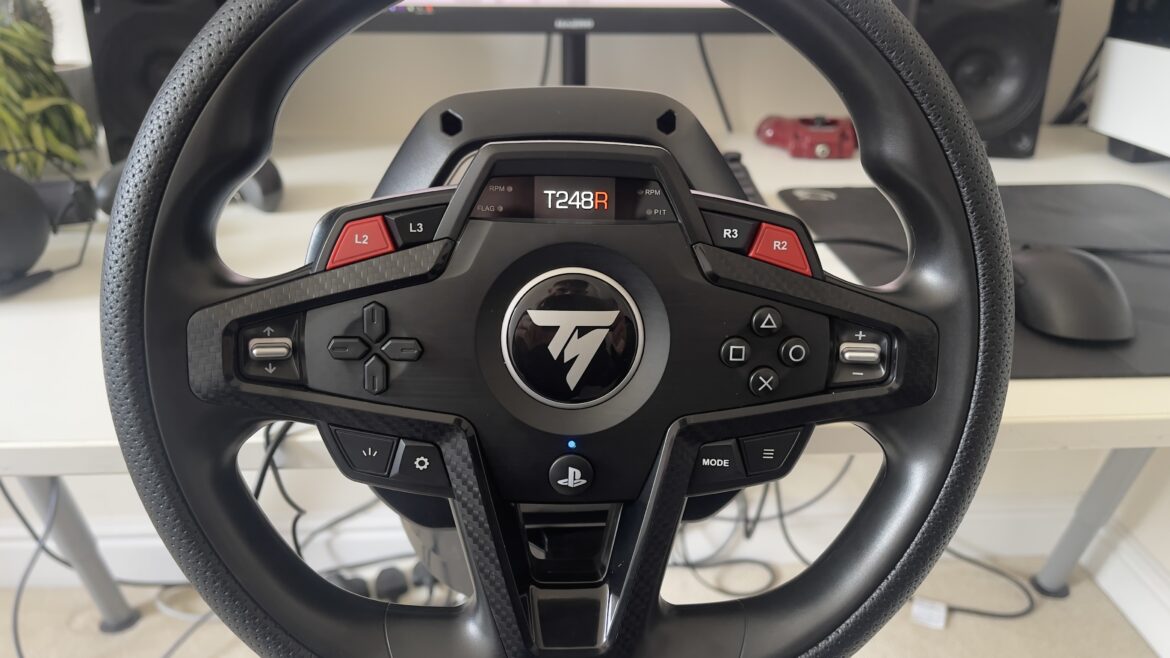
The Thrustmaster T248R set up.
Product Reviews

Thrustmaster T248R wheel review: an updated model that puts pressure on the mighty Logitech G923

by admin September 20, 2025


Why you can trust TechRadar


We spend hours testing every product or service we review, so you can be sure you’re buying the best. Find out more about how we test.

Thrustmaster T248R: One-minute review

It’s not a new racing wheel you’re looking at here, but instead a revamped and thoughtfully tweaked 2025 edition of the existing Thrustmaster T248. The youthful maverick that is the T248R features many small but noticeable improvements, including a visual facelift, upgraded gear shift paddles, and a sharper digital display that offers genuinely useful readouts.

As for the tech powering your driving sensation, that’s a double-edged sword. On one hand, it’s a downside that the T.HD wheelbase is built on a hybrid of gear and belt-driven feedback, which can’t compete with direct drive for smooth, fast, precise feedback.

And with the price of direct drive bundles tumbling down lately into price points not that much more than the price of this bundle, that’s definitely a major consideration for anyone hovering over the ‘add to cart’ button.

(Image credit: Future)

On the other hand, nobody does belt-driven feedback quite like Thrustmaster, so the driving sensation you actually get out of this wheel in your hands isn’t anything as old-fashioned as you might imagine.

It’s plenty powerful for the entry-level sim racer it’s designed for, outputting a peak 3.1Nm of torque, and there’s some subtlety to the feedback too, which doesn’t produce a detrimental amount of cogging (that grindy, stuttering feeling associated with older belt-driven feedback).

Down at your feet, the pedal base is everything you could ask for at this price. It stays where you put it, even on a carpeted floor; the three pedals are well-spaced apart from each other, and the brake has a satisfying amount of stamping force thanks to its stiff load cell.

It’s a wheel to be recommended, ultimately, but it’s a qualified recommendation. If the cheapest direct drive wheels like the Nacon Revosim or the Thrustmaster T598 are out of budget, or you simply don’t race enough to justify the extra outlay for the improved sensation, this bundle makes a lot of sense.

Sign up for breaking news, reviews, opinion, top tech deals, and more.

That’s even factoring in the great Logitech G923, a true titan of non-direct drive wheels at the sub-$300 mark. Logi’s wheel offers slightly better build quality, and its TrueForce feedback offers impressive detail, but those are marginal gains over this dependable and well-priced T248R.

(Image credit: Future)

Thrustmaster T248R: Price and availability

  • List price: $349.99 / £249.99 (around AU$512)
  • Priced cheaper than outbound T248 and Logitech’s G923
  • It may be old tech, but it still offers great bang for buck

Price is a vital bit of context here. It’s true that direct drive (DD) is becoming much more affordable, with bundles like Nacon’s Revosim and the fantastic T598 from Thrustmaster’s own stable bringing high-quality DD sensation to the masses at a price point below $500. But this T248R’s pricing is so far below that $500 threshold that a belt and gear-driven bundle is still a worthwhile consideration.

That does mean the looks and finish quality do feature some obvious compromises compared to the G923. But with a crystal-clear digital display, nice tactile buttons, quiet shifters, and a high-quality set of pedals, there’s real value here. The build quality and driving experience are more than enough for casual racers and even more committed enthusiasts on a budget.

Thrustmaster T248R: Specs

Swipe to scroll horizontally

Weight

12.6lb / 5.7kg

Peak torque

3.1Nm

Features

Digital display, load cell brake pedal, magnetic shifters, cushioned pleather wheel finish

Connection type

USB-A

Compatibility

PC, PS4, PS5

Software

My Thrustmaster

Thrustmaster T248R: Design and features

  • Well built, if a little plasticky
  • Pleather wheel feels great
  • Useful display

Thrustmaster has been making the T248 in its various iterations for long enough to know that its audience isn’t likely to be attaching it to a sim rig, so it’s sensibly built both the wheel and pedals to be used comfortably at a desktop. The pedal base is heavy and grippy, which is absolutely crucial for an enjoyable drive.

The last thing you want when you’re stamping on a load cell brake at 180mph in Assetto Corsa Competizione is to feel the whole base shift position or rotate, and happily, there’s next to none of that with this bundle, despite a relatively stiff load cell on the brake. The aluminium contact points on the pedals are a nice touch at this price, too.

Working our way up, the wheelbase and wheel itself show a few more concessions to the affordable price point. Primarily, all the plastic. Although it’s a definite upgrade versus the outgoing T248 (which will still be on sale in Xbox config, as this new T248R supports PC, PS4, and PS5 only, so is targeting the best PS5 racing wheel market), there is still a lot of quite light, flimsy plastic used on the face, inner wheel, and hub.

Thrustmaster’s done its best to disguise some of this with a carbon fiber-style weave effect, but realistically, it’s fooling no one. Personally, for this price, I can live with it, but it’s worth noting that the slightly pricier G923 does look and feel more substantial and somehow, well, more pro.

Buttons are laid out sensibly around the centre, and at the top there’s a digital display with a sharper resolution now, which can give you some really useful readouts and telemetry – a definite perk for the price.

The biggest weakness in the T248’s overall design comes in the desktop clamp. There’s no major issue here – it does its job in keeping the wheel fixed in position on your desk, but now with the same rigidity or assuredness as the G923, whose two tightening screws at either side of the wheelbase lock it tightly in position. Here, there’s just one central screw, and while it does keep out of the way of your legs, it’s not as secure a contact point as Logitech’s.

(Image credit: Future)

Thrustmaster T248R: Performance

  • Plenty of power
  • A pleasing sensation considering the older tech
  • Buttons, shifters, and pedals all feel great while driving

How does it feel to drive a lap with this updated model?

Well, firstly, it’s pretty straightforward to get onto the track in the first place, since most games recognise this as either the older T248 or the TGT wheel. That means you’ve got default assignments for inputs across the wheel, and pretty good axis and force feedback values from the off. Every title I tried with this new model was recognised enough that all my mappings were done for me, and I didn’t need to calibrate the wheel axis by axis.

On the track, Thrustmaster’s unique hybrid of belt and gear-driven force feedback shows its merits. It does feel very different to direct drive – it’s nowhere near as smooth to rotate the wheel, for starters. But it’s also not coggy or rough in the way that older traditional belt-driven models (remember the MOMO Force?) used to be.

Instead, you’ve got a happy medium between smooth wheel actuation and rumbly feedback that feels about right for the price point. Does it offer the same variety of feedback types as Logitech’s TrueForce-enabled G29? It does not.

The Logi wheel conveys tarmac rumble a little better and gives a more convincing sense of weight to the vehicle you’re driving, but that doesn’t really have a meaningful effect on lap times.

(Image credit: Future)

I noticed how well built the input buttons feel as I was driving, too. It’s common for the face buttons – translated from a traditional console controller and arranged around the wheel – to feel loose and flimsy on a lower-end wheel, but here they feel higher quality. You’re always sure that a button input was registered properly.

It’s a small tweak, but the magnetic paddle shifters have been lavished with some redesign attention to produce a smoother, quieter shift. I’d say more than that, it just feels nicer than it did to change gears on the older T248.

Speaking of, previously the digital display was monochrome and had a limited viewing angle, but it’s much sharper now and thus much more useful. You don’t have a dynamic rev counter, but you do have an RPM light that lets you know when it’s time to upshift. While on the main display, you might have your current lap deltas.

I’m a particular fan of the pedals, and they contribute a lot to the quality of the driving experience in this bundle. It’s great to have a load cell brake that can be adjusted for stiffness by swapping elastomers and springs in, and equally great to feel so planted when you exert a pedal input.

(Image credit: Future)

Should I buy the Thrustmaster T248R?

Buy it if…

Don’t buy it if…

Also consider

If the Thrustmaster T248R doesn’t hit your apex, try these similarly priced rivals.

Swipe to scroll horizontallyRow 0 – Cell 0

Thrustmaster T248R

Logitech G923

Hori Apex

Price

$349.99 / £249.99 (around AU$512)

$299.99 / £299.99

$119.99 / £99.99

Weight

12.6lb / 5.7kg

4.96lbs / 2.3kg

3.09lbs / 1.4kg

Peak torque

3.1Nm

2.2Nm

N/A

Features

Digital display, load cell brake pedal, magnetic shifters, cushioned pleather wheel finish

TrueForce feedback, dial controls, rev display

Textured wheel grip, simple setup

Connection type

USB-A

USB-A

USB-A

Compatibility

PC, PlayStation 4, PlayStation 5

PlayStation 5, PlayStation 4, PC, or Xbox Series X/S, PC

PlayStation 4, PlayStation 5, PC

(Image credit: Future)

How I tested the Thrustmaster T248R

  • Tested in F1 24, F1 25, Rennsport, ACC, and AC Evo
  • Two weeks with a desktop
  • A variety of FF strength settings tried

I loaded up my usual racing titles to test this updated T248R wheel, since I’m already familiar with how they feel with a variety of both belt-driven and direct drive wheels.

Happily, every title recognised the wheel to some degree and offered sensible default mappings and values.

There’s a range of different force feedback strength levels available here via Thrustmaster’s ‘BOOST’ tech, although in practice, that’s no different from adjusting the strength of any other wheel via the in-game settings or manufacturer app. Nevertheless, I adjusted to different strengths during testing.

Finally, and importantly, all testing was conducted at a desktop setup, since this bundle can’t easily be mounted onto a sim rig like my Playseat.

Read more about how we test

First reviewed September 2025

Thrustmaster T248R: Price Comparison



Source link

September 20, 2025 0 comments
0 FacebookTwitterPinterestEmail
crypto
Crypto Trends

US Senate Banking Updated Market Structure Bill

by admin September 6, 2025


Trusted Editorial content, reviewed by leading industry experts and seasoned editors. Ad Disclosure

The US Senate Banking Committee has now released an updated version of the crypto market structure bill. This particular legislative bill, titled the “Responsible Financial Innovation Act 2025,” now includes new provisions centered on developers, bankruptcy, among others, which are vital to the broader crypto industry.

Updated Crypto Market Draft Reveals Protection For Blockchain Developers

US digital asset regulation took a major step forward on Friday as the amended crypto market structure bill advanced out of the House Banking Committee. The bill, which seeks to clearly define the line between digital asset securities and commodities, among other goals, now heads to the Senate for another hearing, though with some modifications.

Most notably, the Responsible Financial Innovation Act now shields blockchain developers from being treated as financial institutions under existing securities laws. Therefore, activities such as providing interfaces or creating wallets are not regulated as securities dealings. However, developers are still accountable under anti-fraud, anti-manipulation, and anti-money laundering laws, and protection does not apply if someone takes custody of users’ funds or exercises central control over a system.

The bill also creates a safe harbor for non-fungible tokens (NFTs), clarifying that unique digital tokens representing art, memberships, tickets, or collectibles are not securities just because they can be resold or may rise in value. Interestingly, secondary sales are safe too, as long as the resale doesn’t raise new capital for the original promoter. But NFTs that are mass-produced, fractionalized, or structured as financial claims remain subject to securities laws. 

Meanwhile, a change to the Bankruptcy section of the act allocates digital commodities and ancillary assets to the same categories as cash and securities in bankruptcy rules. Therefore, when a firm goes bankrupt, customer claims are not limited to cash or traditional securities but now explicitly cover crypto and related digital assets as well.

SEC & CFTC To Set Up Joint Advisory Committee On Digital Assets

In other important news, the updated Responsible Financial Innovation Act 2025 proposes a Joint Advisory Committee on Digital Assets, jointly run by the US Securities and Exchange Commission (SEC) and Commodity Futures Trading Commission (CFTC).

Unlike the earlier version of the bill that tilted oversight of crypto markets more heavily toward the SEC, this framework pushes both regulators to work together to study digital assets and provide nonbinding recommendations on rules, oversight, and regulatory harmonization.

The body will include up to 14 non-government members from across the industry, academia, and user base, alongside input from the National Institute of Science and Technology in a non-voting role.  Meanwhile, the total crypto market cap is now valued at $3.76 trillion 

Total crypto market cap valued at $3.76 trillion on the daily chart | Source: TOTAL chart on Tradingview.com

Featured image from Britannica, chart from Tradingview

Editorial Process for bitcoinist is centered on delivering thoroughly researched, accurate, and unbiased content. We uphold strict sourcing standards, and each page undergoes diligent review by our team of top technology experts and seasoned editors. This process ensures the integrity, relevance, and value of our content for our readers.


Source link

September 6, 2025 0 comments
0 FacebookTwitterPinterestEmail
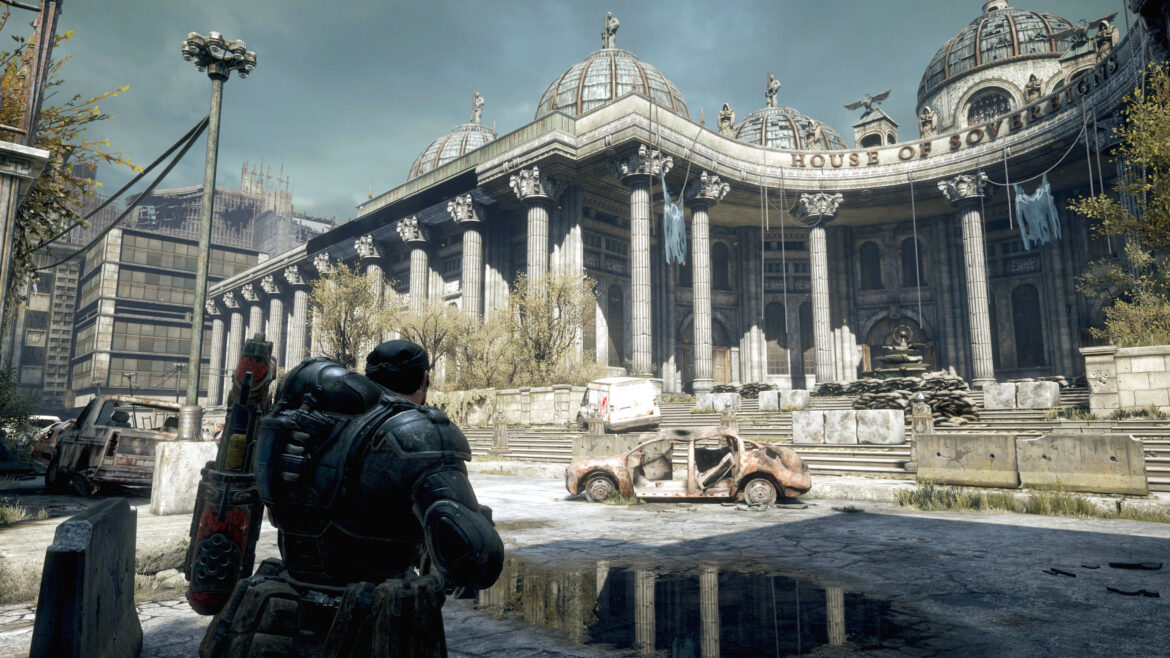
A screenshot of the PC version of Gears of War: Reloaded
Gaming Gear

Gears of War: Reloaded PC performance: The updated graphics are easy work for any desktop GPU from the past six years but they’re still enough to give handhelds grief

by admin August 26, 2025


If you were hoping that Gears of War: Reloaded was going to be like The Elder Scrolls 4: Oblivion Remastered, then I have a bit of bad news for you. It’s essentially 2016’s Ultimate Edition of Gears of War, but with better lighting and textures—everything else, including meshes, animations, and the overall gameplay, is exactly the same.

Gears of War: Ultimate Edition was a remaster itself, so Reloaded is a remastered remaster. Or is it a re-re-master? Either way, whatever your feelings are about the Ultimate Edition, they’ll probably be no different for Reloaded.

I must admit to being a little surprised that developers The Coalition retained the use of Unreal Engine 3 for Reloaded, albeit with large chunks of it heavily rewritten, replaced, and modified. But having thought about it, rewriting the whole game to work with Unreal Engine 5 was probably going to be too much work for the scale of the project, and if you’re going to do that, then you might as well do a full remake instead.


Related articles

Image 1 of 2

(Image credit: Microsoft Studios)(Image credit: Microsoft Studios)

The good news about sticking with the old engine and just using better quality assets, lighting, shadows, and reflections, is that Gears of War: Reloaded will run on pretty much any gaming PC you like. For game performance analysis, I usually start with a top-end rig, but in this instance, I kicked off with the oldest gaming PC in my office, and the game ran so well—even at maximum quality settings—that I skipped over testing a full range of PCs.

In fact, other than one very specific type of PC platform, you can likely just slap all the settings to the maximum values and enjoy 60+ fps performance. You might need to keep the resolution down or utilise a spot of FSR 3.1 or DLSS 3.5 upscaling to push it higher if you want to, but the main reason for using either one is for the superior anti-aliasing—the alternative is to use FXAA, but there’s absolutely no reason to do so.

Tested on: Core i7 9700K | Radeon RX 5700 XT | 16 GB DDR4-3200

1080p | FSR Balanced | Ultra quality preset

As you can see from the above footage, the Core i7 9700K + Radeon RX 5700 XT combination has no problems whatsoever running Gears of War: Reloaded at an acceptable frame rate. There’s quite a big difference in the frame rate when fighting in narrow corridors to battles held in open areas, but every PC I tested is affected in the same way.

Keep up to date with the most important stories and the best deals, as picked by the PC Gamer team.

If you’re happy to go with a lower frame rate (GoW:R isn’t a fast-reaction game by any means), then you could increase the upscaling quality mode. AMD’s FSR Native AA and Nvidia’s DLAA are both supported, but you’re not really going to easily tell the difference between them and DLSS/FSR Quality.

Admittedly, the RX 5700 XT is still quite a capable graphics card, so the next platform I tested Gears of War: Reloaded on was an entry-level gaming laptop.

Tested on: Ryzen 7 7735HS | GeForce RTX 4050 | 16 GB DDR5-4800

1080p | FXAA | Ultra quality preset

Just as with the Core i7 9700K rig, the RTX 4050 laptop coped absolutely fine. So much so that for the above footage, I disabled DLSS and just used FXAA to remove jagged edges from objects, characters, and other models. Even with no performance boost from upscaling, the little laptop has no problem hitting 60 fps or more.

The other reason why I included the use of FXAA was to highlight just how bad the anti-aliasing technique is compared to what can be achieved with FSR and DLSS. Both solutions have been implemented well in the game, so you’re pretty much covered, no matter what GPU you have.

Tested on: Core Ultra 9 285K | GeForce RTX 5090 | 48 GB DDR5-8400

4K | DLAA | Ultra quality

Heading to the other end of the hardware scale, pairing a GeForce RTX 5090 with a Core Ultra 9 285K and 48 GB of DDR5-8400 produces an entirely expected outcome. You might be surprised that the fps isn’t higher, but that’s in part because Gears of War: Reloaded has an adjustable frame rate cap with a limit of 240 fps.

You might think it has to do with the choice of CPU, as Intel’s Arrow Lake chips aren’t the best for gaming. However, the 5090 was being correctly utilised, and at no point were the 285K’s P-cores being saturated with work. In fact, this was common across all of the PCs I tested Gears of War: Reloaded on, though there was one exception.

Tested on: Asus ROG Ally | 15 W mode

1080p | FSR Balanced | Custom low quality

Given how well the old Core i7 9700K rig coped with 1080p Ultra quality, I was confident that my Asus ROG Ally would be fine with a lower preset and perhaps a bit more upscaling. Upon first firing up the game on the handheld gaming PC, it defaulted to the Medium quality preset with FSR Balanced upscaling.

In the narrow corridors, it just about reached 60 fps, but once out into the open areas, the frame rate would drop below 40 fps. That might not sound particularly rubbish, but it created a surprising amount of input lag, making what’s already quite a clunky game feel leaden and slow.

(Image credit: Microsoft Studios)

My solution was to use the Low preset with a Medium quality texture setting. You don’t really gain much fps by using lower quality textures, and it looks especially bad on the Low or Lowest preset. To be frank, while the new HDR lighting algorithm does a decent job of things, the game’s old-school looks lean heavily on the quality of the textures. In some cases, even on the maximum setting, they’re rather poor, so you’ll want to use the best texture setting that you can.

The one thing I did notice when testing the ROG Ally was that the GPU utilisation was quite poor. In the above footage, you can see that some of the handheld’s CPU cores are being hit quite hard, and along with the relative lack of VRAM bandwidth, this particular handheld isn’t best suited for good-looking, smooth gameplay in GoW:R. Steam Deck owners will want to skip the game entirely.

Final thoughts

(Image credit: Microsoft Studios)

In addition to the above PC platforms, I tested Gears of War: Reloaded on Ryzen 5 5600X, Ryzen 7 5700X3D, Core i5 13600K, and Core i7 14700K rigs, with graphics cards including a GeForce RTX 2060, RTX 3060 Ti, RTX 5070, and a Radeon RX 6750 XT and RX 7900 XT. All of them, without exception, had no difficulties in running GoW:R with the Ultra preset enabled.

In some cases, I had to use Balanced upscaling instead of Quality or DLAA/Native AA, but it didn’t affect the visual quality of the game, and it helped keep the 1% low performance above 60 frames per second. It’s just a shame that I couldn’t do the same with my ROG Ally, without ruining the game’s looks.

The old-school graphics techniques are a piece of cake for any modern graphics card, to be honest, because they all have enough pixel throughput and VRAM bandwidth to keep on top of things. However, handheld PCs are limited in both of these aspects, which is a real shame, as Gears of War: Reloaded is supposed to scale down to such hardware.

Technically, it does, though you’ll have to accept a relatively low frame rate and sluggish controls. At least I didn’t experience any glitches or bugs in the review code, nor any shader compilation or traversal stutters—just frame rate wobbles upon loading a new stage and hit boxes with minds of their own.

Gears of War: Reloaded is arguably a more definitive version of the game than the Ultimate Edition, and if the idea of playing a stompy-stompy, cover-and-fire classic appeals to you, then at least you won’t have to worry about whether your desktop or laptop gaming PC will be up to the task.

Best gaming rigs 2025

All our favorite gear


Source link

August 26, 2025 0 comments
0 FacebookTwitterPinterestEmail
XRP
NFT Gaming

Expert Reveals What Updated XRP ETF Filings Mean In Battle For Approval

by admin August 25, 2025


Trusted Editorial content, reviewed by leading industry experts and seasoned editors. Ad Disclosure

Bloomberg analyst James Seyffart has commented on the XRP ETF amendment filings and what they could mean in terms of a potential approval. These amendments followed the SEC’s delay of its decision on these funds till October, which is the final deadline. 

What The XRP ETF Amendment Filings Mean For Approval

In an X post, the Bloomberg analyst stated that the XRP ETF amendments have likely happened due to feedback from the SEC. He claimed that this was a good sign, although it was mostly expected. The Commission is known to provide input on these funds during the review period, similar to what happened with the Bitcoin and Ethereum ETFs. 

Seyffart’s comment came as issuers such as Grayscale, Canary Capital, Franklin Templeton, 21Shares, Bitwise, and WisdomTree all filed amended S-1s for their respective XRP ETF funds. Market expert Nate Geraci also commented on the filings, noting that it was highly notable for the issuers to file the amendments all at the same time. He further opined that it was a “very good sign.”

It is worth noting that these amendments came just after the SEC delayed its decision on these XRP ETFs. The Commission had a deadline this month to either approve or deny the applications, but chose to extend the review process to the final deadline, which comes up in October for these funds. 

According to Bloomberg analysts James Seyffart and Eric Balchunas, there is a 95% chance that the SEC approves these funds this year. Polymarket data shows that there is an 81% chance of approval this year. Optimism is also high, seeing as the SEC and Ripple have ended their long-running legal battle. 

XRP ETF Filings Would Have Never Happened Without Judge Torres’ Ruling

In an X post, pro-XRP lawyer John Deaton said that the XRP ETF filings would likely have never happened if not for Judge Analisa Torres’ ruling that XRP itself is not a security. This came as he reminisced on how the SEC argued years back that XRP was illegal and that, because it represented the efforts of Ripple, all tokens were deemed to be unregistered securities.

Deaton noted that fast forward to today, XRP ETFs are now on their way to approval, with a final deadline coming up for Grayscale’s filing on October 18, when this potential approval could happen. Based on how things went with the Bitcoin ETFs, the legal expert remarked that the best scenario for these XRP ETFs would mean trading begins within one to five days after approval. 

Meanwhile, if the XRP ETFs follow the Ethereum ETFs approval path, it would mean that they don’t begin trading until after about two months. The SEC had initially approved the 19b-4s for the Ethereum ETFs, but didn’t approve the S-1 filings until later on, as it still wanted additional disclosures back then. 

At the time of writing, the XRP price is trading at around $3, down almost 2% in the last 24 hours, according to data from CoinMarketCap.

XRP trading at $2.94 on the 1D chart | Source: XRPUSDT on Tradingview.com

Featured image from Getty Images, chart from Tradingview.com

Editorial Process for bitcoinist is centered on delivering thoroughly researched, accurate, and unbiased content. We uphold strict sourcing standards, and each page undergoes diligent review by our team of top technology experts and seasoned editors. This process ensures the integrity, relevance, and value of our content for our readers.


Source link

August 25, 2025 0 comments
0 FacebookTwitterPinterestEmail
The Division 2 kicks off 10th anniversary year with The Division 2: Survivors, "an updated take on the survival extraction experience"
Game Reviews

The Division 2 kicks off 10th anniversary year with The Division 2: Survivors, “an updated take on the survival extraction experience”

by admin August 23, 2025


The Division 2: Survivors is “an updated take on the survival extraction experience” coming to The Division 2.

At a panel at Gamescom, the company confirmed that though development is currently “in the early stages” under the watchful eye of creative director and “veteran of the Division from the early days of the original game”, Magnus Jansén, the team is keen to involve the community from the off.

The Division 2: The Pact – Official Launch Trailer.Watch on YouTube

“The Division 2: Survivors is as much your baby as it is ours, and we strive for transparency during its development. Clear communication and community involvement are a focus as we build the new experience, and we will be closely involving you as we move forward on the development journey,” said executive producer, Julian Gerighty.

There was no in-game artwork or screenshots to share, but Ubisoft did reveal a handful of concept art pieces, which you can see below.

Image credit: Ubisoft

We don’t quite know when to expect it – it’s still labelled as TBA for now – but we did get a little update on what else players can expect over the course of this year and next:

Image credit: Ubisoft | Image credit: Ubisoft

Interested in trying before you buy and maybe giving a little feedback as you go? Ubisoft is looking to refresh its Elite Task Program, so sign up now if you’re a “committed player [looking] to engage directly with the development team and assist in guiding the future of the Division”.

The Division Resurgence – the free-to-play mobile RPG shooter that picks up a few months after the events of the original game – is also looking for participants for closed tests on both iOS and Android. Ubisoft says it offers “the same gameplay experience as the Division games adapted to mobile gaming”, and “with a familiar map updated to reflect the passage of time, the Division Resurgence will bridge the narrative gap between the Division 1 and 2, adding to the existing lore with additional story beats over time.”


Source link

August 23, 2025 0 comments
0 FacebookTwitterPinterestEmail
Ricoh GR IV
Gaming Gear

Ricoh Announces Updated Version of My Favorite Travel Camera

by admin August 21, 2025


With pocket camera popularity on the rise, Ricoh has announced the GR IV, an updated version of its excellent, diminutive (and quite old) GR III. It’s a fixed-lens camera that can easily fit in a pocket, but inside is a big APS-C image sensor — far larger than what you can get in a phone. Larger image sensors typically mean better image quality compared to smaller sensors.

I really liked the GR III and picked it as the best point-and-shoot camera for travel. The images it captured were better, especially in low light, than most of the other small cameras I tested. However, it felt quite dated. The new GR IV, on paper at least, seems to improve on many of the GR III’s more aged aspects but keeps the vast majority of the camera the same. That’s generally a good thing.

Big sensor, little camera 

Ricoh

  • 25.7-megapixel images (6,192×4,128)
  • 18.3mm f/2.8 lens (28mm in 35mm equivalent)
  • 1080p/60 video
  • 5-axis image stabilization
  • Faster startup compared to previous GR cameras (claimed to be 0.6 seconds)
  • Built-in ND filter (2 stops)
  • 53GB internal storage (also microSD)
  • Wi-Fi and Bluetooth 5.3

The two benefits of the GR III and its predecessors carry over to the GR IV: It’s an extremely small camera with a big image sensor. The body is 4.3 by 2.4 by 1.3 inches, which is roughly the same width as a smartphone, thicker but shorter. It should fit easily in most pockets. The IV is very slightly smaller than the GR III. 

Again, inside is a new APS-C-sized image sensor, though it’s the same size used in the GR III and basically the same resolution. Ricoh says it has “higher sensitivity and reduced noise” compared to the sensor in the GR III. It would have been great to see a higher-resolution sensor, allowing for more detail when cropping in on an image, considering the GR IV has a fixed, wide-angle lens. 

Ricoh

That lens is an all-new design, with an 18.3mm focal length (equivalent to 28mm). That matches the GR III, as does its f2.8 aperture. This is on the narrow end of what’s typically considered a wide-angle lens, but it’s similar to the field of view of the main cameras on most smartphones. Ricoh says the lens’s glass elements allow for “edge-to-edge sharpness.”

The GR IV has 5-axis shake reduction, up from 3-axis on the GR III, to help reduce blurriness during longer shutter speeds. Ricoh says this offers up to six stops of stabilization. This, along with the higher sensitivity of the image sensor, could mean the GR IV does really well in low light.

Ricoh

Along with the launch of the GR IV, Ricoh has announced several accessories, most notably a compact flash that connects via the hot shoe on top of the camera. After years of cameras trying to reduce the need for flashes, the resurgence of retro digital cameras and their aesthetic is bringing them back. Additionally, there will be some cosmetic alternatives, including a metal hot shoe cover, plus a wrist strap (pictured in the top image) and a lens adapter to fit the GW-4 wide conversion lens that’s currently available for the GR III.

Should you wait for the GR IV?

Ricoh

On paper, the updates to the GR IV seem fairly mild. Same overall design, same resolution, same focal length. However, there’s definitely an “if ain’t broke, don’t fix it” aspect to all of that. The GR III worked great, creating high-quality images in a pocket-size camera. It’s often said the best camera is the one you have with you, and it was very easy to have the GR III with you.

The new lens, image sensor and stabilization could be solid upgrades. I won’t know until I test the GR IV (likely next month when it launches). I’m a little disappointed it’s not higher resolution. That’s not a huge deal, but I’ve been using a fixed-lens camera for several months now as my main camera, and being able to crop in on the 40MP images has come in handy. Then again, if I were in a situation where I wanted to capture something in the distance, I’d usually just use the telephoto on my Pixel 9 Pro. 

If you’re interested in a GR camera, I’d recommend waiting a few weeks if you can. Either the GR IV will be a worthy upgrade and worth getting, or it will just be a minor improvement and the older, and likely cheaper, GR III will be the better option. The Ricoh GR IV will be available in mid-September for $1,500.

Ricoh


Source link

August 21, 2025 0 comments
0 FacebookTwitterPinterestEmail

Categories

  • Crypto Trends (1,098)
  • Esports (800)
  • Game Reviews (772)
  • Game Updates (906)
  • GameFi Guides (1,058)
  • Gaming Gear (960)
  • NFT Gaming (1,079)
  • Product Reviews (960)

Recent Posts

  • This 5-Star Dell Laptop Bundle (64GB RAM, 2TB SSD) Sees 72% Cut, From Above MacBook Pricing to Practically a Steal
  • Blue Protocol: Star Resonance is finally out in the west and off to a strong start on Steam, but was the MMORPG worth the wait?
  • How to Unblock OpenAI’s Sora 2 If You’re Outside the US and Canada
  • Final Fantasy 7 Remake and Rebirth finally available as physical double pack on PS5
  • The 10 Most Valuable Cards

Recent Posts

  • This 5-Star Dell Laptop Bundle (64GB RAM, 2TB SSD) Sees 72% Cut, From Above MacBook Pricing to Practically a Steal

    October 10, 2025
  • Blue Protocol: Star Resonance is finally out in the west and off to a strong start on Steam, but was the MMORPG worth the wait?

    October 10, 2025
  • How to Unblock OpenAI’s Sora 2 If You’re Outside the US and Canada

    October 10, 2025
  • Final Fantasy 7 Remake and Rebirth finally available as physical double pack on PS5

    October 10, 2025
  • The 10 Most Valuable Cards

    October 10, 2025

Newsletter

About me

Welcome to Laughinghyena.io, your ultimate destination for the latest in blockchain gaming and gaming products. We’re passionate about the future of gaming, where decentralized technology empowers players to own, trade, and thrive in virtual worlds.

Recent Posts

  • This 5-Star Dell Laptop Bundle (64GB RAM, 2TB SSD) Sees 72% Cut, From Above MacBook Pricing to Practically a Steal

    October 10, 2025
  • Blue Protocol: Star Resonance is finally out in the west and off to a strong start on Steam, but was the MMORPG worth the wait?

    October 10, 2025

Newsletter

@2025 laughinghyena- All Right Reserved. Designed and Developed by Pro


Back To Top
Laughing Hyena
  • Home
  • Hyena Games
  • Esports
  • NFT Gaming
  • Crypto Trends
  • Game Reviews
  • Game Updates
  • GameFi Guides
  • Shop

Shopping Cart

Close

No products in the cart.

Close