Laughing Hyena
  • Home
  • Hyena Games
  • Esports
  • NFT Gaming
  • Crypto Trends
  • Game Reviews
  • Game Updates
  • GameFi Guides
  • Shop
Tag:

Story

Weapons director's Resident Evil film will be "entirely original story", so don't expect Leon Kennedy to make a star appearance
Game Updates

Weapons director’s Resident Evil film will be “entirely original story”, so don’t expect Leon Kennedy to make a star appearance

by admin September 19, 2025


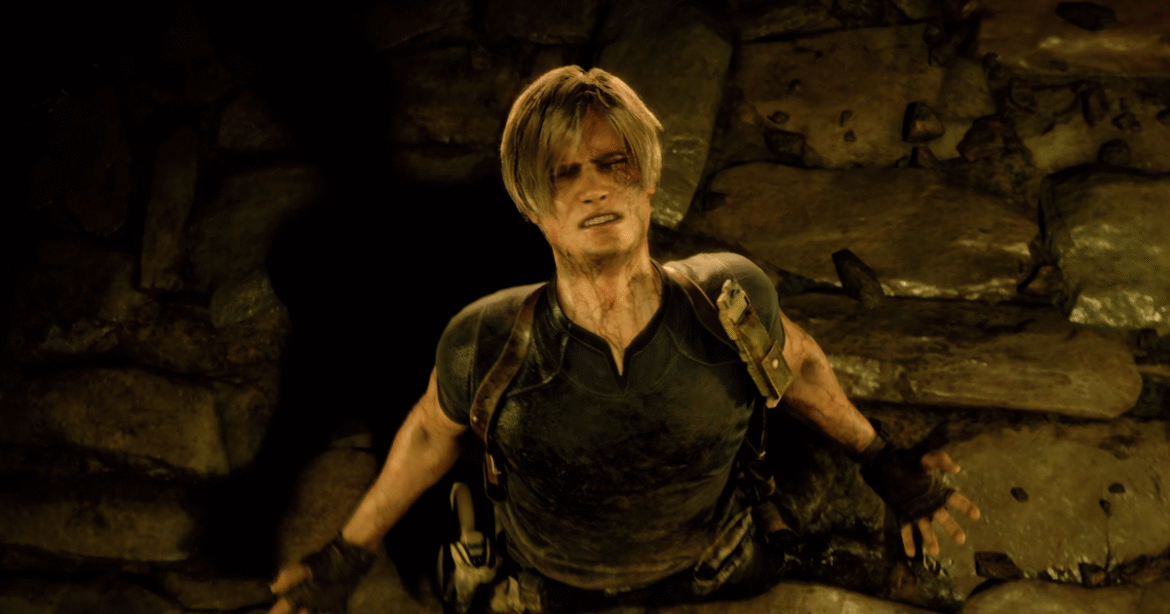
Zach Cregger’s forthcoming Resident Evil film will be an “entirely original story”, so won’t feature fan-favourite character Leon Kennedy.

The director of recent horror-hit Weapons spoke with Entertainment Weekly about his next film, based on Capcom’s game series.

“When you watch it, you’ll be like, ‘This is very Zach’,” he said. “It’s just [that] it takes place in the Resident Evil world. I don’t think fans of the games are gonna be bummed.”

Weapons star Austin Abrams will lead the Resident Evil film cast, with actor and professional wrestler Paul Walter Hauser also confirmed. Cregger has co-written the script with Shay Hatten.

“I’m not gonna steal Leon and put him in an original story. I think that would be presumptuous,” said Cregger. “But I respect the games enough where I’m gonna like tell a Resident Evil story in the Resident Evil canon that still leaves everything they love intact from the games, you know what I mean?”

He added: “I think that when you see it, you’ll understand how I can be obsessed with original ideas and still make a movie that is an IP-based thing. I know that doesn’t make a lot of sense now, but I hope that it will later.”

In a previous interview, Cregger stated the film “lives” in the world of Resident Evil 2 and 3, but “adheres more to the tone of 4”. What’s more, the viewing experience will be akin to the journey players take in the game, following a protagonist from A to B “as they just descend deeper and deeper and deeper into hell”.

Cregger’s Resident Evil film is set for a release on 18th September 2026.



Source link

September 19, 2025 0 comments
0 FacebookTwitterPinterestEmail
Sasha Bordeaux looking at an off-camera John Economos in Peacemaker season 2 episode 5
Gaming Gear

Peacemaker season 2 makes a big change to Sasha Bordeaux’s DC comic book origins story, and some fans might not like it

by admin September 19, 2025


  • Peacemaker season 2 episode 5 has made its streaming debut
  • It puts a major twist to Sasha Bordeaux’s origins story in the comics
  • The change was necessary for one major reason

Peacemaker season 2 episode 5 has landed on HBO Max and other streaming services, and the show’s latest chapter makes a major change to Sasha Bordeaux’s backstory from the comics.

Until now, most viewers knew little about the ARGUS agent portrayed by Sol Rodriguez. But, thanks to a couple of key scenes in this season’s fifth entry, titled ‘Back to the Suture’, Bordeaux isn’t as much of an enigma as she’s been presented as.

Full spoilers immediately follow for Peacemaker season 2 episode 5, titled ‘Back to the Suture’.


You may like

This is the face that some fans might pull when they learn about Bordeaux’s altered backstory (Image credit: DC Studios/HBO Max)

The first major revelation about Bordeaux emerges during the stand-off between Chris Smith and the ARGUS agents trying to arrest him at Kupperberg Park. None of the assembled group have a clear shot on their target because Smith has taken Agent Clyne hostage and has draped them across his shoulders to use as a protective shield.

Cue Bordeaux’s intervention. Informing ARGUS chief Rick Flag Sr that Smith is locked into a turning pattern – essentially, Smith’s moving in a circle on the spot to keep tabs on the approaching personnel – she says she has a clear shot and, if she takes it, it’ll be fatal.

Yep, Bordeaux isn’t completely human (Image credit: DC Studios/HBO Max)

In a move that’ll surprise many viewers, it’s revealed Bordeaux is actually part-android; her robotic right eye and 0.002% miss rate calculation being the clear giveaways.

Luckily for Smith, Emilia Harcourt makes a last-second intervention that prevents Bordeaux from killing the titular anti-hero. Okay, he’s subdued, arrested and carted off to ARGUS headquarters to, as we later see, be heavily beaten by Flag Sr, but at least the metahuman known as Peacemaker isn’t actually dead. Hey, you take the wins where you can.

Sign up for breaking news, reviews, opinion, top tech deals, and more.

Anyway, back at ARGUS, Harcourt reunites with John Economos and persuades him to ‘book’ Smith so there’s an arrest record, which will prevent Flag Sr from making Smith ‘disappear’ – i.e. bumping him off.

It’s during this conversation that we learn more about Bordeaux, with Economos revealing she’s a cyborg. Continuing, Economos says that, following a near-fatal plane crash, ARGUS replaced half of her body, which had been mangled in said disaster, with machinery and other technology to save her life.

Why Sasha Bordeaux’s origin story needed to be changed in Peacemaker season 2

Some DC devotees might be wondering why Bordeaux’s backstory needed to be changed (Image credit: HBO Max/YouTube)

Bordeaux’s origin story in the DC Universe (DCU) isn’t wholly dissimilar to part of her backstory in the comics. Indeed, Bordeaux is turned into a type of cyborg known as OMAC (Omni Mind and Community or, to use the original abbreviation, Observational Metahuman Activity Construct). OMACs are humans who’ve been turned into robots by a virus created by Maxwell Lord to kill metahumans.


You may like

However, Bordeaux’s origins needed to be tweaked for Peacemaker season 2 – and, by proxy, the DCU – for one big reason: Batman.

In the comics, Bordeaux is initially introduced as a secret service agent-turned-private contractor who’s hired as the head of Bryce Wayne’s security team. Without getting into the nitty-gritty of her entire arc to date, Bordeaux *deep breath* learns Wayne is Batman, starts patrolling Gotham City alongside him, falls in love with the Caped Crusader, is co-framed for the murder of Wayne’s ex-girlfriend, almost dies in prison, joins the government agency known as Checkmate, rises through that group’s ranks, and eventually becomes said cyborg.

Sasha Bordeaux’s origins story in the DCU differs from her literary counterpart (Image credit: DC Comics)

Considering The Dark Knight hasn’t been fully introduced in the DCU yet – we know he’s already active, though, due to his silhouetted cameo in Creature Commandos episode 6 – a lot of heavy lifting would’ve been required on Peacemaker‘s part to explain Bordeaux’s comic-accurate backstory. In that sense, simplifying her origins in the DCU was the best option available to James Gunn and company.

This doesn’t mean Bordeaux couldn’t cross paths with The Dark Knight in another DCU Chapter One project. We already know that a Batman movie, currently titled The Brave and the Bold, is in early development at DC Studios. Speaking to TechRadar ahead of Peacemaker’s return, Rodriguez admitted she’d love to appear in The Brave and the Bold, but had no idea whether Gunn would include her as part of its cast.

Of course, in order to meet Batman, Bordeaux needs to survive the final three episodes of one of the best HBO Max shows’ second season. Given Gunn’s penchant for killing off characters willy-nilly, there’s no guarantee that she’ll make it to the end, either.

Anyway, what do you think about this reframing of Bordeaux’s origins tale? Does it work? Are you upset that it doesn’t follow her literary backstory ad verbatim? Let me know in the comments.

You might also like


Source link

September 19, 2025 0 comments
0 FacebookTwitterPinterestEmail
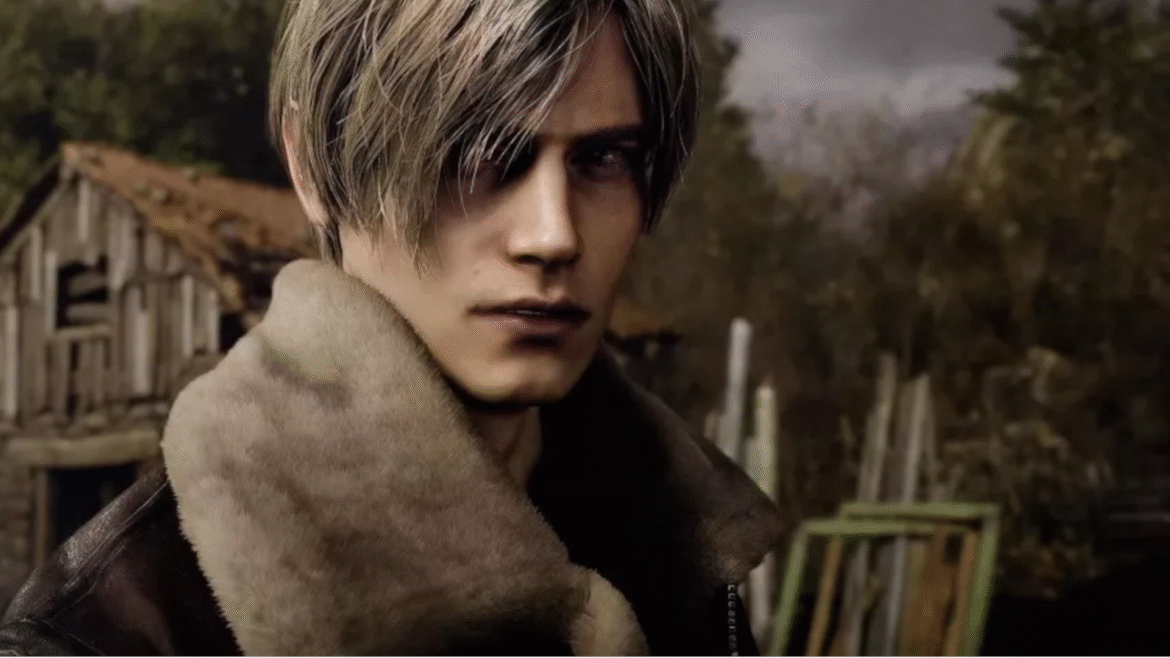
Leon from Resident Evil 4 doing the smoulder among a run-down village.
Gaming Gear

Weapons director says his Resident Evil movie will leave everything ‘intact’ from the games: ‘I’m not gonna steal Leon and put him in an original story’

by admin September 19, 2025


Zach Cregger is on a roll. The writer and director of 2022’s Barbarian and this year’s Weapons now has two solid horror hits under his belt, and is in pre-production on his next one: a Resident Evil movie planned for 2026.

That’s good news for Resident Evil fans who might otherwise be a bit wary about yet another new Resi movie—the film franchise was already rebooted once, just four years ago, with the thoroughly mid Resident Evil: Welcome to Raccoon City. Cregger’s track record, though based on a small sample size (at least when it comes to feature films) is a good reason to be optimistic.

And for those wondering which game and characters this new Resi movie will be based on, it looks like the answer is: none of them.


Related articles

Speaking to Entertainment Weekly, Cregger confirmed that while the 2026 film will take place in the Resident Evil universe, “It’s an entirely original story,” instead of being based on any one specific game. Cregger is also steering away from major Resident Evil characters like Leon S. Kennedy.

“I’m not gonna steal Leon and put him in an original story. I think that would be presumptuous,” Cregger told EW. “But I respect the games enough where I’m gonna tell a Resident Evil story in the Resident Evil canon that still leaves everything they love intact from the games, you know what I mean?”

I think I know what he means. When using a character people are already familiar with, like say Master Chief in the recent Halo TV series, you run the risk of disappointing people who have expectations of that character, like when you show his naked butt, or when he has sex. A safer and more creative approach is to handle it like the Fallout series, which creates mostly original characters and sets them loose in a familiar world.

Both Barbarian and Weapons are effective not just because they’re scary, but because they’re intriguing. By presenting the story of both films from the perspective of different characters and jumping around in time, we don’t get all the information in a linear fashion, which gives both movies a fun sense of mystery. At other times we get information before certain characters do, too, and then we’re left dreading the horrible things we know are coming their way.

Keep up to date with the most important stories and the best deals, as picked by the PC Gamer team.

I’m curious if and how Cregger will use similar methods in his Resident Evil movie.

“I think that when you see it, you’ll understand how I can be obsessed with original ideas and still make a movie that is an IP-based thing,” Cregger said. “I know that doesn’t make a lot of sense now, but I hope that it will later.”

Cregger’s Resident Evil movie is scheduled to be released, wow, exactly one year from today, on September 18, 2026. Confirmed in the cast is Austin Abrams, who played the role of James, the drug-addict, in Weapons, and Paul Walter Hauser, who played Ed in this year’s The Naked Gun and Mole Man in The Fantastic Four: First Steps.


Source link

September 19, 2025 0 comments
0 FacebookTwitterPinterestEmail
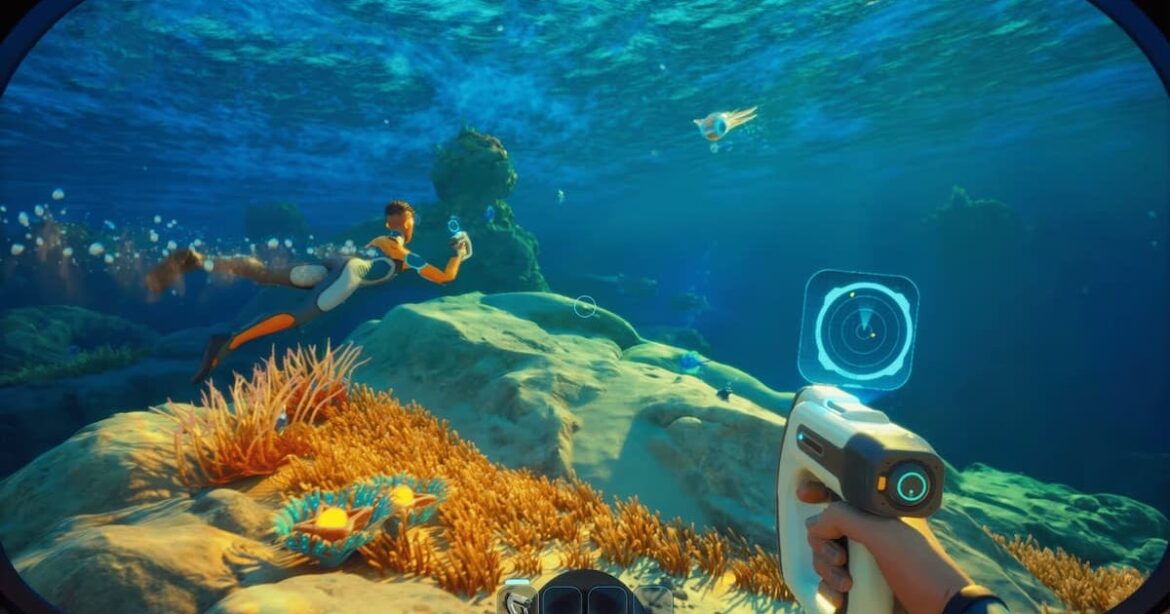
Founders of Subnautica 2 studio Unknown Worlds accuse parent company Krafton of "changing story mid-litigation"
Esports

Founders of Subnautica 2 studio Unknown Worlds accuse parent company Krafton of “changing story mid-litigation”

by admin September 18, 2025


The founders and former leadership team of Subnautica 2 developer Unknown Worlds have successfully blocked Krafton’s request for a court-ordered protective order, claiming the publisher “chang[ed] its story mid-litigation about why it fired the founders and seized control over Unknown Worlds.”

New court papers from September 12 and seen by GamesIndustry.biz confirm the court dismissed Krafton’s forensic inspection request, without prejudice, and also denied Krafton’s order compelling preservation, calling the request “unnecessary.” Both parties are now expected to meet and confer.

Details of the legal complaint against Krafton, Inc. by the former leadership of Subnautica 2 developer Unknown Worlds became public in July. The complaint concerns a $250 million bonus payout tied to revenue targets for the 2025 Early Access release of Subnautica 2, which the former shareholders of Unknown Worlds Entertainment, represented by Fortis Advisors LLC, allege owners Krafton, Inc. sought to avoid paying out by delaying the game using “pressure tactics.”

In its defense, Krafton accused the three former leaders of then threatening to self-publish Subnautica 2, “releasing it without Krafton’s backing, marketing, promotion, or distribution.” This, Krafton claims, left it with “no choice but to terminate their employment.”

The company also alleged that Max McGuire, Ted Gill, and Charlie Cleveland downloaded tens of thousands of “company files” and emails in the lead up to these terminations and claimed the former leadership “refused” to return “or at the very least confirm” what devices and confidential information remained in their possession.

Now, the founders claim that while Krafton initially alleged it fired them because of the founders’ “supposed intention to proceed with a premature release of Subnautica 2,” and “withdrawn game readiness as a grounds to justify its actions,” it has now “pivoted to a new theory that it admittedly came up with only after the fact: that it terminated the Founders and seized control because the Founders backed up files they were entitled to access in their work for Unknown Worlds.”

“Krafton’s disorganized retreat raises more questions than answers,” the court filing stated. “To say Krafton’s new theory is a Hail Mary would be an understatement – both because the downloads were not wrongful and because Krafton claims not to have learned of them until after it had fired the Founders. The downloads cannot have been the actual motivation for termination.”

Consequently, lawyers for former CEO Ted Gill, co-founder and creative director Charlie Cleveland, and co-founder and CTO Max McGuire requested that the court deny Krafton’s request for a forensic inspection, as well as dismiss a motion for a protective order on the grounds of its “shift in theories.”

Read our timeline of the former Subnautica 2 leads versus Krafton here.


Source link

September 18, 2025 0 comments
0 FacebookTwitterPinterestEmail
Quirky horror with a timely story hidden beneath? Indie gem No, I'm not a Human might be one of my favourite games this year
Game Updates

Quirky horror with a timely story hidden beneath? Indie gem No, I’m not a Human might be one of my favourite games this year

by admin September 17, 2025


Going into No, I’m not a Human, I think I was expecting a quirky horror curio about identifying monsters in people-suits, which it sort of is – for a while. But slowly, it slips on a new face, and by the time things wrapped up several hours later in a smog of suffocating hopelessness and a smear of blood and bone, I was genuinely a little shellshocked by it all.

No, I’m not a Human

  • Developer: Trioskaz
  • Publisher: Critical Reflex
  • Platform: Played on PC
  • Availability: Out now on Steam

It’s clear from No, I’m not a Human’s strikingly assured opening moments that developer Trioskaz is completely in control of its vision. A lilting guitar strums over a photo montage of sunsets, swing sets, sleeping cats, and placid bays, while a muffled voice on the phone talks a little sadly about coming home. It’s an understated, unexpectedly melancholy start, but quickly its mood shifts again.

It’s night. You, whoever you are, stand in a sparsely decorated hallway, walls papered in disorientating swirls of lurid green. An upbeat melody plays insistently on the soundtrack, waning and warping in a way that immediately unnerves. Suddenly, a knock at the door; you peer through a peephole and a sullen face stares back – a concerned neighbour with news of a deadly heatwave, dangerous Visitors with human faces infiltrating homes, and a firm warning to stay indoors. (It’s a little weird my two favourite horror games this year, the other being Look Outside, involve people being trapped inside a building as meteorological calamity rages without, but that’s probably a story for another day). Then, bedtime.

Get used to this corridor – you’ll be seeing it a lot. | Image credit: Eurogamer/Trioskaz

Squint and there is, perhaps, a touch of PT here. As in Hideo Kojima’s oft-mimicked horror teaser, No, I’m not Human’s L-shaped hallway is your entire world. Sure, it has a couple of spartan rooms you can peer into either side, but for its duration this grim corridor – the game’s sole explorable 3D space – is pretty much everything you know. But unlike PT, which finds a kind of forward momentum in its endless loop, here you remain stuck – literally and thematically – in this stagnant hole. Even your limited means of interacting with the outside world – glimpses through peepholes and sealed windows, through TV broadcasts and muffled telephone calls – only serve to intensify No, I’m not Human’s sense of claustrophobic incarceration.

They come at night. | Image credit: Eurogamer/Trioskaz

With the scene set, things soon settle into a distinct rhythm – a cycle of repetition that’s suffocating in its own way. You sleep by day, as the burning sun turns the world to ash, then wake at dusk, always to another knock-knock-knock at the door. Each night as the world cools, a ghoulish parade of loners and losers – drunks, wasters, conspiracy theorists, religious nuts – appears on your doorstep, each requesting sanctuary. And it’s for you to decide whether to welcome them in or send them on their way. Any of them might be a Visitor – othered creatures with human faces and unclear intentions – but companionship, you’re warned, is critical for your survival. A nightmarish end supposedly awaits if you’re visited by the Pale One when all alone.

Quickly, a problem arises; undetected Visitors will pick off your guests one-by-one in the dead of night if you inadvertently invite one into your home. And other complications force your hand in different ways, as events unfold. But the effect is the same: your days are spent in mounting paranoia, roaming your house and interrogating guests using information gleaned from TV broadcasts and scrambled radio signals – all in a bid to identify Visitors and eject them from your home, with brutal, ugly violence or otherwise. It’s a sort of highwire juggling act, where you’re attempting to manipulate events using extremely transient resources and limited tools, but the way you always seem to be playing catch-up with No, I’m not Human’s ever-evolving rules suggests Trioskaz is deliberately setting you up to fail.

Slowly, your house fills up with guests… and Visitors? | Image credit: Eurogamer/Trioskaz

No, I’m not Human might present itself as a sort of quirky deduction horror, but it feels equally haunted by the spirits of This War of Mine, Papers, Please, and Pathologic 2. Gradually, almost imperceptibly, its initial affectations slip away; the mood grows sombre and an overbearing sense of hopelessness settles in. As you spend more time with your oddball guests (assuming they survive each night) they’ll begin to open up, sharing humanising stories of their strange, sad lives. Each glimpse out the window paints an increasingly severe picture of the world beyond. Glib observations make way for genuine pathos as cities burn, ash-faced corpses hang from telephone poles, and children rot in the streets. By the time my playthrough ended with the protagonist pounding another man’s face to a liquefied pulp using his bare hands, it felt like we’d come a long, long way in a few short hours.

Curiously, though, No, I’m not Human isn’t exactly a one-and-done adventure, and is instead designed for repeated play. Guests are randomised, as are the symptoms you’ll need to identify Visitors each time, and there are hints of new narrative revelations to uncover, if only the incessantly shifting pieces would correctly align. Admittedly, my eventual ending – as vicious as it was – felt a little arbitrary, struggling to pull my playthrough’s unique story beats together in a narratively satisfying way. It’s hard to tell if this is an inherent design flaw based on a single playthrough, but even so, No, I’m not Human remains a fascinating thing.

Before long, you’ll be checking guests for telltale symptoms. | Image credit: Eurogamer/Trioskaz

It offers a slithering, deeply idiosyncratic slide into darkness, and a bleak vision of an uncomfortably close future (as masked government stooges begin moving from home to home disappearing ‘visitors’, it quietly invites obvious parallels). But for all its squalid discomfort and smothering despair, there’s an unmistakable sliver of light at its core: find connection and compassion when all hope seems lost, it suggests, and humanity might just endure. Not what I was expecting to be thinking about when I fired up this unassuming little horror game.


Source link

September 17, 2025 0 comments
0 FacebookTwitterPinterestEmail
Bitcoin
NFT Gaming

Bitcoin, not Big Tech, is the Market’s Biggest Story, Michael Saylor Says

by admin September 14, 2025


Trusted Editorial content, reviewed by leading industry experts and seasoned editors. Ad Disclosure

Strategy’s stock and treasury moves have grabbed fresh attention after the company’s executive chairman compared the firm’s returns to those of the so-called Magnificent 7 tech giants. Short and blunt: Strategy has leaned hard into Bitcoin, and recent numbers make a striking case.

Strategy’s Bitcoin Haul And Returns

According to posts by Michael Saylor, Strategy now holds about 638,460 BTC following a purchase of 1,955 BTC at an average price near 111,196. The company has spent roughly $47 billion, fees included, to build that stack at an average buy price of $73,880.

Based on reports, the current value of those holdings is about $71 billion. Those figures sit at the center of Saylor’s argument that his firm’s balance sheet strategy has paid off in ways typical tech plays have not.

Open Interest And Market Cap Comparison

Saylor also shared a chart that matched open interest against market capitalization. Strategy topped that metric at 100%, while Tesla registered 26%. The rest of the Magnificent 7 — Nvidia, Meta, Alphabet, Apple, Amazon, and Microsoft — came in well below Strategy’s reading.

According to his post, this comparison underpins the claim that Strategy’s market dynamics tied to Bitcoin have outpaced many heavyweight tech names.

What’s your Strategy to beat the Magnificent 7? pic.twitter.com/wywaAij3Rs

— Michael Saylor (@saylor) September 13, 2025

Magnificent 7 Face Headwinds

Based on reports, each of those big tech firms is dealing with different pressures. Apple and Microsoft face tougher regulatory checks.

Amazon is seeing slower consumer demand. Tesla must contend with rising competition in electric vehicles. Nvidia remains a strong performer because of AI chip demand, but even Nvidia’s run this year has not matched its earlier explosive gains.

Annualized returns presented by Saylor put Strategy at 91%, Nvidia at 72%, Tesla at 32%, Alphabet at 26%, and Meta at 23%. Microsoft, Apple, and Amazon showed significantly lower annualized gains in that comparison.

BTCUSD currently trading at $115,580. Chart: TradingView

Other Firms Are Buying Bitcoin Too

Reports have disclosed that about 12 companies upped their Bitcoin holdings last week, led by Strategy’s 1,955 BTC purchase. Gemini added 1,191 BTC and Bitdeer took on 333.5 BTC.

Companies from Japan’s Metaplanet to China’s Cango and the US firm Volcon also added coins. According to BitcoinTreasuries.NET, the 100 largest public holders now control 1,009,202 BTC, which is valued at more than $117 billion today.

Bitcoin Could Be The Answer

“What’s your Strategy to beat the Magnificent 7?” Saylor asked on X, hinting that Bitcoin—and his company’s bold treasury bet—may offer the answer.

Whether investors see it as a challenge or a warning depends on how they weigh Bitcoin exposure against traditional tech growth.

Featured image from Unsplash, chart from TradingView

Editorial Process for bitcoinist is centered on delivering thoroughly researched, accurate, and unbiased content. We uphold strict sourcing standards, and each page undergoes diligent review by our team of top technology experts and seasoned editors. This process ensures the integrity, relevance, and value of our content for our readers.


Source link

September 14, 2025 0 comments
0 FacebookTwitterPinterestEmail
Digimon Story Time Stranger preview
Esports

Digimon Story Time Stranger preview

by admin September 14, 2025


I didn’t know what to expect when getting hands-on with Digimon Story Time Stranger at PAX West. My knowledge starts and ends with knowing what a Patamon and that little orange dinosaur are. Like the normie I am, I was more into Pokémon while growing up. With this inherent perspective, I am going to commit a cardinal sin of game journalism worse than comparing Shin Megami Tensei to Persona. Comparing Digimon to Pokémon.

Self-deprecating jokes aside, it’s this outlook that had me leaving my three hours with this latest Digimon title beaming with excitement and wonder. If Game Freak’s monster-collecting series threads the line between simplistic but engaging beginner-friendly RPGs, then what I’ve experienced of Time Stranger offers a more complex take on that formula while still being a comfortable starting point for non-RPG veterans. 

My hands-on opportunity was split between two demos. The first is a fresh new save file covering the opening hours and tutorials. The second dove us later into the game, getting wet and wild exploring an aquatic land’s surface and depths called the Abyss, applying the basics in a more in-depth context. Upon starting, we’re greeted with a cute little animation going over an exaggerated look at ADAMAS. Despite the over-the-top action of the chibi heroes beating monsters and saving the day, ADAMAS is actually a secret organization involved in investigating urban legends.

For this mission, we’re tasked with investigating anomalies across the city, which range from suspicious natural disasters to sightings of mysterious life forms. In other cities, these anomalies fuel social unrest amongst the public, ultimately leading to societal collapse due to war, epidemic, or natural disasters. The goal of ADAMAS is to find the link between the anomalies and the subsequent downfall of societies. 

This sets the juxtaposing tone that permeates both demos. From the thrilling heroics of the starting animation, down to the Digimon designs that feel perfect on a child’s lunchbox, there is an infectiously positive “power of friendship” energy and story content that keeps the atmosphere light. Similar to a Saturday morning cartoon, it had me excited to see how our heroes would handle the sinister scenarios that would be thrust upon them. Even within the two sections I played through, there certainly were darker elements that festered beneath the colorful and upbeat vibes of this title.

A fundamental world-building facet in Digimon is how the human world and the Digital World, where the creatures reside, are separate. In both demos, we witness judgmental reactions to each other. When the protagonist enters the Digital World in session one, a group of Digimon responds in fear an claims they are a villain. In the second session, one of the human characters praises Shellmon in comparison to the others by pegging him as a “…good Digimon” in comparison to others for practicing basic kindness. Also in this section, surface-dwelling Digimon are wary of the mons in the sea called Titians, as they both feud over ownership of land. Good ol’ passive and active racism. On the flipside, conflict with humans is shown by demonstrating the friction between a concerned father and his distrust of law enforcement, which serves as the capper to the first demo. 

Circling back to the start of session one, heading towards the specified coordinates of our first objective further hammers home Time Stranger’s commitment to depicting social issues. The main character’s walking speed slows as the camera zooms in to trail their back. A protest has broken out with the civilians criticizing the government for hiding something behind a towering barrier called the “Wall of Hope”.

None of this is particularly deep from what I’ve played, but the bits I’ve experienced wear their heart on its sleeve and resolve situations in an optimistically heartwarming way. This being a JRPG, I anticipate there still being dozens of hours for the story to flesh out its deeper themes in more complex ways, especially when the game hints towards “timey wimey” shenanigans going on (if the game’s subtitle wasn’t a clear indicator already). 

Upon entering the crumbling ruins behind the Wall of Hope, we’re able to use our Digivice to summon one of three Digital Monsters, Digimon for short: Patamon, DemiDevimon, and Gomamon. After selecting Patamon, we’re off to begin the basics of dungeon exploration and combat. Navigation through the dungeon isn’t anything special, but it gets the job done. The pathways boil down to linear corridors broken up by branching forks, housing treasure. Both this initial slice and the subsequent Abyss demo retain this basic exploration loop. 

Occasionally, environmental obstacles stand in our path. These small bits are what give the dungeons a unique flair beyond their aesthetic flavoring. In the tutorial session, pressing the right trigger would command our Digimon to destroy the rubble doors and pathways. In the Abyss demo, currents would launch us across underwater cliffs, still giving player control to dodge enemies swimming in the current. Additionally, there was an attempt at contextualizing certain sequences with story set pieces, such as running from a giant monster or escorting a Digimon who’s too scared to escape alone. These skew more towards illusions of varied gameplay, but they’re welcome additions to keep things from getting overly stale. 

Even though I found this simplicity to be sufficiently enjoyable, I do hope the full game introduces more complexity within dungeon crawling to stave off repetition. Especially since the run speed skews towards the slower end, even with being able to ride certain Digimon to traverse faster on foot. Regardless of these concerns, there is no feeling more whimsical than seeing these cute and cool creatures walk alongside you on your adventure, both inside and outside of battle. 

Speaking of battles, I found my initial exposure to the combat system to be understandable enough for a newcomer and a non-turn-based RPG fan like me to get the hang of. It takes one of the easy-to-grasp concepts of the genre, type advantages, and adds manageable layers that make for a system with intuitive depth.

As with plenty of other RPGs, the weakness triangle system is utilized as a foundation for combat. Each Digimon possesses an Attribute, the most common being Data, Virus, and Vaccine. Data beats Vaccine, Vaccine beats Virus, and Virus beats Data. While there are exceptions that fall out of this trio, most of the creatures we encountered in both demos fell under one of those three types. 

What gives Time Stranger its unique flair is how each attack synergizes this Attribute system with elemental weaknesses when determining damage calculation. Every skill will take on the Attribute of the user. As a result, a foe can be weak to or resist the same attack from two different Digimon depending on their Attribute. Let’s take a Data Digimon that has a weakness to water, but resists fire. A Virus Digimon will inherently have an advantage with most of its moves thanks to Virus beating data in the weakness triangle. That advantage will skyrocket if you command it to use a water skill, combining the two enemy weaknesses to multiply your own damage. Conversely, if the attack chosen is fire, the advantage of Virus will cancel out the resistance of fire, dealing normal damage. The same is true if a disadvantageous Vaccine Digimon uses a water skill.

What further compounds this being a good entry point for non-genre veterans is how items and Digimon switching are handled mid-fight. Performing these actions does not cost a turn, allowing the player to turn the tides of a hairy battle with ease. Occasionally, a brief QTE prompt will pop up after hitting an enemy, adding a slight real-time element to keep things engaging. For those who want battles to go by faster, I’m happy to say that the battle speed can be modified on the fly, going up to 5x. Furthermore, utilizing skills will charge up the player character’s Cross Art. Essentially, this is an Ultimate skill where the protagonist turns their Digivice into a gun to shoot their party to buff them, or blast the enemy for massive damage. It all contributes to making standard fights feel snappy. 

As for the boss fights, they play nearly identically to regular battles except for a larger health pool. I found the extended lengths of these bouts to allow the deeper nuances of a largely simple battle system to shine. Same turn switching becomes an effective tool at setting up offensive or defensive buffs for the party members without wasting a precious turn. Each boss was not shy about applying their own buffs on themselves in addition to charging powerful charge attacks. It’s overall a nice change of pace compared to the regular overworld battles. 

So, as I’ve described with my impressions of dungeon crawling and combat, these are pleasantly enjoyable systems, if nothing impressive. So why did I leave my hands on time with the biggest grin on my face? Well, as with other monster-collecting series, the star of the show is the Digimon themselves. Specifically, the team building aspect, which came as a shock to me.

I won’t lie to you, despite being the namesake of the sub-genre’s identity, I’m not a big fan of the monster-collecting aspects out of the few I’ve played. I have zero desire to “catch ”em’ all” in Pokémon, or hypertuning synergistic teams for competitive play. I just pick the mons that look cute or cool. For Atlus RPGs, I found their demon fusion systems to be mechanically dense, but too overwhelming for someone who plays them casually. 

From what I’ve tinkered around with Time Stranger, it is an easy-to-grasp system to create strong fighters, but with enough layers for those looking to hyperoptimize their team compositions. Since the weakness system is critical in performing well in skirmishes, a fantastic mechanic is the ability to freely attach skills to your Digimon in addition to moves they naturally learn. It provides flexibility in making your faves viable by expanding their type coverage.

So yes, that meant the adorable little slime freak Numemon was able to stand strong against the giant mechanical Sharkmon boss fight, even when the green booger’s signature move is yeeting a pile of pink poop with that goofy smile. This is on top of the typical equipment slots each Digimon possesses to boost their stats. 

But my favorite aspect of team building is acquiring and evolving Digimon, as they elevate the by-the-book exploration and combat. The more you fight a foe, the more data you acquire about it. The game keeps track of the number of times you defeat a said monster with a percentage. Once that number reaches 100%, you can summon that Digimon to fight alongside you. The percentage capped up to 200% during our session, and summoning a monster at this value will increase its stats. This incentivizes players to get into fights more often, tying together the dungeon exploration by making preemptive strikes auto-defeat an enemy, or starting the fight with foes taking damage. The streamlined nature of stealth’s integration into the dungeons makes this process makes collecting Digimon a breeze.

Another great feature is the personality system. Each party member has a personality that gives them stat buffs or passive effects during battle. These have the potential to be modified when talking with the Digimon walking with you in the overworld, further tying together the whimsical nature of walking around with these fantastical creatures into the RPG gameplay. 

As with most monster-collecting series, Digimon has a transformation system called Digivolution. Upon clearing certain conditions, such as learning a skill or breaking past a stat requirement, Digimon can Digivolve into new forms. What makes this unique is how this system is nonlinear. These digital creatures can transform into multiple monsters, each with its own unique strengths and weaknesses. You can even evolve backwards with de-Digivolution, further adding to the experimental nature of team formation. 

While you can only have three party members on the field with three reserves at a given time, the game offers player and AI-controlled guest squadmates, further adding flexibility to choosing which Digimon to build your team. While I didn’t access it during my playtime, there is the Digifarm, which serves as a daycare to level units without the need to use them in battle. It’s this engaging process of preparing their battles that makes the actual fights themselves satisfying to watch unfold despite their simplicity. 

Ultimately, this preview of the latest entry of this beloved series did its job for me as a newcomer. Concerns about mechanical depth and repetition aside, the three hours I spent familiarizing myself with this entry sold me on experiencing this game and the wider world of Digimon. I eagerly cannot wait to get my hands on the full package when Digimon Story Time Stranger launches on October 3, 2025, on PlayStation 5, Xbox Series X|S, and Steam. A public demo is currently available to download with save data carrying over to the full game.


Share this article


The link has been copied!


Affiliate Links


Source link

September 14, 2025 0 comments
0 FacebookTwitterPinterestEmail
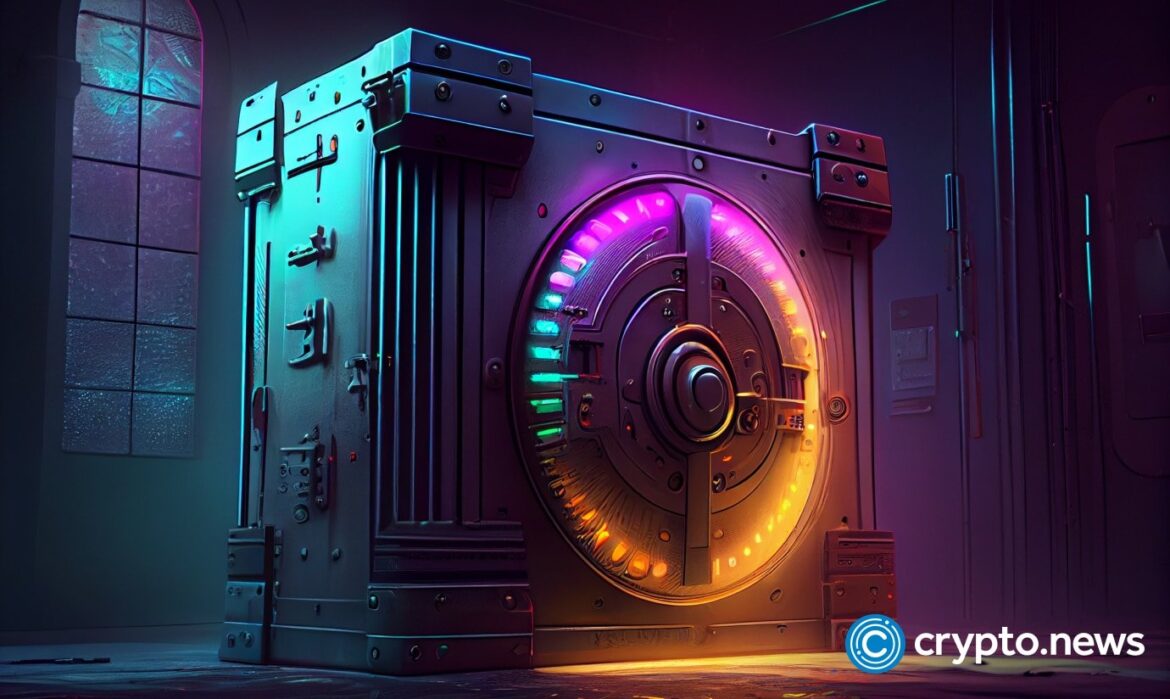
Image Of A Vault
NFT Gaming

Story launches IP Vault for programmable access to onchain IP data

by admin September 12, 2025


Story Foundation has announced the launch of secure on-chain storage space for intellectual property-focused assets to offer programmable access and monetization.

Summary

  • Story Foundation has announced upcoming launch of IP Vault, an onchain storage feature for sensitive intellectual property content.
  • Vault will go live later this year with a devnet before a testnet and mainnet launches in 2026.

Story Protocol, which unveiled its layer-1 network for programmable intellectual property in February, has added to its growing ecosystem with a new IP Vault. The Andreessen Horowitz-backed project allows for tokenization, licensing, and monetization of IP assets directly on-chain without intermediaries.

As adoption and integration grow, the ecosystem has grappled with the challenge of access and storage of sensitive IP content. IP Vault is a feature the Story Foundation says will help solve this challenge for large organizations, IP holders, and ecosystem developers.

“IP Vault is a secure on-chain storage space attached to an IP asset that stores confidential IP data on Story. These vaults are protected by the network and can only be accessed by IP owners and their license holders,” the Story Foundation wrote in a blog post.

What are the use cases?

Vault will store encryption keys that unlock files hosted on platforms such as IPFS and Shelby, Story Foundation said.

It will thus act as a programmable access layer for intellectual property assets, with the IP natively accessible onchain via Story (IP)’s layer 1 blockchain.

As a confidential storage space, Vault will not just offer secure storage of encryption keys, but also allow for conditional decryption, a feature that gives IP owners power to define the rules that must be met before content is decrypted. This will open up the IP market to new monetization opportunities around artificial intelligence and real-world assets.

Real-world use cases include Poseidon, an AI-focused project incubated by Story and backed by a16z. The platform will use IP Vault to secure its AI training data.

“As a full-stack data layer, Poseidon bridges the gap between supply and demand for specialized, IP-cleared training data. IP Vault enables secure access to these datasets alongside their corresponding IP assets on-chain,” Sandeep Chinchali, co-founder of Poseidon, said.

Story plans to launch IP Vault on devnet later this year, with testnet and mainnet rollouts expected in 2026.


Source link

September 12, 2025 0 comments
0 FacebookTwitterPinterestEmail
Hoskinson talks big, Cardano’s reality tells another story
Crypto Trends

Hoskinson talks big, Cardano’s reality tells another story

by admin September 11, 2025


From Ethiopia’s education system to a Wyoming health clinic, Hoskinson projects grand visions, but Cardano’s progress remains limited, uneven, and increasingly overshadowed by rivals.

Summary

  • Charles Hoskinson promotes bold ventures in healthcare and de-extinction while Cardano, his blockchain, struggles to match rivals in adoption, liquidity, and developer engagement.
  • Cardano’s smart contract rollout in 2021 proved rigid and discouraging for developers, pushing growth toward Ethereum and Solana, which now dominate in transactions, DeFi, and developer activity.
  • Governance reforms have introduced budgeting and on-chain voting, yet disputes, abstentions, and concentration of power continue to raise doubts about Cardano’s independence and long-term direction.
  • Hoskinson critiques Ethereum’s governance and design while pursuing side projects, but Cardano’s stalled adoption and weaker fundamentals suggest a widening gap between his rhetoric and delivery.

The Hoskinson pitch

In September 2025, Cardano (ADA) founder Charles Hoskinson returned to the spotlight at the Rare Evo conference in Las Vegas. Speaking to CoinDesk’s cameras, he declared that “health care is just f***ed in America” while unveiling a $200 million clinic project in Gillette, Wyoming.

He described the clinic as open-sourced and patient-first, saying it already serves about one-third of the town’s population. He added that patients unable to pay are not charged, and claimed the existing hospital was resisting the initiative by obstructing the credentialing of his doctors. 

Hoskinson also promised that artificial intelligence agents and selective disclosure cryptography would eventually be built into the system.

Almost at the same time, Hoskinson returned to one of his long-running critiques of Ethereum (ETH). He argued that the “Magnificent Seven” technology firms could become the next gatekeepers of liquidity in crypto and may choose to bypass Ethereum altogether.

He repeated his prediction that Ethereum might not survive beyond the next 10 to 15 years, pointing to its reliance on external scaling solutions and what he considers weak architectural design.

That skepticism toward rivals has often gone hand in hand with bold promises about Cardano’s own reach. 

In 2021, Hoskinson announced a partnership with Ethiopia’s Ministry of Education that was presented as a national breakthrough, with blockchain IDs promised for 5 million students and 750,000 teachers and academic records verified directly on Cardano. 

The project was held up as proof of real-world adoption at scale. In 2024, Input Output Global described the effort instead as a set of lessons and reflections and noted that Atala PRISM, once central to the deal, had been folded into Hyperledger Identus. 

That change reframed a flagship deployment into a learning exercise and placed the technology under a consortium standard rather than Cardano itself, undercutting the original narrative of transformative adoption. 

With so much activity around Hoskinson and Cardano, it is worth looking more closely at where the project stands and how it compares with its competitors.

Solana and Ethereum run while Cardano crawls

In that same interview, Hoskinson made a rare admission. He conceded that Cardano “bet wrong” on its smart contract model in 2021.

He described it as too rigid and unfriendly for developers, a choice that pushed many builders toward faster-growing ecosystems like Solana (SOL).

The timeline shows how this unfolded. Cardano launched in 2017 but did not release general-purpose smart contracts until the Alonzo hard fork on September 12, 2021.

Expectations had been building for years, yet within days, developers ran into concurrency issues on early decentralized exchange testnets such as Minswap.

These problems came from Cardano’s extended UTXO architecture, which processes transactions differently from Ethereum’s account-based model. The design was promoted as more secure and predictable, but in practice, it made complex applications harder to build.

Hoskinson tried to dismiss the concerns as misunderstandings, yet the reality was that a long-promised feature arrived with friction that immediately discouraged developers.

Subsequent upgrades were introduced to close the gap. The Vasil hard fork, aimed at scaling and improving Plutus, was planned for June 2022 but slipped to late September. Each delay added to the impression that Cardano could not deliver at the pace of the broader industry.

While competitors were attracting projects across decentralized finance, NFTs, and tokenization, Cardano was still working to stabilize the basics of its smart contract environment.

Adoption numbers show the effect. As of Sep. 10, Cardano’s total value locked in DeFi stood near $390 million. Solana held about $12.5 billion. Ethereum remained far ahead at $93 billion.

The gap is not only about size but also about lost momentum. When liquidity and developers move elsewhere, the network effect builds against the slower chain.

Ethereum processed about 1.4 million smart contract executions per day in mid-2025. Cardano processed around 52,000. Developer activity reflected the same divide, with Ethereum supporting about 3,200 active monthly developers compared with Cardano’s 720.

The contrast with Solana makes the divergence sharper. Cardano entered the first quarter of 2025 with weaker fundamentals, averaging about 71.5k daily transactions, a 28% drop from the previous quarter.

Solana, in the same period, processed millions of daily transactions supported by a large wallet base. Average fees were about $0.00025, and throughput ranged between 40,000 and 65,000 transactions per second, with more efficiency promised through the Firedancer client.

A pattern becomes clear when all the data is combined. Cardano often arrives late, delivers less than expected, and then tries to present the outcome as part of a longer journey.

Governance or gatekeeping?

Cardano’s governance was designed as a three-part system. Input Output took responsibility for protocol development, the Cardano Foundation handled ecosystem promotion and standardization, and Emurgo focused on commercial applications.

The layered setup created complexity from the start and led to perceptions of centralization, rather than the decentralization Hoskinson often highlights as Cardano’s defining principle. The history of the project shows why.

In 2018, Hoskinson and Emurgo chief executive Ken Kodama publicly called for the resignation of the Cardano Foundation’s chairman. They accused the Foundation of weak community engagement and poor transparency.

That early clash set the tone for recurring disputes over how the project is governed. In early 2025, the Cardano Foundation, acting within Intersect’s governance framework, proposed a 30% reduction in the ecosystem’s draft budget. 

The largest cut was directed at Input Output, whose allocation was set to fall by about 44%, from roughly 69.8 million ADA to 38.8 million ADA. 

Hoskinson objected, warning that such reductions risked slowing core technical development. The dispute revived questions about how much independence these entities truly held and whether governance choices were aligned with Cardano’s long-term technical needs.

Meanwhile, in 2025, Cardano also introduced a structured annual budgeting process managed through elected delegates and Intersect committees. 

For the first time, the community approved allocations via on-chain voting, covering both ecosystem funding and protocol governance. These governance steps were designed to improve accountability and transparency, but participation has remained limited. 

As of May 2025, around 11.7 billion ADA have been delegated to governance representatives. Yet more than 6.2 billion ADA of that sits with the “Abstain” delegate and another 173 million ADA with “No Confidence.” 

This means 68% of participants have opted out of active representation, leaving only about 48% of total voting power aligned with representatives able to cast votes.

The total ADA in circulation is 35.3 billion, but only about 33% has been delegated at all. Of that, just 14% of circulating ADA coins are actively delegated to autonomous representatives. A substantial share of potential voting influence, therefore, remains unused.

Since large portions of ADA on centralized exchanges are likely undelegated, these numbers reflect a relatively low level of engagement in governance. 

Headline totals obscure how much of the system is effectively neutralized, leaving real decision-making power concentrated in a smaller portion of the network than the surface figures suggest.

Meanwhile, Cardano also became embroiled in a high-profile dispute over unclaimed ADA vouchers.

Allegations surfaced in May 2025 claiming that Hoskinson and IOG had manipulated the blockchain during the 2021 Allegra hard fork to seize about $600 million in ADA.

Hoskinson denied the accusations, and an independent 128-page audit carried out by law firm McDermott, Will & Schulte, together with accounting firm BDO, later cleared him of wrongdoing.

The report, released on Sep. 3, confirmed that nearly all vouchers issued through Cardano’s pre-launch sales were successfully redeemed and that unclaimed ADA had been properly moved into reserves.

Even so, the lack of clarity damaged confidence as investors questioned the project’s governance and transparency.

That backdrop makes Hoskinson’s criticism of Ethereum more pointed and more paradoxical. He has often described Ethereum as a dictatorship around Vitalik Buterin.

Ethereum’s governance is based on open proposals and informal consensus through processes such as Ethereum Improvement Proposals. Decisions evolve from broad community debate rather than from a central authority.

Cardano’s model, in contrast, continues to revolve around three main entities that hold considerable influence despite the introduction of on-chain mechanisms.

Cardano drifts as its founder chases side quests

Hoskinson has promoted the Hoskinson Health and Wellness Clinic as a $200 million investment in Gillette, Wyoming. Local reporting in 2022, however, estimated the combined renovation and land development costs at closer to $18 million.

Promises of artificial intelligence integration and cryptocurrency payment systems remain future projections rather than active features. His claims that patients who cannot pay are not charged come without transparent data on how many individuals have actually received such care.

There are no publicly available metrics on patient outcomes, service volume, or adoption of the blockchain features he now associates with the clinic’s mission.

At the same time Hoskinson remains invested in one of the more unusual ventures connected to the crypto world, the de-extinction movement.

He is a backer of Colossal Biosciences, a company that has raised more than $200 million with promises to bring back woolly mammoths, dodos, and Tasmanian tigers. The investor list includes names as varied as Paris Hilton.

Conservationists and geneticists argue that such projects resemble spectacle more than science and that the money could be better directed toward protecting endangered species that still exist.

Even insiders at Colossal have criticized the company’s narrative and said they faced smear campaigns when they questioned the approach.

The effect of these side ventures is puzzling. While Cardano continues to struggle with low decentralized finance traction, limited developer momentum, and a lackluster record of adoption, its founder is speaking more about curing healthcare or reviving long extinct animals than about strengthening Cardano’s ecosystem.

The contrast between rhetoric and delivery grows sharper with each new announcement. The question is whether these ventures represent bold experimentation or distractions that take attention away from building a blockchain able to compete with its peers.


Source link

September 11, 2025 0 comments
0 FacebookTwitterPinterestEmail
Indiana Jones and the Great Circle: The Order of Giants DLC feels like a brief, cut down version of the main game, but an enjoyable story carries you through
Game Reviews

Indiana Jones and the Great Circle: The Order of Giants DLC feels like a brief, cut down version of the main game, but an enjoyable story carries you through

by admin September 10, 2025


After about ten minutes of running around the Vatican brandishing a biscotti like it was my own holy grail and ultimately angering a fair few fascists in the process (which in turn lead to me heroically fleeing the scene in order to find some kind of weapon – in this case, a crutch – to fight them off) I finally rediscovered my Indiana Jones and the Great Circle sea legs. Several months after finishing the main game, I was now ready to go back for a second helping thanks to its newly-released Order of Giants DLC.

Indiana Jones and the Great Circle: The Order of Giants

The Order of Giants kicks off when Indy opens the ‘A Mystery Begins’ Fieldwork quest and locates Father Ricci in the Great Circle’s Vatican area. The priest, along with his rather endearing parrot companion Pio, speaks of a “Nameless Crusader” believed to be a “giant” of a man who never removed his helmet. This legendary chap appears to have some connection with a secret chamber beneath the Vatican’s Casina and with Indy never being one to shy away from unravelling a good story rooted in history, he agrees to investigate for the duo (because, yes, the parrot is absolutely a team member, and I will not hear otherwise).

Looking further into this nameless and larger-than-life crusader takes Indy under the streets of Rome, as he uncovers a mystery which expands upon the lore of the Great Circle’s Nephilim order. Along with simply discovering more of the order’s story, though, Indy also takes on a number of puzzles and platforming-based excursions in the process. Oh, and of course there are also some skirmishes with yet more fascists as well as a smattering of red-robed cultists. Ooh.


To see this content please enable targeting cookies.

Manage cookie settings

Before I go too much further, let me say this right off the mark. Order of Giants doesn’t really add much new beyond story and some extra collectables. It feels more like a condensed, Vatican-flavoured microcosm of the full Great Circle game, but with an infusion of Sukhothai’s boat exploration. This DLC really should be considered a general extension to the Great Circle’s core mechanics, rather than something that will suddenly revolutionise what developer MachineGames has done previously. There are two new adventure books, for example (at least that I found), but rather than adding new skills, these books are more about buffs. Of course these are a nice boon – especially I imagine if you have not yet completed the main game – but as said, they don’t hold anything revolutionary that will mix up your Order of Giants experience.

Image credit: Bethesda

Ok, back to it. Now while I really did enjoy the story being told in Order of Giants, in terms of gameplay progress I found it a tad predictable. The platforming sections only really relied on a few small mechanics such as whipping to ledges and pulling on chains to make your way through a predetermined route. Meanwhile, the puzzles themselves were more straightforward than I would have expected from an expansion released several months after the main game, with the likes of directing water through a specific channel, or pulling levers in the order they appeared on nearby images. They lacked a certain amount of creativity.

Then at one moment, probably about halfway through the DLC, I thought I was going to be presented with a mini boss battle. One bit in particular gave me flashbacks to one of my favourite fights against the Great Circle’s blind giant, which was so tense it had me holding my breath (along with Indy). While I wasn’t expecting a carbon copy of that exact moment, I just did not get that same sense of thrill in Order of Giants. Instead, I was soon interrupted by a cutscene that quite literally cut things short. The rest of the DLC then followed a similar formula until the final confrontation (which I will not spoil here, but in terms of story and cinematics, I will say this final showdown did make me gasp with an ‘oh daaaang!’).

Image credit: Bethesda/Eurogamer

Setting aside that disappointment with the action, the storytelling here is still a treat, and is really Order of Giants’ greatest strength. There were several moments during the DLC where I found myself genuinely laughing at the situation Indy had put himself in, with more than just an appreciative titter. I mean, who else could find themself stuck under a car like that and at that exact moment? As an extra optional chapter to the Great Circle’s main game, it was all certainly an enjoyable narrative experience.

I just wish there had been more gameplay variety, and more to explore above ground in Rome itself. Visually, the majority of the Order of Giants grabbed hold of a 50 shades of grey colour card and ran with it, save for some splashes of the labyrinthine underground’s murky greens and browns. Little beams of sunlight from the city above would periodically penetrate through Indy’s subdued surroundings, but when this happened I found myself looking up with a desire to see the fresh blue sky, rather than looking for clues or similar in the immediate and now more illuminated area. I spent a lot of my time during the Order of Giants feeling rather claustrophobic due to being underground and in relative darkness for such an extended period of time.

Speaking of the largely underground setting limitations, while I had so much fun picking up all sorts of makeshift weapons during my playthrough of the Great Circle, there wasn’t the same variety to be found beneath the streets of Rome. Other than a few scepter-like melee items, I mostly made my way through the DLC’s combat sections using just Indy’s whip and fists. This was fine, and at the end of the day an effective enough method, but it didn’t give me the same giddy, silly joy as whopping a baddy over the head with a fly swat. At one point during the Order of Giants, I actually used my gun. I don’t think I ever did that during my playthrough of the main game, because I was having so much fun launching mandolins and mops at my enemies at every opportunity.

Image credit: Bethesda/Eurogamer

As for how long the Order of Giants took me to complete, I would say I was playing for around four and a bit hours in total. I know I didn’t uncover every new artefact there was to find, but I did uncover the majority. In short, the DLC is short. It is certainly not as long as I was expecting, and felt more like an extended and quite straightforward sidequest rather than a full fat standalone expansion with new mechanics and ideas.

It all boils down to this: Indiana Jones and the Great Circle: The Order of Giants is more of Indy doing Indy things. For me as a huge Indiana Jones fan – both of the Great Circle and the franchise more generally – I had a perfectly enjoyable time back with Indy, and appreciated where the story took me. But I wouldn’t go so far as to say Order of Giants is unmissable. Alas, it just didn’t really add anything to my overall experience of the main game – and given that the Great Circle was overflowing with creativity, characters, grand set pieces and so much more, that just feels like a little bit of a shame.


Source link

September 10, 2025 0 comments
0 FacebookTwitterPinterestEmail
  • 1
  • 2
  • 3
  • 4

Categories

  • Crypto Trends (1,098)
  • Esports (800)
  • Game Reviews (772)
  • Game Updates (906)
  • GameFi Guides (1,058)
  • Gaming Gear (960)
  • NFT Gaming (1,079)
  • Product Reviews (960)

Recent Posts

  • This 5-Star Dell Laptop Bundle (64GB RAM, 2TB SSD) Sees 72% Cut, From Above MacBook Pricing to Practically a Steal
  • Blue Protocol: Star Resonance is finally out in the west and off to a strong start on Steam, but was the MMORPG worth the wait?
  • How to Unblock OpenAI’s Sora 2 If You’re Outside the US and Canada
  • Final Fantasy 7 Remake and Rebirth finally available as physical double pack on PS5
  • The 10 Most Valuable Cards

Recent Posts

  • This 5-Star Dell Laptop Bundle (64GB RAM, 2TB SSD) Sees 72% Cut, From Above MacBook Pricing to Practically a Steal

    October 10, 2025
  • Blue Protocol: Star Resonance is finally out in the west and off to a strong start on Steam, but was the MMORPG worth the wait?

    October 10, 2025
  • How to Unblock OpenAI’s Sora 2 If You’re Outside the US and Canada

    October 10, 2025
  • Final Fantasy 7 Remake and Rebirth finally available as physical double pack on PS5

    October 10, 2025
  • The 10 Most Valuable Cards

    October 10, 2025

Newsletter

About me

Welcome to Laughinghyena.io, your ultimate destination for the latest in blockchain gaming and gaming products. We’re passionate about the future of gaming, where decentralized technology empowers players to own, trade, and thrive in virtual worlds.

Recent Posts

  • This 5-Star Dell Laptop Bundle (64GB RAM, 2TB SSD) Sees 72% Cut, From Above MacBook Pricing to Practically a Steal

    October 10, 2025
  • Blue Protocol: Star Resonance is finally out in the west and off to a strong start on Steam, but was the MMORPG worth the wait?

    October 10, 2025

Newsletter

@2025 laughinghyena- All Right Reserved. Designed and Developed by Pro


Back To Top
Laughing Hyena
  • Home
  • Hyena Games
  • Esports
  • NFT Gaming
  • Crypto Trends
  • Game Reviews
  • Game Updates
  • GameFi Guides
  • Shop

Shopping Cart

Close

No products in the cart.

Close