
Laughing Hyena
  • Home
  • Hyena Games
  • Esports
  • NFT Gaming
  • Crypto Trends
  • Game Reviews
  • Game Updates
  • GameFi Guides
  • Shop
Tag:

Space

'The Astronaut' Teases a Returned Space Traveler's Worst Sci-Fi Nightmare
Product Reviews

‘The Astronaut’ Teases a Returned Space Traveler’s Worst Sci-Fi Nightmare

by admin September 25, 2025


A person who thinks they’re home alone starts to suspect there might be an unnatural presence lurking around: that’s a pretty classic horror movie setup. What makes The Astronaut extra eerie is that the main character is a NASA astronaut whose most recent voyage ended with a rough re-entry. And that presence just might be something extraterrestrial that hitched a ride to Earth.

Here’s the new trailer for The Astronaut, starring Kate Mara as the understandably freaked-out title character. Is it real or in her mind—and which scenario would actually be worse?

Here’s the official synopsis:

“When astronaut Sam Walker (Kate Mara) crash lands back to Earth, she’s discovered alive in a punctured capsule off the Atlantic coast. General William Harris (Laurence Fishburne) places her in quarantine under strict NASA surveillance for rehabilitation and testing. But as disturbing events escalate, she begins to fear that something extraterrestrial has followed her home.”

While Mara is often seen in drama roles, she’s no stranger to genre; while she’d probably rather leave 2015’s Fantastic Four behind, she was also in the standout Black Mirror episode “Beyond the Sea” (coincidentally also about space-travel oddities), the overlooked android thriller Morgan, the first season of American Horror Story, and she does a voice on Invincible, to name a few credits.

The Astronaut is the debut feature from writer-director Jess Varley. It also stars Gabriel Luna (The Last of Us), Ivana Milicevic (The 100, Gotham), Macy Gray, and Scarlett Holmes, and it hits theaters October 17.

Want more io9 news? Check out when to expect the latest Marvel, Star Wars, and Star Trek releases, what’s next for the DC Universe on film and TV, and everything you need to know about the future of Doctor Who.


Source link

September 25, 2025 0 comments
0 FacebookTwitterPinterestEmail
A Spacecraft That Hunts Down Space Junk
Product Reviews

A Spacecraft That Hunts Down Space Junk

by admin September 22, 2025


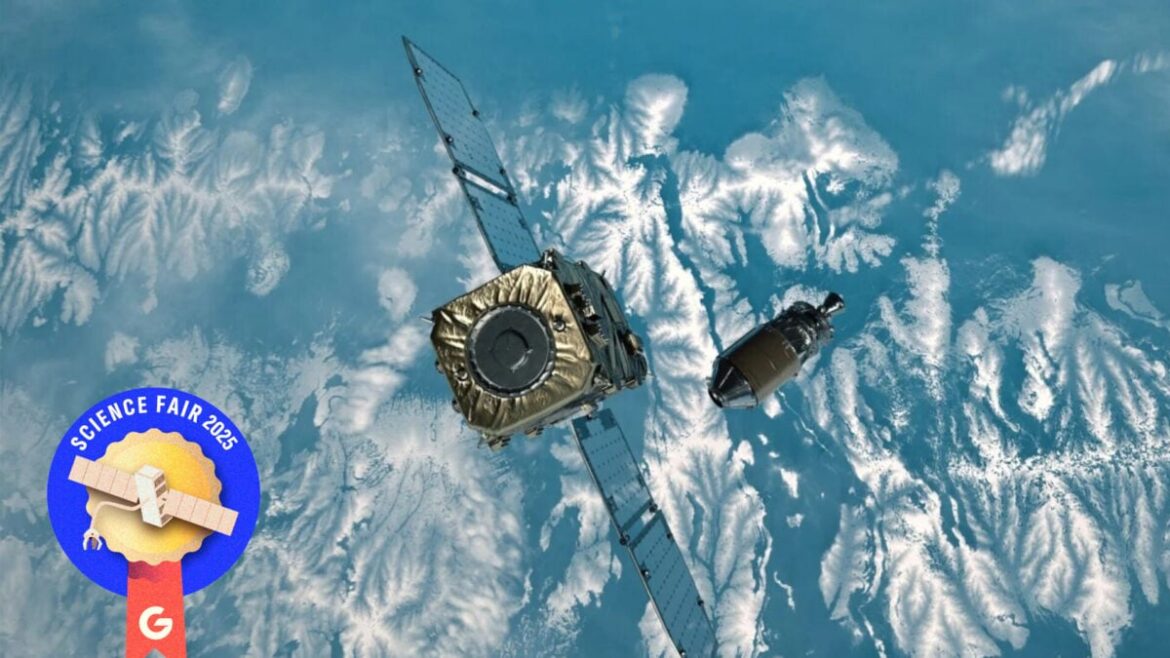
Astroscale is a 2025 Gizmodo Science Fair winner for developing a satellite designed to rendezvous with space junk, with the goal of capturing it and guiding it toward a fiery grave in Earth’s atmosphere.

The question

Can the space industry develop new technologies that help tackle the growing problem of debris and create a more sustainable orbital environment?

The results

On February 18, 2024, Astroscale launched its ADRAS-J (Active Debris Removal by Astroscale-Japan) mission on board Rocket Lab’s Electron rocket. The goal of the mission was to demonstrate its ability to approach, observe, and characterize a defunct spacecraft.

Launch of ADRAS-J. © Astroscale

The mission target was Japan’s H-2A rocket’s upper stage. This chunk of space junk has been in orbit for nearly 15 years, measuring approximately 36 feet long (11 meters) and weighing 6,613 pounds (3 tons). “Early in the program, we had a whole list of candidates,” Hisashi Inoue, chief engineer at Astroscale Japan, told Gizmodo. “We picked the target that wasn’t farthest away, and we also had some ground observations and information on the target and how it’s behaving.”

Around three months after its launch, the ADRAS-J mission came within nearly 50 feet (15 meters) of the defunct rocket stage. With its unprecedented close approach, Astroscale became the first company to approach a large piece of space debris. It was a challenging feat, Inoue explained, as the debris is flying in space at a speed of 4 miles per second (7 kilometers per second), or faster than the speed of a bullet.

As opposed to other rendezvous missions, the company could not communicate with the defunct rocket part. “This is junk, it’s not telling us where it is or how it’s moving,” he said. “So that makes it more complicated than just talking with a cooperative client.”

Since its target is not equipped with GPS, the ADRAS-J spacecraft had to rely on limited ground-based observations to locate and rendezvous with the spent second stage. Despite the challenges, the satellite was successful in creeping up on its target and performing a fly-around to capture images and data of the upper stage.

ADRAS-J served as a demonstration mission, paving the way for a follow-up that will attempt to remove the debris for real. For Astroscale’s second mission, the satellite will attempt to match the tumble rate of the wayward rocket, align itself, and dock with it. Once it’s docked, the satellite will grab the rocket with a robotic arm and lower its orbit using its thrusters before releasing it on a trajectory toward Earth’s atmosphere. The decommissioned vehicle will then burn up in Earth’s atmosphere, putting an end to its stint in orbit.

Why they did it

Millions of pieces of space debris are currently flying in Earth orbit, with roughly 1.2 million of them larger than 0.4 inches (1 centimeter), according to a recent report by the European Space Agency. That’s large enough to cause catastrophic damage to other spacecraft if it collides with them.

“If you think about the terrestrial auto industry, there are all these different services performed after the car is used by the first person. It’s reused, refurbished, or recycled, and goes to second-hand use,” Inoue said. “But in space, you use [a spacecraft] once and you throw it away, but that’s not good for sustainability.”

Nobu Okada founded Astroscale in 2013, focusing on orbital debris removal and in-orbit satellite servicing. The Tokyo-based company aims to reduce the growing amount of space junk not only by physically removing defunct spacecraft but also by extending the lifespan of satellites in space.

“By combining all those things, I don’t think we, as Astroscale itself, can change the world’s sustainability, but we’re hoping this will kind of jump-start some of the servicing-type missions, and customers will endorse this way of thinking,” Inoue said. “Hopefully in the future, this will connect to sustainable use of space.”

Why they’re a winner

At a time when space startups are focused on launching more satellites, spacecraft, and rockets into orbit to cash in on the commercial use of space, Astroscale is one of the few companies promoting a sustainable practice that will allow others to coexist in the orbital environment.

Members Of Astroscale Japan © Astroscale

The company is not only aiming to remove orbital debris but also to enable satellite inspection, relocation, refueling, and other life-extension services. Astroscale is pioneering sustainable use of Earth orbit in hopes that other companies follow suit and that governments worldwide set requirements for the use of space.

What’s next

Astroscale’s upcoming satellite is set for launch sometime in 2027, taking all the data and lessons learned from ADRAS-J and applying them to the follow-up mission.

ADRAS-J2 is designed to actively remove the defunct Japanese rocket from orbit using Astroscale’s in-house robotic arm technology to capture it and lower its orbit. “We’re currently in the design phase,” Inoue said. “Eventually we’ll start getting more hardware in the lab and start testing it, and then start building the spacecraft next year.”

The team

Key members of the Astroscale team include Nobu Okada, founder and CEO; Chris Blackerby, chief operating officer; Mike Lindsay, chief technology officer; Nobuhiro Matsuyama, chief financial officer; Melissa Pane, mission and system engineer; Arielle Cohen, flight software engineer; and Gene Fujii, chief engineer.

Click here to see all of the winners of the 2025 Gizmodo Science Fair.


Source link

September 22, 2025 0 comments
0 FacebookTwitterPinterestEmail
Elon Musk Is Out to Rule Space. Can Anyone Stop Him?
Product Reviews

Elon Musk Is Out to Rule Space. Can Anyone Stop Him?

by admin September 22, 2025


When the suit didn’t produce instant results, Musk went jingoistic. A few months earlier, in February 2014, Russia had invaded Ukraine, illegally annexing the Crimean Peninsula and triggering a global wave of condemnation against Moscow. Musk rode that wave in his successful push to get Congress and the Obama administration to wind down use of the United Launch Alliance’s signature rocket, the Atlas V, because it relied on Russian RD-180 engines. (The suit was eventually settled out of court.) The combination helped break ULA’s grip on government space launches.

Another big leap came in 2017. SpaceX started reusing its rocket cores, which dramatically brought down the price of getting to orbit. (Eight years later, its Falcon 9 and Falcon Heavy are still the only rockets in their weight classes with reusable cores.) But nothing was more important than Mueller’s continued development of SpaceX’s Merlin engine. It became one of the most durable in aerospace history, even though, as a former employee told me, “performance-wise, it’s terrible.” Its power and efficiency are nothing special. “We didn’t have the resources to do a lot of design and analysis,” he adds. “And so we just tested the ever-loving shit out of the engine. We hot-fired it thousands of times. Now they have an engine that’s super robust.”

Today, thanks in part to its nine reusable Merlin engines, a Falcon 9 can take a kilogram to low Earth orbit for one-third the previous cost; the Falcon Heavy, which uses 27 Merlins, drops the cost nearly in half again. Some 85 percent of Falcon 9 missions go to space with previously used first stages. In 2022, SpaceX jumped from doing around 30 launches per year to more than 60, and last year it hit 138. NASA’s space launch and human exploration efforts are now almost entirely controlled by Musk. A whole new space economy has grown up around him, one that relies on his cheap space access to get networks of small spacecraft into low Earth orbit. Take Planet Labs, the satellite imaging company. Hundreds of its spacecraft were carried by Falcon 9.

Really, no one is even trying to catch up; they’re just trying to find niches in a Musk-dominated ecosystem. ULA is building rockets optimized to reach geostationary orbits, which are farther out, even as many of its customers follow Musk’s lead and keep their satellite constellations closer to Earth. Upstarts like Rocket Lab and Firefly are admired for their ingenuity. But their current operational rockets are tiny by comparison—capable of carrying, at most, a couple thousand pounds, versus 140,000 for the Falcon Heavy.

“SpaceX is a cornerstone in the space industry. And then there’s other cornerstones, like Firefly. We’re very complementary to SpaceX,” says Jason Kim, the CEO of Firefly Aerospace. “It’s kind of like air, land, and sea. There’s no one-size-fits-all kind of transportation method.” (Kim’s not alone in this thinking; Firefly just went public at a valuation of $8.5 billion; Rocket Lab’s market cap is about $21 billion.)

Jeff Bezos has the cash to compete with SpaceX. And he’s certainly been at it long enough—his rocket company, Blue Origin, started a quarter-century ago. But it has had, shall we say, competing priorities. It’s been hard at work on engines; its BE-4 engine is actually powering the first stage of ULA’s new rocket, confusingly enough. You may have seen that Blue Origin has a rocket for near-space tourism, the one that recently carried Bezos’ wife, Lauren Sánchez, and Katy Perry aloft. But the company’s big rocket, the one that’s supposed to compete with SpaceX, has flown exactly once. And when I ask Blue Origin’s rep what makes their rockets any better—or, at least, any different—from Musk’s, he tells me: “I don’t have a solid answer for you on that one.”

China, which once seemed poised to dominate global launch, has had trouble keeping up with Musk’s rising totals, successfully launching between 64 and 68 rockets annually over the past three years. SpaceX is not only launching twice as often, it’s carrying more than 10 times the reported mass to orbit. Stoke Space, founded by Blue Origin engineers, has aerospace geeks in a frenzy, but it has yet to put a rocket on the pad. United Launch Alliance, SpaceX’s OG competitor, has a powerful new rocket—more on that in a bit—but once again, Musk is ahead. He’s working on a truly massive launcher, arguably the biggest ever constructed. Both stages are supposed to be fully reusable (which means, of course, immense cost savings), while neither stage of ULA’s Vulcan will be fully reusable. And that, according to a new report from SpaceNews Intelligence, could relegate the one-time monopolist “to niche roles in government or regional and backup contracts, assuming they survive at all.”

II. SATELLITES

At the end of May, at his factory in Starbase, Texas, Musk was in full Mars evangelist mode. “This is where we’re going to develop the technology necessary to take humanity,” he told his employees, “to another planet for the first time in the four-and-a-half-billion-year history of Earth.”

But as he sketched out his soaring vision of this place cranking out 1,000 enormous Starships per year, Musk repeated a more mundane truth. No, not the part about the Starship’s uneven test record. The one about funding. “Starlink internet is what’s being used to pay for humanity getting to Mars.”


Source link

September 22, 2025 0 comments
0 FacebookTwitterPinterestEmail
Hatsune Miku Project Diva MegaMix+
Gaming Gear

Japan’s space agency officially ends decade-plus mission that carried Hatsune Miku into space one year after losing probe somewhere above Venus

by admin September 21, 2025


Hatsune Miku’s voyage through space has finally come to an end after 15 long years. The Japanese space probe Akatsuki has officially ceased operations, as reported by Automaton. The probe was originally launched on May 21, 2010, after famously being decorated with some 13,000 Hatsune Miku drawings and messages submitted by fans.

The Japan Aerospace Exploration Agency (JAXA) sent the probe next door to Venus to study the planet’s weather patterns and look for “signs of active volcanism.” The probe also captured some stunning images of Venus that show the milky coffee hues of its atmosphere. JAXA reported that it lost contact with the probe in April 2024 and operations were officially terminated on Thursday. Akatsuki was the only operational probe specifically focused on studying Venus over the past ten years.

The Akatsuki team announced the shut down in a post on X (formerly Twitter), as translated by Automaton: “We have concluded operations of the Venus probe Akatsuki. Since last year we have been attempting to restore communications, but determined that recovery would be difficult, and so we have drawn this chapter to a close. We sincerely thank everyone who has supported Akatsuki over the 15 years since its launch.”


Related articles

Ahead of Akatsuki’s launch in 2010, JAXA invited the general public to send in art and messages to get etched into the probe’s aluminum balance weights. Fans of the voice synthesizer program Vocaloid, which (at the time) powered Hatsune Miku, saw the opportunity to send their favorite fictional pop star to the stars.

They sent in over 13,000 drawings and messages to go on Akatsuki, turning part of the probe into a monument to Miku. JAXA let it fly (literally) and the Hatsune Miku art got to spend 15 long years orbiting Venus.

While Venus may not have any robot friends flying around it at the moment, a few new missions are in the works. NASA is working on two probes, DAVINCI and VERITAS, both slated for launch in the early 2030s, and the European Space Agency is planning to send its EnVision probe to Venus sometime in the next decade, as well.

Keep up to date with the most important stories and the best deals, as picked by the PC Gamer team.


Source link

September 21, 2025 0 comments
0 FacebookTwitterPinterestEmail
Moon Helium Deal Is the Biggest Space Resource Grab Yet
Product Reviews

Moon Helium Deal Is the Biggest Space Resource Grab Yet

by admin September 20, 2025


For billions of years, solar winds have bombarded the Moon. Over time, this constant onslaught of charged particles has caused helium-3 to accumulate in the lunar surface. This isotope is rare on Earth, and rising demand from several industries—including quantum computing—has incentivized some companies to explore the possibility of lunar mining.

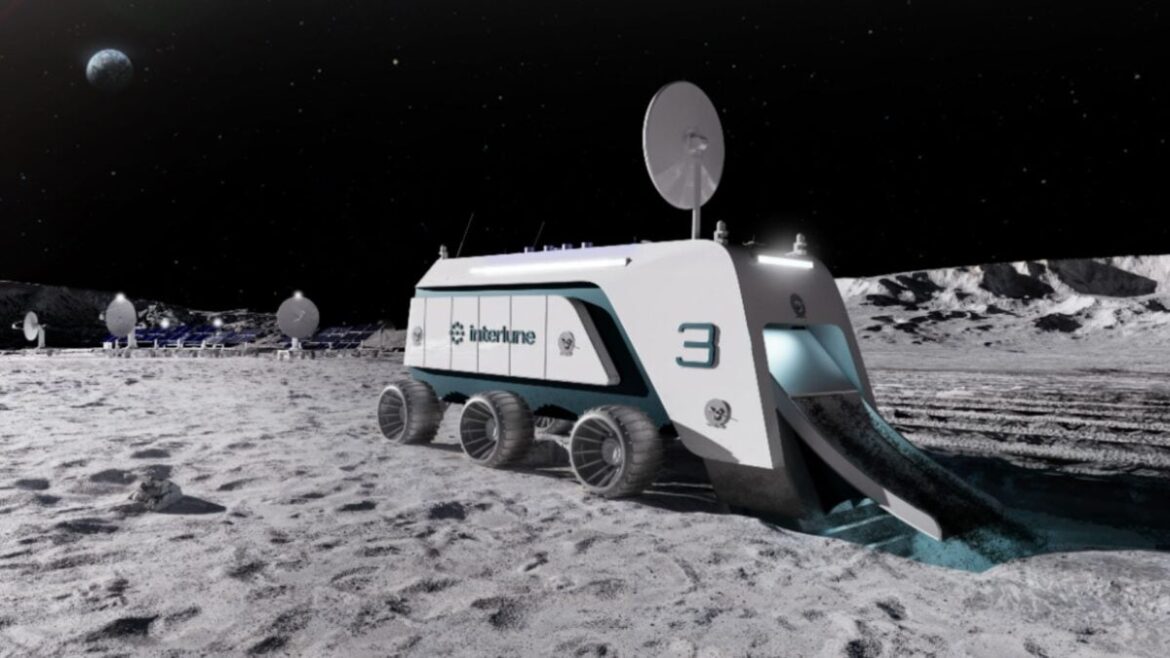
One such company is Interlune, a Seattle-based startup that aims to extract natural resources—primarily helium-3—from the lunar surface. Interlune eventually hopes to sell its harvested helium-3 to government and commercial customers in the national security, medical imaging, fusion energy, and quantum computing industries—and it just struck a major commercial deal.

The largest purchase of lunar resources yet

On Tuesday, Interlune announced a partnership with Bluefors, a leading manufacturer of dilution refrigerators and one of the world’s largest consumers of helium-3. Its continuous cooling systems use helium-3 to keep quantum computers running at the ultra-low temperatures required for maintaining qubit stability and reliable operation.

As the quantum computing industry moves toward commercialization—with tech giants such as Google, IBM, and Microsoft reporting progress in scaling—the demand for helium-3 is set to rise. Bluefors agreed to purchase up to 10,000 liters of helium-3 annually from Interlune between 2028 and 2037. This substance trades at around $2,500 per liter, according to a 2024 estimate from The Edelgas Group. The deal is the largest purchase of lunar resources to date.

“A majority of the quantum technology industry relies on Bluefors systems to operate and accelerate development,” Rob Meyerson, Interlune co-founder and CEO, said in a company release. “We are excited to help Bluefors continue advancing companies toward unlocking scientific and medical discoveries made possible only by near-absolute-zero temperatures.”

How Interlune plans to mine the Moon by 2028

Meyerson, former president of Blue Origin, founded Interlune in 2020 alongside former chief architect Gary Lai and Harrison Schmitt, the only living member of Apollo 17. Ever since that mission, Schmitt—a geologist—has advocated for humanity to harness the Moon’s helium-3 reserves.

Interlune has spent the past five years working toward that goal. The company has raised over $18 million in venture funding to develop robotic harvesters and launch a demonstration mission in 2027 as well as a pilot plant by 2029, according to SpaceNews.

This funding and the clearly laid-out roadmap are promising, but it remains to be seen whether Interlune will overcome the steep technological, logistical, and financial challenges of lunar mining by 2028. Though the prospect has garnered plenty of buzz in recent years, very few companies have made real progress toward achieving it.

What’s more, some experts argue that the value of mining the Moon’s helium-3 is overblown. The fact is, we don’t know for sure how much is up there. And although the highest concentrations measured in the Apollo and Luna samples are greater than Earth’s, they’re still very low.

For now, the Moon’s helium-3 is more promise than product, but Interlune’s deal with Bluefors signals rising demand from the quantum computing industry—and could mark a major step toward a new era of space resource extraction.


Source link

September 20, 2025 0 comments
0 FacebookTwitterPinterestEmail
Final Fantasy 7 Remake on Switch 2 is a game key card that'll fill a third of your console's storage space
Game Updates

Final Fantasy 7 Remake on Switch 2 is a game key card that’ll fill a third of your console’s storage space

by admin September 16, 2025


The physical release of Final Fantasy 7 Remake on Switch 2 will be on a game key card and will take up around a third of the console’s storage capacity.


Some Switch 2 physical games are sold as game key cards, which use the card solely as a key to download the full game. Many third-party publishers are opting for this method of release on Nintendo’s new console.


Images of the game box on Square Enix’s store prove Final Fantasy 7 Remake will be another game key card release, while its eShop listing states it requires a download of up to 90GB. As the Switch 2’s storage capacity is 256GB, that means the game will take up approximately 34 percent (though of course you’ll need to account for console system files).

Final Fantasy VII Remake Intergrade – Release Date Announcement – Nintendo Switch 2Watch on YouTube


The reported maximum size for a proper game card is 64GB, which is the card size CD Projekt Red opted for with its Cyberpunk 2077 release on Switch 2. But at 90GB, Square Enix’s game wouldn’t fit.


Indeed, the huge size of games is exactly the reason Nintendo offers game key cards as an option, but this has been heavily criticised by game preservationists. Nintendo even released a survey to gather reactions.


So what’s the alternative solution here? Should Square Enix be to blame for its decision and/or inability to reduce the game size? Or is Nintendo to blame for not offering larger game cards?


Larger game cards would be more expensive for publishers, while a higher console capacity would be more expensive for Nintendo who seems more than happy to let consumers choose to expand storage space through expensive MicroSD Express cards – this now looking pretty essential if you plan on playing triple-A third-party games on the Switch 2.


One developer at Ubisoft did explain why it opted for a game key card with Star Wars Outlaws on Switch 2, stating traditional cards “simply didn’t give the performance we needed at the quality target we were going for”. The game was built around the SSDs of release platforms and as such it “relies heavily on disk streaming for its open world environments”.

Perhaps Square Enix has a similar reason.


Still, Square Enix has confirmed the entire Final Fantasy 7 Remake trilogy is headed to Switch 2. And considering second game Rebirth is 145GB on PS5, there’s no way you’ll be able to play all three games on your Switch 2 in future without opting to expand the memory.

Love Eurogamer? Make us a Preferred Source on Google and catch more of our coverage in your feeds.


Source link

September 16, 2025 0 comments
0 FacebookTwitterPinterestEmail
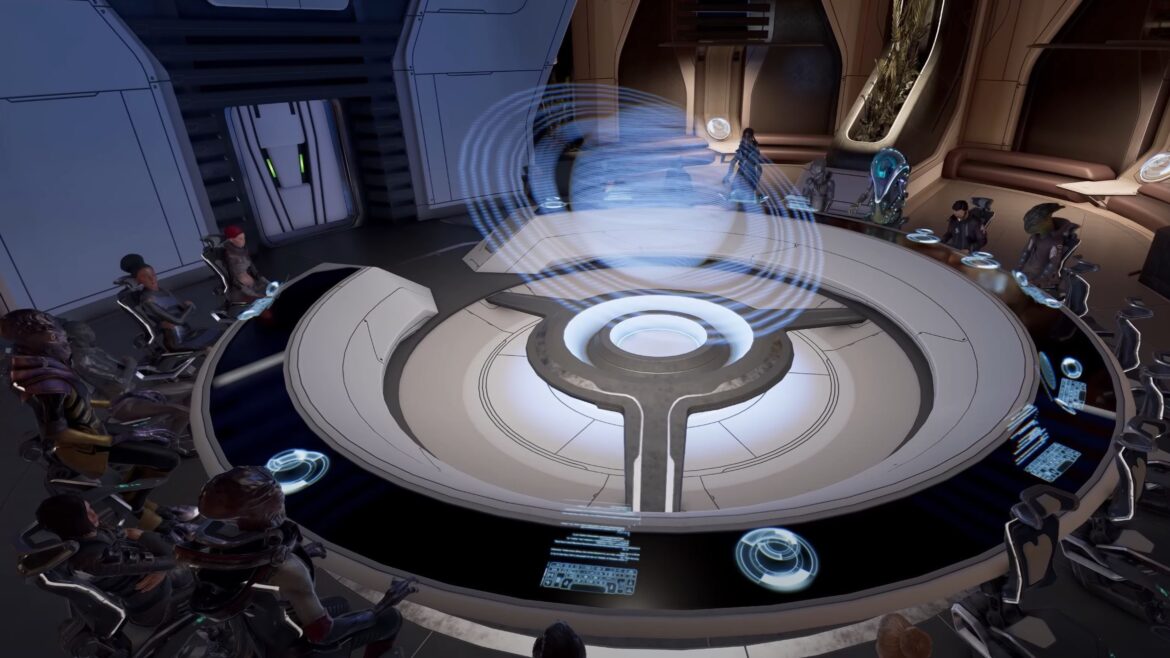
Alien ambassadors sit around a circular, white table with a holographic display of a ringed planet hovering above its centre.
Product Reviews

X4: Foundations’ massive diplomacy update adds an actual embassy room to your HQ, where you can entreat with aliens from across the galaxy and establish yourself as space Machiavelli

by admin September 14, 2025


While not as flashy as Star Citizen or as popular as No Man’s Sky, X4: Foundations is one of the most comprehensive space sims you can play today. Representing a return to form after the failed experiment that was X: Rebirth, X4 continues the series tradition of offering a preposterously detailed simulation of space—featuring trading, combat, space exploration, and dynamic faction politics—while also letting players build and expand their own interstellar empire.

X4 can be a hugely rewarding experience, provided you can handle its vertiginous learning curve and millions of menus. The space sim has quietly trundled along with a small but dedicated community for years now. But its latest update caught my eye. Patch 8.00 introduces a detailed diplomacy system to the sequel, letting you liaise with the universe’s many alien factions, mess with inter-faction relationships to your advantage, and conduct daring espionage operations, essentially adding a slice of Crusader Kings to your adventures through the void.

Described as a “deeply integrated new gameplay feature” by developer Egosoft, X4’s diplomacy system is built around three key components. At its heart is the embassy room, where ambassadors from across the galaxy gather to entreat with you around an actual round table.


Related articles

The embassy room can be unlocked and constructed at your player headquarters. Once unlocked, you can invite other factions to send representatives to your embassy, though you can only do this if you have a friendly (or better) relationship with that faction. I like this physical representation of something that could easily be confined to a menu, though it seems these representatives function mainly as a quick access to the relevant faction menu, so it isn’t quite as simple as it appears.

As well as interacting with factions directly, you can also manipulate them behind their backs through espionage. The diplomacy update introduces agents, recruitable NPCs who can serve both as negotiators and spies. Agents can be given their own ship and dispatched on a variety of missions, including spying on enemy ships, stealing valuable blueprints from other factions, and initiating “diplomatic interference”.

X4: Foundations 🚀 Diplomacy Update (8.00) + Envoy Pack Release Trailer – YouTube

Watch On

What is diplomatic interference? Well, it lets you trigger diplomatic incidents and then influence them to your advantage, altering relationships between factions and improving your own position as a result. Depending on the current standing between the relevant factions, you can wade into trade disputes, arbitrate peace talks, manage territorial claims, and deal with cyber attacks and accusations of espionage. The results of your interference may result in changes to resource claims, redrawn borders, altered alliances, and even wars.

Egosoft describes diplomatic interference as “the most game changing element” of the update. “Changes in faction relations can have an extraordinary impact on the galaxy, as alliances, trade partners and supply chains shift.” The big question, of course, is how well all this works with the rest of X4’s voluminous network of systems. Recent Steam reviews are slightly less positive than the overall rating (76% versus 78%). But they don’t say much about the diplomacy system one way or the other. At least nobody is complaining, I suppose.

Keep up to date with the most important stories and the best deals, as picked by the PC Gamer team.

The diplomacy update is available now. The free update coincides with the release of X4’s Envoy Pack. This paid DLC introduces a “stealth-ready” frigate perfect for spies and sneaky negotiators, as well as a new mission chain, a new game-start that throws you right into that storyline, and an extra space sector. The Envoy Pack is available for $8 (£7).


Source link

September 14, 2025 0 comments
0 FacebookTwitterPinterestEmail
Jump Space Price And Update Roadmap Revealed, Including Melee Weapons And First-Person
Game Updates

Jump Space Price And Update Roadmap Revealed, Including Melee Weapons And First-Person

by admin September 12, 2025


Jump Space is almost ready to exit space port and enter early access. Ahead of the game’s debut later this month, Keepsake Games has set the price for Jump Space and laid out the update calendar well into 2026.

On Bluesky, Keepsake announced that Jump Space’s early access release will be available for $20 on Xbox Series X|S and PC on September 19. Chapter 1: The Resistance Coalition will begin at the start of early access, with Chapter 2: Atira Strikes Back launching by early 2026. In a series of short updates in that time frame, Keepsake plans to introduce text chat, hangar vendors, a ship shield revamp, melee weapons, an expanded story, new missions, photo mode, and other additions.

The roadmap for Jump Space’s updates.

In Q1 2026, Chapter 3: Secrets of the Telmari will bring support for a first-person mode, more sectors, a scanner revamp, voice chat, new enemies, and a ground boss into the game. There are plans for Chapter 4: Heart of Corruption before the game exits early access. However, there are no dates or concrete details about when that might occur.

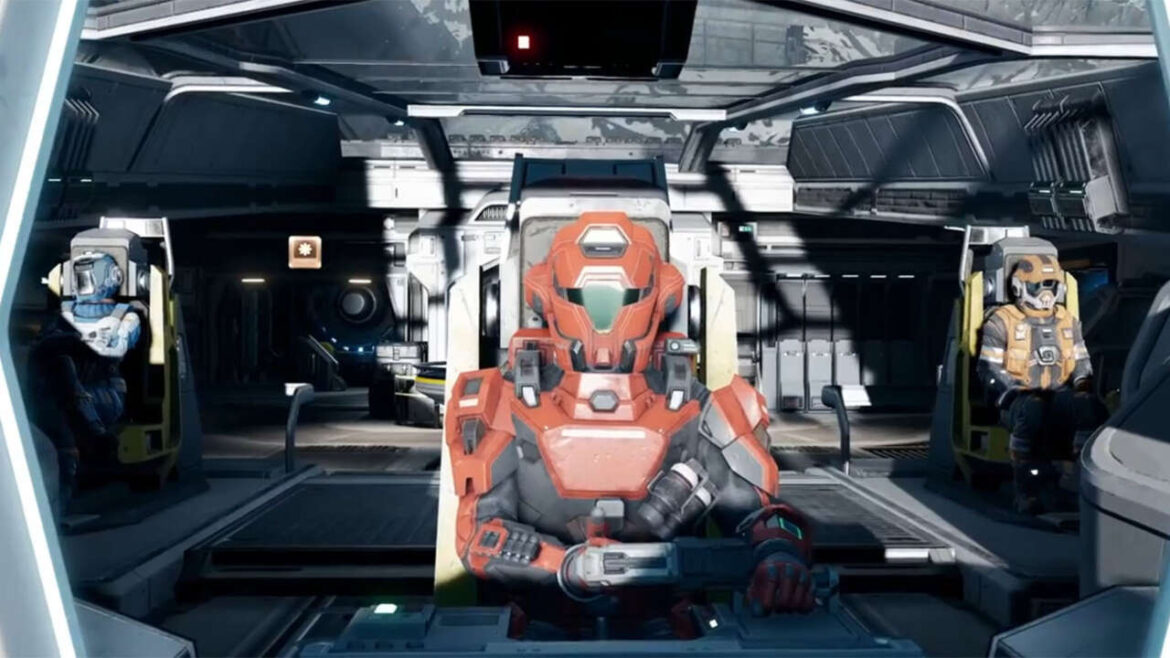
Until fairly recently, this game was known as Jump Ship before the name was changed over trademark issues. Jump Space is a co-op game that brings together up to four players as the crew of a ship that can control and repair their shared vessel. The gameplay resembles Left 4 Dead and Sea of Thieves, with some additional sci-touches touches like planetary exploration and space walks. It’s a dangerous galaxy out there, and players will run into trouble when enemies appear during on-foot encounters or during space combat when the crew is still on their ship. However, the game is strictly PvE, rather than PvP.

Keepsake Games has previously mentioned that Jump Space will feature several “handcrafted missions with random elements” to keep the game fresh. More than 1 million players have wishlisted Jump Space on Steam. For now, the game will only be available on Xbox Series X|S and PC.

Click the button below to add GameSpot as a preferred source on Google


Source link

September 12, 2025 0 comments
0 FacebookTwitterPinterestEmail
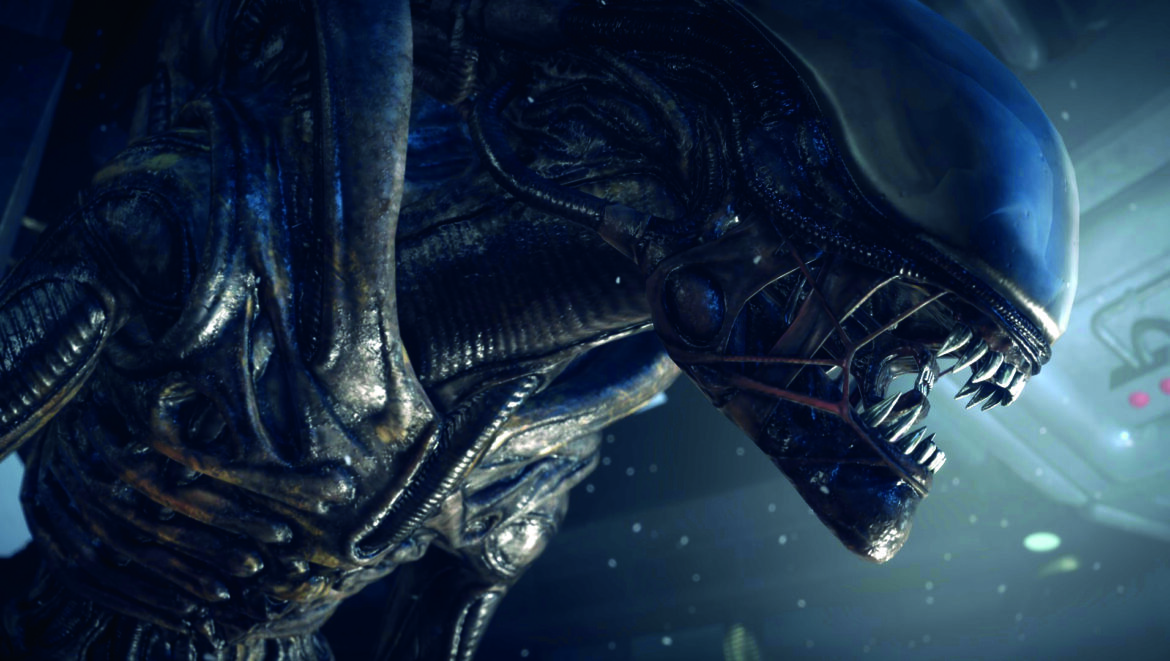
The xenomorph in Alien: Isolation
Product Reviews

The creator of Dead Space ‘would love to make an Alien game’

by admin September 10, 2025


Dead Space, along with so much sci-fi horror, probably wouldn’t exist without Alien. Ridley Scott set the bar high, and for close to 50 years the xenomorph’s first outing has informed what people want and expect from their cosmic nightmares.

So it shouldn’t come as too much of a surprise that Dead Space creator and The Callisto Protocol director Glen Schofield would be up for taking a crack at the series—though he’d rather create more original games.

He’s a fan, though, to the point where he likes to muck around in Midjourney creating different xenomorphs. Everyone needs a hobby.

“Let’s say I took on a licence,” he says. “Which I really don’t want to do; I want to make my own. Let’s say somebody came to me and said, ‘We’re going to give you the Alien licence.’ Immediately I could show you, I don’t know, maybe 100 different aliens I’ve made in Midjourney over the last two years, just because I like it. So yeah, I would love to make an Alien game.”

Getting to dabble in a huge, long-running universe usually comes with some caveats and restrictions, though. It’s why, for instance, you’re probably never going to see a Star Wars adaptation where someone hangs dong. Disney doesn’t do dong.

If 20th Century Studios—which is owned by Disney—was to give Schofield the reins, however, he wouldn’t do it unless he had complete creative control. “I have to own the creative,” he says. “That’s not even negotiable. Because I won’t make a great game unless it’s mine and I’m so ingrained in it—then I will give you 130%.”

Thanks to Aliens: Dark Descent, we’re no longer living in a world where the last decent Alien game was Isolation (which is also getting a sequel), but it still feels like a property that has a lot left to offer. The new TV show, Alien: Earth, has reinvigorated the series after an exhausting run of disappointments (though Romulus was pretty good!) while making the universe feel so much larger.

Now the xenomorphs get to share the spotlight with even more horrific monsters, like blood-sucking alien leeches who can impregnate you, or tentacled eyeballs who can turn your body into their puppet. There’s so much potential for new levels of vomit-inducing body horror.

Cool your jets, though. The way Schofield talks about games makes it clear he’s still got that bug—the desire to create. But the current state of the industry means that we shouldn’t count on him directing any more of them, let alone a new Alien game.

In July, he wrote a post on LinkedIn about a project he’d been developing with his daughter, Nicole Schofield, an environment artist who previously worked with her father on The Callisto Protocol.

“We pulled the budget down to $17 million, built a prototype with a small, talented crew, and started taking meetings,” he wrote. “People loved the concept. We got a lot of second and third meetings. But early feedback was “get it to $10M.” Lately, that number’s dropped to $2–5M. So last month, we decided to walk away. Some ideas are better left untouched than done cheap.”

Publishers and investors are becoming more risk averse, stalwart franchises are struggling, and studios that have been around for decades are being torn apart. It’s bleak. And Schofield himself has taken some hits. After The Callisto Protocol missed publisher Krafton’s sales target, he stepped down as CEO of Striking Distance Studios. Since then, most of the development team has been laid off.

“I miss it all,” Schofield said. “The team, the chaos, the joy of building something for fans. I’m still around, making art, writing stories and ideas and still cheering the industry on. But maybe I’ve directed my last game. Who knows? If so, thank you [for] playing my games.”


Source link

September 10, 2025 0 comments
0 FacebookTwitterPinterestEmail
Jump Space devs outline a bevy of early access roadmap updates and an easy-on-your-wallet price point
Game Updates

Jump Space devs outline a bevy of early access roadmap updates and an easy-on-your-wallet price point

by admin September 9, 2025


Jump Space! It’s a game with a name that’ll have you thinking, “wait, that’s not what it was called, was it?” And you’d be right about that, as due to some trademark problems, the game was rebranded from Jump Ship to its new name Jump Space back in August. Later that same month, developer Keepsake Games announced the game would be launching into early access September 19th. And now, as in today September 9th now, Keepsake Games have shared an early access roadmap for the game, as well as how much it’ll cost you.


Right, let’s get the pricing out of the way. It’ll be a pretty reasonable $19.99 / £16.75 / €19.50, making it the latest anticipated September release to be priced in a way that’ll have you wondering why they’re not charging more. On to the roadmap!


At launch, the sci-fi shooter will include nine mission types. These include one where you’ll try not to kick the bucket while fending off a bunch of robots, where you have to hunt for loot, and another where you’ll be raiding some baddies’ bases. There’ll be more than 50 sectors to play in four galaxy regions, and you’ll have two ships to choose from with 26 ship components to make them a bit more custom.


That’s all a part of Chapter 1, The Resistance Coalition. Chapter 2: Atira Strikes back will bring a lot more to the game like multiple endless modes, sector modifiers, melee weapons, more story and sectors, new enemies, mission types, a photo mode, offline support and a lot more. These will be coming through multiple updates through to Q1, 2026, but a couple of features from this chapter, text chat and lobby browser, will be available at launch.


Then after that, Chapter 3: Secrets of the Telmari will add in a first-person pilot view, a scanner revamp, even more new enemies and mission types, a new ship, ground boss, and again, even more. These will start to be added from Q1 2026 onwards until Chapter 4: Heart of Corruption, which doesn’t have a release window or any revealed features just yet. That’s a lot of bloody stuff!


As of now, Keepsake doesn’t know when early access will end and the 1.0 release will release, so you’ll just have to join them for the ride in the meantime.


Jump Space launches into early access September 19th on Steam.


Source link

September 9, 2025 0 comments
0 FacebookTwitterPinterestEmail
  • 1
  • 2
  • 3
  • 4

Categories

  • Crypto Trends (1,098)
  • Esports (800)
  • Game Reviews (772)
  • Game Updates (906)
  • GameFi Guides (1,058)
  • Gaming Gear (960)
  • NFT Gaming (1,079)
  • Product Reviews (960)

Recent Posts

  • This 5-Star Dell Laptop Bundle (64GB RAM, 2TB SSD) Sees 72% Cut, From Above MacBook Pricing to Practically a Steal
  • Blue Protocol: Star Resonance is finally out in the west and off to a strong start on Steam, but was the MMORPG worth the wait?
  • How to Unblock OpenAI’s Sora 2 If You’re Outside the US and Canada
  • Final Fantasy 7 Remake and Rebirth finally available as physical double pack on PS5
  • The 10 Most Valuable Cards

Recent Posts

  • This 5-Star Dell Laptop Bundle (64GB RAM, 2TB SSD) Sees 72% Cut, From Above MacBook Pricing to Practically a Steal

    October 10, 2025
  • Blue Protocol: Star Resonance is finally out in the west and off to a strong start on Steam, but was the MMORPG worth the wait?

    October 10, 2025
  • How to Unblock OpenAI’s Sora 2 If You’re Outside the US and Canada

    October 10, 2025
  • Final Fantasy 7 Remake and Rebirth finally available as physical double pack on PS5

    October 10, 2025
  • The 10 Most Valuable Cards

    October 10, 2025

Newsletter

About me

Welcome to Laughinghyena.io, your ultimate destination for the latest in blockchain gaming and gaming products. We’re passionate about the future of gaming, where decentralized technology empowers players to own, trade, and thrive in virtual worlds.

Recent Posts

  • This 5-Star Dell Laptop Bundle (64GB RAM, 2TB SSD) Sees 72% Cut, From Above MacBook Pricing to Practically a Steal

    October 10, 2025
  • Blue Protocol: Star Resonance is finally out in the west and off to a strong start on Steam, but was the MMORPG worth the wait?

    October 10, 2025

Newsletter

@2025 laughinghyena- All Right Reserved. Designed and Developed by Pro


Back To Top
Laughing Hyena
  • Home
  • Hyena Games
  • Esports
  • NFT Gaming
  • Crypto Trends
  • Game Reviews
  • Game Updates
  • GameFi Guides
  • Shop

Shopping Cart

Close

No products in the cart.

Close