
Laughing Hyena
  • Home
  • Hyena Games
  • Esports
  • NFT Gaming
  • Crypto Trends
  • Game Reviews
  • Game Updates
  • GameFi Guides
  • Shop
Tag:

review

The Honor MagicPad 3 placed on a colorful desk mat.
Product Reviews

Honor MagicPad 3 review: an iPad Air beating tablet with one big problem

by admin September 25, 2025


Why you can trust TechRadar


We spend hours testing every product or service we review, so you can be sure you’re buying the best. Find out more about how we test.

Honor MagicPad 3: One-minute review

Image 1 of 2

(Image credit: Future)(Image credit: Future)

The Honor MagicPad 3 is almost the perfect large tablet. With a bright and colorful 13.3 inch 3.2K display, complete with IMAX Enhanced certification, kicking back with a movie or TV show is an absolute joy. Even simply scrolling the home menu or your favorite social media website impresses thanks to a smooth 165Hz refresh rate.

The tablet’s eight speakers perform well, though lack bass overall; especially in comparison to the superior sound systems found on the likes of the cheaper Lenovo Idea Tab Pro. I think you should immediately disable the Honor Spatial Audio option in the settings menu for the best performance though. It’s on by default and gives a solid impression of depth, but makes everything sound artificial, tinny, and a little hollow.

Still, these minor audio quibbles are easy to overlook considering the tablet’s impressively slim and lightweight build. At just 5.79mm thick and coming in at 595g, it’s thinner and lighter than even the iPad Air. Honor has managed to cram in a truly massive 12,450mAh silicon-carbon battery too, delivering incredible battery life. Seriously, this tablet can power through a full day of rigorous use and then some without breaking a sweat.

I was shocked when half a day editing Google Docs files in a café followed by two hours of 4K video viewing on the train, all at max brightness, ended with the battery barely below 80%. On top of that, the tablet holds charge between uses effortlessly – I often left it on standby stashed down the side of my bed after a night binge-watching Amazon Prime Video and picked it up a few days later to discover that it lost no charge at all in that time.

(Image credit: Future)

If you’re the kind of person that likes to leave a tablet around the house to use as needed, you never have to worry about finding it out of electrical juice. Some of this is likely due to the rather aggressive AI Power Management System, which might be worth tweaking if you need certain apps to continually refresh in the background, but it’s hard to complain when the resulting battery performance is this strong.

So what stops the Honor MagicPad 3 from being a best-in-class product? Sure, it’s a shame that the gorgeous screen isn’t an OLED panel and that there’s no fingerprint reader, but above all else it’s down to the patchy update support.

When quizzed, Honor told us that it plans “at least one major Android version update” and just “two years of security patches”, which is a depressingly short timeframe. In my eyes, the lack of Android version updates isn’t a dealbreaker, as you’re only really missing out on software features, but the two years of security patches is. You generally should avoid using devices once that timeframe is up, so the tablet effectively has a looming expiration date out of the box.

Sign up for breaking news, reviews, opinion, top tech deals, and more.

It’s a shame, especially when you can easily find tablets under $200 / £150 with more years of security update support. The brand did at least note that it will “constantly evaluate” its plans and “deploy software upgrades accordingly” which hopefully means there’s scope for this to change in the future.

Honor MagicPad 3 review: price and availability

(Image credit: Future)

  • £599 retail price
  • Expect frequent discounts
  • It’s available in the UK, but not the US or Australia

The Honor MagicPad 3 comes in at £599 (around $800) for a model with 16GB of RAM and 512GB of storage, which is a very fair price for what you get, especially in comparison to the $799 / £799 iPad Air 13-inch that starts with a pitiful 128GB of storage. Sadly, there’s no Australian release.

Honor frequently runs promotions that slash that price, however, so expect it to be readily available for at least £100 less. In fact, it has already seen its price fall to £499 in the build up to release. Also be on the lookout for various free gifts, including the excellent Honor MagicPad3 Smart Touch Keyboard, which I tested alongside the tablet for this review, or Honor Magic Pencil 3 stylus. These promotions turn an already good deal into a great one.

The one thing to bear in mind here is that limited update plan. If you’re particularly concerned about getting the latest and greatest version of Android, or worry about using a device that’s no longer receiving security updates, then that otherwise showstopping price tag is a little less tempting.

Honor MagicPad 3 review: specs

Swipe to scroll horizontally

Starting price

£599

Operating system

Android (MagicOS 9.0.1)

Chipset

Snapdragon 8 Gen 3

Memory (RAM)

16GB

Storage

512GB

Display

13.3 inch 3200 x 2136 (3K) LCD

Cameras

13MP, 2MP rear / 9MP front

Battery

12,450mAh

Connectivity

USB-C 3.2, Wi-Fi 7, Bluetooth 5.4

Weight

595g

Dimensions

293.88mm x 201.38mm x 5.79mm

Honor MagicPad 3 review: Design

(Image credit: Future)

  • iPad Air-beating slimness
  • Surprisingly lightweight
  • The back cover might be divisive

The Honor MagicPad 3 puts the 13-inch iPad Air to shame with a design that’s both thinner and lighter. It has a 13.3-inch screen with roughly 0.7cm bezels, flanked by a metallic body where you’ll find four large speaker grilles (that’s two along each short edge), a standard volume rocker and power button, a USB Type-C 3.2 port (with support for 66W fast charging) for topping up the battery or connecting an external display, and a small magnetised area where you can affix the compatible Honor Magic Pencil 3 for charging.

The only thing that I would add is a fingerprint reader, which is unfortunately absent. Luckily the face unlocking is quick and responsive and works well even in low light conditions, so it never feels like you’re really missing out on too much.

The back is relatively plain, aside from a camera module with a flash, a 13MP main sensor and a 2MP macro lens, and a row of small electronic contacts for the keyboard case. According to the Honor website, only one colour is available in the UK: a rather basic Grey.

I tested a White model, however, which is available in some other markets, and has an almost bumpy, textured back. It’s certainly a unique feeling, like having a third-party skin applied out of the box, which makes me think that it’s some kind of vinyl sticker.

(Image credit: Future)

I’m in two minds about this. On one hand, I really appreciate the added grip that this material brings, making it far easier to hold the tablet one handed. It’s impressively resistant to fingerprints and, if it came down to it, would probably offer a fair amount of protection from scratches.

It also looks great from a distance, helping the Honor MagicPad 3 stand out in a sea of plain slabs. On the other hand, the strange feel initially made me think that the back of the tablet was constructed entirely from plastic; this somewhat dampened my excitement out of the box.

I tested the Honor MagicPad 3 with the Honor MagicPad3 Smart Touch Keyboard and was very impressed with its performance. The case attaches to the back of the tablet magnetically, with the top half folding down to create a very distinct looking stand that shows off that snazzy back design. The keys are stable with plenty of travel and are very satisfying to press. It also has a large and responsive touchpad, with pronounced mechanical clicks and minimal flex.

It’s a really excellent keyboard and a massive upgrade compared to the Bluetooth model for the Honor MagicPad 2. My only possible complaint is that it seems to only be offered in the US English layout, which took a little getting used to and seems odd given the lack of availability in that region.

Honor MagicPad 3 review: Display

(Image credit: Future)

  • Not an OLED, unlike the MagicPad 2
  • Still bright and vibrant however
  • Impressive 165Hz refresh rate

The Honor MagicPad 3 has an impressive 3.2K (3200 x 2136) IPS LCD screen. With up to 1,000 nits of brightness it’s perfect for indoor use and can hold its own outside on a sunny day.

A variety of media looks absolutely gorgeous on it with cheerful and vibrant colors and plenty of fine detail. At 13.3 inches, the tablet might as well be a portable TV and I love using it to catch up on everything from Amazon Prime Video shows to Netflix movies and YouTube videos.

Honor offers two interesting display features too: Super Dynamic Display and Vivid Display. Super Dynamic Display uses AI to ‘enhance HD video brightness and contrast’ while Vivid Display aims to ‘enhance video clarity and colors’ with the same technology. With both of these features enabled, videos look a tad brighter and slightly clearer but lose a little color accuracy.

The tablet’s display is IMAX Enhanced certified too, which is good news if you want to consume compatible content on services like Disney+ or Rakuten TV. Outside of video watching, the 165Hz refresh rate also makes browsing apps, system menus and websites feel especially smooth.

You should note that this isn’t an OLED panel though. I don’t think that this is unreasonable given the tablet’s cost, but it is significant when its predecessor, the Honor MagicPad 2, did have an OLED display at a similar price point, which had a significantly brighter screen that offered slightly better colors.

Honor MagicPad 3 review: Cameras

(Image credit: Future)

  • Decent front camera
  • Serviceable rear camera
  • Abysmal macro lens

The Honor MagicPad 3 isn’t going to win any prizes for its camera setup, though that’s the case for almost any tablet.

The 13MP front camera is crisp and clear enough for an impromptu video meeting, but not something that you’re going to want to be taking your Instagram selfies with.

As for the rear, you’re getting a 13MP main shooter that suffers from aggressive post processing that smudges over most of the finer details in almost any shot. It’s fine for scanning documents or taking a quick snap of something right in front of you, but gets dicey if you’re photographing from a distance or with the 2x digital zoom.

There’s also a 2MP macro lens that takes images so blurry that it might as well not be there at all.

Honor MagicPad 3 review: software

Image 1 of 2

(Image credit: Future)(Image credit: Future)

  • MagicOS might not be your cup of tea…
  • But it’s easy to use, with lots of features
  • The desktop mode needs work

The Honor MagicPad 3 runs the brand’s MagicOS 9.0.1 operating system; a version of Android 15. It has minimal bloat, at least compared to alternatives like Xiaomi HyperOS, and offers a surprising number of genuinely useful features.

As a former iPhone 15 Plus user that now daily drives the Porsche Design Honor Magic 7 RAR, I think its interface is incredibly intuitive. Its overall design is obviously more than a little ‘inspired’ by Apple, which could upset the Android purists out there, but it’s smooth, easy to use, and extremely responsive.

I might be a little biased here, as it’s my current favorite mobile operating system, but I find that it delivers the perfect balance between the slick aesthetics of iOS and the freedom and customization of Android. There are loads of options to tweak, from app icon shapes and sizes to home screen and charging animations.

A handful of quirky extras give the operating system plenty of its own personality. One of my favorites is the ability to create a humanoid ‘3D Avatar’ for your live wallpaper. When you unlock the device, you’re greeted with a short moving scene of the character going for a stroll through a park, chilling in a cafe, petting a fluffy cat, or a plethora of other possible situations.

Videos of new scenarios are automatically generated when the device is charging and, while undeniably a little unsettling at first, I’ve grown to love seeing what my little homunculus is up to every time I turn the tablet on.

(Image credit: Future)

Of course, being 2025 the software of the Honor MagicPad 3 also has a suite of AI features including AI-powered widgets that do a surprisingly good job of recommending installed apps based on your usage habits, real-time AI subtitle generation, AI writing tools that help you polish or rephrase your text, and automatic on-device AI deepfake detection for video calls.

This is on top of the Magic Portal – effectively the brand’s take on Google’s Circle to Search feature. As with most Android devices, Gemini assistant is also built in and can be summoned by holding the power button for a few seconds.

The only part of the software that I think needs work is the tablet’s desktop mode equivalent: Floating Window mode. It causes each to run in a little window on your screen that you can drag around like a PC desktop environment, but it’s unfortunately quite unresponsive at times.

Filling the screen with two side-by-side apps is awkward and as far as I can tell there’s no way to have a taskbar on screen at all times. It’s not completely unusable, as I still manage to get work done with some fiddling, but is nowhere near as slick or easy to use as the offerings from market leaders in this field like Samsung and Lenovo.

Honor MagicPad 3 review: performance

(Image credit: Future)

  • Robust performance thanks to powerful specs
  • Zero noticeable slowdown in general use
  • More than enough for gaming

Powered by the 2023 flagship Snapdragon 8 Gen 3 chipset, the Honor MagicPad 3 might not have the very latest chip but it’s certainly plenty powerful.

In general use, be that visiting your favorite websites or watching shows, you’re not going to notice any slowdown at all. Even when switching between multiple apps, the 16GB of RAM keeps everything cached and ready to go.

It supports Wi-Fi 7 for speedy downloads if you have a compatible router, plus Bluetooth 5.4. The 512GB of storage space is generous, especially at this price, so you’ll likely have room for all your favorite apps and plenty of spare space for downloaded videos. I keep multiple full series downloaded on the tablet at a time and haven’t come close to filling it up.

With specs like these, the Honor MagicPad 3 is also a surprisingly capable gaming device. Call of Duty Mobile runs flawlessly on the highest settings. More demanding games like Zenless Zone Zero impress too, with a rock solid 60 frames per second on high settings. With everything cranked up to the max, I found the very top middle portion of the tablet tends to get a little hot to the touch, but it thankfully never overheated or slowed down to a noticeable degree in my testing.

That said, if you intend to use the Honor MagicPad 3 for gaming I would highly recommend investing in a compatible Bluetooth controller as the large size of the tablet makes it very awkward to hold in your hands when you’re using touch controls.

  • Performance score: 4.5 / 5

Honor MagicPad 3 review: battery

(Image credit: Future)

  • 12,450mAh silicon-carbon battery
  • Incredible battery life, beating all competition
  • Features the Honor E2 power management chip

Truthfully, it’s difficult to fully test the Honor MagicPad 3’s battery life because it almost never runs out of charge. With a gigantic 12,450mAh silicon-carbon battery this thing is practically everlasting, easily powering through a whole week of on and off use without dipping below the 60% mark. We’re talking well above 20 hours of screen on time, absolutely decimating the battery performance of any other tablet that I have ever used.

It offers comfortably double the battery life of the latest iPad Air and is a dream for taking on long trips or flights. You can even use the tablet as an impromptu power bank in a pinch and still have more than enough left over for the rest of your day’s use. It’s incredible frankly, so serious props to Honor here.

In addition to its large size, the battery features Honor’s proprietary E2 power management chip. There’s also an AI power management system built into the OS. How much of a difference does all this tech actually make? It’s hard to say, but the results are impossible to argue with.

Should you buy the Honor MagicPad 3?

Swipe to scroll horizontallyHonor MagicPad 3 report card

Attributes

Notes

Rating

Value

The Honor MagicPad 3 is incredible value – if you can overlook the patchy update plan.

4/5

Design

Thin, lightweight, and visually attractive. The unusual rear design might prove divisive though, and it lacks a fingerprint reader.

4.5/5

Display

A bright and colorful display that’s perfect for watching movies or TV. It’s 165Hz, though the fact it’s not OLED is a downgrade compared to the previous MagicPad.

4/5

Cameras

Your average tablet camera setup. It gets the job done, but you should just use your phone instead.

2.5/5

Software

MagicOS isn’t for everyone, but it’s easy to use and brimming with quirky charm.

4/5

Performance

Great performance across the board. This tablet is more than powerful enough for general use, and excels at gaming too.

4.5

Battery

Some of the best battery performance of any tablet, period.

5/5

Buy it if…

Don’t buy it if…

Also consider

Not keen on what the Honor MagicPad 3 brings to the table? Here are two compelling alternatives to consider:

Swipe to scroll horizontallyRow 0 – Cell 0

Honor Magic Pad 3

Lenovo Idea Tab Pro

iPad Air 13-inch

Price

£599

$349.99 / £379.99

$799 / £799 / AU$1,299

Weight

595g

1.36lbs / 620g

617g

Size

293.88mm x 201.38mm x 5.79mm

189.1mm x 291.8mm x 6.9mm / 7.44″ x 11.49″ x 0.27”

280.6mm x 214.9mm x 6.1mm

Screen size

13.3 inches

12 inches

13 inches

Processor

Snapdragon 8 Gen 3

Mediatek Dimensity 8300

M2

Speakers

8 stereo speakers

Quad JBL-tuned speakers

Stereo speakers

Connectivity

USB-C 3.2, Wi-Fi 7, Bluetooth 5.4

USB-C, MicroSD card, WiFi 6E, Bluetooth 5.3, GPS

USB-C

Battery

12,450mAh

10,200mAh

9,705 mAh

How I tested the Honor MagicPad 3

I tested the Honor MagicPad 3 over the course of multiple weeks in the build up to its announcement and release. It’s become my go-to tablet and has accompanied me on a number of trips.

It’s also seen plenty of use at home, where I’ve been using it for a mix of media consumption and gaming. I tested the tablet in its standard 16GB + 512GB configuration, though in a White colorway that is not currently available.

I used it alongside the compatible Honor MagicPad3 Smart Touch Keyboard which was supplied alongside the tablet. The tablet even replaced my usual work laptop on a handful of occasions, where I evaluated the keyboard’s performance and its overall potential as a productivity device.

First reviewed September 2025



Source link

September 25, 2025 0 comments
0 FacebookTwitterPinterestEmail
Final Fantasy Tactics: The Ivalice Chronicles logo next to Ramza and Delita
Product Reviews

Final Fantasy Tactics: The Ivalice Chronicles review: a revamped classic that’s a must-play for any tactical RPG fan

by admin September 25, 2025


Why you can trust TechRadar


We spend hours testing every product or service we review, so you can be sure you’re buying the best. Find out more about how we test.

When Final Fantasy Tactics was released in 1997, it was lauded as a masterful tactical role-playing game (RPG), mixing impressive visual effects with depth-filled combat and a stellar narrative. But now, this beloved title has been reborn, affording longtime fans as well as new players the chance to experience it all. Enter Final Fantasy Tactics: The Ivalice Chronicles – Square Enix’s remaster of a true classic.

Review info

Platform reviewed: PS5
Available on: PS5, Nintendo Switch (physical and digital); Nintendo Switch 2, PS4, Xbox Series X and Series S, PC (digital only)
Release date: September 30, 2025

This expanded remaster brings plenty of shiny new stuff to the table. It’s fully voice-acted, has considerably upgraded visuals, and a fair few quality-of-life updates. All of these are available in the ‘Enhanced’ edition of the game, but you can also play through the original if you’d prefer, which uses the translation from War of the Lions – an updated version of the game which launched on the PlayStation Portable (PSP) back in 2007.

Anyway, I’ve played through the entirety of the Enhanced version of Final Fantasy Tactics: The Ivalice Chronicles, and I’ve got plenty of thoughts – most of which are positive, fans will be delighted to hear! Let’s take a closer look at this remaster, then, and find out if it can do justice to a real fan favorite.

An adventure like no other

(Image credit: SQUARE ENIX)

If you’re new to Final Fantasy Tactics, I’ll give you a quick rundown of the game’s premise. Ramza Beoulve is a highborn young man, who is thrust into a deeply political, brutal conflict – one that centers around two nobles vying for the throne of Ivalice.

Ramza – alongside his allies – will play a gigantic part in the war’s trajectory…though his actions will later be obscured in the history books. It is up to you, the player, to uncover the truth behind this conflict – and the importance of Ramza’s role within it.

You’ll control young Ramza and his allies across various battlefields, which use a tile configuration – something that fans of the Fire Emblem series, for example, will be well familiar with. You’ll have to level up your characters, recruit increasingly powerful units, and make use of the renowned job system – one of the best parts of the game, hands down.

You can switch between a number of jobs – spell casters like Black and White Mages, sword users like Squires and Knights, and a whole lot more. A key difference in the Enhanced version is that there’s a fully-fledged Job Tree, which makes it easy to understand how to unlock each class, and lets you track your progress in doing so.

Sign up for breaking news, reviews, opinion, top tech deals, and more.

Best bit

(Image credit: SQUARE ENIX)

I had a huge amount of fun creating an army-crushing squad in The Ivalice Chronicles. Creating a monk, who could heal and hit-hard, while also using the Ninja’s dual wield skill for 2x the power, made for a truly devastating combination.

As had previously been the case, you earn job points in battle to increase a unit’s proficiency in a particular class, through which you can earn new abilities and passive skills. Mixing and matching skills from different jobs is great fun – and optimizing your skillset will be crucial if you want to make it through the main story, which is by no means a breeze…more on that later.

Some jobs do take ages to unlock – but it doesn’t always feel worth your time, given that some of the classes further along the tree have skills that seem a little situational. Still, you don’t have to make use of these jobs. One of my main units, for reference, was a monk – a melee fighter class you unlock pretty early. I just ensured that he had secondary skills from the Ninja class to keep him primed for late-game combat.

If your beloved monk unit dies in battle, for example, it may well be gone forever…devastating, I know. When a character faints, a display with three hearts will appear above it, and one heart will deplete for each turn a character remains unconscious. If you don’t revive it or complete the battle objective within this time, it will be gone forever.

New auto-save slots have made it easier to go back to before your unit dies – which is a very welcome inclusion. I used this a fair amount in my playthrough. After all, do you really want to spend hours on end re-training a new unit? Personally, I don’t have time for all that!

There’s one more thing I’d like to note about perma-death. In Fire Emblem titles, your units typically have a unique appearance and personality – something that can leave you feeling attached to them, and this causes deaths to feel that little bit more gutting.

In Final Fantasy Tactics: The Ivalice Chronicles, though, a lot of characters have identical appearances and no personality beyond their brief vocal soundbites. This meant I wasn’t particularly attached or interested in my standard units – I often replaced them with special ones that play a more direct role in the plot, have unique costumes, and join your party as you progress through the story. By the way, Cloud from Final Fantasy VII (one of my favorite games, and one of the best RPGs of all time) is one of these…how cool is that?!

Not for the faint of heart

(Image credit: SQUARE ENIX)

Speaking of special units, some of these are going to be extremely helpful – and sometimes almost feel necessary – to get through story battles. There’s one in particular who will join you late on, who is seriously powerful. I won’t spoil who it is for newcomers, but without them, I’d have been toast on a number of occasions.

Yes, I’ll be honest, I found The Ivalice Chronicles to be hard. At times, very hard. I’m an RPGs guy, and have finished some pretty punishing titles – yes, even Shin Megami Tensei III: Nocturne. But the thing that caught me off guard in this game was its severe difficulty spikes.

Some of these, especially early on, forced me to better my understanding of the title’s impressively deep battle mechanics – stuff like zodiac compatibility, faith, and bravery elements require close attention.

Difficulty spikes later on, though, could feel pretty frustrating. I went from reconsidering my team’s build and strategy early on to reconsidering whether my sanity was still intact by the end. These spikes can make progression feel a little uneven, it has to be said, although there are ways to push through the most challenging encounters.

For instance, you can hop into random battles on the world map to grind up your levels and earn job points to get better healing skills, spells, and combat abilities. And these are entirely at your own pace – don’t fancy a random encounter? Just press flee and you can skip it. Need some EXP? Run around for a bit and prepare for battle. I love that you’re not forced into fights – something that can make some RPGs feel repetitive and relentless.

In addition, you can complete errands, which give you gil (the game’s currency) to spend on better armor, weapons, headgear, and accessories. They can also give you experience points and job points. These are entirely optional and are a useful way to earn experience for any backup units you want to use in the event of a character dying, for example.

Anyway, after you’ve been struggling in a fight and you’ve taken some time to train up, you’ll likely find a route to victory. And when you do, you’re going to feel very satisfied – I know I did. The endgame especially was pretty rough for me, but I got there in the end. It’s worth noting that I played the whole game on Knight difficulty – the sort of ‘normal’ level. However, the Enhanced version adds an easy mode, Squire, and a hard mode, Tactician – that one’s for the show-offs.

A message more potent than ever, for a new generation

(Image credit: SQUARE ENIX)

Final Fantasy Tactics: The Ivalice Chronicles has a stellar narrative – one that plays to themes that are arguably even more timely now than they were almost 30 years ago.

The conflict I mentioned earlier takes place after a separate 50-year-long war, which has left much of the kingdom in economic turmoil. Distrust in the ruling class is at an all-time high, with the masses left to struggle in a ruined kingdom while nobles indulge in luxury. The world was, and remains, incredibly designed, with a new ‘state of the realm’ page that clarifies story details and can refresh your memory of character names, among other things.

State of the realm is one of many additions – most of which make for a much more refined experience. Personally, I love the revamped graphics – the game remains true to its roots, visually speaking. Battle animations are incredibly fluid, backdrops are beautifully composed, and colors really pop, injecting a ton of character into this complex world. The incredible score also adds so much texture to the world, and even random encounter tracks, like Apoplexy and Desert Land, had my head bopping mid-battle.

Functionally speaking, one of the best new features is fast-forward, which makes the pace of battle so much more palatable. A lot of movement and combat does feel pretty sluggish, so being able to speed through your enemy’s actions is most welcome. This also helps if you’re sitting through dialogue you’re already familiar with, and I made extensive use of it.

I already mentioned stuff like difficulty options, the job tree, and auto-save – and these all feel like considered, user-friendly inclusions – but despite that, there was some stuff I wasn’t loving about the Enhanced version.

(Image credit: SQUARE ENIX)

This might be controversial, but I think the voice acting is, at best, just OK. Some characters are well represented. Ben Starr – who was phenomenal as Verso in Clair Obscur: Expedition 33 – does a good job with the cunning and crafty Dycedarg. The personalities of other characters, including Agrias, Cidolfus, and Ramza himself, are also communicated well – but the same can’t be said for others.

Some performances feel a little restrained, non-special characters occasionally have inconsistent accents or tones of voice, and some non-player characters (NPCs) have voices that don’t match their sprites whatsoever. I mean, am I really meant to believe this teenage-looking soldier sounds like a 50-year-old geezer from the east end of London?

Furthermore, I was frustrated by the game’s camera on numerous occasions. Sometimes, it would pan to a bizarre angle that prevented me from seeing the on-screen action. A new overhead tactical view did remedy this at times, but I would’ve liked some further improvements here. Otherwise, performance is fantastic on the PS5 version, no notes.

There’s one more thing that didn’t bother me too much, but will be a concern for others. Content from War of the Lions is largely missing in this remaster. That means that its side content and drawn cutscenes have been mostly left out – something that will upset fans of the well-regarded PSP version, I’m sure.

Still, though, I have to say that I had a great time with Final Fantasy Tactics: The Ivalice Chronicles. Yes, I have some minor gripes – severe difficulty spikes, a sometimes flawed camera, and imperfect voice acting, above all. But those things are certainly not enough to get in the way of an unforgettable adventure, packed with satisfyingly deep combat, a timely, well-written story, and a great score. The quality of life upgrades and enhanced visuals make this the ultimate way for new players to explore Ivalice, and if you’re a fan of tactical RPGs, this remains easy to recommend.

Should you play Final Fantasy Tactics: The Ivalice Chronicles?

(Image credit: SQUARE ENIX)

Play it if…

Don’t play it if…

Accessibility features

There are a few useful accessibility settings in Final Fantasy Tactics: The Ivalice Chronicles. For instance, there’s a sound visualization option, which displays in-game sounds on the edges of the screen, as well as the choice to show speaker names during spoken exchanges.

There are also sound effect subtitles, volume sliders, multiple text languages (Japanese, English, German, and French), and both English and Japanese voice language options. Unfortunately, there is no colorblind mode or similar.

How I reviewed Final Fantasy Tactics: The Ivalice Chronicles:

(Image credit: SQUARE ENIX)

OK, so I spent more than 50 hours playing Final Fantasy Tactics: The Ivalice Chronicles, battling through the entire main story, a healthy portion of side content, errands, and random encounters. I played the Enhanced version of the game in order to assess the remaster’s quality of life upgrades, graphical improvements, and voice acting.

I played the PS5 edition of the game, with my console connected up to the Sky Glass Gen 2 television and the Samsung HW-Q800D soundbar. When I was out and about, I’d also occasionally dip into the game via remote play on my Samsung Galaxy S24 FE, but this was pretty rare.

Personally, I’ve reviewed a variety of games here at TechRadar, including recent releases like Raidou Remastered: The Mystery of the Soulless Army and Drag x Drive. I’ve also played a number of tactical RPGs, such as Fire Emblem: The Blazing Blade, and a range of Final Fantasy titles.

First reviewed September 2025


Source link

September 25, 2025 0 comments
0 FacebookTwitterPinterestEmail
Raspberry Pi 500+
Product Reviews

Raspberry Pi 500+ Review: RGB clicky keys and NVMe storage, but with a $200 price tag

by admin September 25, 2025


Why you can trust Tom’s Hardware


Our expert reviewers spend hours testing and comparing products and services so you can choose the best for you. Find out more about how we test.

Raspberry Pi has been a bit quiet after a packed 2024, which saw multiple products and SKUs released on a weekly basis. The Raspberry Pi 500 was one of those products, and it received an Editor’s Choice award despite the omission of a PCIe-based storage. Yes, there was space, and yes, the silkscreen had the layout for it, but it was never added to the 500. This led to other Pi community members and me theorizing that a future model would feature PCIe-based storage. It turns out that we were correct, and here we have the Raspberry Pi 500+.

Straight off the mark, the price is $200 (approximately £180). The price of a low-spec laptop, essentially. For the price, we get the same System on Chip (SoC) as the Raspberry Pi 500 and Pi 5, but we also get 16GB of RAM and a 256GB NVMe SSD, not to mention a mechanical keyboard. If you want the Raspberry Pi 500+ as part of a getting started kit, then for $220 (£200) you can pick up the Raspberry Pi 500+ Desktop Kit which comes with a branded mouse, USB-C power supply, official HDMI cable and the Raspberry Pi Beginner’s Guide. For the review, I have just the Raspberry Pi 500+.

Is the Raspberry Pi 500+ worth $200, and does it warrant an upgrade over the original Pi 500? Let’s find out!

Raspberry Pi 500+ Technical Specifications

Swipe to scroll horizontallyHeader Cell – Column 0

Raspberry Pi 500+

Raspberry Pi 500

SoC

BCM2712 SoC Arm Cortex-A76 64-bit CPU running at 2.4 GHz

BCM2712 SoC Arm Cortex-A76 64-bit CPU running at 2.4 GHz

Row 1 – Cell 0

800 MHz VideoCore VII GPU, supporting OpenGL ES 3.1, Vulkan 1.2

800 MHz VideoCore VII GPU, supporting OpenGL ES 3.1, Vulkan 1.2

Display

2 x 4Kp60 micro HDMI display output with HDR support

2 x 4Kp60 micro HDMI display output with HDR support

RAM

16GB LPDDR4X-4267

8GB LPDDR4X SDRAM

Storage

256GB NVMe SSD pre-installed

Micro SD (SDR104 compatible)

Micro SD (SDR104 compatible)

GPIO

40 Pin Raspberry Pi HAT Compatible via breakout

40 Pin Raspberry Pi HAT Compatible via breakout

USB

1 x USB 2

2 x USB 3

1 x USB 2

2 x USB 3

Networking

Gigabit Ethernet

Gigabit Ethernet

Wi-Fi / Bluetooth

Dual-band 802.11ac, Bluetooth 5 / BLE

Dual-band 802.11ac, Bluetooth 5 / BLE

Power Button

Soft power button on keyboard

Soft power button on keyboard

Keyboard

84, 85, 88-key RGB mechanical keyboard with Gateron Blue KS-33 low-profile switches.

Chiclet keyboard

Power

5V 5A via USB C

5V 4A via USB C

Dimensions

312 x 123 x 35.76mm

286 × 122 × 23 mm

Price

$200

$120 Desktop kit ($90 solo)

Design of the Raspberry Pi 500+

(Image credit: Tom’s Hardware)

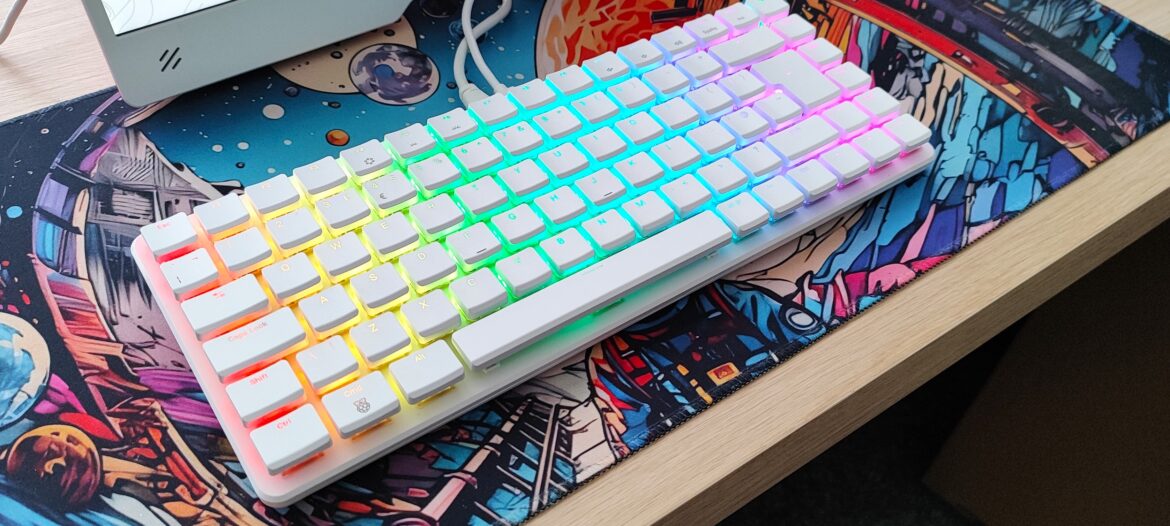
The dominant aesthetic of the Raspberry Pi 500+ is the keyboard. It looks stunning, and the layout is similar to my daily driver, a Keychron K2. Under the keycaps, we have Gateron Blue KS-33 low-profile switches, and as a lover of clicky keys, they please me greatly. This is a keyboard that I could use as a daily driver. Perhaps Raspberry Pi will release the keyboard as a replacement for the official keyboard? Aside from the keyboard, the ports on the rear of the 500+ are identical to those on the 500.

The Pi 500+ and the 500 before it sport the same all-white color scheme, which is boring, but functional. It looks great on your desk, but I loved the Raspberry Pi 400’s “raspberry and white” aesthetic.

Image 1 of 6

(Image credit: Tom’s Hardware)(Image credit: Tom’s Hardware)(Image credit: Tom’s Hardware)(Image credit: Tom’s Hardware)(Image credit: Tom’s Hardware)(Image credit: Tom’s Hardware)

The Raspberry Pi 500+ is larger than the Pi 500, both in length and height. The bottom part of the chassis is deeper, and the keyboard is longer. The height is most likely to accommodate space for the NVMe SSD, as the key switches are all located in the top section of the chassis. The length difference will be for the standard keycaps used. Yes, you can replace the keycaps if you wish. Using the included key puller, I pulled a few keys off to take a look underneath, then I threw some spare keys from my Keychron spares box on there to prove that they fit.

My pre-release unit has a quirk with the ENTER key, and Raspberry Pi assures me that this issue is not present in mass-produced units. Did I mention that the keys are RGB? Oh yes, a rainbow at your fingertips. Just press the FN and the light key to change the sequence. There are static colors (white and red), animated rainbow effects, reactive keys that shine blue or red, and an off option. The power button, a dedicated soft key introduced on the Raspberry Pi 5 and Pi 500 (the secondary function of F10 for the Pi 400), shines green when the Pi is on and red when in standby. To control the RGB LEDs, Raspberry Pi has released a config tool in the form of a Debian package, which handles all installation tasks for demos and the all-important udev rules.

Get Tom’s Hardware’s best news and in-depth reviews, straight to your inbox.

The package is both a command-line tool and a Python module, which means that we can write our own code to control the LEDs. So I did, and made my usual “Disco” demo.

After a few bouts of trial and error, I managed my goal and I had something like a 1970s disco on my keyboard.

(Image credit: Tom’s Hardware)

The keen-eyed amongst you will note that, because the Pi 500+ uses the same keyboard wedge design as its predecessors, there is no access to the CSI (Camera) / DSI (Display) connector. Looking at the PCB, there are no connections on the board. If you really need a camera, grab a USB webcam. For displays, there are two micro HDMI ports that support 4K60, so you are well catered to.

Tearing Down the Raspberry Pi 500+

Image 1 of 9

(Image credit: Tom’s Hardware)(Image credit: Tom’s Hardware)(Image credit: Tom’s Hardware)(Image credit: Tom’s Hardware)(Image credit: Tom’s Hardware)(Image credit: Tom’s Hardware)(Image credit: Tom’s Hardware)(Image credit: Tom’s Hardware)(Image credit: Tom’s Hardware)

All of the previous Raspberry Pi 00 series machines have been easy to tear down, and the Pi 500+ is no exception. It has to be because we need access to the NVMe SSD. You may never upgrade the drive, but the 500+ introduces Phillips screws that secure the bottom chassis to the keyboard. The final retail kit that I received came with a spudger to leverage the plastic chassis apart. Starting at the opening just below the space bar, I slid the spudger around the seam and the clips popped open.

Initially, I could see two sections of the chassis. The bottom part contained the mainboard, which is covered by a large aluminum heatsink, with only a cutout for the NVMe SSD (note that my pre-release model has a smaller 2230 SSD than what will be included in the retail units). The other part is the custom keyboard plate, which is powered by a Raspberry Pi Pico’s RP2 (RP2040) and not the newer RP2350. There is no need for the newer board, after all, the RP2040 is merely acting as a USB interface.

Also present on the mainboard is a battery connector for a real-time clock, which can be purchased separately.

(Image credit: Tom’s Hardware)

On the left side of the mainboard is a large unpopulated area, the same as on the Pi 500. This would’ve been for a PoE circuit to power the Pi 500+ over an Ethernet connection, but, just like the Pi 500, it was likely cut as a trade off for cost/capability.

Image 1 of 2

Raspberry Pi 500(Image credit: Tom’s Hardware)Raspberry Pi 500+(Image credit: Tom’s Hardware)

At a glance, the Raspberry Pi 500+ and 500 look identical; in fact, the silkscreen version numbers are the same. The only key differences on the Pi 500+ are the NVMe and moving the keyboard connector from a larger flat flex cable (FFC) to a smaller one. The RP2 is not next to the keyboard connector; instead, it is located on the keyboard PCB, which leads me to believe that RP2 performs keyboard and RGB light control.

The change from a larger to smaller FFC between these versions means that while the mainboard has the same cut-outs and screw holes, you couldn’t transplant the Pi 500+ into a 500 chassis (and vice versa) without some FFC connector and RP2040 desoldering. Of course, the Internet will prove me wrong, and some enterprising maker will do this just for the heck of it. If so, hit me up!

Raspberry Pi 500+ Thermal and Power Performance

(Image credit: Tom’s Hardware)

Like its predecessors, the Pi 500+ has a huge aluminum heatsink to passively cool the ARM-powered SoC. This means we are almost guaranteed that the unit will run much cooler than the original Raspberry Pi 5. But we must still check. So I ran my usual test script, which records the resting temperature for one minute, then runs a stress test across all cores for five minutes before recording the resting temperature as the system calms down.

(Image credit: Tom’s Hardware)

The Pi 500+ runs a little warmer than the Pi 500, especially at idle, where it is almost 4C warmer. Under stress, the 500+ is only 1.7C warmer than the 500. The temperature difference can be attributed to the NVMe SSD, which will generate a little more heat inside the case.

CPU Temperature Comparison in Celsius

Swipe to scroll horizontallyHeader Cell – Column 0

Idle

Stress

Raspberry Pi 500 +

35.1

52.7

Raspberry Pi 500

31.2

51

Power consumption in Watts

Swipe to scroll horizontallyHeader Cell – Column 0

Idle

Stress

Raspberry Pi 500 +

2.29

6.35

Raspberry Pi 500

2.6

6.36

(Image credit: Tom’s Hardware)

The Raspberry Pi 500+ uses a fraction less power than the Pi 500, which is interesting considering that it has an NVMe SSD inside. The reason for the lower power consumption is that the chip uses the D0 stepping, which removes “all the non-Raspberry Pi specific logic from the chip,” according to Raspberry Pi co-founder Eben Upton, while leaving it functionally identical to the previous chip.

(Image credit: Tom’s Hardware)

The removal of non-Pi logic sees a 33% reduction in die space and was achieved by removing Ethernet and USB logic; instead, these functions are handled by the RP1 “Southbridge” instead. This is identical to the Raspberry Pi 5 2GB and 16GB models.

Can the Raspberry Pi 500+ be overclocked?

(Image credit: Tom’s Hardware)

Yes, but I could only manage 2.95GHz. I say “only” because for the Pi 500, I managed 3GHz! This time, the overclock took a little more work, requiring me to tweak the voltage delta to give the CPU a little more juice. But I got there.

CPU Overclocked to 2.95GHz Temperature Comparison in Celsius

Swipe to scroll horizontallyHeader Cell – Column 0

Idle

Stress

Raspberry Pi 500+ OC to 2.95GHz

38.9

67

The overclock saw the Raspberry Pi 500+ idle at 38.9C, and then under stress, this went up to 67C. This was still way under the thermal throttle trigger point of 82C. Power consumption at idle was still 2.64 Watts, and under stress, this jumped to 9.65W.

In fact, my log showed 0x50000, which refers to under-voltage, and this was using the official Raspberry Pi 27W power supply. If you plan to overclock, grab the official 45W power supply or source a compatible GaN charger.

(Image credit: Tom’s Hardware)

Overclocked to 2.95GHz Power consumption in Watts

Swipe to scroll horizontallyHeader Cell – Column 0

Idle

Stress

Raspberry Pi 500+ OC to 2.95GHz

2.6394

9.65

(Image credit: Tom’s Hardware)

I tested using the included 256GB NVMe SSD, which, according to lshw, is a Samsung PM991a PCIe Gen 3 NVMe SSD. Performance was to be expected; we get extra performance when compared to the official Raspberry Pi M.2 HAT on a Raspberry Pi 5.

Raspberry Pi 500+ NVMe Performance at PCIe Gen 3 in MB/s

Swipe to scroll horizontallyHeader Cell – Column 0

Read

Write

Raspberry Pi 500+

893

778.11

Raspberry Pi 5 via M.2 HAT

837

723.16

An additional 56MB/s when reading the contents of the SSD to /dev/null means that, in general use, we should see a slight performance improvement, but don’t expect high-performance NVMe. The same is true for write speeds. We get an extra 54.95 MB/s of throughput when writing data to the drive, as per the Raspberry Pi diagnostics tool. Again, not super speedy, but for an SBC (Single Board Computer), we will take every extra we can get.

For all of you eager to know how fast the Raspberry Pi 500+ boots, well, the results are a little disappointing because booting from NVMe took 22.62 seconds, but a Raspberry Pi 500, booting from an A2/SDR104 compatible micro SD card, took just 16.36 seconds. Both Pis are running the latest firmware and bootloader. I also set the Pi 500+ to boot from NVMe first. But the Pi 500’s micro SD card boot won this race!

The Pi 500+ also has a micro SD card slot, compatible with SDR104 and all previous classes of micro SD cards. In fact, it is the same unit as on the Raspberry Pi 500, but the key selling point of the Pi 500+ is NVMe storage. You could feasibly remove the NVMe SSD and replace it with an AI processing unit, booting the OS from micro SD instead. Obviously, without a dedicated camera interface, you will need to get creative and use a USB camera or video source, but it can be done.

Raspberry Pi 500+ versus 500 boot times in seconds

Swipe to scroll horizontallyHeader Cell – Column 0

Time in Seconds

Raspberry Pi 500 + NVMe

22.62

Raspberry Pi 500 + Micro SD (SDR104 / A2)

26.55

Raspberry Pi 500 Micro SD (SDR104 / A2)

16.36

So, how well does the micro SD card perform on the Raspberry Pi 500+? Well, it came last in my tests at 26.55 seconds, and the culprit is the new bootloader splash screen, which, despite being set to boot from micro SD, hung around far too long. In the grand scheme of things, 26 seconds is no time at all, but we have to test!

Raspberry Pi 500+ versus 500 micro SD performance

Swipe to scroll horizontallyHeader Cell – Column 0

Read MB/s

Write MB/s

Raspberry Pi 500 +

92.6

31.9

Raspberry Pi 500

94.4

32.1

I also tested micro SD read and write using my usual tests. Reading the contents of the micro SD card to /dev/null using dd, and using the built-in Raspberry Pi diagnostics test for sequential write speeds. The results are close enough to call it even. So the earlier boot speed difference is clearly down to the bootloader screen.

GPIO access on the Raspberry Pi 500+

(Image credit: Tom’s Hardware)

The Pi 500+ has the same GPIO as has been standard on all models of Raspberry Pi since the B+ back in 2014. But for the 00 series units, the GPIO is horizontal, and that means to use a HAT, or for a clearer view of the GPIO, you will need a right-angled breakout board. There are boards such as Pimoroni’s Flat HAT Hacker, which are cheap and easy to use. If you want to use the GPIO in a project, you will need a breakout. However, in truth, the 00 series of Raspberry Pi is not really for hardware hackers. If you want to build a project around a Pi, go for the “typical” Raspberry Pi form factor found in the Pi 4 / 5.

I did a test with my own Flat HAT Hacker board, and I can confirm that you can use the GPIO quite easily for basic electronics. If you want to use a HAT, then it may or may not work, as with the introduction of the Raspberry Pi 5, there were changes to how the GPIO is accessed. Now it is accessed via the RP1 “Southbridge” chip instead of the older means of directly accessing it via the CPU and some hacky (but ultimately working) code modules.

I then broke out a Pimoroni Explorer HAT Pro, the same board that I used to teach robotics with at Picademy. This still doesn’t work with the Raspberry Pi 5 series of boards, well, unless you go through multiple hoops and spend an afternoon trying to install it. This aspect of the Raspberry Pi experience still makes me sad, and I long for the days when I could just buy a HAT, drop it on my Pi, and start hacking.

Use Cases for the Raspberry Pi 500+

(Image credit: Tom’s Hardware)

The Raspberry Pi 500+ is basically the same as the Pi 500 but with more RAM and NVMe storage, which is great, but it comes at a cost. Who would use the Pi 500+? I can see it being a viable home PC for those that don’t need an ultra-powerful PC, or as a child’s first PC. In business, it could be a viable thin client. For educational purposes, it would make a suitable classroom PC.

I was eager to compare the price of a similar Raspberry Pi 5 16GB, the new M.2 compact HAT and the same 256GB NVMe SSD, so I went over to Adafruit and priced it all up.

Image 1 of 2

(Image credit: Adafruit)(Image credit: Adafruit)

Before shipping and taxes, the cost came to $229, and we still have a keyboard to purchase. Interestingly, a 256GB NVMe SSD is $20 more expensive than the 512GB version, so save $20, get double the storage and use that $20 to buy a keyboard!
So what does this prove? Well, it shows that in both cases, going the official Raspberry Pi route will cost largely the same, but with the Pi 500+ we have it all contained in a gorgeous looking keyboard. What we lose in function (camera and display access, awkward GPIO) we gain in the form of a singular unit with a great keyboard. But, the Raspberry Pi 500+, like the 500 and 400 before it, is not a platform for electronics / robotics tinkerers. For those enthusiasts, you will need the original form factor Raspberry Pi.

For those of us that grew up during the home computer boom of the 1970s and 1980s, of which I am one, the form factor is nostalgic, and I can see some enthusiasts building their own home computer emulation systems using the Pi 500+, but, they could also do that with the $90 Raspberry Pi 500, or even the older Raspberry Pi 400. A few years ago, I managed to build a competent Commodore Amiga 1200 using my Raspberry Pi 400.

Bottom Line

(Image credit: Tom’s Hardware)

At $200, the Raspberry Pi 500+ is a considered purchase, which may lead some to consider buying a cheap laptop instead. You could argue that you get a computer and an electronics education platform in one package, but a cheap laptop or an Intel N100 / N150 mini PC and a Raspberry Pi Pico 2 W will offer the same experience for a very similar price.

I really like the Pi 500+, the keyboard is great and it is the pinnacle of the Raspberry Pi 5 series, but the price is hard to swallow as the Raspberry Pi moves from being a cheap single board computer, into an Arm-based desktop computer.


Source link

September 25, 2025 0 comments
0 FacebookTwitterPinterestEmail
Hollow Knight: Silksong Review - An Unforgettable Climb
Game Reviews

Hollow Knight: Silksong Review – An Unforgettable Climb

by admin September 25, 2025


Hollow Knight is a venture into Hallownest’s depths, a methodical descent ever deeper into the quiet stillness of a long-dead kingdom in a desperate attempt to understand why this civilization fell, what possesses only some of its bug citizens to revert into unthinking and violent insects and not others, and what it is we’re even doing there. There are no concrete answers to be found or a set path to follow; there’s barely a discernible objective for almost the entire game. It is a story built around curiosity, only rewarding snippets of Hallownest’s fascinating history to those who venture for no other reason than wanting to do so. It’s one of my favorite games of all time, and its sequel, Hollow Knight: Silksong, is even better.

In some ways, you can tell that Silksong started out as an expansion to the first game. It plays largely the same, and long-time fans will fall into the familiar rhythm of pogoing off enemy heads and deadly saw blades with downward slashes, frantically healing during brief breaks in an intense boss fight, parrying an attack with a well-timed slash, and breathing a sigh of relief upon reaching the next bench and setting a new spawn point.

Hornet’s journey starts at the bottom of Pharloom.

It’s not all exactly the same: Hornet’s downward slash is initially her trademark diagonal dive (but you can change it later!), for example. But Silksong feels like more Hollow Knight. The rhythmic acrobatic nature of combat, rewarding feeling of success from defeating a tough-as-nails boss, and sense of wonder at discovering that there is, in fact, another area to explore are all here. Team Cherry created a superb gameplay loop in the first game, and that fantastic formula continues to shine in Silksong years later.

Silksong brings focus to this loop, however. While a lot of people (myself included) really liked how the first game encouraged you to enjoy being lost and finding wonder in the unexpected beauty of a haunted but colorful world, plenty of folks wanted more traditional structure, and Silksong provides that. Every main objective has a waypoint, hub areas advertise optional side quests on glimmering quest boards, and an in-game menu keeps track of every quest you have and where to go to start or continue it. In terms of navigation, it’s far easier to get to the end of Silksong than Hollow Knight. You always have a clear idea of the direction you need to be going, so the flow of progression is consistent from start to finish.

Pharloom is a tad more industrialized than Hallownest.

Hornet is far more nimble than the first game’s unnamed vessel as well. She can grab and pull herself up ledges and heal in midair, for instance. And while she gains the traversal abilities that the vessel did, like a double-jump and wall jump, she gets a whole lot more, like sprinting, a grappling hook, and gliding. The platforming challenges are subsequently not as unforgiving as those in Hollow Knight–Silksong makes running and jumping far more fun and fulfilling. Hornet has more moves that she can perform in midair to reorient herself and potentially save a bad jump, and there are more safe spaces and spots to heal between platforming gauntlets. It’s still not easy. But a mistimed button press is less likely to frustratingly set you back five minutes and cause you to contemplate throwing your Switch across the room. Breathe easy; Silksong doesn’t yet have anything on par with the Path of Pain. (And this is not me advocating for you to add one in an expansion, Team Cherry! I enjoy being happy.)

Much like mission structure and traversal mechanics, combat is better too. Because Hornet is faster and possesses far more options when it comes to dealing damage, enemies are subsequently stronger. Silksong’s combat tempo is quite fast once you get out of the starting areas, and only gets faster as you venture further. But the game does an excellent job of easing you into this challenge, introducing new enemy types piecemeal so that you’re not overwhelmed. There’s still an element of strategic back-and-forth, but there’s less waiting and hiding in Silksong. Hornet feels like a deadly hunter with her speed and power, and you’re incentivized to be precise in your aggression–she cannot take many hits, but you need to get in the fray and land some hits of your own to build up the necessary silk to unleash her hardest-hitting skills and heal.

Lace feels like a mirror of Hornet, making for one of the most enjoyable early-game fights.

Fights often feel like a series of dances (especially against the more humanoid bosses, as their fights emulate fencing-like duels), with the excellent musical score that accompanies each major battle providing a baseline for the speed at which you should be moving to keep up with what you’re fighting.

Nothing in Silksong feels unfair (so far at least–I haven’t yet completed all of Act III), though certain boss fights approach that feeling of frustration with how difficult their challenge is to overcome. The game is certainly more unforgiving than Hollow Knight when it comes to defeating a boss–rarely does a loss put you right back into the action to try again. Fewer benches and larger areas mean each respawn typically includes an eventful trek back to where you last died, with environmental hazards and minor enemies potentially chipping away at Hornet’s health long before you’ve returned to the boss arena. And the bosses themselves tend to hit a lot harder than the ones found in the first game, taking two chunks of Hornet’s health rather than only one.

I’m sure they’re fine.

But there are optional crests, charms, and tools that, if found and equipped, can alleviate that challenge. The fire-spewing Father of the Flame is far more approachable with the Magma Bell charm equipped for example, which halves the damage taken from fire attacks. And the cackling Sister Splinter is tricky if you just keep throwing yourself at her and her annoying summons, but the Reaper crest lets Hornet more easily pogo jump off of the flying summons, stunning them. This crest also nets you silk far more quickly so you can keep healing–throw in the Guarding Bell charm (which can reflect any attack while Hornet heals) and you have a surefire way of sending Sister Splinter’s hardest-hitting attacks right back at her, potentially stunning her for some easy hits.

Nothing in Silksong informs you that you should be actively searching for new crests, charms, and tools so that you can piece together different builds, unfortunately. This can make several bosses extremely irritating to take on, especially if you’re not a fan of letting your curiosity take you off the highlighted path and you’d prefer beating enemies with your favorite loadout.

Bellhome is one of my favorite areas in Pharloom.

The two most frustrating early game examples of this–Moorwing and the aforementioned Sister Splinter–have been adjusted with post-launch updates, so this qualm may be squashed. I can’t speak to what it’s like to face them now having beaten them long before that patch dropped.

The biggest improvement Silksong has over its predecessor is its hero. We first met Hornet in the original Hollow Knight. A warrior princess born of one queen, taught to fight by a second, and raised by a third, Hornet is one of the fiercest bosses you face on your journey, but also the only ally you have who clues you in that a great and terrifying secret lies at the furthest depths of Hallownest, a truth hidden away long ago by the king who failed to protect his people from a pandemic. With her help and guidance, you can prove a more worthy hero than the arrogant king who tried and failed to save himself, uncovering and facing the source of the infection that now grips Hallownest.

Like the vessel in the first game, Hornet can help out friendly bugs found throughout Silksong.

A huge part of Hollow Knight is the slow realization that Hornet should be Hallownest’s savior. She has the knowledge, battle prowess, and royal obligation of three queens behind her, the blood of a god flowing through her, and is presumably the last descendant of a once-great tribe of spider mages who could weave together powerful magic; her qualifications far outpace the unnamed and meager vessel that the player controls. But she can’t be the one who saves Hallownest because she’s a person with a mind, a will, and a voice. She was loved and raised, and thus cannot ever be a true hollow knight. The aspects that make her special make her a liability to the home that needs her.

Silksong gives Hornet an opportunity to use her upbringing in a place where it can have a more positive effect. Captured and taken to the kingdom of Pharloom, Hornet escapes from her keepers but unintentionally falls to the near bottom, and freedom is only possible if she deals with whoever captured her in the first place. So unlike the first game’s unnamed vessel, Hornet’s quest sees her climbing upward, not going downward.

Silksong may have no Path of Pain, but there are still plenty of platforming challenges.

It is a journey that the vessel could have potentially completed, but one that Hornet–a being with a mind, will, and voice–is far more qualified to do, as her independent thinking, leadership, and uncompromising morals inspire those around her to follow her and try to rise up too. In some cases, they literally follow her upwards through Pharloom, while in others it’s a more figurative ascent: reaching toward a better way of life, finding a purpose to climb out of despair, or rising above communal suffering to be a good person who selflessly helps, not selfishly takes advantage. Whereas Hallownest needed a solitary pariah to sacrifice itself so the kingdom could start over, Pharloom needs a warrior princess to salvage its most important pieces, the people, and bring them together into something better.

It’s a story aided by an understanding of Hornet’s history during the events of Hollow Knight, though still profoundly enjoyable on its own merits. Silksong’s reintroduction of the Weavers, a supposedly long-dead tribe of wizard spiders, delves into Hornet’s heritage, providing the warrior princess with greater incentive to explore Pharloom and giving the player a more personable protagonist to embody. So much of this part of Hornet’s story, her reclamation of her heritage and the ramifications it will have for her and Pharloom, is squirreled away in optional side quests, similar to the vessel’s connection to the Void in the first game. And thanks to Silksong’s more structured handling of quests, it’s far easier to notice and engage with this hidden side of the narrative and reach Act III. Again, I still haven’t finished this part of the game, but the writing and music and visuals of what I’ve experienced so far have transformed not only how I think about the first two acts of Silksong, but Hornet’s role across the series.

Hornet is fast and deadly, making her exceptionally capable at taking on multiple foes at once.

There’s so much to love about Hollow Knight: Silksong, especially if you were a fan of the first game. This sequel better focuses the narrative with guided exploration and eases the frustrations with the first game’s platforming by making the protagonist far more acrobatic. In many respects, that makes it a safe sequel, as much of the game is merely a more polished, approachable, and fulfilling take on what worked well before. But that first game is one of the best metroidvania titles out there, making this sequel equally essential. Hornet’s story is more than worth the wait.


Source link

September 25, 2025 0 comments
0 FacebookTwitterPinterestEmail
The Fairphone 6 standing before various boxes.
Product Reviews

Fairphone 6 review: a new high watermark for the eco-friendly phone

by admin September 24, 2025


Why you can trust TechRadar


We spend hours testing every product or service we review, so you can be sure you’re buying the best. Find out more about how we test.

Fairphone 6: Two-minute review

Fairphone has always delivered on its key promise of making the most eco-friendly smartphone it can, and over subsequent generations it’s also come on leaps and bounds at making a handset that’s has green credentials yet is also a solid Android phone. We’ve always given respectable reviews to handsets from the Dutch phone maker but that’s mostly for the eco-credos, and the quality of the devices has often left something to be desired.

That gets less true with each generation though and the Fairphone 6 shows another step towards the company understanding its true potential. Case in point, while this is still a chunky Android that has one foot in the rugged phone camp, it has a few features which make it stand out in the crowded smartphone market.

The successor to 2023’s Fairphone 5, the continuing key selling point for the new handset is it’s a green phone (literally, depending on which model you buy, but I’m talking about its environmental credentials). The phone incredibly easy to repair yourself, so you don’t need to toss it away should something break. It’s made with loads of recycled materials, from production processes that support fair working conditions. There’s no e-waste in the box and even the making of the phone was done with renewable energy.

While many phone brands might mutter out a line or two about how one component of its phone was made from recycled wool during an announcement, Fairphone makes its environmental mission part of the sales pitch. And with more people each year letting their carbon footprint (or desired lack thereof) inform their purchasing decisions, it remains the best part of buying a Fairphone.

But there’s more; Fairphones have often been pretty hardy but the sixth-gen model literally has military-grade certification to ensure it’s protected. I like a phone that can look after itself and you don’t need to worry with the Fairphone 6; I didn’t even put it in a case.

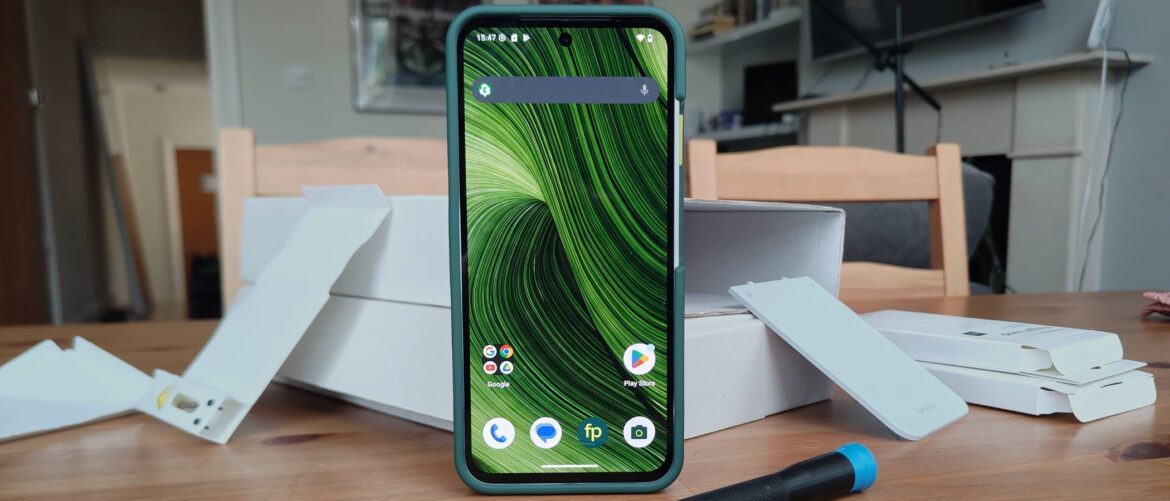
Like past models it’s very easy to replace damaged parts yourself using a little Fairphone-branded screwdriver, but a new change for this generation is the same process can be used to add accessories to the device (albeit ones bought separately). I found it really easy and even fun unscrewing the back panel to add a finger loop, or card holder, or lanyard, and this also encouraged me to poke around inside the device and demystify the scary-sounding self-repair process.

My biggest surprise with the Fairphone 6 was its presence of a 3D time-of-flight sensor on the back, in lieu of a third sensor. These were popular on phones a few years ago but largely as a way of bulking up a specs list, and rarely did they actually contribute much. But on the Fairphone 6, the impact is noticeable as portrait photos have incredibly accurate background blur, getting blurrier with greater distance from the subject. That’s not something you see often on smartphones and it made the Fairphone one of my favorite phones for pictures of myself (if taken on the rear camera, of course).

Sign up for breaking news, reviews, opinion, top tech deals, and more.

That’s not to say that the Fairphone is one of the best camera phones, as pictures tended to be a little dull, lacking in vibrancy and color, and the macro mode worked poorly.

Beyond the areas I’ve discussed, it’s overall a pretty average mid-range phone: its chipset, screen quality, battery capacity and charging speed are all at or slightly below what you’d expect for the price. But the software is stock Android, which provides a nice clean interface and the addition of a handy slider adds some quick functionality when you need it.

Fairphone 6 review: price and availability

(Image credit: Future)

  • Announced in June 2025, released shortly after
  • Costs £499 (roughly $680, AU$990) but only on sale in Europe
  • Pricier version available without Android OS

After being announced in June 2025, the Fairphone 6 was put on sale across July and August, only in Europe. That’s right, Fairphone doesn’t range the phone in the US or Australia… mostly.

The handset costs £499 (roughly $680, AU$990) so it’s a mid-ranged mobile in price. The accessories Fairphone sells and you can see in review images, like the lanyard or finger grip, all cost about £25 (about $34, AU$49). For context the Fairphone 5 was quite a bit pricier at £649 (roughly $800 / AU$1,250), and the price cut is welcome.

There’s another version of the smartphones that’s ‘deGoogled’ and comes with the open-source /e/OS instead of Android as the default operating system. This costs $899 / £549 (at least AU$1,000 but there’s quite a gulf between those two prices). As you can see it is on sale in the US, although at a rather high price compared to the UK and also the European pricing.

I didn’t test this version of the phone so it hasn’t been factored into this review, but specs-wise it’s the same as the Android version of the phone.

Fairphone 6 review: specs

Here’s the spec sheet in full for the Fairphone 6:

Swipe to scroll horizontallyFairphone 6 specsHeader Cell – Column 0 Header Cell – Column 1

Dimensions:

156.5 x 73.3 x 9.6mm

Weight:

193g

Screen:

6.31-inch 20:9 FHD (1116 x 2484) 120Hz OLED

Chipset:

Snapdragon 7s Gen 3

RAM:

8GB

Storage:

256GB

OS:

Android 15

Primary camera:

50MP, f/1.6

Ultra-wide camera:

13MP f/2.2 116-degree

Front camera:

32MP, f/2.0

Audio:

Stereo speakers

Battery:

4,415mAh

Charging:

30W wired

Colors:

Green, white, black

Fairphone 6 review: design

(Image credit: Future)

  • New slider for quick functions
  • IP55 and MIL-STD-810H adds protection
  • Easily repairable or modifable

As with past models, the Fairphone 6 is a pretty blocky handset, but it makes sense for reasons we’ll get to in a bit. It comes in white, green or black; my review unit was white but the accessories were green, hence the color clash, and I found the white model picked up marks and stains pretty easily.

The phone measures 156.5 x 73.3 x 9.6mm and weighs 193g, so it’s a little smaller than many other contemporary Androids but is pretty thick.

The bottom edge of the phone has the USB-C port but there’s no audio jack. On the left side there’s the volume rocker, which I struggled to readily reach, and replacing it on the right edge of the phone, just above the power button, is a slider.

The function of this slider can be picked from the Settings menu; you can use it to turn on Do Not Disturb, Flight Mode, Torch, Dark Mode, Battery Saver or to turn on Fairphone Moments, a stripped-back menu with quick links to the phone’s most useful functions (maps, messages etc). I personally switched it to torch, because I love it when a phone has a quick way to turn on the flashlight.

Housed in the power button is the phone’s fingerprint sensor, as the Fairphone 6 doesn’t have an under-display scanner. In testing, I found this reliable and quick to use.

The Fairphone 6 is one of the few phones that I don’t feel you need to buy a case for, as by default it feels like it’s clad in an armor of hard plastic. But there’s more; not only does it have IP55 certification against dust ingress and water, it has the military-grade MIL-STD-810H protection too. This means it’s passed tests designed by the US Department of Defense to check that it’s reliable in military situations, so it can withstand altitude, extreme temperatures, humidity, intense shocks and so on. You (hopefully) won’t need any of these protections, but it’s a useful little piece of mind so that you know the Fairphone is hardy.

The unique selling point of the Fairphone 6 is that it’s fully repairable; not by an expert or specialist but by you. If a part of your ecp-friendly phone is damaged you can easily buy a new one on Fairphone’s website and replace it with a screwdriver (the company’s video tutorials might help), saving you buying a whole new device if one component is damaged. This is that eco ethos in action.

It’s also the case with accessories, as you can remove the phone’s back panel and replace it with a card holder, a finger loop or similar. The ability to be easily modded like this is perhaps the Fairphone 6’s most distinct upgrade over its predecessor and, frankly, is pretty fun to do too (Fairphone sent me each of the accessories along with the phone, though they’re not included in-box).

Fairphone 6 review: display

(Image credit: Future)

  • 6.31-inchd display feels small compared to contemporaries
  • New refresh rate at 120Hz beats predecessor
  • Sometimes struggles in sunlight

Compared to the behemoth screens of some flagship Android phones, the Fairphone 6 might feel a bit small (or ‘compact’, which is the diplomatic word choice). The display measures 6.31 inches across, so it matches the iPhone 17 in this regard.

The resolution is 1116 x 2484, just a hair above FHD+, and it has a 120Hz refresh rate in a notable upgrade over the last-gen Fairphone. The max brightness is 1,400 nits which is fine, but not as bright as many rivals, and I wouldn’t have minded a bit of extra shine for use on sunny days.

Most of the time, though, the Fairphone 6 display works well, especially since it totes the same number of pixels as a much bigger display but crammed down into a smaller screen to increase the pixels-per-inch count.

Fairphone 6 review: software

(Image credit: Future)

  • Comes with stock Android 15
  • 7 years of updates
  • Fairphone app gives extra insight into phone

Fairphone is one of the few remaining companies to use ‘true’ stock Android – not an Android fork, and not stock Android buried under so many customizations that it feels like a fork anyway.

In the case of the Fairphone 6 that means you’re looking at Android 15, and all the features that come with it: live location sharing, dodgy text warnings, screen time tracking and so on. The handset is due to get upgrades for the next seven years, which would take you up to Android 22 in the year 2033 (if that’s what Google decides to call it).

If you like a clean interface with no added bells and whistles, you’ll like the Fairphone 6’s software. You start free from bloatware and can build up your app library just how you like it.

Fairphone does have one addition: its own app is included on the device at start, and while you can remove it, there are some useful features. Firstly, it lets you find information about the device at a tap, instead of buried away in the Settings menu (although mine told me I had 0GB RAM and 0GB storage, perhaps an issue with a review unit. It lets you buy spare parts and accessories quickly too, providing video tutorials on how to add or replace parts.

But the most important is a phone health option, so you can see how much memory and storage you’ve used up, and also what the phone’s temperature is, giving you a little insight into its operations. The benefit of this is for the device’s longevity, so you can keep it ticking longer.

Fairphone 6 review: cameras

(Image credit: Future)

  • 50MP main and 13MP ultra-wide cameras, 32MP up front
  • Pictures lack contrast and color, but are detailed
  • Rear portraits look really good

Judging by a look at the specs list, Fairphone 6 isn’t being dragged into the camera- sensor pixel wars, dropping many from the past model. Its main camera is a 50MP f/1.6 snapper and it’s joined by a 13MP f/2.2 ultra-wide as well as a 3D time-of-flight sensor. Those specs are absolutely fine for a low-cost phone (except the TOF sensor, a relic of yesteryear, which nine times out of ten doesn’t contribute anything) but nothing to write home about.

Photos taken on the phone are… fine. Forgive the boring descriptor but it’s the most apt one. Snaps have lots of image quality but not much in the way of dynamic range, with a single cloud in the sky dooming the photo with a noticeable lack of color or vibrancy.

In well-lit scenarios things fared a little better, but only a little; the greens of a natural landscape blur into one and a little extra contrast would go a long way. Still, they’re fine-looking for sharing around, especially if you don’t mind going into the edit menu and sprucing them up a little.

Fairphone’s mobiles have rarely had much in the way of photo post-processing optimization, at least compared to competitors, and that’s the case again. It won’t impress anybody but this is a phone for saving the planet, not for capturing sparkly pictures flaunting all the air miles you’ve burned by going to a remote beach for your holiday.

(Image credit: Future)

On the front there’s a 32MP f/2.0 camera for snapping selfies and I generally found it pretty fit for purpose, if still indicative of the rear cameras’ issues; snaps could be a little washed-out and colorless.

For a brief whip around the other specs: you can record video at 4K at 30fps or 1080p at 60fps, and down to 120fps at 1080p in slow-motion mode. Most of the other modes are ones you expect: Pro, panorama, time-lapse and night mode.

There are two modes I’ll flag. First is portrait, with the Fairphone 6 surprisingly touting one of the best iterations of this mode I’ve seen. While snaps weren’t exactly vibrant, the bokeh background blur was accurate and varied in intensity depending on the distance to the phone, which is something I rarely see; that could be the TOF sensor in effect.

The other mode is macro, which really didn’t work too well. Like on most phones without a dedicated macro lens it uses the ultra-wide one, resulting in a pixel-heavy pic, missing the depth of field that such pictures should have. In testing I always turned off macro mode and relied on the main camera for such shots instead.

Fairphone 6 camera samples

Image 1 of 11

A standard picture taken on the Fairphone, in fairly well-lit conditions.(Image credit: Future)An ultra-wide photo taken in overcast conditions, to contrast the following two snaps.(Image credit: Future)A standard photo taken in overcast conditions, to contrast the preceding and following snaps.(Image credit: Future)A 2x zoom snap taken in overcast conditions, to contrast the two previous snaps (the phone uses digital zoom).(Image credit: Future)A canape board taken at 1x zoom in artificial lighting at close range.(Image credit: Future)A portrait snap of a man to show the bokeh effects (white bars added manually before adding this picture to the web).(Image credit: Future)A macro picture of some flowers… or an attempt to photograph them.(Image credit: Future)The flowers from the previous photo, but using the main camera, to show how improved it is.(Image credit: Future)Another standard picture of a closer object.(Image credit: Future)Another standard photo of a further subject.(Image credit: Future)A final standard photo showing a woodland scene with mixed lighting.(Image credit: Future)

Fairphone 6: performance and audio

  • Mid-range Snapdragon 7s Gen 3 chipset
  • Single 8GB/256GB model
  • Bluetooth 5.4 or USB-C port for audio, no jack

As is the way with Fairphone’s mobiles, the Gen 6 doesn’t have a top-end chip, but it has enough power that you won’t find it too slow for everyday use. The chipset here is the Snapdragon 7s Gen 3, which we’ve also seen in the likes of the Nothing Phone 3(a) Pro and Xiaomi Redmi Note 14 Pro Plus.

This is a mid-range piece of kit, capable of handling gaming in a mostly fine fashion, though maybe not at the top graphics options if you don’t want stutters, and all everyday tasks.

When I put the phone through a Geekbench 6 benchmark test, it returned a multi-core average score of 3,430, which reflects the chipset; Snapdragon 600s often sit at around 2,000 points while 800s I’ve tested recently have gone to the mid 4,000s.

Paired with the chipset is 8GB RAM and 256GB storage, and there’s only one configuration available. While 8GB RAM is nothing to write home about, a spec that flags this as a mobile not designed for power-users, the storage is a solid amount that compensates for the lack of a microSD card slot.

It’s 2025 so of course there’s no 3.5mm audio jack for audio, Fairphone ditched that years ago when everyone else did. Instead you can listen to music using the Bluetooth 5.4 support or using a USB-C adaptor. The stereo speakers aren’t exactly impressive but that’s normal for a smartphone.

  • Performance score: 3.5 / 5

Fairphone 6 review: battery life

  • Relatively slender 4,415mAh battery
  • Slow 30W charging

(Image credit: Future)

The Fairphone 6 has a 4,415mAh battery, one which the company estimates will keep you going for “almost two days” from 100% power. I wouldn’t go that far, and I’d put the lasting power at about a day, or a little bit longer if you’re not an intensive user.

That’s a fine battery life for a smartphone, even if 4,415mAh may seem anemic given that most contemporaries have pushed it to 6,000mAh. Fairphone’s own optimizations and software and spec choices often counter smaller-capacity batteries.

Of course, if your battery starts to diminish or go wrong, it’s one of the many parts of the phone you can swap out very easily.

Charging is done at 30W, which is again a little lower than rivals, and you’ll have to wait for well over an hour to get from empty to full. There’s no kind of reverse or wireless powering.

Fairphone 6 review: value

(Image credit: Future)

What price would you put on a phone that looks after the planet?

Rhetoric aside, the Fairphone 6 isn’t priced particularly competitively when you look at the specs, but what sets its apart is its lasting power.

Not only does its IP and military certification ensure it’ll survive damage much better than other handsets on the market, but the fact you can replace ailing parts ensures that the mobile’s lifespan will far outstrip anything else you might be considering.

After all, the average phone lasts for under three years, especially cheaper models. The Fairphone 6 will last you longer than multiple other models if you let it.

Should you buy the Fairphone 6?

(Image credit: Future)Swipe to scroll horizontallyFairphone 6 score card

Attributes

Notes

Rating

Value

The potential lasting power of this phone means its price seems like a bargain, when looking at the bigger picture.

4.5 / 5

Design

It’s no looker, but it’s well protected, easily modifiable and has a handy new slider.

4 / 5

Display

If you want a phone with a smaller screen, the Fairphone will fit you perfectly.

3.5 / 5

Software

The software is nice and clean, as Google intended, but without the extra features Android forks bring.

3.5 / 5

Camera

Other than the impressive portrait capabilities, the Fairphone 6 cameras are bang average.

3.5 / 5

Performance

The Snapdragon chip here is fine for everyday use for most people, but gamers will pine for more.

3.5 / 5

Battery

The battery is small and the charging slow, but optimizations ensure the actual battery life is okay.

3.5 / 5

Buy it if…

Don’t buy it if…

Fairphone 6 review: Also consider

If you don’t think this mobile is right for you, let’s look at some similar-priced handsets. Just note, other than the first, these won’t retain the Fairphone’s green principles.

Swipe to scroll horizontallyHeader Cell – Column 0

Fairphone 6

Fairphone 5

Xiaomi Redmi Note 14 Pro Plus

Nothing Phone 3a Pro

Starting price (at launch):

£499 (roughly $680, AU$990)

£649 (roughly $800 / AU$1,250)

$399 / £399 (roughly AU$800)

$459 / £449 / AU$849

Dimensions:

156.5 x 73.3 x 9.6mm

161.6 x 75.8 x 9.6mm

162.53 x 74.67 x 9.95mm

163.52 x 77.5 x 8.39mm

Weight:

193g

212g

210g

211g

OS (at launch):

Android 15

Android 13

Android 14, HyperOS

Android 15, NohtingOS 3.1

Screen Size:

6.31-inch

6.46-inch

6.67-inch

6.77-inch

Resolution:

1116 x 2484

2700 x 1224

2712 x 1220

1080 x 2392

CPU:

Qualcomm Snapdragon 7s Gen 3

Qualcomm QCM6490

Qualcomm Snapdragon 7s Gen 3

Qualcomm Snapdragon 7s Gen 3

RAM:

8GB

8GB

8GB / 12GB

12GB

Storage (from):

256GB

256GB

256GB / 512GB

256GB

Battery:

4,115mAh

4,200mAh

5,110mAh

5,000mAh

Rear Cameras:

50MP main, 12MP ultra-wide

50MP main, 50MP ultra-wide

200MP main, 8MP ultra-wide

50MP main,. 50MP zoom, 8MP ultra-wide

Front camera:

32MP

50MP

20MP

50MP

How I tested the Fairphone 6

(Image credit: Future)

  • Review test period = 2 weeks
  • Testing included = Everyday usage, including web browsing, social media, photography, video calling, gaming, streaming video, music playback
  • Tools used = Geekbench 6, Geekbench ML, GFXBench, native Android stats

I tested the Fairphone 6 for just over two weeks to write this review, using it as my normal mobile in this time. As stated, I was sent the white version of the mobile along with all the extra accessories.

The testing process included a mix of experience and ‘lab’-style, so I’d use the handset as my normal phone for some of the time but also conducted a battery of benchmarking tests as well. I also took the phone with me on holiday, hence the camera samples.

I didn’t test the military-standard protection of the phone, due to not having a nearby warzone or extreme climate in which to do so. I’ll have to take Fairphone’s word for that.

As well as this mobile, I’ve tested the last few Fairphone mobiles, alongside plenty of other devices since I started reviewing for TechRadar in early 2019.

Read more about how we test

First reviewed September 2025


Source link

September 24, 2025 0 comments
0 FacebookTwitterPinterestEmail
Final Fantasy Tactics: The Ivalice Chronicles Review -- A Polished, Historical Gem
Game Reviews

Final Fantasy Tactics: The Ivalice Chronicles Review — A Polished, Historical Gem

by admin September 24, 2025


I’m old enough to remember how it felt to first play Final Fantasy Tactics in 1997–to remember its stirring score, deep tactical combat, and most of all, the complex story of broken relationships and valor set against a bitter, conspiracy-laden battle for royal succession. It all came together to create an unforgettable experience. More than nearly any game of its time, I was so rapt in it that I would find my mind frequently wandering back to it, planning new strategies, wondering what would happen next.

Tactics is a game that has lived on as a cult classic with sporadic attempts at giving it its due, as with 2007’s War of the Lions. The Ivalice Chronicles is the latest and best version so far, modernizing just enough to keep its spirit intact and enhance its memorable story without sacrificing its classic charms.

The story primarily follows the life of Ramza Beoulve, the youngest and most obscure member of a storied house of nobles, and his fractious friendship with Delita Heiral, a commoner who was treated like family by the Beoulve clan. As narration informs us before the game begins, history remembers Delita as the conquering hero of the War of the Lions–but it was the relatively unknown Ramza who should actually be celebrated.

That framing device, of a scholar uncovering history’s hidden secrets and revealing lost truths, immediately sets our expectations and raises intriguing questions. How did Delita rise to become a celebrated historical figure? And why was Ramza overlooked? It’s a small, brilliant way to shade everything we see unfolding afterward.

When we join the characters in their own time, it’s shortly after the resolution of another period of bloodshed, the 50 Years War. The conflict was grueling and strained relations to a breaking point between nobles and commoners. Against this backdrop, the death of a regent leads to a bitter battle over succession, ultimately igniting all-out hostilities known as the War of the Lions. Again, Final Fantasy Tactics establishing a historical record first gives us grounding for interpreting the events.

The tale of palace intrigue, betrayal, and conspiracy was always one of Final Fantasy Tactics’ best features, but its original translation was hit-or-miss, with some sloppy and even confusing moments. The 2007 PlayStation Portable game Final Fantasy Tactics: The War of the Lions retranslated the game and in the process made the translation much more Victorian English, with Shakespearean flourishes. The Ivalice Chronicles uses the War of the Lions translation as a base, but reworks it to accommodate its full voice acting. I don’t have the War of the Lions translation memorized, so I can’t attest to the exact differences, but from the standpoint of a fan, it at least seems to be very similar in style and tone.

The major difference, though, is the voice acting itself. In the same way that your high school English teacher may have told you that Shakespeare is meant to be heard, not read, this translation just feels noticeably more alive than the PSP game’s when you can hear the characters lending their voices to the lines. The performances add texture and emotions to the text, and the actors were clearly given room to make each role their own by adding groans and affectations.

Judging by the performances, the actors even seem to have been familiar enough with the full story arc that they were given space to imbue lines with suspicion or foreshadowing that isn’t necessarily present in the text itself. In a story full of twists and turns that centers highly on betrayal and conspiracy, the performances add intrigue and suspense, as you wonder how much meaning you should read into a character’s tone.

But that also means that The Ivalice Chronicles can be extremely talky. While the in-game cutscenes themselves are full of stage direction, with characters moving about the space and impressive sprite work illustrating their gestures, most of the story battles have at least a few interstitial dialogue moments. The flowery language used for the script means these can last a while, so sometimes you’ll be thinking of your next tactical move and then have your train of thought interrupted by a surprisingly long conversation. The voice acting was so great that I didn’t want to skip it, but at the same time, sometimes I really just wanted to get on with the battle.

When I played the original Final Fantasy Tactics as a teenager, it was my first real experience with this style of Elizabethan tragedy, at least outside of an English literature classroom. FFT carries all the same hallmarks in a fantasy setting, with royal intrigue, doomed lovers, and power struggles.

The State of the Realm timeline in Final Fantasy Tactics: The Ivalice Chronicles

It is a lot to keep track of, but Ivalice Chronicles has a few new tools for those who really want to dig into the details of the story and its sometimes tangled royal machinations. For starters, an evolving encyclopedia is included as a quick reference of people and locations. A menu for “Auracite,” magical stones that become a key plot element, shows not only the known stones but who is in possession of them at any point in the story. And my personal favorite, a State of the Realm chronicle, shows a timeline of major events laid against a map of Ivalice, which you can browse through to see where and why major characters and their armies have moved throughout the story.

The movements of armies are approximated by your tactical battles, which are smaller in scope than the grand story would suggest. Usually you’re limited to four or five party members, often with one or two guest characters in tow performing their own automated actions, against an opposing force that is around eight to 10 units. Battles take place on small 3D planes where elevation can provide advantages and elements like deep water can limit your movement. With such small-scale battles, positioning each unit and specifying which direction they face at the end of the turn becomes vitally important. It also features a slightly generous form of permadeath, as downed units can be revived within three turns before they’re gone forever. You can always recruit new units in cities, but given the grinding needed to upgrade your characters and outfit them with a number of different skills, it hurts to lose a soldier permanently, and even worse if it’s one of your powerful named characters. Thankfully, Ivalice Chronicles has frequent auto-saves, so it’s easy enough to find a recent spot before a doomed mission.

Final Fantasy Tactics was and remains a grind-heavy game, even with the rebalancing of Ivalice Chronicles making it slightly less so. That’s partly because of the Job Class system–Tactics is the earliest example of the system in the Final Fantasy series for many fans, unless they happened to import the then-Japan-only Final Fantasy 5. There are 20 standard Jobs for your units, alongside special Jobs held by named characters such as Ramza. Each Job has its own set of skills that can be purchased with Job Points (JP) earned during battles, but it wouldn’t be quite accurate to call them skill trees, since the skills can be purchased in any order. If you just want to save up all your JP for the priciest skill, you can do that.

Many of the later jobs have prerequisites from earlier ones–you need to reach a certain proficiency with a Black Mage before you can become a Time Mage, for example. When you multiply all those jobs by several characters, even if you stick with a core group of eight or so, it can get demanding. There are power-leveling strategies from the original version that still work, but having a high-level party can still be a commitment. There’s a fast-forward feature to speed up battles, but there are no experience points or JP multipliers like we saw added to the Final Fantasy Pixel Remasters.

Final Fantasy Tactics: The Ivalice Chronicles

Gallery

As you begin to unlock more classes and start to combine their skills, you can create some wonderfully broken combinations that make all of your work feel much more satisfying. The best part of any class-based combat system is experimenting with different combinations, and few do it nearly as well as Final Fantasy Tactics. The flexibility of setting a main class alongside secondary abilities, passive abilities, and movement abilities–with hardly any restrictions–makes it feel very rewarding to tinker with different builds and find combinations that almost feel like cheating.

The difficulty of raising up an army in the early game accentuates somewhat odd balance later on, though. You spend the first three chapters dutifully grinding to build a force with hardly any special units and then, in the last chapter, you suddenly get access to lots of strong, named characters with great special abilities and stats that outdo your basic units. It’s one rare aspect that feels mildly wonky by today’s standards for tactical RPGs, which reinforces this game’s place as a museum piece for an earlier age in the genre.

On that point, Final Fantasy Tactics: The Ivalice Chronicles largely excels. This is hands-down the best way to play this classic of the genre, thanks to a wide array of improvements. I’ve already praised the retouched translation and excellent voice acting, along with new tools to track the story and some rebalancing. The new difficulty levels are a nice new feature as well, letting you dial back the challenge if you want an easier time through the story or would prefer to ramp up the difficulty to really test your tactical prowess. The music remains as good as ever, and since starting the remake I’ve been idly humming battle tunes to myself.

The Ivalice Chronicles version also includes subtle visual updates, making the beautiful sprite artwork of the originals stand out. There’s something homey and comforting about this visual style, with its squat figurine-like characters, and those get a chance to shine in the visual update. The world map looks clearer and more detailed than you remember, and even the relatively simple polygonal battlefields have a nice dash of retro personality.

The one drawback are the character portraits, which are blown up in the same style as the sprites, but don’t look nearly as good for it due to some odd artifacting and jagged edges. Those portraits were captured from original hand-drawn artwork, so it may have been a nicer archival approach to rescan the artwork at a higher resolution, if Square Enix still has it in its archives.

Final Fantasy Tactics: The Ivalice Chronicles

And on that note of preserving history, this excellent version of FFT is just shy of being a definitive edition. While it’s nice that the game offers both the “enhanced” Ivalice Chronicles version alongside a “classic” option, both versions still use the War of the Lions translation from the PSP version, so there is no option to see the original translation if you wish. And both Ivalice Chronicles options lack two special job classes added to the War of the Lions version, Onion Knight and Dark Knight. The community is sharply divided on whether these two classes are any good, naturally, but it still would have been nice to include them and make this a truly definitive package.

Final Fantasy Tactics is a formative game in the tactical RPG genre, and still one of the greatest. Its unforgettable story has never been better told thanks to a retouched translation, stellar voice acting, and smart new tools to help track all of the palace intrigue. Combat remains incredibly rewarding and flexible, which is an especially impressive achievement given its smaller scale compared to many modern action RPGs. The Ivalice Chronicles lacks a few nice-to-have features, but it’s easily the best way to play this all-time classic.


Source link

September 24, 2025 0 comments
0 FacebookTwitterPinterestEmail
Hades 2 1.0 review | Rock Paper Shotgun
Game Reviews

Hades 2 1.0 review | Rock Paper Shotgun

by admin September 24, 2025


Hades 2 1.0 review

Now it’s out of early access, Hades 2 is a very strong sequel that builds on its predecessor’s strengths and offers an enrapturing godly grind.

  • Developer: Supergiant Games
  • Publisher: Supergiant Games
  • Release: September 25th 2025
  • On: Windows
  • From: Steam
  • Price: £25/€29/$30
  • Reviewed on: Intel Core i7-12700F, 16GB RAM, Nvidia RTX 3060 Ti, Windows 11

I am gonna claw out your eyes, then drown you to death. I AM GONNA CLAW OUT YOUR EYES, THEN DROWN YOU TO DEATH. So goes the chorus to the hit single Hades 2 girl group Scylla and the sirens have been rehearsing in lethal fashion for a year and a bit. It’s one of the most pervasive earworms I’ve encountered in my 26 years on this Earth, the kind of ditty that’d make the Backstreet Boys blush.

Within an hour of returning to Hades 2, now that it’s morphed into its full 1.0 release form, those words were just as firmly lodged in my skull as they were when I defeated Chronos for the first time during the roguelike’s early access phase. By all rights, I should find the purposefully mocking tune annoying, but I don’t. Much like the rest of Hades 2, no matter how many runs I make through the depths of the underworld and to the summit of Olympus, moments when it’s actually, properly grated on me have been few and far between.

That’s not for any lack of trying on the part of its mythical monsters, gabbing gods, and tetchy titans. Hades 2 is plenty tough, especially for those who dare not to reach for the breakable glass surrounding its God Mode, which gradually frees the stuck by dialling up princess protagonist Melinoë’s ability to tank through damage. In my return to Supergiant’s supergiant sequel, I’ve spent most of my time exploring the lengthy endgame section with it turned on to various degrees.

Image credit: Supergiant Games / Rock Paper Shotgun

I know, especially fresh off that whole Hollow Knight: Silksong discourse, shame on me. Except the nature of Hades 2’s God Mode, the fact it works in reaction to the player’s failure, means I’ve still been able to experience plenty of the supposedly sweet struggle that’s so exalted in games that opt to whip out the stick. You can argue that the struggle isn’t the struggle if it’s on the player’s terms, but be warned that I may respond with a joke about bondage dungeons.

Dragging the tone back into respectable territory, one of the things that makes Hades 2 so infinitely loveable – despite its willingness to put you on your bottom whenever you prove too weak or make a mistake – is that it wields the carrot just as deftly. You’re stopped in your tracks, but you never feel like you’re running in place. Each death comes with countless new strategies to try, ways to change or improve your situation using whatever riches you do manage to net each night. As in the original Hades, Supergiant’s beautifully-crafted commutes through the realms of Ancient Greek prose, full of false walls and hidden paths just waiting to be revealed whenever you get a few runs in (or brew up a revealing spell in The Crossroads’ cauldron).

Having already defeated Chronos that one time last year, and been rewarded with a note that essentially read ‘Ending can’t come to the phone right now, please leave a message after the tone,’ I first jumped into Hades 2 1.0 via the save with that victory under its belt. What followed was the bulk of Melinoë’s true task – not just recording one fluke win over the Titan of Time, but ending him and the siege of Mount Olympus by his legions for good. So, I started battling my way back to the house of Hades, all the while hunting for the ingredients I needed to brew an elixir that’d allow Mel to overcome her lethal surface world allergy and start battling through the whole new run added in 2024’s Olympic update.

Image credit: Supergiant Games / Rock Paper Shotgun

While my muscle memory took a bit of time to reform, Hades 2’s cast of characters quickly reminded me why I was so fond of them the first time around. Sure, Mel’s not quite got her brother Zagreus’ meteoric levels of sark and sass, but stick her in a chat with the likes of those pesky sirens and she can dish out some sharp and witty verbal daggerings. Her step-mum and dad, Hecate and Odysseus, help shepherd her along in her lifelong mission to topple Chronos, who’s kidnapped her family and the forces of fate as part of his own elaborate revenge scheme.

Wherever you look, there are distinct personalities, delivered with excellent voice acting, for Mel to bounce off of and add colour to the world. The likes of sarky household shade Dora chuck some comedic relief into the pot, counteracting the serious chat about fates and destinies, and an array of new and returning Olympians pop up to offer boons like a quirky aunt or uncle with a selection of flashy gifts. Plenty stick out, but my favorite has come to be Nemesis, the surly older sister figure who’s always ready to toss a bucket of water over Melinoë’s enthusiastic exuberance with the aplomb only a moody sibling could muster. She’s grown on me as she grows on Mel, starting out as what could easily be a one-dimensional grouch, then morphing into the ideal friendly rival as you ply her with nectar and bath salts.

You’ll sometimes bump into her during your runs, ready to dish out a challenge to take a hit from her or beat more foes in a time limit to earn a begrudging pat on the head. Then, you can turn the corner and find yourself walking in on god of wine Dionysus casually hosting a pool party as Olympus’ invaders swarm all of the chambers you’ve just battled through. Next door, there might be a giant automaton, the bulging eye of a fearsome beast, or a very angry rat with a massive health bar waiting to bash you about and prove it’s the boss. The bone structure of the two paths – one leading to Chronos, the other to a fight with mountain-sized monster Typhon that’s almost comically teeming with ways to die – stays the same, but every trick and twist in the box is pulled out to ensure you’re still running into things you’ve never seen before by your fifth or tenth trip through.

The arc as you do so is the usual Hades one. Earn boons that imbue your base abilities with twists themed around the spheres of different gods, slice in some extra tool sharpening from Daedalus hammers, chew on centaur hearts to boost your max health. Dash around rooms full of enemies hacking and slashing, a whirling dervish of energy and vibrant colour. If you’re so inclined, make use of Hades 2’s addition of magick, a new bar next to your health that powers beefier versions of your strikes, casts and specials. These take more time to fire, much to the chagrin of my well-honed original Hades desire for all of the damage, right now, he’s gonna kill me, AAAAAAGHHHHH. As a result, it took me a bit more time than it should to get into the habit of using them, but once I did, I never looked back.

Image credit: Supergiant Games / Rock Paper Shotgun

Prior to that, plenty of boons and other abilities offered something powerful in exchange for locking off a portion of these magick reserves, meaning that the bar has use for even those who prefer sticking to insta-reward button mashing. I generally found that I’m in that camp when hacking and slashing with the Sister Blades, the weapon in Melinoë’s nocturnal arsenal I used most early in my playthrough. As I delved a lot deeper into the endgame of repeat runs to Tartarus and Olympus, though, I branched out and had a lot of fun with other armaments.

Supergiant have done an excellent job of tweaking and balancing each of the six main weapons on offer throughout Hades 2’s early access patches, as well as giving you plenty of ways to upgrade them with special abilities that encourage different approaches to combat. Despite typically being averse to slower swings, I’ve really dug the weighty scything of power attacks with the Moonstone Axe’s Aspect of Thanatos variant. Specials are also what make the revolver-esque Argent Skull really sing as you fire busts of shells at foes, especially when you opt for its Aspect of Persephone version. It says a lot that since unlocking the most powerful of these arms, the punchy and missile-firing Black Coat, it’s formed part of a regular rotation rather than taking over as the go-to.

I wouldn’t say there’s an obvious weak link among any of the gods offering you boons either, with pretty much every run netting you a loadout that’s got something cool going for it. Having really dug Demeter’s freezing powers early on, my best builds have typically fused any combination of those, Zeus’ lightning powers for some handy repeat damage, Hestia’s hearth handouts for lingering built-up burn damage, or Poseidon’s wave attacks for some extra knockback punch. As you get into the later stages of the game, fresh boons from the likes of Ares and Hera are uncorked, giving you a much-needed extra dose of variety just as you verge on having tried everything the rest have to offer.

On the other hand, unless there’s a specific god I’m keen to get more boons from, I’ve found I tend to rely on the same keepsakes at certain stages each run. So, perhaps some more alluring alternatives to the likes of the Silken Sash, Evil Eye, and knuckle bones might have helped shake me out of that. I also had mixed feelings about Selene’s hex, a spell aimed at very magick-centric builds that can be fun when the chance to turn enemies into sheep pops up, but boasts a beefy upgrade tree that lacks the satisfying simplicity found in applying the various other augments.

Image credit: Supergiant Games / Rock Paper Shotgun

Regardless of the implements you use to battle your way through Hades 2’s beautifully illustrated regions, my favourite of which is a clever series of fights across the decks of ships in the Rift of Thessaly, as of 1.0 you can finally achieve Hades 2’s much-hyped true ending. How is it? Well, I’ll try not to stray too far into spoiler territory (though consider this your spoiler warning), but I think it’s one that might prove a bit polarising. On the one hand, Hades has always been a series about bringing families back together, and on that front the ending delivers no matter which way you slice it. On the other, given how often the motto “Death to Chronos” is repeated throughout, the manner in which he ends up defeated arguably isn’t as satisfying a form of retribution as is built up over all of those hours.

Overall, though, the ending isn’t what defines Hades 2. The journey is the thing, and now that it’s fully formed, it’s as epic in scope and ever-evolving with fresh surprises as I’d hoped. Even if you jumped in for a run to Chronos when it first came out in early access, there are myriad reasons to and rewards for returning to a worthy successor to the throne of the roguelike underworld. As with its siren song, Hades 2’s a game that by its very composition constantly runs the risk of grating on you throughout your repeated delves, but has been masterfully crafted to ensure it’s too loveable to do so on all but rare occasions.

As much as Melinoë matter-of-factly describes her quest to defeat the Titan of Time as her task, Hades 2’s greatest strength is that, thanks to Supergiant’s substantial effort tweaking and adding elements over the past year or so, playing it hardly ever feels like hard work.


Source link

September 24, 2025 0 comments
0 FacebookTwitterPinterestEmail
Rippling Spend website screenshot
Product Reviews

Rippling Spend review | TechRadar

by admin September 24, 2025


Why you can trust TechRadar


We spend hours testing every product or service we review, so you can be sure you’re buying the best. Find out more about how we test.

Rippling Spend is an all-in-one spend management platform designed to streamline how businesses control their spending, which means it’s far more than just an expense or bill tracking tool.

The spend tracking tools are just one part of Rippling’s offering, which already spans other areas like HR, IT and other finance solutions.

Because of this unified approach, it means everything is kept under the Rippling roof which allows companies to simplify their software stacks. While it reduces the interoperability challenges posed by having to use multiple providers, it could result higher costs.

It’s designed primarily for mid-sized and growing businesses, so if you’re a startup with just a few people on the books and minimal spend tracking requirements, it might be too much for you.

Spend is one of Rippling’s newer products, launched in September 2022. Because it ties in with the rest of the platform, it with employee data like roles, departments and locations, for granular controls and approval automation.

Rippling says this helps streamline month-end processes and cut administrative time by up to 75%.

Rippling Spend: Plans and pricing

Rippling has a series of different packages to pick from, but one thing’s consistent across the entire ecosystem – you’ll struggle to find any explicit pricing, because Rippling wants to share this via a consultation.

Sign up to the TechRadar Pro newsletter to get all the top news, opinion, features and guidance your business needs to succeed!

The principal Rippling Platform offering comes in two flavors – Core and Pro. Both have add-ons like unlimited workflows, custom no-code apps and an API platform with over 600 third-party apps and integrations.

If you’re looking for a standalone spend management solution (without the full Rippling suite), then the Rippling Spend package is the right fit.

It includes tracking and reimbursement across any currency in over 100 countries, expense viewing and reimbursement via payroll, policies, receipt matching and the mobile app.

Again, Rippling does not disclose pricing, but we do know that companies will pay monthly per employee, so they only pay for what they use.

We understand tailoring packages to different sized companies is essential to maximizing value, but by simply not declaring prices to start with could leave many customers looking elsewhere.

(Image credit: Rippling)

Rippling Spend: Features

Rippling’s unified spend management platform includes expense management, corporate cards (physical and digital, with options for up to 1.75% cash back on eligible purchases), bill pay, payroll and travel into a single interface, so it can just about handle any mainstream expense you or your employees can throw at it.

It’s a great fit for bigger companies, because it allows admins to set up custom rules based on employees, such as department, role or location, meaning some processes and even approvals can be complete with automation.

In fact, it’s the automations that Rippling Spend such an easy system to use. For example, you can allow certain employees to book different cabin types on flights, or issue corporate cards to individuals with allocated budgets and spending categories.

It all means finance teams will have fewer requests with the correct setup.

For admins, a handy dashboard offers a consolidated view of live spending across departments, projects and other categories, which can be especially handy in the third sector where grant-led projects require funding to be allocated from different pots.

Another power of Rippling’s is that it integrates well with third-party applications, including over 600 accounting, HR and productivity tools like QuickBooks and Xero.

Finance teams will also love how Rippling Spend integrates bill payments and invoice processing – one less reason to have to jump between different apps.

(Image credit: Rippling)

Rippling Spend: Ease of use

Rippling is a big name in this space, so it should come as no surprise that everything feels very unified and simple across the entire ecosystem.

This consistent UI isn’t just nice to look at and easy to use, but it also helps from a staffing point of view because, if you’re using other tools in the Rippling suite, you’ll have fewer onboarding and training challenges.

It’s as easy to manage Rippling Spend as a finance exec as it is to use it as a worker – and the latter can submit expenses through email, receipt upload or manual entry, which are then automatically routed to the right approvers.

Rippling Spend is at its most powerful on the desktop, but there are mobile apps for on-the-go tracking and claim submissions, which is really handy for keeping tabs on costs during business trips.

It’s one big app – not just spend-tracking – so again, it’s better when a company commits to using the entire Rippling ecosystem.

(Image credit: Rippling)

Rippling Spend: Support

Rippling encourages users to schedule a demo to determine the features they need, and this is where the pricing will be revealed.

In terms of learning resources, the company has its own help center, webinars and documentation to guide users through most processes, but the platform is on the simpler side to use anyway.

Apart from the online chat pop-up, there’s an online form to reach Rippling, but no email address or phone number.

Rippling publishes support times daily to show response times across chat and email, how many customers are converted from chat to call, and more.

(Image credit: Rippling)

Rippling Spend: Final verdict

Rippling Spend is an easy-to-use spend management platform that consolidates corporate cards, expense tracking and bill payments into one integrated platform, as well as all the usual smaller expenses that add up.

Because it forms part of a wider Rippling ecosystem, it means companies can tap into existing knowledge about processes, projects and workers, which can significantly reduce administrative time – Rippling says by 75%.

The interface is about as easy as it gets on the desktop, and a handy complementary mobile app keeps workers connected on the go when they need to out-of-office expenses.

For admins and finance teams, real-time visibility across projects and teams eliminates last-minute surprises, and powerful automations keep things flowing with little human interaction needed – ultimately freeing up workers to product more meaningful work and saving the company time and money.

For mid-sized to larger organizations looking to centralize spend, Rippling Spend is a strong contender, but smaller teams might find just as much value from cheaper, smaller-scale solutions elsewhere.


Source link

September 24, 2025 0 comments
0 FacebookTwitterPinterestEmail
Hades 2 Review - Witching Hours
Game Reviews

Hades 2 Review – Witching Hours

by admin September 24, 2025


Just like the first game, Hades 2 launched first in early access, allowing developer Supergiant Games to delicately tweak and balance gameplay, as well as add new content before its full launch. And, like the first game, that time was not wasted.

Hades 2 exits early access as a finely-honed and deeply engaging roguelite that builds upon the strong foundations established by the first game. It’s larger in every way, with more characters and conversations to enjoy, an entirely new roster of weapons to learn, and deeper customization options to its expanded combat system, yet none of these upgrades compromise Hades’ legacy. Rather, Hades 2 improves upon its predecessor in every way, making it a masterfully crafted sequel that is essential to play.

Size:640 × 360480 × 270

Want us to remember this setting for all your devices?

Sign up or Sign in now!

Please use a html5 video capable browser to watch videos.

This video has an invalid file format.

Sorry, but you can’t access this content!

Please enter your date of birth to view this video

JanuaryFebruaryMarchAprilMayJuneJulyAugustSeptemberOctoberNovemberDecember12345678910111213141516171819202122232425262728293031Year202520242023202220212020201920182017201620152014201320122011201020092008200720062005200420032002200120001999199819971996199519941993199219911990198919881987198619851984198319821981198019791978197719761975197419731972197119701969196819671966196519641963196219611960195919581957195619551954195319521951195019491948194719461945194419431942194119401939193819371936193519341933193219311930192919281927192619251924192319221921192019191918191719161915191419131912191119101909190819071906190519041903190219011900

By clicking ‘enter’, you agree to GameSpot’s

Terms of Use and
Privacy Policy

enter

Now Playing: Hades 2 Review

Instead of playing as Zagreus again, you play as his sister, Melinoe, who was born after the events of the first game. Your journey with the witchling begins shortly after the titan Chronos usurps the throne and takes over Hades’s domain, banishing Hades, Persephone, Zagreus, and the other Chthonic gods as he does so. Melinoe, saved from the unknown fate of her family, has been raised to realize one simple goal: Death to Chronos. That goal is realized over many, many treks through Hades and beyond, with each run featuring randomized elements, including the enemies you’ll face and the upgrades you’ll earn along the way. With the help of her mentor, fellow titan Hecate, and a cast of new and returning gods, shades, and all those in between, Hades 2 sets out strongly from the get-go with a story that is gripping to watch unfold between runs.

For all of its improvements, Hades 2 doesn’t initially look or feel that different from the original. Both games operate with the same isometric viewpoint, and Melinoe moves with the same speed and grace as her brother, albeit with some slight changes. Unlike Zagreus, Melinoe is far less dash-happy, with a longer cooldown between each of her evasive bursts of speed that’s initially awkward to get used to. This is offset by a greater emphasis on maintaining speed through sprinting, which you engage by holding down the dash button right after executing it.

This sprint provides the same degree of damage-avoidance Zagreus enjoys but feeds into additional offensive options. And some enemies are designed specifically to punish a reliance on just dashing to encourage a shift in mindset. The sprint can also be upgraded with boons, the random upgrades you receive at various points during a run, in a similar fashion to your standard attacks, letting your sprint shock foes with Zeus’ lighting, or knock back entire groups of them with the powerful waves of Poseidon. This tangible change is a taste of how Hades 2 approaches evolving a strong, established formula by making small, sometimes experimental, changes that have a profound effect on the way you approach gameplay.

Hades 2

Gallery

Nowhere is this more evident than the expansion of Melinoe’s offensive repertoire. She maintains the trio of options that her brother had with standard, special, and cast attacks; both the standard and special attacks are determined by your selection of a weapon when you begin a run. This is already delightfully varied, with the starting Witch Staff offering a nice balance between safe ranged melee strikes, while others, such as the Sister Blades, demand a bolder approach, since their limited range forces you to really get in the face of enemies.

Melinoe’s cast ability is also far more useful without boons than Zagreus’s awkward red diamond projectile ever was. In keeping with her witch abilities, Melinoe can throw down a circular ring that confines enemies inside it for a brief period of time, making it an effective crowd-controlling option at its default tier. Boons from the gods can radically evolve it, though, turning the defensive snare into a more offensive area-of-effect spell that decimates large groups of foes or inflicts harmful curses on them. These can also be combined with other boons that augment your standard weapons to create a deadly mixture of skills.

Melinoe’s cast ability is just one of the biggest changes Hades 2 introduces for its refined approach to combat. Each of your three attacks can also be channeled into new Omega attacks, which you can think of as alternative fire modes for each. The standard attack of the slow and cumbersome Moonstone Axe can be channeled into a fast and devastating spinning attack, for example, while the single shots of the Black Coat’s special attack can transform into a lock-on missile barrage that quickly melts away lonesome enemies. These are powered by magic, which is a new resource you need to manage between each skirmish. It refills automatically as you enter a new room, encouraging you to maximize its usage during each battle while also making you think about ways to keep it topped up while you’re in the thick of things.

All of these combat abilities are empowered by gifts Melinoe receives from the various characters you’ll run into during each run. There are familiar faces, such as Aphrodite and Hermes, as well as entirely new ones. Hestia, for example, offers her flame damage-dealing boons as a way to introduce damage-over-time strategies to Melinoe’s repertoire, while Hera’s new Hitch curse lets you mark several enemies and then deal damage to all of them simultaneously. Each boon gives you specific elemental abilities to play around with, letting you cobble together a combination that plays off each one’s strengths to make the most of a run.

… big, bold swings have established Hades 2 as one of the best roguelites you’re likely ever going to play

With six distinct weapons to use, more boons to imbue them with, a variety of keepsakes from friends and foes that influence runs, and a handful of animal familiars to choose from, Hades 2 provides so many levers to pull and knobs to turn that it’s unlikely you’ll ever feel like you’re doomed to an inconsequential run. Yes, you’ll still have ones that go a lot better (or worse) than others, but there wasn’t one I played that didn’t feel instructive or enlightening in some way.

All of these options are also introduced at a steady but measured pace, never overwhelming you with new mechanics before you’ve got a grasp of those you have access to. Each new wrinkle is another piece in a larger puzzle that eventually lets you have more consistently successful runs, rewarding the thought you’ve put into both the preparation before them and the execution of a build during each one. It’s an engrossing formula that makes the much-lauded original seem like a nascent idea by comparison, and exemplifies the ambition shown by Supergiant Games with its sequel. It would’ve been easier to make smaller, iterative changes to a highly-regarded combat loop, but big, bold swings have established Hades 2 as one of the best roguelites you’re likely ever going to play.

Hades 2

This additional depth to combat is kept entertaining thanks to an entirely new roster of enemies to contend with, many of which demand a quick understanding of the new combat avenues available to you and how best to take advantage of them. Simple, slow-swinging brutes might be commonplace in the first few encounters of a run, but they’re quickly supplanted by seemingly neverending waves of small but deadly floating fish in later ones, or heavily armored soldiers that require quick reflexes to keep out of their wide-reaching melee strikes. Boss encounters are the true standouts though, ranging from an interesting roster of mid-bosses that you’ll encounter quite frequently, to the show-stopping skirmishes that await you at the end of each biome.

These are massive climactic battles against Hades 2’s most-challenging foes, each with their own fascinating theme around them. A standout is Scylla and the Sirens, which pits you against three foes with distinct abilities in a musically charged battle that borders on overwhelming the first few times you undertake it. It’s a layered battle that challenges you to cleverly balance which of the three you’re going to focus on at a given time in order to remove their respective attack from the equation. This is just one of many that are both audio and visual treats, crammed with eye-catching effects and accentuated by Hades 2’s exceptional soundtrack, composed again by Darren Korb. The music melds a thumping double-bass and roaring electric guitar with the smooth vocals of Ashley Barrett, who continues to outdo themself with each new game they feature in. It’s tough to pick a favorite among the pairs work across Supergiant’s suite of games, but there hasn’t been one this varied and full-bodied as this.

Each of Hades 2’s biomes also marks a departure from the environments from the first game, which might be a relief to hear given you’ll be mostly traversing the depths of Hades again. Alternative paths lead you to new areas that are bursting with color and character, with Supergiant’s distinctive art style shown in its best light here. Hades 2 features an outstanding reimagining of the depths of Hell, which is accentuated by the nostalgic return of familiar spaces in the game’s later, and more climatic, sections.

It’s surprising, too, that traveling down the levels of Hades is not the only path you can take, with an entirely different route to take during a run opened a few hours into your playthrough. This expands Hades 2’s content well beyond what was offered in the original game, with the original four biomes supplanted by more than twice that. This expansion doesn’t come at the expense of quality either, with each biome rendered in Supergiant’s immediately recognizable art style. Hades 2 is the best looking game the studio has delivered yet, and the richest it’s ever crafted, with an immense amount of detail poured into each space that gives them presence within the wider mythos of Hades’ world. The scorched streets of a city ravaged by war stand in contrast to the clinically clean halls of the usurped underworld, the underwater boiling rooms of the siren’s forgotten nightclub opening out to wide open fields littered with lost souls. Hades 2’s world is diverse and memorable, and not just because you’ll be traveling though it time and time again.

The areas are also more mechanically varied, with a few offering larger spaces that you can explore while giving you the chance to choose which routes to take and when. It serves to break up the monotony of moving strictly from one room to the next linearly, but the sheer variety on offer makes it difficult for that to ever feel like a problem that needs solving in the first place. The choices of which narrative threads to follow, along with the quantity of content added to the overall package, just further show how much more ambitious Supergiant is with its first-ever sequel.

While you’ll spend the majority of your time dungeon-crawling your way to success, Hades 2 puts a bigger emphasis on what you do in between runs, too. The Crossroads, a refuge that sits between the base of Mount Olympus and the depth of Hades, acts as the sequel’s analog to the first game’s House of Hades post-run hangout spot, offering up a multitude of base-building options that all have tangible impacts on your effectiveness during runs. A large, bubbling cauldron in the center lets you combine resources to unlock new parts of the Crossroads, as well as helpful shops and newer resource types to collect when you venture back out. A small garden lets you plant specific seeds that sprout while you’re out, folding back into the requirements for more expansion via the aforementioned cauldron.

The Crossroads in Hades 2

The Crossroads also includes specific activity spaces that let you take characters out on small dates, both friendly and a little more intimate, which provide more environments for more narrative progression to take place in. Customization options are also more expansive than in Hades, letting you decorate and personalize the space to make it feel more homey between each run. While Hades 2 makes it easy to bounce from one run to the next, having a little more to do between them is a welcome addition.

Paramount to permanent character progression is a new arcana card system that replaces Zagreus’s one-dimensional upgrade mirror from the first game. Each card gives you an advantage of some sort during your run. This can be as simple as rewarding you with a Death Defiance, which keeps you alive after an otherwise fatal blow, or buffing your total magic and health even before a run starts. Others, like the ability to deal additional damage to foes with two curses, or buffing damage while your magic isn’t fully replenished, define a tone and strategy to your run before starting, helping you craft your play style accordingly as you go.

The number of arcana cards you can equip is determined by your Grasp, a numerical total that you can expand with a different resource as you chip away at runs. Each card has an associated cost depending on its overall effect, so you’re challenged to balance which ones to equip based on your capabilities at a given time. The more cards you unlock, and the more Grasp you obtain, the bigger advantage you take into a run, and thus the greater chance you have of completion. It’s a far more dynamic system than the on-off switches in the previous game, tying in nicely to the already deeper choices you have available in combat.

The Crossroads is also integral to the way Hades 2 tells its tale. The stakes of the story are more profound here, trading Zagreus’s petulant plight to escape his home with a wide-reaching conflict that threatens not only Melinoe and her family, but every corner of the underworld, the surface above, and the gods looking down from the mountaintop. Chronos is a suitably harrowing villain who consistently pops up to threaten you as you’re nearing him, while also reveling in all your defeats, making the many times you’ll best him satisfying victories.

Hades 2 is a game that is essential to experience

But Chronos is just one of many fantastic foils along the way, with Hades 2 giving time for each main antagonist to shine in their own way. They, along with your allies at The Crossroads, all react believably to each of your actions, remarking on your weapon choices, the boons you’ve picked up along the way, the manners in which you were defeated, and more. Just like in the first game, this is where Hades 2 really distinguishes itself from its peers in the genre, with the unbelievable way in which its script incorporates each of your actions fluidly into its core narrative to make it feel like the story is being written as you play. It’s the strongest hook that the original game possessed, one that no peer has matched since, and one that Hades 2 surpasses so effortlessly.

The roster of characters you’ll interact with is also much larger than in Hades. The Crossroads is home to a variety of different personalities, such as the sassy but insecure shade, Dora; the masterful tactician Odysseus; and another of Nyx’s many offspring, Nemesis. The gods that you’ll meet along your path also lean more into their recognizable archetypes, with newer additions to the cast such as Narcissus, Prometheus, and Icarus standing out the most.

Voice acting is exceptional throughout, a feat made even more impressive only once you’ve experienced what seems like an endless stream of captivating dialogue that empowers the hundreds of permutations you can come across each run. Melinoe is often witness to the incessant bickering between the pantheon of gods, titans, and those caught in between, and sometimes the cruelty they let spill out into the world, but Hades 2 deftly interweaves brevity and witty writing that keeps the tale endearing. It’s captivating to watch Melinoe’s relationships with each of these characters evolve with each passing night, making you crave each new interaction and giving the story more depth than the revenge plot at its core.

Whether you were witness to all the work done on Hades 2 during early access or not, there’s no denying how much effort developer Supergiant Games has put into this masterful sequel. Hades 2 is one of the best roguelite experiences ever, with clever improvements to its established formula that accentuate its strongest attributes. More importantly, it achieves this without requiring you to be the most well-versed player on what came before, but not at the expense of offering a new challenge to those that have spent hours digging away at the first game’s most brutal endeavors. It’s deeper and more complex than the original in every way, from its greatly expanded combat system to its larger, more complex web of character interactions that powers its more ambitious narrative.

Hades 2 is a game that is essential to experience, with all of its parts coalescing into a memorable adventure that you will likely lose dozens of hours to without regret.


Source link

September 24, 2025 0 comments
0 FacebookTwitterPinterestEmail
iBuyPower Y40 Pro
Product Reviews

iBuyPower Y40 Pro Review: Style first

by admin September 24, 2025


Why you can trust Tom’s Hardware


Our expert reviewers spend hours testing and comparing products and services so you can choose the best for you. Find out more about how we test.

iBuyPower casts a wide net with its desktop lineup, aiming to please everyone from frugal shoppers to hardcore enthusiasts. And while it often delivers, the Y40 Pro, reviewed here ($1,899.99 as tested, on sale for $2,099.99), raises a few eyebrows. Its aquarium-like glass shell and RGB-lit interior certainly make a statement, and the performance appears promising at first glance. But the focus on aesthetics brings compromises that may lead you to look elsewhere.

Design of the iBuyPower Y40 Pro

As the Y40 Pro’s name suggests, the system is built in Hyte’s Y40 chassis, a more compact, pared-down sibling to the Hyte Y60 found in the iBuyPower Y60 Pro. (Hyte is owned by iBuyPower.) Aesthetics take center stage here. The borderless glass panels on the front and sides evoke a fishtank-like display, offering an unobstructed view of the internals. Its dimensions of 18.58 x 17.28 x 9.44 inches (HDW) are standard mid-tower fare.

(Image credit: Tom’s Hardware)

  • iBuyPower Y40 Pro at Amazon for $2,106.79

The tower is equipped with five 120 mm RGB fans: two side intakes, one rear exhaust, and two mounted on its own 240 mm liquid CPU cooler. RGB lighting extends to the cooler’s waterblock and the system’s RAM, creating a cohesive glow throughout the build.

To manage the lighting, I had to manually install MSI Center. Identifying which fans were mapped to which headers eluded me, but the “Select All” function allowed me to apply settings across all zones simultaneously. That’s slightly disappointing – being able to control individual zones would have allowed more personalization. The RGB DIMMs, however, can be independently controlled.

(Image credit: Tom’s Hardware)

The case itself is sturdy, with generous use of rolled steel. Side panels are secured with metal ball pins that release with a firm pull, a simple and effective solution. That said, a few design choices feel counterintuitive. The right side panel’s dust filter is molded in, making it non-removable – cleaning it requires removing the entire door. The two bottom filters slide out in opposite directions, meaning you’ll likely need to shift the entire tower if it’s placed near a wall. There’s also a dust filter on the top panel, despite it serving as an exhaust rather than an intake.

(Image credit: Tom’s Hardware)

The Y40 Pro’s fan noise proved distracting. Even at idle, the fans remain consistently audible, often rising above ambient household sounds. Thermal management appears poorly tuned, with fan curves reacting aggressively to brief CPU activity spikes. During gaming sessions, noise levels increased noticeably, prompting me to switch to closed-back headphones just to catch subtler in-game sounds. While advanced users can tweak the fan curves in the motherboard BIOS or using an app, this desktop should have come better-tuned out of the box.

iBuyPower Y40 Pro Specifications

Swipe to scroll horizontally

CPU

AMD Ryzen 9 7900X

Motherboard

MSI PRO B650-BC WIFI

Memory

32GB DDR5-5200 (2x 16GB)

Graphics

Nvidia GeForce RTX 5070 Ti (16GB GDDR7, 2,452 MHz boost clock)

Storage

2TB SSD (AGI2T0G43AI818)

Networking

2.5 Gbps Ethernet, RealTek RZ616 Wi-Fi 6E, Bluetooth 5.3

Front Ports

2x USB Type-A, USB Type-C, 3.5 mm audio

Rear Ports

USB-C 3.2 Gen 2×2, 7x USB-A 3.2 (3x Gen 2, 4x Gen 1), 3.5 mm audio connectors, DisplayPort, HDMI

Power Supply

750 watts, non-modular

Cooling

240 mm liquid cooling (iBuyPower)

Operating System

Windows 11 Home

Dimensions (WxDxH)

18.58 x 17.28 x 9.44 inches

Price (as configured)

$1,899.99

Today’s best iBuyPower Y40 Pro deals

Ports and Upgradeability on the iBuyPower Y40 Pro

The Y40 Pro delivers standard connectivity for a mid-tier gaming desktop – nothing unexpected, but nothing lacking either. Up front, you’ll find a 3.5 mm audio jack, two USB Type-A ports, and a USB Type-C port, with the power button centered between the group.

Get Tom’s Hardware’s best news and in-depth reviews, straight to your inbox.

(Image credit: Tom’s Hardware)

The MSI PRO B650BC motherboard backplane features seven USB-A ports (three rated at 10 Gbps, four at 5 Gbps), a 20 Gbps USB-C port, and six 3.5 mm audio jacks. HDMI and DisplayPort outputs are available if the CPU includes integrated graphics, as our Ryzen 9 7900X test unit does. That said, monitors should be connected to the GPU’s outputs: the RTX 5070 Ti provides one HDMI and three DisplayPort connectors.

(Image credit: Tom’s Hardware)

For networking, the system includes a 2.5 Gbps Ethernet port and a RealTek RZ616 wireless card supporting Wi-Fi 6E and Bluetooth 5.3. Note that the external antennas shown in the photos must be attached for reliable wireless performance.

This case’s priority on form over function limits expansion. The vertically mounted GPU obstructs the motherboard’s PCIe slots, ruling out the installation of any additional full-height cards. It’s just something to be aware of when you buy this desktop – most users are not installing additional PCIe cards. That said, you can install a half-height card in either of the remaining slots, one x1 and one x16.

(Image credit: Tom’s Hardware)

Storage options are surprisingly limited for a case of this size. Aside from the two M.2 slots on the motherboard, the only additional drive support is behind the motherboard, where there’s room for either two 2.5-inch drives or a single 3.5-inch drive. Meanwhile, memory expansion is more forgiving – our test unit has two of the four UDIMM slots open, and the board supports 192GB of RAM.

The 750-watt power supply isn’t modular, but it covers the standard connectors and delivers enough juice for mid- to enthusiast-tier GPUs. With clearance for cards up to 422 mm long, this case shouldn’t hold you back when it’s time to upgrade.

Gaming and Graphics on the iBuyPower Y40 Pro

Our Y40 Pro test configuration features a Ryzen 9 7900X CPU, GeForce RTX 5070 Ti GPU, and 32GB of DDR5-5200 RAM.

For my game testing, I fired up F1 24 and played at the game’s Ultra preset at 3840 x 2160 with DLSS enabled, seeing anywhere from the high-80 to the low-100 frames per second range. The gameplay was exceptionally smooth.

We compared the Y40 Pro to two other gaming desktops: the Asus ROG G700 ($2,029 as tested) features an Intel Core Ultra 7 265KF, though it sticks with the vanilla GeForce RTX 5070, while the Corsair Vengeance a7500 ($2,799) pairs the gaming-focused Ryzen 7 9800X3D with an RTX 5070 Ti. While the Corsair and the iBuyPower have similar GPUs, we’ll see some big performance gaps at 1080p due to the CPU, which also makes the Corsair far more expensive.

Image 1 of 5

(Image credit: Tom’s Hardware)(Image credit: Tom’s Hardware)(Image credit: Tom’s Hardware)(Image credit: Tom’s Hardware)(Image credit: Tom’s Hardware)

Starting with Shadow of the Tomb Raider at the Highest detail preset, the Y40 Pro trailed the Corsair significantly at the CPU-bound 1080p resolution, with 228 FPS versus the Corsair’s 261 FPS. At 4K, however, both systems leveled out at 89 FPS. The RTX 5070-powered Asus predictably fell behind, posting 199 FPS at 1080p and 68 FPS at 4K.

In Cyberpunk 2077’s demanding Ray Tracing Ultra preset, the Y40 Pro narrowed the gap, achieving 87 FPS at 1080p compared to the Corsair’s 95 FPS. At 4K, both machines converged again, each producing 29 FPS.

Far Cry 6 at Ultra settings showed a wider disparity at 1080p, with the Y40 Pro reaching 125 FPS while the Corsair surges ahead at 197 FPS. At 4K, the performance is almost identical. The Asus sits between the two, with 110 FPS at 1080p and 80 FPS at 4K.

In Red Dead Redemption 2 (Medium preset), the Y40 Pro clocked in at 161 FPS at 1080p, just behind the Corsair’s 174 FPS. At 4K, the difference is negligible: 66 FPS for the Y40 Pro and 67 FPS for the Corsair. The Asus trailed again, with 120 FPS at 1080p and 50 FPS at 4K.

Finally, in Borderlands 3 at the “Badass” preset, the Y40 Pro stayed competitive, posting 215 FPS versus the Corsair’s 227 FPS at 1080p. Both systems match at 94 FPS at 4K. The Asus finished with 175 FPS and 74 FPS, respectively.

Overall, the Y40 Pro delivers stable gaming performance, though it falls short of the Corsair in CPU-intensive titles and lower resolutions, where the Ryzen 7 9800X3D clearly extracts more from the RTX 5070 Ti. At 4K, where GPU limitations are apparent, the two systems perform nearly identically. Since the Y40 Pro is also available with the Ryzen 7 9800X3D, its performance gap isn’t necessarily a strike against it, though as of this review, no RTX 5070 Ti configuration was available with that chip (see the configuration section for more).

To evaluate sustained gaming performance, we run 15 loops of the Metro Exodus stress test at RTX settings. During the approximately 30-minute test, the Y40 produced an average framerate of 163 FPS across all runs, with almost no variation between runs. The Ryzen 9 7900X maintained an average temperature of just 50 degrees Celsius while the GeForce RTX 5070 Ti averaged 61 C.

Productivity Performance on the iBuyPower Y40 Pro

The Y40 Pro is built for high-performance productivity, featuring a Ryzen 9 7900X processor, 32GB of RAM, and a 2TB PCIe Gen4 SSD.

Image 1 of 3

(Image credit: Tom’s Hardware)(Image credit: Tom’s Hardware)(Image credit: Tom’s Hardware)

In Geekbench 6’s synthetic CPU test, the Y40 Pro landed behind its rivals in both single- and multi-core scores. It posted 2,953 points in single-core, just shy of the Asus’ 3,029 and well below the Corsair’s leading 3,247. Multi-core results followed a similar pattern, with the Y40 Pro scoring 17,226 compared to 19,057 for the Asus and 18,124 for the Corsair.

The Y40 Pro also lagged in our 25GB file transfer test, where its SSD delivered 1,501.6 MBps. That’s notably slower than the Asus at 1,816.5 MBps and far behind the Corsair’s impressive 2,659.9 MBps.

In our Handbrake video transcode test (4K to 1080p), the Y40 Pro redeemed itself slightly, finishing in 2 minutes and 29 seconds to be second fastest overall. It trailed the Asus (2:03) but outpaced the Corsair (3:02).

Performance may improve with the newer Ryzen 9 9700X configuration, which could help close the gap in CPU-heavy workloads. As noted in the Configurations section of this review, iBuyPower offers many different CPUs in this tower, including Intel chips.

Keyboard and Mouse with the iBuyPower Y40 Pro

iBuyPower bundles its Chimera K7 RGB mouse and keyboard with the Y40 Pro, which are basic peripherals but a cut above the generic kits often tossed in with mainstream desktops.

(Image credit: Tom’s Hardware)

The Chimera K7 mouse sports a gamer-friendly shape that fits comfortably in medium-sized hands, though it’s designed exclusively for right-handed users. While the primary buttons and scroll wheel feel like nothing special, it does include two side buttons and a DPI toggle behind the wheel. A dedicated RGB switch on the underside cycles through ten LED modes, including off. The lighting is impressively bright, with effects like breathing, strobing, solid color, and a starlight mode that illuminates sections of the mouse in sequence.

Despite its membrane construction, the keyboard delivers a surprisingly tactile typing experience. I had no trouble maintaining my usual speed of about 120 words per minute and near-perfect accuracy on MonkeyType. It lacks premium features like USB passthroughs, but compensates with vibrant RGB backlighting across multiple colors. Lighting is controlled directly via Fn+ScrollLock, with options for static or breathing effects, and can be disabled using Fn+Pause. Flip-out feet provide a slight incline for ergonomic comfort, though iBuyPower unfortunately doesn’t include a palm rest.

Software and Warranty

Besides the usual smattering of Windows 11 default apps, iBuyPower preloads no software onto the Y40 Pro, which is mostly great. I had to install MSI Center myself for RGB lighting control.

iBuyPower backs the Y40 Pro with an industry standard one-year warranty.

iBuyPower Y40 Pro Configurations

iBuyPower offers a vast selection of prebuilt desktops, including fully customized systems on its website. Our Y40 Pro test unit, a $2,099 model from Amazon, uses the older Ryzen 7 7900X CPU; an $1,899 version at Best Buy swaps in the Ryzen 9 9700X and keeps all other specifications the same, including the GeForce RTX 5070 Ti, 32GB of RAM, and a 2TB SSD.

Other configurations available at Best Buy begin at $1,499 with a Ryzen 7 9800X3D and Radeon RX 7800 XT, followed by a $1,599 model with a Ryzen 7 8700F and RTX 5070, and a $1,699 option pairing a Ryzen 7 7800X3D with a Radeon RX 9070. Higher-tier models include a $1,999 build with a Ryzen 7 9800X3D and Radeon RX 9070XT, and a $2,299 version matching our test unit’s specs but upgraded to a Ryzen 9 9900X. Systems featuring the RTX 5080 start at $2,499, with the flagship $2,999 configuration combining that GPU with a Ryzen 9 9900X.

iBuyPower is competitive on price: a similarly equipped Corsair Vengeance a7500 was listed at $2,899 with a Ryzen 7 7800X3D and 1TB SSD, Alienware’s Aurora came in at $1,949 with a Core Ultra 7 265KF, and the Asus ROG G700 was priced at $2,399 with a Ryzen 7 9800XD.

Bottom Line

iBuyPower’s Y40 stands out visually and delivers solid mid-tier gaming performance, backed by decent build quality and ample connectivity. Above-average peripherals and competitive pricing further enhance its value proposition.

That said, noticeable fan noise detracts from the overall experience, and the limited RGB customization may disappoint users seeking more personalization. While most won’t need to expand storage or install additional full-height PCIe cards, it’s worth noting that the chassis offers little flexibility in those areas.

Ultimately, the Y40 Pro is among the more stylish mid-towers we’ve tested and holds its own against competitors like the Asus ROG G700. Still, for those prioritizing acoustic performance, the quieter G700 earns our preference.

iBuyPower Y40 Pro: Price Comparison


Source link

September 24, 2025 0 comments
0 FacebookTwitterPinterestEmail
  • 1
  • …
  • 6
  • 7
  • 8
  • 9
  • 10
  • …
  • 31

Categories

  • Crypto Trends (1,098)
  • Esports (800)
  • Game Reviews (772)
  • Game Updates (906)
  • GameFi Guides (1,058)
  • Gaming Gear (960)
  • NFT Gaming (1,079)
  • Product Reviews (960)

Recent Posts

  • This 5-Star Dell Laptop Bundle (64GB RAM, 2TB SSD) Sees 72% Cut, From Above MacBook Pricing to Practically a Steal
  • Blue Protocol: Star Resonance is finally out in the west and off to a strong start on Steam, but was the MMORPG worth the wait?
  • How to Unblock OpenAI’s Sora 2 If You’re Outside the US and Canada
  • Final Fantasy 7 Remake and Rebirth finally available as physical double pack on PS5
  • The 10 Most Valuable Cards

Recent Posts

  • This 5-Star Dell Laptop Bundle (64GB RAM, 2TB SSD) Sees 72% Cut, From Above MacBook Pricing to Practically a Steal

    October 10, 2025
  • Blue Protocol: Star Resonance is finally out in the west and off to a strong start on Steam, but was the MMORPG worth the wait?

    October 10, 2025
  • How to Unblock OpenAI’s Sora 2 If You’re Outside the US and Canada

    October 10, 2025
  • Final Fantasy 7 Remake and Rebirth finally available as physical double pack on PS5

    October 10, 2025
  • The 10 Most Valuable Cards

    October 10, 2025

Newsletter

About me

Welcome to Laughinghyena.io, your ultimate destination for the latest in blockchain gaming and gaming products. We’re passionate about the future of gaming, where decentralized technology empowers players to own, trade, and thrive in virtual worlds.

Recent Posts

  • This 5-Star Dell Laptop Bundle (64GB RAM, 2TB SSD) Sees 72% Cut, From Above MacBook Pricing to Practically a Steal

    October 10, 2025
  • Blue Protocol: Star Resonance is finally out in the west and off to a strong start on Steam, but was the MMORPG worth the wait?

    October 10, 2025

Newsletter

@2025 laughinghyena- All Right Reserved. Designed and Developed by Pro


Back To Top
Laughing Hyena
  • Home
  • Hyena Games
  • Esports
  • NFT Gaming
  • Crypto Trends
  • Game Reviews
  • Game Updates
  • GameFi Guides
  • Shop

Shopping Cart

Close

No products in the cart.

Close