Laughing Hyena
  • Home
  • Hyena Games
  • Esports
  • NFT Gaming
  • Crypto Trends
  • Game Reviews
  • Game Updates
  • GameFi Guides
  • Shop
Tag:

review

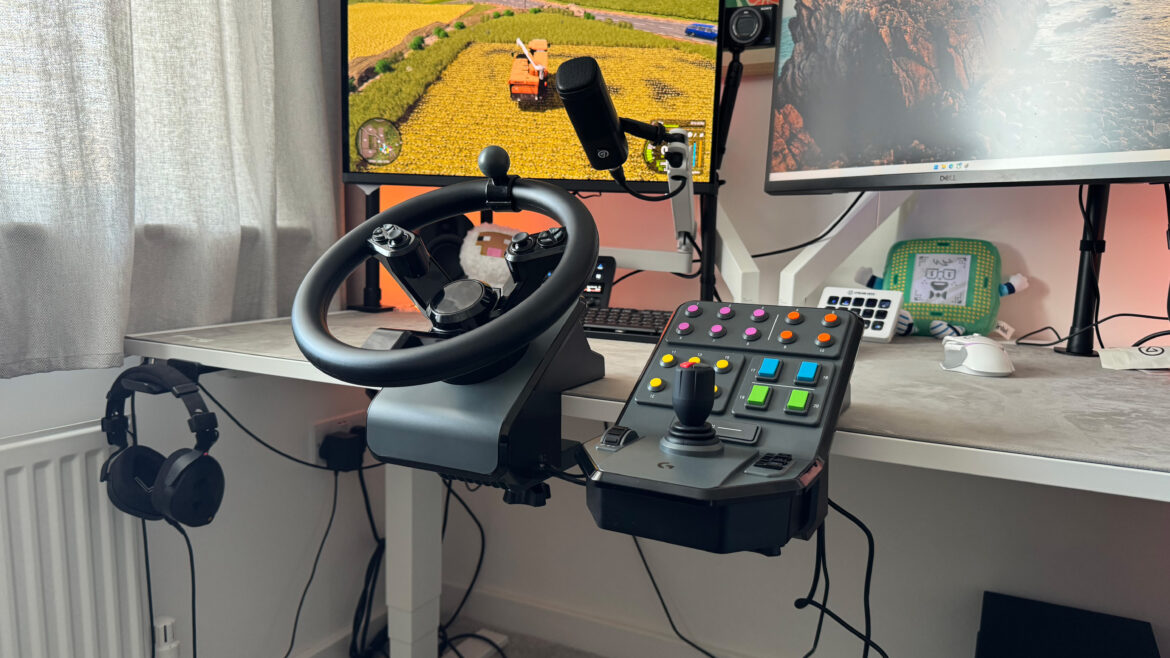
The Logitech G Heavy Equipment Bundle.
Product Reviews

Logitech G Heavy Equipment Bundle review: full of features for the most committed farmers

by admin August 22, 2025


Why you can trust TechRadar


We spend hours testing every product or service we review, so you can be sure you’re buying the best. Find out more about how we test.

Logitech G Heavy Equipment Bundle: One-minute review

The Farming Simulator crowd is a pretty diehard one, but unlike the sim racing community they aren’t blessed with a world of choice when it comes to dedicated peripherals and accessories. The Logitech G Heavy Equipment Bundle is one of the few options available with a combination of a wheel, pedals, and input-rich side panel.

The wheel and pedals are pretty stock standard, bordering on being a little underwhelming. Both are made entirely of plastic with a real hollow feeling and no reassuring weight to them. There’s no force feedback on offer here either, instead the wheel relies on a tightly sprung return mechanism to recentre the wheel in a pretty aggressive and haphazard way. The pedals also lack any kind of resistance, both the accelerator and brake feel the same under foot with an identical size and travel. It all has a very arcade vibe but at least it gets the job done.

The control panel is a different story altogether, so much so it almost feels at odds with the rest of the Logitech G Heavy Equipment Bundle. Once again it’s all plastic, but it’s much more solid and each of the 24 buttons are snappy and responsive. The front loader joystick is the highlight on the entire bundle, it feels premium and offers a great level of control.

I fired up Farming Simulator 25 and was delighted to see how well the Logitech G Heavy Equipment Bundle was pre-mapped. Not only was the entire setup recognized immediately, it was truly plug and play with every in-game control for every machine I tried already configured out of the box. It made the experience far more welcoming than the Thrustmaster FarmStick X which required almost entirely manual setup before I could begin working the fields.

The lack of force feedback meant it wasn’t exactly a realistic experience, the entire time I spent behind the wheel I was fully aware it was essentially a toy, but it made me enjoy my farming a trailer-load more than when I’ve played with a controller or keyboard and mouse.

(Image credit: Future)

Logitech G Heavy Equipment Bundle: Price and availability

  • List price: $329.99 / £229.99 / €289.99
  • Side panel also available separately as a standalone device
  • Previously sold as the Saitek Heavy Equipment Bundle

Just like a scarecrow standing alone in a field, the Logitech G Heavy Equipment Bundle seems to cast a pretty lonely figure in the category of farming simulation gear.

Racers are blessed with an abundant range of wheels but it’s rare to see such a focused piece of tech. Much like that experienced, old scarecrow, the Logitech G Heavy Equipment Bundle is somewhat of a veteran at this stage too. Celebrating its 10th birthday in 2025, this wheel and button box combo was originally released by sim hardware manufacturer Saitek shortly before its acquisition by Logitech back in 2016.

Sign up for breaking news, reviews, opinion, top tech deals, and more.

Logi then rebadged and re-released the Heavy Equipment Bundle under its Logitech G brand a couple of years later and it remains as one of the only dedicated farming sim rigs in the market. Little has changed since the original, you’ll still get a three-piece bundle of a wheel, pedals and side panel, and the price remains close to what it was at a reasonably steep $329.99 / £229.99 / €289.99. If you’ve already got a wheel and pedals, the side panel is available on its own for $169.99 / £139.99 / €169.99.

This sees the Logitech G Heavy Equipment bundle come in a chunk cheaper than its only major competitor, the Hori Farming Vehicle Control System, which will set you back just shy of $400. It also keeps it in-line with the sim racing staple Logitech G920, which does away with the side panel in favor of a higher-quality wheel. If you play more than just Farming Simulator it may be worth looking at that standalone option and spending a little more to pick up a higher quality wheel.

(Image credit: Future)

Logitech G Heavy Equipment Bundle: Specs

Swipe to scroll horizontally

Dimensions

Wheel: 13.98 x 10.83 x 12.60in / 355 x 275 x 320mm (HxWxD)

Pedals: 5.43 x 9.17 x 7.09in / 138 x 233 x 180mm (HxWxD)

Side Panel: 7.56 x 6.61 x 13.27in / 192 x 168 x 337mm (HxWxD)

Weight

Wheel: 4.19lb / 1902g

Pedals: 1.26lb / 572g

Side Panel: 2.56lb / 1160g

Mappable Buttons

Wheel: 10

Side Panel: 24

Sticks

Wheel: 2

Side Panel: 1

Pedals

2

Throttle Controls

1

Platform Compatibility

PC (Windows 11/10, MacOS)

Box Contents

Heavy equipment wheel with 6.6ft/2m USB connector cable, Gas and brake pedal set with 6ft/1.8m USB connector cable, Side panel control deck with 6.6ft/2m USB connector cable

(Image credit: Future)

Logitech G Heavy Equipment Bundle: Design and features

  • 900° rotating steering wheel with spinner knob
  • More than 30 mappable buttons plus throttle control wheel
  • Dual-mode joystick

While it may have arrived in a large box featuring Logitech’s slick, modern G branding, the Heavy Equipment Bundle itself is distinctly old school. This combo is now a decade old and it shows every bit of that age. There’s an instant giveaway too, the product photo on the box is noticeably low resolution and I wouldn’t be surprised if it was the same one that Saitek was using all those years ago. First impressions certainly weren’t excellent.

This experience wasn’t quickly improved when opening the box either. Call me a packaging snob but I’m a sucker for a slick unboxing experience and I wasn’t granted that here. There’s not much going on in there and it was all flanked by basic, thin brown cardboard. I know Logitech isn’t pitching this as a premium device but if I’d invested more than $300 on it I’d feel a little short changed.

It’s a simple bundle but has everything you need to get going, no extra gear required. You’ll also often find it bundled with a copy of Farming Simulator too which is a nice touch. In the box is an 11” wheel with an integrated table clamp, built-in USB-A cable and a fixed spinner knob.

A two-pedal accelerator and brake pedal set connects to the wheelbase with an included cable, while the side panel also includes an attached clamp and its own USB-A cable. It means needing to offer up two ports on your PC, though also allows the side panel to be used independently from the wheel as your PC will see them as two entirely separate devices. That’s mainly a blessing but also a slight curse, more on why later.

Build quality is disappointingly average across most of the Heavy Equipment Bundle. For something with ‘heavy’ in its name the whole thing is unbelievably light and rather cheap feeling. It’s plastic everywhere you look and I constantly found myself wanting for the smallest smidgen of rubberisation, upholstery or even just a little embossed texture.

The Logitech G Heavy Equipment Bundle wheel features a mirrored layout with four buttons and two thumb sticks on each side. These are nicely positioned and reasonably sized and I had no problem reaching and accurately using them while working the farm. Around the back of the wheel are two further buttons that while well placed, are irritatingly loose and loud. I streamed my Farming Simulator 25 gameplay on Twitch and had multiple comments from viewers about just how intrusive those rear button clacks were.

The side panel is much better in this regard and almost feels at odds with the wheel and pedal set. While not mechanical, each button is much more solid with no rattle or wobble, and they’re nearly arranged with plenty of space between each. Presses are firm but responsive with a gentle tactile bump and audible click. It’s all very pleasant. The dual-mode joystick is a nice size and has enough resistance to offer fine control without feeling like a workout. I’d have liked a little more strength to the resistance of the throttle wheel, but for how often it’s used it’s perfectly passable too.

(Image credit: Future)

Logitech G Heavy Equipment Bundle: Performance

  • Plug and play for Farming Simulator titles
  • Centre-sprung wheel has no force feedback
  • Loads of customization potential

It may not actually mention farming anywhere in its official title, but the Logitech G Heavy Equipment Bundle’s intentions are clear—all it really wants to do is help you plough, sow, and harvest. This is a dedicated farming wheel in all but name.

You’ll need to be establishing your homestead on a computer though because the Logitech G Heavy Equipment Bundle offers no console support whatsoever. The good news is there’s compatibility with both Windows and MacOS, somewhat of a rarity in the gaming world. It’s also impressively plug and play, so much so it wasn’t even recognized by Logitech’s G Hub, so there isn’t even an app to install before you can hop in the game.

Logitech has worked in partnership with developer Giants Software on the Heavy Equipment Bundle so it’s in the natively supported Farming Simulator 25 where I spent most of my time behind the wheel. Firing the game up for the first time I was delighted to immediately be greeted by not only a fully–pre-configured wheel and side panel, but the game also showing me correctly labelled inputs alongside menu items.

I was able to navigate straight through menus and into a new save without ever touching my keyboard or mouse, relying mainly on the thumb stick and button set on the wheel itself.

Arriving on the farm I jumped straight into the nearest truck to test out the most basic driving controls. They worked just fine, but as someone used to using pretty high-spec sim racing gear I found the Logitech G Heavy Equipment Bundle wheel to be incredibly toylike.

There’s no force feedback or even basic rumble effect, just an overly keen centre spring that offers a tiny amount of resistance when steering but sends the wheel rubber-banding back to a default position like a cartoon saloon door. It’s not exactly immersive but I’ll concede it’s far more fun than using a controller or keyboard and I’d still rather use this wheel than no wheel at all.

(Image credit: Future)

Jumping over to some more complicated agricultural machinery is where things got more confusing. Every button was bound and they were all labelled in game, that was good, but the problem was both the Heavy Equipment Bundle wheel and side panel use the same input numbers and the game rarely told me which it was referring to. It seemed as if it only wanted to show me wheel labels rather than side panel numbers, a slight problem given it has some three times more inputs to remember. It meant blindly pressing just about every button to work out what did what and then needing to memorize them.

There is an incredible amount of customisation potential here though and even just using the default button maps I had a blast. I can imagine experienced digital farmers getting a huge amount of value from the Logitech G Heavy Equipment Bundle side panel, particularly if you took the time to refine the input layout to something a little more memorable.

In my testing it was the dual-mode joystick that proved the standout addition. Controlling the intricate movements of an excavator arm felt natural, and more importantly, incredibly fun. I did need to go in and rebind a couple of movements here to gain full control, but once I did you’d have a hard time dragging me out of the driver’s seat.

The fundamental gameplay improvements brought about by the joystick made me long for a little more input variety because beyond this (and the basic throttle wheel) the Heavy Equipment Bundle side panel is just an array of simple buttons. There are four of what appear initially to be two-state switches, but are actually just buttons in costume with a switch-style keycap.

Given how many farming systems are two-state, think raising and lowering a harvester head or extending and retracting an auger, this functionality would have been very welcome as it’s not always immediately obvious in game whether you’ve got your gear in the right position and having some real world visual feedback would have helped.

While a majority of my time with the Logitech G Heavy Equipment Bundle was spent in Farming Simulator 25, I also tried jumping over to a couple of other similar titles to see how it fared. Results were mixed. In Euro Truck Simulator 2 I had to manually configure every input, even down to simple left and right turn controls, though this was simple enough and the game recognized each input.

Motorway driving is rather dull without any level of force feedback however, so I probably wouldn’t recommend it. Roadcraft offered no functionality at all, though this is true of a lot of wheels so I’m inclined to lay blame more on the software side than the wheel itself.

(Image credit: Future)

Should you buy the Logitech G Heavy Equipment Bundle?

Buy it if…

Don’t buy it if…

Also consider…

Not sure if the Logitech G Heavy Equipment Bundle is the right choice?

Here are a couple of other flight stick options you might consider instead.

Swipe to scroll horizontallyRow 0 – Cell 0

Logitech G Heavy Equipment Bundle

Thrustmaster SimTask FarmStick X

Thrustmaster Sol-R Flight Stick

Dimensions (HxWxD)

Wheel: 13.98 x 10.83 x 12.60in / 355 x 275 x 320mm

Pedals: 5.43 x 9.17 x 7.09in / 138 x 233 x 180mm

Side Panel: 7.56 x 6.61 x 13.27in / 192 x 168 x 337mm

9.1 x 7.5 x 7.3in / 230 x 190 x 185mm

9.72 x 7.71 x 7.71in / 247 x 196 x 196mm

Weight

Wheel: 4.19lb / 1902g

Pedals: 1.26lb / 572g

Side Panel: 2.56lb / 1160g

1.9 lb / 858g

2.79lb / 1270g

Mappable Buttons

25

33

21

Joystick Axis

3

3

6

Triggers

0

2

2

Throttle Controls

2

1

1

Platform Compatibility

PC

Xbox and PC (limited games on console)

PC

Box Contents

Heavy equipment wheel with 6.6ft/2m USB connector cable, Gas and brake pedal set with 6ft/1.8m USB connector cable, Side panel control deck with 6.6ft/2m USB connector cable

FarmStick X, Warranty flyer, USB-C to USB-A cable, Additional trigger cap

Sol-R base, Sol-R grip, Removable wrist rest, Thumb rest (+ 1 cover) for left-handed configuration, Stability supports, Detachable USB-C cable, Warranty information

(Image credit: Future)

How I tested the Logitech G Heavy Equipment Bundle

  • I clamped the bundle to my desk and spent hours playing Farming Simulator 25 on PC
  • I tried a range of farmyard machinery and general controls
  • I also checked performance in other, non-officially supported games

I added the Logitech G Heavy Equipment Bundle to my PC gaming setup featuring an Intel Core i9 14900k CPU and AMD Radeon 9070XT graphics card.

Setup was simple with integrated screw clamp mounts on both the wheel and side panel attaching firmly to my desk, with the pedals just resting on the floor. Both the wheel and side panel need their own USB connection, though both performed just fine when connected to either a USB hub or directly into my motherboard.

Most of my testing was focused on Farming Simulator 25 through Xbox GamePass where I tested the out-of-the-box button mappings of a range of vehicles for the first couple of hours. I then jumped into the in-game menus and made a few manual tweaks to check how simple things were to re-configure to my personal preference.

After ploughing a few fields I swapped over to RoadCraft and Euro Truck Simulator 2 to check performance in titles it’s not officially designed for.

First reviewed April 2025

Read more about how we test


Source link

August 22, 2025 0 comments
0 FacebookTwitterPinterestEmail
Metal Gear Solid Delta: Snake Eater Review - A true classic sheds its skin with a bold new look
Game Updates

Metal Gear Solid Delta: Snake Eater Review – A true classic sheds its skin with a bold new look

by admin August 22, 2025


How crisp and 4K-ified a nostalgic menu looks on a big TV is the silliest thing I’ve ever been excited about, but Metal Gear Solid Delta: Snake Eater is a shot-for-shot remake which luxuriates in the little things.

What makes Metal Gear Solid 3 one of the best games of all time isn’t necessarily its sneaking or its plot, but its inventiveness and reactivity. If you whip the camera around Snake in the medical screen too quickly he falls to his knees and blows chunks when you return to the game, if you quickly snipe a boss after a cutscene hours before his scheduled fight, he’ll be dead when you’re supposed to face him, and rabbit might taste pretty good, but instant ramen noodles are still the greatest food known to man.

It’s full of bespoke, purpose-built mechanics which had never been used before or since, all of which were so exciting in their nerdy but approachable simulation. Whether it’s digging out bullets with a combat knife and bandaging the wound or burning off a fat leech with an equally stubby cuban cigar in the Cure screen, or snaring vampire bats, rats and reticulated pythons to recover your stamina, each moving part is so simply implemented, but with an accessibility that made them iconic.

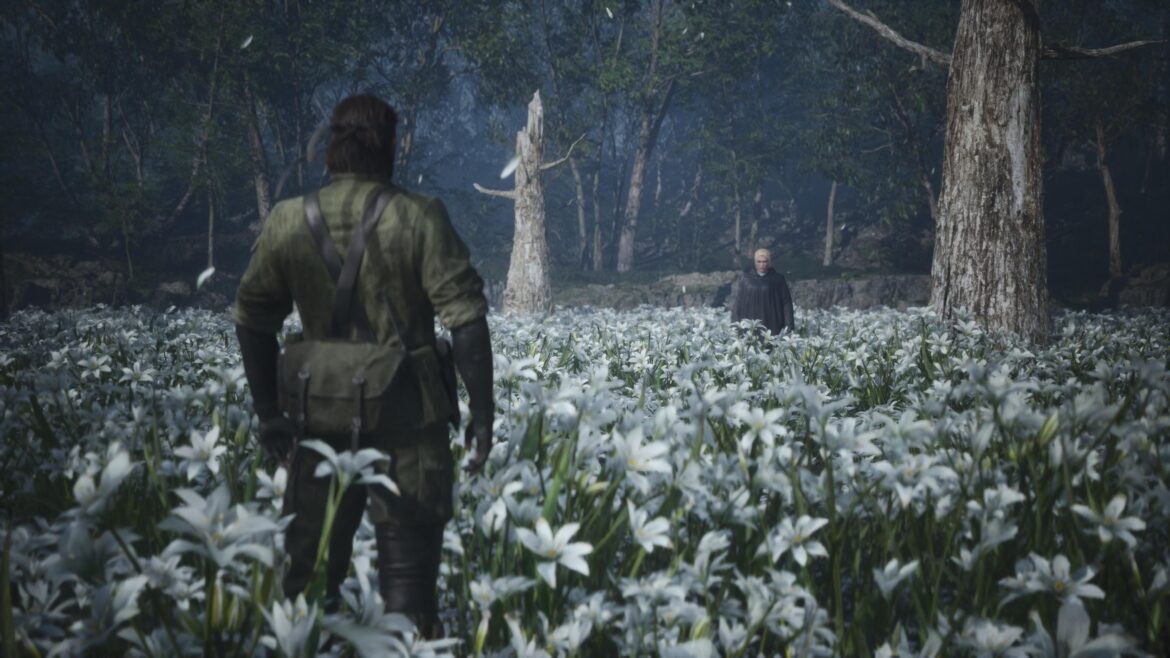
Metal Gear Solid Delta translates the original’s quirkiness beautifully to a new generation with MGS5-esque controls and modern Unreal 5 engine textures and lighting which don’t so much reinvent the classic, but leverage the soft-focus of memory. Delta looks like you remember MGS3 looking, rather than the sharp, polygonal reality of a 20 year old PS2 game.

The visual improvements are, by-and-large, fantastic, going above and beyond the stretched and muddy environments of a typical HD remaster to deliver lush jungles, dusty mountain trails and austere laboratories which feel dense with granular detail and distinctly different from one another.

Image credit: Konami

You might spot a rough clothing texture here-and-there, but given MGS’s proclivity for crawling through the undergrowth and more portrait close ups than school picture day, everything and everyone looks good.

This gives a new lease of life to one of the more underrated aspects of Kojima games, the kinetic cutscene camera work and shot selection. Once you notice how dynamically and playfully the remade cutscenes are presented, and how much that contrasts with the legendarily (infamously) verbose codec scenes, it drives home even more clearly how perfect Metal Gear Solid is for this visual overhaul.

However, within the remake realm, Metal Gear Solid Delta occupies an interesting spot. While there’s now been a plethora of remakes, remasters and reimaginings from all sorts of studios and genres, it’s obvious that Konami was most inspired (both judging by this and their recent Silent Hill 2 remake) by the Resident Evil remakes.

All of the Resident Evil remakes are great but they make such an interesting contrast with Metal Gear. In Resident Evil 4 Remake, which I expected to be a lot more similar to the dogged, reiterative style of Delta, the development team, comprised of many of the people work had worked on the PS2 version, took the opportunity to “fix” fan-favourite flubs and memes which they obviously felt undermined the vision they were going for but, I feel, lost some of the magic in doing so.

Resident Evil 2 Remake on the other hand was absolutely triumphant in its reimagining of the original game. It felt like a modern game designed with the spirit of the classic that gained a truly innovative impetus from the new technologies and mechanics developed for Resident Evil 7 that it added, creating something which didn’t just reanimate the bones of the old game, but augmented them into something tangibly exciting.

Metal Gear Solid Delta, for all its strengths, doesn’t do that. All of the fun stuff that you remember is still here, ready and waiting for you like a gavial under the waterline. But outside of the new shooting controls, which are a vast improvement even if you try and argue that the original was a more tactile and realistic simulation of the complexity of actually firing a weapon, Delta feels relatively untouched creatively and mechanically.

Image credit: Konami

I’m not saying I wanted Ocelot to suddenly start to hunt you through the jungle like Mr X in Resident Evil 2, but within the wider context of what’s clearly inspired Delta, it doesn’t quite reach the heights of something you’ve never seen before – which is ironic given the greatness of MGS3 lies in its originality.

However, that’s not to say that Delta is low effort in any sense. Its painstaking recreation, which brings back one of gaming’s greatest ever Easter Eggs that was missing in the MGS HD Collection, is saved from tautology both by its completeness and commitment to not providing the path of least resistance.

To give more examples, it would’ve been very easy to forgo the Snake vs Monkey Ape Escape mode as a license not worth the effort, or to brighten up the cave complex after The Pain lest modern players think their HDR is broken, rather than letting Snake’s eyes naturally adjust to the gloom.

So, while there are no less than five other versions of Metal Gear Solid 3, Metal Gear Solid Delta: Snake Eater is now the definitive place to play a bonafide classic in a way that feels both accessibly modern, but still authentic to the original experience.


Source link

August 22, 2025 0 comments
0 FacebookTwitterPinterestEmail
Is This Seat Taken? Review - Good Sit
Game Reviews

Is This Seat Taken? Review – Good Sit

by admin August 22, 2025


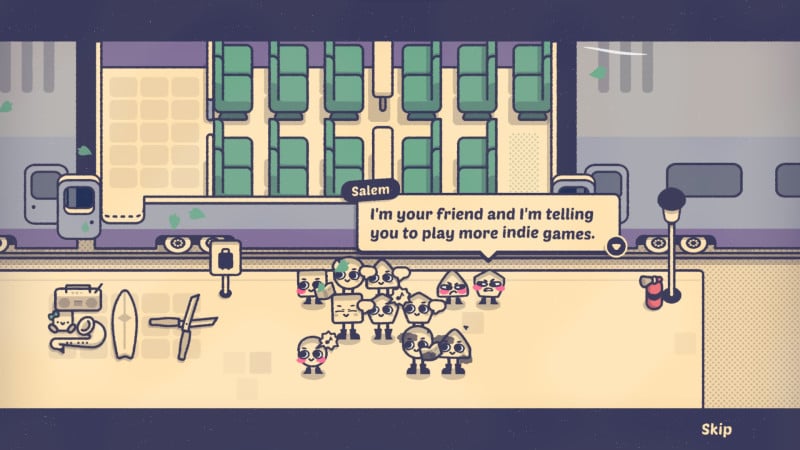
There’s nothing I value more in a game than focus – a game with a clear vision that knows exactly what it aims to be – and Is This Seat Taken from Poti Poti Studio is a fantastic example of that. If a game is a meal, this game is popcorn: light, easy to eat, and a perfectly portioned snack. Is This Seat Taken takes a beautifully simple premise – sitting people in chairs – and iterates on it in consistently creative and exciting ways. Thanks to its cute aesthetics and clever puzzle design, it’s an experience I’d even recommend to people who don’t usually play games.

In Is This Seat Taken, your goal is to drag people (represented as anthropomorphic shapes) into their preferred seats in different environments. Each person has specific preferences about the placement of their seats or their proximity to other people, so it gets complicated quickly. On a bus, for example, some people might prefer window or aisle seats, while others want to sit at the back or the front.

To make matters more complex, some riders are kids who want to sit with their parents, extroverts who want to sit by someone who can hold a conversation, or people with bags they want on the seat next to them. The sheer variety of desires presented across the game’s 30 levels was surprising, and I always looked forward to seeing what new preferences would arise in the next areas.

Buses and trains are straightforward seating environments, but others introduce additional wrinkles to the formula. At the sports game, fans of opposing teams don’t want to sit next to each other, and some want to stand rather than sit, blocking the view of those behind them. At a concert, some might want to sit or dance while others need to play on stage as a member of the band. And the airport has you check each person’s flight to see if they should be in line to board or seated at the gate.

All these variables are arranged in a wonderfully paced sequence, where you never stay in one locale too long, and there are very few repeat environments. Whenever you get comfortable, you’re introduced to something exciting and fresh, making it an incredibly engaging puzzle game. Complete every level in a city without messing up a seating request to unlock bonus levels, like a wedding or a beach, that each showcase level-specific mechanics.

The whole journey is presented through a loose story starring Nat, a rhombus who wants to be an actor, on their journey through several cities around the world. Much like the puzzles, it’s all about Nat trying to fit in, and I found it charming and effective; just present enough to be a pleasant throughline, but not so distracting that I felt the need to skip through dialogue.

With my 100-percent playthrough clocking in at about five hours, Is This Seat Taken is a satisfying snack of a game. Complete with a chill soundtrack and a cute art style, it felt like a breath of fresh air. While I played it on PC, it would feel right at home on the go on its other platforms, Switch and mobile. It’s an easy recommendation for anyone even slightly interested in puzzle games.


Source link

August 22, 2025 0 comments
0 FacebookTwitterPinterestEmail
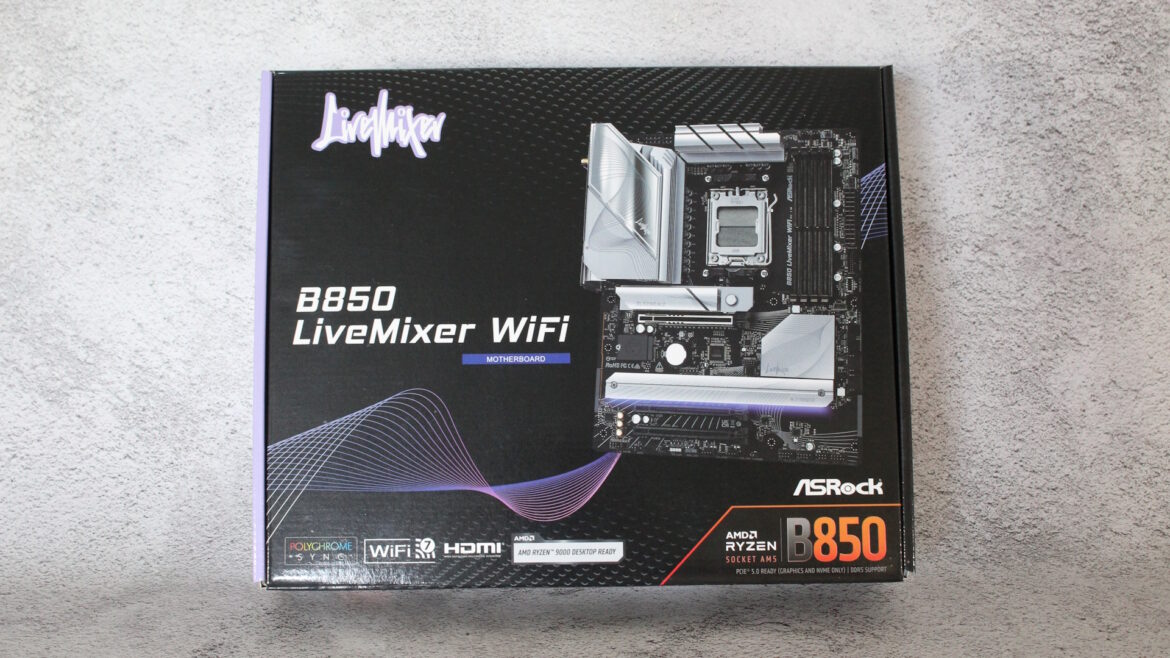
ASRock B850 Livemixer WiFi
Gaming Gear

ASRock B850 Livemixer WiFi motherboard review: a budget playground for content creators

by admin August 22, 2025


Why you can trust Tom’s Hardware


Our expert reviewers spend hours testing and comparing products and services so you can choose the best for you. Find out more about how we test.

AM5 and subsequent X870 and B850 motherboards have been a good generation for ASRock boards. From its fair pricing to boards packed with features like its flagship X870E Taichi, there’s a lot to like. We recently covered the B850 Steel Legend and walked away from there feeling positive overall as well. Sliding one level down the company’s product stack is the B850 Livemixer ($189.99).

The brightly colored B650-based Livemixer is long gone, replaced by a more mature black and silver look. Still focused on content creators, it offers a wide range of USB connectivity “…for streaming devices and multiple other auxiliary devices.”

ASRock packs 14 USB ports on the rear IO, offering more than some boards costing twice as much. Realtek chips manage the audio (last-gen flagship ALC1220) and networking duties (2.5 GbE and integrated Wi-Fi 7). While the power delivery isn’t the most robust we’ve seen, you can still drop a Ryzen 9 9950X (or X3D) in it and get every MHz out of your CPU. The reserved appearance still offers some bling with an RGB strip under the extended M.2 heatsink across the bottom.

The Livemixer performed adequately in most tests, demonstrating competence in both gaming and other functions. Similar to the Steel Legend, the Livemixer encountered issues with our Kingston memory kit. We had to substitute it with a different DDR5-6000 kit, which, while having the same speed, featured slightly looser (slower) timings. However, this difference would generally be imperceptible without a direct benchmark comparison. Overall, the motherboard is more than capable of any typical use case, offering room for additional tweaking if desired.

Below, we’ll examine the board’s details and determine whether it deserves a spot on our Best Motherboards list. But before we look at test results and discuss the details, check out the specifications below, provided by ASRock.

  • ASRock B850 Livemixer WiFi at Amazon for $189.99

Specifications of the ASRock B850 Livemixer Wifi

Swipe to scroll horizontally

Socket

AM5 (LGA 1718)

Chipset

B850

Form Factor

ATX

Voltage Regulator

17 Phase (14x 80A Dr.MOS MOSFETs for Vcore)

Video Ports

(1) HDMI (v2.1)

Row 5 – Cell 0

(1) DisplayPort (v1.4)

USB Ports

(1) USB 3.2 Gen 2 (10 Gbps) Type-C

Row 7 – Cell 0

(4) USB 3.2 Gen 2 (10 Gbps)

Row 8 – Cell 0

(4) USB 3.2 Gen 1 (5 Gbps)

Row 9 – Cell 0

(8) USB 2.0 (480 Mbps)

Network Jacks

(1) 2.5 GbE

Audio Jacks

(2) Analog + SPDIF

Legacy Ports/Jacks

✗

Other Ports/Jack

✗

PCIe x16

(1) v5.0 (x16)

Row 15 – Cell 0

(2) v4.0 (x4)

PCIe x8

✗

PCIe x4

✗

PCIe x1

✗

CrossFire/SLI

??

DIMM Slots

(4) DDR5-8000(OC), 256GB Capacity

M.2 Sockets

(1) PCIe 5.0 x4 (128 Gbps) / PCIe (up to 80mm)

Row 22 – Cell 0

(2) PCIe 4.0 x4 (64 Gbps) / PCIe (up to 80mm)
Supports RAID 0/1/10

SATA Ports

(4) SATA3 6 Gbps

Row 24 – Cell 0

Supports RAID 0/1

USB Headers

(1) USB v3.2 Gen 2×2 (20 Gbps) Type-C

Row 26 – Cell 0

(2) USB v3.2 Gen 2 (5 Gbps)

Row 27 – Cell 0

(2) USB v2.0 (480 Mbps)

Fan/Pump Headers

(6) 4-Pin (Accepts PWM and DC)

RGB Headers

(3) aRGB (3-pin)

Row 30 – Cell 0

(1) RGB (4-pin)

Diagnostics Panel

(1) Post Status Checker (4 LEDs)

Internal Button/Switch

✗

SATA Controllers

✗

Ethernet Controller(s)

(1) Dragon RTL8125 BG (2.5 GbE)

Wi-Fi / Bluetooth

Realtek RZ717 Wi-Fi 7 – 320 MHz, 6 GHz, 5.8 Gbps, BT 5.4

USB Controllers

ASMedia ASM1074, Genesys Logic GL852 (2), Redrivers

HD Audio Codec

Realtek ALC1220

DDL/DTS

✗ / ✗

Warranty

3 Years

Today’s best ASRock B850 Livemixer WiFi deals

Inside the Box of the ASRock B850 Livemixer WiFi

You receive the bare essentials in the box: two SATA cables, a Wi-Fi antenna, and a thermistor cable. This minimal accessory package is standard for motherboards in this price range.

Design of the Livemixer

Image 1 of 3

(Image credit: ASRock)(Image credit: ASRock)(Image credit: ASRock)

The B850 Livemixer features an 8-layer black PCB. Large silver heatsinks with a wavy-line pattern cover the VRMs, chipset, and all M.2 sockets, aesthetically integrating with the PCB. The sole RGB element, located under the extended bottom M.2 heatsink, is sufficiently bright, giving this budget-friendly motherboard an appealing and non-obtrusive appearance sure to blend in with most build themes.

Get Tom’s Hardware’s best news and in-depth reviews, straight to your inbox.

(Image credit: ASRock)

Starting in the upper left corner, we get a better look at the reflective and matte-finished VRM heatsink, featuring Livemixer branding. Between the two oversized heatsinks are an 8-pin (required) and a 4-pin EPS connector to power the processor. Nothing special here.

To the right of the socket are four unreinforced DRAM slots, with locking mechanisms on both sides. Like the Steel Legend, ASRock lists support for up to 256GB of RAM with two sticks running at speeds of up to DDR5-8000+, which is very fast for this cost-conscious chipset. Again, we experienced some issues with our Kingston DDR5-6000 kit and this BIOS, but our other, faster test kit, DDR5-7200, ran without any problems. Our best advice is to ensure your memory is on the QVL list for the best chance of compatibility.

Above the DRAM slots are the first three (of five) 4-pin fan/pump headers. Like the Steel Legend, it’s the CPU_FAN1/2 and the AIO pump. All headers work with DC- or PWM-controlled fans. The CPU_FAN1 header outputs up to 1A/12W, while the remainder outputs up to 3A/36W. CPU_FAN2, CHA_FAN1-3, and the AIO_PUMP header auto-detect whether they are connected to 3- or 4-pin devices.

Turning attention down the right edge, we first run into the Post Status Checker (PSC) LEDs, which light up during POST and remain lit if an issue occurs. Next are two 3-pin ARGB headers, followed by the 24-pin ATX connector to power the board. Last up here are the front panel 19-pin USB 3.2 Gen 1 (5 Gbps) and 3.2 Gen 2×2 Type-C (20 Gbps) headers, adding to the total on the rear.

(Image credit: Tom’s Hardware)

Power delivery is the same as that of the B850 Steel Legend, consisting of 17 phases, with 14 dedicated to Vcore. Power heads from the 8-pin EPS connector(s) to the Richtek RT3678BE controller (for Vcore, there’s another for the SOC/MISC). From there, it’s on to the 80A Vishay SiC659 Dr. MOS VRMs. While not the most robust, it’s still sufficient for a flagship-class processor, with cooling being the limiting factor.

(Image credit: ASRock)

At the bottom of the board, starting from the left, we can easily see the last-generation flagship Realtek ALC1220 audio chip. Flanking it are three dedicated audio capacitors and the audio separation line. It’s not the latest and greatest audio solution, but for the price, it’s a solid option. If it’s not good enough, there are enough PCIe slots to add a PCIe-based sound card.

Speaking of PCIe, the Livemixer offers three full-length slots, with the top slot reinforced for added stability. The top is the primary slot for graphics, connecting through the CPU, and supports up to PCIe 5.0 x16. The bottom two slots are connected via the chipset and operate at PCIe 4.0 x4 (M.2 supports RAID 0/1/10). The bottom slot, PCIe_3, does share lanes with an M.2 socket (M.2_3), so it’s one or the other.

Just above the PCIe slot is the large M.2 heatsink, featuring a DIY-friendly one-push latching mechanism. The socket supports up to PCIe 5.0 x4 (128 Gbps) and accommodates devices up to 80mm in length. The bottom two slots also support up to 80mm modules, but are the ‘slower’ PCIe 4.0 x4 (64 Gbps) speeds. Again, M.2_3 shares bandwidth with PCIE_3, so be aware if you need to use that bottom PCIe slot and a third M.2.

Past the chipset and along the right edge is another 19-pin USB 3.2 Gen 1 connector, and below that, four SATA ports (support RAID 0/1).

Across the bottom are several useful headers. From left to right, you get:

  • Front Panel audio
  • 3-pin UART
  • 2-pin Thermistor header
  • 4-pin RGB, 3-pin ARGB
  • (2) 4-pin Chassis Fan headers
  • 2-pin Clear CMOS jumper
  • (2) USB 2.0 headers
  • Front Panel

(Image credit: Tom’s Hardware)

The rearIO is laid out logically and labeled clearly, which makes things easy (if you can see behind your chassis). On the left is the HDMI video output for integrated graphics, and next to that are the standard Wi-Fi 7 antenna connections. A small BIOS Flashback button is next, followed by two stacks of four USB ports. On the left are four USB 2.0 ports, with two additional ports located on top. The USB 3.2 Gen 1 (5 Gbps) Lightning Gaming ports (on their own controller, free from other USB traffic) at the bottom, indicted by the orange ports. Next to these are the two 10 Gbps Type-C ports and another 5 Gbps Type-A port, both in light blue. Last but not least is the Realtek 2.5 GbE and audio stack, featuring two 3.5mm (mic in/line out) ports and an SPDIF port.

MORE: Best Motherboards

MORE: How To Choose A Motherboard

MORE: All Motherboard Content

ASRock B850 Livemixer WiFi: Price Comparison


Source link

August 22, 2025 0 comments
0 FacebookTwitterPinterestEmail
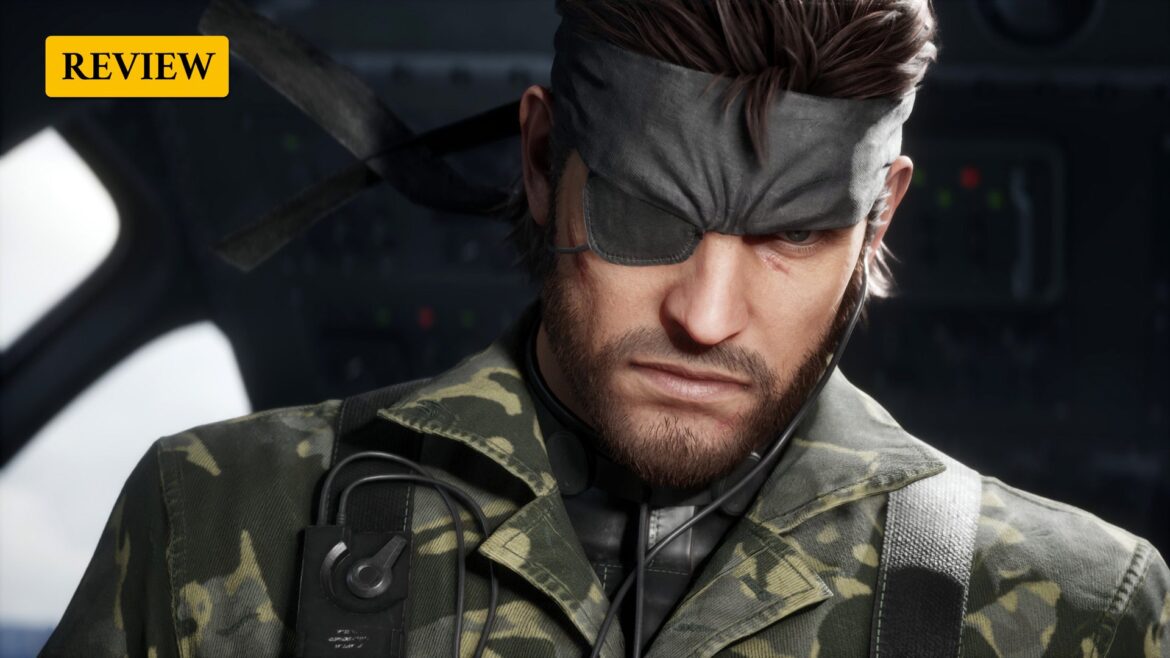
Snake looks at someone from his one good eye.
Game Updates

Metal Gear Solid Delta: Snake Eater: The Kotaku Review

by admin August 22, 2025


I find myself in a simulation of a simulation, a modern recreation of a fictional jungle that I and many others fought and persisted through decades ago. As I crawl through the grass, sneak through Soviet weapons facilities, and survive on the animals of the wild, my mind oscillates through deja vu, the pleasant stupor of nostalgia, and the thrill of a sophisticated stealth experience that challenges my reflexes as well as my ability to plan several steps ahead to stay in control of dangerous situations. An inspired story threads these sneaking sequences together, telling a tale of fractured relationships, the pain they cause, and how grand forces beyond our control shape us. I’ve been here before; I’m struck with a strange feeling of being caught between memory and newness. As I crawl through the mud, I think, is this an authentic experience? Is this a substitute for the “real thing” that came ages ago? I take a step forward. “Huh? Footsteps? Is someone there?” says someone around the corner. It’s time to put those thoughts about reality, simulations, and authenticity to the side; I’ve a mission to complete. Into the fray I go, silently, swiftly, with new, deadly precision.

To remake Metal Gear Solid 3 is an interesting proposition. The winding, cryptic narrative of the Metal Gear Solid series starts with the events of Snake Eater. It’s a prequel, and a well-written, rightly celebrated one at that. It also represents a maturation of the formula series creator Hideo Kojima, along with the team of developers at Konami, started with 1998’s Metal Gear Solid. Snake Eater digs deeper into the series’ stealth focus, with enemies more attuned to the sounds of your footsteps and more capable of spotting you from a greater distance. You also have to contend with needs such as hunger and treating your wounds, and using camouflage is essential to staying out of sight.

With the games that followed MGS3, the series began to lose much of its identity, becoming less an evolution of the original Metal Gear games that arrived on MSX in the late ‘80s and more a response to the third-person shooters of the Xbox 360 and PS3 era. With Metal Gear Solid V: The Phantom Pain, we drifted even further from the original mold, embracing an open-world format, fracturing the traditional narrative structure many were used to, and perhaps most controversially, replacing the iconic voice of the American version of Snake while eliminating such series’ staples  as dedicated “codec” conversations. This fractured series identity is what Delta steps into.

Fans of that original MGS experience might feel like we’ve lost our way from the kind of stealth and narrative adventures that we cherished so much in the late ‘90s and early ‘00s. Delta arrives as a potential reset for that, and succeeds with flying camo colors as a remarkably faithful remake of one of the all-time greats of our medium.

© Screenshot: Konami / Claire Jackson / Kotaku (taken in photo mode)

After MGS2’s switcheroo forced players to contend with a protagonist who, to put it mildly, challenged the masculine archetype the series had centered up to that point, MGS3 recenters traditional, Kurt Russell-inspired masculinity, the kind that defines itself through rugged violence essentialized as a struggle against nature; a thing to fight, a thing to kill, a thing to consume. And the women of the game are eager to show as much tits and ass as an M rating would allow at the time.

MGS3, and by extension Delta, is prone to complicated, often incorrect, assumptions about governments and economic systems, and its wiser moments can all too quickly be overshadowed by the excitement of wielding deadly weapons without caution and smashing up commies in the East. Still, it’s important to see MGS3 as a bold reaffirming of what worked in MGS and a rejection of what didn’t, in the eyes of some, in MGS2. Snake Eater would go on to be one of the most celebrated MGS titles. Now we’re here in 2025, and once again Snake Eater exists as a kind of course correction for the series; it’s an opportunity to take the missteps of MGSV, its open-world structure that often felt directionless and bland, its fractured narrative that was hard to parse for a story already playing with some high level concepts, and correct them.

In doing so, Delta stands to remind us of just how powerful this era of MGS was, when it was laser focused on captivating, linear level structure, along with a story you could enjoy as you would a film, not the disconnected threads that Phantom Pain asked players to stitch together themselves. It also streamlines those aspects of the original that saw you spending much of your time diving through cumbersome menus, and offers a more traditional camera and aiming experience via its “New Style” mode, which the game defaults to. It also, naturally, delivers the high level of graphical fidelity we expect from a modern AAA game, though some purists may take offense at differences in color grading (they should really just go play the original if it bothers them that much). I’d argue this stylistic change is in line with what Snake Eater was always aspiring to, and is in keeping with what Kojima envisioned for the future of the series, which was to bring it even closer to photorealism.

© Screenshot: Konami / Claire Jackson / Kotaku (taken in photo mode)

And so, we come back to Kojima, whose stamp is all over Snake Eater and who is nonetheless conspicuously absent from Delta. To be frank, the lack of Kojima on this project feels weird, even preposterous. Would we accept a Twin Peaks “remake” or fourth season without David Lynch? Would we tolerate a shot-for-shot remake of The Matrix without the participation of the Wachowski sisters? Crazy talk! Would we even want those things if their creators were intimately attached?

But of course, for all the genius and talent David Lynch gave to Twin Peaks, what would that show be without the incredible compositions of Angelo Badalamenti? Would The Matrix have warped our minds in the same way without the technical and creative genius of John Gaeta, who was able to bring bullet time to life? It is so often the case that the works which we remember and cherish dearly are collaborative works, brought to life by far more than just the director’s name.

Video games are no different. While MGS wouldn’t exist without the enthusiastic, eccentric creative energy of Hideo Kojima, it takes far more than one person to build a video game as ambitious as any Metal Gear Solid. Major AAA titles are team efforts, and success can never be attributed to any one individual. Who’s to say what MGS would’ve been like if even one other person on the teams that built these games were swapped out?

Delta makes no attempt at hiding the work of Hideo Kojima, with his name showing up a number of times in the opening credits. With very limited exceptions that will certainly be dissected vigorously by the MGS fanbase, the camera work in the cutscenes stays true to that in the original with frightening accuracy. The environment and characters look incredible, conveying well the emotional depth the original aimed for with its lofty cinematic goals. Add the fact that the game uses the original’s voice acting and music, and the combined effect plays a trick on the mind: Delta gave me both the thrills of a modern, polished AAA game and an active dose of nostalgia for the PS2 era in all the best ways.

© Screenshot: Konami / Claire Jackson / Kotaku (taken in photo mode)

When that camera is turned over to you, the default settings give you a different kind of perspective than what Snake Eater originally shipped with. You can freely rotate the camera, you can even move in first person like you could in MGS4 and V, though at a slower pace. You press the left trigger to raise your weapon, you fire it with the right. You reload with a face button.

For all these modern comforts, however, the game still feels like it’s playing in the world that MGS, Sons of Liberty, and the original Snake Eater built. Smartly, the d-pad becomes of use in a way that preserves the left and right corners of the screen as your dedicated item and weapon management system. Gone is the more Gears of War-esque weapon selection system of The Phantom Pain. Added to this layout is an up-press on the d-pad to scroll through a selection of camo to change outfits way faster than you could in the original. You can also press down on the d-pad to bring up a new codec/radio menu and swiftly hop on a call with the game’s NPCs–and yes, you can still call Para-Medic to save your progress and enjoy snippets of cinema history afterwards.

This streamlining takes elements of Snake Eater that once required you to sift through different screens to engage with them and instead places them in the heat of the moment, easier to reach for when you need them. In my experience, this improves the flow of Snake Eater’s gameplay so much that I prefer playing Delta over the original based on this alone. And while I have some serious reservations about the thought of any other MGS game getting remade, I have to say, if it’s going to play like Delta, have at it, Konami! (I will now hide under my desk to avoid getting struck by lightning.)

Most mechanics remain largely faithful to the original, rather than undergoing the kind of deep expansion you might expect them to receive in a remake such as this. Close-quarters-combat, for instance, has not been expanded beyond some flashier animations that mostly occur during certain boss fights–one fight in particular relies on these fancier animations instead of a sound cue like the original did. This marks perhaps Delta’s most extreme deviation from the original.

© Screenshot: Konami / Claire Jackson / Kotaku (taken in photo mode)

You can, however, crouch-walk. This was not in MGS DNA until Guns of the Patriots, and it’s a welcome modernization here; moving from cover, crouching, then going to a crawl all feels suitably smooth, sophisticated, and intuitive. It makes for a wildly impressive and immersive stealth experience that demands an adherence to form in the way you approach situations. You need to learn and memorize how best to turn corners, when and where to emerge from tall grass. Snake Eater encourages you to build those best practices, that stealth form, like an athlete training for an event; Delta gives you increased mobility and camerawork to be more immersed in the experience. It can make the game easier, however. With that in mind, I recommend that veterans of the original start on Hard difficulty unless they’re looking for a breezy first trip through.

The one downside to the new camera style is that it can, on occasion, feel claustrophobically close. There’s no FOV slider, even on the PC version, and the game’s environments are smaller than what we’re used to in modern shooters.

The pacing of the game has not changed much either. Snake moves at about the same speed as he did in the original. No sprint function was added, and things like swimming and wading through mud still feel like a chore. I think Konami could’ve stood to be a bit bolder by speeding that pace up, but it fits with a game that’s already trying to make its combat feel meatier and more impactful than that in a rapid, twitchy shooter. Despite feeling similar to modern games in terms of its controls, Delta also still feels like the original Snake Eater, not an MGS3 overhaul mod for MGSV or something. Indeed, it feels more like classic Metal Gear Solid than any MGS game has in decades, without feeling like a retro throwback that requires a rewiring of your brain.

Metal Gear Solid Delta: Snake Eater

  • Back-of-the-box quote:

    Same great snake taste you love, now with four times the pixels!

  • Developer:

    Konami

  • Type of game:

    Third-person stealth action game.

  • Liked:

    Faithful recreation of a classic, wonderfully improved controls.

  • Disliked:

    Lack of an FOV slider, some slower elements of the original remain.

  • Platforms:

    PS5, Xbox Series X/S, Windows PCs (played).

  • Release date:

    August 28, 2025 (playable on August 26 for those who pre-order the deluxe version).

  • Played:

    30 hours on a non-lethal, never-spotted run on the game’s Hard difficulty setting using the “New Style” camera.

That extends to the menu systems, which have all of the character and detail that they exuded in the original. Eat a snake, and you’ll sometimes see a little cutscene of our protagonist chowing down, followed up by the sound of him chewing, swallowing, and commenting on how tasty it was. The game will play the audio every time you eat, as it did in the original. The remake could’ve given us an option to skip as it does feel a little tedious and repetitive when you’re more than a dozen hours into the game.

MGS3 was always far from my favorite Metal Gear Solid. It lacked MGS2’s fourth-wall-breaking meta stuff that had me captivated, putting me in a weird liminal space where I obsessed about what the purpose of a “sequel” even is. Its plot twists, in my opinion, don’t match up to the wild revelations of the first MGS or, for that matter, those of MGSV later on. And its survival mechanics always slowed the action down too much for me. But Delta really helped me appreciate what this game is by breaking down the rigid barriers of the original’s menu-diving while giving me a more sophisticated set of movement options and camera controls. And the game is visually impressive not just because it’s a modern-day AAA game with the horsepower of our modern consoles and GPUs. There’s real care in the presentation, from the improved fidelity of facial animations to carry those wonderfully well-written lines of dialogue, to bits of grass, leaves, and sticks getting stuck to your clothes and falling off as you move around. Delta’s graphics got more than a few “wows” out of me.

© Screenshot: Konami / Claire Jackson / Kotaku

I’ve got my critiques of that 2004 premiere of Snake in the jungle, but there’s no denying that the original Snake Eater will remain one of the greatest games of all time and people should play it if they care about the history of this medium, and to see how the now humble processing power of the PS2 was pushed to its extreme to tell a captivating story about shifting allegiances, broken relationships, and the threat we humans pose to ourselves by using our intellect to build super weapons. For those returning to this jungle, expect a faithful and respectful rearticulation of a game you loved–and if you didn’t love it, maybe the slight modernizations will win you over as they did for me.

Should someone come across Snake Eater for the first time with Delta, they’ll find a phenomenal modern stealth experience housed in the kind of classic narrative and linear structure that modern games have been neglecting far too often in their quests to make their worlds bigger. Delta knows its subject matter can stimulate the imagination, and no piece of silicon can out muscle that.

Metal Gear Solid Delta: Snake Eater modernizes the classic mechanics of the original while preserving the breathlessly tense feeling of its stealth gameplay, and its painstakingly accurate recreation of the original’s aesthetic and vibrantly beating cinematic heart preserve so much of why these games have withstood the test of time. Should Delta be not just a one-off but the dawn of a new generation for Metal Gear Solid, it’s a promising one indeed.


Source link

August 22, 2025 0 comments
0 FacebookTwitterPinterestEmail
A Metal Gear Solid Delta: Snake Eater screenshot.
Product Reviews

Metal Gear Solid Delta: Snake Eater review: as great as it was in 2004, just don’t expect anything new

by admin August 22, 2025


Why you can trust TechRadar


We spend hours testing every product or service we review, so you can be sure you’re buying the best. Find out more about how we test.

Konami’s 2004 stealth classic Metal Gear Solid 3: Snake Eater is one of the best games ever made. Yet the idea of a remake didn’t exactly conjure the joy that one would usually get from hearing their favourite game is getting remade. After the fallout between Konami and series creator Hideo Kojima and the 10-year series hiatus that ensued (not counting the dreadful Metal Gear Survive), I had my doubts.

Review info

Platform reviewed: PS5 Pro
Available on: Xbox Series X, Xbox Series S, PS5, PC
Release date: August 29, 2025

And yet, Metal Gear Solid Delta: Snake Eater is fantastic; there are no awkward changes to the story or pacing like the Silent Hill 2 remake, or really any attempts to touch the game I love so much… because it is still that game.

Metal Gear Solid Delta is firmly in the Dead Rising Deluxe Remaster or The Legend of Zelda: Link’s Awakening camp of remakes as it is so beholden to the source material that it struggles to find an identity of its own outside of the fact that it looks pretty now.

Remember the Alamo

(Image credit: Konami)

Snake Eater represents the earliest point in the Metal Gear timeline, in which you play as Naked Snake before he goes on to become the legendary soldier Big Boss in the midst of the Cold War. A rescue mission gone wrong means he has to battle his mentor, The Boss, destroy the not-quite-a-Metal-Gear, Shagohod robot, and prevent the Cold War from becoming a hot one.

Naked Snake is by far the most compelling protagonist in the series, by the sheer virtue of being the most relatable. Both Solid Snake and Raiden were bred to be the greatest possible soldiers, while Naked Snake is just a guy.

Early on you see him pull a stupid grin because he realises he can drop a beehive on someone; he completely blanks out sleeper agent Eva’s advances because he’s so enamoured with the cool gun she gave him. These little touches make him a far more compelling character and allow for the finale to deliver an absolute gut punch at its emotional climax.

(Image credit: Konami)

Your main adversaries this time are the Cobra unit, a group of legendary soldiers like one who shoots bees out of his mouth or the sniper who is 100 years old and can die of old age if you save the game during his fight and come back later.

Sign up for breaking news, reviews, opinion, top tech deals, and more.

Then there’s the main antagonistic trio of Snake’s mentor, The Boss; series staple Revolver Ocelot in his awkward early years; and Volgin, a sadistic colonel who is as filled with pomp as he is an abhorrent human being.

There really isn’t a character in Snake Eater that feels underdeveloped. I’m not typically a big audio log person, but I found myself returning to the codec call screen to chat with Snake’s allies – even after beating the game many times before now – just because I love the banter between them.

There are even characters who appear for literally one scene – like the Soviet scientist Aleksandr Granin – and are unforgettable thanks to Kojima’s signature monologue and exposition sequences.

The mission, or your beliefs?

(Image credit: Konami)

Snake Eater moved the series away from its then-standard military base infiltrations – where stealth was more straightforward – and moved into the Russian jungles. Now that you’re dealing with foliage, caves, mountains, and the odd encampment, stealth is very freeform.

In Metal Gear Solid Delta, it’s all pretty much how you remember it, the only difference being that the game’s control scheme has been updated to be more in line with later entries in the series. It introduces the over-the-shoulder camera and crouch-walk from Metal Gear Solid 4 (which was implemented into the 3DS version of Snake Eater) and makes the controls more in line with a standard third-person shooter (triggers to aim and shoot, circle to crouch etc.). But you shouldn’t expect something revolutionary.

Snake Eater’s other major addition was that of survival mechanics. You could change camo to help you blend into environments, eat food (including snakes, funnily enough) to keep your stamina up, and heal various injuries and ailments. In the original these were accessed through the pause menu, but while that’s still the case, this time it’s been streamlined somewhat.

Holding up on the d-pad will open up a camo menu for you, showing some combinations that you can switch to in an instant; when you’re injured, pressing up will take you straight to the cure screen too. Again, it’s nothing transformative, but it’s a nice quality of life update. You also get an autosave every time you enter a new area, which makes doing the hardest challenge run – Foxhound rank – less obnoxious.

Best bit

(Image credit: Konami)

Snake Eater is a game filled to the brim with memorable moments, but the updated visual fidelity and foliage really add to the intensity of the sniper battle with The End. What was already one of the best boss battles in the series gets a boost from it being even harder to find your opponent.

But Metal Gear Solid Delta isn’t really doing anything new. All of the level layouts, enemy placement and items are the exact same as they were on the PS2. It’s so strictly beholden to the original that you can interrogate guards, and they will still give you codes to use in the PSP’s Metal Gear Acid, which isn’t even a game you can buy officially anymore. Plus the opening and closing credits are ripped straight from the original (a lot of Hideo Kojima name drops), with you having to go into the extras menu to actually see the new development team.

Granted, it does bring back some of the things I would not expect, including things that were taken out of later re-releases like the Snake Vs Monkey mode, which isn’t as fantastic as the other half of that Metal Gear x Ape Escape crossover, but it’s a fun little distraction.

Plus, there’s a “Legacy Mode” option that lets you revert to the original control scheme complete with fixed cameras, a visual filter, and the old versions of the opening theme and main menu.

Kuwabara kuwabara

(Image credit: Konami)

The other major change with Metal Gear Solid Delta is how it looks, with the Russian jungle rendered beautifully in Unreal Engine 5, and I really can’t fault it on that front. The character models do present an issue, though. On paper they look great, and some characters really take to the new style – like Volgin, whose facial scarring looks much better and more identifiable with the new tech. But others like Ocelot and The Boss, look somewhat uncanny at points, with their faces feeling off at certain angles.

This is paired with Metal Gear Solid Delta using the original voice recordings from Metal Gear Solid 3 with only minor new lines recorded to cover for the different control scheme and a couple of easter eggs during codec calls. Metal Gear voice acting is always quite over the top, and as such feels a little weird coming out of the mouths of these hyper realistic character models.

Metal Gear Solid Delta is in a weird spot. I don’t think a massive overhaul like the Resident Evil remakes would have gone down well in a post-Kojima release, so I get why Konami remade it this way (and frankly it’s probably the way I wanted to see it remade). But, at the same time, I don’t really get a sense of what the series looks like going forward like I could with the Silent Hill 2 remake because it is so faithful.

But regardless, it’s still a remake that feels great to play and (mostly) looks fantastic. It doesn’t do much to carve out its own unique identity, but as an entire package Metal Gear Solid Delta is as much of a masterpiece as the original Snake Eater was in 2004.

Play it if…

Don’t play it if…

Accessibility

Metal Gear Solid Delta: Snake Eater features a number of accessibility options.

The majority of these are control-based allowing you to swap held inputs into tap. For example, when dragging an enemy, you typically would have to hold the button the entire time, but you have the option now to tap once to grab and tap again to let go.

There are also in-depth subtitle options allowing you to choose sizes, backgrounds, and speaker names with separate options for gameplay and cutscenes. There are colourblind filters present, but these are specifically for the UI and don’t seem to have any effect in-game.

(Image credit: Konami)

I played 30 hours of Metal Gear Solid Delta: Snake Eater on PS5 Pro on a Samsung Q60D TV and a Samsung HW-T450 soundbar.

During this time I completed a 16 hour run of the game on Normal in the New Style with the majority of hidden items and weapons collected, defeated every enemy and boss non-lethally, attained the Tsuchinoko rank, and learnt the parry timing of the final boss the hard way.

I also completed the Virtuous Mission in Legacy mode on Hard and completed the New Game+ on Extreme, attaining the Foxhound Rank which is the toughest challenge in the game – made a bit less extreme thanks to autosaves.

First reviewed August 2025


Source link

August 22, 2025 0 comments
0 FacebookTwitterPinterestEmail
Metal Gear Solid Delta: Snake Eater Review - No Going Back
Game Reviews

Metal Gear Solid Delta: Snake Eater Review – No Going Back

by admin August 22, 2025


Metal Gear Solid 3: Snake Eater is a PlayStation 2 classic in a way not many games from that era are. Few games from that generation continue to hold up graphically, narratively, and remain fun to play. Metal Gear Solid 3 is still impressive to look at and play, even in 2025, which is a testament to Hideo Kojima and the team that created and released it in 2004. I never thought it needed a remake, but now that it’s here, I’m not sure I will ever be able to go back to the original versions.

Watch Our Metal Gear Solid Delta Review:


As Konami grapples with what to do with Metal Gear without its creator, the decision to specifically revisit Snake Eater makes sense. Along with ranking as a favorite among series fans (myself among them), it is also the first in the broader storyline. It has always been my recommendation for anyone looking to dive into the dense but engaging story, and this version will now be my recommendation moving forward.

My biggest fear with the remake was that without Kojima’s involvement, the game would lack a soul, an admittedly impossible-to-define element. However, because the game is such a direct adaptation of the original with only a handful of understandable changes, that element of the game came over just fine in the copy/paste/improve process. Even without the original creator’s involvement, the fact that it came from a team with such a specific and expertly executed idea and point of view remains intact. Decisions like not re-recording the dialogue (as they did for the GameCube remake of Metal Gear Solid, Twin Snakes) and keeping all of its strange bonuses and secrets (Snake can still have a nightmare), all add up to Delta feeling as compelling as it did in 2004, which is a feat. The few changes that were made, however, are smart.

Visually, the team at Konami has fully brought the game up to contemporary standards. Snake looks amazing, and you can see every scar from every battle on his exhausted face. The jungle, in particular, with its dense foliage and various animals, looks terrific. And though no element of the cinematography or cutscene choreography has been changed, it is filled with renewed life thanks to all the heightened detail and new lighting. Later sections of the game, when you are spending more time in plain military buildings than outdoors, lack the impressive pop of those early moments, but they still look fantastic.

You can use the original controls if you desire, but the new standard controls make Snake move and shoot more like a modern third-person shooter. It took some getting used to, and early in my playthrough, I would panic when I got caught, and muscle memory would make me press the wrong buttons, but I can’t imagine ever going back to the way things were. I was popping off tranquilizer headshots quickly and efficiently and having a good time doing it. Quick-changing camo with shortcut keys is also a godsend and finally fixes an element of the game that has always annoyed me.

One place where Delta’s age does show is in its writing. Don’t get me wrong – it has been years since I played without skipping most cutscenes. For this playthrough I remained fully and consistently engaged with the characters and the story’s direction. The Boss’ journey has always been the highlight of Snake Eater, and I appreciated it all the more playing the remake.

But there are moments where you just have to suspend disbelief. Why wouldn’t they take Snake’s radio when they put him in jail? Why do they let Tatyana, their prisoner, more or less come and go as she pleases? In one moment, antagonist Volgin literally says, “Very well. I’ll explain it before I kill you,” before settling into an extended and frankly absurd monologue doing precisely what he promised. It also takes entirely too long for the game to start. As a longtime fan of Snake Eater, I find these elements charming and even comedic, but I completely understand if a newcomer gets frustrated by the excessive and frequently self-indulgent character lectures.


Metal Gear Solid Delta makes the case for its existence quickly. It smartly adheres to what made the original game great with evident reverence and makes updates only to the most crucial elements. For fans like me, it colors Snake Eater in a new light and elevates it to something better than I remembered. It’s impossible for me to objectively imagine this being my first experience with Snake Eater, but I am extra excited for those players who have always been curious about Metal Gear for this to be their starting line.


Source link

August 22, 2025 0 comments
0 FacebookTwitterPinterestEmail
Metal Gear Solid Delta: Snake Eater review
Game Updates

Metal Gear Solid Delta: Snake Eater review

by admin August 22, 2025


Remaking a classic video game for modern audiences is always a sketchy ordeal. Bringing forward decades-old gameplay and storytelling must be handled with care, but you also have to offer something different to set it apart from the original.

As a very dedicated, long-time fan of the series, I’m pleased to say Metal Gear Solid Delta: Snake Eater is everything a remake should be. It remains true to the original in basically every single way, while offering enhanced visuals and a better take on gameplay than what was offered 21 years ago, making it feel like a new and complete package.

What a thrill

Screenshot by Destructoid

MGS Delta is, by and large, 2004’s Metal Gear Solid 3: Snake Eater rebuilt in Unreal Engine 5 with the same exact voice acting, cutscenes, and music that helped make it an all-time great single-player stealth action game. That’s a good thing.

Some may be turned off by the fact that the cutscenes are one-to-one recreations with a gorgeous coat of modern-day paint, but I love it. Over the course of two decades, I have played or watched playthroughs of MGS3 several dozen times. I know these songs and scenes by heart, and this is the same game, but way, way prettier.

The innovation in MGS Delta comes in the gameplay, which is remade through a new control scheme and over-the-shoulder camera angle for Snake in his 1960s spy-thriller adventure. It makes the game more accessible than, say, the HD Collection version of MGS3, which was re-released recently, featuring some dated controls from the PS2 game.

Other than that, MGS Delta is a dream for fans of the franchise. After creator Hideo Kojima’s departure from Konami 10 years ago, we’ve been left to wonder where the MGS franchise was headed. This remake was handled with care from the ground up, and it’s present in every facet of the title. Konami didn’t try to reinvent anything from Kojima’s original vision other than gameplay systems that have become unwieldy over time.

Outside of a few framerate hiccups on the base PS5 (I played on both PS5 and PS5 Pro, the latter of which is a spectacle to look at on a large 4K screen), the game runs smoothly. It plays well, too, apart from Snake’s movement sometimes feeling clunky or sluggish. For example, Snake contextually sticks to nearby walls, rather than when holding a direction on the analog stick like in the original. This is one of the game’s few misses.

Screenshot by Destructoid

Make no mistake, though, MGS Delta is stunningly gorgeous. I damn near broke the Share button on my PS5 controller, screenshotting everything from mid-gameplay vistas to iconic cutscene shots recreated in UE5. It’s an absolute joy to watch and witness, with special attention given to the game’s lighting effects, which are some of the best I’ve seen.

With the new engine, Snake and the various memorable characters are all brought to new life with more details in their expressions and models than ever before, down to every single hair on Snake’s beard or weird wound on Colonel Volgin’s face.

Some days, you feed on a tree frog

Screenshot by Destructoid

I’m really excited for a new generation of gamers to re-live MGS3 and all of its fun boss battles, intense action sequences, silly quirks, and heartbreaking ending. So many gamers have no idea what’s in store for them, and I can’t wait to see the reactions. And just like the original, MGS3 remains a good entry point for the franchise. 

I generally recommend playing the series in release order, but you can easily play this game without any prior knowledge and experience it as a standalone title that could hook you on the rest, and I think that’s what Konami may have in mind with this release.

Every Easter egg from the original is here, including mid-cutscene button presses that allow you to see through Snake’s POV, looking at everything from ghoulish spectres in the background to EVA’s cleavage up close. Yeah, this is the same exact game I grew up with, and it’s still just plain wonderful.

Plus, with this new and powerful graphics engine, the Russian jungle of MGS3 is more detailed than ever. Leaves and dirt kick up when Snake rolls through, mud cakes on his sneaking suit and stays there through cutscenes, and the forest is absolutely teeming with wildlife.

There’s a solid amount of replayability here, too. The game logs everything you collect, including every weapon, item, camouflage, facepaint, and animal you eat, so completionists may feast. There’s also special mini-game modes Snake vs. Monkey or Snake vs. Bomberman (depending on the platform you play on), and a prop hunt-like multiplayer mode coming after launch. 

There’s also inevitable replay value in playing and re-playing the game in either the new, over-the-shoulder perspective or with the classic legacy camera, although I think the latter does not feel quite right with the new control scheme.

Screenshot by Destructoid

One other minor difference I must mention is the classic “Snake Eater” theme song by Cynthia Harrell has been re-recorded for this version of the game. The opening title sequence has been re-done, too. This isn’t necessarily a bad thing; it just stands out from the rest of the remake that’s so dutifully recreated.

Regardless, I will be diving back into MGS Delta for several playthroughs and live streams to re-experience these classic scenes, battles, and moments all over again for a long time to come, while also hunting down every Kerotan frog and GA-KO duck in the wilderness. Welcome back, MGS.

9.5

Superb

A hallmark of excellence. There may be flaws, but they are negligible and won’t cause massive damage.

MGS Delta is a must-play for series veterans and newcomers alike. With it, Konami has taken one of gaming’s greatest achievements and respectfully recreated it with little interference other than gorgeous new visuals and a modern-day control scheme to make it more accessible to everyone.

Pros

  • An all-time classic respectfully reborn
  • Stunning visuals of a Kojima masterpiece reimagined beautifully with modern tech
  • Refined, modernized control scheme
  • Same exact epic voice acting and music as the original
  • Extra modes and multiple kinds of playthroughs add fun and longevity

Cons

  • Snake’s movement feels clunky and slow
  • Legacy camera takes some getting used to with new control scheme
  • Minor performance issues on base PS5
  • Over-the-shoulder perspective feels claustrophobic at times

A copy of this game was provided by the publisher for review. Reviewed on PS5 and PS5 Pro.

Review Guidelines

Destructoid is supported by our audience. When you purchase through links on our site, we may earn a small affiliate commission. Learn more about our Affiliate Policy


Source link

August 22, 2025 0 comments
0 FacebookTwitterPinterestEmail
Chris Tilly
Esports

The Thursday Murder Club review: Starry cast makes this the Avengers of ageing sleuths

by admin August 22, 2025


The Thursday Murder Club is a movie mystery that’s perfect for armchair detectives who like their crime cozy and their comedy broad.

Published in September 2020, The Thursday Murder Club was TV presenter Richard Osman’s debut novel, and it quickly became a sensation.

The book flew off shelves, sequels followed – as did an acclaimed radio adaptation – and now the movie version has arrived courtesy of Netflix.

Home Alone helmer Chris Columbus directs, while the cast is filled with the best pensioners money can buy; a cavalcade of stars clearly having a ball bringing Osman’s weird and wonderful characters to life.

Article continues after ad

What’s The Thursday Murder Club about?

Netflix

The Thursday Murder Club is set in a beautiful retirement community called Cooper’s Chase, where the sun always shines, and there’s everything a retiree could want, from support llamas, archery classes, and a jigsaw room, to life drawing lessons that feature hot men with their tops off.

Article continues after ad

It’s idyllic and quaint beyond belief, but every Thursday, a group of residents commandeer said jigsaw room, and investigate cold cases from the past.

They start with an unsolved 1973 mystery concerning “the woman in white who fell out of a window.” But then murder rears its head in the present, via a fresh mystery involving dodgy businessmen and even dodgier gangsters, as well as the ownership of Cooper’s Chase itself.

Article continues after ad

So using age and experience to their advantage – plus a healthy dose of cunning, and less healthy slices of cake – the Thursday Murder Club set about solving the case and saving their home.

Who is in the club?

NetflixRichard Osman flanked his Thursday Murder Club cast.

Each member of the Thursday Murder Club possesses a different and very specific set of skills, making them a bit like the Avengers of elderly sleuths, or a geriatric Justice League.

Helen Mirren is Elizabeth, the group’s leader, who very possibly worked as a government spy. Ben Kingsley is Ibrahim, a former psychiatrist who is usually the smartest person in the room. While Pierce Brosnan is Ron, a retired trade union leader who’s as tough as nails.

Article continues after ad

Article continues after ad

They’re an investigative trio at the start of the movie, and our way into the story is through Celia Imrie’s Joyce, a former nurse who is new to Cooper’s Chase, and whom the club brings onboard for her medical expertise.

Brosnan’s dodgy cockney accent aside – the second time he’s offended our ears following the MobLand debacle – the Thursday Murder Club is cast well, and make a winning team when working together.

Article continues after ad

But it’s Mirren who delivers the standout performance, not when she’s barking orders at her crew or the local constabulary, but rather when Elizabeth is with husband Stephen (Jonathan Pryce), who suffers from dementia. Played to perfection by the pair, their touching scenes are both heartwarming and heartbreaking.

Pierce Brosnan and Daniel Mays bring the biggest laughs

NetflixNaomie Ackie and Daniel Mays play police officers.

But while there are sad moments spread throughout the movie, they’re outnumbered by some big laughs.

Accent notwithstanding, Brosnan gets some of the biggest, most notably when he’s glimpsed exercising with old dears in the pool, but also when scruffy Ron is fooling the coppers, or smart Ron is giving them a dressing down in his wedding suit.

Article continues after ad

Article continues after ad

Other highlights including a cracking Queen Elizabeth II gag, a funny sequence involving the drinking of gin on a bus, and a shocker concerning the aforementioned life drawing that needs to be seen to be believed.

The movie also mines mirth from local coppers being outthought and outwitted by the TMC, with Daniel Mays hilarious as the increasingly confused and frustrated DCI Hughes.

Is The Thursday Murder Club good?

Netflix

The Thursday Murder Clubs is a solid murder-mystery that keeps you guessing until the final few reels, while Katy Brand and Suzanne Heathcoate’s tight script ensures that the 118 minute run-time flies by.

Article continues after ad

There’s the odd contrivance, involving a dictaphone, bunches of flowers, and an awkward boxing pose. While it gets a little heavy-handed at times, through literal blood on a character’s hands, and a sexism sub-plot that feels tacked on.

But the jokes come thick and fast, while the movie’s best scenes happen in the quieter periods, when touching on more serious themes of loneliness, ill health, and the indignities of old age.

Article continues after ad

They’re fleeting moments, handled with sensitivity by Columbus and his cast, and they might just leave you with something in your eye when the credits roll.

Article continues after ad

The Thursday Murder Club score: 4/5

The Thursday Murder Club is twee beyond belief, but it’s also a faithful adaptation of Richard Osman’s novel; one that delivers the requisite murder and mystery, as well as laughter and the odd tear.

The Thursday Murder Club hits Netflix on August 28, 2025, while you can head here for more of the best thrillers on the streamer.


Source link

August 22, 2025 0 comments
0 FacebookTwitterPinterestEmail
Metal Gear Solid Delta: Snake Eater Review - You're Pretty Good
Game Reviews

Metal Gear Solid Delta: Snake Eater Review – You’re Pretty Good

by admin August 22, 2025


There’s a good chance that, at some point in your life, you’ve been so enamored of a piece of media that you’ve considered what it’d be like to experience it for the first time again. Watching Terminator 2, hearing Enter the Wu-Tang, and reading The Dark Knight Returns shaped who I am and, as a result, I remember the moments I experienced them with crystal clarity. Over time, however, those memories have become divorced from the emotions they stirred and what’s left in their place is a longing for those lost feelings.

Video games are the only medium that I think are capable of making that first-time-again fantasy a reality–or as close to one as we’re going to get. Time puts distance between us and the emotionally significant moments we cherish, but it also brings us closer to exciting technologies that can make the old feel new. In the right hands, those technologies can create opportunities to stoke those profound emotions again, even if it’s just a little. Metal Gear Solid Delta: Snake Eater does exactly that.

Size:640 × 360480 × 270

Want us to remember this setting for all your devices?

Sign up or Sign in now!

Please use a html5 video capable browser to watch videos.

This video has an invalid file format.

Sorry, but you can’t access this content!

Please enter your date of birth to view this video

JanuaryFebruaryMarchAprilMayJuneJulyAugustSeptemberOctoberNovemberDecember12345678910111213141516171819202122232425262728293031Year202520242023202220212020201920182017201620152014201320122011201020092008200720062005200420032002200120001999199819971996199519941993199219911990198919881987198619851984198319821981198019791978197719761975197419731972197119701969196819671966196519641963196219611960195919581957195619551954195319521951195019491948194719461945194419431942194119401939193819371936193519341933193219311930192919281927192619251924192319221921192019191918191719161915191419131912191119101909190819071906190519041903190219011900

By clicking ‘enter’, you agree to GameSpot’s

Terms of Use and
Privacy Policy

enter

Now Playing: Metal Gear Solid Delta: Snake Eater Review

Before getting into what’s new, what can’t be overlooked in making Delta such a good game is the fact that Metal Gear Solid 3: Snake Eater remains a compelling, well-told story that has strong characterization and deals with some heavy subject matter. It approaches this with a strange mixture of self-seriousness and complete irreverence that is uniquely Metal Gear Solid and, for my money, balances both parts better than any other entry in the series. The stellar stealth is supported by systems that feed into the fantasy of surviving in the jungle and braving the elements, whether that be hunting for food or patching yourself up after sustaining injuries. Delta replicates it and, in my opinion, is better for it. The excellent work that the original Metal Gear Solid 3 dev team did remains the heart and soul of Delta, and it continues to shine.

Visual changes are the most noticeable contributor to elevating MGS3. While its fresh coat may have been painted on in the most clinical manner possible, that shouldn’t take away from the fact that it makes Metal Gear Solid 3–a third-person stealth-action game about sneaking through jungles, taking out soldiers, and uncovering vast, interlocking Cold War conspiracies–feel alive again.

What impressed me in the original PlayStation 2 release was how the jungle felt like it was teeming with life: numerous species of frogs hop about, snakes slither through grass, the distant sounds of birds, and the too-close buzz of agitated bees, not to mention thickets so dense that I felt like I was lost in an open-world as opposed to being deftly guided through a linear one. After years and countless playthroughs, the child-like wonder it initially inspired faded away, but Delta restores it using the brute force power of the Unreal Engine.

Delta looks absolutely stunning–jaw-dropping at times. In the jungle areas, the environments have the vibrancy and life that you’d expect to come from the naturality of green grass, towering trees, thick mud, decaying bricks, and worn wood, but it never feels artificial and, in fact, feels like it makes good on the Cold War-era, Soviet Union-set vibe in the same way the original did. I have no doubt that there will be discussions about the game’s visuals looking like a dispassionate implementation of Unreal Engine. Despite the fact that games like Fortnite prove it’s a misnomer at this point, Delta at times can look like it has the muted, greyish, brownish industrial footprint that people criticize the Unreal Engine for. But upon closer inspection of both individual details and how all of it coalesces, it becomes evident that skilled artists with a clear vision and direction have poured time and effort into elevating Delta above that.

The Unreal Engine sheen is replaced with touches that come together to give authenticity to the muddy floors, wet stone walls, and metal rusted-looking enough that you worry about Snake getting tetanus. And much of that is reflected on the character models too. Snake’s body–whether you’re wearing clothes or not–will pick up the dirt and grime of whatever he comes into contact with; sometimes even foliage in the environment will stick to him. In a similar fashion, damage is accurately represented on his body and can lead to scars or marks becoming visible. Counterintuitively, playing the game so that you rarely take damage robs you of the opportunity to see this impressive level of detail.

Nevertheless, the takeaway here is that there has undoubtedly been a great deal of work put into the character models. Every single character in the game, from key players like Snake, Eva, Ocelot, and Volgin to less present ones like Sokolov and Granin, or the rank-and-file GRU and Ocelot Unit soldiers, look intricately detailed and, I daresay, lifelike at times. Original MGS3 director Hideo Kojima’s flare for cinematic framing benefits from the new visuals since there are a number of up-close shots of faces or slow-motion movements to intensify action sequences. If you didn’t know that this is exactly how it was in the original, you’d think that Konami was doing all this to show off how good the graphics are in Delta.

If you’re a Metal Gear Solid fan, you’ll be aware of the infamous pachinko machine that gave us a look at The Boss rendered with a level of detail we’d never seen her in before. That elicited a fan response that I’m willing to bet was a factor in getting this remake off the ground–Delta betters that by a considerable margin. The character models look improved and, in particular, the lighting is spectacular. The game takes Snake through a variety of different times of day and cycles through different types of weather, and it’s genuinely impressive how the terrain is impacted and how the overall atmosphere and feel changes. Stepping out into the open in broad daylight when the sun is bearing down left me feeling exposed and desperate to quickly throw myself into nearby grass or behind a wall to cut off sightlines. Sneaking through a jungle at night, with surroundings illuminated only by moonlight and the threat of soldiers suddenly popping up because of limited visibility, was tense, even though I had a good memory of enemy locations and patrol patterns. When the game moves to internal locations such as labs and enemy bases, things become a little less interesting, but still impressive in their visual fidelity. It’s just that, next to the jungle, the interior environments provide fewer opportunities to be wowed as they’re more uniform and predictable.

There are so many details that I want to talk about in Delta, but getting to see just how thorough Konami has been with the visual overhaul is genuinely one of the joys of playing the game. Seeing micromovements of The Fear’s eyes accentuated his reptilian, animalistic nature; Snake’s reflection in The Fury’s glass helmet as he begins his fiery climactic ascent gave me a new level of appreciation for a lot of the character work that Kojima and the team did on the PS2, and there are instances of these kinds of details in every scene. What the limitations of old hardware left to the imagination, the power of modern technology now depicts in glorious detail.

Visuals have taken up the vast majority of this review, and for good reason. Not just because it’s where the most work has been done, but also because, for longtime fans, they’re what is going to be most impactful–those are the people that I think will have the strongest response to what they’re seeing and playing. A great deal of appreciation for what Delta achieves comes from my intimate familiarity with Metal Gear Solid 3–I have played this game so many times that every screen of it is burned into my mind, so seeing what I’m so familiar with but with a level of detail that was simply impossible in the 2000s and, by modern standards, is best-in-class, was often arresting. I’m sure that almost everyone can objectively agree that Delta looks great, but for people like me, the effect of and appreciation for the new visuals goes far beyond. Metal Gear Solid has never looked this good.

What’s more uniformly appreciable for everyone, however, is the new control scheme and the gameplay tweaks implemented to accommodate them. A big part of modernizing MGS3 has been switching to smoother movement and aiming. For the former, Konami has implemented animations and transitions that bring the game closer to the fluidity of Metal Gear Solid 5. Instead of jarringly switching from standing to crouching and then crawling, Snake now naturally moves between the different states and can transition while in motion, which makes navigating environments while using obstacles and hiding opportunities frictionless. Similarly, the way Snake moves his body when laying down and aiming is smooth. It’s not quite as robust as what you can do in MGS5 and crawling can sometimes still feel a bit unwieldy, but it’s vastly improved to the point where it shouldn’t be a stumbling block for anyone new, as it would be if you fired up the original version.

Complementing the freer and more fluid movement is a tighter viewpoint that brings the camera close to Snake, adopting the familiar over-the-shoulder perspective for aiming in third-person. This means you can be far more precise with shots, since Snake, his aiming trajectory, and what you’re aiming at are always in view. Those who haven’t played it may be shocked to hear that wasn’t the case in the original, which had a restricted isometric viewpoint and then more of a controllable camera in the Subsistence version. In both cases, it made for some awkward gameplay moments.

The one trade-off with all this is the fact that this Snake’s newfound efficiency in movement and proficiency with firearms does trivialize a lot of the boss fights, which make up the bulk of the coolest parts of the game. If you’re new to the game, you’ll still find they present a good challenge since each one has quirks that need to be figured out. However, if you know what you’re doing, you can tear through them very quickly. It doesn’t feel like I was able to dispatch them considerably faster than I could if I tried on the PS2 today, but being able to see more, get around more easily, and shoot better means that members of The Cobra Unit feel even more like pushovers now. That is, except for The End; that old geezer is still a geriatric menace.

Delta isn’t completely free of issues. Alongside the new perspective, there is a cover system that has a certain stickiness to it that can be frustrating. It’s not quite the Gears of War glued-to-the-wall level, but more of a gravitational pull towards walls, particularly the corners. That meant that I would accidentally snap into cover when I didn’t intend to, particularly in smaller rooms where the camera is close and there are boxes around Snake. On the one hand, intentionally going into corner cover is appealing since it’s much easier to pop out and fire a shot off with the new over-the-shoulder aiming system, but on the other, I didn’t find myself using that method very much since I could now reliably shoot from the hip or quickly swap into first-person mode and fire off a shot, so all in all, the system ends up getting in the way for me.

When it comes to the other new additions, for the most part they make sense and don’t drastically alter the gameplay experience, instead enhancing it. One is the introduction of a specific button that can be held to enter into a stalking mode that slows Snake’s movements down and makes him much quieter. It can be used when walking, crouch-walking, or crawling. Think of it as the slow-walk that you’d get from tilting the analog stick on the PS2 slightly. Initially, I didn’t really understand why this was necessary and felt it wasn’t that useful since it was so slow. But then I realized it was crucial if you want to sneak up on an enemy to hold them up or get them in a CQC move. The enemies in Delta have better awareness and perception, so if you slow walk or crouch walk behind a soldier without holding the stalking button, they will hear Snake and chaos will quickly erupt. Truthfully, I never got comfortable with getting up close to the extent that I relied on it as a frequent method of engagement like I would in the original; it felt far more risky, which meant when I was attempting a grab or hold-up, I felt more stressed out than I expected. I haven’t felt my palms get sweaty while playing MGS3 in many years, but I was wiping my hands on my pants frequently while playing Delta.

Enemies can now see much farther and have better awareness of what is above or below them. I was surprised to find that I aroused suspicions from positions that I know for sure are safe in the original game, so veterans shouldn’t underestimate soldiers in Delta–they’ve got some new tricks up their sleeves. On top of that, some of the weapons behave a little differently. In particular, as someone who prefers the non-lethal play style and relies on the MK22 for it, physics come into play and bullet drop is more severe, so you can’t easily send tranq darts into heads from long distances. Even at close range, you need to account for changes in trajectory. I went in thinking I could carry on running rings around enemies and putting them to sleep quickly, but found myself burning through ammo reserves and silencers due to the changes in gun behavior. The same goes for recoil on assault rifles and sway on the RPG during the escape sequence–careful where you’re firing those rockets.

The remaining differences come largely as quality-of-life tweaks. A new compass that is accessed from the equipment menu will pop up in the corner and point the way to the next objective when equipped; the life, stamina, and camo index have been moved to the bottom middle of the screen, freeing up the rest of it so you can soak in the visuals; the camo and face paint swap feature can be accessed through a shortcut assigned to the D-pad but uses pre-determined combinations, so there’s still value in going into the full menu and individually selecting your desired outfits. The codec can also be accessed through a D-pad shortcut, which makes getting to the save screen much easier, and you can also tune the radio to specific frequencies from the shortcut too. Finally, when enemies become suspicious or are alerted, an on-screen indicator where the enemy with eyes on you is located. You don’t get the last-chance shot from MGS5, so it’s mainly just a good way to improve situational awareness for the player and, if you’re quick enough, get out of sight.

There are other aspects of Delta that didn’t land for me. For some reason, Konami felt the need to re-record the Snake Eater vocal theme. Admittedly, I don’t dislike it–in fact, Cynthia Harrell’s vocal performance remains top notch–but it just feels… wrong. Again, a lot of that is because of my familiarity with the original and how jarring it is hearing a different version of it. However, it does throw the timing of the iconic ladder climb off slightly. And while the visuals are high-quality, there are moments where blemishes become far more noticeable. At times, there is artifacting around strands of hair when they’re up against certain backgrounds. Eva and The Boss can sometimes look like they’ve got a jumble of pixels stuck to the sides of their heads. And occasionally, there are stutters during cinematic sequences when a lot is going on, as the game lurches to get all the visuals and effects going after a cut.

But these are small idiosyncrasies in a game that has otherwise been made with a clear reverence for the source material. There has been a lot of toxicity around the Metal Gear Solid franchise for a while now, and some of that no doubt lingers and will color the sentiment around Delta. After all, Kojima isn’t involved in Delta and fans of Metal Gear Solid have a longstanding animosity toward Konami because of the high-profile break-up between the two parties, as well as the reported impact the dissolution of the relationship had on Metal Gear Solid 5.

However, it can’t be denied that Konami has done right by Metal Gear Solid 3 with Delta. There’s love put into the project and, at times, it feels like an appeal to fans from likeminded fans at the studio. It’s evident in the details that only longtime Metal Gear obsessives will appreciate: the fact that the game can be played in its original form with the new visuals through the Legacy control options; the various new camos from post-MGS3 titles that are available (though admittedly as DLC); the inclusion of extras such as the new secret theater; the food, camo, and model viewer, as well as Snake Vs. Monkey; or that the Guy Savage minigame, which has been omitted from various HD collections, making its return. It’s legitimately awesome in the new version, which is unsurprising since Platinum Games developed it.

Delta isn’t the first instance of Hideo Kojima’s beloved classic being updated and re-released, but it is the first complete rebuild of MGS3. It successfully modernizes visuals, tweaks game design, and updates controls so that the game sits comfortably alongside its action game contemporaries. From a content perspective, Konami has played it incredibly safe, using the same voice work and music, and leaving the story completely unaltered–effectively making Delta a one-to-one remake. But I can’t fault that, especially when I found myself once again enraptured by Snake’s tortuous mission to pull the world out of nuclear danger and fight for survival in a dangerous jungle. The impact of Konami’s efforts was such that, for eight hours, I wasn’t an adult yearning for the lost feelings that made me love Metal Gear Solid 3; I was the teenager living them for the first time again.


Source link

August 22, 2025 0 comments
0 FacebookTwitterPinterestEmail
  • 1
  • …
  • 26
  • 27
  • 28
  • 29
  • 30
  • 31

Categories

  • Crypto Trends (1,098)
  • Esports (800)
  • Game Reviews (772)
  • Game Updates (906)
  • GameFi Guides (1,058)
  • Gaming Gear (960)
  • NFT Gaming (1,079)
  • Product Reviews (960)

Recent Posts

  • This 5-Star Dell Laptop Bundle (64GB RAM, 2TB SSD) Sees 72% Cut, From Above MacBook Pricing to Practically a Steal
  • Blue Protocol: Star Resonance is finally out in the west and off to a strong start on Steam, but was the MMORPG worth the wait?
  • How to Unblock OpenAI’s Sora 2 If You’re Outside the US and Canada
  • Final Fantasy 7 Remake and Rebirth finally available as physical double pack on PS5
  • The 10 Most Valuable Cards

Recent Posts

  • This 5-Star Dell Laptop Bundle (64GB RAM, 2TB SSD) Sees 72% Cut, From Above MacBook Pricing to Practically a Steal

    October 10, 2025
  • Blue Protocol: Star Resonance is finally out in the west and off to a strong start on Steam, but was the MMORPG worth the wait?

    October 10, 2025
  • How to Unblock OpenAI’s Sora 2 If You’re Outside the US and Canada

    October 10, 2025
  • Final Fantasy 7 Remake and Rebirth finally available as physical double pack on PS5

    October 10, 2025
  • The 10 Most Valuable Cards

    October 10, 2025

Newsletter

About me

Welcome to Laughinghyena.io, your ultimate destination for the latest in blockchain gaming and gaming products. We’re passionate about the future of gaming, where decentralized technology empowers players to own, trade, and thrive in virtual worlds.

Recent Posts

  • This 5-Star Dell Laptop Bundle (64GB RAM, 2TB SSD) Sees 72% Cut, From Above MacBook Pricing to Practically a Steal

    October 10, 2025
  • Blue Protocol: Star Resonance is finally out in the west and off to a strong start on Steam, but was the MMORPG worth the wait?

    October 10, 2025

Newsletter

@2025 laughinghyena- All Right Reserved. Designed and Developed by Pro


Back To Top
Laughing Hyena
  • Home
  • Hyena Games
  • Esports
  • NFT Gaming
  • Crypto Trends
  • Game Reviews
  • Game Updates
  • GameFi Guides
  • Shop

Shopping Cart

Close

No products in the cart.

Close