Laughing Hyena
  • Home
  • Hyena Games
  • Esports
  • NFT Gaming
  • Crypto Trends
  • Game Reviews
  • Game Updates
  • GameFi Guides
  • Shop
Tag:

review

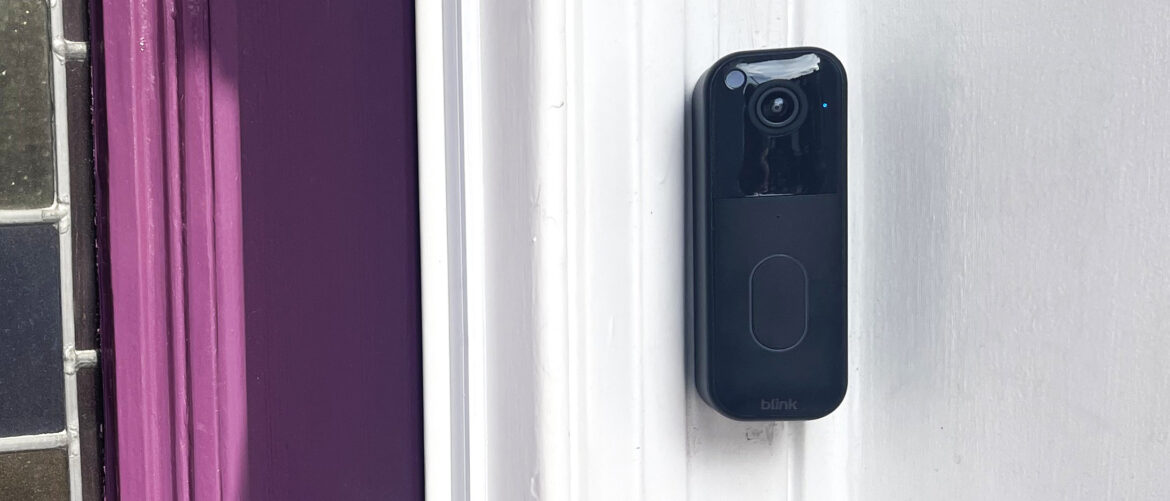
Blink Video Doorbell Gen 2 mounted beside purple door
Product Reviews

Blink Video Doorbell (Gen 2) and Sync Module Core review: easy installation, and a head-to-toe view of visitors

by admin September 2, 2025


Why you can trust TechRadar


We spend hours testing every product or service we review, so you can be sure you’re buying the best. Find out more about how we test.

Blink Video Doorbell (Gen 2) and Sync Module Core: two-minute review

The days of traditional ‘analog’ doorbells connected via wires to an internal chime are fast coming to an end. Increasingly, people are turning to video doorbells, which will send an alert to your mobile phone when someone comes to the door. They will even act as an intercom so you can talk to whoever is there whether you are in the house, walking the dog or sitting on a beach.

Like its predecessor, the Blink Video Doorbell doesn’t come with its own indoor chime. Instead, you can pair it with a Blink Mini 2 camera (sold separately) or connect via the Alexa app on your phone to a Fire Stick or Amazon Echo Show. This will allow you to see who is at the front door on your TV screen/multimedia display or you can get a voice message via your Amazon Echo Dot when someone presses the doorbell.

Alternatively, it may be possible to connect existing doorbell wiring from the Blink Video Doorbell to a legacy indoor chime providing its rated between 16 and 24 volts. Batteries are required for use whether you use existing doorbell wiring or not.

The Blink Video Doorbell (Gen 2) uses three AA lithium batteries (Image credit: Chris Price)

What I like about Blink devices is just how easy they are to add to an existing system. I’ve already got several Blink cameras around the house so adding one more was simply a case of scanning the QR code on the back of the device and adding it to the home set up. However, if you’ve never installed a Blink camera before you will need to download the app (Android or iPhone) as well as connect the sync module provided to your broadband router (this acts as a hub for up to 10 Blink security devices).

  • Blink Video Doorbell (2nd Gen) + Sync Module 2 at Amazon for $39.99

Unfortunately, as the one supplied isn’t compatible with local storage via a connected USB flash drive, you will need to pay a monthly subscription for storing video footage and accessing the latest features – see subscription options below.

When it comes to mounting the video doorbell on the door there are two options. You can either use the standard flat mount or a wedge mount if you are placing it on a door architrave. As I was replacing the previous Blink video doorbell (Gen 1) I was hoping I could re-use the mount from that one to save time on installation. However, that wasn’t possible because this unit is a slightly different size.

Instead I used the black mount provided for the black video doorbell supplied by the manufacturer (a white version with white mount is also available). At least I didn’t have to screw two new holes in the wood as they’re positioned in the same place on the mount as the previous version.

Sign up for breaking news, reviews, opinion, top tech deals, and more.

Installing the Blink Video Doorbell (Gen 2) is very straightforward, particularly if you already have other Blink devices at home (Image credit: Chris Price)

Once installed, controlling the camera is simply a case of using the Blink app. One of the main differences between this model and its predecessor is the camera’s lens, in particular the aspect ratio. Whereas the previous model offered a more conventional 16:9 widescreen aspect ratio with 1080p resolution, the new video doorbell boats a square 1:1 aspect ratio with improved 1440p resolution.

It also offers a larger field of vision (150 degrees horizontal and 150 degrees vertical) compared to 135 degrees horizontal and just 80 degrees vertical on the previous model. The result is that not only is it possible to get a head-to-toe image of someone coming to the door, you can also view the ground – handy to see any deliveries that have been left outside your front door.

The in-app setup process is very simple (Image credit: Chris Price)

Certainly the 1:1 aspect ratio does take a little bit of getting used to, especially the square shape on the Blink home page next to all of the other more conventional widescreen cameras. However, it’s worth bearing in mind that, because the field of view is so much bigger than its predecessor you will need to reduce the device’s sensitivity, especially if you are paying for the Blink subscription with AI-powered Smart Detection.

Otherwise, you may well record every person and vehicle that goes past your house as well as those who come to the door. Not only will this severely reduce the lifespan of the batteries, it is also highly annoying to get pointless alerts every few minutes.

Blink Video Doorbell (Gen 2) and Sync Module Core: subscription options

There are two different subscription plans available depending on the number of Blink devices you own, and which features you require.

Swipe to scroll horizontally

Blink Video Doorbell (Gen 2) and Sync Module Core: price and availability

  • List price $69.99 / £59.99 (about AU$110)
  • Launched August 2025 with Sync Module
  • Currently available in UK and US (not Australia)

With its second-generation video doorbell, Blink has managed to maintain the same $69.99 / £59.99 price point as the original video doorbell (you can now buy the earlier model for under £30 on Amazon in the UK without the sync module). Really, it’s exceptional value for money, much cheaper than a Ring video doorbell device, despite the two companies sharing Amazon ownership.

However, it’s not available in Australia at the time of writing, and it’s worth bearing in mind that if you want to benefit from the full functionality of the device, including the ability to store video clips, you will need to pay for a subscription costing from $3 / £2.50 a month. That’s because – unlike the first video doorbell which incorporated a sync module with the option of adding local storage – it’s not the case with the second-generation model.

You won’t be able to store videos recorded by the Blink Video Doorbell (Gen 2) on the Sync Module Core (Image credit: Chris Price)

Instead of the Sync Module 2, the second-generation Blink video doorbell features the more basic Sync Module Core. Personally, I find that a little bit cheeky, but then at least the monthly subscription fees are cheaper than most of the rivals (Ring subscription plans start at $4.99 / £4.99 a month).

In addition to unlimited cloud video storage, the Blink subscription package includes Blink Moments which stitches together multiple events from multiple cameras into one video. Then there’s AI-Powered Smart Detection which tells you whether the camera has captured a person coming to the door/walking past your house, or a vehicle in your driveway/driving along the road. To reduce the amount of footage captured, which can be quite overwhelming, we recommend reducing the device’s sensitivity and also editing the ‘motion zones’ (areas of the frame that are active or private).

Today’s best Blink Video Doorbell (Gen 2) and Sync Module deals

Blink Video Doorbell (Gen 2) and Sync Module Core: design

  • Easy-to-install mounting bracket
  • Chunky design
  • Available in white or black

Blink cameras are renowned for being some of the most compact and lightweight devices on the market. However, the Blink Video Doorbell (Gen 2) is a little bit of an exception. Tipping the scales at 4oz/113g, it’s both heavier than the first-generation model (3.2oz/91g) and also a little thicker too at 1.44in/36.6mm compared to 1inch/27mm.

Image 1 of 2

The Blink Video Doorbell (Gen 2) is a little bulkier than its predecessor(Image credit: Chris Price)The Blink Video Doorbell (Gen 2) is a little bulkier than its predecessor(Image credit: Chris Price)

The main reason for this, of course, is that the new model incorporates space for three AA lithium batteries whereas the original model featured just two batteries. In turn, this means that battery life is much longer though it’s unlikely to be as long as the two-year lifespan that Blink’s marketing suggests.

Like its predecessor, two colour options are available (white or black) and there are two types of mount – one for placing flat on the door frame and another for mounting on a door architrave. Using the standard mount with the screws provided, it only takes around five minutes to install wirelessly, although if you are connecting to existing doorbell wiring the process is much longer. Since there’s no built-in chime, you’ll need to connect it to Alexa devices or buy a Blink Mini 2 camera to hear the doorbell indoors.

It only took around five minutes to install the doorbell with the included mount (Image credit: Chris Price)

Looks-wise, the second-generation model is a little different from its predecessor with a larger oval shaped button in the middle, compared to the round button on the first generation model. Recording is also more subtle with a small blue light on the top right indicating when video is being captured, rather than the area around the central button becoming illuminated in blue.

When the button in the centre is pushed by a visitor, it illuminates white and a message is sent to the connected phone telling you ‘someone is at the door’. As with the first-generation model, the doorbell sits inside a bracket but can be removed for changing batteries etc. by inserting a small metal ‘key’ in the base. It is also rated IP-65 weather resistant which offers greater protection against the elements than the previous model which was only IP-54 rated.

Blink Video Doorbell (Gen 2) and Sync Module Core: performance

  • Good image quality (especially in Best mode)
  • Stable video connection
  • Overly sensitive camera

There’s no question that when it comes to performance Blink has upped its game with this second gen model. The first one was certainly OK, but not as good as some of the admittedly more expensive video doorbells from companies such as Ring. However, in nearly every respect, the Gen 2 model offers better performance than its predecessor.

Not only does it have a wider field of horizontal view (150 degrees compared to 135 degrees for the first model), it also offers a 150-degrees vertical field of view for a perfectly square 1:1 aspect ratio image. At first I thought that was a bit odd, but having used it for a little while it’s incredibly useful. Not only can you see an entire head-to-toe image of someone at the door you can also see if a parcel has been left on your doorstep.

Image 1 of 2

The new square aspect ratio makes it easier to see both visitors and packages(Image credit: Chris Price)The new square aspect ratio makes it easier to see both visitors and packages(Image credit: Chris Price)

Whereas the previous model offered 1080p video resolution, the second-generation model boasts improved 1440p video resolution. Three video quality settings are on board (Best, Standard, and Saver). I settled on Best as it’s good to be able to see details more clearly although this will obviously reduce battery life. The second-generation model also offers improved night vision.

Of course, it’s not all good news. The downside of the camera lens being much bigger is that it also collects much more footage – too much. Blink cameras are known for being sensitive anyway and this latest model is no exception.

Even with privacy zones set up, I found it necessary to dial the sensitivity right down to avoid false alerts (Image credit: Chris Price)

With motion sensitivity set to five, I found the camera was recording around 100 events a day, most of them of people walking their dog past the house or delivery vans going by. Even with the ‘privacy zones’ set up to block out the extremes of the frame (including areas of sky) the camera was still extremely active. In the end it was necessary to reduce sensitivity to just two out of 10 so it only captured people actually coming to the door.

Finally, it’s worth mentioning the sync module. Whereas the previous model included the Sync Module 2 with a USB socket so you could insert a USB flash drive for storing video clips, this model comes with the Sync Module Core without local storage. Essentially this means if you want to store video clips you will need to pay a subscription of at least $3 / £2.50 a month.

Should you buy the Blink Video Doorbell (Gen 2) and Sync Module Core?

Swipe to scroll horizontallyBlink Video Doorbell (Gen 2) score card

Attribute

Notes

Score

Value

This video doorbell represents pretty good value for money. Even the monthly subscription charge for premium features is around half the price of some devices.

4/5

Design

Available in black or white, the Blink doorbell is a much bulkier model than its predecessor. It is accompanied by a small sync module which connects to your router.

4/5

Performance

Although the motion sensor is a little overly-sensitive, performance is very good indeed particularly the 1:1 aspect ratio for ‘head-to-toe’ video capture.

4.5/5

Overall

When it comes to performance Blink have upped their game with improved quality images and longer battery life. Just a shame the supplied sync module can’t be used for storing clips.

4.5/5

Buy it if

Don’t buy it if

Blink Video Doorbell (Gen 2) and Sync Module Core: also consider

Swipe to scroll horizontally

Product

Blink Video Doorbell (Gen 2) and Sync Module

Blink Video Doorbell (Gen 1) and Sync Module

Yale Smart Video Doorbell and Doorbell Chime

Ring Battery Video Doorbell Plus

Subscription price

From £2.50 a month

From £2.50 a month

From £3.50 a month

From £4.99 a month

Viewing angle

150 degrees horizontal

135 degrees horizontal

154 degrees horizontal

150 degrees horizontal

Network connection

Wi-Fi (2.4GHz)

Wi-Fi (2.4GHz)

Wi-Fi (2.4GHz)

Wi-Fi (2.4GHz)

Audio

Two-way audio

Two-way audio

Two-way audio

Two-way audio

Video

1440p Full HD resolution

1080p Full HD resolution

1080p Full HD resolution

1536p Full HD resolution

Power

Battery

Battery

Mains or battery

Battery

Hardware price

£59 (with Sync Module Core)

£59 (with Sync Module 2)

£129 (video doorbell), £29 (chime)

£129 (video doorbell), £139 (with basic chime)

If you’re not sure whether the Blink Video Doorbell (Gen 2) and Sync Module Core are the right combo for you, here are two other options to consider.

How I tested the Blink Video Doorbell (Gen 2) and Sync Module Core

  • I used the doorbell every day for 10 days
  • I installed it myself
  • The doorbell was set up on the front door facing towards the road

To test a video doorbell properly you need to use it as part of your home system. Fortunately, I already have other Blink cameras so adding another one was particularly straightforward. But even if I didn’t then downloading the app would have been easy enough.

Installation takes around 15 minutes or so, requiring a screw driver to attach the mount to the door frame before positioning the camera in place. It’s roughly the same size as the previous one, in terms of length and width, so thankfully I didn’t have to worry about unsightly screw holes all over the door frame.

The new Blink Video Doorbell is roughly the same height and width as its predecessor, so I didn’t have to worry about messy screw holes when I upgraded (Image credit: Chris Price)

During the period of testing, I really began to appreciate the device’s head-to-toe viewing. I get a lot of deliveries, so being able to see if they have been left on the doorstep when I’m out is handy. Another bonus is the additional power that having another AA battery brings.

Whereas the previous model relied on two lithium AA batteries that had to be changed every three months, this one has three. However, I think it’s extremely unlikely these will last two years as Blink claims in its marketing blurb. I’m pretty sure I’ll be changing the batteries again in six months time given how sensitive the camera’s motion sensor is!.

For more details, see how we test, review, and rate products at TechRadar.

First reviewed August 2025

Blink Video Doorbell (2nd Gen) + Sync Module 2: Price Comparison


Source link

September 2, 2025 0 comments
0 FacebookTwitterPinterestEmail
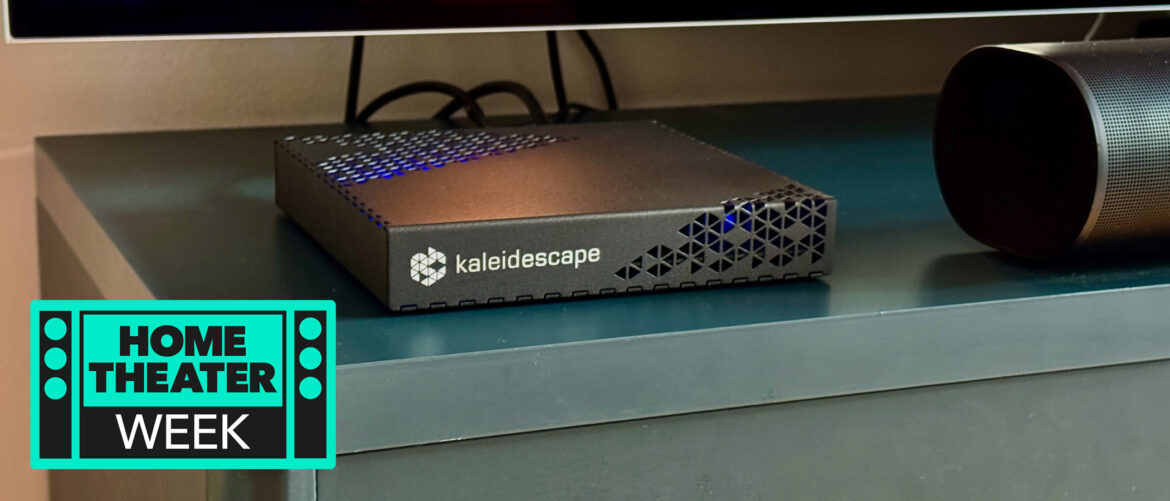
Kaleidescape Strato E Movie Player on a blue TV unit.
Product Reviews

Kaleidescape Strato E review: a must-have 4K movie player for home cinema enthusiasts

by admin September 2, 2025


Why you can trust TechRadar


We spend hours testing every product or service we review, so you can be sure you’re buying the best. Find out more about how we test.

Kaleidescape Strato E: One-minute review

Kaleidescape is a California-based company that has been at the forefront of digital home movies since 2001. While its brand name is likely known predominantly in the custom-install market for those with the space (and budget) for dedicated home theaters, the Strato E represents the most accessible route for anyone wanting to experience the best possible video and sound quality at home.

It’s an entry-level 4K movie player, slotting itself between the Strato M 2K player and the Strato V 4K player. By this, I mean the Strato E supports 4K Ultra HD movies, along with HDR10 and Dolby Vision HDR formats and is the cheapest Kaleidescape product to do so. The more expensive Strato V does the same, so to get the Strato E down to a more approachable price, Kaleidescape has dropped the internal storage from 960GB to 480GB and removed a few of the connections from the player’s rear panel.

The limited storage is something any potential buyer should think carefully about, as it’s only enough space to store around six 4K movies, downloaded from the Kaleidescape Movie Store, at any one time. The only way to expand the storage is to invest in one of the company’s Terra Prime servers, but with prices for these starting at $6,955 / £5,910 / AU$12,499, it’s a huge extra expense.

Aside from the players’ abilities, Kaleidescape’s other key selling point is its Movie Store. Not only is it the only way of obtaining content to watch, but it’s a gorgeous and fun interface to interact with. Content is displayed in rows that can be scrolled through quickly, with posters looking vibrant and sharp. It provides plenty of information for each title, including video and sound quality, cast and crew and even Rotten Tomatoes critic ratings. A nifty way of displaying related content also makes it great for discovering new titles.

As with many of the best streaming services, however, the content you have access to depends on where you live. The US gets the best version of the Movie Store, with several titles available to buy and download before they’re released on physical media. While limited, I was happy with the amount of content available in Australia, where I’m based, and I was pleasantly surprised by the cost of movies, which is comparable to (and sometimes cheaper than) 4K Blu-ray discs.

The content looks and sounds stunning via the Strato E. Colors are exemplary, blacks and shadow detail are the best I’ve seen from any home-entertainment source device and Dolby Atmos soundtracks – which are delivered in full lossless audio – more than prove why Kaleidescape demands the money it does. If picture and sound quality are important to you, you’ll notice a night and day difference between what the Strato E can offer compared to what you get from streaming services and, to an extent, 4K Blu-ray discs. You just need to be able to make your budget stretch to do so.

(Image credit: Future / Max Langridge)

  • Kaleidescape Strato E 4K Movie Player (Black) at Best Buy for $2,995

Kaleidescape Strato E: Price and availability

  • Released May 2025
  • List price: $2,995 / £3,399 / AU$5,299

The Kaleidescape Strato E movie player was released in the US and Australia in May 2025, with a launch in the UK following soon after. It’s available in all three territories from registered dealers and select online sellers.

Sign up for breaking news, reviews, opinion, top tech deals, and more.

The Strato E has been introduced as a more affordable, entry-level 4K movie player and now finds itself sitting in the middle of Kaleidescape’s current three-strong lineup, between the Strato M 2K player ($1,995 / £2,395 / AU$3,499) and higher-specced Strato V 4K player ($4,495 / £5,389 / AU$7,999).

At $2,995 / £3,399 / AU$5,299, it’s certainly still a pricey bit of kit, but considering the quality Kaleidescape offers, combined with the fact it has a similar spec sheet as the Strato V, it does present as good value.

One of the key differences between the Strato E and Strato V is the amount of onboard storage – 480GB vs 960GB – and so if you want to download a large library of movies or TV shows, you’ll almost certainly need to factor in the additional cost of one of the company’s Terra Prime servers – which start at $6,955 / £5,910 / AU$12,499 for a 12TB HDD – or make the leap to the Strato V.

Kaleidescape Strato E: Specs

Swipe to scroll horizontally

Built-in storage

480GB SSD

Resolutions

Up to 4K (3,840 x 2,160) 60fps

Bit rate

Up to 100Mbps

Audio support

Dolby TrueHD, Dolby Atmos, DTS:X, DTS-HD Master Audio

HDR support

Dolby Vision and HDR 10

Aspect ratios

1.78:1 and 2.35:1 (automatic or user interface selectable)

Connectivity

HDMI 2.1

Dimensions

16.26 x 2.8 x 16.26 cm / 6.4 x 1.1 x 6.4 inches

Kaleidescape Strato E: Design

  • Excellent build quality
  • Superb remote app
  • Limited connections

The Strato E adopts a slightly different aesthetic to the Strato V, yet still very much looks like a premium product. Where the higher-end Strato V is made from anodized aluminum, the Strato E is built with black perforated steel. The perforations allow you to take a peek at the circuitry inside, and upon startup, a blue light glows through them. The light turns off during use so as not to distract you from the main event.

The ventilation afforded by the perforations means the Strato E remains cool and completely silent during use too. It has 480GB of onboard storage, which is enough for around six 4K movies downloaded from the Kaleidescape movie store.

This is my first time experiencing a Kaleidescape product, and, having read reviews of the company’s other models and salivating over various images on its website, I was a little taken aback by just how compact the Strato E was when I opened the box. Its diminutive dimensions make it easy to accommodate in/on TV units, and, thankfully, an optional faceplate is available for mounting onto an equipment rack, along with a dual faceplate for use with a compact Terra Prime server. You’ll likely need the latter if you want to hold on to more than the six 4K titles that you can save locally on the device itself.

(Image credit: Future / Max Langridge)

Connecting the Strato E to your TV or home theater system is via HDMI only and Kaleidescape provides a THX Certified cable in the box. The only other connections on the rear of the unit are an Ethernet for a wired connection – essential, as there’s no Wi-Fi connectivity – a USB-A port for connecting external storage devices or a disc drive, and the 12V power input. The power cable integrates a brick, and both cables at either end of it are relatively long, so you should have little issue getting everything connected in your space.

A remote control is also supplied. It’s a simple unit, although it adopts a trapezoid shape for a touch of style. It does the job well, although it would’ve been nice for it to have been backlit (my colleague Stephen Withers said the same of the Strato V’s remote), although I spent the majority of my testing using Kaleidescape’s smartphone app.

The latter offers a seamless connection to the player, provides access to the movie store and can be used as a remote to navigate menus. Plus, it has the added benefit of letting you use the phone’s built-in keyboard to type in search terms.

Kaleidescape Strato E: Features

  • Highest video quality
  • Full lossless audio
  • Extra storage options available

With the Strato E effectively arriving as a more affordable alternative to the Strato V, and being capable of supporting 4K HDR content, it’s ultimately designed to offer the best possible video and audio quality of any home entertainment device available. It supports resolutions up to 4K (3,840 x 2,160) at a maximum frame rate of 60p. Dolby Vision and HDR10 support is also here, as is lossless audio, including Dolby Atmos and DTS:X.

The key factor allowing the Strato E to deliver such high quality is that it’s not limited to a file size or bit rate. Compare this to 4K Blu-ray discs that have storage limitations or the best streaming services that compress movies so they can run with minimal buffering, and you start to realize why Kaleidescape movie players command the price tags attached.

(Image credit: Future / Max Langridge)

As mentioned earlier, the 480GB of solid-state storage means there’s only enough space for up to six 4K movies, but the Strato E can upscale HD or SD movies to great effect and allow you to save more files in the bargain. For the absolute best quality, however, you’ll want to stick with 4K.

Any movies you buy will remain on your account in the cloud, so if you run out of space and want to download something new, an older movie can be removed from storage to be accessed and downloaded again at a later date.

If you want to build a larger library of movies, you’ll need to invest in a Terra Prime server, with prices starting at $6,955 / £5,910 / AU$12,499 for a 12TB HDD. Prices currently max out at $79,995 / £55,500 / AU$139,999 for 123TB. A server can provide simultaneous playback to up to 25 Kaleidescape players in one home, should you have the space, need, and, importantly, budget.

While the Kaleidescape Strato E is likely to be something only those with dedicated home cinema spaces gravitate towards, the fact that it can work as a standalone unit, and that it’s compact, means anyone who values the best possible video and audio quality can get involved.

Kaleidescape Strato E: Setup

  • Web-based interface provides more in-depth setting adjustments
  • Owned discs can be catalogued
  • Movie Store content is location-dependent

Kaleidescape has made the Strato E as fuss-free to set up as possible. Simply plug it into mains power, insert an Ethernet cable and connect it to your TV or AV processor via HDMI and you’re away. You’ll be met with some onscreen instructions that are easy to follow and understand, and you’ll soon be able to access the movie store and enjoy the content.

You will need to set up an account with Kaleidescape, including providing card information as a means of payment to purchase movies or TV shows from the online store on an ongoing basis. While you can access essential settings via the player itself, a web-based interface offers greater control. To access this, you’ll need to enter the player’s IP address (found in the settings menu) into a browser on your computer.

You’ll soon learn that the majority of settings on the web interface can be left as is because the Strato E can determine what your system is capable of in terms of video and audio quality, and optimize itself accordingly to perform at its best. For example, it will be able to determine if you have a 4K display with a 5.1-channel speaker system. If you use a projector, you can adjust the aspect ratio to fit a 2.35:1 screen.

(Image credit: Future / Max Langridge)

Aside from the physical capabilities of the Kaleidescape Strato E, one of the biggest selling points of the ecosystem as a whole is the Movie Store, as it’s the only method of obtaining content. Where you live will determine what you have access to due to licensing agreements, but this is also the case with many streaming services. As expected, the US store has the greatest range of content, including movies that have only just left cinemas. In Australia, where I’m based and this review was conducted, I could tell early on that the library wasn’t particularly vast, although many of my favorite flicks were available.

Kaleidescape says there are currently about 15K titles on the US store, around 12K and 7K on the Canadian and UK stores, respectively, and just about 5K on the Aussie store. However, since the Australian store only launched in April 2025, the amount of content already available is commendable. The company promises it will continue to populate the store with more titles in all territories where Kaleidescape players are available.

To help build your collection, the company offers the option to catalog any Blu-rays or DVDs you already own. I wasn’t able to test this feature, but in essence, you can connect an external disc drive with the USB input to trigger the Strato E to enter a Recognition Mode. (I wasn’t able to test this feature as I don’t have an external disc drive.) Insert a disc, and the player will search the Movie Store for a digital version that you can then purchase to download.

The company says that you can usually download that title at a discounted rate, although pricing is influenced by each production studio. What’s more, if you own a DVD and the Movie Store has a 4K version, you can purchase the higher-quality version if you wish.

Kaleidescape Strato E: Performance

  • Outstanding picture and sound quality
  • Interface is simple to navigate, but not always easy to search
  • High-speed internet connection is ideal

As soon as you finish setting up your new Kaleidescape Strato E, you’re presented with the Movie Store. It’s a good-looking interface that’s quick to navigate using either the supplied remote or the smartphone app.

Content is logically laid out, with a selection of recommended titles along the top row, content you’ve downloaded but not yet watched on the next row down, followed by sections for paused movies, content you’ve watched and anything you’ve saved to your favorites list. After this are categories for genres, along with a dedicated section for 4K Dolby Vision titles.

(Image credit: Future / Max Langridge)

Searching for something specific is mostly a fuss-free affair, especially when using the smartphone app, because, as previously mentioned, you can quickly type in a title using your phone’s keyboard. I was surprised (and a little disappointed) to find, however, that typing in ‘Dolby Atmos’ didn’t return any results. I eventually found filters when browsing the Movie Store within the smartphone app, including one for Dolby Atmos, among many others, so the search isn’t as intuitive as I had hoped.

One particularly good feature of the Movie Store is the ability to summon related content when hovering over a particular title. For example, when highlighting Top Gun: Maverick, press the Kaleidescape logo button on the smartphone app, or navigate to Explore > Related Content on the movie’s information page using the physical remote, and the Movie Store interface kicks into action, reorganizing all available and related content around it.

This includes movies similar in style and genre; for the Top Gun example, I was presented with Tom Cruise movies and other content either from the same director or starring supporting actors. It’s a quick and easy way to instantly discover new titles and a feature I found myself using an awful lot – not least for the aforementioned discovery, but also because watching poster thumbnails float around my TV screen was just cool to see.

Once you’ve found something you want to watch, then, as mentioned, you need to first download it. Due to the large file sizes, a very high-speed internet connection is practically a necessity if you want to minimize the time it takes from selecting a movie to watching it. Where I’m based in Australia, I can only achieve a maximum download speed of 100Mbps (multi-gigabit plans are available, just not in my apartment building), which made me nervous that it would take days to download a single title.

(Image credit: Future / Max Langridge)

When I set The Batman to download, it had an immediate effect on my network, and shows I was trying to watch on other services kept buffering – all of the available bandwidth was going to Kaleidescape.

To get around this problem, I set The Batman, along with Wicked and Gravity, to download overnight and sure enough, when I woke up the next morning, they were there. Remember when you’d wake up as a kid on Christmas morning to see presents under the tree? That was the exact feeling I had that morning.

The app lets you know how long each piece of content took to download, with The Batman taking the longest at just under three hours (Gravity, being an HD movie, finished in 40 minutes). Kaleidescape says if you have at least a 1Gbps internet connection, you can reduce the download time of a 4K movie to around 10 minutes.

If you have a high-speed internet connection, you can also set the maximum download speed for Kaleidescape. For example, with a 1Gbps plan, you could set Kaleidescape to max out at 600Mbps, leaving you with bandwidth so you can continue to watch other content at the same time.

Having read reviews of other Kaleidescape products, and having a good understanding of what makes the brand so appealing to home theater enthusiasts, it’s safe to say I had high expectations of the Strato E. And those expectations were exceeded. For context, I had the Strato E connected to an 83-inch LG G5 TV and a Sonos home theater system comprising the Sonos Arc Ultra soundbar, two Sonos Era 300 speakers for surrounds and a Sonos Sub 3.

Image 1 of 3

(Image credit: Future / Max Langridge)(Image credit: Future / Max Langridge)(Image credit: Future / Max Langridge)

Watching the opening scene of Wicked, the Wicked Witch of the West’s hat sitting in a puddle looked absolutely stunning. I compared it to the 4K Blu-ray version and noticed extra sharpness and detail when watching on the Strato E. Blacks were slightly deeper and the light reflection on the puddle glistened with greater intensity.

What took me by surprise the most, however, was the Dolby Atmos soundtrack. When the flying monkeys swooped in from behind the viewing position and smashed out of the window, I was blown away by the pinpoint accuracy of the movement from behind my seated position and towards the screen. It really was like being in a cinema; in comparison, the effect just wasn’t as pronounced when watching the Blu-ray version with the same home-theater setup.

It was a similar story when watching Gravity. Not only did the picture look incredible – the Strato E did a fantastic job of upscaling HD content, with the deep blacks of space well-defined and brighter lights shining with great intensity – but the Atmos mix was conveyed expertly through my speaker system. When Sandra Bullock and George Clooney’s characters are spinning out of control at the beginning of the movie, the soundtrack panned around my living room to great effect.

The Strato E truly shines with live concert recordings. As I mentioned in this issue’s lead-in, I downloaded and watched Hans Zimmer: Live in Prague — available in 4K Dolby Vision and, crucially, recorded in Dolby Atmos. I’d seen the soundtrack maestro perform in Sydney earlier this year — if you ever get the chance, grab a ticket, you won’t regret it — so I was curious whether a Kaleidescape playback of one of his shows could capture the same energy.

It did. The scale of the music hit me from the first note. My Sonos home theatre system was finally given a soundtrack that pushed its limits — I hadn’t realised how convincingly it could handle the dynamics of Zimmer’s iconic scores. When The Dark Knight Trilogy suite kicked in with Like a Dog Chasing Cars, the Strato E expertly reproduced the shifts from hushed, delicate passages — a lone violin or a subtle electronic texture — to the thunderous crescendos of the full orchestra, all without sounding compressed or strained.

That sense of contrast gave the performance real drama and made the experience feel startlingly lifelike. While I didn’t have a Dolby Atmos passive speaker system to test the Strato E’s talents — nor do I have a dedicated home cinema space — the player was able to deliver an impactful performance in my modest setup. Those with full Atmos rigs are in for a treat.

Should you buy the Kaleidescape Strato E

Swipe to scroll horizontallyKaleidescape Strato E 4K Movie Player Score Card

Attribute

Notes

Score

Value

It’s highly subjective, but as an ‘affordable’ entry point to the best picture and sound quality available, it’s worth the investment

5/5

Design

Excellent build quality and a superb smartphone app; more outputs would be nice, but the cost would inevitably increase

5/5

Features

Unrestricted file size for the best quality, and can be paired with servers for more storage

5/5

Performance

Unmatched picture and sound quality, especially content in 4K Dolby Vision and with object-based soundtracks

5/5

Buy it if…

Don’t buy it if…

How I tested the Kaleidescape Strato E

  • Tested over a period of 4 weeks
  • Connected to LG G5 OLED TV and Sonos home theater system
  • 4K Dolby Vision and HD content used

I tested the Kaleidescape Strato E at home in my living room, connected to an LG G5 OLED TV, partnered with a Sonos home theater system in a 7.1.4-channel configuration to take advantage of Dolby Atmos soundtracks. I wasn’t able to evaluate DTS:X soundtracks, however, as my Sonos system can’t decode it.

Kaleidescape kindly provided me with some credit to spend in the Movie Store, as opposed to preloading it with content, so that I would have the same experience as any new customer.

Read more about how we test.

First reviewed August 2025

Kaleidescape Strato E 4K Movie Player: Price Comparison


Source link

September 2, 2025 0 comments
0 FacebookTwitterPinterestEmail
Hell is Us review - nightmarish adventure treads a fine line between cryptic and tedious
Game Reviews

Hell is Us review – nightmarish adventure treads a fine line between cryptic and tedious

by admin September 2, 2025


Hell is Us is an absorbing, nightmarish meditation on the horror of war, but divisive design choices prove tedious.

Hell is Us review

  • Developer: Rogue Factor
  • Publisher: Nacon
  • Platform: Played on PS5
  • Availability: Out on 1st September on PC (Steam), Xbox Series X/S, and PS5

Strange synths rumble and whir in an electronic hum. Wind chimes tinkle. An unearthly screech in the distance and the bass escalates in intensity. Rain tickles the DualSense. What exactly is out there?

Hell is Us is a masterpiece in mood, and much of that comes down to its score – or, more of a soundscape, really – from composer Stephane Primeau. It lends the game such a heady, oppressive atmosphere. It comes as no surprise, since Primeau was previously in a metal band; the music is dark, haunting, unsettling. I recommend playing with headphones.

That sonic tone is fitting for an adventure game exploring the cyclical nature of war. Hell is Us, as the title suggests, is a nightmare. Demonic entities shift across muddy trenches and urban streets licked by flames; tanks lay abandoned half-submerged in marshy wasteland; and innocent (or sometimes not so innocent) citizens are caught in the crossfire of a country wracked by civil war and supernatural forces.

Yet, as a result of bold design decisions by developer Rogue Factor, Hell is Us is at times a mapless nightmare of abstruse puzzles, confusing menus and shallow combat that, collectively, is hostile to play. Hostility isn’t a bad thing – especially for a game depicting such a combative, malicious world – but there’s a fine line between cryptic and tedious that the studio doesn’t always balance. There are shades of sci-fi Zelda and classic survival horror in Hell is Us: dungeons to explore, idiosyncratic puzzles to solve, and centuries-old mysteries to unravel. Coupled with that oppressive atmosphere, it’s a welcome experience that has all the makings of a cult classic. But I believe it may prove too divisive for some.

Hell is Us – Story Trailer | PS5 GamesWatch on YouTube

After a story-in-a-story introduction, you’re dropped into the country of Hadea, a world heavily influenced by the 90s through character costumes, the low-fi computer vibes of its menus, and a ravaged landscape seemingly inspired by wars in Bosnia and Kosovo, as well as more recent conflicts in Ukraine and Gaza. Hadea is split between two religions – the Sabinians and the Palomists – that have caused suffering for centuries, but more recently ghostly creatures have appeared in the wake of civil war. Protagonist Remi is on a simple mission to infiltrate Hadea in search of his family, but is soon sucked into the country’s enigmatic past.

In short, Hell is Us is a meditation on the horrors and futility of war, and how history inevitably repeats itself. The use of imagery from modern – and very current – warfare lends the game shocking relevance, in addition to its sombre, disturbing tone. On his journey, Remi meets characters on all sides – religious zealots, soldiers, desperate refugees, innocent bystanders telling stories of regular people committing horrendous feats – but never takes a stance. There are good and bad people everywhere and, in this brutal war, no winners or losers: everyone suffers, everyone deserves assistance. Hell is – obviously enough – humanity, but more specifically the media and politicians with their propaganda and “constant campaign of dehumanising the other side”, as one character puts it. And when humanity has sinned and hatred of others is an embedded sickness, this war-torn hell is inescapable.

You’ll meet some interesting and unsavoury characters on all sides and there’s a smart conversation system that slowly unlocks new responses | Image credit: Rogue Factor / Eurogamer

Through detailed character conversations and well-written clippings and recordings, Remi pieces together the storied world of Hadea that thoroughly intrigues. The issue with the plot, though, is Remi himself. Besides searching for his family, he prescribes to the “boring white guy in a jacket” school of protagonists. He barely speaks, despite being voiced by Elias Toufexis of Deus Ex fame, and rarely comments on his discoveries. He is a thoroughly uninteresting character, exploring an interesting world. There’s potential to really interrogate the themes of the narrative, but Remi is little more than an avatar with whom to collect keys and hit things.

I’m being purposefully facetious here, as gameplay in Hell is Us is riveting and progress organic. Rogue Factor has chosen not to include signposting and not to provide a map, meaning players must use visual and audio clues to explore each individual zone, listen carefully to conversations, and sniff out potential leads to reveal new areas and progress the story. I love this! From the off I was utterly absorbed in Hadea, with this design choice forcing me to play in a far more attentive way than usual, focused deeply on each detail, and appreciating more thoroughly its dedication to mood. For the most part, each zone is designed to draw attention in a manageable way, though it can feel overwhelming.

The lack of map becomes more of an issue during dungeons. These take the form of underground crypts, ancient temples, scientific facilities, and more, each with their own distinct visual tone and colour palette. They’re often labyrinthine and filled with locked pathways and bizarre puzzles to solve, and mostly they’re satisfying to explore. Imagine for a second, though, navigating through a Zelda dungeon or the Spencer Mansion from Resident Evil with all its odd keys and locks and repetitive hallways, but not having a map to refer to and remind yourself what you found and where. That’s what playing Hell is Us feels like, and while I welcomed the cognitive challenge, I did sometimes feel frustrated – as I suspect many players will.

This is all the help you get on side quests in the menu | Image credit: Rogue Factor / Eurogamer

The poor UI and menu, however, are more unforgivable. Simply put, Hell is Us demands players hold far too much information in their heads. From environment layouts, to details in notes, to what the hell is this random locker key I’ve just picked up and where exactly am I meant to use it? The UI does a limited job of listing your findings unfiltered, and I wasted time scrolling through bits of evidence to find a hint of a code needed, or some other miniscule detail. Take my advice: play with a pen and paper, it’ll be much less infuriating.

Too often, Rogue Factor’s decision to withhold information results in frustration and tedium. Take side quests, or Good Deeds as they’re known. These commence during specific conversations, or sometimes by collecting an item with little context. Then, they’re listed deep in a menu with a blurred image and a quest title and nothing else. Unlike main missions, which are smartly organised in branching mind maps and found evidence, Good Deeds are presented minimally. What’s worse, some are failable if not completed in certain, unexplained, time periods – I managed to fail every failable quest in my playthrough by repeatedly being in the wrong place at the wrong time. I appreciate the developers likely want players to think carefully on their actions and share clues with others, but the tedious nature of these quests had the opposite effect. I simply stopped caring. Still, when I randomly entered an area only to find I’d failed a mission with no reasoning, it remained disheartening.

The dungeons are a real highlight of the game | Image credit: Rogue Factor / Eurogamer

Then there are Timeloops – shimmering domes found in each zone of the world. These are literal embodiments of the narrative’s core themes, containing ghostly apparitions of traumatic events that endlessly repeat. They’re a clever marriage of plot and gameplay, and closing them is a key part of the game. You need to kill many enemies hidden in each zone, before entering the Timeloop to close it using a specific prism item. Thing is, there are three different types of prism item, but you’ll only know which is needed once you actually need it. And where will you find these prisms? No idea – they could be anywhere in the world, in chests or elsewhere. While I’m at it, why can’t I use an item from the inventory system but instead have to laboriously equip it to my loadout first?

Here, the game feels less cleverly cryptic, more insufficiently optimised. Many of these tasks are optional, sure, and the main quest itself is comprehensive and (for me) intellectually challenging. It had me up late at night, sat in the dark, feeling enraptured and gripped by this evocative world. At least, until its anticlimactic finale.

The rewards for side quests are usually items and buff-providing glyphs to be used in combat. But combat itself is disappointingly shallow, making those rewards redundant. It’s been described as “Soulslike”, but that feels like a misnomer here (beyond it being third-person and using a stamina gauge). There is a fun twist in the game’s Healing Pulse ability, which feels like a mix of Nioh’s Ki Pulse and Bloodborne’s Rally system whereby hitting enemies releases particles that form a ring around Remi – time your button press correctly, and you’ll restore health in relation to damage dealt. Combat can be punishing too, with damage received dropping both maximum health and stamina that can make recovery tricky. Any other connection to FromSoftware’s work is loose.

Combat lacks depth and ultimately becomes tiresome | Image credit: Rogue Factor / Eurogamer

There are four weapon types – sword, twin axes, polearm, and greatsword – each with their own attack patterns, which lends each a distinct combat rhythm when combined with the Healing Pulse. And each can be customised with an element based on differently coloured human emotions, as well as buffs and abilities specific to that emotion – though any form of rock-paper-scissors elemental system isn’t explicit and lacks depth. Remi is also equipped with a drone that can provide extra support as new abilities are discovered, which are fun enough to experiment with, but as a whole combat quickly becomes monotonous and lacks the intellectual challenge of puzzle solving.

Hell is Us accessibility options

Three combat difficulties. Subtitle customisation. Camera shake and motion blur options. Colour blindness options. Directional audio option.

The real issue is that there are only a handful of enemy types repeated throughout the entire game, bolstered by three levels of difficulty. Some are linked to coloured Haze enemies that must be defeated first, but these abstract apparitions have such bizarre animations it’s hard to get a handle on parrying their attacks appropriately. Add in a dodge that pivots around enemies rather than to the sides, and it’s all too easy to be embarrassingly surrounded and stuck in a corner. Moreover, Hell is Us only has a couple of bosses – if you can even describe these unique, puzzle-like encounters as such – so there’s little escalation to combat, or real tests to punctuate the flow of gameplay. As a result, combat feels repetitive and laborious when instead you’re desperately trying to remember who you’re trying to speak with, or where the hell was that random, locked door at the start of the game I can’t remember now I’m twenty hours in and have no map to refer to.

Hell is Us features some moments of quiet beauty among its disturbing war imagery | Image credit: Rogue Factor / Eurogamer

Despite these misgivings, I still found Hell is Us to be a gripping experience. For each time I failed a quest or struggled to remember a vital clue, I was exploring a townscape freshly covered by the hazy, luminous glow of exploded bombs and littered with bodies frozen in death; or unearthing a medieval tomb filled with godly, mystical secrets; or investigating a strange facility as emergency signals whir and the screams of trapped humans haunt the metallic hallways. Hell is Us absolutely thrives on its atmosphere and sense of discovery, which few games nowadays even attempt in quite this manner.

I commend Rogue Factor for its design decisions, however divisive they may be. The studio has a core vision for Hell is Us, and the result is a singular experience that’s as enticing as it is frustrating. Try it – this hell might just be for you.

A copy of Hell is Us was provided for review by Nacon.


Source link

September 2, 2025 0 comments
0 FacebookTwitterPinterestEmail
IPRoyal website
Product Reviews

IPRoyal review 2022 | TechRadar

by admin September 1, 2025


Why you can trust TechRadar


We spend hours testing every product or service we review, so you can be sure you’re buying the best. Find out more about how we test.

A global proxy provider for individual and business use established in 2020, IPRoyal has grown to offer infrastructure to over 10,000 businesses around the world. What started out as an IPv4 and IPv6 address leasing business is now a full-fledged proxy service provider for a wide array of clientele, ranging from individual developers to startups to data teams to enterprises.

Currently, the platform bestows access to residential, mobile, and datacenter proxies, with locations in the United States, Germany, the United Kingdom, Canada, Brazil, Australia, and more. It includes more than 650 tools and software integrations, and has so far provided over 98,000 petabytes (PB) of data traffic for its clients.

IPRoyal: Plans and Pricing

    IPRoyal subscription options:

  • 1 month plan – $1 per month ($1 total cost)

IPRoyal offers different proxy types and pricing plans. Users can choose among residential proxies, ISP providers, datacenter proxies, and mobile proxies, each with their own particular characteristics and perks.

You can purchase residential proxies either on a pay-as-you-go basis or as a subscription (with a 5% discount in this case). Pricing is based on the amount of traffic you want, which begins at 2 GB and costs $6.25 per GB. The more GBs you take, the lower the price goes per GB, so 10,000 GB is priced at $1.84 per GB.

The pricing for ISP proxies (previously called static residential proxies) is based on the plan duration and the number of proxy locations you require, whereas the traffic is unlimited. For instance, 24 hours of one proxy will set you back by $2, while adding another location brings the price up to $4.60, and three months of one address cost $3.60/month ($2.70/month/address if more than one).

Datacenter proxies have 30-day, 60-day, and 90-day subscriptions, and a one-month access to one proxy is $1.80. As is the case with ISP plans, this offering also includes better discounts with lengthier plans and more numerous proxy addresses. There are also bundle-based plans with their own specifics and discounted prices, but the traffic is unlimited, whichever you choose.

Finally, mobile proxies (supporting 5G, 4G, 3G, and LTE), arranged by the location and provider (e.g., T-Mobile and Verizon for the U.S., Orange for Spain, and so on) and rotating automatically every six minutes, are also priced according to the plan duration and the number of locations. Bandwidth and sessions are unrestricted.

Sign up to the TechRadar Pro newsletter to get all the top news, opinion, features and guidance your business needs to succeed!

Although IPRoyal doesn’t offer a free trial, it does give access to its trial proxies so you can test its features before deciding. If unsatisfied after paying, you can request a refund or a replacement, but this has to happen within a short 24-hour window, which is a lot shorter compared to some of the competition.

IPRoyal supports payment using credit cards, over 25 cryptocurrencies, PayPal, Google Pay, and Alipay.

IPRoyal: Features

Accessing IPRoyal’s features starts with creating an account. You can sign up with your email address or use an existing Google or LinkedIn account. You’ll be redirected to your dashboard after registration, where you can access these features:

Residential IPs

Residential proxies are sourced from real devices across the globe. Every internet-connected device has a unique IP address, and people agree to contribute their IP addresses to IPRoyal’s network for a benefit, e.g., a VPN subscription. As an IPRoyal user, you can then use one of these IP addresses to surf the web and bypass geographical restrictions.

IPRoyal offers roughly 34 million IPs, of which residential proxies constitute the majority (32 million). The countries with the largest available residential IPs are the U.S. (1.4 million), the U.K. (422,000), and Germany (439,000). You can choose an IP address by country, state, and city, making it easy to protect your anonymity and bypass geographical and IP restrictions.

Suppose you run a flight deals website that frequently scrapes prices from airlines’ websites. Many airlines don’t like external data scraping, so they use geographical and IP restrictions to block it. For example, website admins identify IP addresses used by scraping bots and block them from further access. In that case, IPRoyal’s residential proxies let you circumvent this block.

You can choose an endless list of proxies to scrape data from external websites. If one gets blocked, choose another and continue your scraping activity. Residential proxies also hide your online identity and prevent third-party tracking. As far as a website is concerned, your device is browsing from whichever IP proxy you use and not the actual location. You could be in the U.S. and surf the web with a German IP address.

During our test, IPRoyal’s residential proxies provided a reliable and fast internet connection. We noticed no slowdown compared to browsing without a proxy IP address. The dashboard provided detailed insights on our proxy usage, including bandwidth and speed.

ISP proxies

IPRoyal now also offers a wide selection of ISP proxies across over 30 countries, with 100% dedicated IPs, unlimited traffic, HTTPS and SOCKS5 support, speeds of up to 10 Gbps, and highly customizable plans. Users can select a specific number of proxies starting from a single IP.

After funding your account, you can select the exact number of proxies you need for the offered duration – 1, 30, 60, and 90 days – in your user dashboard on the IPRoyal website. Besides selecting the duration, number of proxies, and their location, you have the option to list extra requirements for an additional fee.

Once set up, you’ll be able to see your ISP proxies’ orders and their status in your online dashboard, filter them for easier navigation, or search through them based on the notes you left. Clicking the Details button for a specific confirmed order will take you to the configuration page for those particular proxies.

Upon testing, there were some problems with erroneous rerouting of certain proxies to wrong locations (like choosing a Portugal IP address and getting a UK one). Thankfully, the IPRoyal staff was helpful and quick to act, so we got the correct location not long after contacting them. That said, some users have reported not getting proper assistance with similar issues.

(Image credit: IPRoyal)

Mobile Proxies

IPRoyal offers a network of 2.5 million+ IP addresses from real mobile devices. These IPs mask your IP address for data scraping, ad verification, social media management, and many other use cases.

Mobile proxies work like typical residential IPs on IPRoyal. You can choose proxies from a specific country, state, or city, a specific mobile carrier (Vodafone, Orange, Verizon, T-Mobile, etc.) and a network type (3G, 4G, or 5G). You can auto-rotate mobile proxies or do that manually by clicking a button.

The mobile proxies were notably fast during our test, with up to 100 Mbps download speeds. Your monthly IPRoyal mobile slot subscription grants access to the entire pool of 2.5 million+ IPs with unlimited rotation.

Mobile proxies are particularly useful for social media management and research. Most social networks like Facebook and Instagram have strict limitations on the number of accounts users can create on a single device. You can bypass these limitations with IPRoyal’s massive pool of mobile proxies. Your device’s real location stays hidden, and the social media platform assumes it’s another device because of its proxy IP address. Hence, it doesn’t flag your accounts.

You can manage as many social media accounts as possible with mobile proxies. You can also create many social accounts for research purposes, e.g., an academic study, without being flagged.

Datacenter Proxies

IPRoyal runs a network of IPv4 and IPv6 proxy servers that provide unlimited bandwidth for end users. These datacenter proxies are sourced from secondary corporations rather than internet service providers (ISPs). They provide much higher browsing speeds than residential and mobile proxies. The drawback is that they’re easier for websites to detect. But even if that happens, you can spin up a new one and continue your online activities.

Image 1 of 1

(Image credit: IPRoyal)

On IPRoyal, you have access to datacenter proxies in roughly 40 countries, unlike residential IPs available in 195 countries. Datacenter proxies cost more for IPRoyal to obtain, so their limited availability is understandable.

You can connect to IPRoyal’s proxy servers via the HTTP/HTTPS and SOCKS5 protocols. During our test, they offered first-rate speed and performance with no downtime. IPRoyal places no bandwidth or session limits on proxy IPs, making them ideal for bandwidth-intensive use cases like data scraping, online streaming, content downloads, and app testing.

Browser extension

IPRoyal offers a browser extension that makes deploying and managing proxies easier. Instead of frequently logging into your dashboard to choose new proxies, you can use the extension to switch with a click. The proxy add-on is available on Google Chrome and Mozilla Firefox.

IPRoyal has an intuitive, user-friendly dashboard (Image credit: IPRoyal)

These browser extensions offer all-in-one proxy management. You can create distinct profiles for different proxies and switch between them with a single click. Each profile can have a single proxy or use different proxy IPs for specific traffic types (HTTP, HTTPS, and FTP). You can assign a backup proxy to ensure your internet access remains secure if your current proxy fails.

The browser extension doesn’t only work with IPRoyal’s proxy IPs. You can use it to manage IP addresses from other proxy providers your organization uses.

We’ve talked much about IPRoyal’s features, but there’s a crucial feature it lacks: web scraping APIs. Many proxy providers offer APIs that let users automate data scraping tasks. Users set a target website and the type of data they want to scrape. Then, the API scrapes the data to present in a tabular format. Unfortunately, you won’t find web scraping APIs on IPRoyal, so you’ll need an external platform for automated data scraping.

IPRoyal: Ease of Use

One of IPRoyal’s strengths is its high level of user-friendliness. Users get an intuitive dashboard to manage their proxies and other complementary tools. All features are neatly arranged in the left-hand menu, whereas on the right, you can gain access to the main menu. The interface is visually pleasing and easy to navigate, and you can select between light theme, dark theme, or the automatic theme that matches your browser settings.

IPRoyal has an intuitive, user-friendly dashboard (Image credit: IPRoyal)

IPRoyal’s browser extension (for Chrome and Firefox) also contributes to its ease of use. It lets you manage proxies regardless of the web page you’re currently on. Usually, you’ll need to open your IPRoyal dashboard to do this, but the extension removes this requirement. That said, you must first set up proxies on your IPRoyal dashboard before you can manage them via the browser extension.

IPRoyal: Customer Support

IPRoyal offers direct email and live chat support. You can open a chat support ticket from your dashboard or send a support email and expect a response within 24 hours. IPRoyal’s support staff was reliable during our test and answered our inquiries speedily. The drawback is that IPRoyal does not offer a telephone support option.

Users can access complementary support resources, including a FAQ page, user guides, and extensive technical documentation. The website’s “Docs” section provides detailed information about all features, making it the ideal first place to consult when facing challenges. If you don’t find a solution in the documentation or FAQ section, you can seek direct help.

IPRoyal: The Competition

The proxy software market is very competitive. IPRoyal has numerous competitors, and we’d like to highlight Webshare, Oxylabs, and Bright Data. These platforms have pros and cons compared to IPRoyal.

Webshare offers a network of 30 million+ residential and datacenter proxy IPs, slightly less than IPRoyal’s 34 million. Residential IPs constitute the majority of Webshare’s network, just like IPRoyal. Users have an intuitive dashboard and a browser extension to manage their proxies, just like IPRoyal. Webshare differentiates itself by being more affordable than IPRoyal and offering a free-forever 10-proxy plan.

Oxylabs has a massive network of 100 million proxy IPs, nearly triple that of IPRoyal. This broader network provides users with more redundancy and reliability. Oxylabs provides web scraping APIs and ready-made datasets, two features lacking in IPRoyal. We consider it a much better proxy provider than IPRoyal, albeit a more expensive one.

Bright Data has a robust network of 72 million+ IPs, more than double IPRoyal’s network. It offers a broader selection of residential, ISP, mobile, and datacenter proxies for data scraping. Bright Data also offers APIs for automated data scraping and pre-built datasets, which IPRoyal doesn’t have. Overall, we consider Bright Data a better proxy provider for enterprises, but IPRoyal is a more affordable solution we’d recommend for individuals and small businesses.

IPRoyal: Final verdict

IPRoyal has a reputation as a reliable proxy provider for individual and business use, and for a few very good reasons. It not only provides a robust and plentiful proxy network, but also friendly and capable customer support, as well as affordable and customizable pricing plans.

While it may lack some features you’ll see in rival platforms, such as a more extensive network and web scraping APIs, its proxies have low block rates, and some of them rotate automatically. This makes web scraping almost equally easy as if you were using an API.

Its user-friendliness and low entry cost make IPRoyal an ideal platform for individuals and small businesses seeking an affordable, reliable, and easy-to-use proxy provider with premium customer support available at all times.

To find out more, see our guide to the best proxies available. You might also like to read our guide to sneaker proxies, or find out the difference between residential and datacenter proxies.


Source link

September 1, 2025 0 comments
0 FacebookTwitterPinterestEmail
Urban Arrow FamilyNext Pro Review: The Perfect Family Bike
Gaming Gear

Urban Arrow FamilyNext Pro Review: The Perfect Family Bike

by admin September 1, 2025


How time flies. I first reviewed the original Urban Arrow in 2020, when my kids were 3 and 5. Back then, nothing delighted a couple of preschoolers more than strapping into a big, motorized cargo bike and scooting around town, shrieking, with the wind blowing in their tiny faces. Alas, they are now 8 and 10. When I picked up my 8-year-old two days ago, he crouched down in the box while sitting on the padded seats (with seat belts!) so that none of his friends would see him.

All this to say: My Tern GSD and I are great friends, but I wish my kids were five years younger so I could’ve bought the FamilyNext Pro instead. Urban Arrow’s new electric cargo bike has a lot of great upgrades, is easier to ride than ever, and is even more useful as my kids have gotten older.

Bounce House

To the naked eye, the two biggest upgrades to the FamilyNext Pro are a newly redesigned cargo box and suspension on the front fork. (It also comes in a very classy, new sage green, but unfortunately, my demo bike was in black.)

The box looks totally different—my friend asked if my bike had gotten longer somehow. It’s longer and slimmer, with rounded corners instead of square ones, and there are now headlights on the bike. It has shorter sides, so it’s easier to get in and out. Unlike other bakfiets, or box bikes, that I’ve tried, the box sits much lower to the ground. I can confirm that in my testing, both adults and kids had an easy time climbing in and out.

The box is made from expanded polypropylene (EPP) foam, which is initially disconcerting—it shows dings and bumps very easily. However, Urban Arrow describes it as “an upside-down helmet,” and the foam cushioning did reassure me that even if I let the bike tip over, my kids or friends wouldn’t just immediately hit the pavement. You can also replace the foam easily in the event of a crash or some other unsightly event.

The front cargo box now has a front fork with 60 millimeters of travel. I truly love this. It really is a safety issue when you’re going fast with 60 to 150 pounds in the front box. I was cruising along at 20 mph and hit a pothole, and I just boinged right out of it.

Photograph: Adrienne So


Source link

September 1, 2025 0 comments
0 FacebookTwitterPinterestEmail
Hell Is Us Review - Devil In The Details
Game Reviews

Hell Is Us Review – Devil In The Details

by admin September 1, 2025


If you’re bothered by a world map littered with quest icons or the thought of being shepherded through an adventure rather than unravelling it instinctually, the freedom that Hell is Us promises will immediately draw you in. It’s evident every time you boot up the game, with a tooltip reminding you that you’ll get no quest markers, no world map, and no hints as to where to go next while you explore its world. This promise is kept throughout its campaign, although how challenging this makes it overall is less impactful than you might think. Hell is Us definitely demands more of your attention for exploration than most other modern video games, but it’s also quite forgiving in how much information it litters around you to keep you subtly on track. Coupled with a brutal but captivating world and a combat system that’s more than meets the eye, Hell is Us is an engaging, albeit imperfect, attempt at defining a new type of action/adventure game.

Set in the fictional region of Hadea in the late 1900s, Hell is Us blends together the centuries-long mystery behind the appearance of ghostly monsters and the calamity that follows them, with an ongoing civil war that is tearing apart the land. Citizens of Hadea align behind two factions, the Palomists and the Sabinians, with decades of heritage and ongoing propaganda fueling gruesome war crimes and countless lives lost to bloodshed. It’s here where Hell is Us features its most striking, and upsetting, moments, routinely letting you come across acts of depravity that depict how the divides between people can drive them to commit acts of brutality. You’ll naturally come across shockingly violent scenes or hear about gruesome tortures through conversations, which give shape to the brutality of the civil war you’re in the middle of. It’s not played wholly for shock value, either, with these unsettling scenes providing needed texture to the region and the plights of the citizens desperately trying to escape.

As you explore the various hubs that you can freely travel between, you’ll encounter a variety of characters hoping for some help. A grieving father at a mass grave can find solace in a picture of his family that you retrieve for him, a trapped politician will thank you for finding them a disguise to navigate a hostile office space, or a lost young girl can be reminded of her missing father by a pair of shoes he asked for you to deliver before his death. These good deeds aren’t critical to the central story, but they deepen your connection to Hadea further with each one completed. They also do the best job of delivering on Hell is Us’ promise of guideless exploration, with subtle clues pointing you towards the items that each character seeks, whether it’s in the town you’re currently exploring or waiting for you in another location much later. It’s satisfying to recall a brief conversation you had hours prior when coming across a new item, letting you close the loop on a side quest you had all but abandoned.

This sense of discovery extends to the main plot, with solutions to puzzles often requiring some pause and thought in order to overcome them. They’re multi-staged too, turning spaces into small puzzle boxes reminiscent of games like Resident Evil. The clues can be anywhere, including small phrases mentioned in conversations, throwaway lines in emails, and on notes you’ll discover alongside critical items. It’s not as simple as finding a safe combination scribbled in blood a few rooms away, but it’s also not so gruelling that you’ll often find yourself directionless. You won’t receive hints as to where to go next, but the character and location summaries that are generated give enough of a nudge in the right direction to keep your progress steady. You can think of Hell is Us as an action game that borrows more from classic point-and-click adventures in its approach to exploration than other contemporaries in the genre, just without the overly obtuse puzzles and hours wandering around in circles.

As you peel away the current events transpiring in Hadea, you’ll start learning about the centuries of history that led to this point. It’s filled with monarchs and betrayal, missing heirs and star-crossed lovers, but none of it makes much of a lasting impression or fully justifies the horrors taking place because of these events. This is interwoven with the story of protagonist Rémi, who was born in Hadea before being smuggled out as a child by his mother. Returning to find his family, Rémi’s story and the secret protectors of Hadea that his family is tied to is uninteresting and rote, ultimately concluding with a predictable ending that does little to explain the interrogation you continually flashback to from the start. It’s a pity that while you get to witness Hadea at its worst, Rémi never really seems to remark meaningfully on what is happening around him. Voice actor Elias Toufexis, most recognizable as Adam Jensen in Deus Ex: Human Revolution, is disappointing as Rémi, with the alluring raspiness of his voice lost in weak dialogue and a monotone delivery.

The intersection of the real horrors of current-day Hadea and the mysticism of its past allows for its various hubs to stand out visually. Your journey starts in a small town resting in a swampy marsh, with smoke from the embers of a recent siege filling the air. It contrasts with the open fields you’ll find yourself in next, littered with old statues from past monarchs while hiding a labyrinthine catacombs beneath the surface fitted with archaic machinery and gloomy stone passageways. Hell is Us moves you between war-torn cities engulfed in smoke to underground laboratories that are etched into the walls of old religious sites, and none of it feels out of place. Unfortunately, your ability to move around these spaces is incredibly rigid, with the lack of a jump preventing you from scaling numerous waist-high obstacles between you and some loot. It feels egregious artificially in the context of Rémi being rather dexterous otherwise, and is clearly done to force puzzles to be solved in a specific way.

While the soldiers around you brandish assault rifles and roll around in tanks, you’ll be forced to contend with a variety of monochrome creatures, known as Hollow Walkers, using melee weapons exclusively. Hell is Us’ combat will look and feel a lot like many soulsborne titles. Attacks and dodges are tied to a stamina bar, whose total is defined by how much life you have left. It’s a confusing coupling that makes early encounters challenging, but one that is counterbalanced by the combat’s encouragement of aggression. Similar to Bloodborne, each hit claws back some life from enemies. Here, however, you can regain more health than what you’ve lost in a fight, letting you use enemies almost like healing items when you know you can dispatch them without taking damage. It’s a system that makes fights very dynamic, with just a few well-timed and reserved hits taking you from death’s door to fully healed up again. Snatching away victory like this is exhilarating, producing a similar sensation to defeating a tough boss in a soulsborne without having to mimic the steps it takes to get there.

Outside of basic and strong attacks with one of the four weapons you can choose between, combat is aided by a variety of special abilities to choose from. These are divided between equipable perks for your weapon and bird-like drones, each with their own cooldown timers to manage. Your drone provides support mostly, latching onto your back to give your dodges a little more speed and distance, or distracting an enemy to grant you an opening. Weapon abilities are more active. I gravitated to abilities that let me crowd control effectively, such as one that dealt damage to foes around me, or others that would do large amounts of burst damage to single enemies at a distance. The combat has some breadth, but the overall depth doesn’t really match it.

Abilities and enemy types are limited, with both relying on bigger damage numbers and new attacks at higher levels respectively to make up for the variety. The limited enemy pool is helped somewhat by the inclusion of husks–brightly colored foes that are tethered to some enemies and shield them from damage. Some of Hell is Us’ best fights feature a husk tied to multiple enemies at once, forcing you to dispatch it a handful of times as you pick away its hosts one by one. But these moments are undone by Hell is Us’ reliance on enemy count rather than evolving challenges to maintain difficulty in the latter stages of the campaign, which results in some frustrating encounters with cheap deaths. They also expose problems with the game’s finicky lock-on system and camera, with both struggling to accurately find their targets while you’re being swamped in dark, gloomy underground corridors.

The combat is more lenient than its inspirations, too. Enemies do respawn, but only if you travel away from your current location. Each area also contains a timeloop; a constantly recurring moment of intense trauma that also keeps enemies in the area respawning. By clearing out certain enemies around it, you can enter the timeloop and close it for good, ridding the area of enemies and allowing you to explore it in safety. You’ll come across datapads that allow you to save and set your respawn point should you die, but you don’t lose anything when you do, making it significantly less punishing. Difficulty levels also allow you to tune combat to your liking, an option that isn’t extended to exploration, so that you can focus on that instead if you’re finding going toe-to-toe with Hollow Walkers less engaging. All of this means that while combat in Hell is Us looks like a soulsborne, it differs from the genre more than you might expect.

While I was left dissatisfied by the narrative conclusion of Hell is Us, its journey to that point was pleasantly engaging. It was refreshing to not just follow a quest marker through a story, but also a relief that I was never spun around for hours on end wondering where I needed to go next. This balance is what made traversing Hadea and experiencing all the horrors it contained a rewarding one, making each new step feel earned rather than routine. It’s backed up by an imperfect but engaging combat system that’s only let down by some shallow enemy variety and imprecise control, but never to the point of outright frustration. If Hell is Us is developer Rogue Factor’s first stab at a new type of third-person action game and although it’s less revolutionary than the initial promise might suggest, it is one that still managed to stay surprising until the end.


Source link

September 1, 2025 0 comments
0 FacebookTwitterPinterestEmail
Screenshot from the game Hell Is Us.
Product Reviews

Hell Is Us review: a somber but intriguing adventure with one foot in the soulslike genre

by admin September 1, 2025


Why you can trust TechRadar


We spend hours testing every product or service we review, so you can be sure you’re buying the best. Find out more about how we test.

Another month, another attempt to capture the magic of FromSoft’s genre-defining epic (even if French-Canadian developer Rogue Factor claims it isn’t). Yes, action-adventure game Hell Is Us sits with one foot in the soulslike category, but that’s not a criticism; it takes what it needs from Dark Souls and its ilk, discards what it doesn’t, then absconds in the night with a suitcase full of dodge-rolls and ominous-sounding characters.

Review info

Platform reviewed: PC
Available on: PS5, Xbox Series X|S, PC
Release date: August 12, 2025

See, as a big fan of FromSoft’s games, I’ve come to the conclusion that it’s almost impossible to properly capture the magic of a game like Bloodborne or Elden Ring. Many have tried, and there have been some successes; Lies of P and Remnant II were two recent standout examples for me. I think the trick is not trying to mirror exactly what FromSoft does; it’s taking the formula and doing your own thing with it.

Does Hell Is Us succeed in this regard? For the most part, yes. If you’re a fan of either action-adventure or the best soulslike games – or are curious about getting into the oft-impenetrable latter genre – it’s worth a look. The setting is unique and interesting, the gameplay is enjoyable, and it’s more forgiving overall than most games within the soulslike genre, even if the underlying DNA is impossible not to notice.

Needless to say, the ‘Week of Peace’ did not go so well. (Image credit: Rogue Factor / Nacon)

Hard times

Straight off the bat, this game is bleak – the world you inhabit feels dark and dangerous, poised to collapse into unmitigated chaos at any moment, with only small glimmers of hope left. Wracked by a long and bloody civil war, the setting of Hadea is an insular, vaguely eastern European nation with a rich history of animosity between two religious factions, the traditionalist Palomists and the more progressive (but still pretty damn zealous) Sabinians.

By 1992, the war has reached a fever point, with brutal pogroms, fighting in the streets, and virtually every crime against humanity you could care to list. Seriously, this game is not for the faint-hearted; you’re going to see some pretty visceral evidence of those crimes against humanity.

Yep, that’s a mass grave. Don’t expect a cheery time in Hadea. (Image credit: Rogue Factor / Nacon)

It’s all rather horrible, but it does have a purpose. Although Rogue Factor didn’t seek to evoke any singular real-world conflict, the setting certainly echoes events like the Bosnian War, the Georgian Civil War, and the Croatian War of Independence. There’s even a thinly-veiled UN imitator called the Organized Nations, characterised by their blue helmets just like in real life. Considering that Hadea is entirely fictional, there’s an unsettling weight of reality to it all that stands as a testament to the quality of the world-building.

Our protagonist, Remi, doesn’t really give a shit about any of this, though. He’s come back to Hadea to find his parents, from whom he was separated as a young child. Naturally, said parents turn out to be entwined in the core narrative. See, that civil war is merely the backdrop; the real meat of the story here concerns an outbreak of bizarre, violent creatures, an ancient religious order, and a mysterious black-ops group doing nefarious things under the cover of Hadea’s present conflict.

Sign up for breaking news, reviews, opinion, top tech deals, and more.

The framing narrative is well-implemented, even if they do use the ‘well, that’s not how it happened’ joke sometimes when you die. (Image credit: Rogue Factor / Nacon)

Uncovering the mystery

The story is told via a framing narrative, which sees Remi – immediately recognisable as Elias Toufexis, best known as the iconic baritone of Adam ‘I Never Asked For This’ Jensen in the newer Deus Ex games – being drugged and interrogated by a deeply unpleasant man with a chainsmoking habit and about sixteen chins. See, Hell Is Us loves its classic environmental storytelling, but it’s also not above using actual cutscenes. There are also proper dialogue scenes with some (non-player characters) NPCs, which serve to both progress the story and deliver optional exposition about the world.

For the most part, I found the characters believable and (usually) likable. From sardonic war journalist Tania to the kind-hearted Abbot Jaffer, these NPCs inject the world with humanity and authenticity. Unfortunately, Remi himself doesn’t have quite the same screen presence. He’s the cold, brooding type, which mercifully does mean that he doesn’t chatter to himself constantly while you’re exploring or solving puzzles, but also results in him feeling a bit flat. Early in the story, it’s revealed that he’s a diagnosed sociopath with a military past, but this seems to serve mainly as a convenient reason to make him largely unbothered by the insanity unfolding around him.

Best Bit

(Image credit: Rogue Factor / Nacon)

A handful of sections later in the game pit you against literal hordes of weaker enemies, which are so much fun to carve through with reckless abandon.

Many of the people you encounter while journeying across Hadea have side-quests to offer you, though this is usually done in a roundabout way; in typical soulslike fashion, there’s no world map or objective markers. Instead, you might hear a soldier complaining about running low on his medication – and wouldn’t you know it, later on, you’ll find a bottle of the very pills he needs. Sometimes, the clock is ticking; I found a woman with a starving infant hiding from Sabinian soldiers, and by the time I returned with some bottles of baby formula, I was met with a shoebox with a pacifier on top. That hurt a little, honestly.

You can talk to many characters, but don’t expect them all to be friendly or helpful – there’s a war on, after all. (Image credit: Rogue Factor / Nacon)

There’s little handholding here, which admittedly had me wishing for a wiki on a few occasions while I was reviewing the game, but it’s not quite as oblique as the average Souls series entry, instead feeling strangely more like a retro point-and-click adventure game. Remi has a chunky tablet device that doubles as an inventory screen and ‘investigation log’, noting down key information you come across and helpfully sorting the stuff you find into quest-critical items and the many, many lore snippets you can uncover.

Often, the pace is slowed by the inclusion of a puzzle, and these range from laughably easy to moderately head-scratching. Thankfully, these puzzles rarely outstay their welcome; even when you’re hunting for the right combination of arcane sigils to unlock a door in some ancient ruin, you can expect to be set upon by ravenous monsters at any given moment.

Remi’s stolen APC takes you from A to B across Hadea, and also serves as a sort of mobile base of investigations. (Image credit: Rogue Factor / Nacon)

Fight for your life

Speaking of monsters: let’s talk combat. This is where Hell Is Us cribs from FromSoft’s homework the most, with the classic block-dodge-parry mechanics that should feel immediately familiar to any soulslike enjoyer. Of course, virtually every action consumes stamina, which is tied directly to your health bar, meaning that taking even a single hit immediately makes the fight harder.

Simply put, the combat gameplay is solid. Attacks that can be countered are telegraphed by the enemy pulsing red, with a reasonably generous parry window, but Rogue Factor still manages to distinguish itself from the usual business thanks to the ‘healing pulse’ mechanic. There’s no refillable healing flask here, and actual healing items are relatively sparse; instead, dealing damage to enemies releases particles, which periodically coalesce into a ring around you. At this point, you can tap a button to regain a bit of health based on the damage you’ve dealt, but you have to be fast, as the ring dissipates after barely a second.

As is typical of soulslike combat, you can lock onto enemies to more easily dodge and parry their attacks. (Image credit: Rogue Factor / Nacon)

You also get a gradually expanding suite of extra abilities. These take three forms: glyphs that can be slotted into your weapons and consume ‘Lymbic Energy’ (read: mana), powerful relics with long cooldown timers, and programs for the owl-like tricopter drone that perches on Remi’s shoulder and doubles as your flashlight in dark areas. You get three glyphs each across two equipped weapons, one relic, and four drone slots, making for a total of eleven abilities equipped at once – meaning there’s plenty of build diversity available here, even if Remi doesn’t have a traditional stat sheet. Most of these abilities are pretty fun – I was particularly partial to the drone skill that let me grab onto it and zoom forward, dealing heavy damage to anything in my path.

The creatures besieging Hadea are invulnerable to conventional weaponry, with the only way to kill them being ‘Lymbic weapons’. Unfortunately, there’s not a huge amount of variety here: you get a regular sword, twin axes, a polearm, and a hulking great sword, filling the usual melee weapon archetypes. These can be upgraded and imbued with elements (Grief, Rage, Terror, and Elation), but all this does is make them hit harder and determine which type of glyphs you can equip on them. I quickly settled into using a Polearm of Terror and Twin Axes of Rage, but if you’re the sort of gamer who enjoys experimenting with every new weapon you find, you might be disappointed here.

Some of the boss battle arenas are visually striking. (Image credit: Rogue Factor / Nacon)

There’s another issue with the combat that doesn’t emerge until later in the game, though: some of those special abilities are pretty dang overtuned. For example, once I got my hands on the max-level Rage Spike glyph (an explosive ranged attack), most fights became comically easy, with Remi repeatedly blasting enemies to smithereens from far outside melee range. It’s not a massive issue for me, since you have to conquer a good chunk of the game to become that powerful, but it did trivialize the majority of encounters towards the tail end of the story.

Rise to the challenge – or don’t

Speaking of difficulty, Hell Is Us isn’t overly punishing. I experimented with all three difficulty levels (described as Lenient, Balanced, and Merciless), which purely affect the combat and can be further fine-tuned in the settings to adjust enemy health, damage, and aggression, and found that the highest difficulty gave the ‘truest’ soulslike experience. Yeah, I know that customizable difficulty options are a personal affront to the most die-hard fans of the genre, but I honestly think it’s a good inclusion: on ‘Lenient’ difficulty, even someone who has never played a soulslike before could have a good time here.

There’s no shortage of ominous tombs to plunder in Hadea. (Image credit: Rogue Factor / Nacon)

There’s also no real penalty for dying; you just respawn at your most recent save point, and the enemies you killed remain dead (although there is an optional setting to make death fully reset any progress from your previous save). Hostiles *do* respawn, however, if you leave one of the game’s many areas by travelling between them in the armored vehicle Remi commandeers in the opening act. You can stop this – and render an area permanently safe – by collapsing Timeloops, which are large ferrofluid-looking orbs that sustain the creatures you face.

To do this, you have to track down specific enemies marked as ‘Timeloop Guardians’, kill them, then take a special item to the Timeloop and chuck it inside. These are mostly optional, but you do get loot for each Timeloop you shut down, and doing so is its own reward anyway; there’s a lot of backtracking to be done if you’re shooting for 100% completion, so it’s nice to return to a region and find it free of enemies.

Then again, the hostiles you face are actually pretty fun to fight. The ‘Hollow Walkers’ are a brilliantly creepy piece of enemy design, feeling like something straight out of the SCP Foundation universe, with unsettling, jerky movements and eerie vocalizations. Some Hollow Walkers are paired with a ‘Haze’, a floating ball of the aforementioned elemental emotions which must be slain before its linked Walker can be harmed – and if you’re not quick enough, the Haze will reform and you’ll have to kill it again.

These are another good example of strong audiovisual design, with the Rage Haze unleashing a barrage of attacks and screaming with fury, while the Elation Haze cackles maniacally as it zooms around. The creatures were unleashed by the negative human emotions that spiked because of the Hadean civil war, and that plays nicely into their design.

That’s a Timeloop: kill the guardians nearby to shut it down and stop them from coming back for good. (Image credit: Rogue Factor / Nacon)

Sadly, a lack of diversity again hampers enjoyment a little here, as you basically fight the same measly selection of enemies over and over throughout the game. There are three tiers of enemy threat levels, but only the Hazes actually change in appearance and moveset from tier to tier; the Hollow Walkers merely get bigger health bars and more damaging attacks, and there are only five types of Walker to encounter. There’s also a surprising dearth of boss fights – a common staple of both the action-adventure and soulslike genres – with only four real bosses to be found throughout the entire course of the game. The final boss, disappointingly, is just four much bigger versions of a basic enemy type. Clearly, no lessons were learned here from the final boss of the original Destiny campaign.

Hadean tourism

If I’m being honest, though, my criticisms are small. I really enjoyed my time with Hell Is Us, which clocked in at just shy of 30 hours for my review – and I was doing my best to do and see everything, which is possibly why I ended up being so overpowered. I played with both a gamepad and my usual mouse and keyboard, and although the game advises using a controller, I didn’t have any problems playing with the latter.

The biggest issue I have with the game is that I want more, which is quite the double-edged sword. The game is divided into three acts, but the third act is essentially just the underwhelming final battle, followed by a ten-minute cutscene that didn’t quite wrap things up to my satisfaction. Sure, it leaves things open for downloadable content (DLC) or an expansion and perhaps even a sequel (which I genuinely hope we get), but the finale feels a bit rushed, and it’s a shame not to end on a high note.

Arriving on the shores of the peaceful Lake Cynon reminds the player that underneath the violence of the civil war, this world can be quite beautiful. (Image credit: Rogue Factor / Nacon)

Still, it’s a super experience overall that I’d recommend to anyone who enjoys either soulslikes specifically or just dark action-adventure games in general. It runs on Unreal Engine 5 (which may set off alarm bells for some gamers), but I found it to be reasonably well-optimized, with no noticeable performance issues at 1440p on my RTX 5060 desktop or at 1080p on the RTX 4060 gaming laptop I also used for testing. Hadea is genuinely beautiful at times, too. For every dank cave and bombed-out village, there’s a vibrant field of flowers or the crumbling majesty of an antediluvian ruin.

If you like good melee combat and won’t be turned off by graphic depictions of war crimes, Hell Is Us is definitely worth a shot. Just be prepared to consult Google from time to time – or, like I did, keep a pen and notepad handy, so you don’t forget exactly where you were supposed to take those baby formula bottles.

Should you play Hell Is Us?

Play it if…

Don’t play it if…

Accessibility

We’ve got the usual selection of accessibility options here, with three color blind modes – Deuteranope, Protanope, and Tritanope – which can be adjusted to varying degrees of color correction, as well as being able to reduce or disable motion blur and camera shake.

There are also gameplay accessibility options, which let you independently adjust the health, damage, and aggression of enemies, plus some customization options for the HUD and the ability to automate enemy lock-ons.

Of note is a directional audio indicator: this displays an on-screen marker denoting the direction and distance of gameplay-related sounds, including enemy attack sounds in combat and the identifying noise emitted by Timeloop Guardians. Considering how important directional sound can be in Hell Is Us, this is a good inclusion for hearing-impaired players.

How I reviewed Hell Is Us

I played Hell Is Us from start to finish, which took me a little under 30 hours – though I was being very thorough in my exploration, and a speedy player less concerned with 100% completion could likely beat the game far quicker.

I used my gaming desktop, which uses an AMD Ryzen 7 5800X3D and Nvidia RTX 5060 with 32GB of RAM, as well as an Acer Predator gaming laptop with an Intel Core i7, RTX 4060, and 16GB of RAM. On desktop, I used an Asus ROG keyboard and mouse and a Razer Raptor 27 gaming monitor. With the laptop, I used a Scuf Instinct Pro gamepad.

I frequently took the time to adjust both the difficulty level and graphical settings in several in-game locations to get a good idea of both how much challenge the game presents and how well it runs. I naturally also tested out each new weapon and ability the game gave me – though I quickly found my favorites and stuck with those for the majority of the game.

First reviewed August 2025

Hell Is Us: Price Comparison


Source link

September 1, 2025 0 comments
0 FacebookTwitterPinterestEmail
Kioxia Exceria Plus G2
Gaming Gear

Kioxia Exceria Plus G2 (2TB) review: Convex and compact

by admin September 1, 2025


Why you can trust Tom’s Hardware


Our expert reviewers spend hours testing and comparing products and services so you can choose the best for you. Find out more about how we test.

Japanese memory manufacturer Kioxia doesn’t have the same kind of name recognition as its former parent company, Toshiba, which invented flash memory in the 1980s. But the spun-off company, renamed in 2019 as a combination of the Japanese word for ‘memory and the Greek word for ‘value,’ has remained a major player in cutting-edge solid-state storage, alongside Samsung, Micron / Crucial, SK hynix, and WD / SanDisk.

Kioxia largely sticks to selling flash, SSDs, and related technology to other companies, at least here in the United States. But when a representative from Kioxia Europe reached out about testing a consumer-focused external SSD, the Exceria Plus G2, I was curious to see what the drive was capable of and how it would stack up against the best external SSDs we’ve tested, despite the fact that this pocket-friendly drive isn’t officially available in the U.S.

As a 10 Gbps (USB 3.2 Gen2) SSD, I knew it wasn’t going to break any speed records, but how does this drive stand up against competing compact metal-shelled offerings like the SK hynix Beetle X31 and the various X9s and X10s from Crucial? Read on to see our benchmark results. But first, here are the specs for the Exceria Plus G2, direct from Kioxia:

Kioxia Exceria Plus G2 (2TB) specifications

Swipe to scroll horizontally

Product

500 GB

1 TB

2 TB

Interface / Protocol

USB 3.2 Gen2 (10 Gbps)

USB 3.2 Gen2 (10 Gbps)

USB 3.2 Gen2 (10 Gbps)

Included

USB-C, USB-A cables

USB-C, USB-A cables

USB-C, USB-A cables

Sequential Read

Up to 1,050 MB/s

Up to 1,050 MB/s

Up to 1,050 MB/s

Sequential Write

Up to 1,000 MB/s

Up to 1,000 MB/s

Up to 1,000 MB/s

Dimensions

72 x 40 x 11.8 mm

72 x 40 x 11.8 mm

72 x 40 x 11.8 mm

Weight

42 grams

42 grams

42 grams

Warranty

3 years

3 years

3 years

Design and accessories

(Image credit: Tom’s Hardware)

The black metal aluminum shell of the Kioxia Exceria Plus G2 feels very solid in my hand, and the convex top and bottom feel distinctive. This design may cause some complications, though, for those who like to use Velcro or other materials to stick their drives to the side of a camera, phone, or the lid of their laptop.

Kioxia thoughtfully includes both a USB-C-to-USB-A and a USB-C-to-USB-C cable along with the drive, both of which are about a foot long, including the plugs. A tiny activity light lives on the end of the drive, next to the USB-C port.

Pricing

You can find the Kioxia Exceria Plus G2 for sale in the U.S. via third-party sellers or on eBay, but generally not at competitive prices. At Amazon in the U.K., the 2TB model we tested was selling for £149 when I wrote this, with the 1TB version going for £93 and the 512GB capacity for £65. SK hynix’ competing Beetle X31 (another 10 Gbps drive with a metal shell), was selling for a little less: £137 for the 2TB model and £82 for the 1TB.

But both those drives are undercut in the U.K. by Crucial’s X9 Pro (which we tested alongside the X10 Pro), at just £108 in the 2TB capacity. The Crucial drive was on sale when I priced out these drives, but it seems clear that, at least in the U.K., Kioxia’s drive faces stiff competition when it comes to price.

Software

(Image credit: Tom’s Hardware)

The drive itself arrives empty, but Kioxia does offer a downloadable SSD Utility on its website that lets you monitor drive health, update firmware if necessary, and password-protect the drive. It is a bit curious that the company doesn’t include an installer or at least a link on the drive itself, especially given that the Exceria Plus G2 features 256-bit AES hardware encryption. But the program is intuitively laid out and feature-packed, should you search it out and install it.

Comparison products

(Image credit: Tom’s Hardware)

At 72 x 40 x 11.8 mm and 42 grams, the Exceria Plus G2 is smaller than many competing drives. The SK hynix Beetle X31 is thicker and heavier (74 X 46 X 14.8 mm, 53 grams), but Crucial’s X10, X10 Pro, and X9 drives remain among the smallest, at 65 x 50 x 10 mm and the same 42 grams as the Kioxia drive.

(Image credit: Tom’s Hardware)

Beyond minute measuring contests, though, most major external SSDs are similarly pocket-friendly and light these days, unless you count models like LaCie’s Rugged SSD Pro, which is a bulky 150 grams thanks to its rubber exterior and the internal cooling necessary for Thunderbolt 5-class speeds.

Storage testbed update

(Image credit: Tom’s Hardware)

Earlier in 2025, we updated our external storage testbed to an AMD Ryzen 7600X-based PC with an Asus ROG Crosshair X870E Hero motherboard, installed in Lian Li’s Lancool 217 case. This was done in part because we needed a system with native USB4 support for upcoming drives.

Get Tom’s Hardware’s best news and in-depth reviews, straight to your inbox.

All the drives in the charts below have been re-tested on the new X870E system, with the exception of the final Iometer sustained sequential test, which is less about top speed and more about how long a drive can write before depleting any fast cache. We also updated to CrystalDiskMark 8, rather than the older (and non-comparable) version 7 we used on the previous testbed.

Trace Testing – PCMark 10 Storage Benchmark

PCMark 10 is a trace-based benchmark that uses a wide-ranging set of real-world traces from popular applications and everyday tasks to measure the performance of storage devices.

(Image credit: Tom’s Hardware)

In this first test, the Kioxia drive didn’t exactly impress; It landed last among the drives we recently retested. That said, its score of 974 wasn’t far from most other 10 Gbps drives, which tend to top out around 1,150 points on this test.

Transfer Rates – DiskBench

(Image credit: Tom’s Hardware)

In this real-world file transfer, the Kioxia Exceria G2 looked a little better, beating out the SK hynix Beetle X31 and Seagate’s flash-drive-like Ultra-Compact SSD.

Synthetic Testing CrystalDiskMark

CrystalDiskMark (CDM) is a free and easy-to-run storage benchmarking tool that SSD companies commonly use to assign product performance specifications. It gives us insight into how each device handles different file sizes. We run this test at its default settings.

(Image credit: Tom’s Hardware)

In this best-case synthetic scenario on our overhauled testbed, the Kioxia drive managed to edge out three other drives, but landed slightly behind SK hynix and Crucial’s competitors.

(Image credit: Tom’s Hardware)

Small file performance is one area where the Kioxia drive shines. It lands behind the SK hynix Beetle X31 and Seagate Ultra-Compact SSD once again, but ahead of many other drives, including some with a faster 20 Gbps interface.

Sustained Write Performance

A drive’s rated write specifications are only a piece of the performance picture. Most external SSDs (just like their internal counterparts) implement a write cache, or a fast area of flash, programmed to perform like fast SLC, that absorbs incoming data.

Sustained write speeds often suffer tremendously when the workload saturates the cache and slips into the “native” TLC or QLC flash. We use Iometer to hammer the SSD with sequential writes for 15 minutes to measure the size of the write cache and performance after the cache is saturated.

(Image credit: Tom’s Hardware)

The Kioxia Exceria Plus G2 again looks good on this most demanding of tests, managing to write for close to 12 minutes at above 1,000 MB/s (and slightly above its rated write speed), before dropping below 400 MB/s for the remainder of our test. If you need something that can handle lengthier sustained writes than that, you should probably opt for something like the Crucial X9 Pro, or better yet, something with a faster USB interface if your systems support it.

Bottom line

(Image credit: Tom’s Hardware)

With a solid, small metal shell, hardware-based encryption, solid (if not class-leading) 10 Gbps performance, and USB-C and USB-A cables included in the box, Kioxia Exceria Plus G2 is a decent option for backing up or transporting your important data. Whether or not it stands out is largely down to its price in your region, as it’s not officially available in the U.S. But if it costs less than competing drives like the SK hynix Beetle X31 or Crucial’s X9 where you live, it’s easy to recommend.


Source link

September 1, 2025 0 comments
0 FacebookTwitterPinterestEmail
DJI Mic 3 wireless microphone
Product Reviews

DJI Mic 3 review: a class-leading premium wireless mic

by admin August 31, 2025


Why you can trust TechRadar


We spend hours testing every product or service we review, so you can be sure you’re buying the best. Find out more about how we test.

DJI Mic 3: one-minute review

The DJI Mic 3 is the latest premium release in the company’s popular wearable wireless microphone range, supplanting the DJI Mic 2. The Mic 2 was only released around 18 months ago, and has topped TechRadar’s best wireless microphone guide for some time, so I was a little skeptical about the need for a new model.

After receiving my review sample of the DJI Mic 3, though, it only took me a few seconds to see why people might want to upgrade from the Mic 2. The Mic 3’s transmitter component, or TX, is far more compact and lightweight than that of its predecessor, making it easier to wear on clothing.

And – praise be! – it’s now possible to fit not only two TX units and the receiver (RX) in the charging case, but accessories like clips, magnets, windscreens and even a 3.5mm-to-3.5mm cable. One of the irritations I’ve had with my own DJI Mic 2 over the past year is that the furry windscreens, which are all but mandatory when recording audio outside, don’t fit inside its charging case. To see that fixed here (as it was on the DJI Mic Mini) is wonderful.

Delving deeper over the course of testing the Mic 3, I found that DJI has made improvements elsewhere: there are now two levels of active noise cancellation rather than one; it’s possible to transmit lossless 24-bit audio from the TX to the RX; and there are three new voice presets to add instant color to vocal recording. All of these features are easy to use and add instant, tangible impact to recordings.

The DJI Mic 3 (center) alongside the DJI Mic Mini (left) and DJI Mic 2 (Image credit: Future | Sam Kieldsen)

Another new feature is the dual-mode Adaptive Gain Control, designed to deliver balanced audio in trickier recording conditions. The Automatic setting is used to prevent audio clipping during unexpected rises in volume (I found it worked well when recording in unpredictable outdoor environments, such as walking around town where traffic noise can jump up at any second), while Dynamic is more situational, being designed for two-person recordings using a single TX unit in a more controlled environment like a studio.

And, while I wasn’t able to personally test this (having just the standard setup of two TX units and one RX in my possession), DJI says the Mic 3 is able to capture clear voices from larger gatherings of people thanks to 4TX+8RX group recording. It also adds support for timecode, which wasn’t on the Mic 2. So, the Mic 3’s professional production credentials are definitely a bit more impressive than the Mic 2’s.

The wireless transmission range has been increased from 250m to 400m, and battery life also gets a major bump, up from 18 hours (with the charging case and two TXes) on the Mic 2 to 28 hours (although it can’t come close to the Mic Mini’s imperious 48 hours). Oh, and the on-board storage space on the TX units has been increased fourfold, from 8GB to 32GB.

Sign up for breaking news, reviews, opinion, top tech deals, and more.

The RX unit now features a locking TRS output, but is otherwise little changed from the Mic 2’s (Image credit: Future | Sam Kieldsen)

All of these are compelling reasons to make the upgrade from the Mic 2, and there’s very little missing feature-wise. The TX units no longer have a 3.5mm input for a separate lavalier mic, which might be an issue for users who want to hide it when filming, and the Safety Track recording mode has been dropped, but that’s about it.

In terms of general sound quality the Mic 3 is excellent, and similar to the Mic 2. With 32-bit float on board for those who need the extra level of safety and control, and 24-bit for everyday use, I think very few content creators will have issues with the audio side of things here.

With the Mic 3, DJI has managed to combine the best bits of its Mic 2 and Mic Mini into a single brilliant wireless mic – and one that, remarkably, is cheaper than the Mic 2 was at its launch. In fact, when compared to competitors’ pricing, it’s very hard to see how I couldn’t recommend it to anyone on the hunt for a new premium wireless mic.

The charging case is a major improvement on the DJI Mic 2’s, with much more efficient use of space (Image credit: Future | Sam Kieldsen)

DJI Mic 3: price and release date

  • Available to order now priced from £169 / AU$369
  • Components available individually or in bundles
  • No official US availability at the time of writing

The DJI Mic 3 is available to order from its launch date of August 28 2025, and the company is offering a range of bundles. For a complete package comprising two TX units, one RX, a charging case, cables, magnets and windscreens, the price is £259 / AU$569; for a simple one TX and one RX package, it’s £169 / AU$369. Buyers can also purchase individual components like the TX, RX, charging case, and new accessories available at launch include a Lightning adapter and alternate color windscreens.

I think the price is extremely reasonable given the Mic 3’s capabilities and specs, and I’m a big fan of the company selling individual components separately, as it gives consumers the opportunity to start small and upgrade over time.

The complete kit includes the charging case, two transmitters, one receiver and a USB-C connector for the receiver. There are also two clips, two magnets, four windshields, a 3.5mm to 3.5mm TRS cable and a USB-C charging cable in the box, plus a zip-up case to hold it all (Image credit: Future | Sam Kieldsen)

There’s bad news for US-based readers hoping to get their hands on a Mic 3, however. As with other recently announced DJI products, the company isn’t officially launching in the US, in an apparent response to uncertainty surrounding tariffs. A company spokesperson told me the following:

“DJI Mic 3 is not in stock in the US upon the global launch. DJI remains committed to the US market and making our products and services available to our US-based customers. However, we’ve recently had to adjust our market strategies for certain products in light of evolving market conditions. While we do not have a timeline for when we can introduce the product to the U.S. market, we are closely monitoring the situation and actively exploring every possible solution.”

US-based consumers may be able to obtain the Mic 3 through third-party stockists, however, so it may be worth checking camera stores such as B&H.

DJI Mic 3: specs

Swipe to scroll horizontally

Dimensions

28.8 x 28.3 x 16.4mm (TX, with magnet)

Weight

16g (TX, with magnet)

Range

400m

Connectivity

Receiver: USB-C / Lightning, 3.5mm jack

Bluetooth

Yes

Battery

10 hours (TX), 8 hours (RX), up to 28 hours with fully charged case

Noise cancelling

Two-level active

DJI Mic 3: Design

  • TX unit weighs just 16g with magnet
  • RX has 1.1-inch AMOLED touchscreen
  • Charging case now accommodates more components

I’ve already mentioned the smaller, lighter build of the TX units, but there are other clever design touches worth noting too. When using the clips, for instance, you can now rotate the TX orientation to ensure that the mic grille is pointing towards the sound source. The TX units are also now magnetized themselves, allowing them to be attached securely to metal surfaces.

The design of the receiver (RX), meanwhile, seems fundamentally unchanged from the Mic 2’s. There’s a bright, crisp 1.1-inch AMOLED touchscreen on the front, plus a rotating and pressable dial to help select and change settings. The design allows for a USB-C adapter to be attached (or Lightning, but that’s an optional extra), and the 3.5mm output now supports a locking screw to keep it in place.

The Mic 3’s transmitter (or TX) units are almost as small and lightweight as those of the Mic Mini, but offer far more flexibility for mounting thanks to an integrated magnet (Image credit: Future | Sam Kieldsen)

The charging case, despite being smaller than the Mic 2’s, is a lot better. As I mentioned in the section above, it makes much more efficient use of its space, and can now accommodate not only two TX and one RX but attached windscreens and clips, with room for magnets and the 3.5mm to 3.5mm TRS cable in the lid.

Also included in the larger bundle are extra windshields (so two black and two grey in total), as well as a zip-up fabric bag for storing everything, including the charging cable.

DJI Mic 3: Performance

  • Two-level active noise cancelling and voice tone presets
  • Supports OsmoAudio direct connection
  • Omnidirectional audio and up to 400m range

The Mic 3 seems to be built on similar audio bones to the Mic 2. That’s no bad thing, as it means users get access to 32-bit float recording (large file sizes, but ideal for users who want to ensure their audio doesn’t clip) as well as standard 24-bit recording with adjustable gain. Having used it extensively indoors and outdoors in a variety of conditions, I’ve found the Mic 3 to be a highly reliable recording partner, no matter what it’s paired with.

And it can be paired with a lot. The RX can hook up to cameras, computers, tablets and smartphones via its USB or 3.5mm outputs (or the Lightning adapter, should you buy it), and it’s also possible to connect the TX directly to recording devices via Bluetooth.

The TX is also compatible with DJI’s OsmoAudio ecosystem products, supporting 24-bit audio and even 32-bit float (which will be recorded as a separate, second file stored directly on the TX’s memory). I used it with the DJI Osmo 360 and DJI Osmo Action 5 Pro, and was highly impressed with both the ease of use and audio quality; it’s possible to control gain and other settings through the cameras’ menu screens, and the Mic 3 represents a massive improvement on those cameras’ built-in microphones.

Noise cancelling manages to be highly effective without distorting voice recordings too much. You can hear for yourself in the embedded video above, which also demonstrates the new built-in voice tone presets and general audio quality straight from the mic.

As with the Mic 2, the Mic 3’s TX units can also record on their own, acting as a completely independent mic thanks to 32GB of internal storage space.

Should I buy the DJI Mic 3?

Buy it if…

Don’t buy it if…

DJI Mic 3: also consider

(Image credit: Future | Sam Kieldsen)

How I tested the DJI Mic 3

  • I used it for several weeks
  • I paired it with cameras, computer and smartphone
  • Running firmware 01.01.02.10

DJI sent me a review sample of the Mic 3 a couple of months ahead of its launch date, giving me the chance to spend a few weeks testing it in a range of environments and conditions. I connected to a range of devices: my Panasonic Lumix GH6 mirrorless camera, the DJI Osmo Action 5 Pro and DJI Osmo 360 action cameras, my MacBook Air laptop and my iPhone 13 smartphone. This meant I was able to test both its direct connection and receiver connection methods.

The firmware was updated to the newest available version at the time (v01.01.02.10) prior to the writing of this review, but manufacturers often release updates to coincide with the public launch – so please note that DJI may have tweaked performance slightly since this review was published.


Source link

August 31, 2025 0 comments
0 FacebookTwitterPinterestEmail
Ride1Up TrailRush Electric Mountain Bike Review: Quality Components, Bargain Price
Product Reviews

Ride1Up TrailRush Electric Mountain Bike Review: Quality Components, Bargain Price

by admin August 31, 2025


Buying a direct-to-consumer bike can be almost as big a gamble as investing in cryptocurrency. While a customer is not likely to lose their shirt investing in a new electric bike, buying a poorly made one may result in a serious crash or catch the garage on fire. For these reasons and more, it’s wise to do some research before clicking on the Add to Cart button.

The highest-end legacy-brand e-MTBs retail for upwards of $14,000. So what do you get for $2,095, the price of Ride1Up’s first-ever electric mountain bike, the TrailRush? At first glance, quite a lot. The California-based company has been around since 2018 and differentiates itself from other direct-to-consumer brands by speccing its bikes with solid components, providing a quality-to-price ratio that it promises “can’t be beat.”

Solid Parts

Photograph: Stephanie Pearson

The TrailRush is a Class III ebike, which means that it doesn’t have a throttle, and the motor maxes out at 28 mph. It’s an aluminum-framed hardtail with a Shimano Deore 10-speed drivetrain, a 120-mm RockShox Judy Silver TK Air Fork, and Tektro Orion Quad Piston brakes—all products with track records that promise solid performance.

It also comes with nice extras, like a 150-mm Exaform dropper seat post and chunky Maxxis Minion tubeless-ready tires that are 29 inches in the front and back—a reasonably priced, high-performance set of tires often preferred by enduro or downhill riders. Interestingly, instead of Presta valves, the tires come with Schrader valves, which is a nice feature if you plan on filling up on air at a gas station.

For e-components, the mid-drive TF Sprinter motor is made by the Brose, the German company that Specialized uses for most of its drive technology. With 90 nm of torque and 250 watts of sustained power, it’s on the low end of force for an electric mountain bike. The 36-volt, 504-watt-hour removable battery runs the length of the down tube and promises 30 to 50 hours of range.

The bike’s front shock has a very big 120 mm of travel, which is common on a cross-country bike, but the frame is overall more relaxed. For example, the size medium frame has a more relaxed riding geometry, with a very long 1,216-mm wheelbase, which gives it more stability. Overall, the TrailRush was built to handle a little bit of everything a trail can throw your way.

Smooth, Quiet Ride

Photograph: Stephanie Pearson

At 57 pounds, the TrailRush is 2 to 12 pounds heavier than the other e-mountain bikes I’ve tested and more than twice the weight of my non-electric cross-country mountain bike. Whether you’re entirely new to mountain biking or amping up your ride from an analog version, it’s imperative to understand that e-MTBs bring great joy, until they run out of battery and you have to push them home. Or, worse, they end up on top of you in a fall, which can be lethal.


Source link

August 31, 2025 0 comments
0 FacebookTwitterPinterestEmail
  • 1
  • …
  • 21
  • 22
  • 23
  • 24
  • 25
  • …
  • 31

Categories

  • Crypto Trends (1,098)
  • Esports (800)
  • Game Reviews (772)
  • Game Updates (906)
  • GameFi Guides (1,058)
  • Gaming Gear (960)
  • NFT Gaming (1,079)
  • Product Reviews (960)

Recent Posts

  • This 5-Star Dell Laptop Bundle (64GB RAM, 2TB SSD) Sees 72% Cut, From Above MacBook Pricing to Practically a Steal
  • Blue Protocol: Star Resonance is finally out in the west and off to a strong start on Steam, but was the MMORPG worth the wait?
  • How to Unblock OpenAI’s Sora 2 If You’re Outside the US and Canada
  • Final Fantasy 7 Remake and Rebirth finally available as physical double pack on PS5
  • The 10 Most Valuable Cards

Recent Posts

  • This 5-Star Dell Laptop Bundle (64GB RAM, 2TB SSD) Sees 72% Cut, From Above MacBook Pricing to Practically a Steal

    October 10, 2025
  • Blue Protocol: Star Resonance is finally out in the west and off to a strong start on Steam, but was the MMORPG worth the wait?

    October 10, 2025
  • How to Unblock OpenAI’s Sora 2 If You’re Outside the US and Canada

    October 10, 2025
  • Final Fantasy 7 Remake and Rebirth finally available as physical double pack on PS5

    October 10, 2025
  • The 10 Most Valuable Cards

    October 10, 2025

Newsletter

About me

Welcome to Laughinghyena.io, your ultimate destination for the latest in blockchain gaming and gaming products. We’re passionate about the future of gaming, where decentralized technology empowers players to own, trade, and thrive in virtual worlds.

Recent Posts

  • This 5-Star Dell Laptop Bundle (64GB RAM, 2TB SSD) Sees 72% Cut, From Above MacBook Pricing to Practically a Steal

    October 10, 2025
  • Blue Protocol: Star Resonance is finally out in the west and off to a strong start on Steam, but was the MMORPG worth the wait?

    October 10, 2025

Newsletter

@2025 laughinghyena- All Right Reserved. Designed and Developed by Pro


Back To Top
Laughing Hyena
  • Home
  • Hyena Games
  • Esports
  • NFT Gaming
  • Crypto Trends
  • Game Reviews
  • Game Updates
  • GameFi Guides
  • Shop

Shopping Cart

Close

No products in the cart.

Close