
Laughing Hyena
  • Home
  • Hyena Games
  • Esports
  • NFT Gaming
  • Crypto Trends
  • Game Reviews
  • Game Updates
  • GameFi Guides
  • Shop
Tag:

reliable

Google Gmail review
Product Reviews

I tested Gmail and found it an excellent and reliable platform for business and personal use

by admin October 1, 2025


Why you can trust TechRadar


We spend hours testing every product or service we review, so you can be sure you’re buying the best. Find out more about how we test.

Gmail is the world’s most popular email platform, with a stunning user base of over 1.8 billion. In other words, over 20% of the world’s population uses Gmail in individual or business capacity.

Given that Gmail is free, easy to use, and is operated by Google, the company behind the world’s leading search engine, it’s no surprise that Gmail is very popular. However, does that translate into Gmail being the best email provider for you? What are its features, and how does it fare against competitors? This guide will answer these questions.

I’ve thoroughly reviewed Gmail to help you determine whether it’s the best email platform for your personal or business needs. Read on to learn about Gmail in detail, including its pricing, ease of use, security, and key features.

    Google Gmail subscription options:

  • 1 month plan – $0 per month ($0 total cost)

Gmail: Plans and pricing

You can use the personal version of Gmail for free. However, like most things, it’s free up to a certain point. Users have up to 15 GB of free storage for pictures, videos, other documents, and other attachments in their email inbox. If you exceed 15 GB, you’ll either need to delete files to free up more space or pay for additional storage.

Extra Gmail storage requires a Google One subscription, with the lowest tier being $20 annually for 100 GB of storage. Ultimately, Gmail offers excellent storage capacity for free – most users don’t surpass 15 GB, except they’ve used Gmail for a long time or use email much more frequently than others.

Businesses can pay for an advanced version of Gmail via Google Workspace. The business tier increases the cloud storage allocated to each employee, and businesses can create emails attached to their custom domain. It’s the same Gmail interface, but with features designed for business use and a custom domain to give employees a more professional appearance.

Google Workspace plans start from $7 per user per month, which provides 30 GB of storage per account, double the free limit. The Standard plan costs $14 per user per month, providing 2 TB of storage per account. The Plus plan costs $22 per user per month and unlocks 5 TB of storage per account. These plans are reasonably priced, given the massive amount of storage space they provide.

Sign up to the TechRadar Pro newsletter to get all the top news, opinion, features and guidance your business needs to succeed!

Business plans are limited to 300 users, except for the Enterprise plan which has no limit (Image credit: Google)

Gmail: Features

Sending and receiving emails are the primary features you’ll expect from Gmail. You can compose emails and send them to your desired email addresses. The maximum number of recipients per email is 500 for free accounts and 2,000 for Google Workspace accounts. However, most users aren’t hitting this limit, so I see no issues here.

I like that Gmail lets you send scheduled emails. You don’t always have to send emails immediately after you type them. Instead, you can set the email to send at a specific time. This feature comes in handy in many endeavors, such as sending birthday wishes ahead of time and sending event reminders to colleagues.

In this era of artificial intelligence (AI), Gmail hasn’t been left behind. Google has invested significant resources in incorporating AI features that have made Gmail much more intuitive than before.

For instance, I enjoyed the Smart Reply feature, which crafts quick, automated responses to emails. The AI system reads your email and suggests quick responses, such as “Well noted, I’ll work on it,” “Here it is,” or “I’ve attached the document here,” among others. The suggested responses are based on the content of the email you’re replying to.

The Smart Reply feature may sound trivial, but it helped me a lot. It gets tiring having to retype mundane responses to personal and work emails – the feature saved me a lot of time here, which I spent creating detailed responses for the emails that needed them.

I also enjoyed the Smart Compose feature, which functions as an AI assistant when typing emails. It can read your mind… just kidding, it can’t. It analyzes the words you’ve already typed and suggests the next words and phrases. It’s right many times, but can be amusingly wrong. The good thing is that you can hit enter whenever it gets the right suggestion and ignore it if the suggestion isn’t right. Smart Compose saved me considerable time when typing emails.

Gmail boasts plenty of features to optimize the user experience (Image credit: Google)

Apart from intuitiveness, security is a key issue when choosing an email platform. Spam attacks have become more sophisticated due to AI tools that have made text generation a breeze. Hence, security is more important than ever, and Gmail delivers well in this criterion.

By default, Gmail has spam filters that analyze incoming emails and rate their likelihood of spam. If found to be spam, an email is automatically sent to the spam folder. From my experience, Gmail’s filters ensnare most spam messages, but some crafty ones occasionally make it through. When I encountered such an email, I immediately blocked the address and deleted their emails.

False positives can also occur. Some legitimate emails, such as password recovery attempts, might be sent to the spam folder, but you can always visit the spam folder and transfer such emails to your main inbox. If you mark an email in the spam folder as “Not Spam,” further emails from that address will land in your main inbox.

Another crucial security feature I liked is “Confidential Mode,” which allowed me to set expiration dates for emails. For instance, I sent an email containing sensitive information to a friend and set it to self-destruct a day after sending. I also set passcodes for specific emails, and the recipient needed this passcode to read the content– I gave them the passcode via SMS and other communication channels.

Likewise, with Confidential Mode, you can prevent recipients from copying, forwarding, or downloading the contents of your email. However, this feature doesn’t prevent users from taking screenshots of the photos and text – it just makes it difficult to transfer the content directly via email, so be careful about the information you send.

Gmail always prompts users to enable two-factor authentication, which adds an extra layer of security to your email account. With this feature enabled, no one can access your account simply by having your Gmail credentials. Logging in also requires a unique one-time PIN sent to your phone number or other Google-linked devices. Without this PIN, no one can log in to your account on a new device.

I advise always enabling two-factor authentication for your Gmail account. This overlooked feature protects you from most malicious attacks. According to Microsoft, two-factor authentication is the antidote to 99.9% of security attacks.

Gmail offers advanced encryption to protect emails during transmission, ensuring they can only be read by the intended recipients. All emails and their attachments are automatically scanned for malware, and any suspicious ones are blocked. Note that the scanning isn’t perfect; some suspicious attachments may slip through, so avoid opening any attachment from an address you aren’t familiar with.

If you’re like me, who frequently sends and receives emails, your inbox can easily get cluttered, and sorting through vast numbers of emails can get tiring. Fortunately, Gmail lets you organize your inbox and make your emails easy to navigate. You can create labels, such as “Work,” “Family,” “Newsletters,” and “Shopping,” and add specific emails to each of them, or automatically label emails based on the sender’s address. Whenever you want to view a specific group of emails, you can simply click on the relevant label.

For example, if you want to read your daily newsletters, you can click on the “Newsletters” label and see the new emails sent from the addresses you’ve previously marked.

Similarly, you can create custom filters to archive, forward, or even delete emails originating from specific addresses. Gmail’s labels and filters help you automate email sorting and reduce the time you spend navigating your messages.

Gmail seamlessly integrates with other Google tools you may be familiar with. For example, you can upload files to Google Drive and attach them to your email by clicking a few buttons. I found this feature handy when sending large files that would have taken a long time for the recipient to download– instead, the recipient could simply access the file online on Google Drive.

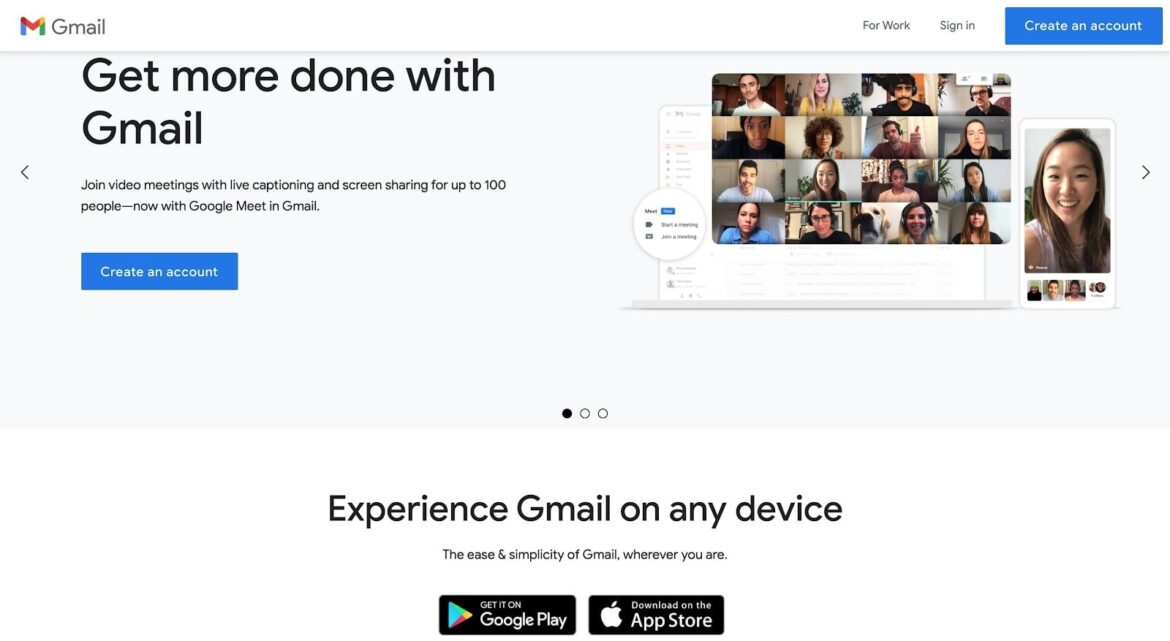
Google Meet isn’t the most popular videoconferencing app, but I liked its smooth integration with Gmail. I could start Google Meet calls directly from my Gmail interface and switch back to emails when done, while on the same browser tab.

Other notable integrations include Google Calendar, which allows you to create events from emails and set reminders, and Google Tasks, where you can convert emails directly into tasks on your to-do list.

Gmail: Interface and in use

Gmail’s interface is one of its main strengths. I think the user-friendliness is the main driving force behind Gmail’s popularity, although being affiliated with Google also helps a lot.

I’ve tested many email platforms, and Gmail stands out for its intuitiveness. Everything feels easy to navigate, even as a first-time user. It helps that first-time users don’t have cluttered inboxes that can make navigation more challenging. Yet, even with a packed inbox, I’ve discussed how filters and labels let you simplify navigation.

The features are neatly arranged on the left side of your dashboard, where you can quickly sort through them. You can switch between your main inbox and other folders smoothly. You can sort through spam, trash, sent, scheduled, and other email categories without a hitch. The Compose button is boldly displayed at the top-left corner, and the menu for composing and sending emails is easily understood at a glance.

Gmail’s user-friendly interface makes it easy for even amateur users (Image credit: Google)

You can access Gmail from your web browser or download the app on your desktop (Windows and macOS) or smartphone (iOS and Android). The app works exactly as the website, but has faster loading times and offline access.

Gmail: Support

I’ll rank Google’s support as decent. It’s not the most outstanding, but it isn’t bad either. Users have access to an extensive knowledge base that details all Gmail’s features and provides guidance on troubleshooting common issues.

If you encounter any problems, the knowledge base and official Help Center should be the first places to seek help. Likewise, if you’re a new user who wants to learn the ins and outs of Gmail, the Help Center should be the first place to consult.

Gmail is a free tool, so don’t expect much direct help as a personal user. Google has a support team, but they’re more focused on enterprise customers who pay for Google Workspace and other tools.

For paying Google Workspace subscribers, Google offers decent support. Response times vary according to your plan, but the support team doesn’t take long to reply to email complaints.

Gmail: The competition

Gmail is the most dominant email platform worldwide, but it has no shortage of competitors. Many free email platforms have tried to chip away at Gmail’s market share for a long time, with mixed results. The two rivals I’d like to highlight are Zoho Mail and Proton Mail.

Zoho Mail offers a free version for personal use, just like Gmail. However, this free plan provides just 5 GB of storage, unlike Gmail’s 15 GB. Zoho is more competitive on the business side, with plans that are more affordable than Gmail, although Gmail still offers more storage.

Businesses can subscribe to Zoho Mail for as low as $1 per month per user, while a Google Workspace subscription starts at $6 per month per user. Zoho Mail isn’t as user-friendly as Gmail. In fact, I got confused several times as a new user, but it’s a more affordable email solution for businesses with limited budgets.

Proton Mail is a secure email solution that offers end-to-end encryption, self-destructing messages, password-protected emails, and adherence to robust Swiss privacy laws, among other features. I wouldn’t say it’s more secure than Gmail, as Gmail offers many of the same features optionally. However, Proton Mail is more geared towards privacy and doesn’t have advertisements.

The drawback is that Proton Mail isn’t as intuitive as Gmail, and the free plan is much more limited, e.g., 6 GB storage compared to Gmail’s 15 GB storage. You’ll need a paid plan to enjoy most of Proton Mail’s features.

Gmail: Final verdict

Gmail is an email platform that I recommend any day and at any time, both for personal and business use. I can summarize the reason as “it just works.” Gmail provides the email features you’ll need, even on the free plan.

The paid plans are more expensive than other options, but the intuitiveness and seamless integration with other Google tools make it worthwhile if your business can afford it. Gmail is a solid choice that makes emailing an enjoyable experience.

We’ve also featured the best email clients.

Google Gmail deals



Source link

October 1, 2025 0 comments
0 FacebookTwitterPinterestEmail
The Shokz OpenDots One on a white windowsill
Product Reviews

Shokz OpenDots One review: reliable clip-on headphones that undercut the Bose

by admin August 21, 2025


Why you can trust TechRadar


We spend hours testing every product or service we review, so you can be sure you’re buying the best. Find out more about how we test.

Shokz OpenDots One: Two minute review

Shokz is one of the best-known names in the fitness headphone space and finally it has turned its attention to a burgeoning new market and thus challenge a big rival: clip-on open earbuds (and Bose).

Clip-ons are a kind of the best open earbuds that don’t loop all the way around your ear, but ‘clip’ onto your auricle to take up less space and hold the sound drivers further into your ear itself. Companies haven’t taken to the design quite as readily as the now-standard sports loop open-ears (production of that design is through the roof in 2025), but perhaps Shokz’ attention is about to change that.

So meet the Shokz OpenDots One, new clip-style (cuff style?) headphones which are here to challenge the big name on the market, the Bose Ultra Open. They’re Shokz’ first readily-available bud in this form factor, not counting a limited-run beta product. And due to a few smart decisions, they are a big success.

The OpenDots aren’t cheap headphones but they do undercut the Bose by a significant margin, releasing at a competitive price point that sees them match Shokz’ sports-loop and bone conduction options. In fact they also beat the recent Shokz OpenFit 2+ which may push some prospective buyers of those open-ears into the clip instead.

Shokz has given the OpenDots a more natural curved, ergonomic look than certain rivals, both ensuring that they look a little more understated and classy, and helping them fit the shape of an ear for a reliable hook and comfortable fit. And it totally works, with these Shokz some of the most pleasant open-ears I’ve ever used. I could easily forget I was wearing them when I wasn’t listening to music.

The sound profile is pleasing too, which may sound like a muted word if not for how low expectations for open earbuds can be. Shokz has fine-tuned the sound to ensure there’s hearty but well-defined bass, which sits in harmony with treble instead of blowing it out. Audiophiles who need open-ears will find these some of the best picks on the market.

Even when you’re not using the Shokz OpenDots One, you’ll find them easy to tote around with a tiny carry case that totally disappears in pockets. Banish the thought of the giant carry cases sports-loop open-ears come in.

Sign up for breaking news, reviews, opinion, top tech deals, and more.

I’ve avoided prolific comparisons to the Bose in this intro because you may come to the Shokz without having ever heard of their competition; and the OpenDots One stand apart for being significantly cheaper than the Ultra Open. They ask you why you need to pay extra, even if Bose offers some advanced audio modes.

The OpenDots One might be a harder sell for people who’ve not used a clip-on earbud before, especially with many other options on the market that are a cheaper option to experiment with. But if you’re going to try a new form factor, why not buy an option that nails it?

  • Shokz OpenDots One at Best Buy for $199.99

Shokz OpenDots One review: Specifications

Swipe to scroll horizontally

Component

Value

Water resistant

IP54

Battery life

10 hours (earbuds), 40 hours (total)

Bluetooth type

Bluetooth 5.4

Weight

5.6g / Charging case: 52g

Driver

2x 11.8mm

Shokz OpenDots One review: Price and availability

(Image credit: Future)

  • Announced in May 2025 (available in many markets August 2025)
  • Priced at $199 / £179 / AU$339
  • Undercuts Bose, but pricier than many other rivals

The Shokz OpenDots One were announced in May 2025 and went on sale in the US immediately, though they took a few months to release globally (the UK is only just seeing them now, at the time of writing: August 21, 2025).

You can pick up the OpenDots for $199 / £179 / AU$339. While they’re more expensive than many other types of clip-on earbud like the Huawei FreeClip, JLab Flex Open or Soundcore C40i, they undercut their big rivals.

The Bose Ultra Open Earbuds sell for $299 / £299 / AU$449 so the Shokz aren’t just a hair cheaper, but a fair way more affordable.

Shokz OpenDots One review: Design

(Image credit: Future)

  • Small charging case which is easy to use
  • Lightweight buds that cling to the ear well
  • Handy touch controls

The Shokz OpenDots One come in two color options: Black or the curiously-named Gray, which is actually beige with silver highlights. The latter is what my tester units were.

The case is pretty small and lightweight, as you’d imagine for micro-headphones like these, tipping the scales to 52g. It’s rather featureless, bearing only a small pairing button and USB-C charging port, but there’s elegance in simplicity. It opens with a horizontal divide; in a neat twist you can put either earbud in either gap, cutting down on all the faff headphone users can face (or, at least, I can face) when trying to work out which bud to put on which side.

Now onto the buds. They consist of a cylindrical counterweight and spherical bud which sits in your ear, all joined by a band made of titanium alloy according to Shokz. This middle is lovely and flexible and I never felt at risk of accidentally snapping it or bending it too far.

It’s hard to believe for any open earbuds, especially clip-style ones, but the OpenDots fit like a dream. I barely felt them during many hours of testing and, although I ran, cycled, rowed and did various gym workouts with them in, they never fell out or moved around enough to affect my listening experience.

Evidence of how easily-bendable the hook is. (Image credit: Future)

Another benefit over Bose’s alternatives is that they don’t look like a cyborg accoutrement, with the nice flowing design making them appear more like jewelry than a piece of robotic equipment.

Following on from my praise about the versatile any-bud-in-any-case-side compliment, you can actually also put either bud in either ear with no issue. The Shokz will automatically detect which ear they’re in to deliver music.

Like most earbuds, the OpenDots One have touch controls: you can double- or triple-tap the connective band, double-pinch the spherical counterweight or pinch and hold, for four triggers in all (it doesn’t matter which side you use, both do the same). You can customize what each control does and I found each relatively easy to trigger (which isn’t saying much compared to the competition) though I did take a while to remember that single-tapping or single-pressing didn’t do anything: double or nothing!

Shokz has certified the OpenDots One at an IP54 rating, which means the buds are protected from dust and limited water splashes but not full immersion or even beams of water. Basically, don’t take them swimming.

Shokz OpenDots One review: Features

(Image credit: Future)

  • Battery life is 10 hours, 40 hours with case
  • App brings EQ but not that much else
  • No connectivity problems in testing

If you thought it was time to start finding something to criticize the Shokz OpenDots One about, it’s not yet. The battery life is above average and you can even charge the case via wireless powering.

According to Shokz, the OpenDots last for 10 hours of listening on a single charge, and while I didn’t listen for that long in one burst, the power drain for the periods I did listen for suggests it’d hit that figure almost dead on. The charging case brings three extra charges, for a full listening total of 40 hours, which is better than lots of open-ear options on the market.

You won’t get noise cancelling here, though surprisingly some open earbuds do offer that (see the Honor Earbuds Open, although granted, they’re not the cuff-style type). Throughout my testing period I had no connectivity issues to speak of.

(Image credit: Future)

As with any good headphone, there’s an app you can download to get extra features. In this case it’s just called Shokz, with the company using one platform for all its earbuds.

Perhaps the main reason to download the Shokz app, beyond customizing the touch controls, is for the equalizer it provides access to. There are four modes: Standard, Vocal, Bass and Private (designed to reduce audio bleed, although that basically just muffles your music), but you can also create a custom mode via a five-band equalizer.

A few other features available via the app include the ability to toggle wear detection, find your lost earbuds, customize multipoint pairing and enable Dolby Atmos (though toggling this just seemed to boost the treble when playing music). It’s not the biggest feature-set I’ve ever seen at earbuds at this price, but it offers everything you need or would expect.

Shokz OpenDots One review: Sound performance

(Image credit: Future)

  • Two 11.8mm drivers per bud
  • Decent sound, though lack of spacing
  • Lots of bass

You’re totally right to assume that an open-ear headphone would sound poor, because that’s generally the case, but the Shokz OpenDots One buck the trend: they’re the rare case that sound good.

A highlight of the buds, which Shokz leans into in its marketing and promotion, is the bass. This is something oft lost by open-ears, but the OpenDots enjoy a well-defined lower-register, giving your music a meaty tone but without ever blowing it out with overwrought thumping or booming. I opted to listen in the bass enhancement mode when working out for that little extra kick, but you’ll enjoy loads of bass even if you don’t.

Unlike some super-bass earbuds, the treble still holds its head high, offering crisp and clear vocal lines and letting you hear the spacing between instruments a little. As sound gets towards the mids they do lose some detail and clarity, but you can still enjoy tunes beyond their bassline.

(Image credit: Future)

Fixing another open-ear problem, the OpenDots have a nice high max volume so they can fight against noisy traffic if you want to hear your tunes.

Shokz uses a lot of home-brewed tech in the OpenDots One. Highlights include Bassphere, which has the effect we’ve already discussed, and DirectPitch designed to stop sound leaking from the buds and everyone around you having to hear your embarrassing music choice.

These are some of the better open earbuds I’ve used for audio quality, and they compare to your average in-ear headphone, but it’s important to be clear: audiophile-grade favorites shouldn’t feel any heat from the Shokz.

  • Sound performance score: 4.5/5

Shokz OpenDots One review: Value

(Image credit: Future)

Despite not being that expensive in the grand scheme of things (and in a crowded market), it’s still worth considering the Shokz OpenDots One are some of the more premium open or clip-on earbuds out there, simply due to how cheap the rivals are.

With that in mind, the OpenDots have a lot to prove – but they largely succeed. They provide great sound and a flawless design and cost a hearty amount less than their big-name rivals.

Of course you’re paying for their quality with many other similar-form-factor options available for a fraction of the price, so if you want clip-ons and quality doesn’t matter, you can get better value for money with cheaper options. It’s just a question of whether you should.

Shokz OpenDots One review: scorecard

Swipe to scroll horizontally

Category

Comment

Score

Value

They’re solid earbuds which give you decent value for money, but you’re paying for what you get.

4/5

Design

Lightweight, a reliable fit and a slender carry case: what’s not to love?

4.5/5

Features

The battery life is good and the existing features are useful, though rivals offer more.

4/5

Sound

The sound may fall short of truly great, but it’s very good, especially compared to other open earbuds.

4.5/5

Shokz OpenDots One: Should I buy?

(Image credit: Future)

Buy them if…

Don’t buy them if…

Also consider

Swipe to scroll horizontally

Component

Shokz OpenDots One

Bose Ultra Open Earbuds

Huawei FreeClip

Water resistant

IP54

IPX4

IP54

Battery life

10 hours (earbuds), 40 hours (total)

7.5 hours (earbuds), 27 hours (total)

8 hours (earbuds), 36 hours (total)

Bluetooth type

Bluetooth 5.4

Bluetooth 5.3

Bluetooth 5.3

Weight

5.6g / Charging case: 52g

6g / Charging case: 43g

5.6g / Charging case: 44.5g

Driver

2x 11.8mm

12mm

10.8mm

How I tested

(Image credit: Future)

My testing period for the Shokz OpenDots One cover just over two weeks of use, which is our standard review period for headphones.

The buds were paired to an Android phone for the entirety of the testing. I used them at home at work and also on runs, at the gym and while cycling, and I also tried to use them while playing tennis like promotional images show but this felt incredibly rude to my fellow players.

I’ve been testing products for TechRadar since 2019 and this has included plenty of other workout headphones.

Read more about how we test

  • First reviewed: August 2025

Shokz OpenDots One: Price Comparison


Source link

August 21, 2025 0 comments
0 FacebookTwitterPinterestEmail

Categories

  • Crypto Trends (1,098)
  • Esports (800)
  • Game Reviews (772)
  • Game Updates (906)
  • GameFi Guides (1,058)
  • Gaming Gear (960)
  • NFT Gaming (1,079)
  • Product Reviews (960)

Recent Posts

  • This 5-Star Dell Laptop Bundle (64GB RAM, 2TB SSD) Sees 72% Cut, From Above MacBook Pricing to Practically a Steal
  • Blue Protocol: Star Resonance is finally out in the west and off to a strong start on Steam, but was the MMORPG worth the wait?
  • How to Unblock OpenAI’s Sora 2 If You’re Outside the US and Canada
  • Final Fantasy 7 Remake and Rebirth finally available as physical double pack on PS5
  • The 10 Most Valuable Cards

Recent Posts

  • This 5-Star Dell Laptop Bundle (64GB RAM, 2TB SSD) Sees 72% Cut, From Above MacBook Pricing to Practically a Steal

    October 10, 2025
  • Blue Protocol: Star Resonance is finally out in the west and off to a strong start on Steam, but was the MMORPG worth the wait?

    October 10, 2025
  • How to Unblock OpenAI’s Sora 2 If You’re Outside the US and Canada

    October 10, 2025
  • Final Fantasy 7 Remake and Rebirth finally available as physical double pack on PS5

    October 10, 2025
  • The 10 Most Valuable Cards

    October 10, 2025

Newsletter

About me

Welcome to Laughinghyena.io, your ultimate destination for the latest in blockchain gaming and gaming products. We’re passionate about the future of gaming, where decentralized technology empowers players to own, trade, and thrive in virtual worlds.

Recent Posts

  • This 5-Star Dell Laptop Bundle (64GB RAM, 2TB SSD) Sees 72% Cut, From Above MacBook Pricing to Practically a Steal

    October 10, 2025
  • Blue Protocol: Star Resonance is finally out in the west and off to a strong start on Steam, but was the MMORPG worth the wait?

    October 10, 2025

Newsletter

@2025 laughinghyena- All Right Reserved. Designed and Developed by Pro


Back To Top
Laughing Hyena
  • Home
  • Hyena Games
  • Esports
  • NFT Gaming
  • Crypto Trends
  • Game Reviews
  • Game Updates
  • GameFi Guides
  • Shop

Shopping Cart

Close

No products in the cart.

Close