Laughing Hyena
  • Home
  • Hyena Games
  • Esports
  • NFT Gaming
  • Crypto Trends
  • Game Reviews
  • Game Updates
  • GameFi Guides
  • Shop
Tag:

proposal

Crypto Trends

Solana (SOL) News: Proposal for Bigger Blocks

by admin September 30, 2025


In a bold shift for Solana’s (SOL) scaling roadmap, Jump Crypto’s Firedancer development team has submitted a proposal, known as SIMD-0370, that would remove the block-level compute unit limit.

The change, which the team suggested would be implemented following the deployment of the Alpenglow upgrade, could unlock a new regime of throughput by letting block producers have bigger blocks.

Under today’s design, each block is bounded by a maximum allowable compute units, a safety measure and maximum workload meant to stop validators from getting overwhelmed. Currently, the limit on Solana is at 60 million compute-units. Earlier this year, another group of Solana core developers submitted a paper arguing to lift the limit to 100 million compute-units.

But with the upcoming Alpenglow upgrade, some developers say that cap is no longer necessary. And if that cap is lifted, blocks would be able to fit as many transaction they can, depending on how high performing their validators are.

Supporters say this flexibility could make Solana more resilient during periods of high demand, such as when new tokens launch or DeFi activity spikes. Bigger blocks would mean more transactions can get through, reducing the kinds of congestion and failed trades that frustrate users.

Still, some debated that blocks today on Solana aren’t full so there would be no tangible difference for end users. “We haven’t had any time where demand would spike median fees or average fees significantly. So it’s not even clear that burst capacity would be meaningful,” wrote Anatoly Yakovenko, the founder of the Solana blockchain, on the developer proposal forum.

The proposal is still in the discussion stage, and the Solana community will need to decide if the benefits outweigh the risks. If approved, it could mark a new chapter in Solana’s scaling story.

Read more: Solana Eyes 66% Block Size Bump With New Developer Proposal as Network Demand Grows



Source link

September 30, 2025 0 comments
0 FacebookTwitterPinterestEmail
Decrypt logo
NFT Gaming

Did Michael Saylor Rebut a Controversial Bitcoin Proposal? It’s Complicated

by admin September 28, 2025


In brief

  • Strategy’s Michael Saylor appeared to endorse Bitcoin Knots on X on Wednesday.
  • The CEO of a prominent firm doubts that was Saylor’s intention.
  • Saylor has acknowledged the debate surrounding OP_RETURN elsewhere.

When Michael Saylor speaks, Bitcoiners often listen. But on Thursday, they couldn’t seem to agree on whether Strategy’s co-founder and executive chairman meant to weigh in on a controversial change to Bitcoin’s codebase that’s split the community in recent months.

On Wednesday, Saylor reposted a stylized video on X of him speaking on The Peter McCormack Show. The episode, which debuted over a year ago, showcased his thoughts on how changes to Bitcoin’s protocol could potentially lead to unintended and negative consequences.

The 10-minute clip that Saylor reposted included a call to action at the very end, which Saylor has never made publicly himself. The video prompted users to “Run Knots,” a form of software for Bitcoin node operators flouting changes set for its prevailing alternative.


Bitcoin Core currently accounts for 70% of machines that validate Bitcoin transactions, according to data from Clark Moody Bitcoin. And Bitcoin Core v30, which is scheduled to be released next month, is expected to modify how a so-called Bitcoin opcode can be used. Following months of debate, Bitcoin Core developers committed to the change in June.

Bitcoin opcodes are predefined functions that form the bedrock of Bitcoin’s codebase, and OP_RETURN allows people to store data in transactions. In Bitcoin Core v30, the amount of data that can be stored through OP_RETURN is set to increase to 100,000 bytes from 80 bytes.

Advocates argue that the shift will unlock more complex applications on Bitcoin, while making current workarounds obsolete. Critics argue that it could result in a more congested network, or even incentivize the storage of problematic or illegal content on Bitcoin’s network.

Bitcoin Knots’ supporters immediately portrayed Saylor’s social media activity as evidence of his support, but Saylor has yet to clarify his stance, and some doubt the message was intentional.

In some ways, the debate around OP_RETURN echoes controversy surrounding Ordinals. As the NFT-like assets gained (temporary) popularity in 2023, some cheered the development as innovative, while others argued that Bitcoin should stick to its monetary focus.

“If you believe the government should do the minimum to control your life, you [should] believe that the protocol should do the minimum,” Saylor said in the video that he reposted on Wednesday.

At a gathering of Bitcoin-buying firms in New York earlier this month, Saylor made comments echoing that conservative sentiment, according to a video posted on X by an account that goes by Señor 11s around a week ago.

“I think this debate we see right now over OP_RETURN limits, this is actually a second-order or maybe even a third-order change,” Saylor said. “But the reaction of the community, which is to reject it, an inflammatory reaction, I thought was a healthy response.”

To be sure, Saylor hasn’t publicly come out in favor of Bitcoin Core or Bitcoin knots. In 2023, Saylor told Decrypt that the discussion surrounding Ordinals was important because it could help miners be successful over the long term or bolster Bitcoin’s adoption.

On Wednesday, several accounts beckoned for clarification from Saylor on X, raising questions as to whether the influential CEO watched the clip he reposted to the end. The pro-Knots message is shown for exactly three seconds.

Decrypt has reached out to Strategy for comment.

The CEO of a prominent financial services firm, who requested anonymity to speak about the controversy, told Decrypt that he is certain Saylor would not have reposted the clip had he known that there was a pro-Knots message included at the end of the clip.

“He would never weigh in on something like that,” they said, arguing that Saylor is in a bind now because taking the post down would also make it look like he’s taking a side.

Even if Saylor reposted a pro-Knots message unintentionally, the individual said one thing seems certain: “The sides keep getting more and more vicious.”

Daily Debrief Newsletter

Start every day with the top news stories right now, plus original features, a podcast, videos and more.


Source link

September 28, 2025 0 comments
0 FacebookTwitterPinterestEmail
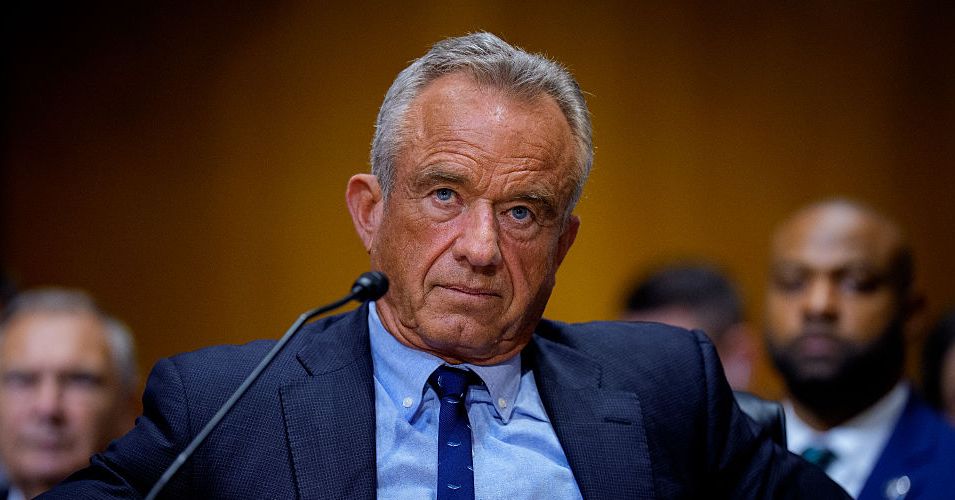
RFK Jr.’s Vaccine Panel Votes Down Its Own Proposal to Require Prescriptions for Covid-19 Shots
Product Reviews

RFK Jr.’s Vaccine Panel Votes Down Its Own Proposal to Require Prescriptions for Covid-19 Shots

by admin September 19, 2025


In another vote, advisers recommended adding language on the shot’s risks to the vaccine’s information sheet, which is already required by law.

The committee’s focus on Covid-19 vaccines reflects Kennedy’s long-held suspicion of them. Since taking office in February, Kennedy has canceled a half-billion dollars in mRNA vaccine research and separately ended a major contract with Moderna, one of the Covid vaccine manufactures, for work on a pandemic bird flu vaccine.

During Friday’s meeting, CDC scientists presented extensive data on the safety and efficacy of the Covid vaccines. They also explained in detail how the agency tracks Covid hospitalizations and said the agency has a “rigorous and standardized process” to determine whether hospitalizations are classified as being due to Covid-19.

During the discussion portion of the meeting, committee members made several unfounded claims. Robert Malone, a former mRNA researcher who has spread vaccine misinformation, questioned whether there is actually evidence of disease protection from the Covid shots. “Are there any well-defined, characterized correlates of protection for Covid, yes or no?” he demanded.

Cody Meissner, a pediatrician at Dartmouth College, responded that there is “a reasonable measurement of neutralizing or binding antibodies that correlate with protection against symptomatic infection in the first few months” after vaccination.

At one point, Hilary Blackburn, a pharmacist on the committee, questioned whether the Covid vaccine could be connected to her mother’s lung cancer diagnosis, which occurred two years after receiving a Covid vaccine. She said she is aware of four other individuals in her small hometown diagnosed with the same kind of cancer. “Is it related to the vaccine?” she asked.

In a tense exchange about potential birth defects associated with the Covid vaccines, some ACIP members pressed manufacturer Pfizer about eight birth defects that occurred in a group of pregnant women who received the company’s vaccine and two birth defects that occurred in an unvaccinated group. Alejandra Gurtman, who heads vaccine clinical research and development at Pfizer, replied that those rates are comparable to rates of congenital abnormalities seen in the general population.

Carol Hayes, a liaison with the American College of Nurse-Midwives who was present during the meeting, clarified that most birth defects arise during the first trimester of pregnancy, and in the cited study, mothers received the vaccine at 12 to 24 weeks of pregnancy.

At Friday’s meeting, the committee also reversed a decision it made just a day before. On Thursday, advisers voted to no longer recommend the combined measles, mumps, rubella, and varicella (MMRV) vaccine to children under age 4. Yet puzzlingly, it voted to maintain coverage of that vaccine through the federal Vaccines for Children program, which provides free vaccines to low-income children and those without insurance. On Friday, they voted that the program should not, in fact, cover it.

On Friday, advisers also voted 11 to one in favor of tabling a decision on whether to delay the birth dose of the hepatitis B vaccine until one month of age. The committee had discussed that vaccine extensively on Thursday, though it’s unclear why the committee was asked to look into the potential change at all, as the hepatitis B vaccine has been given to newborns in the US since 1991.

Infants get the vaccine before leaving the hospital because the virus can be passed from an infected mother to the baby during birth. Hepatitis B is a serious liver infection that can lead to cirrhosis and cancer. The vaccine is highly effective at preventing infection in newborns.

Chari Cohen, president of the Hepatitis B Foundation, tells WIRED there is no scientific rationale for delaying the hepatitis B vaccine until one month after birth and she worries about an increase in hepatitis B infections if the panel eventually recommends delaying the immunization.

“We will likely see more babies and young children who become infected,” Cohen says. “From a public health infrastructure perspective, we are concerned that this risk-based approach will miss preventing infection to babies born to infected moms.”

Up to 16 percent of HBV-positive pregnant women don’t get tested for hepatitis B, so screening doesn’t capture all infected mothers.

“We do not understand the motivation or rationale for this debate,” Cohen says.


Source link

September 19, 2025 0 comments
0 FacebookTwitterPinterestEmail
FCA crypto proposal seeks full UK oversight for firms by 2026
Crypto Trends

FCA crypto proposal seeks full UK oversight for firms by 2026

by admin September 17, 2025


FCA crypto proposals aim to bring digital asset firms under full UK oversight by 2026, spelling out provisions for governance, resilience, and crime prevention. The regulator says the framework mirrors traditional finance rules but will be adapted to reflect crypto’s unique risks.

Summary

  • FCA plans full UK oversight of crypto firms by 2026, adapting TradFi rules for governance, resilience and crime prevention.
  • Proposals include extending the Senior Managers Regime, applying Consumer Duty, and allowing disputes at the Financial Ombudsman.
  • The regulator aims to balance innovation with consumer protection and test the industry’s readiness for stricter oversight.

On September 17, the Financial Conduct Authority announced its proposal for comprehensive cryptoasset regulation, publishing a detailed consultation paper that maps how existing financial rules will be adapted to govern the digital asset sector.

The proposal outlines the application of the FCA Handbook to crypto firms, targeting key areas including operational resilience, financial crime prevention, and senior management accountability.

According to the announcement, the move follows HM Treasury’s draft legislation from April 2025 that legally expands the FCA’s remit to oversee new regulated activities like operating trading platforms, custody, and staking. The regulator is now seeking industry feedback by October and November deadlines, with a final framework slated for 2026.

A closer look at what the FCA is proposing

The FCA’s consultation paper laid out several proposals that show how the financial watchdog intends to bring crypto firms more firmly under regulatory oversight. A central pillar is the full application of the Senior Managers and Certification Regime, which will impose clear accountability on individuals leading crypto firms, a direct response to the industry’s historical opacity.

Firms will also be expected to meet stringent operational resilience standards, mandating robust systems to withstand cyberattacks, outages, and other operational shocks that have previously led to significant consumer losses.

The FCA has also opened a crucial debate on applying its flagship Consumer Duty to crypto activities. This would legally obligate firms to deliver good outcomes for retail customers, a potentially transformative shift from the current caveat emptor environment.

Tied to this is a consultation on integrating cryptoasset disputes into the Financial Ombudsman Service, which would provide a formal, independent redress mechanism for the first time. The FCA itself acknowledges that the inherent volatility of cryptoassets will remain, but these measures aim to insulate consumers from poor business practices and outright fraud.

“We want to develop a sustainable and competitive crypto sector – balancing innovation, market integrity and trust. Our proposals won’t remove the risks of investing in crypto, but they will help firms meet common standards so consumers have a better idea of what to expect,” David Geale, FCA’s executive director of payments and digital finance, said.

The coming consultation period will be a critical test, revealing whether the industry is prepared to operate with the rigor of traditional finance or if it will resist the very structures it has long claimed to seek.


Source link

September 17, 2025 0 comments
0 FacebookTwitterPinterestEmail
Decrypt logo
GameFi Guides

BlackRock Exec Pitches Hyperliquid on Ethena’s Stablecoin Proposal

by admin September 10, 2025


In brief

  • Ethena presented a proposal for Hyperliquid’s stablecoin.
  • USDH would be indirectly backed by BlackRock’s tokenized BUIDL fund.
  • Ethena would divert USDH revenue back into Hyperliquid’s ecosystem.

Ethena Labs, makers of the synthetic-dollar protocol, cast its name into the USDH ring on Tuesday, presenting itself as a potential suitor for issuing Hyperliquid’s stablecoin.

The decentralized exchange and layer-1 network is currently being powered by Circle’s USDC and Tether’s USDT0, but Hyperliquid’s community is currently soliciting proposals on a “Hyperliquid-alinged” stablecoin that could serve as an alternative.

Proposals have already been penned by entities including stablecoin issuer Paxos and World Liberty Financial, the decentralized finance project backed by U.S. President Donald Trump, but Ethena’s proposal emphasizes that its support would also come with that of its partners.


Ethena flexed partnerships with Anchorage Digital, a federally chartered digital assets bank, and Securitize, the BlackRock-backed, real-world asset tokenization firm. Anchorage issues Ethena’s USDtb stablecoin, which is backed by BlackRock’s tokenized BUIDL fund.

“We are excited to enable Ethena’s USDtb, which is 100% backed by BUIDL and uniquely positioned to offer institutional grade cash management as well as on-chain liquidity to Hyperliquid users,” BlackRock Head of Digital Assets Robert Mitchnick said in the proposal.

Introduced in the first quarter of 2023, Hyperliquid was viewed as a scrappy DeFi Startup not too long ago. But now projects like Ethena are clamoring for its feedback, underscoring how that perception is changing. Hyperliquid has $5.7 billion in stablecoins on its network, for example, according to crypto data provider DefiLlama.

Under Ethena’s proposal, USDH would be initially backed by USDtb, and therefore have indirect backing from the $14 trillion asset manager’s BUIDL fund. With at least 95% of the revenue generated by USDH’s reserves, distributions would be made to Hyperliquid’s so-called Assistance Fund, alongside HYPE purchases and distributions to validators.

HYPE changed hands around $53 on Tuesday, a 20% increase over the past day, according to crypto data provider CoinGecko. The token serves as Hyperliquid’s governance token, letting holders participate in the process of voting on software upgrades and other initiatives.

If Ethena receives a green light, the project would cover transaction costs associated with making USDH the go-to stablecoin within Hyperliquid’s exchange, its proposal adds.

Among other notable benefits, the proposal states that Anchorage would issue Ethena’s USDtb stablecoin natively on Hyperliquid’s network. On top of that, Securitize would deploy its platform on the layer-1, bringing “institutional grade tokenized funds, stocks, and other financial products to the Hyperliquid ecosystem for no deployment cost.”

Daily Debrief Newsletter

Start every day with the top news stories right now, plus original features, a podcast, videos and more.


Source link

September 10, 2025 0 comments
0 FacebookTwitterPinterestEmail
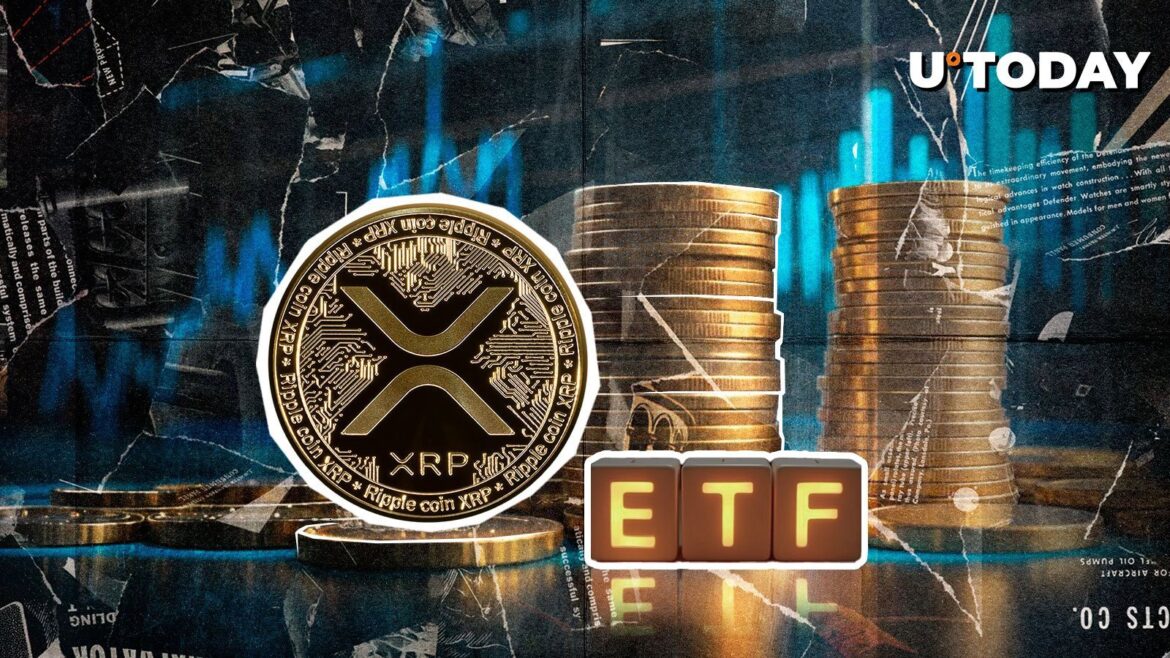
New XRP ETF Proposal Just Been Filed
GameFi Guides

New XRP ETF Proposal Just Been Filed

by admin August 30, 2025


Yet another XRP exchange-traded fund (ETF) filing has been submitted by Amplify Investments.

The proposed product is designed to provide investors with exposure to the price of the Ripple-linked cryptocurrency while simultaneously generating income by selling options. 

Notably, the fund will not hold the token directly. Instead, it invests in those ETFs that track the token’s spot price. 

The ETF will be selling call options on XRP ETFs that are typically up to 10% above the current price. Investors will be able to get income based on the premium earned from selling the aforementioned options. Essentially, investors will be “renting out” some of their options to options buyers in exchange for cash. 

You Might Also Like

For instance, if the XRP records a relatively small price gain, the fund will keep both the option premium and the underlying gain. If XRP rises by a lot, gains are capped at the strike price, so the upside is rather limited for investors. However, the premium paid to investors also cushions potential losses if XRP experiences a sharp downturn. 

Potential risks associated with the new ETF include general investment risks as well as XRP-specific risks such as high volatility, supply shocks, potential network risks, and so on. 

XRP ETF race 

In the U.S., there are only leveraged or futures-based XRP ETFs, including Teucrium 2x Long Daily XRP ETF and ProShares Ultra XRP ETF.

However, the SEC is widely expected to approve a slew of spot XRP ETFs from such issuers as Franklin Templeton, Bitwise, 21Shares, and Grayscale later this year. 

According to Polymarket bettors, XRP ETFs have an 86% chance of being approved by the SEC in 2025. 


Source link

August 30, 2025 0 comments
0 FacebookTwitterPinterestEmail
Solana price path to $200 stalls as transactions and addresses jump
Crypto Trends

Solana validators vote on Alpenglow proposal to cut finality

by admin August 18, 2025


Solana’s validator community has begun voting on SIMD-0326, the Alpenglow proposal, a upgrade designed to replace the current TowerBFT consensus mechanism with a faster, simpler, and more resilient system. 

Summary

  • Solana validators are voting on SIMD-0326, the Alpenglow upgrade.
  • Proposal cuts block finality from 12.8s to 100–150ms using off-chain voting.
  • Community split on the 1.6 SOL Validator Admission Ticket and testing risks.

If approved, Alpenglow proposal would reduce block finality from 12.8 seconds to as little as 100–150 milliseconds, putting Solana’s (SOL) performance closer to Web2 infrastructure.

How Alpenglow works

Developed by Anza, a Solana-focused research team, Alpenglow introduces direct voting, signature aggregation, and a Validator Admission Ticket fee to streamline participation and cut bandwidth costs. Validators will trade votes off-chain rather than on-chain, with cryptographic proof attesting to consensus. 

The system is built around Votor, a lightweight voting protocol that finalizes blocks in one or two rounds depending on validator support. Blocks can be certified in a single round with at least 80% approval or in a second round with a 60% threshold. This design reduces network load by eliminating gossip-heavy traffic and formalizes safety guarantees absent under TowerBFT.

The proposal also introduces a fixed 1.6 SOL VAT per epoch, burned to offset inflation while preserving economic barriers to participation. This fee replaces direct vote transaction costs, with supporters arguing it reduces validator expenses by around 20%. Critics, however, warn it may raise entry barriers for smaller operators.

Alpenglow further adopts a “20+20” resilience model, allowing the network to stay live even with 20% adversarial validators and another 20% unresponsive. Future improvements include replacing Solana’s Turbine data propagation system with Rotor, a more efficient protocol that will require separate governance approval.

Debate and governance process

Community sentiment around Alpenglow is split between optimism and caution. Its proponents emphasize how it can streamline validator operations, cut down on finality delays, and facilitate use cases like high-frequency trading and gaming that demand almost instantaneous confirmation. Validators such as Firedancer commended it for eliminating long-standing TowerBFT complications.

Testing, deployment risks, and economic effects are the main areas of concern. While some validators suggest tiered VAT models with stake size-based SOLs ranging from 0.5 to 5, others question how off-chain voting will manage Jito auction procedures without proof-of-history and transaction expirations.

Voting runs from epochs 833 to 842, with participation requiring a two-thirds majority of Yes over No votes and a quorum threshold of 33%, including abstentions. Results will determine whether Solana proceeds with one of its most ambitious consensus overhauls to date.


Source link

August 18, 2025 0 comments
0 FacebookTwitterPinterestEmail

Categories

  • Crypto Trends (1,098)
  • Esports (800)
  • Game Reviews (772)
  • Game Updates (906)
  • GameFi Guides (1,058)
  • Gaming Gear (960)
  • NFT Gaming (1,079)
  • Product Reviews (960)

Recent Posts

  • This 5-Star Dell Laptop Bundle (64GB RAM, 2TB SSD) Sees 72% Cut, From Above MacBook Pricing to Practically a Steal
  • Blue Protocol: Star Resonance is finally out in the west and off to a strong start on Steam, but was the MMORPG worth the wait?
  • How to Unblock OpenAI’s Sora 2 If You’re Outside the US and Canada
  • Final Fantasy 7 Remake and Rebirth finally available as physical double pack on PS5
  • The 10 Most Valuable Cards

Recent Posts

  • This 5-Star Dell Laptop Bundle (64GB RAM, 2TB SSD) Sees 72% Cut, From Above MacBook Pricing to Practically a Steal

    October 10, 2025
  • Blue Protocol: Star Resonance is finally out in the west and off to a strong start on Steam, but was the MMORPG worth the wait?

    October 10, 2025
  • How to Unblock OpenAI’s Sora 2 If You’re Outside the US and Canada

    October 10, 2025
  • Final Fantasy 7 Remake and Rebirth finally available as physical double pack on PS5

    October 10, 2025
  • The 10 Most Valuable Cards

    October 10, 2025

Newsletter

About me

Welcome to Laughinghyena.io, your ultimate destination for the latest in blockchain gaming and gaming products. We’re passionate about the future of gaming, where decentralized technology empowers players to own, trade, and thrive in virtual worlds.

Recent Posts

  • This 5-Star Dell Laptop Bundle (64GB RAM, 2TB SSD) Sees 72% Cut, From Above MacBook Pricing to Practically a Steal

    October 10, 2025
  • Blue Protocol: Star Resonance is finally out in the west and off to a strong start on Steam, but was the MMORPG worth the wait?

    October 10, 2025

Newsletter

@2025 laughinghyena- All Right Reserved. Designed and Developed by Pro


Back To Top
Laughing Hyena
  • Home
  • Hyena Games
  • Esports
  • NFT Gaming
  • Crypto Trends
  • Game Reviews
  • Game Updates
  • GameFi Guides
  • Shop

Shopping Cart

Close

No products in the cart.

Close