

Laughing Hyena
  • Home
  • Hyena Games
  • Esports
  • NFT Gaming
  • Crypto Trends
  • Game Reviews
  • Game Updates
  • GameFi Guides
  • Shop
Tag:

Printing

trash, money
Crypto Trends

Tether and Circle Are ‘Printing Money’ But Competition is Coming: Wormhole Co-Founder

by admin September 28, 2025


Stablecoin giants like Tether and Circle are profiting from the current high-interest rate environment while stablecoin holders see none of the returns, said Wormhole’s co-founder, Dan Reecer, at Mercado Bitcoin’s DAC 2025 event.

Speaking as a panelist, he said the companies are effectively “printing money” by keeping the yield from the U.S. Treasuries backing their tokens. Tether, for example, reported $4.9 billion in net profit in the second quarter of the year. That has seen the company’s valuation soar to a reported $500 billion in a new funding round.

As interest rates remain elevated, Reecer suggested it’s only a matter of time before users expect a share of that yield or move their funds elsewhere.

Platforms like M^0 and Agora are already responding to that demand, he suggested. These projects allow stablecoin infrastructure to be built in a way that routes yield to applications or directly to end users, instead of the issuer capturing all of it.

“If I’m holding USDC, I’m losing money, losing money that Circle is making,” Reecer said in the session, referring to the opportunity cost of holding a non-yielding token that’s backed by U.S. Treasuries generating income.

Tether and Circle likely do not share the yield generated from their stablecoins directly with users as doing so could draw the ire of regulators. An alternative that’s steadily growing are money market funds, which allow investors to gain exposure to the yield behind these stablecoins.

Circle, it’s worth noting, acquired Hashnote earlier this year for $1.3 billion, the issuer of the tokenized money market fund USYC. With this acquisition, Circle aims to enable convertibility between cash and yield-bearing collateral on blockchains.

These money market funds, however, are still a fraction of the stablecoin market. According to RWA.xyz data, their market capitalization currently stands around $7.3 billion, while the global stablecoin market has topped $290 billion.

A Tether spokesperson told CoinDesk that “USDT’s role is clear: it is a digital dollar, not an investment product.” He added that “hundreds of millions of people” rely on USDT, especially in emerging markets, “where it serves as a lifeline against inflation, banking instability, and capital controls.”

“While few percentage points might make the difference for rich Americans or Europeans, the real savings for our USDT user base is the one against dramatic inflation so common in developing countries – often reaching numbers as high as 50% to 90% year-over-year, with declines of local currency values against the US dollar at 70% year-over-year,” he said.

“Passing along yield would fundamentally change a stablecoin’s nature, risk profile, and regulatory treatment,” the spokesperson added. “Competitors experimenting with yield-bearing stablecoins are targeting a completely different audience, and they take on additional risks.”

Fireblocks’ Stephen Richardson, during the panel, said the broader stablecoin market is meanwhile evolving toward real-world use cases, including cross-border payments and FX services.

He pointed out that tokenized money moving instantly could help solve problems that exist today, such as slow corporate payment rails or expensive remittances. Financial innovation, Richardson added, is already being seen in the sector, with an example being tokenized money market funds that are being used as collateral on exchanges.


Source link

September 28, 2025 0 comments
0 FacebookTwitterPinterestEmail
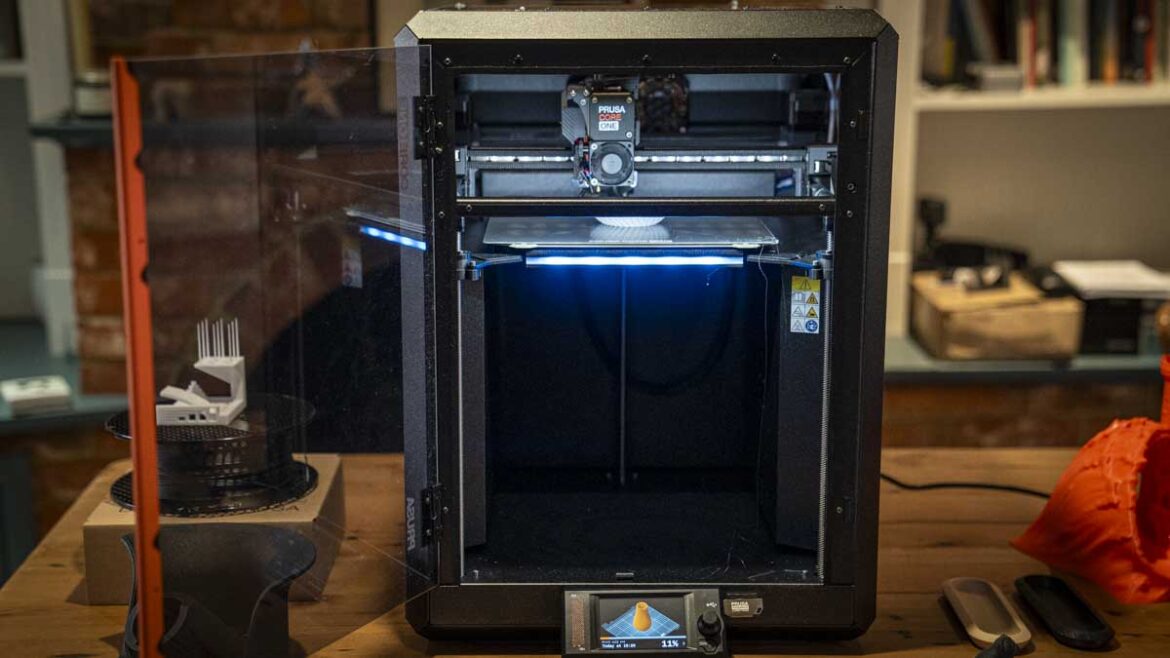
Original PRUSA CORE One
Gaming Gear

Open hardware dream collapses as Prusa slams China’s subsidies, patents, and aggressive tactics that reshaped 3D printing from an open playground into a corporate battlefield

by admin August 25, 2025


  • State-backed rivals have made open source 3D printing nearly impossible
  • Chinese subsidies shift global competition in desktop 3D printer production
  • Cheap Chinese patents create obstacles far beyond Europe’s market borders

The open source movement in 3D printing once thrived on shared designs, community projects, and collaboration across borders.

However, Josef Prusa, head of Prusa Research, has announced, “open hardware desktop 3D printing is dead.”

The remark stands out because his company long championed open designs, sharing files and innovations with the wider community.


You may like

Economic support and patent challenges

Prusa built his early business in a small basement in Prague, packing frames into pizza boxes while relying on contributions from others who shared his philosophy.

What has changed, he now argues, is not consumer demand but the imbalance created when the Chinese government labeled 3D printing a “strategic industry” in 2020.

In his blog post, Prusa cites a study from the Rhodium Group which describes how China backs its firms with grants, subsidies, and easier credit.

This makes it much cheaper to manufacture machines there than in Europe or North America.

Sign up to the TechRadar Pro newsletter to get all the top news, opinion, features and guidance your business needs to succeed!

The issue grows more complicated when looking at patents. In China, registering a claim costs as little as $125, while challenging one ranges from $12,000 to $75,000.

This gap has encouraged a surge of local filings, often on designs that trace back to open source projects.

Prusa’s earlier machines, such as the Original i3, proudly displayed components from partners like E3D and Noctua, embodying a spirit of community, but were also easy to copy, with entire guides appearing online just months after release.

The newest Prusa printers, including the MK4 and Core ONE, now restrict access to key electronic designs, even while offering STL files for printed parts.

The Nextruder system is fully proprietary, marking a clear retreat from total openness.

Prusa argues Chinese firms are effectively locking down technology the community meant to share – as while a patent in China does not block his company from selling in Europe, it prevents access to the Chinese market.

A bigger risk emerges when agencies like the US Patent Office treat such patents as “prior art,” creating hurdles that are expensive and time-consuming to clear.

Prusa cited the case of the Chinese company, Anycubic, securing a US patent on a multicolor hub that appears similar to the MMU system his company first released in 2016.

Years earlier, Bambu Lab introduced its A1 series, also drawing inspiration from the same concept.

Anycubic now sells the Kobra 3 Combo with this feature, raising questions about how agencies award patents and who holds legitimate claims.

Meanwhile, Bambu Lab faces separate legal battles with Stratasys, the American pioneer whose patents once kept 3D printing confined to costly industrial use.

Declaring the end of open hardware may be dramatic, but the pressures are real.

Between state subsidies, permissive patent rules, and rising disputes, the foundation of open collaboration is eroding.

Via Toms Hardware

You might also like


Source link

August 25, 2025 0 comments
0 FacebookTwitterPinterestEmail

Categories

  • Crypto Trends (1,098)
  • Esports (800)
  • Game Reviews (772)
  • Game Updates (906)
  • GameFi Guides (1,058)
  • Gaming Gear (960)
  • NFT Gaming (1,079)
  • Product Reviews (960)

Recent Posts

  • This 5-Star Dell Laptop Bundle (64GB RAM, 2TB SSD) Sees 72% Cut, From Above MacBook Pricing to Practically a Steal
  • Blue Protocol: Star Resonance is finally out in the west and off to a strong start on Steam, but was the MMORPG worth the wait?
  • How to Unblock OpenAI’s Sora 2 If You’re Outside the US and Canada
  • Final Fantasy 7 Remake and Rebirth finally available as physical double pack on PS5
  • The 10 Most Valuable Cards

Recent Posts

  • This 5-Star Dell Laptop Bundle (64GB RAM, 2TB SSD) Sees 72% Cut, From Above MacBook Pricing to Practically a Steal

    October 10, 2025
  • Blue Protocol: Star Resonance is finally out in the west and off to a strong start on Steam, but was the MMORPG worth the wait?

    October 10, 2025
  • How to Unblock OpenAI’s Sora 2 If You’re Outside the US and Canada

    October 10, 2025
  • Final Fantasy 7 Remake and Rebirth finally available as physical double pack on PS5

    October 10, 2025
  • The 10 Most Valuable Cards

    October 10, 2025

Newsletter

About me

Welcome to Laughinghyena.io, your ultimate destination for the latest in blockchain gaming and gaming products. We’re passionate about the future of gaming, where decentralized technology empowers players to own, trade, and thrive in virtual worlds.

Recent Posts

  • This 5-Star Dell Laptop Bundle (64GB RAM, 2TB SSD) Sees 72% Cut, From Above MacBook Pricing to Practically a Steal

    October 10, 2025
  • Blue Protocol: Star Resonance is finally out in the west and off to a strong start on Steam, but was the MMORPG worth the wait?

    October 10, 2025

Newsletter

@2025 laughinghyena- All Right Reserved. Designed and Developed by Pro


Back To Top
Laughing Hyena
  • Home
  • Hyena Games
  • Esports
  • NFT Gaming
  • Crypto Trends
  • Game Reviews
  • Game Updates
  • GameFi Guides
  • Shop

Shopping Cart

Close

No products in the cart.

Close