
Laughing Hyena
  • Home
  • Hyena Games
  • Esports
  • NFT Gaming
  • Crypto Trends
  • Game Reviews
  • Game Updates
  • GameFi Guides
  • Shop
Tag:

prices

A screenshot featuring the LE SSERAFIM collab in Overwatch 2.
Esports

Overwatch 2 x Persona 5 collab release date, all skins, prices

by admin September 16, 2025


An Overwatch 2 collab with Persona 5 is among the major additions set to be added this season, and here’s everything you need to know about it.

We first caught a glimpse of the Persona 5 collab in the Overwatch 2 Season 18 trailer. Just when fans thought things were wrapping up, a silhouette of Joker appeared on screen, complete with the iconic red and black color palette of The Phantom Thieves.

Since then, the hype for the collab has been keeping players busy guessing who’s going to get which character skin from the franchise. Blizzard has been quite tight-lipped about info, and it’s only now that they have finally unveiled the upcoming skins that’ll be included in this crossover.

Article continues after ad

It’ll still be a little while until it all gets added to the shop, but we’ve compiled all the details you need to know about the collab, including its release date and time, all skins, and their prices.

Article continues after ad

blizzardThe Persona 5 crossover has our favorite heroes cosplaying as characters from the franchise.

Overwatch 2 x Persona 5 crossover release date

The Overwatch 2 x Persona 5 collab is set to arrive on September 16, 2025. This information has been confirmed by Blizzard, via their post on X.

As for the exact time, it’s safe to expect that it’ll be available the same time as the next shop reset and when the midseason patch goes live, which typically falls at 11 AM PT.

Article continues after ad

All Overwatch 2 x Persona 5 collab skins

blizzardA closer look at all the Persona 5 skins in-game.

We know that Joker was eventually going to get a skin in-game since the trailer dropped. But it turns out, there are actually several more characters coming. 

Here’s a list of them, along with their Overwatch 2 hero counterpart:

  • Wuyang as Joker
  • Mercy as Panther
  • Lifeweaver as Fox
  • D.Va as Queen
  • Genji as Skull

This lineup means Wuyang is set to receive his first-ever collab skin despite just being recently released this season.

As with any other collabs, it’s also likely that there will be a limited-time event in-game accompanying the skins’ release.

Article continues after ad

Previous collabs like the Cowboy Bebop and LE SSERAFIM featured a free skin players can unlock through challenges, and only time will tell if it’ll be the same case with Atlus’ well-known franchise.

Article continues after ad

Skin & bundle prices

At the time of writing, the prices for the cosmetics have yet to be revealed. However, looking at the pricing of Legendary skins and the ones from previous collabs, it’s estimated that the bundle containing each skin with additional cosmetics will be priced at around 2,800 Coins.

Article continues after ad

Additionally, assuming each skin can be bought separately, there’s a chance they might cost around 1,900 Coins. 

Though do take all this information with a grain of salt for now, as they’re all based on estimations. We’ll be sure to update this section to provide more details once the skins hit the shop.

While you’re here, check out the best perks to use for every hero, the best Stadium build, as well as how many people play the game.

Article continues after ad



Source link

September 16, 2025 0 comments
0 FacebookTwitterPinterestEmail
SHIB, Dogecoin (DOGE) Prices Slide $2.4M Shibarium Hack
GameFi Guides

SHIB, Dogecoin (DOGE) Prices Slide $2.4M Shibarium Hack

by admin September 15, 2025


Top meme tokens traded under pressure as a multimillion dollar hack of Shiba Inu’s layer-2 network, Shibarium, dented investor confidence in joke cryptocurrencies.

On Sunday, Shibarium fell victim to a flash loan attack on its validator system, which drained about $2.4 million in ether (ETH) and SHIB. The CoinDesk Memecoin Index has dropped 6.6% in the past 24 hours. The broader market CoinDesk 20 Index is down just 2.3%.

The attacker borrowed 4.6 million BONE, the governance token for the Shiba Inu ecosystem, often linked to the decentralized exchange (DEX) ShibaSwap, through a flash loan to gain control of the majority of validator keys. The keys act as gatekeepers of the network, confirming transactions and ensuring security.

With that control, the attacker was able to game the system into approving unauthorized transactions and walk away with a large amount of crypto assets from the bridge that connects Shibarium with the Ethereum blockchain. The process is akin to someone temporarily taking over a bank’s security system to approve unauthorized withdrawals. A flash loan is a loan raised with no upfront collateral and returns the borrowed assets within the same blockchain transaction.

The Shiba inu team was able to prevent a bigger, more serious breach because the BONE tokens used to gain control were reportedly tied to validator 1 and remained locked by the staking rules.

Nevertheless, markets reacted negatively breach, which again underscores the perennial security issues with blockchain technology.

Memecoins drop, broader market bid

SHIB fell by the most in three weeks on Sunday (UTC), losing 4% $0.00001369, and has continued to weaken to trade recently at $0.00001359. The cryptocurrency experienced considerable volatility throughout the 23-hour trading window ended Sept. 15 at 02:00 UTC, with the aggregate range encompassing $0.000006191, a 4% oscillation from peak to trough.

The session commenced with pre-dawn fragility as SHIB retreated from $0.000014156 to establish a pivotal trough of $0.000013547 at 14:00 UTC. Volume of 1.064 trillion tokens surpassed the 24-hour mean, signaling robust distribution pressure and prospective capitulation, according to CoinDesk Research’s technical analysis model.

The BONE token, which initially doubled to over 36 cents, is now down over 2% on a 24-hour basis, trading at around 20 cents.

According to the technical analysis model:

  • SHIB established a critical underpinning at $0.000013547 during elevated volume selling pressure exceeding 1.064 trillion tokens.
  • The token constructed successive higher lows and consolidation parameters between $0.000013600-$0.000013780.
  • Recovery momentum is demonstrated by ascending channel formations with sustained higher lows, indicating potential continuation towards the $0.000014000 resistance.
  • Volume patterns exceeded 24-hour averages during the decline phase, confirming potential capitulation levels.
  • Terminal hour trading exhibited decisive upward momentum with 1% appreciation, confirming a breach above the resistance threshold.

Large DOGE transfers add to bearish sentiment

Meanwhile, SHIB’s peer dogecoin DOGE$0.2624 fell 4% to 27.80 cents on Sunday and has since lost further 5% to 27.36 cents, according CoinDesk data.

A massive transfer of DOGE to a centralized exchange likely added to the bearish mood in the market. According to Whale Alert, crypto exchange OKX received 119,306,143 DOGE, worth over $34 million, from an unknown wallet. Such large transfers are typically associated with an intention to liquidate holdings.


Source link

September 15, 2025 0 comments
0 FacebookTwitterPinterestEmail
Decrypt logo
NFT Gaming

Dogecoin and BNB Rise as Bitcoin, Ethereum Hit Highest Prices This Month

by admin September 12, 2025


In brief

  • Major altcoins like Dogecoin and Solana surged on Friday, with BNB hitting a new all-time high price.
  • Their gains came off the back of Bitcoin and Ethereum price jumps, with both at their highest points this month.
  • Investors are feeling good about the Fed cutting interest rates next week—which could benefit crypto markets.

Crypto markets jumped Friday afternoon New York time, with BNB hitting a new all-time high and other major altcoins posting sizable gains as Bitcoin and Ethereum reached their highest respective marks so far in September.

BNB—the sixth-biggest digital coin by market cap—touched a new high above $926, where it currently sits, CoinGecko data shows. It’s up 3% over the last day.

BNB, an asset launched by Binance, the world’s biggest crypto exchange, has jumped by nearly 9% over a seven-day period. It’s up 70% over the last year and has repeatedly set all-time highs in 2025, as BNB only breached the $800 mark for the first time this year.

Elsewhere, Dogecoin has soared and was recently trading for over $0.27 after a more than 8% jump on the day. DOGE has jumped by 25% over the last week, despite missing out on some of the major gains seen by Bitcoin and Ethereum in recent months.

The original meme coin is currently the biggest winner over the past day despite the first DOGE ETF to launch in the U.S., Rex-Osprey’s Doge ETF, being halted for trading until next week.

Its rise comes as other alts have boomed in price. Solana, the fifth-largest coin, hit its highest price since January on Friday afternoon New York time. It was recently priced at $240 after having jumped by 6% in the last day.


Altcoin markets surged off of Bitcoin and Ethereum gains. The two biggest cryptocurrencies were recently trading for $116,331 and $4,675, respectively, as U.S. investors pile into ETFs giving exposure to the coins. 

Bitcoin on Friday hit its highest price in a month following a stellar week for spot ETFs. The American funds have seen positive inflows all week ahead of Friday, while Ethereum ETFs have seen positive flows the last three days. Ethereum also hit its highest mark so far in September on Friday.

Investor interest in digital assets climbed after data this week showed inflation in the U.S. had cooled, increasing the chances that the Federal Reserve will cut interest rates next week, experts told Decrypt. Bitcoin and other digital assets have generally done well in a low interest rate environment.

Meanwhile, digital assets exchange Gemini started trading on the Nasdaq at an approximately $4.4 billion valuation on Friday. It’s the latest crypto company to go public this year after roaring debuts on stock exchanges by stablecoin giant Circle, crypto exchange Bullish, and brokerage platform eToro.

Gemini’s stock opened at $37.01 per share, a 32% increase compared to its upped IPO price of $28. GEMI finished the trading day at a price of $32 per share.

Daily Debrief Newsletter

Start every day with the top news stories right now, plus original features, a podcast, videos and more.


Source link

September 12, 2025 0 comments
0 FacebookTwitterPinterestEmail
Decrypt logo
NFT Gaming

Gemini Prices IPO at $28 a Share Ahead of Trading Open on Nasdaq

by admin September 12, 2025


In brief

  • Crypto exchange Gemini has priced its IPO at $28 per share ahead of open trading on the Nasdaq.
  • The pricing tops forecasts after months of investor buildup.
  • The Winklevoss brothers bring political ties and regulatory baggage into the spotlight, but Gemini’s losses and CFTC battles loom over its market debut.

Gemini, the U.S.-based cryptocurrency exchange founded by Tyler and Cameron Winklevoss, has priced its initial public offering at $28 per share, beating expectations ahead of the start of trading Friday.

Launching on the Nasdaq Global Select Market under the ticker symbol “GEMI,” the deal marks one of the most closely watched debuts in the crypto sector this year, with strong investor demand pushing the IPO well above its original $17 to $19 price per stock range.

The company and its selling stockholders also granted underwriters a 30-day option to purchase up to an additional 758,929 shares to cover over-allotments, though Gemini itself will not receive proceeds from those secondary sales. The offering is expected to close on September 15, subject to customary conditions.

Gemini’s looming IPO


The exchange, founded in 2014, has long been a high-profile player in digital assets. Its twin co-founders first rose to fame through their legal battle with Mark Zuckerberg over the origins of Facebook, later becoming early Bitcoin evangelists. More recently, they became outspoken backers of Donald Trump in his successful 2024 U.S. presidential campaign.

Gemini remains heavily reliant on trading fees, which made up nearly 70% of its $142.2 million in revenue last year. Despite growth in users, losses have ballooned: a net loss of $158.5 million in 2024, and $282.5 million already in the first half of 2025.

In its IPO filing, the company projected confidence, citing its “focus on innovation and a long history of firsts in the crypto industry” as reason to believe it will expand its base.

That optimism is tempered by deepening political and regulatory drama. Brian Quintenz, Trump’s nominee to lead the Commodity Futures Trading Commission (CFTC), this week published screenshots of private Signal conversations with the Winklevoss twins.

The regulator sued the company in 2022 for misleading statements tied to its Bitcoin futures products, a case Gemini settled this January for $5 million without admitting wrongdoing.

In the messages, the brothers appeared to question Quintenz’s loyalty to their complaints against the regulator, while referencing potential appeals to the president himself.

The White House later withdrew a planned Senate vote on Quintenz’s nomination.

Daily Debrief Newsletter

Start every day with the top news stories right now, plus original features, a podcast, videos and more.


Source link

September 12, 2025 0 comments
0 FacebookTwitterPinterestEmail
DAAPrivacyRightIcon
Gaming Gear

Rumors, prices, new features and what else you need to know

by admin September 7, 2025


In less than 48 hours, Apple will finally begin its big September “Awe dropping” iPhone event, and we’ll get our official look at the long-anticipated iPhone 17 lineup. The hardware announcement will take place on September 9 at 1PM ET, and the Engadget team will be liveblogging it from Cupertino in real-time. (You can watch the iPhone 17 event on YouTube, too.) The newest phones will come equipped with the latest iOS 26 features preinstalled, along with any new features Apple reveals that day. So what can we expect to see? While Apple keeps all the details under lock and key, we actually have a very strong idea as to what we’ll be seeing, thanks to leaks from Asian supply chains, case manufacturers and some credible media reports. Oh, and there are plenty of more fanciful rumors, too. Here’s our best bet as to what will be coming out of Cupertino next in just a few days.

What are the latest iPhone 17 rumors?

Bloomberg‘s Mark Gurman is the industry’s best-known Apple whisperer, and his event preview offers a tidy overview of what to expect on Tuesday. That includes four new iPhone 17 models, with an all-new superthin model, dubbed the iPhone Air, leading the pack. We’ll also likely see the baseline iPhone 17, as well as the usual Pro and big-screen Pro Max models, which will offer the line’s best cameras and extras.

Additionally, expect up to three new Apple Watch models, with the satellite-connected Apple Watch Ultra 3 and a possible new entry-level Apple Watch SE flanking the Apple Watch Series 11. Rounding out the new products should be the AirPods Pro 3 earbuds, which are said to add heart-rate monitoring and a live translation feature.

While all of those reports largely jibe with earlier rumors, Gurman’s report includes screen sizes and handset sizes down to the millimeter. In fact, he had previously outlined most of the same expectations in a recent appearance on the Engadget Podcast.

But he’s not the only one with exact measurements: Plenty of case makers, including Dbrand, have unveiled their cases for the complete iPhone 17 line, further solidifying expectations on dimensions and screen sizes for the new models. That said, we’re still treating everything as unconfirmed until Apple’s official announcements hit on Tuesday.

While we don’t expect any big leaps forward on the Apple Intelligence front at Tuesday’s event, Gurman’s subsequent report notes that Apple is continuing to experiment with AI models from Google, Anthropic and OpenAI, and may license technology from one or more of them ahead of a major Siri upgrade that could arrive as soon as March 2026.

How much will the iPhone 17 cost?

Apple’s announced plan to expand US-based manufacturing partners seems to give it at least some shielding from the steepest Trump administration tariffs that have already triggered price increases on everything from PlayStations to Switch consoles to high-end cameras to Sonos speakers. But given that President Trump’s trade policies can change from week to week, and Apple’s continuing reliance on Asia-based supply chains, price shocks remain an ongoing possibility. The bigger question is: Will Apple absorb any higher costs, or pass them on to consumers?

If prices do creep up, Apple may choose to pair it with an “upgrade.” Consider this recent rumor posted by MacRumors from a leaker known as “Instant Digital,” suggesting that the default storage of the iPhone 17 line may start at 256GB, doubling the current 128GB baseline. While that could be accompanied by a price increase of $50, Apple could at least pitch it as a “better value.” That said, the company doubled the default RAM of its Mac computers from 8GB to 16GB at no extra cost in 2024 — but that was before the current Trump tariff cycle started.

Now, on the eve of the iPhone announcement, a report from JPMorgan mixes and matches the rumors above. As recounted in 9to5Mac, the iPhone line’s starting prices will still stretch from $799 to $1,199 — just as they do now — with the Air possibly getting a $50 increase versus the iPhone Plus model it’s replacing, and the 17 Pro costing an additional $100, but including more storage.

Again, these prices are only projections and haven’t been confirmed by Apple.

When will the iPhone 17 series be announced?

As noted above, the date has been confirmed for Tuesday, September 9. That lines up with Apple’s traditional schedule, and the earlier report from iphone-ticker.de (via MacRumors).

This generation of Apple smartphones may be the last to be fully released in September, however. There have been hints that the introduction of the iPhone 18 collection in 2026 will be split into a pro-tier announcement in the fall and a standard model announcement the following spring.

What will the new iPhone 17 lineup include?

Design leaks suggest that Apple is building an ultra-thin smartphone, likely to be named the iPhone 17 Air to match Apple’s ultralight laptop designation. Bloomberg‘s Mark Gurman reported in January (and reaffirmed in his September event preview) that the iPhone 17 Air will be equipped with a basic A19 chip and will only have a single camera lens. It will also supposedly use Apple’s new in-house modem, which was introduced in February on the iPhone 16e.

As a guest on the latest Engadget Podcast, Gurman told Engadget’s Devindra Hardawar and Igor Bonifacic the rumored iPhone Air will be rough around the edges at first. He believes the 17 Air will “lag in both” when it comes to camera and battery performance. “The battery life is going to be subpar compared to a base-level 17 or Pro model,” he says. The ultimate goal, he notes, is to get all the functionality of the Pro models into the Air models.

An investor note from Apple analyst Jeff Pu indicated that the Air will have a titanium frame. If his reports are accurate, the lightweight smartphone will be the only entry in the iPhone 17 lineup to use that metal; the iPhone 17, iPhone 17 Pro, and iPhone 17 Pro Max are expected to be made of aluminum, which is lighter. Other speculation had suggested that the Air would use a blend of aluminum and titanium, so the exact materials may not be known until the official announcement.

Additionally, an August 4 MacRumors report said the internal battery pack of the iPhone Air is just 2.49mm thick — half the thickness of the iPhone 17 Pro battery. The leak was posted on the Korean-language Naver blog, where they show the alleged batteries of the iPhone 17 Air and 17 Pro side by side. The same account claimed the 17 Air’s battery capacity was a mere 2,800 mAh, MacRumors noted. (That’s below the battery capacity of current iPhone 16 models.)

At the very least, it sounds like the iPhone 17 Air won’t take away the charging port and rely only on wireless connectivity. Bloomberg said that while Apple had investigated making the iPhone 17 Air without a single port, the company (fortunately) changed plans. He also says that the rumored phone will have a 6.6-inch screen and include the Dynamic Island and Camera Control button.

On a similar topic, an iPhone 17 Pro production leak appears to have revealed an all-aluminum chassis, according to MacRumors. Originally posted by leaker Majin Bu, the image shows a shell that has a large round hole on the back (where the Apple logo typically is) to allow for MagSafe charging. MacRumors says this could just be a molding but notes that the aluminum frame (versus the current titanium in Pro iPhone models) would yield a significantly lower weight.

That same leaker (Majin Bu), whom MacRumors classifies as a “hit-or-miss leaker,” suggests the iPhone 17 Pro will have better wireless signal strength thanks to an updated antenna design. The individual posted a render on X that shows a new antenna system that wraps around the iPhone 17 Pro’s supposedly wider rear camera bump. Again, this is a render, not a real-world photo. That said, we can’t knock the goal of better wireless reception, so we’re hoping this one has a degree of truth to it.

Leaker Majin Bu also claims “TechWoven” cases could be introduced, per a MacRumors report. The cases match the rumored design on the iPhone 17 models, with the wide camera bump. The leaker noted there are two lanyard holes for “convenient and secure carrying,” so it could be worn around your neck. The colors would come in grey/black, blue, green, purple and orange. Additionally, he said there will be new Liquid Silicone cases in eight colors, including Deep Orange, Pale Orange, Grass Green, Celadon, Fog Purple, Grey Blue, Dark Blue and Midnight Black. He also recently showed a clear iPhone 17 Pro and Pro Max case with the large rear camera bump cutout. The case isn’t fully transparent and instead has a white rectangular piece that covers the MagSafe area.

The new Pro iPhones are said to have a full-width “camera island” on the rear, which would mark the first time an Apple model opted for that design. This feature can be seen in the purported iPhone 17 “spotted in the wild.” The pics, highlighted on MacRumors, show a black cased iPhone (17 Pro?) with the distinct back panel. Is it the real deal? The dual angles lend a degree of credibility in a social media landscape increasingly polluted with AI-enhanced fakes, but your guess is as good as ours.

Additionally, the iPhone 17 Pro‌ models could have the brightest display yet, according to leaker “Instant Digital,” MacRumors reports. The goal is to make it “more suitable for use in direct sunlight for prolonged periods.” The article points out that existing 16 Pro models can double their maximum brightness while in direct sunlight, making it easier to see what’s on the screen.

We’ve also gotten what seems to be a reliable look at what the color lineup will be for the new smartphones. Macworld reported that the iPhone 17 will be available in black, white, steel gray, green, purple and light blue. The iPhone 17 Air will reportedly have four color options: black, white, light blue and light gold. While the Air colors will be less saturated, the visuals for the iPhone 17 Pro and iPhone 17 Pro Max will go bold. The options for the Pro models are expected to be black, white, gray, dark blue and orange.

Bloomberg’s Mark Gurman believes there actually will be a new orange color offered for the iPhone 17 Pro and Pro Max, as well as a light blue color for the iPhone 17 Air, he confirmed in his August 24 Power On newsletter.

On July 30, Tom’s Guide highlighted an X post from Sonny Dickson — a longtime and generally reliable leaker of unreleased iPhone information — showing “dummy” iPhone 17 models in the new colors that were the source of the aforementioned Macworld story. While these are literally just mock-ups — not real, leaked iPhones — it’s interesting to see how the design and color rumors translate into a real-world look and feel.

To add the the rumors, a Weibo leaker known as Digital Chat Station suggests the iPhone 17e will come equipped with a new design that includes the Dynamic Island, MacRumors reports. According to the post, the new phone will have the A19 chip and could have a 6.1-inch OLED display with a front-facing 12-megapixel camera and a rear-facing 48-megapixel camera. However, it’s important to note this report refers to the 17e model that would be expected to launch no earlier than February 2026, if it followed the same release pattern as the iPhone 16e.

What will iOS 26 be like?

Apple upended its numbering conventions with WWDC 2025, and will match the name of each new operating system to the year it’s released. So when the next wave of iPhones hits, they’ll be running on iOS 26.

On the design side, the smartphone OS introduced during the big developer showcase took a contentious approach dubbed Liquid Glass. Apple has been scaling down the amount of transparency effects in the subsequent beta tests of iOS 26, but it will still have a glass-like visual.

The feature list includes big and small updates. On the more impactful side, the Phone and Photos apps have been redesigned. There will be several features leveraging artificial intelligence, such as live translation capabilities coming to Phone, FaceTime and Messages. Apple is also currently testing a sensitive content warning for child accounts that will freeze FaceTime video if nudity is detected by on-device machine learning tools. And the company is also launching Visual Intelligence, which will use AI to search for elements in an image.

iOS 26 also has a litany of minor, quality of life improvements. Group texts are getting support for polls. And for the slow risers out there, iOS 26 will finally let you escape the tyranny of the nine minute snooze alarm.

The next iOS is now available as a public beta. Here are our initial impressions of the Liquid Glass design and other new features. iOS 26 is compatible with all models back through iPhone 11.

What other products are expected to be released alongside the iPhone 17?

If Apple follows its usual pattern, the iPhone 17 will be announced alongside new Apple Watch products. That would be the Apple Watch Series 11 (if Apple sticks to the same naming scheme), and maybe an Apple Watch Ultra 3 and/or an updated Apple Watch SE. (They’ll all run watchOS 26, of course.) As noted above, a new version of the Apple AirPods Pro (which received its last big update in 2022) is expected, and there’s a possibility we’ll see new AirTags trackers (first released in 2021), though those could be announced later.

The Apple rumor mill got a big shot in the arm in mid-August thanks to the reported inclusion of product ID numbers in recent beta software builds. Per MacRumors, it’s a laundry list of new hardware, including long-rumored product updates like the Apple TV, HomePod mini, new Apple Studio Display monitor and two fresh iPads.

Of course, even if that list is totally accurate, we may not see those products until 2026 — if ever. So don’t expect all of products to share the stage with the iPhone 17, especially since Apple likes to keep its star performer at the center of attention.

That said, keep in mind that Apple has recently been having Mac-centric announcements in late October (as it did last year to debut new M4 Macs), so there’s always the chance of another shoe dropping a few weeks down the road.

Update, September 7, 2025, 12:32PM ET: Added Mark Gurman’s latest reporting on Apple’s possible AI partnerships.

Update, September 6, 2025, 8:45AM ET: Added Mark Gurman’s latest full predictions on what’s expected at the Tuesday Apple event.

Update, September 4, 2025, 3:23PM ET: Added new rumors about the iPhone 17 Air battery/eSIM, and camera details for the latest lineup.

Update, September 3, 2025, 3:24PM ET: Added new rumor about the increased brightness of the iPhone 17 pro models.

Update, September 2, 2025, 3:56PM ET: Added new details about the potential iPhone 17 lineup prices, and a new Clear Case rumor.

Update, August 30, 2025, 8:45AM ET: Added commentary from Mark Gurman’s guest appearance on the Engadget Podcast about the rumored iPhone 17 Air.

Update, August 27, 2025, 5:44PM ET: Added official Apple iPhone 17 event date, and a rumor about its event logo.

Update, August 25, 2025, 5:15PM ET: Added new reports about the iPhone 17 Pro’s orange color as well as new rumored Liquid Silicone cases.

Update, August 22, 2025, 11:52AM ET: Added new details about the colors of the rumored TechWoven case.

Update, August 20, 2025, 7:12PM ET: Added new rumor about potential TechWoven case for iPhone 17 series.

Update, August 18, 2025, 6:23PM ET: Added new rumor about the iPhone 17e potentially having the Dynamic Island.

Update, August 15, 2025, 2:05PM ET: Added new rumor about the all-aluminum chassis on the iPhone 17.

Update, August 13, 2025, 10:02PM ET: Added a list of the products that are expected to be released alongside the iPhone 17s.

Update, August 11, 2025, 7:27PM ET: Added a render of a rumored new antenna design for the iPhone 17 Pro.

Update, August 8, 2025, 4:43PM ET: Added new speculation and reports about iPhone 17 pricing.

Update, August 6, 2025, 4:05PM ET: Added latest details about the potential iPhone 17 event date.

Update, August 4, 2025, 5:23PM ET: Added latest battery leaks about the iPhone 17 models.

Update, August 1, 2025, 8:15AM ET: Added new photos showing potential iPhone 17 colors.

Update, July 30, 2025, 11:08AM ET: Added latest leaks and rumors about the iPhone 17, and updated information on the iOS 26 public beta.

Update, July 17, 2025, 4:40PM ET: Added latest information about iOS 26, possible materials for the Air, and the color options for the different models.

Update, March 17, 2025, 2PM ET: Added details about the rumored price and features of the iPhone 17 Air.

Update, April 11, 2025, 3:45PM ET: Added details from Front Page Tech’s new video that claims to reveal details from a leaked iOS 19 build.


Source link

September 7, 2025 0 comments
0 FacebookTwitterPinterestEmail
Eric Trump speaks at Consensus 2025 in Toronto (CoinDesk)
Crypto Trends

Set for Higher Prices as MACD Nears Potential Bullish Crossover

by admin September 2, 2025


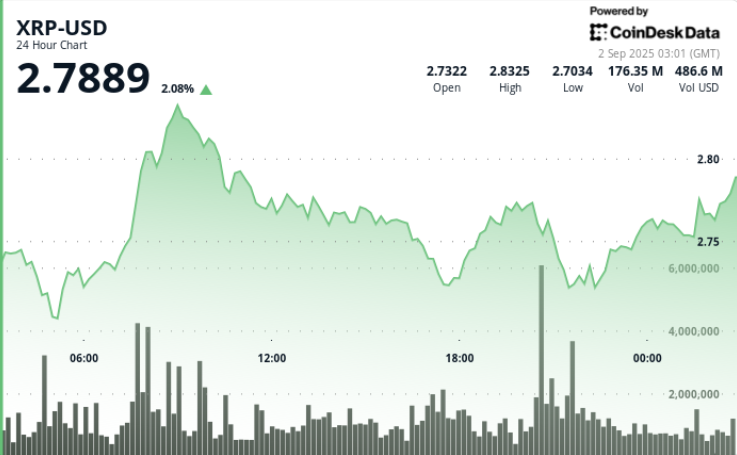
Token climbs from $2.74 to $2.82 as whales add nearly $960M in exposure, even as analysts warn of potential correction.

By Shaurya Malwa, CD Analytics

Updated Sep 2, 2025, 3:25 a.m. Published Sep 2, 2025, 3:25 a.m.

More For You

Trump-Linked World Liberty Team Floats Buyback-and-Burn Plan as WLFI Sinks

A Trump-linked DeFi project proposes using all liquidity fees to permanently reduce supply, as steep early losses highlight investor skepticism.

What to know:

  • World Liberty Financial proposes a buyback-and-burn program to boost confidence after a challenging market debut.
  • The program aims to reduce token supply by using liquidity fees to purchase and burn WLFI tokens.
  • A separate community proposal suggests auto-staking locked tokens, but it has not gained as much support as the burn initiative.


Source link

September 2, 2025 0 comments
0 FacebookTwitterPinterestEmail
Shiba Inu Dogecoin
GameFi Guides

Can Dogecoin And Shiba Inu Prices Recover? What To Expect In September

by admin September 1, 2025


Trusted Editorial content, reviewed by leading industry experts and seasoned editors. Ad Disclosure

As the crypto market ushers in a new month, Dogecoin and Shiba Inu holders are faced with fresh hopes and fears, especially as the market remains uncertain and prices continue to fluctuate. In the current state, there is still some time until a particular direction is decided for the meme coins. However, taking a look at historical data and how both Dogecoin and Shiba Inu prices have previously performed in the month of September can often help with an idea of what to expect in the new month.

How Dogecoin And Shiba Inu Prices Have Performed In September

Shiba Inu has been in existence for a considerably lesser time than Dogecoin, with DOGE’s 12 years compared to SHIB’s five years. However, both meme coins seem to go hand in hand as the largest meme coins in the market. Hence, the performance of Dogecoin and Shiba Inu prices tends to go together as both are the market leaders in their niches.

As a result, this report will look at the performances of Dogecoin and Shiba Inu prices over the last five years, maintaining a balance between the two meme coins. For both digital assets, though, there have been varying performances, suggesting a deviation in the month of September, according to data from CryptoRank.

For example, back in September 2021, when the coin was first launched, the Shiba Inu saw a small 4.65% price increase. On the flip side, the Dogecoin price was actually beginning to crash at this point, recording a 26.7% decline by the time the month of September was over.

Source: CryptoRank
Source: CryptoRank

The next two years, though, saw poor performance from both Dogecoin and Shiba Inu, with Shiba Inu suffering losses. Then, in September 2024, there was a drastic change as both meme coins actually saw double-digit gains by the end of the month.

What this suggests is that the month of September is a mixed bag for both Dogecoin and Shiba Inu prices. Mostly, the performance for September depends on the Bitcoin price and how the crypto market moves in general in the new month.

October Is The Real Deal

For Dogecoin and Shiba Inu investors looking for real gains, the time to look forward to would be the month of October. Since its launch in 2021, the Shiba Inu price has never had a red close in October, and it is the only month where the meme coin has consistently achieved gains.

Dogecoin’s performance for the month of October is similar, with the last six years ending in consistent green closes for the meme coin. Simply put, the month of October is the most bullish month for Dogecoin and Shiba Inu, often leading into November before the rally subsides.

DOGE makes new local lows with weekend crash | Source: DOGEUSDT on TradingView.com

Featured image from Dall.E, chart from TradingView.com

Editorial Process for bitcoinist is centered on delivering thoroughly researched, accurate, and unbiased content. We uphold strict sourcing standards, and each page undergoes diligent review by our team of top technology experts and seasoned editors. This process ensures the integrity, relevance, and value of our content for our readers.


Source link

September 1, 2025 0 comments
0 FacebookTwitterPinterestEmail
Rated 4.5 out of 5, This HP Student Laptop Is Now 75% Off as Amazon Cuts Prices to Clear Shelves
Game Reviews

Rated 4.5 out of 5, This HP Student Laptop Is Now 75% Off as Amazon Cuts Prices to Clear Shelves

by admin August 31, 2025


Black Friday, Cyber Monday, and Prime Day can’t compare to the discounts Amazon is offering today for Back to School, especially on HP laptops. Some of these models were released in 2025, and Amazon is slashing prices between 30 and nearly 80 percent off the standard retail price.

If you’re looking to save big, this HP 15.6″ laptop designed for college students (16GB DDR4 RAM, 256GB PCIe SSD, Intel N100 CPU) is now available at an irresistible price of $399, down from $1,599.

See at Amazon

Perfect for Everyday Tasks

This laptop from HP is loaded with features to boost your productivity to the next level in case you are studying. It is equipped with the Intel N100 processor that runs at a speed of up to 3.4 GHz thanks to the Intel Turbo Boost Technology. The processor has 4 cores and 4 threads, and delivers smooth performance for multitasking.

The display on this laptop is a 15.6-inch Full HD panel with a resolution of 1920 by 1080 pixels. It has an anti-glare coating that minimizes eye strain by diminishing reflections and 250 nits of brightness. The slim border around the display provides a premium look and comfortable viewing. The graphics processor is the integrated Intel UHD Graphics that is perfect for general usage.

It is equipped with 16GB of DDR4 RAM, and gives you plenty of memory to have multiple programs open at the same time without experiencing any slowdown. The 256GB PCIe NVMe M.2 SSD storage gives you speedy booting and rapid file access. It’s a nice balance of speed and capacity for students to save multimedia files. The SSD also helps make your laptop more shock-resistant and power-efficient compared to laptops using traditional hard drives.

Connectivity is robust with a MediaTek Wi-Fi 6E card that allows for greater speeds and stability on compatible networks. There is also Bluetooth 5.3 which makes it simple to connect to wireless headphones or other devices. The notebook has several ports to meet your needs: one USB Type-C port for fast data transfer (but not for external displays or charging), two USB Type-A ports, one HDMI 1.4b output for connection to larger displays, a combo headphone/microphone jack and an AC smart pin for charging.

With Windows 11 Professional 64-bit operating system, the laptop offers a latest-generation operating system with additional security enhancements and user experience improvements for increased productivity. The full-size soft grey keyboard with numeric keypad enables you to type comfortably during those long study sessions or data entry tasks.

With the current deep discount on Amazon, this laptop provides excellent value. Make sure you don’t miss it.

See at Amazon


Source link

August 31, 2025 0 comments
0 FacebookTwitterPinterestEmail
A dark render of a data center
Product Reviews

How the AI revolution is triggering a hardware arms race and pushing up prices

by admin August 23, 2025


Look at the numbers involved in AI cloud investment and data center buildout, and the stats are astonishing. The Magnificent 7 tech companies – the biggest tech giants in the world – have collectively invested more than $100 billion in data centers and other infrastructure in the last three months alone. The majority of that comes from four of the seven: Microsoft, Meta, Amazon, and Alphabet.

That spending is having an outsized effect on the economy. Jens Nordvig, the founder of Exante Data, believes that total spending on AI could account for 2% of U.S. GDP this year, based on projections and planned projects.

The same is true in China, where provinces and private companies alike are throwing more and more cash at AI buildouts. The scale of that spending is such that Chinese president Xi Jinping has stepped in, warning officials to be more cautious with their cash for fear of overspending. Not everyone is listening. Gartner, a consultancy firm, believes the world will spend nearly half a trillion dollars on data centers this year, up 42% from last year. McKinsey, another consultancy, believes that more than $5 trillion will be invested by 2030, so great is the demand.


You may like

Good for investors, but is it good for capex?

The kinds of eye-watering sums involved are good news for tech investors, shareholders in those Magnificent 7 firms, and plenty of others. The people leading those companies are making it clear they think it’s necessary. “It’s essential infrastructure,” said Jensen Huang, in Nvidia’s Q1 earnings call in May. “We’re clearly in the beginning of the buildout of this infrastructure.” But the massive interest in data centers is having other knock-on effects beyond making big tech companies even bigger. It’s reshaping how we think about the sectors and components that make those data centers work.

“The central problem today in AI is compute power, and the energy required is getting out of hand,” says Subramanian Iyer, distinguished professor at the Henry Samueli School of Engineering at UCLA, in an interview with Tom’s Hardware Premium. Lots has been written about the energy impact of these large data centers, with some companies even starting to consider small modular reactor technology that would power them using nuclear. “That tells you how serious the power problem is,” Iyer says.

Google, for example, raised its 2025 capital expenditure budget to $85 billion from $75 billion because of investments in servers and data center construction, with further acceleration expected in 2026. Google’s monthly token processing also doubled from 480 trillion in May to over 980 trillion. (A little over a year earlier, the number of tokens Google processed was just 1% of that.) All of those tokens need processing. And that processing happens on hardware. Jefferies estimates that Google’s 980 trillion token compute is close to 200 million H100s operating 24 hours a day, seven days a week.

It all adds up to significant expenditure. Moore’s law isn’t completely dead, argues Iyer. But it’s changing. “Transistors are still scaling, but they’re no longer getting cheaper,” he says. “In fact, they’re getting more expensive.”

Data centers are changing

(Image credit: Nvidia)

What data centers are used for is changing. Unlike their traditional predecessors, they now rely heavily on advanced GPUs, specialized networking, and high-powered cooling, meaning their bill of materials (BOM) has bloated. Estimates put the cost of a fully-equipped AI data center at around $10 million, with power and cooling systems and servers and IT equipment accounting for roughly a third each, with other key categories including network (15%) and storage (10%).

All of those are being squeezed by inflation and surging hardware requirements. But that’s only for smaller enterprise-focused setups: the hyperscale facilities of the type that Donald Trump and other countries around the world are looking at run into the billions of dollars per campus.

The underlying cost of components is also steadily rising. Average material costs increased by 3% and labor by 4% for key data center hardware over the past year, with concrete and copper cable among the biggest risers, according to Turner & Townsend. The smaller but still essential elements like power delivery, printed circuit boards, and advanced packaging are also rising in price thanks to chronic bottlenecks, especially for the high-end AI chips that require stacking and new thermal approaches.

Semiconductors used to drop reliably with each new process node, but that’s no longer the case as manufacturing them becomes more complex, and increased demand globally squeezes supply. TSMC is likely to raise the price of advanced nodes by over 15% in 2025, according to reports, passing on costs to buyers. It all means that every new data center costs more money than it used to.

(Image credit: Nvidia)

When they were launched in 2020, Nvidia’s then-top-tier DGX A100 servers cost $199,000. Prior reporting from Tom’s Hardware suggests analysts believe the GB200 server racks will cost $3 million. There’s an argument that the price hike is down to rising manufacturing costs, with those fabs turning into gigaprojects, like TSMC’s $65 billion Arizona complex. In part, the cost of these large-scale efforts is so great because the hardware behind them can be comparatively wasteful. “If you spend a megawatt of power for a data center,” says Iyer, “the actual work you’re getting is only about a third of that. The rest of it is pretty much all overhead.”

Those giant fab complexes cost as much money to equip as they do to build. Buyers are absorbing the cost of EUV machines to make the 2nm and 3nm chips populating data centers, which might have dozens of them – and that’s before considering the less advanced, but not significantly less expensive, tools for wafer etching, deposition, and inspection. A single high-end lithography EUV tool from ASML can reportedly cost $400 million alone.

Big tech’s intense AI buildout has forced even the world’s leading chip manufacturers, like TSMC, to invest at an unprecedented scale. Their Arizona cluster, which encompasses three advanced fabs, shows at what scale companies are operating. Elsewhere, Nvidia expects that up to $1 trillion will be spent globally upgrading data centers for AI workloads by 2028, further underlining the scale of the transformation.

Bigger tasks, bigger bills

One reason for the bigger bill is that the purpose – and the amount of work those data centers are being asked to do – has changed and increased. But the cost is also because the hardware requirements for those cloud servers and data centers have altered. Big tech capex keeps climbing because AI workloads now demand the bleeding-edge node – a shift in recent years that has been enacted by the rise of generative AI.

Silicon destined for servers once was able to lag the chips put into smartphones by a process generation or two, but is now “is par à pursue [on par with] with the bleeding edge,” said CJ Muse, an analyst specializing in semiconductors for Cantor Fitzgerland in an interview with Tom’s Hardware Premium. That forces data center operators onto the most expensive wafers to cram in as many transistors, and as much compute per watt, as possible. All that comes with a hefty price tag. “A bleeding-edge 2nm fab at TSMC, for every 1,000 wafer starts at about $425 million, and so that adds up pretty quickly,” says Muse.

The race to be at the bleeding edge creates a domino effect. State-of-the-art processors are pointless if starved of data, making high-bandwidth memory (HBM) vital. But now memory is facing its own pressures on supply and cost. “From now on, the HBM segment should face a test of how HBM suppliers can manage supply and protect prices as their technology gap narrows and real competition begins,” said Jongwook Lee, a team leader at Samsung Securities, in a research report.

Lee and his colleagues foresee a future where the HBM market could split into ‘new’ product segments like HBM4, the higher-bandwidth, more luxe standard of memory, which would continue to enjoy a premium, and ‘old’ product segments, which would require discounts to remain competitive.

HBM, DRAM, and other factors further push prices

(Image credit: SK hynix)

HBM manufacturing is vastly more complicated and supply-constrained than standard DRAM. With only Samsung, SK Hynix, and Micron as the three major suppliers, HBM can be especially vulnerable to supply disruptions or geopolitical shocks. Demand regularly exceeds supply, and lead times for HBM often top half a year, especially with advanced packaging capacity being booked years in advance for longstanding customers like Nvidia and AMD. It all means intense technical and economic headwinds in HBM, and the advanced packaging ecosystems they depend on, weigh heavily on the speed, cost, and security of the world’s AI data center buildout.

Even global competition for wafer fabrication equipment (WFE) is heating up. Chinese imports grew 14% year-over-year in June 2025, according to Jefferies, breaking a previous downward trend. June was the first month of positive growth in 2025, led by a surge in demand for specific machinery, including etching and deposition tools, which saw growth of 65% and 28% respectively.

Analysts at Jefferies believe that the unexpected growth was from China’s DRAM sector, and particularly CXMT, a major producer that has, to date, dodged being on the US sanctions list of entities not allowed to import chip tech into China. The US-China tech rivalry has led to stringent export controls and sanction lists that continue to constrain Chinese chipmakers from accessing critical semiconductor manufacturing technology to alleviate some of the supply pressures. That’s unlikely to change as Donald Trump continues to pursue an America first strategy for this – but could backfire if Trump pushes his hand too far. China dominates the processing of rare earth elements like neodymium, critical for high-performance components used in data center hardware. Sourcing rare earths, essential for AI chips and data center hardware, could become trickier if any one party chooses to weaponize access to them as part of trade negotiations. The political and regulatory headwinds are increasing cost pressures and investment risks, shaping the competitive landscape in unpredictable ways.

Nvidia’s stranglehold, and how companies are fighting back

(Image credit: Nvidia)

The problem every tech company faces is that they’re overly reliant on Nvidia at present. As a result, big cloud providers are weighing up whether to develop their own custom ASICs. Broadcom alone expects AI-specific custom silicon and networking sales to reach 42% of its revenue by 2026, according to Muse.

Major hyperscalers like Google, Amazon, and Meta are all actively rolling out custom ASIC chips, creating substantial opportunities for both established vendors and new entrants. Broadcom is booming: analysts say the firm’s custom ASIC and networking revenue for AI is expected to be around $18 billion by 2026, much of it driven by custom chips for hyperscale inference and high-bandwidth AI networking. The demand isn’t just coming from chips for inference. Networking ASICs, interconnect switches, and edge/IoT devices are all seeing surging demand.

Yet Muse points out that building successful custom chips is hard. “Google had three different teams building the TPU, and one was successful, the other two were not,” he says. The answer to that is for companies to try and develop their own ASIC strategy while also recognizing they need to go into the market and buy more GPUs.

That in turn is pushing up prices, in large part because companies that once kept themselves to themselves are not competing with one another. “I think the interesting change statement is that Meta, Amazon, Google and Microsoft all had fairly defined swimming lanes,” says Muse.

“Obviously there’s competition in offering cloud services, but their business models didn’t really overlap, and they all were all doing extraordinarily well,” he explains. That’s since changed. “Now they’re all competing head-to-head, and so there are going to be clear winners and losers.” That head-to-head competition is driving what Muse calls “this mad race and massive investments”.

The outcome will not only determine the next leader in tech, but could also redraw the global map of technological power for a generation.


Source link

August 23, 2025 0 comments
0 FacebookTwitterPinterestEmail
PlayStation 5 prices are going up, too, just like Xbox
Game Updates

PlayStation 5 prices are going up, too, just like Xbox

by admin August 21, 2025


The moment many feared would come following Xbox’s recent, wide-ranging price hikes of its consoles and games has arrived – Sony has officially announced that it’s raising the price of the PlayStation 5 console in the US.

The platform holder revealed the new prices on Wednesday, which go in effect today, August 21.


To see this content please enable targeting cookies.

Manage cookie settings

All PlayStation 5 console models are going up by $50. Here are the new prices:

  • PlayStation 5 – $549.99.
  • PlayStation 5 Digital Edition – $499.99.
  • PlayStation 5 Pro – $749.99.

PlayStation, of course, technically had its own set of price hikes recently, having raised the price of the PS5 console in the UK, Europe, Australia, and New Zealand just this past April. However, Sony has always been cautious not raise prices in the United States, as it’s the market where it has the biggest competition in Xbox.

In 2022, two years after this current generation of consoles launched, Sony raised the price of the PlayStation 5 in Canada, Mexico, UK, Europe, Australia, China, and Japan. The United States has always been spared when it came to these price hikes.

However, with Xbox now raising prices in the US, Sony has likely been emboldened to do the same – even if it took a while for it to get there.

It also doesn’t help that tariffs on goods imported from China and various other manufacturing centres in Asia, which the US has recently imposed, have themselves raised the cost of each unit. As it’s often the case, companies will then pass that added cost on to the consumer.

Imagine the idea of a more expensive PS5! | Image credit: VG247

Even though the tariffs imposed by the US government are meant to influence the country’s relationship with its trade partners, they’ve had wide-reaching effects beyond the borders of the United States. Japanese companies, for instance, had their stocks quickly tumble after the initial tariffs were announced in April, and Nintendo had to delay the Switch 2 pre-orders in the US and Canada very quickly after the console was announced.

Even setting aside the impact of tariffs, this is all highly unprecedented. Consoles typically go down in price the deeper into their respective generations they get. The idea that consoles, which launched five years ago, haven’t dropped in price, but have in fact became more expensive, does not bode well for the growth prospects of the industry.


Source link

August 21, 2025 0 comments
0 FacebookTwitterPinterestEmail
  • 1
  • 2
  • 3
  • 4

Categories

  • Crypto Trends (1,098)
  • Esports (800)
  • Game Reviews (772)
  • Game Updates (906)
  • GameFi Guides (1,058)
  • Gaming Gear (960)
  • NFT Gaming (1,079)
  • Product Reviews (960)

Recent Posts

  • This 5-Star Dell Laptop Bundle (64GB RAM, 2TB SSD) Sees 72% Cut, From Above MacBook Pricing to Practically a Steal
  • Blue Protocol: Star Resonance is finally out in the west and off to a strong start on Steam, but was the MMORPG worth the wait?
  • How to Unblock OpenAI’s Sora 2 If You’re Outside the US and Canada
  • Final Fantasy 7 Remake and Rebirth finally available as physical double pack on PS5
  • The 10 Most Valuable Cards

Recent Posts

  • This 5-Star Dell Laptop Bundle (64GB RAM, 2TB SSD) Sees 72% Cut, From Above MacBook Pricing to Practically a Steal

    October 10, 2025
  • Blue Protocol: Star Resonance is finally out in the west and off to a strong start on Steam, but was the MMORPG worth the wait?

    October 10, 2025
  • How to Unblock OpenAI’s Sora 2 If You’re Outside the US and Canada

    October 10, 2025
  • Final Fantasy 7 Remake and Rebirth finally available as physical double pack on PS5

    October 10, 2025
  • The 10 Most Valuable Cards

    October 10, 2025

Newsletter

About me

Welcome to Laughinghyena.io, your ultimate destination for the latest in blockchain gaming and gaming products. We’re passionate about the future of gaming, where decentralized technology empowers players to own, trade, and thrive in virtual worlds.

Recent Posts

  • This 5-Star Dell Laptop Bundle (64GB RAM, 2TB SSD) Sees 72% Cut, From Above MacBook Pricing to Practically a Steal

    October 10, 2025
  • Blue Protocol: Star Resonance is finally out in the west and off to a strong start on Steam, but was the MMORPG worth the wait?

    October 10, 2025

Newsletter

@2025 laughinghyena- All Right Reserved. Designed and Developed by Pro


Back To Top
Laughing Hyena
  • Home
  • Hyena Games
  • Esports
  • NFT Gaming
  • Crypto Trends
  • Game Reviews
  • Game Updates
  • GameFi Guides
  • Shop

Shopping Cart

Close

No products in the cart.

Close