Laughing Hyena
  • Home
  • Hyena Games
  • Esports
  • NFT Gaming
  • Crypto Trends
  • Game Reviews
  • Game Updates
  • GameFi Guides
  • Shop
Tag:

premium

Hisense 116UX review: a step forward for TV, but at a price that's too premium for most people
Product Reviews

Hisense 116UX review: a step forward for TV, but at a price that’s too premium for most people

by admin October 4, 2025


Why you can trust TechRadar


We spend hours testing every product or service we review, so you can be sure you’re buying the best. Find out more about how we test.

Hisense 116UX review: Two minute review

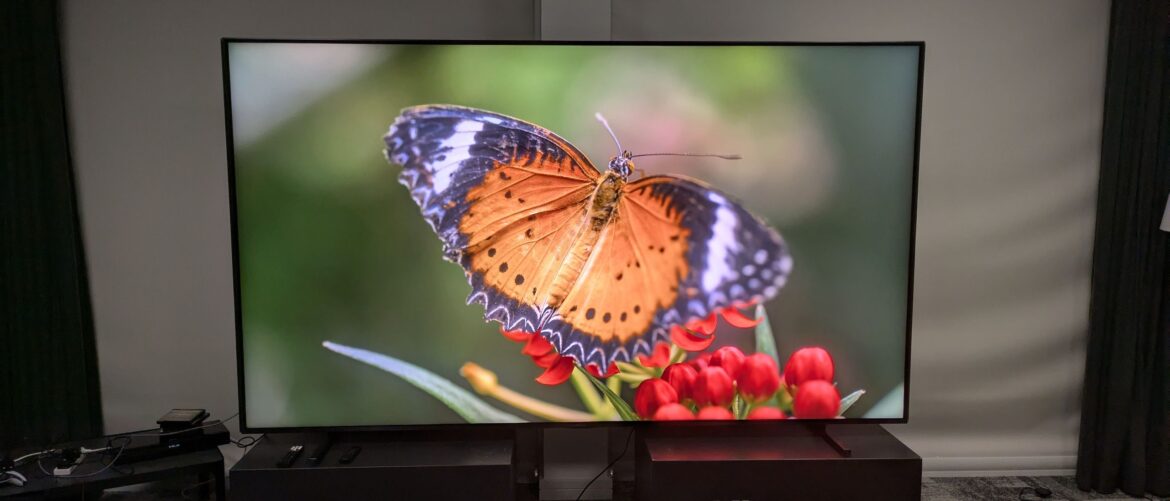
The Hisense 116UX is the brand’s flagship 4K TV, and it introduces RGB mini-LED technology to the world in a 116-inch screen size. Some elements of its picture rival the best TVs, and it has a wide array of features, but its appeal is limited by key shortcomings.

With a launch price of $29,999 / £24,999 / AU$39,999, the Hisense 116UX is an expensive TV that will exceed most budgets. And while it features exciting new RGB mini-LED tech, Hisense will also be introducing RGB mini-LED in 100- and 85-inch models in the future, and more buyers are likely to gravitate to those.

The 116UX’s bold, vibrant colors take mini-LED to the next level. Textures are crisp, and the high brightness gives pictures a strong level of punch. Contrast and black levels are mostly good, but backlight blooming and inconsistent backlight control lead to a clouding effect in some dark scenes that hamper what would otherwise be a remarkable picture. Even with the TV’s large size, viewing angles are limited, with pictures losing contrast when viewed from off-center seats .

A 6.2.2-channel sound system delivers mostly solid performance, with immersive effects, impressive accuracy and clear dialogue. Bass has good impact, but the 116UX’s soundstage isn’t as wide as I’d hoped for. A screen this size deserves one of the best soundbars to match, ideally a premium option like the Samsung HW-Q990F.

The 116UX is great for gaming, with 4K 165Hz, AMD FreeSync Premium Pro, ALLM and Dolby Vision gaming all supported across three HDMI 2.1 ports. While its 14.6ms input lag time is higher than the best gaming TVs, its overall gaming performance is good enough for an enjoyable experience on a big screen.

This TV’s high price is hard to ignore, and even though the 116UX features an RGB mini-LED panel and has a gargantuan screen size, you can build a truly great home theater system with some of the best 4K projectors at this price. The 116UX will deliver better value when its price drops, but right now, it’s a big ask.

  • Hisense 116UX RGB-MiniLED TV (HDR) at Amazon for $24,999.99

Hisense 116UX review: Price & release date

(Image credit: Future)

  • Release date: September 2025
  • Price: $29,999 / £24,999 / AU$39,999

The Hisense 116UX, Hisense’s flagship 2025 TV, uses a new RGB mini-LED panel. It sits above the Hisense 110UX, U9Q, U8Q, U7Q and U6Q mini-LED TVs and is priced at $29,999 / £24,999 / AU$39,999.

Sign up for breaking news, reviews, opinion, top tech deals, and more.

Although the 116UX had only been available for a few weeks at the time I reviewed it, the price has dropped to $24,999 in the US. I expect the TV’s price will drop even further over the coming months.

Hisense 116UX review: Specs

Swipe to scroll horizontally

Screen type

RGB mini-LED

Refresh rate

Up to 165Hz (4K)

HDR support

Dolby Vision IQ, HDR10+, HDR10, HLG

Audio support

Dolby Atmos

Smart TV

Google TV (US), VIDAA (UK& Aus)

HDMI ports

3 x HDMI 2.1

Built-in tuner

ATSC 3.0

Hisense 116UX review: Benchmark results

Hisense 116UX review: Features

(Image credit: Future)

  • RGB mini-LED panel
  • Hi-View AI Engine X processor
  • Dolby Vision IQ, HDR10+ and IMAX Enhanced support

The 116UX features Hisense’s RGB mini-LED panel, which uses RGB mini-LEDs to produce a wider, more refined color gamut. HDR support includes Dolby Vision IQ and HDR10+, as well as the HDR10 and HLG formats. It also supports IMAX Enhanced and Filmmaker Mode.

Hisense’s flagship TV comes equipped with a 6.2.2-channel speaker system, totaling 110W in power. It supports Dolby Atmos, but not DTS. Alongside the usual sound presets – Standard, Movie, Sport – it also has AI sound, which adapts the sound and dialogue based on both the content showing onscreen and the viewing environment.

The 116UX’s gaming features include 4K 165Hz, VRR including AMD FreeSync Premium Pro, Dolby Vision gaming and ALLM support. All features are supported across the TV’s three HDMI 2.1 ports.

Hisense’s smart TV platform varies by region. Google TV is used in the US, while Hisense’s own VIDAA smart TV platform features in the UK and Australia. I reviewed the UK version, so I used VIDAA, which has access to popular streaming services like Netflix and Prime Video, and also UK apps such as BBC iPlayer and ITVX. If you want a review of the Google TV smart TV platform, check out our Hisense U8Q review.

Hisense 116UX review: Picture quality

Color is where the Hisense 116UX really shines, thanks to its RGB mini-LED panel (Image credit: Disney / Future)

  • High brightness and brilliant color
  • Refined detail
  • Black uniformity issues

The 116UX’s peak HDR brightness hit 5,441 nits and fullscreen HDR brightness was 1,090 nits, with both measured in Filmmaker Mode. That peak brightness result is over twice what I measured on the Hisense 110UX, a TV that uses a standard mini-LED panel.

The 116UX’s measured HDR color gamut covered 99.3% of the DCI-P3 color space, which is an excellent result for a mini-LED TV. Its BT.2020 color gamut coverage was even more impressive at 92.64%, which is the highest amount we’ve measured on a TV to date.

I first started my testing with some SDR content, beginning with an HD stream of Fight Club on Disney+. I chose Filmmaker Mode but set brightness and local dimming to medium as the picture was too dim at the default settings. I was impressed by the 116UX’s effective upscaling of textures, which gave the picture a crisper look. Even at a 116-inch size, the image was clean. Lower resolution content on YouTube didn’t fare as well, with the image looking blocky on the large screen.

Color is where the 116UX shines – literally. Watching Elemental on Disney Plus in Dolby Vision IQ picture mode, reds and oranges were vibrant and punchy, with the 116UX’s brightness adding real pop in a scene where Ember makes a vase. In Wicked on 4K Blu-ray, pink flowers in a tree in the ‘Wizard & I’ scene had a bold look, as did the greens of the Emerald City.

Image 1 of 2

The 116UX sometimes handles dark scenes well (1) but struggles with others (2), even in the same movie, as shown here with Alien: Romulus(Image credit: Future)(Image credit: 20th Century Studios / Future )

As I’ve discovered with most Hisense TVs, motion handling requires a bit of setup. I watched a stream of a soccer game on Prime Video and found that most motion presets worked, but either Standard or Custom, with Blur set to 3 and Judder set to 5, produced the smoothest image. This was also true for movie viewing, as a scene from No Time To Die where a camera pans across a rocky hillside looked much smoother with the above settings.

Textures looked consistently crisp and realistic on the 116UX, with close-up shots of people’s faces showing fine details such as marks or hair. Clothing was also true-to-life and given a 3D look.

Watching black and white scenes from Oppenheimer on the 116UX, whites looked bright and there was a good range of gray tones. Blacks were slightly raised, but they still looked solid. The 116UX also delivered good shadow detail in darker scenes, such as objects against dark walls in a scene where Strauss and Oppenheimer are in an office after their first meeting.

Dark scenes ultimately were a mixed bag on the 116UX. Blacks appeared rich and deep in some instances, such as the Spears & Munsil UHD Benchmark 4K Blu-ray’s demo footage, but they came across as more of a dark gray in movie scenes from The Batman and Alien: Romulus. While contrast was also strong in these movies, there was a clouding effect across the screen in dark sections of the image. Strangely, one exterior space shot in Alien: Romulus demonstrated good accuracy in the blacks, but another in a dark tunnel revealed the clouding effect at its worst.

The 116UX also demonstrated some backlight blooming around bright objects against dark backgrounds when viewed from off-center. Plus, the clouding issue became more apparent when viewing from more extreme angles.

I reached out to Hisense regarding dark scene viewing and the clouding effect and it said it was aware of and looking into it, but couldn’t provide a fix at this time. If there are any updates, I’ll be sure to add them to this review.

  • Picture quality score: 4 / 5

Hisense 116UX review: Sound quality

The 116UX delivers decent built-in sound, but overall a screen like this deserves a soundbar to match (Image credit: Future)

  • 6.2.2-channel speaker array
  • Clear, expansive, accurate sound
  • Only average soundstage

The 116UX comes with a built-in 6.2.2-channel, 110W Devialet sound system that supports Dolby Atmos, but not DTS. It has subwoofers built into the rear of the screen, with two speakers running down each side of its frame and height speakers positioned on the top of the TV.

Watching the Batmobile chase scene from The Batman, the 116UX accurately connected the sound to the action on screen. The overall sound was punchy with clear dialogue. The 116UX’s sound was also immersive at times, going beyond the borders of the screen and making Dolby Atmos effects, such as rain in The Batman, feel as if they’re overhead.

While the 116UX’s built-in sound system is good, at times it felt restrained. Bass in particular lacked fullness. And while there was some suggestion of surround effects, I expected a sound system like this to produce a wider soundstage.

Some people will be happy with the 116UX’s sound, but I feel it deserves a sound system to match its gargantuan, cinematic picture.

  • Sound quality score: 4 / 5

Hisense 116UX review: Design

Image 1 of 2

The 116UX uses metal feet to support its heavy weight (Image credit: Future)But the 116UX is surprisingly thin despite is large size(Image credit: Future)

  • Sleek, modern design
  • Weighty and cumbersome
  • Basic support feet

At 116 inches, the 116UX requires a large space. Its big screen will be too cumbersome for most living rooms and, unlike retractable projector screens of a similar size, it will dominate a space.

Hisense has done its best to make the 116UX appear as sleek as possible while still housing a substantial built-in sound system. Its frame is trim, and it’s made of a premium-looking black metal. As a result, the 116UX is an incredibly weighty 239lbs (108kg), meaning you’ll need to carefully consider installation, although there are two carry handles on the rear. The TV is supported by two metal feet, which, although plain, are expected for a TV this size.

The 116UX comes with Hisense’s solar remote, which is reminiscent of Samsung’s SolarCell remote and can be charged using the rear solar panel or by USB-C. It has a nice design with a burnished steel finish and feels more premium than Hisense’s standard TV remotes.

Hisense 116UX review: Smart TV & menus

VIDAA (Hisense’s smart TV platform in the UK) has plenty of picture settings and good app access (Image credit: Future)

  • Google TV (US), VIDAA (UK & Australia)
  • Good number of picture settings
  • Performance can lag at times

Like all Hisense TVs, the 116UX’s smart TV platform will be different based on your region. In the US, it uses Google TV, and in the UK and Australia, it uses Hisense’s own VIDAA smart TV platform. I reviewed the 116UX in the UK, so I will be focusing on VIDAA. Check out our Hisense U8Q review to read about a Google TV Hisense model.

VIDAA has access to all major streaming services such as Netflix and Prime Video, and all UK-based streaming services such as BBC iPlayer and ITVX. It also supports Freely, a service in which you can watch live TV over Wi-Fi with no need for an antenna or satellite connection.

There are a good number of picture settings on the 116UX. VIDAA’s overall look is plain and not as user-friendly as LG’s webOS, and the 116UX’s overall performance during navigation suffered from lag on occasion. VIDAA could do with a visual overhaul, as it does look dated in some of its menus.

Hisense 116UX review: Gaming

The Hisense 116UX has great gaming features and impressive picture quality for gaming (Image credit: Future)

  • 4K 165Hz, AMD FreeSync Premium
  • 14.6ms input lag
  • Three HDMI 2.1 ports

The 116UX has impressive gaming features, such as 4K 165Hz, VRR including AMD FreeSync Premium Pro, ALLM and Dolby Vision gaming, and these are all supported on three HDMI 2.1 ports. There is also a 288Hz game booster mode for PC gaming and a Game Board pop-up menu that displays useful information such as frame rate and VRR, as well as settings that can be adjusted, such as Dark Detail.

Gaming performance on the 116UX is generally smooth and responsive. Playing a demo of Dynasty Warriors: Origins on PlayStation 5, the action felt fast-paced and chaotic as expected at both 60Hz and 120Hz. I noticed during gameplay that the frame rate varied a lot in the 120Hz Performance mode, but I chalked this up to the game itself, due to its rendering of many enemies on screen.

The 116UX’s measured input lag is 14.6ms, which is higher than rivals like Samsung and TCL, but still under the 15ms threshold most gamers look for.

Hisense 116UX review: Value

The Hisense 110UXN comes with Hisense’s premium remote, which has both a USB-C port and a solar cell on the bottom rear for charging (Image credit: Future)

  • Expensive
  • Similarly priced to big-screen OLED TVs
  • Much pricier than the 110-inch 110UX

At $29,999 / £24,999 / AU$39,999, the Hisense 116UX is a pricey, premium TV. It may come with an exciting, new RGB mini-LED panel that produces superb brightness and color, but that’s still a lofty price, even for a TV this feature-packed.

At this price range, you can pick up some of the best projectors on the market, such as the JVC DLA-NZ800 ($15,999 / £15,999 / AU$24,999). It won’t have the 116UX’s brightness, but it will still produce an excellent picture. Plus, you can build an entire home theater system around it with the same budget.

The 116UX is also much pricier than the step-down 110UX ($14,999 / £18,999 / AU$24,999), and while it delivers better performance and picture quality, that’s still a significant price gap.

Should you buy the Hisense 116UX?

The Hisense 110UXN comes at a premium price that most won’t be able to afford (Image credit: Future)Swipe to scroll horizontallyHisense 110UXN

Attributes

Notes

Rating

Features

RGB mini-LED panel with good amount of smart and gaming features

4.5/5

Picture quality

Superb color reproduction, brightness and realistic textures, but dark scene viewing can be an issue

4/5

Sound quality

Punchy, precise sound system with decent bass, but sound feels narrow at times

4/5

Design

Trim design considering size, and feels sturdy as well

4/5

Smart TV and menus

VIDAA has good number of picture settings and apps, but looks dated

4/5

Gaming

Great array of gaming features including 165Hz and AMD FreeSync Premium Pro and 3 HDMI 2.1 ports

4.5/5

Value

An exciting step forward for mini-LED, but expensive price means it remains exclusive

3/5

Buy it if…

Don’t buy it if…

Also consider

Swipe to scroll horizontallyHeader Cell – Column 0

Hisense 116UX

Hisense 110UXN

Samsung QN90F (65-inch)

Hisense U8QG (65-inch)

Price

$24,999 / £24,999 / AU$34,999

$14,999 / £19,999 / around AU$24,300

$2,499.99 / £2,499 / AU$3,499

$2,199 / £2,199 / AU$2,999

Screen type

RGB Mini-LED

Mini-LED

Mini-LED

Mini-LED

Refresh rate

120Hz (up to 165Hz)

120Hz (up to 144Hz)

120Hz (up to 144Hz)

120Hz (up to 144HZ)

HDR support

Dolby Vision/HDR10+/HDR10/HLG

Dolby Vision IQ/HDR10/HLG/HDR10+

HDR10+/HDR10/HLG

Dolby Vision/HDR10+/HDR10/HLG

Smart TV

Google TV (US), VIDAA (UK/Aus)

Google TV (US/Aus), VIDAA (UK)

Tizen

Google TV (US/Aus), VIDAA (UK)

HDMI ports

3 x HDMI 2.1

4 (2x HDMI 2.1)

4 x HDMI 2.1

3 x HDMI 2.1

How I tested the Hisense 116UX

(Image credit: Future)

  • Tested in light controlled testing room
  • Tested SDR and HDR sources for picture quality

I tested the Hisense 116UX in a light-controlled demo room at Hisense Europe HQ in Leeds, England.

I first established which picture modes I would use for my testing with some casual viewing. For my critical viewing, I used several reference scenes from both SDR (broadcast TV and streaming) and HDR sources (4K Blu-ray and streaming). I tested the 116UX’s picture for brightness, color, shadow detail and contrast, screen uniformity, upscaling and motion. I also used these same sources to test the UX116’s audio performance. To play 4K Blu-rays, I used the Panasonic DP-UB820 4K Blu-ray player.

I also tested gaming performance and features using a PlayStation 5.

Measurements for the Hisense 116UX were taken by my colleague Matthew Murray, Head of Testing at Future, at a separate event in the US.

These tests included peak (10% window) and fullscreen (100%) SDR and HDR brightness, measured on a white window test pattern.

HDR color gamut was also measured, examining the DCI-P3 and BT.2020 color spaces. Color and grayscal accuracy were measured using Delta-E values (the margin for error between the test pattern signal and what’s shown on screen).

Finally, the TV’s input lag was measured using a Leo Bodnar 4K HDMI Input Lag Tester.

For a more detailed explanation of how we test TVs at TechRadar, check out the link.

Hisense 116UX RGB-MiniLED TV: Price Comparison



Source link

October 4, 2025 0 comments
0 FacebookTwitterPinterestEmail
SteelSeries Arctis Nova Elite review: $599 for premium, pricey perfection
Product Reviews

SteelSeries Arctis Nova Elite review: $599 for premium, pricey perfection

by admin October 3, 2025


I’ve been hooked on SteelSeries gaming headsets ever since the Arctis Pro launched more than five years ago. The Nova range upped the quality with feature, fit, and software improvements, and the company is now going one step further with a $599.99 Nova Elite headset — a price that I’ve been questioning every day during my last month of testing.

With the Nova Elite, SteelSeries has created a category of luxury gaming headsets that doesn’t really exist right now. It’s banking on hi-res wireless audio, carbon fiber speaker drivers, a metal frame, and the ability to simultaneously stream audio from a PC, Xbox, and PlayStation to make it the best gaming headset on the market.

But is $599.99 too much, even for the best gaming headset?

$600

The Good

  • Excellent metal build quality
  • Better wireless signal
  • Hi-res audio with carbon fiber speakers
  • Swappable battery dock

The Bad

  • That $599 price tag
  • Cryptic low-battery audio alerts

Aside from the new sage and gold color option, the Nova Elite looks very similar to the existing $379.99 Nova Pro — especially when comparing the black versions. The frame and control wheel are both metal now instead of plastic, and the memory foam ear cups are more plush and feel more comfortable on my ears this time around.

The mixture of aluminum and stainless steel materials also makes the Nova Elite a lot sturdier than the plastic Nova Pro, which also makes it fit better for me. I have a fairly large head so the Nova Elite fits snugly over my ears, instead of slightly loose like the Nova Pro. And while the active noise canceling nub inside the ear cans irritated me on the original Nova Pro, I don’t even notice it on the Elite.

The Nova Elite’s frame is metal instead of plastic.

The plush memory foam ear cups are super comfortable.

There’s an adjustable band to improve the fit.

The GameHub DAC lets you control the headset and charge its batteries.

All of these material and comfort improvements are coupled with a first for a gaming headset: hi-res wireless audio. You can stream 96kHz / 24-bit audio over 2.4GHz with the included GameHub DAC or via Bluetooth with LC3+. It’s a little fiddly to set up thanks to the complex audio interface in Windows, and once enabled, you’ll really need the right game or audio file to tell the difference.

The hi-res audio support is a subtle enough improvement that I had trouble noticing it, but the overall sound quality improvements, along with the carbon fiber drivers, are more obvious. I played the Battlefield 6 beta for hours last month with the Nova Elite, and then I switched back to my Nova Pro headset. The explosions, tanks, and gunfire all sounded better with the Nova Elite, but it really depends on what games you’re playing.

In a game like Valorant, I could barely notice the difference, because there’s far less environmental sound and you’re really only listening for footsteps and audio cues. I wouldn’t buy the Nova Elite over the Nova Pro if you’re mostly playing multiplayer shooters.

SteelSeries has improved the microphone system on the Nova Elite for multiplayer games and Discord calls. You now have the choice between a retractable boom mic or a new on-ear mic if you don’t want the boom mic getting in the way. Neither come anywhere close in quality to replacing the Shure SM7B that I use daily, but they’re both useful if I’m using the Nova Elite on my phone or a game console.

You can easily hot swap batteries, and the Nova Elite intelligently turns back on.

There’s always a battery ready and charged in the included GameHub.

One of the best things about the Nova Elite is the way that it works with up to four audio sources simultaneously. I can connect to my phone over Bluetooth, which is useful to take calls while I’m working on my PC, and I can also connect to a game console, like an Xbox Series X or PS5, via USB-C at the same time. Omniplay, as SteelSeries calls it, can mix the audio from up to four sources. You could be chatting on Discord on your PC with the GameHub 2.4GHz wireless connection while hearing the audio from an Xbox game using the USB-C connection, listening to TikTok videos on your phone via Bluetooth, and even getting audio from yet another source through the 3.5mm aux port.

While I primarily used the Nova Elite with my PC, SteelSeries also has a mobile app that lets you control EQ levels and even game audio presets for consoles or mobile play. These presets already impressed me with SteelSeries’ Arctis GameBuds, and they’re equally great on the Nova Elite, allowing you to use custom EQ levels for more than 200 games.

These presets are also available in the GG app on Windows. The GG app takes over the clunky Windows audio experience and makes it easy to manage what microphone you want to use and whether you want audio to play out of speakers or a monitor when you turn your headset off. SteelSeries’ Sonar software is also part of GG, and I really like how effortless it is to set up multiple audio channels so I can adjust the volume levels and sound profiles of media apps, Discord chat, and games individually.

The ANC on the Elite is very similar to the Pro. It’s good for a gaming headset, but it falls behind the ANC on Bose or Sony headsets I’ve used. SteelSeries does a good job of using AI-powered noise rejection to block out any unwanted sounds (like typing noises) from the headset microphone, so you’ll always sound clear over Discord or a call.

The GG app also pairs with the GameHub DAC that sits on your desk to give you volume information, battery level, and more control over the headset. You can adjust the headset volume and mute the microphone from the headset itself, but the GameHub also lets you customize the ANC levels, enable transparency mode, and even adjust all the microphone settings. The GameHub is relatively unchanged from the Nova Pro, but I did find that the wireless signal it provides is a lot better in the dead spots in my house where the Pro used to disconnect.

The GameHub also includes a charging dock for the Nova Elite’s battery. Like the Pro, the Elite comes with two batteries, so you never have to worry about battery life. Each battery lasts around 30 hours of use, and when it’s low, you simply swap it with the one charging in the GameHub. I love this system so much, and I wish every gaming headset had it.

The only thing I’ve found annoying about this headset are the low-battery alerts. At 15 percent battery, the headset starts playing a low beeping tone every five minutes. There’s no other indication of what’s going on, and the sound is close enough to those web chat bots that I kept hunting for a rogue browser tab at first. When the battery hits 8 percent, it plays a more urgent tone, and a light on the GameHub DAC starts to blink. There’s really no need for the 15 percent warning.

The Nova Elite is available in sage and gold or black.

After testing the Nova Elite over the past month, I don’t want to go back to the Nova Pro. The changes are often subtle enough that I only notice them when I do switch back, but then they’re obvious. Using the Nova Pro after using the Nova Elite feels like going back to a 60Hz panel after upgrading to a high refresh rate monitor.

The trouble is the price. SteelSeries wants to create a new category of luxury and premium gaming headsets, and how well it succeeds could come down to the $599 price tag, which is the same as an already expensive Xbox Series X console.

You’ll have to really want the compatibility with all game consoles, the hi-res audio support, the added comfort, and the material improvements in order to warrant the $220 premium over the Nova Pro. If you’re looking for one of the best gaming headsets on the market, then I’d pick the Nova Pro. But if you can stretch to the Nova Elite’s luxury territory, then I don’t think you’ll be disappointed.

Photography by Tom Warren / The Verge

Follow topics and authors from this story to see more like this in your personalized homepage feed and to receive email updates.

  • Tom WarrenClose

    Tom Warren

    Posts from this author will be added to your daily email digest and your homepage feed.

    PlusFollow

    See All by Tom Warren

  • GadgetsClose

    Gadgets

    Posts from this topic will be added to your daily email digest and your homepage feed.

    PlusFollow

    See All Gadgets

  • HeadphonesClose

    Headphones

    Posts from this topic will be added to your daily email digest and your homepage feed.

    PlusFollow

    See All Headphones

  • ReviewsClose

    Reviews

    Posts from this topic will be added to your daily email digest and your homepage feed.

    PlusFollow

    See All Reviews

  • TechClose

    Tech

    Posts from this topic will be added to your daily email digest and your homepage feed.

    PlusFollow

    See All Tech


Source link

October 3, 2025 0 comments
0 FacebookTwitterPinterestEmail
BlackRock
NFT Gaming

BlackRock’s Bitcoin Premium Income ETF Heads To Nasdaq In SEC Filing

by admin October 2, 2025


Trusted Editorial content, reviewed by leading industry experts and seasoned editors. Ad Disclosure

Nasdaq has filed paperwork with the US Securities and Exchange Commission to list the BlackRock iShares Bitcoin Premium Income ETF, a product designed to generate income by selling options on bitcoin-linked holdings.

The proposal was submitted on September 30, 2025, and the SEC has opened a comment period as part of its review.

Trust Holdings And Structure

According to the Nasdaq filing, the Trust will hold primarily bitcoin, shares of BlackRock’s iShares Bitcoin Trust (IBIT), cash, and the premiums earned from written options on IBIT or on indices that track spot bitcoin ETPs.

The product is described as an actively-managed exchange-traded product that the sponsor intends to be treated as a publicly-traded partnership for US federal tax purposes.

BlackRock iShares Bitcoin Premium Income ETF filing. Source: Nasdaq

The filing also sets a minimum of 80,000 Shares required to be outstanding at commencement, and lists trading hours from 4:00 a.m. to 8:00 p.m. ET. BlackRock’s move follows a wider push by asset managers to offer income-style crypto products.

Reports have disclosed that the new ETF would collect premiums by writing covered calls, a strategy meant to produce regular distributions for investors who want yield rather than pure price exposure.

Source: BlackRock

Analysts quoted in market coverage say the approach limits upside in strong rallies but can smooth returns when bitcoin moves sideways or down.

How The Covered-Call Strategy Works

Covered calls are straightforward in concept but not without risk. The Trust would hold IBIT and bitcoin while selling call options against those holdings to collect premiums.

If the calls are exercised early, the filing says IBIT shares may be delivered out to the options clearer; certain OTC options would be cash-settled.

That mix of physical holdings and options income is intended to create a yield-focused product that behaves differently from a spot ETF.

BTCUSD trading at $118,601 on the 24-hour chart: TradingView

Market watchers note this is not BlackRock’s first bitcoin product. Based on reports, IBIT has already become a major vehicle for US investors since its launch, reaching large asset levels quickly and helping to normalize bitcoin exposure inside regulated funds.

That track record likely makes it easier for BlackRock to pitch a second, income-focused offering to both retail and institutional audiences.

Regulatory Steps

The next steps are procedural but important. The SEC’s notice solicits public comments and will consider whether the proposed listing satisfies Nasdaq’s Rule 5711(d) and investor-protection standards.

If the SEC requires changes — for example on disclosure around OTC options or daily NAV dissemination — Nasdaq and BlackRock would have to respond before trading can begin.

Featured image from Finance Feeds, chart from TradingView

Editorial Process for bitcoinist is centered on delivering thoroughly researched, accurate, and unbiased content. We uphold strict sourcing standards, and each page undergoes diligent review by our team of top technology experts and seasoned editors. This process ensures the integrity, relevance, and value of our content for our readers.


Source link

October 2, 2025 0 comments
0 FacebookTwitterPinterestEmail
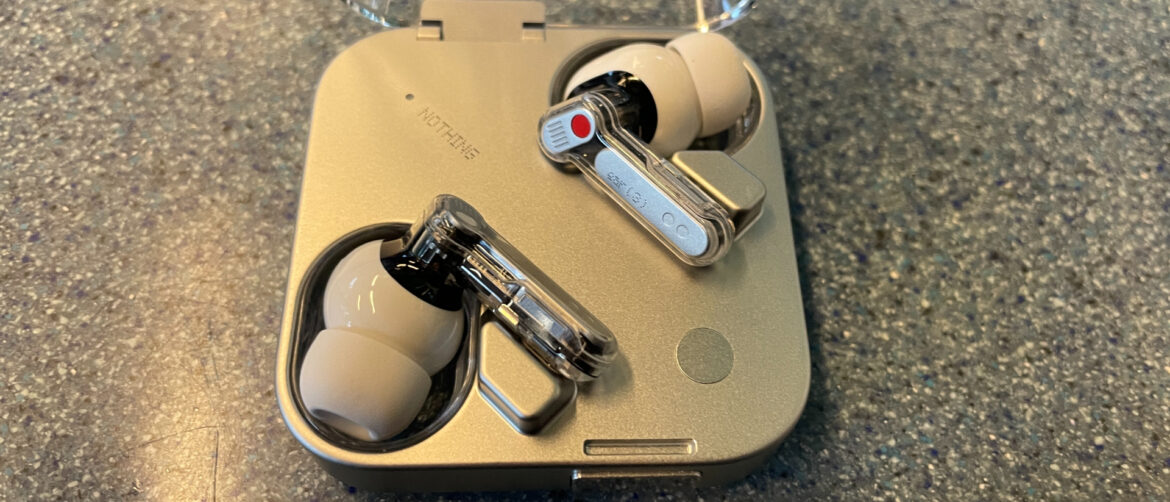
Nothing Ear (3) being tested on a train, late at night
Product Reviews

Nothing Ear (3) review: stunning looks and nifty Super Mic, but is it enough given premium pricing?

by admin September 28, 2025


Why you can trust TechRadar


We spend hours testing every product or service we review, so you can be sure you’re buying the best. Find out more about how we test.

Nothing Ear (3): Two-minute review

Okay, so it’s still hard to stop oneself from playing a game of Spot the Difference concerning Nothing’s earbuds offering – but what of it? Apple’s AirPods lineup is much the same, no? The problem is that this time (unlike Nothing’s last major earbuds release, which came in at $50 / £30 cheaper than their older siblings) there’s a price hike involved; and simply put, I’m not quite sure the extra perks here do enough to justify the extra outlay.

Sure, I’d say the new Nothing Ear (3) are they still among the best earbuds of the year – but one option in the duo of buds they replace has dropped so low in price that they’ve actually jumped into our best budget earbuds buying guide. So you see, to build a case for paying quite a bit extra for the new Ear (3), they’d need to be quite a bit better – and that’s where I’m struggling.

To put the pricing into context, their closest rivals now would no longer be Sony’s class-leading WF-C710N, which sell for around $120 / £100. No, at $179 / £179 / AU$299, the Nothing Ear (3) aren’t exactly rubbing shoulders with the likes of the $299 / £299 / AU$450 Bose QuietComfort Ultra Earbuds (2nd Gen), but they have moved up a level – and it’s tough company to keep.

There’s no head-tracked spatial audio support (the device- and service-agnostic spatial audio option is either ‘Static’ or ‘off’) in the Ear (3), and although the ANC is solid and a new ‘Super Mic’ is fun to play with in calls, it hasn’t become the new must-have earbuds feature for me – and if it was going to appeal to anyone, someone who remembers a world of landline phones only was probably the Nothing Ear (3)’s best shot.

My biggest gripe is the battery life, which I’ll explain fully later. That said, I experienced no small sense of pride when wearing and showing off the Ear (3), thanks to the new aluminum ‘elevated’ build quality and finish – along with the return of the fidget-spinner case detail.

Is all of this enough to make the Ear (3) a hit? Perhaps, when you consider that the splendid hearing tests remain, along with advanced EQ tabs and LDAC support – all of which make the sound engaging, if a shade off excellent for dynamic nuance and treble clarity. Oh, and it’s worth noting that if you have a Nothing phone, that Super Mic becomes a quick transcription tool, which admittedly makes it much more useful (I don’t have a Nothing handset, so I’m typing out this review, dear reader)…

(Image credit: Future)

  • Nothing Ear 3 (White) at Amazon for $179

For anyone scratching their heads as to how many Nothing earbuds iterations we’re into now (because it certainly isn’t three), Nothing fully admits its earbuds naming strategy to date may not have been the smartest. So to explain, the Ear (3) is an update on the flagship Nothing Ear primarily, but also on the Nothing Ear (a), which both launched in April 2024 on the self-same day – with the cheaper pair still sitting happily at the tippy-top of our best budget earbuds guide.

Sign up for breaking news, reviews, opinion, top tech deals, and more.

And here’s my problem with that: a quick scan of current prices reveals that the aforementioned five-star Nothing Ear (a) are currently available for $89 / £69, which means they’re half the price of the new Ear (3). And honestly, that makes the newest set even harder to recommend…

Nothing Ear (3) review: Price & release date

  • Released on September 18, 2025
  • Priced $179 / £179 / AU$299

The Nothing Ear (3) come in black or white finishes (no yellow this time around), and at this pricier level – Nothing’s previous flagship Nothing Ear arrived with a list price of $149 / £129 / AU$249 – their closest competition may even be Apple’s AirPods Pro 3, which retail for $249 / £219 / AU$429.

Yes, there’s still a $70 / £40 difference between Apple’s new top-tier AirPods Pro and Nothing’s best buds, but if your budget stretches a bit further it does bring Apple’s flagship earbuds into the conversation. And given that those AirPods now offer heart-rate monitoring, live translation and better stamina, Nothing is squaring up against some stiff competition.

Hello, yellow! (Image credit: Future)

Nothing Ear (3) review: Specs

Swipe to scroll horizontally

Drivers

12mm custom driver

Active noise cancellation

Yes

Battery life

Buds: 5.5hrs (with ANC; up to 10 hours without) Total with case: 22hrs (ANC on; up to 38 hours without)

Weight

5.2g per earbud

Connectivity

Bluetooth 5.4 with LDAC, USB-C

Frequency range

20Hz–40 kHz

Waterproofing

IP54 buds

Other features

New Super Mic case, 3 mics per earbud, Nothing X App support, Custom EQ with Advanced options, Static Spatial Audio, Personal Sound (Audiodo)

(Image credit: Nothing)

Nothing Ear (3) review: Features

  • ‘Static’ spatial audio and Personal Sound curation
  • Total Radiated Power (TRP) up 15%; Total Isotropic Sensitivity (TIS) up 20%
  • ‘First of its kind Super Mic’ in the charging case

Like many of tech’s heavy-hitters (Samsung, Sony, Apple, I’m looking at you), Nothing would love to snag you and embroil you in its ecosystem with the promise of walled garden perks – and here, Nothing really does start to come into its own.

The ace up the collective sleeve of Nothing’s earbuds prior to now has been that for owners of the Nothing Phone (3), the Phone (2), Phone (1) and Phone (2a) – because Nothing has been far more sensible concerning the naming of its handsets – Nothing has offered instant access to ChatGPT via a pinch-to-speak motion on the stems. Now, users of a Nothing smartphone can use the Super Mic on Nothing Ear (3)’s case to capture transcription of your voice notes, which will sync to your on-device ‘Essential Space’ for easy location.

Nothing calls Super Mic a “first of its kind” breakthrough, and although it initially struck me as very similar to the ‘record’ button on the Viaim RecDot earbuds, there are of course those aforementioned walled-garden perks.

Otherwise, Nothing’s Super Mic is quite like those little clip-on wireless mics that content creators like to hold very close to their mouths (does this look a bit silly to anyone else?). Nothing calls Super Mic a “breakthrough dual-microphone system driven by ambient-filtering technology.”

In a nutshell, the dual MEMS beamforming mics built into the case are designed to hone in on your voice, cutting through surrounding noise (up to 95dB is the claim) for clearer capture in calls or notes – and in my tests, it worked well. On a very blustery day on the cliffs and beaches of the UK’s ‘Jurassic coast’ in Dorset, I found using the Super Mic over the three-mics-per-bud in the earpieces a welcome aid; “much better” was the general feedback from calls.

Voice AI using ChatGPT is coming using Nothing Ear (a) using your Nothing smartphone… (Image credit: Future)

You’re also getting Bluetooth v5.4 (the older set used 5.3), and LDAC support for hi-res audio (the Sony-developed codec that lets you stream high-resolution audio up to 32-bit/96kHz over Bluetooth at up to 990kbps), which is a valuable inclusion at any level, but will benefit Android users most since iPhones can’t support LDAC natively.

There’s now onboard spatial audio wizardry too, irrespective of your phone or the music service you’re streaming from – but only the ‘static’ kind (so you don’t get to use your phone as a fixed-point source device) and in my tests, it was a little clunky and not quite as immersive or convincing as similar offerings from Bose, LG or of course Apple.

However, you do get in-ear detection (to pause music when they’re out and resume it when they’re in), an Auto-Transparency mode to make transparency kick in whenever you’re on a phone call, an ear tip Fit Test, Find My earbuds (which issues a trigger sound from whichever earbud you’ve lost), a Low Lag toggle for gaming, issue-free multipoint to two devices, a Bass Enhancement toggle, an 8-tab EQ graph that lets you adjust both gain and the actual frequency of certain registers (provided you’re prepared to switch off the spatial audio augmentation), and Personal Sound.

This last perk is perhaps my favorite, because the tests only take around three minutes – they involve sounds at different frequencies being piped into each ear, getting gradually quieter until you tap the screen to say you hear nothing – but the result (a fully curated personal sound profile) is very good indeed.

Now, the noise cancellation: hit ANC (rather than ‘Transparency’ or ‘Off’) and you can pick from High, Mid, Low, and Adaptive profiles. High is not bad at all – and it shouldn’t be when the claim is 45dB (effective to 5kHz). The Transparency option is still signified by a woman exhaling, and it’s still one of the best prompts in the business (aside from Matt Berry in Cambridge’s headphones and earbuds), and it too is perfectly acceptable. But here’s the thing: I did not find any of the ANC profiles better than on the Nothing Ear (a), which makes sense because that 45dB claim is the same as the older model.

And when that older model is now half the price of these newer earbuds, you have to be asking yourself if a Super Mic in the case and spatial audio that doesn’t offer dynamic head-tracking is worth the extra outlay.

The new Ear (a) next to the Ear (2): a fun game of Spot the Difference (Image credit: Future)

Nothing Ear (3) review: Sound quality

  • LDAC adds to the performance (but the spatial audio can be beaten)
  • Forward, full-bodied sound
  • A shade off excellent for dynamic nuance

Occasionally in hi-fi circles, you’ll come across the ‘integrated hi-fi listen versus fun and exciting’ sonic debate concerning portable audio. It boils down to this: do you want a faithfully accurate, neutral representation of a recording with everything as intended, or an energetic, potentially more emotive version of the track?

In the second option, certain frequencies might be augmented just slightly, to give you the ‘feels’ of a live gig from small drivers fitted into your ear. And the odd thing is that what you may think you want may not actually be what your ear prefers (as mystical and strange as that may sound)…

Anyway, the Nothing Ear (3) sit firmly in the latter camp. What you’ll get here is excitement, energy, bass clout and oomph. Those with a Sony smartphone (I’m still using the Sony Xperia 1 IV, because it isn’t broken, so why would I fix it?) will find LDAC codec files are delivered with extra expanse and detail over more ‘vanilla’ Bluetooth streaming, but the tuning is the same regardless – very little has been held back.

Streaming Fontaines D.C.’s Starburster is a head-nodding celebration of the track, where drum fills and Grian Chatten’s voice leap two-footed into each ear with all of the bite and impetus the group could possibly want, but there is a downside. Some lesser backing vocals and sloping string elements occasionally get lost just slightly; it’s hard to compete when so much emphasis and energy is placed on sounds at the forefront.

Yes, there are plenty of ways to tweak things more to your liking in the Nothing X app and here, the eight-tab EQ graph is the place to go – it does help. What I personally would leave well alone is the Bass Booster. It isn’t necessary – this is a meaty listen from the box. Also, I’d tone down the treble; I know my own ear is sensitive to these frequencies, but nevertheless, stream Kate Bush’s Army Dreamers and if you’re anything like me you’ll hear occasional harshness through the treble that can become a little wearying.

  • Sound quality score: 4 / 5

See how Ear (a) is just slightly bigger than Ear (2), across the board? (Image credit: Nothing)

Nothing Ear (3) review: Design

  • Solid, cool, pocketable case with ‘TALK’ button
  • IP54 earbuds are secure – but the comfort levels can now be beaten
  • Nothing’s design language is even more striking now

After switching out to the smaller ear tips (you get four in total now: an XS, S and L options are supplied in addition to the pre-fitted M set), Nothing’s ear tip fit test tells me I’ve nailed the fit.

I say that if you’ve got smaller ears I really would encourage you to try before you buy – and my guide to the best earbuds for small ears is worth consulting – because I found the driver housing just that little bit harder to accommodate this time around. It could be because of that larger 12mm driver (and “patterned diaphragm” which Nothing claims gives these buds “a 20% larger radiating area when compared to the previous generation”), or it could be because said earpiece is mounted at a slightly different angle to the stem now – see a close-up of Ear (3) next to the Ear (a) above – but they weren’t as comfortable this time.

(Image credit: Future)

On this, readers might simply remark “Well, they’re based on AirPods, can’t really knock them for that – Apple did it first” but here’s the thing: AirPods are different now! You might not have spotted it because it’s all very new (and the heart-rate monitor and live translation perks have hogged headlines), but the AirPods Pro 3’s fit has been completely reworked. I’m working on a full review of those too (they keep me chained up in TR HQ you know) but even at this early stage and during my testing, I can tell you that for me, the AirPods Pro 3 are much comfier than the Nothing Ear (3) now.

Nothing’s pinch stems still work really well, but again (and at the risk of sounding like a broken record) it’s only as good as the older, cheaper Nothing set. You can still customize what the morse code short- and long-press combinations do for each stem – including volume – and they also work with gloves on, unlike a lot of touch-capacitive solutions.

Now, the new case. If you’ve got a metallic-finish smartphone, the Nothing Ear (3) are going to look glorious beside it. Aesthetics really is one of Nothing’s strong suits, and these earbuds are the ace in the pack. ‘Elevated’ is the word Nothing’s team keep repeating on this; and it’s true, they look more high-end now. There’s a new custom Metal-Insulator-Metal (MIM) antenna, engineered to just 0.35 mm thick, that now runs along the still-see-through stems of the earbuds to keep connections stronger than ever. It’s the same, but refined – it looks like a more expensive version of what was there before.

And if it’s elevation we need to be focusing on, the charging nest is the thing that’s, er, risen the most. It is now crafted from a block of 100% recycled aluminum and CNC machine finished through 27 processes. Nano injection moulding also “fuses the metal and transparent plastic without glue, achieving tight ±0.03mm tolerances for a seamless, compact body” according to Nothing, so there’s no glue anywhere here. And the shiny ‘TALK’ button is placed directly under a nice snappy magnet where the case opens. Nothing assures me it has been positioned so that you won’t cover it with your hand, and the green light-up LED to denote that you’re recording is a strong touch.

Rarely have I had so many colleagues strike up a conversation with me over a set of earbuds (Image credit: Future)

Nothing Ear (3) review: Value

  • Great-looking earbuds
  • LDAC adds sound-per-pound value
  • …but this is higher-end territory, and the Nothing Ear (a) still exist

The older Nothing earbuds were near-rivals for Sony’s cheaper earbuds, but that’s no longer the case: Sony’s excellent affordable WF-C710N cost $119 / £100 / AU$189, so they’re in a different category to the $179 / £179 Nothing Ear (3).

And although there’s a lot to enjoy in the Ear (3), unless you have a Nothing handset for transcription features, the Super Mic really is just a better mic for calls and certain voice notes – it doesn’t support WhatsApp voice notes (yet), which I explain in more depth in my early Ear (3) experiential.

The personalization is very very good, but the audio has suffered a little for me in this iteration, becoming a little harsher through the treble on occasion, probably due to the slightly bigger driver and tweaked acoustic architecture.

Should I buy the Nothing Ear (3)?

Swipe to scroll horizontally

Section

Notes

Score

Features

Solid spec sheet, but the Super Mic is really only a standout feature if you own a Nothing phone

4.5/5

Sound quality

Zeal and get up and go to a fault? Almost. They’re vigorous and exciting, but there’s occasional treble harshness

4/5

Design

Beautiful design language, but the earpieces are no longer among the comfiest around

4.5/5

Value

Given the price of older iterations, it’s hard to see huge value for money here

3/5

Buy them if…

Don’t buy them if…

Nothing Ear (3) review: Also consider

Swipe to scroll horizontallyHeader Cell – Column 0

Nothing Ear (3)

Nothing Ear (a)

Sony WF-C710N

Price

$179 / £179 / AU$299

$99 / £99 / approx AU$192

$119 / £100 / AU$189

Drivers

12mm custom

11m custom

5mm

Active noise cancellation

Yes

Yes

Yes

Quoted battery life

Buds: 5.5hrs (with ANC; up to 10 hours without) Total with case: 22hrs (ANC on; up to 38 hours without)

Buds: 5.5 hrs (9.5 hours without ANC Total with case: 24.5 hrs (42.5 hrs without ANC)

8.5 hrs (ANC ON) / Max. 12 hrs (ANC off); up to 30 hours with the case

Weight

5.2g

4.8g

5.2g per earpiece

Connectivity

Bluetooth 5.4 with LDAC, USB-C

Bluetooth 5.3, LDAC, USB-C (no wireless charging)

Bluetooth 5.3, USB-C, Sony 360 Reality Audio, AAC, SBC

Frequency range

20kHz-40kHz

5000Hz range

20Hz-20kHz

Waterproofing

Yes, IP54

Yes, IP54 earbuds; IPX2 case

Yes, IPX4

Other features

Static spatial audio, Super Mic case feature, Personal sound profiles, advanced EQ

Row 8 – Cell 2

Sony 360 Reality Audio

How I tested the Nothing Ear (3)

(Image credit: Nothing)

  • Tested for two weeks, listened against AirPods Pro 3, Bose QCUE (2nd Gen) and Technics EAH-AZ100
  • Listened at work (in the office, walking on a beach, on a train) and at home
  • Listened to Tidal, Qobuz, Apple Music and Spotify on an iPhone 15 Pro Max, MacBook Pro and heard LDAC on Sony Xperia 1 IV

The Nothing Ear (3) became my primary musical companions for 13 days – after a thorough 48-hour run-in period.

They accompanied me to London (walking brusquely from St. Pancras Station to Waterloo owing to strike action on the London Underground and my need to get a train back to Dorset in 43 minutes!) and at home – where I actually missed delivery of a review sample owing to the efficacy of Nothing Ear (3)’s ANC.

It goes without saying that to better test the comfort levels (and battery life claims), I followed TechRadar’s meticulous methodology testing. I also used TechRadar’s reference playlist (spanning everything from hip-hop to folk music) on Apple Music and Tidal, and also my own musical selections and podcasts. I wore the Ear (3) to watch YouTube videos (mostly about the Austrian singer Falco, since you ask) from my MacBook Pro.

I’ve been testing audio products for well over five years. As a dancer, aerialist and musical theater performer in another life, sound quality, fit, and user experience have always been imperative for me personally, but having heard how wonderful ANC can be when done well, I know what I’m listening out for here also.

Read more about how we test earbuds at TechRadar

  • First reviewed: September 2025

Nothing Ear (3): Price Comparison


Source link

September 28, 2025 0 comments
0 FacebookTwitterPinterestEmail
The Status Audio Pro X on a window sill.
Product Reviews

Status Audio Pro X review: premium earbuds with seriously impressive sound

by admin September 27, 2025


Why you can trust TechRadar


We spend hours testing every product or service we review, so you can be sure you’re buying the best. Find out more about how we test.

Status Audio Pro X: Two-minute review

American audio company Status Audio was hurt by the curse of poor timing with the release of its next-gen premium earbuds and challengers to our best earbuds buying guide. That’s because less than two months after the firm unveiled the Pro X, Apple finally released its latest buds, the AirPods Pro 3, which slightly undercut the underdogs’ latest release in terms of price.

I don’t think Status needs to worry much about competition from Apple, though, because the product distinguishes itself in a few key areas (and, of course, actually works equally as well for Android users).

For one, the Status Pro X has three audio drivers per bud, one more than the AirPods Pro and two more than most earbuds I test. This trio works together to deliver well-defined and high-quality audio that sounds fantastic, making these some of the best earbuds you can try.

The earbuds also look as good as they sound, with the ellipsoid design language carried between the buds and the case to make them look some of the classiest buds I’ve seen. It’s not all for show either as I found the fit reliable.

Status has nailed more of the basics with solid Active Noise Cancellation (ANC), handy touch controls and wireless charging in the case.

The main let-down for me was the battery life, which basically scraped five hours if you’ve got ANC turned on. That’s pretty poor when you look at averages on the market, even for high-end buds, and rules them out for certain use cases.

In fact, the overall feature set is a little bit anemic, and there are a few common perks that aren’t available on the Pro X. It’s clear that the emphasis here is on the audio quality and design, not the handy extras that often justify a higher price.

Sign up for breaking news, reviews, opinion, top tech deals, and more.

That’s the one department where the AirPods Pro 3 cleanly beat the Status Pro X; don’t expect any live translation or heart rate tracking here. But Status has Apple beat in the two other main areas, and that’s good enough for me.

Status Audio Pro X review: Price and release date

(Image credit: Future)

  • Released in ‘batches’ every few months from July 2025
  • Costs $299 / £272 / AU$470
  • Pricier than big-name rivals

The first thing to know about the Pro X is that they’re not cheap gadgets; these are pricey buds that bump elbows with some top-notch rivals.

The official retail price for the Status Audio Pro X is $299 / £272 / AU$470, though it’s worth noting that you can pre-order them for $249 / £226 / AU$384. When I say ‘pre-order’, I don’t mean that the buds aren’t out, but (at the time of writing at least) Status is selling them in waves, with one every couple of months. For the purpose of this review I’m taking the RRP as the real price of the buds though.

That price means the buds cost more than the new AirPods Pro 3, which go for $249 / £219 / AU$429 and roughly match the option that tops our best earbuds list, the Technics EAH-AZ100, which go for $299 / £259 / AU$478.

In other words, I went into this review expecting great things.

One more thing: the Pro X’s predecessor, the excellent Status Between 3ANC, cost $249 (approx. £249 / AU$399).

Status Audio Pro X review: Specs

Swipe to scroll horizontally

Drivers

12mm driver + 2x Knowles balanced armature drivers

Active noise cancellation

Yes

Battery life (ANC off)

8 hours (buds) 24 hours (case)

Weight

5g (buds) 48g (case)

Connectivity

Bluetooth 5.4

Waterproofing

IP55

Status Audio Pro X review: Features

(Image credit: Future)

  • Poor battery life
  • Decent noise cancellation
  • Fewer features than rivals

According to Status Audio, the Pro X will last for 8 hours of listening time, with the charging case extending it to 24 hours in total. That figure must be for listening with ANC turned off, because when it was enabled, I got a far shorter listening time: roughly four and a half to five hours. That’s not exactly a competitive stat as it falls below average by a considerable way.

A better feature is the noise cancellation which, while not best-in-class, was solid enough to plaster over annoying background noises. The Ambient mode is one of the better examples of pass-through sound I’ve used, with surrounding sounds fed into your headphones without sounding amplified at all.

You can toggle between these modes using the Status Hub app which also lets you customize the touch controls, choose between one of five equalizer presets (plus a custom mode with an eight-band EQ for the audiophiles), find the buds if you’ve lost them (with location tracking and audio cues), set up multi-point connection and toggle whether your voice is hidden by the ANC when you talk in the phone. Hidden in the app’s settings is a Dynamic EQ mode which boosts bass and treble when the volume is low – it’s turned off by default though.

There are a few features which you may expect at this price point that you’re not getting, including surround-sound audio (see ‘spatial audio’), toggle-able wearer detection, fit tests or the ability to change codec or music stream bitrate. The slender feature set is something we’ve knocked past Status buds for and while there are more here (the Between 3ANC didn’t let you change touch controls, for example, and GPS buds tracking is a great tool), I’d still like to see a little more to justify the price.

In terms of connection specs, the Pro X supports SBC, AAC and LDAC, at 24-bit/96 kHz. In my testing I didn’t have any connection issues between the buds and my phone.

Status Audio Pro X review: Design

(Image credit: Future)

  • Classy look for bud and case
  • Handy touch controls
  • Case supports wireless charging

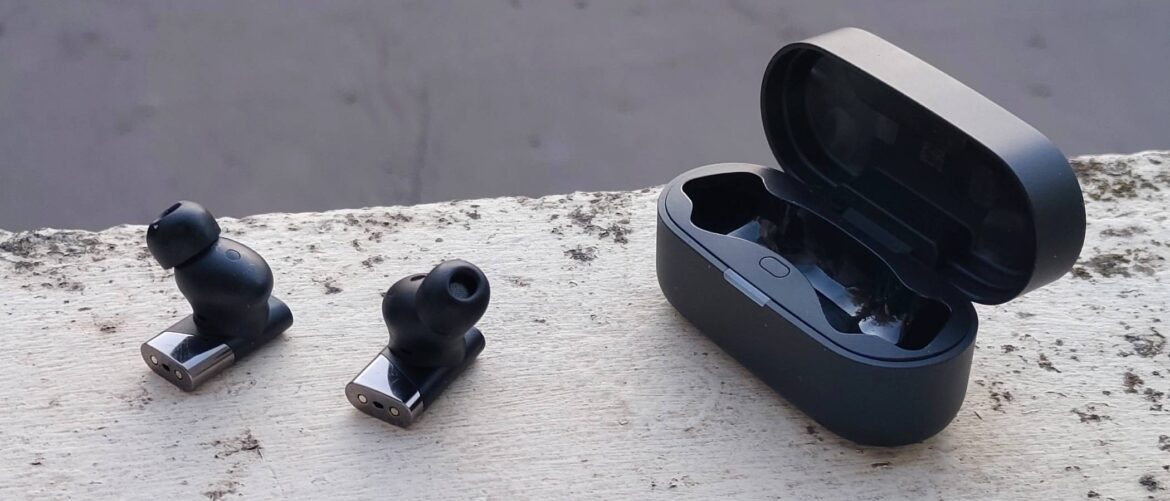
The Status Audio Pro X are some of the more refined earbuds I’ve tested this year in terms of design. They’re stem-toting buds, although ‘stem’ feels like an odd choice of word for the ellipsoid pillars standing tall from the earbuds.

Despite the size of the stems, which made me worry about the reliability of the ear fit, the Pro X stayed in my ears without any shifting or issues. The touch controls worked well and were easy to use, thanks to the size of the sensor area so you don’t need any precision to pause or skip your music.

The buds have an IP55 rating against dust ingress and jets of water, so don’t submerge them in puddles or sinks if you want them to keep working.

Now onto the case; it’s a small oblong box that weighs about 48g (according to my kitchen scales, though I couldn’t find an official figure from Status Audio). It’s not too huge a case although I did notice it in my trouser pocket. I like how it shares obvious design DNA with the earbuds, though I do feel Status missed a trick by not copying the buds’ two-tone shading.

In a neat addition, the case supports wireless charging, so you don’t need to rely on its USB-C port if you don’t want to.

Something I need to mention is that, during testing, one of the earbud charging connectors in the case stopped working. I wrote this off as an anomalous error and Status were quick to replace the test unit with another one – which didn’t break – but I feel compelled to mention the issue after I discovered a Reddit post in which people shared stories of the same issue happening, albeit in past Status buds.

Status Audio Pro X review: Sound quality

  • 12mm driver + dual balanced armature drivers
  • Equalizer plus loads of presets
  • Max volume should be higher

(Image credit: Future)

Status is putting all its eggs in the ‘sound quality’ basket with the Pro X. The buds have not one, not two but three drivers: a 12mm dynamic driver and two Knowles balanced armature drivers, with the triumvirate designed to individually hit bass, middle and treble respectively.

This gambit pays off: the Pro X sound fantastic and you won’t find much better on the market in the wireless realm. By default the sound profile is neutral, but the aforementioned app presets let you pull oodles of treble or bass out of your tunes – once you work out what each means, due to the lack of a guide (take a guess which has more bass: Status Signature, Status Audiophile or Knowles Preferred? That’s right, there’s no way of knowing – and that’s the only information you’re given). Whatever your taste, you’ll be able to cater your listening to it.

Treble is distinct and sparkling, while bass is well-defined and mids remain clear and strong. The quality is high, and you can hear the inflection in vocals and the squeak of fingers on a guitar string. There isn’t as defined a soundstage as on some other high-end buds though, beyond the natural separation that you can perceive when the quality of lines is higher.

The Pro X don’t go quite as loud as I would’ve liked either; a few times when I was listening outdoors they didn’t reach the volume or oomph I’d have liked to combat noisy situations, despite the decent noise cancellation.

Status Audio Pro X review: Value

(Image credit: Future)

  • Let’s be clear, these are pricey buds
  • …but you can save money with pre-order

It’s always hard to defend the value proposition of top-end buds. After all, premium tech simply doesn’t give you value for money; you can buy decent buds for a third of the price that don’t drop the quality by a third – and the gains sonically here are absolutely worthy if you value them, but they’re incremental.

So Status goes a long way to justifying the Pro X’s price with the high-quality audio and premium design, but the question of whether they’re great value for money would be a lot easier to answer if the feature set was more fleshed out.

Should I buy the Status Audio Pro X?

(Image credit: Future)Swipe to scroll horizontallyStatus Pro X score card

Attributes

Notes

Rating

Features

The unimpressive battery life and lack of super features hurts the buds

3/5

Design

These look great and fit into ears well.

4/5

Sound quality

The specs don’t lie, and three drivers makes the audio sound fantastic.

4.5/5

Value

Can you expect great value from premium tech? This is pretty good, though the feature set would sway the needle.

3.5/5

Buy them if…

Don’t buy them if…

Status Audio Pro X review: Also consider

Swipe to scroll horizontallyHeader Cell – Column 0

Status Pro X

Status Between 3ANC 

AirPods Pro 3

Technics EAH-AZ100

Drivers

12mm driver + 2x Knowles balanced armature drivers

10mm driver + 2x Knowles balanced armature drivers

Custom driver, custom amplifier

10mm driver

Active noise cancellation

Yes

Yes

Yes

Yes

Battery life

8 hours (buds) 24 hours (case)

8 hours (buds) 30 hours (case)

8 hours (buds) 24 hours (case)

12 hours (buds) 17 hours (case)

Weight

5g (buds) 48g (case)

13.6g (buds)

5.5g (buds) 44g (case)

5.9g (buds) 42g (case)

Connectivity

Bluetooth 5.4

Bluetooth 5.2

Bluetooth 5.3

Bluetooth 5.3

Waterproofing

IP55

IPX5

IP57

IPX4

How I tested the Status Audio Pro X

  • Tested for one month
  • Tested at home, in the office and on walks

As I mentioned earlier in this review, I tested two review samples of the Status Pro X due to one breaking, and it means the total testing period for the buds exceeded a month, longer than we usually give buds.

I paired the buds with my Android phone and used apps like Spotify, Apple Music, Tidal, YouTube and WhatsApp for various types of testing. I listened at home, on various types of public transport and on walks around my neighborhood.

I’ve been reviewing gadgets at TechRadar since early 2019 and have tested many different earbuds in that time.

  • First reviewed in September 2025

Status Audio Pro X: Price Comparison


Source link

September 27, 2025 0 comments
0 FacebookTwitterPinterestEmail
DAAPrivacyRightIcon
Gaming Gear

YouTube Premium adds high-quality audio and 4x playback for iOS, Android and desktop

by admin September 26, 2025


Google is expanding access to YouTube Premium features like faster playback speeds and high-quality audio to more types of devices. Most people subscribe to YouTube Premium to remove ads from YouTube and access to YouTube Music, but Google also includes a variety of “power-user” features that give subscribers more granular control over their viewing or listening experience. Now those features will be available in more places.

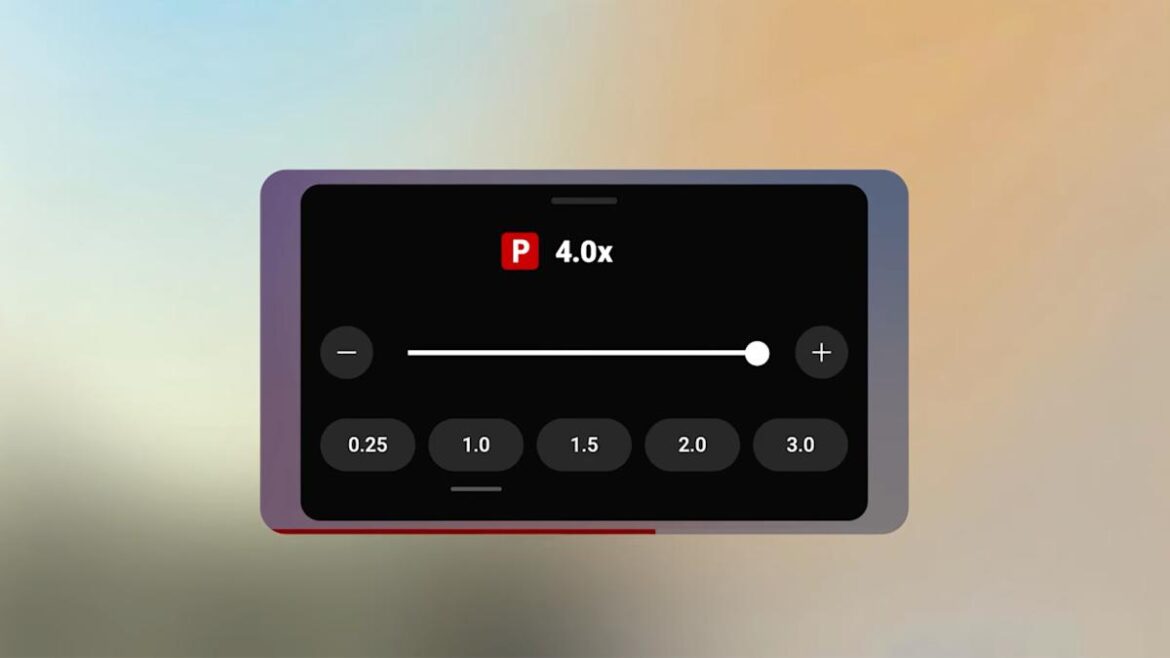
YouTube Premium’s faster playback speeds (in 0.5x increments from 1x to 4x speed) are now available on Android, iOS and the web, after initially only being available in the mobile YouTube app. The ability to have YouTube automatically download Shorts to view offline or watch Shorts in a picture-in-picture window is now also available on both iOS and Android, after originally launching on Android. Google says Premium’s Jump Ahead feature for skipping to “key moments” of a video is now also available on smart TVs and game consoles.

In terms of the music side of the house, the big change has to do with audio quality. When you’re watching a music video, Google says you’ll now be able to select “High” from the audio settings and listen at a 256kbps bitrate. This change applies to “Art Tracks” as well, which are videos of songs available on the wider YouTube platform that don’t have an official music video. The “High” quality option was originally only available in the YouTube Music app, but now Google says you can access it across the Android and iOS version of both YouTube Music and YouTube.

None of these updates change what the main benefit of a $13.99-per-month YouTube Premium subscription is, of course, but for the price, it’s good Google is trying to unify the experience across devices.


Source link

September 26, 2025 0 comments
0 FacebookTwitterPinterestEmail
Here are our PS Plus Extra and Premium games for September
Game Updates

Here are our PS Plus Extra and Premium games for September

by admin September 10, 2025


Sony has revealed the additional games coming to its PS Plus subscription service this month for Extra and Premium subscribers.


These games will be available from Tuesday 16th September, in addition to the previously revealed monthly games.

PlayStation Plus Premium and Extra:

  • WWE 2K25 | PS5, PS4
  • Persona 5 Tactica | PS5, PS4
  • Green Hell | PS5, PS4
  • Fate/Samurai Remnant | PS5, PS4
  • Crow Country | PS5, PS4
  • The Invincible | PS5
  • Conscript | PS5

PlayStation Plus Premium

  • Legacy of Kain: Defiance | PS5, PS4


With the likes of Crow Country and Conscript, Sony is preparing for Halloween. The former in particular is a brilliant little indie horror game.


For Premium subscribers, there’s vampiric action in Legacy of Kain: Defiance – the PS2 sequel, which arrives on PS4 and PS5 for the first time.


Persona 5 Tactica is also an enjoyable strategy spin-off of Atlus’ popular RPG.


These join September’s monthly games Psychonauts 2, Stardew Valley, and Viewfinder. Full details can be found on the PS Blog.

This is a news-in-brief story. This is part of our vision to bring you all the big news as part of a daily live report.


Source link

September 10, 2025 0 comments
0 FacebookTwitterPinterestEmail
youtube background with question mark user
Esports

YouTube launches Netflix-style crackdown on password-sharing Premium subscribers

by admin September 10, 2025


YouTube Premium users may soon find themselves cut off if they’re sharing their family plan outside of their household as the platform begins enforcing long-standing rules in a Netflix-style crackdown.

Subscribers who share a YouTube Premium or YouTube Music family plan with people at different addresses have started receiving warning emails. According to Android Police, the notices state that memberships will be paused within 14 days if all members don’t comply with YouTube’s household policy.

Article continues after ad

The email reads: “Your YouTube Premium family membership requires all members to be in the same household as the family manager. It appears you may not be in the same household as your family manager, and your membership will be paused in 14 days.”

Losing Premium means subscribers can still use YouTube and YouTube Music, but only with ads and without extra features.

YouTube takes aim at password sharing

The enforcement mirrors Netflix’s controversial password-sharing crackdown, which blocked non-household members from using accounts unless they paid for additional slots.

Article continues after ad

Article continues after ad

YouTube first rolled out its same-household requirement in 2023, but this marks the clearest sign yet that it’s ramping up enforcement.

Unsplash: Ella Don/YouTube

Despite the wave of warning emails, YouTube insists nothing has officially changed. A spokesperson told CNET: “Our family plan policy hasn’t changed and we are continuously enforcing it.”

Still, the move comes as YouTube faces backlash over Premium price hikes. In some cases, families pay close to $500 annually for access to ad-free videos and music, a steep cost that makes sharing accounts an appealing workaround.

Article continues after ad

The password-sharing crackdown is just the latest controversy surrounding Premium. The Google-owned platform has also faced criticism over alleged hidden “restricted content” in search results, which it denies.

Between rising prices and tighter restrictions, many subscribers could soon be asking whether YouTube Premium is still worth the cost.


Source link

September 10, 2025 0 comments
0 FacebookTwitterPinterestEmail
More action than RPG, Vampire: The Masquerade - Bloodlines 2 struggles to convince after a few hours' play
Game Reviews

Vampire: The Masquerade – Bloodlines 2 to refund all PS5 Premium Editions following backlash over paywalled clans

by admin September 6, 2025


From next week, anyone who pre-ordered their Vampire: The Masquerade – Bloodlines 2 Premium Edition via the PlayStation Store will be refunded.

Community developer DebbieElla told players the refunds were coming as part of recent “adjustments”, and confirmed we’ll get “all the details” on the changes on 17th September.

We weren’t allowed to direct capture the preview build but we were supplied some b-roll to fit a video together with instead.Watch on YouTube

As we reported last week, Vampire: The Masquerade – Bloodlines 2 publisher Paradox is rethinking its plan to charge for two of the six playable clans in the game following community feedback. The news came after publisher Paradox announced the release date for Vampire: The Masquerade – Bloodlines 2, 21st October, along with pricing details for the game. It was then we learned the company intended to charge £20 extra to access two clans in the game, via a Shadows and Silk content pack.

According to developer, The Chinese Room, these two clans represented content developed beyond what was originally planned for the game after it inherited development of Bloodlines 2 from Hardsuit Labs. Consequently, The Chinese Room’s reasoning was this was additional content developed for the game, so it would sell it as such at release. But not anymore.

Now, in a Discord post, DebbieElla writes: “We are working hard on the adjustments that we promised, and we will be able to tell you all the details on 17th September. Making significant changes like this involves many moving parts, and we want to make sure that we get it right with this change.

“Anyone who pre-ordered the Premium Edition through the PlayStation Store will be contacted and refunded starting Monday 8th September. You’ll be able to pre-order your Premium Edition copy later again, before the release on 21st October. Please note that this is an intentional first step in our planned course of action leading up to 17th September to deliver the best possible experience for you at launch.”

The post closed on thanking players for their patience, and later messages from DebbieElla confirm this only applies to this particular edition sold for PlayStation – purchases on other platforms are unaffected.

Some are now hoping this signifies all clans may be available in the base game, but as one player points out, however, “taking the clans out of the deluxe editions is the easy part. The hard part is trying to figure out what else they can put in there”.

In his Vampire: The Masquerade – Bloodlines 2 preview a few weeks back, Bertie wrote: “[T]his is a sequel to a cult RPG after all, and one based on a major tabletop RPG to boot. In this case it feels valid to crave a little more role-playing, a little more texture and depth to the game’s people and conversations. And so for now, a question mark remains”.


Source link

September 6, 2025 0 comments
0 FacebookTwitterPinterestEmail
DJI Mic 3 wireless microphone
Product Reviews

DJI Mic 3 review: a class-leading premium wireless mic

by admin August 31, 2025


Why you can trust TechRadar


We spend hours testing every product or service we review, so you can be sure you’re buying the best. Find out more about how we test.

DJI Mic 3: one-minute review

The DJI Mic 3 is the latest premium release in the company’s popular wearable wireless microphone range, supplanting the DJI Mic 2. The Mic 2 was only released around 18 months ago, and has topped TechRadar’s best wireless microphone guide for some time, so I was a little skeptical about the need for a new model.

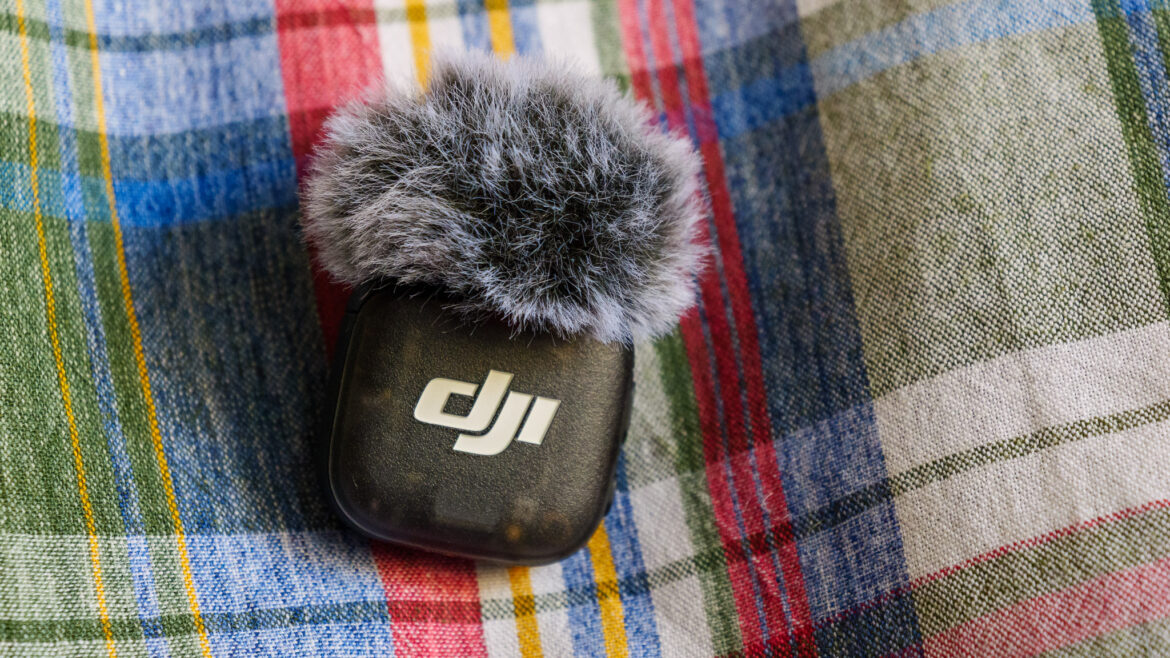
After receiving my review sample of the DJI Mic 3, though, it only took me a few seconds to see why people might want to upgrade from the Mic 2. The Mic 3’s transmitter component, or TX, is far more compact and lightweight than that of its predecessor, making it easier to wear on clothing.

And – praise be! – it’s now possible to fit not only two TX units and the receiver (RX) in the charging case, but accessories like clips, magnets, windscreens and even a 3.5mm-to-3.5mm cable. One of the irritations I’ve had with my own DJI Mic 2 over the past year is that the furry windscreens, which are all but mandatory when recording audio outside, don’t fit inside its charging case. To see that fixed here (as it was on the DJI Mic Mini) is wonderful.

Delving deeper over the course of testing the Mic 3, I found that DJI has made improvements elsewhere: there are now two levels of active noise cancellation rather than one; it’s possible to transmit lossless 24-bit audio from the TX to the RX; and there are three new voice presets to add instant color to vocal recording. All of these features are easy to use and add instant, tangible impact to recordings.

The DJI Mic 3 (center) alongside the DJI Mic Mini (left) and DJI Mic 2 (Image credit: Future | Sam Kieldsen)

Another new feature is the dual-mode Adaptive Gain Control, designed to deliver balanced audio in trickier recording conditions. The Automatic setting is used to prevent audio clipping during unexpected rises in volume (I found it worked well when recording in unpredictable outdoor environments, such as walking around town where traffic noise can jump up at any second), while Dynamic is more situational, being designed for two-person recordings using a single TX unit in a more controlled environment like a studio.

And, while I wasn’t able to personally test this (having just the standard setup of two TX units and one RX in my possession), DJI says the Mic 3 is able to capture clear voices from larger gatherings of people thanks to 4TX+8RX group recording. It also adds support for timecode, which wasn’t on the Mic 2. So, the Mic 3’s professional production credentials are definitely a bit more impressive than the Mic 2’s.

The wireless transmission range has been increased from 250m to 400m, and battery life also gets a major bump, up from 18 hours (with the charging case and two TXes) on the Mic 2 to 28 hours (although it can’t come close to the Mic Mini’s imperious 48 hours). Oh, and the on-board storage space on the TX units has been increased fourfold, from 8GB to 32GB.

Sign up for breaking news, reviews, opinion, top tech deals, and more.

The RX unit now features a locking TRS output, but is otherwise little changed from the Mic 2’s (Image credit: Future | Sam Kieldsen)

All of these are compelling reasons to make the upgrade from the Mic 2, and there’s very little missing feature-wise. The TX units no longer have a 3.5mm input for a separate lavalier mic, which might be an issue for users who want to hide it when filming, and the Safety Track recording mode has been dropped, but that’s about it.

In terms of general sound quality the Mic 3 is excellent, and similar to the Mic 2. With 32-bit float on board for those who need the extra level of safety and control, and 24-bit for everyday use, I think very few content creators will have issues with the audio side of things here.

With the Mic 3, DJI has managed to combine the best bits of its Mic 2 and Mic Mini into a single brilliant wireless mic – and one that, remarkably, is cheaper than the Mic 2 was at its launch. In fact, when compared to competitors’ pricing, it’s very hard to see how I couldn’t recommend it to anyone on the hunt for a new premium wireless mic.

The charging case is a major improvement on the DJI Mic 2’s, with much more efficient use of space (Image credit: Future | Sam Kieldsen)

DJI Mic 3: price and release date

  • Available to order now priced from £169 / AU$369
  • Components available individually or in bundles
  • No official US availability at the time of writing

The DJI Mic 3 is available to order from its launch date of August 28 2025, and the company is offering a range of bundles. For a complete package comprising two TX units, one RX, a charging case, cables, magnets and windscreens, the price is £259 / AU$569; for a simple one TX and one RX package, it’s £169 / AU$369. Buyers can also purchase individual components like the TX, RX, charging case, and new accessories available at launch include a Lightning adapter and alternate color windscreens.

I think the price is extremely reasonable given the Mic 3’s capabilities and specs, and I’m a big fan of the company selling individual components separately, as it gives consumers the opportunity to start small and upgrade over time.

The complete kit includes the charging case, two transmitters, one receiver and a USB-C connector for the receiver. There are also two clips, two magnets, four windshields, a 3.5mm to 3.5mm TRS cable and a USB-C charging cable in the box, plus a zip-up case to hold it all (Image credit: Future | Sam Kieldsen)

There’s bad news for US-based readers hoping to get their hands on a Mic 3, however. As with other recently announced DJI products, the company isn’t officially launching in the US, in an apparent response to uncertainty surrounding tariffs. A company spokesperson told me the following:

“DJI Mic 3 is not in stock in the US upon the global launch. DJI remains committed to the US market and making our products and services available to our US-based customers. However, we’ve recently had to adjust our market strategies for certain products in light of evolving market conditions. While we do not have a timeline for when we can introduce the product to the U.S. market, we are closely monitoring the situation and actively exploring every possible solution.”

US-based consumers may be able to obtain the Mic 3 through third-party stockists, however, so it may be worth checking camera stores such as B&H.

DJI Mic 3: specs

Swipe to scroll horizontally

Dimensions

28.8 x 28.3 x 16.4mm (TX, with magnet)

Weight

16g (TX, with magnet)

Range

400m

Connectivity

Receiver: USB-C / Lightning, 3.5mm jack

Bluetooth

Yes

Battery

10 hours (TX), 8 hours (RX), up to 28 hours with fully charged case

Noise cancelling

Two-level active

DJI Mic 3: Design

  • TX unit weighs just 16g with magnet
  • RX has 1.1-inch AMOLED touchscreen
  • Charging case now accommodates more components

I’ve already mentioned the smaller, lighter build of the TX units, but there are other clever design touches worth noting too. When using the clips, for instance, you can now rotate the TX orientation to ensure that the mic grille is pointing towards the sound source. The TX units are also now magnetized themselves, allowing them to be attached securely to metal surfaces.

The design of the receiver (RX), meanwhile, seems fundamentally unchanged from the Mic 2’s. There’s a bright, crisp 1.1-inch AMOLED touchscreen on the front, plus a rotating and pressable dial to help select and change settings. The design allows for a USB-C adapter to be attached (or Lightning, but that’s an optional extra), and the 3.5mm output now supports a locking screw to keep it in place.

The Mic 3’s transmitter (or TX) units are almost as small and lightweight as those of the Mic Mini, but offer far more flexibility for mounting thanks to an integrated magnet (Image credit: Future | Sam Kieldsen)

The charging case, despite being smaller than the Mic 2’s, is a lot better. As I mentioned in the section above, it makes much more efficient use of its space, and can now accommodate not only two TX and one RX but attached windscreens and clips, with room for magnets and the 3.5mm to 3.5mm TRS cable in the lid.

Also included in the larger bundle are extra windshields (so two black and two grey in total), as well as a zip-up fabric bag for storing everything, including the charging cable.

DJI Mic 3: Performance

  • Two-level active noise cancelling and voice tone presets
  • Supports OsmoAudio direct connection
  • Omnidirectional audio and up to 400m range

The Mic 3 seems to be built on similar audio bones to the Mic 2. That’s no bad thing, as it means users get access to 32-bit float recording (large file sizes, but ideal for users who want to ensure their audio doesn’t clip) as well as standard 24-bit recording with adjustable gain. Having used it extensively indoors and outdoors in a variety of conditions, I’ve found the Mic 3 to be a highly reliable recording partner, no matter what it’s paired with.

And it can be paired with a lot. The RX can hook up to cameras, computers, tablets and smartphones via its USB or 3.5mm outputs (or the Lightning adapter, should you buy it), and it’s also possible to connect the TX directly to recording devices via Bluetooth.

The TX is also compatible with DJI’s OsmoAudio ecosystem products, supporting 24-bit audio and even 32-bit float (which will be recorded as a separate, second file stored directly on the TX’s memory). I used it with the DJI Osmo 360 and DJI Osmo Action 5 Pro, and was highly impressed with both the ease of use and audio quality; it’s possible to control gain and other settings through the cameras’ menu screens, and the Mic 3 represents a massive improvement on those cameras’ built-in microphones.

Noise cancelling manages to be highly effective without distorting voice recordings too much. You can hear for yourself in the embedded video above, which also demonstrates the new built-in voice tone presets and general audio quality straight from the mic.

As with the Mic 2, the Mic 3’s TX units can also record on their own, acting as a completely independent mic thanks to 32GB of internal storage space.

Should I buy the DJI Mic 3?

Buy it if…

Don’t buy it if…

DJI Mic 3: also consider

(Image credit: Future | Sam Kieldsen)

How I tested the DJI Mic 3

  • I used it for several weeks
  • I paired it with cameras, computer and smartphone
  • Running firmware 01.01.02.10

DJI sent me a review sample of the Mic 3 a couple of months ahead of its launch date, giving me the chance to spend a few weeks testing it in a range of environments and conditions. I connected to a range of devices: my Panasonic Lumix GH6 mirrorless camera, the DJI Osmo Action 5 Pro and DJI Osmo 360 action cameras, my MacBook Air laptop and my iPhone 13 smartphone. This meant I was able to test both its direct connection and receiver connection methods.

The firmware was updated to the newest available version at the time (v01.01.02.10) prior to the writing of this review, but manufacturers often release updates to coincide with the public launch – so please note that DJI may have tweaked performance slightly since this review was published.


Source link

August 31, 2025 0 comments
0 FacebookTwitterPinterestEmail
  • 1
  • 2

Categories

  • Crypto Trends (1,098)
  • Esports (800)
  • Game Reviews (772)
  • Game Updates (906)
  • GameFi Guides (1,058)
  • Gaming Gear (960)
  • NFT Gaming (1,079)
  • Product Reviews (960)

Recent Posts

  • This 5-Star Dell Laptop Bundle (64GB RAM, 2TB SSD) Sees 72% Cut, From Above MacBook Pricing to Practically a Steal
  • Blue Protocol: Star Resonance is finally out in the west and off to a strong start on Steam, but was the MMORPG worth the wait?
  • How to Unblock OpenAI’s Sora 2 If You’re Outside the US and Canada
  • Final Fantasy 7 Remake and Rebirth finally available as physical double pack on PS5
  • The 10 Most Valuable Cards

Recent Posts

  • This 5-Star Dell Laptop Bundle (64GB RAM, 2TB SSD) Sees 72% Cut, From Above MacBook Pricing to Practically a Steal

    October 10, 2025
  • Blue Protocol: Star Resonance is finally out in the west and off to a strong start on Steam, but was the MMORPG worth the wait?

    October 10, 2025
  • How to Unblock OpenAI’s Sora 2 If You’re Outside the US and Canada

    October 10, 2025
  • Final Fantasy 7 Remake and Rebirth finally available as physical double pack on PS5

    October 10, 2025
  • The 10 Most Valuable Cards

    October 10, 2025

Newsletter

About me

Welcome to Laughinghyena.io, your ultimate destination for the latest in blockchain gaming and gaming products. We’re passionate about the future of gaming, where decentralized technology empowers players to own, trade, and thrive in virtual worlds.

Recent Posts

  • This 5-Star Dell Laptop Bundle (64GB RAM, 2TB SSD) Sees 72% Cut, From Above MacBook Pricing to Practically a Steal

    October 10, 2025
  • Blue Protocol: Star Resonance is finally out in the west and off to a strong start on Steam, but was the MMORPG worth the wait?

    October 10, 2025

Newsletter

@2025 laughinghyena- All Right Reserved. Designed and Developed by Pro


Back To Top
Laughing Hyena
  • Home
  • Hyena Games
  • Esports
  • NFT Gaming
  • Crypto Trends
  • Game Reviews
  • Game Updates
  • GameFi Guides
  • Shop

Shopping Cart

Close

No products in the cart.

Close