
Laughing Hyena
  • Home
  • Hyena Games
  • Esports
  • NFT Gaming
  • Crypto Trends
  • Game Reviews
  • Game Updates
  • GameFi Guides
  • Shop
Tag:

People

"With the waves of layoffs, the way that people are overworked, everyone agrees that there is a systemic problem"
Esports

With the waves of layoffs, the way that people are overworked, everyone agrees that there is a systemic problem

by admin August 21, 2025


Within the past few years, there has been a massive rise in unionisation within the video games industry. What was once conversation and wishful thinking has now been cemented into action.

There are now video game unions around the world. Some notable victories in recent memory come from the United States, where bargaining units have been formed at the likes of Raven Software, ZeniMax, and Blizzard. Meanwhile, in June, workers at Ubisoft Halifax in Canada voted to unionise.

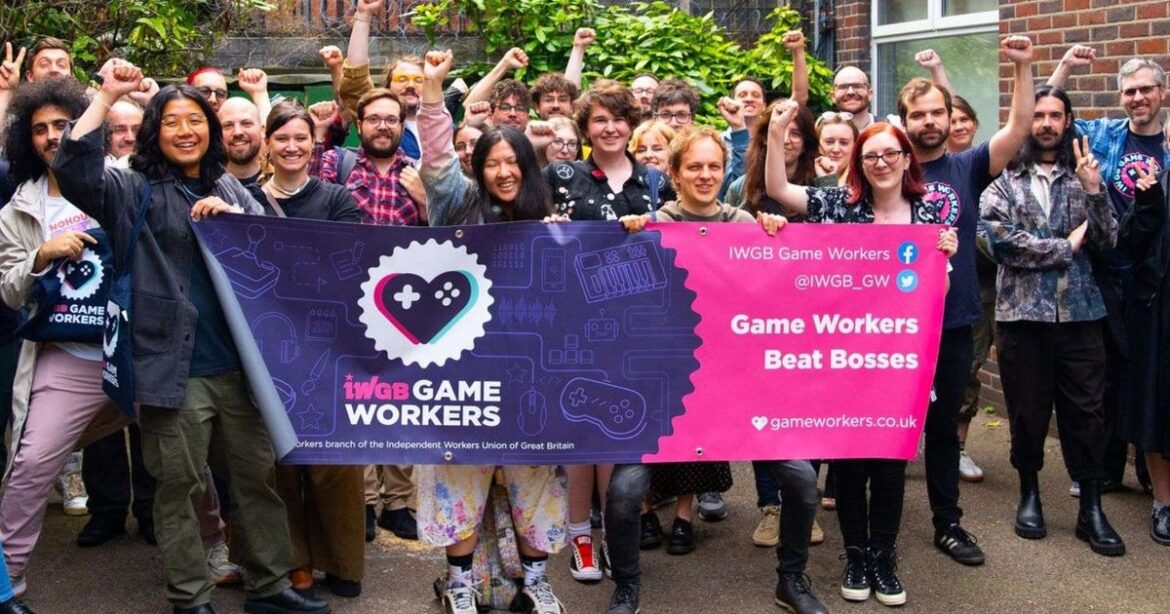
In the United Kingdom, there are a few unions that represent those in the games industry, including branches at the creatives’ union BECTU and the performers’ union Equity. But probably the most prominent is the Game Workers branch of the Independent Workers of Great Britain (IWGB) union, formed back in December 2018.

At the last official count, the union was around 1,500 strong, and is seeing consistent growth in its membership each month.

So far, the organisation doesn’t have any big victories under its belt – there are no unionised workforces within the UK games industry at the time of writing. Despite this, there are conversations happening, and the dialogue about unionisation around the world has been becoming louder for a few different reasons.

Crunch talks

“About six or seven years ago was around when we started to see a lot of conversations about the realities of crunch in the industry and the effect that was having on people,” explains Spring McParlinJones, chair of the IWGB Game Workers Union.

“Combined with the fact that, as a wider society, we had the cultural moments of Jeremy Corbyn’s 2017 election campaign and Bernie Sanders in America, we saw a wider discussion of leftist politics in society. That really set the stage for a serious discussion of unionising the games industry for the first time in its existence.”

“The industry as it is structured at the moment is not sustainable”

Spring McParlinJones, IWGB Game Workers Union

IWGB Game Workers Union secretary John Paul Donnelly adds: “The more game workers grow as a community and interact with each other, the more they share more about their conditions and things. We slowly break down those very isolated groups.”

The conversation about crunch and working conditions within the games industry certainly got the ball rolling in terms of unionisation. But the relentless waves of layoffs, studio closures, and project cancellations we have seen within the past few years have given the movement some real momentum.

“You can ask anyone in the industry, and they will agree that the industry as it is structured at the moment is not sustainable,” McParlinJones says. “With the waves of layoffs, the way that people are overworked, everyone agrees that there is a systemic problem. And no one seems to have a solution.

Spring McParlinJones

“I think everyone agrees that it seems like a lot of wealth is moving up towards the executives and shareholders; even people who aren’t very sympathetic to the idea of unionising probably agree with that point initially.

“The case for unionisation is that if we want this to change, we have to change it ourselves. We have to force the executives’ hands to provide fairer treatment and give workers a say in how the companies that we work for are run and the games that we make are made.

“Realistically, for the workers to have leverage in that discussion, we have to come together and engage in collective action. History has shown that the best way to do that is through unionisation.”

What’s the hold up?

Given the current state of the games industry, the argument for unionisation does make a lot of sense – which begs the question why there aren’t bargaining units left and right within the space. What’s stopping workers in the UK games industry from uniting?

“That’s the million-dollar question,” McParlinJones says. “There’s an undercurrent of individualism that kind of runs through a lot of the tech industry. It’s very difficult to convince someone to join a collective union or join a group fighting for better treatment collectively when they’re so convinced that their big break is just around the corner.

“In addition to that, a lot of people don’t know that the union exists, or how we operate or what we’re doing. We’re trying to get the word out there a bit more that we exist, that we’re fighting for better treatment for work in the industry. So far, we are winning. We’ve been doing a lot of really good work so far. It’s just a matter of getting the word out.”

Unions find themselves fighting against the tide of decades of established anti-union neoliberalist thinking – but Donnelly says simple conversations are the key to convincing people.

John Paul Donnelly

“The main thing we do to begin the process would be just chatting,” Donnelly says. “We’re quite big advocates for the sense of community. One way of taking away that fear that unions are a bad thing is actually just sitting down with the person next to you – someone that understands what you might have gone through day-to-day – and just asking them if they want to come along to an event and hear what we have to say and get to know each other.

“That’s most of the battle, once you realise that these guys are my team members. That’s probably most of the way there.”

At the moment, IWGB’s games arm is helping out workers at studios across the UK. This includes staff affected by layoffs, but also other work-related disputes.

“There’s a situation that has come up where people have been affected by forced return-to-office orders and they physically cannot go into the office because they’ve relocated or they were assured when they were hired that that would never happen,” McParlinJones explains.

“We’re ensuring they are being treated fairly and they are not being forced to do something that’s unrealistic for them. There are a lot of things happening at the moment and a lot of different studios that we are helping out, both in big and small ways.”

Anti-union sentiment

Despite the benefits that a union offers, there are detractors. Certainly, in the UK media, we have seen hostile coverage of striking workforces in recent years, be they rail workers or doctors and nurses.

“We’ve seen a sort of dehumanisation of workers,” McParlinJones says. “And the average person finds it much easier to relate to the person whose day has been interrupted by rail strikes than the rail workers who are striking.

“Part of that is because most people aren’t in unions these days. They don’t know what striking workers are asking for, but they know how it feels like having a late train, and they fall back on that.

“A lot of people have this bias against unions, but it’s something that dissolves very quickly. It’s very easy to sit someone down and have a conversation with them about what the doctors or the rail workers are actually asking for and explaining why they are doing what they are doing.

“Once people know the realities of what the workers are asking for and the fact that, at the end of the day, those workers have a lot in common with them, it’s an easy myth to dispel.”

Donnelly thinks that starting conversations is the key | Image credit: IWGB Game Workers Union

The traditional narrative when it comes to unions and unionised workforces is that they are outwardly hostile to employers. This isn’t the approach that the IWGB Game Workers Union wants to take, not least because it believes everyone is working towards the same goal.

“The classic old-school union thinking is that [employers] are the enemy in a weird way; we don’t approach them like that,” McParlinJones says. “The way I think about it is that we all want the same thing: we all want these companies to succeed. We all want better pay and for games to do well.

“Anti-union bias still exists, and a lot of the management teams we have encountered are very unsure about unions. They are very anxious about what a unionised workplace might look like.

“The wins we’ve managed so far have shown that when a workplace unionises, it helps everyone. It leads to a better work environment for everyone involved. That’s my view at least.”

Unsustainable losses

One indication that there needs to be a better and fairer accord between labour and capital is the churn the games industry sees. The waves of layoffs in recent years are disruptive and hugely damaging to those involved – but they are also actively harmful to the industry as a whole.

“Obviously, [the layoffs] just are not sustainable,” McParlinJones explains.

“We’re seeing people leaving the industry at an incredibly alarming rate. When I joined the games industry, something that really shocked me was that people are really young here – the reason that’s the case is that people leave this industry at a very alarming rate.

“We’re seeing so much talent leaving the industry because of these layoffs, because of the difficulty people face searching for jobs and how few roles are available.”

“Games is a very passion-driven industry, which has been exploited to make profit”

John Paul Donnelly, IWGB Game Workers Union

While the IWGB Game Workers Union hasn’t had a landmark victory just yet, the union is pushing for greater representation of workers. One such push was against the newly formed UK Video Games Council, which the organisation felt did not accurately represent the entirety of the UK industry.

“Our first assessment was that this is all execs and people who are predominantly based in London and the South East,” McParlinJones explains. “We’re also trying to push for more representation of workers and people from different backgrounds in spaces like that and ensuring more people are being heard when we talk about the industry.”

Despite the dark days the games industry is enduring at the moment, the IWGB Game Workers Union is optimistic about the future of the union.

“I feel really positively about it,” Donnelly says. “People are educating themselves about their position as employees and they’re not willing to accept the gutting of the industry. Games is a very passion-driven industry, which has been exploited to make profit. We may have reached the point where the passion takes over and people will fight.

“More and more you hear more people standing up, and even if they’re not informed about unions, they will be critical of the state of the industry.”

In short, he sees that things are changing. “The next few years are going to be pretty massive for IWGB Game Workers Union,” he concludes.


Source link

August 21, 2025 0 comments
0 FacebookTwitterPinterestEmail
Photo: Jaime Rogozinski
Product Reviews

Another Crypto IPO Hits the Market and Most People Still Have No Idea What Crypto Is

by admin August 19, 2025


Blockchain-based lender Figure Technology Solutions has officially filed for an initial public offering, marking another move by crypto-related firms seeking a slice of the trillion-dollar machine of public markets.

Both crypto bros and the banks that love them are already celebrating the move to go public, which they say marks a significant milestone in the evolving intersection of cryptocurrencies, blockchain technology, and mainstream finance.

Analysts posit that this signals a broader shift in how people previously unfamiliar with crypto are getting more comfortable investing in it.

“Crypto is becoming one of the big pillars of the IPO market,” IPOX CEO Josef Schuster told Reuters, referring to companies going public through blank-check mergers.

That thus far has gone against all logic provided by recent polls, which have shown at least 60% of people asked, and sometimes as many as 90%, have absolutely no idea what crypto is or how it works but would definitely not put their own money in it.

“It just seems questionable,” one respondent to this National Cryptocurrency Association poll said in July 2025.

Figure CEO Mike Cagney nodded to this proof-of-concept or no dice investor attitude in a 2021 interview.

“When we started back in 2018, I think our hope was that we could just be a blockchain-technology company and not have to build another lending business and a payments business and everything else,” Cagney said. “What became very clear to us early on is that the world wasn’t ready to lean into blockchain the way that we were, so we created these operating businesses.”

Why does it matter for crypto?

This IPO, however, may show a slight softening of that for crypto companies that actually appear to, or can prove, that they do something tangible.

Figure’s focus on practical applications—such as offering crypto-backed loans and using blockchain for transparent, faster underwriting —shows a little bit more transparently how blockchain can be integrated into core financial services.

Its website shows it uses Alphabet Inc.’s Google Gemini chatbot and tech from OpenAI Inc. to sift through loan applications.

This approach is reminiscent of how banks and fintech firms like SoFi and Robinhood (which went public in 2021 and 2019, respectively) are leveraging technology to reinvent traditional banking (Robinhood IPO).

The company’s use of artificial intelligence alongside its blockchain platform further underscores the increasing convergence of innovative technologies in finance, akin to PayPal’s recent investments in AI-driven payment solutions.

Unlike earlier crypto firms mired in regulatory controversies, Figure’s massive 22% jump in second half of the year results and its backing by prominent institutional investors like Apollo Global Management and Ribbit Capital may also lend credibility to blockchain’s role in mainstream finance.

This trend echoes similar moves by companies such as Coinbase, which raked in an eye-watering $85 billion valuation when it went public in 2021—which simultaneously backed crypto as a legitimate asset and made it more confusing, depending on who you asked.

What the hell is Figure anyway?

Co-founded by Cagney, who previously helped launch another major blockchain booster and fintech SoFi Technologies, Figure helps create loans.

The company says that thus far it has shelled out $16 billion in loans, including home equity lines of credit, crypto-backed loans, and digital asset exchanges, all of which bring the blockchain into consumer finance.

Shares are expected to trade on Nasdaq under the ticker symbol FIGR.

The New York City-based company, founded in 2018, is likely hoping to get a bite of the current landscape, where digital assets and blockchain technology are increasingly intersecting with mainstream finance.

That is still a controversial move.

According to its recent SEC filing, Figure posted a net income of $29.1 million on revenues of $43.8 million for the first half of 2025, a notable turnaround from a net loss of $15.6 million on $12.5 million in revenue during the same period a year earlier.

The company first announced its intention to go public earlier this month through a confidential filing. Prior funding rounds, including a 2021 venture-backed raise, valued the company at $3.2 billion.


Source link

August 19, 2025 0 comments
0 FacebookTwitterPinterestEmail
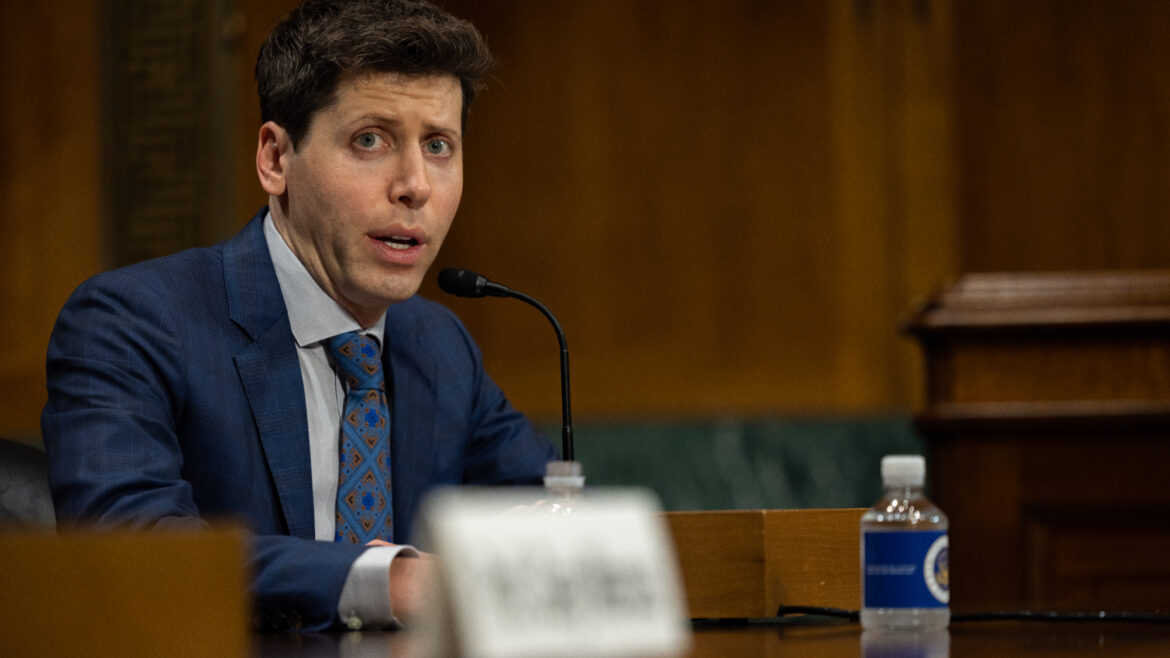
Sam Altman testifying on capital hill.
Gaming Gear

‘Someone is going to lose a phenomenal amount of money’ says OpenAI CEO Sam Altman about unwise AI investment. ‘When bubbles happen, smart people get overexcited about a kernel of truth’

by admin August 18, 2025


OpenAI CEO Sam Altman spoke to assembled reporters at a dinner in San Francisco late last week on the topic of, you guessed it, AI, the applications of AI, and the vast sums of money moving behind the scenes to fund it. Despite being one of the most vocal advocates of the tech, Altman had some words of caution for investors jumping on the artificial intelligence train.

According to The Verge, Altman said it was “insane” that AI startups consisting of “three people and an idea” are receiving huge amounts of funding off the back of incredibly high company valuations, describing it as “not rational behaviour.”

“Someone is going to lose a phenomenal amount of money. We don’t know who, and a lot of people are going to make a phenomenal amount of money,” said Altman.


Related articles

“When bubbles happen, smart people get overexcited about a kernel of truth. If you look at most of the bubbles in history, like the tech bubble, there was a real thing.” said Altman, referencing the infamous dot-com bubble of the late 1990s. “Tech was really important. The internet was a really big deal. People got overexcited.”

That being said, Altman stopped short of calling investment in AI overall a bad idea for the economy in general: “My personal belief, although I may turn out to be wrong, is that, on the whole, this would be a huge net win.”

At the same dinner, Altman confirmed that OpenAI would still be spending vast amounts of money (partially provided, presumably, by the likes of Softbank and the Dragoneer Investment Group in OpenAI’s latest $8.3 billion funding round) to keep the company at the top of the AI financial leaderbooks.

“You should expect OpenAI to spend trillions of dollars on data center construction in the not very distant future,” Altman said. “You should expect a bunch of economists to wring their hands.”

Keep up to date with the most important stories and the best deals, as picked by the PC Gamer team.

Well, it certainly appears to cost a whole lot of moolah just to keep the good ship OpenAI afloat. The company has raised staggering sums of cash over the past decade to develop and run its various AI implementations, the most famous of which being ChatGPT. Reports last year indicated that OpenAI had spent $8.5 billion on LLM training and staffing for its generative AI efforts, while other analysts have predicted it costs $700,000 a day to run ChatGPT alone.

The Information recently projected that OpenAI would be burning through $20 billion in cash flow by 2027, with the company said to be hopeful that investors like Softbank would stump up another $30 to $40 billion to continue funding its operations.

A CG render of Meta’s planned Hyperion data center, superimposed over Manhattan. (Image credit: Meta)

Still, those spending figures don’t appear to be in the trillions yet, although that estimated sum is perhaps of little surprise to those of us that keep an eye on AI data center expansion.

Given that Altman’s rival, Elon Musk, has been booting up and expanding xAI’s Colossus supercomputer with incredible speed, and with the news that Meta is expanding its data center operations at such a rate it’s currently having to house a significant portion of its racks in nearby tents, OpenAI will feel the need to keep up—and to do that it needs to spend (and raise) huge amounts of cash over the next few years.

One would assume that Altman is confident enough in his company’s efforts to place its investors on the “going to make phenomenal sums of money” side of things, but his comments should perhaps serve as a warning to those looking to jump in with both feet without correctly judging the landing. Someone has to lose in the great AI race, I suppose. And as to which companies survive, and which come to a sticky end? That remains very much an open question for now.

Best graphics card 2025

All our current recommendations


Source link

August 18, 2025 0 comments
0 FacebookTwitterPinterestEmail
  • 1
  • 2
  • 3

Categories

  • Crypto Trends (1,098)
  • Esports (800)
  • Game Reviews (772)
  • Game Updates (906)
  • GameFi Guides (1,058)
  • Gaming Gear (960)
  • NFT Gaming (1,079)
  • Product Reviews (960)

Recent Posts

  • This 5-Star Dell Laptop Bundle (64GB RAM, 2TB SSD) Sees 72% Cut, From Above MacBook Pricing to Practically a Steal
  • Blue Protocol: Star Resonance is finally out in the west and off to a strong start on Steam, but was the MMORPG worth the wait?
  • How to Unblock OpenAI’s Sora 2 If You’re Outside the US and Canada
  • Final Fantasy 7 Remake and Rebirth finally available as physical double pack on PS5
  • The 10 Most Valuable Cards

Recent Posts

  • This 5-Star Dell Laptop Bundle (64GB RAM, 2TB SSD) Sees 72% Cut, From Above MacBook Pricing to Practically a Steal

    October 10, 2025
  • Blue Protocol: Star Resonance is finally out in the west and off to a strong start on Steam, but was the MMORPG worth the wait?

    October 10, 2025
  • How to Unblock OpenAI’s Sora 2 If You’re Outside the US and Canada

    October 10, 2025
  • Final Fantasy 7 Remake and Rebirth finally available as physical double pack on PS5

    October 10, 2025
  • The 10 Most Valuable Cards

    October 10, 2025

Newsletter

About me

Welcome to Laughinghyena.io, your ultimate destination for the latest in blockchain gaming and gaming products. We’re passionate about the future of gaming, where decentralized technology empowers players to own, trade, and thrive in virtual worlds.

Recent Posts

  • This 5-Star Dell Laptop Bundle (64GB RAM, 2TB SSD) Sees 72% Cut, From Above MacBook Pricing to Practically a Steal

    October 10, 2025
  • Blue Protocol: Star Resonance is finally out in the west and off to a strong start on Steam, but was the MMORPG worth the wait?

    October 10, 2025

Newsletter

@2025 laughinghyena- All Right Reserved. Designed and Developed by Pro


Back To Top
Laughing Hyena
  • Home
  • Hyena Games
  • Esports
  • NFT Gaming
  • Crypto Trends
  • Game Reviews
  • Game Updates
  • GameFi Guides
  • Shop

Shopping Cart

Close

No products in the cart.

Close