Laughing Hyena
  • Home
  • Hyena Games
  • Esports
  • NFT Gaming
  • Crypto Trends
  • Game Reviews
  • Game Updates
  • GameFi Guides
  • Shop
Tag:

Money

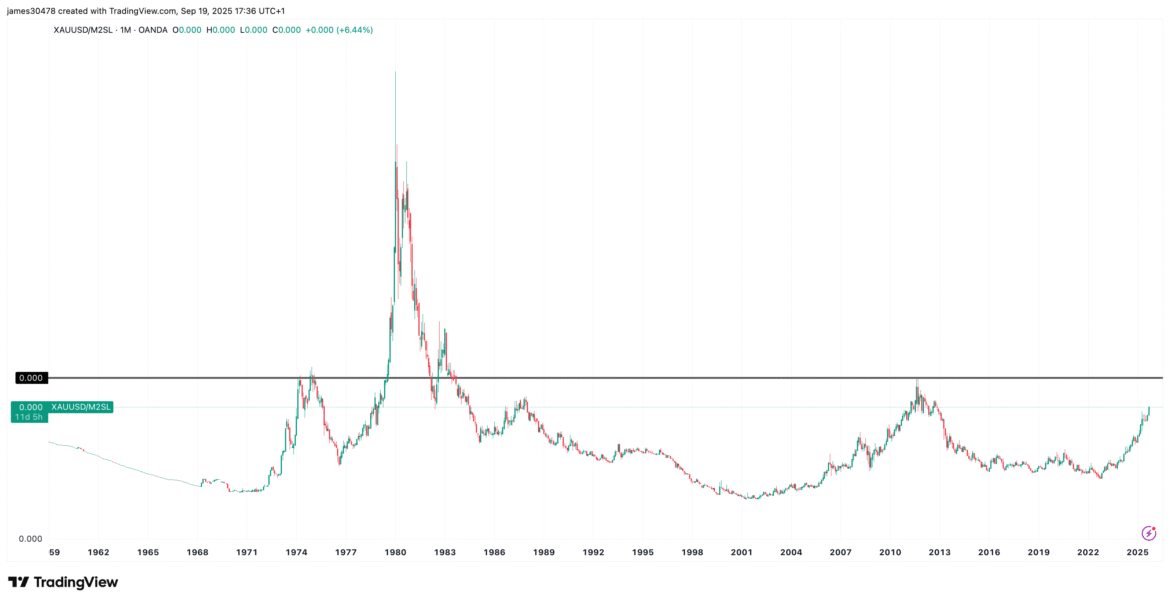
Bitcoin relative to M2 money supply
GameFi Guides

Performance Through the Lens of Money Supply

by admin September 21, 2025


Gold has been one of the strongest performing assets in 2025, rising 38% year to date, outpacing bitcoin23% advance. It’s no secret, though, that bitcoin has done wildly better than gold (and pretty much everything else) over its short lifespan.

A check of the two popular inflation-resistant assets against a broad measure of U.S. money supply (known as M2) yields further insight about their performances.

Adjusted for M2 growth, gold — despite its recent strong run — remains below its 2011 peak and roughly the same level as it was in 1975. The all-time high for gold against M2 occurred in 1980.

Bitcoin tells a different story. Each bull cycle has seen BTC hit a record versus M2, including last month when bitcoin touched both an absolute all-time high as well as a new high relative to money supply.

Bitcoin relative to M2 money supply (TradingView)

This contrast could highlight the different roles of the two assets. Gold continues to serve as a long-standing hedge and a stabilizer in portfolios, while bitcoin’s behavior shows how new forms of money can respond differently to an era of rapid monetary expansion.


Source link

September 21, 2025 0 comments
0 FacebookTwitterPinterestEmail
"HBAR price chart showing a 3% decline from $0.25 to $0.24 amid strong selling pressure and resistance, with recent consolidation near $0.24 suggesting potential stabilization."
NFT Gaming

Bitcoin Is Building a Base as ‘OG’ Hodlers Exit and Big Money Preps

by admin September 20, 2025


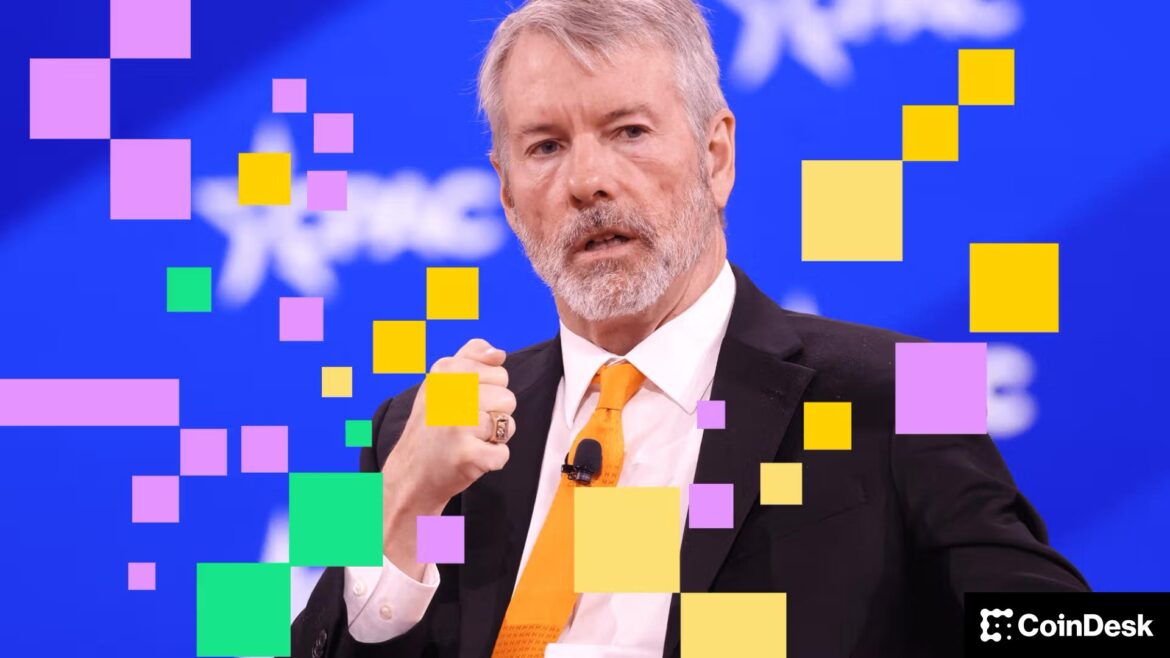
Bitcoin’s recent stretch of muted price action is a sign of strength, not weakness, according to Strategy (MSTR) Executive Chairman Michael Saylor.

Speaking on an episode of Natalie Brunell’s “Coin Stories” podcast released Friday, Saylor argued that the market is in a consolidation phase as long-time holders sell portions of their stacks and institutions prepare for bigger allocations. “If you zoom out and look at the one-year chart, bitcoin is up 99%,” he said. “The volatility is coming out of the asset — that’s a really good sign.”

Saylor described the current environment as one where early adopters who bought bitcoin at single-digit prices are selling modest amounts to fund real-world needs, such as housing or tuition.

He likened it to employees of a high-growth startup liquidating stock options, not as a loss of faith but as a natural step toward maturity. That process, he said, is paving the way for corporations and large funds to enter once volatility falls.

He dismissed concerns that bitcoin’s lack of cash flows makes it inferior to traditional investments, pointing out that many valuable assets — from land to gold to art — also lack income streams.

“The perfect money has no cash flows,” he said, adding that institutions anchored in decades of equity-and-bond frameworks have been slow to adapt but will eventually be forced to rethink.

Going beyond store of value

A central theme of the conversation was Strategy’s push to reengineer credit markets by using bitcoin as collateral, moving beyond the simple store-of-value narrative.

Saylor said conventional bonds are “yield-starved” and under-collateralized, while bitcoin-backed instruments can be structured to offer higher yields and lower risk.

He outlined the firm’s suite of preferred-stock products — Strike, Strife, Stride, and Stretch — which are designed to provide investors with yields of up to 12% while being heavily over-collateralized with bitcoin.

By doing so, Saylor argued, the company is giving bitcoin cash-flow-like qualities, allowing it to slot into both credit and equity indexes. “We’re giving bitcoin cash flow,” he said, framing it as a way to broaden institutional adoption and draw more capital into the ecosystem.

The S&P 500 question

Saylor also addressed why Strategy has yet to be included in the S&P 500 despite its scale and profitability.

He said the firm only became eligible this year following changes in accounting rules and noted that Tesla also waited beyond its first quarter of eligibility. He expects eventual inclusion as the market grows more comfortable with the bitcoin treasury model, which he dates to late 2024.

Transformative years

Looking ahead, Saylor portrayed the rise of bitcoin treasury companies as analogous to the early days of the petrochemical industry, with multiple products, business models, and fortunes emerging in a chaotic but transformative decade.

He predicted bitcoin would continue to appreciate at an average rate near 29% annually over the next two decades, fueling new forms of credit and equity instruments.

In closing, he struck an optimistic tone about both bitcoin and society more broadly, saying much of today’s online toxicity is amplified by bots and paid campaigns rather than genuine discontent.

“Bitcoin is a peaceful, fair, and equitable way for us to settle our differences,” he said. “As everyone embraces it, peace will spread, equity will spread, fairness will spread.”


Source link

September 20, 2025 0 comments
0 FacebookTwitterPinterestEmail
Fortnite creators will soon be able to sell in-game items to make more money, but are Creative Mode offerings like Steal A Brainrot what players want?
Game Reviews

Fortnite creators will soon be able to sell in-game items to make more money, but are Creative Mode offerings like Steal A Brainrot what players want?

by admin September 18, 2025


Epic will soon allow Fortnite developers to sell in-game items from their Fortnite islands, allowing creators to make more money.

This will begin in December 2025, and for the first year developers will earn 100 percent of the V-Bucks value from sales – usually this is at 50 percent.

The news comes as Fortnite’s Creative Mode of fan-made content is proving exceptionally popular – recently, the Fortnite version of Roblox meme game Steal A Brainrot had more concurrent players than Epic’s official maps.

The Power of Megazord | Fortnite Battle Royale Gameplay TrailerWatch on YouTube

Fortnite’s Creative Mode first launched back in 2018, and allows players to create their own maps and modes. Epic then offers a payout based on engagement – last year it paid out $325m to creators, with seven receiving over $10m.

Since Creative Mode’s release, Epic has revealed, players have spent over 11.2bn hours across 260,000 creator-made islands, resulting in $722,000,000 paid to creators.

The amount of money creators will make in Fortnite is only going to increase when they’re able to sell in-game items directly from their islands, in addition to receiving an engagement payout from Fortnite’s item shop sales.

Epic has a formula for calculating the V-Bucks value in US dollars each month, which takes all real-money spending towards V-Bucks (in dollars), subtracting platform and store fees, and dividing by total V-Bucks spent. With creators usually earning 50 percent of V-Bucks value from sales, this equates to 37 percent of retail spending. Roblox offers 25 percent, by way of comparison.

In addition, Epic will add a Sponsored Row to Fortnite’s Discover, meaning creators can pay for increased visibility by bidding for placement in the row. That’s a further investment in generating more in-game sales.

Epic has also announced Fortnite Creator Communities, to allow creators to share updates directly with players on the web and within Fortnite. Creator posts will be text and image-based and allow for sharing information and gathering feedback – much like on Steam.

Image credit: Epic

But despite the huge success of creator islands, is this really what Fortnite players want?

Take Steal A Brainrot. It’s proven to be a phenomenal success – as Dexerto reported, it had 24 million players in a single day across both Roblox and Fortnite versions. While the Roblox version peaked at 23.4 million players in a day, Fortnite’s version contributed 542,000. That vastly outweighs Fortnite’s primary Battle Royale modes that generate around 100,000 players during peak weekend play.

“They are promoting AI slop, copy and paste creative maps more than their own BR season,” wrote one player on reddit. “This is going to prove to be extremely unhealthy for the game in general I believe, and with the already low player counts this season Epic needs to do something to steer back to the basics, this metaverse stuff has RUINED Fortnite. This game has become a corporate shell of what it once was and I believe the remainder of this year will very much so make or break Fortnite as a whole.”

“Stuff like this cluttering the overview makes me disinterested in random creative maps. Those who put genuine effort into their maps often get hardly any attention,” wrote a user on a separate reddit post. Others point to the casual nature of user-made maps, as well as the high XP offered, as reasons for players to flock over.

Still, this new update for Fortnite creators is further shifting the game away from its Battle Royale roots into a Roblox-rivalling metaverse.


Source link

September 18, 2025 0 comments
0 FacebookTwitterPinterestEmail
Galaxy Digital Said to Plan Its Own Tokenized Money Market Fund
NFT Gaming

Galaxy Digital Said to Plan Its Own Tokenized Money Market Fund

by admin September 17, 2025


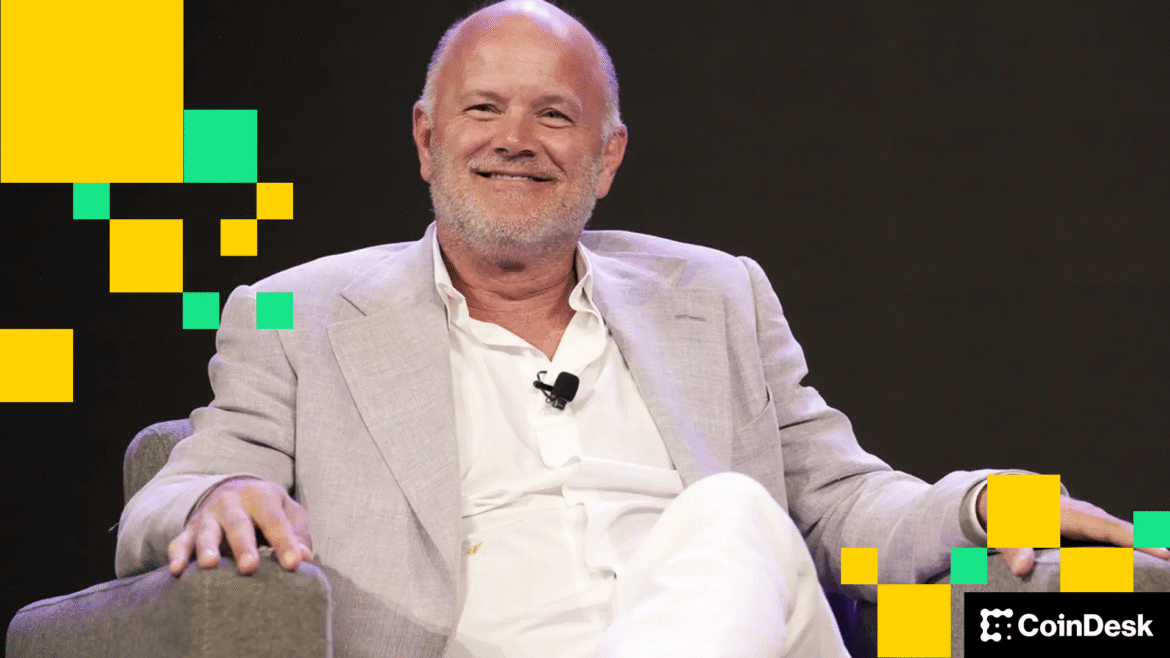
Galaxy Digital (GLXY), the digital asset investment firm led by Mike Novogratz, is planning to release a tokenized money-market fund, according to two people familiar with the plan.

The New York City-based company is aiming to bring a more crypto-native twist to the range of traditional finance-led tokenized fund offerings, such as BlackRock’s BUIDL and Franklin Templeton’s BENJI token, said the people, who declined to be identified.

The Galaxy fund, which will debut in the coming months, will ultimately be available on the Ethereum, Solana and Stellar blockchains. That said, it won't appear on all three blockchains on day one, according to one of the people. Anchorage Digital is to be the custodian of the new fund.

“The overarching ambition is to use the power of tokenization to offer instant liquidity, and there’s a lot of innovation around that to come,” the person said. “Galaxy has had the benefit of seeing BUIDL and some of the other ones out there in the market, and seeing who's engaging with these funds, how they're engaging with them, and how that could be better.”

A representative for Galaxy Digital declined to comment on the fund. Anchorage Digital did not immediately respond to requests for comment.

BlackRock’s BUIDL fund, which now has a market cap of around $2.2 billion, went live on the Solana blockchain in March after debuting on Ethereum.

Read more: Galaxy Digital Tokenizes Its Shares on Solana With Superstate


Source link

September 17, 2025 0 comments
0 FacebookTwitterPinterestEmail
As government money tightens its grip on fighting games, the push back to grassroots events gains momentum
Game Reviews

As government money tightens its grip on fighting games, the push back to grassroots events gains momentum

by admin September 11, 2025


Last week, the news broke that the Saudi Arabian city project Qiddiya had acquired an American talent management and brand consulting firm called RTS. Now, you may not have heard of RTS, but you may have heard of the video game event it co-owns: Evo.

Evo, the largest fighting game tournament in the world, is now owned in-part by the Saudi Arabian government. This government, criticised heavily for its human rights record, has brought the jewel of the fighting game community into its ever-growing sportswashing venture.

The reaction was loud and largely negative in the wake of this announcement, with a wave of fighting game fans and professionals decrying the move, pledging to never attend an Evo again, and urging others to focus their interest and money towards community-owned grassroots events. But will this manifest in reality, or remain just a topic-of-the-week on social media? To find out, I reached out to those who’ve dedicated a chunk of their lives to the genre to find out if the sentiment to go back to basics is real.


To see this content please enable targeting cookies.

Manage cookie settings

“I fully expected it – it was a little sooner than I thought it would – but at some point it was bound to happen” says Jack “Kenno” Kenwright, a UK-based commentator. He continued by pointing to other games and the growing Saudi government presence there: “Rocket League, League of Legends, Counter Strike… All these games have already been largely assimilated. They’re being supported by certain companies that some people might have issues with, some people might not care about, and some people might be fine with. That’s been going on for ages and eventually it was going to come to the FGC. It’s the monkey’s paw isn’t it? People want a cheaper event with higher budgets and prize pools and it’s like, well, you got it!”

Laura “Femshep” Genn, an up-and-coming competitive Street Fighter 6 player, echoed this lack of shock: “It was never going to stop at the Esports World Cup. You don’t pour that kind of money into something and decide, we’re good. We don’t need any more opportunities to present the messages that EWC is putting out there politically. I’m a bit of a chronic optimist so I had hoped it would have been at least a bit less overt for a while longer.”

While some like Kenwright and Genn saw this coming and were prepared with pre-existing opinions on the matter of Saudi Arabian sportswashing, others had the recent acquisition act as a push to educate themselves. People like Tekken content creator and coach Stephen “Speedkicks” Stafford, whose reservations lie in the general concern around governmental involvement rather than specific concerns around Saudi Arabia.

“I’m not personally into doing events affiliated with governments, regardless of what government it is. I’m not prosecuting any specific government, I just don’t think we should be doing politically-enforced events. After looking into what the Saudi government has been doing and the WWE events there I was like, I don’t like this as the future of fighting games. I don’t think there’s any specific nation where I’d be happy if they bought Evo.”

“At least with the rich guys who came in in FGC money-pumps past, who were like I’m gonna own this or buy this, they see no return and they leave. We know what they’re here to do – they’re here to make money. They may be misguided, as long as they believe they can make money, we take their money and that’s great for us! We get this money pump event and move on. But when it’s a government-funded event it’s different – their interest doesn’t have to be profit. And here there’s an interest beside money.”

What does the future hold for EVO? The public opinion is sour. | Image credit: Evo / Sony Interactive Entertainment

With all this in mind the big question is clear: would these people with aspirations and careers tied to fighting games attend Evo now that it’s under this controversial new management? The answers varied, but all believed that a refocus on community-led grassroots events was the best path forward.

Stafford expressed that for him, this is where the line is: “Other people are looking at it from a more moral disagreement side, they don’t want any association and that’s where they draw their line. For me it’s about the health of the scene, I want it to thrive. When EWC was just a motivator that got people to play and got them money and sponsors, that was fine. Now, the hard ownership of the most prestigious open-bracket tournament… I don’t know what their plan is but we know the agenda is they’re selling this city. We’re in their hands now.”

For Kenwright, he’d still likely go if offered a commentary job at Evo, but would prefer to attend other US-events first: “I think at the moment it hasn’t changed my perspective of Evo, because I already would rather go to other events like Combo Breaker, Texas Showdown, CEOtaku etc. I would rather go to them first before I fully ingest myself into Evo as I’ve never experienced the American scene. It’s still second priority.

“As for working for Evo, it’s still a goal, it will always be a goal, but obviously it’s one that I’m a little bit more hesitant about now as I have a lot of friends in the Guilty Gear Strive and Granblue scenes who look at it another way. Obviously my goals are my goals and they won’t be affected by other people, but if you go to those events and to certain places it’s… you’re essentially saying your stance when you take those roles. But, if I was still called up for work, I’d probably still go.”

Street Fighter 6 publisher, Capcom, has received over $1 billion in investment from the Saudi Arabian public investment fund. | Image credit: Capcom

Genn is certain that they wouldn’t feel comfortable going to Evo, even if they believe that the event will remain an enjoyable experience for the average attendee. “Right now I don’t think I would feel comfortable going back to Evo. I don’t expect the event to change in any significant way in terms of attendee experience. I had a lovely time this year just like I did at every major I attend, and had a lovely time. If anything, with more money coming in the production quality might improve. But I don’t think that amount of money coming in will happen if Evo isn’t playing the same ads and messaging, social media posts, and the same lines in interviews as has been said at the EWC.

“With the EWC there’s a glaring absence of women, I’m sure there are some, but not as many as I’ve seen in other places. There are no visibly queer people at all because the message they sent when asked if people would be safe attending the EWC is to respect their laws. Those laws, whether or not they’re always enforced, are if you are visibly queer you can be put to death. The implication being ‘just play the game, and don’t be visibly queer in any way’.”

“I already would rather go to other events like Combo Breaker, Texas Showdown, or CEOtaku.”

So what will happen now? Unfortunately, from the perspective of those interviewed, a sizable portion of the playerbase who wish to continue chasing a career in the fighting game space has little choice but to swallow any disdain they might have. As Stafford put it: “The most annoying thing about this is it’s clearly designed to be successful. Fighting games were just at the point where people could escape their livelihood, but not at the point where people could boycott certain big events. They aren’t receiving a salary if they aren’t attending Evo, EWC, to do all that stuff. Aside from the prize pools, they just wouldn’t be in the money-making ecosystem. So they got us! It’s not reasonable to expect top players to take a moral stand when they have to eat.”

Genn also acknowledges the tricky situation, but believes what’s key at this point is honest conversations around what has happened and why it’s happening: “People need to be able to come to their own conclusions on what decision they’d like to make in light of their personal ethics, and what they would like their money to support. If you decide the best thing to do is to be involved, loud, and visible? Okay! If you decide like me you don’t want to be at an event funded by that source? Okay! But let’s not pretend that’s not where the money is coming from, or there aren’t legitimate concerns.

“It is becoming increasingly impossible to engage in the serious competitive part of the FGC in a prolonged capacity without being willing to participate in the EWC. If only because the large sponsorships that fund your ability to attend large tournaments are funding you because they anticipate you attending the EWC, and they want their brand there. I understand that not every player can say I’m not going to attend this as it would functionally be the end of their career, and I don’t think it’s our place to make that call for everybody. But likewise I do think it’s moral cowardice to parrot phrases like ‘there’s no ethical consumption under capitalism’ as a shield for decisions we make.”

This year’s Esports World Cup was, controversially, held in Riyadh. | Image credit: Esports World Cup.

For Kenwright, Genn, and Stafford, what’s crucial now is to support local events that lack that murky governmental conundrum, to refocus on what built up the scene into what it was in the first place – community run events where money takes second place to the social and competitive experience.

“If you do have trouble with this news, don’t just show it on Twitter by making a quick post, show it by supporting your locals,” stated Kenwright. “Supporting a place where you feel safe, or just somewhere you know you’ll enjoy. My stance will always be: put your money where your mouth is.”

“The coolest thing about the FGC in my opinion is that we’re on the smaller side of esports, but if you were to remove esports things like the potential to get paid, to get famous… Fighting games would probably have the most players left over,” stated Stafford. “You’ll have the most players willing to show up for no money, just to have a good time with some cool people.”

Stafford continued: “With fighting games it’s important we still protect that. So in my mind, I won’t be associated with those bigger clout events. Anything EWC affiliated, EWC-partnered events like Combo Breaker, CEO. I won’t be restreaming or talking about them on my platform at all. We’ll still have a good time as we revert to more FGC and less esports. I want people to know there’s still an avenue for that experience that isn’t giant esports Saudi Arabian tournaments.

I won’t be restreaming or talking about them on my platform at all.

“That way, in a few years if Saudi Arabia gets bored and the community has been a great means-to-an-end, their city is huge and they don’t need fighting games, the FGC will survive.”

For Genn, now’s the time for people to go out and support their local communities. Failing that, it’s time to start your own. “The majority of people have a local they can go to, that they’ve never attended. And if there isn’t, they can start one. There are all kinds of amazing events at a small scale. The heart of the FGC is a local where you and your friends are there for the love of the game. It’s called the fighting game community, not the fighting game prize pot. It’s always been about the people. The best way to show we value the prize pot is to recognise there’s value to be found in an event where you win and get $20 or less.”


Source link

September 11, 2025 0 comments
0 FacebookTwitterPinterestEmail
Humus walking around
Product Reviews

I jumped into the management god game Sintopia, only to have all my devil workers go on strike because I spent too much money on punishing sinners

by admin September 9, 2025


Despite my love for management sims and all my best intentions when playing them, something always ends up going wrong. The real game isn’t to see how long I can keep the charade up, but how much I can manage to get done within the relatively short window of peace before everything goes to Hell.

The fact that Sintopia takes place in Hell half the time probably should have warned me about how well my antics would go, but I didn’t take the hint. Instead, I started my new job as manager of Hell and overlord of the humus, a sentient population of chickpeas.

(Image credit: Team 17)

Sintopia is kind of like two games in one. The overworld plays like a god game that has you casting spells to influence the humus. They go about their daily business with pretty limited intervention from you, farming crops, cutting down trees, electing a monarch to rule over them, and exploring the map to find new treasures and expand their village.


Related articles

I did spend a little bit of time helping them, like using a wind spell to blow away vicious animals that would attack hunting parties or ringing bells outside their homes at night to stop them from overpopulating the map. But if you asked the jumus, they probably would have a different, more violent story to tell, as to make money in Sintopia, you need to process souls, and to get souls to process, you need to kill humus.

The flipside of Sintopia is a management game located down in the belly of Hell. Here, you process the dead humus’ souls, squeeze all the sins that they’ve built up in the overworld out of them for cash and then send them on their way to be reincarnated in the overworld.

(Image credit: Team 17)

Your sin processing plant, like most management games, starts simple: Just build a couple of roads and buildings to help you extract all the humus’ sins. There are also basic buildings which drain the humus of their sins, earning you cash as it does so.

But these functions extract minimal profit out of the process. If you want to maximise your cash, you’ll need to start researching and investing in Sin Punishment Specialists. You can unlock rooms dedicated to each of the seven deadly sins: lust, greed, sloth, wrath, envy, pride, and gluttony.

Keep up to date with the most important stories and the best deals, as picked by the PC Gamer team.

I lacked the one thing they really wanted: a good wage and a nice work environment.

These will unlock buildings that you can place and send humus to if they have a particularly high meter for a specific sin. It’ll completely deplete their sins and give you more cash so you can build more infrastructure, like breakrooms for your demon workers, and give your employees raises or just pay them a fair wage. Something I may have forgotten to do:In my haste and greed, I got carried away with killing humus to fuel Hell’s production lines and exploiting the environment to build more money-making rooms, and forgot about looking after my employees.

I built them a breakroom, put up a few inspirational posters, and even set up a happy balloon demon to motivate them, but I lacked the one thing they really wanted: a good wage and a nice work environment.

Image 1 of 5

(Image credit: Team 17)(Image credit: Team 17)(Image credit: Team 17)(Image credit: Team 17)(Image credit: Team 17)

Lewis was the first demon worker to go on strike. I pushed him aside, kicking the ungrateful worker into some lava and opting to hire someone else for less money. But the peace didn’t last long, as after a while every single demon worker went on strike, seizing the means of production and stopping the cash flow.

Armed with the knowledge that my actions actually have consequences, I started a new save, with an eagle eye at all times on my employees’ wages and happiness. Luckily, this time things turned out better as I slowly built up production alongside my valued staff in Hell and the chosen monarch of the humus, Tiberius Snakenelly, who inspired his people to work hard and increase productivity in the overworld.

Even after all of these antics, I feel as if I’ve only scratched the surface of Sintopia. There’s so much room to perfect Hell’s production lines with intricate layouts, like using sorting gates that section particular humus into specific roads, so you can create the most efficient layout possible.

Then there’s everything that can play out in the overworld, like killing kings who don’t inspire their subordinates, fighting off rogue groups, and having to deal with an end-of-the-world type scenario. If you fail to squeeze all the sins out of a humus, their sin meter will reach 100% and this will turn them into a demon who will set up shop in the overworld and periodically launch attacks on your humus population. I haven’t got to this point yet, but it’s probably just a matter of time before it happens.


Source link

September 9, 2025 0 comments
0 FacebookTwitterPinterestEmail
Jean Luc appears as a Lego.
Game Updates

TNG Enterprise I Will Glady Spend Too Much Money On

by admin September 9, 2025


Have we hit peak licensed Lego set? Maybe. The brick builder toy maker has been releasing more and more elaborate sets based on famous franchises at higher and higher prices. The new Lego Death Star will be $1,000. What fools would pay that much for plastic? But now Lego has teased an upcoming Star Trek: The Next Generation set that’s probably the Enterprise-D and now I am that fool.

That’s because on Monday, Lego teased a new collaboration with Star Trek that saw Patrick Stewart’s Captain Jean-Luc Picard beamed into the Enterprise-D as a Lego figurine. Every nostalgic licensed cash-in seems silly until they finally find the one you can’t live without. A Star Trek: TNG Enterprise is about as close to that for me as you can get. I’m not saying I would make poor choices with my family’s finances to make whatever this set is show up on my doorstop at some point, but I’m not saying I wouldn’t either.

While an Enterprise-D Lego set seems like a sure bet with this tease out there, leaks from last month have only fueled fan speculation. Based on a 4chan leak of the images, which may or may not be accurate but certainly looked convincing, the set will be 3600 pieces and ship November 28 for $400. Fans will get the Enterprise plus mini-figures of Picard, Riker, Worf, Geordi, Data, Dr. Crusher, Wesley Crusher, Troi, and Guinan.

The Enterprise-D is the only toy model I ever put together and it’s the only Lego set I’d ever consider spending $400 on. But it’s not the only Star Trek set I’d get out my wallet for. A Klingon Bird of Prey? A Romulan Warbird? Don’t get me started on the Borg Cube. I would, in time, buy and build them all. The best part? Because it’s Lego I can create my very own three-nacelle Enterprise from the TNG series finale “All Good Things.” Fine. You win Lego. Make it so!


Source link

September 9, 2025 0 comments
0 FacebookTwitterPinterestEmail
Grayscale Launches Ethereum Covered Call ETF as Money Rushes Into ETH Funds
Crypto Trends

Grayscale Launches Ethereum Covered Call ETF as Money Rushes Into ETH Funds

by admin September 3, 2025


Grayscale, the world’s largest digital asset investment manager, has launched a new exchange-traded fund that ties into ether's (ETH) recent market momentum.

The Grayscale Ethereum Covered Call ETF (ETCO) began trading Thursday, offering exposure to ether with an options-writing strategy designed to generate steady income.

The launch comes as ether, the native token of the Ethereum blockchain, has outperformed bitcoin (BTC) in 2025, rising 34% year-to-date versus BTC's 20%

Behind the gains is renewed retail and institutional interest, evidenced in August by surging inflows into the spot ETH ETFs that dwarfed those which headed into the BTC funds.

Wall Street firms have increasingly adopted the blockchain to streamline processes in their trading and settlement systems, creating a flow of capital into the asset that has lifted demand across both spot and derivative markets.

ETCO aims to capture that interest while providing a buffer against volatility. The fund systematically sells call options on Ethereum-linked exchange-traded products such as the Grayscale Ethereum Trust ETF (ETHE) and Grayscale Ethereum Mini Trust ETF (ETH). The premiums generated from those options are distributed to shareholders on a bi-weekly basis, making ETCO an “income-first” strategy that may appeal to investors seeking cash flow.

“Grayscale Ethereum Covered Call ETF is designed to complement an investor’s existing Ethereum exposure by adding an income component,” said Krista Lynch, senior vice president of ETF capital markets at Grayscale.

Covered call strategies are common in equities, where they help investors monetize volatility while potentially reducing downside risk. Grayscale is applying the same logic to crypto markets, where ether’s price swings and liquidity create opportunities for option premiums.

The fund’s primary goal is generating current income, with a secondary aim of capturing ether-linked returns. By writing call options close to the spot price, ETCO seeks to turn the token’s volatility — which often deters traditional investors — into a source of yield.

This product joins a growing line of income-focused crypto funds at Grayscale, which already includes the Bitcoin Covered Call ETF (BTCC) and the Premium Income ETF (BPI).


Source link

September 3, 2025 0 comments
0 FacebookTwitterPinterestEmail
AI takes over money management: but will it work?
GameFi Guides

AI takes over money management: but will it work?

by admin September 1, 2025


AI is everywhere. It’s even shaping our culture. A recent New Yorker article critically examined this phenomenon, stating that artificial intelligence could serve as our own personal Scheherazade, feeding stories about ourselves and each other. This, they believe, will pull us into alternate realities and away from the one we collectively share.

While the article portrays a skeptical and fearful outlook on AI’s influence on human culture, there is one area where AI is undoubtedly useful and welcome: finance. 

Money management today, especially with the numerous apps out there, is exhausting at best and dangerous at worst. Because of the fragmented systems users are forced to endure, they often deal with failed transfers between accounts, unexpected fees, and payments stuck in limbo.

Managing crypto is just as, if not more, messy. With wallets, bridges, gas fees, and networks that don’t communicate with each other, even expert users are left confused.

But AI can offer real, lasting solutions to these problems. 

AI in finance

AI in money management is an emerging and fast-growing sector. Earlier this year, we saw Kata.ai, one of Indonesia’s most prominent AI innovators, blend advanced natural language processing, voice recognition, and AI-driven automation in banking. Kata.ai’s solutions range from chatbots to voice assistants and digital avatars, all designed to enhance customer experience and operational efficiency in financial services. 

However, the transformative solution that shines above the rest is HAIA. HAIA might seem like a regular run-of-the-mill OS at first glance, but this is no ordinary app. HAIA is the first AI-driven financial assistant that connects web2 and web3 money. It’s a financial assistant that understands what users are trying to do and helps anyone get there with fewer steps, fewer errors, and far less stress. 

But prospective users want to know: What does HAIA offer and how well does it work?

How does HAIA work?

According to the team behind HAIA, the Haust Network, users won’t need to search for the right protocol or wallet once they start utilizing HAIA’s capabilities. All they need to do is communicate with this AI assistant and tell it what they need. HAIA takes care of the rest.

Let’s say users want to send $1,000 to friends in another country. However, they don’t want to spend their well-earned weekend Googling about stablecoins, bridging fees, or whether their wallet supports a certain network. All they want is for the money to be transferred. Through HAIA, a user just has to say “send my friend Bob $1,000 of USDC with the lowest fees possible,” and HAIA does the rest.

Another use case is yield. Users want to earn yield on idle USDC. But they don’t want to chase APYs through farming dashboards or waste time calculating gas costs across chains. They just want their cash safely put to work. And HAIA does this job well. 

Yet another one of HAIA’s standout features is that it lets users grant the agent temporary permissions to perform specific actions with specific amounts, without handing over private keys. It can execute anything from a simple command such as “Sell SOL when it reaches $500” to “Swap SOL for XRP at $500 with a maximum 1% slippage, then deposit $300 worth of XRP in the highest-yield contract for 2 months, and send the rest to a stablecoin wallet.”

HAIA and Haust Network’s role in the future of finance

The team behind the inventive HAIA is the visionary Haust Network. HAIA is the assistant layer for the Haust wallet, which itself can connect to other wallets and banks. With Haust’s links to over 6,000 banks worldwide, users can tie in their existing accounts or even open new ones as the network expands. 

Built this way, Haust becomes the payment layer for an emerging agentic web, with HAIA acting as the intelligent interface that makes both traditional finance and web3 feel like one system.

It remains to be seen whether HAIA and the Haust Network can achieve their ambitions of transforming the future of finance, but for now, they are helping digital nomads adapt, giving DeFi users an edge, and offering everyone else a clearer way to manage their money. 

To learn more about HAIA, visit the official website and socials. 


Source link

September 1, 2025 0 comments
0 FacebookTwitterPinterestEmail
A fairer test of what makes good money
Crypto Trends

A fairer test of what makes good money

by admin August 30, 2025


Disclosure: The views and opinions expressed here belong solely to the author and do not represent the views and opinions of crypto.news’ editorial.

Stablecoins have quickly grown into a prominent market, but that doesn’t mean their staying power has stopped being questioned. The Bank for International Settlements recently brought this matter up once again, with its new report claiming stablecoins fail at three crucial criteria that any good money must satisfy: singleness, elasticity, and integrity. But personally, I can’t quite agree with that assessment. 

Summary

  • BIS critique vs. reality: The Bank for International Settlements claims stablecoins fail at singleness, elasticity, and integrity — but the argument overlooks how these apply in practice.
  • Singleness isn’t absolute: Like bank deposits during crises (e.g., SVB), stablecoins can temporarily deviate, but USDC/USDT still redeem 1:1 and function when banks are closed.
  • Elasticity is different, not absent: Banks rely on settlement delays to create liquidity, while stablecoins settle instantly. Mechanisms like flash loans show that elasticity can be coded in.
  • Integrity cuts both ways: Banks stop less than 1% of illicit flows, while blockchain transparency enables better tracing and even recovery of stolen funds.
  • Work in progress, not failure: Stablecoins don’t need to mimic banks — they just need to preserve value, move efficiently, and maintain trust, often doing so in ways banks can’t.

Admittedly, stablecoins aren’t perfect. Despite achieving considerable growth, the market is still small compared to traditional banking, and predictions about its future advancement have already been dialed back lately. JPMorgan, for example, now sees the stablecoin market reaching $500 billion by 2028 — down by half compared to the trillion-dollar projections that some were betting on just last year. 

Moreover, stablecoins have yet to see widespread adoption beyond crypto-native platforms. In other words, they still have a long way to go before they can become mainstream financial tools or rival banks in scale. 

But that doesn’t mean they fail the three tests BIS used to dismiss them. In fact, I would argue that they might pass them better than banks do. It’s all about how we look at it.

Singleness: A practical perspective

The BIS report argues that stablecoins lack “singleness” — the idea that every unit of money should be worth the same as any other unit. On paper, this sounds reasonable. In practice, however, singleness is never perfect. Even bank deposits can lose value or become illiquid in stressful times.

Take USDC (USDC) and Tether (USDT), the two biggest and most well-known stablecoins. They’re no less “single” than traditional bank deposits. Holders can redeem them for U.S. dollars at face value. Sometimes the market price deviates slightly, but the same can be said for bank deposits. Just look back at the Silicon Valley Bank collapse — some depositors sold their claims at a discount so they could get out faster. That’s not so different from USDC temporarily trading below its peg during the same crisis because people were skittish about where the reserves were held.

Stablecoins, however, offer something banks don’t: the ability to absorb immediate demand. On weekends or holidays, when the banking system is closed, you can still trade USDT or USDC. Tokenized bank deposits — if they ever gain traction — would likely behave the same way. So if we’re fair, stablecoins aren’t failing singleness; they’re just showing how the concept itself faces obstacles in real-world conditions.

Elasticity: Faster doesn’t mean weaker

Next up: elasticity — the idea that a money system should expand or contract to meet real economy demands. The BIS claims stablecoins lack elasticity because they require cash in advance. You can’t spend what hasn’t been minted yet, and additional issuance requires upfront payment by holders.

But here’s the catch: stablecoin transactions settle very differently from traditional banking. With banks, when you transfer funds, it often takes at least one full business day for the money to settle. During that time, banks can effectively “print” temporary money because the same funds might appear in two places at once: the sender’s account still shows the balance while the recipient’s bank processes the incoming payment. This gap is one of the ways banks maintain liquidity and keep payments flowing, even when the actual cash hasn’t moved yet.

Stablecoin transactions work differently because settlement happens instantly on the blockchain. The moment a transaction is confirmed, the funds are transferred — there’s no “money in transit” like there is with banks. That said, it is possible to build crypto mechanisms that mimic bank-like liquidity.

One way of doing that is through flash loans, where essentially “unbacked” stablecoins are borrowed and repaid within the same blockchain transaction. This means liquidity is provided instantly, without the risk of the system being left with bad debt. 

It’s a different model, but it shows stablecoins don’t have to copy banks exactly — they can build elasticity right into the code, settling transactions fast while still expanding when needed for the functioning of the system.

Integrity: Is the banking system really safer?

Finally, the BIS report raises the issue of integrity: how well a money system prevents illicit activity and ensures compliance. Banks have decades of anti-money laundering measures in place. Crypto, by design, is more open — and that worries regulators.

But traditional banking AML is hardly foolproof. UN estimates suggest that less than 1% of financial crime is actually stopped by today’s systems. In crypto, hacks do happen — and they’re incredibly frustrating — but the transparency of blockchains makes tracing stolen funds possible in ways banks can’t match. 

As a result, a significant portion of stolen crypto funds can eventually be recovered. Maybe not all of it, but it’s still far better than the tiny fraction of illicit funds intercepted in the traditional banking system.

Stablecoins are a work in progress — but that doesn’t mean banks win

In short, dismissing stablecoins because they operate differently from banking completely misses the point. Stablecoins don’t need to be banks to succeed — they just need to do what money is supposed to do: hold its value, move when needed, and maintain trust.

On all three fronts — singleness, elasticity, and integrity — the comparison is far more nuanced than the BIS report suggests. If anything, the test should push banks to evolve as well. After all, the future of money isn’t about defending legacy models; it’s about building systems that actually work for the people using them.

Michael Egorov

Michael Egorov is a physicist, entrepreneur, and crypto maximalist who stood at the origins of DeFi creation. He is a founder of Curve Finance, a decentralized exchange designed for efficient and low-slippage trading of stablecoins. Since the inception of Curve Finance in 2020, Michael has developed all his solutions and products independently. His extensive scientific experience in physics, software engineering, and cryptography aids him in product creation. Today, Curve Finance is one of the top three DeFi exchanges regarding the total volume of funds locked in smart contracts.


Source link

August 30, 2025 0 comments
0 FacebookTwitterPinterestEmail
  • 1
  • 2
  • 3

Categories

  • Crypto Trends (1,098)
  • Esports (800)
  • Game Reviews (772)
  • Game Updates (906)
  • GameFi Guides (1,058)
  • Gaming Gear (960)
  • NFT Gaming (1,079)
  • Product Reviews (960)

Recent Posts

  • This 5-Star Dell Laptop Bundle (64GB RAM, 2TB SSD) Sees 72% Cut, From Above MacBook Pricing to Practically a Steal
  • Blue Protocol: Star Resonance is finally out in the west and off to a strong start on Steam, but was the MMORPG worth the wait?
  • How to Unblock OpenAI’s Sora 2 If You’re Outside the US and Canada
  • Final Fantasy 7 Remake and Rebirth finally available as physical double pack on PS5
  • The 10 Most Valuable Cards

Recent Posts

  • This 5-Star Dell Laptop Bundle (64GB RAM, 2TB SSD) Sees 72% Cut, From Above MacBook Pricing to Practically a Steal

    October 10, 2025
  • Blue Protocol: Star Resonance is finally out in the west and off to a strong start on Steam, but was the MMORPG worth the wait?

    October 10, 2025
  • How to Unblock OpenAI’s Sora 2 If You’re Outside the US and Canada

    October 10, 2025
  • Final Fantasy 7 Remake and Rebirth finally available as physical double pack on PS5

    October 10, 2025
  • The 10 Most Valuable Cards

    October 10, 2025

Newsletter

About me

Welcome to Laughinghyena.io, your ultimate destination for the latest in blockchain gaming and gaming products. We’re passionate about the future of gaming, where decentralized technology empowers players to own, trade, and thrive in virtual worlds.

Recent Posts

  • This 5-Star Dell Laptop Bundle (64GB RAM, 2TB SSD) Sees 72% Cut, From Above MacBook Pricing to Practically a Steal

    October 10, 2025
  • Blue Protocol: Star Resonance is finally out in the west and off to a strong start on Steam, but was the MMORPG worth the wait?

    October 10, 2025

Newsletter

@2025 laughinghyena- All Right Reserved. Designed and Developed by Pro


Back To Top
Laughing Hyena
  • Home
  • Hyena Games
  • Esports
  • NFT Gaming
  • Crypto Trends
  • Game Reviews
  • Game Updates
  • GameFi Guides
  • Shop

Shopping Cart

Close

No products in the cart.

Close