
Laughing Hyena
  • Home
  • Hyena Games
  • Esports
  • NFT Gaming
  • Crypto Trends
  • Game Reviews
  • Game Updates
  • GameFi Guides
  • Shop
Tag:

media

Xrp Eyes Breakout After Weeks On Trading Downside
GameFi Guides

Trump Media Buys $105M in Cronos Tokens from Crypto.com

by admin September 5, 2025


Trump Media and Technology Group Corp. (DJT), the parent company of Truth Social, said in an announcement on Friday that it has finalized a purchase agreement with Crypto.com valued at about $105 million. 

The deal involves Trump Media acquiring 684.4 million Cronos (CRO) tokens at approximately 15.3 cents each, paid through a fifty-fifty split of cash and company stock.

Trump Media and https://t.co/vCNztATkNg have closed their purchase agreement today, with Trump Media completing its acquisition of 684.4 million $CRO to be securely stored and staked with https://t.co/vCNztATkNg Custody.

Read more 👉 https://t.co/dugLghtx7r pic.twitter.com/82HNBzsTUh

— Crypto.com (@cryptocom) September 5, 2025

This makes Trump Media one of the larger holders of CRO, and gives it about two percent of the tokens that are currently available in the market. 

Both the CRO tokens and Trump Media shares that were part of the deal cannot be traded right away because they are under a lockup period. Trump Media will keep the tokens safe using Crypto.com’s custody service, and will also stake the tokens to earn extra income.

Devin Nunes, who is the chief executive and chairman of Trump Media, said the company was happy to close the agreement quickly. 

“We’re convinced that CRO has tremendous potential to spread widely as a versatile utility token and a superior form of safe, fast payment and money transfer, and we’re excited to add this innovative asset to our balance sheet.” He said in the press release.

Both firms said the agreement is just one of many partnerships that will bring the CRO token to be used in Trump Media’s platforms Truth Social and Truth+ as part of a rewards program.

In addition, Trump Media recently announced a new company called Trump Media Group CRO Strategy, Inc. This new group has a deal with Yorkville Acquisition Corp., a special-purpose acquisition company, to buy up to 19% of all available CRO tokens.

Moreover, the media has been pushing deep into the world of digital money and finance. Recently, it announced plans to launch crypto investment products and reported holding two billion dollars in bitcoin earlier this year.

Also Read: Pi Network Launches Version 23 Upgrade With New KYC Tools


Source link

September 5, 2025 0 comments
0 FacebookTwitterPinterestEmail
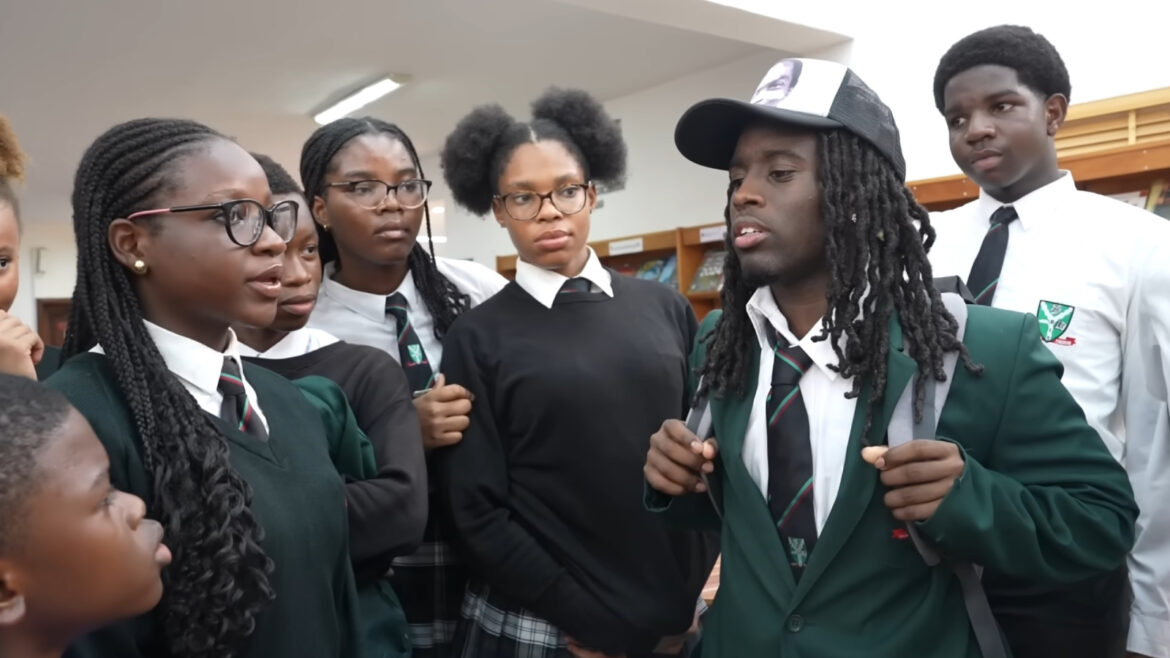
Kai Cenat and Corey2U side by side looking at camera
Esports

Kai Cenat addresses plans to build a school in Nigeria amid social media frenzy

by admin September 2, 2025


Kai Cenat halted Mafiathon 3 right out of the gate in order to address his plans of building a school in Nigeria. This update comes after weeks of fans pestering the social media celeb online.

Back in March 2024, Twitch superstar Kai Cenat visited Nigeria. While there, he was taken to a local school. After seeing the state of the building, with hundreds of students crammed into a single classroom, he pledged to help them however he could.

Article continues after ad

“Whatever they tell me you guys need, we’re gonna make sure you guys have [it],” he said at the time. Upon returning to America, he then doubled down and announced plans to build an entirely new school in Nigeria.

In the year and a half since, fans of the streamer have begun to question the charitable cause. With on-stream updates few and far between, and further donations piling up, it’s become a point of contention, with viewers hounding Cenat for information at every turn.

Article continues after ad

Article continues after ad

Now, he’s delivered. At the very beginning of Mafiathon 3, what’s intended to be a record-breaking Twitch stream, he paused the celeb-filled broadcast to address the situation and clarify progress being made.

Twitch: Kai CenatThe main reason construction hasn’t begun yet is due to complications with the land in Makoko.

Kai Cenat clarifies the status of new school in Nigeria

Two representatives working with Cenat on the project flew in from South Africa and Nigeria, Fanny Moral and Chinedum Umeche respectively, to help provide an update. These partners are from Banwo & Ighodalo, along with Enko Education.

Crucially, the group stressed how “it’s impossible” to build a new school from the ground up in under two years. At least, that’s if they want it done right. Ultimately, they want this school “to last for a long time,” as Cenat stressed. “Beyond me, beyond streaming.”

Article continues after ad

“From land purchase and approvals to construction, staffing, and curriculum,” there’s a great deal involved, as an accompanying slideshow conveyed.

The first factor listed there has been the main reason for delays, they explained, as due to the “topography, it’s difficult to build a school in that community.”

Article continues after ad

Specifically, Cenat visited Makoko, which has been described as the “Venice of Africa,” due to its position amid streams of open water. As such, the team has decided to move the project to Yaba, Lagos, which is located “next to Makoko.”

Article continues after ad

When established, students from Makoko will still receive free education, while students travelling from other areas will pay.

Kai Cenat brought officials from Nigeria and South Africa to explain why the school hasn’t been built yet 👀

The Reasons:
– Finding Land
– Buy the Land
– Authorization from the Government
– Build the School
– Hiring Employees
– Gaining Accreditation pic.twitter.com/bXrcxo6932

— ryan 🤿 (@scubaryan_) September 2, 2025

As part of the Mafiathon 3 stream, Cenat announced that 15% of revenue from the broadcast will again be helping build the school in Nigeria. If he achieves his plan of reaching 1 million Twitch subscribers, that will provide roughly $750,000 USD for the project, without factoring in higher-tier subs.

To continue providing full transparency moving forward, the group has established the Kai Cenat Foundation Inc. This is a public charity, which ensures all funds are accounted for and that no individual involved can personally profit. We’ve all seen how it’s worked out in the past for those who haven’t disclosed where charity money is going.

Article continues after ad

Article continues after ad

Today, the account has a balance of $1,134,453 USD. Cenat himself personally donated $128,579 USD in order to supply the current school with computers while the project gets underway.

Twitch: Kai CenatCenat revealed how funds are being spent through his charity.

All up, the charity is seeking $5 million in total investment to “get us to the first day of class,” Cenat explained. “That’s what we’re aiming for.”


Source link

September 2, 2025 0 comments
0 FacebookTwitterPinterestEmail
DAAPrivacyRightIcon
Product Reviews

Chinese social media platforms roll out labels for AI-generated material

by admin September 2, 2025


Major social media platforms in China have started rolling out labels for AI-generated content to comply with a law that took effect on Monday. Users of the likes of WeChat, Douyin, Weibo and RedNote (aka Xiaohongshu) are now seeing such labels on posts. These denote the use of generative AI in text, images, audio, video and other types of material, according to the South China Morning Post. Identifiers such as watermarks have to be included in metadata too.

WeChat has told users they must proactively apply labels to their AI-generated content. They’re also prohibited from removing, tampering with or hiding any AI labels that WeChat applies itself, or to use “AI to produce or spread false information, infringing content or any illegal activities.”

ByteDance’s Douyin — the Chinese version of TikTok — similarly urged users to apply a label to every post of theirs that includes AI-generated material while noting it’s able to use metadata to detect where a piece of content content came from. Weibo, meanwhile, has added the option for users to report “unlabelled AI content” option when they see something that should have such a label.

Four agencies drafted the law — which was issued earlier this year — including the main internet regulator, the Cyberspace Administration of China (CAC). The Ministry of Industry and Information Technology, the Ministry of Public Security and the National Radio and Television Administration also helped put together the legislation, which is being enforced to help oversee the tidal wave of genAI content. In April, the CAC started a three-month campaign to regulate AI apps and services.

Mandatory labels for AI content could help folks better understand when they’re seeing AI slop and/or misinformation instead of something authentic. Some US companies that provide genAI tools offer similar labels and are starting to bake such identifiers into hardware. Google’s Pixel 10 devices are the first phones that implement C2PA (Coalition for Content Provenance and Authenticity) content credentials right inside the camera app.


Source link

September 2, 2025 0 comments
0 FacebookTwitterPinterestEmail
DOGE Targeted Him on Social Media. Then the Taliban Took His Family.
Gaming Gear

DOGE Targeted Him on Social Media. Then the Taliban Took His Family.

by admin August 25, 2025


ProPublica is a Pulitzer Prize-winning investigative newsroom. Sign up for The Big Story newsletter to receive stories like this one in your inbox.

Reporting Highlights

  • Errors: DOGE staffers exposed a sensitive U.S.-funded Afghanistan program and falsely suggested a contractor was involved in an off-books mission.
  • Consequences: DOGE’s public outing led to a Taliban intelligence service crackdown in Kabul.
  • Fight: The Afghan scholar whom DOGE exposed is fighting to clear his name after his family was forced to flee the country.

These highlights were written by the reporters and editors who worked on this story.

It was early morning on April 1 when Mohammad Halimi, a 53-year-old exiled Afghan scholar, got a panicked message from his son. Halimi’s name had just appeared in a viral post on X, shared by none other than the site’s owner and the world’s richest man, Elon Musk.

Halimi thought his son was joking. It was April Fools’ Day after all. Musk had been assigned a big job in the Trump administration, running the newly formed Department of Government Efficiency that was established to comb through the government to root out waste and fraud.

Halimi had a much smaller job, working on a contract for the United States Institute of Peace, an independent nonprofit funded by Congress that promotes conflict resolution efforts around the world, including in Halimi’s native Afghanistan. There was no way, he thought to himself, that someone like him would have landed on Musk’s radar.

But Halimi’s son was not joking. He told Halimi to go online and see for himself. The post, which Musk shared with his 222 million followers, was real. It had already been picked up by the local press back home. And it was potentially deadly.

“United States Institute of Peace Funded Taliban,” the post read. At the bottom, the post named Halimi and described him as a “former Taliban member,” and the payments to him as U.S. support for the militants. Below that, thousands of comments tumbled in, calling him a terrorist and a grifter. Republican U.S. Rep. Marjorie Taylor Greene of Georgia later chimed in to congratulate Musk for discovering that “the federal government is paying the Taliban and they covered it up.”

Halimi couldn’t make any sense of it. Critics of U.S. foreign aid efforts might argue that his small contract of $132,000 with USIP amounted to waste. But if there was one thing Washington should have known about Halimi, it was that he was no enemy of America.

It was true that he’d once worked for the Taliban government that ruled Afghanistan in the 1990s, but he had switched sides after the United States invaded following 9/11. He had even served as a cabinet minister in the U.S.-backed Afghan government, where he often shared his knowledge of the Taliban’s internal workings with intelligence officials and military leaders.

In fact, during President Donald Trump’s first term in office, Halimi was part of a team of advisers that helped the U.S. prepare for difficult diplomatic talks with the Taliban, which eventually included guarantees to allow American troops safe passage out.

And his political views were easy to figure out: Halimi had made numerous media appearances as one of the Taliban’s more ardent critics, accusing them of straying from Islam’s true principles.

This all made him an obvious target. The Taliban had attempted to assassinate Halimi as a traitor at least three times during the U.S. occupation. And the U.S. government knew he had faced real danger in the past. He narrowly managed to flee Afghanistan in the final days before the U.S.-backed government fell to the Taliban, with the help of the second-highest-ranking CIA officer in the country. Since then, he had tried to live a mostly quiet life, partly to keep the relatives he’d left behind safe from retribution.

The work he was pursuing with USIP had nothing to do with supporting the Taliban. It was the opposite.

ProPublica has obtained records making clear that Musk and his team at the newly formed DOGE should have known this too. Halimi’s work at USIP was spelled out in precise detail in the agency’s records, down to the tasks he performed on specific days. His role at the institute was far from top secret, but it had been treated as highly sensitive and confidential. Among other tasks, it involved a program gathering information on the ground about living conditions for Afghan women, who are largely barred from education past primary school or from having a role in public life.

Partly because of Halimi’s contentious history with the Taliban, the militants might equate his work at USIP to espionage and severely punish anyone involved with it. By exposing him, Musk and his team endangered those working with Halimi, as well his relatives who were still in Afghanistan. The White House and Musk did not respond to requests for comment.

Multiple senior government officials at the State Department were warned about the danger that DOGE’s callout posed to Halimi’s family, according to two USIP staffers interviewed by ProPublica. They were trying to stop the damage from spreading. But Musk’s crew was then locked in a pitched battle for control of USIP. The misleading narrative about Halimi became central to DOGE’s argument; American foreign aid was corrupt and even, at times, funding America’s enemies — and that’s why DOGE had to take over.

Those battles were playing out across the government at the time. DOGE often won, but ultimately Musk’s tenure was short-lived. He resigned from DOGE at the end of May, shortly before a public falling-out with Trump. DOGE’s hard-charging takeovers of government agencies brought chaos and confusion and left many qualified bureaucrats jobless. But Halimi risked losing a lot more.

Shortly after Halimi spoke to his son, a flood of threatening messages began appearing on his phone. The most ominous came from members of the Taliban. Just as Halimi had worried, they accused him of being a thief and traitor, which could be like a death sentence for anyone connected to him back home. “My family was in great danger,” Halimi thought to himself.

About a week after DOGE outed him, Halimi’s worst fears were realized. Taliban intelligence agents in Kabul descended on the homes of his relatives and detained three of his family members. They were blindfolded, thrown into the backs of 4×4 pickup trucks and driven to a small remote prison. They were held incommunicado over several days and repeatedly beaten and questioned about Halimi and his recently publicized yet ambiguous work for the United States.

The account of the beatings is based on interviews with multiple people familiar with the events. ProPublica did not interview any sources in Afghanistan, a country where people are sometimes imprisoned for speaking out against the government.

Zabihullah Mujahid, chief government spokesperson for the Islamic Emirate of Afghanistan, said Halimi “is not important to us and we do not want to talk about him that much.” He added that there was no active criminal investigation targeting him. The spokesperson did not answer questions about the treatment of Halimi’s family, saying, “I do not consider it necessary to answer.”

While Halimi felt powerless to do anything, his relatives in Afghanistan braced themselves for even worse. He tried to put on a brave face, though he knew from his own near-death experiences with the Taliban that the situation was increasingly bleak.

“To keep the morale of the family high, I did not show them my panic,” he told ProPublica in one of multiple interviews conducted through a translator.

He’d been frantically reaching out to his bosses in Washington to ask what was behind Musk’s social media blasts against him and to seek help clearing his name. But everyone Halimi worked with had been fired.

A 28-year-old college dropout named Nate Cavanaugh had been installed as USIP’s new president. DOGE had ousted its leader, State Department veteran George E. Moose.

Halimi and his loved ones were on their own. Maybe, they hoped, this would all pass if they stayed quiet and lay low. Then Musk and DOGE took their campaign against USIP and Halimi to another level.

In May, a little more than a month later, DOGE invited Fox News host Jesse Watters to sit in and film one of its team meetings. It was the first major media appearance by the larger DOGE team. For nearly 30 minutes on prime-time TV, Musk and more than a dozen triumphant young men in suits sat around a table congratulating one another. They swapped war stories about the government fraud they had exposed and the wasteful bureaucrats they had brought to heel.

At that point, DOGE was riding high: It had mostly shut down the U.S. Agency for International Development, the main foreign aid agency. The watchdog Consumer Financial Protection Bureau had been reduced to a skeleton crew. And at the Department of Education, DOGE had cut hundreds of millions of dollars to an internal research arm that tracks the performance of public schools.

For weeks, DOGE had been posting online hundreds of contracts it had canceled and tallying up the savings — though in multiple cases, the totals were later found to be wildly off, or the contracts mostly misrepresented. The White House has defended the accuracy of DOGE’s claims, with a spokesperson recently saying, “All numbers are rigorously scrubbed with agency procurement officials.”

With Watters, the DOGE team zeroed in on government spending. Steve Davis, Musk’s right-hand man at DOGE, shared an eye-popping example of waste from the Education Department. He said that the department had misused taxpayer money by funding parties at Caesars Palace, a casino and hotel in Las Vegas, before DOGE implemented new requirements to submit receipts. The claim appeared to have little resemblance to the truth: One school district in Utah had used DOE funds to send teachers to an education conference hosted at a Caesars hotel. Davis did not reply to a request for comment.

Musk went around the table, prodding the other members of the team as they one-upped one another with outrageous examples of their own. With each story, Watters egged them on, raising his eyebrows in disbelief. Every so often, the DOGE team would burst into laughter.

At one point, Musk cued Cavanaugh with an awkward joke about how the work he’d found being done at the United States Institute of Peace was actually “the opposite of the title.”

Cavanaugh agreed, saying, “It was by far the least peaceful agency we worked with.” To prove his point, he turned toward Watters and said he’d uncovered documents showing that the agency was making payments to a contractor associated with the Taliban.

Watters looked at Cavanaugh in disbelief: “Get out of here.”

“This is real,” Cavanaugh said. Watters raised a hand, pressing on: “What was the money going to the Taliban for? … Was it for opium, or weapons, or a bribe?”

“Or nothing,” Musk interjected.

He and Watters burst into laughter. The chyron at the bottom of the screen read, “THE TALIBAN GETS DOGED.”

In a statement, a spokesperson with Fox News said, “It’s clear ProPublica is trying to insert FOX News into this story despite acknowledging the network having no part in any unmasking or identification of the independent contractor.” The spokesperson added, “At no point was the contractor identified, and the focus of the interview was on extreme spending practices and potential billing fraud within government agencies.”

In an email, Cavanaugh said he was mandated by Trump to dismantle the USIP, and “that includes the contract with former Taliban member Mohammad Qasem Halimi.” Cavanaugh added, “An overwhelming majority of Americans would agree that the Federal Government should not be funding former members of the Taliban when our country is $36T in debt.” He did not respond to questions about why DOGE chose to publicize Halimi’s contract or whether it knew the risk in doing so.

While DOGE initially referred to Halimi as a “former Taliban member,” the distinction was sometimes lost as Halimi’s contract became a viral social media and news story. For example, one social media post claiming that USIP had been “funding multiple terrorist organizations” was viewed by more than 180,000 people. And on Fox News, Cavanaugh dropped the reference that Halimi was a “former” Taliban member, describing his USIP work simply as payments to the Taliban.

Cavanaugh told Watters that DOGE was unable to find any justification for those payments. But ProPublica’s reporting showed that four weeks earlier, Cavanaugh had been sent dozens of pages of internal records from USIP outlining Halimi’s work in detail, according to documents obtained under the Freedom of Information Act. There were invoices, project descriptions, and dates and times showing what Halimi was supposed to be doing on specific days. Cavanaugh did not respond to questions about his access to these records or how they appeared to conflict with his statements on Fox News.

USIP’s own records, obtained by ProPublica, show that none of the institute’s work involved payments to the Taliban. Much of what Halimi did was actually routine foreign policy consulting: He provided expert advice to the State Department to help U.S. diplomats understand religious dynamics and civil society in Afghanistan. He was paid to attend Islamic conferences, where he made contact with other prominent political and religious figures across the Middle East on behalf of the USIP.

He was also an adviser to USIP on women’s issues in Islam, something he was uniquely qualified to do both personally and professionally. Years earlier, Halimi’s sister had been murdered by her husband in an act of domestic violence, and Halimi spoke about her openly and emotionally, recalled Mary Akrami, an Afghan women’s rights advocate who opened the country’s first women’s shelter after the Taliban fell.

As an official in the government of Hamid Karzai, Halimi was an outspoken advocate for the shelter. “He was one of the most supportive and open-minded religious scholars I have ever known,” Akrami said in an interview.

Halimi went on to serve in a number of high-profile posts in the U.S.-backed government, including as an investigator at the Supreme Court, a spokesperson for the national religious council, an adviser to the national security council, and finally the minister for religious affairs and hajj under the last democratically elected president, Ashraf Ghani.

After the Fox News interview, Halimi was struggling to move forward. By early spring, the Taliban had released his beaten and terrified family members. But they made it clear that they expected Halimi to publicly admit that he was an American spy. There were no good options. Such an admission would mean that his family would never be safe again, since they’d forever be associated with a traitor. But if he refused, they would also be under constant pressure.

Halimi had barely escaped the country four years earlier, when the U.S.-backed government he worked for collapsed in the face of a rapid Taliban military advance into the capital. A prominent Taliban cleric had publicly singled him out as an apostate — a traitor to Islam — placing a bullseye on his head. And Halimi said that a broad amnesty offer from the Taliban, extended to most of their enemies, would not apply to him. (The Taliban spokesperson told ProPublica that Halimi was free to return to Afghanistan.)

The situation was dire, and the U.S. government knew it too. In those final days, a CIA operative reached out to Halimi and directed him to catch an evacuation flight. Disguised as an ambulance driver and with his nephew donning a nurse outfit, Halimi evaded multiple Taliban checkpoints en route to the U.S.-controlled airbase at Bagram. A CIA spokesperson declined to comment. The Pentagon declined to comment and referred questions about Halimi’s past work with the U.S. to the State Department.

“I never cried harder in my life than I did that night when I left my country,” he told ProPublica. “But I had no choice.”

It wasn’t Halimi’s first time in exile.

When he was 7 years old, his mother took him and his six siblings across the border to Pakistan to escape the civil war that engulfed Afghanistan after the Soviet invasion. “My earliest recollections are just of war, of violence, of blood and of killings,” Halimi said. “My mother used to tell me Afghanistan was a peaceful place in the past. I have no memory of it.”

Halimi’s father, the town imam in a rural Afghan village, had died when Halimi was young. He and his siblings grew up in a tent across the border within a refugee camp. From a dirt-floored classroom, Halimi found a way out through a scholarship to study Islamic law in Egypt.

Halimi’s time in Cairo, where he socialized with international students from across the globe, changed him. He began looking at the world differently, he said, with a curiosity about other cultures and a lifelong interest in foreign languages.

But by the time he returned home, a group of conservative religious students turned rebel fighters were dominating Afghanistan’s messy, multisided civil war and had consolidated power over the capital. They were known as the Taliban.

Halimi took a job in a government office responsible for dealing with foreign diplomats, not because he believed in Taliban ideology, but because, for a man with a college degree and political aspirations, “it was the only good job I could find,” he said.

Then came the U.S. invasion, which ousted the Taliban government and ushered in a bloody, protracted war. The George W. Bush administration ordered the detention of swaths of the Taliban government at a giant prison at Bagram Airfield. Halimi was among them. The treatment was brutal. He was constantly shackled by his hands and feet, except for short bathroom breaks. But along the way, he said, he learned English and built an understanding of his captors.

While some prominent Taliban fighters and leaders were sent to Guantanamo, Halimi, as a relatively unknown bureaucrat, was part of a group that was gradually let out. Some people were enlisted to join the U.S.-backed government; their experience made them useful to Washington and its local allies’ efforts to understand, and even communicate with, the Taliban.

In those early days of the conflict, the U.S. military and intelligence communities were under tremendous pressure to stop further attacks on the homeland. Yet they knew virtually nothing about their assumed enemy. What followed was two decades of American military intervention across the region that led to hundreds of thousands of civilian deaths and the resurgence of the very groups the U.S. once sought to unseat.

When U.S. forces finally withdrew for good from Afghanistan in late 2021, so did Halimi. His country had been savaged by warring powers for decades. Somehow, he had managed to stay alive through all of it, but now there was no place for him.

Nate Cavanaugh had nothing in his background to suggest he would be chosen to wind down an international conflict-resolution agency. His 15 minutes of fame on Fox News represented an unlikely turn for a young man who’d spent his short career founding niche tech startups.

Cavanaugh comes from a wealthy family — his father built a $100 million sports supplement company — and he told people he was inspired by the tech mogul Peter Thiel. He started two small companies, which focused on specialized software tools to help companies manage their finances and intellectual property. But investors in both told ProPublica that neither company successfully took off.

When DOGE was announced, Cavanaugh was eager to join up, a former co-worker told ProPublica. It’s not clear how he ultimately got connected to the group, but DOGE recruited heavily from young right-wing tech circles in California.

Friends and former colleagues said they’d never heard him discuss American foreign policy or show an interest in geopolitics. Yet in January, as a leader in Musk’s DOGE, he was assigned to evaluate and oversee budget cuts across a variety of federally funded international programs. Among the agencies in Cavanaugh’s portfolio were the Inter-American Foundation and African Development Foundation. He was part of the DOGE team that sought cuts at the National Endowment for the Humanities and redirected its funds to build a park full of statues of “American Heroes,” according to a lawsuit by NEH grant recipients.

But it was the U.S. Institute of Peace, housed in a futuristic, glass-encased building overlooking the Potomac River in downtown Washington, where Cavanaugh hit resistance. Established under President Ronald Reagan, the agency had once enjoyed bipartisan support. While it’s largely taxpayer funded, USIP is not a government agency; its contracts have not typically been posted publicly, and its employees operate with a degree of removal from U.S. officialdom. That gives the institute some ability to operate behind the scenes and establish relationships with figures at the center of complex conflicts — figures such as Mohammad Halimi.

It’s often pushing informal diplomacy: In 2023, for example, USIP staff helped facilitate a ceasefire between Islamic rebels and the government of the Philippines in the country’s restive south.

But in 2024, the Heritage Foundation — which led Project 2025 — published a report arguing that USIP had become a partisan, Democrat-controlled institution.

When Cavanaugh and several other DOGE officials first showed up to take control of the USIP in March, he was physically blocked from entering the building by its security chief, Colin O’Brien, who spent 15 years working as a police officer before joining the institute. Cavanaugh tried to enter again a little later, this time with two FBI agents in tow. O’Brien blocked him again, believing Cavanaugh and DOGE had no business dismantling the USIP, which had been established by Congress as an independent entity.

Over the next few days, DOGE put more pressure on O’Brien. FBI agents indicated O’Brien was the subject of a new Justice Department investigation. And they visited the home of one of his subordinates for questioning. Ultimately, the interim U.S. attorney in Washington at the time, Trump ally Edward Martin, demanded that USIP officials give DOGE access to the building.

The next time Cavanaugh appeared at the agency’s door, he and a phalanx of local police officers forced their way in. “I am a firm believer that what makes this country special is that we follow laws and process,” O’Brien said. “What happened that day was the antithesis of everything I believe in.”

An FBI spokesperson declined to comment on the role of FBI personnel in the takeover. Martin did not respond to a request for comment. A spokesperson for the Metropolitan Police Department of D.C. referred ProPublica to a published statement, which said that police officers spoke with the new acting USIP president and assisted him in removing “unauthorized individuals” from the building.

Once in possession of its offices and information systems, Cavanaugh and his team fired virtually all USIP personnel, including over 100 overseas staff. With little warning or awareness of the potential danger to overseas employees, former staffers said, they shuttered USIP offices in Pakistan, Nigeria and El Salvador. After DOGE fired USIP’s international security team, its staff in Libya feared for their safety and were forced to flee on their own across the border. Cavanaugh and his staff canceled more than 700 contracts over 12 days.

They rifled through other USIP files, spotlighting expenditures they used to publicly embarrass the institute. On Fox, DOGE also bragged about uncovering payments for “private jets,” when, in fact, records show that USIP chartered a single plane for an evacuation mission out of a war zone for its staff. Cavanaugh did not answer a question about the assertion.

Over the following weeks, the DOGE team celebrated its newfound power inside the USIP building. Members were seen smoking cigars in the office and drinking beer as they worked late into the night. The agency’s insignia was torn from the entryway.

“DOGE was completely indifferent to the effect their actions had on human beings,” said Barnett Rubin, an Afghanistan expert who has served as a senior adviser for the United Nations and State Department. All it cared about, he said, was making “its enemies look bad.”

Months after Musk’s fateful retweet, Halimi is still picking up the pieces and trying to get answers.

During his long career as an official in the Afghan government, Halimi often rubbed shoulders with senior U.S. diplomats and generals, but now no one in the Trump administration is calling him back. He proudly showed ProPublica a letter he received from Stephen Hadley, the former U.S. national security adviser under George W. Bush, thanking him for his contributions to “promoting democracy” in Afghanistan.

Former senior State Department, White House and national security officials who worked on Afghanistan over the last two decades described the Trump administration’s attack on Halimi as not only absurd, but also dangerous.

Johnny Walsh, a former State Department official who worked with Halimi, recalled that “he wanted the same thing as the Trump administration,” which was for a peaceful end to the war.

Lisa Curtis, a former senior adviser to the National Security Council who focused on Afghanistan in the first Trump administration, said, “DOGE did not do their homework. They are putting at risk individuals who are helping the United States.”

As for the graying Afghan scholar, the Taliban relented just long enough for several family members to make it out of the country. ProPublica is not disclosing how that happened or where they are for their safety, but they remain stranded without immigration status.

Cavanaugh, DOGE’s man inside USIP, announced he was leaving government service on Aug. 6. In a tweet, Cavanaugh thanked Trump “for the opportunity to help reduce wasteful spending” and said that “I’m hopeful the United States continues to prioritize sensible spending — I believe it is critical to maintain our supremacy 🇺🇸.”

USIP’s operations have been essentially frozen. Its headquarters is under federal control — standing empty aside from a few security guards monitoring the entrances. A new acting president, Darren Beattie, was named in late July.

Beattie is a former Duke University professor and Trump speechwriter who was fired in 2018 after it came out that he spoke at a conference regularly attended by white nationalists. Beattie did not address a ProPublica question about the event but previously dismissed the criticism, calling it “an honor to be attacked by the far-left.”

At USIP, he has promised to rebuild the organization to match the Trump administration’s foreign policy priorities.

In an emailed statement to ProPublica, Beattie defended the administration’s treatment of Halimi. The takeover of USIP, he wrote, “underscores President Trump’s resolve to end the weaponization of government, cut off funding to adversaries, and shut down reckless so-called peacebuilding programs that end up undermining our national security.”

George Foote, the former head lawyer of USIP who still represents its old leadership in ongoing litigation against the Trump administration, called DOGE’s outing of Halimi “criminally careless.”

Halimi remains without work. He wonders how he will support his wife and children and whether there’s any chance he can clear his name. At the very least, he hopes that the Trump administration will admit the error that has caused his family so much harm.

In one of ProPublica’s final interviews, Halimi made a last request: Could we help him get an audience with Musk?

“Why would one of the richest men in the world commit such an act of injustice?” Halimi asked. “Sometimes I think that if Elon Musk himself were fully informed about this matter, he would likely be deeply ashamed.”


Source link

August 25, 2025 0 comments
0 FacebookTwitterPinterestEmail
Fed Rate Social Media Mentions Surge Is A Red Flag For Crypto
Crypto Trends

Fed Rate Social Media Mentions Surge Is A Red Flag For Crypto

by admin August 24, 2025


The surge in social media chatter around the highly anticipated US Federal Reserve September interest rate decision could be a warning sign for crypto, says sentiment platform Santiment.

It comes after the crypto market rallied on Friday and market sentiment returned to greed following Fed Chair Jerome Powell’s dovish remarks at the annual Jackson Hole economic symposium. He hinted that the first rate cut of 2025 could come in September.

“Historically, such a massive spike in discussion around a single bullish narrative can indicate that euphoria is getting too high and may signal a local top,” Santiment said in a report on Saturday. The firm said that social media mentions of keywords tied to the Fed and interest rate cuts have jumped to their highest level in 11 months.

Santiment urges caution as analysts are divided

“While optimism about a rate cut is fueling the market, social data suggests caution is warranted,” Santiment said. 

Santiment has detected an increase in mentions of the keywords: Fed, rate, cut, and Powell. Source: Santiment

Powell said during his speech on Friday that current conditions in inflation and the labor market “may warrant adjusting” the Fed’s monetary policy stance. According to the CME FedWatch Tool, 75% of market participants expect a rate cut at the September meeting.

Many crypto analysts have based their crypto market forecasts on the Fed’s decisions throughout this year. While some see a rate cut as a potential bullish catalyst, others are divided on the outcome.

Source: Coinbase Institutional

After Powell’s speech, crypto trader Ash Crypto said, “the Fed will start the money printers in Q4 of this year,” along with two rate cuts, which means “trillions will flow into the crypto market.”

“We are about to enter parabolic phase where Altcoins will explode 10x -50x,” Ash Crypto said.

Analyst warns crypto may face short-term pressure

Others suggest that the crypto market may not immediately see the impact of a Fed rate cut.

On April 11, 10x Research head of research Markus Thielen said, “Expecting a bullish impulse is too early.” He said that while a longer-term price opportunity for Bitcoin (BTC) could emerge, it may face short-term pressure driven by recession fears.

Related: BTC climbed to 1.7% of global money before Fed chair signaled rate cut

Meanwhile, some say that if the Fed takes no action this year, it could lead to headwinds for the crypto market.

On March 9, network economist Timothy Peterson warned that if the Fed holds off on rate cuts in 2025, it may cause a broader crypto market downturn.

Magazine: Can privacy survive in US crypto policy after Roman Storm’s conviction?


Source link

August 24, 2025 0 comments
0 FacebookTwitterPinterestEmail
Decrypt logo
GameFi Guides

SEC Punts on Trump Media Bitcoin and Ethereum ETF Decision, Plus XRP and Dogecoin Funds

by admin August 19, 2025


In brief

  • The SEC will decide on the Truth Social Bitcoin and Ethereum ETF on October 8, likely after a rules change request from two exchanges that could shorten approval processes.
  • The agency delayed decisions on XRP funds from Grayscale, Bitwise, CoinShares, Canary Capital, and 21Shares.
  • It also pushed back deadlines on separate Dogecoin and Litecoin ETFs, and a proposal to add staking to an existing spot Ethereum ETF.

The U.S. Securities and Exchange Commission has delayed its decisions on an exchange-traded fund proposed by Donald Trump’s media and technology company to track the performance of Bitcoin and Ethereum and seven other ETFs based on single digital assets.

In a filing Monday, the regulator said that it moved its deadline back 45 days for weighing in on the Truth Social Bitcoin and Ethereum ETF to October 8.

It announced identical delays for applications filed for spot XRP funds by Grayscale, CoinShares, Canary Capital, Bitwise and 21Shares, a spot Dogecoin ETF from Grayscale, and a spot Litecoin product from CoinShares, although the dates for potential approvals of those funds vary.

It also held up resolving a request to add staking to the the 21Shares Core Ethereum ETF, which tracks the price of the second-largest cryptocurrency by market value.


The delays comes four days after the agency delayed decisions on Solana ETFs from Bitwise, 21Shares, and VanEck, and a Dogecoin fund from 21Shares.

The SEC is weighing a wave of proposals tracking cryptocurrencies. Those submissions have resulted from the dramatic success of 11 spot Bitcoin and nine Ethereum ETFs, a more favorable political environment for cryptocurrencies ushered in by the Trump administration, and growing interest by traditional finance giants who were formerly resistant to the asset.

The filings also follow roughly three weeks after two major U.S. exchanges asked the SEC to approve amendments that could significantly shorten the approval process for future crypto exchange-traded funds, automatically listing certain products without requiring case-by-case filings.

In separate filings, Cboe BZX and NYSE Arca requested changes to their listing standards that would allow certain crypto ETFs to be listed without enduring the SEC’s rigorous evaluation under Rule 19b-4, a process that requires exchanges to submit proposed rule changes. Under current guidelines, such reviews of proposed changes to funds could take 240 days.

Bloomberg Senior ETF Analyst Eric Balchunas told Decrypt that the SEC’s filings Monday were “nothing significant,” and were likely timed to follow a probable SEC green light of Cboe and NYSE’s amendments next month following the conclusion of a comments period.

“Even though it feels like ‘Isn’t this SEC supposed to approve all this stuff?’, the listing standards are out for comment,” Balchunas said. “So just in the nick of time, these listing standards should be approved. And then we’re anticipating a batch of approvals based on the listing standard starting in October.”

“So this delay feels discouraging, but it’s just a little more patience,” he added. “It’ll all happen soon.”

Daily Debrief Newsletter

Start every day with the top news stories right now, plus original features, a podcast, videos and more.


Source link

August 19, 2025 0 comments
0 FacebookTwitterPinterestEmail
  • 1
  • 2

Categories

  • Crypto Trends (1,098)
  • Esports (800)
  • Game Reviews (772)
  • Game Updates (906)
  • GameFi Guides (1,058)
  • Gaming Gear (960)
  • NFT Gaming (1,079)
  • Product Reviews (960)

Recent Posts

  • This 5-Star Dell Laptop Bundle (64GB RAM, 2TB SSD) Sees 72% Cut, From Above MacBook Pricing to Practically a Steal
  • Blue Protocol: Star Resonance is finally out in the west and off to a strong start on Steam, but was the MMORPG worth the wait?
  • How to Unblock OpenAI’s Sora 2 If You’re Outside the US and Canada
  • Final Fantasy 7 Remake and Rebirth finally available as physical double pack on PS5
  • The 10 Most Valuable Cards

Recent Posts

  • This 5-Star Dell Laptop Bundle (64GB RAM, 2TB SSD) Sees 72% Cut, From Above MacBook Pricing to Practically a Steal

    October 10, 2025
  • Blue Protocol: Star Resonance is finally out in the west and off to a strong start on Steam, but was the MMORPG worth the wait?

    October 10, 2025
  • How to Unblock OpenAI’s Sora 2 If You’re Outside the US and Canada

    October 10, 2025
  • Final Fantasy 7 Remake and Rebirth finally available as physical double pack on PS5

    October 10, 2025
  • The 10 Most Valuable Cards

    October 10, 2025

Newsletter

About me

Welcome to Laughinghyena.io, your ultimate destination for the latest in blockchain gaming and gaming products. We’re passionate about the future of gaming, where decentralized technology empowers players to own, trade, and thrive in virtual worlds.

Recent Posts

  • This 5-Star Dell Laptop Bundle (64GB RAM, 2TB SSD) Sees 72% Cut, From Above MacBook Pricing to Practically a Steal

    October 10, 2025
  • Blue Protocol: Star Resonance is finally out in the west and off to a strong start on Steam, but was the MMORPG worth the wait?

    October 10, 2025

Newsletter

@2025 laughinghyena- All Right Reserved. Designed and Developed by Pro


Back To Top
Laughing Hyena
  • Home
  • Hyena Games
  • Esports
  • NFT Gaming
  • Crypto Trends
  • Game Reviews
  • Game Updates
  • GameFi Guides
  • Shop

Shopping Cart

Close

No products in the cart.

Close