
Laughing Hyena
  • Home
  • Hyena Games
  • Esports
  • NFT Gaming
  • Crypto Trends
  • Game Reviews
  • Game Updates
  • GameFi Guides
  • Shop
Tag:

masterpiece

06 Lego Game Boy (2)
Game Reviews

The Lego Game Boy Is A Masterpiece

by admin October 3, 2025


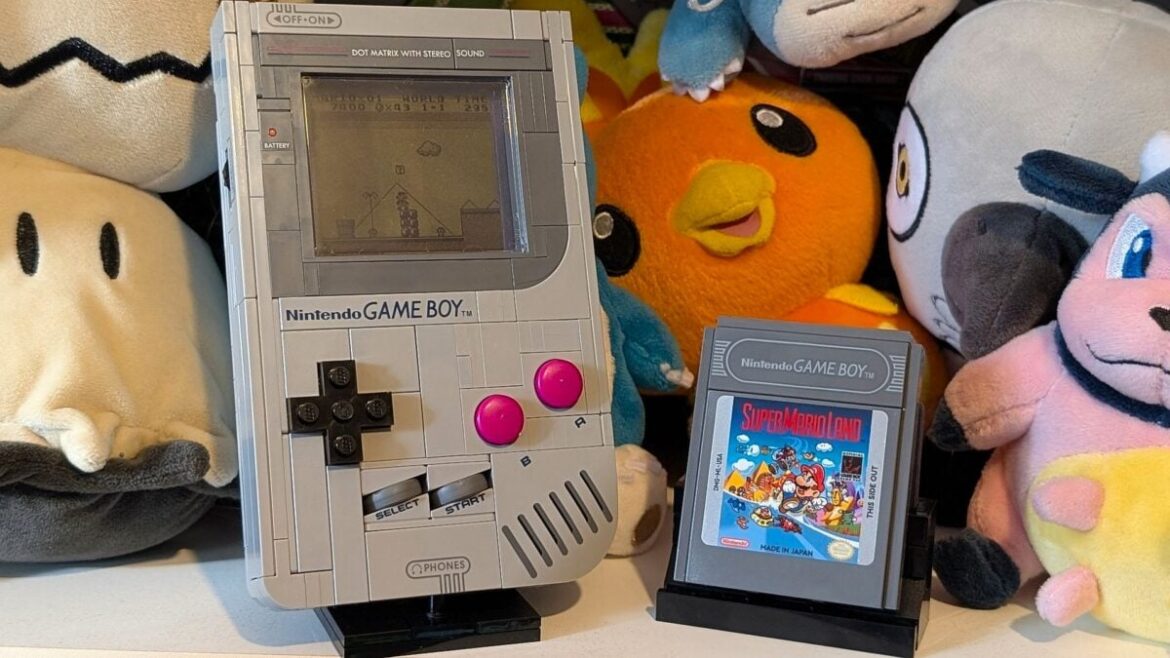
I’ve rather given it away with the headline there, but I couldn’t help myself. Lego’s recently launched Game Boy is the most extraordinarily satisfying build, with results that feel uncannily realistic. It looks and feels perfect, complete with a just-too-murky screen to thoroughly emulate the real thing.

Announced back in July and immediately up for pre-order (which I did as soon as I’d written the article), the Lego Game Boy was clearly a labor of love, and in some ways a compromise for Lego given the number of bespoke pieces made just for this set. From the curved and grilled panel to the fuchsia caps for the A and B buttons, a few plastic liberties have been taken to make this such a stunning replication of the 1989 handheld. And wow, it nails every element, from the bizarrely realistic-feeling d-pad (despite being so ostentatiously a Lego cross) to the spongy A and B buttons, all made complete with the epic and satisfying “CLICK!” of the on-off switch.

By my count, there are at least 12 pieces unique to this set, and wonderfully this includes a large number of pre-printed pieces with distinctive Game Boy designs and fonts. Where these would usually be stickers, Lego has saved people like me who live in fear of such operations, and I’m so very grateful. Placing stickers, especially long, thin ones, requires the steady hands of a surgeon, and not the shaky incompetent flippers on the end of my arms. Still, for those who enjoy the adrenaline rush of the completely irredeemable moments, both the game cartridges you build require a large sticker be placed.

© Kotaku

Another aspect that makes this build so special is that—and I realize how pretentious this sounds, but it’s definitely true—the instructions are put together with wit and timing. The first thing you’re asked to build is one of the two cartridges, along with a display stand for it that contains a slot for storing the spare lenticular cards. But rather than going straight onto the second, you instead are launched into the Game Boy itself, building it from the inside out. This means that you’re constructing its green network board first, then adding the base below, before putting in the mechanisms for the buttons and the buttons themselves, and only after that’s all in place putting together its complete shell. It’s so delightful that it’s constructed just as a Game Boy would have been, and those button mechanisms are just so smart. The d-pad uses a concealed rubber tire to provide the push-back when you press it in any of its four directions, while the A and B buttons get their exact sponginess from a cunningly placed rubber band pegged around three c-arm clips. The results feel so realistic, making these super-smart tricks feel all the more remarkable.

Further, it’s only after you’ve finished the main Game Boy that you realize you were unwittingly adding amazing details like a realistic-looking DC inlet at the bottom, a headphone jack on the left side, and the scrolling contrast and volume wheels. Oh, and the unexpectedly hefty click of the on-off button is still making me happy.

The smart nature of the instructions is completed by ending on the second cartridge, which you then slide into the back of the Game Boy, where even here it slots in with a satisfying clunk. It’s an incredibly rewarding way to finish, and you don’t have that moment of ending with the boring fiddly bits that so often marks the finish of a Lego build. There’s no putting the side-character together, or wedging flowers on all the plant stems here; that other cartridge and both display stands are already completed, and inserting that cartridge is your final moment.

© Kotaku

Now, the one criticism I have here is the last thing I thought I’d be saying, but there are a couple of flaky moments in the instructions. One piece type in particular is always shown such that you can’t see that it has an L-bend, and there are three or four odd moments where it obfuscates where a piece should be placed underneath what you’ve already built. Nothing disastrous, nothing I couldn’t quickly figure out, but unusual for Lego. But that’s it.

OK so, I swear this is true: As I was writing this review my ten-year-old son came into my study and saw the Lego Game Boy on its Lego stand next to me on my desk. “Oh, a new device!” he said. I handed it to him, and he muttered, “Game Boy.” He’s never held a real one. “Look more closely,” I told him, and he read bits of the writing, pressed some of the buttons, and said, “What?” So I took it from him, flipped it over, removed the back panel and took out the Zelda cartridge, revealing some of the Lego innards. “OH, IT’S LEGO!” he declared. I switched the lenticular out and put it back together, and he exclaimed, “This is SO COOL!” So there you go, a second opinion.

© Kotaku

It’s worth noting that the lenticulars are splendid. There’s the main loading screen one, which has the word “Nintendo” scroll up and down just like it should. Then there’s one for Zelda and one for Super Mario Land, to match the two carts. The Zelda one is perhaps the more disappointing, given the only movement is Zelda turning to look at Link while some V-like birds move about in the sky. Mario‘s is far better, showing Mario jump up to hit a ? block and reveal a star, with a couple of Goombas moving below. Both only have two images, but the Mario version feels a lot more dynamic. Meanwhile, the Nintendo logo screen has seven panels, such that you get a weirdly smooth scroll. And as I mentioned up top, once they’re in the Game Boy behind the plastic screen (it’s a Lego window frame with the plastic glass inserted, repurposed), it really gives that authentic dullness that’s dramatically improved by holding it in direct light.

I realize I’ve just totally nerded out here, and I’m good with that. I wasn’t even a proper Game Boy kid, my primary experience being a splendid summer vacation when a school friend lent me hers for a full six weeks and I just obsessed over it. But even that established a lifetime’s nostalgia for me, that’s duly met and respected by this perfect Lego recreation.

For the quality here, and the real pleasure gained from both the build and the finished result, $60 feels like a fantastic price. I usually find Lego’s prices egregious, often offensive, but the company could have been a lot more greedy here and wasn’t. Yes, you could also spend $60 on a handheld device that’ll emulate every Game Boy game and more beside, but honestly, this Lego brick (pun so very much intended) just feels very special.


Source link

October 3, 2025 0 comments
0 FacebookTwitterPinterestEmail
Lego Nintendo Game Boy review: a brick masterpiece just shy of perfection
Product Reviews

Lego Nintendo Game Boy review: a brick masterpiece just shy of perfection

by admin October 1, 2025


Is there a word that describes the feeling of “I want something to be just a bit better because it’s already so good it only needs one last kick in the pants”?

Because that’s how I feel about the $60 Lego Nintendo Game Boy. It’s better than the fan-made Lego Game Boy that I asked Nintendo to make. It’s even better than I hoped when Lego officially revealed the set. This isn’t just a statue that looks like my original 1989 Game Boy; it’s a joy to build and feels fantastic in the hands. You can press every button, spin every dial, roll the D-pad, and throw a satisfyingly snappy power switch.

Though it doesn’t light up one bit, its lenticular moving images were enough to momentarily surprise friends and family into asking: “Does it actually play games?” The set even has a few hidden Easter eggs.

And yet, I can’t help wanting more.

Let’s do something different for this review: Let’s make it a show and tell. If you’re a video person, start by tapping on my Instagram embed above, or TikTok, or YouTube, or Facebook, or perhaps my Bluesky. If you prefer photos and words, scroll down and I’ll tell you all about it!

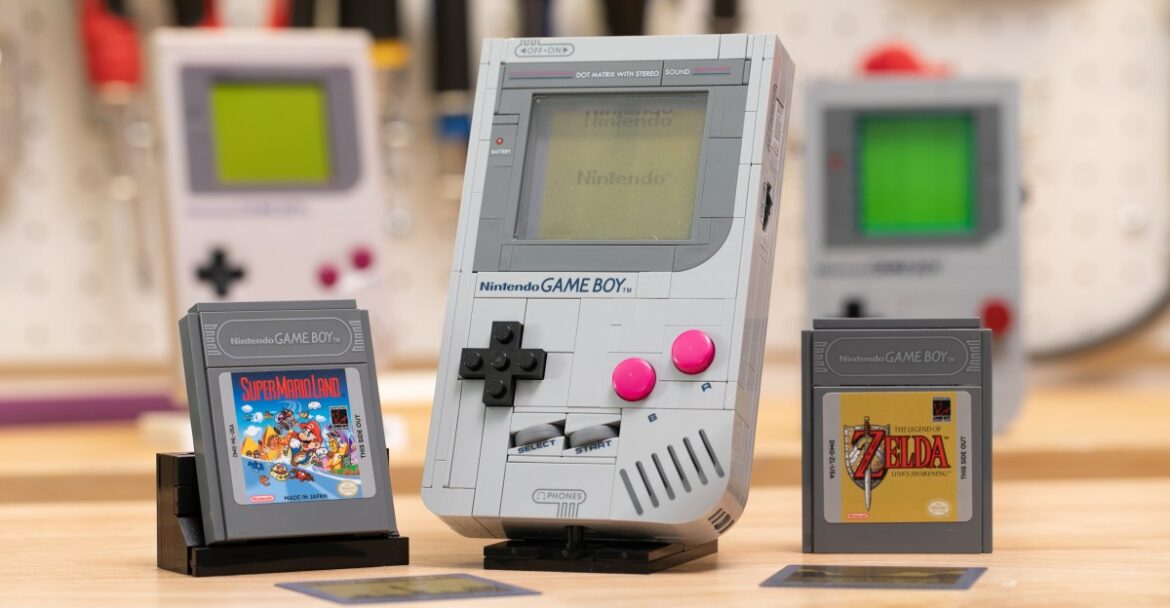
Here it is, the photograph I’ve wanted to stage for months: the Lego Nintendo Game Boy next to the pristine 1989 original you might have seen in many a Verge photo before. It was my wife’s childhood Game Boy, though I had one just like it — and Lego designer Carl Merriam absolutely nails the size, shape, and look. It does overcompensate slightly with the Off-On switch and headphone jack labels that are gray instead of molded, three of the four corners of the gray screen bezel are square instead of slightly rounded, and the A and B buttons seem almost pink rather than purple.

It’s also clearly made of a mosaic of Lego tiles rather than a single smooth surface, but that’s part of the charm: it’s a wonder to realize the Game Boy can be re-created 1:1 out of Lego bricks!

Here, I have both displaying the exact same cutscene from The Legend of Zelda: Link’s Awakening. If you’ve never played the original, you may not realize just how specific a moment this is — a bittersweet, heartstring-tugging scene you can only watch once per playthrough, so I had to save my game before a certain quest to get this photo.

Lenticular tech is still rad.

The Lego Game Boy comes with three of these little lenticular panels to make it look like the screen’s turned on and give it a sense of motion. If you tilt the handheld up and down, you can watch Mario jump, see the Nintendo logo fall, or watch the waves and seagulls fly above the Link’s Awakening beach.

But the one thing I don’t understand is printing on a gray background rather than a green one, so the Lego Game Boy’s screen doesn’t look green like the original’s. It feels like a bizarre miss to me.

A closer look at gray versus green:

I threw in an Easter egg of my own.

It’s not the only nit I could pick with the Lego Game Boy’s screen, which is recessed quite a bit more than the original, which in turn makes it even harder to light up than the original (and, like the original, you need an external light source to do that since it didn’t have a light of its own!).

But I don’t blame Lego for that — it’s because Lego’s using a regular Lego window frame and windowpane for the screen instead of creating new custom parts, which make it feel more authentically Lego. I just wish Lego would start protecting its big windowpanes better so they don’t come scratched right out of the box.

You need a lot of light to see the “screen” well.

Comparing the Lego Game Boy to the original from every angle, you can see lots of places where there are slight gaps between the tiles, sure. But you can also see that almost every complex curve and label is represented, and while it weighs a few ounces less than the original, it’s almost the exact same size.

Image slider: volume and contrast wheels, external connector port (though there’s no port underneath Lego’s cover) and the AC adapter jack. No AC adapter label on the Lego version.

That power switch may seem placed too high, but it’s worth it for the satisfying snap of its Technic peg action.

Headphone jack.

You shouldn’t take that for granted, because it’s not easy even for skilled Lego creators to build a dense real-life object to scale with moving parts. As an example, see how much thicker and blockier Lego Masters Australia finalist Nick Lever’s creation is below?

From left to right: Lego’s Game Boy, Nintendo’s Game Boy, and my attempt at Nick Lever’s fan creation.

I still love the Mario hat buttons, though.

BTW, both of the Lego Game Boys can technically squeeze in a real cart, but it stretches the build uncomfortably.

But as the Lego Group showed and told me in 2023, the thing that truly separates a great official Lego set from a fan creation is the incredible amount of thought that goes into making the set playable and fun to build, not just fun once you’re through.

You can get a better sense in my video, but after a certain point the whole set is built out of modular parts. You create a set of springy face buttons that slide into place, a D-pad that drops in, a screen that needs attaching. It contributes to the illusion you’re building electronics instead of just piling bricks together. And there are details you’ll only appreciate if you’ve seen inside — like how the springy Start and Select buttons are actually Lego car tires.

The rubber nub brick under the D-pad makes for a surprisingly good action.

Or how the springy “membrane” under the D-pad and A and B buttons are colored similarly to their real-life counterparts, even though you’ll never see them once it’s closed:

One rubber band makes both buttons springy.

Image: iFixit

Or how there’s a brick-built “speaker” underneath the Lego speaker grille, complete with yellow “wires,” at the lower right-corner of the build:

Image: iFixit

Or how Lego’s Link’s Awakening cartridge even features a “battery backup” for its save games, like the original, while the Mario cartridge appropriately does not.

Button battery!

Not a perfect apples-to-apples comparison, since my real cart is the Player’s Choice reprint from 1996.

The Lego cart can technically fit in an original Game Boy cartridge case if you remove the top tile.

It all takes such passion and attention to detail that I have to wonder: why stop short of doing everything you can when you’ve already come this far?

Here’s the back of the Lego Game Boy, and the real Game Boy, showing off one final Easter egg: the “serial number” that’s actually the date the original Game Boy first came out on April 21st, 1989. That part’s great. But it also contains two completely blank spots where the original Game Boy had an info panel with model numbers and regulatory markings, and the US version had a service sticker.

At $60 — I got mine early for $50 at Costco — I can understand why the Lego Nintendo Game Boy doesn’t have light or sound or actually play games just yet. (Fans will make it do all those things before long.) But the top panel is already a printed piece, and the set already comes with a small sticker sheet.

Just like my real copy of Link’s Awakening fixes bugs that Nintendo originally accidentally shipped, might I suggest Lego ship future copies of the Game Boy with greener screens and a few more lines of text?

Photography by Sean Hollister / The Verge

Follow topics and authors from this story to see more like this in your personalized homepage feed and to receive email updates.

  • Sean HollisterClose

    Sean Hollister

    Posts from this author will be added to your daily email digest and your homepage feed.

    PlusFollow

    See All by Sean Hollister

  • Console ReviewsClose

    Console Reviews

    Posts from this topic will be added to your daily email digest and your homepage feed.

    PlusFollow

    See All Console Reviews

  • EntertainmentClose

    Entertainment

    Posts from this topic will be added to your daily email digest and your homepage feed.

    PlusFollow

    See All Entertainment

  • GadgetsClose

    Gadgets

    Posts from this topic will be added to your daily email digest and your homepage feed.

    PlusFollow

    See All Gadgets

  • GamingClose

    Gaming

    Posts from this topic will be added to your daily email digest and your homepage feed.

    PlusFollow

    See All Gaming

  • NintendoClose

    Nintendo

    Posts from this topic will be added to your daily email digest and your homepage feed.

    PlusFollow

    See All Nintendo

  • ReviewsClose

    Reviews

    Posts from this topic will be added to your daily email digest and your homepage feed.

    PlusFollow

    See All Reviews

  • TechClose

    Tech

    Posts from this topic will be added to your daily email digest and your homepage feed.

    PlusFollow

    See All Tech

  • ToysClose

    Toys

    Posts from this topic will be added to your daily email digest and your homepage feed.

    PlusFollow

    See All Toys


Source link

October 1, 2025 0 comments
0 FacebookTwitterPinterestEmail

Categories

  • Crypto Trends (1,098)
  • Esports (800)
  • Game Reviews (772)
  • Game Updates (906)
  • GameFi Guides (1,058)
  • Gaming Gear (960)
  • NFT Gaming (1,079)
  • Product Reviews (960)

Recent Posts

  • This 5-Star Dell Laptop Bundle (64GB RAM, 2TB SSD) Sees 72% Cut, From Above MacBook Pricing to Practically a Steal
  • Blue Protocol: Star Resonance is finally out in the west and off to a strong start on Steam, but was the MMORPG worth the wait?
  • How to Unblock OpenAI’s Sora 2 If You’re Outside the US and Canada
  • Final Fantasy 7 Remake and Rebirth finally available as physical double pack on PS5
  • The 10 Most Valuable Cards

Recent Posts

  • This 5-Star Dell Laptop Bundle (64GB RAM, 2TB SSD) Sees 72% Cut, From Above MacBook Pricing to Practically a Steal

    October 10, 2025
  • Blue Protocol: Star Resonance is finally out in the west and off to a strong start on Steam, but was the MMORPG worth the wait?

    October 10, 2025
  • How to Unblock OpenAI’s Sora 2 If You’re Outside the US and Canada

    October 10, 2025
  • Final Fantasy 7 Remake and Rebirth finally available as physical double pack on PS5

    October 10, 2025
  • The 10 Most Valuable Cards

    October 10, 2025

Newsletter

About me

Welcome to Laughinghyena.io, your ultimate destination for the latest in blockchain gaming and gaming products. We’re passionate about the future of gaming, where decentralized technology empowers players to own, trade, and thrive in virtual worlds.

Recent Posts

  • This 5-Star Dell Laptop Bundle (64GB RAM, 2TB SSD) Sees 72% Cut, From Above MacBook Pricing to Practically a Steal

    October 10, 2025
  • Blue Protocol: Star Resonance is finally out in the west and off to a strong start on Steam, but was the MMORPG worth the wait?

    October 10, 2025

Newsletter

@2025 laughinghyena- All Right Reserved. Designed and Developed by Pro


Back To Top
Laughing Hyena
  • Home
  • Hyena Games
  • Esports
  • NFT Gaming
  • Crypto Trends
  • Game Reviews
  • Game Updates
  • GameFi Guides
  • Shop

Shopping Cart

Close

No products in the cart.

Close