Laughing Hyena
  • Home
  • Hyena Games
  • Esports
  • NFT Gaming
  • Crypto Trends
  • Game Reviews
  • Game Updates
  • GameFi Guides
  • Shop
Tag:

laptop

Lenovo Ideapad 15 2025
Game Updates

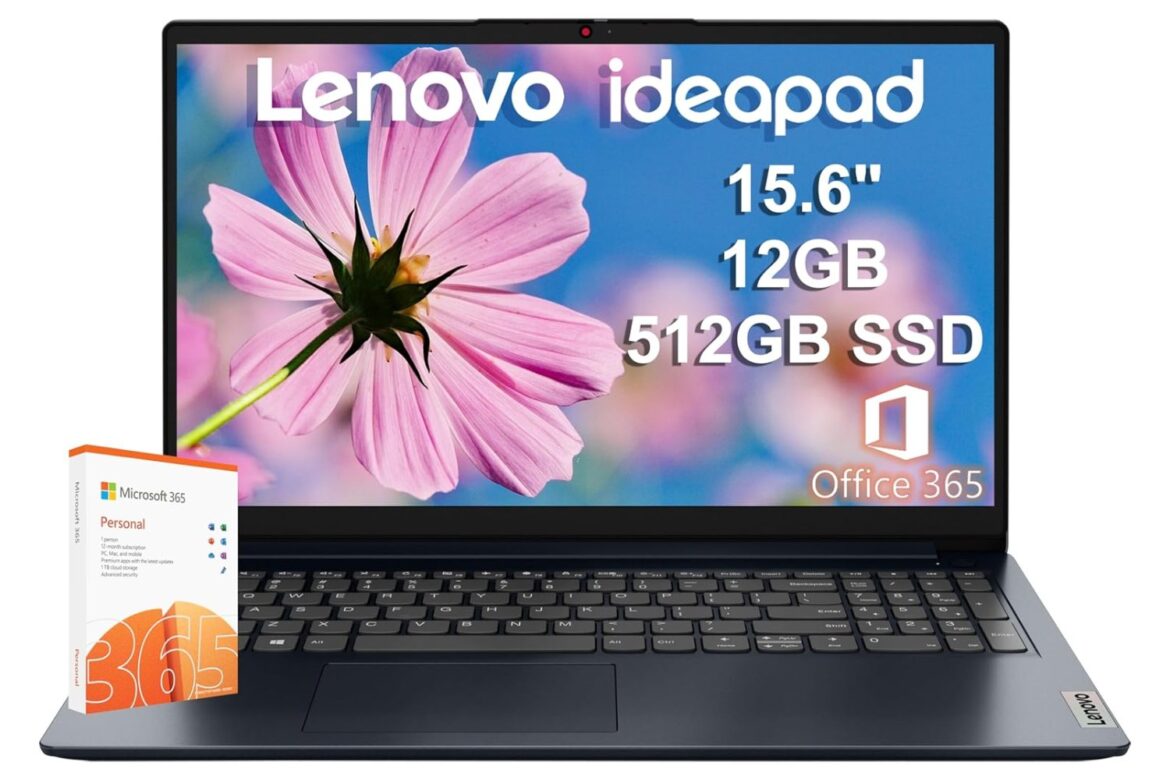
This Lenovo Laptop (12GB RAM, 512GB SSD, Office 365) Is 85% Off, Amazon Clears Inventory for Summer’s End

by admin August 26, 2025


With Amazon’s Back to School discounts currently in full swing, there’s one notebook that looks almost too good to be true: the 2025 Lenovo IdeaPad 15.6″ with a solid mid-range spec (12GB RAM, 512GB SSD, Intel Celeron N4500, Office 365 for one year, Windows 11 Home) for a record low price. Amazon is likely clearing out old inventory, likely without making a single penny in profit, and that makes you the beneficiary of a deal that’s too great to pass up.

This computer usually costs around $2,400 but today Amazon reduced its price to as low as $349: That’s an 85% discount, and you’ll be saving around two thousand dollars on a brand-new computer. You’re spending less than most individuals spend on a smartphone at this price point, but you’re receiving a full Windows computer bundled with a one-year subscription of Microsoft Office 365.

See at Amazon

Great Student Laptop

Specs do matter, even in a budget-friendly machine, and this Lenovo is far from stripped down: It’s powered by an Intel Celeron N4500 processor. Although it’s not for serious gaming, it’s perfectly suited to day-to-day productivity tasks such as word processing, spreadsheets and streaming television shows. The inclusion of 12GB of DDR4 RAM is a difference-maker: multitasking is so much more responsive than the 4GB or 8GB of memory you typically find in this price category.

A fast 512GB PCIe SSD gives you speed and space which means Windows boots in a flash, programs load in a flash and still having space for a large collection of school work, work documents, or entertainment media. In addition to the SSD, there’s also a secondary 128GB eMMC that gives you additional space to work with light files or backups.

The 15.6-inch HD display features anti-glare coating so your eyes don’t get as tired during extended study sessions. Paired with Dolby Audio dual speakers, you’ll enjoy more immersion when streaming or Zoom calls. You even receive a built-in HD 720p camera with a privacy shutter which is surprisingly rare on laptops in this price range.

Connectivity is also a plus point: USB-C, USB-A, HDMI, an SD card reader, and an audio combo jack are all present and give you all the ports you’ll need to have accessories and external storage easily attached. Wi-Fi 6 and Bluetooth 5.2 are integrated within so wireless speed and dependability are on tap for both online classes and easy Netflix streaming.

Discounts this intense rarely stick, and since Amazon is clearly liquidating excess stock, make sure you don’t miss it.

See at Amazon



Source link

August 26, 2025 0 comments
0 FacebookTwitterPinterestEmail
Best MacBooks (2025): Which Apple Laptop Should You Buy?
Product Reviews

Best MacBooks (2025): Which Apple Laptop Should You Buy?

by admin August 24, 2025


The bigger change is in how many external displays the M3 MacBook Air can support. While the M4 model can power up to two 4K external displays, the M3 MacBook Air can only do that if the lid of the laptop is shut. But if that isn’t a hang-up for you, you’ll likely be very happy with the cash you save going for an older model, especially if you opt for a refurbished or renewed version.

The Cheapest MacBook

Courtesy of Apple

Apple

MacBook Air (M1, 2020)

Apple doesn’t typically keep older MacBooks in its lineup officially. But for a few years now, the company has allowed Walmart to exclusively sell new versions of the MacBook that started it all: the M1 MacBook Air (9/10, WIRED Recommends) from 2020. This laptop with the original M1 chip is still a pretty powerful laptop at its lower price. It’s not the snazziest Apple laptop, but it lasts more than a full workday, with the battery hitting 22 percent after I ran it almost nonstop from 9 am to 7 pm using Safari and work apps like Slack.

Walmart recently dropped the price to $599, which is a configuration that comes with 8 GB of RAM and 256 GB of storage. That’s not the most impressive machine in the world, admittedly. Just keep in mind that while this M1 chip supports Apple Intelligence, it may struggle with some tasks due to the limited memory. Also, if you push it with too many browser tabs and apps running simultaneously, you may run into some slowdowns. Other downsides? The 720p webcam isn’t great, and the M1 only supports one external monitor.

This is an easy choice for students, although a recent rumor might make you want to wait if you’re not in a rush. Multiple reports indicate that Apple may announce a 12.9-inch budget MacBook that will retail for $599, very much taking the place of the M1 MacBook Air. This new MacBook will reportedly use the iPhone’s A18 Pro chip, a newer and faster processor than the M1.

A Breakdown of Each M-Series Chip

AccordionItemContainerButton

All of Apple’s processors are scattered throughout different MacBook models. While Apple only currently sells M4 MacBooks, you can find older models at specific third-party retailers online either completely new or refurbished. If you do stumble upon its older chips (which came out four years ago), you might be wondering how they compare to other options. We break down the differences between each one.

M4 Series

M4: The M4 is the current entry-level chip and has a 10-core CPU and 10-core GPU. Apple claims it delivers 1.8 times faster CPU performance and 2.2 times faster GPU performance than the M1. Meanwhile, the neural engine is over three times faster than the original and twice as fast as the M3. It also starts with 16 GB of unified memory, which will help power Apple Intelligence (the company’s suite of artificial intelligence features) a lot more smoothly. It’s available on the 14-inch MacBook Pro (2024), iMac (2024), and MacBook Air (13-inch and 15-inch, 2025).

M4 Pro: The M4 Pro has a 14-core CPU (which Apple claims is up to 1.9 times faster than the M1 Pro) and up to 20-core GPU, with up to 64 GB of unified memory. Built on a second-generation 3-nanometer process, it also supports enhanced GPU features like mesh shading and ray tracing—the latter of which is now twice as fast as on M3 chips. You’ll find it on the latest MacBook Pro (14-inch and 16-inch) and Mac Mini (2024).

M4 Max: This chip has a 16-core CPU and up to a 40-core GPU with support for up to 128 GB of unified memory. Apple says the CPU is up to 2.2 times faster than the M1 Max, while the GPU is up to 1.9 times faster. As with the M4 Pro, it packs support for mesh shading and ray tracing. The M4 Max is currently the most powerful chip you can get in a MacBook, and is available on the latest 14-inch and 16-inch MacBook Pro. You can also get it as an option in the current Mac Studio.

M3 Series

M3: The M3 is available on the 14-inch MacBook Pro (late 2023), 13-inch MacBook Air (2024), 15-inch MacBook Air (2024), and 24-inch iMac (2023). It packs an 8-core CPU and up to 10-core GPU with 24 GB of unified memory. When compared to the M1, Apple claims CPU performance is up to 35 percent faster and GPU performance is up to 65 percent faster. The company says the CPU and GPU are both 20 percent faster than the M2. As with the M1 and M2, it’s great for basic tasks like word processing, sending emails, using spreadsheets, and light gaming. With the 13-inch and 15-inch MacBook Air, you also have support for two external displays (one display with up to 6K resolution at 60 Hz and another with up to 5K resolution at 60 Hz).

M3 Pro: With a 12-core CPU and an 18-core GPU, Apple claims the M3 Pro’s GPU is only up to 10 percent faster than the M2 Pro—making this a marginal upgrade from its predecessor. Compared to the M1 Pro, however, the M2 Pro is up to 40 percent faster in GPU performance and 20 percent faster in CPU performance. It’s available on the 14-inch and 16-inch MacBook Pro from 2023. It’s the ideal in-between for those who need a chip that’s more powerful than the M3 but won’t utilize the full power of the M3 Max.

M3 Max: This is the next step up from the M2 Max and the most powerful of the three chips (but still not as powerful as the M2 Ultra). It has a 16-core CPU, 40-core GPU, and up to 128 GB of unified memory. According to Apple, the CPU performance is up to 80 percent faster than the M1 Max and up to 50 percent faster than the M2 Max. As for GPU performance, it’s said to be up to 50 percent faster than the M1 Max and 20 percent faster than the M2 Max. The M3 Max is available on the 14-inch and 16-inch MacBook Pro (late 2023).

M3 Ultra: While the M3 lineup was introduced in 2023, Apple announced an M3 Ultra in 2025. It’s confusingly the most powerful chip in the M-series lineup—even better than the latest M4 Max. It has an up to 32-core CPU (with 24 performance cores) and a GPU with up to 80 cores. Apple claims it’s up to 2.5 times faster than the M1 Ultra. It also comes with 96 GB of unified memory, with the option to upgrade up to 512 GB, while SSD storage can be increased to 16 GB. This chip is currently only available on the 2025 Mac Studio.

M2 Series

M2: You might think the M2 is better than the M1 Pro or M1 Max, but you’d be wrong. It’s an entry-level chip like the M1, with slightly more processing power. It packs an 8-core CPU and up to a 10-core GPU (two more GPU cores than its predecessor), along with support for up to 24 GB of unified memory. Apple says the second-generation chip has an 18 percent faster CPU and a GPU that’s 35 percent more powerful. The M2 is great for daily tasks like word processing and web browsing, but tasks like editing multiple streams of 4K footage and 3D rendering should be reserved for the M1 Pro or M1 Max (or the next two chips). It’s available in the MacBook Air (13 inch, 2022), MacBook Air (15 inch, 2022), and MacBook Pro (13 inch, 2022).

M2 Pro: The M2 Pro is the next step up from the M2. It has up to 12 cores in the CPU and up to a 19-core GPU, with up to 32 GB of unified memory. Apple claims performance is up to 20 percent faster than the 10-core M1 Pro and graphics are 30 percent faster. We recommend this chip for intermediate video and photo editors. It’s a marginal upgrade compared to the M1 Pro, but it’s the best option for those who want a more future-proof processor. You’ll find it in the MacBook Pro (14-inch and 16-inch) from early 2023 and Mac Mini (2023).

M2 Max: The M2 Max packs up to a 12-core CPU and up to a 38-core GPU (with support for up to 96 GB of unified memory). According to Apple, graphics are 30 percent faster than the M1 Max. The M2 Max is an excellent choice for those who work with graphics-intensive content, including graphic design, 3D modeling, and heavy-duty video footage. But as with the M2 Pro, it’s an incremental upgrade if you’re coming from an M1 Max. It’s available in the MacBook Pro (14-inch and 16-inch) that came out early in 2023 and Mac Studio (2023).

M2 Ultra: This is the successor to the M1 Ultra. It’s available on the second-generation Mac Studio and the Mac Pro (2023). Composed of two M2 Max chips, using Apple’s UltraFusion technology, the M2 Ultra has a 24-core CPU and a GPU configurable with 60 or 76 cores. Apple claims the CPU delivers up to 20 percent faster performance and a 30 percent faster GPU than the M1 Ultra. This is the chip to get if you’re working with extremely heavy-duty content that you believe the M1 Ultra, M2 Pro, or M2 Max simply won’t be able to handle. You’ll know if you need a chip this robust.

M1 Series

M1: This is the first custom silicon Apple debuted for its MacBook Air in 2020. It has an 8-core CPU and up to an 8-core GPU. Originally, there was support for up to 16 GB of unified memory (RAM) at an extra cost, but nowadays you can only purchase the 8-GB model. It’s much faster than any previous Intel-powered MacBook Pro, and it is the practical choice for most people, as it’s in the most affordable MacBook Air you can buy (from third-party retailers). It packs more than enough processing power to get you through common day-to-day tasks—even light gaming—and it can handle more intense jobs like photo editing.

M1 Pro: Next step up is the M1 Pro. It has up to 10 cores in the CPU and up to a 16-core GPU, with up to 32 GB of unified memory. Apple says performance and graphics are both twice as fast as on the M1. We found it to be considerably more capable than the base chip, ideal for anyone who works heavily on MacBooks for music production or photo and video editing. Only the MacBook Pro (14-inch and 16-inch) from 2021 use this chip.

M1 Max: Like the M1 Pro, the M1 Max has a 10-core CPU but a heftier 32-core GPU (with support for up to 64 GB of unified memory). Apple says it’s four times faster than the M1 in terms of graphics. As proven in testing, this chip is extremely powerful and handles every heavy-duty task with ease. It was the go-to choice if you needed computer that could handle multiple streams of 8K or 4K video footage, 3D rendering, or developing apps and running demos. You probably already know whether you need this much power. It’s available in the MacBook Pro (14-inch and 16-inch) from 2021.

M1 Ultra: The M1 Ultra is the second-most powerful of them all. It’s two M1 Max chips connected with a technology called UltraFusion. It packs a 20-core CPU, 64-core GPU (which can be configured with up to 128 GB of unified memory), and a 32-core neural engine—complete with seven times more transistors than the base M1. Even with the M3 Ultra now available, the M1 Ultra remains powerful and a solid option for anyone who needs a heavy-duty processor for working with intense visuals and graphics. It was available only on the first-generation Mac Studio.

Which MacBooks Are Compatible With MacOS Tahoe?

AccordionItemContainerButton

Apple announced macOS Tahoe at its keynote at WWDC 2025. The update comes with a host of new features, including a visual redesign, a spruced up version of Spotlight, and a new Games app. The public beta will be available to download in July, with an official release later this fall.

MacOS Tahoe is the final version of macOS to support some Intel-based Macs. Specifically these are the last Intel-powered Macs to get macOS Tahoe:

  • MacBook Pro (16-inch, 2019)
  • MacBook Pro (13-inch, 2020, Four Thunderbolt 3 ports)
  • iMac (27-inch, 2020)
  • Mac Pro (2019)

You won’t find these Macs on our recommended list below, but if you already own one, you’ll get one more big update this year, along with three years of security updates. All Macs with M-Series chips, going back to 2020, are compatible with macOS Tahoe.

Which Macs Support Apple Intelligence?

AccordionItemContainerButton

With Apple’s current version of its operating system, macOS Sequoia, you’ll have access to Apple Intelligence—the company’s artificial intelligence features that are also available in iOS and iPadOS 18. Apple launched the first set of features with macOS Sequoia 15.1, including Writing Tools, an overhauled Siri, Smart Replies, and Mail Summaries, and Clean Up in Photos. However, Apple Intelligence is exclusive to Macs with the an M-series chip. This includes the following:

  • MacBook Air (M1, M2, M3, M4)
  • MacBook Pro (M1, M1 Pro, M1 Max, M2 Pro, M2 Max, M3, M3 Pro, M3 Max, M4, M4 Pro, M4 Max)
  • iMac (M1, M3, M4)
  • Mac Mini (M1, M2, M2 Pro, M4, M4 Pro)
  • Mac Studio (M1 Max, M1 Ultra, M2 Max, M2 Ultra, M3 Ultra)

Get AppleCare+ to Protect Your Devices

AccordionItemContainerButton

None of Apple’s MacBooks are cheap, and replacement parts are nightmarishly expensive. Since the entire computer is fully integrated into Apple’s tightly designed aluminum chassis, you’re one coffee spill away from a shockingly large repair bill. This is why Apple’s AppleCare+ might be worthwhile. Remember, you have to purchase it within 60 days of purchasing your MacBook.

Apple offers the choice between monthly or yearly payments. Both include unlimited accidental protection along with 24/7 telephone support. If your MacBook has screen damage or enclosure damage, you’ll have to pay a $99 service fee, while other accidental damage will cost $299. The monthly payments vary depending on the specific MacBook you buy:

  • MacBook Air (13-inch): $7 per month or $70 per year
  • MacBook Air (15-inch): $8 per month or $100 per year
  • MacBook Pro (14-inch): $10 per month or $60 per year
  • MacBook Pro (16-inch): $15 per month or $150 per year

Take Advantage of Apple’s Education Discounts

AccordionItemContainerButton

Apple always offers small discounts on hardware for students and teachers. All you need to do is purchase something through Apple’s Education Store, choose the product you want (you should see the discounted pricing), and go through the motions to place the order like normal. You don’t need to show any proof that you’re a student at the time of purchase, but you should be honest, as Apple can ask you at a later date for verification. It’s worth noting that the discounts are not as good as what you’ll find on Amazon and sometimes other retailers like Walmart, so be sure to check prices.

Is Now a Good Time to Buy?

AccordionItemContainerButton

Yes. Apple released a 14-inch and 16-inch MacBook Pro powered by the M4 chips in late 2024. The 13-inch and 15-inch MacBook Air received the M4 treatment in March 2025. It’s also fine to buy M3-powered MacBooks if you can find them on sale, just make sure it’s the model with at least 16 GB of RAM.

Although the MacBook Pro has been updated each fall for the past few years, recent rumors indicate that the M5 MacBook Pro might be delayed until 2026. Neither the Pro or the Air are rumored to receive a significant overhaul in this next generation though, so now’s a safe time to buy.

The one caveat is that a cheaper, 12.9-inch MacBook is rumored to launch later this year. While it’s still just a rumor, multiple independent reports have now predicted the announcement, which is for a $599 MacBook powered by an A14 Pro chip. If you’re shopping at that price, it might be worth waiting a few months.

Other MacBooks to Consider

Apple releases new MacBooks at a quick pace, so you might feel inclined to buy the latest and greatest. These slightly older models are still good options, as long as you find them on sale for the right price. Apple no longer sells them directly, but we recommend checking third-party retailers (like Amazon, Best Buy, or B&H). Just cross-check the price with the latest models and make sure you’re spending less.

Photograph: Brenda Stolyar

MacBook Pro (14-inch and 16-inch, Late 2023): The 14-inch and 16-inch MacBook Pro (9/10, WIRED Recommends) are powered by the M3 series chips. You can configure the 14-inch MacBook Pro with all three, while the 16-inch version can be paired with M3 Pro and M3 Max. The M3 is ideal if you want a few of the “Pro” features but don’t want to spend nearly $2,000 to get them, while the M3 Pro or M3 Max are great for tasks like editing 4K videos, rendering 3D models in CAD, and producing music.

MacBook Air (15-inch, 2023): The 15-inch MacBook Air M2 (8/10, WIRED Recommends) packs all the same features as the 13-inch version, plus a larger screen. The M2 also offers great performance and good battery life (we squeezed about 10 hours out of it). The only problem is that it is sometimes only sold for marginally less than the M3 model, and sometimes only comes with 8GB of RAM. Keep that in mind as you consider pricing.

MacBook Pro (14-inch and 16-inch, Early 2023): If you don’t want to spend a ton of money on the latest 14-inch or 16-inch MacBook Pro (9/10, WIRED Recommends), the M2 Pro and M2 Max (which launched early in 2023) are more than capable of handling intensive, graphically demanding production work. In our testing, both the 14-inch MacBook Pro with the M2 Pro and the 16-inch MacBook Pro with the M2 Max delivered smooth performance and playback after being put through stress tests (like editing 4K and RED Raw footage, as well as adding 3D effects). I recommend only snagging this one for around $1,500 or less.

MacBook Pro (14-Inch and 16-Inch, 2021): These MacBook Pro models (8/10, WIRED Recommends), powered by the M1 Pro and M1 Max, were the start of a new era for Apple’s high-end machines. The company introduced a redesigned chassis with more ports, a 120-Hz refresh rate, and a MagSafe port. Even though these launched in late 2021, you don’t have to steer clear of them—both processors are still plenty powerful. In our testing, we found the M1 Max felt one-to-one with the $6,000+ older Mac Pro. It didn’t struggle at all while editing heavy-duty footage. However, it’s growing increasingly tough to find in stock at third-party retailers. If you do manage to locate one, I advise purchasing it only if it’s on sale for around $1,100 or less.

Great MacBook Accessories

Photograph: Baggu

There are a lot of MacBook accessories to enhance your experience, including cases and chargers for on-the-go and peripherals to use at your desk. Below, we’ve highlighted some of our top recommendations, but you can find more in our Best MacBook Accessories guide.

Incase Hardshell Case Dots (16-inch MacBook Pro) for $40: This is currently our favorite case for the MacBook. It has precise cutouts for all the ports, rubberized feet that keep it from sliding, and ventilation to help prevent the MacBook from overheating.

Baggu Puffy Laptop Sleeve for $32: This puffy laptop sleeve is adorable and protective. The Velcro enclosure is also strong enough that you don’t have to worry about your laptop accidentally sliding out.

Photograph: Branch

Branch Adjustable Laptop Stand for $65: This is our top pick in our Best Laptop Stands guide. It’s sturdy enough that it won’t bounce or shift while using it, lifts your screen to 7 inches high, and adjusts to any viewing angle. It also has a nice, clean look to it.

Logitech Casa Pop-Up Desk for $180: This is a great solution if you constantly work on the go but prefer using an external keyboard and mouse with your laptop. The Casa Pop-Up Desk comes with a keyboard and trackpad that fit into a compact case that doubles as a laptop stand.

Apple Magic Keyboard with Touch ID (USB-C) for $149: Crafting a workstation around your MacBook? A stand-alone keyboard is a nice upgrade. It comes equipped with a Touch ID button, so you can use it to log in, download apps, and pay for purchases. It also has the same function row keys as M-series MacBooks, including a dedicated Do Not Disturb button, playback buttons, and a Mission Control key.

Photograph: Logitech

Logitech Lift for Mac for $80: This ergonomic mouse is an excellent choice if you spend a lot of time at your desk and deal with wrist pain. It has great battery life too—I’ve gone over a year without needing new batteries. You can program the buttons with Mac-specific features. Read our Best Ergonomic Mice guide for more.

Satechi USB-C Multiport 8K for $100: This hub is our top pick in our Best USB Hubs guide. It packs several USB-C ports, all of which are nicely labeled by their maximum speed. It can also handle intensive tasks in minutes, such as transferring hundreds of GBs of 6K footage. It’s worth noting, however, that it doesn’t have any USB-A ports.

BenQ 27-Inch IPS Monitor (GW2786TC) for $250: There are cheaper 1080p monitors, but none that accessorize MacBooks in such a classy way with its simple white design. You can connect up your MacBook while charging it at the same time, and it even has a 100-Hz refresh rate.

Dell 32 Plus QD-OLED for $850: If you’re in the Mac ecosystem as a creator, you need a monitor that’s designed for media and content creation. The Dell 32 Plus (9/10, WIRED Recommends) is one of the first OLED monitors that isn’t outrageously expensive while still being a proper HDR monitor and maintaining excellent color performance. On top of that, it’s a gorgeous and would look great next to a MacBook.

Power up with unlimited access to WIRED. Get best-in-class reporting and exclusive subscriber content that’s too important to ignore. Subscribe Today.


Source link

August 24, 2025 0 comments
0 FacebookTwitterPinterestEmail
Emdoor EM-959-NM16ASH-1
Gaming Gear

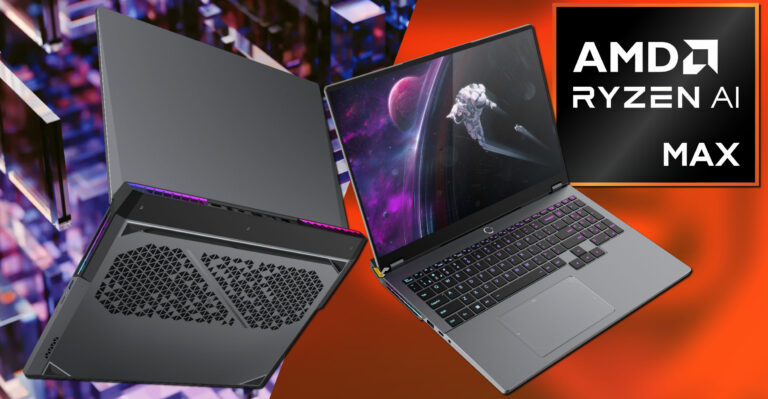
This new AMD Ryzen AI MAX laptop calls itself a workstation, yet looks, sounds, and acts exactly like a gaming system

by admin August 19, 2025


  • Emdoor EM-959-NM16ASH-1 Ryzen AI MAX chip promises strong workstation power
  • Display refresh reaching up to 180Hz seems excessive for workstation needs, leaning toward gaming territory
  • At 2.45 kilograms, this laptop feels more like a desktop replacement than a mobile workstation

Emdoor, a company that has mostly kept a low profile since 2023, is now releasing another system that it calls a “high-end PC workstation with next-gen AI chip.”

The device, listed under the code “EM-959-NM16ASH-1,” comes with AMD’s Ryzen AI MAX processors, also known as Strix Halo.

The Emdoor EM-959-NM16ASH-1 features soldered LPDDR5X-8000 memory on a 256-bit bus, giving high bandwidth but preventing upgrades.


You may like

A workstation or gaming laptop?

Although the memory is limited to a maximum of 128GB at purchase, the storage is more flexible with two PCIe 4.0×4 M.2 slots supporting up to 8TB.

The display is a 16-inch panel at 2560×1600 resolution, with refresh options of either 165Hz or 180Hz.

Such specifications may attract users looking for a video editing laptop, but they also blur the line between workstation and gaming hardware.

That impression is further reinforced by leaked internal file names tied to the design, which included the term “GAMES.”

Sign up to the TechRadar Pro newsletter to get all the top news, opinion, features and guidance your business needs to succeed!

At 2.45kg, the system is heavier than many of its rivals, with the likes of Sixunited’s XN77-160M-CS and HP’s ZBook Ultra G1a weighing less than 1.8kg.

Although bulkier construction may have been chosen to handle the 45–120W thermal design of Strix Halo, this weight might be acceptable only for a stationary workstation, as buyers seeking a business laptop may not find this design appealing.

It also includes a 99Wh battery that is claimed to last eight hours, but without independent testing, such claims remain promises.

Cooling is handled by a dual-fan setup coupled with triple heat pipes and a quad-exhaust system.

The company markets this system as a workstation, but the aesthetics, refresh rates, and naming history suggest gaming roots.

Since Emdoor acts as an original design manufacturer, the same model could easily appear under another brand marketed as a gaming system.

Whether this laptop becomes a reliable tool for professionals or fades into obscurity, as some of the firm’s past projects have, will only be clear once it reaches the market and real-world feedback emerges.

Currently, only a limited number of PCs feature the Strix Halo chip, with examples including the Asus ROG Flow Z13 (13.4″), the HP ZBook Ultra 14 G1a, and a handful of others.

In terms of pricing, these devices cost well over $2,000, and considering the specifications of the Emdoor EM-959-NM16ASH-1, it will likely cost more.

Via Videocardz

You might also like


Source link

August 19, 2025 0 comments
0 FacebookTwitterPinterestEmail
Chuwi GameBook 9955HX
Product Reviews

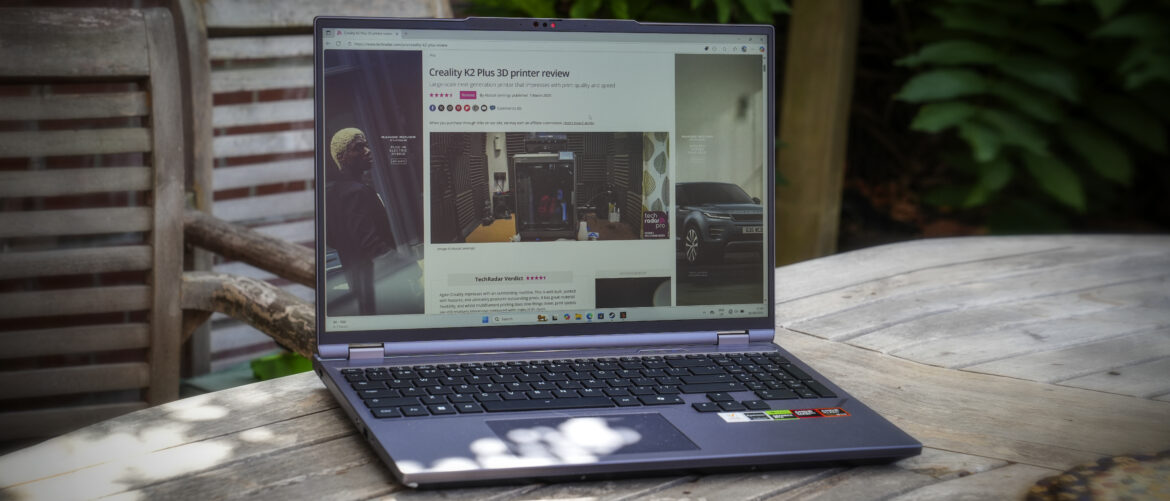
Chuwi GameBook 9955HX creator laptop review

by admin August 18, 2025


Why you can trust TechRadar


We spend hours testing every product or service we review, so you can be sure you’re buying the best. Find out more about how we test.

Dynabook Protege X40-M: 30-second review

Checking through the specifications of the Chuwi GameBook 9955HX and the CPU and GPU both hint at a high-performance laptop, just without the usual astronomical high price. Checking over the machine highlights the balance Chuwi has struck with the design and quality of the materials. While they might not match the likes of the Asus ProArt P16 and other high-end creative and gaming laptops, it still offers a good overall build quality.

Unlike other gaming laptops, Chuwi has really kept the design aesthetics reserved, so like many of the best business laptops, this machine will look equally at home, in the office, or design studio as it would in a gaming environment. With a sleek, plain top, a good array of ports around the sides and back, and the only hint that this is something different from your standard office laptop being the honeycomb design on the base.

Several key features instantly appeal when you open up the GameBook 9955HX. First and foremost is the large screen and full-size keyboard with a number pad on the right, making it ideal for anyone scouting for the best laptops for photo editing or the best laptops for video editing.

Getting into the use, Windows 11 Pro runs smoothly from the outset, with the CPU and GPU combo alongside the 32GB of RAM and 1TB SSD providing all the speed you need for all standard applications, which is proven through the PCMark scores.

Content creation, again using Premiere Pro, Adobe Lightroom, and Photoshop, showed the machine had absolutely no issues with editing 4K and even some 8K video, although expansion storage was needed. With two USB Type-C ports, you get a relatively fast connection to the machine. This is the first highlight where cost has been cut, with USB 3.2 Gen 2 used over the faster USB Type-C interfaces, meaning you only get 10GB/s, considerably lower than the later USB4 that you’d expect to see on a machine with these specifications.

However, the reduction in USB interface generation is one of the only areas where the specifications have been pared back. Internally, there is space for additional RAM and increased storage, including the PCIe 5 M.2 slot and fast connection through Wi-Fi 6E and Bluetooth 5.2 wireless connectivity options, both of which are tried and tested rather than being the latest generation.

Overall, the test showed the machine put in a great performance, with an easy access turbo power option, when you’re connected to AC power, to accelerate the CPU and GPU further, giving a boost when playing games, especially. There is little not to like about the raw performance of this GameBook.

Sign up to the TechRadar Pro newsletter to get all the top news, opinion, features and guidance your business needs to succeed!

When you consider the price and what’s on offer, it’s hard not to be impressed with what Chuwi has managed to offer at this price.

  • Chuwi GameBook 9955HX (1TB 32GB RAM) at Walmart for $2,299

Chuwi GameBook 9955HX: Price & availability

  • How much does it cost? £1804
  • When is it out? Now
  • Where can you get it? Widely available

The Chuwi GameBook is available directly through the Chuwi website for £1,804, which, considering the specification including 32GB of RAM and a 1TB hard drive, is exceptional value for money.

(Image credit: Alastair Jennings)

Chuwi GameBook 9955HX: Design

(Image credit: Alastair Jennings)

Specifications

CPU: AMD Ryzen 9 9955HX (16 cores, 32 threads, up to 5.4GHz)
Graphics: NVIDIA GeForce RTX 5070 Ti Laptop GPU (12GB GDDR6)
RAM: 32GB DDR5 5600MHz (2 x 16GB, dual channel, upgradable to 64GB)
Storage: 1TB PCIe Gen4 NVMe SSD (supports two M.2 2280 slots, one Gen4, one Gen5, upgradable)
Left Ports: 2.5G RJ45 LAN, USB 3.2 Gen1 Type-A, USB 3.2 Gen 2 Type-C (supports 100W PD charging), 3.5mm audio jack
Right Ports: USB 3.2 Gen1 Type-A, Kensington lock slot
Rear Ports: HDMI 2.1 Port (Support 4K@120Hz), USB 3.2 Gen 2, Mini DP (DP2.1a, UHBR20 80Gbps)
Connectivity: Wi-Fi 6E, Bluetooth 5.2
Audio: 2W stereo speakers, Dual microphone array
Camera: 1080p IR webcam (supports Windows Hello, with physical privacy cover)
Size: 356.7 x 253.8 x 21.4 mm
Weight: 2.3kg
OS Installed: Windows 11 Pro
Accessories: 140W USB-C power adapter

Removing the Chuwi GameBook 9955HX from the box, the first thing that strikes you, especially at this price point, is just how good and robust the laptop feels, with the monitor protected in an aluminium casing, while the main body is made from a similar colour, high-impact plastic. While it doesn’t give quite the same premium feel as some other laptops, it is nevertheless of decent quality.

When it comes to size and weight, because this is a gaming-focused PC requiring lots of cooling for the powerful CPU and GPU, the size and weight are slightly heavier than many work-focused laptops. It measures 356.7 x 253.8 x 21.4 mm and weighs in at 2.3kg.

Despite all that processing power and features, it’s still a relatively decent-sized machine and more than portable, as I found during the process of this test.

Looking over the body of the laptop, there’s a good rubber bar on the base along with two small feet to keep it securely in place on the desktop, and there’s a good amount of venting on the bottom and across the back of the machine, ensuring that the powerful CPU/GPU combo stays cool.

On the left-hand side, you have a LAN port with an ingenious flip-down door design that helps partially protect the port and integrates with the design of the case. This network port is joined by a USB 3.2 Gen 2 port that enables 100W of PD power for charging when the laptop is off, and a USB Type-A Gen 1 port, alongside a standard 3.5mm audio jack.

Alongside venting at the back, there’s also a USB Type-C port at up to 140W PD power again when the power is off, a mini DP 2.1 and an HDMI 2.1 port enabling 4K at 120Hz, and finally, on the right-hand side, there are two USB 3.2 Gen 1 Type-A ports and a lock slot for securing the laptop if needed.

Opening up the lid reveals the 16-inch, 2.5K (2560 x 1600), IPS, 300Hz refresh rate and up to 500 nits brightness 16:10 screen that offers a clear display for office work, content creation, as well as gaming.

One of the big features for anyone looking at this laptop for work, as well as content creation and gaming, is the full-size keyboard, even down to the four cursor keys, all full-sized with a handy numeric pad, which is slightly reduced in size, giving plenty of control and input options. While the keyboard is of decent quality, it doesn’t quite have the same precise actuation that you would find with some of the more premium models.

Still, that’s not to say it doesn’t feel good to type on, and it is responsive. Likewise, the trackpad is a decent size and supports gesture control, again, of a decent quality, but doesn’t quite have the high-end premium feel you might expect with some of the more premium laptops.

One final design feature to point out is across the top bar of the laptop, alongside gaming detailing. There is the power button, and next to this is the turbo button, which gives the laptop a power boost for gaming and other applications that need a little bit more grunt from the CPU and GPU, with an Office, Balanced and Turbo mode.

Chuwi GameBook 9955HX: Features

(Image credit: Alastair Jennings)

Featuring an AMD Ryzen 9 9955HX CPU with 16 cores, 32 threads, 64MB cache and up to 5.4GHz clock speed within Zen 5 architecture, this mobile CPU is an ideal fit if you’re looking for a laptop that can handle high-demand applications and games. It’s supported by an impressive GPU in the form of the Nvidia GeForce RTX 5070 Ti laptop GPU, which features 12GB of GDDR7 VRAM, 140W TGP, 1406 AI TOPS, and supports full ray tracing.

Complementing the CPU and GPU is the dual-channel SODIMM RAM, and the standard machine comes equipped with 2×16GB DDR5 5600MHz modules, but you can expand this up to two 32GB sticks if required. Access to the inner workings is through the base with 11 screws needing to be removed before the base of the machine can be lifted away. From there, the layout is extremely neat and easy to work with.

For storage, the machine features two slots and comes pre-installed with a 1TB PCIe 4.0 SSD, placed in the PCIe 5.0 slot. You can also add a second M.2 2280 PCIe SSD card into the secondary slot, which is a PCIe 4.0 slot. Ideally, you buy yourself a PCIe 5.0 M.2 2280 module and insert that into the PCIe 5.0 slot to make the most of that additional speed, and place the operating system onto the PCIe 4.0 slot.

Powering the machine is a 77.77Wh battery that offers 15.4V and 5,050mAh capacity. While this is impressive considering the power draw, used for high-end gaming or content creation, battery life is going to be rather limited.

However, there has to be a balance between the size of the machine and the battery used, with a 140W AC power supply for high-demand applications. It’s probably worth swapping over to AC power rather than using the battery. It’s also worth noting that while there are two USB-C ports that enable PD power, this is only for use when the machine is off.

Connectivity options are as described previously, with a good range of ports, although the USB Type-C port is an older generation USB3.2 Gen 2 rather than USB4.

As you’d expect, there is a webcam built in, supporting Windows Hello face recognition. One feature I like here is that there’s a physical privacy cover. It can be slid across the camera, and once it is down, the camera shows a red cover to highlight the status.

For gaming and content creation, there are two relatively powerful two-watt speakers and a dual mic on the camera. These are all of decent quality, although nowhere near the depth or clarity of sound you would expect from a premium model.

All in all, considering the price point, the features are well balanced, giving you all the power you need for high-demand applications and games, while balancing out some features, such as the USB interfaces, to manage overall cost.

Chuwi GameBook 9955HX: Performance

(Image credit: Alastair Jennings)

Benchmarks

CrystalDiskMark Read: 5538.97
CrystalDiskMark Write: 5208.69
Geekbench CPU Multi: 18134
Geekbench CPU Single: 3220
Geekbench GPU: 150671
PCMark Overall: 8367
Cinebench CPU Multi: 32863
Cinebench CPU Single: 2175
Fire Strike Overall: 35793
Fire Strike Graphics: 40250
Fire Strike Physics: 37287
Fire Strike Combined: 18934
Time Spy Overall: 15855
Time Spy Graphics: 16763
Time Spy CPU: 12135
Wild Life Overall: 40003
Steel Nomad Overall: 3743
Windows Experience Overall: 8.1

The Chuwi GameBook 9955HX impresses first and foremost with the speed at which Windows boots up from cold, enabling you to load up apps and get started in a couple of minutes if not less. All Microsoft Office applications run smoothly, and if you prefer Google Docs, the wireless internet connection using Wi-Fi 6 is good and robust, with the option to hardwire into the network if you prefer. From a work perspective, this machine provides a solid foundation for standard administration software.

Through tests for Microsoft Word, PowerPoint and Excel, all applications loaded quickly, and with a large 16-inch screen in decent resolution, it’s easy to navigate and update multiple documents and presentations with ease.

One of the things that stands out is the full-size keyboard. When you are used to using a MacBook Pro or similar high-end premium laptop with a reduced keyboard, the fact that it has the number pad, full-size cursors, and access to the F keys at the top just makes workflow much easier without having to use key combinations.

Moving on from the base applications and starting to look at content creation options, I loaded up Adobe Premiere Pro, Photoshop and Lightroom to see how the machine would handle an 8K video shot on a Canon EOS R5C and Sony A7 IV. The performance was superb. However, the one-terabyte SSD quickly filled up, and I was pleased to see that I could quickly pop in a secondary SSD, boosting internal storage up to 3TB.

For ease, this was installed in the secondary PCIe slot, enabling transfer rates of up to 5,000MB/s when benchmarked in CrystalDiskMark.

During the test, I checked the USB-C port transfer rate when connected to an external SSD, using a Lexar Armour 700 USB 3.2 Gen 2×2 drive. The port managed just under 1,000MB/s transfer rate, with a score of 976.27MB/s read and 968.92MB/s write, showing that this is a USB 3.2 Gen 2 interface, while not the fastest, it still delivers decent transfer rates if you need to use an external drive for video or images.

When it came to render speed from Adobe Premiere Pro, the RTX 5070 Ti did the brunt of the processing, reflected in the Cinebench scores with a CPU multi score of 32,863 and single CPU score of 2,175, which are within the range for premium creative and gaming laptops.

As testing continued, I was able to batch edit multiple images shot on the Sony A7 IV within Adobe Bridge and Photoshop, as well as apply quick changes and organise files within Adobe Lightroom. The machine rendered thumbnails and effects quickly. I was impressed with the quality of the screen, which I didn’t expect to be quite as good for a laptop that’s firstly gaming and secondly at this price.

Checking the quality of the screen with DataColor Spyder X2 Ultra, it was awarded an overall rating of 4.5, which is very good, scoring maximum points on both gamut and contrast, while the white point and colour uniformity both came in at 4.5. While colour accuracy was slightly down, this isn’t a creative-focused laptop, but with a colour accuracy of 4, it still displayed sRGB at 100%, Adobe RGB 79%, and P3 at a respectable 81%.

Essentially, for workflow, gaming, and multimedia playback, this monitor is high quality; however, if you are looking to use this machine for critical creative work, you need to be mindful that the colours won’t be 100% accurate.

For gaming, this is where it really comes into its own. While it can’t compete with a dedicated desktop gaming machine, the performance afforded by the AMD Ryzen 9 HX CPU and GeForce RTX really does make it stand out, with some of the fastest benchmarking results I have seen for a laptop of this type, including a Wild Life overall score of 40,003, Fire Strike at 35,793, and Time Spy at 15,855. These are in line with premium laptops that can cost almost double what you’d pay for the Chuwi GameBook.

When it comes to performance, the display, keyboard and touchpad layout are all well considered, and while the fans do kick in under load, considering the price, that is more than acceptable.

Alongside all the hardware is the Chuwi Easy Care maintenance application, which is an in-depth dashboard for your system. It enables you to monitor the machine, the use of internal memory, and gives you access to easy driver updates, system optimisation, and the health of the system.

There are also three different power modes: Office, Balanced and Turbo, two of which can be activated when on battery power, with the third only accessible when plugged into the AC main power. The first mode is Office, taking the CPU right down to minimum, conserving power, so if you’re commuting or working on battery, you can maximise battery life.

Then there’s Balance, which balances CPU and fan power but gives a bit more performance, and Turbo, which can only be used when plugged into AC power and boosts overall performance, making it ideal for content creation or gaming. The most significant performance boost is when you push the turbo button, running a side-by-side test with 3D Mark Fire Strike on Office mode, it scored 34,958, switching to Balanced produced a score of 35689, and Turbo mode produced 37,417 at each stage, marking a noticeable change in performance.

What I also like is that you can go into the BIOS and select which power mode to use as default, so if you always game, you can leave it in Turbo mode, though once you’re unplugged from AC, it will switch to Balanced. If you mostly work on office documents, select Office mode to maximise battery, and if you do a bit of everything, Balanced would be the one to set as default.

Chuwi has put the work into making this extremely usable, and the BIOS is testament to this. It looks modern and, for once, is easy to navigate with all the options and settings clearly laid out, and if you need to swap boot drives, change default performance modes, or anything else you’d usually do in the BIOS, it’s all here and easy to find.

At the end of the test, I am impressed with just how good this laptop is for the price, its performance puts it well within the premium laptop range, yet while it’s expensive, it’s far cheaper than other laptops with similar specifications, and the fact that it includes some of the latest technology means that it’s great for gaming and office work, as well as content creation, although you do need to check the colour accuracy for critical creative work.

(Image credit: Alastair Jennings)

Chuwi GameBook 9955HX: Final verdict

(Image credit: Alastair Jennings)

If you were to write a wish list for a high-performance laptop, the GameBook 9955HX pretty much hits almost every point. It has a large 16-inch screen which is beautifully uniform, with a slightly matte finish making it extremely viewable, and the large keyboard just makes it easy to use for office applications and gaming.

Connectivity options might be a little limited in comparison with premium laptops, for example, downgrading to USB 3.2 Gen 2 rather than USB4, but still, with a 1,000MB/s average transfer rate, it’s decent.

The different power modes take it from Balance, Office to Turbo, essentially giving the machine a huge boost in power, making it ideal as you swap from low-to mid-demand applications, across to higher, and the machine just gives you that additional power needed to complete tasks that would otherwise be time-consuming on a slower machine, though there is a sacrifice in battery life.

Across the board, I’ve been impressed with the build quality, hardware, upgradeability, and performance. Chuwi has also included their own health management software in the form of Chuwi Easy Care to enable you to keep an eye on the overall health of the machine. If you go into the BIOS, there is a comprehensive set of options that look easy to navigate and understand, with a modern design that is a breakaway from what is more ordinarily seen on most other laptops.

As a complete solution, the GameBook is a solid option that’s well priced, powerful, and offers enough to satisfy all types of users.

Should I buy a Chuwi GameBook 9955HX?

Swipe to scroll horizontally

Value

Exceptional value for money for top-of-the-range CPU/GPU, usually at a much greater price

5

Design

The design is a little mixed, with a high-quality monitor casing, coupled with a plastic main body

4

Features

Has a good range of features that help to balance the cost of components with performance

4.5

Performance

With three easy-to-access power modes, you can adjust how the machine performs to suit your needs

5

Overall

Exceptional value for money with performance you expect from a premium laptop

5

Buy it if…

Don’t buy it if…

For more top choices, we’ve reviewed the best laptops for work and gaming.

Chuwi GameBook 9955HX: Price Comparison


Source link

August 18, 2025 0 comments
0 FacebookTwitterPinterestEmail
  • 1
  • …
  • 3
  • 4
  • 5

Categories

  • Crypto Trends (1,098)
  • Esports (800)
  • Game Reviews (772)
  • Game Updates (906)
  • GameFi Guides (1,058)
  • Gaming Gear (960)
  • NFT Gaming (1,079)
  • Product Reviews (960)

Recent Posts

  • This 5-Star Dell Laptop Bundle (64GB RAM, 2TB SSD) Sees 72% Cut, From Above MacBook Pricing to Practically a Steal
  • Blue Protocol: Star Resonance is finally out in the west and off to a strong start on Steam, but was the MMORPG worth the wait?
  • How to Unblock OpenAI’s Sora 2 If You’re Outside the US and Canada
  • Final Fantasy 7 Remake and Rebirth finally available as physical double pack on PS5
  • The 10 Most Valuable Cards

Recent Posts

  • This 5-Star Dell Laptop Bundle (64GB RAM, 2TB SSD) Sees 72% Cut, From Above MacBook Pricing to Practically a Steal

    October 10, 2025
  • Blue Protocol: Star Resonance is finally out in the west and off to a strong start on Steam, but was the MMORPG worth the wait?

    October 10, 2025
  • How to Unblock OpenAI’s Sora 2 If You’re Outside the US and Canada

    October 10, 2025
  • Final Fantasy 7 Remake and Rebirth finally available as physical double pack on PS5

    October 10, 2025
  • The 10 Most Valuable Cards

    October 10, 2025

Newsletter

About me

Welcome to Laughinghyena.io, your ultimate destination for the latest in blockchain gaming and gaming products. We’re passionate about the future of gaming, where decentralized technology empowers players to own, trade, and thrive in virtual worlds.

Recent Posts

  • This 5-Star Dell Laptop Bundle (64GB RAM, 2TB SSD) Sees 72% Cut, From Above MacBook Pricing to Practically a Steal

    October 10, 2025
  • Blue Protocol: Star Resonance is finally out in the west and off to a strong start on Steam, but was the MMORPG worth the wait?

    October 10, 2025

Newsletter

@2025 laughinghyena- All Right Reserved. Designed and Developed by Pro


Back To Top
Laughing Hyena
  • Home
  • Hyena Games
  • Esports
  • NFT Gaming
  • Crypto Trends
  • Game Reviews
  • Game Updates
  • GameFi Guides
  • Shop

Shopping Cart

Close

No products in the cart.

Close