Laughing Hyena
  • Home
  • Hyena Games
  • Esports
  • NFT Gaming
  • Crypto Trends
  • Game Reviews
  • Game Updates
  • GameFi Guides
  • Shop
Tag:

laptop

DAAPrivacyRightIcon
Product Reviews

The best laptop power banks for 2025

by admin September 12, 2025


If you travel or sometimes work away from your desk, a laptop power bank may come in handy. These larger portable chargers pack enough power to refill a phone multiple times, a tablet a couple times over and get most laptops from near-dead to work-ready in around an hour. Over the past few years, I’ve tested dozens of batteries for our power banks guide and a number of them make great options for laptops. These are the best laptop power banks based on our testing, along with a bit of info on how to fly with a portable battery and what to look for in a good one.

Table of contents

Best laptop power banks for 2025

Photo by Amy Skorheim / Engadget

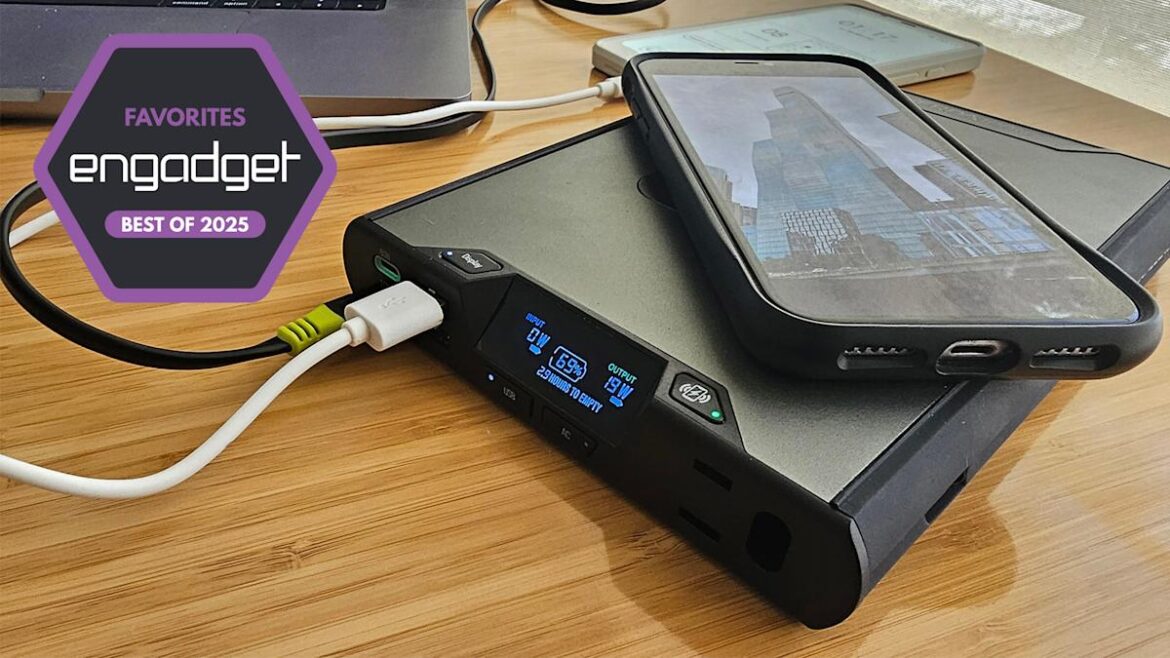
Capacity: 27,000 mAh, 99.9 Wh | Ports: One USB-C in/out, two USB-A out and three wireless pads | Cable included: USB-C to USB-C and wall adapter | Charge time iPhone 15: 5 to 100% in 2h 56m (wireless) 5 – 100% 2h 22m (wired) | Remaining charge after iPhone: ~ 81% | Charge time Galaxy S23 Ultra: 5 to 100% in 1h 20m | Remaining charge after S23 Ultra: ~ 77% | Charge time iPad Air: 5 to 100% in 1h 55m | Remaining charge after iPad: ~ 64% | Charge time MacBook Pro: 10% to 89% in 1h 18m

Traveling is one of the top reasons people need to use a portable laptop charger — planes, trains, buses and airports aren’t exactly the easiest places to find a power source. Lion Energy’s Eclipse Mag battery pack has a big 27,000 capacity, which is enough to power a laptop through a couple days of use. I also like how its three wireless charging pads cut down on cable chaos, letting you charge a Qi-enabled phone, earbuds case and Apple Watch at the same time.

You certainly could charge all three of those accessories and a laptop at one time, but as with all batteries, that increased drain will quickly empty it and your charge times will slow down quite a bit. From what I’ve seen, the unit works best as an as-needed power supply when you’re out and about, then, after a recharge, it can moonlight as a three-in-one wireless charger in your hotel room. You can even rely on the pass-through charging capabilities to power up the battery while using the wireless pads, making it a sort of travel-ready multi-device charger.

At two pounds, no one would call this light, but the angled corners and narrow design make it feel more compact than other big batteries. There’s no display to tell you how much charge is left, just four lighted pips at one edge, but I found them to provide a fairly accurate estimate. One thing to note is that the wireless watch pad only works with Apple Watches. Since Pixel watches don’t support wireless charging and Samsung only recommends its own chargers for Galaxy Watches, that’s not surprising. 

The only other drawback is the single USB-C port. The three wireless pads and the two USB-A ports will likely be enough for a days’ work, but one more type-C port would be ideal. Compared to other 27,000 maAh battery packs, the $174 price tag on the Eclipse Mag is a decent deal — and it even comes with a five-year warranty.

Pros

  • Wireless charging is convenient for travel
  • Compact design for such a large battery
  • Delivers a fast, 79 percent charge to a large laptop
  • 5-year warranty

Cons

  • Heavy
  • No display
  • Could use one more USB-C port

$174 at Lion Energy

Amy Skorheim for Engadget

Capacity: 25,000mAh, 90 Wh | Ports: Two built-in USB-C in/out cables, one USB-A port, one USB-C port | Cable: USB-C to USB-C | Number of charges iPhone 15: 4 – 5 | Charge time iPhone: 5 to 100% in 1h 54m | Number of charges Galaxy S23 Ultra: 3.75 – 4 | Charge time S23 Ultra: 52m | Number of charges iPad Air: 1.75 – 2 | Charge time iPad: 5 to 100% in 1h 58m | Number of charges MacBook Pro: 0.68 | Charge time MacBook Pro: 53 m

If you try (and sometimes succeed in) packing as light as possible when travelling, you may want to look for battery packs with built-in cables. This Anker laptop power bank sports two built-in USB-C cables: one attached to the side of the battery that doubles as a carrying strap and another retractable cord that extends up to two feet. Both can accommodate in/out charges so you can use them to refill a device or reup the battery itself.

The brick has a display to tell you the amount of charge remaining, as well as the output wattage that’s funneling towards your devices from each port. When refilling the battery, you can see an estimate of how long it will be until the unit is full. Calculating and displaying info like that takes up a bit of power but, in my testing, the battery output the same or a higher amount of charge compared with other 25,000 mAh packs.

This 25,000 mAh model replaces our previous pick in this category, the 27.5K Prime model, which was compatible with Anker’s convenient charging base. While this model isn’t, I feel the included cables provide more convenience. It also sells for $80 less than our prior choice. True, it delivers a bit less charge than that older bank, but a 70 percent charge for a 16-inch MacBook Pro is still a considerable refill.

Pros

  • Handy built-in cables
  • Display tells you how much charge remains
  • Delivers a quick charge from its large capacity

$120 at Amazon

Photo by Amy Skorheim / Engadget

Capacity: 20,000 mAh, 74 Wh | Ports: Two USB-C in/out and two USB-A out | Cable: USB-C to USB-C | Charge time iPhone 15: 0 to 100% in 1h 54m | Remaining charge after iPhone: 73% | Charge time Galaxy S23 Ultra: 5 to 100% in 1h 11m | Remaining charge after S23 Ultra: 66% | Charge time iPad Air: 3 to 100% in 2h 13m | Remaining charge after iPad: 42% | Charge time MacBook Pro: 10% to 62% in 1h 6m

I hadn’t even heard of Baseus before I started testing products for these guides. But after reading the many positive reviews, I gave a few of the brand’s offerings a try and have been repeatedly impressed by their value-to-performance ratio. The Baseus Blade is a compact and flat battery that weighs just over a pound. The shape is more tablet-like than the standard block of most power banks, which makes it easier to slide into a backpack or messenger bag alongside a laptop — it’s also the lightest of the banks I tried in this capacity category. 

The display underestimates the amount of charge left, which is always better than the alternative. When the Blade was down to just one percent, it gave my laptop a few more percentage points before giving up the ghost. It has two USB-C and two USB-A ports along with little feet at the bottom that keep from moving around as you plug charging cables into it. The speeds were admirable, clocking in just a few minutes longer than batteries with larger capacities.

That’s the main trade off here: At 20,000 mAh, it’s not going to deliver the same amount of charge as a bigger bank. It boosted my 16-inch MacBook Pro from 10 percent to 62 percent, which is about 20 percentage points lower than the bigger batteries could do. But for $100, it’s still a speedy portable charger with a convenient shape and a good number of ports.

Pros

  • Great value
  • Charges devices quickly
  • Sleek design is easy to carry along with your laptop
  • Two USB-C ports

Cons

  • Lower capacity than other laptop power banks

$100 at Amazon

Photo by Amy Skorheim / Engadget

Capacity: 25,600 mAh, 95Wh | Ports: One USB-C in/out, one USB-C out, one USB-C in, two USB-A, one AC port, one solar input and one wireless pad | Cable: USB-C to USB-C | Charge time iPhone 15: 0 to 100% in 1h 49m | Remaining charge after iPhone: 83% | Charge time Galaxy S23 Ultra: 5 to 100% in 1h 3m | Remaining charge after S23 Ultra: 77% | Charge time iPad Air: 4 to 100% in 2h 11m | Remaining charge after iPad: 62% | Charge time MacBook Pro: 6% to 72% in 1h 21m

Let’s get the bad news out of the way first: Goal Zero’s Sherpa 100AC costs $250. That makes it the most expensive power bank I’ve tested so far. But it’s a high-quality unit that gives you what you pay for. There’s a wireless charging pad up top, three USB-C ports (though one is input only), plus a couple of USB-A ports, an AC port and an 8mm port that can pair up with a Goal Zero solar panel or 12V adapter cable to recharge from your car. There’s even an internal fan to keep everything cool as it deals with all the output and a status display you can turn on or off.

Goal Zero is probably best known for its outdoor-focused power products — power stations for camping, portable solar panels and camping lights, to name a few. The Sherpa has the same rugged/industrial aluminum unibody design, which would make it an ideal productivity companion for field work. I could see this coming in handy for outdoor photo shoots, job-site projects or just snagging some nature-side office hours.

The ability to recharge from a car’s 12V port or even from solar panels is another nice-to-have, but of course, you’ll need extra equipment. In the case of the car charger, that’s another $40, but the solar panels will add another $250 to your mobile set up. If you find yourself working out in the field relatively often you might appreciate the flexibility.

Pros

  • Wireless charging pad and an AC port
  • Can recharge from solar or a car’s 12V port (with accessories)
  • Accurate status display
  • Rugged design

$250 at Amazon

Photo by Amy Skorheim / Engadget

Capacity: 27,000mAh, 99.9 Wh | Ports: One USB-C in/out, one USB-C out, USB-A, 100W AC | Cable: USB-C to USB-C | Charge time iPhone 11: 0 to 100% in 1h 40m | Remaining charge after iPhone: ~ 73% | Charge time iPad: 0 to 100% in 1h 56m | Remaining charge after iPad: ~ 53% | Charge time MBP: 10% to 75% in 1h 29m

Mophie’s Powerstation Pro AC is a bit of a beast, weighing over two pounds and hitting the upper limit of the TSA’s 100-watt-hour battery limit (I flew with it twice and never had any issue, though). It even has a handle strap to help lug it around. There’s one USB-A port and two USB-C connections, one with a lower 20W rating and one that can deliver 60W. Then there’s the AC port.

The AC port on any portable charger is a novel thing to have; as mentioned previously, it’s the USB-C port that should power your laptop because it makes no sense to convert a portable battery’s charge twice. That said, if you need to power a light, a portable printer or some other appliance that only has a standard two-prong plug, this port will come in handy. Just be sure to hold down the status button to enable the AC function.

Mophie’s pack has enough juice to give a smartphone three to four charges, fill an iPad twice with a charge left over and it can charge a 16-inch MacBook Pro from 10 percent to 75 percent in under 90 minutes, while in use. The four lighted LED indicators aren’t the best: I found it cycled through the last two dots far quicker than the first two, which might make you think you have more charge left than you actually do.

Pros

  • Massive 27,000mAh capacity
  • Has an AC outlet and two USB-C ports

Cons

  • Expensive
  • No status display
  • Lighted pips don’t accurately indicate remaining charge

$200 at Zagg

UGreen

UGreen’s 25,000mAh power bank is a compact, low-frills bank that delivers a speedy charge to smartphones — my tester iPhone 15 in particular. I clocked a refill from four percent to full in about an hour and a half. That’s among the faster speeds from any power bank I’ve tested and is thanks to its 145W max output. It performed on par with other bricks when it came to refilling a Galaxy Ultra, iPad Air and MacBook Pro.

A small digital display indicates the amount of charge left and it tested accurately. There are just three ports — two USB-C and one Type-A — but that’s more than enough to handle a laptop and a smartphone at the same time, if you must. But I’ve found portable chargers work best when handling just one device at a time. Adding an extra device seems to drain it quicker than charging one then another.

Upon its debut, the UGreen Power Bank 25,000mAh went for $120 so the value wasn’t quite there. But now it’s been reduced to an MSRP of $100 and is regularly on UGreen’s site and Amazon for around $75. I’ve noticed some in-stock issues, but if you can find it, snap it up. It’s a high-performing, low-frills battery with a surprising amount of oomph for its compact size.

$66 at Amazon

What to look for in a laptop power bank

Flying with a laptop power bank

Most portable batteries top out at around 27,000mAh so you can fly with them. The TSA currently limits the capacity carry-on batteries to 100Wh, which works out to around 27,500mAh for 3.6 volt lithium-ion batteries. Note that you’re not allowed to pack any batteries in your checked luggage, regardless of capacity. The TSA rules are intended to limit fire danger — and some airlines are implementing further restrictions due to recent on-board incidents.

In March 2025, a Hong Kong flight was grounded after a battery pack caught fire in an overhead bin. A similar situation happened in July on a domestic Delta flight, and again in August on a transatlantic KLM flight. As a result, some airlines, including Emirates, Southwest and others have announced further restrictions on flying with battery packs.

Rules include limiting the number of allowed portable chargers and requiring flyers to keep power banks in clear view when using them to recharge a device. If the battery pack isn’t actively in use, however, most rules allow them to stay in your carry-on bag in the overhead bin. Before flying, it’s wise to check your airline’s policies.

Capacity

If you just need to keep a smartphone from dying before you can make it home, just about any of the best power banks will do. But if you need to revive multiple devices or the substantial battery of a laptop, you’ll want something with a high milliamp-hour​​ (mAh) capacity. A power bank capable of delivering enough power to a laptop will have a capacity between 20,000 and 27,000 mAh.

If you want something even bigger than a laptop power bank, and don’t need to fly with it, you’ll likely want to look into portable power stations. These can be the size of a car battery or larger and can potentially fuel an entire weekend away.

Another thing to keep in mind is that the capacity listed in a power bank’s specs is not what will be delivered to your devices. As I mentioned, the capacity of these banks is around 25,000mAh. Even the huge battery on a 16-inch MacBook Pro or a Dell XPS 16 has a mAh rating of around 5,000 – 6,000mAh, so you might think you’d get five full charges but in reality, you only get about a single 70-percent charge. The voltage is different (typically 3.7V for the power bank and 11.4V for a laptop) which makes the watt-hours, or the amount of energy each battery can hold, different (working out to 92Wh for the battery and 72Wh for the built-in laptop batteries). On top of that, in order to feed a charge from a power bank to a laptop, a voltage conversion takes place and that dissipates a decent amount of energy.

Without turning this into a physics lesson, this all means that a power bank with a 25,000mAh (or 92Wh) capacity will typically fill a 5,000mAh (or 72Wh) laptop battery to about 75 percent. In my tests, I averaged about a 60-percent efficiency rate between a power bank’s listed capacity and the actual charge delivered.

Ports

Every large power bank I’ve tested has at least three USB ports, with a mix of USB-C and USB-A, which should cover nearly any portable device you need to recharge — earbuds, phones, tablets, laptops, you name it. In addition to the different plug formats, some ports supply power at different wattages. For example, one built-in USB-C port might be rated for 60 watts, while the one next to it is rated for 100 watts. So if you’ve got a device that’s capable of 70W fast charging, such as the new MacBook Air, you’d want to opt for the 100W port to get the best charging speeds possible.

Note that devices with a smaller wattage draw won’t be negatively affected by connecting to ports with high ratings. For example, a Galaxy S24 Ultra, capable of 45W super fast charging, is perfectly compatible with the 100W port. A device will only draw what it can take, regardless of what a port can supply. Just remember that the port, device and charging cable need to be at or above the desired wattage rating to achieve maximum charging rates.

Some of these larger batteries also have AC ports. It might seem like a natural fit to plug in your laptop’s power adapter for a recharge. But really, the AC port should only be for devices that can’t use USB — such as a lamp or a printer. Plugging a power adapter into the AC port only wastes energy through conversion. First, the battery converts its DC power to supply the port with AC power, then the power adapter converts that AC power back to DC so your laptop can take it in. And as you’ll remember from physics class, each time energy is converted, some is lost to heat and other dissipations. Better to cut out the middleman and just send that DC power straight from the battery to the device.

Also, you can use more than one port at a time with these devices; just remember that the speed of whatever you’re charging will likely go down, and of course, the battery is going to drain proportionally to what you’re refilling.

Wireless charging

Just in the last year and a half that I’ve been testing portable power banks, wireless charging capabilities have noticeably improved. The first few I tried were painfully slow and not worth recommending. Now the wireless pads built into power banks are impressively fast — particularly, in my experience, when charging Samsung Galaxy phones (though the lack of a stabilizing magnetic connection like Apple’s MagSafe means they only work when rested flat on a pad). Most wireless charging connections can be used while other ports are also being employed, making them convenient for some mobile battlestation setups.

Of course, wireless charging is always less efficient than wired, and recharging from an external battery is less efficient in general. If you want to waste as little energy as possible, you’re better off sticking to wired connections.

Design

All power banks are designed to be portable, but there’s a big difference between a pocket-friendly 5,000mAh battery and one of these laptop-compatible bruisers. Most of the latter weigh between a pound and a half to two pounds, which is a considerable addition to a backpack. Many of the options listed here have a display to tell you how much charge remains in the battery, which is helpful when you’re trying to judiciously meet out charges to your devices. If a bank has a wireless connection, the pad is usually on the flat top and any available AC connection is usually at one end. Both may require you to engage those charging methods. Don’t be like me and grumble loudly that you got a bum unit without pressing (and sometimes double pressing) all the buttons first.

How we test portable laptop chargers

For the past two years, I’ve been testing and using dozens of portable batteries for our other battery guide. Some of those batteries include the higher-capacity power banks you see here. I also got a hold of a few extra banks just for this guide to make sure we covered what’s available. I went for brands I’m already familiar with, as well as battery packs from well-received manufacturers I hadn’t tried before (like UGREEN and Lion Energy). I only considered banks with at least a 20,000mAh capacity and mostly stuck with those that rated 25,000mAh and higher.

Here’s everything we tested:

I tested each power bank with an Apple phone (iPhone 15), an Android phone (Galaxy S23 Ultra), a tablet (M1 iPad Air) and a laptop (16-inch MacBook Pro with the M1 Pro chip). Even though these banks can charge multiple devices at once, I refilled one at a time, to make side-by-side comparisons more straightforward. I drained the batteries of the phones and tablets to between zero and five percent and then didn’t use any device as it refilled.

For the MacBook, I let it run down to 10 percent before plugging in the power bank. That’s when most laptops give display a “connect to power” warning, as draining any battery to empty will compromise the battery life. I then used it as one might in a mobile office, with a Bluetooth keyboard and mouse, while connected to Wi-Fi and a VPN.

For each test, I noted how long a completely charged battery took to get a device back to full and how much of the battery’s capacity was used up in one charge. I also noted things like portability, apparent durability, helpful features and overall design.

For reference, here are the battery capacities of the devices I used:

  • Galaxy S23 Ultra: 4,855mAh

  • iPad Air (5th gen): 7,729mAh

  • 16-inch M1 Pro MacBook Pro: 27,027mAh

Other laptop power banks we tested

HyperJuice 245W

Hyper’s HyperJuice 245W brick looks great and has a hefty 27,000mAh capacity. The four USB-C ports can combine to output 245W of power and it got my MacBook Pro from nearly dead to 75 percent before depleting itself. When testing it with a Samsung Galaxy S23 Ultra, the handset got back up to a full charge in just over an hour. The screen tells you what each port is doing as well as displaying the amount of charge remaining in the pack itself.

But the lack of port variety makes it feel less versatile than other picks on this list — the price is higher than our other options, too.

Laptop power bank FAQs

How do laptop power banks differ from phone power banks?

The main difference is size. Phone power banks tend to have a capacity ranging from 5,000mAh to 20,000mAh and laptop powerbanks are typically rated between 20,000mAh and 27,000mAh. There’s no official definition, however. Laptop batteries are simply larger and need a bigger supply of power to give them a meaningful charge.

How do you fast charge a power bank?

You can charge a power bank exactly as fast as the power bank’s internal mechanisms will allow. Most batteries are limited in how quickly they can accept and deliver a charge to avoid dangerously overheating. But to make sure you’re charging a bank as quickly as possible, make sure the wall adapter and the USB-C cable you are using have a high wattage rating — using a 5W power brick and a 10W cable will take a lot longer to refill your bank than a 65W wall charger and a 100W cord.

What size power bank do I need for a laptop?

Look for a power bank with a rating of at least 20,000mAh. Slightly smaller batteries may work, but they won’t deliver a significant charge laptops.

How many mAh to charge a laptop?

A milliamp hour (mAh) is how much a battery can hold, and most portable batteries list their capacity using mAh. If you get a battery rated at 20,000mAh or above, it should be able to charge your laptop.

Using mAh to discuss laptop batteries can be confusing. Due to differing voltages, you can’t directly compare the mAh ratings of a power bank battery to a laptop battery. Using watt-hours is a better gauge, as that calculation takes voltage into account.

Recent updates

August 2025: Changed our runner up travel pick for a new Anker battery. Updated information about flying with power banks. Added a section about other batteries we tested.
Source link

September 12, 2025 0 comments
0 FacebookTwitterPinterestEmail
Dell Inspi Laptop
Game Reviews

This Dell Laptop with Ryzen 7 and Crazy Specs Is 73% Off on Amazon, Stock Is Flying Out

by admin September 10, 2025


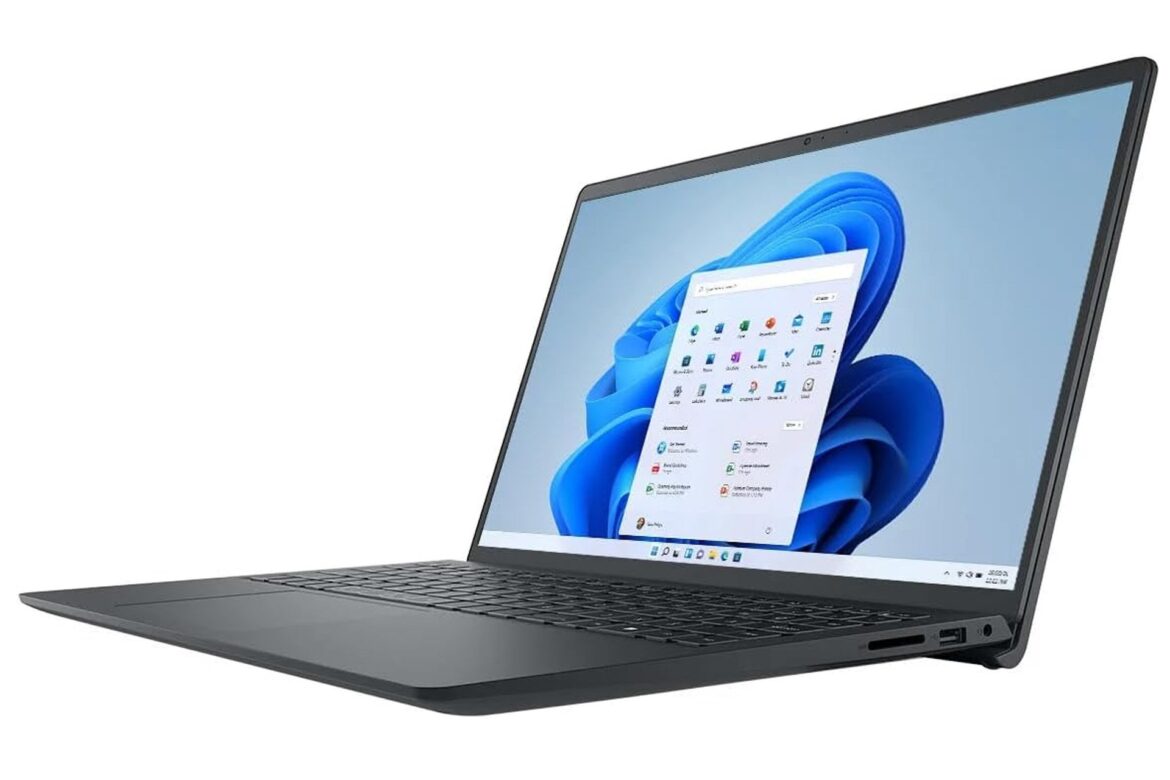
Dell is a bit of a favorite when it comes to Windows laptops. They offer options for every budget but it’s rare to find one priced under $1,000. So, if you’re in the mood to hit the jackpot, there’s currently a Dell Inspiron 15.6-inch touchscreen laptop (32GB RAM, 1TB SSD, Windows 11 Pro, AMD Ryzen 7 7730U) valued at $3,000 going for $799 on Amazon—talk about a huge deal.

See at Amazon

Why Buy That Dell Laptop?

This laptop comes with a 15.6-inch widescreen display that delivers Full HD visuals with a resolution of 1920 by 1080 pixels. The screen uses Wide Viewing Angle technology, which means the colors stay crisp and accurate even when you’re not looking at the screen head-on. Furthermore, the anti-glare coating reduces reflections so you don’t strain your eyes doing work in a brightly lit room or near a window. The thin bezels on the sides of the screen give you more screen space without interruptions, and the LED backlight shines on the screen without wasting power so your battery will last longer.

The brain behind this machine is the AMD Ryzen 7 7730U processor, which clocks 4.5 GHz at its best: It’s optimized to provide snappy performance without draining the battery. So, if you’re doing work life seriously or studying, it won’t slow you down, and you’ll get decent battery life for it.

Internally, the laptop comes with 32GB of RAM which is the memory that enables your computer to have several programs open at the same time without lagging. Put simply, the more RAM you have, the more smoothly things go when switching between tasks or working with large files. This laptop’s generous memory puts you ready to handle demanding programs, so you won’t find yourself waiting around for things to load. Besides that, it also comes with a generous 1TB solid-state drive where all of your apps and documents reside.

You’ll be running Windows 11 Pro, the professional version of Microsoft’s latest operating system. It’s designed for business and serious users and offers strong security features along with tools that make managing your work easier.

What makes this deal even sweeter is the bundle of accessories included: You get a stylus pen for easy touchscreen operation, a camera privacy cover to ensure your privacy during video calls, a 128GB USB flash drive for extra portable storage, a dust plug to ensure the ports remain free from dust, a carrying sleeve for protective transport of the laptop, and a microfiber cleaning cloth to have everything spick and span.

This deal won’t last forever, make sure you don’t miss it.

See at Amazon


Source link

September 10, 2025 0 comments
0 FacebookTwitterPinterestEmail
Lenovodeal
Game Updates

Lenovo Clears Out Its 4.8-Star Copilot AI Laptop (40GB RAM, 1TB SSD) at 73% Off, You Could Buy Several for the Price of One

by admin September 10, 2025


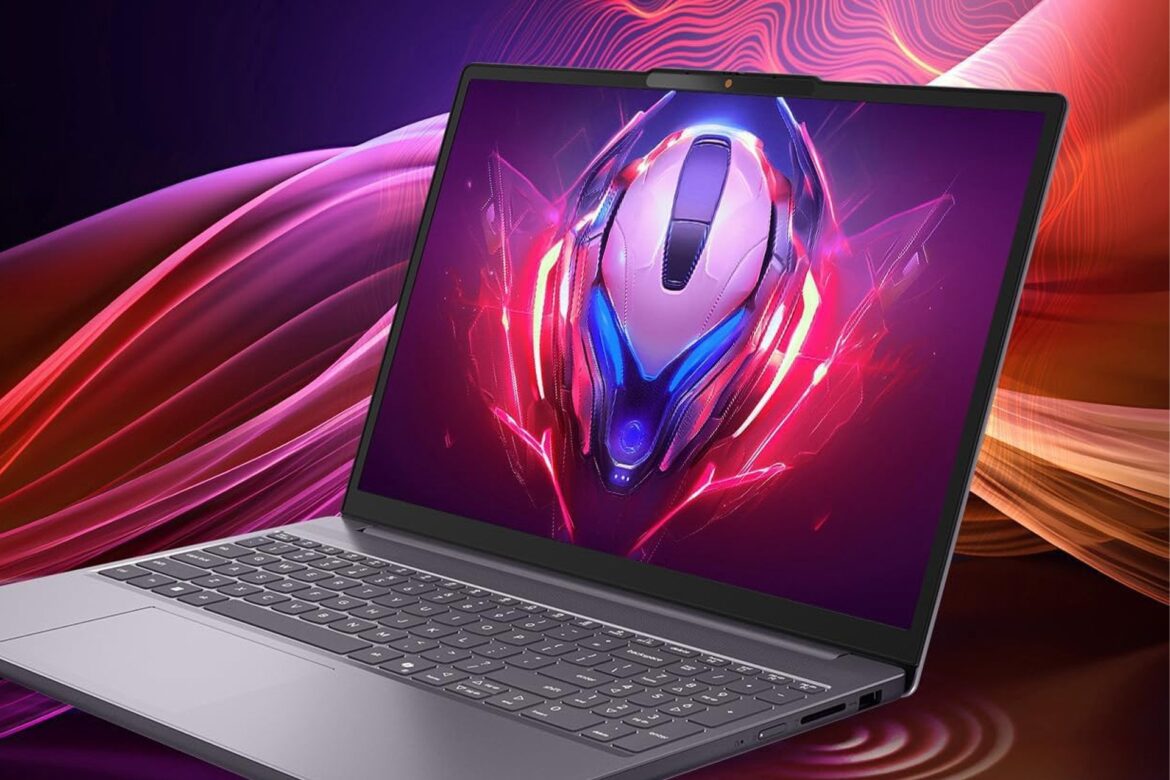
If you’re out there looking for a solid laptop that can handle basic, everyday tasks, then Lenovo is a manufacturer worth consideration. Maybe you’re a college student in need of something to build out documents and slideshow presentations for your classes. Maybe you’re a small business owner in need of something to, err, build out documents and slideshow presentations for your clients. Web browsing, email drafting, YouTube video watching. You know, computer stuff! Well, take a look at the Lenovo IdeaPad Slim 3. Right now, Amazon has it on sale for 73% off. It’s listed at $2,999 but after the discount, the price comes to just $800. That’s a savings of $2,200.

Okay, but let’s hold our horses for just a moment. A $2,200 discount on a $2,299 laptop? Sounds too good to be true. So yeah, if we take a look at this items price history, we’ll see this listing has only existed on Amazon since the beginning of August. After about two weeks it dropped to the price it’s at now. It briefly went back up when September hit, but now it’s back down to $800.

See at Amazon

When we take a look at the specs on offer here, you can tell this is not a three thousand dollar machine. Lenovo’s own website has various builds of the IdeaPad Slim 3 in this $600 to $800 range. This listing is trying to trick you into thinking you’re saving a lot more than you are. And that’s a shame because these specs at this price point is a pretty good deal in its own right.

Deep Dive

What we have here is a 15.3-inch laptop capable of displaying in 1920 by 1200 HD. The anti-glare non-touch display has 300nits of brightness and a refresh rate of 60Hz. With DisplayPort 1.2 and HDMI 1.4, you can display on two additional monitors (three displays total including the laptop screen).

It’s got a built-in webcam that can record in 720p HD with a shutter so you can maintain privacy when not in use. For added connectivity, you have two USB-A ports and one USB-C port to transfer data or charge your other devices. Wi-Fi 6 and Bluetooth 5.2 are also supported.

The real story is its RAM and storage. It’s working with 40GB of memory and an SSD containing a full 1TB of storage space. Great for backing up photos and working with large file types like 4K video.

All and all, this Lenovo IdeaPad Slim 3 is a worthwhile laptop. At $2,999? Heck no. But at $800? Not bad.

See at Amazon


Source link

September 10, 2025 0 comments
0 FacebookTwitterPinterestEmail
Sold at 73% Off, This HP Laptop With Office 365 and 384GB Storage Is Flying Off Amazon’s Shelves
Game Updates

Sold at 73% Off, This HP Laptop With Office 365 and 384GB Storage Is Flying Off Amazon’s Shelves

by admin September 8, 2025


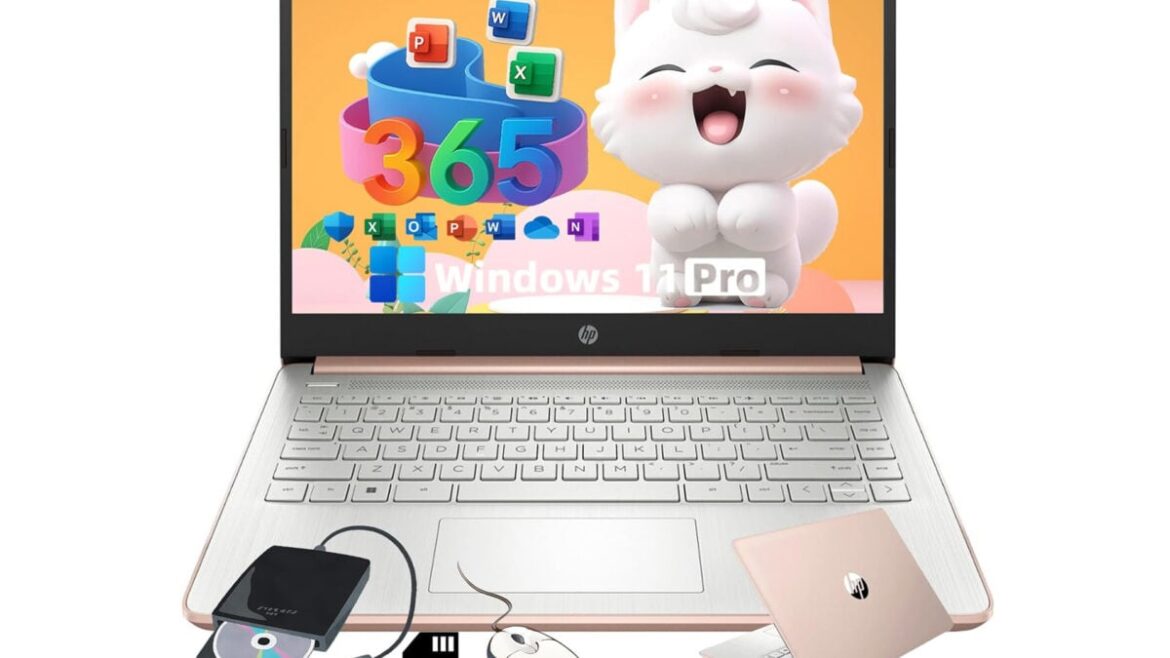
HP has dozens of laptops in its lineup right now, but there’s one model that still commands attention because it combines price, performance (Intel N150, 384GB storage, 32GB RAM, Microsoft 365), and daily use practicality. On Amazon, it has collected well over 1,500 reviews with an average rating of 4.5 out of 5 when bought at full price, but now the story is quite different: at a whopping 73% discount, this HP “everyday” laptop costs just $399 compared to its normal price of $1,499. And then on top of that discount, Amazon tosses in some extras straight into the box (wireless mouse, optical drive, 256GB SD card, and 1-Year Office 365) which makes this deal not worth passing up.

See at Amazon

What Does $399 Get You?

For starters, you’re getting a reliable machine powered by Intel’s Quad-Core N150 processor which at clock speeds up to 3.4GHz provides smooth performance for day-to-day use. Which is to say, from streaming and surfing to document work and hopping on Zoom calls, everything is responsive. The integrated Intel UHD graphics chip serves up smooth video for casual gaming or just reading content online.

Then toss that in with 32GB of RAM and it becomes even smoother: switching between apps isn’t hung up, and demanding tasks run without forcing you to close programs all the time. Storage capacity will not be a problem either: you’ve got 128GB of UFS onboard, and then there’s a provided 256GB SD card, which brings your storage to a whopping 384GB.

This is where things get very interesting: Microsoft 365 comes with the laptop (you can download it here). You receive a year’s subscription in full (worth $130) and it’s even the AI-powered version with Copilot thrown in. Think of having Word for writing papers or reports, Excel for calculating with pre-formatted formulas, PowerPoint for creating professional-grade presentations, Outlook to sort your email, and even Teams for working online. The Copilot AI feature in Office makes tasks like summarizing papers, writing messages, and scheduling calendars faster and more hands-off.

It doesn’t stop there, though. Aside from Office 365, the laptop package includes a wireless mouse and an optical drive, two easy but useful features that spare you the trouble of rushing to the store for accessories on purchasing day. A DVD drive in 2025 is not standard, but it’s useful if you’ve got old discs with photos, films, or software that you still want to use

On the software side, Windows 11 Pro powers all this and couples clean looks with helpful features like Snap Layouts to keep windows neatly organized on screen. For something portable and lightweight, the 14-inch version fits easily into a backpack and won’t weigh you down. Battery life is also good enough to get you through a day of use without having to be constantly recharged, another plus if you find yourself stuck away from a desk for hours.

Deals at this level don’t usually stick around long when word gets out, make sure you don’t miss it.

See at Amazon


Source link

September 8, 2025 0 comments
0 FacebookTwitterPinterestEmail
Geekom GeekBook X14 Pro
Gaming Gear

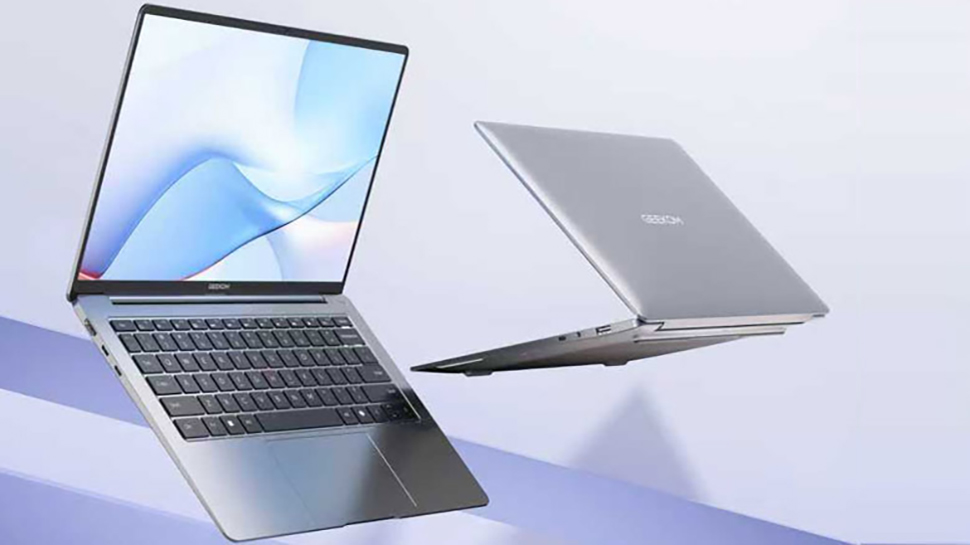
Geekom’s 14-inch GeekBook X14 Pro laptop weighs just 2.2 pounds and includes a Core Ultra 9 processor

by admin September 8, 2025


  • Geekom GeekBook X14 Pro laptop features Core Ultra 9 processor with Intel Arc 140T graphics
  • The 14-inch ultraportable weighs 999g thanks to its magnesium alloy chassis
  • Specs include 32GB RAM, 1TB NVMe storage, USB4 ports, and 70Wh battery

Geekom has revealed a number of new products at IFA 2025, but while the Chinese manufacturer is best known for its mini PCs, French news site MiniMachines says it will also be using the event to also show off its ultrathin GeekBook X14 Pro business laptop.

The notebook measures 1.69cm x 31.17cm x 21.54cm and has a magnesium and aluminum alloy chassis, which helps keep the weight down to 999g (2.2 pounds).

The X14 Pro’s 14-inch OLED panel has a 2800 x 1880 resolution with a 16:10 aspect ratio and promises full coverage of the DCI-P3 color space.

Choice of processors

Geekom will reportedly offer two versions, one with an Arrow Lake Core Ultra 5 225H and Intel Arc 130T graphics, and another with the Core Ultra 9 285H paired with an Arc 140T GPU.

It will come with up to 32GB of LPDDR5-7500 RAM, and a 1TB NVMe Gen4 x4 SSD.

The laptop is limited to a maximum TDP of 35 watts, with Geekom saying the cooling design aims to keep the system efficient and quiet under load.

The GeekBook X14 Pro also features a 2MP webcam with a privacy shutter, a fingerprint reader built into the power button, and stereo speakers with DTS:X Ultra.


You may like

Sign up to the TechRadar Pro newsletter to get all the top news, opinion, features and guidance your business needs to succeed!

There’s a 78-key backlit keyboard and a large touchpad, and connectivity includes HDMI 2.0, two USB4 ports, one USB 3.2 Type-A port, and a 3.5mm combo jack. It supports WiFi 6E and Bluetooth 5.4.

There’s a 70Wh battery that can be charged through USB Type-C with a 65W GaN charger.

Alongside the smaller model, Geekom is reportedly also announcing the GeekBook X16 Pro – a larger 16-inch version measures 35.45cm x 24.94cm x 1.19cm and has a 2560 x 1600 IPS display with full sRGB coverage. There’s space for dual NVMe drives, and its keyboard expands to 98 keys with a dedicated numeric pad.

No release date or pricing has been made available for either laptop yet, although more details are expected soon.

You might also like


Source link

September 8, 2025 0 comments
0 FacebookTwitterPinterestEmail
Best laptop deals for September 2025: Apple, Asus, and more
Gaming Gear

Best laptop deals for September 2025: Apple, Asus, and more

by admin September 7, 2025


If you want a great laptop, you’re going to have to fork over a ton of money, right? Not necessarily. There are dozens of good laptops on the market at various price points. However, it can feel overwhelming to find the right one for your needs (some are better suited for, say, college students, whereas others are ideal for gamers).

That’s why we’ve come up with this list of some of the best laptop deals available right now. In addition to the latest discounts, we’ll share each discounted model’s best features (and downsides) to give you more clarity during your shopping journey. And if you need to do more research, you can also check out our guides to the best laptops on the market and the top gaming laptops.

$599

The 2020 MacBook Air has been discontinued but remains a great value. It comes outfitted with the company’s original M1 chip in one of three different colors (silver, space gray, and gold).

Read More

Apple itself no longer sells the 13-inch MacBook Air with M1 — and hasn’t for years — but you can still get this solid laptop for $599.99 ($50 off) at Walmart. The 2020 model is available in one configuration, with 8GB of RAM and 256GB of storage, but it’s still capable at handling basic tasks like a champ, including streaming video, browsing, and dealing with documents. You can also use the M1 MacBook Air for creative work in Photoshop, Final Cut Pro, Logic, and Pixelmator, though you may experience slowdown due to its low 8GB of memory.

The laptop’s battery lasted between eight and ten hours when we originally reviewed it, and those figures should be mostly accurate, barring some differences likely caused by operating system updates. In addition to offering great performance for its price, the laptop also comes with other nice-to-have features, including a comfortable keyboard and an excellent trackpad. Just note its 720p webcam isn’t particularly good, so if a high-resolution webcam matters a lot to you, you may want to buy one separately. Also, be aware that, due to the limitations of the M1 chip, you can only use one external display at a time and port selection is also more limited than newer models.

$699

The 2022 MacBook Air is a thin, lightweight device powered by Apple’s M2 chip. The M2 model touts an improved 1080p webcam and a better display than its predecessor while retaining features like long battery life and MagSafe charging.

Read More

Apple’s 13-inch MacBook Air with the M2 chip is a significant leap above the M1 model it succeeded, both in terms of design and performance. The old wedge-shaped look was replaced for a more squared-off design that’s still used by the current-generation MacBook Air. It has a 1080p webcam, which was a welcome improvement given the disappointing camera on the 2020 M1 model. It’s also much lighter and thus more portable as well, yet it retains features like MagSafe charging and Touch ID, as well as a nice display.

Despite its age, the M2 processor inside of this machine is still powerful enough to handle many tasks, from common ones such as browsing to more complex and creative projects. Compared to newer, pricier models, this one unsurprisingly struggles with gaming. That being said, it’s capable of running Cyberpunk 2077. The entry-level 13-inch MacBook Air with M2 launched with 8GB of RAM, but that configuration became unavailable last year when Apple made 16GB the new standard.

While a well-rounded laptop overall, there is one key area where Apple’s M1 model is better: storage. The base M2 MacBook Air with 256GB of storage is actually slower than its predecessor because it’s stored in a single NAND chip. This was corrected in subsequent MacBook Air models, so the slowdown is unique to M2 machines with 256GB of storage. Also, be aware as well that port selection isn’t great, and the included display notch — which is also found on both the 14- and 16-inch MacBook Pros — can make using the menu bar more challenging until you get used to it. If that doesn’t bother you, however, you can get a configuration with 16GB of RAM, 256GB of storage, an 8-core CPU and GPU for $699 ($100 off) at Best Buy.

$898

The M4 MacBook Air has a speedy processor, and double the RAM of previous models. It has a thin and light design, all day battery life, and still starts with 256GB of storage. Read our review.

Read More

The 13-inch MacBook Air with M4 is Apple’s latest thin and lightweight laptop, and it’s our top pick in The Verge’s guide to the best laptops right now. It’s not a MacBook Pro, but Apple’s M4 processor in the Air is still mighty capable. In our tests, it only throttled under heavy load from creative applications, which is understandable given its fanless design. The machine comes with 16GB of RAM as standard rather than an optional upgrade, but the base configuration still comes with just 256GB of storage, so be mindful of that limitation if you work with a lot of larger files.

Apple hasn’t increased the number of ports on a MacBook Air since reintroducing MagSafe to the M2 model in 2022, but this generation has Thunderbolt 4 ports rather than Thunderbolt 3 for faster file transfer speeds. Another notable addition is the 1080p Center Stage camera from the MacBook Pro, so you’ll stay in frame if you move around on a video call. Battery life should last all day, though your experience will vary depending on how hard you push this machine.

You can currently get a configuration of the 13-inch with M4 with 16GB of RAM and 256GB of storage, and a 10-core CPU and GPU for around $897.50 ($102 off) at Amazon, and $899.99 at B&H Photo. If you need a larger screen, you can get the 15-inch MacBook Air with the same specs for $999 ($200 off) at Amazon and B&H Photo.

M4 and M4 Pro MacBook Pro

$1426

The entry-level MacBook Pro with M4 starts with 16GB of RAM — double that of its predecessor — and a 512GB SSD for the same starting price of $1,599. It also gets a third USB-C / Thunderbolt 4 port and comes in a space black option.

Read More

$1699

The 14-inch MacBook Pro with a 12-core / 16-core M4 Pro chip starts with 24GB of RAM — a 6GB increase over the prior generation. It also has a 512GB SSD, three Thunderbolt 5 USB-C ports, an optional nano-texture display, and a 12-megapixel webcam.

Read More

$2227

The 16-inch MacBook Pro with M4 Pro starts with 24GB of RAM and offers more computing cores (14 for the CPU and 20 for the GPU) compared to the 14-inch model. It also picks up Thunderbolt 5 ports and a 12-megapixel Center Stage camera.

Read More

The M4 generation MacBook Pros are Apple’s fastest laptops yet. The 14-inch MacBook Pro with M4 starts with 16GB of RAM and a 512GB SSD, and comes equipped with three Thunderbolt 4 ports, an HDMI port, an SD card slot, and a MagSafe charging port. It can send video to two external displays simultaneously (the previous generation could only handle one) and has an improved 12-megapixel Center Stage camera with better video quality.

The M4 MacBook Pro and M4 MacBook Air run on the same chip, but the Pro’s cooling system is better, so it handles resource-intensive tasks (including games) without throttling as easily. The laptop’s 14.2-inch screen is bright (up to 1,600 nits when viewing HDR content), and supports the P3 color gamut, both of which are important to professionals who rely on color accuracy when editing photos and video. The display has a 120Hz refresh rate, so scrolling through webpages or moving windows around should appear smoother than 60Hz screens. In our stress test, which included editing 33-megapixel RAW images and working with a large photo library in Adobe Lightroom, the laptop ran for 12 hours without kicking up the fans or feeling hot to the touch.

If you want even more power, you can jump up to the 14-inch MacBook Pro with an M4 Pro processor. It comes with 24GB of RAM, a 512GB SSD, a 12-core CPU, and a 16-core GPU. The M4 Pro MacBook Pro has over twice the memory bandwidth of the base M4 MacBook Pro, so it should perform better across the board. That said, it might be tough to notice the benefits of its extra memory and processing power during casual use, but it will come in handy when you’re pushing the laptop to the limits while video editing or playing games. It has three Thunderbolt 5 ports, and you can use that extra bandwidth with an external SSD with fast transfer speeds, to name an example. You can also get the MacBook Pro with M4 Pro with a 16-inch screen if you’d like to work on a larger display.

Right now, the 14-inch M4 model with 16GB of RAM, a 512GB SSD and 10-core CPU and 10-core GPU is $1,426 ($173 off) at Amazon. You can get a 14-inch M4 Pro model with 24GB of RAM, a 512GB SSD, 12-core CPU, and 16-core GPU for around $1,699 at Amazon, Best Buy, and B&H Photo. The 16-inch M4 Pro MacBook Pro with 24GB of RAM, a 512GB SSD, 14-core CPU, and 20-core GPU is currently on sale for $2,227 ($272 off) at Amazon.

Microsoft Surface Laptop 7th Edition

$889

The 13.8-inch Surface Laptop is Microsoft’s closest rival to the MacBook Air, using Qualcomm’s Snapdragon X chipsets for exceptional battery life.

Read More

We chose Microsoft’s 7th Edition Surface Laptop as one of the best laptops you can get because it’s the top Snapdragon Copilot Plus PC we’ve tried yet. The laptop runs on a power-efficient ARM processor that doesn’t skimp on performance. Its 13.8-inch 2,304 x 1,536 120Hz screen supports Dolby Vision HDR (High Dynamic Range) and looks very nice. It has a large, precision haptic trackpad that gives you plenty of room to tap and swipe, an offers satisfying feedback no matter where you press it.

The laptop has a pair of USB 4 ports, one USB-A 3.1 Gen 1 port, plus a headphone jack. One of the concerns of using an ARM-based Windows PC has been software compatibility, but this model proves that’s no longer something to be as worried about. It runs Photoshop, and apps compiled for X86 processors work thanks to Microsoft’s Prism emulator. Be sure to check the compatibility of the specific Windows app you rely, though, as there’s still a chance they won’t work as intended.

Even after our toughest tests, the battery lasted seven hours. That’s with 100 percent screen brightness, after downloading multiple Steam games, attending video calls, and running through multiple projects in Photoshop. Using the laptop with less power-hungry apps, including Slack, WhatsApp, Discord, and Chrome, the laptop used just 30 percent of its battery in seven hours. For the best battery life, you’ll want to stick to using native ARM apps when possible. If you want to make the switch to an ARM-based laptop to get some of the benefits MacBook users have had for years, the 7th Generation Surface Laptop is worth checking out.

You can get a 13.8-inch Microsoft Surface Laptop (7th Edition) with a Snapdragon X Plus processor, 16GB of RAM and 512GB SSD for around $888.86 ($211 off) at B&H Photo and Amazon. A model with the Snapdragon X Elite processor, 16GB of RAM, and a 512GB SSD is on sale for $949.99 ($450 off) at Amazon.

$1200

The Asus Zenbook S 16 features AMD’s Ryzen AI mobile processors. It’s one of the thinnest and lightest 16-inch laptops available and doesn’t cut corners on performance. It’s a mighty machine that can handle all sorts of heavy workloads with ease and grace.

Read More

We chose Asus’ Zenbook S 16 as another one of our top recommendations for students, but it’s a solid laptop for anyone who wants a large-screened Windows laptop. In our tests, the 16-inch 120Hz 3K (2,880 x 1,800) OLED display emits vivid colors and excellent contrast. The laptop was more than capable of handling common tasks, including video chats using its 1080p webcam, music streaming, but its graphics and gaming performance is what really sets it apart from laptops in its size and price classes.

This machine runs Cyberpunk 2077 at around 77 frames per second with the resolution set to 1080p with AMD’s FSR 2.1 upscaling software turned on. The laptop isn’t designed for gaming, but it’s good to know it’s up to the task if you’re willing to turn down some graphical settings. The Zenbook S 16’s battery lasted 11 hours during our testing. However, the percentage indicator in the Windows taskbar would often fluctuate, making it difficult to pin down exactly how much juice was left.

You can get a configuration of the laptop with 32GB of RAM, 1TB of storage, and an AMD Ryzen AI 9 HX 370 processor for $1,199.99 ($600 off) from Asus. To get the deal, which lasts through September 7th, you’ll need to sign up for a free Asus membership.

Asus ROG Strix Scar 16 (2025, RTX 5080)

$2899

Asus’ ROG Strix Scar 16 is a powerful gaming laptop configured with a 16-inch 2.5K 240Hz screen, Nvidia 5080 graphics card, Intel Core Ultra 9 275HX processor, 32GB of RAM, and 2TB of storage.

Read More

If you want to take a powerful gaming PC with you on the go, Asus’ ROG Strix Scar 16 is one of the best we recommend. It has a 16-inch 240Hz Mini LED display with a resolution of 2,560 x 1,600. The screen can’t quite match an OLED when it comes to rich contrast, but you get Dolby Vision HDR here, and its color accuracy impressed us in our tests. The laptop has larger keys instead of a number pad, which makes sense for a gaming-focused laptop. If you need a number pad, you can bring up a touch-sensitive one by clicking and holding the top part of the laptop’s large trackpad.

Under the hood, Asus fitted the ROG Strix Scar 16 with an Intel Core Ultra 9 275HX processor, 32GB of RAM, 2TB of storage, and an Nvidia GeForce RTX 5080 graphics card with 16GB of dedicated video memory. The laptop’s display supports Nvidia’s G-Sync technology, so you shouldn’t see screen tearing or other graphical anomalies when playing games. The laptop has three USB-A 3.2 Gen 2 ports, an HDMI 2.1 port, an ethernet port, and two Thunderbolt 5 ports. You can use either the HDMI 2.1 port or Thunderbolt 5 ports to carry a 4K 120Hz video signal to a compatible TV or gaming monitor.

In case aesthetics matter to you, the ROG Strix Scar 16 has RGB lighting on its underside as well as a dot-matrix LED array that can display animations on its lid. These features aren’t new, but each can add some flair to your setup. Right now, you can get the Asus ROG Strix Scar 16 in its base configuration for around $2,899.99 ($400 off) at Walmart and Best Buy.

The best Lenovo laptop deals

Lenovo Yoga Book 9i (2024)

$1500

The Lenovo Yoga Book 9i is a dual-screen laptop that can fold and flip into several different modes. A Bluetooth keyboard, mouse, and stylus come with it, along with a keyboard folio that can transform into a laptop stand. It’s the Swiss Army knife of laptops. Read our head-to-head review.

Read More

A dual-screen laptop is admittedly pretty niche, but we chose Lenovo’s Yoga Book 9i is the best of the bunch in our best laptops guide. It runs on Intel’s Core Ultra 7 155U processor, and comes with 16GB of RAM, a 1TB SSD, and integrated Intel UHD graphics chip. Its key feature is the pair of 13.3-inch 60Hz OLED touchscreen displays, which each have a 2880 x 1800 resolution. The screens have a clamshell design and are attached by a hinge, so the Yoga Book 9i looks like a typical laptop when opened.

You can use the laptop in a few configurations. In clamshell mode, the bottom screen displays a full-sized virtual keyboard with trackpad to give you a traditional laptop experience. Our experience in this mode was mixed because it’s too easy to accidentally minimize apps, or make typos if you’re used to the tactile feel of a physical keyboard.

You can attach the Yoga Book 9i to the included keyboard folio, which props it up and allows you to use both screens independently like a laptop attached to an external monitor (except, in the Yoga Book 9i’s case, they’re built-in). One screen can be folded completely over the other display to use the laptop like a large-screen tablet, or folded partially to prop one screen up if you want to watch a movie at a more comfortable angle.

During our testing, the Yoga Book 9i was difficult to use on a lap with the included Bluetooth keyboard because it would shift around while being used. However, moving apps from one display to another using touch gestures was intuitive thanks to tutorials in the User Center app, which immediately launch upon the first boot. The software also lets you enable and disable gestures, if you find some confusing or unnecessary. Switching from a traditional laptop to a dual-screen model will likely take an adjustment period, so it’s very helpful that Lenovo designed software to help ease you through the transition.

Despite having two screens, the Yoga Book 9i only weighs 2.95 pounds, which was light enough to carry in a backpack without weighing us down. The keyboard folio adds some bulk, but comes with an attached elastic band to keep the laptop and accessory from getting detached while you travel. If you’re dedicated to the dual-screen lifestyle, or you want to give it a try, the Lenovo Yoga Book 9i is on sale for $1499.99 ($500 off) at Best Buy.

Update, September 5th: Updated pricing and availability, and added a deal for Lenovo’s Yoga Book 9i (2024), as well as one for the Asus Zenbook S 16 that expires on September 7th.

0 CommentsFollow topics and authors from this story to see more like this in your personalized homepage feed and to receive email updates.

  • Brandt RanjClose

    Brandt Ranj

    Posts from this author will be added to your daily email digest and your homepage feed.

    PlusFollow

    See All by Brandt Ranj

  • Sheena VasaniClose

    Sheena Vasani

    Posts from this author will be added to your daily email digest and your homepage feed.

    PlusFollow

    See All by Sheena Vasani

  • AppleClose

    Apple

    Posts from this topic will be added to your daily email digest and your homepage feed.

    PlusFollow

    See All Apple

  • AsusClose

    Asus

    Posts from this topic will be added to your daily email digest and your homepage feed.

    PlusFollow

    See All Asus

  • DealsClose

    Deals

    Posts from this topic will be added to your daily email digest and your homepage feed.

    PlusFollow

    See All Deals

  • GadgetsClose

    Gadgets

    Posts from this topic will be added to your daily email digest and your homepage feed.

    PlusFollow

    See All Gadgets

  • GamingClose

    Gaming

    Posts from this topic will be added to your daily email digest and your homepage feed.

    PlusFollow

    See All Gaming

  • LaptopsClose

    Laptops

    Posts from this topic will be added to your daily email digest and your homepage feed.

    PlusFollow

    See All Laptops

  • MicrosoftClose

    Microsoft

    Posts from this topic will be added to your daily email digest and your homepage feed.

    PlusFollow

    See All Microsoft

  • PC GamingClose

    PC Gaming

    Posts from this topic will be added to your daily email digest and your homepage feed.

    PlusFollow

    See All PC Gaming

  • TechClose

    Tech

    Posts from this topic will be added to your daily email digest and your homepage feed.

    PlusFollow

    See All Tech


Source link

September 7, 2025 0 comments
0 FacebookTwitterPinterestEmail
DAAPrivacyRightIcon
Gaming Gear

The best laptop you can buy in 2025

by admin September 5, 2025


Choosing the best laptop can be a bit of a challenge — there are so many models, sizes and specs out there that it’s easy to feel lost in the shuffle. But the good news is that modern laptops are better than ever. Whether you’re looking for a powerful AI PC, a travel-ready ultrabook or an affordable machine that can handle everyday tasks, there’s something out there for everyone. Today’s systems combine improved performance, longer battery life and smarter features in sleek, lightweight designs that are built to keep up with work, play and everything in between.

Out of all of the notebooks we’ve tested and reviewed recently, we consider Apple’s 13-inch MacBook Air M4 to be the best laptop for most people, and this is still the case for our top picks to start off the new year. It’s powerful enough to handle most tasks (even light video editing); it has a great screen and built-in speakers; and its battery could last over 18hours (depending on what you’re doing, of course). The MacBook Air M4 is also one of the lightest and thinnest systems we’ve reviewed, and it’s dead silent, thanks to a fanless design.

Of course, not everyone wants a MacBook, and there are excellent Windows laptops and Chromebooks out there, too. Windows systems offer a range of configurations, from budget to high-end UHD screens with stunning IPS panels that boast high nits for vivid brightness. Chromebooks, on the other hand, tend to be more affordable and are great for users who mostly work online. Whether you need a powerhouse for creative work, a compact system for note-taking, or a laptop that can handle family movie night, there’s something for everyone in today’s laptop market.

Table of contents

Best laptops of 2025

Devindra Hardawar for Engadget

Read our full Apple MacBook Air M4 review

Display: Liquid Retina | Screen size: 13.6 inches | Screen refresh rate: 60Hz | CPU: 8-core M4 | Processor speed: 4.05 GHz | GPU: Up to 10-core | Installed memory: Up to 24GB | Storage: Up to 2TB | Weight: 2.7 lb | Battery life: More than 18 hours | Dimensions: 0.44 x 11.97 x 8.46 inches | Available ports: MagSafe 3 charging, 3.5mm headphone jack, 2x Thunderbolt 4

Apple’s M4-equipped 13-inch and 15-inch MacBook Air remain the best ultraportables you can buy today, and now they’re also better deals starting at $999 and $1,199, respectively. That’s $100 off the previous generation, but it’s no knock on the quality of these laptops.

Both MacBook Air models remain remarkably fast, incredibly thin and light, and deliver excellent battery life. They’re basically everything you’d want in a premium productivity notebook. Sure, it would be nice to see more than two USB-C ports and a screen that’s faster than 60Hz, but most buyers likely won’t notice these deficiencies. (And if they really bug you, you can always consider the 14-inch MacBook Pro.)

While the MacBook Air’s design hasn’t changed from the 2022-era M2 model, it’s still attractive today, and it also holds up well against Windows ultraportables. The Air isn’t Apple’s fastest computer, but it’s one of the company’s most iconic machines, one that’s elegantly crafted in ways that PC makers rarely accomplish. Its smooth metal case still feels great to hold, and its thin and light design makes it easy to travel with. The 2.7-pound 13-inch Air still feels impressively sturdy for its weight, and the 3.2-pound 15-inch model doesn’t feel that much heavier. (And for many, the larger screen is worth the portability sacrifice.)

Both MacBook Air models lasted for well over 18 hours in our tests, so they’ll likely last you two work days without needing to be juiced up. And while they’re far from gaming PCs, we were still impressed to see them run the graphically intensive game Lies of P at 60fps in 1080p.

Pros

  • Fast performance
  • Thin and light design
  • Great keyboard
  • Best-in-class touchpad
  • Excellent battery life

Cons

  • Could use more ports
  • Screen is only 60Hz

$898 at Amazon

Dell / Engadget

Display: Touch 3.2K OLED InfinityEdge | Screen size: 14.5 inches | Screen refresh rate: 120Hz | CPU: Intel Core Ultra 7 | Processor speed: 5.1 GHz | GPU: Intel Arc | Installed memory: Up to 32GB | Storage: Up to 1TB | Weight: 3.6 lb | Battery life: Up to 8.5 hours (as tested) | Dimensions: 0.71 x 8.5 x 12.6 inches | Available ports: 3x Thunderbolt 4, 1x audio jack, 1x microSD card slot

Read our full Dell 14 Premium review

For 2025, Dell rebranded the XPS 14 into the 14 Premium and gave it some updated specs. And while its new name is a shame, its pedigree remains unsullied (at least for now), which allows Dell’s flagship 14-inch laptop to retain its title as one of the best Windows notebooks around. It features a slick, futuristic design with a hidden touchpad and love-or-hate-it multimedia controls along with solid performance, good enough battery life and welcome optional upgrades like a 3.2K OLED display and a discrete RTX 4050 GPU. So if you’re looking for a portable and well-rounded Windows PC, it’s hard to go wrong with the Dell 14 Premium. — Sam Rutherford, Senior Reporter

Pros

  • Sleek design
  • Vivid optional OLED display
  • Solid performance
  • Giant touchpad

Cons

  • Divisive capacitive touch buttons
  • Optional discrete GPU is one generation old

$1,500 at Dell

Photo by Sam Rutherford/Engadget

Display: 2,880 x 1,800 | Screen size: 14 inches | Screen refresh rate: 120Hz | CPU: AMD Ryzen 9 8945HS | Processor speed: 4.00 GHz | GPU: NVIDIA GeForce RTX 4070 | Installed memory: Up to 32GB | Storage: Up to 1TB | Weight: 3.31 pounds | Battery life: Up to 10 hours | Dimensions: 12.24 x 8.66 x 0.63 inches | Available ports: 3.5mm headphone jack, 1x HDMI 2.0b, 1x USB 3.1 Gen 2, 2x USB 3.2 Gen 1, 1x USB 3.2 Gen 2, DisplayPort

Read our ASUS ROG Zephyrus G14 review

The beauty of the ASUS ROG Zephryus G14 is that it features an all-new unibody aluminum chassis, a vibrant 120Hz OLED display, solid performance and tons of ports–all for hundreds less than an equivalent Razer Blade 14. It even has a built-in microSD card reader and presets for several color gamuts, so it can easily pull double duty as a photo/video editing machine. Its audio is also way above average thanks to punchy up-firing stereo speakers. Battery life is solid too, with the Zephyrus lasting just shy of eight hours on our rundown test. And to top it off, the G14 weighs almost half a pound less than rival laptops with similar designs.

The main downsides are that its GPU caps out at an RTX 4070 (instead of a 4080 like on the previous model) and that its RAM is soldered in. But if you want a really great all-rounder that offers big power in a portable package, this system has to be at the top of your list.

If you’re set on having a larger screen, the ASUS ROG Zephyrus G16 is available now as well. And if you’ve got a tight budget, there are still options for you. Our top pick for the best budget gaming laptop is currently the Dell G15. — Sam Rutherford, Senior Writer, Reviews

Pros

  • Beautiful understated design
  • Gorgeous OLED screen
  • Strong performance
  • Good port selection
  • Punchy speakers

Cons

  • Bottom vents can get a bit toasty
  • Keyboard only has single-zone lighting
  • Armoury Crate app is kind of messy
  • RAM is soldered in

$2,000 at Best Buy

Photo by Nathan Ingraham / Engadget

Display: FHD | Screen size: 14 inches | Screen refresh rate: 60Hz | CPU: 13th-generation Intel Core i3 | Processor speed: 2.1 GHz | Installed memory: Up to 8GB | Storage: 128GB | Weight: 3.52 lb (1.6 kg) | Battery life: Up to 10 hours | Dimensions: 12.2 x 8.43 x 0.83 inches | Available ports: 3x USB 3.2 Gen 1, 3.5mm headphone jack, HDMI

Our favorite Chromebook is Lenovo’s Flex 5 Chromebook, which Engadget’s resident Chrome OS aficionado Nathan Ingraham described as a tremendous value. This laptop nails the basics, with a 14-inch Full HD touchscreen, a great backlit keyboard and a 13th-gen Core i3 processor. The latest model has an upgraded 8GB of RAM and 128GB of storage, which when paired with the Core i3 CPU, make for a speedy, capable machine. It’s also nice to see one USB-A and two USB-C ports, six hours of battery life and a 360-degree hinge that makes it easy to use the Flex 5 as a tablet. This could be the ideal laptop for Chrome OS fans, and it’ll hit the sweet spot for a lot of other buyers out there, providing a level of quality and performance that’s pretty rare to find at this price point.

Pros

  • Great overall performance for the price
  • Nice display
  • Solid keyboard and trackpad

Cons

  • Mediocre battery life
  • A bit heavy and chunky

$438 at Amazon

Photo by Daniel Cooper / Engadget

Display: Micro-edge | Screen size: 13.3 inches | Screen refresh rate: 60Hz | CPU: AMD Ryzen 5000 series | Processor speed: 3.3 GHz | GPU: AMD Radeon | Installed memory: 16 GB | Storage: 256GB | Weight: 2.2 lb (<1 kg) | Battery life: Up to 10.5 hours | Dimensions: 11.72 x 8.23 x 0.67 inches | Available ports: USB 3.2 Gen 2, 2x USB 3.2 Gen 1, HDMI 2.1, 3.5mm headphone jack

Read our HP Pavilion Aero review

If you’re looking for a budget laptop priced around $800, your best bet is the HP Pavilion Aero 13. For around $799 (or often less when on sale), you’ll get a Full HD screen with a 16:10 aspect ratio and surprisingly thin bezels, as well as a comfortable keyboard and spacious touchpad. Importantly, the Aero 13 provides solid performance and relatively powerful components compared to others in this price range, with an AMD Ryzen 5000 series processor and Radeon graphics. Plus, this pick for best budget laptop has a generous array of ports and all-day battery life.

Pros

  • Good performance
  • Lightweight design
  • Generous port selection

Cons

  • Boring design
  • Backlit keyboard only available on custom orders

$800 at HP

Photo by Devindra Hardawar / Engadget

Display: Liquid Retina XDR | Screen size: 14 or 16 inches | Screen refresh rate: 120Hz | CPU: Apple M4 | Installed memory: Up to 128GB | Storage: Up to 8TB | Weight: Starts at 3.4 pounds | Battery life: Up to 24 hours | Dimensions: 12.31 x 8.71 x 0.61 inches (14 inch), 14.01 x 9.77 x 0.66 inches (16 inch) | Available ports: HDMI, 3.5mm headphone jack, MagSafe 3, 3x Thunderbolt 5, SDXC card slot

Read our 14-inch and 16-inch Apple MacBook Pro M4 review

Apple’s latest 14-inch and 16-inch MacBook Pros may not look any different, but under the hood they’re entirely new beasts thanks to Apple’s M4 chips. The $1,599 14-inch model is a far better deal than before too, since it now includes 16GB of RAM standard and it has three USB-C connections instead of just two. While the M4 chip is a decent step up from the M3, the M4 Pro wowed us with Geekbench and Cinebench scores that we’ve never seen before. The Pro model’s multithreaded performance is practically the same as two competing Windows laptops put together! (We didn’t test the M4 Max, but it’s most likely another stunner.)

Beyond the new chips, the MacBook Pros sport slightly brighter screens for SDR content (helpful for working in sunlight), as well as a big webcam upgrade to 12MP, instead of just 1080p. So, for the first time, the MacBook Pros can use Apple’s Center Stage to keep you in frame during video chats, as well as Desk View.

These MacBook Pros also deliver the same excellent keyboard and super smooth trackpad that we’ve loved over the last few years. They also have all the ports you need, including three USB-C, HDMI, 3.5mm jack and an SD card reader. The M4 Pro and M4 Max chips also bring along Thunderbolt 5 for faster connections to external accessories. As for battery life, both systems lasted over 30 hours in our video rundown test, and they could easily run for multiple workdays without a recharge.

Pros

  • Fast M4 chips
  • Brighter display
  • Sharp 12MP Center Stage webcam
  • Thunderbolt 5 with M4 Pro/Max
  • Long battery life

$1,426 at Amazon

Photo by Devindra Hardawar / Engadget

Display: OLED touchscreen | Screen size: 14 inches | Screen refresh rate: 120Hz | CPU: Intel Core Ultra 5 125H | Processor speed: 4.5 GHz | Installed memory: Up to 32GB | Storage: Up to 2TB | Weight: 3.19 pounds | Battery life: Up to 13 hours | Dimensions: 12.35 x 8.68 x 0.67 inches | Available ports: USB-A, 2x Thunderbolt 4

Read our HP Spectre x360 14 review

If you want a laptop that can occasionally turn into a tablet, HP’s new Spectre x360 14 is our top choice for the best 2-in-1 laptop. It’s a beautiful notebook that can rotate its screen into a variety of orientations: a tent mode for propping it up in bed or on a table and a tablet mode with the keyboard tucked away neatly behind the lid. While it wouldn’t completely replace something like an iPad, the x360’s rotating hinge makes it more versatile than a conventional notebook. It’s perfect for diving into a lengthy article or PDF or using the bundled stylus to jot down some notes. The Spectre x360 14 is also a solid laptop in its own right, with an excellent keyboard, an extra-large touchpad and some of the best PC industrial design on the market.

Pros

  • Versatile convertible screen
  • OLED display is incredibly vibrant
  • Solid CPU upgrade
  • Starts with 16GB RAM
  • Excellent keyboard
  • Plenty of ports

Cons

  • HP’s design hasn’t changed in years
  • Haptic touchpad is a bit finicky
  • Average battery life

$1,449 at HP

Engadget

Display: PixelSense Flow | Screen size: 13.8- or 15-inch | Screen refresh rate: 120Hz | CPU: Snapdragon X Plus or Elite | Processor speed: 3.4 GHz | Installed memory: Up to 32GB | Storage: Up to 1TB | Weight: 2.96 pounds | Battery life: Up to 17.5 hours | Dimensions: 11.85 x 8.67 x 0.69 inches (13-inch) | Available ports: 3.5mm headphone jack, USB-C, USB-A

Read our full Microsoft Surface Laptop 7th Edition review

After more than a decade of tests and trials for Arm-based Windows PCs, Microsoft’s Surface Laptop 7 feels like a breakthrough. It’s fast, it’s quiet and thanks to Qualcomm’s Snapdragon X Elite chip, it delivers well above average performance and battery life. Meanwhile, on the inside, Microsoft’s Prism emulator has almost completely smashed the barrier between Arm and x86, so aside from gaming, almost all of your favorite apps just work. Tack on a bright 120Hz display and excellent build quality and you get something really close to an ideal ultraportable PC. — Sam Rutherford, Senior Reporter

Pros

  • Slick design
  • Excellent battery life
  • Good performance
  • Bright display
  • Powerful Prism emulator
  • Responsive haptic touchpad

Cons

  • Some apps and games still don’t play nicely with Arm-based chips
  • No OLED display option

$1,300 at Microsoft

Lenovo

Display: 1,920 x 1,200 WUXGA | Screen size: 14-inch | Screen refresh rate: 60Hz | CPU: Intel Core Ultra 7 | Processor speed: 4.8 GHz | Installed memory: Up to 32GB | Storage: Up to 1TB | Weight: 2.4 pounds | Battery life: 13 hours (tested) | Dimensions: 0.59 x 12.31 x 8.45 inches | Available ports: 2x USB-A, 2x Thunderbolt 4, 3.5mm headphone jack, HDMI

Read our full Lenovo ThinkPad X1 Carbon Gen 12 review

The latest ThinkPad X1 Carbon deserves a shout on this list because it’s been one of the best options for business users for a long time and continues to be. The Get 12 model runs on the newest Intel Core Ultra CPUs and includes an integrated NPU, a 14-inch matte touchscreen, a larger trackpad and a spill-proof keyboard. It performed well in our real-world testing, handling everything from dozens of Chrome tabs to light video editing without breaking a sweat. It didn’t score as well on some of our benchmark tests as other top picks like the HP Spectre x360, but that won’t be a dealbreaker for most people. Workers who spend hours typing away at emails and spreadsheets will appreciate the spacious 4.7-inch glass trackpad and Lenovo’s signature, comfortable keyboard that’s also nicely backlit. On top of that, the ThinkPad X1 Carbon Gen 12 lasted up to 13 hours in our battery tests, which should be more than enough to carry you through even your longest days. — Valentina Palladino, Deputy Editor, Buying Advice

Pros

  • Lightweight, durable design
  • Excellent battery life
  • Comfortable keyboard and trackpad

Cons

  • Performance is a mixed bag
  • Power button placed on the side of the laptop

$2,666 at Amazon

Back to top

Specs to look for in a new laptop

Depending on the type of laptop you’re looking to buy, there are some specs we think you should look for to get a machine that’s powerful enough for your needs and future-proof for the next couple of years (at least). Here’s a cheat sheet for you to use when you’re shopping.

MacBooks

  • At least 256GB of SSD storage

Windows laptops

  • The most recent generation processor available from Intel or AMD

  • At least 256GB of SSD storage

Chromebooks

  • At least 8GB of RAM (4GB is the bare minimum for a basic Chromebook)

  • At least 128GB of storage, preferably a SSD

Gaming laptops

  • At least AMD Ryzen 9000 series or Intel 14th Gen Core CPU

  • At least 16GB of RAM (ideally 32GB if you can swing it)

  • At least 1TB of SSD storage

  • For GPU recommendations, check out our guide to buying the best GPU for your needs

Budget laptops

  • The most recent generation processor available from Intel or AMD

  • At least 256GB of SSD storage

Back to top

How we test laptops

Engadget has been reviewing laptops for two decades, and while the definition of what a portable PC is has changed considerably since, our obsession with testing their limits and serving up informative buying advice remains the same. Be it a hybrid tablet like Microsoft’s Surface machines, a rotating 2-in-1 convertible like HP’s Spectre x360s or a plain old clamshell notebook, our review process follows similar beats. How does it look and feel? How fast is it? Whether it’s a Windows device powered by an Intel Core i5 or higher, a MacBook or a Chromebook, we aim to answer the most important question: Is it actually worth your hard-earned cash? We also pay close attention to portability, webcam quality and display features, including IPS panels and nits of brightness, as they can make a big difference in daily use.

Back to top

Factors to consider when choosing a laptop

Operating system: Apple, Windows or Chrome OS

There’s a good chance you’ve already committed to an operating system, but my advice is to be as flexible as possible. These days, most major software is compatible with both Macs and PCs. (Of course, it’s another story if you’ve become dependent on an Apple-only app like Final Cut Pro.) Web-based apps, naturally, will work on any platform with an internet browser.

If you’re an Apple-loyalist, there aren’t many reasons to consider Windows laptops (unless you want a secondary gaming machine). But for Windows users, macOS is becoming more tempting every year. Apple’s MacBooks, powered by its M-series Silicon chips, are among the fastest and most efficient laptops we’ve ever seen. They’re incredibly well-built and have outstanding battery life to boot. MacOS itself is also an easy platform to learn, especially if you’re used to iOS and iPadOS.

That brings up another point: iPhone users may want to consider Macs because of the seamless integration with Apple’s other platforms. You can’t respond to iMessage conversations easily or hop into FaceTime chats on Windows PCs, but doing so is simple on Macs. (Microsoft’s Phone Link app lets you send iOS users individual texts, but not media or group chats.) Android users, meanwhile, may be better off with Windows, as Phone Link can make calls, synchronize all your texts and also access your phone’s photos.

If cloud gaming is your priority, Windows laptops with NVIDIA’s GeForce Now or Xbox Cloud Gaming compatibility may offer more flexibility and decent performance, especially when paired with fast internet speeds. Chromebooks also make a compelling case here as an affordable, lightweight solution for casual cloud gaming sessions.

As for whether you’ll want a PC with a dedicated Copilot AI button on the keyboard, that depends on how often you see yourself using Microsoft’s generative tools. Given we’re only just seeing the first slate of AI PCs, it would be wiser to wait out the hype and see what improvements might come over time.

And what about ChromeOS? Chromebooks are a smart and (typically) inexpensive way to do things like web browsing and hopping on a few video chats, but for most, they’re not the best choice as a primary computer. There aren’t many apps or games that work offline, and they also don’t work with powerful software suites like Adobe’s (you can use the stripped-down Adobe Express and Photoshop online tools, though).

Chromebooks are great secondary machines to use alongside a more powerful Mac or PC, and they’re popular in schools because they’re cheap and easy for IT workers to manage. And if all you need is web browsing access, or a notebook for a kid, a Chromebook might be enough.

If, for some reason, you’re looking for a powerful ChromeOS system, there are also Chromebook Plus models to consider. These machines sport faster processors and more RAM than typical Google notebooks, and they can also tap into a few of the company’s online AI features, like AI image generation and photo processing.

Price

You can expect to spend between $1,000 and $1,800 for a new laptop these days, depending on the configuration. If you’re looking for more of a workhorse, that could cost you well over $2,000 for additional RAM, storage, as well as a beefier graphics card and CPU. But you can also find some good laptops under $1,000 if you’re willing to overlook build quality (or buy a refurbished or previous generation machine, which we highly recommend). Systems with AMD chips tend to come in cheaper than their Intel counterparts, but the bulk of their cost will come down to other components like RAM and storage.

I’ve included our favorite affordable model in this best laptop buying guide, but we have a list of the best budget laptops that you can check out as well.

Laptop size and weight

So how portable do you want your laptop to be? That’s the ultimate question you need to ask when choosing between various screen sizes. 13-inch machines have become a solid starting point for most shoppers — it’s enough real estate for the majority of tasks like emailing and writing, and it also helps keep machines relatively light (typically between two to three pounds). Thanks to manufacturing advancements, these dainty machines sometimes even come with larger screens (the smaller MacBook Air actually has a 13.6-inch display).

If you have trouble seeing fine text, we’d recommend going for a display larger than 13 inches. ASUS’s Zephyrus G14 is a solid 14-inch option for gamers, and we’re also seeing more productivity-focused machines aim for that size, like the Dell 14 Premium and MacBook Pro. While 14-inch notebooks are a bit heavier than 13-inch models, coming in between three to four pounds, their screens are noticeably roomier.

For artists, or anyone else who needs a large canvas, a 15-inch laptop may make the most sense. They typically weigh between 3.5 and 4.5 pounds, but that extra heft may be worth it to fit wider video editing timelines or Photoshop windows. And, as you’d expect, you’ll also pay a bit more for a 15-inch notebook compared to smaller ones (the 15-inch MacBook Air starts at $1,199, while the smaller model goes for $999). PC makers are also replacing 15-inch systems with 16-inch versions, which will give you even more space to work.

If you’re in the market for a business laptop, size and portability might be key considerations. A lightweight yet powerful system with a long battery life can make a world of difference if you travel frequently for work.

You can still find laptops with 17-inch or 18-inch screens, but those are typically gaming systems or souped-up workstations. They’re not meant for mere computing mortals.

Ports and connectivity

These days, most laptops ship with a few USB-C ports, which can handle both charging and speedy data transfers. Apple’s MacBooks also include a separate connection for MagSafe power, and you’ll find custom power connections on some PCs like Microsoft’s Surface. Older USB Type-A connections are less common now, but they still pop up in systems like HP’s Spectre x360 14, as well as many models from ASUS.

For gamers or creators who rely on discrete graphics, ensuring your laptop has the right ports for external monitors or GPUs is crucial. DisplayPort or HDMI connections can also ensure you’re ready for dual- or multi-screen setups for more immersive experiences. Similarly, if you want to save high-resolution files or install multiple games, you might need to consider additional hard drive space; external hard drives are pretty affordable, as long as you have a proper port to connect them.

If you’re a fan of wired headphones, it’s worth keeping a close eye on headphone jack availability. They usually include a USB-C to 3.5mm adapter, but that’s a clunky solution, and it also takes up a USB port. Sure, most people use wireless earbuds and cans today, but it’s still helpful to have a wired one around for when those devices run out of juice.

Most laptops today offer Wi-Fi 6 or 6E and Bluetooth 5.0 or later, which should mean faster and more stable connections if you have compatible routers and devices. While Wi-Fi 7 routers have started appearing, that spec hasn’t made its way into laptops yet. As for cellular coverage, there are notebooks like the Surface Pro 9 and Samsung Galaxy Book models that offer integrated 5G. But from our testing, that feature may not be worth the cost of a separate data plan. Instead, you could tether to your smartphone or invest in a wireless hotspot that can keep multiple devices online.

Battery life

A laptop’s battery life depends on several factors: The power draw from the screen and other hardware, the optimizations used to avoid unnecessary power drain, and, of course, the size of the actual battery. One of our previous favorite systems, the Dell XPS 13, lasted 13 hours and 15 minutes in the PCMark 10 battery benchmark. In real-world testing, I was able to use it for a day and a half without needing a recharge. The MacBook Air 13-inch, meanwhile, more than 18 hours in our benchmark and kept running for more than two work days of my typical workflow. In general, you should expect a modern laptop to last at least eight hours.

If battery life is your absolute priority, I’d strongly suggest looking at Macs over Windows PCs. Apple’s M-series chips are essentially mobile hardware, with all of the power efficiency you’d expect from something originally designed for phones. Qualcomm’s upcoming Snapdragon chips could help Windows PCs compete with Apple’s astonishing battery life, but we’ve yet to see those in action. Chromebooks also typically get decent battery life (as long as you don’t overstuff them with power-draining tabs).

Refresh rate

A laptop’s refresh rate refers to the amount of times its screen is cycled every second. Modern displays like IPS LCDs and OLEDs support 60Hz refresh rates at a minimum, but we’re seeing more devices offering 120Hz, 240Hz and beyond. The higher the number, the faster the screen is refreshed, which ultimately leads to a smoother experience while mousing around or scrolling through web pages. (If you want to get a sense of what a slow refresh rate looks like, just grab an e-reader like the Kindle and try to flip between book pages.)

While high refresh rates used to be reserved for gaming laptops, nowadays we’re seeing more mainstream machines like the Dell 14 Premium offer 120Hz (or variable rates that move between 60Hz and 120Hz).

CPU & GPU

If you’re buying a new laptop, you’ll want to make sure it’s powered by the latest CPUs. For Windows PCs, that includes Intel’s Core Ultra chips for thin-and-light machines or the 14th-gen HX chips for beefier systems. The Core Ultra series have NPUs for handling AI tasks, while the HX hardware does not – they’re based on Intel’s previous chip architecture, and they’re more focused on delivering raw horsepower. Intel’s older 13th-gen and 12th-gen laptop chips also don’t have NPUs, so keep that in mind if you’re looking at used systems.

You’ll also see AMD’s Ryzen 8000 and 9000 chips in plenty of new systems like the ASUS Zephyrus G14 and Razer Blade 14. Those CPUs mainly target gaming laptops and high performance systems, while you’ll still find AMD’s older Ryzen 7000 chips in ultraportables. AMD’s main advantage is that its chips also include Radeon graphics, which are far more capable than Intel’s Arc hardware (though those are getting better).

Qualcomm’s new Snapdragon X Elite and X Plus are also an option in Copilot+ PCs (more on those below). Since they’re based on mobile chip designs, they’re likely also more power efficient than AMD and Intel’s hardware. In the past, we’ve avoided recommending Snapdragon chips because they led to a slow and frustrating Windows experience. But Microsoft claims it’s rebuilt Windows 11 around Snapdragon’s Arm-based architecture, which should lead to far faster performance and better app compatibility.

As for Apple’s laptops, you’ll be choosing between the M4, M4 Pro and M4 Max, each of which is progressively more powerful.

On the graphics side of things, a GPU, or graphics processing unit, is the component that communicates directly with a laptop’s display. Laptop CPUs all have some form of integrated GPU: Intel has either its standard graphics or beefier Arc hardware, while AMD’s chips include fast Radeon mobile graphics. If you want to play demanding games at high speeds (measured in frames per second, or fps), or if you need some extra power for rendering video or 3D models, you can configure a laptop with a dedicated GPU like NVIDIA’s RTX 40-series hardware or AMD’s Radeon RX 7000. Just be sure to leave room in your budget if you want a powerful GPU, as they typically add $300 or more to the cost of a laptop.

Apple’s M-series chips, meanwhile, have GPU cores that can perform as well as NVIDIA’s and AMD’s lower-end dedicated GPUs. That’s quite the accomplishment for systems like this (especially the MacBook Air and 14-inch MacBook Pro), and it’s another reason we highly recommend Apple’s notebooks.

AI PCs, NPUs and Copilot+

Simply put, an AI PC is a computer equipped with a neural processing unit (NPU), which is designed to handle AI-related tasks. Much like how GPUs tackle heavy-duty gaming and rendering workloads, NPUs are designed to handle the complex math necessary for AI workloads. They’re also far more power efficient than CPUs or GPUs, which could lead to better battery performance in laptops. While many factors go into NPU performance, for the most part we measure their potential speed by TOPS (tera operations per second).

We were primed for AI PCs based on the chips Intel and AMD announced in 2023. Intel unveiled its “Core Ultra” CPUs in December, its first to include an NPU for AI work. AMD also announced its Ryzen 8040 AI mobile chips that month (and it couldn’t help but say they were faster than Intel’s new hardware). But in May, Microsoft announced its Copilot+ initiative, which is pushing major PC makers to deliver premium AI PCs with specifications including 16GB of RAM, 256GB SSDs and NPUs with at least 40 TOPS of AI performance.

Copilot+ is more than just a marketing term: Microsoft is also launching AI-powered features in Windows 11 that take advantage of powerful NPUs. That includes Recall, which can help you locate anything you’ve done on your PC (whenever it finally launches), as well as Cocreator in Paint, which can generate AI images based on text prompts and doodles.

If you buy an AI PC that isn’t Copilot+ certified, you’ll still be able to use some features like Windows Studio Effects, which can blur your background in video calls or keep you in frame. Developers like Adobe and Audacity are also building features into their apps that can take advantage of NPUs.

At the time of this post, Chromebook Plus notebooks can also access a few of Google’s online AI features, like image generation and photo processing.

Back to top

Other laptops we tested

Lenovo ThinkPad X9-14 Aura Edition

The ThinkPad X9-14 Aura Edition is a great spiritual successor to the ThinkPad X1 Carbon, offering the best that business laptops have to offer. That includes long battery life packed into a thin and light chassis. This is an optimal ultraportable business laptop.

While the price might give you some pause, we tested the lowest configuration, and found that the X9-14’s performance is excellent for casual business users. The only issue with quality is that the keyboard is lacking. It’s mushier than we’d like, which could get a bit tiresome throughout the day. You’ll still miss out on a USB Type-A port, so you may need to carry a Type-C hub with you.

Where the ThinkPad X9-14 will win you over is its bold OLED screen. Combo that with its well-rounded audio, and the ThinkPad X9-14 makes for an excellent multimedia device in and out of the workplace.

ASUS Zenbook 14 OLED

Aside from its lovely OLED screen, the ASUS Zenbook 14 OLED doesn’t stand out from the crowded laptop field in any way. It just looks dull and boring, especially compared to the strikingly beautiful ASUS Zephyrus G14, which also came out this year. While you can probably find the Zenbook 14 for a decent price, I’d recommend holding out for something with a bit more personality (and with a less wobbly screen hinge).

Razer Blade 14

The Razer Blade has almost everything you’d want in a 14-inch gaming notebook, but it’s far pricier than the Zephyrus G14 on this list, and it doesn’t even have an SD card reader. It would be a solid competitor once its price falls a bit, and it’s certainly a great option if you just have to have a jet-black laptop.

Framework Laptop 16

Framework gave its modularity magic to the Laptop 16, delivering a gaming notebook where almost every single component is user replaceable. But you’ll have to pay a pretty penny to snag it with upgraded hardware, and its optional Radeon 7700S GPU was surprisingly slow.

Alienware m16 R2

The Alienware m16 r2 has been revamped with a slimmer case, but it’s otherwise a fairly typical gaming laptop. It’s a solid option for Alienware fans, but you’ll find better hardware and deals elsewhere.

ASUS Zenbook Duo (2024)

The Zenbook Duo is a fascinating dual-screened notebook, and according to my colleague Sam Rutherford it’s the first of its kind that’s worth buying. But its unique hardware isn’t really meant for mainstream consumers, and Windows 11 still doesn’t support multi-screen setups well enough to make full use of the Zenbook Duo’s ample canvas.

Dell XPS 16

Dell’s XPS 16 is big and beautiful, but it’s far too expensive compared to the competition. Plus, it uses a capacitive row of function keys that you basically can’t see under bright light and has too few ports for a machine of this size.

See Also:

Back to top

Laptop FAQs

What is the average battery life of a laptop per charge?

It’s hard to come up with an average battery life for laptops, since that will ultimately depend on what you’re doing with them. An ultraportable like the MacBook Air that sips power can last around 20 hours in our battery benchmark, and around two full work days of real-world usage. But a gaming laptop may last only a few hours if you’re actively playing something while on battery. At this point, Macs are delivering far better battery life than PCs, thanks to Apple’s Silicon chips, but Microsoft claims Copilot+ systems with Qualcomm chips will also get over 20 hours of batter life.

How much RAM do I really need?

The more RAM you have, the more things your computer can do simultaneously. For that reason, we recommend buying PCs and Macs with at least 16GB of RAM. That gives you enough memory to have several applications open at once, as well as web browsers filled with RAM-hogging tabs. Many PC games also require at least 16GB of RAM. While you could use a system with 8GB of RAM for basic tasks, you’ll quickly run into slowdowns and error messages as your apps stack up. Many laptops, especially ultraportables, don’t let you upgrade RAM, too – so you’ll have to buy an entirely new computer if you didn’t equip enough memory at the start.

If you’re a hardcore gamer, programmer or planning to render videos or 3D models, then you may want to go for 32GB of RAM or more. And if you just need a secondary laptop for lighter work – perhaps a no-frills system for writing – then you can probably get by with 8GB. Just be sure to keep those browser tabs in check.

What is the best storage capacity for a laptop?

There is no one-size-fits-all solution when it comes to laptop storage. You’ll typically find configurations between 256GB and 1TB SSDs (solid state drives) on most laptops, and I’d recommend most people get at least 512GB. That’ll be enough space for large apps, music and video files without stressing your system too much. If you’re a media hoarder, or want to play a ton of games, then it’s definitely worth getting a 1TB SSD.

If you’ll mainly be streaming your shows and music, and would rather invest in RAM or other hardware, then 256GB of storage would be serviceable. I’d recommend staying away from any machine with 128GB of storage though. Most of that will be taken up by the operating system, and you’ll likely run into issues cramming in large apps after a few months.

We recommend springing for extra built-in storage or investing in a portable SSD for backing up your most important files. It’s also worth noting that Chromebooks tend to come with less built-in storage — 32GB, 64GB or 128GB — since ChromeOS encourages users to save their files in the cloud rather than on the device. In that case, 128GB is plenty.

What’s a good price range for a decent laptop in 2025?

You can expect to spend between $1,000 and $1,800 for a typical 13-inch laptop today. As I explained above, you’ll pay more if you want to stuff in more RAM or better GPU hardware. But you can also find deals below $1,000 if you look for refurbished or older-generation models.

What’s the difference between macOS and Windows? Which is better?

Simply put, macOS is the operating system in all of Apple’s notebooks and desktops, while Windows powers the vast majority of PCs. You’ll also find Chromebooks running Google’s ChromeOS, but those are basically just web browsers running on top of Linux.

Debating the differences between Windows and Macs is something PC nerds have been doing since the ’80s, so we won’t be declaring a winner here. There are some small, negligible distinctions, like using a Command versus a Control key, how file explorers work and concerns about viruses and security. For the most part, those are minor issues or have become moot thanks to better built-in security.

But if you care more about playing the newest games, you’ll want to have a Windows system. If you’re more focused on creative apps, like Photoshop, Premiere and Final Cut Pro, then macOS may be a better fit (especially if you’re running an iPhone).

What are the best laptop brands?

There is no single “best” laptop brand, but judging from this guide alone, we’re generally impressed by notebooks from Apple, Dell and ASUS. They all offer fast, reliable and sturdy machines. HP also makes some eye-catching devices if you want an option that’s the most aesthetic. Those four brands, along with Lenovo and Acer, dominate laptop sales worldwide. We’d avoid systems from any retail store brands, or companies that don’t have a major presence in the US.

Back to top

Recent updates

September 2025: Added a new “specs to look for” section.

August 2025: Updated our top picks to include the Dell 14 Premium.

May 2025: Updated to ensure top picks and details are still accurate.

March 2025: Updated to include the M4-powered MacBook Air.

November 2024: Updated to include the M4-powered MacBook Pros.

August 2024: Updated to include the Lenovo ThinkPad X1 Carbon Gen 12.

Back to top


Source link

September 5, 2025 0 comments
0 FacebookTwitterPinterestEmail
Lenovo's ThinkBook VertiFlex Concept Laptop Has a Swiveling Screen
Product Reviews

Lenovo’s ThinkBook VertiFlex Concept Laptop Has a Swiveling Screen

by admin September 5, 2025


Lenovo isn’t shy about trying new things. Last year, the PC maker teased a concept laptop with a transparent screen. Earlier this year, the ThinkBook Flip concept employed a flexible OLED display that folded over the top of the laptop lid, ready to flip up whenever you needed the extra screen space. At CES 2025, we saw a ThinkBook with a rollable OLED screen that expanded upward automatically at the touch of a button—this one is a real product you can actually buy.

Get ready for another whacky concept. At IFA 2025, the tech exhibition in Berlin, Lenovo unveiled its latest idea: the Lenovo ThinkBook VertiFlex. This is a laptop with a screen that can manually swivel from a standard horizontal orientation to vertical.

Portrait Mode

By default, the ThinkBook VertiFlex Concept looks like a normal 14-inch laptop. Look closely at the screen’s edge, however, and you’ll see a second layer jutting out; that’s the actual screen. Grab the right corner edge of the screen and push it upward, and the display will smoothly swivel up into a vertical orientation.

The back panel the screen is mounted on has a felt backing to keep everything smooth and scratch-free, and you can even prop a phone up here in this orientation. There’s a mechanism inside that manages the motion and keeps it operating smoothly. Despite this, the PC is still fairly slim at 17.9 mm, and it weighs roughly 3 pounds. (The 14-inch MacBook Pro is around 15 mm thick and weighs 3.4 pounds.)

I use a dual-screen setup with one vertical monitor next to my main ultrawide monitor at home. Having a vertical screen is a game-changer, as it’s perfect for applications that utilize more vertical space. Email is a great example, so are apps like Slack, anything to do with PDFs, and even most word processing software. But I’ve yet to change my screen orientation in the middle of a workflow.


Source link

September 5, 2025 0 comments
0 FacebookTwitterPinterestEmail
Getty Images
Gaming Gear

Haven’t replaced your laptop in a few years? Here’s how to know if it’s college-ready or time for an upgrade

by admin September 4, 2025


Everyone eyes up shiny next-gen laptops in ads and store windows sometimes and thinks about how nice it would be to have a new device – but do you really need one?

As a champion of reducing e-waste, I’d typically say no, your existing laptop is probably fine. Unless you’re using a clunker from 2016, there’s often no need to upgrade your laptop until it starts to get real sluggish at basic things like web browsing.

That said, there are some pivotal moments when upgrading your laptop is worth considering – and one of those is when you head off to college or university. After all, higher education now practically demands that you have your own computer, and who’s taking a full-size desktop with them to college?


You may like

So, if you’re heading off to college and want to know whether your existing laptop might be good enough to take with you or needs upgrading, then read on as I break down the key laptop specifications and features you’ll need for higher education.

You don’t always need to upgrade – but knowing when to upgrade is still important. (Image credit: Shutterstock/Ham patipak)

1. Raw power: what can it do?

Let’s start by considering processing power – but before I even get into that, I have an important caveat to make, which might even save you from needing to read the rest of this article (you’re welcome).

Here it is: if your laptop is more than five years old, it’s definitely time to upgrade. Sure, five years isn’t that old, and a well-looked-after laptop could still be running fine after that much time. But remember, by the time your studies are complete it’ll be eight, nine, or even 10 years old, depending on how many years your course lasts. Software changes too much in that amount of time for you to still expect reasonable performance, even if the laptop itself is still in good condition.

Anyway, let’s talk performance. How much processing power does the best student laptop need? Well, that answer depends on what you’re going to be using it for.

Sign up for breaking news, reviews, opinion, top tech deals, and more.

Some college-level courses, such as literature or business studies, will only require you to do simple tasks on your laptop – like writing assignments or online research. If that’s the case, you don’t need a ton of computational oomph.

For courses like this, you’ll probably get away without upgrading your existing laptop if it’s only a few years old already. As a general rule of thumb for the CPU, I’d recommend an Intel Core i3 (or Ultra 3), AMD Ryzen 3, or Qualcomm Snapdragon X Plus as the minimum for a Windows laptop, along with at least 8GB of RAM – though 16GB is preferable.

If you prefer the best MacBooks instead, I’d say upgrading is mandatory if yours is an older Intel model; anything from the M2 chip onwards is ideal.

Getting a high-end gaming laptop for college is often overkill, but some majors will be able to take advantage of the greater processing power. (Image credit: Nvidia)

Some majors, however, will see you doing more intensive tasks on your laptop. The list is long: photo and video editing, 2D and 3D art, game design, animation, music production… lots of creative disciplines will usually require the use of more demanding software, such as Adobe’s Creative Cloud or Blender.

The same goes for many technical courses; most STEM majors will find themselves using tools like MATLAB, which will run better on more powerful hardware.

For this, it becomes more of a question of budget, since the sky is arguably the limit. If cash is no concern, something like a high-end MacBook Pro with an M3 or M4 chip is a good choice. If you prefer Windows, look for laptops with an Intel Core i7 (or Ultra 7), AMD Ryzen 7, or Snapdragon X Elite processor, with at least 16GB of RAM. You may even want a laptop with a dedicated GPU (ideally from Nvidia).

In other words, if you’re studying a subject that will require a more powerful laptop, it’s more likely that you’ll need to upgrade.

You might be lucky if you’re a PC gamer, though. If you already own a gaming laptop with a discrete GPU, preferably an Nvidia RTX 3000-series or newer, then you should be fine to use that as your primary system for college – just consider whether you’ll need to take it to classes regularly, since gaming laptops are rarely renowned for their portability and battery life.

2. Battery life: how long can it last?

On that topic, next up is battery life. Our own research into consumer needs here at TechRadar has indicated that battery quality is one of the single most important factors people think about when it comes to deciding on a laptop, and I’m inclined to agree; any laptop that can’t make it through a full eight-hour day of work or studying isn’t worth its salt (unless it’s very cheap).

With that in mind, there are ways to test out your own laptop’s battery life to figure out whether it’s up to scratch for college.

You can actually do one of our in-house battery tests yourself for free: just download VLC Media Player and the Blender short film Big Buck Bunny, then set brightness to 50% (volume off) and set the video to loop. Start with a full charge and simply time how long it takes the battery to run out.

I have watched this video far too many times.

Bear in mind that we use this test for consistency’s sake, and it isn’t necessarily indicative of how long a laptop will last in every real-world scenario. If you’re running intensive software (like playing games, for example), you can expect your remaining charge to drain faster.

You should already have a feel for whether the battery life on your laptop is good enough, though; if you struggle to use it for a few hours without hunting for a power outlet, it might be time for a new laptop.

If you decide to upgrade, check out reviews and rankings – like our very own best laptops list – to read up on the battery life and charging speed of any laptop you’re considering.

3: Portability: how light is it?

Most students want to take their laptops on the go frequently, so portability is another major concern here.

When I went to university more than a decade ago, I took my chunky two-year-old HP Pavilion 16, which was a big darned mistake. Granted, laptops in general weren’t as svelte back then, but I still wish I’d had something a bit more portable; lugging that thing to classes was a pain in the, uh, shoulders.

There are plenty of modern laptops that pass the portability test, though. Look for laptops with a display size of 15 inches or less, with a total weight of less than 2kg.

If you want something ultra-portable, you might even want to consider one of the best student Chromebooks, which are not just smaller and lighter but also cheaper than many MacBooks and Windows laptops – just remember that Chromebooks are only well-suited for basic tasks like word processing and internet research.

Chromebooks can be a viable (and affordable) option for college, but be certain you’ll only need to do basic tasks on your laptop of choice before buying one. (Image credit: Shutterstock)

4. Display: how sharp is it?

The last thing I’ll briefly talk about here is screen quality.

If you’re studying any visual media course such as photography or graphic design, you’ll want to make sure your laptop has a good display. That means a minimum resolution of 1080p (but higher is better) and decent color reproduction; look for a ‘color gamut’ of at least 100% sRGB or 95% DCI-P3, ideally Pantone-validated.

And that’s it! Hopefully, you now have the information you need to make an informed purchase – or not, if you already have a laptop that’s only a couple of years old.

Ultimately, only you can decide whether you really need to upgrade, but here’s my advice: if you think your laptop is pretty decent and nothing in this article has set off alarm bells in your head, stick with it. We could all stand to make our tech last a little longer.

You might also like…


Source link

September 4, 2025 0 comments
0 FacebookTwitterPinterestEmail
Maingear's 'Super 16' Gaming Laptop Has a Blistering Fast 300Hz Display
Product Reviews

Maingear’s ‘Super 16’ Gaming Laptop Has a Blistering Fast 300Hz Display

by admin September 4, 2025


The jump to the Nvidia RTX 50-series GPUs and the avalanche of tariff woes make our gaming gadgets more costly for only marginal performance gains. Out of this murk of price gouging is Maingear, a company best known for making custom gaming desktops. Its new “Super 16″ 16-inch gaming laptop, announced at the same time as IFA 2025, does more than most companies to set itself apart, but it’s the starting price for its specs that makes it more enticing than competing notebooks.

Maingear worked with the Taiwan-based laptop brand Clevo on its new $2,400 gaming laptop, but the design still has a subtle amount of Maingear’s usual flair with its clean, uniform look and minimalistic RGB backlit keyboard. The stated specs of the Super 16 won’t surprise anybody paying attention to today’s laptop slate. It’s packing an Intel Core Ultra 9 275HX CPU and an Nvidia GeForce RTX 5070 Ti mobile GPU running at a full 140W. What actually sets the laptop apart is the display—a 300Hz IPS LCD at 2,560 x 1,600 resolution. You’ll easily miss the beautiful black levels and contrast of OLED on devices like the $2,600 Razer Blade 14 or even mini LED on a $3,300 HP Omen Max 16. On the bright side, the screen can display high frame rates.

© Maingear © Maingear

The RTX 50-series GPUs are capable of topping 100 fps with the help of multi-frame gen. This is a technology that inserts multiple AI-generated frames in between natively rendered frame rates, artificially boosting the overall fps. While the technology isn’t necessary for playing games at playable frame rates (you normally need at least 40 or closer to 60 fps for frame gen to work without experiencing odd visual glitches), it can make games run smoother than normal. The RTX 5070 Ti won’t be able to push the most-demanding Cyberpunk 2077-level games to their peak with ray tracing on Ultra settings, but it should be enough for most of your Steam library at the laptop’s max resolution. You can find other budget-friendly gaming laptops with 240Hz OLED screens, like the Acer Predator Helios Neo 16S, for $1,900. That’s still more than last year’s Helio Neo 16 models. Acer said it hiked prices earlier this year in response to Trump’s tariffs.

While Maingear’s Super 16 supports Wi-Fi 7, it only includes up to Thunderbolt 4 USB-C instead of the more modern Thunderbolt 5. Otherwise, the device’s I/O still comes through in a pinch with two USB-A, HDMI, and a microSD card slot. What’s more, the device doesn’t use any proprietary port for charging. The 230W AC adapter uses a 100W USB-C plug. Framework made a big deal out of its 240W USB-C charging through USB-C on its upcoming Framework Laptop 16.

Maingear’s first 18-inch “Ultima” gaming laptop looks sleek in its ocean blue color, but it also costs $3,400 at the low end with an Intel Core Ultra 9 275HX GPU and RTX 5080 GPU, or $4,300 with an RTX 5090 mobile GPU. That’s not bad considering the competition for 18-inch devices, such as the high-end $4,050 Alienware 18 Area-51 config, especially with its 200Hz display. The major difference between Alienware and Maingear’s top-end notebooks is the former has ultra-clicky mechanical keys that make typing a joy. Every laptop will have tradeoffs. The lone remaining question is whether Maingear’s Super 16 may have enough going for it to make up for what it lacks.


Source link

September 4, 2025 0 comments
0 FacebookTwitterPinterestEmail
  • 1
  • 2
  • 3
  • 4
  • 5

Categories

  • Crypto Trends (1,098)
  • Esports (800)
  • Game Reviews (772)
  • Game Updates (906)
  • GameFi Guides (1,058)
  • Gaming Gear (960)
  • NFT Gaming (1,079)
  • Product Reviews (960)

Recent Posts

  • This 5-Star Dell Laptop Bundle (64GB RAM, 2TB SSD) Sees 72% Cut, From Above MacBook Pricing to Practically a Steal
  • Blue Protocol: Star Resonance is finally out in the west and off to a strong start on Steam, but was the MMORPG worth the wait?
  • How to Unblock OpenAI’s Sora 2 If You’re Outside the US and Canada
  • Final Fantasy 7 Remake and Rebirth finally available as physical double pack on PS5
  • The 10 Most Valuable Cards

Recent Posts

  • This 5-Star Dell Laptop Bundle (64GB RAM, 2TB SSD) Sees 72% Cut, From Above MacBook Pricing to Practically a Steal

    October 10, 2025
  • Blue Protocol: Star Resonance is finally out in the west and off to a strong start on Steam, but was the MMORPG worth the wait?

    October 10, 2025
  • How to Unblock OpenAI’s Sora 2 If You’re Outside the US and Canada

    October 10, 2025
  • Final Fantasy 7 Remake and Rebirth finally available as physical double pack on PS5

    October 10, 2025
  • The 10 Most Valuable Cards

    October 10, 2025

Newsletter

About me

Welcome to Laughinghyena.io, your ultimate destination for the latest in blockchain gaming and gaming products. We’re passionate about the future of gaming, where decentralized technology empowers players to own, trade, and thrive in virtual worlds.

Recent Posts

  • This 5-Star Dell Laptop Bundle (64GB RAM, 2TB SSD) Sees 72% Cut, From Above MacBook Pricing to Practically a Steal

    October 10, 2025
  • Blue Protocol: Star Resonance is finally out in the west and off to a strong start on Steam, but was the MMORPG worth the wait?

    October 10, 2025

Newsletter

@2025 laughinghyena- All Right Reserved. Designed and Developed by Pro


Back To Top
Laughing Hyena
  • Home
  • Hyena Games
  • Esports
  • NFT Gaming
  • Crypto Trends
  • Game Reviews
  • Game Updates
  • GameFi Guides
  • Shop

Shopping Cart

Close

No products in the cart.

Close