Laughing Hyena
  • Home
  • Hyena Games
  • Esports
  • NFT Gaming
  • Crypto Trends
  • Game Reviews
  • Game Updates
  • GameFi Guides
  • Shop
Tag:

John

John Wick 4-Movie Blu-Ray Collection Is Only $26 For A Limited Time
Game Updates

John Wick 4-Movie Blu-Ray Collection Is Only $26 For A Limited Time

by admin September 19, 2025


John Wick 4K Blu-rays and box sets are on sale for cheap at Amazon and Walmart. Fans of the Keanu Reeves action movie series can get all four mainline films in a Blu-ray and DVD combo pack for only $26.49 (was $45) at Amazon. Alternatively, you can get John Wick Chapters 1-3 on 4K Blu-ray for only $28.49 (was $45). For a collectible edition, check out the Walmart-exclusive Stash Book Collection, which includes three steelbook cases inside a replica Stash Book from the movies for $50.

Both retailers also have limited-time deals on individual 4K Blu-ray and Blu-ray editions of John Wick. You can pair the mainline films with the new spin-off Ballerina: From the World of John Wick, which released on 4K Blu-ray and standard Blu-ray September 9.

We’ve rounded up all of the best John Wick 4K and 1080p Blu-ray deals below. And if you also like watching Bob Odenkirk do his best John Wick impression, check out the Walmart-exclusive Nobody 2 Steelbook Edition before it launches October 7; you can also snag the recently released Nobody 4K Steelbook for only $30.

$26.49 (was $45) | Limited-time deal

John Wick: Chapters 1-4 Collection is an eight-disc set with 1080p Blu-ray and DVD versions of all four mainline films. It also comes with four art cards with pretty awesome character art. The cardboard slipcase has a window frame, allowing you to switch between the four pieces of artwork for display.

The box set already offers terrific value just for the movies themselves, but you’ll also get hours of bonus features, including audio commentaries and over 35 featurettes.

Note: You’ll find a voucher in the case for digital copies of the four movies, but the codes expired in October 2024. Technically, the wording says “may not be valid,” so it’s still worth trying on the off-chance it does work.

If you already own Chapter 4, there’s a Chapters 1-3 box set for $19.38. Alternatively, you can buy each John Wick movie on Blu-ray for $7 to $9 each.

John Wick on Blu-ray:

$50 (was $100) | Exclusive to Walmart

Arguably the coolest John Wick Blu-ray collection, the Walmart-exclusive Stash Book Collection bundles Chapters 1-3 on 4K Blu-ray and 1080p Blu-ray. The six-disc box set is on sale for $50 (was $100) right now. Each film comes with its own collectible steelbook case. The trio of steelbooks are stored inside a replica of Wick’s stash book. The front cover folds open like. a book, and there’s a window to view the steelbook “pages” of the fancy book.

The Stash Book Collection was initially released as a Best Buy exclusive, but once Best Buy stopped carrying Blu-rays, Walmart nabbed the exclusivity and reprinted it last year.

$72.36

You could pair the Stash Collection with a Walmart-exclusive 4K Blu-ray and 1080p Blu-ray edition of John Wick: Chapter 4. This Limited Edition Collector’s Gift Set is pretty expensive at $72.36–shipped and sold by Walmart–but the exclusive display box sure does look nice. Inside the box, you’ll find the following extras:

  • 6 Double-sided Collector Cards
  • Custom Map of Paris
  • Specialty Marquee Pin
  • The Continental Osaka Hotel Key Card
  • The Continental Osaka Folder

$30 | Exclusive to Walmart

As mentioned, Ballerina: From the World of John Wick launched on 4K Blu-ray, Blu-ray, and DVD on September 9. Walmart’s exclusive Steelbook Edition with a slipcover is currently in stock for $30–though it may not be available in all US regions.

$35 | Exclusive to Amazon

Sold out

Amazon’s exclusive Steelbook Edition of Ballerina has lenticular artwork that looks pretty awesome. Unfortunately, this edition has been even harder to find in stock, and it’s currently sold out.

Take a look at Walmart’s John Wick Stash Book Collection below:

Walmart-exclusive John Wick 4K Blu-ray collection

Sign up for GameSpot’s Weekly Deals Newsletter:



Source link

September 19, 2025 0 comments
0 FacebookTwitterPinterestEmail
John Cena retirement -- 13 key chapters from his WWE career
Esports

John Cena retirement — 13 key chapters from his WWE career

by admin September 17, 2025


  • Greg WyshynskiSep 9, 2025, 07:56 AM ET

    Close

      Greg Wyshynski is ESPN’s senior NHL writer.

John Cena’s entrance theme announces that “my time is now.” But his time is fleeting.

Cena, 48, announced last summer that 2025 would be the end of his time as an active WWE wrestler. Each match brings him closer to hanging up the jorts on Dec. 13 — including at the WWE’s inaugural Wrestlepalooza in Indianapolis on Sept. 20 (7 p.m. ET on ESPN Unlimited).

For those joining the farewell tour late and those looking to take a journey back through a remarkable career inside and outside the ring, we now present the John Cena Eras Tour.

The Prototype

John Cena’s 23-year WWE career will come to a close at the end of 2025. Getty Images

In 2001, the WWE signed John Cena — a former NCAA Division III All-American football player at Springfield College, aspiring bodybuilder and son of an independent wrestling manager “Johnny Fabulous” — to a development deal in Ohio Valley Wrestling.

There were no jorts. No chains. No “you can’t see me.” There was a crew cut, except it was bleached a piercing blonde. There were biceps. Large biceps. Cena was billed as “The Prototype,” proclaiming that he was “50% man and 50% machine” during intentionally robotic promos. At best, he looked like a video-game character from a “Street Fighter” knockoff. At worst, he looked like Ludvig Borga.

The Prototype would win the OVW championship in February 2002 and earn his call-up to the WWE main roster, where he thankfully ditched the dye job and immediately became … ruthless.

Ruthless Aggression

On a June 2002 edition of “SmackDown,” Kurt Angle walked to the ring while fans chanted “you suck” during his entrance theme — years before they’d hijack Cena’s theme to do the same.

Former WWE owner Vince McMahon had recently commenced an era of “Ruthless Aggression” for the roster, encouraging wrestlers to conquer all adversaries. In that spirit, Angle issued an open challenge to the locker room — but only for an opponent he hadn’t wrestled before.

Wearing red and black trunks and matching boots, Cena strode to the ring, oozing confidence with eyes locked on Angle.

Angle smirked. “Who in the hell are you?” he asked into the microphone.

“I’m John Cena.”

John Cena confronted Kurt Angle in his WWE debut in 2002. WWE/Getty Images

“John Cena, huh?” Angle responded. “Well, you tell me: What is the one quality that you possess that makes you think that you can walk out here and come into the ring and face the very best in the business?”

Cena sneered and spoke with a guttural growl not unlike McMahon’s cadence: “Ruthless aggression!” Cena then sucker-punched Angle and jumped him.

The crowd rallied behind Cena in his impromptu match with Angle and jeered when Angle pulled out a desperation pin. But the result didn’t matter. A star was born.

The Doctor of Thuganomics

Over the next several months, Cena wrestled steadily in singles and tag team matches but hadn’t fulfilled the promise of that iconic “Ruthless Aggression” moment. In fact, Cena said on an episode of WWE Network’s 2020 series “WWE Ruthless Aggression” that he was told he believed that the WWE was going to be cut from the roster in late 2002.

Cena was enjoying what he believed would be his final European tour when one night, a group of wrestlers that included Rikishi and Rey Mysterio were freestyle rapping in the back of the tour bus. Cena, who had a hidden talent for rhyming, joined in. Unbeknownst to him, there was someone else listening to his bars from the front of the bus: Stephanie McMahon, the future WWE CEO who was on the creative team at the time, asked Cena to add freestyling to his character. Gradually, the next iteration of Cena evolved: a Boston-born white rapper who fans immediately mocked with signs referencing Vanilla Ice, whom Cena dressed as on a Halloween episode of “SmackDown.” He wore oversized sports jerseys, baggy jorts and a chain with a lock on it.

During John Cena’s first heel turn in 2003, he portrayed a Boston-born rapper. John Shearer/Getty Images

His catchphrase? “Word Life.” His entrance theme? “Basic Thuganomics,” which Cena wrote and performed. (Sample prose: “Never survive this, get forgot like Alzheimer’s/Two-faced rappers walk away with four shiners.”)

Perhaps even more shocking: Cena was a heel! He was a repugnant antagonist for fan favorites ranging from Rikishi to Brock Lesnar, whom Cena would wrestle in his first WWE championship match.

But as we’d see decades later, the problem with turning John Cena heel is that he’s John Cena. It’s like trying to turn free pizza heel. Despite his chaotic alignment, the freestyle dissing of opponents and his undeniable charisma eventually got the crowd behind him.

Editor’s Picks

1 Related

At Survivor Series 2003, Cena had the crowd in his hand while cutting down Lesnar and his team, with fans waving signs bearing a new Cena catchphrase: “You can’t see me.”

It’s a tale as old as time for the WWE: Shawn Michaels, Steve Austin, The Rock. It doesn’t matter where the storylines are trying to go take them. If fans fall in love with a superstar, they will demand a rewrite.

A few months later, Cena would fasten a WWE championship belt around his jorts for the first time.

The “Spinner Belt” reign (first world title run)

Fun fact: WWE Studios has produced nearly 60 movies, ranging from “The Scorpion King” to “Leprechaun: Origins,” which somehow didn’t earn Hornswoggle an Oscar nod. Six of those were from “The Marine” series, the first of which starred Cena in 2006. It marked the nascent start to Cena’s acting career, which would end up quite successful. The Hollywood Reporter ranked him as the third-best wrestler-turned-thespian behind Dave Bautista and Dwayne Johnson.

Cena defeated The Big Show to open WrestleMania XX at Madison Square Garden in 2004, his first major title in the WWE. He’d win the U.S. title twice more before WrestleMania 21 in Los Angeles in 2005, when Cena wrestled for the SmackDown championship against John Bradshaw Layfield, who was in his “Million Dollar Man, except cowboy hat” era.

Cena hit JBL with this finisher — then called the “F-U” in response to Brock Lesnar’s “F-5” — to become a world champion for the first time.

The next step: Making that title spin, baby.

The third time Cena won the U.S. title, he customized the belt to his own aesthetic: Creating a “spinner” on the front plate like the rims on a tricked-out Chevy Impala. Traditionalists gasped. In fact, when Cena lost that belt to JBL stablemate Orlando Jordan, JBL literally placed the belt in a trash can and blew it up.

But it’s not as it that was going to deter Cena from transforming his world title into a spinner. It became an essential part of the Cena iconography and a best-selling replica belt for fans.

Face of PG era

Cena was pretty popular at this point. He had The Rock’s magnetism and Steve Austin’s antagonism. He had lengthy title reigns and engaging feuds against Chris Jericho and Edge. You might be wondering how a charismatic rascal dropping diss tracks on opponents and defeating foes with a move called the “F-U” could eventually have half the crowd chanting that he sucked.

Which brings us to July 22, 2008.

That’s when WWE programming went from its TV-14 attitude to the family (and sponsor) friendly TV-PG rating. In-ring violence was muted, from chair shots to blood. Profanity and sexuality were all but removed from the discourse, and Cena’s “F-U” was rechristened the “Attitude Adjustment.”

Cena was positioned as the babyface who runs the place. His edges were sanded off until he was a kid-friendly goofball in colorful merch-stand-ready T-shirts and hats. Two decades after Hulk Hogan powered the then-WWF by telling fans to take their vitamins and say their prayers, Cena was the “PG Era” superhero preaching “Hustle, Loyalty and Respect.”

The backlash from cynical fans eventually arrived. They mocked Cena’s in-ring ability, calling his skillset “The Five Moves of Doom.” They rolled their eyes at the inevitability of his victories, eventually spawning the “Cena Wins LOL” meme. But their loathing wasn’t universal. Cena had very vocal supporters, many of them younger fans. This led to a routine chant that echoes through arenas today: Cena fans chanting “Let’s Go Cena!” and haters responding with “Cena sucks!”

The Nexus

John Cena played a key role in the WWE’s Nexus angle in 2010. David Gunn/Getty Images

In 2010, the WWE created a new show called “NXT.” The premise had veteran superstars mentoring young wrestlers in their developmental territory, with the goal to secure a WWE contract, which Wade Barrett won in the first season.

On June 7, 2010, Barrett walked down the entrance ramp as Cena wrestled CM Punk. Suddenly, six runners-up from NXT wearing matching armbands with the letter “N” stormed the barricades around the ring and assaulted everyone in sight, from wrestlers to announcers, whose absence lent the scene an eerie silence. They ripped the canvas from the ring and tore down the ropes. They all hit their finishers on Cena, who left on a stretcher.

The arrival of the Nexus in WWE was the single coolest debut by a stable since the heyday of the New World Order. They were disrupters targeting the establishment, and that establishment’s name was John Cena. They targeted him with attacks, putting the WWE’s white-meat babyface in serious peril, for a few months at least.

The most memorable thing about this era for Cena was how much more memorable it could have been. Two months after their debut, the Nexus faced “Team WWE” at SummerSlam in an elimination match that saw Cena overcome a 2-vs.-1 deficit to make Barrett tap out to his “STF” submission hold.

Everyone, from the fans to the wrestling media to the participants in that match, claimed that Cena’s win suffocated any momentum for the Nexus invasion angle. Their feud continued with the requisite melodrama — Cena was at one point both forced to join the Nexus and fired from the WWE by the Nexus — but the sense of danger created by their memorable debut was lost.

Whether or not Cena was the driving force behind that booking, the Nexus angle helped fuel a growing criticism that Cena would “bury” opponents and torpedo careers to keep himself looking strong.

There would be an interesting second chapter to the Nexus rivalry as CM Punk took over the group. Punk would feud with Cena for multiple years, including some championship matches. But not at WrestleMania. That was reserved for going one-on-one with the Great One.

Twice in a Lifetime vs. The Rock

John Cena and The Rock headlined back-to-back WrestleManias in 2012 and 2013. Ron Elkman/Getty Images

The Rock returned to the WWE in 2011 after seven years away and was announced as the host of WrestleMania XXVII. He and Cena began verbally sparring remotely, and when they got in the ring together on an episode of “Monday Night Raw” in March, Cena hit The Rock with an Attitude Adjustment.

Fast-forward to WrestleMania, where Cena wrestled The Miz for the WWE championship. That match ended in a double-count out until The Rock used his authority as host to restart the match, hitting a Rock Bottom on Cena to hand the win to Miz.

The next night on “Raw,” Cena challenged The Rock to a match. He accepted and then said it would take place a year later at WrestleMania XXVIII — easily the longest build for a match in WWE history.

While biding their time, Cena made The Rock his surprise tag team partner at Survivor Series to get revenge on Awesome Truth (The Miz and R-Truth), who had interfered in a Cena title match. The Rock helped Cena to a win, then promptly gave him a Rock Bottom.

Their match at WrestleMania XXVIII in Miami in April 2012 was billed as “Once in a Lifetime,” as the face of the Attitude Era battled the face of everything that came after it. Cena had been getting a split crowd reaction leading up to ‘Mania, but The Rock, who played college football nearby at the University of Miami, was cheered heavily with the home-field advantage. Cena was winning this match before losing in a rather poetic way. After a career of mocking his opponents, an exasperated Cena tried to finish off The Rock with a satirical “People’s Elbow” before the Brahma Bull came off the mat, delivered a Rock Bottom and pinned Cena.

The next year was a certified funk for Cena. He hadn’t held a title since October 2011. He lost high-profile matches to Punk, Dolph Ziggler, and most embarrassingly, “Raw” general manager John Laurinaitis. His fortunes changed when he won the 2013 Royal Rumble, giving him the right to challenge for a WWE title at WrestleMania. As The Rock held the WWE Championship, Cena chose to wrestle him, blaming the loss to The Rock at WrestleMania in Miami for his own career spiral.

So, twice in a lifetime, then.

The rematch was good, not great, and as expected, Cena got his revenge — and the WWE title for the 13th time.

The John Cena U.S. Open Challenge

Cena would drop the world title at SummerSlam in 2013 to Daniel Bryan and in 2014 to Brock Lesnar. With the championship picture now focused on wrestlers like Roman Reigns and Seth Rollins, Cena wrestled down the card at WrestleMania XXXI, winning the U.S. championship against Rusev. In the process, he began a new era, with a callback to his WWE debut when he answered an open challenge from Kurt Angle.

He began issuing “The John Cena U.S. Open Challenge,” inviting all opponents to challenge for the title by declaring, “You want some? Come get some.”

This led to some fun weekly theater, as fans anticipated which entrance themes would hit. Among the eclectic challengers were: Cody Rhodes in his “Stardust” phase, Jon Moxley in his “Dean Ambrose” phase and Sami Zayn in his “fan favorite still chasing his first WWE world title” phase, which is now in its 12th year.

This era was notable for one of Cena’s U.S. title losses at SummerSlam in 2015. He faced WWE world champion Rollins in a thrilling title vs. title match that ended after Cena took a chair to the stomach from [checks notes] “The Daily Show” host Jon Stewart, as one does.

Tying the record

John Cena defeated AJ Styles in 2017 to tie Ric Flair’s record for most world championships. Michael Marques/Getty Images

The emotions tied to history-making record chases have a funny way of superseding how fans normally feel about certain athletes.

Case in point: Not everyone around the NHL was an Alex Ovechkin fan during his career, but you couldn’t find a hockey fan who didn’t want to see him shatter Wayne Gretzky’s all-time goals record last season. Even Gretzky said he wanted to see it.

Within WWE kayfabe, Ric Flair held one of the most “unbreakable” records in wrestling, having won the world championship 16 times. (Just like Gretzky’s goals in the World Hockey Association were ignored, the actual total number of world titles for Flair was immaterial.) Cena’s opportunity to potentially break that record not only has defined his latter years in wrestling but helped curry favor with fans. Those “Let’s Go Cena!” chants got a little louder than the “Cena Sucks!” chants when history was on the line.

Look no further than the 2017 Royal Rumble, when Cena faced SmackDown World Champion AJ Styles in San Antonio. They had feuded for months, and this kiss-off was a terrific back-and-forth affair that ended with Cena delivering multiple AA’s to win and tie Flair’s record.

The crowd loudly celebrated the achievement, which Cena sold by embracing referee Charles Robinson. Cena soaked in the adulation and then went into the crowd, where he located a young fan wearing a Make-A-Wish Foundation shirt. Cena draped the belt around the fan’s shoulder and posed with him.

The Make-A-Wish Foundation is an indelible part of Cena’s legacy. In 2022, he entered the Guinness Book of World Records for granting the most wishes in the organization’s history, with 650 and counting. It was the unspoken counterbalance to every criticism levied against Cena in his career. There’s a point at which even the most jaded and cynical fan has to give it up for the guy who helped hundreds of sick kids.

Cena goes Hollywood

After tying Flair’s record, the next seven years saw Cena go from a wrestling superstar to a capital “S” Superstar.

Like 2017’s WrestleMania 33, for example, when he celebrated a mixed tag team win over The Miz and Maryse by proposing to his tag partner, Nikki Bella. Their relationship was chronicled on her reality show “Total Bellas” as was their breakup one year later, which thrust Cena into the world of celebrity tabloid fodder.

At the same time, his acting career was blowing up. In 2018, he starred in the comedy “Blockers” and then had a major role in the “Transformers” spinoff “Bumblebee.” But things really took off in 2021 when Cena joined the Dominic Toretto-verse in the ninth movie in the “The Fast and the Furious” franchise, “F9,” and when he donned a metal helmet to play obscure DC Comics anti-hero Peacemaker in “The Suicide Squad.” The foul-mouthed, hyperviolent character was then spun off into his own HBO series.

Peacemaker was a role 15 years in the making for Cena. It subverted the muscular bluster he’d perfected in WWE by not only becoming the butt of the jokes, but by having a streak of anxiety and melancholy that director James Gunn brought out in the spinoff series. Wrestlers were always underrated actors — in a just world, Paul Heyman would have at least one supporting actor Emmy by now — but Cena revealed layers that had never been glimpsed before.

Perhaps that’s why Cena’s in-ring work during this era also got a bit more surreal and introspective.

In 2020, he took on the late Bray Wyatt’s “The Fiend” character in a “Firefly Fun House” match, a trippy cinematic battle that spanned several eras of WWE history and served as a deconstruction of the Cena persona. That included one iconic, mind-blowing image: Cena dressed as a member of the nWo playing a spray-painted belt like a guitar as “Hollywood” Hulk Hogan once did.

Because John Cena had gone Hollywood, even if he hadn’t turned heel. Yet.

The retirement tour

After assisting Cody Rhodes in his WrestleMania XL main event against Roman Reigns in April of last year — and getting another Rock Bottom from The Rock for his efforts — Cena made a surprise appearance at Money in the Bank in July. He had an announcement to make: At the end of 2025, he would retire from being an in-ring performer.

Cena’s last reign as WWE world champion ended in 2017 so he was still tied with Flair at 16 title wins and the clock was now ticking. Could Cena break the record before saying farewell? Did he still have what it took to become a champion again at 47 years old?

Cena declared he would compete in the 2025 Royal Rumble to win a title shot. He entered at No. 23. Many assumed he’d win once he and Jey Uso were the final two competitors. But Cena was the last wrestler eliminated. In his post-event news conference, Cena declared he’d seek another title shot in the men’s Elimination Chamber match with an ominous justification: That winning the title is what’s “best for business,” which is as heel-coded a phrase as you’ll find in wrestling.

Cena was again in the final two in the Elimination Chamber, facing his old rival CM Punk, who had returned to WWE several months earlier. Cena won the match when Rollins, previously eliminated by Punk, returned to interfere with a stomp. As Jey Uso had already declared he would face Gunther for the World Heavyweight Championship at WrestleMania 41, meaning Cena would take on Rhodes for the Undisputed WWE Championship.

The heel turn

John Cena turned heel at Elimination Chamber and eventually won the WWE championship for a 17th time. Andrew Timms/Getty Images

At the end of Elimination Chamber, Rhodes came out to the ring to meet face-to-face with his WrestleMania challenger and to address whether he would give his eternal soul to The Rock.

OK, let’s explain. The Rock had been a tangential part of Rhodes’ feud with Reigns and the Bloodline, billing himself as “The Final Boss.” In a way, The Rock was the boss. Dwayne Johnson had joined the board of directors of TKO Group Holdings, holding considerable sway inside the company that owns WWE and UFC. In February, The Rock made a surprise appearance on “SmackDown” with a vaguely defined offer to make Rhodes his corporate champion in exchange for an even more vaguely defined payment. He said he wanted Cody’s “soul.”

With Rhodes and Cena in the ring after Elimination Chamber, The Rock appeared with rapper Travis Scott (sure) to demand an answer on that whole “give me your soul” thing. Rhodes told The Rock to do something to himself that certainly illustrated the WWE is not in the “PG Era” anymore.

Rhodes and Cena hugged. Cena looked over Cody’s shoulder at The Rock, who made a throat-slashing gesture. Cena’s face went stoic. He hit Rhodes with a low blow then led an attack on the champion with The Rock and Travis Scott (OK).

The seemingly impossible had happened: John Cena had turned heel again after two decades as a babyface.

The weeks leading up to WrestleMania had Cena cutting promos on the fans, using those decades of divisive crowd reactions to accuse them of taking him for granted. On March 17 at “Raw” in Brussels, Belgium, Cena uncorked an all-time promo, blasting the fans for what he called “an abusive relationship” for most of his career. “All you ever do is steal from me,” he said. “You steal my personal moments. You steal my time. You’ve made me your freaking toy. I’m an object to you. You have made me the butt of a stupid, invisible joke for 15 years, and you still think it’s funny. It’s not funny. It’s pathetic.”

While there was some scathing catharsis there, Cena would only take the heel act so far. He didn’t dramatically change his look or presentation.

Once again, crowd reaction shifted when history was on the line at WrestleMania. Cena entered as the villain but ended up with more crowd support than Rhodes. Thanks to interference from Travis Scott (never to be seen again in the WWE to date), Cena defeated Rhodes and broke Flair’s record with his 17th world championship.

The logic of this heel turn was fraught. The mechanics of it didn’t really work, including The Rock having no role in it after being its catalyst. The timing of it was weird, as Cena turned on the same fans that he praised during his retirement announcement. We’re still not sure about the whole soul-selling thing. But with all that established, Cena’s heel turn ranks among the most transcendently shocking moments in wrestling history.

Short-lived as it was.

The face turn

John Cena’s brief heel turn ended before his rematch against Cody Rhodes at SummerSlam. Elsa/Getty Images

Cena defended his title against Randy Orton, a classic rival from earlier in his career, and Punk before being confronted by Rhodes for a rematch at SummerSlam. And by “confronted” we mean “bullied into signing a contract that included a clause that it would be a street fight.”

On the “SmackDown” before SummerSlam, Cena went face-to-face with Rhodes … to thank him for finally knocking some sense into him.

“For 25 years, day in and day out, I have forged a reputation of hard work, honesty and respect. And I now realize that, five months ago, I flushed it all down the toilet chasing false glory when I bought into somebody’s crazy idea to make shocking TV,” Cena said.

“And we did. We shocked the world. We made great TV,” he continued. “But then the dust settles, and everybody goes back to their normal lives. And the people that were supposed to be on my team? They left. And they left me alone, trying to pretend that I’m something I’m not.”

Cena then declared that was the night when “John Cena came back to the WWE.”

He was right: The lack of involvement from The Rock, who was the catalyst for this storyline, left Cena having to do things like calling out the kids buying his T-shirts and threatening to “ruin” the sport that he loves. It had become fairly obvious that the heel persona was like Cena wrestling in jeans instead of jorts: ill-fitting.

Rhodes pinned Cena for the title at SummerSlam after a match that earned raves. Cena handed him the belt and hugged him — this time with no nefarious chicanery. After that, Cena lingered in the ring to say goodbye at his final SummerSlam … until Lesnar’s music hit to the shock of the crowd. One F-5 later, and Cena had a villainous beast to play the underdog against at Wrestlepalooza.

With the retirement tour nearing its end, a return to being the face that runs to the place was the obvious move. He was The Prototype. He was the Doctor of Thuganomics. He was a champion when the WWE was for mature audiences and when it cleaned up for the kids. He was a heel and he was a face during what will one day become a Hall of Fame career. Now, in the final matches of his final era, John Cena will retire with the only persona that really matters: As John Cena.


Source link

September 17, 2025 0 comments
0 FacebookTwitterPinterestEmail
Four Legendary John Woo Action Movies Release On 4K Blu-Ray This Fall
Game Updates

Four Legendary John Woo Action Movies Release On 4K Blu-Ray This Fall

by admin September 9, 2025


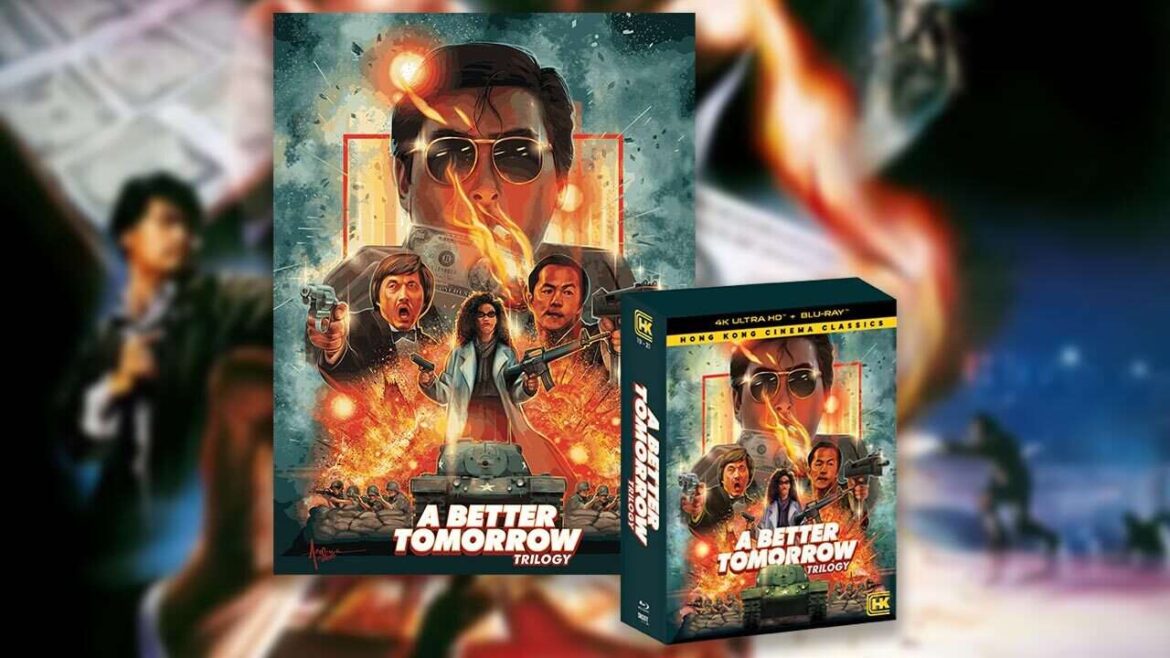
When it comes to action, the golden age of Hong Kong cinema is hard to beat. During the ’80s and ’90s, some of the best movies in the genre were made here, and at long last, all three movies in the A Better Tomorrow saga are headed to 4K Blu-ray as a box set with tons of new special features. Restored by Shout Factory, A Better Tomorrow Trilogy is available to preorder for $100 ahead of its November 18 release. Shout Factory is also releasing a 4K Blu-ray edition of Hard Boiled on November 4. This Deluxe Edition looks promising as well, but it’s worth noting the price has jumped from $40 to $65 at Amazon and Walmart. It’s unlikely to launch at this price, and you won’t be charged for preorder until it ships.

$100 | Releases November 18

Directed by renowned filmmakers John Woo and Tsui Hark, all three A Better Tomorrow movies have been remastered in 4K from the original camera negatives. Each one is presented in Dolby Vision–and are HDR-10 compatible and viewers can choose between the original Cantonese language track or the English dub, in DTS-HD Master Audio mono and English DTS-HD Master Audio mono. If you choose to go with the original Cantonese audio, each film features newly translated English subtitles. You’ll also get an exclusive poster in this box set, based on the newly commissioned art.

Each film is accompanied by dozens of brand-new extras, which are mostly audio commentary tracks and interviews with established film critics, members of the cast and crew, and even notable directors like Gareth Evans (The Raid). The real jewel of this collection is the sought-after workprint of A Better Tomorrow 2, which was thought to be lost for years. This version of Woo’s sequel was originally re-edited producer Tsui Hark, and it features an extra 30 minutes of footage. While Woo considers it to be the black sheep of the trilogy–the third film was in turn directed by Hark–he has still spoken fondly about its climatic gunfight as some of his best work in cinema.

You’ll also find the Taiwanese cut of A Better Tomorrow 3 here, which adds around 10 extra minutes of content, resulting in several extended scenes. The seven-disc collection includes 4K UHD and 1080p Blu-ray editions of each film.

You can check out the full list of features on each disc below.

Disc 1: A Better Tomorrow (4K)

  • Audio commentary with James Mudge, Hong Kong film critic at EasternKicks (New)

Disc 2: A Better Tomorrow (Blu-ray)

  • Optional English subtitles newly translated for this release (New)
  • Audio commentary with James Mudge, Hong Kong film critic at EasternKicks (New)
  • Better Than the Best – an interview with director John Woo (New)
  • Between Friends – an interview with producer Terence Chang (New)
  • When Tomorrow Comes – an interview with screenwriter Chan Hing-ka (New)
  • Thoughts on the Future – an interview with filmmaker Gordon Chan (New)
  • Better and Bombastic – an interview with filmmaker Gareth Evans (New)
  • Trailers
  • Image gallery

Disc 3: A Better Tomorrow 2 (4K)

  • Optional English subtitles newly translated for this release (New)
  • Audio commentary with James Mudge, Hong Kong film critic at EasternKicks (New)

Disc 4: A Better Tomorrow 2 (Blu-ray)

  • Optional English subtitles newly translated for this release (New)
  • Audio commentary with James Mudge, Hong Kong film critic at EasternKicks (New)
  • A Tumultuous Tomorrow – an interview with director John Woo (New)
  • Better Than Ever – an interview with film historian Frank Djeng (New)
  • Trailers
  • Image gallery

Disc 5: A Better Tomorrow 3 (4K)

  • Optional English subtitles newly translated for this release (New)
  • Audio commentary with critic and author David West (New)

Disc 6: A Better Tomorrow 3 (Blu-ray)

  • Optional English subtitles newly translated for this release (New)
  • Audio commentary with critic and author David West (New)
  • Third Time Lucky – an interview with screenwriters Yiu-Ming Leung and Foo Ho Tai (New)
  • All Our Tomorrows – an interview with Hong Kong filmmaker and academic Gilbert Po (New)
  • Nam Flashbacks – an interview with Vietnam War researcher Dr. Aurélie Basha i Novosejt (New)
  • Theatrical trailer
  • Image gallery

Disc 7 A Better Tomorrow 2 and 3 (Blu-ray)

  • Long-lost A Better Tomorrow 2 workprint featuring over 30 minutes of never-before-seen footage
  • A Better Tomorrow 3 – Taiwanese cut

A Better Tomorrow starred Chow Yun-fat as conflicted police officer Mark Lee, trapped between duty and honor when senior Triad gangster Sung Tse-Ho–who Lee has close ties to–asks him to help avenge the murder of a family member. Released in 1986, the film was a big critical hit and it set the stage for director John Woo and Chow Yun-fat’s eventual journey to Hollywood.

In 1987, A Better Tomorrow 2 was released, and it featured a wild plot twist to justify its existence–for reasons we won’t spoil here in case you never saw the first movie. Like its predecessor, the film featured over-the-top action, explosions, and a ludicrous bodycount once characters finally ran out of bullets.

A Better Tomorrow 3: Love and Death in Saigon brought the series to a close in 1989 and it’s a prequel to the first movie. Set during the final days of the Vietnam War, the story isn’t the best, but it does boast incredible action sequences throughout. Interestingly, Woo’s original vision for the film was different and led to him exiting the director’s chair after he and Hark experienced creative differences. Woo’s script would eventually evolve into 1990’s Bullet in the Head.

As mentioned, the other big new release in the Hong Kong Cinema Classics collection is Hard Boiled. Released in 1992, Hard Boiled is one of the best action movies of all time–and the best collaboration between John Woo and Chow Yun-fat. Over-the-top and incredibly fun, Hard Boiled as a straightforward plot centered around a cop seeking revenge against a gang of criminals. Mayhem ensues, the action is extreme, and Chow Yun-fat is effortlessly cool in every scene, including that iconic shootout in a hospital.

$65 | Releases November 4

Shout Factory’s Deluxe Edition resurrects the cult-classic with a brand-new 4K scan from the original camera negatives, adding in Dolby Vision and HDR 10 support along with the Cantonese and English dub in DTS-HD Master Audio Mono. Like the A Better Tomorrow trilogy, there are also new English subtitles in this release as well and the box set includes an exclusive 52-page collectible booklet.

The three-disc set also includes a standard Blu-ray copy of the film and it contains plenty of bonus materials, like several newly filmed interviews with Woo and other key members of the crew. Topping it all off is a collection of new audio commentary tracks with film critics and historians–as well as the audio commentary from John Woo and several more people that the Criterion Collection recorded–deleted scenes, trailers, and an image gallery.

We included a list of features on each disc below.

Disc 1 (4K)

  • Optional English subtitles newly translated for this release (new)
  • Audio commentary with director John Woo and film journalist Drew Tayler (new)
  • Audio commentary with film historian Frank Djeng (new)
  • Audio commentary with director John Woo, producer Terence Chang, filmmaker Roger Avary, and critic Dave Kehr (recorded by the Criterion Collection)

Disc 2 (Blu-ray)

  • Audio commentary with director John Woo and film journalist Drew Tayler (new)
  • Audio commentary with film historian Frank Djeng (new)
  • Audio commentary with director John Woo, producer Terence Chang, filmmaker Roger Avary, and critic Dave Kehr (recorded by the Criterion Collection)

Disc 3 (Bonus Blu-ray)

  • Violent Night – an interview with director John Woo (new)
  • Boiling Over – an interview with actor Anthony Wong (new)
  • No Time for Failure – an interview with producer Terence Chang (new)
  • Hard to Resist – an interview with screenwriter Gordon Chan (new)
  • Boiled to Perfection – an interview with screenwriter Chung Hang Ku (new)
  • Body Count Blues – an interview with composer Michael Gibbs (new)
  • Hong Kong Confidential – inside Hard Boiled with author Grady Hendrix (new)
  • Gun-Fu Fever – an interview with author Leon Hunt (new)
  • Chewing the Fat – an interview with academic Lin Feng (new)
  • Deleted and extended scenes
  • Trailers
  • Image gallery

While you’ll have to wait a few months for these Blu-rays, you can grab some classic action movies starring Jet Li. The Jet Li Collection was released in July, and it offers five of his best movies–Fist of Legend, Tai Chi Master, The Legend 1 + 2, and The Bodyguard from Beijing–in 4K and 1080p. Each movie also comes with a selection of bonus features, and the price has dropped to $107 (was $130). In August, Ringo Lam’s acclaimed 1987 action movie City on Fire joined Shout Factory’s collection on 4K Blu-ray, and you can snag a copy for $29 (was $40).

Looking ahead, Shout Factory will be releasing a lot more movies over the next couple of years, as the film distributor recently secured the worldwide rights to the Golden Princess film library, a collection of 156 movies in total. Here’s a list of a few other movies and box sets in the Hong Kong Cinema Classics collection that you can buy or preorder now:

Hong Kong Cinema Classics

Sign up for GameSpot’s Weekly Deals Newsletter:


Source link

September 9, 2025 0 comments
0 FacebookTwitterPinterestEmail
Interview with John Goodenough from Monster Fight Club
Esports

Interview with John Goodenough from Monster Fight Club

by admin September 8, 2025


*Audio interview, edited for clarity and length*

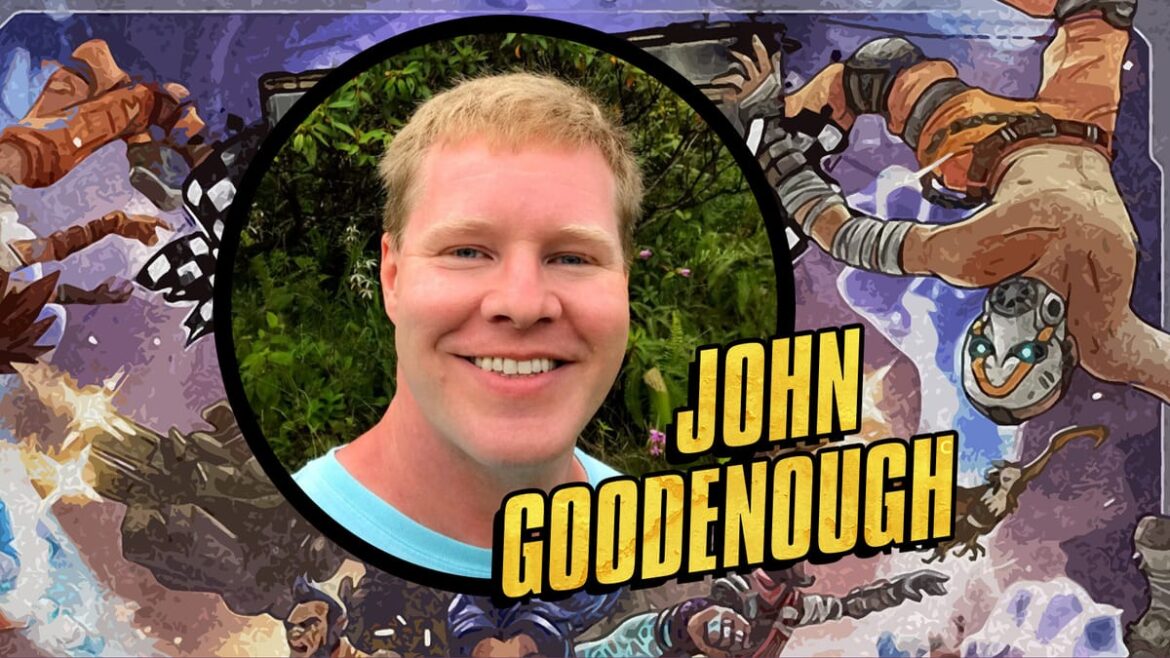
A couple of weeks ago, Gaming Trend sat down with John Goodenough, Game Designer with Monster Fight Club, publisher and developer of Cyberpunk: Combat Zone and Borderlands: Mister Torgue’s Arena of Badassery. John’s journey didn’t begin there, however, and for over 20 years John has been the wearer of many hats, with his creative thumbprint on many, many games. John shared his journey from humble beginnings and talked about what he’s working on now. 

Gaming Trend (GT)

So, John, you’ve been in the industry for like 20 plus years, right?

John

I think when I started getting a paycheck from my first game company, it was like 2000 or so, and I’ve worn a lot of hats. I’ve worked as an artist, as a developer, and as a designer. I actually got my start working in the warehouse [at Fantasy Flight Games]. It was one of those opportunities where I actually feel like I’ve been a part of just about every single step in the game design, creation, and marketing process. I even know what it’s like to hand assemble games and throw bits into a box and go to the shrink wrapper. It’s been a wild ride.

GT

We were checking out your equivalent game IMDB page on Board Game Geek, and my goodness, it has quite the list of credits for games. We’ve played many of them! Tide of Iron, Runebound, Talisman, Relic, and now Borderlands. For these games, did you design them and also do art? Were you moving around to wherever you were needed?

John

It was art first. I started off making illustrations for Rune Bound, and then continued when Fantasy Flight started getting into the CCGs. Because I was a local, I could go into the office and play test the game that I would then be working on illustrations for. I was maybe one of the few artists that they’ve ever had in the office that actually worked on the game and then played the game before they did art. It was an amazing process to me because I wanted to make sure that every illustration didn’t just look pretty but it also actually represented what was functioning in the game. 

The thing that really piqued my interest for development was playtesting those games. I got to see the developer side of things because a lot of the projects and games that they were working on were primarily about world building. Fantasy Flight ultimately created worlds and created game engines for you to run around and play in. So that world building process is really what piqued my interest in getting into game design. I had designed Monopoly variants back in the day but I didn’t really have any ambition on being a game designer. I love games, and I love playing them, but I believed “you stick to the rules.” But that process of building a playground, a world for people to play in offered me more creative space to operate in than just illustrating cards or pages or card illustrations. As an artist, you really only get to take a couple of snapshots in a world being a game designer, but being able to wear this hat as a game designer gave me something to experiment with.

GT

Which artists’ work did you learn from and get inspired by?

John

John Howe has been the biggest inspiration. We got a chance to work together on The Lord of the Rings: Battlefields expansion and I tried my best not to be a gushing fanboy. The original graphic design for the boards were not delivering a cohesive aesthetic so he went above and beyond the call of duty to create art frames at the last minute. My admiration for his artistic vision was equally matched by his integrity and dedication. TSR legends like Easley, Elmore, and Parkinson unlocked amazing worlds to explore. This list goes on and on.

GT

What experience(s) help prepare you the most and become ok with coming up with new rules to games and being part of that design “behind-the-scenes” process? 

John

Well, I think the best thing that prepared me for working on games was actually working in the warehouse. We played test games during the day, then took breaks and came back and chitchat. You got a pretty good insight into the behind the scenes. I think the biggest, most valuable lesson that I got out of that experience was watching the emotional journey. When people think of game design they think it’s very intellectual. People tend to think everything is happening in your head, but in reality, when you’re the creator, it’s a big emotional journey because you have to be passionate enough to work on it every day and carry it through.

It’s a hard job before you even get the game out there. Once you create the product and put it out in the world, you also have to learn how to step back and just let it be received. There are always gonna be people who love it, people who hate it, and people somewhere in between. These groups of fans are especially more prevalent on the Internet – it’s not 2000 anymore. The real truth is that, after you put a game out there, it’s not your game anymore; it’s not your baby now it’s theirs. You have to have a thick skin about response, too.

GT

What kind of emotional journeys have you had or seen?

John

One of the first big projects I was involved with was an “all hands on deck” game. It ended up being the whole company at Fantasy Flight putting all of their love, and resources into this game that was supposed to be “the next big thing.” Instead of the launch even coming close to their hopes and expectations, it completely flopped. It was one of the biggest flops and bombs that they’ve ever had. To watch that emotional journey of it all, the excitement of launch, the disappointment and the heartbreak with the reception, it was a lot. I was playtesting and getting insight to the development but I was far enough removed from the core group where I didn’t have as strong of an emotional attachment as the others. Witnessing all that happened was eye opening. 

The one other lesson you learn too is that this is all a marathon. If you’re gonna last in this business, you can’t do anything as a sprint. You burn out your energy quickly like that so everything you do, every step you take within any project, has to be with the mindset of it’s a marathon. If you’re in it for the long haul, you have conserved some of that creative energy and passion that will carry you forward. 

The one other lesson you learn too is that this is all a marathon. If you’re gonna last in this business, you can’t do anything as a sprint.

GT

When you’re working with intellectual properties and established fantasy worlds, like Warhammer, Borderlands, and World of Warcraft, and you’re doing world building developing, knowing passionate fans (on both ends) are there, how difficult of a dance is it for you to juggle that? The game has got to work mechanically, but then you also kind of have to have it be marketable and also something that fits within the established rules of whatever universe it is. How challenging is that from a design and art perspective?

John

Everything in design is all about balance. You also have to be a big enough fan and know the world and know the IP. However, being too big of a fan is a drawback, too, because if you try to make the game too realistic, and take the stance of “this is exactly how it works in the video games or books or movies,” then you end up starting to create things that only those super fans are going to enjoy and kind of turn all of the casual fans. 

There is a lot of it that depends on the licensor. I have been extraordinarily lucky to work with many exceptional licensors, like Games Workshop and Blizzard. Every game company has its quirks, but when you’re working with the right licenser it makes all the difference in the world. When you have somebody that understands everything about the property, like they’re a walking encyclopedia on every single detail, it makes a big difference. Having people respect the rules and the board game design process makes a big difference, too. So everything has to be balanced and work for everything behind the scenes and also for the fans.

GT

So you have this juggling between the hardcore fans, the casual fans, the board gamers, the video gamers, the licensor, etc. etc. and you, as the designer and developer, have to act as like a translator, right? How do you gauge when something is working, or not?

John

It’s actually kind of a measuring stick that I use. When I get all excited and I design something that works just like the video game, or that’s just like the scene in the movie, that’s actually a red flag. It’s usually a symptom that you’re dialing in to that aspect too much. You want the game to feel like the moment or action you’re trying to create; you want to give the impression of the thing, not the actual thing itself. In many ways, being a designer is more like being an impressionistic painter. You’re not just creating these little micro moments of doing exactly the thing that happened in the movie or game; you’re giving the feeling of it. Ultimately, what you’re doing is you’re creating a whole series of those little micro interactions so that at the end of the game, people walk away with the feeling that they were a living character in that world.

GT

After all these years of Randy and I going to cons, we think our enjoyment comes from getting that impression, getting that ‘aha moment’ that occurs within the game, like “That was super cool!” You know, whatever happened, win or lose, we got a feeling from the game that leaves an impression. Do you get a similar ‘aha moment’ during that design process where you say to yourself “OK, this is going to work and this is going to be awesome”?

John

I’ve worked on a ton of expansions and so designing an expansion is quite different than designing a brand new game totally from scratch. I will say one of the more interesting processes was working with Rune Bound with Christian Peterson, the CEO. One of the very first things he’d want us to do is make the box art, so we would end up having the fully finished illustration pop to look at and for him to say “OK, go make the thing.” So I would print it out as a movie poster size, put it on the wall by my desk as a movie poster, and I would stare at this thing and imagine all these scenes happening in it as a movie. Then I would translate that into the mechanics and see how that would actually work in the game. These expansions I made were based off of a movie poster. 

When you’re working with an intellectual property, like we’re working on Borderlands games at Monster Fight Club right now, it’s kind of the opposite because you go through the video games, go through the content, and get that impression. Merging everything in together to create its own identity is its own experience. There isn’t an ‘aha moment’ so much as there are small little ones along the way.

GT

With your journey thus far, how did you get involved with Monster Fight Club? 

John

I worked at Fantasy Flight Games for a little over a decade. When I started there were like 10 people at the company and by the time I left it was close to 100. The company was growing rapidly, and it felt like the company was hitting the pinnacle of success. While the growth was good, I realize I’m more of a small town guy than a big city slicker. I like to work at smaller companies where everybody knows their name and it feels more cohesive with departments being down the hall, not down the street. If you’re working in a creative process, I just like that type of environment more. And so I moved on and wanted to work for a smaller company, like the good ol’ days. After FFG, I worked for Alderac Entertainment Group (AEG) for about 10 years until the company went through a restructuring. 

Ten years in a creative position is a lot of work. There is a tremendous value in working at a company long enough to where you learn you know all the systems and processes people use, which gives you different perspectives on different ways of doing things. But moving every ten years into a different environment just kind of opens other doors and unlocks other potential. Being at AEG was more about production, and you really couldn’t design much in house like when I was at FFG. When you’re continuing production, all you’re doing is kind of giving a game a window dressing pushing it out the door to sales. So that is the nice thing about working at Monster Fight Club is I got to go back full time as a designer. There’s a buddy that I knew at AEG and so he brought me over. I guess I could mostly thank him for the gig!

GT

How tough was it for you to leave these positions, not knowing what was coming down the road for you or the companies? 

John

Fantasy Flight was a bit of a tough call because I left right when they were starting to do Star Wars. And so when I left, people were like “Well, why? Why would you leave?” But it wasn’t just one thing. One of the big things that happened goes back to balance, and this was a balance between designing and sales. Every creative company needs the ratio of the creative people and the corporate business suits. It’s not that one is good and the other is bad, you just need a balance. The only time when it gets bad is when there is an upset to that balance. Too much business, and there is not much space for creative endeavors and the games go flat. But if all you have are creative people and you don’t have any business and people, you’re gonna be wondering if you’re gonna have a job tomorrow. So this is what I saw at FFG; the company hit a tipping point where the business side just took over and we’re running the show and the creatives didn’t really have any influence anymore. Not like when I started. So I do feel a bit lucky that I kind of saw the writing on the wall and left when I did.

I left while I still loved being there. That was the hardest part because it’s not just the place, it’s the people. Bearing in mind that all of this is coming from the perspective of me, the passionate creator guy, so I’m a little biased.

GT

So now that you’re back to world building within Borderlands, with things like the campaign and Raid bosses, how are you approaching this design with this whole balancing act?

John

The Combat Zone system is so simple and universal that just having such a good system and engine makes our jobs a million times easier. Super simple, super intuitive. It’s very easy to just kind of work out probabilities, you know, right in your head. Borderlands: Mr. Torgue’s Arena of Badassery is a cooperative game on a grid map with four Vault hunters running around fighting these waves of enemies and completing objectives. The Raid Boss fights are an interesting departure because you get to use the same system, but the new rules make the game feel radically different because  you just have one big enemy on a map. So it simplifies things a lot. It makes setup really quick and easy; you can build the map with these two big tiles and just start playing. It gives you the feeling of an epic fight. 

GT

Do you have a favorite Vault hunter that you tend to gravitate towards when you’re working on and testing these games?

John

Oh that’s like a “who’s in your favorite child” question, right? I mean, we’ve covered all of the Vault hunters and then we’ve taken some characters and turned them into Vault hunters. If I had to pick a favorite, I think it would be Zero. He might be the most fun to at least play test and design for because he’s such a min-maxing character. And game designers and players both love the min-maxing. Most characters do either range or melee, or sometimes mid, but only one. Zero gives you tons of options where he can do both. You just have to time it right, plan it and execute it perfectly, using exactly the right actions and get the right dice rolls, you can do these amazingly epic moves.

GT

Within the game design space, are you finding yourself playing the video game alongside it for inspiration? Are you mostly focused on just the board game? Is it both?

John

The expansions are a little mix of everything: you know a dash of Borderlands 1 there and then a scoop of Borderlands 3 there. The main reason why I do enjoy playing video games is mostly that it’s kind of a break. You spend all day crunching numbers, trying to get balance to work, and you just need to recharge, like that feeling of going into Gunzerker mode. Playing the games also helps to dial in the feeling and get inspiration. It’s almost like when people take a shower and they get this brilliant idea and it’s a shower. You know, there’s like ‘eureka’ moments where something just pops into your head.

GT

So while you’re blasting away at bandits and looting and shooting, that’s your shower thought moment.

John

Yeah! When you’re in the mindless explosions and just carnage. You can come up with some of the most creative ideas doing the mindless things. Like slaughtering bandits.

GT

That’s fantastic.

Do you find yourself recharging your creative batteries by playing other board games? Are there any go-to board games that you’ll always play, or recommend to aspiring designers to play?

John

Absolutely. I would say the best advice I could give to anybody wanting to design games is not only play a diversity of games, but play the games you hate. A lot of designers just play what they want, and you can get inspiration from that. However, actually playing the type of games that you don’t like gives you another language. Every language you learn just allows you to look at things differently and solve problems in different ways. 

I had a really good buddy back in Minnesota, Richard, who had thousands of games. I mean literally like 5000 games in his house. They were on all of the shelves, walls, cabinets. I mean, he cleaned out his chimney after he ran out of room and was stuffing games in his chimney. It was a smorgasbord. Of course, like I said before, everyone has different tastes and eventually you’re going to find stuff that doesn’t resonate. It was one of those games that didn’t resonate that I played at his house that really kind of gave me inspiration. Playing it allowed me to articulate what I did like about other games better. When you create a contrast with a basis of comparison, it allows you to look at things with a sharper level of detail. There aren’t any games that I hate to play, but there are a lot I enjoy and a lot that I get inspiration from.

The best advice I could give to anybody wanting to design games is not only play a diversity of games, but play the games you hate…actually playing the type of games that you don’t like gives you another language. – John Goodenough

GT

Do you have a ‘gold standard’ for games? Regardless of the game mechanic, is there just one you’d recommend to anyone trying to get into game design?

John

I’m not saying this is the best game or the end-all, be-all of games, but if I had to think of an example of what makes the perfect game, the one that comes to mind is Carcassonne. It’s not even my favorite game, or the one I want to play every day all day, but it is close to what I would call a ‘perfect game.’ It balances out reward patterns, where you can get quick rewards by closing off roads or you can do long term investments by building up your farms. The castles are kind of in-between. It has this wonderful pattern of bouncing between short term investments versus long term investments in rewards and it’s super simple. All you can do is draw a tile, but your decision power comes from where it and your meeples, if any, are placed. It sounds like it would get boring so quickly and so why would you want to play that game more than once? The replay value is you’re putting tiles down and scoring on three different things that can occur in a nearly-unlimited arrangement. So the game is about the pattern of flow of having these little constant rewards, but also building up to the big, big reward at the end. 

That is probably the game cause I played that a lot in real life, and then on apps, because it plays really quickly. I have probably played that more than any other game in existence.

GT

So did you play all 5000 games?

John

It was insane because I actually had a goal where I was like “there’s no way we’re gonna be able to play all these games, so I will try and play half of them.” In reality, we ended up playing several hundred games. This was during my research phase, too, where I said “I just wanna learn. Every game I play I wanna learn something new and play a different type of game that I experienced before.” So, I was learning about five games per session, which was like a drop in the bucket when you compared it to what was out there at the time in the early 2000s. Nowadays, there are 5000 new game releases every year! 

GT

I mean, to learn five games in a session… that’s exhausting. When we try to learn one game now it takes like 90 minutes… and we’re not even playing it fully. What you’re talking about is that marathon-style approach to gaming. 

John

I mean, I can’t do that anymore. It was mostly the passion about wanting to game design. Like back in those days, they didn’t have education around it. You just had to go out and play games and just learn by playing. Now, they actually have game design colleges and schools where they go into game theory. I think I was just in the right place at the right time. And was lucky enough to have a friend with practically an endless supply of games.

GT

Other than board games, what else resets the creativity? Do you like to surf? Hang out at the beach? Go hunting for treasure with a metal detector? 

John

The dogs I have become the main focus of my life now. They just follow me home or kind of show up on my doorstep now. So I’m surrounded by dogs and there are more than a handful. But I love them. Another hobby is pinball, actually. It is one of those things where it’s all in the reflexes, and is quite different from video games and board games. Actually, from a designer point of view, pinball is close to board games, like Carcassonne, because it’s all about patterns. Once you hit the skill level where pinball isn’t so random anymore, it’s all about pattern development and that’s ultimately what Carcassonne. You play it, you learn it, and you master it. So once you ‘see the Matrix,’ you can predict the patterns and get into the flow. Whenever I get writers blocked or stuck on something, there is something about engaging in a game that has a really good flow of patterns that helps me. Whether it’s pinball, or Carcassonne, or Borderlands you can play it almost in a Zen-like state and just watch the patterns reveal themselves. I think it’s soothing to the brain and it just gets you into that designer mindset where you start coming up with ideas that you never would have thought of otherwise.

GT

You know, they say that if you stare at  the waves for like 30 minutes, it can help reset that brain rhythm. Do you find yourself doing that out on the beach?

John

I mean that’s an amazing example, so. When I was a kid in Minnesota, I used to go out to the water – there was something really captivating about watching the waves roll in. Something about that is like a pattern. So now when I go to the beach, I do exactly that same thing. I just watch the pattern of the waves. There is something really wired into the ways that our brains work is we just love that pattern recognition. It’s very soothing and I think it quiets and resets the brain to the point where it can then start exploding with ideas and create connections and synapses in different ways.

GT

You’ve got all this stuff coming down the pipe and on your plate, like with the Borderlands: MTAOB 2 Kickstarter that’s coming up, so what conventions are planning on attending?

John

You know, I’ve had conventions kind of off my radar for so long, what with the mover and COVID and everything, but I’m really hoping next year that I’ll be able to hit at least some of the big ones, like GenCon and Origins. I don’t know exactly which ones, but GenCon is probably a do or die. 

GT

John, it’s been an absolute pleasure chatting with you and getting to learn more about your background and creative process. It’s refreshing to hear there are some core elements to life and gaming that are just universal. Especially from an industry professional who’s made a career out of designing games and still loves what they do after all these years. You’re still running that marathon! Thank you so much for taking the time today to chat with us and share some of your stories and your insights. 

John

Thank you! Looking forward to playing games with you guys soon!


Share this article


The link has been copied!


Affiliate Links


Source link

September 8, 2025 0 comments
0 FacebookTwitterPinterestEmail
John Deaton claims XRP army helped win Ripple case
GameFi Guides

John Deaton claims XRP army helped win Ripple case

by admin September 4, 2025


John Deaton, the lawyer deeply involved in the Ripple case against the SEC, shares new insights into the case.

Summary

  • John Deaton shared new details from Ripple’s battle with the SEC
  • He argued about the difference that the volunteers in the XRP community made
  • Ripple’s VP Deborah McCrimmon admitted that volunteers saved the company millions

The XRP community may have made a significant difference in the Securities and Exchange Commission lawsuit against Ripple. On Wednesday, Sept. 3, John Deaton, a lawyer who became a voice for XRP holders during the case, revealed just how impactful the community was.

“No credible person can argue that the XRP Army didn’t make a difference in the Ripple case. If they do they’re either ignorant to the facts and truth or intentionally lying,” John Deaton said.

Deaton stated that there was “conclusive evidence” of the community’s impact, both during the trial and in the ruling. Specifically, the judge cited his amicus brief and affidavits from several XRP holders in her ruling that XRP was not a security when traded on secondary markets.

No credible person can argue that the XRP Army didn’t make a difference in the Ripple case. If they do they’re either ignorant to the facts and truth or intentionally lying. We have conclusive evidence that we made a difference. There were over 2K exhibits filed in the case. In… https://t.co/WK2MfOb6wS

— John E Deaton (@JohnEDeaton1) September 3, 2025

The proof, according to Deaton, was in the decision itself, and it shows that any individual can make an impact, no matter how small.

Ripple VP confirms the role of the XRP army

Deaton’s comments were echoed by Deborah McCrimmon, Ripple’s vice president and deputy general counsel. In a Sept. 2 interview on the Penta Podcast, she revealed that members of the XRP community actively contributed valuable work to the case. This volunteer work saved Ripple “millions” in legal fees, she explained.

“We didn’t ask them to, but once they saw this defense in our in our answer, people started finding this. I could have paid lawyers thousands of dollars, literally thousands of dollars, to do that and yet they were finding it and posting it on Twitter, and that was tremendously helpful for me.”


Source link

September 4, 2025 0 comments
0 FacebookTwitterPinterestEmail
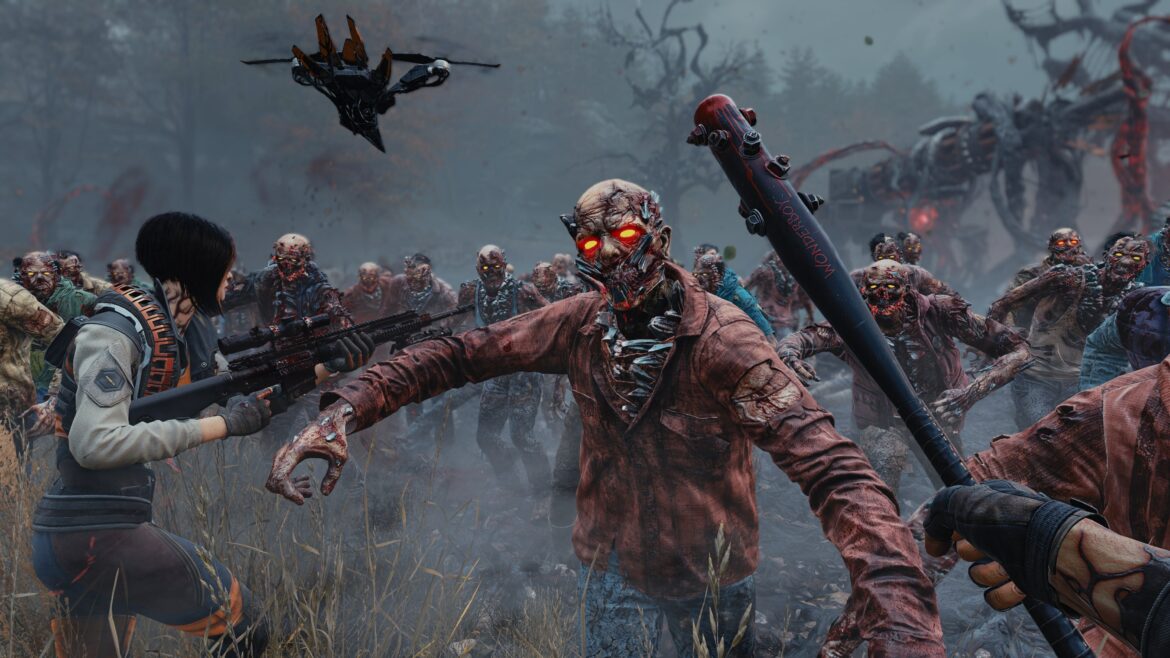
Promotional screenshot of Toxic Commando, showing dozens of zombies attacking a group of players.
Gaming Gear

The new John Carpenter game will absolutely stuff your screen with zombies

by admin August 28, 2025


Contrary to some claims, the scariest thing about zombies is not that there’s a lot of them. It’s that they’re dead, and dead things are scary. (I am sometimes startled by pigeon corpses.) But I’ll agree that the second scariest thing about zombies is that there’s a lot of them, and that’s where John Carpenter’s Toxic Commando, an upcoming co-op shooter with a story “inspired by” the famed horror director, really excels.

I knew I was going to like the Toxic Commando preview build I recently played when the tutorial had me plow through a sea of flailing zombies in an armored car. My geriatric RTX 2070 Super even managed to render all the blood that shot out of them without catching on fire.

I did have to murder my render resolution to achieve a framerate I could live with, but I wasn’t there to appreciate the sharpness of zombie freckles. I just wanted to shoot some zombs, and Toxic Commando delivered: I shot zombies with a mounted machine gun, I shot zombies with a shotgun while leaning out the window of a car, and I shot zombies with a railgun that punched through lines of them.


Related articles

The first proper level after the tutorial put me and three other PCGers into a large, rocky outdoor map which we explored freely, occasionally wandering away from each other despite all the zombie fiction that tells us not to do that.

After saving each other from grabby tentacle monsters a few times and hunting down the best guns we could in our armored car, we converged at a church where we spent our collected resources to activate defenses like mounted guns and barbed wire, and dug in for a wave defense finale.

John Carpenter’s Toxic Commando – Gameplay Trailer | Opening Night Live 2025 – YouTube

Watch On

The normal difficulty was tuned just right: We survived the fight by the skin of our teeth, and when it was over, you could hardly see the ground in front of the church under all the dead undead. I appreciated how the horde bounded down the rocky cliffs around us and then soared over a tall fence like gazelles—not really scary, but funny.

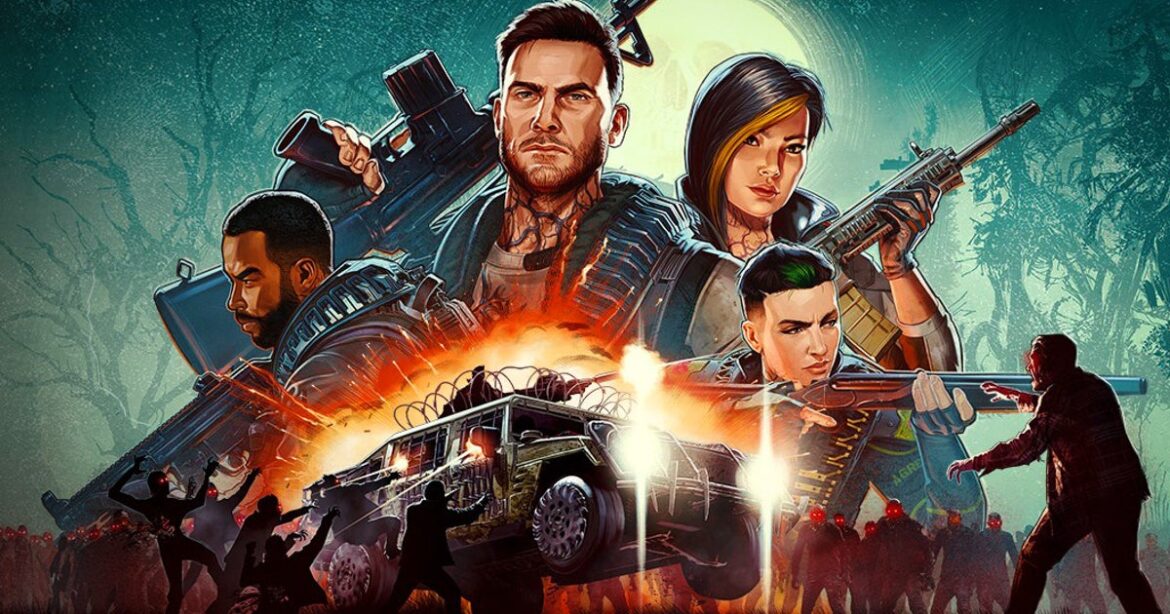
Toxic Commando’s “inspired by John Carpenter” story is far more comedy than horror (more Big Trouble in Little China than The Thing, to put it in Carpenter movie terms), starring a ragtag group of quipping antiheroes that’s been called into action by a mad scientist. Infected with a supernatural disease, they must defeat the eldritch “Sludge God” and its risen abominations to survive. That includes the undead, but also original monsters.

Keep up to date with the most important stories and the best deals, as picked by the PC Gamer team.

I feel safe in guessing that there are more sophisticated supernatural co-op shooters out there: 2021 Left 4 Dead spiritual successor Back 4 Blood, for instance, and the excellent Remnant series. But we’re not talking about games that aim to be all-consuming live service empires, so there’s always room for more, and Toxic Commando seems like it’ll be a strong candidate for co-op groups looking for a few weekends of goofy fun.

It’s set to release sometime in early 2026, and you can find it on Steam here.

Best PC gaming kit 2025

All our favorite gear


Source link

August 28, 2025 0 comments
0 FacebookTwitterPinterestEmail
John Carpenter's Toxic Commando brings a refreshing new perspective to a well worn genre
Game Reviews

John Carpenter’s Toxic Commando brings a refreshing new perspective to a well worn genre

by admin August 25, 2025


Plenty of Left 4 Dead-style co-op hoard shooters have come and gone throughout the years. This includes the quickly forgotten spiritual successor to the Left 4 Dead series, Back 4 Blood and Remedy’s recently released attempt, FBC Firebreak. Remember FBC Firebreak? Anyone? Anyone? That one might still find an audience after planned updates, but it’s facing an uphill struggle.

John Carpenter’s Toxic Commando

  • Developer: Focus Home
  • Publisher: Saber
  • Availability: Releases early 2026 on PC, PlayStation 5, Xbox Series S/X

One of my favourite Left4Deadalikes (which probably isn’t a word but I’m making it one now) was Saber Interactive’s World War Z, thanks mainly to the sheer volume of zombies it throws at players during the span of a mission and the visual spectacles that its writhing piles of undead created. Saber followed that game up with another Left4Deadalike of sorts in Space Marine 2, and now it’s is back with John Carpenter’s Toxic Commando, a game that takes everything learned from those last two games, adds it to a semi-open world and then crams in a very unexpected but actually pretty cool idea from another game in its back catalogue; MudRunner.

Don’t you know that you’re toxic?Watch on YouTube

Having the actual freedom to explore in a game type that normally involves fairly linear level structures feels really refreshing. In Toxic Commando’s tale of four infected mercenaries and their fight against the minions of a recently awakened Sludge God, you’re free to wander or drive around each map to your heart’s content before kicking off each level’s climactic firefight. Just like in Left 4 Dead, there are multiple acts here, each split into chapters but, instead of just going from point A to point B and occasionally having a few big battles at choke points along the way, Toxic Commando opens things up and allows you to plot your own path. Do you gamble coming into contact with multiple hordes of roamers in an attempt to hoover up every last bit of loot from the many points of interest on the map, or do you just make a beeline for the main missions but risk getting there with fewer tools and resources to defend yourself with?

Obviously most of your time will revolve around shooting various types of undead enemies, ones that loosely follow the established Left 4 Dead formula of explody one, grabby one, poisoney one etc etc, but there isn’t exactly a shortage of things to do between these firefights. There are giant flailing tentacles popping up all over the place that need to be shot before they squirm away again, there are small mini games for hacking and repairing equipment, little out of the way stash spots to discover, optional side missions to undertake, and much more.

Image credit: Saber Interactive

One of the main activities you’ll be doing, though, is running down masses of squishy zombies with a car. Vehi-killing zombies in video games is always a joy and it feels especially great to do in Toxic Commando. Often there are hundreds of ghouls on screen at one time and grinding these clusters of creepers under your wheels as your teammates lean out of the windows to mow down the stragglers is pure 80s action movie excess. I loved these moments! There are multiple vehicles to find too, each with their own special abilities, like the ambulance that can give a healing effect or the self destructing police car that acts a bit like Left 4 Dead’s noise emitting pipe bombs.

The standout vehicle, in my opinion, has to be the HMV which, if you live in the UK, is an all terrain vehicle and not a struggling franchise of music stores that now sells plastic collectibles and expensive rucksacks. The HMV comes complete with a mounted machine gun and a winch, and this winch ties in neatly to the other big inspiration for Toxic Commando: MudRunner. You see, throughout the maps there are many pools of mud and sludge dotted around that will slow your progress as you struggle to spin your tyres through the blockage. All while scores of ghouls descend upon you. Shoot the winch at a nearby tree or piece of scenery, however, and you’ll be able to pull the HMV out of the mud trap, or up a steep, slippery hill and, hopefully, out of trouble. Plus the way the mud reacts and deforms according to the path your wheels take is lovely. It’s the best that mud has looked since… well, Mudrunner, I guess.

I’ve already touched on the hordes, and the fact that there’s lots of them, but I’m never not impressed when I’m confronted by the sight of thousands of bodies pouring over a piece of scenery and running, screaming, in my direction. Despite the open world nature of Toxic Commando’s levels, there are still plenty of moments like this to look forward to on each map, although if they’re part of a story mission you’re often given a little bit of prep time to shore up your defenses before they kick off.

You can defend these story areas in multiple ways too. Using special weapons like rail guns and grenade launchers for example, or mounted turrets and traps, but each of these will need a rare resource called Scrap to unlock. Scrap can only be found by exploring the map, hence the risk reward exploration I mentioned earlier, so if you don’t get any, those special weapons crates and those turrets will stay locked down. Each Toxic Commando also has a special power, and in the case of Walter, the character I played as, he shot big blue bolts of energy from his hands.

All of this ties into the very best bit about Toxic Commando and that’s – the explosions! These are best seen during those high body count, story mission battles where limbs and torsos go flying through the air in bloody arcs as you shoot a handily placed red barrel, thunk a grenade out of a launcher, or fire off a palm-sized piece of plasma into the middle of a writhing mass of mutants. It’s just utterly glorious carnage. The type of over the top, comic booky splattery gore that you’d see in something like The Boys, and I love it. Point, shoot, make the bad things ‘splode. It’s the signature ingredient that every good horde shooter needs and it’s something that Toxic Commando excels in.

It’s not all perfect though. One of the many reasons why John Carpenter movies are so beloved is due to the fact that they often have highly memorable lead characters (hello in particular to any played by Kurt Russell). Which is why it’s a bit of a shame that the Toxic Commandos themselves are a bit generic and bland, in both looks and personality. Sure they chatter away to each other during moments of downtime, just like Left 4 Dead’s characters, but the lines they utter border on the repetitive and annoying, rather than the meme worthy like Louis’ “grabbin’ pills!”. Seriously, Walter uttered the phrase “I’m liking this” at least once per minute during my hands on, which is definitely enough to aggravate to the point that I think I’ll be hearing it in my dreams tonight.

I’m also slightly worried about how grindy the upgrade and cosmetic mechanics seemed. There are three types of currency in Toxic Commando, all of which are unimaginatively just called ‘Currencies’ in the menus. These currencies are actually crystalline resources called sludgite, the most common of which you can gather up from weird tree things when you’re out and about on a mission. Higher tier sludgite currencies seem to be awarded for mission completions, especially when played on harder difficulty settings, but the amount you earn, versus the cost of a lot of the attachments and cosmetics makes unlocking things feel like more of a grind than it probably should.


To see this content please enable targeting cookies.

Manage cookie settings

I get that this is a design plan to encourage you to replay the campaigns on higher difficulties after you’ve completed them, a’la Helldivers 2, but when there’s so much customisation on offer across characters, weapons and vehicles, and when the cost of each purchase is so high, it feels like you’re going to be locked out of all of the really good stuff unless you dedicate some serious time to the game.

Oh and why on Earth is this game called John Carpenter’s Toxic Commando, when there are four Toxic Commandos in the game? Even if you play it solo, the game still throws in three AI controlled toxic commandos to play alongside you, which means there’s never, at any point in the game, a singular Toxic Commando. That name only makes sense then if the plural of Toxic Commando is also just Toxic Commando. You know, just like how one Nintendo Switch Joy-Con is called a Joy-Con but multiple Joy-Con are also just called Joy-Con. Argh this is making my brain hurt.

So yeah, only a couple of minus points really, in what felt like a super fun, gore-soaked co-op shooter. It’s not going to win any game of the year awards, unless there’s a new one for best zombie splatter in a video game, but it definitely feels like one of those games that’ll be really fun to burn through with some pals over the course of a few evenings. Whether you’d want to come back to it multiple times afterwards to grind for a nice scope and a fancy animated gun skin, well, that’s up to you. I don’t think I would, but I am absolutely looking forward to playing through the campaign once with a team of fellow Toxic Commando(s) when the game releases early next year.


Source link

August 25, 2025 0 comments
0 FacebookTwitterPinterestEmail
John Wick Director Is Excited About Gears Of War Movie And Making His First War Film
Game Updates

John Wick Director Is Excited About Gears Of War Movie And Making His First War Film

by admin August 25, 2025


John Wick and Deadpool 2 director David Leitch’s Gears of War movie is progressing forward, with producer Kelly McCormick saying there is a “lot of energy” around getting the movie made due in part to the fact that a new game, Gears of War: E-Day, is coming out in 2026.

McCormick clarified, though, that the Gears of War movie for Netflix will not be ready in time for the game’s release date, whenever in 2026 that may be. “We won’t hit that release date, but maybe something that feels relevant to the release of the new game,” she told The Hollywood Reporter.

Size:640 × 360480 × 270

Want us to remember this setting for all your devices?

Sign up or Sign in now!

Please use a html5 video capable browser to watch videos.

This video has an invalid file format.

Sorry, but you can’t access this content!

Please enter your date of birth to view this video

JanuaryFebruaryMarchAprilMayJuneJulyAugustSeptemberOctoberNovemberDecember12345678910111213141516171819202122232425262728293031Year202520242023202220212020201920182017201620152014201320122011201020092008200720062005200420032002200120001999199819971996199519941993199219911990198919881987198619851984198319821981198019791978197719761975197419731972197119701969196819671966196519641963196219611960195919581957195619551954195319521951195019491948194719461945194419431942194119401939193819371936193519341933193219311930192919281927192619251924192319221921192019191918191719161915191419131912191119101909190819071906190519041903190219011900

By clicking ‘enter’, you agree to GameSpot’s

Terms of Use and
Privacy Policy

enter

Now Playing: Gears of War: E-Day World Premiere | Xbox Games Showcase 2024

McCormick and Leitch are married and run the production company 87North together. She added that Leitch is excited to make the Gears of War movie because it’s a genre he hasn’t done before: war. It’s also “a bit of sci-fi” that Leitch will get to make “in his own way,” McCormick said.

Leitch, a former stuntman who worked as Brad Pitt’s double in movies like Fight Club and Ocean’s Eleven, directed 2014’s John Wick with Chad Stahelski but was not credited due to Hollywood rules. He later directed Atomic Blonde, Deadpool 2, Hobbs & Shaw, Bullet Train, and The Fall Guy.

As for Stahelski, he’s making movies based on the video games Ghost of Tsushima and Rainbow Six.

The Gears of War movie’s latest script is being written by Jon Spaihts, who previously wrote Prometheus, Doctor Strange, and Passengers, along with Dune 1 and 2.

There isn’t much known about the Gears of War movie, but the game’s official social media account reacted to The Hollywood Reporter interview, writing, “Oh hell yeah! This my kind of shit!”

Gears of War seemingly won’t be Leitch’s next film, so no one should expect it to come out soon. The director is preparing to shoot Amazon MGM Studio’s 2026 heist thriller How to Rob a Bank, which has Nicholas Hoult and Anna Sawai attached to star in it.

Wrestler-turned-actor Dave Bautista has lobbied for years to play Marcus, and he does bear a strong resemblance to the character, but no casting announcements for the Gears of War movie have been made. Meanwhile, Gears of War designer Cliff Bleszinski has previously been adamant that Chris Pratt shouldn’t play any role in the film.

For nearly two decades, Gears of War has been an Xbox exclusive. However, that is changing soon with the launch of Gears of War: Reloaded on August 26 for PS5, Xbox Series X|S, and PC.


Source link

August 25, 2025 0 comments
0 FacebookTwitterPinterestEmail

Categories

  • Crypto Trends (1,098)
  • Esports (800)
  • Game Reviews (772)
  • Game Updates (906)
  • GameFi Guides (1,058)
  • Gaming Gear (960)
  • NFT Gaming (1,079)
  • Product Reviews (960)

Recent Posts

  • This 5-Star Dell Laptop Bundle (64GB RAM, 2TB SSD) Sees 72% Cut, From Above MacBook Pricing to Practically a Steal
  • Blue Protocol: Star Resonance is finally out in the west and off to a strong start on Steam, but was the MMORPG worth the wait?
  • How to Unblock OpenAI’s Sora 2 If You’re Outside the US and Canada
  • Final Fantasy 7 Remake and Rebirth finally available as physical double pack on PS5
  • The 10 Most Valuable Cards

Recent Posts

  • This 5-Star Dell Laptop Bundle (64GB RAM, 2TB SSD) Sees 72% Cut, From Above MacBook Pricing to Practically a Steal

    October 10, 2025
  • Blue Protocol: Star Resonance is finally out in the west and off to a strong start on Steam, but was the MMORPG worth the wait?

    October 10, 2025
  • How to Unblock OpenAI’s Sora 2 If You’re Outside the US and Canada

    October 10, 2025
  • Final Fantasy 7 Remake and Rebirth finally available as physical double pack on PS5

    October 10, 2025
  • The 10 Most Valuable Cards

    October 10, 2025

Newsletter

About me

Welcome to Laughinghyena.io, your ultimate destination for the latest in blockchain gaming and gaming products. We’re passionate about the future of gaming, where decentralized technology empowers players to own, trade, and thrive in virtual worlds.

Recent Posts

  • This 5-Star Dell Laptop Bundle (64GB RAM, 2TB SSD) Sees 72% Cut, From Above MacBook Pricing to Practically a Steal

    October 10, 2025
  • Blue Protocol: Star Resonance is finally out in the west and off to a strong start on Steam, but was the MMORPG worth the wait?

    October 10, 2025

Newsletter

@2025 laughinghyena- All Right Reserved. Designed and Developed by Pro


Back To Top
Laughing Hyena
  • Home
  • Hyena Games
  • Esports
  • NFT Gaming
  • Crypto Trends
  • Game Reviews
  • Game Updates
  • GameFi Guides
  • Shop

Shopping Cart

Close

No products in the cart.

Close