

Laughing Hyena
  • Home
  • Hyena Games
  • Esports
  • NFT Gaming
  • Crypto Trends
  • Game Reviews
  • Game Updates
  • GameFi Guides
  • Shop
Tag:

Health

Mental health charity Safe in Our World to run two free awareness sessions for community managers
Esports

Mental health charity Safe in Our World to run two free awareness sessions for community managers

by admin September 30, 2025


Safe in Our World, the mental health charity aiming to create and foster worldwide mental health awareness throughout the video game industry, is rolling out free mental health awareness workshops for community managers or any developer supporting the wellbeing of their communities.

The free, bespoke three-hour mental health awareness workshops — supported by Humble and facilitated by Mind Fitness — aim to increase online safety and wellbeing, increase knowledge of mental ill health, boost confidence in signposting to mental health resources, and provide participants with tools to identify and manage stress, including establishing healthy boundaries online.

“The role of the Community Manager can seem limitless,” explains Mind Fitness’ Andy Barker. “Without clear frameworks and established expectations, the internal and external demands can be overwhelming.

“We must provide CMs with the tools to look after their own wellbeing, by giving them the knowledge and confidence to signpost players to resources, and switch off when they’re off the clock.”

Prospective participants can sign up on Eventbrite for one of two sessions, one running on October 9 and the other on November 6, 2025.

“It’s wild to think I started my mental health awareness journey doing this training with Mind Fitness and Safe In Our World back in 2021, when I was a fledgling community manager,” added communications and events manager, Em Aspinall.

“I’d recommend this workshop to any CM or anyone in a player-facing role. Or just anyone in games, really.”


Source link

September 30, 2025 0 comments
0 FacebookTwitterPinterestEmail
WIRED Health Recap: Cancer Vaccines, CRISPR Breakthroughs, and More
Gaming Gear

WIRED Health Recap: Cancer Vaccines, CRISPR Breakthroughs, and More

by admin September 15, 2025


At the WIRED Health summit in Boston on September 9, we hosted some of the leading experts in CRISPR, whole-genome sequencing, vaccines, and more for a series of eye-opening conversations and keynotes. If you weren’t able to join us in person, no worries; you can watch them all right here.

From 2025 Breakthrough Prize winner David Liu to Moderna CEO Stepháne Bancel, WIRED Health speakers gave deep insights into what’s next for gene-editing, cancer treatment, and a host of other cutting-edge topics. We were also joined by neurosurgeon and CNN chief medical correspondent Sanjay Gupta, who discussed chronic pain and his new book, It Doesn’t Have to Hurt: Your Smart Guide to a Pain-Free Life.

The next WIRED Health event will take place April 17 in London. In the meantime, get caught up on our Boston summit below.

Correcting Genetic Errors with CRISPR

Treatment for genetic diseases like sickle cell disease and beta thalassemia are hard to design, but ongoing CRISPR clinical trials offer new hope for patients. WIRED managing editor Hemal Jhaveri spoke with 2025 Breakthrough Prize in Life Sciences winner David Liu to discuss how new genetic-editing tools can fix the pathogenic gene mutations that cause thousands of diseases.

Creating a Brain in a Computer

In the past two decades, MIT neuroscientist Ed Boyden has invented novel tools to map and control the brain. Now, he’s building the world’s first computer simulation of one. In this WIRED Health keynote, he spoke about how that invention can revolutionize AI, unlock new treatments for neurodiseases, and even help better understand the human condition.

The Rise of AgeTech

From digital brain training to at-home screening devices, technology is transforming how and where people 50 and over live while managing conditions like dementia and chronic diseases. AARP CEO Myechia Minter-Jordan spoke with WIRED executive editor Brian Barrett about the promise of AgeTech, the booming longevity economy, and how startups are innovating to help us thrive as we age.

The Promise of Whole-Genome Sequencing

Nationwide whole-genome sequencing projects are being launched by governments around the world, from the United Kingdom to the United Arab Emirates. Harvard geneticist George Church and Orchid founder and CEO Noor Siddiqui spoke with WIRED staff writer Emily Mullin about how whole-genome sequencing is being used to prevent genetic diseases.

Using Light to Treat Cancers, Mental Diseases, and Much More

In this keynote, former Google and Facebook technical executive Mary Lou Jepsen—now chairman and founder of Openwater—shared an exclusive preview of her new invention: a portable modular device designed to combine ultrasound, holography, and cutting-edge physics to kill cancer tumors and other diseases with precision.

Winning the War on Cancer

Cancer care still relies on slow, expensive procedures developed decades ago. Liquid biopsies are changing that—replacing CT scans and surgical biopsies with a single blood test that can detect cancers at an early stage and accelerate treatments. The cofounder and CEO of Guardant Health, Helmy Eltoukhy, sat down with WIRED Health curator João Medeiros to discuss how precision oncology is reshaping the cancer patient experience, and how liquid biopsies will soon be part of routine health care.

The Cancer Vaccine Revolution

What’s next for the company that developed a Covid-19 mRNA vaccine in record time? Moderna CEO Stéphane Bancel spoke with WIRED’s Brian Barrett about the biotech company’s exciting work on individualized mRNA cancer therapies and other promising cancer treatments under development. Bancel also responded to the Trump administration’s recent anti-mRNA rhetoric.

It Doesn’t Have to Hurt: A Conversation with Sanjay Gupta

More than 52 million people worldwide suffer from daily chronic pain. CNN chief medical correspondent and Emmy Award-winning neurosurgeon Sanjay Gupta joined WIRED Health curator João Medeiros to talk about his new book and the best science-backed methods to treat pain.


Source link

September 15, 2025 0 comments
0 FacebookTwitterPinterestEmail
Decentralized funding is key to mental health research
NFT Gaming

Decentralized funding is key to mental health research

by admin September 14, 2025


Disclosure: The views and opinions expressed here belong solely to the author and do not represent the views and opinions of crypto.news’ editorial.

The world is in the middle of a mental health crisis, and the system designed to address it is falling short. Despite affecting hundreds of millions globally, many governments are only allocating 2% of their health budget to the issue. This chronic underinvestment, estimated at $200 to $360 billion annually, remains one of the greatest obstacles to progress.

Summary

  • Traditional research is broken — mental health studies remain siloed, underfunded, and misaligned with real-world outcomes, despite a $5T annual economic toll.
  • DeSci offers a new model — blockchain-enabled governance, tokenized funding, and global collaboration can redirect resources toward impactful research.
  • Privacy + access unlocked — tools like decentralized medicine and zero-knowledge proofs allow secure patient data sharing, fueling more diverse, high-quality research.
  • Faster, cheaper, more inclusive — by cutting intermediaries, DeSci lowers costs, accelerates timelines, and opens participation to researchers and patients worldwide.

Traditional research models are slow, fragmented, and driven more by publication metrics than real-world outcomes. With mental health data siloed, collaboration limited, and innovation lagging behind, the gap between research and impact remains wide. Yet investing in mental health interventions could help people reclaim years of healthy life and add as much as $4.4 trillion to the global economy by 2050.

Decentralized science, or DeSci, could offer a compelling alternative: a model that uses blockchain technology to fund and coordinate research through transparent, token-based systems. In a field where trust, accessibility, and global collaboration are essential, DeSci could unlock the kind of systemic shift that mental health research urgently needs.

Traditional research models are failing

Recent findings from the AXA Mind Health Report show that 32% of the global population is currently experiencing mental health challenges, a trend that has stayed disturbingly consistent since 2023. Noncommunicable diseases, like cancer, diabetes, and mental health disorders such as depression, account for 76% of global deaths, with the burden of these diseases increasing by 1.3% annually over the past few decades.

The economic toll is equally staggering, with the global mental health crisis estimated to cost the world’s economy around $5 trillion annually, and is projected to triple by 2030. Psychiatry’s inability to develop novel therapeutics over the past two decades, coupled with the growing demand for more precise treatments, has placed the mental health crisis at the crossroads of both public health and economic catastrophe.

Despite the growing toll, traditional mental health research remains critically underfunded. Up to 90% of people in some countries with severe mental health conditions fail to receive any care, while governments are allocating millions to domestic healthcare funding. The gap between the scale of the problem and the resources dedicated to solving it remains vast, and only continues to grow.

Traditional research models are failing, as focus continues to look at rewarding researchers for securing grants and publishing papers, thus failing to create tangible, real-world impact. Moreover, research often sees limited collaboration or shared data due to HIPAA privacy concerns. Such a fragmented approach inhibits innovation and keeps solutions out of reach for those who may need them most.

DeSci: The solution to the mental health research crisis

The use of blockchain technology could present a compelling solution to the shortcomings of traditional research models in the mental health industry. And decentralized science could be the key to unlocking a more effective and equitable research ecosystem.

At its core, DeSci focuses on community governance, where researchers, patients, developers, and other stakeholders work together towards achieving a shared goal. Take VitaDAO, for example, a platform that uses its native token to allow community members to vote on funding and governing longevity-focused projects, thus allowing the community to have a direct say in how resources are allocated.

Additionally, DeSci offers a breakthrough in data accessibility and patient confidentiality through emerging innovations such as decentralized medicine, or DeMed, and technological advancements like zero-knowledge proofs, becoming crucial elements. DeMed gives patients more control over their medical data, allowing researchers to analyze it securely. Meanwhile, ZKPs, cryptographic tools that allow one party to prove the validity of a statement without revealing any information about the statement itself, could help foster a new era of secure data collaboration. This will allow for more reliable data and the creation of high-quality research that can be used to develop better diagnostics and treatments for mental health disorders.

Research costs can also be brought down through the use of DeSci by eliminating the inefficiencies associated with centralized research models. Traditional research systems are often plagued by slow, bureaucratic processes and multiple intermediaries that make progress slow and very expensive. By contrast, DeSci’s decentralized structure allows for faster collaboration and more direct funding, accelerating the research timeline and significantly lowering operational costs.

Furthermore, decentralized governance can help promote higher inclusivity. Researchers worldwide can participate in the ecosystem regardless of their institutional or geographical location. And if paired with ZKP technology, the system also opens the door to studying more diverse patient populations, as individuals can contribute their data to research without fear of privacy violations.

The future of mental health research

In recent years, and especially following the COVID-19 pandemic, which had triggered a 25% increase in anxiety and depression worldwide, the urgency to address the global mental health crisis has never been clearer. As the scale of the problem grows, the mental health industry must rethink its research approach.

The growth of DeSci presents a transformative opportunity. By leveraging blockchain technology and decentralized governance, DeSci allows for a more agile, inclusive, and efficient model of research, thus eliminating barriers to entry for researchers, fostering global collaboration, and creating transparent funding mechanisms that are aligned with real-world outcomes.

In this new paradigm, the focus shifts from paper publications and grant cycles to tangible progress in the future of mental health research, not only focusing on better funding models and data, but also reimagining the systems that can deliver both.

Andreas Melhede

Andreas Melhede is the co-founder of Elata with a background in International Business and deep expertise in decentralized science. He specializes in marketing and community building, driving collaborative innovation in neuropsychiatry and open science through blockchain technology.


Source link

September 14, 2025 0 comments
0 FacebookTwitterPinterestEmail
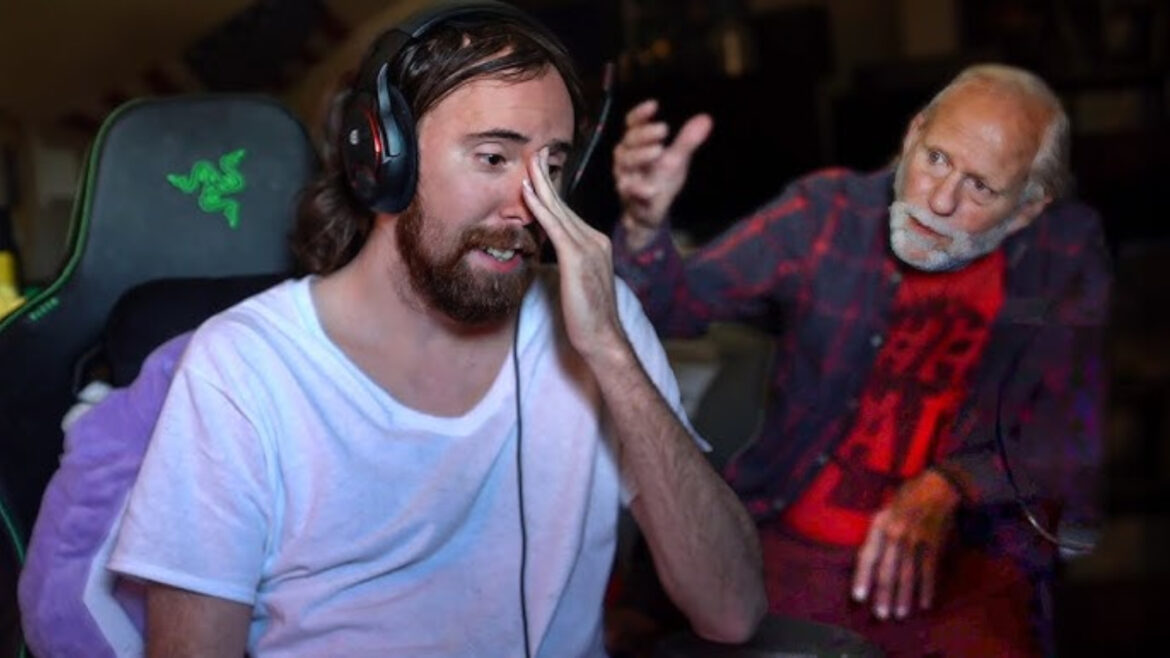
Asmongold looks at the camera.
Esports

Asmongold announces indefinite streaming hiatus to prioritize his father’s health

by admin September 8, 2025


Twitch and Kick star Asmongold is stepping away from streaming indefinitely to focus on his father, who is battling pancreatic cancer.

The 35-year-old content creator has been one of the biggest names in streaming throughout 2025, even topping the charts as the most-watched streamer of Q2 after deciding to broadcast on both Twitch and Kick.

On YouTube, his commentary videos on gaming, politics, and industry debates regularly pull in millions of views.

However, on September 8, Zack ‘Asmongold’ Hoyt announced that he will be putting his career on hold to take care of his father until the situation is resolved “one way or another.”

Article continues after ad

Asmongold explains why he’s taking a break from streaming

“Originally, he went to the hospital for pneumonia. Then upon leaving had a test that showed acute liver failure that turned out to be pancreatic cancer. Not a good day,” he revealed in a statement to fans.

Asmongold explained that while his father began chemotherapy, complications quickly arose. He described one harrowing night where he “ended up sleeping on the floor next to his bed” after his father struggled to breathe following treatment.

Article continues after ad

YouTube: AsmongoldTV

A few days later, doctors recommended hospitalization after his father’s blood pressure dropped to “some insanely low number like 74/53.”

Article continues after ad

Although he noted there have been “marginal improvements,” the situation remains serious.

“Because of the severity, this will require my full attention until it is resolved one way or another, which means streams will be on hiatus until that time comes,” he said. “There’s nothing I’d rather do more than go live and continue on like I always do, but my obligation to my father must take priority.”

Asmongold did not give a timeline for his return, citing the uncertainty of his father’s condition, but assured fans he would provide updates when possible. He also thanked his community for the outpouring of support, saying both he and his father “appreciate the kind words.”

Article continues after ad

For now, one of streaming’s most influential voices will be offline, not for gaming, but for family.

Article continues after ad

Your pa is a badass mf and you’re a great son for being there when he needs you.

Got yall in my prayers.

You both will get through this, he will recover.

— TECTONE 🇺🇸 (@Tectone) September 8, 2025

Fellow creators such as Tectone gave their support to the award-winning MMORPG streamer, writing: “Your pa is a badass mf and you’re a great son for being there when he needs you.”

“Good Son. Prayers,” echoed Kick’s Head of Studios, Andrew Santamaria.

This isn’t the only time the streamer took a break due to his parents. Back in 2021, he went on hiatus after saving his mother from a fire caused by her oxygen tank igniting before extending his hiatus after she died a few weeks later.

Article continues after ad


Source link

September 8, 2025 0 comments
0 FacebookTwitterPinterestEmail
Fitbit’s AI health coach is the first I might actually be interested in
Product Reviews

Fitbit’s AI health coach is the first I might actually be interested in

by admin August 21, 2025


I’m not a fan of AI health and fitness features. Not only do they regurgitate Captain Obvious-level summaries of what you just did, but the “insights” are so generalized that a Google search is often more helpful. So it was with great skepticism that I walked into a demo to learn about Fitbit’s forthcoming AI-powered personal health coach. To my surprise, I left cautiously curious about where Fitbit is going.

“We really want to move towards this world of coaching,” Andy Abramson, Google’s director of product management for Fitbit and Health, says during a demo of the feature. Professional athletes have a whole team of people helping to craft their fitness regimens. “We asked ourselves, what if everyone could have something like this?”

Dark mode will finally be a thing. Image: Google, Fitbit

On paper, Fitbit’s health coach isn’t offering anything a dozen other health and fitness tech companies haven’t already promised. It’s a chatbot built off Gemini that lives in a spiffy, redesigned Fitbit app (now with dark mode!). Each week, it builds custom routines with detailed workouts and workout targets based on your personal health goals. Those workouts will adjust based on your real-time data. So if you have a crap night of sleep, the next day it’ll tweak your suggested workout to compensate. You can also proactively tell the bot anytime you’re sick, injured, or have a new goal, and it will take those things into consideration. If it notices trends in your data, like improved sleep quality, it’ll flag them to you.

Fitbit’s coach is an attempt to address the age-old problem of wearables providing users way too much data without the appropriate context. What’s been sorely disappointing from competitors thus far has been the execution. Often, it feels like AI has been tacked on as a gimmick to please investors rather than developed as a tool that can provide genuinely helpful insights.

Where Google and Fitbit’s take feels different is that the product has been completely yet cautiously overhauled around the concept.

“It’s not just like a new coat of paint. It’s not just AI bolted on. We’ve really asked the question of: How do we put the AI coach in every part of the app?” Abramson says.

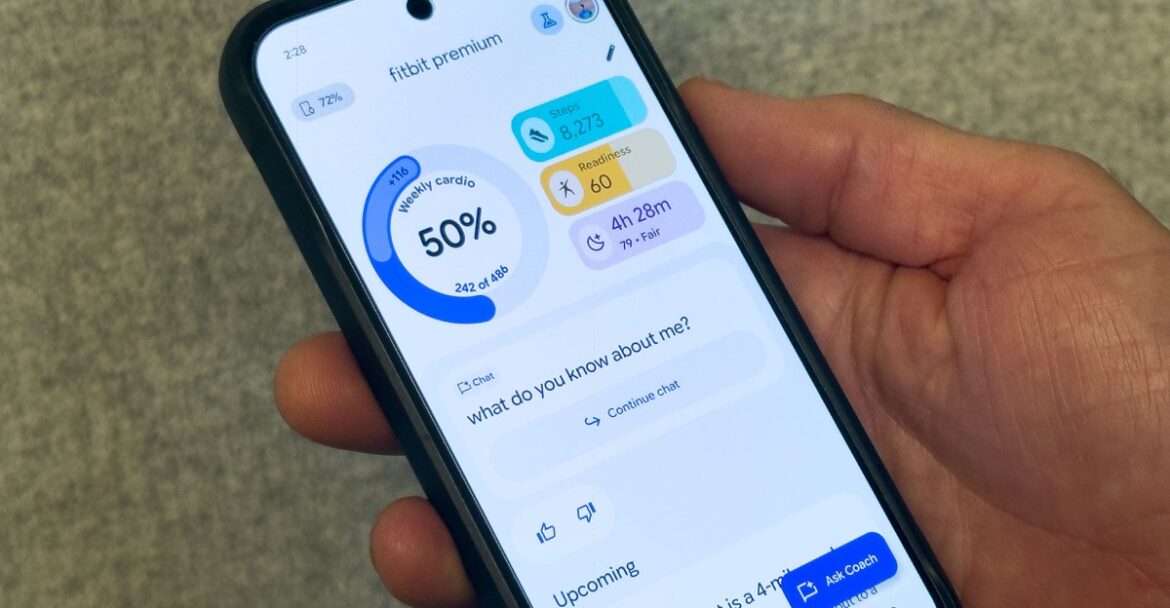
Fitbit’s coach really is prominently baked into every corner of the new app. The Today tab, which displays your daily metrics, has been reorganized into a smaller data dashboard with an AI chatbox right underneath. When you scroll down, there are blocks calling out insights based on metrics like sleep. Underneath each are prompts to engage with the coach further on each topic.

In our demo, Abramson shows me how the AI coach interprets his own personal data. Some parts seem like the same old regurgitated book reports. In others, however, I can see glimpses of the promise. For example, Abramson is able to tell the AI that his overarching goal is to get better at trail running, but that he’s traveling and has limited access to equipment. In response, the app suggested a workout incorporating the Peloton bike he has access to at the hotel. The coach also notes that because of jetlag, Abramson’s had less sleep the night before but with fewer interruptions compared to his usual. It then asks to check in on his energy levels for the day.

The key here is real-time adjustment based on conversation. Abramson relays another story of a staffer who hurt their finger and asked the coach to remove strength workouts for the time being. A week later, the coach checked in asking whether the finger had healed and if it was okay to add those workouts back in.

PreviousNext

1/2Here’s another example I got to see in person. Photo by Victoria Song / The Verge

Compared to other fitness AI I’ve tested, this demo coach is also fairly chatty. In Abramson’s logs, there are lengthy blocks of text peppered with metrics and data breakdowns. Google VP of Fitbit and Health Rishi Chandra says this is intentional.

“The LLM can summarize it if you want three lines, but it will be so generic that it doesn’t feel like it’s telling you anything,” Chandra says. The team explored shorter summaries, but early testers told them that they weren’t at all helpful. “This is a balancing act we have right now. We’ve right now indexed on getting more depth for users and then figuring out how to trim that.”

Fitbit is also moving away from daily goals toward weekly ones like an actual personal trainer would do. “A coach would not say every day you have to get this exact 10,000 steps or whatever it might be,” Chandra says.

This is regurgitated book report-adjacent, but even this pulls in more about your personal data than other iterations I’ve seen. Image: Google, Fitbit

Cardio Load, introduced last year, was originally designed as a daily goal for people to understand what they needed to do to improve their cardiovascular health. Going forward, this feature will be a weekly target. Sleep insights will also be based on your weekly and long-term patterns, and the coach will also suggest adjusted schedules if it finds your sleep debt is excessive or if it determines you need extra rest from a hard workout.

This is just a smart change that allows for greater flexibility. A daily cardio target doesn’t work if you’re stuck on a 14-hour plane ride and all you can manage is a chill yoga session when you arrive at your hotel. The change lets users and the app account for life getting in the way.

Part of making this all work is making sure Fitbit’s app actually has the data it needs. The sleep tracking algorithm, which processes data from Fitbits and Pixel Watches, is supposed to be more accurate. The Pixel Watch 4 is also adding retroactive activity logging so that you never lose credit in case you forget to log a walk or a workout. Users will be able to train the AI to more accurately recognize certain activities over time through tags, too. The AI coach will also be able to take in data logged from third-party apps through Health Connect and HealthKit — so you don’t have to do all the native workouts in the Fitbit app. And, because Fitbit devices are platform-agnostic, technically the coach can work with iOS too. The goal is to become more of a connected AI health hub, eventually branching from sleep and fitness toward other aspects like nutrition and mental health.

Of course, anything is possible when a feature is in development. When the feature actually launches in October, it’ll be an opt-in preview for Fitbit Premium users only. (One perk is that the preview isn’t limited to the Pixel Watch 4; it’ll work with any Pixel Watch or Fitbit hardware.) There are also still several concerns I have. LLMs are limited, are prone to hallucination, and could teeter dangerously on the line between medical tech and wellness. Data privacy is yet another can of worms.

But having tested a dozen lackluster AI health coaches, this feels closest to reaching the platonic ideal that I’ve seen yet.

Follow topics and authors from this story to see more like this in your personalized homepage feed and to receive email updates.

  • Victoria SongClose

    Victoria Song

    Senior Reviewer, Wearable Tech

    Posts from this author will be added to your daily email digest and your homepage feed.

    PlusFollow

    See All by Victoria Song

  • AIClose

    AI

    Posts from this topic will be added to your daily email digest and your homepage feed.

    PlusFollow

    See All AI

  • FitnessClose

    Fitness

    Posts from this topic will be added to your daily email digest and your homepage feed.

    PlusFollow

    See All Fitness

  • GadgetsClose

    Gadgets

    Posts from this topic will be added to your daily email digest and your homepage feed.

    PlusFollow

    See All Gadgets

  • GoogleClose

    Google

    Posts from this topic will be added to your daily email digest and your homepage feed.

    PlusFollow

    See All Google

  • Google PixelClose

    Google Pixel

    Posts from this topic will be added to your daily email digest and your homepage feed.

    PlusFollow

    See All Google Pixel

  • Hands-onClose

    Hands-on

    Posts from this topic will be added to your daily email digest and your homepage feed.

    PlusFollow

    See All Hands-on

  • HealthClose

    Health

    Posts from this topic will be added to your daily email digest and your homepage feed.

    PlusFollow

    See All Health

  • ReviewsClose

    Reviews

    Posts from this topic will be added to your daily email digest and your homepage feed.

    PlusFollow

    See All Reviews

  • ScienceClose

    Science

    Posts from this topic will be added to your daily email digest and your homepage feed.

    PlusFollow

    See All Science

  • TechClose

    Tech

    Posts from this topic will be added to your daily email digest and your homepage feed.

    PlusFollow

    See All Tech

  • WearableClose

    Wearable

    Posts from this topic will be added to your daily email digest and your homepage feed.

    PlusFollow

    See All Wearable


Source link

August 21, 2025 0 comments
0 FacebookTwitterPinterestEmail
DAAPrivacyRightIcon
Gaming Gear

Texas AG to investigate Meta and Character.AI over ‘misleading’ mental health claims

by admin August 19, 2025


Texas Attorney General Ken Paxton has announced plans to investigate both Meta AI Studio and Character.AI for offering AI chatbots that can claim to be health tools, and potentially misusing data collected from underage users.

Paxton says that AI chatbots from either platform “can present themselves as professional therapeutic tools,” to the point of lying about their qualifications. That behavior that can leave younger users vulnerable to misleading and inaccurate information. Because AI platforms often rely on user prompts as another source of training data, either company could also be violating young user’s privacy and misusing their data. This is of particular interest in Texas, where the SCOPE Act places specific limits on what companies can do with data harvested from minors, and requires platform’s offer tools so parents can manage the privacy settings of their children’s accounts.

For now, the Attorney General has submitted Civil Investigative Demands (CIDs) to both Meta and Character.AI to see if either company is violating Texas consumer protection laws. As TechCrunch notes, neither Meta nor Character.AI claim their AI chatbot platforms should be used as mental health tools. That doesn’t prevent there from being multiple “Therapist” and “Psychologist” chatbots on Character.AI. Nor does it stop either of the companies’ chatbots from claiming they’re licensed professionals, as 404 Media reported in April.

“The user-created Characters on our site are fictional, they are intended for entertainment, and we have taken robust steps to make that clear,” a Character.AI spokesperson said when asked to comment on the Texas investigation. “For example, we have prominent disclaimers in every chat to remind users that a Character is not a real person and that everything a Character says should be treated as fiction.”

Meta shared a similar sentiment in its comment. “We clearly label AIs, and to help people better understand their limitations, we include a disclaimer that responses are generated by AI — not people,” the company said. Meta AIs are also supposed to “direct users to seek qualified medical or safety professionals when appropriate.” Sending people to real resources is good, but ultimately disclaimers themselves are easy to ignore, and don’t act as much of an obstacle.

With regards to privacy and data usage, both Meta’s privacy policy and the Character.AI’s privacy policy acknowledge that data is collected from users’ interactions with AI. Meta collects things like prompts and feedback to improve AI performance. Character.AI logs things like identifiers and demographic information and says that information can be used for advertising, among other applications. How either policy applies to children, and fits with Texas’ SCOPE Act, seems like it’ll depend on how easy it is to make an account.


Source link

August 19, 2025 0 comments
0 FacebookTwitterPinterestEmail

Categories

  • Crypto Trends (1,098)
  • Esports (800)
  • Game Reviews (772)
  • Game Updates (906)
  • GameFi Guides (1,058)
  • Gaming Gear (960)
  • NFT Gaming (1,079)
  • Product Reviews (960)

Recent Posts

  • This 5-Star Dell Laptop Bundle (64GB RAM, 2TB SSD) Sees 72% Cut, From Above MacBook Pricing to Practically a Steal
  • Blue Protocol: Star Resonance is finally out in the west and off to a strong start on Steam, but was the MMORPG worth the wait?
  • How to Unblock OpenAI’s Sora 2 If You’re Outside the US and Canada
  • Final Fantasy 7 Remake and Rebirth finally available as physical double pack on PS5
  • The 10 Most Valuable Cards

Recent Posts

  • This 5-Star Dell Laptop Bundle (64GB RAM, 2TB SSD) Sees 72% Cut, From Above MacBook Pricing to Practically a Steal

    October 10, 2025
  • Blue Protocol: Star Resonance is finally out in the west and off to a strong start on Steam, but was the MMORPG worth the wait?

    October 10, 2025
  • How to Unblock OpenAI’s Sora 2 If You’re Outside the US and Canada

    October 10, 2025
  • Final Fantasy 7 Remake and Rebirth finally available as physical double pack on PS5

    October 10, 2025
  • The 10 Most Valuable Cards

    October 10, 2025

Newsletter

About me

Welcome to Laughinghyena.io, your ultimate destination for the latest in blockchain gaming and gaming products. We’re passionate about the future of gaming, where decentralized technology empowers players to own, trade, and thrive in virtual worlds.

Recent Posts

  • This 5-Star Dell Laptop Bundle (64GB RAM, 2TB SSD) Sees 72% Cut, From Above MacBook Pricing to Practically a Steal

    October 10, 2025
  • Blue Protocol: Star Resonance is finally out in the west and off to a strong start on Steam, but was the MMORPG worth the wait?

    October 10, 2025

Newsletter

@2025 laughinghyena- All Right Reserved. Designed and Developed by Pro


Back To Top
Laughing Hyena
  • Home
  • Hyena Games
  • Esports
  • NFT Gaming
  • Crypto Trends
  • Game Reviews
  • Game Updates
  • GameFi Guides
  • Shop

Shopping Cart

Close

No products in the cart.

Close