
Laughing Hyena
  • Home
  • Hyena Games
  • Esports
  • NFT Gaming
  • Crypto Trends
  • Game Reviews
  • Game Updates
  • GameFi Guides
  • Shop
Tag:

Google

DAAPrivacyRightIcon
Product Reviews

FTC investigating ad sale practices at Google and Amazon

by admin September 13, 2025


The Federal Trade Commission is investigating whether Amazon and Google misled advertisers regarding the pricing and terms for their ads. As first reported by Bloomberg, the investigation is being conducted by the agency’s consumer protection unit, and centers around the auction-style sale of advertising space by the companies.

Google sells ads using automated auctions that run after a user enters a search query. These auctions take place in less than a second. Amazon uses real-time auctions to place ads within its listings, which users would recognize as “sponsored listings” or “sponsored ads” when searching for specific products.

The investigation questions whether Amazon disclosed so-called “reserve pricing” for some of its ads, which is a price floor that advertisers must meet before they can buy an ad. For Google’s part, the FTC is looking at certain practices by the search giant including its internal pricing process and whether it was surreptitiously increasing the cost of ads in ways that advertisers weren’t privy to.

The FTC isn’t the only federal agency keeping a close eye on big tech. Earlier this year, a federal judge ruled that Google held a monopoly in online ad tech after the Department of Justice (DOJ) sued to break up the giant’s ad business. Google also recently escaped mostly unscathed from a Department of Justice monopoly case involving its Chrome browser.

FTC Chair Andrew Ferguson has previously said that big tech is one of the agency’s top priorities. These investigations move forward against a backdrop of top tech CEOs continuing to try to curry favor with President Trump via lavish personal gifts and sweeping (if potentially unrealistic) promises of investment in the US economy.

Source link

September 13, 2025 0 comments
0 FacebookTwitterPinterestEmail
DAAPrivacyRightIcon
Gaming Gear

Google Maps wasn’t loading in some regions due to an outage

by admin September 12, 2025


Google Maps suffered an outage that left the mobile version of the service unable to fully load its map or provide directions. Over 4,000 reports were filed on Downdetector since the outage started, and Google’s Status Dashboard noted that the company was investigating an issue with the Maps SDK and Navigation SDK at 3:34PM ET. By 6:27PM ET, Google said the issue has been resolved and that it will publish an “analysis of this incident” once it has completed its internal investigation.

At the peak of the outage, both the Android and iOS versions of Google Maps were unable to fully load a map, display listings or provide directions. In at least one case, the apps also showed an error message saying that Google Maps “Cannot reach server.” Whatever caused the outage hasn’t extend to the web version of the navigation service, which continues to work as normal.

Ian Carlos Campbell for Engadget

Google’s dashboard updated to say that “mitigation work is currently underway by our engineering team” and that it was “seeing indications of recovery” at around 5:22PM ET. Around 30 minutes later, the company said that the issue was partially resolved, but that it couldn’t share “an ETA for full resolution at this point.”

In the description of the issue on Google’s Status Dashboard, Google has yet to provide an explanation for the outage or detailed what it’s doing to fix the issue. Engadget has contacted Google for more information and will update this article if we here back.

Google’s last major outage occurred in June, though it was primarily concentrated in the company’s Google Cloud service. Given the number of clients who use Google Cloud, the outage impacted everything from Spotify to Snapchat for multiple hours.

Update, September 11, 2025, 6:09PM ET: Updated article again to include details from Google’s Status Dashboard.

Update, September 11, 2025, 5:38PM ET: Updated article to include new information shared on Google’s Status Dashboard.

Update, September 11, 2025 9:51PM ET: Updated article to note that the issue has been resolved.


Source link

September 12, 2025 0 comments
0 FacebookTwitterPinterestEmail
broadcom
Gaming Gear

OpenAI is reported as Broadcom’s fourth XPU customer, joining Google, Meta and ByteDance in designing chips to reduce reliance on Nvidia

by admin September 11, 2025


  • OpenAI (probably) joins Google, Meta and ByteDance in Broadcom’s custom ASIC partnership
  • Broadcom secures $10 billion AI rack orders as Nvidia faces new rivals
  • Nvidia’s largest customers pursue in-house chips with Broadcom guiding the transition

As we’ve reported more than a new times in the past, the AI hardware market is changing, with some of Nvidia’s biggest customers looking for ways to cut costs and gain more control over their systems.

Rather than relying solely on Nvidia’s costly GPUs, companies are beginning to design their own ASICs tailored to their workloads.

Broadcom is one of the bigger players in this space, offering the expertise needed to turn those custom designs into production-ready chips and systems.


You may like

Reporting on Broadcom’s financial results for its third quarter, The Next Platform says the silicon supplier has now secured a fourth customer for its custom XPU program, adding to partnerships with Google, Meta, and ByteDance.

Industry reports and timing, suggest this newest client is OpenAI, which is developing its own inference processor known as Titan under the leadership of Richard Ho, a former Google TPU engineer.

Nvidia still dominates the market of course – by some way – with its Blackwell GB300 NVL72, but deploying such rackscale systems is expensive, and firms with massive AI models want hardware designed to better match their needs.

Custom ASICs are seen as a way to rein in costs while offering greater flexibility than an off-the-shelf GPU and Broadcom is well positioned to guide complex accelerator projects through design, production, and packaging.

Sign up to the TechRadar Pro newsletter to get all the top news, opinion, features and guidance your business needs to succeed!

On a call with Wall Street analysts, chief executive Hock Tan expanded on Broadcom’s unnamed fourth client (cough, OpenAI, cough), saying, “Now further to these three customers, as we had previously mentioned, we have been working with other prospects on their own AI accelerators.”

“Last quarter, one of these prospects released production orders to Broadcom, and we have accordingly characterized them as a qualified customer for XPUs and, in fact, have secured over $10 billion of orders of AI racks based on our XPUs,” Tan continued.

“And reflecting this, we now expect the outlook for our fiscal 2026 AI revenue to improve significantly from what we had indicated last quarter.”

That $10 billion figure refers to complete AI rack systems, not Broadcom’s share for the underlying chip design.

Revenue from those orders is scheduled to begin in the third quarter of fiscal 2026.

It’s clear that Nvidia’s biggest buyers are no longer content to depend solely on GPUs, and by investing in ASICs they are betting that custom hardware will bring efficiency and control. With its expertise, Broadcom is positioning itself as the company that can make those designs a reality.

You might also like


Source link

September 11, 2025 0 comments
0 FacebookTwitterPinterestEmail
DAAPrivacyRightIcon
Product Reviews

Google expands AI Mode beyond English for the first time

by admin September 8, 2025


Google is opening up AI Mode to more languages. Starting today, the AI chatbot the company is integrating into Google Search is available in Hindi, Indonesian, Japanese, Korean and Brazilian Portuguese.

The company has been rapidly expanding access to the search experience. In May, Google started offering it to everyone in the US (and later the UK and India) after starting public tests just two months earlier.

Google added more features to AI Mode in July, including support for the Gemini 2.5 Pro model and Deep Search. As of last month, AI Mode has been present in more than 180 countries. But until now, AI Mode had only been available in English. This is the first language support expansion for the chatbot.

“Building a truly global Search goes far beyond translation — it requires a nuanced understanding of local information,” Hema Budaraju, Google’s vice president of search product management wrote in a blog post. “With the advanced multimodal and reasoning capabilities of our custom version of Gemini 2.5 in Search, we’ve made huge strides in language understanding, so our most advanced AI search capabilities are locally relevant and useful in each new language we support.”

Google has been claiming recently that traffic to websites from Search is “relatively stable” since the rollout of AI Overviews and that “the web is thriving.” However, the company admitted something very different in a court filing last week. Its lawyers stated that “the open web is already in rapid decline.” That, plus the expansion of AI Mode, will surely be welcomed with open arms by publishers who are seriously feeling the pinch of declining web traffic.


Source link

September 8, 2025 0 comments
0 FacebookTwitterPinterestEmail
Gear News of the Week: Veo 3 Comes to Google Photos, and Garmin Adds Satellite Comms to a Watch
Product Reviews

Gear News of the Week: Veo 3 Comes to Google Photos, and Garmin Adds Satellite Comms to a Watch

by admin September 8, 2025


Google via Julian Chokkattu

A few months ago, Google debuted a feature in Google Photos that lets you convert your existing photos into short videos using generative AI. These videos introduce slight synthetic movements to your stills, so a person may appear to slightly shift around in the frame, or a picture of your sleeping pup could gain a leg twitch. This week, the company upgraded this feature with its Veo 3 video generation model, which boosts the quality of the results.

To play around with it, head to any photo in Google Photos, tap the three-dot button at the top right, and tap Create. Choose the Photo to Video option, and then pick between Subtle Movement or I’m Feeling Lucky, which will be a little more creative. I tried it on a photo of my wife and it had her raise her arms to make a heart sign. (The fingers looked surprisingly realistic, though my wife exclaimed that her hands looked massive.) Google says you can even combine its Photo to Video tool with other Create tools, like Remix, which can change the style of the photo to a sketch or 3D animation.

The Veo 3-powered version of the feature is now available in the US.

Garmin Finally Launches Watches With Satellite Communication

Courtesy of Garmin

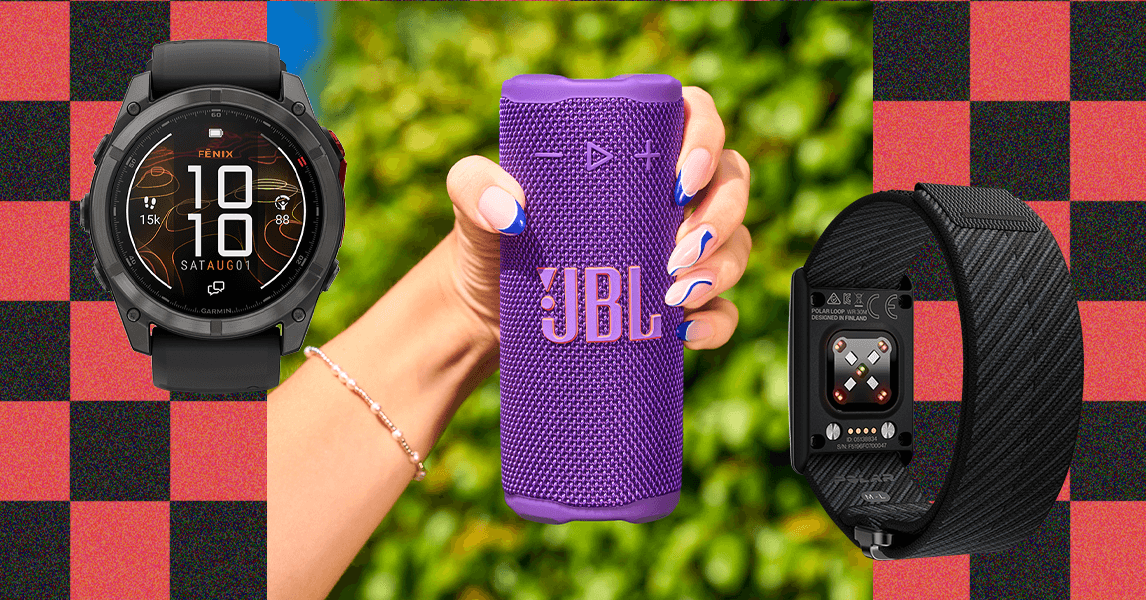
As Taylor Swift and Tom Jones have both observed, “It’s been a long time coming.” Garmin, manufacturer of our favorite outdoor fitness trackers and hands down the best satellite messenger, finally added satellite and cellular communication to a smartwatch. The new Fenix 8 Pro has Garmin’s inReach technology inside, which means you can send messages over satellite or cellular networks to Garmin’s Response team. Not only can you trigger emergency alerts, but you can also send texts, make calls, and check the weather forecasts. It also has a MicroLED screen that can deliver up to 5,000 nits of brightness, making it not only visible in your tent at night but everyone else’s. (That’s a joke.)

There are two versions of the watch. The AMOLED screen comes in 47- and 51-mm sizes and gets up to 27 days of battery life per charge, while the MicroLED version comes only in a 51-mm size and gets up to 10 days of battery life in smartwatch mode. The Fenix 8 is already our favorite outdoor sports watch, and the ability to easily use satellite communication when you need it only makes it even more useful. It almost makes you overlook the sting of its enormous price—the MicroLED version goes for a cool $2,000, which seems less expensive when you consider that you previously may have had several devices to cover your bases before (a smartwatch for work, a fitness tracker for working out, and a satellite communicator for off-grid shenanigans). The AMOLED version is only $1,100. Both models will be available for purchase on September 8. —Adrienne So

Polar Made a Whoop Band

Courtesy of Polar

Fitness tracker company Polar announced the Polar Loop this week, its first screenless tracker that, well … there’s no way to get around it: The Polar Loop looks remarkably similar to the Whoop band, a black, bracelet-style screenless tracker. However, unlike Whoop (which requires a $199 yearly subscription to use), every feature is available on the Polar Loop from day one, with no added fees. Polar’s bracelet is designed for 24/7 wear. Its suite of fitness metrics is more limited—it doesn’t track blood pressure and can’t detect Afib—but it does have auto-activity tracking, sleep tracking, and a few training tools, like Training Load and Fitness Test. Everything is accessible through the Polar Flow app.

I’ve tested many Polar fitness trackers, and Polar’s heart rate monitor is our top pick. While I appreciate the accuracy and beauty of the hardware, I’ve found its app and metrics very difficult to use and parse. As the popularity of the Whoop band and the entire smart ring product category has shown, there is a real hunger for what Polar CEO Sander Werring calls “discreet, screenless experiences.” You can always layer a watch in front of it! —Adrienne So

JBL Is Down to Party

JBL debuted a trio of new Bluetooth speakers, including two large boombox-style party speakers and a cool portable go-anywhere model. The new Boombox 4 and PartyBox 700 may have hilariously on-the-nose names, but they will also offer appropriate amounts of power. The former kicks out 210 watts of power and two additional woofers for more bass than the previous model, with up to 30 hours of play time and a life-proof IP68 rating. The PartyBox 700 is the largest JBL party speaker that runs on battery, with a hilariously loud 800 watts of power and 15 hours of playback; this thing is meant to replace a PA at your next block party. At $550 and $1,099, respectively, these are meant for folks who need seriously loud models.

Courtesy of JBL

The most exciting speaker for most people will be the new JBL Grip, a $100 speaker that has a cool integrated rope hook and a nightlight for in-tent (or under-blanket) reading. Its battery can provide up to 14 hours of playback, and the speaker features JBL’s now-standard Auracast—also available on the above speakers—to allow you to pair multiple speakers together. —Parker Hall

ExpressVPN Mixes Things Up

Courtesy of ExpressVPN

ExpressVPN is overhauling its subsription offerings and phasing out the single, streamlined plan the company has offered for 16 years. In its place are three new plans priced at different tiers, each with different features. It’s a clear hit back at rivals like Surfshark, Nord, and Proton, each of which has built out robust security suites that go far beyond a VPN.

Even with the new options, ExpressVPN’s core service remains intact. The new Basic tier ($13 per month) replaces the subscription ExpressVPN previously offered, with the only difference being a bump from eight simultaneous connections to 10. The next tier is Advanced at $14 per month, and above that is Pro at $20 per month. You can score a discount on any plan by buying an entire year at once.

The new Advanced and Pro tiers include a lot of extras, so it’s worth looking over the list published by ExpressVPN. Some highlights include Keys, ExpressVPN’s password manager, identity theft monitoring on the Advanced plan, and a dedicated IP and data removal services on the Pro plan.


Source link

September 8, 2025 0 comments
0 FacebookTwitterPinterestEmail
Google finally details Gemini usage limits
Gaming Gear

Google finally details Gemini usage limits

by admin September 8, 2025


Gone are the useless descriptors like “limited access” or vague statements like “we may at times have to cap the number of prompts and conversations you can have, or how much you can use some features, within a specific timeframe.” Instead it clearly states that you get up to five prompts a day with Gemini 2.5 Pro on a free account, 100 with an AI Pro plan, or 500 with AI Ultra.

Free accounts are also limited to five Deep Research reports and 100 generated images a day. If you need to make more than 100 AI generated images in a day, A: For what? B: Upgrading to a Pro or Ultra account will get you 1,000 images. You can check out the full breakdown here.


Source link

September 8, 2025 0 comments
0 FacebookTwitterPinterestEmail
How to Add WIRED as a Preferred Source on Google (2025)
Product Reviews

How to Add WIRED as a Preferred Source on Google (2025)

by admin September 7, 2025


As you’ve probably noticed, Google has gotten … weird lately. Weirder? It can be hard to find the search results you’re looking for. Between AI summaries and algorithm changes resulting in unexpected sources, it can be tricky to navigate the most popular search engine in the world. (And publishers are feeling the strain, too.)

Earlier this year, Google updated its algorithm. This is nothing new—Google updates its algorithms hundreds of times per year, with anywhere from two to four major “core updates” that result in significant changes. And while it’s tricky to determine exactly what changed, publishers and websites large and small noticed significant traffic drops and lower search rankings—even for content that had previously been doing well. “Google Zero” (as Nilay Patel of The Verge first called it) is thought to be caused, at least in part, by AI overviews.

Google Search has shown a slow crawl toward this for a couple of years, but the most recent blow was delivered over the summer. When you search for something and you get a neat little summary of various reporting completed by journalists, you’re less likely to visit the websites that actually did the work. And, in some instances, that summary contains incorrect AI hallucinations or reporting from websites you might not trust as much. It’s hard to say whether the next core update will make your search results show what you expect, but in the meantime, there’s a tweak that can help it feel more tailored to your preferences.

Take back control of your Google search results with the new Google “Preferred Sources” tool. This can help you see more of WIRED, from our rigorous and obsessive Reviews coverage to the important breaking stories on our Politics desk to our Culture team’s “What to Watch” roundups. (And, yes, this works for other publishers you know and trust, too.)

Preferred Sources are prioritized in Top Stories search results, and you’ll also get a dedicated From Your Sources section on some search results pages.

To set WIRED as a Preferred Source, you can click this link and check the box to the right. You can also search for additional sources you prefer on this page and check the respective boxes to make sure they’re prioritized in your Google searches.

Google via Louryn Strampe


Source link

September 7, 2025 0 comments
0 FacebookTwitterPinterestEmail
Google Pixel 10 review: perfectly fine
Product Reviews

Google Pixel 10 review: perfectly fine

by admin September 6, 2025


Asking the Pixel 10 to be more than what it is feels greedy.

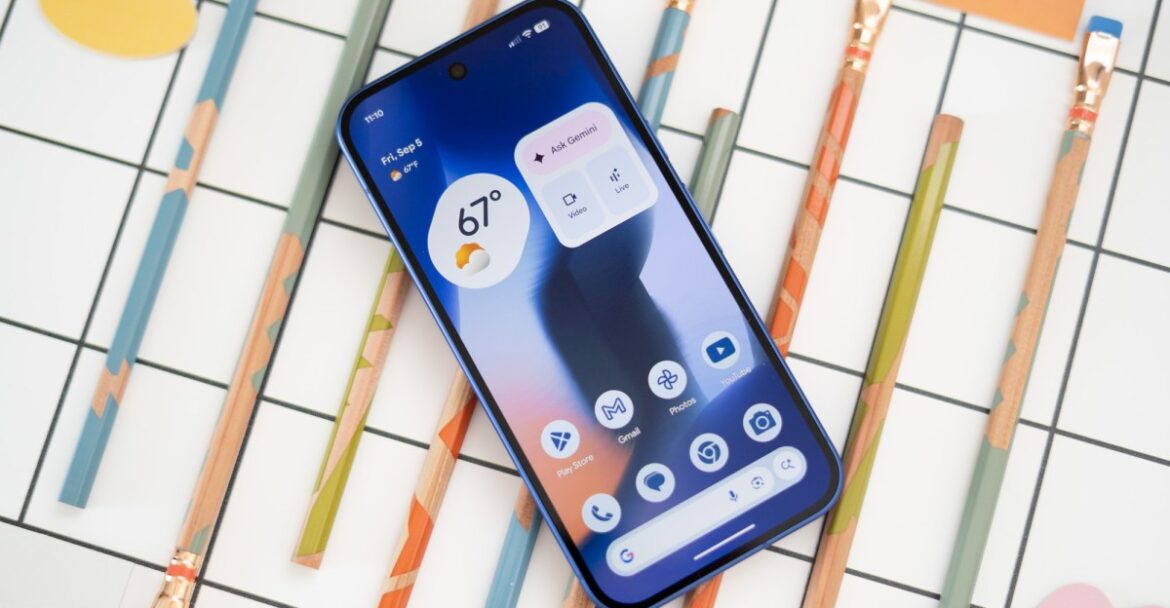
Google’s non-Pro Pixel is priced fairly at $799, which is significantly less than the $999 Pixel 10 Pro. It comes with some handy upgrades, like Qi2 charging with built-in magnets. Its AI features finally show promise. It includes a dedicated telephoto lens for the first time. It’s a proper flagship and an all-around easygoing Android phone. But if I’m being greedy, then I do have one request: better cameras.

The rear cameras on the Pixel 10 are totally fine. For someone who’s not picky about image quality, they’d be better than fine. And maybe I’d think they were fine, too, if I wasn’t cursed with the knowledge that the cameras on last year’s model are better. And that’s because up until this year, the non-Pro Pixel came with the same main and ultrawide camera hardware as the Pro. But we can’t have everything, and when Google added that telephoto lens this year, it downgraded the other two rear cameras to essentially what’s in the midrange Pixel 9A. So the Pixel 10 has a perfectly fine camera system, as long as you’re not too greedy.

$799

The Good

  • Qi2 wireless charging with magnets is great
  • AI is actually kind of useful, finally
  • Telephoto camera is a nice addition

The Bad

  • Main and ultrawide cameras aren’t quite as good as the Pro
  • Battery life is just okay

Outside of the camera situation, the Pixel 10 comes with the same major upgrades as the Pro phones this year: a new chip and some magnets. Tensor G5 is the new processor on the 10 series, which I’ve found to run a tad cooler than previous versions. The G5 is Google’s first custom chipset made by TSMC, and it handles heavier workloads well. The regular 10 comes with 12GB of RAM compared to 16GB in the 10 Pro, and I did notice a little more stuttering on dense web pages than on the Pro. But for the non-professional phone user, it handles most tasks just fine.

Google Pixel 10 specifications

  • Tensor G5 chipset with 12GB of RAM | 128GB or 256GB of storage
  • 6.3-inch 1080p 60-120Hz OLED
  • 48-megpaixel f/1.7 main camera | 13-megapixel ultrawide | 10.8-megapixel 5x telephoto | 10.5-megapixel selfie camera
  • 4,970mAh lithium-ion battery
  • Qi2 wireless charging up to 15W; 55 percent charge in 30 minutes with wired 30W charger
  • IP68 dust and water resistant

There’s a whole lot of on-device AI running on the new chip — which you can read more about in my Pixel 10 Pro review — and I suspect it contributes to the Pixel 10’s just-okay battery life. A full day of moderate use is no problem, but if you add some intensive activities like an extended hotspot or gaming session, then you might start looking for a charger in the late afternoon. The average person probably won’t be bothered by it, but power users will want a charger or power bank handy to avoid battery anxiety at the end of the day.

AI is still hit-or-miss, but the hits are getting better.

AI is still hit-or-miss, but the hits are getting better. The Pixel 10 doesn’t offer the generative AI-assisted camera zoom feature that the Pro and Pro XL have, but you do get Magic Cue, which fetches helpful information based on what you’re doing. And it actually does work. It’s only in a handful of Google apps right now, but it can help put something on your calendar as you hash out plans in Messages or suggest a destination when you open Google Maps based on something you saved in your screenshots. I had a few more false positives while testing it on the Pixel 10 than I did with the 10 Pro; there were times when it suggested information that wasn’t relevant or it offered to create a calendar event when I told a friend I’d “be there in 30.” I still found it more useful than not, and it’s easy enough to ignore when its suggestions are off the mark.

The Pixel 10 gained a telephoto camera but lost a little image quality in the process.

The Pixel 10 has Qi2 with built-in magnets, and it’s a delight. There’s no case required (unlike with the Samsung S25 series phones), and I thoroughly enjoyed thwacking the phone onto a bedside PixelSnap charger at the end of each day. With the addition of what is essentially MagSafe, the Pixel series is looking like a pretty complete alternative to the iOS ecosystem these days. Each night when I put my phone on the charger, triggering bedtime mode, my Pixel watch followed suit and changed modes, too. That’s not a new feature, but little moments like that add up throughout the day.

I spent a week with the Pixel 10 Pro before switching to the regular 10, and there’s not much that feels radically different on the cheaper model — except the display. The standard 10 comes with a 6.3-inch 1080p screen with up to a 120Hz refresh rate, compared to the 1280p display on the 10 Pro. Its peak brightness of 3,000 nits is enough to keep the phone usable on a sunny day, and 1080p is just enough resolution for a screen that size. The screen seems more prone to dropping from its top 120Hz refresh rate, which is fine but a little jarring when you’re scrolling the NYT Games app and suddenly looking at 60Hz.

I also noticed some vignetting when using the phone in bright light — darkness around the edges of the screen, like you might see in a photograph. This turns out to be a known issue, resolved by switching to the “natural” display color profile. Overall, it’s a fine display but you definitely get more by spending more on the Pro.

On the subject of getting more for more with the 10 Pro: cameras. The Pixel 10’s 48-megapixel f/1.7 main camera doesn’t seem all that different from the 10 Pro’s 50-megapixel f/1.7 camera — until you get to the sensor size. The regular 10 uses a 1/2.0-inch type sensor that’s about half the size of the 1/1.31-inch type sensor in the Pro models. A bigger sensor will produce cleaner images with better dynamic range, and it’s a difference I felt, especially in portrait mode. Particularly if light is low, your subject is moving, and if you’re using the 2x zoom option, portrait mode on the regular 10 isn’t as good as on the Pros. Images show more noise, fine detail like hair looks crunchy, and subject isolation isn’t as precise.

A portrait-mode photo with the subject moving toward the camera at high speed is about as tough a scenario as you can throw at a phone camera, so it’s not too surprising that the Pixel 10 can’t handle it well. But it’s one way that the smaller camera sensor results in noticeably worse performance. Outside of portraits, the Pixel 10 takes perfectly nice photos. The ultrawide — also a smaller sensor than on the Pros — handles dim indoor lighting acceptably. The 5x telephoto lens is handy and definitely an upgrade over using 5x digital zoom. Maybe a telephoto lens and a killer main camera are too much to ask for in a $799 phone, but I’ll keep wishing for both anyway.

Gotta admit the blue color is nice.

Last year, the Pixel 9 felt like the phone that Android had needed for a long time: something elegant, simple, and durable. The Pixel 10 takes that same model and mostly improves it, adding Qi2 and a telephoto lens. The price stayed the same, which is nothing to sneeze at when the prices of everything else keep going up.

Losing the higher-end camera might not be a dealbreaker for most people, but it’s a little tough to swallow if you know what you’re missing out on. Most people who buy this phone won’t be burdened with that knowledge, and I think the Pixel 10 will make that group perfectly happy.

Photography by Allison Johnson / The Verge

Agree to Continue: Google Pixel 10, 10 Pro, and 10 Pro XL

Every smart device now requires you to agree to a series of terms and conditions before you can use it — contracts that no one actually reads. It’s impossible for us to read and analyze every single one of these agreements. But we started counting exactly how many times you have to hit “agree” to use devices when we review them since these are agreements most people don’t read and definitely can’t negotiate.

To use a Pixel 10 series phone, you must agree to:

The following agreements are optional:

  • Provide anonymous location data for Google’s services
  • “Allow apps and services to scan for Wi-Fi networks and nearby devices at any time, even when Wi-Fi or Bluetooth is off.”
  • Send usage and diagnostic data to Google
  • Talk to Google hands-free: “If you agree, Google Assistant will wait in standby mode to detect ‘Hey Google’ and certain quick phrases.”
  • Allow Assistant on lock screen

Additionally, if you want to use Google Assistant, you must agree to let Google collect app info and contact info from your devices. Other features like Google Wallet may require additional agreements.

Final tally: five mandatory agreements and at least five optional agreements

0 CommentsFollow topics and authors from this story to see more like this in your personalized homepage feed and to receive email updates.

  • Allison JohnsonClose

    Allison Johnson

    Posts from this author will be added to your daily email digest and your homepage feed.

    PlusFollow

    See All by Allison Johnson

  • GoogleClose

    Google

    Posts from this topic will be added to your daily email digest and your homepage feed.

    PlusFollow

    See All Google

  • Google PixelClose

    Google Pixel

    Posts from this topic will be added to your daily email digest and your homepage feed.

    PlusFollow

    See All Google Pixel

  • Phone ReviewsClose

    Phone Reviews

    Posts from this topic will be added to your daily email digest and your homepage feed.

    PlusFollow

    See All Phone Reviews

  • ReviewsClose

    Reviews

    Posts from this topic will be added to your daily email digest and your homepage feed.

    PlusFollow

    See All Reviews

  • TechClose

    Tech

    Posts from this topic will be added to your daily email digest and your homepage feed.

    PlusFollow

    See All Tech


Source link

September 6, 2025 0 comments
0 FacebookTwitterPinterestEmail
Google antitrust ruling clears the way for Apple’s Gemini push
Gaming Gear

Google antitrust ruling clears the way for Apple’s Gemini push

by admin September 6, 2025


Eddy Cue deserves a raise.

As the executive overseeing Apple’s services division, he’s highly incentivized to protect the tens of billions of dollars a year that Google pays to be the default search engine in Safari. “I’ve lost a lot of sleep thinking about it,” he said from the witness stand during Google’s antitrust trial earlier this year.

Luckily for Cue, his court testimony appears to have had a significant impact on Judge Amit Mehta, who ruled this week that Google’s default payments to Apple and others can continue. You can see Cue’s arguments at trial mirrored in Mehta’s ruling: the Apple SVP said it would be “crazy” to punish the iPhone maker by restricting Google’s ability to pay for default status, and that the rise of AI companies was remaking the search market anyway. In an attempt to downplay the significance of Apple and Google’s deal, Cue went so far as to say that Google searches in Safari were declining for the first time, which temporarily caused Google’s stock price to drop.

Those are the exact arguments Mehta ultimately made in his ruling. He acknowledged that default payments continue to “shape the market for general search services in Google’s favor,” but that banning them would have “crippling” downstream effects on the recipients of those payments. One specific effect he cited was “fewer products and less product innovation from Apple,” one of the world’s richest companies. (Google’s payments to Apple are estimated to make up about 15% of its annual profit.)

Mehta cited the rise of generative AI companies like OpenAI and Perplexity as evidence that there is finally competition in the search market. “The money flowing into this space, and how quickly it has arrived, is astonishing,” he wrote. “These new realities give the court hope that Google will not simply outbid competitors for distribution if superior products emerge.”

As Mehta well knows, the reality of Google and Apple’s financial relationship is much more complicated than that. Google has historically paid Apple a percentage of the ad revenue it earns via Safari. This aligns incentives between two of the most powerful companies on earth, both of which have shared in the upside of this arrangement for the better part of two decades.

It’s likely not a coincidence that, right after Mehta’s ruling was released, news broke that Apple is now collaborating with Google to potentially have Gemini power the AI search engine it’s developing for Siri. Apple executives have been discussing the integration of Gemini into iOS for over a year, but have held back due to obvious optics reasons. The US government has just given them permission to proceed.

“This outcome is a home run for the status quo, and the status quo has been very favorable to both Google and Apple,” the tech and media stock research firm MoffettNathanson wrote in a note to its clients this week. “We’re not suggesting that the future of search or devices is now free from competitive threat, but this decision allows the transition ahead to unfold on their terms rather than through a disruptive and damaging judgment.”

Apple and Google’s search deal should have been undone, and perhaps it still will be if Apple eventually gets its turn under the antitrust spotlight. I’ve spoken with many would-be Google Search rivals over the years who have pointed to the deal as a key factor in stifling competition. You could argue that no deal has had a greater impact on Silicon Valley over the long arc of time, in fact. The most sinister aspect is that it has enabled the two companies that already control how most people access the internet to become richer and more powerful together.

The relationship being allowed to continue now sets the stage for Apple and Google to extend their shared dominance into the age of AI. Apple is behind on AI, but remains a powerful source of distribution for Gemini via iPhones, iPads, and Macs. With search payments from Google continuing to roll in, why would Apple need to acquire a startup like Mistral or Perplexity to play catch-up? It’s already getting paid to work with one of the world’s leading AI companies and now has carte blanche to forge deeper ties.

This week’s ruling also puts OpenAI’s distribution deal with Apple for ChatGPT in a tough spot. I’m sure Apple likes having optionality, but it’s not going to jeopardize the Google relationship with the money from search continuing. OpenAI doesn’t yet have an ads business to give Apple a competitive cut from, either. Despite what Mehta thinks, it’s hard to imagine any other company being able to exceed Google’s default payments with a superior product (sorry, Microsoft). This all leaves Google and Apple where they’ve been all along: two de facto monopolies feeding each other at the expense of everyone else.

  • A seating chart for the ages: If you have intel on who decided where all the tech leaders sat for last night’s big AI dinner at the White House, please reach out. Placing Alexandr Wang directly across the table from Sam Altman was certainly a choice, as was Mark Zuckerberg’s placement between Donald Trump and David Sacks. I’ll leave the jokes about Chamath Palihapitiya’s presence to everyone who is already making them on social media.
  • Lambos coming to the OpenAI HQ garage: It can be challenging to grasp the magnitude of a $10.3 billion tender offer, which OpenAI made available this week to eligible employees. So here’s a narrower number: $30 million. That’s how much my sources say that OpenAI employees (who have been at the company for at least two years) can elect to sell by the end of this month. It’s three times more than the previous maximum cap. Let the good times roll!
  • Fidji Simo gets the band back together: Speaking of OpenAI, it’s remarkable how much its C-suite is starting to resemble that of mid-2010s Facebook. Vijaye Raji, an early Facebook engineering leader, is rejoining his former colleague, Fidji Simo, as CTO of OpenAI applications, which means he’s going to oversee the rollout of the company’s imminent browser release. His company, Statsig, is being acquired as part of the deal but will seemingly stay independent. Srinivas Narayanan, who previously ran engineering at OpenAI and is also an early Facebook leader, is now CTO of “B2B applications.” Yes, OpenAI has two CEOs and two CTOs.

If you haven’t already, don’t forget to subscribe to The Verge, which includes unlimited access to Command Line and all of our reporting.

As always, I welcome your feedback. You can respond here or ping me securely on Signal. I’d love to hear from you.

0 CommentsFollow topics and authors from this story to see more like this in your personalized homepage feed and to receive email updates.

  • Alex HeathClose

    Alex Heath

    Posts from this author will be added to your daily email digest and your homepage feed.

    PlusFollow

    See All by Alex Heath

  • AIClose

    AI

    Posts from this topic will be added to your daily email digest and your homepage feed.

    PlusFollow

    See All AI

  • AppleClose

    Apple

    Posts from this topic will be added to your daily email digest and your homepage feed.

    PlusFollow

    See All Apple

  • Command LineClose

    Command Line

    Posts from this topic will be added to your daily email digest and your homepage feed.

    PlusFollow

    See All Command Line

  • GoogleClose

    Google

    Posts from this topic will be added to your daily email digest and your homepage feed.

    PlusFollow

    See All Google

  • TechClose

    Tech

    Posts from this topic will be added to your daily email digest and your homepage feed.

    PlusFollow

    See All Tech


Source link

September 6, 2025 0 comments
0 FacebookTwitterPinterestEmail
DAAPrivacyRightIcon
Gaming Gear

EU fines Google $3.5 billion over adtech antitrust violations

by admin September 5, 2025


The European Commission has announced that it will fine Google €2.95 billion, or around $3.5 billion, for violating European Union antitrust laws and “distorting competition in the advertising technology industry.” The decision follows a similar ruling from earlier in 2025, where a US federal judge concluded that Google maintains a monopoly in online advertising technology.

Google displays ads in search results, but it also has a dominant position as a software provider for online advertisers and publishers looking to sell ad space and place ads. The Commission’s main issue is with the way Google’s ad buying tools (Google Ads and DV 360) interact with its ad exchange software (AdX) and ad publisher servers (DFP) in seemingly preferential ways. Google appears to favor its AdX ad exchange by “informing AdX in advance of the value of the best bid from competitors which it had to beat to win the auction,” according to the Commission. It also found that “Google Ads was avoiding competing ad exchanges and mainly placing bids on AdX,” maintaining the dominance of Google’s ad exchange even if an alternative is a better option for advertisers.

The Commission is giving Google 60 days to share how it plans to address those issues or face an “appropriate remedy” for violating antitrust law. That could just be the fine, but might also include a forced sale of some or all of Google’s adtech business.

Lee-Anne Mulholland, Google’s Global Head of Regulatory Affairs, shared that the company will appeal the decision in the following statement provided to Engadget:

“The European Commission’s decision about our ad tech services is wrong and we will appeal. It imposes an unjustified fine and requires changes that will hurt thousands of European businesses by making it harder for them to make money. There’s nothing anticompetitive in providing services for ad buyers and sellers, and there are more alternatives to our services than ever before.”

$3.5 billion is a staggering amount of money, but it’s not technically the most Google’s been charged for violating EU laws. In 2018, the company was fined $5.04 billion for forcing mobile network operators to pre-install Google apps on phones. Though Google has been under an increasing amount of scrutiny in the last decade for its business practices, it so far hasn’t faced many structural remedies for what has been called anticompetitive behavior.

For example, a US court found Google was a monopolist in online search in 2024, but a judge recently ruled that the company wouldn’t have to sell off Chrome or stop paying Apple to make Google the iPhone’s default search engine. EU regulators have historically been more persistent than their US counterparts, and the European Commission is reportedly investigating Google for at least one other advertising-related issue, but it remains to be seen if there’s any punishment that will actually faze the company.


Source link

September 5, 2025 0 comments
0 FacebookTwitterPinterestEmail
  • 1
  • 2
  • 3
  • 4
  • 5
  • 6
  • …
  • 8

Categories

  • Crypto Trends (1,098)
  • Esports (800)
  • Game Reviews (772)
  • Game Updates (906)
  • GameFi Guides (1,058)
  • Gaming Gear (960)
  • NFT Gaming (1,079)
  • Product Reviews (960)

Recent Posts

  • This 5-Star Dell Laptop Bundle (64GB RAM, 2TB SSD) Sees 72% Cut, From Above MacBook Pricing to Practically a Steal
  • Blue Protocol: Star Resonance is finally out in the west and off to a strong start on Steam, but was the MMORPG worth the wait?
  • How to Unblock OpenAI’s Sora 2 If You’re Outside the US and Canada
  • Final Fantasy 7 Remake and Rebirth finally available as physical double pack on PS5
  • The 10 Most Valuable Cards

Recent Posts

  • This 5-Star Dell Laptop Bundle (64GB RAM, 2TB SSD) Sees 72% Cut, From Above MacBook Pricing to Practically a Steal

    October 10, 2025
  • Blue Protocol: Star Resonance is finally out in the west and off to a strong start on Steam, but was the MMORPG worth the wait?

    October 10, 2025
  • How to Unblock OpenAI’s Sora 2 If You’re Outside the US and Canada

    October 10, 2025
  • Final Fantasy 7 Remake and Rebirth finally available as physical double pack on PS5

    October 10, 2025
  • The 10 Most Valuable Cards

    October 10, 2025

Newsletter

About me

Welcome to Laughinghyena.io, your ultimate destination for the latest in blockchain gaming and gaming products. We’re passionate about the future of gaming, where decentralized technology empowers players to own, trade, and thrive in virtual worlds.

Recent Posts

  • This 5-Star Dell Laptop Bundle (64GB RAM, 2TB SSD) Sees 72% Cut, From Above MacBook Pricing to Practically a Steal

    October 10, 2025
  • Blue Protocol: Star Resonance is finally out in the west and off to a strong start on Steam, but was the MMORPG worth the wait?

    October 10, 2025

Newsletter

@2025 laughinghyena- All Right Reserved. Designed and Developed by Pro


Back To Top
Laughing Hyena
  • Home
  • Hyena Games
  • Esports
  • NFT Gaming
  • Crypto Trends
  • Game Reviews
  • Game Updates
  • GameFi Guides
  • Shop

Shopping Cart

Close

No products in the cart.

Close