Laughing Hyena
  • Home
  • Hyena Games
  • Esports
  • NFT Gaming
  • Crypto Trends
  • Game Reviews
  • Game Updates
  • GameFi Guides
  • Shop
Tag:

Google

Nvidia CEO Jensen Huang Is Bananas for Google Gemini’s AI Image Generator
Product Reviews

Nvidia CEO Jensen Huang Is Bananas for Google Gemini’s AI Image Generator

by admin September 17, 2025


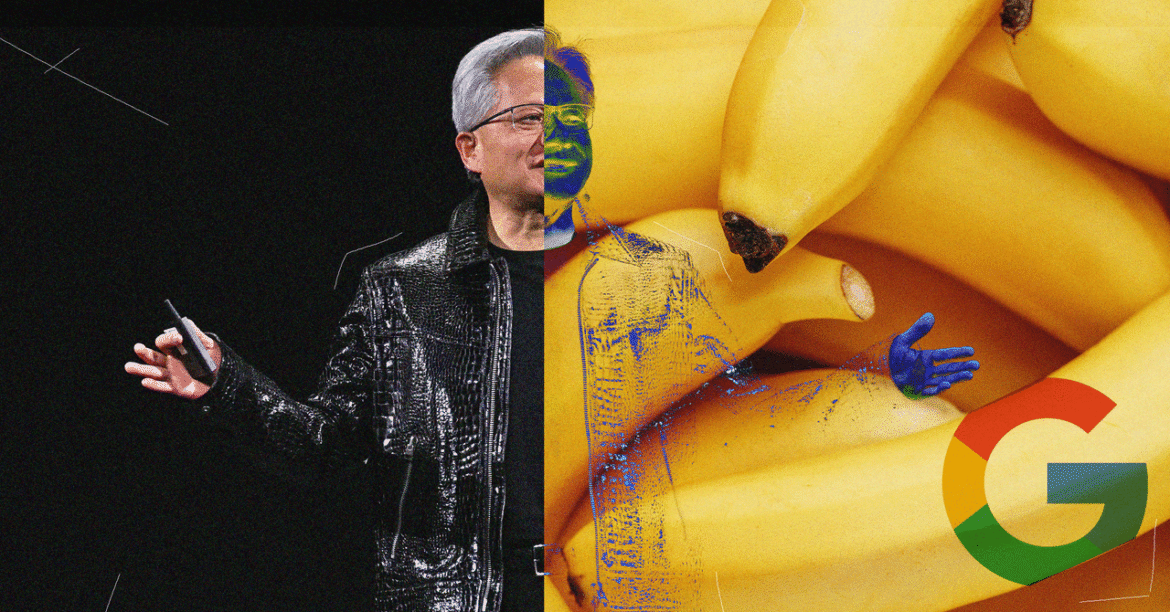
Nvidia CEO Jensen Huang is in London, standing in front of a room full of journalists, outing himself as a huge fan of Gemini’s Nano Banana. “How could anyone not love Nano Banana? I mean Nano Banana, how good is that? Tell me it’s not true!” He addresses the room. No one responds. “Tell me it’s not true! It’s so good. I was just talking to Demis [Hassabis, CEO of DeepMind] yesterday and I said ‘How about that Nano Banana! How good is that?’”

It looks like lots of people agree with him: The popularity of the Nano Banana AI image generator—which launched in August and allows users to make precise edits to AI images while preserving the quality of faces, animals, or other objects in the background—has caused a 300 million image surge for Gemini in the first few days in September already, according to a post on X by Josh Woodward, VP of Google Labs and Google Gemini.

Huang, whose company was among a cohort of big US technology companies to announce investments into data centers, supercomputers, and AI research in the UK on Tuesday, is on a high. Speaking ahead of a white-tie event with UK prime minister Keir Starmer (where he plans to wear custom black leather tails), he’s boisterously optimistic about the future of AI in the UK, saying the country is “too humble” about the country’s potential for AI advancements.

He cites the UK’s pedigree in themes as wide as the industrial revolution, steam trains, DeepMind (now owned by Google), and university researchers, as well as other tangential skills. “No one fries food better than you do,” he quips. “Your tea is good. You’re great. Come on!”

Nvidia announced a $683 million equity investment in datacenter builder Nscale this week, a move that—alongside investments from OpenAI and Microsoft—has propelled the company to the epicenter of this AI push in the UK. Huang estimates that Nscale will generate more than $68 billion in revenues over six years. “I’ll go on record to say I’m the best thing that’s ever happened to him,” he says, referring to Nscale CEO Josh Payne.

“As AI services get deployed—I’m sure that all of you use it. I use it every day and it’s improved my learning, my thinking. It’s helped me access information, access knowledge a lot more efficiently. It helps me write, helps me think, it helps me formulate ideas. So my experience with AI is likely going to be everybody’s experience. I have the benefit of using all the AI—how good is that?”

The leather-jacket-wearing billionaire, who previously told WIRED that he uses AI agents in his personal life, has expanded on how he uses AI (that’s not Nano Banana) for most daily things, including his public speeches and research.

“I really like using an AI word processor because it remembers me and knows what I’m going to talk about. I could describe the different circumstance that I’m in and yet it still knows that I’m Jensen, just in a different circumstance,” Huang explains. “In that way it could reshape what I’m doing and be helpful. It’s a thinking partner, it’s truly terrific, and it saves me a ton of time. Frankly, I think the quality of work is better.”

His favorite one to use “depends on what I’m doing,” he says. “For something more technical I will use Gemini. If I’m doing something where it’s a bit more artistic I prefer Grok. If it’s very fast information access I prefer Perplexity—it does a really good job of presenting research to me. And for near everyday use I enjoy using ChatGPT,” Huang says.

“When I am doing something serious I will give the same prompt to all of them, and then I ask them to, because it’s research oriented, critique each other’s work. Then I take the best one.”

In the end though, all topics lead back to Nano Banana. “AI should be democratized for everyone. There should be no person who is left behind, it’s not sensible to me that someone should be left behind on electricity or the internet of the next level of technology,” he says.

“AI is the single greatest opportunity for us to close the technology divide,” says Huang. “This technology is so easy to use—who doesn’t know how to use Nano?”

Source link

September 17, 2025 0 comments
0 FacebookTwitterPinterestEmail
Google and Coinbase Demonstrate How AI Can Pay for Refrigerator
NFT Gaming

Google and Coinbase Demonstrate How AI Can Pay for Refrigerator

by admin September 17, 2025


Google has unveiled its open-source payment standard that makes it possible for artificial intelligence (AI) agents to settle monetary transactions via traditional trails as well as stablecoins, Fortune reports.  

The tech giant aims to standardize the rails for future AI-to-AI commerce before it becomes a reality. 

Broad collaboration 

For implementing this initiative, the tech behemoth has collaborated with Coinbase, the Ethereum Foundation (EF), as well as roughly 60 payment and commerce firms, including American Express and Salesforce.

The collaboration between Coinbase and Google was meant to ensure the interoperability of payments. Notably, Google has integrated Coinbase’s x402, which is an HTTP-native, instant stablecoin payment standard.

Coinbase CEO Brian Armstrong says that the collaboration has unlocked a “new level” for AI agents. 

x402 + @Google just unlocked a new level for AI agents.

Agents can actually pay each other now, with x402 powering the stablecoin rail inside Google’s new Agentic Payments Protocol (AP2). Really cool. pic.twitter.com/R3gj16g3hY

— Brian Armstrong (@brian_armstrong) September 16, 2025

The company has also shared a demo that shows how Coinbase’s x402 and Google’s AI can be used for purchasing a refrigerator.   

You Might Also Like

The protocol, which is known as Agent Payments Protocol (AP2), is an open protocol that is meant to serve as an extension of Google’s April Agent2Agent (A2A), the protocol that enables communication between agents. 

Essentially, the idea is that AI agents will be able to pay bills or buy things on a user’s behalf, and Google is working on a universal payments protocol. AI agents could potentially gain the ability to pay each other automatically.    


Source link

September 17, 2025 0 comments
0 FacebookTwitterPinterestEmail
Sui Jumps Nearly 4% After Google Selects It as Launch Partner for AI Payments Protocol
Crypto Trends

Sui Jumps Nearly 4% After Google Selects It as Launch Partner for AI Payments Protocol

by admin September 16, 2025


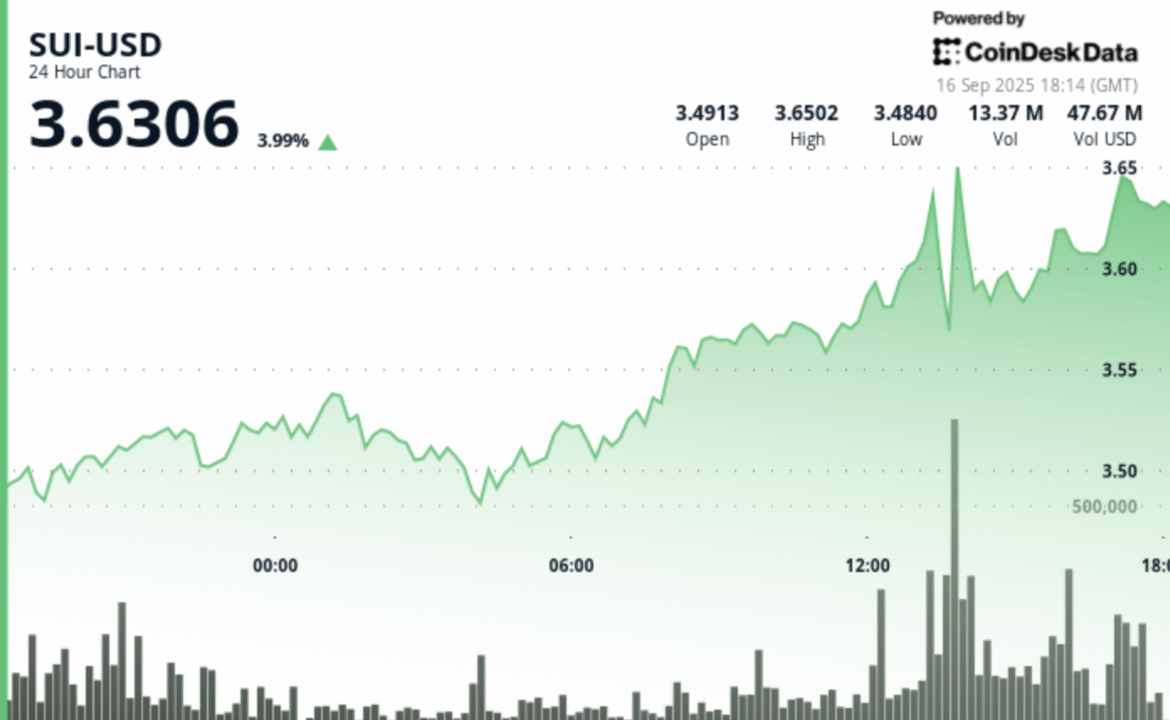
Sui (SUI) rose nearly 4% over the past 24 hours after being selected as a launch partner for Google’s new Agentic Payments Protocol (AP2), a standard designed to let AI agents conduct financial transactions for users.

The token’s move from $3.509 to $3.622 marked a 3.22% gain, with trading spanning a $0.183 range. By contrast, the CoinDesk 20 index rose just 1% over the same period.

SUI is currently trading at $3.63.

The AP2 announcement added momentum to a token that had already shown bullish strength. Volume surged to 33.14 million during a breakout — nearly four times the 24-hour average of 8.73 million. That jump in activity, along with higher lows and steady bids above $3.50, points to possible institutional accumulation.

Google’s Agentic Payments Protocol is an emerging standard aimed at enabling AI agents to carry out payments and other financial operations on behalf of users. The protocol is part of a broader effort to bridge smart contracts, real-world payment rails, and machine autonomy.

At one point, SUI climbed from $3.60 to $3.65 before falling to $3.57 and settling at $3.60, a minor net loss for that specific intraday move.

Buyers reclaimed the $3.61–$3.65 range before volume tapered off, suggesting profit-taking.

But with the Google partnership now in play, bulls may target the next resistance band between $3.70 and $3.75.

Read more: Google Teams Up With Coinbase to Bring Stablecoin Payments to AI Apps


Source link

September 16, 2025 0 comments
0 FacebookTwitterPinterestEmail
Decrypt logo
GameFi Guides

Nano Banana Saves Google: Gemini Dethrones ChatGPT as GOOG Hits $3 Trillion

by admin September 15, 2025


In brief

  • Google’s Gemini to #1 in app downloads this month and Search interests this week.
  • This is the first time Gemini app dethrones ChatGPT.
  • This also helped boost Google’s valuation to beat $3 trillion, just behind Nvidia, Apple and Microsoft.

Google’s Gemini app hit the top of the Apple App Store on September 15, dethroning ChatGPT for the first time since OpenAI’s chatbot launched nearly three years ago. The catalyst wasn’t a breakthrough in artificial general intelligence or some new reasoning mode—after all, Gemini 2.5 was released in March—it seems to be the public’s thirst for making memes and editing images.

“Image editing is one of the most popular use cases for Nano Banana,” the company tweeted last week. While Google didn’t provide any specific reasons for its come-from-behind surge in popularity, given the timing, it’s safe to assume that Nano Banana gave the company a huge bump.

One specific prompt for Google’s new image editing model let users transform photos into 3D collectible-style portraits complete with plastic packaging and display bases. That was enough to make the Gemini have its “wen moon” moment.

Within two weeks of going viral in early September, Gemini hit #1 on both the Apple App Store and Google Play Store globally. The app added 23 million first-time users and users generated over half a billion images in days, according to Google’s VP Josh Woodward.

Update: In the last 4 days, @GeminiApp has added:
+ 13M more first-time users (23M+ total now)
+ 300M more images (500M+ total now)

🍌 @NanoBanana is unreal

— Josh Woodward (@joshwoodward) September 8, 2025

Google Trends data shows global searches for Gemini overtook ChatGPT on September 12—the first time that’s happened since ChatGPT’s November 2022 debut.

Image: Google Trends

Before Nano Banana, Gemini pulled in about 13 million monthly downloads compared to ChatGPT’s 64 million, according to AppMagic. ChatGPT commanded 60% of AI-related web traffic with nearly 6 billion monthly visits, almost 10 times Gemini’s numbers despite being integrated into Android devices and Google services used by 2 billion people.

The surge helped push Alphabet’s market cap past $3 trillion, with shares climbing 4% to around $252. That puts Google’s parent company in rarefied air alongside Nvidia ($4.3 trillion), Microsoft ($3.8 trillion), and Apple ($3.5 trillion).

Image: companiesmarketcap.com

Alphabet’s stock has climbed nearly 30% year-to-date, outpacing the Nasdaq’s 15% gain. The September milestone came after a favorable antitrust ruling that avoided forcing Google to divest Chrome or Android. But the Nano Banana phenomenon contributed directly to investor enthusiasm. Analysts project the feature could help Google increase its revenue through new Gemini subscriptions.

“If Gemini can remain at the top of the App Store charts, we believe more investors will start to view Gemini as a strong core offering with incremental use cases that complement (as opposed to cannibalize) the core search experience,” Keybanc Capital analyst Justin Patterson wrote in a report.

OpenAI learned this lesson months ago. Its “Ghiblify” feature—which transformed photos into Studio Ghibli-style animations—drove more than 1 million people to sign up for ChatGPT in one hour. The feature went so viral that OpenAI had to implement rate limits after users generated millions of whimsical portraits, even recreating controversial moments like the 9/11 terrorist attacks in the Ghibli style.

xAI discovered the same dynamic with Grok, though Elon Musk’s company took a different approach. When Grok users found they could generate anime-style “waifus” without the content restrictions other AIs imposed, downloads spiked 300% in Asian markets. Musk himself posted several generated images on X, alongside a “spicy mode” that let users generate NSFW videos using Grok’s AI

Vibes have shifted fully.
Gemini has overtaken ChatGPT on the AppStore rankings and now worldwide in Search Interest as well.

It’s a no-brainer that image editing is the sole reason for this. Nano banana has rescued Google in the AI race!

🤏🍌
🤏🍌
🤏🍌 https://t.co/cHEhKyalzz pic.twitter.com/YD2eusnthW

— Taufiq (@taufiqintech) September 15, 2025

ChatGPT still dominates on raw metrics—700 million weekly active users and over 1 billion daily queries in the last quarter, but Gemini’s sudden rise shows how quickly the landscape can shift when an AI feature catches fire on social media.

Google DeepMind CEO Demis Hassabis tweeted: “Congrats to the @GeminiApp team… this is just the start.”

Let’s hope there are more memes to come.

Generally Intelligent Newsletter

A weekly AI journey narrated by Gen, a generative AI model.


Source link

September 15, 2025 0 comments
0 FacebookTwitterPinterestEmail
Hundreds of Google AI Workers Were Fired Amid Fight Over Working Conditions
Gaming Gear

Hundreds of Google AI Workers Were Fired Amid Fight Over Working Conditions

by admin September 15, 2025


More than 200 contractors who worked on evaluating and improving Google’s AI products have been laid off without warning in at least two rounds of layoffs last month. The move comes amid an ongoing fight over pay and working conditions, according to workers who spoke to WIRED.

In the past few years, Google has outsourced its AI rating work—which includes evaluating, editing, or rewriting the Gemini chatbot’s response to make it sound more human and “intelligent”—to thousands of contractors employed by Hitachi-owned GlobalLogic and other outsourcing companies. Most raters working at GlobalLogic are based in the US and deal with English-language content. Just as content moderators help purge and classify content on social media, these workers use their expertise, skill, and judgment to teach chatbots and other AI products, including Google’s search summaries feature called AI Overviews—the right responses on a wide range of subjects. Workers allege that the latest cuts come amid attempts to quash their protests over issues including pay and job insecurity.

These workers, who often are hired because of their specialist knowledge, had to have either a master’s or a PhD to join the super rater program, and typically include writers, teachers, and people from creative fields.

“I was just cut off,” says Andrew Lauzon, who received an email with the news of his termination on August 15. “I asked for a reason, and they said ramp-down on the project—whatever that means.” He joined GlobalLogic in March 2024, where his work ranged from rating AI outputs to coming up with a variety of prompts to feed into the model.

Lauzon says this move by the company shows the precarity of such content moderation jobs. He alleges that GlobalLogic started regularly laying off its workers this year. “How are we supposed to feel secure in this employment when we know that we could go at any moment?” he added.

Workers still at the company claim they are increasingly concerned that they are being set up to replace themselves. According to internal documents viewed by WIRED, GlobalLogic seems to be using these human raters to train the Google AI system that could automatically rate the responses, with the aim of replacing them with AI.

At the same time, the company is also finding ways to get rid of current employees as it continues to hire new workers. In July, GlobalLogic made it mandatory for its workers in Austin, Texas, to return to office, according to a notice seen by WIRED. This has directly impacted several workers who either cannot afford to travel to the office due to financial constraints or cannot go to work due to disabilities or caregiving responsibilities.

Despite handling work they describe as skilled and high-stakes, eight workers who spoke to WIRED say they are being underpaid and suffer from lack of job security and unfavorable working conditions. These alleged conditions have impacted worker morale and challenged the ability for people to execute their jobs well, sources say. Some contractors attempted to unionize earlier this year but say those efforts were quashed. Now they allege that the company has retaliated against them. Two workers have filed a complaint with the National Labor Relations Board, alleging they were unfairly fired, one due to bringing up wage transparency issues, and the other for advocating for himself and his coworkers.


Source link

September 15, 2025 0 comments
0 FacebookTwitterPinterestEmail
Rolling Stone’s parent company sues Google over AI Overviews
Gaming Gear

Rolling Stone’s parent company sues Google over AI Overviews

by admin September 15, 2025


Disclosure: Penske Media Corporation is an investor in Vox Media, The Verge’s parent company.

Penske Media Corporation, the publisher of Rolling Stone and The Hollywood Reporter, has become the first major American media company to sue Google over its AI summaries. The company claims that the AI Overviews that often appear at the top of search results leave users with little reason to click through to the source, hurting traffic and illegally benefitting from the work of its reporters.

While Penske Media is the biggest name to take on Google over its AI Overviews, it’s not the first. Online education company Chegg sued Google in February, as did a group of independent publishers in Europe. The News / Media Alliance has also spoken out about the feature, calling it the “definition of theft” and seeking action from the DOJ.

Google spokesperson José Castañeda defended the summaries to the Wall Street Journal saying, “with AI Overviews, people find search more helpful and use it more.” But Penske and other publishers say there is little reason to follow the links provided in search results and, as a result, they have seen significant drops in traffic and revenue. Penske claims in the suit that revenue from affiliate links is down by over 1/3 this year, and it attributes that directly to a drop in traffic from Google.

The company also claims it’s in a tough situation. It can either block Google from indexing its content, essentially removing itself from all search results, which would further devastate its business. Or, it can continue to provide training material to Google for its AI, “adding fuel to a fire that threatens PMC’s [Penske Media Corporation] entire publishing business,” the complaint states, according to the Wall Street Journal.


Source link

September 15, 2025 0 comments
0 FacebookTwitterPinterestEmail
Rolling Stone Publisher Sues Google Over AI Overview Summaries
Gaming Gear

Rolling Stone Publisher Sues Google Over AI Overview Summaries

by admin September 15, 2025


Google has insisted that its AI-generated search result overviews and summaries have not actually hurt traffic for publishers. The publishers disagree, and at least one is willing to go to court to prove the harm they claim Google has caused. Penske Media Corporation, the parent company of Rolling Stone and The Hollywood Reporter, sued Google on Friday over allegations that the search giant has used its work without permission to generate summaries and ultimately reduced traffic to its publications.

Penske’s argument is pretty simple: by showing an AI-generated summary of an article at the top of the page via Google’s AI Overview panel, users have little reason to click through to read the full article, resulting in dwindling traffic finding its way to the publisher’s platforms, which it needs in order to monetize its content, either through ads or subscriptions. The search engine, the company argues, uses its monopoly over search to basically make publishers give up access to their content for next to nothing.

Notably, Penske claims that in recent years, Google has basically given publishers no choice but to give up access to its content. The lawsuit claims that Google now only indexes a website, making it available to appear in search, if the publisher agrees to give Google permission to use that content for other purposes, like its AI summaries. If you think you lose traffic by not getting clickthroughs on Google, just imagine how bad it would be to not appear at all.

A spokesperson for Google, unspurprisingly, said that the company doesn’t agree with the claims. “With AI Overviews, people find Search more helpful and use it more, creating new opportunities for content to be discovered. We will defend against these meritless claims.” Google Spokesperson Jose Castaneda told Reuters.

That has basically been the company line since rumbles of traffic declines started getting louder. Last month, the company published a blog post in which it claimed that click volume from Google Search results to websites has been “relatively stable year-over-year”—notably without offering a definition for what “relatively stable” is. The company also made the case that “click quality” has increased, so people who do click through are spending more time on the sites they get sent to.

That doesn’t match up with what publishers claim to be seeing. DMG Media, owner of the Daily Mail, claims click-through-rates by as much as 89% since AI Overviews were rolled out. A Wall Street Journal report from earlier this year said Business Insider, The Washington Post, and HuffPost have all reported traffic declines. Pew Research also found that people don’t click through nearly as often when an AI overview is available, finding that people who are served search results that don’t have an AI summary click through to an article nearly twice as often as those who see an AI-generated result.

Just for kicks, if you ask Google Gemini if Google’s AI Overviews are resulting in less traffic for publishers, it says, “Yes, Google’s AI Overview in search results appears to be resulting in less traffic for many websites and publishers. While Google has stated that AI Overviews create new opportunities for content discovery, several studies and anecdotal reports from publishers suggest a negative impact on traffic.” It might be fun to ask Google, “Are you lying about AI Overview’s impact on traffic, or is your AI assistant providing false and unreliable information?”


Source link

September 15, 2025 0 comments
0 FacebookTwitterPinterestEmail
How to Switch to Google Fi (2025): Plans, Tips, and Advice
Gaming Gear

How to Switch to Google Fi (2025): Plans, Tips, and Advice

by admin September 15, 2025


All of the prices above are for a single line paid monthly. Google periodically offers half off and other specials, usually only if you bring your own phone.

Activate Your Chip

Once you’ve picked your plan and signed up, Google will mail out a SIM card. It took a couple of days for my physical SIM to arrive, but I’ll gladly take the slight delay if it saves me from setting foot in a physical carrier store. If you’re using an iPhone, Google Pixel, Samsung phone, or other device that supports eSIM, you can set up Fi with an eSIM instantly.

Once your chip arrives, you’ll need to use a SIM tool to pull out the SIM tray and insert the SIM card into your phone. Then, download the Google Fi app (you’ll need to be on Wi-Fi to do this since your chip won’t connect to the network yet), and follow the steps there. If you’re porting in your old phone number, it may take a little longer. For me, after setting up a new number, Fi was up and running after about 5 minutes. That’s it, you’re done.

I have traveled and lived in rural areas for the past 7 years, and I’ve tried just about every phone and hotspot plan around—none of them are anywhere near this simple. The only one that comes close is Red Pocket Mobile, which I still use in addition to Google Fi. There are cheaper plans out there, but in terms of ease of use and reliability, Fi is hard to beat.

Using Google Fi as a Hotspot

You can use Google Fi as a simple way to add cellular connectivity to any device that accepts a SIM card, like a mobile hotspot. You’ll need to activate your Google Fi SIM card with a phone using the Google Fi app, but once the activation is done, you can put that chip in any device your plan allows. If you go with the Unlimited Plus plan, that means you can put your chip in an iPad, Android tablet, or a 4G/5G mobile hotspot. You are still bound by the 50-gigabyte data limit, though, so make sure you don’t go too crazy with Netflix.

Alternatively, consider ordering a data-only SIM. Google allows you to have up to four if you’re on the Unlimited Premium or Flexible plans, meaning you can keep four gadgets—a spare phone or tablet—connected to the internet. The caveat is that they can’t place phone calls or receive texts. You don’t have to use your phone to activate the SIM first. You can order a data-only SIM in the Plan section of your account, under Devices & subscriptions. If you have an eSIM-only device you want to connect, you can tap Connect your tablet and Fi will offer a QR code you can scan to activate the SIM.

Frequently Asked Questions

  • Do I need a Google account? Yes, you do need a Google account to sign up for Google Fi, but you don’t need to be all-in on Google to use Fi. I have an Android phone, and I use Google apps since that’s what we use here at WIRED, but outside of work I do not use any Google services other than Fi, and it still works great.
  • Is Google Fi tracking my every move? Yes, but so is your current provider. Google Fi’s terms of service say Google doesn’t sell what’s known as customer proprietary network information—things like call location, details, and features you use—to anyone else.
  • I’m traveling and want to use Google Fi abroad. Will that work? Fi’s terms of service require you to activate your service in the US, but after that, in theory, it should work anywhere Fi has partnered with an in-country network. WIRED editor Julian Chokkattu has used Fi in multiple countries while traveling. However, based on feedback from WIRED readers, and reading through travel forums, it seems that most people are being cut off if they’re out of the US for more than a few weeks. I would say don’t plan on using Google Fi to fulfill your digital nomad dreams.

Tips and Tricks

There are several features available through the Google Fi app you might not discover at first. One of my favorites is an old Google Voice feature that allows you to forward calls to any phone you like. This is also possible in Google Fi. All you need to do is add a number to Fi’s forwarding list, and any time you get a call, it will ring both your cell phone and that secondary number—whether it’s a home phone, second cell, or the phone at the Airbnb you’re at. This is very handy in places where your signal strength is iffy—just route the call to a landline. Similarly, it can be worth enabling the Wi-Fi calling feature for times when you have access to Wi-Fi but not a cell signal.

Another feature that’s becoming more and more useful as the number of spam calls I get goes ever upward is call blocking. Android and iOS calling apps can block calls, but that sends the caller directly to voicemail, and you still end up getting the voicemail. Block a call through the Google Fi app, and the callers get a message saying your number has been disconnected or is no longer in service. As far as they know, you’ve changed numbers. To set this up, open the Fi app and look under Privacy & security > Manage contact settings > Manage blocked numbers, and then you can add any number you like to the list. If you change your mind, just delete the listing.

One final thing worth mentioning: I have not canceled my Google Fi service despite switching to Starlink for most of my hotspot needs. Instead, I just suspended my Fi service using the app. That way, should I need it for some reason, I can reactivate it very quickly.


Source link

September 15, 2025 0 comments
0 FacebookTwitterPinterestEmail
DAAPrivacyRightIcon
Gaming Gear

Google faces its first AI Overviews lawsuit from a major US publisher

by admin September 14, 2025


Even though Google’s AI Overviews were introduced with a comically rocky start, it’s about to face a far more serious challenge. Penske Media, the publisher for Rolling Stone, Variety, Billboard and others, filed a lawsuit against Google, claiming the tech giant illegally powers its AI Overviews feature with content from its sites. Penske claimed in the lawsuit that the AI feature is also “siphoning and discouraging user traffic to PMC’s and other publishers’ websites,” adding that “the revenue generated by those visits will decline.”

The lawsuit, filed in Washington, DC’s federal district court, claims that about 20 percent of Google searches that link to one of Penske’s sites now have AI Overviews. The media company argued that this percentage will continue to increase and that its affiliate revenue through 2024 dropped by more than a third from its peak. Google spokesperson Jose Castaneda said that the tech giant will “defend against these meritless claims” and that “AI Overviews send traffic to a greater diversity of sites.”

Earlier this year, Google faced a similar lawsuit from Chegg, an educational tech company that’s known for textbook rentals. Like Penske Media, this lawsuit alleged that Google’s AI Overviews hurt website traffic and revenue for Chegg. However, the Penske lawsuit is the first time that Google has faced legal action from a major US publisher about its AI search capabilities.

Beyond Google’s legal troubles, other AI companies have also been facing their own court cases. In 2023, the New York Times sued OpenAI, claiming the AI company used published news articles to train its chatbots without offering compensation. More recently, Anthropic agreed to pay a $1.5 billion settlement in a class action lawsuit targeting its Claude chatbot’s use of copyrighted works.


Source link

September 14, 2025 0 comments
0 FacebookTwitterPinterestEmail
ChatGPT quality declines
Gaming Gear

Compromised Google Calendar invites can hijack ChatGPT’s Gmail connector and leak emails

by admin September 13, 2025


A security researcher has demonstrated how a malicious Google Calendar invite can prompt-inject ChatGPT and coax it into leaking private emails once Google connectors are enabled. In a post onX, on September 12, Eito Miyamura outlines a simple scenario: An attacker sends a calendar invitation seeded with instructions and waits for the target to engage with ChatGPT and ask it to perform an action. ChatGPT then reads the booby-trapped event and follows orders to search Gmail and follow sensitive details. “All you need? The victim’s email address,” Miyamura claims.

In mid-August, OpenAI introduced native Gmail, Google Calendar, and Google Contacts connectors in ChatGPT, initially to Pro users and subsequently to Plus, with release notes stating that the assistant can automatically reference these sources in chat after authorization. That means a casual, “What’s on my calendar today?” can pull data directly from your Google account without you explicitly choosing a source each time.

OpenAI’s help center goes further, spelling out that automatic use is enabled for these Google connectors once enabled, and that you can turn it off in ChatGPT’s settings if you prefer to select sources manually. The same page explains that custom connectors using the Model Context Protocol are intended for developers and are not identified by OpenAI. This is particularly important to note because Miyamura frames the attack in the context of recent MCP support and rapidly growing tool ecosystems.


You may like

We got ChatGPT to leak your private email data 💀💀All you need? The victim’s email address. ⛓️‍💥🚩📧On Wednesday, @OpenAI added full support for MCP (Model Context Protocol) tools in ChatGPT. Allowing ChatGPT to connect and read your Gmail, Calendar, Sharepoint, Notion,… pic.twitter.com/E5VuhZp2u2September 12, 2025

What’s happening under the hood is indirect prompt injection. The attacker’s instructions are hidden inside data that the assistant is allowed to read — in this case, the text of a calendar event. In August, researchers demonstrated how a compromised invite could steer Google’s Gemini into controlling smart-home devices and leaking information, work that has since been documented in both security write-ups and a paper titled “Invitation Is All You Need.” The technicalities differ by platform, but the core risk is the same once an assistant is permitted to read compromised calendar content.

Ultimately, nothing happens unless you first connect Gmail and Calendar inside ChatGPT, and the assistant’s behavior still depends on the policies and prompts OpenAI applies when it ingests third-party content. Documentation also notes that you can disconnect sources or disable automatic use, which limits opportunities for a compromised event to influence a routine chat.

If you’re concerned, the most effective fix is on the Google side. Change Google Calendar’s “Automatically add invitations” setting so only invitations from known senders or those you accept appear on your calendar, and consider hiding declined events. Google’s support pages walk through those options in detail, and Google Workspace administrators can set safer defaults organization-wide.

The broader takeaway from this isn’t that ChatGPT or Gmail has been “hacked,” but that tool-using AI is unusually susceptible to hostile instructions lurking in the data you let it read. The connectors that make these assistants somewhat useful also expand the attack surface to calendars and inboxes. Until the industry ships stronger, default-on defenses against indirect prompt injection, the safest course of action is to be conservative about which accounts you connect and, in this specific scenario, lock down your calendar so strangers cannot plant surprises.

Get Tom’s Hardware’s best news and in-depth reviews, straight to your inbox.

Follow Tom’s Hardware on Google News, or add us as a preferred source, to get our up-to-date news, analysis, and reviews in your feeds. Make sure to click the Follow button!


Source link

September 13, 2025 0 comments
0 FacebookTwitterPinterestEmail
  • 1
  • 2
  • 3
  • 4
  • 5
  • …
  • 8

Categories

  • Crypto Trends (1,098)
  • Esports (800)
  • Game Reviews (772)
  • Game Updates (906)
  • GameFi Guides (1,058)
  • Gaming Gear (960)
  • NFT Gaming (1,079)
  • Product Reviews (960)

Recent Posts

  • This 5-Star Dell Laptop Bundle (64GB RAM, 2TB SSD) Sees 72% Cut, From Above MacBook Pricing to Practically a Steal
  • Blue Protocol: Star Resonance is finally out in the west and off to a strong start on Steam, but was the MMORPG worth the wait?
  • How to Unblock OpenAI’s Sora 2 If You’re Outside the US and Canada
  • Final Fantasy 7 Remake and Rebirth finally available as physical double pack on PS5
  • The 10 Most Valuable Cards

Recent Posts

  • This 5-Star Dell Laptop Bundle (64GB RAM, 2TB SSD) Sees 72% Cut, From Above MacBook Pricing to Practically a Steal

    October 10, 2025
  • Blue Protocol: Star Resonance is finally out in the west and off to a strong start on Steam, but was the MMORPG worth the wait?

    October 10, 2025
  • How to Unblock OpenAI’s Sora 2 If You’re Outside the US and Canada

    October 10, 2025
  • Final Fantasy 7 Remake and Rebirth finally available as physical double pack on PS5

    October 10, 2025
  • The 10 Most Valuable Cards

    October 10, 2025

Newsletter

About me

Welcome to Laughinghyena.io, your ultimate destination for the latest in blockchain gaming and gaming products. We’re passionate about the future of gaming, where decentralized technology empowers players to own, trade, and thrive in virtual worlds.

Recent Posts

  • This 5-Star Dell Laptop Bundle (64GB RAM, 2TB SSD) Sees 72% Cut, From Above MacBook Pricing to Practically a Steal

    October 10, 2025
  • Blue Protocol: Star Resonance is finally out in the west and off to a strong start on Steam, but was the MMORPG worth the wait?

    October 10, 2025

Newsletter

@2025 laughinghyena- All Right Reserved. Designed and Developed by Pro


Back To Top
Laughing Hyena
  • Home
  • Hyena Games
  • Esports
  • NFT Gaming
  • Crypto Trends
  • Game Reviews
  • Game Updates
  • GameFi Guides
  • Shop

Shopping Cart

Close

No products in the cart.

Close