Laughing Hyena
  • Home
  • Hyena Games
  • Esports
  • NFT Gaming
  • Crypto Trends
  • Game Reviews
  • Game Updates
  • GameFi Guides
  • Shop
Tag:

good

Is This Seat Taken? Review - Good Sit
Game Reviews

Is This Seat Taken? Review – Good Sit

by admin August 22, 2025


There’s nothing I value more in a game than focus – a game with a clear vision that knows exactly what it aims to be – and Is This Seat Taken from Poti Poti Studio is a fantastic example of that. If a game is a meal, this game is popcorn: light, easy to eat, and a perfectly portioned snack. Is This Seat Taken takes a beautifully simple premise – sitting people in chairs – and iterates on it in consistently creative and exciting ways. Thanks to its cute aesthetics and clever puzzle design, it’s an experience I’d even recommend to people who don’t usually play games.

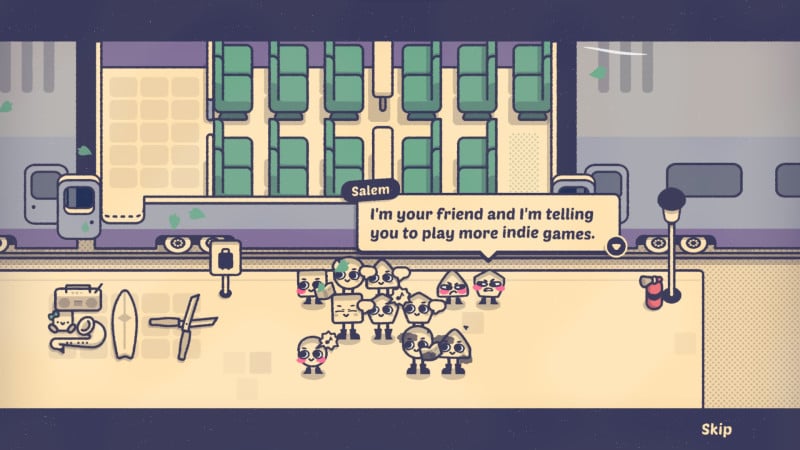
In Is This Seat Taken, your goal is to drag people (represented as anthropomorphic shapes) into their preferred seats in different environments. Each person has specific preferences about the placement of their seats or their proximity to other people, so it gets complicated quickly. On a bus, for example, some people might prefer window or aisle seats, while others want to sit at the back or the front.

To make matters more complex, some riders are kids who want to sit with their parents, extroverts who want to sit by someone who can hold a conversation, or people with bags they want on the seat next to them. The sheer variety of desires presented across the game’s 30 levels was surprising, and I always looked forward to seeing what new preferences would arise in the next areas.

Buses and trains are straightforward seating environments, but others introduce additional wrinkles to the formula. At the sports game, fans of opposing teams don’t want to sit next to each other, and some want to stand rather than sit, blocking the view of those behind them. At a concert, some might want to sit or dance while others need to play on stage as a member of the band. And the airport has you check each person’s flight to see if they should be in line to board or seated at the gate.

All these variables are arranged in a wonderfully paced sequence, where you never stay in one locale too long, and there are very few repeat environments. Whenever you get comfortable, you’re introduced to something exciting and fresh, making it an incredibly engaging puzzle game. Complete every level in a city without messing up a seating request to unlock bonus levels, like a wedding or a beach, that each showcase level-specific mechanics.

The whole journey is presented through a loose story starring Nat, a rhombus who wants to be an actor, on their journey through several cities around the world. Much like the puzzles, it’s all about Nat trying to fit in, and I found it charming and effective; just present enough to be a pleasant throughline, but not so distracting that I felt the need to skip through dialogue.

With my 100-percent playthrough clocking in at about five hours, Is This Seat Taken is a satisfying snack of a game. Complete with a chill soundtrack and a cute art style, it felt like a breath of fresh air. While I played it on PC, it would feel right at home on the go on its other platforms, Switch and mobile. It’s an easy recommendation for anyone even slightly interested in puzzle games.


Source link

August 22, 2025 0 comments
0 FacebookTwitterPinterestEmail
Bitcoin
GameFi Guides

Are Bitcoin Treasury Companies Good Or Bad? Analysts Expand On Skepticism

by admin August 22, 2025


Trusted Editorial content, reviewed by leading industry experts and seasoned editors. Ad Disclosure

The rise of Bitcoin treasury companies has sparked an intense debate over whether they add stability or new layers of risk to businesses. Analysts from the global credit rating agency, Morningstar have expanded on the skepticism, pointing out that using cryptocurrencies such as Bitcoin as a primary reserve currency may weaken, rather than strengthen the stability of corporate treasuries.

The Dark Side Of Bitcoin Treasury Companies

The adoption of cryptocurrencies for treasury functions has become one of the most trending topics in the financial industry. In a commentary published on August 21, Morningstar analysts noted that while Bitcoin and Ethereum are increasingly used for payments and investments, the shifts toward employing them for treasury functions introduce risks that could outweigh potential benefits. 

According to the commentary, Bitcoin treasury companies are likely exposing themselves to elevated levels of financial instability. One of the biggest drivers of this risk is the absence of clear regulatory oversight. Morningstar analysts highlighted the lack of a global regulatory framework for cryptocurrencies, with countries like the United States and Canada adopting differing approaches, while others, such as Egypt and China, impose outright bans.

This fragmented environment reportedly creates unpredictability for corporations that must manage compliance and financial stability. For treasuries, where certainty and legal clarity are vital, the analysts caution that such uncertainty may heighten credit risk and weaken confidence in long-term planning. 

Morningstar further stressed that cryptocurrency markets lack the depth of traditional asset markets, making liquidity unreliable. The analysts warn that this can cause companies to incur losses or face delays when attempting to access capital. They also note that such disruptions undermine the efficiency expected of corporate treasury management.  

Morningstar’s report also highlighted security risks for Bitcoin treasury concerns companies, noting that reliance on third-party custodians and exchanges such as Coinbase or Binance exposes them to operational failure, cyberattacks, and regulatory disputes. It added that the dual role of these exchanges as both trading platforms and custodians increases counterparty risks, weakening the stability of treasury reserves. 

Further Warnings Issued Over BTC Treasury Firms

In the commentary, Morningstar analysts further stated that volatility remains the most striking weakness of Bitcoin treasury companies. Their research underscored that Bitcoin is nearly five times more volatile than the S&P 500 in the short term, exposing companies to sudden valuation swings that can severely destabilize operations. 

Morningstar also noted that the materiality of crypto holdings is another central concern of Bitcoin treasury companies. The analysts caution that when digital assets make up a significant portion of a company’s reserves, the treasury begins to function more like a speculative portfolio than a financial safeguard. 

The report pointed out that firms like Strategy Inc., which holds over 629,000 BTC, are particularly exposed to this imbalance. With the top 20 public companies controlling 94% of total public Bitcoin treasury holdings, the sector also faces significant concentration risks. Furthermore, Morningstar warns that Bitcoin treasury companies may also be vulnerable to technical failures, exchange insolvency, liquidity crises, and weakened creditworthiness, even with insurance and security measures in place.

BTC trading at $112,928 on the 1D chart | Source: BTCUSDT on Tradingview.com

Featured image from Pixabay, chart from Tradingview.com

Editorial Process for bitcoinist is centered on delivering thoroughly researched, accurate, and unbiased content. We uphold strict sourcing standards, and each page undergoes diligent review by our team of top technology experts and seasoned editors. This process ensures the integrity, relevance, and value of our content for our readers.


Source link

August 22, 2025 0 comments
0 FacebookTwitterPinterestEmail
Metal Gear Solid Delta: Snake Eater Review - You're Pretty Good
Game Reviews

Metal Gear Solid Delta: Snake Eater Review – You’re Pretty Good

by admin August 22, 2025


There’s a good chance that, at some point in your life, you’ve been so enamored of a piece of media that you’ve considered what it’d be like to experience it for the first time again. Watching Terminator 2, hearing Enter the Wu-Tang, and reading The Dark Knight Returns shaped who I am and, as a result, I remember the moments I experienced them with crystal clarity. Over time, however, those memories have become divorced from the emotions they stirred and what’s left in their place is a longing for those lost feelings.

Video games are the only medium that I think are capable of making that first-time-again fantasy a reality–or as close to one as we’re going to get. Time puts distance between us and the emotionally significant moments we cherish, but it also brings us closer to exciting technologies that can make the old feel new. In the right hands, those technologies can create opportunities to stoke those profound emotions again, even if it’s just a little. Metal Gear Solid Delta: Snake Eater does exactly that.

Size:640 × 360480 × 270

Want us to remember this setting for all your devices?

Sign up or Sign in now!

Please use a html5 video capable browser to watch videos.

This video has an invalid file format.

Sorry, but you can’t access this content!

Please enter your date of birth to view this video

JanuaryFebruaryMarchAprilMayJuneJulyAugustSeptemberOctoberNovemberDecember12345678910111213141516171819202122232425262728293031Year202520242023202220212020201920182017201620152014201320122011201020092008200720062005200420032002200120001999199819971996199519941993199219911990198919881987198619851984198319821981198019791978197719761975197419731972197119701969196819671966196519641963196219611960195919581957195619551954195319521951195019491948194719461945194419431942194119401939193819371936193519341933193219311930192919281927192619251924192319221921192019191918191719161915191419131912191119101909190819071906190519041903190219011900

By clicking ‘enter’, you agree to GameSpot’s

Terms of Use and
Privacy Policy

enter

Now Playing: Metal Gear Solid Delta: Snake Eater Review

Before getting into what’s new, what can’t be overlooked in making Delta such a good game is the fact that Metal Gear Solid 3: Snake Eater remains a compelling, well-told story that has strong characterization and deals with some heavy subject matter. It approaches this with a strange mixture of self-seriousness and complete irreverence that is uniquely Metal Gear Solid and, for my money, balances both parts better than any other entry in the series. The stellar stealth is supported by systems that feed into the fantasy of surviving in the jungle and braving the elements, whether that be hunting for food or patching yourself up after sustaining injuries. Delta replicates it and, in my opinion, is better for it. The excellent work that the original Metal Gear Solid 3 dev team did remains the heart and soul of Delta, and it continues to shine.

Visual changes are the most noticeable contributor to elevating MGS3. While its fresh coat may have been painted on in the most clinical manner possible, that shouldn’t take away from the fact that it makes Metal Gear Solid 3–a third-person stealth-action game about sneaking through jungles, taking out soldiers, and uncovering vast, interlocking Cold War conspiracies–feel alive again.

What impressed me in the original PlayStation 2 release was how the jungle felt like it was teeming with life: numerous species of frogs hop about, snakes slither through grass, the distant sounds of birds, and the too-close buzz of agitated bees, not to mention thickets so dense that I felt like I was lost in an open-world as opposed to being deftly guided through a linear one. After years and countless playthroughs, the child-like wonder it initially inspired faded away, but Delta restores it using the brute force power of the Unreal Engine.

Delta looks absolutely stunning–jaw-dropping at times. In the jungle areas, the environments have the vibrancy and life that you’d expect to come from the naturality of green grass, towering trees, thick mud, decaying bricks, and worn wood, but it never feels artificial and, in fact, feels like it makes good on the Cold War-era, Soviet Union-set vibe in the same way the original did. I have no doubt that there will be discussions about the game’s visuals looking like a dispassionate implementation of Unreal Engine. Despite the fact that games like Fortnite prove it’s a misnomer at this point, Delta at times can look like it has the muted, greyish, brownish industrial footprint that people criticize the Unreal Engine for. But upon closer inspection of both individual details and how all of it coalesces, it becomes evident that skilled artists with a clear vision and direction have poured time and effort into elevating Delta above that.

The Unreal Engine sheen is replaced with touches that come together to give authenticity to the muddy floors, wet stone walls, and metal rusted-looking enough that you worry about Snake getting tetanus. And much of that is reflected on the character models too. Snake’s body–whether you’re wearing clothes or not–will pick up the dirt and grime of whatever he comes into contact with; sometimes even foliage in the environment will stick to him. In a similar fashion, damage is accurately represented on his body and can lead to scars or marks becoming visible. Counterintuitively, playing the game so that you rarely take damage robs you of the opportunity to see this impressive level of detail.

Nevertheless, the takeaway here is that there has undoubtedly been a great deal of work put into the character models. Every single character in the game, from key players like Snake, Eva, Ocelot, and Volgin to less present ones like Sokolov and Granin, or the rank-and-file GRU and Ocelot Unit soldiers, look intricately detailed and, I daresay, lifelike at times. Original MGS3 director Hideo Kojima’s flare for cinematic framing benefits from the new visuals since there are a number of up-close shots of faces or slow-motion movements to intensify action sequences. If you didn’t know that this is exactly how it was in the original, you’d think that Konami was doing all this to show off how good the graphics are in Delta.

If you’re a Metal Gear Solid fan, you’ll be aware of the infamous pachinko machine that gave us a look at The Boss rendered with a level of detail we’d never seen her in before. That elicited a fan response that I’m willing to bet was a factor in getting this remake off the ground–Delta betters that by a considerable margin. The character models look improved and, in particular, the lighting is spectacular. The game takes Snake through a variety of different times of day and cycles through different types of weather, and it’s genuinely impressive how the terrain is impacted and how the overall atmosphere and feel changes. Stepping out into the open in broad daylight when the sun is bearing down left me feeling exposed and desperate to quickly throw myself into nearby grass or behind a wall to cut off sightlines. Sneaking through a jungle at night, with surroundings illuminated only by moonlight and the threat of soldiers suddenly popping up because of limited visibility, was tense, even though I had a good memory of enemy locations and patrol patterns. When the game moves to internal locations such as labs and enemy bases, things become a little less interesting, but still impressive in their visual fidelity. It’s just that, next to the jungle, the interior environments provide fewer opportunities to be wowed as they’re more uniform and predictable.

There are so many details that I want to talk about in Delta, but getting to see just how thorough Konami has been with the visual overhaul is genuinely one of the joys of playing the game. Seeing micromovements of The Fear’s eyes accentuated his reptilian, animalistic nature; Snake’s reflection in The Fury’s glass helmet as he begins his fiery climactic ascent gave me a new level of appreciation for a lot of the character work that Kojima and the team did on the PS2, and there are instances of these kinds of details in every scene. What the limitations of old hardware left to the imagination, the power of modern technology now depicts in glorious detail.

Visuals have taken up the vast majority of this review, and for good reason. Not just because it’s where the most work has been done, but also because, for longtime fans, they’re what is going to be most impactful–those are the people that I think will have the strongest response to what they’re seeing and playing. A great deal of appreciation for what Delta achieves comes from my intimate familiarity with Metal Gear Solid 3–I have played this game so many times that every screen of it is burned into my mind, so seeing what I’m so familiar with but with a level of detail that was simply impossible in the 2000s and, by modern standards, is best-in-class, was often arresting. I’m sure that almost everyone can objectively agree that Delta looks great, but for people like me, the effect of and appreciation for the new visuals goes far beyond. Metal Gear Solid has never looked this good.

What’s more uniformly appreciable for everyone, however, is the new control scheme and the gameplay tweaks implemented to accommodate them. A big part of modernizing MGS3 has been switching to smoother movement and aiming. For the former, Konami has implemented animations and transitions that bring the game closer to the fluidity of Metal Gear Solid 5. Instead of jarringly switching from standing to crouching and then crawling, Snake now naturally moves between the different states and can transition while in motion, which makes navigating environments while using obstacles and hiding opportunities frictionless. Similarly, the way Snake moves his body when laying down and aiming is smooth. It’s not quite as robust as what you can do in MGS5 and crawling can sometimes still feel a bit unwieldy, but it’s vastly improved to the point where it shouldn’t be a stumbling block for anyone new, as it would be if you fired up the original version.

Complementing the freer and more fluid movement is a tighter viewpoint that brings the camera close to Snake, adopting the familiar over-the-shoulder perspective for aiming in third-person. This means you can be far more precise with shots, since Snake, his aiming trajectory, and what you’re aiming at are always in view. Those who haven’t played it may be shocked to hear that wasn’t the case in the original, which had a restricted isometric viewpoint and then more of a controllable camera in the Subsistence version. In both cases, it made for some awkward gameplay moments.

The one trade-off with all this is the fact that this Snake’s newfound efficiency in movement and proficiency with firearms does trivialize a lot of the boss fights, which make up the bulk of the coolest parts of the game. If you’re new to the game, you’ll still find they present a good challenge since each one has quirks that need to be figured out. However, if you know what you’re doing, you can tear through them very quickly. It doesn’t feel like I was able to dispatch them considerably faster than I could if I tried on the PS2 today, but being able to see more, get around more easily, and shoot better means that members of The Cobra Unit feel even more like pushovers now. That is, except for The End; that old geezer is still a geriatric menace.

Delta isn’t completely free of issues. Alongside the new perspective, there is a cover system that has a certain stickiness to it that can be frustrating. It’s not quite the Gears of War glued-to-the-wall level, but more of a gravitational pull towards walls, particularly the corners. That meant that I would accidentally snap into cover when I didn’t intend to, particularly in smaller rooms where the camera is close and there are boxes around Snake. On the one hand, intentionally going into corner cover is appealing since it’s much easier to pop out and fire a shot off with the new over-the-shoulder aiming system, but on the other, I didn’t find myself using that method very much since I could now reliably shoot from the hip or quickly swap into first-person mode and fire off a shot, so all in all, the system ends up getting in the way for me.

When it comes to the other new additions, for the most part they make sense and don’t drastically alter the gameplay experience, instead enhancing it. One is the introduction of a specific button that can be held to enter into a stalking mode that slows Snake’s movements down and makes him much quieter. It can be used when walking, crouch-walking, or crawling. Think of it as the slow-walk that you’d get from tilting the analog stick on the PS2 slightly. Initially, I didn’t really understand why this was necessary and felt it wasn’t that useful since it was so slow. But then I realized it was crucial if you want to sneak up on an enemy to hold them up or get them in a CQC move. The enemies in Delta have better awareness and perception, so if you slow walk or crouch walk behind a soldier without holding the stalking button, they will hear Snake and chaos will quickly erupt. Truthfully, I never got comfortable with getting up close to the extent that I relied on it as a frequent method of engagement like I would in the original; it felt far more risky, which meant when I was attempting a grab or hold-up, I felt more stressed out than I expected. I haven’t felt my palms get sweaty while playing MGS3 in many years, but I was wiping my hands on my pants frequently while playing Delta.

Enemies can now see much farther and have better awareness of what is above or below them. I was surprised to find that I aroused suspicions from positions that I know for sure are safe in the original game, so veterans shouldn’t underestimate soldiers in Delta–they’ve got some new tricks up their sleeves. On top of that, some of the weapons behave a little differently. In particular, as someone who prefers the non-lethal play style and relies on the MK22 for it, physics come into play and bullet drop is more severe, so you can’t easily send tranq darts into heads from long distances. Even at close range, you need to account for changes in trajectory. I went in thinking I could carry on running rings around enemies and putting them to sleep quickly, but found myself burning through ammo reserves and silencers due to the changes in gun behavior. The same goes for recoil on assault rifles and sway on the RPG during the escape sequence–careful where you’re firing those rockets.

The remaining differences come largely as quality-of-life tweaks. A new compass that is accessed from the equipment menu will pop up in the corner and point the way to the next objective when equipped; the life, stamina, and camo index have been moved to the bottom middle of the screen, freeing up the rest of it so you can soak in the visuals; the camo and face paint swap feature can be accessed through a shortcut assigned to the D-pad but uses pre-determined combinations, so there’s still value in going into the full menu and individually selecting your desired outfits. The codec can also be accessed through a D-pad shortcut, which makes getting to the save screen much easier, and you can also tune the radio to specific frequencies from the shortcut too. Finally, when enemies become suspicious or are alerted, an on-screen indicator where the enemy with eyes on you is located. You don’t get the last-chance shot from MGS5, so it’s mainly just a good way to improve situational awareness for the player and, if you’re quick enough, get out of sight.

There are other aspects of Delta that didn’t land for me. For some reason, Konami felt the need to re-record the Snake Eater vocal theme. Admittedly, I don’t dislike it–in fact, Cynthia Harrell’s vocal performance remains top notch–but it just feels… wrong. Again, a lot of that is because of my familiarity with the original and how jarring it is hearing a different version of it. However, it does throw the timing of the iconic ladder climb off slightly. And while the visuals are high-quality, there are moments where blemishes become far more noticeable. At times, there is artifacting around strands of hair when they’re up against certain backgrounds. Eva and The Boss can sometimes look like they’ve got a jumble of pixels stuck to the sides of their heads. And occasionally, there are stutters during cinematic sequences when a lot is going on, as the game lurches to get all the visuals and effects going after a cut.

But these are small idiosyncrasies in a game that has otherwise been made with a clear reverence for the source material. There has been a lot of toxicity around the Metal Gear Solid franchise for a while now, and some of that no doubt lingers and will color the sentiment around Delta. After all, Kojima isn’t involved in Delta and fans of Metal Gear Solid have a longstanding animosity toward Konami because of the high-profile break-up between the two parties, as well as the reported impact the dissolution of the relationship had on Metal Gear Solid 5.

However, it can’t be denied that Konami has done right by Metal Gear Solid 3 with Delta. There’s love put into the project and, at times, it feels like an appeal to fans from likeminded fans at the studio. It’s evident in the details that only longtime Metal Gear obsessives will appreciate: the fact that the game can be played in its original form with the new visuals through the Legacy control options; the various new camos from post-MGS3 titles that are available (though admittedly as DLC); the inclusion of extras such as the new secret theater; the food, camo, and model viewer, as well as Snake Vs. Monkey; or that the Guy Savage minigame, which has been omitted from various HD collections, making its return. It’s legitimately awesome in the new version, which is unsurprising since Platinum Games developed it.

Delta isn’t the first instance of Hideo Kojima’s beloved classic being updated and re-released, but it is the first complete rebuild of MGS3. It successfully modernizes visuals, tweaks game design, and updates controls so that the game sits comfortably alongside its action game contemporaries. From a content perspective, Konami has played it incredibly safe, using the same voice work and music, and leaving the story completely unaltered–effectively making Delta a one-to-one remake. But I can’t fault that, especially when I found myself once again enraptured by Snake’s tortuous mission to pull the world out of nuclear danger and fight for survival in a dangerous jungle. The impact of Konami’s efforts was such that, for eight hours, I wasn’t an adult yearning for the lost feelings that made me love Metal Gear Solid 3; I was the teenager living them for the first time again.


Source link

August 22, 2025 0 comments
0 FacebookTwitterPinterestEmail
Microsoft’s Xbox handheld is a good first step toward a Windows gaming OS
Product Reviews

Microsoft’s Xbox handheld is a good first step toward a Windows gaming OS

by admin August 21, 2025


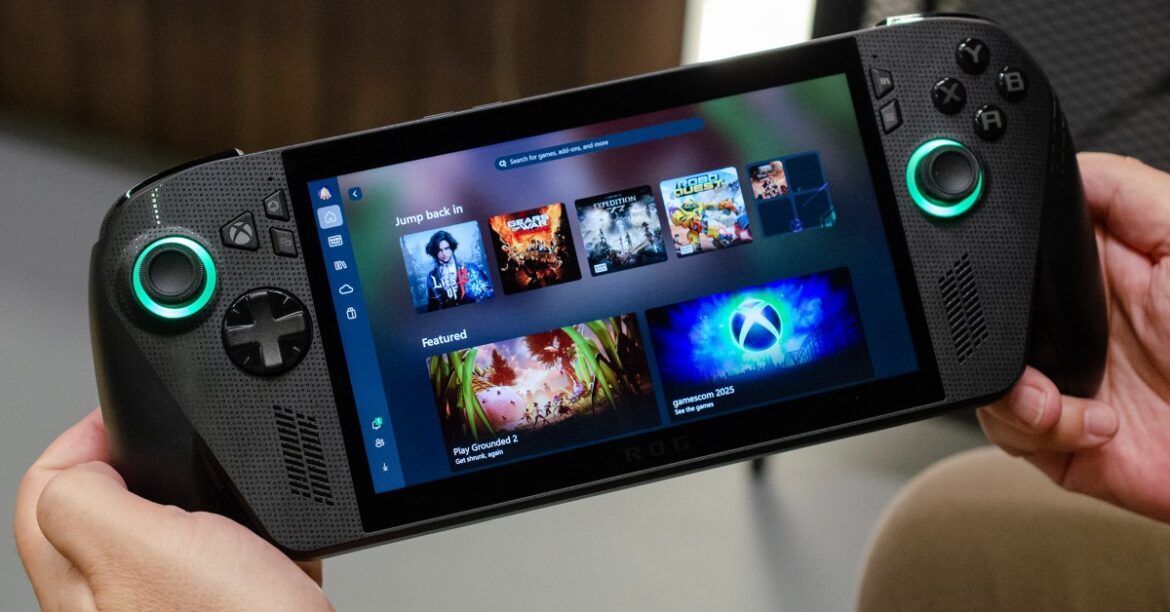
The first thing I did when I got my hands on the Xbox Ally was reboot it. I wanted to see exactly how Microsoft manages to hide Windows beneath the Xbox interface that’s debuting on these handheld devices.

After a short startup, I was met with the standard Windows login prompt. But I could use the controller to input the PIN code, an immediate improvement over what’s available right now. And as soon as Windows 11 loaded up, the interface immediately disappeared. The Xbox PC app took over and went full-screen — and for the most part, I didn’t have to leave.

I’ve spent enough time with Microsoft and Asus’ Xbox Ally devices this week to get a better understanding of how Windows and Xbox are moving closer together. Microsoft has created what it calls an Xbox full-screen experience for these new handheld devices, which essentially takes over for Windows and hides the OS away. It’s exactly what I’ve been wanting for Windows-powered handheld gaming PCs for years now, but it still feels like a small first step in a grand next-gen Xbox plan.

The Game Bar drives a lot of Microsoft’s Xbox full-screen experience.

The main interface on the Xbox Ally is similar to what can be found in the current Xbox app on Windows 11, Microsoft’s Steam competitor on PC. This app integrates with the Game Bar, Microsoft’s PC gaming overlay, to form this full-screen Xbox experience. Just like an Xbox console, you activate this Game Bar from a single tap of the Xbox button, and it’s what keeps you far away from the complexities of the Windows desktop hidden underneath.

Microsoft doesn’t load the desktop wallpaper, the taskbar, or a bunch of other processes that you don’t need for gaming. It’s essentially not loading the Explorer shell and saving around 2GB of memory by suppressing all the unnecessary parts of a typical Windows 11 installation. It’s surprisingly easy to get back to a regular Windows experience on these Xbox Ally devices, though.

You can exit out of the Xbox full-screen experience through the Game Bar or hold the Xbox button down to access the task switcher and a shortcut to the Windows desktop. Microsoft warns that you’re exiting to the Windows desktop and that you should use touch or a mouse and keyboard “for the best experience.”

The new Xbox task switcher lets you get to the Windows desktop quickly.

The Windows desktop experience is exactly the same as any regular handheld, and the Xbox team hasn’t done much additional work here to improve this side of the Xbox Ally. You’ll still have to use this part of the device to install and configure Windows apps like Discord and Steam, but once they’re up and running, you can mostly stay within the handheld-optimized confines of the Xbox full-screen experience. It’s easy to connect to Bluetooth devices or Wi-Fi networks here, and if all you’re doing is gaming, then Microsoft has nailed most of the basics, thanks to the widgets in the Game Bar.

Switching back and forth between Windows and Xbox modes is relatively quick, but after switching into the Windows desktop mode just once, you’ll need to fully reboot the device to regain the 2GB of allocated RAM. You also have the option to keep switching between both modes without those performance savings.

While the handheld-optimized Xbox UI on the Xbox Ally devices is a great improvement over what exists today, I still fear the complexity of Windows will creep through during daily use. This is still a Windows 11 device after all, which means there are OS updates and notifications from other apps or storefronts to install that might break the immersion.

For example, while the Xbox app takes over the left-hand swipe gesture to activate the Game Bar, the right-hand swipe still activates the Windows 11 notification center, which looks out of place in the Xbox UI. The Xbox team is working to improve this, but it highlights the challenges of trying to hide Windows beneath a console-like UI.

You can switch between the Xbox and Windows modes easily.

There’s also an interesting setting that suggests you’ll be able to set something other than the Xbox app as the default boot experience on the Xbox Ally devices, potentially opening the door for Steam or other launchers to become the home app here. Microsoft wouldn’t comment on what this setting is for just yet.

Due to my limited time with the Xbox Ally devices, it’s difficult to judge just how much switching between the Windows desktop and this full-screen Xbox experience you’d have to do on a daily basis. If you install Steam, then Microsoft brings any games you install from Valve’s store into the library interface of the Xbox app, making it a launcher for these PC games and keeping you in the handheld-friendly UI. But I did play some Gears of War: Reloaded on one of the demo units on the floor and noticed the game crash, leaving me with a broken game app window instead of a more gracious home screen like you see when games crash on an Xbox Series X console.

I also ran into a UI bug switching into the Windows desktop, which Microsoft assures me will be fixed by the time these devices ship on October 16th. Asus’ own devices on the Gamescom floor also had some weird bugs, including not being able to use the Xbox button at times. There’s clearly some work needed ahead of release.

Unfortunately, I didn’t get a chance to fully test how Windows standby and hibernation work with games on the Xbox Ally. I love the experience of turning my Xbox Series X off and then being able to immediately resume a game hours or days later, and Microsoft doesn’t have the equivalent of Quick Resume on Windows devices.

This experience feels like a first step in Microsoft’s plans for the next-gen Xbox, and seeing it in action makes it even clearer to me that Windows will be at the heart of the next Xbox console. Microsoft still has a tremendous amount of work ahead to blend all the best parts of Windows and Xbox together, but it’s about to ship some improvements that will hopefully lead to a gaming-optimized Windows operating system that spans across handhelds, consoles, and PCs.

  • Microsoft is finally improving Windows 11’s dark mode. Nearly a decade after a full dark mode was introduced in Windows 10, the latest preview build of Windows 11 now includes even more darkened UI elements. If you’re copying files or deleting them, these file operation dialogs will finally have a dark mode instead of light-themed prompt. Hopefully this signals that more dark mode improvements are coming with the 25H2 update to Windows 11 later this year.
  • Microsoft employee arrested at headquarters while protesting Israel contracts. Microsoft employee Anna Hattle, a software engineer in Microsoft’s cloud and AI team, has been arrested at the company’s headquarters during protests against Microsoft’s cloud contracts with Israel. Hattle’s arrest was part of 18 arrests by Redmond Police, including former Microsoft employees who joined the protest for a second day. The No Azure for Apartheid group continues to protest Microsoft’s cloud contracts with Israel, calling on the company to cut ties after reports emerged that the Israeli government uses Azure to power a surveillance network of Palestinian phone calls.
  • Microsoft hints at “more affordable” Xbox Cloud Gaming plan. Microsoft has dropped hints about a potential dedicated Xbox Cloud Gaming plan multiple times before, but it feels like we’re getting closer to an announcement. Jason Ronald, Microsoft’s VP of Next Generation, appeared on the company’s official Xbox podcast earlier this week and hinted that Microsoft wants to make its Xbox Cloud “much more affordable” and accessible to players. Microsoft is currently building a next-generation Xbox console and cloud network, so not having to buy Xbox Game Pass Ultimate just for cloud gaming access would certainly be a welcome move.
  • Microsoft Excel adds Copilot AI to help fill in spreadsheet cells. Microsoft has started testing a new AI-powered function in Excel that can automatically fill cells in spreadsheets. It’s similar to the feature that Google Sheets rolled out in June, and allows you to call up a “COPILOT” function to generate summaries, create tables, and more.
  • Indiana Jones and the Great Circle is heading to Nintendo Switch 2. I’ve been patiently waiting for Microsoft’s first Switch 2 game, and at Gamescom this week, the company announced that it’s bringing Bethesda’s Indiana Jones to Nintendo’s latest console in 2026. It’s one of the first PC games to require ray tracing, so it’ll be interesting to see what Bethesda does with the Switch 2 port.
  • Windows 11 test brings AI file search to the Copilot app. Microsoft has started testing the ability to use AI to search through your files and images directly from the Copilot app on Windows 11. The test is rolling out to Windows Insiders on Copilot Plus PCs and allows you to use more descriptive language when conducting your search. Microsoft is also making it easier to jump into “guided help” sessions with Copilot Vision.
  • Microsoft Teams is getting a microphone volume indicator. I can’t be the only person who asks “Can you hear me?” on a Microsoft Teams meeting, but that might be a thing of the past soon. Microsoft is adding a volume indicator to Teams on macOS and Windows that makes it easy to see if your microphone is working. This new feature is currently in testing before it rolls out to Teams users in the coming months.
  • Microsoft’s AI chief wants to “build AI for people, not to be a person.” Microsoft AI CEO Mustafa Suleyman has written a blog post where he shares his concerns about AI models becoming too humanlike to the point where people will believe they are conscious entities. “My central worry is that many people will start to believe in the illusion of AIs as conscious entities so strongly that they’ll soon advocate for AI rights, model welfare and even AI citizenship,” says Suleyman. “This development will be a dangerous turn in AI progress and deserves our immediate attention.”
  • Microsoft and Asus’ new Xbox Ally handhelds launch on October 16th. We finally got a date for the new Xbox Ally handhelds this week: October 16th. Weirdly there was no price or preorders, though. That didn’t stop Best Buy from accidentally listing the Xbox Ally at $549.99 and the Xbox Ally X at $899.99. I do wonder if Asus and Microsoft can subsidize this hardware a little further to bring those price points down, and we’re going to find out if that’s possible in the coming weeks.
  • Xbox on PC is getting a highlights reel and Auto SR. Alongside the Xbox Ally release date announcement, Microsoft also revealed this week that it’s bringing Automatic Super Resolution (Auto SR), which uses an NPU to upscale games, to the Xbox Ally X in early 2026. It will be joined by a new highlights reels feature that uses AI models to automatically capture gameplay moments and make them easily shareable with friends or on social networks.
  • Microsoft is improving the game shader experience on Windows. The DirectX team at Microsoft is working on a new “advanced shader delivery” system that’s designed to preload game shaders during download on the Xbox Ally devices. It’s launching on these handhelds first, to make games launch faster and run a lot smoother without stutters. It’s similar to Valve’s own efforts to improve the shader situation, and Microsoft says it will eventually expand this to more games and more devices over time.

I’m always keen to hear from readers, so please drop a comment here, or you can reach me at [email protected] if you want to discuss anything else. If you’ve heard about any of Microsoft’s secret projects, you can reach me via email at [email protected] or speak to me confidentially on the Signal messaging app, where I’m tomwarren.01. I’m also tomwarren on Telegram, if you’d prefer to chat there.

Thanks for subscribing to Notepad.

Photos by Tom Warren / The Verge

16 CommentsFollow topics and authors from this story to see more like this in your personalized homepage feed and to receive email updates.

  • Tom WarrenClose

    Tom Warren

    Posts from this author will be added to your daily email digest and your homepage feed.

    PlusFollow

    See All by Tom Warren

  • GamingClose

    Gaming

    Posts from this topic will be added to your daily email digest and your homepage feed.

    PlusFollow

    See All Gaming

  • Hands-onClose

    Hands-on

    Posts from this topic will be added to your daily email digest and your homepage feed.

    PlusFollow

    See All Hands-on

  • MicrosoftClose

    Microsoft

    Posts from this topic will be added to your daily email digest and your homepage feed.

    PlusFollow

    See All Microsoft

  • NotepadClose

    Notepad

    Posts from this topic will be added to your daily email digest and your homepage feed.

    PlusFollow

    See All Notepad

  • PC GamingClose

    PC Gaming

    Posts from this topic will be added to your daily email digest and your homepage feed.

    PlusFollow

    See All PC Gaming

  • ReviewsClose

    Reviews

    Posts from this topic will be added to your daily email digest and your homepage feed.

    PlusFollow

    See All Reviews

  • TechClose

    Tech

    Posts from this topic will be added to your daily email digest and your homepage feed.

    PlusFollow

    See All Tech

  • XboxClose

    Xbox

    Posts from this topic will be added to your daily email digest and your homepage feed.

    PlusFollow

    See All Xbox


Source link

August 21, 2025 0 comments
0 FacebookTwitterPinterestEmail
Ghost of Yotei's gamescom Opening Night Live trailer is good, but it's made better by that Legends teaser
Game Reviews

Ghost of Yotei’s gamescom Opening Night Live trailer is good, but it’s made better by that Legends teaser

by admin August 20, 2025


We were promised a new look at Ghost of Yotei at this year’s gamescom, and Opening Night Live indeed kept that promise. The Geoff Keighley-hosted show was full of updated looks at previously-announced games, as well as some fresh game reveals.

Sucker Punch was among the developers in attendance, and the team brought something special for fans of the upcoming Ghost of Tsushima sequel.


To see this content please enable targeting cookies.

Manage cookie settings

Today’s trailer was actually one of Yotei’s best so far, blending quick cuts of the game’s action combat with a couple of menacing moments with the game’s villains. Nothing too unexpected here – except, of course, for that tease at the end.

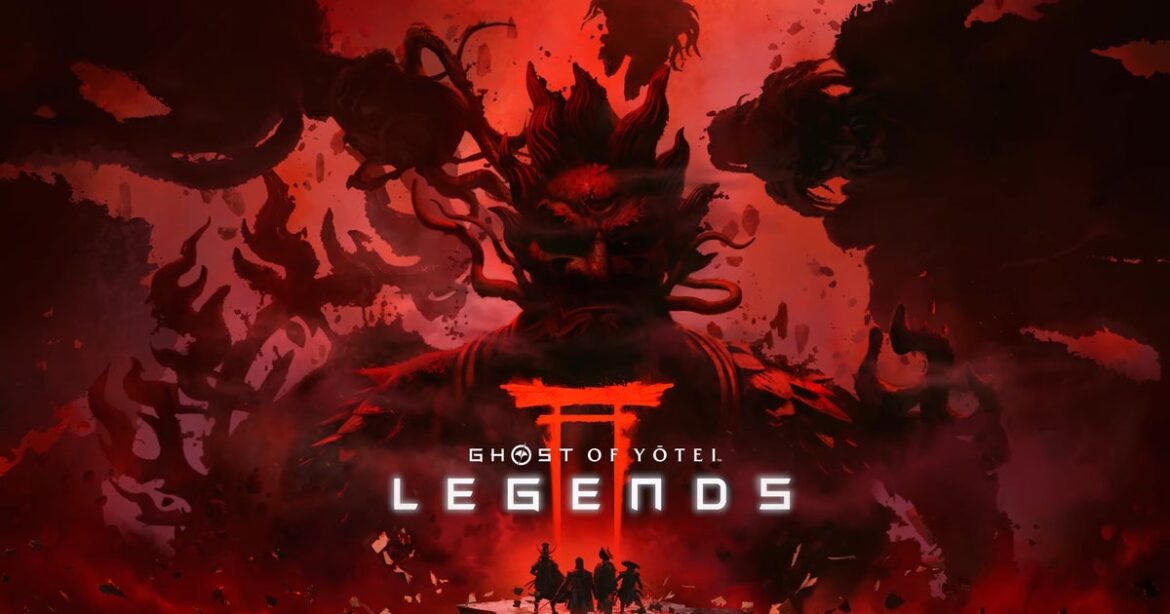
Legends, the online co-op mode that came to Tsushima in a free update, will return in Yotei. It won’t be available at launch, however, and will instead arrive in a free update in 2026. Legends will feature new story missions for two players, alongside four-player survival matches.

There’s going to be four playable character classes, and some of the bosses you’ll come up against will be fantastical, demonic versions of the game’s Yotei Six gang of outlaws. We didn’t get to see much from Legends in today’s reveal, but the news will definitely make a lot of people happy.


To see this content please enable targeting cookies.

Manage cookie settings

For a game coming out in about six weeks, we actually haven’t seen all that much of Ghost of Yotei. Gameplay was kept under wraps practically since the moment Yotei was initially announced. It wasn’t until July that the game got its own, dedicated State of Play presentation from Sony.

Today’s showcase certainly helped keep that hype train chugging, even if we still like to see more of the open-world action RPG. That said, it continues to appear as a fairly straightforward sequel, so there may – understandably – be not much more to show.

Ghost of Yotei arrives October 2 on PS5.


Source link

August 20, 2025 0 comments
0 FacebookTwitterPinterestEmail
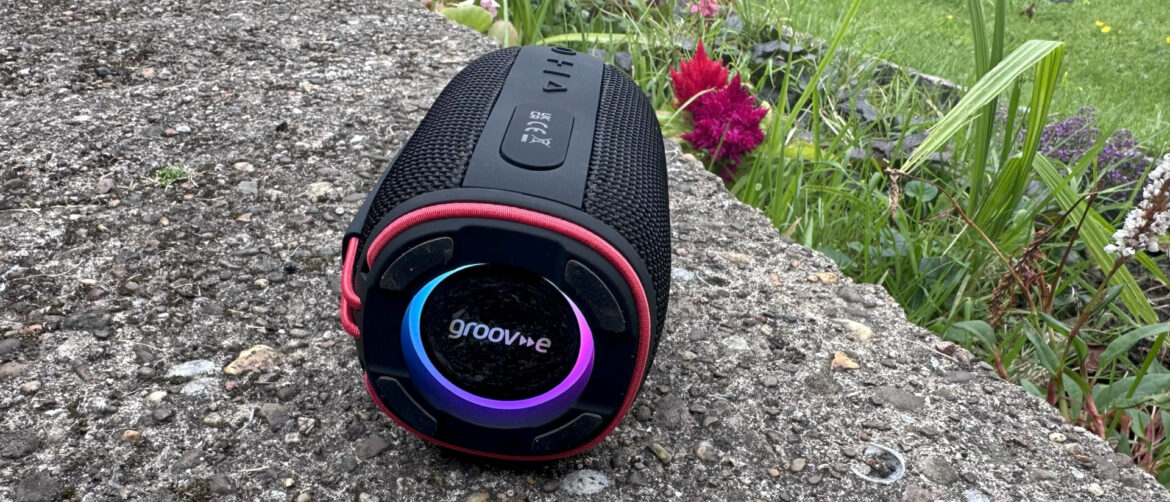
Groov-e's Wave Glow with illuminated ELD lights on it's end, lying on its side in a garden
Product Reviews

Groov-e Wave Glow review: a portable, budget Bluetooth speaker that sadly doesn’t sound good enough to make the grade

by admin August 19, 2025


Why you can trust TechRadar


We spend hours testing every product or service we review, so you can be sure you’re buying the best. Find out more about how we test.

Groov-e Wave Glow: two-minute review

The Groov-e Wave Glow is a very affordable portable speaker and one with sound quality to match that price tag. Yes, this is one that will infuriate the ears of audiophiles sounding somewhat tinny at times and slightly lacking any oomph across the course of my listening.

On the other hand, it has some funky looking lights which I found rather endearing, a comfy to grip strap, and some surprising ways to connect it to your music. Besides Bluetooth, you can also plug in a USB flash drive, slot in a TF card (both admittedly with a tight 64GB limit), and there’s an aux port. It’s not often you see these features in a tiny speaker any more. Granted, not everyone will need these but if you do, well, your options are limited making this more tempting.

Of course, don’t count on it rivalling the best Bluetooth speakers. This is a decidedly cheap speaker. It feels a little cheap to the touch and there’s that dodgy sound quality. I say dodgy; it’s reminiscent of buying a cheap radio or speaker years ago, before good speakers were affordable for the masses. It’s not hideous, exactly, but it’s also fairly ‘blah’.

Away from that disappointing audio quality, the Groov-e Wave Glow has some chunky, tactile buttons for play/pause, volume, and adjusting the lights, and the ports are all hidden behind a pull-out protective shell. Then there’s the lights up top and down bottom, and the elastic strap.

The Groov-e Wave Glow is priced at £23.99 and at the moment is only seemingly available in the UK, but that would make it under $35, or around AU$50. For that price, it’d be silly to expect too much, but if you can stretch further, you will find better options – more on those later. If money is that tight, however, or you’re looking for a cheap gift, the Groov-e Wave Glow still has some appeal.

(Image credit: Future)

Groov-e Wave Glow review: price and release date

  • Released May 2025
  • £23.99 at launch
  • Limited availability

The Groov-e Wave Glow was launched in May 2025 and is currently available to buy in the UK. It’s already seen some modest discounts but is generally available for £23.99.

That makes it one of the cheaper speakers around. The recently released Tribit Stormbox Mini Plus is close but is still usually priced at £39.99. If you’re able to increase your budget to that, there are a few other options like the JBL Go 4, but few as cheap as this one.

Sign up for breaking news, reviews, opinion, top tech deals, and more.

Groov-e Wave Glow review: specs

Swipe to scroll horizontally

Weight

645g

Dimensions

13.7 x 8 x 7.5 cm

Connectivity

Bluetooth 5.3, aux-in, USB-C (charging)

Battery life

8 hours (quoted)

Speaker drivers

10W

Waterproofing

n/a

Groov-e Wave Glow review: features

  • AUX port, microSD slot, and USB flash drive support
  • LED lights
  • 8-hour battery life

The Groov-e Wave Glow is a fairly typical looking little Bluetooth speaker but with some surprising features. The highlight is its plethora of connections. Sure, you’ll be mostly using its Bluetooth connection, but it has other options. You can use its aux port to connect to other devices (and the speaker actually comes with a 3.5mm jack), while next to it is a TF (read: microSD) card slot, and the USB connection allows you to plug in a USB flash drive. Admittedly, both microSD and USB have a limitation of 64GB so you might have to search around for a compatible option, but it could be that specific situation that fits you perfectly.

There are no mics for speakerphone duties (although few speakers seem to offer that, these days) and battery life is a very unremarkable 8 hours. I’d have liked to have seen more here, especially as it takes 2 hours for a full recharge. Its Bluetooth 5.3 connectivity works fine and I had no issues using it with my iPhone 14 Pro but there were occasional dropouts on my PC – usually when I moved the speaker around.

Elsewhere, the LED lights are my favorite thing about the Groov-e Wave Glow. They visually bounce away while playing music and look suitably vibrant and exciting. They’re potentially more exciting than the audio quality, but I’ll get to that. It’s a neat touch either way and makes up for the lack of app support and thus in-app customization.

(Image credit: Future)

Groov-e Wave Glow review: sound quality

I didn’t expect much of the Groov-e Wave Glow but I have to be honest, it actually sounded a little worse than anticipated. It’s functional, of course, but pretty tinny at times. There’s no bass to speak of, but my word, do the lights try to atone for that. You’re encouraged to feel like it’s doing its best, happily bouncing along. However, it’s pretty tame stuff.

Listening to spoken word – a podcast or YouTube video, say – is fine, but when you switch over to your favorite music, the limitations are much more noticeable. The volume can go pretty high, but that weakens the experience even more. I went for my cheesy favorite, Robbie William’s Let Me Entertain You to start, knowing exactly how it’s meant to sound and there was no urgency or strength in the mids.

I went bold then and loaded up some Muse and sighed as it sounded somewhat pitiful. The soundstage is weak but more importantly, the bass and general ambience is underwhelming.

(Image credit: Future)

Groov-e Wave Glow review: design

  • Comfy elasticated strap
  • Tactile buttons
  • Well hidden ports

The Groov-e Wave Glow is certainly exactly how you expect a speaker to look, but there are a few highlights. I’m a big fan of its buttons being attractive but tactile too, so anyone with visual impairments can find what they’re wanting to press. There are buttons for play/pause, volume, and for toggling the lights on or off.

There’s a chunky section for the ports too which blends in well and feels suitably snug. On another side is the strap which is elasticated but held in quite tightly. The idea is that you can easily hold it through the strap but also attach it to something like a hook. It feels nice in your hands which is the main thing here.

As with other similar speakers, the Groov-e Wave Glow is pretty lightweight to carry around. Up top and down the bottom is the lighting so you can place the Groov-e Wave Glow sideways as well as upright.

What lets it down in this section – and why not go higher than four stars? Well, any discussion on the design has to include the audio architecture under the hood, and as you’ll know if you’ve read this far, this area is where the Wave Glow struggles. Also, unusually for a speaker in 2025, there’s no mention of an IP rating for water or dust ingress – so it won’t be joining the ranks of our best waterproof speakers buying guide any time soon.

(Image credit: Future)

Groov-e Wave Glow review: value

  • Very cheap
  • Sturdy design
  • Useful for a specific situation

The Groov-e Wave Glow is certainly cheap but its sound quality demonstrates exactly why it’s so cheap. Having said that, the aux port, USB flash drive support, and TF card slot could make it exactly what you’ve been looking for. For those people, there’s not much else to rival the Groov-e Wave Glow at this price.

However, if you’re looking for good audio, it’s a smart move to spend a little more on the JBL Go range or something from Anker Soundcore. The Groov-e Wave Glow definitely isn’t the best choice for music lovers, but it is super cheap and for many, that’s the priority.

(Image credit: Future)

Should I buy the Groov-e Wave Glow?

Swipe to scroll horizontally

Attributes

Notes

Rating

Features

No app, but there are a few notable extras not on other models

4/5

Sound quality

The weakest element by far when considering the Wave Glow: tinny and lacking in low end

2/5

Design

Useful straps, fun lights and tactile buttons

4/5

Value

It’s cheap, but given the sound quality, spending less doesn’t always mean value

3/5

Buy it if…

Don’t buy it if…

Groov-e Wave Glow review: also consider

Swipe to scroll horizontallyRow 0 – Cell 0

Groov-e Wave Glow

Tribit Stormbox Mini Plus

JBL Clip 5

Price

£23.99; limited availability in other markets

$39.99 / £32 / AU$65 (approx.)

$79.95 / £59.99 / AU$89.95

Weight

645g

545g

285g

Dimensions

13.7 x 8 x 7.5 cm

90.9 x 90.9 x 118.9 mm

86 x 134.5 x 46 mm

Connectivity

Bluetooth 5.3, aux-in, USB-C (charging)

Bluetooth 5.4 (SBC, AAC codecs), AUX-in, USB-C (charging)

Bluetooth 5.3, USB-C (charging)

Battery life

8 hours (quoted)

12 hours (quoted)

Up to 12 hours

Speaker drivers

10W (dimensions not stated)

48mm

Integrated class D digital amplifiers x 1

Waterproofing

n/a

IPX7

IP67

Groov-e Wave Glow review: how I tested

  • Tested over 14 days
  • Used with Spotify, Apple Music, YouTube, and Twitch
  • 15 years of audio equipment reviewing experience

I used the Groov-e Wave Glow across 14 days in a wide range of ways. I connected it to my PC initially and listened to Spotify, Apple Music and Twitch using that as a source device, then moved to my iPhone 14 Pro.

That meant a solid mixture of spoken audio and also music. My music taste is fairly varied so it went from Robbie Williams to Muse to Chet Baker to various pieces of classical music. I also checked how good battery life appeared to be and monitored how long it took to recharge.

I have 15 years of experience testing audio equipment, specialising in portable, affordable products just like the Groov-e Wave Glow.

Groov-e Wave Glow: Price Comparison


Source link

August 19, 2025 0 comments
0 FacebookTwitterPinterestEmail
Underdogs Diego Pavia, Vanderbilt look to keep good times rolling
Esports

Underdogs Diego Pavia, Vanderbilt look to keep good times rolling

by admin August 19, 2025


  • Ryan McGeeAug 19, 2025, 07:00 AM ET

    Close

    • Senior writer for ESPN The Magazine and ESPN.com
    • 2-time Sports Emmy winner
    • 2010, 2014 NMPA Writer of the Year

It is so hard for anyone to stand out in Nashville because everyone in Nashville is always trying so hard to stand out.

All of those off-the-bus would-be country music stars, performing in so many Broadway bars owned by so many actual stars, entertaining all those bachelorettes in pink cowboy hats and those dudes who look like they are attending a Luke Combs lookalike contest. Music City, USA is always a good time, but it also becomes very repetitive. This town aches for someone to come along and finally snap it out of its endless two-stepping loop. Say, a big-haired blond woman from Sevierville, Tennessee. Or a Man in Black on the train a-comin’ from Folsom. Maybe a girl from a Christmas tree farm in eastern Pennsylvania.

Or a Bama-beating water bug of a quarterback who rolled in off a desert wind that blew in from New Mexico.

“Straight out the dirt, son,” Diego Pavia says, the 24-year-old laughing as he sits up and slaps his hand on a meeting room table in Vanderbilt football’s quarterbacks meeting room. “When I first got here, you would walk down to Broadway and everyone had on Alabama stuff or Georgia stuff or the bars would just have Tennessee flags out front. Now I see a lot of Vandy V’s out there. I think maybe people didn’t see that coming. Just like they didn’t see me coming.”

They see him now. We all do. One year ago, we saw the 6-foot QB (well, that’s how tall the Vanderbilt media guide says he is, but most everyone lists him at 5-10 … but, when a 5-10 sportswriter looks him in the eye, he might be 5-9 … but who cares because he’s also built like a BMW X4) lead the Commodores to the program’s first winning season, first stint in the AP Top 25 and first bowl win since the 2013 campaign. On Oct. 5, 2024, we saw him emulate his childhood hero, Johnny Manziel, by running past No. 1 Alabama, Vandy’s first win over the Tide in 40 years and first win over a top-5 team ever, ending an 0-60 drought.

And in more recent days, the world has seen Pavia at SEC media days and on Netflix, proclaiming that longtime lowly SEC cellar dweller Vandy can be a national title contender. And as the world entered last weekend, it did so dancing along with No. 2 in a music video that dropped for the song “Pavia Mafia,” as artist Axel Varela declared: “From the 505 to the world, baby!” and “Yo me enamoré del juego,” which translates to “I fell in love with the game.”

What none of us saw were those days when that love affair began for Pavia. It was on the outskirts of Albuquerque, where he grew up as the third of four children, with two older brothers and a kid sister. They were raised by Antoinette Padilla, who found herself in the role of a single mother as Diego was becoming a teenager and realized that her job as a front desk office worker wasn’t going to cover the bills. She had grown up as one of 14 siblings, also in a single-parent home, and refused to put her kids through that same struggle. So she enrolled in nursing school.

“I remember all of her books and papers spread out all over the kitchen table,” Pavia recalls. “She would cook dinner for us and we’d all eat and I’d see she hadn’t eaten anything. I’d ask her about it and she’d just say, ‘Oh, I’m not hungry.’ Now I realize that she was hungry, but that’s all we had. We were kids, so all we knew was that ‘we good, man.’ But now we know it’s because she was always sacrificing.”

Padilla was also always working. Once she began her career as a long-term care nurse, she refused to be saddled with the loans she had taken out to pay for school. She studied house flipping and started buying fixer-uppers around Albuquerque. And who do you think did the fixing?

“We would work in the yards, paint, install new windows, all of it, as kids,” Pavia says with a little shake of his head. “She would rent them out, save up and then sell them. Then she started doing cars on the side. Buy a car cheap at auction, for like $2,000, fix it up and resell it for $6,000.”

So, if one were to buy a house with windows installed or a car detailed by 13-year-old Diego Pavia, were they going to be happy with the results?

“I haven’t received any complaints yet, man.”

Diego Pavia enjoys the moment after Vanderbilt’s stunning win over No. 1 Alabama. Butch Dill/Imagn Images

In their mother’s sizable wake, the three boys attacked every aspect of their lives at full throttle, especially when it came to football and wrestling. Oldest brother Roel participated in both sports at Briar Cliff University, an NAIA school in Sioux City, Iowa. Just as Mom had shown Diego how to scramble out of debt, his brother showed him the benefits of attending college.

“As he got older, he developed into a rock,” Roel says. “He hit that growth spurt and it was all muscle. That’s when the older brothers stop picking on little brother because little brother can kick your ass.”

That growth was in the shoulders and legs. It was not in height. So, even as Diego led the Volcano Vista Hawks to a perfect regular season and the state semifinals, no one in Division I college football gave the QB a serious look. But what hurt the most was when the hometown New Mexico Lobos said they were passing not because they thought he was too small, but because he was too cocky.

“He still isn’t over that one,” Vandy football consultant Jerry Kill says with a laugh. “I don’t think he ever will be over that one. That’s always been part of his gasoline.”

Instead, Pavia settled for New Mexico Military Institute in Roswell, where he led his team to the 2021 junior college national title. That night, his heroics for the Broncos were being shown on local New Mexico television. Bellied up to the bar in the Las Cruces Hooters were Kill and longtime mentee Tim Beck, the just-hired head coach and offensive coordinator at New Mexico State. They were watching the game to scout a quarterback — initially, Pavia’s opponent. But when the fire hydrant playing QB for NMMI ran through Iowa Western for a 34-yard touchdown and an early 14-0 lead, Kill looked at Beck and said, “Hell, man, we’ve been watching the wrong guy.”

Editor’s Picks

2 Related

That wrong guy became the right guy for the New Mexico State Aggies, as Pavia led the bottom-10 stalwart to a 7-6 record in 2022. The following year, the Aggies went 10-5, the program’s first double-digit-win season in more than six decades. Pavia most relished the Aggies’ win over New Mexico in Albuquerque, even more than their stunning upset at Auburn. Unfortunately, he went viral after that Rio Grande Rivalry win when video surfaced of him urinating on the UNM logo at its indoor practice facility. That incident came up again at season’s end, when New Mexico State earned an invite to the New Mexico Bowl, hosted by the Lobos, and the Aggies weren’t allowed to use that facility to prepare for the game.

“That was embarrassing and inexcusable and no one knows that more than Diego Pavia,” Kill says. “But I also told you he was still mad about what happened coming out of high school.”

“We all make mistakes,” Pavia admits now.

When Kill retired following that magical 2022 season, Pavia nearly made another mistake, though at the time most believed his mistake to be the decision that he made, not the one he backed out on. Suddenly a hot commodity at the dawn of the NIL era, Pavia accepted an invite and a nice payout to transfer from New Mexico State to Nevada. Then his phone rang. It was Kill, whose retirement had lasted all of a few weeks.

“I went to Las Cruces to try and convince Tim Beck to come help us with our offense,” Clark Lea says of the trip he took in late fall 2023, just as he had wrapped up his third season as head coach at Vanderbilt, his alma mater. It was a crushingly disappointing year, the Commodores starting 2-0 but finishing 2-10. “Jerry sat in on some of our conversations and we all connected immediately.”

Diego Pavia takes a selfie with the Roman god Vulcan depicted on the Birmingham Bowl trophy after Vandy’s first bowl win since 2013. Matthew Maxey/Icon Sportswire

Soon Beck was headed to Nashville with several of his offensive players in tow. Kill tells the story that he was on the beach in Mexico, three margaritas deep, when Beck and Lea finally convinced him to join them. Pavia tells the story that Kill then called him and said, “Don’t make a mistake and go to Nevada. I’m moving to Nashville and you’re coming with me.”

Pavia loves Kill and Beck so much that he made the move without hesitation, even leaving money on the table at Nevada. He also refused to leave Vandy after the storybook tale of 2024, telling the “Bussin’ With The Boys” podcast that he had passed on a $4 million-plus NIL offer from an SEC rival to remain in Music City. What’s more, he won an injunction versus the NCAA for one more year of eligibility, instead of being penalized for time served at the junior college level.

“I think that it is easy to see the guy who likes to talk a little and who likes to celebrate a lot and think, ‘Oh, he’s that guy,'” Lea says. “But look at what he has done to be here and stay here, and look at the 50 people who come from New Mexico to be with his family at our games. That’s someone who loves this place.

“Talk to our basketball office or [Vandy baseball head coach] Tim Corbin, and they will tell you that Diego is in their offices, asking about what it takes to win. He has big dreams for himself, but he came here and all of those people come here with him because they love it here.”

Now, everyone else is coming, too, to be with the Pavia Mafia to watch college football at, of all places, Vanderbilt. Yes, he is most definitely prone to hyperbole, but Pavia’s observation about the gentle transfusion of black and gold into the college football identity of the bars along the Cumberland River is no exaggeration. It’s visible. As are the construction cranes that cover FirstBank Stadium, long the SEC’s time capsule of football venues, and the ground being broken to replace the team’s cramped subterranean 1990s football facilities.

All of that renovation was already on the books before Pavia arrived. But the kid who used to flip houses with his mother has injected that sweat equity investment mentality into Nashville’s business community and Vanderbilt’s alumni base.

Nashville is a city that has been constructed atop the idea of having a good time. Residents and visitors alike have never had a problem finding that good time everywhere from Tootsies to the Titans. Now, thanks to the QB that no one saw coming, they are discovering a good time at a place that has been hiding in plain sight since it hosted the state of Tennessee’s first college football game in 1890.

“Building stuff is fun, man,” Pavia says. “It isn’t easy. But nothing worth it is ever easy. So when that work pays off, let’s enjoy it, Vandy. We earned it because we built it.”

Straight out the dirt?

“Straight out the damn dirt.”


Source link

August 19, 2025 0 comments
0 FacebookTwitterPinterestEmail
A dog looks at something off-screen.
Game Reviews

Dog-Led Horror Movie Good Boy Gets First Trailer

by admin August 19, 2025


I like horror movies okay, but I need a good concept to draw me in. Good Boy certainly has one of those, but the concept that makes it compelling is also one that taps into my most deep seated fears, and I don’t know if I can handle it. As the name suggests, Good Boy is a spooky movie whose events are viewed from the perspective of a dog. Aren’t we as humans subjected to the horrors enough? Do we need to bring our canine companions into the pain and suffering?

Good Boy premiered at South by Southwest way back in March, and the reception to the supernatural horror movie has been really strong so far, with early reviews calling it one of the best in the genre this year. Though I don’t know where it all ends up, several reviews call out that it’s very emotional and heartbreaking—which could mean anything, really—so if you’re looking for a straightforward scare, be aware that Good Boy might have a bit more going on. The film stars Indy as a dog whose owner has suffered a death in the family and who moves into a haunted house. Ever the watchful companion, Indy notices that something is amiss and he and his owner are not alone. Now, he has to do what he can to save his owner from the dangers lurking in their new home. 

Y’all, I’mma throw up. There’s a reason Does the Dog Die?, an entire website dedicated to asking if a dog you see in movie trailers is going to die, exists, and it’s for people like me who can’t handle that shit. There’s already a page for Good Boy on that website and I saw it as I was grabbing the link. I can barely handle seeing a dog be in distress under normal circumstances, much less supernatural ones. Whether Indy makes it out or not, he’s about to have a bad night. I guess I’ve got some time to figure out if I want to see Good Boy, as the movie is coming to theaters on October 3.


Source link

August 19, 2025 0 comments
0 FacebookTwitterPinterestEmail
Screenshot: EA / Dice
Game Reviews

Battlefield 6’s Open Weapon System Is Good

by admin August 18, 2025


When I first heard about EA and Battlefield Studios’ plan to implement an open weapon system in the upcoming Battlefield 6, I scoffed! And playing the game in Los Angeles for an event last month didn’t sell me on it, either; I still worried it would make classes feel less unique. Now, after playing the open beta for nearly 20 hours, I’m here to say: I was wrong.

Let’s back up for a moment and explain, briefly, open and closed weapon class systems in Battlefield. (I promise this won’t be too boring.) Basically, for nearly as long as the franchise has been around, classes were locked to certain weapons. Recon, for example, had to use a sniper rifle. Over time, developers at Dice tweaked this and added “neutral” weapons that could be picked by multiple classes, or they spread specific types of weapons across a few classes. Battlefield 2042 threw a lot of this out the window when it launched without classes and let players essentially build custom heroes who could use any gadget or gun. It then added classes back in when people got angry. Anyway, Battlefield 6 is trying to find a happy balance between 2042‘s total, unbalanced openness and the classic closed weapon system of the past games. And I think, despite being nervous about the change and all the debate raging online among players on both sides, Battlefield Studios has mostly nailed it.

In Battlefield 6, any class can use any weapon. So you can spawn in as a recon soldier, but instead of a sniper rifle, you could bring an SMG. Engineers, traditionally a class that uses SMGs, can rock snipers and LMGs. At first, this seemed like a bad idea to me. I worried that players would just pick the class with the best abilities and pick the best assault rifle, and you’d lose all the uniqueness that comes from BF’s old-school class system. And in some smaller, more combat-focused modes, this is indeed the case. But in bigger, more Battlefield-y modes, like Conquest and Rush, I’ve been pleasantly surprised by how things have worked out.

In my hours with the beta, I found that in many matches players were spread all around the four classes. In some past games (looking at you, Battlefield 3), people would pick whatever class had the best assault rifle, and that was that. During a Q&A with the devs last month in LA, they talked about this and said that the open weapon system was partly designed to combat this. The idea is that now people will pick classes based on what the team needs and their unique abilities and tools, rather than the weapons they can and can’t use.

And yeah, that’s exactly what I saw happening in many BF6 open beta matches. If the enemy team, for example, brought in a bunch of vehicles or tanks, I’d see players swap to engineers to use that class’s RPG to take all those machines out. Likewise, I saw players and friends swap to the support class to help hold a point and revive people, or swap to recon to help pin down a target. It seems now that weapons can be freely equipped on any class, people are far more open to playing different classes and helping out the team. Sure, maybe some of these players have just equipped the same assault rifle on all of the classes, but if it helps my team stop a tank from destroying us, I’m fine with it. That’s a much better scenario than in past BF games, where a whole team might be assault soldiers and you’d be unable to get ammo resupplies or fight back against helis.

Battlefield 6 also rewards players for choosing a weapon that is more aligned with their class. Recon soldiers get a ton of exclusive sniper perks that make it almost silly to use a sniper rifle on any other class. But you can do it, if that makes you happy. And this is where I’d suggest some tweaks.

I think rewarding players who pick class-specific weapons is a smart idea, but I almost feel like the devs could do more to make sure picking an assault rifle on every class isn’t an easy option. Perhaps class-specific weapon punishments could work? An assault class soldier picking a sniper rifle might mean they don’t get the recon benefits, and perhaps they also reload the big rifles more slowly. Or an engineer picking an assault rifle has more kick and can’t carry as much ammo for it. These tweaks would reward people playing classes more traditionally, could be overcome with skill or teamwork, and would still allow for the weapon freedom the devs want in BF6.

But even if Battlefield 6 devs don’t steal my totally-awesome-and-perfect idea, I think the open weapon system is a good change. It lets players enjoy all the classes without forcing them to play with specific guns. This leads to matches in which all the classes are used, and that leads to more enjoyable Battlefield action. And that’s what I’m looking for. Sure, maybe it means that I’ll be killed a lot by a few popular assault rifles, but it might also mean that there will be more medics running around who can heal me. That would be nice. And don’t worry; if you hate the open weapon system, EA is going to offer playlists and modes that feature locked weapons, too. Everyone wins.


Source link

August 18, 2025 0 comments
0 FacebookTwitterPinterestEmail
battlefield 4
Gaming Gear

DICE lead responds to criticism that Battlefield 6 beta maps were ‘not how Battlefield should be,’ urges everyone to ‘go play some smaller/medium maps in BF3 and BF4 to get a good example of the intensity curve’

by admin August 18, 2025


By all reasonable metrics, the Battlefield 6 beta was a resounding hit. Not only is BF6 already very fun based on the handful of maps and modes we got our hands on, but the two-weekend playtest period broke records for the series on Steam.

The beta wound down this morning with players clamoring for its October 10 launch day, but not without reservations. Among longtime fans, the loudest criticism surrounded map size: The beta lacked a truly big map that captured classic Battlefield chaos.

DICE lead producer David Sirland has been the one to field these complaints over the last few weeks. After the first beta weekend, Sirland assured folks that ‘large maps exist’ in BF6, but the studio chose to test small ones to show it could handle the “full-octane” chaos of CoD.


Related articles

Then, well, it added yet another small map in weekend two, reinforcing concerns that the full map pool of nine will prioritize CoD run ‘n gunning over Battlefield’s traditional spaced-out firefights.

“That’s not how Battlefield should be,” X user Blasts4Satan replied to Sirland on August 15. “Listen to the veteran players, not the CoD fanboys. This is y’all’s last chance and it’s already looking a little too much like the other game in the room.”

We are very much looking back at our past modern incarnations when it comes to pacing. I’d urge everyone to go and play some smaller/medium map BF3 and BF4 to get a good example of the intensity curve.It is slower and more deliberate on the larger maps, as it was in the past.August 18, 2025

Returning to the thread days later to reply, Sirland reaffirmed that BF6’s pacing is on the same trajectory as the games it’s most inspired by, Battlefield 3 and 4.

“We are very much looking back at our past modern incarnations when it comes to pacing. I’d urge everyone to go and play some smaller/medium maps in BF3 and BF4 to get a good example of the intensity curve,” Sirland wrote. “It is slower and more deliberate on the larger maps, as it was in the past.”

Keep up to date with the most important stories and the best deals, as picked by the PC Gamer team.

It’s true that close-quarters, high-intensity maps are nothing new for the series: BF3 and BF4 had loads of smaller, linear meat grinder maps that folks remember fondly. I remember the disappointment when the only map available in the 2011 BF3 console beta (the PC version got an extra, larger map) was Operation Metro, a cramped trek through grass and tunnels that was unfriendly to vehicles.

Battlefield 3: Operation Metro Multiplayer Gameplay Trailer (E3) – YouTube

Watch On

At the time, I thought BF3 didn’t feel much like Battlefield, but I warmed to it at launch after playing Caspian Border: a wide valley of rolling hills, military compounds, and jet runways that checked every Battlefield box.

Still, Sirland repeatedly saying “large maps exist” and pointing to a 14-year-old game for proof doesn’t inspire much confidence. If large maps were a focus of BF6, you’d think we’d know what they look like by now. It’s reasonable to conclude that the BF6 beta was BF Studios debuting the primary identity of the game: Pretty and destructible maps, cramped gunfights, and sometimes vehicles.

Best gaming laptop 2025

All our current recommendations


Source link

August 18, 2025 0 comments
0 FacebookTwitterPinterestEmail
  • 1
  • …
  • 3
  • 4
  • 5

Categories

  • Crypto Trends (1,098)
  • Esports (800)
  • Game Reviews (772)
  • Game Updates (906)
  • GameFi Guides (1,058)
  • Gaming Gear (960)
  • NFT Gaming (1,079)
  • Product Reviews (960)

Recent Posts

  • This 5-Star Dell Laptop Bundle (64GB RAM, 2TB SSD) Sees 72% Cut, From Above MacBook Pricing to Practically a Steal
  • Blue Protocol: Star Resonance is finally out in the west and off to a strong start on Steam, but was the MMORPG worth the wait?
  • How to Unblock OpenAI’s Sora 2 If You’re Outside the US and Canada
  • Final Fantasy 7 Remake and Rebirth finally available as physical double pack on PS5
  • The 10 Most Valuable Cards

Recent Posts

  • This 5-Star Dell Laptop Bundle (64GB RAM, 2TB SSD) Sees 72% Cut, From Above MacBook Pricing to Practically a Steal

    October 10, 2025
  • Blue Protocol: Star Resonance is finally out in the west and off to a strong start on Steam, but was the MMORPG worth the wait?

    October 10, 2025
  • How to Unblock OpenAI’s Sora 2 If You’re Outside the US and Canada

    October 10, 2025
  • Final Fantasy 7 Remake and Rebirth finally available as physical double pack on PS5

    October 10, 2025
  • The 10 Most Valuable Cards

    October 10, 2025

Newsletter

About me

Welcome to Laughinghyena.io, your ultimate destination for the latest in blockchain gaming and gaming products. We’re passionate about the future of gaming, where decentralized technology empowers players to own, trade, and thrive in virtual worlds.

Recent Posts

  • This 5-Star Dell Laptop Bundle (64GB RAM, 2TB SSD) Sees 72% Cut, From Above MacBook Pricing to Practically a Steal

    October 10, 2025
  • Blue Protocol: Star Resonance is finally out in the west and off to a strong start on Steam, but was the MMORPG worth the wait?

    October 10, 2025

Newsletter

@2025 laughinghyena- All Right Reserved. Designed and Developed by Pro


Back To Top
Laughing Hyena
  • Home
  • Hyena Games
  • Esports
  • NFT Gaming
  • Crypto Trends
  • Game Reviews
  • Game Updates
  • GameFi Guides
  • Shop

Shopping Cart

Close

No products in the cart.

Close