Laughing Hyena
  • Home
  • Hyena Games
  • Esports
  • NFT Gaming
  • Crypto Trends
  • Game Reviews
  • Game Updates
  • GameFi Guides
  • Shop
Tag:

FPS

Inside the astonishing development of 1999's The Wheel of Time FPS: 'The fact that we shipped anything at all is kind of a miracle'
Product Reviews

Inside the astonishing development of 1999’s The Wheel of Time FPS: ‘The fact that we shipped anything at all is kind of a miracle’

by admin October 4, 2025


Weird Weekend

Weird Weekend is our regular Saturday column where we celebrate PC gaming oddities: peculiar games, strange bits of trivia, forgotten history. Pop back every weekend to find out what Jeremy, Josh and Rick have become obsessed with this time, whether it’s the canon height of Thief’s Garrett or that time someone in the Vatican pirated Football Manager.

There’s a good chance you haven’t heard of The Wheel of Time. No, not the beloved series of fantasy novels penned by Robert Jordan, or the less beloved but still pretty good TV show cancelled by Amazon, or the recently announced and preposterously ambitious RPG. I am of course referring to the other Wheel of Time, the first-person spell-slinger developed by Legend Entertainment and released in 1999.

The Wheel of Time was praised by critics when it launched, partly due to its association with the popular series of fantasy novels, but equally due to its decent singleplayer campaign and innovative multiplayer mode. Despite this, it sold poorly, fading quickly amid the torrent of first-person shooters that rushed across shelves in the late nineties.

(Image credit: Legend Entertainment)

But if The Wheel of Time has slipped from your memory, it’ll stick like a Heron-marked blade in a Trolloc’s chest once you hear the tale of how it was made. Even in the notoriously difficult world of game development, where projects shift and change more often than the dreamscapes of Tel’aran’rhiod, the story of The Wheel of Time is a wild ride.


Related articles

Indeed, the reason it exists at all is largely down to the determination of one man. Glen Dahlgren is a game developer and, in more recent years, novelist, whose other projects include Unreal 2: The Awakening and Star Trek: Online. But The Wheel of Time remains his favourite, despite the fact that guiding it from conception to birth seems, from the outside, like a five-year long ordeal. “The fact that we shipped anything at all is kind of a miracle,” Dahlgren tells me halfway through our chat. “My old boss at Legend used to say every game you ship is a miracle, and I didn’t really understand that until this game.”

New Spring

(Image credit: Legend Entertainment)

The story of The Wheel of Time’s creation is convoluted to say the least, and Dahlgren gives his own intricate account of it on his website that’s well worth reading. But it starts with a concept that Dahlgren dreamed up after Legend released the 1994 adventure game Death Gate, one which had nothing to do with The Wheel of Time.

His idea was for a fantasy, multiplayer FPS that combined the fast-paced action of Doom with the move/counter-move play of Magic: The Gathering, along with roleplaying elements from the boardgame WizWar. The result would have been a four-way mixture of combat and espionage, straddling the line between a fantasy MMO and something vaguely reminiscent of the Half-Life mod Science and Industry.

Players would control networks of spies from their own customisable fortresses, and engage in complex, reactive spell-based combat. “I’m choosing to do something to you, and you can do something about that if you want … and the more powerful it is, the slower it’s going to be,” Dahlgren says. “I love the idea that it was a strategic choice, not a tactical choice … the interplay of those offensive and defensive artifacts [was] really fun.”

Keep up to date with the most important stories and the best deals, as picked by the PC Gamer team.

(Image credit: Legend Entertainment)

The idea stretched far beyond Legend’s experience making low-budget adventure games, seemingly doomed to obscurity following Legend’s acquisition by the publishing giant Random House, which wanted to exploit Legend’s particular talents for its own suite of books licenses. Unsatisfied with the licenses offered to him by the publisher, Dahlgren made a curious gambit. He suggested that Legend make a game based on The Wheel of Time by Robert Jordan—an author who had no existing relationship with Random House.

“I really wanted to play with that world,” Dahlgren says. More than that, he wanted to ensure the videogame rights for The Wheel of Time ended up in safe hands. “I wanted to save him from Byron Preiss, because that was the other organisation that was after his license, and they made horrible games,” Dahlgren says.

Dahlgren was happy to abandon his multiplayer concept and continue making adventure games provided the stories excited him. Since Dahlgren’s idea gave Random House an excuse to approach Robert Jordan and possibly convince him to sign a book deal with them, the publisher agreed.


Related articles

The Great Hunt

(Image credit: Legend Entertainment)

Reenergised, Dahlgren wrote a design doc for an adventure game set in The Wheel of Time—one that took place in a 3D world, featured real-time puzzles, and included an inventive real-time with pause combat system that let players select blade techniques (known as sword-forms) from a list. Dahlgren sent this to Jordan, elaborating upon the design while waiting for Jordan to reply.

Jordan did reply, but it was less than enthusiastic. Desperate to salvage the idea, Dahlgren flew out to meet Jordan along with Legend’s then-president Bob Bates. Together, they had what Dahlgren believed was a jovial, productive meeting. “He showed us around his house. There were weapons in places, which was really cool. I got to ask him where he likes to work, and he said he does his thinking all over the house,” he says.

Dahlgren returned to work feeling confident the project was saved. Then he received what he calls “The Fax of Doom”. This reiterated all of Jordan’s original concerns in even more definitive fashion, seemingly putting an end to the whole project.

(Image credit: Legend Entertainment)

According to Dahlgren, Jordan’s doubts centred around a general reservation about the marketability of adventure games. “He understood the limitations of the genre,” Dahlgren says. “The genre itself was not doing very well. It was on its way out, and he didn’t want a game that didn’t have a chance to be big.”

But there was a lifeline. During the meeting at Jordan’s house, Dahlgren had wheeled out an alternative game concept that he’d cobbled together on the flight to meet the author, one that took place in a parallel dimension to The Wheel of Time. “One of the ways I convinced Jordan that I can make this game is ‘I’m not going to stomp on his storyline. I’m not going to kill his main character,'” he says.

Jordan expressed interest in this concept, but there wasn’t much else to it. In a mixture of inspiration and desperation, Dahlgren retrofitted his idea for the Doom/Magic/Wizwar FPS onto this concept, with players assuming the roles of various Wheel of Time factions which attempt to steal the magical seals which keep The Dark One (the story’s godlike villain) at bay.

The Gathering Storm

(Image credit: Legend Entertainment)

Dahlgren drew up a design document and an accompanying experience document, and sent them off to Jordan, who approved it. Random House, however, did not, and as part of a growing ambivalence toward gaming in general, pulled its financial support for Legend (while keeping its stake in the company).

Now, Dahlgren had the go ahead from Jordan, but no publisher to fund the game he had just received the nod to make. On top of that, Dahlgren also had no technology to make the game. To solve this problem, he hired an eclectic team of artists, architects and character designers to create detailed concept art and went pitching.

Eventually, the team secured the interest of Epic Games. Mark Rein, Epic’s Vice President, was receptive, and following a meeting with Rein and Tim Sweeney, Dahlgren received a copy of Unreal engine and its level editor to mock up a prototype. Dahlgren produced this himself, then showed them to Epic.

(Image credit: Legend Entertainment)

According to Dahlgren, these prototypes are what convinced Tim Sweeney of the potential of licensing Unreal Engine to third-party developers. It also provided Dahlgren with the opportunity to do something he’d wanted from the start—to shift Legend from being a developer of niche adventure games to a creator of blockbuster first-person shooters.

“What I wanted to be was a version of Raven [Software],” he says. “We would be that for Epic. We would be the one to come in and say ‘Listen, we can make something different than what you’re making, something that has a different soul … even though it’s using your technology.'” This is also why Dahlgren didn’t do what seems so obvious today—make a Wheel of Time CRPG. “Everybody asked me ‘Why don’t you just do an RPG?'” he says. “That’s not what I wanted to do. What I wanted to do was a first-person shooter.”

Among all this, Legend also wrangled a new publisher—GT Interactive. Finally, everything was in place to begin making the game Dahlgren had dreamed of. There was just one small problem. The deal Legend signed didn’t come anywhere near to footing the bill for the game Dahlgren had envisioned.

The Dragon Reborn

(Image credit: Legend Entertainment)

Undeterred, Legend set about building a prototype of its magical multiplayer espionage game for GT Interactive. Through developing this prototype, Dahlgren and The Wheel of Time team realised two things. First, the grand, complex multiplayer experience they had envisioned needed drastically reducing in scope. Second, the prototype itself made for a surprisingly engaging singleplayer adventure.

With this new perspective, and after struggling repeatedly to meet its development milestones for the original vision, Legend opted to redesign The Wheel of Time. This new design stripped out all the espionage and persistent, MMO-like elements from the multiplayer, narrowing the scope to just the customisable citadels and the counter-based magical combat. This multiplayer would be accompanied by a more traditional linear FPS campaign, one with its own Wheel of Time story.

For this new story, Dahlgren abandoned the parallel universe concept and made The Wheel of Time a prequel to Jordan’s novels, allowing for a story that better fit the new structure while upholding Dahlgren’s assurance to Jordan that he wouldn’t mess with the main narrative of the books (years later, Jordan would write his own Wheel of Time prequel—New Spring). The story would revolve around the four playable factions in the multiplayer—The Aes Sedai, the Children of the Light, the Forsaken, and the dark forces within the abandoned city of Shadar Logoth.

(Image credit: Legend Entertainment)

The story would also take players through environments based upon the four citadels in the multiplayer, like Shadar Logoth and the White Tower, allowing Legend to build the singleplayer using the multiplayer’s assets. “Choosing those four factions is what drove most of the environments out of the gate, because I needed their home bases,” Dahlgren says. The central plot came to Dahlgren on a flight to Italy to visit his then-girlfriend. “I couldn’t write it down because I had no piece of paper, I had no pen. So I had to sit there for, I think it was four hours, and just to repeat it over and over.”

Making some of these environments fun to play in proved a significant challenge. In the books, Shadar Logoth is an abandoned, cursed city, with no corporeal enemies to fight. So Legend had to come up with threats and obstacles that felt appropriate for the setting, like a strange mist that attacks the player, and dark tendrils that writhe out and block your path. Dahlgren believes these environments at least partly inspired the look of Shadar Logoth in the recent Wheel of Time TV series. “I think that the TV show guys absolutely played our game,” he says.”

Building the White Tower, meanwhile, was all about trying to provide a sense of scale and detail that evoked the high fantasy setting of the novels. “I want[ed] to bring a piece of fantasy fine art to life,” Dahlgren says. “I don’t think anything in the game was the kind of scale that you would see nowadays … [but] they’re architecturally beautiful. The textures are amazing.”

Lord of Chaos

(Image credit: Legend Entertainment)

By this point, Dahlgren had been working on the project for around four years. With a year to go until launch, Legend had only just put together a team capable of making it. It was at this point Dahlgren was called into a meeting with Legend co-founder Mike Verdu and producer Mark Poesch, who told Dahlgren they planned to cut the singleplayer entirely. “‘We are gonna trash this down to the bare bones'”, Dahlgren recalls. “‘We need to release something, it’s gonna be a multiplayer game, and that’s all it’s gonna be'”.

Dahlgren, desperate to save the story, begged for a chance to revise the scope one more time, and see what he could trim from the whole package to rescue the single-player. Verdu consented, and Mike went back and began cutting yet more spokes off The Wheel of Time.

Levels and ideas were cut. The multiplayer was slimmed from teams to four players working as individuals, and the interactive NPCs Dahlgren had intended to convey the narrative were replaced by straightforward cutscenes. “That became the game that we shipped,” Dahlgren says.

(Image credit: Legend Entertainment)

Even when The Wheel of Time was done, it wasn’t. Dahlgren wasn’t present for the game’s official launch date, as he was getting married in Italy. Yet when he returned from honeymoon, he discovered the game hadn’t shipped after all, while in his absence Legend had put together a demo that Dahlgren says “made no sense”.

“It had no story structure. It had nothing. So I had to just dive in and try to get that demo back on track,” Dahlgren says. “I’m like ‘this is what happens when I leave'”.

A Memory of Light

(Image credit: Legend Entertainment)

The Wheel of Time released on November 9, 1999. Critically it was well received, scoring 90% in PC Gamer US. Commercially, though, it was a flop. Dahlgren puts this down to several factors, such as the marketing. “GT was going under, and they only had so much marketing money to throw at it, and they threw it at Unreal Tournament,” Dahlgren says. “I don’t even know if we were placed on the right section of the Best Buy shelves at the time, which sucks.”

But he also believes that the counter-based spell system inspired by Magic: The Gathering demanded too much learning from players at the time. “It might have been one of the things that made the game less accessible than I would have liked,” he says. “There were so many ter’angreal (the magical items players used to cast spells) that it became hard to mentally map what you needed to do to react to the right thing.”

Nonetheless, The Wheel of Time proved influential in other ways. As it was developed concurrently with Unreal, certain tech and design ideas fed into both Epic’s debut shooter and the engine which supported it. “We made our own particle system. They didn’t have a particle system at the time. We worked to create AI that they had never seen before,” Dahlgren says.

(Image credit: Legend Entertainment)

Even Unreal’s level design appears to have been influenced by Legend’s work on The Wheel of Time. “They were standard levels [for] the time,” he says. “Rather than a full on place that you could explore. As soon as we showed them some of the stuff that we had produced as concept sheets, Tim said ‘I can’t believe this is my engine.’ Then, suddenly, in Unreal you see a lot of half timber buildings. So I think we absolutely influenced them.”

And while it wasn’t a smash hit, The Wheel of Time’s multiplayer did find a core community of players who appreciated its ambition, even in its stripped-down form. “Once the muscle memory was there, people loved it. They loved the idea of bouncing back attacks against each other, or putting on a fire shield before you walk through a bunch of landmines somebody had placed.” Dahlgren says. “I never played my games after they were done, but this one I played forever because it was so fun.”

The Wheel of Time also sowed the seeds for Dahlgren’s emerging career as a fantasy novelist. His first novel, The Child of Chaos, derived from an alternative, Wheel-of-Time-less story concept he used in a pitch to Activision while searching for a new publisher for the game, as Activision wasn’t interested in the Wheel of Time licence. His most recent novel, The Realm of Gods, won numerous awards, including the Dante Rossetti Grand Prize for young adult fiction.

(Image credit: Legend Entertainment)

And what did Jordan himself think of Legend’s game? In the latter stages of development Dahlgren reconvened with Jordan to show him what Legend had spent so many years working on. As Dahlgren guided Jordan through the game’s opening section, he was nervous.

“As we were walking around, he didn’t say anything,” Dahlgren says. “And then he said. ‘Yes, this is beautiful.'”

Source link

October 4, 2025 0 comments
0 FacebookTwitterPinterestEmail
Old West cowboy with glowing eyes
Gaming Gear

Steam celebrates all things boomer shooter with ‘Boomstock 2025,’ blasting up to 80% off the very best in retro-inspired FPS

by admin September 23, 2025


Boomstock 2025 Teaser Trailer – YouTube

Watch On

Boomstock is here, baby, and if you are now wondering, “What is Boomstock?” I am happy to explain: It’s “a celebration of booming and shooting,” with new game announcements, updates, demos, and a very nice Steam sale on retro-inspired shooters.

Earlier this year we rang up a list of 10 essential boomer shooters that every FPS fan should play, and if you’re a little behind on that particular homework you’ll be thrilled to know that all but one of them—Quake, which feels a little ironic, somehow—is currently on sale. That includes:

That’ll keep you busy for a while, but yes, there is more. Blood West is down to $8.49, the Shadow Warrior Trilogy bundle is under $20 for the whole shebang (and it’s a ton of fun), Hard Reset Redux (which I will always defend) is $2, Serious Sam: Siberian Mayhem is half-price at $10, and if you’ve ever had the urge to try BRAZILIAN DRUG DEALER 3: I OPENED A PORTAL TO HELL IN THE FAVELA TRYING TO REVIVE MIT AIA I NEED TO CLOSE IT, this is your lucky day my friend: $2.09 will buy you that ticket to ride.


Related articles

There’s more, of course, but you get the idea: Lots of shooters, not a lot of money. The Boomstock boomer shooter sale on Steam runs until September 27—if you’ve got some time to kill, you can catch the whole Boomstock showcase below.

Boomstock 2025 Showcase – YouTube

Watch On

Keep up to date with the most important stories and the best deals, as picked by the PC Gamer team.


Source link

September 23, 2025 0 comments
0 FacebookTwitterPinterestEmail
There's a fan patch for FEAR if you want to play the classic FPS with a scalable UI, controller support, and other modern conveniences
Product Reviews

There’s a fan patch for FEAR if you want to play the classic FPS with a scalable UI, controller support, and other modern conveniences

by admin September 21, 2025


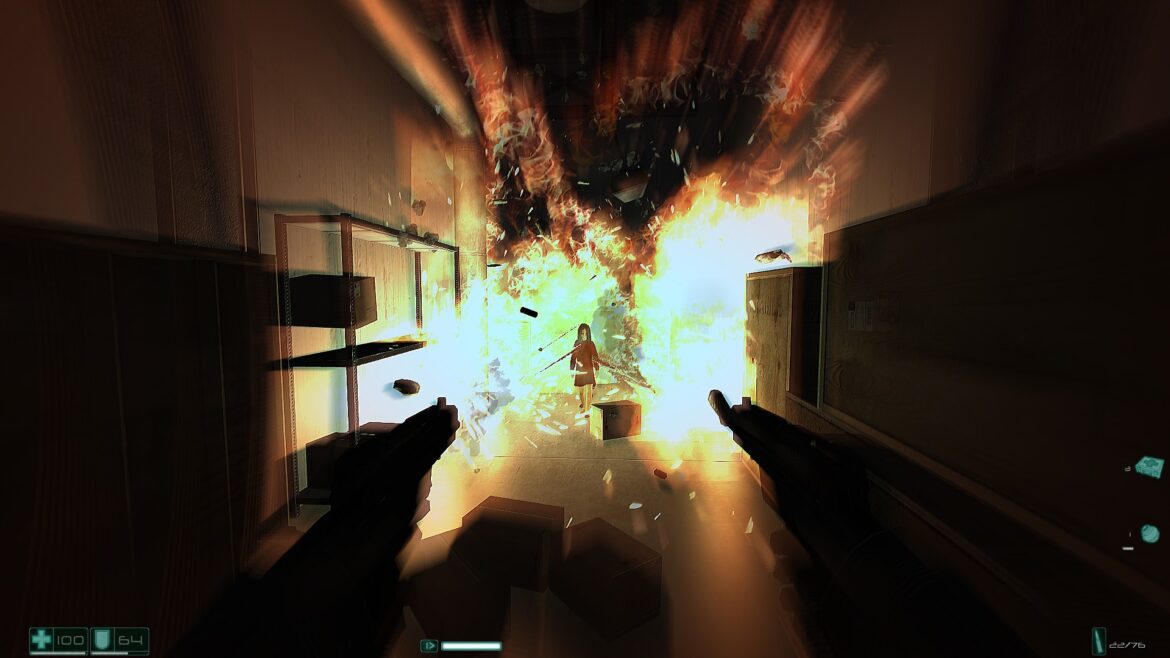
FEAR is one of those games we lament because the things that were great about it feel like they’ve been lost, for few now live who remember it. Sure, there’s Trepang2. But FEAR was so good there should be an entire subgenre based on it. There should be an entire cottage industry of indie studios making singleplayer shooters with slow-motion and advanced enemy AI and something supernatural thrown in to give you the willies just when you’re feeling overpowered.

Anyway, instead of being all sad about how history becomes legend and legend becomes myth, let’s celebrate the fact that FEAR remains incredibly playable today—if you download the Echo Patch. It’s not one of those games that’s completely busted without mods, but if you play it at any resolution above 1080p all the text will look like it was written for ants.

The Echo Patch fixes that, and adds controller support so you can play it on your Steam Deck. It also lets you disable the letterboxing in cutscenes and optionally make the flashlight last forever if you don’t want to have to chase down batteries for it.


Related articles

In terms of bugfixes, the Echo Patch deals with a lot of problems that emerge if you run FEAR at high framerates. There’s “ragdoll physics instability” and “excessive water splash repetitions” if you go above 60 fps, and should you run it at more than 120 fps you’d find yourself unable to do a jump-kick, which is just unconscionable. All that and more is fixed in the Echo Patch.

It even makes the world state persistent, so all those bullet holes remain to remind you of the shootouts in days past. Bodies, blood, shell casings, and other debris hang around as well instead of despawning like it’s 2005 and we need to constantly clear the decks before your PC overheats from having to depict too many polygonal dead men at the same time.

The Echo Patch can be downloaded from Github, and is an easy install. Unzip it into the folder FEAR.exe is in, and tweak the .ini files if you want to enable optional stuff like turning off letterboxing or disabling the GOG version’s 60 fps limit.

Keep up to date with the most important stories and the best deals, as picked by the PC Gamer team.


Source link

September 21, 2025 0 comments
0 FacebookTwitterPinterestEmail
Battlefield 6 beta's rush mode gets a balancing tweak with EA monitoring the situation, amid player complaints about battle bigness
Game Updates

Is 128 players too much for a multiplayer FPS? Yes, says Battlefield 6

by admin September 16, 2025


Battlefield 2042 supported 128 player matches at launch in 2021. Battlefield 6 will support 64 player matches, when it launches on 10th October this year. Some mistake here, surely? Battlefield 6 is a sequel to Battlefield 2042, and sequels are supposed to have More. If I have just given voice to your innermost thoughts, then I fear it is time to bamboozle and horrify you with the nightmare-physics of the arcane game design proverb, “sometimes, less is more”.


“But how can this be?” you shriek, as the ground crumbles and the walls peel away. Matter cannot increase and decrease simultaneously! A “+1” cannot be a “-1”! You reach for the whiskey bottle in a frenzy, but it is too late to unlearn this awful knowledge. Anyway, stop screaming so I can treat you to another morsel of insight from Battlefield 6 design director Shashank Uchil. I promise this one won’t hurt quite as much.


“We thought larger player numbers would work – it just didn’t catch on,” Uchil said to Edge Magazine in recent reflections about Battlefield 2042’s higher headcount, as passed along by the magazine’s jovial e-buddies at Gamesradar.


“It’s like when a band tries a new sound,” Uchil continued. “Because we like it, but then players don’t – and in the end, we are subservient to the players. We do what the players want.” I feel “subservient” is perhaps a bit much, Mr Uchil. Please do not encourage your players to think that they’re pharaohs. How many pyramids did the pharaohs build, all by themselves? Exactly.


As digested by GR, Uchil added that “Battlefield players are very vocal” and will “tell you what they want” as regards the new shooter. Definite deer-in-headlight vibes. The devs “all read the Reddit,” Uchil added, because it’s “the number-one source, and all of us are on there.” All of which continues the well-established EA marketing theme of trying to get 2042 haters on-board with Battlefield 6, which is designed to evoke the better moments of Battlefield 3.


I like thinking about how many players is too much in first-person shooters. The question of player count is obviously part of a larger set of questions about map design and size, mode design, weapon balancing, and so forth. Generally speaking, when I’m pinned down by a bombardment in a Battlefield game, it absolutely feels like there are 127 other players out there, because those artillery impacts are so very loud.


By contrast, I remember playing Resistance 2 on PlayStation 3, which boasted then-mindblowing 60 player headcounts, and finding that the flagship multiplayer mode’s objective structure had the effect of making it feel like a bunch of asynchronous deathmatches. We’d pass queues of enemy players hurrying in the other direction and just sort of wave acknowledgement, like passing bus drivers.


Back in 2021, Ed Thorn (RPS in peace) had similar thoughts about Battlefield 2042. He found that it rarely felt like a 128-player game at all. “I’m not sure I notice the bump in bodies,” Ed wrote in his review. “Sure, things are chaotic, but the maps are so vast to make up for it that the pockets of violence remain similar to previous, smaller entries in the series.”


The obvious tentpole game to invoke here is Planetside 2, proudest of the surviving MMO shooters. I had a go at unravelling PlanetSide 2’s accomplishment in January 2024. Amongst other things, I argued that the vast periphery of each emergent battle makes for a surprisingly good walking simulator. But enough of my wittering. How many players do you consider too many players, inasmuch as such things can be interpreted out of context?


Source link

September 16, 2025 0 comments
0 FacebookTwitterPinterestEmail
Borderlands 4
Product Reviews

Is Borderlands 4 the new Crysis? Official GPU setting recommendations peg 4K performance with the RTX 5090 at 60 FPS, with DLSS and frame generation enabled

by admin September 16, 2025


Video game publisher 2K Games has released an extensive list of recommended graphics settings for Borderlands 4 across Nvidia and AMD GPUs at 1080p, 1440p, and 4K. These presets are said to offer players a reliable baseline, something that many found missing right after the game’s launch last week.

The official requirements for Borderlands 4 highlight just how demanding the game is across GPU generations, and the results aren’t flattering by any means. If we look at Nvidia, the minimum requirements list the RTX 2070, which can barely scrape by at 1080p, managing just 30 FPS with DLSS upscaling, along with low settings for textures, shadows, and foliage. A smoother 60 FPS gaming experience at 1080p requires an RTX 3060 Ti. If you want to play the game smoothly at 1440p with 60 FPS, the RTX 3080 12GB is the minimum requirement, but not without DLSS and demanding texture features set to medium.

Swipe to scroll horizontallyRecommended graphics settings for Borderlands 4 at 1080pRow 0 – Cell 0

RTX 2070 (30 FPS)

RTX 2080 Ti (30 FPS)

RTX 3050 8GB (30 FPS)

RTX 3060 Ti (60 FPS)

RTX 3070 Ti (60 FPS)

RTX 3080 12GB (60 FPS)

RTX 3090 Ti (60 FPS)

RTX 4060 Ti (60 FPS)

RTX 4070 Ti Super (60 FPS)

RTX 4080 Super (60 FPS)

RTX 4090 (60 FPS)

RTX 5050 (60 FPS)

RTX 5060 (60 FPS)

RTX 5060 Ti (60 FPS)

RTX 5070 (60 FPS)

RTX 5070 Ti (60 FPS)

RTX 5080 (60 FPS)

RTX 5090 (60 FPS)

Display mode

Full-screen

Full-screen

Full-screen

Full-screen

Full-screen

Full-screen

Full-screen

Full-screen

Full-screen

Full-screen

Full-screen

Full-screen

Full-screen

Full-screen

Full-screen

Full-screen

Full-screen

Full-screen

V-Sync

Off

Off

Off

Off

Off

Off

Off

Off

Off

Off

Off

Off

Off

Off

Off

Off

Off

Off

Anti-aliasing

Disabled

Disabled

Disabled

Disabled

Disabled

Disabled

Disabled

Disabled

Disabled

Disabled

Disabled

Disabled

Disabled

Disabled

Disabled

Disabled

Disabled

Disabled

Upscaling method

DLSS

DLSS

DLSS

DLSS

DLSS

DLSS

DLSS

DLSS

DLSS

DLSS

DLSS

DLSS

DLSS

DLSS

DLSS

DLSS

DLSS

DLSS

Upscaling quality

Quality

Quality

Quality

Quality

Quality

Quality

Quality

Quality

Quality

Quality

Quality

Quality

Quality

Quality

Quality

Quality

Quality

Quality

DLSS FG

–

–

–

–

–

–

–

On

On

On

On

On

On

On

On

On

On

On

DLSS MFG

–

–

–

–

–

–

–

2X

2X

2X

2X

4X

4X

4X

4X

4X

4X

4X

Nvidia Reflex

On

On

On

On

On

On

On

On

On

On

On

On

On

On

On

On

On

On

HLOD loading range

Near

Medium

Near

Far

Far

Far

Far

Far

Far

Far

Far

Medium

Far

Far

Far

Far

Far

Far

Geometry quality

Low

Medium

Low

High

High

High

High

High

High

High

High

Medium

High

High

High

High

High

High

Texture quality

Low

Medium

Low

High

High

Very high

Very high

High

Very high

Very high

Very high

Medium

High

High

Very high

Very high

Very high

Very high

Textures streaming speed

Medium

High

Medium

Very high

Very high

Very high

Very high

Very high

Very high

Very high

Very high

High

Very high

Very high

Very high

Very high

Very high

Very high

Anisotropic filtering quality

Off

x4

Off

x4

x4

x4

x16

x4

x4

x16

x16

x4

x4

x4

x4

x16

x16

x16

Foliage density

Off

Very low

Off

Low

Medium

Very high

Very high

Low

Very high

Very high

Very high

Very low

Low

Medium

Very high

Very high

Very high

Very high

Volumetric fog

Low

Low

Low

Low

Medium

Very high

Very high

Low

Very high

Very high

Very high

Low

Low

Medium

Very high

Very high

Very high

Very high

Volumetric cloud

Low

Low

Low

Low

Medium

Very high

Very high

Low

Very high

Very high

Very high

Low

Low

Medium

Very high

Very high

Very high

Very high

Shadow quality

Low

Low

Low

Low

Medium

Very high

Very high

Low

Very high

Very high

Very high

Low

Low

Medium

Very high

Very high

Very high

Very high

Directional shadow quality

Low

Low

Low

Low

Medium

High

Very high

Low

Very high

Very high

Very high

Low

Low

Medium

High

Very high

Very high

Very high

Volumetric cloud shadows

Disabled

Disabled

Disabled

Disabled

Enabled

Enabled

Enabled

Disabled

Enabled

Enabled

Enabled

Disabled

Disabled

Enabled

Enabled

Enabled

Enabled

Enabled

Lighting quality

Low

Low

Low

Medium

Medium

Medium

High

Medium

High

Very high

Very high

Low

Medium

Medium

Medium

High

Very high

Very high

Reflections quality

Low

Low

Low

Low

Low

High

Very high

Low

Very high

Very high

Very high

Low

Low

Low

High

Very high

Very high

Very high

Shading quality

Low

Medium

Low

Medium

Medium

High

High

Medium

High

High

High

Medium

Medium

Medium

High

High

High

High

Post-process quality

Low

Low

Low

Medium

High

Very high

Very high

Medium

Very high

Very high

Very high

Low

Medium

High

Very high

Very high

Very high

Very high

More settings have been listed by 2K Games for Nvidia GPUs and AMD GPUs.


You may like

On paper, the RTX 5090 stands out as the most powerful gaming graphics card available, and Borderlands 4 puts that muscle to good use. According to 2K’s recommendations, it’s the only GPU positioned to run Borderlands 4 at 4K (with DLSS and frame generation enabled) while pushing nearly every visual setting to the max. Notably, these recommendations only target a minimum of 60 FPS, which feels less than impressive for a flagship-grade GPU that costs upwards of $3,000.

On the other hand, the Radeon RX 5700 XT from AMD serves as an entry point for 1080p, although this can only be achieved using FSR and reduced settings for shadows and lighting to maintain frame rates at 60 FPS and above. As for mid-range GPUs like the RX 6700 XT and RX 7700 XT, they should be good enough at 1440p while maintaining much of the game’s visual quality. At the higher end, the RX 6950 XT and RX 7900 XTX push into 4K territory, but still rely on FSR in Balanced or Performance mode to deliver consistent performance.

AMD’s latest Radeon 9000 series is also part of the recommended list, with the latest RDNA 4 GPUs offering the best experience for Borderlands 4. The lineup benefits from FSR 4 and improved frame generation support, thus making the Radeon RX 9060 and 9060 XT suitable for 1440p, while the RX 9070 and 9070 XT are recommended to run the game at 4K / 60.

The release of these preset settings comes in the wake of Borderlands 4 drawing criticism for severe performance issues. Players have reportedly been running into all sorts of issues, ranging from low frame rates, stuttering, and crashes, even on top-tier graphics cards like the RTX 5090. While a 2.7GB day-one patch improved stability and fixed some crashes and errors, reports of inconsistent performance continue to surface. Gearbox CEO Randy Pitchford acknowledged the situation, noting that players with systems below spec or without SSDs would likely struggle.

Get Tom’s Hardware’s best news and in-depth reviews, straight to your inbox.

The recommended settings also highlight just how demanding the game truly is. Even with Nvidia’s latest RTX 50-series and AMD’s Radeon 9000-series GPUs, players are expected to lean on upscaling and frame generation to achieve smooth performance at higher resolutions. That in itself speaks volumes about the game’s hardware demands, underlying optimization issues, or likely both.

Follow Tom’s Hardware on Google News, or add us as a preferred source, to get our up-to-date news, analysis, and reviews in your feeds. Make sure to click the Follow button!


Source link

September 16, 2025 0 comments
0 FacebookTwitterPinterestEmail
Midair neon jetpack combat between a robot and an android lady
Product Reviews

If you saw Ruiner and thought it would be cool in first-person, its developer is back with, you guessed it, an FPS

by admin September 10, 2025


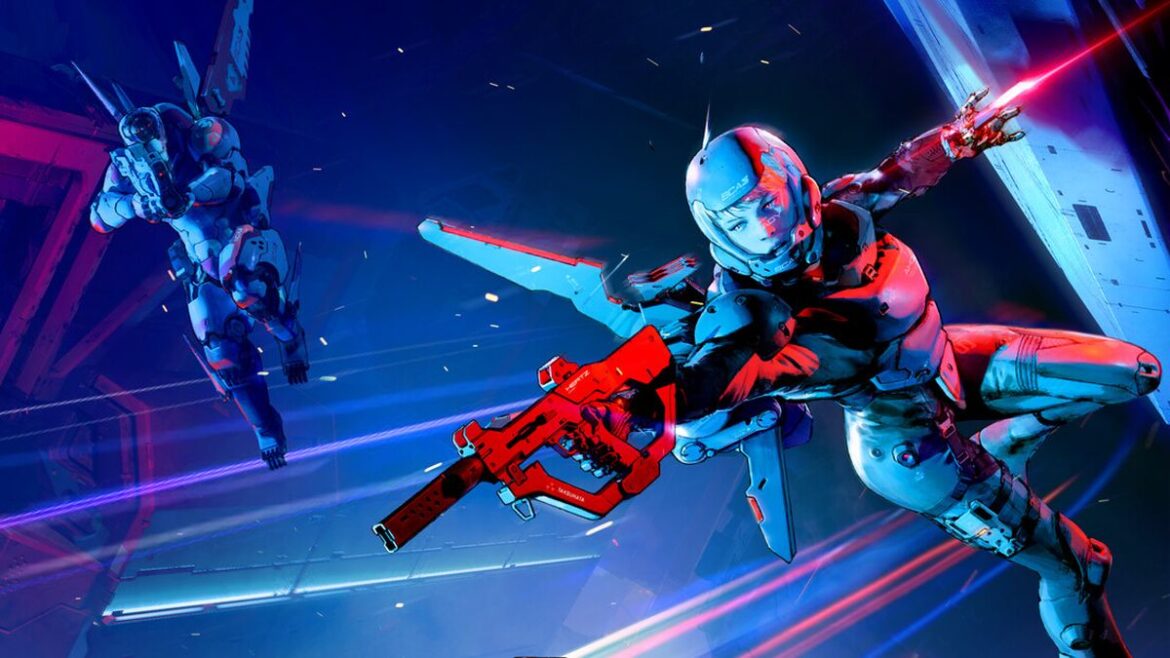
There’s one round little chubster robot with an exposed core, so I yank it out of his chest and he drops immediately. I could throw it like a grenade, but instead I absorb it to earn a brief superpunch power-up that I use to launch myself at one of the heavier-armored robots, bashing the metal plates right off him. While I’m up close and he’s staggered I switch to shotgun to finish him off, then jetpack away. There’s a bunch more robot enemies in this arena, and I saw some ammo up on the wallrun I could reach while I wait for the core-yanking ability to come back online.

This is a fairly typical five seconds of Metal Eden, a superspeed neon FPS where you’re a parkour android with a big bag of tools for movement and for destruction. There’s a grappling hook and double-jump, a freezy grenade, and a morph ball mode right out of Super Metroid that lets you roll around flinging homing missiles and lightning.

(Image credit: Deep Silver)

Staggering enemies with a punch before finishing them off guarantees they’ll drop health, while throwing a core at them ensures they’ll drop ammo. If you were detecting a hint of the Bethesda Dooms about Metal Eden you’re spot on. There’s also a fair chunk of Ruiner, developer Reikon’s previous adrenaline-pumper. But where that had a birdseye view and cyberpunk flair, Metal Eden is a sci-fi movement shooter about rescuing digitized colonists who’ve been imprisoned for extremely nebulous reasons by a coalition of drones and robots who are even less human than the Bubblegum Crisis cosplayer who is Metal Eden’s android protagonist.


Related articles

What it really reminds me of is Necromunda: Hired Gun, an under-rated movement-shooter that drowned you in abilities like wallrunning and grapple-hooking and slow-mo, which made for frenetic action when you remembered to use them all but could also be a bit overwhelming if you didn’t play for a few days and then tried to remember what the controls were.

The story is likewise overwhelming, with a bitter computer named Nexus as the main narrator and a lot of stylish but wilfully confusing flashbacks. It’s a little like Ruiner that way, only where Ruiner made sense in the end, when I hit the credits six or seven hours into Metal Eden I was even more confused than when I started.

(Image credit: Deep Silver)

Which wouldn’t be as much of a problem if there weren’t so much story, constantly being monologued at you mid-level when you’d rather be shooting dudes. Metal Eden paces out its mostly linear levels with zipline rides past futuristic tower blocks while Nexus drones on, and occasionally some actual drones appear to shoot at you in case you’re getting bored. While I was playing Metal Eden the first time I couldn’t help but think how dull those segments would be on the replay, and the same with the lingering introductions of each new gun and blank-faced robotic enemy.

And while they are annoying on my second time through these levels, I’m surprised to find an even bigger annoyance. There’s no New Game+ mode for finally cutting loose with all the unlockable abilities, weapons, and upgrades. Instead, when you select a level from the post-game menu you load in with whatever minimal loadout you had the first time, back to square one. In a genre I’d expect to be all about the replay—the speedrun, the showboat second playthrough where you get to demonstrate all the skills you developed the first time—Metal Eden instead feels like a game that wants you to put it down and move on the second you roll credits. Which makes the $40 price a bit harder to swallow.

Keep up to date with the most important stories and the best deals, as picked by the PC Gamer team.

If they patch in a New Game+ mode though, Metal Eden will be an easier recommendation for adrenaline junkies who get off on wallrunning around arenas shooting plasma at giant spiderbots.


Source link

September 10, 2025 0 comments
0 FacebookTwitterPinterestEmail
Wily FPS modders remake the original Quake from memory alone - imagine if triple-A remasters worked this way
Game Updates

Wily FPS modders remake the original Quake from memory alone – imagine if triple-A remasters worked this way

by admin August 26, 2025


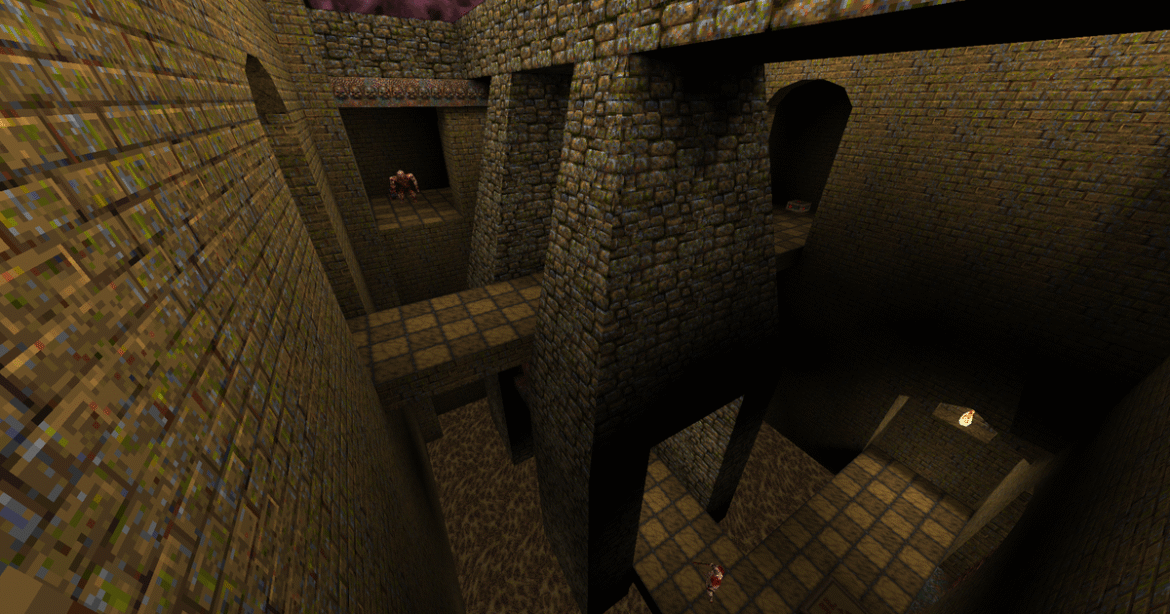
A Quake modding group have just polished off a game jam in which they challenged themselves to recreate every singleplayer map in id Software’s 1996 FPS from memory alone. That is, they were forbidden from replaying the original game before they started. As Slipseer user iLike80sRock puts it, “if somehow id1 was wiped off of all computers in the world, do we collectively remember the maps well enough to recreate them?”

The Quake from Memory pack has been in the works since last year. Find the finished package here, with installation instructions. I don’t know the original Quake well enough to comment on the accuracy of the results – I was naught but a sobbing child when Quake came out, and also, a hopeless Sonic the Hedgehog enthusiast. Still, I’m very interested in the concept of this jam, because when we recreate things from memory, it tends to reveal some kind of bias.

The comments on that Slipseer thread run a fun gamut. Levels are “either uncannily spot on or butchered”. Some rooms are too tall, perhaps because people remember being physically smaller when they played the game, and that difference in scale has somehow bled across the gap between simulation and the flesh. Some nail traps seem to fire too fast. Some maps “are very different in ways I can’t explain in words”.

There’s a sense of fascination, throughout: it’s not just people complaining that the Shamblers are the wrong way round. The premise of recreating the game from memory cultivates an intrigue and a generosity not typically found in responses to certain high-fidelity videogame remasters or remakes.

In the absence of lasting, external tangible records, such as writing, remembering becomes more of a communal practice. I’m interested to know if the Quake from Memory modders were allowed to show each other their work and compare reflections, or if each mapmaker had to go it alone. “Collectively” implies the former.

Inevitably, I’ve been trying to work out if I could recreate any of my favourite games from memory. Back in the day, I could have drawn most of Sonic 2’s layouts by hand, but I have played a million games since, and that squiggly hedgehog lore is lost to me. I have sharper memories of G-Police, the cyberpunk flight sim from WipEout creators Psygnosis.

In particular, I have quite vivid memories of one mission in which you have to stave off base assaults while tracking down and obliterating an approaching land train. The time management rigours of that mission have drummed those dome cities into my head. Still, don’t come crying to me if somebody manages to delete all surviving copies of G-Police. Missions 11-16 are just hypermissile whooshing noises on repeat.

Which game could you recreate from memory alone? Thanks to RPS reader Salty for posting about this in the latest RPS wappity.


Source link

August 26, 2025 0 comments
0 FacebookTwitterPinterestEmail
A screenshot from Gallipoli showing two soldiers in battle
Product Reviews

Not content with making three WW1 first-person shooters already, the creators of Verdun and Isonzo are now making a Gallipoli FPS

by admin August 19, 2025


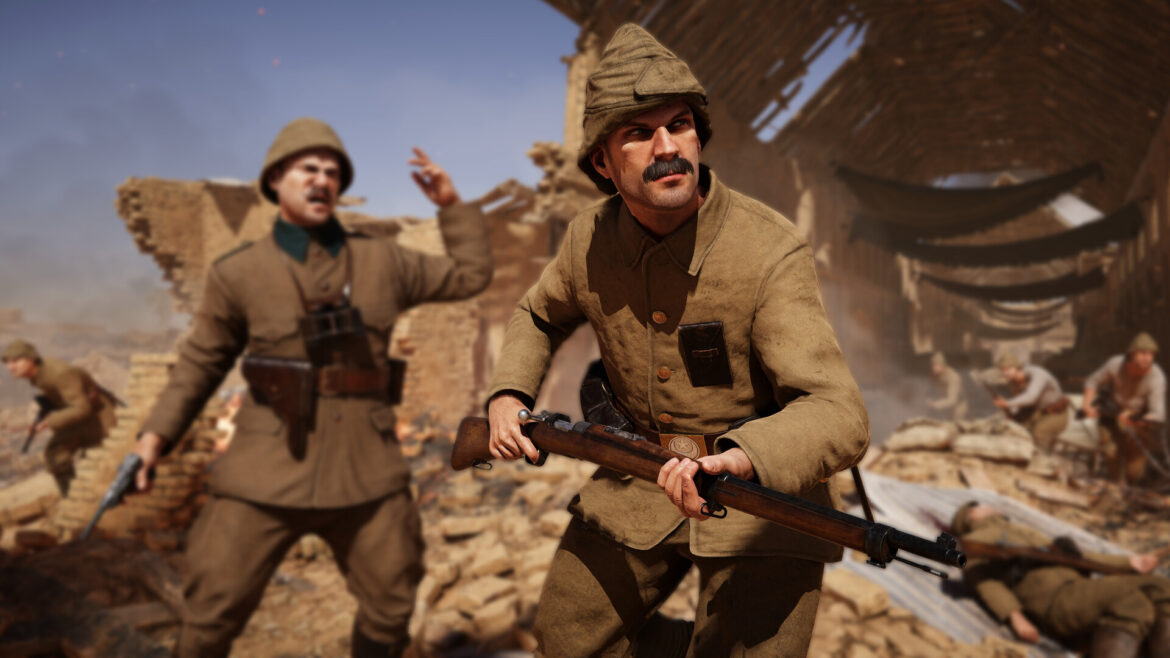
BlackMill Games has been making World War 1 shooters for over a decade now, first with Verdun, and then with Tannenberg and Isonzo. Now it’s making Gallipoli, which will shift focus to the Middle Eastern theatre, to dramatize the battles between the Triple Entente and the Ottoman Empire.

While it’s not as well-known as other WW1 campaigns, the landing at the Gallipoli Peninsula, and the ensuing long stalemate, was an especially bloody encounter. Over ten thousand members of the Australian and New Zealand Army Corps were killed during the campaign, which is commemorated annually on ANZAC Day in Australia and New Zealand.

For what it’s worth, the only other modern videogame depiction of the campaign is in the Battlefield 1 mission The Runner (which itself seems to borrow heavily from Peter Weir’s 1981 film Gallipoli).


Related articles

The move east promises to make BlackMill’s fourth WW1 game a little more varied: according to its Steam page it’ll traverse “coastal dunes, dry deserts, urban areas and more”. In addition to the Gallipoli campaign it’ll also move further east to take in the Mesopotamian campaign, which reached as far as modern day Iraq. Players will side with either the Ottoman Empire or the Entente (BlackMill specifies “the British”).

As before, Gallipoli is a squad-based shooter heavily focused on choosing a class and sticking with it: If you’re the stretcher bearer, you better not be caught sprinting across no man’s land to increase your KD ratio. Public matches will be populated with AI bots to accurately convey the sense of scale, though these can be toggled off in custom matches.

It’s due to hit Steam some time in 2026, and the reveal trailer is below.

WW1: Gallipoli – Official Reveal Trailer – YouTube

Watch On

Keep up to date with the most important stories and the best deals, as picked by the PC Gamer team.


Source link

August 19, 2025 0 comments
0 FacebookTwitterPinterestEmail

Categories

  • Crypto Trends (1,098)
  • Esports (800)
  • Game Reviews (772)
  • Game Updates (906)
  • GameFi Guides (1,058)
  • Gaming Gear (960)
  • NFT Gaming (1,079)
  • Product Reviews (960)

Recent Posts

  • This 5-Star Dell Laptop Bundle (64GB RAM, 2TB SSD) Sees 72% Cut, From Above MacBook Pricing to Practically a Steal
  • Blue Protocol: Star Resonance is finally out in the west and off to a strong start on Steam, but was the MMORPG worth the wait?
  • How to Unblock OpenAI’s Sora 2 If You’re Outside the US and Canada
  • Final Fantasy 7 Remake and Rebirth finally available as physical double pack on PS5
  • The 10 Most Valuable Cards

Recent Posts

  • This 5-Star Dell Laptop Bundle (64GB RAM, 2TB SSD) Sees 72% Cut, From Above MacBook Pricing to Practically a Steal

    October 10, 2025
  • Blue Protocol: Star Resonance is finally out in the west and off to a strong start on Steam, but was the MMORPG worth the wait?

    October 10, 2025
  • How to Unblock OpenAI’s Sora 2 If You’re Outside the US and Canada

    October 10, 2025
  • Final Fantasy 7 Remake and Rebirth finally available as physical double pack on PS5

    October 10, 2025
  • The 10 Most Valuable Cards

    October 10, 2025

Newsletter

About me

Welcome to Laughinghyena.io, your ultimate destination for the latest in blockchain gaming and gaming products. We’re passionate about the future of gaming, where decentralized technology empowers players to own, trade, and thrive in virtual worlds.

Recent Posts

  • This 5-Star Dell Laptop Bundle (64GB RAM, 2TB SSD) Sees 72% Cut, From Above MacBook Pricing to Practically a Steal

    October 10, 2025
  • Blue Protocol: Star Resonance is finally out in the west and off to a strong start on Steam, but was the MMORPG worth the wait?

    October 10, 2025

Newsletter

@2025 laughinghyena- All Right Reserved. Designed and Developed by Pro


Back To Top
Laughing Hyena
  • Home
  • Hyena Games
  • Esports
  • NFT Gaming
  • Crypto Trends
  • Game Reviews
  • Game Updates
  • GameFi Guides
  • Shop

Shopping Cart

Close

No products in the cart.

Close