Laughing Hyena
  • Home
  • Hyena Games
  • Esports
  • NFT Gaming
  • Crypto Trends
  • Game Reviews
  • Game Updates
  • GameFi Guides
  • Shop
Tag:

fear

Decrypt logo
Crypto Trends

Crypto Market Battles Sea of Red and Growing Fear, But HYPE Floats

by admin September 27, 2025


In brief

  • Hyperliquid surges 9.26% to $44.11 as the only top 10 crypto in green while the rest of the market tanks 1.8%.
  • BNB drops 0.14% to $947.55, as the worst performer in top 10 after the Aster-driven spike fades.
  • The Crypto Fear and Greed Index marks the most bearish reading since April. Here’s what the charts say traders can expect.

The crypto market is nursing a nasty hangover after a major panic episode earlier this week, with the total market cap of crypto sliding 1.8% to $3.75 trillion as the infamous Red September curse threatens to claim another victim.

Yet in this sea of red, there’s at least one token staying afloat: Hyperliquid’s HYPE is up a defiant 9.26% and standing as the only cryptocurrency in the top 11 showing green on the day.

Meanwhile, traditional markets are playing a different tune entirely—the S&P 500 edged up 0.22% to 6,619 points while gold climbed 0.33% to $3,762 per ounce, showing investors still have appetite for some risk assets, just not crypto risk—at least not right now. What’s more, President Donald Trump announced a package of tariffs set to take effect October 1, which has the potential to send risk assets scrambling for cover.

The Crypto Fear and Greed Index has plunged to 28, firmly in “fear” territory and the most pessimistic reading since April, when Trump’s previous tariff announcements sent markets into a tailspin.


Even still, there’s a fascinating subplot unfolding in the perpetual futures DEX wars that’s turning conventional wisdom on its head.

Hyperliquid price: The HYPE is back?

While its rival Aster has been stealing headlines with a jaw-dropping surge since its launch last week, Hyperliquid is quietly mounting its own comeback.

Hyperliquid is both its layer-1 blockchain network and a decentralized exchange that specializes in perpetual futures—derivatives contracts that never expire and allow crypto traders to both hedge risk and essentially bet on the future price of digital assets, such as Bitcoin.

The exchange is powered by a token of the same name, which trades as HYPE, and both the exchange and the token have experienced a rush of interest over the last several months. For context, despite the recent ups and downs, HYPE is up more than 20% in the last three months and up close to 600% in the last year, currently commanding an impressive $12.2 billion market cap.

The Hyperliquid token surged today from a low of $40.376 to its current price of $44.114, representing a 9.26% gain in a market where everything else is bleeding.

Hyperliquid (HYPE) price. Image: Tradingview

Looking at the technical breakdown, HYPE is displaying the sort of behavior that traders would interpret as potentially the end of a major correction. The price of the coin, after all, is down close to 10% in the last 30 days.

The Relative Strength Index, or RSI, is one such technical indicator that traders rely on. RSI measures price momentum on a scale from 0 to 100, where readings above 70 signal overbought conditions and below 30 suggesting oversold.

Hyperliquid sits at 41—technically bearish territory, but here’s what traders need to understand: After a token corrects from $56 to $40, an RSI at 41 actually signals healthy consolidation rather than weakness. This is like a reload zone where smart money accumulates before the next leg up. Traders typically see RSI readings between 30-45 after major corrections—notice the chart is still on an upwards trajectory—as buying opportunities rather than sell signals.

The Average Directional Index, or ADX, for HYPE is at 29, which shows strengthening trend momentum. ADX measures how strong a price trend is regardless of direction—readings above 25 confirm an established trend, and at 29, we’re seeing HYPE break out of its consolidation phase. The major dip cooled the ADX a lot, but still wasn’t enough to wipe out the upward trend in place.

Exponential moving averages, or EMAs, give traders a sense of price resistances and supports by taking the average price of an asset over the short, medium, and long term. Hyperliquid is still a young coin, without the trading history of an asset like Bitcoin, but the EMA picture appears bullish.

At the moment, HYPE’s 50-day EMA is sitting above its 200-day EMA, meaning the average price over the short term is still higher than the average price over the long term. This configuration typically signals that short-term momentum is overpowering long-term pessimism, suggesting the path of least resistance is higher.

But as a warning sign, the gap between both EMAs is closing, which could potentially lead to a death cross formation (when the EMA50 moves below the EMA200). In this scenario, some traders may opt to set up buy orders near the EMA200 for those thinking the token may continue its bearish correction before bouncing.

On Myriad, a prediction market developed by Decrypt’s parent company Dastan, sentiment on HYPE hasn’t yet reached the bullishness exhibited in the charts. At the moment, Myriad traders don’t expect the price of HYPE to rise to $69 any time soon, placing those odds at just 30% when measured against the odds of it dropping below the $40 mark.

Key Levels:

  • Immediate support: $36.00 (EMA200)
  • Strong support: $28.00 (visible on the chart as previous resistance)
  • Immediate resistance: $48.00 (EMA50)
  • Strong resistance: $$56.00 (previous high zone)

BNB price: Paying the price for Aster’s success

The story of BNB today is a classic “sell the news” scenario, as the Binance-issued token drops 4.23% to $947.55 in the last 24 hours, making it the worst performer among the top 10 cryptocurrencies by market cap.

As discussed earlier this week on Decrypt, BNB had been on fire lately, and was on Tuesday the only coin in the top 10 by market cap in the green. Much of the price movement could be attributed to an increase in activity on the BNB network as a result of the explosive growth of Aster, a Hyperliquid competitor on the BNB Chain.

But, as we’ve seen so many times in markets: what goes up, must eventually come down. And at the moment, the, er, hype around Aster has slowed. And BNB now appears to be taking a hit as a result.

BNB price. Image: Tradingview

BNB’s RSI is at 51, which sits right at neutral and typically indicates a market in equilibrium waiting for the next catalyst. For traders, this dead-center reading often precedes sharp moves in either direction as the market breaks out of indecision.

The ADX at 36 confirms a strong established trend, but the Squeeze Momentum Indicator shows a bearish impulse in underway.

When ADX is high but momentum is bearish, it typically means sellers are in control and dip buyers should be cautious. This combination often results in continued pressure until ADX drops below 25, signaling trend exhaustion.

Looking at the price action on the chart, BNB opened the day around $946, reached a high near $959, but has since retreated to $947.55. Today’s doji (a candlestick with no body, basically showing that the opening and closing prices are almost the same)shows significant volatility and selling pressure at round number resistance. The 50-day EMA sits well above the 200-day EMA, maintaining a bullish longer-term structure, but the immediate price action below both the opening price and the psychological $960 level suggests near-term weakness.

The catalyst for BNB’s initial surge was clear: BNB Chain’s 24-hour perpetual volume stands at $36 billion, overtaking Hyperliquid’s $10.8 billion, driven primarily by the meteoric rise of Aster. However, today’s correction suggests traders are taking profits on the Aster-driven rally.

Image: Dune

Key Levels:

  • Immediate support: $920 (visible support on chart)
  • Strong support: $880-$900 (EMA50l)
  • Immediate resistance: $1,000-$1,080 (psychological round number and all-time high)

Disclaimer

The views and opinions expressed by the author are for informational purposes only and do not constitute financial, investment, or other advice.

Daily Debrief Newsletter

Start every day with the top news stories right now, plus original features, a podcast, videos and more.

Source link

September 27, 2025 0 comments
0 FacebookTwitterPinterestEmail
Above $110K; ETH, SOL, DOGE Rebound as Crypto Fear & Greed Sinks
NFT Gaming

Above $110K; ETH, SOL, DOGE Rebound as Crypto Fear & Greed Sinks

by admin September 27, 2025


Crypto markets modestly bounced on Friday with BTC$111,480.33 back above $110,000. Ethereum’s ETH$4,005.03 outperformed with a 3.8% gain to cross $4,000, while DOGE$0.2316 rose 3.4% and SOL$201.48 added 2.5%.

The cautious bid came as fresh inflation data landed squarely in line with forecasts. The Fed’s preferred measure of prices, the Personal Consumption Expenditures (PCE) index, rose 2.7% year-over-year in August, while core PCE excluding food and energy climbed 2.9%.

The data report reinforced the Fed’s narrative of gradually easing price pressures, said Fabian Dori, CIO at Sygnum Bank, but it also leaves policymakers balancing sticky inflation with a softer labor market backdrop.

“For investors, the implications are twofold: if inflation trends lower, risk assets may find support from confidence in the Fed’s easing cycle,” he said. “But any upside surprises in coming data could push back short-term rate cut expectations, weighing on equities and boosting the U.S. dollar.”

Crypto sentiment turns fearful

Meanwhile, sentiment in crypto remained fragile. The Fear & Greed Index, a well-followed sentiment indicator, plummeted to 28 on Friday, its most depressed level since mid-April signaling “fear” among traders. That reflected recent volatility after Thursday’s $1.1 billion liquidation wave wiped out leveraged long positions.

The Crypto Fear & Greed Index sunk to its lowest since April’s correction. (Alternative.me)

“In recent days, roughly $3 billion of levered longs have been liquidated,” noted Matt Mena, strategist at digital asset manager 21Shares. With excess leverage largely flushed out, he said positioning has swung to an extreme bearish, Mena noted: popular tokens such as BTC, SOL, and DOGE now show a long-to-short ratio of just one-to-nine.

That, combined with the Fear & Greed Index at near extremes lows, “sets the stage for a potential short squeeze,” Mena argued.

Paul Howard, senior director at trading firm Wincent, didn’t share to positive outlook and warned that the market could drift lower before stabilizing. He pointed to BTC dipping below its 100-day moving average under $110,000 and the total crypto market cap sliding under $4 trillion as signs of weakness.

“The market is in a healthy correction without panic or significant uptick in volatility,” he said. “It is likely that we grind lower the coming weeks,” adding he is beginning to question whether crypto revisits record highs in 2025.

Read more: Trump Tariffs, GDP Rattle Markets, ETFs Bleed: Crypto Daybook Americas


Source link

September 27, 2025 0 comments
0 FacebookTwitterPinterestEmail
Crypto Fear & Greed Index Now Echoes $83,000 Bitcoin Price
Crypto Trends

Crypto Fear & Greed Index Now Echoes $83,000 Bitcoin Price

by admin September 26, 2025


Key points:

  • The Crypto Fear & Greed Index is back at levels not seen since Bitcoin traded at $83,000.

  • Analysis wonders whether the BTC price “turning point” is already here.

  • Social media user behavior already suggests that a price rebound should take place next.

Bitcoin (BTC) sentiment collapsed overnight Thursday as the latest BTC price dip forced fresh liquidations.

Fresh data from the Crypto Fear & Greed Index shows that “fear” now drives the mood.

Bitcoin sentiment echoes April lows

Bitcoin, nearing new monthly lows under $109,000, had a near-instant impact on market sentiment.

The Fear & Greed Index, which lags market movements, hit just 28/100 on Friday, marking its lowest levels since April 11. The index fell 16 points in a single day.

Crypto Fear & Greed Index (screenshot). Source: Alternative.me

“MORE fear and a HIGHER price,” crypto YouTube channel host Michael Pizzino summarized in part of an X post on the topic.

Pizzino referred to the emerging divergence between price and sentiment.

The last time that the Fear & Greed Index was below 30/100, BTC/USD traded at around $83,000, days after its recovery from $75,000 lows, data from Cointelegraph Markets Pro and TradingView confirms.

BTC/USD one-day chart. Source: Cointelegraph/TradingView

As a result, accompanying analysis argues that the time is right for a market reversal.

“Could this be the turning point Bitcoin and Crypto has been waiting for? The analysis looks good, but it has not been confirmed,” Pizzino added.

BTC/USDT perpetual contract one-day chart with sentiment data. Source: Michael Pizzino/X

Fear & Greed has been no stranger to erratic moves in 2025. As Cointelegraph reported, in February, the Index collapsed to just 10/100 thanks to macroeconomic uncertainty focused on US trade tariffs.

“Impatience and bearishness” rule BTC price takes

Some signals of an impending BTC price rebound emerged even before the latest dip.

Related: Four reasons Bitcoin is failing to copy all-time highs for gold and stocks

On Tuesday, research platform Santiment showed that social media users were already convinced that lower prices would soon come.

“As usual, social media is vocal on where Bitcoin will head next. Historically, lower price predictions increase the likelihood, and higher predictions imply lower future prices,” it explained to X followers.

Santiment described a “high amount of impatience and bearishness emerging from the retail crowd.”

At the same time, data revealed that large-volume traders were adding exposure in recent days.

Bitcoin price social media activity data. Source: Santiment/X

This article does not contain investment advice or recommendations. Every investment and trading move involves risk, and readers should conduct their own research when making a decision.


Source link

September 26, 2025 0 comments
0 FacebookTwitterPinterestEmail
Exchange Review August
Crypto Trends

BNB Slips Below $1K as Crypto Market Drops, Fear Index Nears ‘Fear’

by admin September 26, 2025


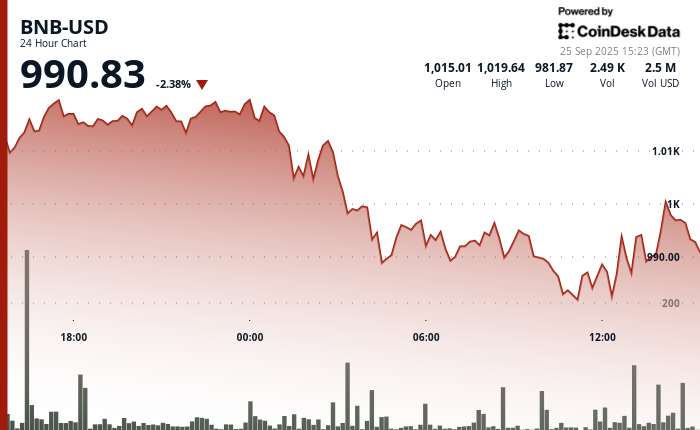
BNB, the token that powers the BNB Chain and can be used for fee discounts on leading crypto exchange Binance, dropped more than 2% in the last 24 hours amid a wider cryptocurrency market decline.

Sentiment in the industry remains poor, with the Crypto Fear and Greed Index now at 41, a neutral level close to hitting fear, while the average crypto relative strength index (RSI), a technical indicator, points to oversold levels according to CoinMarketCap.

The token slid from $1,025 to just under $1,000 as sellers took control and resistance built near $1,035, according to CoinDesk Research’s technical analysis data model. The broader CoinDesk 20 (CD20) index dropped 3.7%.

BNB Chain validators have put forward a proposal to reduce gas fees from 0.1 to 0.05 gwei. The change would drop average transaction costs to around $0.005 and accelerate block speeds from 750 milliseconds to 450 milliseconds.

The proposal comes at a time in which on-chain trading activity is booming on the BNB Chain after the launch of decentralized trading platform Aster, which recently overtook Hyperliquid in daily perpetual trading volumes.

Technical Analysis Overview

BNB traded within a $49 range over the past 24-hour period, falling to $993. Strong resistance formed just above $1,030, while support held firm around $987.

The price briefly recovered, ticking up from just below $990 to near $994. The gain came as buying demand appeared and pushed the token to form higher lows.

Trading volume suggested a shift from aggressive selling to slower accumulation, with support consolidating near $989 and resistance emerging just under $996.

Disclaimer: Parts of this article were generated with the assistance from AI tools and reviewed by our editorial team to ensure accuracy and adherence to our standards. For more information, see CoinDesk’s full AI Policy.


Source link

September 26, 2025 0 comments
0 FacebookTwitterPinterestEmail
There's a fan patch for FEAR if you want to play the classic FPS with a scalable UI, controller support, and other modern conveniences
Product Reviews

There’s a fan patch for FEAR if you want to play the classic FPS with a scalable UI, controller support, and other modern conveniences

by admin September 21, 2025


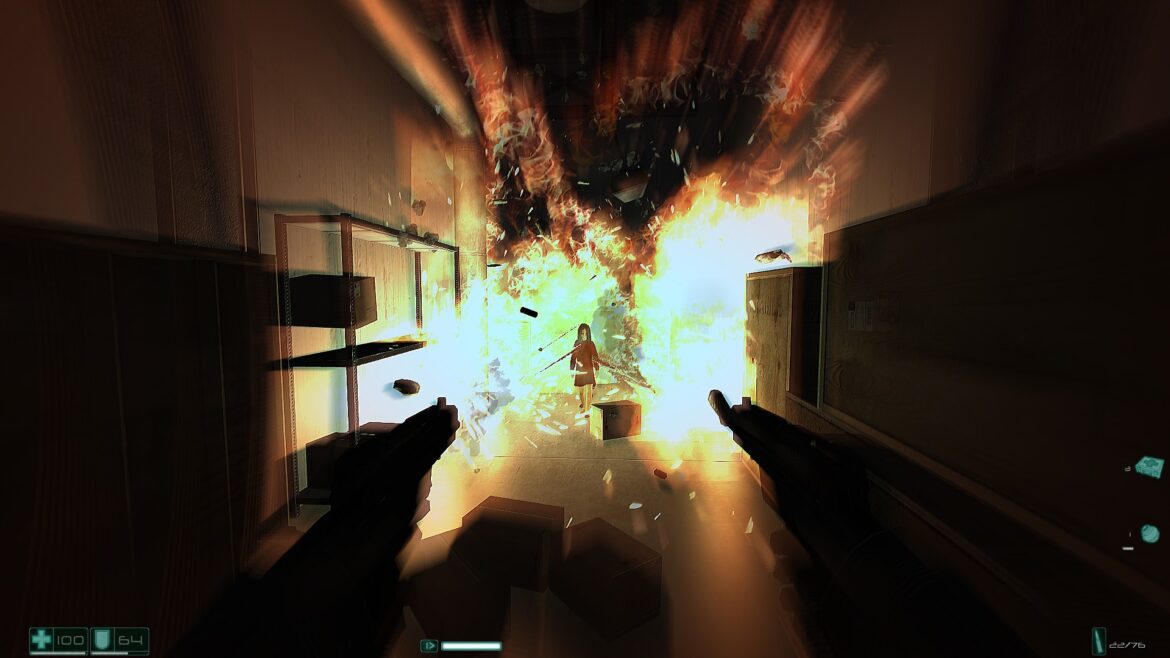
FEAR is one of those games we lament because the things that were great about it feel like they’ve been lost, for few now live who remember it. Sure, there’s Trepang2. But FEAR was so good there should be an entire subgenre based on it. There should be an entire cottage industry of indie studios making singleplayer shooters with slow-motion and advanced enemy AI and something supernatural thrown in to give you the willies just when you’re feeling overpowered.

Anyway, instead of being all sad about how history becomes legend and legend becomes myth, let’s celebrate the fact that FEAR remains incredibly playable today—if you download the Echo Patch. It’s not one of those games that’s completely busted without mods, but if you play it at any resolution above 1080p all the text will look like it was written for ants.

The Echo Patch fixes that, and adds controller support so you can play it on your Steam Deck. It also lets you disable the letterboxing in cutscenes and optionally make the flashlight last forever if you don’t want to have to chase down batteries for it.


Related articles

In terms of bugfixes, the Echo Patch deals with a lot of problems that emerge if you run FEAR at high framerates. There’s “ragdoll physics instability” and “excessive water splash repetitions” if you go above 60 fps, and should you run it at more than 120 fps you’d find yourself unable to do a jump-kick, which is just unconscionable. All that and more is fixed in the Echo Patch.

It even makes the world state persistent, so all those bullet holes remain to remind you of the shootouts in days past. Bodies, blood, shell casings, and other debris hang around as well instead of despawning like it’s 2005 and we need to constantly clear the decks before your PC overheats from having to depict too many polygonal dead men at the same time.

The Echo Patch can be downloaded from Github, and is an easy install. Unzip it into the folder FEAR.exe is in, and tweak the .ini files if you want to enable optional stuff like turning off letterboxing or disabling the GOG version’s 60 fps limit.

Keep up to date with the most important stories and the best deals, as picked by the PC Gamer team.


Source link

September 21, 2025 0 comments
0 FacebookTwitterPinterestEmail
Americans Want AI's Benefits But Fear Losing What Makes Them Human: Survey
NFT Gaming

Americans Want AI’s Benefits But Fear Losing What Makes Them Human: Survey

by admin September 20, 2025


In brief

  • A new Pew survey showed Americans wanted AI’s help with chores, but feared it wrecked their minds and relationships.
  • Most Americans said AI stripped away creativity and human connection, with only 10% feeling more excited than worried.
  • The majority admitted they had no control over AI in their lives—just a digital tide they couldn’t stop.

Americans are growing increasingly uneasy about artificial intelligence infiltrating their daily lives, with half now saying they’re more concerned than excited about the technology—a sharp jump from 37% just four years ago, according to a new Pew Research Center survey.

The study of 5,023 U.S. adults, conducted in June 2025 and published this week, reveals a nation grappling with a fundamental paradox: While 73% say they’d let AI assist with day-to-day tasks, 61% simultaneously want more control over how it’s used in their lives.

Half of U.S. adults say the increased use of AI in daily life makes them feel more concerned than excited, compared with 10% who are more excited than concerned.

However, Americans see AI as both inevitable and threatening to core human capabilities. Some 53% of respondents said AI will worsen people’s ability to think creatively, compared with 16% who say it will improve this. Half believe AI will damage people’s ability to form meaningful relationships, with only 5% expecting improvement in human connections.

“I think a sizable portion of humanity is inclined to seek the path of least resistance,” one woman participating in the study told the researchers. “As annoying and troublesome as hardships and obstacles can be, I believe the experience of encountering these things and overcoming them is essential to forming our character.”

The generational divide shows that the younger the generation, the more exposure to AI they will have in their day-to-day lives. According to the study, 62% of those under 30 say they have heard or read a lot about AI, compared with 32% of those ages 65 and older.


Yet these younger Americans, despite their greater familiarity with the technology, express deeper pessimism about its effects. And 61% of adults under 30 think the increased use of AI in society will make people worse at thinking creatively, compared with 42% of those ages 65 and older.

The American unease mirrors global trends. Stanford’s HAI AI Index Report 2025 confirms that worldwide, ambivalence and worry are increasing even as people appreciate AI’s efficiency gains. The tension is particularly acute in developed nations: In 2022, countries like Great Britain (38%), Germany (37%), and the United States (35%) were among the least likely globally to view AI as having more benefits than drawbacks.

Trust emerges as another critical fault line. While 76% say it’s extremely or very important to be able to tell if pictures, videos, or text were made by AI or people, more than half admit they lack confidence in their ability to actually make that distinction. This trust deficit extends beyond content detection: KPMG’s 2025 Global Trust Report found that confidence in AI companies has been falling steadily since 2022.

Another interesting finding by Pew Research is that 57% of Americans rate the risks of AI for society as high or very high, while only a quarter seems to be hyped about the technology.

When asked to explain their concerns, respondents most frequently cited the erosion of human abilities and connections—people becoming lazy, losing critical thinking skills, or depending too heavily on machines for basic tasks.

This growing wariness contrasts sharply with AI experts surveyed by Pew earlier this year. AI experts are far more likely than Americans overall to believe AI will have a very or somewhat positive impact on the United States over the next 20 years (56% vs. 17%), according to a previous study.

The divide between experts and the public reflects deeper tensions about who benefits from AI advancement. Academic studies show marginalized groups—minorities and people with disabilities—express even more negative views about AI than the general population, suggesting the technology’s benefits aren’t reaching everyone equally.

In other words, the negative effects of AI technologies are perceived more by groups that are affected by biases or stereotypes—which generative AI models tend to amplify.

Americans do see limited roles for AI in specific contexts—weather forecasting, detecting financial crimes, or developing medicines. But they draw firm boundaries around personal matters. Some 73% of respondents said that AI should play no role in advising people about their faith in God, and two-thirds reject AI involvement in judging romantic compatibility.

The regulatory landscape reflects these concerns. A Gallup-SCSP 2025 study found overwhelming support for stricter oversight, with 72% supporting more government efforts to control that industry.

Ultimately, 57% or respondents said they have not too much or absolutely no control in whether AI is used in their lives, which shows that many Americans already feel the technology’s advance is beyond their influence—a digital tide they can neither stop nor fully embrace.

Generally Intelligent Newsletter

A weekly AI journey narrated by Gen, a generative AI model.


Source link

September 20, 2025 0 comments
0 FacebookTwitterPinterestEmail
Until Dawn at 10: how Supermassive overcame Sony scepticism and used the science of fear to make a modern horror classic
Game Reviews

Until Dawn at 10: how Supermassive overcame Sony scepticism and used the science of fear to make a modern horror classic

by admin September 6, 2025


“There was a big thing where Sony didn’t like the game when we released it,” Until Dawn creative director Will Byles recalls. “They really hated it in fact, and pulled all the marketing. It was really frustrating.”

It wasn’t the reception Until Dawn studio Supermassive Games was anticipating after spending half a decade developing the now-beloved cinematic horror game, but any concerns Sony might have had were quickly forgotten. When Until Dawn launched in August 2015, it was a critical and commercial hit, scaring up a legion of fans and even winning a BAFTA. Ten years later, Until Dawn is now rightfully considered a modern horror classic, fondly remembered both as a bold experiment in storytelling and a hugely entertaining game in its own right – one that still holds its own today. And with its tenth anniversary now here, we sat down with Byles to discover how it all came to be.

1.

Byles’ career had already been an eventful one by the time he joined Supermassive Games in 2010. He’d started out as an artist before moving into theatre as an actor, director, and prop maker, and it was his skill in model making that eventually took him down a different path toward animation, initially under the guidance of Paddington and Wombles animator Barry Leith, then at famed Wallace and Gromit studio Aardman.

It was a journey that would lead to computer animation and, later, a stint at EA, where Byles – then serving as art director on Battlefield – began dreaming about what else games could be. “I could see a future inside gaming that was more than just hardcore design and much more about the aesthetics, the storytelling, the narrative and beauty of it,” says Byles. And then came developer Quantic Dreams’ Heavy Rain.

Until Dawn creative director Will Byles. | Image credit: Will Byles

“There wasn’t anything really like it out there,” Byles recalls. “Sony, quite bravely I think, went: let’s give that a go, [and] it came out and got a great reception.” It was a success Sony was keen to replicate, and so it approached Supermassive, then a second-party studio, with an idea. “They said to [co-founder Pete Samuels], ‘Can you make a game like this as well?’, and Pete said, ‘Not right now, but I know a man who can.'” And that was where Byles joined the story.

Supermassive’s first attempt at an interactive drama was, by Byles’ own admission, ambitious to the point of unworkable. “It was a non-UI [game] where everything you did was basically a choice all the way through. And it had a sort of adaptive way to deal with stuff; if you wanted to open a door, you could just walk up to it. But [there was] a modifier so if you held the stick forward, you’d basically kick it in… But when we built a prototype, you didn’t know those choices were happening, they just were happening all the time. So that invisibility became its own worst enemy… We pitched to [Sony] which they really liked, but they ultimately said, ‘Listen, it’s a bit too complex.'”

Meanwhile, another project within Sony was struggling to coalesce. “They’d already started making it in Sony’s London Studio and it had problems,” explains Byles. “[So Sony said], ‘Given you’re doing this kind of interactive story stuff, why don’t you have a look at that?'” And that was how Supermassive inherited the game that would eventually become Until Dawn. Known as Beyond, it was a first-person horror title designed for PlayStation 3’s Move motion controller that told the story of a masked killer terrorising a group of teenagers at a snowy ski lodge.

“The way you played it was with a flashlight [mapped to Move],” recalls Byles, “and you had a bunch of QTEs and stuff. There were some great things in it, some quite clever ideas, but it was very literal, and the story was a difficult sell… It was very dark. One of the girls had got pregnant by her boyfriend the year before and had an abortion because she’d spoken with some of her friends. And then this boyfriend had decided to kill everybody who was involved in it. So [Sony] gave us this and said, ‘Listen, please just rewrite this and do something with it because it’s not working [and] we’d really like to push this to another level.’ So I rewrote the whole thing.”

Until Dawn as it would eventually look five years later. | Image credit: Eurogamer/Supermassive Games

Supermassive’s work on Until Dawn, then still planned for PS3, began in 2011, with Byles drafting a 100-page story treatment charting the game’s journey – minus the branching narrative that would come to define it – from beginning to end. “If that works then that’s a starting point,” he explains. “But if it’s not an engaging story, you start again.” The essence of London Studio’s original idea, though, remained. “It was definitely not [a case of] throwing the baby out with the bath waters,” says Byles. “There were a few names we kept, the balance of eight teenagers, the teen horror… And I personally really like [the mountain] aesthetic. But we really pushed it to a very different level, to a self-aware sort of Scream style… where we started off as one thing, this teen slasher, but switched it around so that’s not the thing at all.”

Byles describes Supermassive’s vision for Until Dawn as a “deliberately pitched” teen horror. “Once it’s up and running,” he elaborates, “it starts to kind of unravel a little bit. A lot of it was designed to really foil your expectations, [so] we intentionally made all the characters very primary coloured to start off with, like a sort of teenager’s facade. [At that stage in life], your biggest worry really is about who you are; we wanted everyone to be at the pinnacle of self-actualisation with all their own little demons and [then, as their survival instincts kick in] start pulling bits away [until they’ve] become a more realistic, genuine person. There was a lot of that, trying to start it off from this position of not ridicule but certainly, ‘We know we’re not a serious horror film-stroke-game.'”

“It’s very difficult working with a publisher on subjective storylines, because everybody above a certain level has got feedback [and] you really do end up in a committee level of story writing where almost nothing from the original has stayed.”

For Byles, though, Until Dawn’s narrative – which gradually swaps classic slasher tropes for more cryptozoological concerns – wasn’t just about subverting audience’s expectations. “I was actually very deliberate in making sure there wasn’t a psycho hitting people,” he says. “A very lazy way of giving jeopardy is putting somebody who’s mentally ill into a position of killing people… I’ve had close relationships with people who’ve struggled with mental illness and I thought, ‘I’m not going to be part of something that’s perpetuating a level of stereotyping.’ [The character of Josh] is suffering badly from the trauma of losing his sisters and is reacting to it in a way that’s maybe not quite proportional, but he certainly isn’t murdering people.”

Another storytelling rule the team adopted came not from movies but rather Byles’ frustration with Heavy Rain. “There’s a bit in the typewriter shop,” he explains, “where you’re playing as the detective and they murder somebody. It happens outside of you knowing it and from then on you don’t know you’re the murderer. And it really annoyed me… that wasn’t just a bit of misdirection, it was an absolute lie. That was being disingenuous. So we had a rule that no player character could know anything of pertinence the player didn’t know.”

Larry Fessenden and Graham Reznick promoting Until Dawn. | Image credit: Will Byles

With the narrative groundwork laid, Supermassive turned to renowned horror filmmakers Larry Fessenden and Graham Reznick to develop Until Dawn’s initial story outline into a full, and more genre-authentic, script. “It’s very difficult working with a publisher on subjective storylines,” Byles explains, “because everybody above a certain level has got feedback. And that ultimately makes things insanely difficult, even more so when it comes to script and dialogue, because you really do end up in a committee level of story writing where almost nothing from the original has stayed; you’ve ended up with this sanitized, bowdlerised version.”

“So, we made a point of going to find film writers, in a way to try and avoid those conversations over the scripts. We just said, ‘Listen, these people make horror films all the time… whatever they come up with, effectively that’s okayed. No one’s allowed to say it’s not unless it’s broken something, unless it’s breaking the law, or whatever. And then we can have a conversation.'” The hope, ultimately, was that the approach would result in a slightly more sophisticated script than those typically seen in video games at the time.

2.

With Until Dawn’s story pieces in place, Supermassive could start building them out into a game. And while its status as an interactive drama meant player choice was already a given, the team was keen to take things further. “We asked ourselves right at the very beginning really, what’s the important thing in a horror movie? And one of the big things is jeopardy. But in video games, you didn’t really have jeopardy because you could just start from where you left off… So we threw in a rule that everybody can live and everybody can die, [and that] you couldn’t go back… because otherwise death was basically just a failstate rather than a story element. We didn’t want any of that. We wanted [the story] to literally change as you went on.”

As Byles recalls, that immediately made choices more consequential, “because if I die and I’m playing Ashley, and I like Ashley… I’m going to be really, really upset… so that whole thing set up a level of consequence and tension we didn’t have [before].”

Until Dawn’s core cast of characters, and their respective performers. | Image credit: Will Byles

But arranging a story around characters who weren’t guaranteed to make it through to the closing credits brought its own complications, which Supermassive approached by developing a narrative structure Byles refers to as the “circles of destiny”. Essentially, this imagines the story as a wheel, with each character’s journey following its own ‘spoke’ from an outer starting place to a converging point in the centre.

“If one of them dies halfway through, the structure is still there,” Byles explains. “All these other spokes are still there. And as long as you meter those out… you can absolutely guarantee you’ll get to the end of the story with at least one or two of those characters just by writing it that way. But that doesn’t mean you haven’t got 50 deaths available up until that point.”

All of which left ample room for different player-driven permutations to Until Dawn’s story, but there were limits. “Ultimately, because you’ve got a finite budget,” says Byles, “the more branching you have, the less you can spend on any one particular branch. So it’s always going to impact the quality and the story. Stories can’t make themselves – they do need to be honed and engineered and worked out – so we had a rule… that if we came up with a really good idea and it was on a branch, the other branch had to be equally as good.”

As it happened, Supermassive’s aborted original attempt at developing an interactive drama for Sony had already taught the team a valuable lesson: that less is more. “We [originally] thought it would be more exciting to have this almost unlimited level of branching, and that’s really not the case,” Byles explains. “People want a really good story that you can control as you go through it… It turns out choices are much more about the appearance of the choice and the feeling you get when you make a choice than the choice itself.”

Byles points to developer Telltale Games’ celebrated The Walking Dead series – and its infamous “X will remember that” prompts – as a great example of this idea in action. “Often they didn’t make any difference,” he says, “but there was the awareness you had as a player like, ‘Shit, that feels like I’ve done something, but I don’t know that I want them to remember that'”. Similarly, Until Dawn’s Butterfly Effect alerts, which would appear in response to certain choices, were designed to imbue player decisions with a sense of weight and tension. “Just going to players, ‘Listen, that’s a thing now’, honestly made such a difference, [creating] that level of expectation and understanding of how consequential things were.”

Some choices are more impactful than others. | Image credit: Eurogamer/Supermassive Games

Not that every choice moment in Until Dawn was equally consequential. “Things happen from all of them,” Byles explains. “It’s just how much happens. I’m loath to say they didn’t [all] matter, but I’m also very aware that [some of them are] cursory. The number of actual Butterfly choices that really made a difference – whether people lived or died because of them – I think was nine in the entire game.”

As the team discovered, though, even choices that appeared minor on paper could weigh heavily on players’ minds. “There’s a funny thing,” says Byles. “As well as the… actual outcome [of a choice], there’s another outcome which we didn’t know about at first but that we now utilise a lot, which is the contextual outcome.”

“If you have a conversation with somebody who has just told you they hate you,” he elaborates, “every part of the conversation that follows is a different conversation regardless. It might be the exact same words and it might be performed in the exact same way, but fundamentally it’s a different conversation because you feel differently about it.”


To see this content please enable targeting cookies.

Manage cookie settings

Among Until Dawn’s myriad choices, there was one branching path the team assumed only a few players would be foolhardy enough to follow – an assumption that proved almost comically wrong once the game hit shelves. In Chapter 9, shortly after learning Wendigos can mimic voices, Ashley hears her missing friend Jessica calling – and players are given the choice to either stick with the group or splinter off to investigate.

“Within a horror context, you stick with the others,” laughs Byles. “Of course that’s what you do. We thought, ‘No one’s going [to investigate]’, but we’ll put it in there anyway.” Supermassive even offered the option to rejoin the group shortly after, assuming players would soon regret their earlier decision. And finally, for those who’d pushed ahead regardless and suddenly found themselves dealing with a violently banging trapdoor, it implemented one last opportunity to turn back and avoid a messy end. “We thought by that stage maybe one out of a thousand would open that trap door,” recollects Byles. “It was 50/50. It was extraordinary!”

3.

While Until Dawn’s choice and consequence system provided a unique way to manipulate tension, its teen slasher trappings meant Byles – a life-long horror fan – and Supermassive could also delve deep into more traditional cinematic scares. “For years I wanted to make the scariest thing there is,” explains Byles, “and I did a lot of research on horror and fear; why some horror films work and some don’t; what goes on physiologically and emotionally. And it’s such an interesting area of creativity because fear is such an atavistic emotion [and] there’s a whole thing about managing that within a narrative.”

Fear can be manipulated through mood, through suggestion, and through other means – but the horror movie staple is, perhaps, the classic jump scare. “It’s really easy to make a loud noise and a big flash of a face, and you literally could scare anyone doing that,” explains Byles. “And Until Dawn has its fair share of jump scares – maybe a little too many for my liking; it’s a [method that’s a] bit cheap and it’s a bit obvious and after a while it becomes quite boring.”

“It’s really easy to make a loud noise and a big flash of a face, and you literally could scare anyone doing that [but it’s a] bit cheap and it’s a bit obvious and after a while it becomes quite boring.”

“There’s a thing about fear… where you can’t be frightened for very long,” he continues. “Eyes dilate and all kinds of things happen to your vascular system, your nervous system. Your breathing changes and you go into a fight-or-flight response state, but that can only last a little while… because your adrenaline starts to drop; your body gets tired and wears itself out… So if you try to keep people frightened for 90 minutes [in a movie] or 10 hours in a game, you’ll fail 100 percent. What absolutely works is if you do that then let it fall away; add in levity, a bit of a love story, it doesn’t really matter as long as it’s not horror or frightening. Manipulating that is good fun to try and do, but I’d have a few arguments about that because ultimately it’s a subjective art form.”

In an effort to ensure its scares were hitting the mark, Supermassive eventually turned to science. “Galvanic Skin Response testing measures the electricity conduction in your skin,” Byles explains, “and the wetter it is the more conductive it is. They put a load of electrodes on your hands, and I think a couple on your head. As you play, an alarm sounds if you go into that arousal state of fear… You can literally watch it in real-time; a player will be walking down a corridor and a noise will happen, then suddenly the little graph peaks. And if you go into a really big scare, it goes off the charts. So it’s a really good way of saying, ‘Okay, it’s not subjective, it’s objectively scary amongst this cross-section of people.'”

Motion controls were also used to heighten tension. | Image credit: Eurogamer/Supermassive Games

As Byles recollects, there was one scare the team was particularly proud of, involving Chris, Ashley, and a locked basement door. “We purposely got it to a stage where it’s very, very tense, and [as Ashley opens the door] we stuck in an over-the-shoulder perspective and put players back in control… Only once they’d started moving forward did the actual ghost come out and scream in their face. It got everybody, but it took ages to design it in a way that made sure that [response] happened each time. It was definitely one of the more technical ones.”

Throw in the occasional splash of gore to complement the tension and scares (“Gross had to be the smallest [part of the mix],” says Byles, “otherwise it starts to become gratuitous and loses strength; it just becomes comedy”), and Until Dawn’s horror language had been defined.

Mike and Jessica’s long walk up the mountain. | Image credit: Eurogamer/Supermassive Games

To pull these disparate elements into a cohesive experience, Supermassive homed in on several key mechanics its designers could deploy between cinematic sequences: a choice for players to make, an action scene, or exploration scenes to give the story some breathing room. “It would be, ‘Okay, we’ve got the story, now where should we start putting these things?'”, Byles explains. And over time, the team established a structural rhythm that was intended to keep a balance between its interactive and non-interactive elements, and to ensure players remained engaged. “We tried to keep each [cinematic] sequence less than a minute long,” explains Byles, “less than a page basically, and if you got to two pages, you’d probably pushed it too far.”

As Byles recalls, some of Until Dawn’s more deliberately languid pacing initially proved contentious during development. “There was a lot of resistance to that,” he says, “especially chapter three, when Jessica and Mike are wandering up to the lodge; it takes around 25 minutes and almost bugger-all happens on that entire journey… Ultimately it’s just them having a chat… but we looked at other games like Life is Strange, and whilst it’s not horror, it’s very much about relationships and that’s more powerful than you think. Having access to that within horror became really a big deal. If you don’t care about the people, then you can have as much horror as you like. It doesn’t matter.”

A saucy – but not too saucy! – moment. | Image credit: Eurogamer/Supermassive Games

As for that other classic teen slasher staple, sex, Supermassive moved cautiously. “There’s a lot of underlying innuendo [in Until Dawn],” explains Byles, “and there’s obviously the scene where Jessica and Mike can both get down to their underwear… but we were very aware of the level of exploitative sexism that can happen inside these kinds of stories [even though that’s] part of the point of them, certainly back in the 80s. So we didn’t want to be puritanical about it, but we also didn’t want to be gross – it was a fine line.”

4.

Supermassive’s initial PS3 version of Until Dawn featured many core elements carried over from London Studio’s earlier Beyond – the first-person camera, for instance, and a control system built around pointing a Move-powered flashlight. But the release of PlayStation 4 in 2013 gave Sony and Supermassive an opportunity to take Until Dawn’s horror further, and that started with a shift to a third-person camera – something the team had already been tentatively exploring.

“There was a really annoying thing about being in first-person,” Byles recalls. “Having your light source going down the same axis as your viewpoint means you just get flat lighting; you get no side lighting, no rim lighting, no back lighting, and there’s no beauty to it. Every time we went to a cutscene, it was like, ‘My god this looks so much better’. The snow and the woods and the moonlight and the characters, it all looked great. So when Sony said, “Listen, let’s do this for PS4,” we went, “Okay, [but] we need to do it in third-person,” and they said yes.”

“The hard thing was making sure the player wasn’t lost inside that,” explains Byles, “keeping them oriented in the right way… it’s harder than a follow-cam first-person. Way harder. But there’s something potentially very scary about [a cinematic camera]; if I can frame what you can see, I can organise a scare or organise a level of tension just based on that.” Byles points to a carefully framed moment during Until Dawn’s seance scene, one of the few times a genuine ghost appears on-screen. “Beth is just standing in the background and almost no one sees it because we made a point of getting no one to see it.”

When you know you know… | Image credit: Eurogamer/Supermassive Games

The jump to PS4 would also, albeit more indirectly, herald the birth of one of Until Dawn’s most iconic elements: the unsettling psychotherapist Dr. Hill.

As Byles remembers it, the Hill scenes – where he addresses players directly in first-person, forcing them to make choices relating to their deepest fears – were not in the original PS3 design plan. “We went out to Gamescom in 2014 and we were really aware that the whole choice thing was very divisive,” Byles explains. “People were like, ‘What do you mean by choice? What’s going on with this? You’re not really branching.’ And there was a lot of scepticism around how it would pay off, whether it would make a difference. And the interface, that was a big deal… At the time, as far as I remember, the PS4 still allowed you to use the funny little triangle at the front as a Move controller, so you could make a choice with a joystick or without a joystick.”

Crowds gather to play Until Dawn at Gamescom. | Image credit: Will Byles

With all this in mind, Supermassive built a questionnaire-like level Gamescom attendees would need to complete before delving into Until Dawn’s demo proper. “It was about showing them how to make a choice,” Byles explains, “almost like a tutorial.” And to add a bit of thematic flavour, the team included choices such as whether players were more afraid of spiders or zombies. “[They] made no difference to the game whatsoever,” Byles notes, “but everyone [who tried the demo] thought they did; they thought it was going to slightly adapt their game, to make it more zombie-based if they’d chosen zombies. So, we came home with that feedback and it was like, ‘My god, this is interesting.'”

As it happened, the team had already been contemplating introducing a storytelling element that would enable it to address players directly – specifically to establish the idea that while past events couldn’t be changed in Until Dawn, its choice mechanics made it possible to influence what happens in the future. “And we thought, ‘Okay, this is quite an interesting format; we could tie it into Josh and his mental illness'”, says Byles.

“So it was at that point we decided to kind of fake a first-person perspective where, for a narrative reason, you were talking to a psychiatrist as yourself effectively, and within that you’d be asked a series of questions that would make changes in the game. So you might be attacked with a needle instead of gas if you said you were afraid of needles, or if you say you’re fond of zombies, Dr. Hill literally starts to rot, and he’s almost become a zombie by the end of the game. They were relatively cosmetic, but they were enough.”

Dr. Hill was a relatively late addition to Until Dawn. | Image credit: Eurogamer/Supermassive Games

The shift to PS4’s more powerful hardware also brought Byles closer to fulfilling another ambition. “I’m probably ultimately a frustrated filmmaker,” he explains. “I wanted to make Until Dawn as close to a film as we could get it.” And PlayStation 4’s increased oomph, in combination with Horizon developer Guerrilla Games’ Decima engine, gave the team at Supermassive the space to pursue a more cinematic ideal. “There was a lot of stuff that we could do that we wouldn’t normally have done before,” says Byles. “So, snow was very good, we got a lot of the new shaders that were suddenly able to be developed.”

“There’s a thing you learn in filmmaking very early on which is that you almost always stick a fog machine into a set before filming anything to give it depth,” he continues. “So, making sure everything in Until Dawn had that on a filmic level – the snow, the amount of dust particles – was huge for believability… and just the way we lit it too; even environments that perhaps aren’t the best looking can look amazing if they’re lit in the right way.” Supermassive even went as far as to give each character their own invisible lighting rig, orientated against the camera norms. This essentially functioned as a portable three-point illumination set-up, helping overcome environmental lighting limitations and enhance Until Dawn’s cinematic feel.

One of Until Dawn’s most ambitious elements, though, was its animation. “I decided I wanted to try and push [things] once we went to PS4,” says Byles. “So we talked to these guys called 3lateral in Serbia who’d been [developing techniques that] meant we could do ridiculously good facial animation for the time. Unbelievable facial animation that was as close to a film as possible… it’s 10 years old [now but] it still knocks the socks off a bunch of stuff today.”

Peter Stormare, Wolfie the dog, and a body performer during motion capture. | Image credit: Will Byles

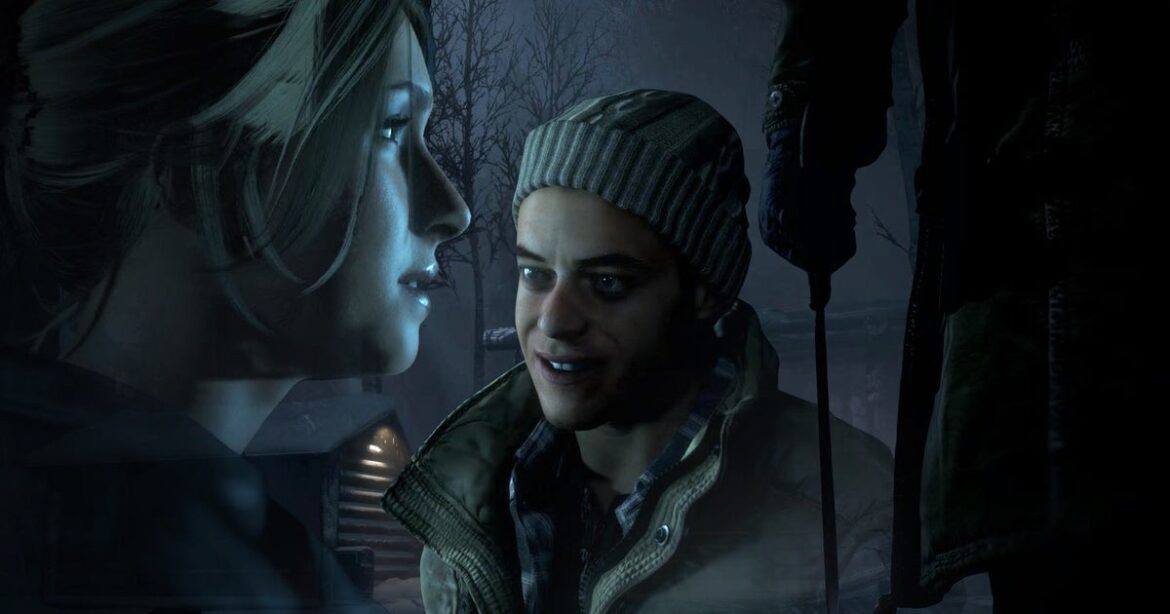
To facilitate that process, Supermassive hired a mostly new cast when Until Dawn moved to PS4, keeping only a handful of actors – including Brett Dalton as Michael and Noah Fleiss as Christopher – from the PS3 version. These were complemented by new additions including Rami Malek as Joshua and Hayden Panettiere as Samantha – who was a well-known face at the time thanks to her role as the cheerleader in hit TV show Heroes. “We pushed for the names,” recalls Bayles, “[Sony] didn’t want names at all… but there was also a budget limit. Peter Stormare [who played Dr. Hill] was really expensive, so we could get him for a day, but we needed some of the people for a lot longer than that.”

“I think as a rule our industry is a little brutal with actors. I think we see them as commodities, and I’ve seen shoots where actors are treated quite perfunctorily.”

Calling on his past experience in theatre, Byles directed Until Dawn’s cast himself. Recording sessions initially took place in LA in 2014, the core group of actors working through 40-50 pages of complex branching script each day. However, practical considerations meant the shoot was limited to capturing facial animation, while body capture happened later in the UK’s Pinewood Studios. These latter sessions utilised different performers, replicating the filmed moves of the original cast. “I now do everything together,” notes Byles, “because it kind of works out better, but in those days it was such a massive ask.”

Byles also believes his experience helped tease out performances that weren’t necessarily typical of games at the time. “Being an actor on stage is really scary,” he explains. “Being an actor in a motion studio is really scary. People don’t get how scary it is… You’re in a white box room studio; you’re in a leotard covered in dots; so unless you’re in good shape, if you’re anything other than buff, they’re not flattering. You’ve got a helmet screwed tightly to your head which can give you a headache and you’ve got to give a performance. It’s a hostile environment… and I think as a rule our industry is a little brutal with actors. I think we see them as commodities, and I’ve seen shoots where actors are treated quite perfunctorily.

Byles directing Rami Malek during motion capture sessions. | Image credit: Will Byles

“What happens on a game shoot is a bunch of different directors turn up; there’s a performance director, there’s the creative director, there’s the audio director, there’s often the art director, and at the end of every take there’s a discussion and a bunch of feedback given by people who don’t really know how to direct actors. It’s really soul destroying for actors if they’re engaged in the part to be told, ‘Can you do it like this?’ Getting a good performance out of an actor is mostly allowing them to give a good performance as opposed to confining an actor to a very specific set of parameters you’ve decided you want.

“So, for instance, the big performance Rami Malik gave where he’s being dragged to be tied up, which is an extraordinary performance, was me just telling him what was going on beforehand and him just going for it. There are games out there that absolutely do it nicely,” adds Byles, “but the majority don’t… so that had never really been done in that way before and it allowed a subtlety of performance.”

Tying all this together, of course, was sound. To complement audio director Barney Pratt’s work, Supermassive turned to Jason Graves – who was working with Larry Fessenden’s Glass Eye film company at the time – to compose Until Dawn’s score. “He’s a great horror musician,” says Byles, “and if you listen to any of his other work, it’s really evocative. We were very much against going down the big orchestral route because… we’d strayed into mythology – the whole kind of indigenous population level of mythology – so we didn’t feel like we wanted to overly westernise it. We didn’t want to exploit it either. There was a definite conscious decision not to make it [sound] old-school Hollywood and in a way make it more like an indie film.”

5.

Eventually – two studios, two consoles, three versions, and half a decade of development later – Until Dawn was ready for release in 2015. But what should have been a celebratory time for the team at Supermassive was, as Byles recollects, hampered by a last-minute loss of confidence at Sony. “There was a big thing where Sony didn’t like the game when we released it,” he says. “They really hated it in fact, and pulled all the marketing… It was really frustrating.”

Byles blames Sony’s sudden change of heart on a mock review of Until Dawn the company had commissioned about three months before its launch. “The person who did the mock review hated interactive narratives and said, ‘This is a 50 at best’,” explains Byles. “And on the basis of one person’s review, [Sony] just went, ‘Let’s pull the marketing’… I’d written Until Dawn 2. They killed that. It was unbelievable. They thought it was going to go out to die a death.”

“On the basis of one person’s review, [Sony] just went, ‘Let’s pull the marketing’… I’d written Until Dawn 2. They killed that. It was unbelievable. They thought it was going to go out to die a death.”

Sony’s lack of marketing didn’t go unnoticed by the public, either. Speaking to Eurogamer shortly after Until Dawn’s release, Sony Computer Entertainment’s then-president of worldwide studios, Shuhei Yoshida, addressed the situation, claiming the company had decided to focus on “big third-party titles like Destiny” in the run up to Christmas and “didn’t see the need to push Until Dawn that much from the platform marketing standpoint”.

Any fears around Until Dawn’s potential proved unfounded. It launched to a positive critical and commercial reception in August 2015, and would go on to be named Best PlayStation Game of the Year at the Golden Joysticks, even winning a BAFTA for Best Original Property in 2016. “When it did come out and suddenly got a good reaction,” Byles recalls, “lots of people [at Sony] came steaming in saying they deliberately did a stealth launch… It was frustrating.” Even Yoshida later admitted to Eurogamer, “I think everybody was caught by surprise by the positive reaction.”

Until Dawn was enough of a success that Sony later resurrected the series for a PSVR prequel, The Inpatient, as well as a non-canonical PSVR arcade shooter spin-off, Rush of Blood. And while Byles never got to revive his original Until Dawn 2 idea, he teases it was planned to feature the Nixie, a water spirit found in Germanic folklore, as its monster.

Supermassive onstage for Until Dawn’s win at the BAFTA Games Awards 2016. | Image credit: BAFTA

As of early 2022, Until Dawn on PS4 had officially surpassed 4m sales, and the public’s ongoing affection for the series has been significant enough to help buoy it toward a revival. Last year saw Until Dawn get the remake treatment on PS5 and PC, courtesy of developer Ballistic Moon, and it received a movie adaptation – one reimagining the game’s core branching story elements as a time loop narrative – earlier this year. There’ve even been persistent rumours, spurred on by the remake’s new endings, that an Until Dawn 2 is in development at Sony’s Firesprite Studio. Supermassive, too, has capitalised on Until Dawn’s success, launching its similarly styled The Dark Pictures Anthology series, and Byles’ own summer camp horror The Quarry.

As to why Until Dawn has endured, Byles – who departed Supermassive in 2022 to found Dial M for Monkey – has a few thoughts. “I look back on it really fondly, and every time I either play it or see it, I’m always amazed at how good it still looks. It’s interesting because I’m working with the literal cutting edge of facial technology at the moment and it’s scary good, but there was a charm to the stuff in Until Dawn that we’re still having a hard time getting.

“I think it was Sony’s most completed game that year, and the number of people who played it not just once but more than once, 10 times, was extraordinary.”

“I think maybe [that’s] partly due to the brewing process. It did take five years to make, even though we made it twice, so there was a degree of maturity in some of the ideas… It was such an effort to make it and such a struggle to put everything new we did in it, and there [were things that] just hadn’t been done before. I think a big part, too, is that it doesn’t take itself seriously… we very purposely went, ‘This is just a bit of fun, come along for the ride’… but done in a really honest way. There’s a kind of truth to it, I think, and we never ever pretended it wasn’t anything but what it was.”

As our conversation comes to a close, Byles shares one last anecdote. “I [went] to do a talk at Middlesbrough University,” he recollects. “I think it was relatively soon after we’d released Until Dawn and I was still very bruised by the negativity that had gone on around it. I went up and there was just love for the game; I was astounded.” And the people that loved Until Dawn seemingly really loved it. “I think it was Sony’s most completed game that year,” he says, “and the number of people who played it not just once but more than once, 10 times, was extraordinary… We started seeing Until Dawn cosplay, tattoos, and I couldn’t believe we’d done something that even on a tiny level had become part of a zeitgeist in a way. And weirdly, as the years go by, it becomes even more so.”


Source link

September 6, 2025 0 comments
0 FacebookTwitterPinterestEmail
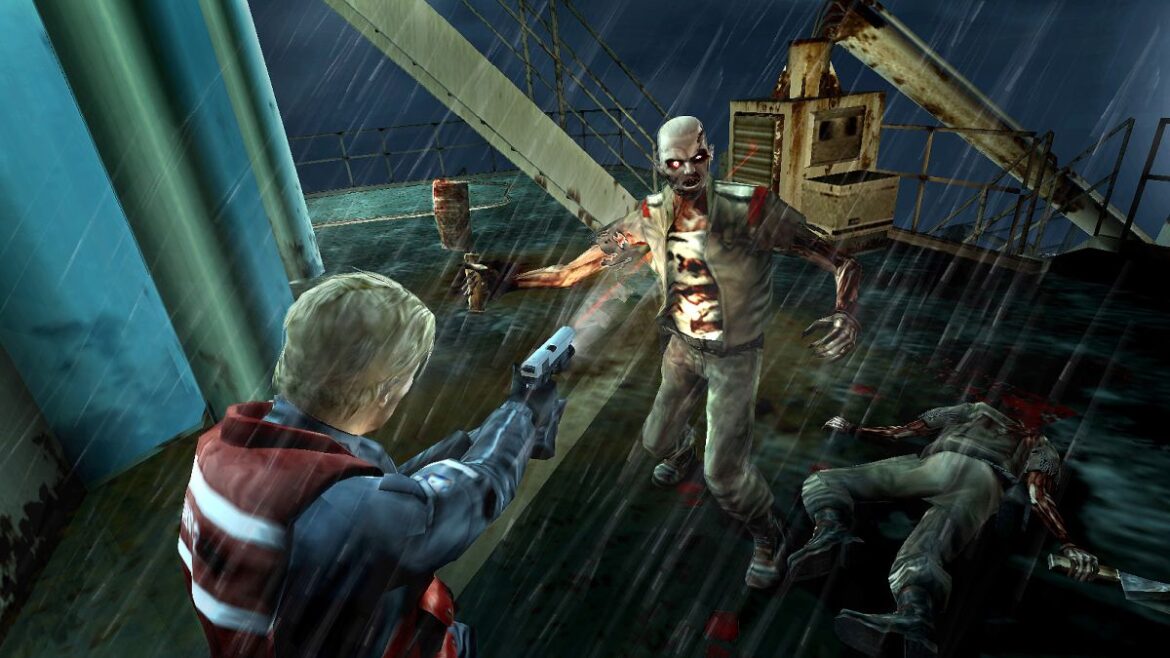
A member of the Coast Guard points a handgun at a zombie on the deck of a boat
Product Reviews

Atari now owns the rights to five Ubisoft games: Cold Fear, I Am Alive, Child of Eden, Grow Home, and Grow Up

by admin August 27, 2025


Ubisoft has reached into the back of the cupboard, grabbed the intellectual property rights for five games it wasn’t doing anything with, and sold them to Atari. The five games are Cold Fear (which is basically Resident Evil on a boat), I Am Alive (a post-apocalyptic survival platformer), Child of Eden (a psychedelic rhythm game), and both Grow Home and its sequel Grow Up (which are physics-based climbing games where you’re a cute robot).

“Ubisoft and Atari both have a legacy of crafting worlds that players can fall in love with—games that resonate with generations of players not just for how they played, but for how they made us feel,” Wade Rosen, chairman and CEO of Atari, said in a joint statement. “We’re excited to reintroduce these titles while also exploring ways to expand and evolve these franchises.”

While Atari may just be planning ports for Switch 2 and the like for this bundle of games, given that the publisher also owns Nightdive—the studio responsible for projects like the System Shock remake and more recently the re-release of Hexen and Heretic—there’s reason to hope at least some of these games will receive more high-effort revivals.


Related articles

I’d personally love to see a remake of Cold Fear, a survival horror game set on a whaling ship during a storm. Original developer Darkworks put a lot of effort into modeling the constant heaving of the sea, making the deck of the ship shift beneath you while you were trying to shoot zombie parasites. A short, self-contained experience, it caught some flak for being about five hours long at release, but honestly that sounds ideal for a haunted-house survival horror game.

Best gaming monitors 2025

All our current recommendations

Keep up to date with the most important stories and the best deals, as picked by the PC Gamer team.


Source link

August 27, 2025 0 comments
0 FacebookTwitterPinterestEmail

Categories

  • Crypto Trends (1,098)
  • Esports (800)
  • Game Reviews (772)
  • Game Updates (906)
  • GameFi Guides (1,058)
  • Gaming Gear (960)
  • NFT Gaming (1,079)
  • Product Reviews (960)

Recent Posts

  • This 5-Star Dell Laptop Bundle (64GB RAM, 2TB SSD) Sees 72% Cut, From Above MacBook Pricing to Practically a Steal
  • Blue Protocol: Star Resonance is finally out in the west and off to a strong start on Steam, but was the MMORPG worth the wait?
  • How to Unblock OpenAI’s Sora 2 If You’re Outside the US and Canada
  • Final Fantasy 7 Remake and Rebirth finally available as physical double pack on PS5
  • The 10 Most Valuable Cards

Recent Posts

  • This 5-Star Dell Laptop Bundle (64GB RAM, 2TB SSD) Sees 72% Cut, From Above MacBook Pricing to Practically a Steal

    October 10, 2025
  • Blue Protocol: Star Resonance is finally out in the west and off to a strong start on Steam, but was the MMORPG worth the wait?

    October 10, 2025
  • How to Unblock OpenAI’s Sora 2 If You’re Outside the US and Canada

    October 10, 2025
  • Final Fantasy 7 Remake and Rebirth finally available as physical double pack on PS5

    October 10, 2025
  • The 10 Most Valuable Cards

    October 10, 2025

Newsletter

About me

Welcome to Laughinghyena.io, your ultimate destination for the latest in blockchain gaming and gaming products. We’re passionate about the future of gaming, where decentralized technology empowers players to own, trade, and thrive in virtual worlds.

Recent Posts

  • This 5-Star Dell Laptop Bundle (64GB RAM, 2TB SSD) Sees 72% Cut, From Above MacBook Pricing to Practically a Steal

    October 10, 2025
  • Blue Protocol: Star Resonance is finally out in the west and off to a strong start on Steam, but was the MMORPG worth the wait?

    October 10, 2025

Newsletter

@2025 laughinghyena- All Right Reserved. Designed and Developed by Pro


Back To Top
Laughing Hyena
  • Home
  • Hyena Games
  • Esports
  • NFT Gaming
  • Crypto Trends
  • Game Reviews
  • Game Updates
  • GameFi Guides
  • Shop

Shopping Cart

Close

No products in the cart.

Close