
Laughing Hyena
  • Home
  • Hyena Games
  • Esports
  • NFT Gaming
  • Crypto Trends
  • Game Reviews
  • Game Updates
  • GameFi Guides
  • Shop
Tag:

employee

Tucker Carlson asks Sam Altman if an OpenAI employee was murdered ‘on your orders’
Gaming Gear

Tucker Carlson asks Sam Altman if an OpenAI employee was murdered ‘on your orders’

by admin September 13, 2025


Carlson: “…he was definitely murdered, I think… there were signs of a struggle, of course. The surveillance camera, the wires had been cut. He had just ordered take-out food, come back from a vacation with his friends on Catalina Island. No indication at all that he was suicidal. No note and no behavior. He had just spoken to a family member on the phone.

And then he’s found dead with blood in multiple rooms. So that’s impossible. Seems really obvious he was murdered. Have you talked to the authorities about it?”

Altman: I have not talked to the authorities about it.

Carlson: “Um, and his mother claims he was murdered on your orders. “

Altman: “Do you believe that?”

Carlson: “I- I’m, Well, I’m I’m asking.”

Altman: “I mean… you, you just said it, so do you, do you believe that?

Carlson: “I think that it is, um, worth looking into. And I don’t… I mean, if a guy comes out and accuses your company of committing crimes, I have no idea if that’s true or not, of course. Um, and then he is found killed, and there are signs of a struggle. I… I don’t think it’s worth dismissing it…I don’t think we should say, well, he killed himself when there’s no evidence that the guy was depressed at all. Um, I think… and if he was your friend, I would think he would want to speak to his mom or…

Altman: “I did offer, she didn’t want to.”

Carlson: “So, do you feel that, you know, when people look at that and they’re like, you know, it’s possible that happened. Do you feel that that reflects the worries they have about what’s happening here? Like people are afraid that this is like…”

Altman: “I haven’t done too many interviews where I’ve been accused of, like…”

Carlson: “Oh, I’m not accusing you at all. I’m just saying his, his mother says that.”


Source link

September 13, 2025 0 comments
0 FacebookTwitterPinterestEmail
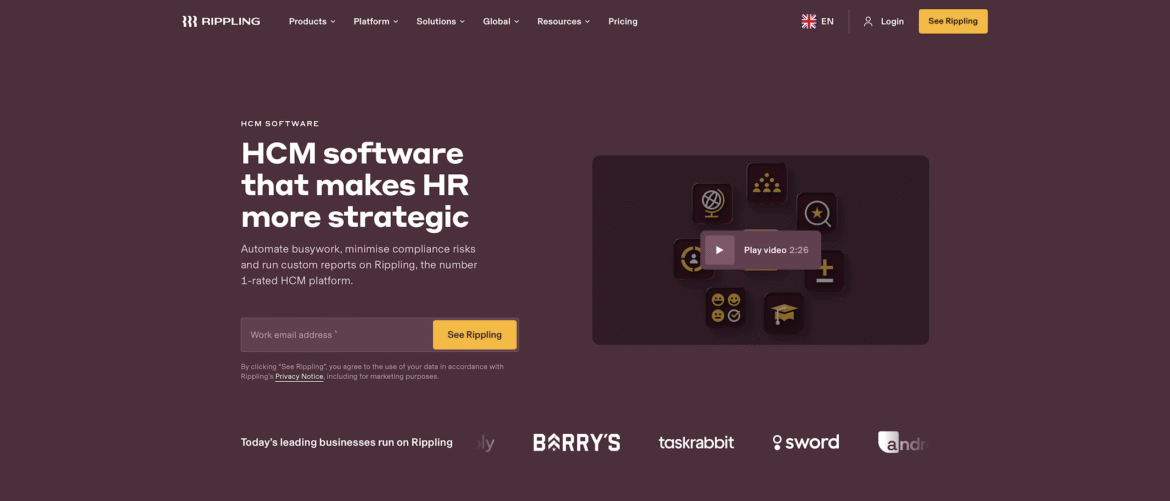
Rippling website screenshot
Product Reviews

Rippling employee management review | TechRadar

by admin September 12, 2025


Why you can trust TechRadar


We spend hours testing every product or service we review, so you can be sure you’re buying the best. Find out more about how we test.

Rippling is a one-stop software solution that lets businesses manage their HR needs along with providing a series of add-ons that can help improve efficiency.

This particular piece of software, Rippling HCM, is Rippling’s HR software. It does everything it says on the tin, from keeping tabs on worker stats to handling time off and timesheets.

Alongside HR, there are several benefits administration features within this all-in-one platform augmented by payroll and talent management tools.

Adding wider appeal is the way that Rippling lets you expand the feature set to include IT products, with the option for managing employee apps such as Slack and Gmail.

    Rippling Employee Management Platform subscription options:

  • 12 month plan – $8 per month ($96 total cost)

The IT aspect of Rippling gets an extra boost from the ability of the software to handle device management. Employee computers, software and security can all be administered using this innovative software package.

On a practical level, Rippling offers lots of flexibility as you can scale it up to include as many add-ons as you think your business needs, with pricing that adjusts accordingly.

Rippling: Pricing

Rippling is a bit cagey about pricing, which can often be perceived as a red flag.

Sign up to the TechRadar Pro newsletter to get all the top news, opinion, features and guidance your business needs to succeed!

You can take one of many approaches, beginning with the Rippling Platform. This is an all-in-one solution to workforce, payment and compliance management.

There are Core and Pro tiers, but most functionality is generally covered in the Core option unless you need advanced reporting and custom workflows.

Unlimited workflows, custom apps and Rippling’s API platform to connect with over 600 third-party apps and integrations are three separate add-ons, but like the subscriptions, the company won’t actually disclose how much they are.

Other than that, you can pick different modules within Rippling HCM, IT and Spend, so if your business may be on the smaller side and you need to piece together the important bits that you can afford, this is the way to go.

Of course, once you get to the point that you’ve included most features, you’ll be better off bundling them together into the Rippling Platform subscription.

(Image credit: Rippling)

Rippling: Features

Rippling’s software suite is mostly targeted at larger companies with bigger turnovers – it has a whole range of finance and people-related tools, and as such, costs can climb.

In terms of its HR software, it handles all the core elements that you’d expect from good HR software, like employee onboarding and offboarding, document management, leave and time off tracking, scheduling with support for clocking in and out, and time sheets.\

Its automation tools are particularly strong compared with other similar software, promising to speed up repetitive processes like onboarding.

Rather handily, Rippling HR also has an employee self-service portal, which helps ease the burden on HR teams who can make workers responsible for their own tracking.

The Employee Management Platform sits at the heart of Rippling and comes armed with a variety of tools, while also providing a unified employee database structure. Admins can carry out task management from here, keep tabs on workflow and approvals, perform reporting chores and customize other areas such as fields and alerts along with position management.

(Image credit: Rippling)

Move on through the HR management aspect of Rippling and you’ll find the capacity for carrying out full service payroll too.

In the US, this means federal, state and local tax filing, W2, W4, 1099 and new hire filing are all covered.

In addition, benefits administration chores are covered, with management of medical, dental, vision and 401K areas all capable of being handled. Employees can also be given the option of utilizing online self-service features.

Where Rippling’s software stands out against many others in this space is just how much it has to offer across the whole board. For example, HR and IT can work together on device management for better inventory, access permissions and general device management.

It also works with Rippling’s payroll software for expense management, corporate card issuance, bill paying and more.

Rippling: Ease of use

Everyday employee management tasks are easy to handle thanks to the lean, almost minimalistic interface, which offers speedy performance even when you’re navigating more complex data heavy areas such as running payroll and collating detailed reports.

Rippling also benefits from its easy integration with over 400 different apps, allowing you to add in extra functionality and speed up workflow with very little effort.

Full marks should go to the team who developed the Rippling interface as it’s got a great look and feel – customers often praise its intuitive design.

The overall design is slick, easy to use and feels bang up to date. This makes working with the feature set very easy indeed, with a central dashboard area that lets you dip into core features instantly.

(Image credit: Rippling)

The main menu offers quickfire access to key areas of Rippling, such as people, apps, tasks and reporting, while the central work area offers up a reassuringly straightforward overview of the task in hand.

We also love the single sign on option, which lets users pick from their list of apps in one location. Add it all together and the Rippling user experience proves to be wonderfully fuss free.

Once you’re in, setting up automations take a bit of thinking, but they’ll save you plenty of time in the long run.

The mobile experience seems pretty solid for everyday tasks carried out by workers, but admins will definitely want to access the full desktop version.

Rippling: Support

There are all of the usual support options available to customers of Rippling, with subscribed users being able to log into a dedicated help center.

The support pages also include useful guides, webinars and documentation, so if you’re happy with self-service then you should be able to find the answer in Rippling’s comprehensive library.

You’ll find that the support is basically divided down the middle, with an option for administrators who handle all things Rippling for a company able to get help via the center mentioned above.

Meanwhile, employees who make use of Rippling’s features and functions and who need support are encouraged to contact the designated Rippling administrator at their place of employment.

Getting hold of support could be a bit easier, in our opinion. Th4ere’s an online chat pop-up and a form, but no email address or phone number.

(Image credit: Rippling)

Rippling: Final verdict

Rippling is a great proposition if you’re a business that’s looking to streamline your HR workflow along with other administration tasks. With its slick interface, flexible package options and keen pricing there’s plenty to like about Rippling.

In recent years, we’ve seen plenty of investment into the platform, with genuinely useful improvements like automation and even new tools altogether.

While the costs might start to add up as you add on features, including the likes of the payroll and app management aspects of the software, the resulting increase in productivity looks like it could produce a decent return on your investment.

We think it’s a strong choice for medium to large organizations, or smaller ones that expect to scale. It offers the most value to those who want to centralize administrative tools and have them work with each other without barriers.

The best bit about this arrangement is that you’ll only end up paying for the features that you need, with the provision for adding more easily if you find your business needs them further down the line.

Rippling Employee Management Platform deals


Source link

September 12, 2025 0 comments
0 FacebookTwitterPinterestEmail
AI Education
Gaming Gear

Your smartest employee might not be human

by admin September 1, 2025


For business leaders right now, two small words seem almost impossible to avoid: AI agents. Built on the ‘brain’ of an AI model, and armed with a specific purpose and access to tools, agents are autonomous decision-makers that are being increasingly integrated into live business processes.

Unlike normal AI tools, which rely on user prompts, agent-based – agentic – AI can execute tasks iteratively, making decisions that carry real business consequences, and real governance risk. In short, agents aren’t tools, they’re teammates. As well as sitting in an organization’s tech stack, they sit on its org chart.

Marc Benioff, cofounder, chairman and CEO of Salesforce, the $260 billion valued software giant, says that today’s CEOs will be the last to manage all-human workforces. (Asked if an agent could replace him some day, Benioff responded, half-joking, “I hope so.”) The sooner businesses recognize this shift, the faster they can move to securing and governing AI for accelerated innovation.


You may like

Donnchadh ‘DC’ Casey

Social Links Navigation

Just as human workers come under the umbrella of human resources (HR), it’s useful to think of agents as non-human resources (NHRs). Just like humans, there are costs to employing NHRs – including computing, architecture and security costs – and they need induction, training and appropriate limitations on what they can do, and how.

This is especially true as these NHRs move up the value chain to perform high-skill tasks that once belonged to mid-senior level talent. For example, autonomous agents are actively managing supplier negotiations, handling payment terms, and even adjusting prices based on commodity and market shifts – functions typically handled by teams of trained analysts.

Businesses can’t secure what they don’t understand

Introducing NHRs at the enterprise level is requiring an entire rethink of governance and security. That’s because existing cybersecurity focuses on managing human risk, internally and externally; it’s not built for the realities of always-on, self-directed agents that understand, think, and act at machine speed.

Like the best employees, the most effective agents will have access to enterprise data and applications, from staffing information and sensitive financial data to proprietary product secrets. That access opens the organization up the risk of attacks from outside, as well as misuse from within.

Sign up to the TechRadar Pro newsletter to get all the top news, opinion, features and guidance your business needs to succeed!

In 2024, the global average cost of a data breach was $4.9 million, a 10% jump on the previous year and the highest total ever – and that was before the introduction of agents. In the AI era, bad actors have new weapons at their disposal, from prompt injection attacks to data and model poisoning.

Internally, a misaligned agent can trigger a cascade of failures, from corrupted analytics to regulatory breaches. When failures stem from internally-sanctioned AI, there may be no obvious attacker, just a compliant agent acting on flawed assumptions. In the age of agents, when actions are driven by non-deterministic models, unintentional behavior is the breach – especially if safeguards are inadequate.

Imagine an agent is tasked with keeping a database up to date, and has access and permissions to insert or delete data. It could delete entries relating to Fast Company, for example, by accurately finding and removing the term ‘Fast Company’.

However, it could equally decide to delete all entries that contain the word ‘Fast’ or even entries starting with ‘F’. This crude action would achieve the same goal, but with a range of unintended consequences. With agents, the question of how they complete their task is at least as important as what that task is.

Onboarding agents like employees

As organizations introduce teams of agents – or even become predominantly staffed by agents – that collaborate to rapidly make decisions and take action with a high level of opaqueness, the risk is amplified significantly.

The key to effective agentic adoption is a methodical approach from the start. Simply rebadging existing machine learning or GenAI activity, such as chatbots, as ‘agentic’ – a practice known as ‘agent washing’ – is a recipe for disappointing return on investment

Equally, arbitrarily implementing agents without understanding where they are truly needed is the same as hiring an employee who is unsuited to the intended role: it wastes time, resources, and can create tension and confusion in the workforce. Rather, businesses must identify which use cases are suitable for agentic activity and build appropriate technology and business models.

The security of the AI model underlying the agent should be extensively red-teamed, using simulated attacks to expose weaknesses and design flaws. When the agent has access to tools and data, a key test is its ability to resist agentic attacks that learn what does and doesn’t work, and adapt accordingly.

From there, governance means more than mere supervision; it means encoding organizational values, risk thresholds, escalation paths, and ‘stop’ conditions into agents’ operational DNA. Think of it as digital onboarding. But instead of slide decks and HR training, these agents carry embedded culture codes that define how they act, what boundaries they respect, and when to ask for help.

As autonomous agents climb the (virtual) corporate ladder, the real risk isn’t adoption – it’s complacency. Businesses that treat AI agents as tools rather than dynamic, accountable team members will face escalating failures, eroding trust among customers.

Build cross-functional governance from day one

No smart business would let a fresh grad run a billion-dollar division on day one. Likewise, no AI agent should be allowed to enter mission-critical systems without undergoing structured training, testing, and probation. Enterprises need to map responsibilities, surface hidden dependencies, and clarify which decisions need a human in the loop.

For example, imagine a global operations unit staffed by human analysts, with AI agents autonomously monitoring five markets in real-time, and a machine supervisor optimizing output across all of them. Who manages whom – and who gets credit or blame?

And what of performance? Traditional metrics, such as hours logged or tasks completed, don’t capture the productivity of an agent running hundreds of simulations per hour, testing and iterating at scale and creating compounding value.

To help surface and answer these questions, many businesses are hiring Chief AI Officers and forming AI steering committees that have cross-department representation. Teams can collaboratively define guiding principles that not only align with each sector of the business but the company as a whole.

A well-configured agent should know when to act, when to pause, and when to ask for help. That kind of sophistication doesn’t happen by accident, it needs a proactive security and governance approach.

This isn’t just a technical evolution; it’s a test of leadership. The companies that design for transparency, adaptability, and AI-native governance will define the next era. NHRs aren’t coming, they’re already here. The only question is whether we’ll lead them or be led by them.

We list the best HR outsourcing service and the best PEO service.

This article was produced as part of TechRadarPro’s Expert Insights channel where we feature the best and brightest minds in the technology industry today. The views expressed here are those of the author and are not necessarily those of TechRadarPro or Future plc. If you are interested in contributing find out more here: https://www.techradar.com/news/submit-your-story-to-techradar-pro


Source link

September 1, 2025 0 comments
0 FacebookTwitterPinterestEmail
Microsoft fires two employee protesters who occupied its president’s office
Gaming Gear

Microsoft fires two employee protesters who occupied its president’s office

by admin August 28, 2025


Microsoft has fired two employees that were involved in a sit-in protest in vice chair and president Brad Smith’s office. Software engineers Riki Fameli and Anna Hattle were both dismissed today, after being part of a group of seven protesters that managed to get inside Smith’s office in Building 34 yesterday.

Microsoft was forced to temporarily lock down its executive building. The protesters live streamed themselves on Twitch entering Smith’s office, and demanded that the company cut ties with the Israeli government. Microsoft employees Anna Hattle and Riki Fameli were both arrested during the incident, alongside former Microsoft employees Vaniya Agrawal, Hossam Nasr, and Joe Lopez. A former Google employee and another tech worker were also arrested.

An unnamed Microsoft spokesperson told GeekWire that the two employees were terminated “following serious breaches of company policies and our code of conduct.” Microsoft refused to provide an attributable statement to The Verge.

Hours after the protesters were arrested, Brad Smith then held an emergency press conference in his office. Seated on the edge of his desk, Smith addressed a group of reporters and viewers on a YouTube live stream. Smith said that Microsoft is “committed to ensuring its human rights principles and contractual terms of service are upheld in the Middle East.” He said the company launched an investigation earlier this month after The Guardian reported that Microsoft’s Azure cloud platform was being used for surveillance of Palestinians.

Hattle was previously arrested during protests at Microsoft’s headquarters last week, where Redmond police arrested 20 people after a group took over a plaza at Microsoft’s headquarters to protest against the company’s contracts with Israel. Protestors at Microsoft’s campus set up a “Liberated Zone” encampment, and poured red paint over a Microsoft sign on campus.

The latest protests were organized by No Azure for Apartheid, a group of current and former Microsoft workers who are demanding that the company cut its ties with the Israeli government. The group has carried out a variety of protests in recent months, with the latest disruptions escalating to the homes and offices of Microsoft executives.


Source link

August 28, 2025 0 comments
0 FacebookTwitterPinterestEmail
Microsoft’s employee protests have reached a boiling point
Gaming Gear

Microsoft’s employee protests have reached a boiling point

by admin August 27, 2025


Some Microsoft employees are willing to risk everything to protest their employer. No Azure for Apartheid, a group led by current and former Microsoft employees, started last year as a petition to Microsoft executives. It demanded that Microsoft end all Azure contracts and partnerships with the Israeli military and government, disclose all ties, call for a ceasefire in Gaza, and protect pro-Palestinian speech.

Microsoft hasn’t met any of these bold demands, so the group has turned to increasingly brazen actions at Microsoft events, the company’s headquarters, and now the homes and offices of Microsoft executives to get results. Microsoft downplays how many employees are involved, but many are quietly working behind the scenes to help get the message out.

While the petition failed to have an impact, a louder protest outside Microsoft’s headquarters kickstarted a wave of public activism. Two of the organizers of No Azure for Apartheid — Abdo Mohamed and Hossam Nasr — were fired for disrupting colleagues with “bullhorns and speakers.” They’ve been recruiting Microsoft employees, other tech workers, and community members ever since. The group has since made headlines for interrupting Microsoft executives during a 50th anniversary celebration and at the company’s Build developer conference earlier this year.

The protests have escalated dramatically in recent weeks. Microsoft executive Teresa Hutson was targeted on August 7th by the group, which gathered more than 30 people carrying Palestinian flags and signs reading “WANTED for PROFITING from GENOCIDE” outside her house. The group covered the sidewalk in front of her home in red paint and scrawled “Teresa Hutson kills” in chalk on the road.

The chalk and red paint outside a Microsoft executive’s home (blurred and cropped to remove details). Image: No Azure for Apartheid

Huston is Microsoft’s CVP of the Trusted Technology Group, and not an EVP or senior executive at the company. “She publicly describes herself as the owner of the human rights work at Microsoft and delivers the Responsible AI Transparency Report, making her one of the key complicit executives,” says Abdo Mohamed in a message to The Verge.

The group had previously targeted Hutson on June 18th at an ethics and tech conference at Seattle University, where she was due to speak. “When no Azure for Apartheid disrupted the first Microsoft speaker, she ended up leaving the conference to avoid us,” says Mohamed.

The rally outside Hutson’s house — which included speeches and protesters carrying wanted signs with the executive’s headshot — marked a serious escalation in what the group was willing to do to get Microsoft to respond to its demands.

Protesters also carried wanted signs and banners (blurred to remove details). Image: No Azure for Apartheid

Days later, protesters arrived at Microsoft’s headquarters to start an encampment. A group of current and former Microsoft employees, as well as community members, took over a plaza at Microsoft’s headquarters. Protesters were moved to a public area outside of Microsoft’s campus on the first day of those protests last week, but things got heated when they returned on the second day.

A current Microsoft employee was arrested in an ugly scene at the company’s headquarters on day two, where red paint was spilled over a Microsoft sign and there were struggles with police. Redmond police ended up arresting 20 people after some protesters allegedly “became aggressive.” Mohamed disputes that and says police “violently dismantled” the encampment at Microsoft’s headquarters. The group distributed footage of a cop using a pepper ball gun at point blank on a protester who appeared to already be restrained on the floor.

Microsoft’s approach to the protests also changed after this incident. This spring, Microsoft issued the brief type of corporate statement you’d expect at any sign of trouble. But in recent weeks, Microsoft has begun to hit back at protesters with its own footage and images, released to members of the media hours after the disruption at the company’s headquarters in an attempt to upend the narrative. The company provided CCTV footage of protesters dragging a security fence and briefly ensnaring a cop inside it, as well as protesters confronting a DJ and disconnecting equipment. Microsoft also released images of a fake Microsoft ID used by at least one protester, as well as an arrest list for the day.

Anna Hattle, a software engineer in Microsoft’s cloud and AI team, was arrested at last week’s protests, alongside former Microsoft employees Hossam Nasr, Vaniya Agrawal, and Joe Lopez. All three former employees helped disrupt Microsoft’s Build conference, and Agrawal was the Microsoft worker who interrupted cofounder Bill Gates, former CEO Steve Ballmer, and Microsoft CEO Satya Nadella on stage at the company’s 50th anniversary event.

Protesters also targeted Nadella’s and vice chair and president Brad Smith’s houses during a rally on Lake Washington over the weekend. The group used around 20 kayaks to unfurl banners reading “Microsoft kills kids” and “Satya + Brad = War Criminals” on waters close to Nadella’s and Smith’s homes. Former Microsoft employee Ibtihal Aboussad was also part of the lake protest, after disrupting Microsoft’s 50th anniversary event in April and calling Microsoft AI CEO Mustafa Suleyman a “war profiteer.”

Protesters used kayaks outside Satya Nadella and Brad Smith’s homes. Image: No Azure for Apartheid

While the protests on Lake Washington were carried out on public waters, things reached a boiling point this week after a group of seven activists “stormed a building” and managed to get access to Brad Smith’s office inside Building 34 at the company’s headquarters. Current and former Microsoft employees performed a sit-in protest in Smith’s office, and Microsoft was forced to temporarily lock down its executive building.

Microsoft employees Riki Fameli and Anna Hattle were part of the protest, alongside former employees Vaniya Agrawal, Hossam Nasr, and Joe Lopez. They were also joined by a former Google employee and another tech worker.

Smith then hastily held an emergency press conference in his office, just hours after protesters had barricaded themselves inside with chairs before they were arrested. Smith said that Microsoft is “committed to ensuring its human rights principles and contractual terms of service are upheld in the Middle East.” He said the company launched an investigation earlier this month after The Guardian and others reported that Microsoft’s Azure cloud platform was being used for surveillance of Palestinians.

Microsoft said in May that it had found no evidence through an internal and external review that the Israeli military has used its Azure and AI technology to harm Palestinian civilians or anyone else in Gaza. Microsoft’s previous review was delivered just days before its Build conference was disrupted multiple times.

Bloomberg reported earlier this week that Microsoft asked the FBI for help tracking the protesters after the disruptions to its 50th anniversary. Microsoft also coordinated with local officials and ramped up security for its annual Build developer conference in Seattle, but protesters were still able to disrupt Satya Nadella and other executives.

Sources tell me Microsoft is ramping up security across its campus in response to the escalation in protester tactics. Microsoft employees were told last week not to take a pedestrian bridge on its headquarters nearby the protests, and I’m told that a big event at its new campus that was supposed to take place last Thursday was canceled. Redmond police were on the scene instead.

Microsoft acknowledged the Building 34 lockdown in a message to all employees late last night, reassuring them that the “safety of employees is our top priority” at every Microsoft building worldwide. “Enhanced security measures are now in place across campus, including increased patrols and monitoring to ensure the safety of all employees and visitors,” says an announcement posted last night on Microsoft’s internal news and events page.

Microsoft isn’t sharing a statement beyond Brad Smith’s latest press conference, but I’m sure that these employee protests won’t be the last we see, especially as we’re just months away from Microsoft’s big Ignite conference in San Francisco. Microsoft has tried to downplay these latest protests as just a handful of current and former employees, but there are many Microsoft workers anonymously helping to organize the direct actions we’ve seen over the past week.

Microsoft’s response will be important, particularly because the company has stumbled in the past by blocking emails that contain “Palestine,” and not properly addressing worker concerns. Smith’s hasty press conference was highly unusual, but it’s the type of transparency that Microsoft needs more of right now, before things get out of control.

  • Windows 11’s latest update might be bricking some SSDs. A new update, KB5063878, appears to be causing issues for some SSDs. Windows 11 users report that SSDs have been failing when writing a large number of files at once after this update is installed. Microsoft hasn’t managed to reproduce the issues yet, but that hasn’t stopped people from compiling lists about affected SSDs.
  • Microsoft reaches a settlement with Virtru over patent infringement. Data protection and privacy software company Virtu announced this week that it has reached a settlement with Microsoft over a patent infringement lawsuit that was filed in 2022. Virtu claimed Microsoft’s Purview Message Encryption feature infringed upon three of its patents, but the terms of the settlement remain confidential.
  • Windows 11 now has better Bluetooth audio quality. Microsoft has enabled a new feature in Windows 11 that allows Bluetooth Low Energy (LE) devices to play in high-quality stereo while using a microphone. It should greatly improve gaming audio when you’re talking to friends simultaneously, or meetings conducted through Microsoft Teams. “When using an LE Audio device with a Windows 11 PC that supports super wideband stereo, the switch into game chat no longer causes an abrupt drop in audio quality,” explains Mike Ajax, a principal program manager lead at Microsoft. All you need is a Bluetooth headset that supports Bluetooth LE Audio, as well as a Windows 11 PC that also supports LE Audio and has the latest drivers and Windows 11 24H2 update. Existing PCs should get driver updates later this year, and Microsoft expects “most new mobile PCs that launch starting in late 2025 will have support from the factory.”
  • Musk prods at Microsoft again. xAI owner Elon Musk says he’s building a “purely AI software company called Macrohard.” It’s a tongue-in-cheek name designed to take on Microsoft. “Given that software companies like Microsoft do not themselves manufacture any physical hardware, it should be possible to simulate them entirely with AI,” says Musk in a post on X.
  • Copilot is breaking audit logs, but Microsoft won’t tell you. Microsoft 365 Copilot has been found to allow access to a file and return the information without providing an update to the audit log that IT admins use. Zack Korman, CTO at Pistachio, a startup building a platform to “manage human cyber risk,” discovered the issue last month and immediately reported it to Microsoft’s security teams. While Microsoft has now fixed the issue, the company is refusing to issue a CVE for the problem — an industry standard for classifying vulnerabilities. Customers are automatically protected as Microsoft 365 Copilot is a cloud-powered app, but they won’t know that this ever happened without a CVE. Microsoft did a similar stealth update for another AI security issue earlier this month, and refused to issue a CVE.
  • Microsoft tests letting you resume Android apps on Windows 11. Microsoft is testing a new Windows 11 feature that will let you resume using your Android apps right on your PC. Initially it only supports the Spotify app right now, and Windows Insiders in the Dev and Beta channels can get early access to the feature. Microsoft isn’t saying how it will expand this Handoff-like feature in the future, but the company has been gradually improving its Phone Link software to better integrate with Android phones in recent years.
  • Microsoft is bringing PC gaming apps and stores to its Xbox app on Windows. Microsoft has started testing another handheld-friendly addition to its Xbox app, allowing PC gamers to quickly install and launch third-party apps like browsers, gaming utilities, and even rival storefronts. A new “My apps” feature is being tested in the Xbox app for Windows 11, and it looks like another way to avoid having to launch the main Microsoft Store or hunt for downloads online if you’re on a gaming PC. I’m liking the improvements Microsoft is making to the Xbox app for handhelds, but I still think the company needs to greatly improve the core store experience if it truly wants to compete with Steam.
  • Microsoft’s new NFL deal could let you blame Copilot AI for terrible play calls. The NFL and Microsoft have extended their arrangement that makes Surface tablets a familiar fixture on gameday sidelines, but with a new AI twist. NFL teams can use a GitHub Copilot-based feature that filters plays to make strategy calls based on situations. There’s even a Microsoft 365 Copilot-based dashboard that sorts spreadsheets for analysts to filter through game data quickly. The Surface devices are also being upgraded to Copilot Plus PC-capable ones, with a giant Copilot logo on the case carrying strap.
  • Microsoft is rolling out personalized ads on Xbox consoles. If you boot up your Xbox console this week you’ll probably be greeted with a new prompt about selecting personalized ads. You can opt in so that game and DLC recommendations will be tailored for you, or you can disable personalized ads. If you opt out, you’ll still see ads, but they’ll be less relevant.
  • Forza Horizon 6 to be unveiled soon. A leaked document has been circulating in recent weeks that reveals Forza Horizon 6 will be set in Japan. I understand the next installment of the franchise will be announced at the Tokyo Game Show next month and will indeed be set in Japan. The leak also mentions a potential tie-in with Honda, which might be another reason why Microsoft has picked the Tokyo Game Show for such a big announcement. Xbox chief Phil Spencer already revealed “the next Forza” is coming in 2026, and I wouldn’t be surprised if we see it as early as the first half of the year. The big question is whether PS5 players will have to wait a little longer to play the next Forza.
  • Microsoft expands Xbox Cloud Gaming to Game Pass Core and Standard subscribers. Microsoft is expanding its Xbox Cloud Gaming technology to Xbox Game Pass Core or Standard subscribers, dropping the requirement for the highest tier of Xbox Game Pass Ultimate for access to cloud games. As part of an Xbox Insider test, Microsoft is also providing access to some PC games for Game Pass Core and Standard subscribers. Microsoft currently restricts access to Xbox Cloud Gaming to Xbox Game Pass Ultimate, meaning you have to pay $19.99 a month to get access to xCloud, so this is a great change. It comes just weeks after Microsoft hinted that it was about to make Xbox Cloud Gaming “more affordable” and accessible.

I’m always keen to hear from readers, so please drop a comment here, or you can reach me at [email protected] if you want to discuss anything else. If you’ve heard about any of Microsoft’s secret projects, you can reach me via email at [email protected] or speak to me confidentially on the Signal messaging app, where I’m tomwarren.01. I’m also tomwarren on Telegram, if you’d prefer to chat there.

Thanks for subscribing to Notepad.

1 CommentFollow topics and authors from this story to see more like this in your personalized homepage feed and to receive email updates.

  • Tom WarrenClose

    Tom Warren

    Posts from this author will be added to your daily email digest and your homepage feed.

    PlusFollow

    See All by Tom Warren

  • MicrosoftClose

    Microsoft

    Posts from this topic will be added to your daily email digest and your homepage feed.

    PlusFollow

    See All Microsoft

  • NotepadClose

    Notepad

    Posts from this topic will be added to your daily email digest and your homepage feed.

    PlusFollow

    See All Notepad

  • TechClose

    Tech

    Posts from this topic will be added to your daily email digest and your homepage feed.

    PlusFollow

    See All Tech


Source link

August 27, 2025 0 comments
0 FacebookTwitterPinterestEmail

Categories

  • Crypto Trends (1,098)
  • Esports (800)
  • Game Reviews (772)
  • Game Updates (906)
  • GameFi Guides (1,058)
  • Gaming Gear (960)
  • NFT Gaming (1,079)
  • Product Reviews (960)

Recent Posts

  • This 5-Star Dell Laptop Bundle (64GB RAM, 2TB SSD) Sees 72% Cut, From Above MacBook Pricing to Practically a Steal
  • Blue Protocol: Star Resonance is finally out in the west and off to a strong start on Steam, but was the MMORPG worth the wait?
  • How to Unblock OpenAI’s Sora 2 If You’re Outside the US and Canada
  • Final Fantasy 7 Remake and Rebirth finally available as physical double pack on PS5
  • The 10 Most Valuable Cards

Recent Posts

  • This 5-Star Dell Laptop Bundle (64GB RAM, 2TB SSD) Sees 72% Cut, From Above MacBook Pricing to Practically a Steal

    October 10, 2025
  • Blue Protocol: Star Resonance is finally out in the west and off to a strong start on Steam, but was the MMORPG worth the wait?

    October 10, 2025
  • How to Unblock OpenAI’s Sora 2 If You’re Outside the US and Canada

    October 10, 2025
  • Final Fantasy 7 Remake and Rebirth finally available as physical double pack on PS5

    October 10, 2025
  • The 10 Most Valuable Cards

    October 10, 2025

Newsletter

About me

Welcome to Laughinghyena.io, your ultimate destination for the latest in blockchain gaming and gaming products. We’re passionate about the future of gaming, where decentralized technology empowers players to own, trade, and thrive in virtual worlds.

Recent Posts

  • This 5-Star Dell Laptop Bundle (64GB RAM, 2TB SSD) Sees 72% Cut, From Above MacBook Pricing to Practically a Steal

    October 10, 2025
  • Blue Protocol: Star Resonance is finally out in the west and off to a strong start on Steam, but was the MMORPG worth the wait?

    October 10, 2025

Newsletter

@2025 laughinghyena- All Right Reserved. Designed and Developed by Pro


Back To Top
Laughing Hyena
  • Home
  • Hyena Games
  • Esports
  • NFT Gaming
  • Crypto Trends
  • Game Reviews
  • Game Updates
  • GameFi Guides
  • Shop

Shopping Cart

Close

No products in the cart.

Close