Laughing Hyena
  • Home
  • Hyena Games
  • Esports
  • NFT Gaming
  • Crypto Trends
  • Game Reviews
  • Game Updates
  • GameFi Guides
  • Shop
Tag:

ecofriendly

DAAPrivacyRightIcon
Gaming Gear

The best eco-friendly phone cases for 2025

by admin September 26, 2025


We all want to protect our phones from the inevitable drops, scratches and tumbles of daily life, but what if your cell phone case could protect more than just your device? The best eco-friendly phone cases offer a great blend of durability and sustainability, helping to reduce plastic waste and better the planet.

Made from natural materials like biodegradable plastics, recycled ocean waste or even sustainable bamboo, eco-friendly and compostable phone covers prove that you don’t have to sacrifice style or protection to go green. They’re designed to safeguard your device while actively combating plastic pollution, making them a win-win for both you and Mother Earth.

Whether you’re looking for something sleek and minimal or bold and artistic, there’s an eco-friendly option out there that will fit your style. Instead of a standard plastic case, you can choose one that’s both practical and planet-friendly, like biodegradable phone cases that are often recyclable and plastic-free in design.

Engadget

iPhone compatible: Yes | Material: Flax shive, biopolymer

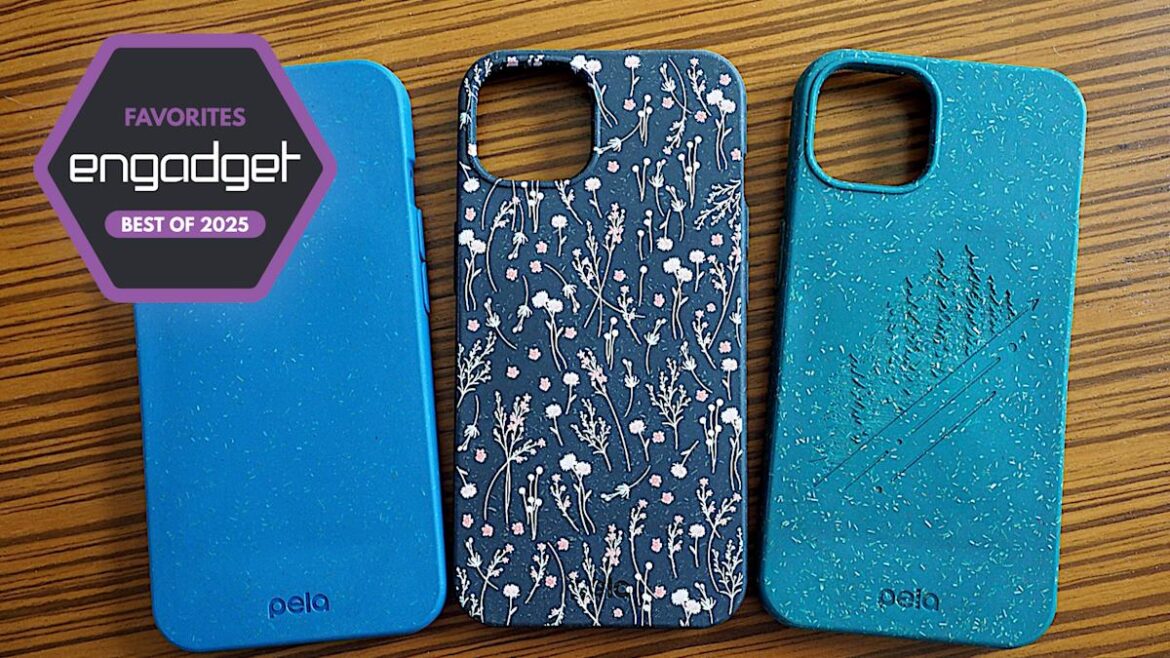
Without a doubt, our favorite eco-friendly, sustainable phone cases are those made by Pela. We absolutely love their colors and designs, plus the fact that the entire line is 100 percent plant-based and compostable. The case material is called “Flaxstic,” which the company says is made from flax straw and compostable bioplastic elastomer. Importantly, it’s also free of BPA, phthalates, cadmium and lead. If you ever decide to get rid of it, you can indeed just chuck in a compost bin and it’ll be completely biodegradable; another win for the planet.

What’s more, Pela cases are available for a wide array of handsets. They can accommodate iPhones (from iPhone 5 onwards), Samsung Galaxies (Galaxy S10 and newer), Google Pixels (from the Pixel 4a on) and even some OnePlus and Huawei models.

For iPhone users, we should note that Pela cases are not MagSafe-compatible by default, but you can purchase a $13 MagSafe module separately. Applying it to my phone was pretty straightforward, so that’s not a big concern, but it’s something to keep in mind.

$65 at Pela

Engadget

iPhone compatible: Yes | Material: Bamboo

Casetify is mostly known for making durable yet stylish phone cases, but it has several eco-friendly options, too. The latest is its Compostable phone cases line, which is made with a 100 percent compostable and plant-based material called “Ecotify.” Basically, it’s a blend of bamboo, biopolymers and starch.

The regular Compostable line has a drop-protection of around four feet, while the Ultra Compostable line, with its extra corner bumpers, has a drop-protection of about 6.6 feet. My recommendation would be to go with the more durable Ultra Compostable option, even if it does cost a bit more.

Unfortunately, Casetify’s Compostable line is only available for iPhones, but it does make other kinds of sustainable cell phone cases for both the iPhone and Samsung Galaxy handsets — they’re just not compostable. Instead, they’re made from 65 percent recyclable materials. Plus, Casetify offers the option to return your old case, which they’ll then reuse or up-cycle to create a new one, thus reducing plastic waste.

The biggest perk of Casetify’s cases is that they’re very customizable. Not only can you pick out your favorite bumper colors and designs (Casetify regularly partners with brands and illustrators to come up with unique styles), but you can actually add engravings to them too. You can also choose to add even more protection with thicker bumpers (Casetify says the “Bounce Case” offers a 13-foot drop protection).

$31 at Amazon

Incipio

iPhone compatible: Yes | Material: Recycled materials

Incipio’s Organicore line of cases is one of the most attractive we’ve seen, plus they are 100 percent compostable. You’ll find them in clear and opaque designs, the latter of which has a buttery texture that makes the case feel more luxurious than you’d think. Most Organicore cases will protect your handset from drops from up to eight feet, and we like the way their raised edges defend against accidental bumps and dings. There are also MagSafe options available, so you can still use your iPhone with magnetic accessories without taking your case off.

$39.99+ at Incipio

OtterBox

iPhone compatible: Yes | Material: Plastic

No, Otterbox’s Defender series of phone cases isn’t compostable or made from recycled materials. But we wanted to mention them here because any phone case that can protect your device enough so that you don’t have to replace it with a new piece of gear will help you be more eco-friendly overall. Most of the environmental impact from smartphones comes during the production phase, so if you can avoid upgrading devices every two years (or even longer), you should.

Enter Otterbox cases, particularly the Defender series, which are some of the best cases that combine serious protection and attractive designs. They’re built to withstand military-grade drop tests with a trio of defenses: a bump-resistant silicone cover, a rigid inner shell to keep your phone in place and a memory-foam backing for added stability. The slightly textured exterior of the case provides better grip and they do come in MagSafe-compatible configurations for iPhone users.

$70 at Amazon

Eco-friendly phone case FAQs

What makes a phone case eco-friendly?

A phone case can be considered eco-friendly when it’s designed to protect not just your phone but also the planet. What sets these cases apart is the use of sustainable materials like biodegradable plastics, recycled plastic waste or even natural materials like bamboo or flax straw. Instead of contributing to plastic pollution, these materials break down naturally over time, or are made from recycled content that reduces waste.

Eco-friendly cases can also go a step further by being compostable, meaning you can toss them in a compost bin at the end of their life and they’ll decompose into the earth without leaving harmful residues. Plus, many brands behind these cases focus on sustainable practices, like reducing carbon emissions during production or offering recycling programs for old cases.

Are compostable phone cases actually biodegradable?

Yes, most compostable phone cases are designed to break down naturally, but how fast they do depends on the material and the conditions. In a home compost bin, some cases may take months to decompose, while in industrial composting facilities the process is quicker. These cases are usually made from plant-based bioplastics, flax or starch blends which return to the soil without leaving behind harmful residue.

Can you recycle old phone cases?

It depends on the material. Standard plastic cases are tough to recycle because they’re often made with mixed plastics and additives so they usually end up in landfills. Some brands run take-back programs where you can send your old case in and they’ll reuse or up-cycle it into new products. If your case is made from single-type plastic or a recycled blend, check with your local recycling facility but in many cases specialized programs are the best option.

Georgie Peru contributed to this report.

Check out more from our spring cleaning guide.


Source link

September 26, 2025 0 comments
0 FacebookTwitterPinterestEmail
The Fairphone 6 standing before various boxes.
Product Reviews

Fairphone 6 review: a new high watermark for the eco-friendly phone

by admin September 24, 2025


Why you can trust TechRadar


We spend hours testing every product or service we review, so you can be sure you’re buying the best. Find out more about how we test.

Fairphone 6: Two-minute review

Fairphone has always delivered on its key promise of making the most eco-friendly smartphone it can, and over subsequent generations it’s also come on leaps and bounds at making a handset that’s has green credentials yet is also a solid Android phone. We’ve always given respectable reviews to handsets from the Dutch phone maker but that’s mostly for the eco-credos, and the quality of the devices has often left something to be desired.

That gets less true with each generation though and the Fairphone 6 shows another step towards the company understanding its true potential. Case in point, while this is still a chunky Android that has one foot in the rugged phone camp, it has a few features which make it stand out in the crowded smartphone market.

The successor to 2023’s Fairphone 5, the continuing key selling point for the new handset is it’s a green phone (literally, depending on which model you buy, but I’m talking about its environmental credentials). The phone incredibly easy to repair yourself, so you don’t need to toss it away should something break. It’s made with loads of recycled materials, from production processes that support fair working conditions. There’s no e-waste in the box and even the making of the phone was done with renewable energy.

While many phone brands might mutter out a line or two about how one component of its phone was made from recycled wool during an announcement, Fairphone makes its environmental mission part of the sales pitch. And with more people each year letting their carbon footprint (or desired lack thereof) inform their purchasing decisions, it remains the best part of buying a Fairphone.

But there’s more; Fairphones have often been pretty hardy but the sixth-gen model literally has military-grade certification to ensure it’s protected. I like a phone that can look after itself and you don’t need to worry with the Fairphone 6; I didn’t even put it in a case.

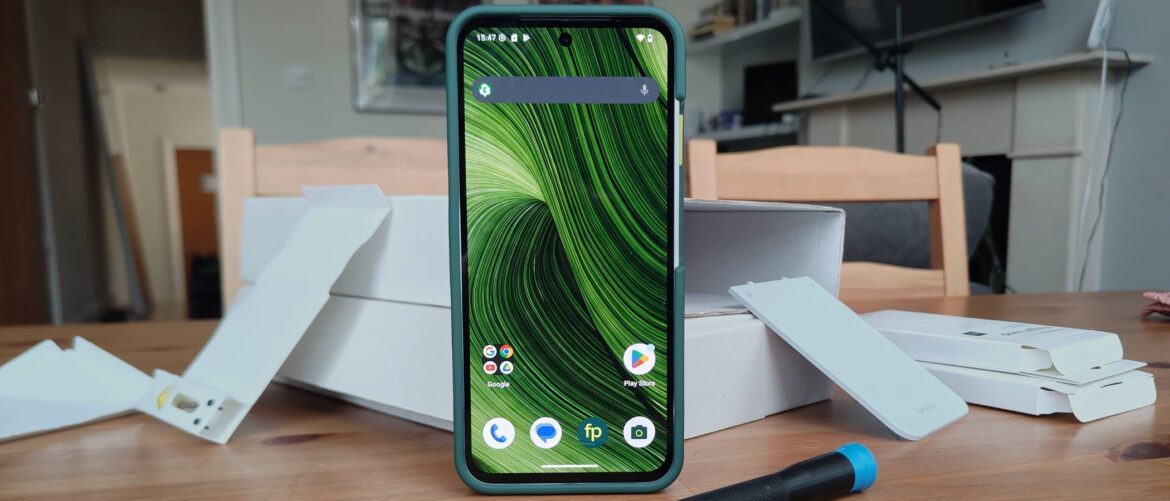
Like past models it’s very easy to replace damaged parts yourself using a little Fairphone-branded screwdriver, but a new change for this generation is the same process can be used to add accessories to the device (albeit ones bought separately). I found it really easy and even fun unscrewing the back panel to add a finger loop, or card holder, or lanyard, and this also encouraged me to poke around inside the device and demystify the scary-sounding self-repair process.

My biggest surprise with the Fairphone 6 was its presence of a 3D time-of-flight sensor on the back, in lieu of a third sensor. These were popular on phones a few years ago but largely as a way of bulking up a specs list, and rarely did they actually contribute much. But on the Fairphone 6, the impact is noticeable as portrait photos have incredibly accurate background blur, getting blurrier with greater distance from the subject. That’s not something you see often on smartphones and it made the Fairphone one of my favorite phones for pictures of myself (if taken on the rear camera, of course).

Sign up for breaking news, reviews, opinion, top tech deals, and more.

That’s not to say that the Fairphone is one of the best camera phones, as pictures tended to be a little dull, lacking in vibrancy and color, and the macro mode worked poorly.

Beyond the areas I’ve discussed, it’s overall a pretty average mid-range phone: its chipset, screen quality, battery capacity and charging speed are all at or slightly below what you’d expect for the price. But the software is stock Android, which provides a nice clean interface and the addition of a handy slider adds some quick functionality when you need it.

Fairphone 6 review: price and availability

(Image credit: Future)

  • Announced in June 2025, released shortly after
  • Costs £499 (roughly $680, AU$990) but only on sale in Europe
  • Pricier version available without Android OS

After being announced in June 2025, the Fairphone 6 was put on sale across July and August, only in Europe. That’s right, Fairphone doesn’t range the phone in the US or Australia… mostly.

The handset costs £499 (roughly $680, AU$990) so it’s a mid-ranged mobile in price. The accessories Fairphone sells and you can see in review images, like the lanyard or finger grip, all cost about £25 (about $34, AU$49). For context the Fairphone 5 was quite a bit pricier at £649 (roughly $800 / AU$1,250), and the price cut is welcome.

There’s another version of the smartphones that’s ‘deGoogled’ and comes with the open-source /e/OS instead of Android as the default operating system. This costs $899 / £549 (at least AU$1,000 but there’s quite a gulf between those two prices). As you can see it is on sale in the US, although at a rather high price compared to the UK and also the European pricing.

I didn’t test this version of the phone so it hasn’t been factored into this review, but specs-wise it’s the same as the Android version of the phone.

Fairphone 6 review: specs

Here’s the spec sheet in full for the Fairphone 6:

Swipe to scroll horizontallyFairphone 6 specsHeader Cell – Column 0 Header Cell – Column 1

Dimensions:

156.5 x 73.3 x 9.6mm

Weight:

193g

Screen:

6.31-inch 20:9 FHD (1116 x 2484) 120Hz OLED

Chipset:

Snapdragon 7s Gen 3

RAM:

8GB

Storage:

256GB

OS:

Android 15

Primary camera:

50MP, f/1.6

Ultra-wide camera:

13MP f/2.2 116-degree

Front camera:

32MP, f/2.0

Audio:

Stereo speakers

Battery:

4,415mAh

Charging:

30W wired

Colors:

Green, white, black

Fairphone 6 review: design

(Image credit: Future)

  • New slider for quick functions
  • IP55 and MIL-STD-810H adds protection
  • Easily repairable or modifable

As with past models, the Fairphone 6 is a pretty blocky handset, but it makes sense for reasons we’ll get to in a bit. It comes in white, green or black; my review unit was white but the accessories were green, hence the color clash, and I found the white model picked up marks and stains pretty easily.

The phone measures 156.5 x 73.3 x 9.6mm and weighs 193g, so it’s a little smaller than many other contemporary Androids but is pretty thick.

The bottom edge of the phone has the USB-C port but there’s no audio jack. On the left side there’s the volume rocker, which I struggled to readily reach, and replacing it on the right edge of the phone, just above the power button, is a slider.

The function of this slider can be picked from the Settings menu; you can use it to turn on Do Not Disturb, Flight Mode, Torch, Dark Mode, Battery Saver or to turn on Fairphone Moments, a stripped-back menu with quick links to the phone’s most useful functions (maps, messages etc). I personally switched it to torch, because I love it when a phone has a quick way to turn on the flashlight.

Housed in the power button is the phone’s fingerprint sensor, as the Fairphone 6 doesn’t have an under-display scanner. In testing, I found this reliable and quick to use.

The Fairphone 6 is one of the few phones that I don’t feel you need to buy a case for, as by default it feels like it’s clad in an armor of hard plastic. But there’s more; not only does it have IP55 certification against dust ingress and water, it has the military-grade MIL-STD-810H protection too. This means it’s passed tests designed by the US Department of Defense to check that it’s reliable in military situations, so it can withstand altitude, extreme temperatures, humidity, intense shocks and so on. You (hopefully) won’t need any of these protections, but it’s a useful little piece of mind so that you know the Fairphone is hardy.

The unique selling point of the Fairphone 6 is that it’s fully repairable; not by an expert or specialist but by you. If a part of your ecp-friendly phone is damaged you can easily buy a new one on Fairphone’s website and replace it with a screwdriver (the company’s video tutorials might help), saving you buying a whole new device if one component is damaged. This is that eco ethos in action.

It’s also the case with accessories, as you can remove the phone’s back panel and replace it with a card holder, a finger loop or similar. The ability to be easily modded like this is perhaps the Fairphone 6’s most distinct upgrade over its predecessor and, frankly, is pretty fun to do too (Fairphone sent me each of the accessories along with the phone, though they’re not included in-box).

Fairphone 6 review: display

(Image credit: Future)

  • 6.31-inchd display feels small compared to contemporaries
  • New refresh rate at 120Hz beats predecessor
  • Sometimes struggles in sunlight

Compared to the behemoth screens of some flagship Android phones, the Fairphone 6 might feel a bit small (or ‘compact’, which is the diplomatic word choice). The display measures 6.31 inches across, so it matches the iPhone 17 in this regard.

The resolution is 1116 x 2484, just a hair above FHD+, and it has a 120Hz refresh rate in a notable upgrade over the last-gen Fairphone. The max brightness is 1,400 nits which is fine, but not as bright as many rivals, and I wouldn’t have minded a bit of extra shine for use on sunny days.

Most of the time, though, the Fairphone 6 display works well, especially since it totes the same number of pixels as a much bigger display but crammed down into a smaller screen to increase the pixels-per-inch count.

Fairphone 6 review: software

(Image credit: Future)

  • Comes with stock Android 15
  • 7 years of updates
  • Fairphone app gives extra insight into phone

Fairphone is one of the few remaining companies to use ‘true’ stock Android – not an Android fork, and not stock Android buried under so many customizations that it feels like a fork anyway.

In the case of the Fairphone 6 that means you’re looking at Android 15, and all the features that come with it: live location sharing, dodgy text warnings, screen time tracking and so on. The handset is due to get upgrades for the next seven years, which would take you up to Android 22 in the year 2033 (if that’s what Google decides to call it).

If you like a clean interface with no added bells and whistles, you’ll like the Fairphone 6’s software. You start free from bloatware and can build up your app library just how you like it.

Fairphone does have one addition: its own app is included on the device at start, and while you can remove it, there are some useful features. Firstly, it lets you find information about the device at a tap, instead of buried away in the Settings menu (although mine told me I had 0GB RAM and 0GB storage, perhaps an issue with a review unit. It lets you buy spare parts and accessories quickly too, providing video tutorials on how to add or replace parts.

But the most important is a phone health option, so you can see how much memory and storage you’ve used up, and also what the phone’s temperature is, giving you a little insight into its operations. The benefit of this is for the device’s longevity, so you can keep it ticking longer.

Fairphone 6 review: cameras

(Image credit: Future)

  • 50MP main and 13MP ultra-wide cameras, 32MP up front
  • Pictures lack contrast and color, but are detailed
  • Rear portraits look really good

Judging by a look at the specs list, Fairphone 6 isn’t being dragged into the camera- sensor pixel wars, dropping many from the past model. Its main camera is a 50MP f/1.6 snapper and it’s joined by a 13MP f/2.2 ultra-wide as well as a 3D time-of-flight sensor. Those specs are absolutely fine for a low-cost phone (except the TOF sensor, a relic of yesteryear, which nine times out of ten doesn’t contribute anything) but nothing to write home about.

Photos taken on the phone are… fine. Forgive the boring descriptor but it’s the most apt one. Snaps have lots of image quality but not much in the way of dynamic range, with a single cloud in the sky dooming the photo with a noticeable lack of color or vibrancy.

In well-lit scenarios things fared a little better, but only a little; the greens of a natural landscape blur into one and a little extra contrast would go a long way. Still, they’re fine-looking for sharing around, especially if you don’t mind going into the edit menu and sprucing them up a little.

Fairphone’s mobiles have rarely had much in the way of photo post-processing optimization, at least compared to competitors, and that’s the case again. It won’t impress anybody but this is a phone for saving the planet, not for capturing sparkly pictures flaunting all the air miles you’ve burned by going to a remote beach for your holiday.

(Image credit: Future)

On the front there’s a 32MP f/2.0 camera for snapping selfies and I generally found it pretty fit for purpose, if still indicative of the rear cameras’ issues; snaps could be a little washed-out and colorless.

For a brief whip around the other specs: you can record video at 4K at 30fps or 1080p at 60fps, and down to 120fps at 1080p in slow-motion mode. Most of the other modes are ones you expect: Pro, panorama, time-lapse and night mode.

There are two modes I’ll flag. First is portrait, with the Fairphone 6 surprisingly touting one of the best iterations of this mode I’ve seen. While snaps weren’t exactly vibrant, the bokeh background blur was accurate and varied in intensity depending on the distance to the phone, which is something I rarely see; that could be the TOF sensor in effect.

The other mode is macro, which really didn’t work too well. Like on most phones without a dedicated macro lens it uses the ultra-wide one, resulting in a pixel-heavy pic, missing the depth of field that such pictures should have. In testing I always turned off macro mode and relied on the main camera for such shots instead.

Fairphone 6 camera samples

Image 1 of 11

A standard picture taken on the Fairphone, in fairly well-lit conditions.(Image credit: Future)An ultra-wide photo taken in overcast conditions, to contrast the following two snaps.(Image credit: Future)A standard photo taken in overcast conditions, to contrast the preceding and following snaps.(Image credit: Future)A 2x zoom snap taken in overcast conditions, to contrast the two previous snaps (the phone uses digital zoom).(Image credit: Future)A canape board taken at 1x zoom in artificial lighting at close range.(Image credit: Future)A portrait snap of a man to show the bokeh effects (white bars added manually before adding this picture to the web).(Image credit: Future)A macro picture of some flowers… or an attempt to photograph them.(Image credit: Future)The flowers from the previous photo, but using the main camera, to show how improved it is.(Image credit: Future)Another standard picture of a closer object.(Image credit: Future)Another standard photo of a further subject.(Image credit: Future)A final standard photo showing a woodland scene with mixed lighting.(Image credit: Future)

Fairphone 6: performance and audio

  • Mid-range Snapdragon 7s Gen 3 chipset
  • Single 8GB/256GB model
  • Bluetooth 5.4 or USB-C port for audio, no jack

As is the way with Fairphone’s mobiles, the Gen 6 doesn’t have a top-end chip, but it has enough power that you won’t find it too slow for everyday use. The chipset here is the Snapdragon 7s Gen 3, which we’ve also seen in the likes of the Nothing Phone 3(a) Pro and Xiaomi Redmi Note 14 Pro Plus.

This is a mid-range piece of kit, capable of handling gaming in a mostly fine fashion, though maybe not at the top graphics options if you don’t want stutters, and all everyday tasks.

When I put the phone through a Geekbench 6 benchmark test, it returned a multi-core average score of 3,430, which reflects the chipset; Snapdragon 600s often sit at around 2,000 points while 800s I’ve tested recently have gone to the mid 4,000s.

Paired with the chipset is 8GB RAM and 256GB storage, and there’s only one configuration available. While 8GB RAM is nothing to write home about, a spec that flags this as a mobile not designed for power-users, the storage is a solid amount that compensates for the lack of a microSD card slot.

It’s 2025 so of course there’s no 3.5mm audio jack for audio, Fairphone ditched that years ago when everyone else did. Instead you can listen to music using the Bluetooth 5.4 support or using a USB-C adaptor. The stereo speakers aren’t exactly impressive but that’s normal for a smartphone.

  • Performance score: 3.5 / 5

Fairphone 6 review: battery life

  • Relatively slender 4,415mAh battery
  • Slow 30W charging

(Image credit: Future)

The Fairphone 6 has a 4,415mAh battery, one which the company estimates will keep you going for “almost two days” from 100% power. I wouldn’t go that far, and I’d put the lasting power at about a day, or a little bit longer if you’re not an intensive user.

That’s a fine battery life for a smartphone, even if 4,415mAh may seem anemic given that most contemporaries have pushed it to 6,000mAh. Fairphone’s own optimizations and software and spec choices often counter smaller-capacity batteries.

Of course, if your battery starts to diminish or go wrong, it’s one of the many parts of the phone you can swap out very easily.

Charging is done at 30W, which is again a little lower than rivals, and you’ll have to wait for well over an hour to get from empty to full. There’s no kind of reverse or wireless powering.

Fairphone 6 review: value

(Image credit: Future)

What price would you put on a phone that looks after the planet?

Rhetoric aside, the Fairphone 6 isn’t priced particularly competitively when you look at the specs, but what sets its apart is its lasting power.

Not only does its IP and military certification ensure it’ll survive damage much better than other handsets on the market, but the fact you can replace ailing parts ensures that the mobile’s lifespan will far outstrip anything else you might be considering.

After all, the average phone lasts for under three years, especially cheaper models. The Fairphone 6 will last you longer than multiple other models if you let it.

Should you buy the Fairphone 6?

(Image credit: Future)Swipe to scroll horizontallyFairphone 6 score card

Attributes

Notes

Rating

Value

The potential lasting power of this phone means its price seems like a bargain, when looking at the bigger picture.

4.5 / 5

Design

It’s no looker, but it’s well protected, easily modifiable and has a handy new slider.

4 / 5

Display

If you want a phone with a smaller screen, the Fairphone will fit you perfectly.

3.5 / 5

Software

The software is nice and clean, as Google intended, but without the extra features Android forks bring.

3.5 / 5

Camera

Other than the impressive portrait capabilities, the Fairphone 6 cameras are bang average.

3.5 / 5

Performance

The Snapdragon chip here is fine for everyday use for most people, but gamers will pine for more.

3.5 / 5

Battery

The battery is small and the charging slow, but optimizations ensure the actual battery life is okay.

3.5 / 5

Buy it if…

Don’t buy it if…

Fairphone 6 review: Also consider

If you don’t think this mobile is right for you, let’s look at some similar-priced handsets. Just note, other than the first, these won’t retain the Fairphone’s green principles.

Swipe to scroll horizontallyHeader Cell – Column 0

Fairphone 6

Fairphone 5

Xiaomi Redmi Note 14 Pro Plus

Nothing Phone 3a Pro

Starting price (at launch):

£499 (roughly $680, AU$990)

£649 (roughly $800 / AU$1,250)

$399 / £399 (roughly AU$800)

$459 / £449 / AU$849

Dimensions:

156.5 x 73.3 x 9.6mm

161.6 x 75.8 x 9.6mm

162.53 x 74.67 x 9.95mm

163.52 x 77.5 x 8.39mm

Weight:

193g

212g

210g

211g

OS (at launch):

Android 15

Android 13

Android 14, HyperOS

Android 15, NohtingOS 3.1

Screen Size:

6.31-inch

6.46-inch

6.67-inch

6.77-inch

Resolution:

1116 x 2484

2700 x 1224

2712 x 1220

1080 x 2392

CPU:

Qualcomm Snapdragon 7s Gen 3

Qualcomm QCM6490

Qualcomm Snapdragon 7s Gen 3

Qualcomm Snapdragon 7s Gen 3

RAM:

8GB

8GB

8GB / 12GB

12GB

Storage (from):

256GB

256GB

256GB / 512GB

256GB

Battery:

4,115mAh

4,200mAh

5,110mAh

5,000mAh

Rear Cameras:

50MP main, 12MP ultra-wide

50MP main, 50MP ultra-wide

200MP main, 8MP ultra-wide

50MP main,. 50MP zoom, 8MP ultra-wide

Front camera:

32MP

50MP

20MP

50MP

How I tested the Fairphone 6

(Image credit: Future)

  • Review test period = 2 weeks
  • Testing included = Everyday usage, including web browsing, social media, photography, video calling, gaming, streaming video, music playback
  • Tools used = Geekbench 6, Geekbench ML, GFXBench, native Android stats

I tested the Fairphone 6 for just over two weeks to write this review, using it as my normal mobile in this time. As stated, I was sent the white version of the mobile along with all the extra accessories.

The testing process included a mix of experience and ‘lab’-style, so I’d use the handset as my normal phone for some of the time but also conducted a battery of benchmarking tests as well. I also took the phone with me on holiday, hence the camera samples.

I didn’t test the military-standard protection of the phone, due to not having a nearby warzone or extreme climate in which to do so. I’ll have to take Fairphone’s word for that.

As well as this mobile, I’ve tested the last few Fairphone mobiles, alongside plenty of other devices since I started reviewing for TechRadar in early 2019.

Read more about how we test

First reviewed September 2025


Source link

September 24, 2025 0 comments
0 FacebookTwitterPinterestEmail
Sims 4 YouTuber Eva Rotky talks what's desperately missing in build/buy and the eco-friendly fairytale of Enchanted by Nature
Game Reviews

Sims 4 YouTuber Eva Rotky talks what’s desperately missing in build/buy and the eco-friendly fairytale of Enchanted by Nature

by admin August 22, 2025


Since the beginning of the decade, The Sims 4 has shown a consistent preoccupation with sustainable living and reclaiming industrial spaces.

Its most recent add-on, July 2025’s Enchanted by Nature expansion, is just the latest DLC to tackle a theme that was already present in the aptly-named Eco Lifestyle expansion pack, as well as the Cottage Living and Horse Ranch packs, the Tiny Living stuff pack, and the Werewolves game pack (that last title sounds a little left-field, but trust me, it fits the theme).


To see this content please enable targeting cookies.

Manage cookie settings

To learn more about this growing design trend within The Sims 4 and its player community, I spoke to Eva Rotky, a Sims YouTuber who describes herself as “an interior designer by day and a Sims builder by night”.

She has been gaming as a hobby since childhood, but it wasn’t until the pandemic lockdowns that friends encouraged her to begin making YouTube videos of her Sims builds, which eventually led to her joining the EA Creator network in 2022. “If my seven-year-old self could see or know these things,” she says, “She’d be like, absolutely not! I don’t believe it!”

Eva has been a Simmer since the days of the original game back in the early 2000s, so naturally she’s well-positioned to appreciate the changes that have come to the series over its 25-year history – in particular, the expansion of build mode, one of the few features which the majority of players seem to agree has improved with every new gen of the franchise.

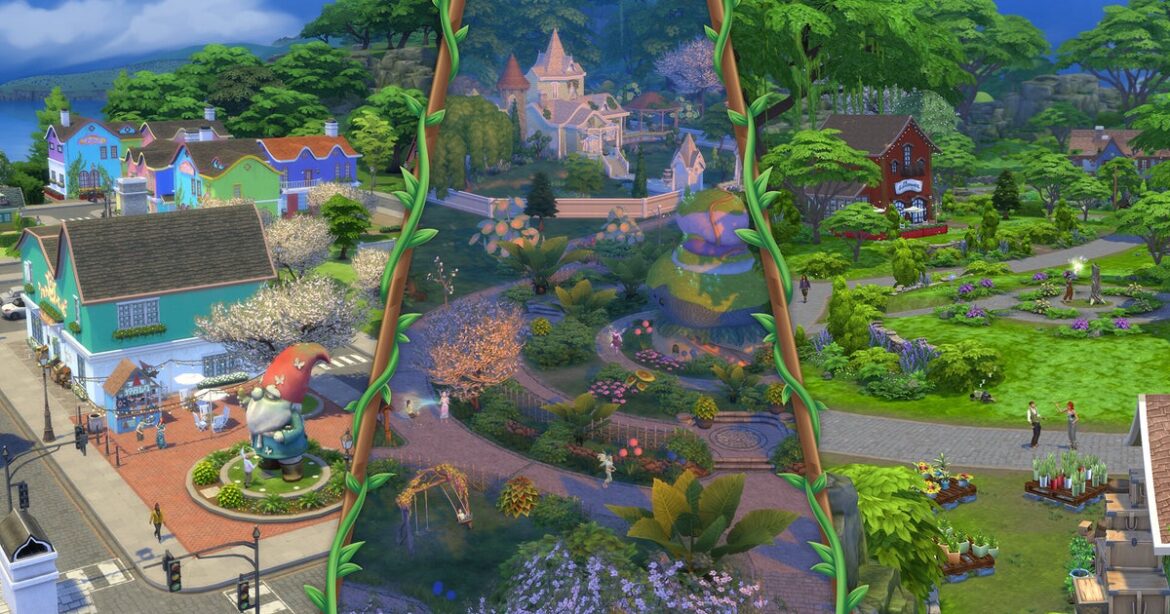
The Irish folklore inspired world of Innisgreen gave fairies and PlantSims a new place to call home in Enchanted by Nature.Image credit: EA / Maxis

“I do think that there is a trend at the moment outside of The Sims to go back to nature and to want to reconnect with nature,” Eva agrees. “I think that’s especially since COVID and lockdown that people are cherishing nature a bit more and wanting to embrace it, not be stuck in a concrete city and a one-bedroom apartment. I think it’s definitely reflecting a trend in society as well, but obviously also those are features in the game that The Sims community has always wanted to have.”

So does this extend to simulated living too? “I don’t know what it is about The Sims, but being outdoors is so much more fun in The Sims than just being indoors in your house,” Eva explains, adding that: “One of my favourite things to do in The Sims is the landscaping, and it’s not something I’m particularly interested in outside of The Sims, I don’t really know plants!”

Despite some Sims skills applying to real life more than others – Eva’s day job is in interior design, and she even mentions including Sims builds in her portfolio when she applied for the role she holds now – there’s no denying that The Sims 4’s whimsical vision of the natural world has a hold on her.

“Creating landscapes in The Sims is so satisfying, just making a garden or a space that looks natural with plants growing out everywhere and not perfectly pristine all the time. In my Enchanted by Nature build I went heavy on the landscaping, I spent most of my time on it just in the landscaping tools. Even though the build/buy is lovely, the exterior was kind of where it was at with the new roof colours and being able to place plants on roofs with the new base game update.”

Watch Eva put her ideas into practice with her Enchanted by Nature build!Watch on YouTube

Updates to The Sims 4 – whether free or paid – are of particular interest to Eva, who makes a point of not using custom content (CC) in her builds, and keeps her use of mods to a minimum. This ensures her designs are more accessible for players on console, for example, as well as adding an extra layer of creative challenge; and it also means that Eva is very attuned to critique of what’s new in every DLC release.

“I’ve enjoyed it more in recent years because of the build/buy and the quality of the items really changing and improving in my opinion, and there being more of a focus on the actual design of the items that really makes it easier for me to use no CC in my builds,” she says. “It’s always a challenge and I do enjoy it. Sometimes it’s a little frustrating, but in recent years I would say it’s been so much easier because of the really beautiful items that the team have been creating.”

This seems like a good time to address the elephant in the room – or should that be the spiral staircase very prominently not in the room? – and ask Eva what’s still on her wishlist for future updates. “My first thought was spiral staircases!” Eva confirms. “I miss those so desperately! That would be my number one wishlist item. Probably it’s so small, but it makes such a difference.”

Given that spiral staircases almost go without saying, though, Eva also adds that: “One thing I would also really love would be to be able to create not-full-length walls – so you could create a few more shapes, do half the length of the wall or something like that. I think that’d be really fun!”

A recent base game update brought greenhouses and living roof options to The Sims 4, further supporting that recurring theme of greener living. | Image credit: EA / Maxis

Eva is also quick to point out that, despite not wearing its eco credentials on its sleeve quite so blatantly as Enchanted by Nature, the previous Sims 4 expansion pack – March’s Businesses & Hobbies – still quietly carries the theme.

Nordhaven – the world that shipped with the pack – draws its primary inspiration from a mixture of Stockholm and Copenhagen; and while the name of the city may be a little on-the-nose, EA deserves credit for avoiding the obvious one-note Ikea jokes in favour of a more authentic approach to designing a modern Scandinavian urban environment, both in terms of public areas and living spaces.

To prove the point, Businesses & Hobbies features some of Eva’s own work, in the form of two pre-made lots in Nordhaven: a neoclassical museum in the Gammelvik historic district and a converted foundry in Iverstad, the latter styled as a formerly industrial neighbourhood where defunct factory buildings are being repurposed as residential dwellings.

The builds are, as you might expect, very distinct from one another, demonstrating both the breadth of Eva’s design interests and the flexibility of what can be created in the game as it stands.

“Scandinavian mid-century is kind of my bread and butter to be honest, and industrial as well, so it was nice to create something that felt so realistic,” Eva says of her Iverstad build. “And every time I’m in [Nordhaven], I feel like I’m where the inspiration came from. I feel like I’m not in The Sims, I feel like I’m actually in Copenhagen or somewhere, which is really lovely.”

Nordhaven, where Eva’s builds are featured in-game, is far more down-to-earth than Innisgreen, but they share their eco-conscious themes. | Image credit: Maxis / Electronic Arts

All of this ties neatly into Eva’s overarching design philosophy: “I think the balance to strike in any design is always not to be one-sided,” she explains. “If you only focus on nature then that will come with challenges and limitations. And what I love doing (also in real life design) is combining natural materials with man-made materials. I think that kind of combination and contrast between the two is actually how you create something that’s really timeless.”

One final thing that strikes me about Eva’s Sims content is that, while you might expect her interests to be very grounded in aspirational design, she’s never afraid to let her more whimsical side show.

By her own admission, her favourite among her own builds is not a high-end mansion but a recreation of one of the post-apocalyptic fortresses seen in The Last of Us – which is, after all, nothing if not a defunct space being repurposed by humans and reclaimed by nature at the same time.

Whether it’s a luxurious mansion, a zombie-proof stronghold, or a fairytale cottage, Eva recognises that the unifying theme – the one thing that perhaps draws together most Simmers, despite being an incredibly diverse player base – is the wish fulfillment. “What I really like about The Sims is that you can do whatever you want,” she explains. “You might never be able to live in any of these houses in real life, but you can create your own little reality in The Sims and do it there.”


Source link

August 22, 2025 0 comments
0 FacebookTwitterPinterestEmail

Categories

  • Crypto Trends (1,098)
  • Esports (800)
  • Game Reviews (772)
  • Game Updates (906)
  • GameFi Guides (1,058)
  • Gaming Gear (960)
  • NFT Gaming (1,079)
  • Product Reviews (960)

Recent Posts

  • This 5-Star Dell Laptop Bundle (64GB RAM, 2TB SSD) Sees 72% Cut, From Above MacBook Pricing to Practically a Steal
  • Blue Protocol: Star Resonance is finally out in the west and off to a strong start on Steam, but was the MMORPG worth the wait?
  • How to Unblock OpenAI’s Sora 2 If You’re Outside the US and Canada
  • Final Fantasy 7 Remake and Rebirth finally available as physical double pack on PS5
  • The 10 Most Valuable Cards

Recent Posts

  • This 5-Star Dell Laptop Bundle (64GB RAM, 2TB SSD) Sees 72% Cut, From Above MacBook Pricing to Practically a Steal

    October 10, 2025
  • Blue Protocol: Star Resonance is finally out in the west and off to a strong start on Steam, but was the MMORPG worth the wait?

    October 10, 2025
  • How to Unblock OpenAI’s Sora 2 If You’re Outside the US and Canada

    October 10, 2025
  • Final Fantasy 7 Remake and Rebirth finally available as physical double pack on PS5

    October 10, 2025
  • The 10 Most Valuable Cards

    October 10, 2025

Newsletter

About me

Welcome to Laughinghyena.io, your ultimate destination for the latest in blockchain gaming and gaming products. We’re passionate about the future of gaming, where decentralized technology empowers players to own, trade, and thrive in virtual worlds.

Recent Posts

  • This 5-Star Dell Laptop Bundle (64GB RAM, 2TB SSD) Sees 72% Cut, From Above MacBook Pricing to Practically a Steal

    October 10, 2025
  • Blue Protocol: Star Resonance is finally out in the west and off to a strong start on Steam, but was the MMORPG worth the wait?

    October 10, 2025

Newsletter

@2025 laughinghyena- All Right Reserved. Designed and Developed by Pro


Back To Top
Laughing Hyena
  • Home
  • Hyena Games
  • Esports
  • NFT Gaming
  • Crypto Trends
  • Game Reviews
  • Game Updates
  • GameFi Guides
  • Shop

Shopping Cart

Close

No products in the cart.

Close