Laughing Hyena
  • Home
  • Hyena Games
  • Esports
  • NFT Gaming
  • Crypto Trends
  • Game Reviews
  • Game Updates
  • GameFi Guides
  • Shop
Tag:

Crisis

Toyota, Yamaha, And Byd Accept Tether In Bolivia Amid Dollar Crisis
GameFi Guides

Toyota, Yamaha, and BYD Accept Tether in Bolivia Amid Dollar Crisis

by admin September 22, 2025


Three major international vehicle manufacturers, Toyota, Yamaha, and BYD, have started accepting Tether (USDT) in Bolivia. The move marks a turning point in the country’s shift toward crypto as its US dollar reserves collapse.

Tether CEO Paolo Ardoino confirmed on Sunday that the companies now allow customers to buy vehicles using USDT. Crypto security firm BitGo also verified on X the first Toyota purchase with Tether in Bolivia on Saturday. Photos shared by Ardoino on X show dealerships displaying banners calling USDT an “easy, fast, and safe” way to pay.

Toyota, BYD, Yamaha accepting USDT in Bolivia

“Tu vehiculo en dolares digital”

USDT is the digital dollar for hundreds of millions in the emerging markets.
Ubiquity. pic.twitter.com/0X0SH3USXX

— Paolo Ardoino 🤖 (@paoloardoino) September 21, 2025

Bolivia’s Growing Reliance on Crypto

Bolivia was once among the last Latin American countries to resist digital assets. But in June 2024, it lifted its long-running crypto ban, allowing banks to process Bitcoin and stablecoin transactions. Since then, adoption has spread quickly.

In March, the state-owned oil and gas company YPFB gained approval to accept crypto for fuel imports, a response to the country’s worsening currency shortage. Shops at airports have even started pricing goods in USDT, while import businesses rely on stablecoins to pay foreign suppliers.

According to Trading Economics data, Bolivia’s foreign exchange reserves have declined by 98% over the past ten years, falling from $12.7 billion in 2014 to just $171 million in August 2025. While locals still use the boliviano in daily life, many are turning to stablecoins or dollars to protect their purchasing power.

Politics and the Road Ahead

Bolivia heads into a run-off election on October 19. Candidate Rodrigo Paz Pereira has proposed blockchain for transparency, while his rival Jorge “Tuto” Quiroga has kept his crypto stance vague. The winner will inherit the challenge of stabilizing an economy under severe strain.

This trend demonstrates that crypto is not only an investment instrument in Bolivia, but it has turned into a lifeline of trade, business, and even car buyers. The narrative is an indication of how economic crises can hasten the use of digital currency across the globe.

Also Read: Tether Launches New U.S. Stablecoin, USAT, Tapping Bo Hines as CEO



Source link

September 22, 2025 0 comments
0 FacebookTwitterPinterestEmail
The silent quantum crisis that could undermine DeFi
NFT Gaming

The silent quantum crisis that could undermine DeFi

by admin September 7, 2025


Disclosure: The views and opinions expressed here belong solely to the author and do not represent the views and opinions of crypto.news’ editorial.

Stablecoins are the backbone of the digital economy. They enable payments and trading, providing stability and efficiency on the blockchain. With institutional adoption on the rise and regulations improving following the passage of the  GENIUS Act, stablecoin markets appear stronger than ever.

Summary

  • Stablecoins face a looming quantum threat — current cryptography (RSA, elliptic curves) could be broken once quantum computers hit “Q-Day,” exposing billions in assets to instant theft.
  • The risk is urgent and underestimated — experts warn quantum machines may arrive within a decade, while finance is already preparing with quantum risk tools; yet crypto lags dangerously behind.
  • Blockchain immutability is a double-edged sword — stablecoins can’t easily swap out old cryptography, leaving dormant wallets and static addresses highly vulnerable.
  • The solution: quantum-safe cryptography + crypto-agility — lattice- or hash-based signatures, paired with upgradable infrastructure, can future-proof stablecoins against attacks.
  • Regulation is catching up — U.S. laws like the GENIUS Act, along with global standards from NIST, will soon require quantum resilience, making preparedness a competitive and compliance necessity.

However, the financial world faces a quantum disaster. While billions flow through stablecoins, few in the crypto sector discuss the quantum crisis that could wipe out stability overnight. If we don’t act now to create quantum-proof stablecoins, the entire digital asset economy could collapse with one breakthrough. Beneath the success of digital assets lies a threat: quantum computing.

While stablecoin issuers celebrate compliance and innovation, many remain vulnerable to the growing risk of quantum attacks. The cryptography that stablecoins rely on, such as elliptic curves and RSA signatures, could be susceptible to attacks from quantum machines. National security agencies and cybersecurity experts have warned about this, urging critical infrastructure to start transitioning to post-quantum cryptography before 2030. Once quantum computers reach “Q-Day”, the day they can break current public-key cryptosystems, any stablecoin using old cryptography would be at risk of immediate attack. It’s estimated that unchecked quantum computing could lead to up to $3.3 trillion in indirect financial losses due to vulnerabilities in infrastructure. 

Given the global scale of stablecoins, with billions in daily volume, they represent an attractive target. However, there is a solution to “future-proof” stablecoins today. 

Future-proofing stablecoins 

Quantum preparedness is now a hot topic in global finance. However, the crypto sector is lagging in this discussion. By 2026, 65% of banks and 70% of hedge funds are expected to utilize quantum risk modeling tools. Almost half of global CFOs see quantum technology as vital for their long-term strategies. These trends show an urgent need for quantum-safe solutions. They also highlight the importance of strengthening the core cryptography in financial systems.

The quantum threat is closer than many think. Experts predict that powerful quantum computers, capable of breaking current cryptographic standards, could emerge within a decade or even sooner. Recent market research indicates that the global quantum computing market is expected to grow from $1.68 billion in 2025 to nearly $30 billion by 2034. This growth reflects rapid technical advancements and increasing investments from both the government and private sectors. 

However, stablecoins face unique risks. The immutability of blockchain means that tokens can’t be easily altered with new cryptography after launch. This immutability is a double-edged sword. It ensures that history remains unchanged, but also means cryptographic flaws cannot be easily repaired. As quantum technology advances, dormant or legacy wallets and static addresses may become vulnerable. Without upgrades, billions in value may be susceptible to theft. 

Why quantum could break stablecoins…sooner than you think 

The time to future-proof stablecoins is now. Strong issuers must quickly adopt quantum-resistant cryptography. They should use advanced signature schemes, such as lattice-based or hash-based cryptography, to protect against attacks. These types of cryptography are considered “quantum-safe.” Unlike older systems such as RSA or elliptic curve cryptography, no known or expected quantum algorithm can efficiently break them. 

This makes them the best choice for securing digital money in a quantum future. Quantum computers can solve the math problems behind elliptic curves and RSA cryptography, which stablecoins currently use. This means digital signatures could be broken almost instantly when powerful quantum machines become available. Since public keys are always exposed on blockchains, a quantum-equipped attacker could swiftly compute private keys. This would allow unauthorized transactions across entire token networks.

However, technical upgrades alone are not enough. Stablecoins should be designed with “crypto-agility.” Their infrastructure must allow seamless upgrades to security and enable protocols to adapt quickly as quantum standards change. This should happen without migration risks or disruptive forks. 

Regulatory readiness is also crucial. As central banks and global agencies accelerate the development of quantum-readiness roadmaps, stablecoin issuers can expect new certification standards and deadlines for demonstrating quantum-safe compliance. Landmark legislation in the U.S., especially the GENIUS Act, has created the country’s first comprehensive federal regulatory framework for stablecoins. It mandates that all issuers wanting to operate in the U.S. must meet oversight, transparency, and compliance requirements. 

The regulatory language has focused on solvency, consumer protection, and anti-fraud rules. Now, these standards are changing fast. They’re starting to incorporate tech resilience, such as quantum-safe cryptography. The U.S. National Institute of Standards and Technology (NIST) and other agencies are finalising new post-quantum cryptographic standards. Many regulators will likely need these standards for all high-value digital asset systems by 2030. The GENIUS Act allows regulators to create additional rules and capital requirements for risk management. This will help set clear quantum-readiness benchmarks in future guidance and rules. 

Planning for these changes will help reduce systemic risks. The stablecoin sector is interconnected and high-value. A single point of failure could harm global market trust. Being unprepared is not an option. 

The rise of programmable stable-value tokens in digital economies makes addressing quantum risk even more urgent. This is not just a guess; it’s a challenge that needs proactive, industry-wide action to tackle the $3.3 trillion in potential exposure. Stablecoins that treat post-quantum infrastructure as a baseline, utilize quantum-safe cryptography, and are designed for crypto-agility will set the new gold standard for digital money. Future-proofing stablecoins means ensuring trust and resilience in the quantum age. Those who lead on quantum security today may set the standards and enjoy the rewards, becoming the architects of a safer financial future. 

Chase Ergen

Chase Ergen is an entrepreneur and strategic advisor at the intersection of telecommunications and decentralized finance. With early exposure to the satellite industry as the son of Dish Network and EchoStar (NASDAQ: SATS) founder Charlie Ergen, he has built a career connecting legacy infrastructure with emerging digital technologies. He currently serves on the Board of Directors at DeFi Technologies Inc., advising on institutional strategy and digital asset market growth. He is also Executive Director of the Make America Wealthy Again (MAWA) Super PAC, where he advocates for innovation-focused policy and financial inclusion. Ergen brings two decades of experience in satellite and telecommunications, with strategic involvement in 5G development, blockchain infrastructure, and fintech policy. His work is driven by a commitment to building accessible, transparent, and future-ready financial systems.


Source link

September 7, 2025 0 comments
0 FacebookTwitterPinterestEmail
Digital identity is the infrastructure crisis no one admits
GameFi Guides

Digital identity is the infrastructure crisis no one admits

by admin September 6, 2025


Disclosure: The views and opinions expressed here belong solely to the author and do not represent the views and opinions of crypto.news’ editorial.

In the early days of the internet, you didn’t need a password to browse, and online communities operated on good faith and shared curiosity. But as the web evolved into the infrastructure of modern life, helping us govern our money, politics, and information flows, digital identity never caught up.

Summary

  • Identity is the missing layer of the internet — while we’ve digitized commerce and communication, online trust still rests on fragile, centralized logins and surveillance systems.
  • Verification ≠ identity — proving you hold a key or match a photo isn’t enough; true digital identity must be portable, composable, and tied to both humans and AI agents.
  • AI platforms are becoming dangerous gatekeepers — without trustworthy identity, we risk a future where bots, corporations, and governments control access, incentives, and even speech.
  • Current fixes fall short — fragmented age-verification tools and surveillance-heavy systems raise more privacy questions than they solve.
  • The solution: self-owned, privacy-preserving identity — cryptographic passports and zero-knowledge proofs can enable scalable trust without sacrificing freedom, creating a post-platform internet built on authenticity.

We’ve digitized commerce, communication, and computation, but identity is still a patchwork of logins and surveillance. The very thing that enables trustworthy relationships in the physical world, knowing who you’re interacting with, is nonexistent online.

Digital identity is the missing layer of the internet. Without it, everything we build rests on sand. 

Verification isn’t enough

We often confuse identity with verification. Proving that you hold the private keys to a wallet, or that your face matches a passport photo, is only part of the story.

But identity must do more. It must be portable and composable across systems, supporting not just access, but trust. And it must work not just for people, but also the bots and agents we’re increasingly relying on. 

Trust infrastructure is the fundamental challenge to be solved to fix digital identity. 

The perfect storm

AI is currently being built like platforms, with a single point of failure. We’ve seen this movie before, on the web, Twitter, and Facebook, which centralized the discovery layer of the internet, concentrating control over what we see, share, and believe. AI is heading in the same direction, with a handful of companies owning the gateways to intelligence itself. If we allow this trajectory to continue, the future of AI will be defined not by open innovation, but by gatekeepers who control the inputs, outputs, and incentives of the entire ecosystem.

AI platforms are fast becoming the new gatekeepers of human activity. They train on our conversations and increasingly act on our behalf. But they lack accountability.

AI agents can generate content, apply for jobs, purchase products, and even negotiate contracts. But how do you know if that agent is operating on behalf of a real, unique human? Or a farm of coordinated bots? If you can’t tell the difference, you can’t trust the output.

The question becomes: how do we prove personhood and tie it to real accountability, without giving up privacy or control? 

The current system is failing us

Last week, the EU launched a prototype age verification app across five countries, claiming to use zero-knowledge proofs to confirm if someone is over 18 without exposing their identity. The move is part of the EU’s broader Digital Services Act enforcement and a signal that lawmakers are finally starting to treat identity as infrastructure.

In the UK, where age verification has already been mandated under the Online Safety Act, platforms are relying on everything from facial recognition to credit card checks to behavioral data, often powered by opaque third-party providers.

These fragmented approaches raise more questions than they answer. Who stores the data? Who decides who gets access? And what happens when AI systems start using this data to infer, manipulate, or impersonate our identities?

You only need to look at the privacy policy of AI startups like Friend, which states it can use data from “everything you say, hear, and see”, to realize how far we’ve already drifted toward the normalization of surveillance.

Scaling trust 

To establish and scale trust, we need ways to prove uniqueness and accountability. But to protect freedom, we must do it without exposing personal data, linking everything on-chain, or submitting to government-run surveillance regimes. Today, identity is centralized and owned by platforms and governments, along with all the data tied to it, leaving individuals with no real control over who sees it, how it’s used, or when it can be taken away. Owning your identity means holding it yourself, not renting it from a provider. This starts with a secure one-to-one mapping between a biological human and a digital representation, encrypted and held locally, a version of a cryptographic passport that’s verifiable, portable, and private.

From there, we can use zero-knowledge proofs to let users verify traits like age, location, and credentials, without disclosing underlying information. Combined with social graph validation, this would allow us to create identity networks that grow virally, not through centralized registration but through real human connections.

This system covers both humans and AI agents alike, ensuring that every autonomous actor on the network can be tied back to a real, accountable individual without ever needing to reveal who they are.

Post-platform Internet

Just as property rights enabled the Industrial Revolution, and Bitcoin (BTC) enabled permissionless finance, we need to unlock the next evolution of digital coordination, and that is authenticity at scale.

Every human should have a portable, self-owned identity that can be used across platforms. We also need to ensure that bots and agents can be audited and held accountable, and that DAOs and marketplaces can make decisions based on real, unique participants, not sybil attacks or fake accounts.

The world we’re sleepwalking toward

Let’s be honest about where this is heading if we do nothing. Over 50 countries are developing CBDCs, AI platforms are cooperating with governments, and wearable devices record our speech, location, heart rate, and more. The most sensitive data about our behavior, thoughts, and preferences will sit in private systems waiting to be breached or weaponized.

If we don’t act now, centralized identity, CBDCs, and AI platforms will converge into a system where governments can cut you off entirely for something you say in public, just as it worked in the USSR, only 100 times more efficient, more permanent, and harder to escape.

What we need is a proactive identity layer for the entire internet. Not just for web3, but for every digital interaction, whether it’s social, financial, creative, or autonomous. One that’s not owned by governments or corporations and verifies human uniqueness without surveillance. One that prioritizes privacy, dignity, and individual freedom at the protocol level.

The future of the internet demands more than patches; it demands new primitives.

Kirill Avery

Kirill Avery is a self-taught coder since the age of 11. He built Europe’s largest consumer social app at 16 (15M users). The youngest engineer at VK.com and the youngest solo founder accepted into Y Combinator.


Source link

September 6, 2025 0 comments
0 FacebookTwitterPinterestEmail
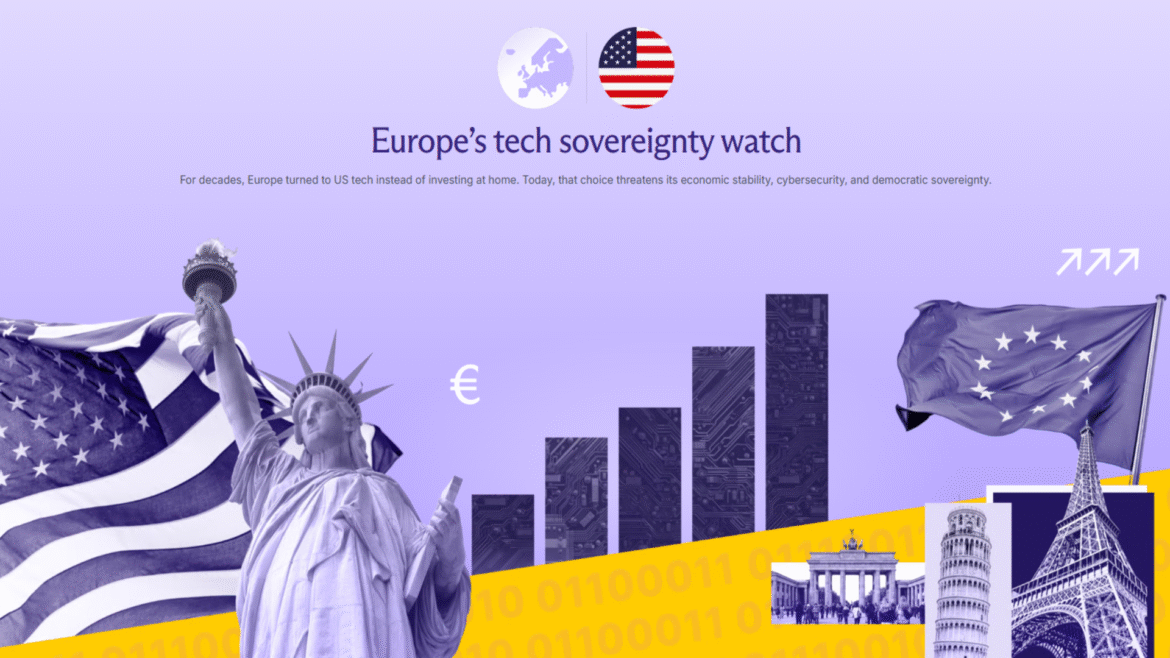
European Technology Sovereignty Watch
Gaming Gear

Europe’s silent tech crisis deepens as entire industries run on American systems while sovereignty slogans collapse under Washington’s shifting political winds and corporate dominance

by admin August 25, 2025


  • European firms are deeply locked into foreign office suites and systems
  • American platforms manage the communication backbones of Europe’s largest corporations
  • Reliance on external providers exposes utilities and healthcare to foreign oversight

For years, European governments and corporations leaned heavily on American technology offerings instead of nurturing local alternatives.

That choice now carries visible consequences, as sanctions and shifting trade rules brought in by the Trump administration drastically reshape the balance of power.

A recent analysis of business email domains across Europe by Proton shows a striking majority of publicly listed firms rely on American providers such as Google and Microsoft.


You may like

Data reveals the depth of reliance

Behind the rhetoric of digital sovereignty, the reality is that much of Europe’s digital infrastructure rests on technology stacks that entities outside its borders control. This is not just about convenience software but also about essential systems that underpin finance, healthcare, and utilities.

Email may appear mundane, but it often serves as the gateway to office software, online collaboration platforms, and cloud-based storage.

When a company commits to a provider for email, it usually adopts the full suite, embedding foreign technology deep into its operations.

This trend is not limited to smaller economies but also includes the continent’s largest players, where dependence cuts across industries from energy and telecommunications to pharmaceuticals.

Sign up to the TechRadar Pro newsletter to get all the top news, opinion, features and guidance your business needs to succeed!

In countries like Iceland, Norway, Finland, and Sweden, over 90% of publicly listed companies rely on American services for email and related infrastructure.

However, the shocker is probably Ireland, which is at loggerheads with the US on several policies, but 93% of its businesses depend on American tech.

The UK, although mostly an ally of the US, has an alarming 88% of businesses relying on US tech, while other European heavyweights like Spain, Portugal, and Switzerland recorded 74%, 72%, and 68% of businesses relying on US tech, respectively.

Even France, which often champions its own autonomy, sees two out of three (66%) companies tied to US providers.

Eastern European countries like Bulgaria (16%) and Romania (39%) are the least dependent on American tech, and Russia is not even on the list of nations dependent on the US.

National security concerns emerge when utilities, transport systems, and healthcare facilities communicate through networks governed by foreign jurisdictions, but perhaps not when the network belongs to the US.

The reliance stretches far beyond convenience; it embeds itself in the very systems Europeans use every day – dependence on foreign technology does not just present a financial vulnerability; it raises questions about surveillance, geopolitical leverage, and the future of innovation.

AI training programs outside Europe’s control can sweep in sensitive business data, while reliance on external platforms exposes companies to warrantless legal demands.

This arrangement has also fostered a talent and capital drain, as engineers and investors direct their focus toward Silicon Valley rather than strengthening European ecosystems, whether through proprietary services or alternative Linux distros.

Some argue that American technology simply offers the best tools available, which may be true in terms of efficiency and global reach, yet the consequences of reliance are increasingly hard to ignore, since the US can turn off the switch at any time, and thousands of companies will be in crisis.

The fact that so many European firms cannot operate without American software demonstrates the fragile nature of Europe’s autonomy.

Rather than securing independence, Europe risks locking itself further into external dependencies at a moment when political winds in Washington are shifting.

You might also like


Source link

August 25, 2025 0 comments
0 FacebookTwitterPinterestEmail
Marvel Crisis Protocol Announces Web Slinging Heroes!
Esports

Marvel Crisis Protocol Announces Web Slinging Heroes!

by admin August 20, 2025


Atomic Mass Games hits us with another big announcement, this time pulling a ton of characters from the Spiderverse! And if you’re into more of the street level defenders, a pack featuring Echo, Tigra, and the ninja Ronin are also available. You can preorder all 4 packs on Asmodee starting today. Here’s the details of each pack:

Painting Echo’s face paint is definitely going to be a challenge!

Superpowers aren’t the only toolset heroes can use. Indeed, heroes like Echo and Ronin use their superb agility and martial skills to defeat even the most formidable of foes. However, when a challenge at hand surpasses their martial mastery, it always helps to have a mystical-powered friend like Tigra around to assist. This character pack adds three new characters to Marvel: Crisis Protocol. Echo excels at hit-and-run tactics, being able to launch surprise attacks and slip away. Ronin’s
powerful martial skills makes him a great up-close and personal fighter. Tigra uses her mystical feline reflexes and strength to take down her foes. This pack is great for players looking to add characters that close the distance and bring the fight to enemies.

  • ADD AGILITY AND MYSTICAL POWER TO YOUR TEAM: This pack introduces Echo, Ronin, and Tigra—heroes who combine martial mastery, hit-and-run tactics, and mystical feline strength.
  • VERSATILE CLOSE-COMBAT FIGHTERS: Echo excels in surprise attacks and mobility, Ronin dominates with powerful martial arts skills, and Tigra brings ferocious strength and reflexes to overpower enemies.
  • EXPAND YOUR MARVEL: CRISIS PROTOCOL ROSTER: Perfect for players who want to add dynamic, close-range combatants that excel at controlling the battlefield.
  • INCLUDES HIGHLY DETAILED MINIATURES AND CARDS: Comes with three detailed character miniatures, unit cards, and tactical cards for seamless gameplay integration.
  • ENHANCE YOUR STRATEGIC OPTIONS: These characters provide new tactical playstyles focused on mobility, melee combat, and mystical abilities, adding depth to your battles.

Spider-Man 2099 is a big must buy for us 90s kids.

Aaron Davis never shook his criminal past and donned a mask to become The Prowler. While his allegiances are unclear, his combat prowess in close quarters is certain. Miguel O’Hara, the time-traveling Spider-Man 2099, leverages superior tech and abilities to dominate anyone that crosses his path. With years of crime fighting in his webs, Miles Morales swings through New York as Ultimate Spider-Man, becoming a powerful leader in the Web Warriors.

  • JOIN THE WEB WARRIORS: Command the dynamic trio of The Prowler, Spider-Man 2099, and Ultimate Spider-Man (Miles Morales) in exciting Marvel: Crisis Protocol battles.
  • CLOSE-QUARTERS COMBAT & HIGH-TECH ABILITIES: The Prowler excels in stealthy melee combat, Spider-Man 2099 uses advanced technology, and Ultimate Spider-Man leads with agility and leadership skills.
  • 3 HIGHLY DETAILED MINIATURES: This pack includes three intricately sculpted miniatures, perfect for both gameplay and collectors looking to expand their Marvel miniatures collection.
  • EXPAND YOUR WEB WARRIORS AFFILIATION: Enhance your team with unique powers and synergy, adding new tactical depth and gameplay options to your Marvel: Crisis Protocol roster.
  • IDEAL FOR FANS AND COLLECTORS: Perfect for players building Web Warriors teams, offering a fresh set of heroes to lead your battles against evil forces.

Spider-Ham is definitely the greatest model and character to exist in the game, hands down.

his Character Pack adds 3 new Spider-Verse Affiliation characters to Marvel: Crisis Protocol. Silk uses her Spider-powers and heightened agility to strike fast and escape quickly. She is an excellent hit-and-run fighter. Spider-Ham uses his cartoon-like powers to take down foes, bringing hilarity and justice to the battlefield.Stalking the criminal underworld of 1930s New York, Spider-Man Noir packs a pistol that he uses for ranged attacks but has the durability of a street brawler.
This pack is a must-have for Spider-Verse fans and players building out a Spider-Verse roster.

  • EXPAND YOUR SPIDER-VERSE TEAM: Add Silk, Spider-Ham, and Spider-Man Noir to your Marvel: Crisis Protocol roster with this exciting new character pack.
  • DIVERSE FIGHTING STYLES: Silk excels at hit-and-run tactics with her agility, Spider-Ham brings cartoonish powers and humor, and Spider-Man Noir combines ranged pistol attacks with brawler durability.
  • HIGHLY DETAILED MINIATURES: Includes 3 intricately sculpted miniatures, perfect for painting and tabletop gameplay.
  • ENHANCED TACTICAL OPTIONS: Featuring unit and tactical cards that provide unique abilities, offering new strategies for Spider-Verse enthusiasts.
  • IDEAL FOR FANS AND COLLECTORS: A must-have pack for players who want to build or expand their Spider-Verse affiliation teams in Marvel: Crisis Protocol.

A classic affiliation pack.

Spider-Man and his trusty allies have teamed up to face down countless threats from super-powered foes to earth-shattering catastrophes. As the Web Warriors, the Amazing Spider-Man is joined by Black Cat, Spider-Woman, and Agent Venom. While their power sets are diverse, the synergy between their abilities makes these heroes a squad that’s ready to face any challenge that gets caught in their web. This affiliation pack is perfect for players who want to expand their Web Warriors
Affiliation roster or to jumpstart building a Web Warriors Affiliation roster. It collects 2 previously released SKUs: CP100 – Agent Venom & Spider-Woman and CP37 – Amazing Spider-Man & Black Cat into a single new product. Cards in this pack are updated to the current Marvel: Crisis Protocol visual style and are multilingual (EFGS).

  • TEAM UP WITH THE WEB WARRIORS: Join Spider-Man, Black Cat, Spider-Woman, and Agent Venom in an exciting new affiliation pack for Marvel: Crisis Protocol.
  • DIVERSE ABILITIES, POWERFUL SYNERGY: Each hero brings unique powers, and their combined synergy makes this squad ready to take on any super-powered threat or catastrophic event.
  • ALL-IN-ONE AFFILIATION PACK: Combines two previously released sets (CP100 and CP37) into one convenient product for easy roster expansion or fresh team building.
  • UPDATED TO CURRENT VISUAL STYLE: Features newly designed cards in the latest Marvel: Crisis Protocol visual format, ensuring consistency with your collection.
  • MULTILINGUAL CARDS: Includes cards in English, French, German, and Spanish, making this pack accessible to players worldwide.

As always, stick with Gaming Trend on all things Marvel Crisis Protocol, and look to find some tutorials in the future on these models and more!


Share this article


The link has been copied!


Affiliate Links


Source link

August 20, 2025 0 comments
0 FacebookTwitterPinterestEmail

Categories

  • Crypto Trends (1,098)
  • Esports (800)
  • Game Reviews (772)
  • Game Updates (906)
  • GameFi Guides (1,058)
  • Gaming Gear (960)
  • NFT Gaming (1,079)
  • Product Reviews (960)

Recent Posts

  • This 5-Star Dell Laptop Bundle (64GB RAM, 2TB SSD) Sees 72% Cut, From Above MacBook Pricing to Practically a Steal
  • Blue Protocol: Star Resonance is finally out in the west and off to a strong start on Steam, but was the MMORPG worth the wait?
  • How to Unblock OpenAI’s Sora 2 If You’re Outside the US and Canada
  • Final Fantasy 7 Remake and Rebirth finally available as physical double pack on PS5
  • The 10 Most Valuable Cards

Recent Posts

  • This 5-Star Dell Laptop Bundle (64GB RAM, 2TB SSD) Sees 72% Cut, From Above MacBook Pricing to Practically a Steal

    October 10, 2025
  • Blue Protocol: Star Resonance is finally out in the west and off to a strong start on Steam, but was the MMORPG worth the wait?

    October 10, 2025
  • How to Unblock OpenAI’s Sora 2 If You’re Outside the US and Canada

    October 10, 2025
  • Final Fantasy 7 Remake and Rebirth finally available as physical double pack on PS5

    October 10, 2025
  • The 10 Most Valuable Cards

    October 10, 2025

Newsletter

About me

Welcome to Laughinghyena.io, your ultimate destination for the latest in blockchain gaming and gaming products. We’re passionate about the future of gaming, where decentralized technology empowers players to own, trade, and thrive in virtual worlds.

Recent Posts

  • This 5-Star Dell Laptop Bundle (64GB RAM, 2TB SSD) Sees 72% Cut, From Above MacBook Pricing to Practically a Steal

    October 10, 2025
  • Blue Protocol: Star Resonance is finally out in the west and off to a strong start on Steam, but was the MMORPG worth the wait?

    October 10, 2025

Newsletter

@2025 laughinghyena- All Right Reserved. Designed and Developed by Pro


Back To Top
Laughing Hyena
  • Home
  • Hyena Games
  • Esports
  • NFT Gaming
  • Crypto Trends
  • Game Reviews
  • Game Updates
  • GameFi Guides
  • Shop

Shopping Cart

Close

No products in the cart.

Close