Laughing Hyena
  • Home
  • Hyena Games
  • Esports
  • NFT Gaming
  • Crypto Trends
  • Game Reviews
  • Game Updates
  • GameFi Guides
  • Shop
Tag:

CPU

Snapdragon X2 Elite
Product Reviews

Qualcomm announces Snapdragon X2, the first 5 GHz Arm CPU, its ‘biggest advance in PC gaming’ and the chip that might finally make gaming on Arm an actual thing

by admin September 25, 2025


Qualcomm has announced its second-gen Snapdragon X2 SoC for PCs and with it come some big claims, especially for gaming performance. The new chip has 18 CPU cores, 50% more than the the OG Snapdragon X, and over double the GPU performance. But will this actually translate into usable gaming performance?

First, some more details as announced at Qualcomm’s Snapdragon Summit 2025. Qualcomm has shrunk Snapdragon X2 down to 3 nm thanks to a newer production process from TSMC. That’s essentially the enabler for everything else that follows.

The 18 cores are all a new third-gen Oryon design that Qualcomm claims was started from a “blank slate.” The result is 39% improved per-core performance and 50% faster peak multi-threaded CPU performance. To that you can add 2.3x peak GPU performance and 78% more NPU performance.


Related articles

What’s more, Qualcomm claims to have created the first 5 GHz Arm chip. Oh, and the top chip now has a 192-bit memory bus and supports 4K 144 Hz displays. This is serious stuff.

In fact, Qualcomm has introduced a whole new tier of Snapdragon for the top model. The 18-core 5 GHz variant will be know as the Snapdragon X2 Elite Extreme Edition. Shades of Intel, intentionally or otherwise.

Of course, it’s gaming we’re most concerned with and Qualcomm is making some pretty serious claims. Performance is up hugely compared with the first-gen Snapdragon X chips. Black Myth Wukong runs 2.1x faster than before. The same applies to Cyberpunk 2077 and Red Dead Redemption 2. Hitman World of Assassination is claimed to be 2.2x faster, and a slew of further games are around the 2x mark.

Qualcomm is making some mega claims for gaming performance. (Image credit: Qualcomm)

All told, Qualcomm’s head of compute and gaming, Kedar Kondap, says the new chip is “Snapdragon’s biggest advance in PC gaming.” However, just as important as pure performance is efficiency. Here, Qualcomm reckons the new chip delivers 44% more CPU performance per watt than an Intel Core Ultra 9 285H and 75% more performance per watt than AMD’s Ryzen 9 AI HX 370.

Keep up to date with the most important stories and the best deals, as picked by the PC Gamer team.

As for GPU efficiency, the second-gen Snapdragon X is said to be 52% better than Intel’s Lunar Lake laptop chips. The same gaming performance as Lunar Lake but with dramatically lower power consumption, or a lot more performance for the same power budget, would be very interesting for a handheld gaming PC. Bottom line, if all of this is true, then the Snapdragon X2 Elite Extreme Edition is one heck of a chip.

There will also be a 12-core plain-old Elite version. It’s not totally clear if that offers the same GPU and NPU performance, but the branding for the Adreno GPU implies the 12-core chip gets a lower spec. But if it does, that’s a pity as an 18-core CPU is probably overkill.

Of course, the big question hanging over all this is game support. “We are collaborating across the industry to bring more titles on Snapdragon,” Kondap said in front of a presentation slide showing a long list of supported titles.


Related articles

In our testing, Snapdragon’s gaming support thus far has fallen well short of Qualcomm’s bullish claims, whatever the raw capabilities of its chips. And that remains the doubt. Even if the new Snapdragon X2 is super fast, will games actually run reliably?

The top chip even gets a 192-bit memory bus. (Image credit: Qualcomm)

But here’s the thing. Sometimes you get a sense from a product launch that a company knows they have something special. That’s the vibe I got from the Snapdragon X2 launch. A lot of that is probably down to the use of TSMC 3 nm technology. No other PC vendor is currently offering 3 nm GPU tech, integrated or discrete.

On paper, then, this thing looks like a huge advance and the best APU for handheld PCs. It should be far faster than anything AMD or Intel can currently offer, if you ignore AMD’s Strix Halo, which isn’t truly a chip for handhelds and costs megabucks.

In the end, of course, it will all hinge on software, both the games themselves and Qualcomm’s GPU drivers. We’ve heard it all before when it comes to gaming on Arm. But if Qualcomm can make some strides on the software, then this chip needs to be taken very seriously in the handheld gaming market. It could be awesome.

Best handheld PC 2025

All our current recommendations


Source link

September 25, 2025 0 comments
0 FacebookTwitterPinterestEmail
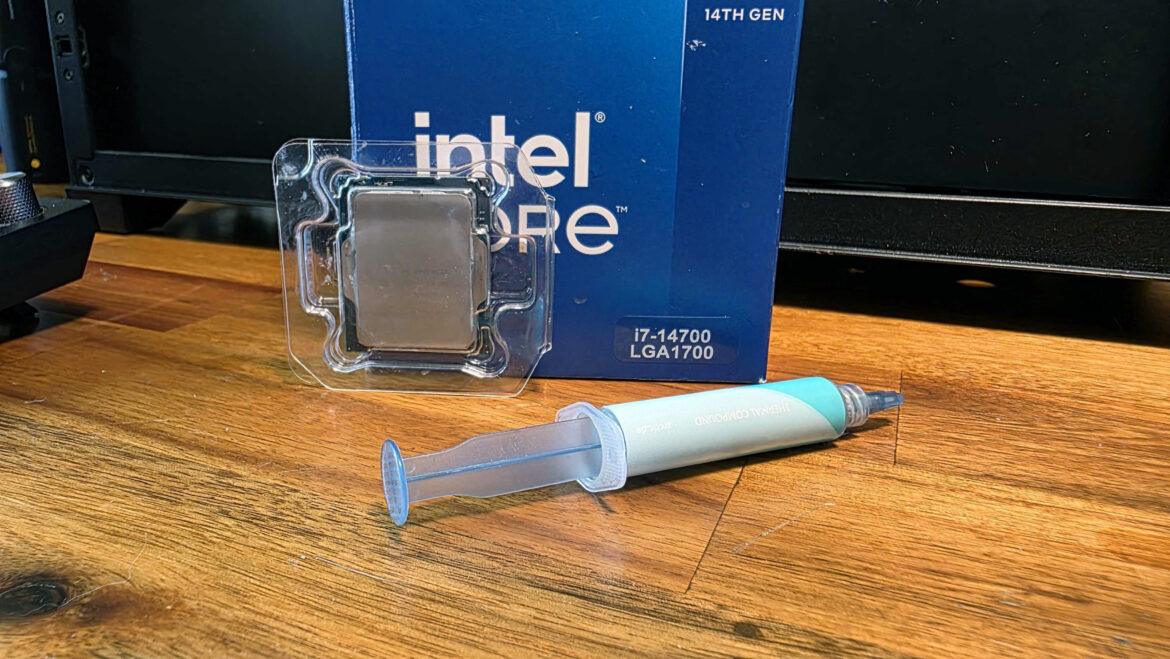
An Intel Core i7-14700 CPU box, along with a cleaned-off version of the Core i5-13500 that was inside, next to a syringe of thermal paste
Product Reviews

I managed to snag a Core i5 CPU for $10, because someone scammed Amazon out of an i7-14700

by admin September 19, 2025


The other day, I stopped into a local Amazon returns store on my lunch break. You probably know the type: chaotically overflowing other people’s returned orders, with half-open boxes scattered about in huge bins. It’s like some kind of post-apocalyptic ball pit game show, where you might find something worthwhile if you wade through enough discarded shelving kits, no-name iPhone cases, and shoe insoles. This particular store is only a few months old, and I’d visited a few times without finding much (other than a pair of insoles, which I needed because I walk 9-10 miles a day).

On this trip, the first day after a weekly restock, when everything in the bins costs $10, I managed to find a roll of Creality 3D printer PLA filament. That’s not a huge discount over its typical Amazon sale price, but I happened to need a new spool for my Anycubic printer, and I was a few blocks from home, so this saved me the hassle of ordering. After a few more minutes pawing through returns, I hadn’t found anything else and went up to pay. But there was a line, and I wound up waiting at the corner of one of the closest bins to the register. Killing time, I idly dug around while I waited, and soon spotted the familiar blue of an Intel CPU box. I flipped it over and saw an i7-14700 sticker!

Could I really have just found the frequency-locked version of Intel’s last-generation flagship for $10? And if so, had someone returned it because of the notorious instability issues? Something else? I could see the CPU in its plastic clamshell through the cardboard window. The back looked OK, but the top was covered in thermal paste.

I was suspicious, but by this time, I was next in line, curious, and decided to gamble $10 on Intel. That’s maybe not the smartest wager I could make in 2025, but I was curious, and figured this would at least be more interesting than wasting money on a scratch-off ticket. I checked out with three items: the filament, the CPU, and another pair of shoe insoles – seriously, I wear those things out and can never have enough.


You may like

After paying my $32.25 after tax, I stepped outside, wishing I had a napkin to immediately wipe the thermal paste off with. Instead, I slacked my coworkers about what I had found, while I marched back to my apartment. When I got home, I immediately opened the CPU box, grabbed a paper towel, and wiped the used thermal paste off the CPU’s IHS, to be met with immediate disappointment. This wasn’t a 14th Gen Core i7 after all!

(Image credit: Future)

But it was a 13th Gen Core i5 – a Core i5 13500, to be specific. Not quite one of the best CPUs, and a generation older than what the box promised, but still a very usable chip, with 14 cores, 20 threads, and a Turbo Frequency of 4.8 GHz. It’s not the fastest chip, but it currently sells for $264 at Newegg – not a bad pickup for $10. If it works, anyway.

So why was a 13th Gen Core i5 returned in a Core i7-14700 box? For those who haven’t already connected the dots, it’s likely that someone scammed Amazon by buying a new, higher-end chip than what they had, put the old one back in the box (helpfully obscured by thermal paste), and returned it for a refund. And Amazon, dealing as it does with millions of packages a day, seemingly accepted the return without checking that the returned product was actually what was returned, eventually selling it as part of a lot of liquidated returns.

I have no way to verify any of this, of course, but it seems the most likely scenario. And it’s certainly unsurprising that Amazon would just accept a return without paying someone to open the box, wipe off the thermal paste, and confirm they had received the Core i7-14700 the customer had ordered. There’s no way Amazon could continue to run its business if it had to do something like that with even half of its returns.

Get Tom’s Hardware’s best news and in-depth reviews, straight to your inbox.

The only lingering question I had was whether my $10 13th Gen Core i5 CPU actually works. So I grabbed my trusty Hoto screwdriver, removed the AIO waterblock on the system that previously served as our external SSD storage testbed, and removed the 12th Gen Core i5 CPU that previously resided in the LGA 1700 socket. I then dropped my 13th Gen Core i5 into the motherboard, applied five small drops of thermal paste, re-attached the cooler, and plugged the system back in.

(Image credit: Future)

I pressed the power button and stared at the blackness of my test bench monitor for what felt like too many seconds, but eventually I saw the spinning circle and soon the familiar Windows 11 login screen. The old system booted up without an issue, and after running a few benchmarks, it looks like my $10 chip performs as expected.

Now the only question is, what should I do with it? I don’t need another gaming rig – I’m writing this on an AMD Ryzen 7950X / Nvidia RTX 4090 PC I built back in 2023, and I already have a few other systems and CPUs for testing PC cases and accessories. Maybe I’ll build a system for a family member or friend.

All I know is, while it didn’t turn out to be a 14th Gen Core i7 promised on the box, I’m happy with the results of my $10 CPU gamble, and I wonder what I’ll find at the returns store next week. I don’t really need any more PC hardware, but if I could pass up enticing tech that I don’t really need, I probably wouldn’t have gotten into this crazy business in the first place.


Source link

September 19, 2025 0 comments
0 FacebookTwitterPinterestEmail
AMD Ryzen 7 9800X3D
Gaming Gear

Ryzen to the top: How AMD innovated in the gaming CPU market

by admin September 6, 2025


Remember when choosing a gaming CPU was simply a decision that revolved around which Intel CPU to buy? If you cast your mind back to the previous decade, Intel was the undisputed king of gaming CPUs, its dominance so absolute it seemed unshakable. AMD, meanwhile, was struggling. So, Intel eventually became a default choice for many people looking to put a gaming PC together.

But then, like a bolt from the Red, AMD’s Ryzen arrived on the scene — a plucky underdog with a chip on its shoulder, and a mission to disrupt the status quo. It wasn’t an immediate knockout, but rather a calculated, relentless assault. In this article, we’ll detail how AMD managed to take the gaming performance crown away from Intel, and where each company stands now.

Intel’s iron grip (2011 – 2017)

(Image credit: Intel)

In the early to mid-2010s, the PC-gaming scene revolved almost entirely around Intel’s quad-core “Core i” series chips, kicked off by the Conroe processors. Ivy Bridge parts such as the Core i7-3770K offered the best frames-per-second money could buy, edging past their Sandy Bridge forebears, and were more popular than AMD’s FX line, despite similar performance. Haswell followed in 2013, and its 2014 refresh, Devil’s Canyon, cemented Intel’s dominance.


You may like

The formula was simple, consistent, and highly profitable for Intel: deliver quad-core processors (often Hyper-Threaded for eight threads) with strong single-core performance and high clock speeds. Year after year, Intel iterated with modest architectural tweaks here, slight frequency bumps there, and perhaps minor power efficiency gains.

The core count, however, remained stubbornly fixed at four for the mainstream desktop flagship. Gamers seeking the pinnacle of performance had one destination: Intel’s Core i7 CPUs (or the enthusiast HEDT platform, which was even more niche and expensive).

During this era, AMD’s strongest answer was the eight-core FX-9590, whose thermal and single-thread deficits made it an afterthought for gamers, leaving Intel free to execute small, reliable uplifts each generation. Even as innovation slowed (Skylake and Kaby Lake delivered <10% gains in many titles), Intel’s iron-fisted grip held strong because alternatives could not match its per-core performance, and resulting gaming performance.

But by 2016, cracks were forming in Intel’s iron gauntlet. Its mainstream desktop platform had been capped at four cores and eight threads since 2009. While annual refreshes delivered higher frequencies and new chipsets, they offered little else.

AMD’s Zen architecture (2017 – 2018)

(Image credit: Tom’s Hardware)

Intel’s equilibrium was shattered in March 2017 when AMD released the first-generation Ryzen 7 1800X. The CPU featured eight Zen cores, sixteen threads, and an MSRP of just $499, which was half the price of Intel’s octa-core Core i7-6900K it dared to challenge. In our review from 2017, we noted that in games like Battlefield 4, the Ryzen 7 1800X provided the “same performance as Intel’s Core i7-6900K,” but at half the price.

AMD’s strategy was bold and disruptive: Ryzen offered significantly more cores and threads at every price point compared to Intel’s entrenched lineup. The flagship Ryzen 7 1800X delivered double the number of cores and threads for the price of Intel’s quad-core, 8-thread Core i7-7700K.

While many raw gaming benchmarks still favoured Intel, Ryzen delivered then-workstation-class multi-thread muscle to mainstream boards, and platform features such as unlocked multipliers across the stack, alongside affordable AM4 motherboards, which only amplified its value proposition.

Reviewers quickly framed Ryzen as the CPU for everything else: streaming, content creation, and heavy multitasking. Cinebench scores that tied or beat chips twice its price, and gaming results only a few percentage points shy of Intel at 1440p and above, meant builders could pocket the savings for a better GPU or SSD.

In 2018, the Ryzen 2000 series (Zen+) refined the formula, closing the gaming gap slightly further and solidifying AMD’s position as a serious contender.

In our review of the 2700X, Tom’s Hardware said: “If you’re searching for a more productivity-oriented processor, Ryzen 7 2700X is incredibly attractive. It offers superior performance compared to the Core i7-8700K in many of our threaded tests, and is much more competitive in lightly threaded applications than previous-gen models.”

The “bang for the buck” factor was undeniable. Gamers who also streamed, edited videos, or ran demanding applications alongside their games found immense value in Ryzen’s core-heavy approach. AMD successfully reframed the conversation, forcing reviewers and consumers to look beyond just peak gaming FPS and consider overall system performance, efficiency, and value.

In short, Ryzen rewrote the cost-per-core equation and convinced enthusiasts to reconsider AMD for the first time in a decade. Intel still held the ultimate gaming crown, but the foundations of its dominance were visibly cracking under AMD’s high core counts and aggressive pricing. Following this, the Zen 2 chips, such as the Ryzen 3600, released in 2020, offered great value to users, especially when paired with the low-cost B450 chipset AM4 motherboards, ensuring that AMD was competitive in the mainstream.

Intel strikes back (2017-2020)

Just seven months after Ryzen’s debut, Intel pulled the curtain early on 8th-gen “Coffee Lake.” For the first time since Core 2 Quad, mainstream Core i7s jumped to six cores and twelve threads, Core i5s to six cores, and even Core i3s gained true quad-cores.

The flagship Core i7-8700K paired its expanded core count with 4.7 GHz turbo clocks, restoring Intel’s gaming lead while closing the multi-thread gap that Ryzen had exposed. This was a massive, almost panic-induced shift, validated by the significant performance leap it delivered, especially in multi-threaded tasks. Suddenly, the quad-core i7-7700K looked outdated overnight.

Coffee Lake also marked a philosophical shift. Intel abandoned its leisurely “+200 MHz and done” cadence, revised its 14 nm process (14 nm ++), and launched an all-new Z370 platform expressly to feed the hungrier silicon. Intel also relentlessly pushed clock speeds to their thermal and power limits.

This megahertz war yielded impressive peak gaming numbers but came at a cost: skyrocketing power consumption and significant thermal challenges requiring expensive cooling solutions. It was a brute-force approach, leveraging Intel’s mature 14nm process (stuck in “+++” iterations) to its absolute extreme.

Beyond core counts and clocks, Ryzen forced Intel to confront architectural and efficiency shortcomings it had neglected during its unchallenged years. AMD’s Zen architecture, built on a more modern process (initially GloFo/Samsung 14nm, then TSMC 7nm), offered compelling performance per watt.

(Image credit: Shutterstock)

A subsequent Intel 9th-gen refresh added soldered heat-spreaders, bumped i7s to eight cores, and introduced a mainstream Core i9 (for years a HEDT exclusive), illustrating how thoroughly Ryzen had reset the competitive baseline.

Intel’s struggles with transitioning to 10nm (later Intel 7) became a major liability, hindering its ability to respond efficiently. The pressure from AMD ultimately pushed Intel towards more significant architectural redesigns (like the hybrid core design in 12th-Gen Alder Lake) and a renewed, albeit still challenging, focus on process technology advancement.

While AMD’s Zen 3 architecture dominated when it debuted, Intel managed to take back the performance crown from AMD’s impressive Ryzen 9 5950X. But one thing was clear: the era of effortless Intel dominance was over. AMD had fundamentally changed the market, forcing innovation and delivering tangible benefits to consumers through intense competition. The stage was set, and a war was brewing.

Alder Lake and Rocket Lake vs Zen 3 (2020-2022)

(Image credit: Tom’s Hardware, Shuttestock)

By late 2020, AMD’s Ryzen 5000 series processors had solidified the company’s position as a formidable challenger to Intel’s long-standing dominance. The Zen 3 architecture delivered impressive performance gains, with the Ryzen 9 5900X and 5950X offering exceptional multi-core performance that often outpaced Intel’s 10th-generation offerings. However, Intel wasn’t sitting idle.

The launch of 11th-generation Rocket Lake processors in March 2021 marked Intel’s counter-attack, with the i9-11900K claiming up to 19% IPC improvements and attempting to reclaim single-threaded performance leadership.

The competitive landscape was intensely tight. Intel’s Rocket Lake chips managed to edge ahead in single-core performance, with benchmarks showing the i9-11900K achieving higher single-threaded scores than AMD’s Ryzen 7 5800X.

Gaming performance remained closely contested, with Intel claiming 2-8% advantages in various titles. However, AMD maintained its multi-core superiority, particularly in the higher-end segments where Intel was limited to 8 cores while AMD offered 12 and 16-core options.

Image 1 of 2

(Image credit: Tom’s Hardware)(Image credit: Tom’s Hardware)

The situation grew more complex with Intel’s 12th-generation Alder Lake launch in November 2021. This hybrid architecture, combining Performance cores and Efficiency cores, represented Intel’s most significant architectural shift in years. The flagship Core i9-12900K delivered substantial performance improvements. In our review, we said:

“The Intel Core i9-12900K is the fastest gaming processor on the planet, while the Core i5-12600K offers unprecedented gaming performance at its price point. Whip in superior pricing and excellent performance in all other types of workloads, and both Alder Lake processors handily beat competing AMD models.”

Alder Lake had reclaimed gaming performance leadership, with the 12900K often outperforming AMD’s Ryzen 9 5950X despite having fewer traditional cores. However, continued intensifying competition led to another breakthrough for AMD.

Cacher in the die (2022-2023)

It was against this backdrop of intensifying competition that AMD unveiled its ace card: the Ryzen 7 5800X3D. Announced at CES 2022 and launched on April 20, 2022, this processor represented AMD’s most audacious engineering gambit yet. Priced at $449, the 5800X3D was positioned as the “Ultimate Gaming Processor,” promising to reclaim the gaming crown from Intel’s freshly minted Alder Lake lineup.

The 5800X3D’s core specifications told a story of strategic compromise in service of a singular goal. Built on the same 7nm process and Zen 3 architecture as its siblings, the chip featured 8 cores and 16 threads, but with notably reduced clock speeds compared to the standard 5800X.

Base clocks dropped from 3.8GHz to 3.4GHz, while boost clocks fell from 4.7GHz to 4.5GHz. This reduction was not accidental but rather a necessary trade-off to accommodate the chip’s new stacked 3D V-cache technology. The chip featured 96MB of L3 cache – triple the 32MB found in the standard 5800X. This was achieved by adding 64MB of SRAM directly atop the existing 32MB L3 cache.

(Image credit: Tom’s Hardware)

The result was a processor that could store vastly more game data closer to the CPU cores, dramatically reducing the need to access slower system memory.

However, this breakthrough came with significant compromises. The 5800X3D was completely locked from traditional overclocking, with AMD disabling both manual multiplier adjustments and Precision Boost Overdrive. This limitation stemmed from the 3D V-Cache’s sensitivity to voltage, with the stacked cache unable to handle voltages above 1.3-1.35V, significantly lower than the 1.45-1.5V range typical of other Ryzen processors.

The additional cache also generated more heat and complicated thermal management, as structural silicon spacers placed over the CPU cores to maintain die flatness impeded heat dissipation.

Image 1 of 3

(Image credit: Tom’s Hardware)(Image credit: Tom’s Hardware)(Image credit: Future)

Despite these limitations, the 5800X3D’s gaming performance was nothing short of huge. In CPU-intensive games, the additional cache delivered substantial performance gains, with some titles showing improvements over both the standard 5800X and Intel’s flagship 12900K. In our review of the 5800X3D, we said:

“The $449 Ryzen 7 5800X3D’s 3D V-Cache tech represents an innovative engineering effort that conquered the technical challenges associated with bringing the first desktop PC chip with 3D-stacked SRAM to market, and to great effect. The end result is a comparatively low-power chip that delivers incredible gaming performance, dethroning Intel’s $589 Alder Lake Core i9-12900K and $739 Core i9-12900KS from the top of our gaming charts.”

The chip particularly excelled in games that benefited from large cache sizes, such as strategy games, simulators, and certain competitive esports titles. It was a specialist, but one with a devastatingly effective specialty: pure gaming dominance. The 5800X3D, throughout its lifespan, would be regularly discounted, making it an excellent choice for those who hopped on the Ryzen bandwagon early, as it was a simple drop-in upgrade for AM4 users through a BIOS update.

Even today, AMD is still releasing 3D V-Cache-equipped AM4 chips, most recently, the 5500X3D, for the Latin American market. In 2023, AMD would release the 5800X3D’s Zen 4 successor, the 7800X3D, on the new AM5 platform.

In 2023, ex-Intel CEO Pat Gelsinger revealed that the company was developing its own 3D silicon technology, though with a different approach than AMD’s. Rather than placing cache on top of CPU cores, Intel planned to stack CPU dies on top of cache tiles, effectively inverting AMD’s design philosophy. However, this technology was years away from commercial deployment and notably excluded desktop processors in favor of server applications.

(Image credit: Tom’s Hardware)

AMD’s second-gen 3D-V Cache (2024-Now)

In late 2024, AMD’s second-generation 3D-V Cache technology arrived with the AMD Ryzen 7 9800X3D. In our testing, the chip thrashed Intel’s Core Ultra 285K by 35% on average in our testing suite, and it thwarted the Core i9-14900K by 30% in gaming workloads. It is a monstrous chip for gaming workloads, and to this day, it has no rival.

The chip brought the most revolutionary structural change yet to 3D V-Cache technology. AMD completely inverted the traditional stacking approach, moving the 64MB cache die from above the core complex die (CCD) to below it. This seemingly simple change had profound implications for thermal management and performance.

By placing the cache underneath the cores, AMD eliminated the thermal barrier that had previously prevented the CPU cores from making direct contact with the cooling solution. It also led to higher clock speeds, which were previously limited compared to its predecessors.

Image 1 of 4

(Image credit: Tom’s Hardware)(Image credit: Tom’s Hardware)(Image credit: Tom’s Hardware)(Image credit: Tom’s Hardware)

The trajectory of CPU gaming performance has undergone a complete reversal since the introduction of 3D V-Cache technology. Where Intel once maintained an iron grip on gaming performance leadership, AMD now holds an almost unassailable position in this crucial market segment.

The Ryzen 7 9800X3D exemplifies this transformation, delivering gaming performance that exceeds Intel’s flagship processors by margins that would have been unthinkable just a few years ago.

The implications of this reversal extend far beyond raw performance numbers. AMD has effectively captured the gaming crown that Intel had dominated for over a decade. The combination of superior gaming performance, full overclocking support, and competitive pricing has created a value proposition that Intel currently cannot match, at least at the high-end.

18A-PT could enable Intel to compete

While Intel’s Arrow Lake stuck to familiar core layouts, the future might hold something different. The upcoming Nova Lake may feature 52 cores in total, built on new process technologies such as Intel’s 18A and TSMC’s 2nm-class nodes.

18A-PT, a high-performance variant of 18A, is on the cards, and that technology might enable Intel to utilize 3D die stacking to potentially compete with AMD’s gaming crown.

However, this is not expected to land until at least 2028, meaning that AMD could have years to gain market share among gaming enthusiasts.

According to the Steam Hardware Survey, things don’t exactly look catastrophic for Intel, as they currently stand. As of July 2025, Intel still maintains a lead over AMD, capturing 58% of users, compared to AMD’s 41%. So, while AMD might hold the power crown, the battle for overall market domination still rages on, and it remains closer than ever before.


Source link

September 6, 2025 0 comments
0 FacebookTwitterPinterestEmail
Asus heard you like screens, so it put a curved '3D effect' OLED screen on your CPU water cooler
Product Reviews

Asus heard you like screens, so it put a curved ‘3D effect’ OLED screen on your CPU water cooler

by admin August 20, 2025


ROG Ryuo IV Series ASUS InfoHub Control Guide – YouTube

Watch On

We’ve seen CPU coolers with screens before. We’ve seen CPU coolers with OLED screens before. We’ve seen CPU coolers with curved OLED screens before. We’ve even seen CPU coolers with curved, motorised OLED screens before. But have we seen a CPU cooler with a curved, movable 3D-effect OLED screen before? No, sir, we have not. Until today.

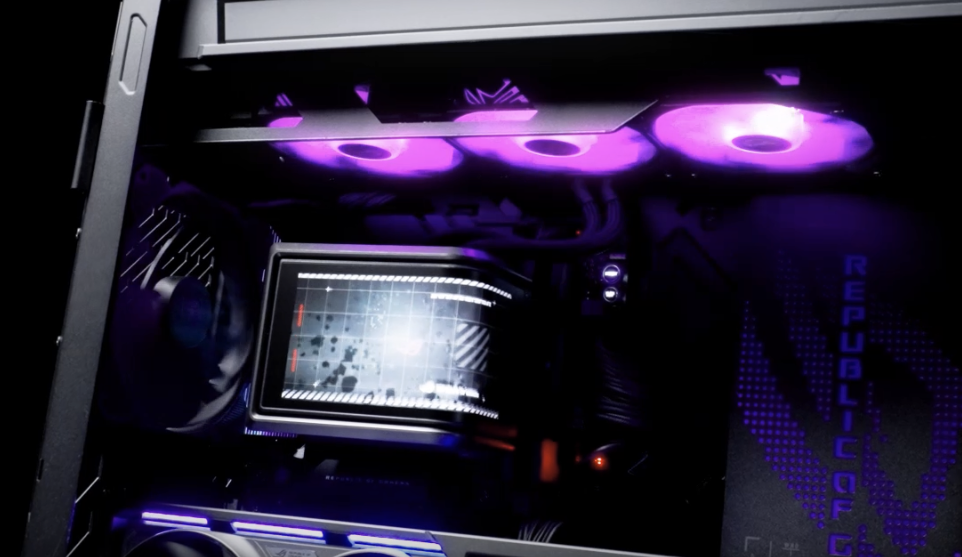
Give it up for the ROG Ryuo IV 360 ARGB water cooler, the ultimate checkbox exercise in CPU cooling, announced today at Gamescom. Its finely triangulated USP is a movable curved 6.67-inch AMOLED display that supports “3D-effect videos or customized system information”.

Asus says, “a powerful pump delivers robust cooling performance, higher flow, and lower impedance, while the pre-mounted, daisy-chained ARGB fans provide high airflow and static pressure. Its fans have a low-noise design and feature front and side lighting.”


Related articles

The cooler supports LGA 1851, 1700, AMD AM5, and AM4 CPU sockets, and features 400mm tubing for better chassis compatibility. There’s also software with support for hardware monitoring and screen content management. Oh, and there’s a white version, too, that’s otherwise identical.

Getting back to that “3D effect” thing, our understanding is that is doesn’t mean some kind of lenticular 3D, as per the Acer Predator SpatialLabs View 27 we recently reviewed. Instead, we’re talking 3D effect as in those videos that use borders and lines to frame movement, plus extreme perspective and a bit of blur. Like this demo video.

Asus doesn’t provide a specific resolution for the display, only describing it at “2K”. But that probably means 1,920 by 1,080, or something very close to that. By default, it can either display one of a number of preloaded 3D effect visuals or a user-configurable suite of hard info, such as CPU temps, fan speeds, voltages, clockspeeds and all that good stuff.

You can also splitscreen the display, so that part of it is showing hardware info, the other trick visuals. And as you can see above, the “3Dness” does actually kinda work.

Keep up to date with the most important stories and the best deals, as picked by the PC Gamer team.

As for the “movable” bit, the OLED screen is on a slider. So now you know. For the record, the radiator measures 394 by 140 by 32 mm and sports three front-and-side lit 120 mm fans. That setup delivers a rated airflow of 71.44 CFM at a noise level of 39.6 dB(A). The cooler module has a six year warranty, while the screen is covered for two years.

Finally and on the sordid matter of money, this was never gonna be cheap. US pricing hasn’t emerged, but it’s available in the UK for £322, which implies something in the region of $350. Ouch. But then if you want screens on everything, it’s going to cost you.

Best gaming PC 2025

All our current recommendations


Source link

August 20, 2025 0 comments
0 FacebookTwitterPinterestEmail
Capcom asks PC Monster Hunter Wilds players to wait until Title Update 4 this winter for "CPU and GPU related optimizations"
Game Updates

Capcom asks PC Monster Hunter Wilds players to wait until Title Update 4 this winter for “CPU and GPU related optimizations”

by admin August 19, 2025


PC gamers who are hoping Capcom updates Monster Hunter Wilds to improve performance will have to wait a little longer. A statement made on X.com via the official Monster Hunter account has told players that improvements are coming, but not until this winter.

To our hunters playing #MHWilds on PC, we’re committed to listening to your feedback and improving both performance and stability of the game.

Although we will continue to implement gradual improvements in the weeks ahead, we are targeting Free Title Update 4 this winter to implement a multifaceted plan, including CPU and GPU related optimizations, followed by a second stage of mitigation measures afterwards.

We’ll share more information on the specifics in the future.

The news comes alongside the release of Hotfix patch Ver.1.021.02.00, which has dropped on PS5, Xbox, and PC.

Hotfix patch Ver.1.021.02.00 details:

Bug Fixes and Balance Adjustments

  • Fixed an issue that reduced the invulnerability window upon successfully performing the long sword’s Iai Spirit Slash against monster attacks that have long hit detection durations.
  • Fixed an issue where, when the Item Bar Display option is set to Type 1, if you select an item using the Item Bar while in Aim/Focus Mode and then release Aim/Focus Mode, the selected item would revert to an empty slot.

This is a news-in-brief story. This is part of our vision to bring you all the big news as part of a daily live report.


Source link

August 19, 2025 0 comments
0 FacebookTwitterPinterestEmail

Categories

  • Crypto Trends (1,098)
  • Esports (800)
  • Game Reviews (772)
  • Game Updates (906)
  • GameFi Guides (1,058)
  • Gaming Gear (960)
  • NFT Gaming (1,079)
  • Product Reviews (960)

Recent Posts

  • This 5-Star Dell Laptop Bundle (64GB RAM, 2TB SSD) Sees 72% Cut, From Above MacBook Pricing to Practically a Steal
  • Blue Protocol: Star Resonance is finally out in the west and off to a strong start on Steam, but was the MMORPG worth the wait?
  • How to Unblock OpenAI’s Sora 2 If You’re Outside the US and Canada
  • Final Fantasy 7 Remake and Rebirth finally available as physical double pack on PS5
  • The 10 Most Valuable Cards

Recent Posts

  • This 5-Star Dell Laptop Bundle (64GB RAM, 2TB SSD) Sees 72% Cut, From Above MacBook Pricing to Practically a Steal

    October 10, 2025
  • Blue Protocol: Star Resonance is finally out in the west and off to a strong start on Steam, but was the MMORPG worth the wait?

    October 10, 2025
  • How to Unblock OpenAI’s Sora 2 If You’re Outside the US and Canada

    October 10, 2025
  • Final Fantasy 7 Remake and Rebirth finally available as physical double pack on PS5

    October 10, 2025
  • The 10 Most Valuable Cards

    October 10, 2025

Newsletter

About me

Welcome to Laughinghyena.io, your ultimate destination for the latest in blockchain gaming and gaming products. We’re passionate about the future of gaming, where decentralized technology empowers players to own, trade, and thrive in virtual worlds.

Recent Posts

  • This 5-Star Dell Laptop Bundle (64GB RAM, 2TB SSD) Sees 72% Cut, From Above MacBook Pricing to Practically a Steal

    October 10, 2025
  • Blue Protocol: Star Resonance is finally out in the west and off to a strong start on Steam, but was the MMORPG worth the wait?

    October 10, 2025

Newsletter

@2025 laughinghyena- All Right Reserved. Designed and Developed by Pro


Back To Top
Laughing Hyena
  • Home
  • Hyena Games
  • Esports
  • NFT Gaming
  • Crypto Trends
  • Game Reviews
  • Game Updates
  • GameFi Guides
  • Shop

Shopping Cart

Close

No products in the cart.

Close