Laughing Hyena
  • Home
  • Hyena Games
  • Esports
  • NFT Gaming
  • Crypto Trends
  • Game Reviews
  • Game Updates
  • GameFi Guides
  • Shop
Tag:

Controls

Social justice advocacy groups slam Roblox for "silencing important voices" with new parental controls
Esports

Social justice advocacy groups slam Roblox for “silencing important voices” with new parental controls

by admin October 1, 2025


Out Making Games (OMG), Women in Games (WIG), and BAME in Games (BiG) have co-written an open letter to Roblox calling on the company to reconsider the recent changes it has made concerning “sensitive issues,” claiming the changes are a “step backward for both creative expression and social justice.”

Roblox notified game makers in August that it was introducing a new “content descriptor and parental control [for] experiences that are primarily themed on a sensitive social, political, or religious issue,” including any experiences that provoke a “strong emotional response” or suggest “polarized viewpoints.”

While Roblox insisted the changes were made to “give parents of children under 13 the choice of how and when their children engage with these issues,” OMG, WIG, and BiG claim “these changes threaten to undermine the vibrant, inclusive creative community that has flourished on the platform since 2006, while potentially causing real harm to marginalised groups in society.”

This is because, the organizations claim, Roblox’s guidelines “specifically cite ‘issues such as immigration, capital punishment, gun control, marriage equality, pay equity in sports, prayer in schools, racial profiling, affirmative action, vaccination policies, and reproductive rights’ as examples requiring these descriptors.” Further, the joint letter states that by Roblox’s insistence that it is “not taking a stance,” “the effect is the opposite,” writing: “By categorising equality and human rights as ‘sensitive,’ the platform treats them as debatable rather than fundamental.”

“We support efforts to keep children safe online – especially girls, who face disproportionate harassment and grooming. But safety cannot be achieved by silencing content that educates and empowers,” the letter states. “Issues such as equal pay, reproductive rights, and gender equality are central to girls’ and women’s lived experiences. Marking these as ‘sensitive’ risks hiding content that is vital to representation, education, and inspiration.

“When these conversations are suppressed, the result is not safety but silence. It discourages young women from participating fully, reinforces harmful stereotypes, and weakens the pipeline of future creators and leaders […] This false neutrality downplays systemic racism by equating discrimination with the policies meant to remedy it, potentially emboldening those who deny or dismiss racial inequality.”

Consequently, OMG, WIG, BiG claim that parental controls should not “come at the expense of fundamental human dignity,” and is therefore calling on Roblox “to reconsider these guidelines and find ways to protect young users without legitimizing discrimination or silencing important voices.”

“[Roblox] has built something remarkable over nearly two decades,” the statement concludes. “It would be tragic to see that legacy undermined by policies that, intentionally or not, perpetuate the very inequalities that creative expression has the power to challenge and change.”

GamesIndustry.biz has reached out to Roblox for comment.



Source link

October 1, 2025 0 comments
0 FacebookTwitterPinterestEmail
DAAPrivacyRightIcon
Gaming Gear

Pixel Buds Pro 2 get Adaptive Audio, gesture controls and more in latest update

by admin September 27, 2025


Google first teased some enticing upgrades for its Pixel Buds Pro 2 during the Made by Google event in August. More than a month later, Google is finally rolling out the update that makes its wireless earbuds earn the Pro label.

The Pixel Buds Pro 2 now get an Adaptive Audio feature in the Active Noise Control section of the Pixel Buds app. This ANC mode automatically adjusts the volume depending on your surrounding environment, balancing between hearing your music or podcasts and the world around you. If you want to drown out the outside world a little more, the Pixel Buds Pro 2 now also have the Loud Noise Protection feature, which can detect and reduce any sudden loud noises, like a passing ambulance siren or construction work. While these two features are already found in Apple’s AirPods Pro 3, they’re a welcome addition to the more affordable Pixel Buds Pro 2.

For anyone who frequently uses Gemini Live, you’ll notice that the AI assistant will be able to hear you better in noisy environments thanks to advanced audio processing that prioritizes your voice and eliminates background noise. For a truly hands-free experience, the update even adds gesture controls that let Pixel Buds Pro 2 users nod their head to answer a call or start dictation for a text reply and shake their head to decline a call or dismiss a text. Google is rolling out its 4.467 update to its users gradually, which takes about 10 minutes to download and another 10 minutes to install.


Source link

September 27, 2025 0 comments
0 FacebookTwitterPinterestEmail
Hong Kong harbor during a sunrise (Manson Yim/Unsplash)
GameFi Guides

KuCoin Faces $14M Canadian Action in Registration, Money Laundering Controls Dispute

by admin September 26, 2025


KuCoin is appealing a Canadian enforcement action in which the exchange was accused of failing to register as a money-services business and failing to maintain proper defenses against money laundering, a case that led to a penalty of more than $19 million ($14 million U.S.).

That unusually large penalty from the Financial Transactions and Reports Analysis Centre of Canada (FINTRAC) was imposed after finding that Seychelles-based Peken Global Limited, operating as KuCoin, didn’t report large crypto transactions and didn’t flag suspicious transactions that may have involved money laundering or terrorist financing, the agency said on Thursday.

The regulator said KuCoin didn’t report large transactions on almost 3,000 occasions from 2021 to 2024 and in 33 instances “failed to report financial transactions where there were reasonable grounds to suspect that the transactions were related to the commission or the attempted commission of a money laundering or a terrorist activity financing.”

KuCoin said it submitted an appeal with the Federal Court of Canada “on both substantive and procedural grounds.”

“While KuCoin respects the decision-making process and remains committed to regulatory compliance and transparency, it disagrees with both the finding that KuCoin is a Foreign Money Services Business and the penalty imposed, which KuCoin maintains is excessive and punitive in nature,” the company said in a Thursday statement.

This FINTRAC penalty represents the bulk of the agency’s fines in the past year, it noted, having imposed fines 23 times for a total of $25 million in that period. KuCoin’s alleged violations were said to have been serious and, in the case of the failure to report suspicious transactions, “severe.”

KuCoin has been penalized in various jurisdictions in similar cases, including one from the Ontario Securities Commission in 2023. In the U.S., the company settled with the Department of Justice earlier this year, paying nearly $300 million, pleading guilty to an unlicensed-operations charge and agreeing to stay out of the country.

Read More: South Korea Plans Sanctions Against KuCoin, Others: Report


Source link

September 26, 2025 0 comments
0 FacebookTwitterPinterestEmail
You Like Your Controls Inverted Because Of Science--And Your Brain
Game Updates

You Like Your Controls Inverted Because Of Science–And Your Brain

by admin September 21, 2025


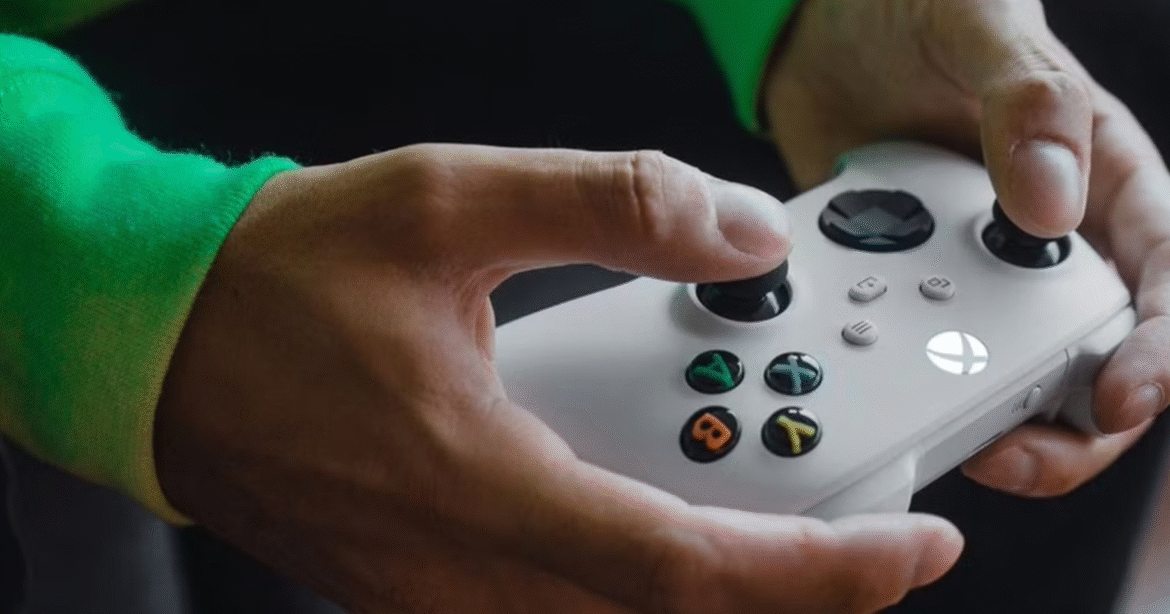
If you’re like me, one of the first things you do when booting up a game is checking out the options in the Settings menu. From audio to subtitles, brightness to performance, you’re fine-tuning the particulars to ensure the game is playing just right for you. Maybe during this, you’re also changing your controller settings from “normal” to “inverted,” and if you’ve ever wondered why you do that, well, science may have an answer for you.

In a new scientific paper reported on by The Guardian (via Eurogamer), Dr. Jennifer Corbett and Dr. Jaap Munneke at Brunel University London have sought to study the neuroscience behind a player’s choice of “normal” or “inverted” controls. Titled “Why axis inversion? Optimising interactions between users, interfaces, and visual displays in 3D environments,” the duo discovered that there are a variety of factors that go into your decision of opting for a particular controller setting in games, and it seems to primarily revolve around how your brain perceives objects in 3D spaces.

Size:640 × 360480 × 270

Want us to remember this setting for all your devices?

Sign up or Sign in now!

Please use a html5 video capable browser to watch videos.

This video has an invalid file format.

Sorry, but you can’t access this content!

Please enter your date of birth to view this video

JanuaryFebruaryMarchAprilMayJuneJulyAugustSeptemberOctoberNovemberDecember12345678910111213141516171819202122232425262728293031Year202520242023202220212020201920182017201620152014201320122011201020092008200720062005200420032002200120001999199819971996199519941993199219911990198919881987198619851984198319821981198019791978197719761975197419731972197119701969196819671966196519641963196219611960195919581957195619551954195319521951195019491948194719461945194419431942194119401939193819371936193519341933193219311930192919281927192619251924192319221921192019191918191719161915191419131912191119101909190819071906190519041903190219011900

By clicking ‘enter’, you agree to GameSpot’s

Terms of Use and
Privacy Policy

enter

Now Playing: Call of Duty Black Ops 7: First Impressions

Initiated during lockdown and published this month, Corbett and Munneke concluded in the study that “personal experiences, favourite games, different genres, age, consoles, which way you scroll with a mouse … all of these things could potentially be involved” in why you choose to invert your controls in-game or not.

“Many people told us that playing a flight simulator, using a certain type of console, or the first game they played were the reasons they preferred to invert or not,” Corbett said. “Many also said they switched preferences over time. We added a whole new section to the study based on all this feedback.”

To understand the phenomenon, Corbett and Munneke asked participants in the study to complete a questionnaire to understand their background and partake in an experiment around spatial awareness.

“They had to mentally rotate random shapes, take on the perspective of an ‘avatar’ object in a picture, determine which way something was tilted in differently tilted backgrounds, and overcome the typical ‘Simon effect’ where it’s harder to respond when a target is on the opposite vs. the same side of the screen as the response button,” Corbett said. “Then we used some machine-learning algorithms to help us sort through all this survey and experiment data and pick out what combination of all of these things best explained whether someone inverted.”

According to Corbett, the assumptions for why people prefer inverted controls were wrong. Instead, the biggest determining factor was how quickly gamers could mentally rotate things and ​​overcome the Simon effect.

“The faster they were, the less likely they were to invert,” Corbett said. “People who said they sometimes inverted were by far the slowest on these tasks. Though [non-inverters] tended to be faster, they didn’t get the correct answer more than inverters who were actually slightly more accurate.”

Essentially, just because a flight simulator may have been your first experience with a game doesn’t mean you’re inherently an inverter. Similarly, just because you’ve always played with normal controller settings doesn’t mean you’re a non-inverter either. In fact, according to the study and Corbett’s musings, switching your preferences could make you a better gamer.

“Non-inverters should give inversion a try–and inverters should give non-inversion another shot,” Corbett said. “You might even want to force yourself to stick with it for a few hours. People have learned one way. That doesn’t mean they won’t learn another way even better. A good example is being left-handed. Until the mid-20th century, left-handed children were forced to write with their right hand, causing some people to have lifelong handwriting difficulties and learning problems. Many older adults still don’t realise they’re naturally left-handed and could write/draw much better if they switched back.”

Next time you’re contemplating your controller settings, whether you should go with your preference (either inverting or not inverting), you may want to reconsider the other option. It could help you last longer in Battlefield 6 or Call of Duty: Black Ops 7.


Source link

September 21, 2025 0 comments
0 FacebookTwitterPinterestEmail
Study into inverted versus uninverted controls suggests we can stop having pointless arguments about it
Game Updates

Study into inverted versus uninverted controls suggests we can stop having pointless arguments about it

by admin September 20, 2025


To invert or not to invert? The question of whether to flip the Y-axis in games is often answered with recollections of childhood habits and/or varyingly smug declarations of which joystick setting is ‘better’. Now, though, a cognitive research study posits that our control preferences are less about whether or not we played GoldenEye after school and more about the innate quirks of our brains.

As reported by Keith Stuart at The Guardian, Dr Jennifer Corbett and Dr Jaap Munneke’s paper ‘Why axis inversion? Optimizing interactions between users, interfaces, and visual displays in 3D environments’ details their experiments into control inversion choices. After answering a questionnaire about whether and why they think they use invert controls or not, participants were tasked to, as Corbett puts it, “mentally rotate random shapes, take on the perspective of an ‘avatar’ object in a picture, determine which way something was tilted in differently tilted backgrounds, and overcome the typical ‘Simon effect’ where it’s harder to respond when a target is on the opposite v the same side of the screen as the response button.”

These experiments, the study claims, indicated that none of the participants’ stated reasons for rejecting or embracing inversion “had anything to do” with their actual choice. “It turns out,” Corbett says, “the most predictive out of all the factors we measured was how quickly gamers could mentally rotate things and overcome the Simon effect. The faster they were, the less likely they were to invert. People who said they sometimes inverted were by far the slowest on these tasks.”

Or, as Stuart puts it, “It’s much more likely that you invert or don’t invert due to how your brain perceives objects in 3D space.” And the speed factor doesn’t mean that electing to invert is a skill issue either, as the study adds that while non-inverters would flip their images at a faster pace, they’d make more mistakes than the cautious inverters, resulting in an overall equal accuracy rate.

Image credit: Rock Paper Shotgun

I suspect my C grade in GCSE Biology isn’t quite enough to let me give a learned interpretation of these findings, but it sure sounds like the desire to invert is based mainly on unconscious brainworkings – hardly sure footing for any “No, MY way is better” reasoning. Though on a personal level it’s nice to know, as someone who’s always inverted the Y axis on thumbstick controls but can’t remember a reason why, that I don’t actually need a reason. It’s just how I perceive objects in 3D space, guys. I shall continue to go around gaming trade shows, flipping the sticks at all the demo booths and forgetting to reset them, thus leaving a trail of harmless inconveniences like a hallway full of slightly tilted paintings. And it’ll all be fine, because it was basically an accident of birth.

Then again, the study doesn’t entirely reject the impact of learned behaviour, and in fact suggests we try practicing the opposite of our control preference – just in case we’ve convinced ourselves to stick with a method that isn’t a cognitive match.

“Non-inverters should give inversion a try – and inverters should give non-inversion another shot,” Corbett argues. “You might even want to force yourself to stick with it for a few hours. People have learned one way. That doesn’t mean they won’t learn another way even better.

“A good example is being left-handed. Until the mid-20th century, left-handed children were forced to write with their right hand, causing some people to have lifelong handwriting difficulties and learning problems. Many older adults still don’t realise they’re naturally left-handed and could write/draw much better if they switched back.”

Sometimes, when I’m running a quick test of something on the Steam Deck, I leave the Y-axis uninverted just because I can’t be bothered to delve into the menus to change it. Does that count?


Source link

September 20, 2025 0 comments
0 FacebookTwitterPinterestEmail
Scientists have worked out why some people invert video game controls, so which side is correct?
Game Reviews

Scientists have worked out why some people invert video game controls, so which side is correct?

by admin September 19, 2025


When you push the right controller stick forwards, do you expect a game camera to move up or down? Whether players use “normal” or “inverted” camera controls has long been a point of debate.

Now, though, it’s part of a scientific study. As reported by The Guardian, Dr Jennifer Corbett and Dr Jaap Munneke at Brunel University London initiated a study during lockdown into the neuroscience of human-computer interactions using remote subjects, speaking with players to research controller inversion.

The duo have now published their findings in their paper “Why axis inversion? Optimising interactions between users, interfaces, and visual displays in 3D environments”. And the results are all about how your brain perceives objects in 3D space.

“Many people told us that playing a flight simulator, using a certain type of console, or the first game they played were the reasons they preferred to invert or not,” said Corbett. “Many also said they switched preferences over time. We added a whole new section to the study based on all this feedback.”

Participants were given a questionnaire and tasked with experiments around spatial awareness. “They had to mentally rotate random shapes, take on the perspective of an ‘avatar’ object in a picture, determine which way something was tilted in differently tilted backgrounds, and overcome the typical ‘Simon effect’ where it’s harder to respond when a target is on the opposite v the same side of the screen as the response button,” Corbett explained.

“It turns out the most predictive out of all the factors we measured was how quickly gamers could mentally rotate things and overcome the Simon effect. The faster they were, the less likely they were to invert.”

Yet while inverted players were the slowest on the tasks, they were also more accurate.

Ultimately, while players think they choose controls based on their first exposure, it’s more likely due to your brain’s perception of objects in 3D space.

Corbett even suggested players should try the opposite way to what they’re used to. “The most surprising finding for gamers [who don’t invert] is that they might perform better if they practised with an inverted control scheme,” said Corbett. “Maybe not, but given our findings, it’s definitely worth a shot because it could dramatically improve competitive game play!”

What’s more, the research could have implications outside of gaming. “This work opened our eyes to the huge potential that optimising inversion settings has for advancing human-machine teaming,” says Corbett. “So many technologies are pairing humans with AI and other machines to augment what we can do alone. Understanding how a given individual best performs with a certain setup (controller configuration, screen placement, whether they are trying to hit a target or avoid an obstacle) can allow for much smoother interactions between humans and machines in lots of scenarios from partnering with an AI player to defeat a boss, to preventing damage to delicate internal tissue while performing a complicated laparoscopic surgery.”

Personally, inverting camera controls is the first thing I do when booting up a new game. I always presumed it’s because that’s how I learned to play as a kid – just as Corbett said – but perhaps it’s actually my brain after all.

Are you an inverter or non-inverter for gaming controls? Let us know in the comments.


Source link

September 19, 2025 0 comments
0 FacebookTwitterPinterestEmail
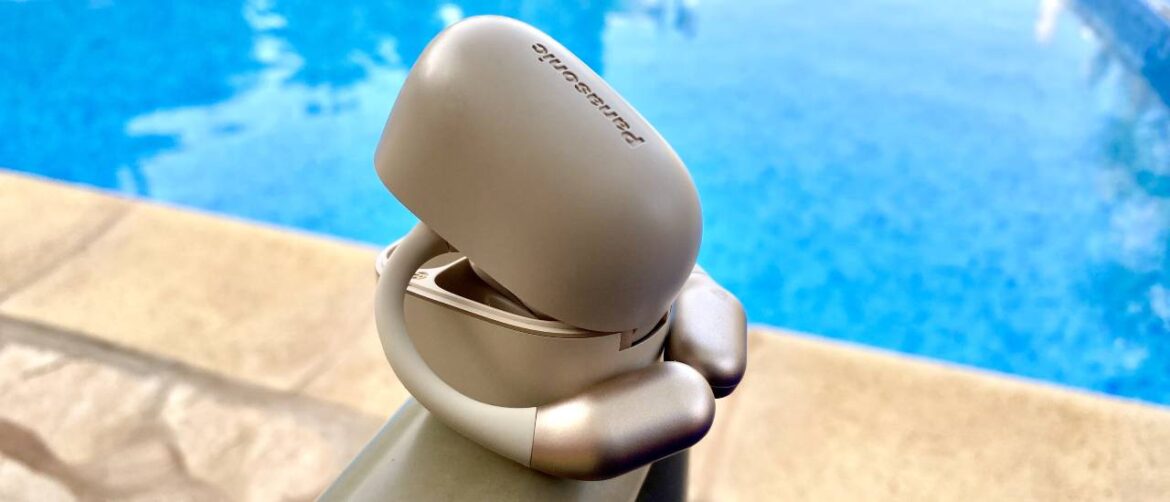
Panasonic RB-F10 open earbuds and carry case beside a swimming pool
Product Reviews

Panasonic RB-F10 review: Chic and comfortable open earbuds let down by fiddly controls

by admin September 17, 2025


Why you can trust TechRadar


We spend hours testing every product or service we review, so you can be sure you’re buying the best. Find out more about how we test.

Panasonic RB-F10: Two-minute review

Being a little down on a product you fundamentally really like feels uncharitable. It’s the audio equivalent of Ebenezer Scrooge giving Tiny Tim a pair of the incredible Shokz OpenFit 2+, then swapping that sweet sonic stocking stuffer for Bob Cratchit’s humble morsel of goose. Bah, humbug, indeed.

Truthfully, though, if you did buy me a pair of Panasonic RB-F10s for Christmas or my birthday, I’d be pretty smitten. Yes, they have their faults, but if you can overcome slightly fiddly on-ears controls, Panny’s recent buds are stylish, affordable, and feel so comfortable once they’re on, you might as well have a couple of pixies giving your ear canals a luxurious bubble bath.

I adore how these open earbuds feel on my lugholes. There’s no question the main selling point here is the soothing snugness the RB-F10s bring to your listening experiences. I genuinely forgot I was wearing Panasonic’s open earbuds, which weigh 8.79g each, during the vast majority of my testing.

I can’t think of a single occasion where the fit irritated me, be it in on a recent skin-sizzling 93F trip to Fuerteventura or enduring a mild Scottish downpour closer to home. These wrap-around buds neither slip or irritate your skin, nor do they begin to chafe after hours of prolonged use. Granted, I might be guilty of the (ahem) occasional wildly definitive-sounding declaration over the years, but I stand by the following statement: the Panasonic RB-F10s are the most comfortable earbuds of any kind I’ve ever worn. Stick that on the box, Panny.

Elsewhere, problems sadly surface that lower these otherwise supremely sturdy buds’ score. With grown-up looks, a classy charging cradle, and satisfyingly loud, well-weighted audio, there’s a whole lot to like about a pair of open ears that cost comfortably less than $100.

Yet it’s hard to stuff my fingers in my ears and pretend the RB-F10s don’t have issues – chief among them are some of the fiddliest, least dependable on-ears controls I’ve encountered on a pair of buds. At best, they’re semi-reliable. At worst? The simple task of pausing or skipping a track has made me chuck Panasonic’s ear accessories onto my sofa multiple times – a feeble bout of frustration the best open ear buds wouldn’t bring out in me.

(Image credit: Future / Dave Meikleham)

I’ll get to the RB-F10’s fuller audio performance shortly, but if you want the abbreviated version, they’re damn good. With weighty 17mm x 12mm drivers, they bring boom in spades for such svelte buds, while also delivering acoustics you’d never describe as either tinny nor scratchy.

Sign up for breaking news, reviews, opinion, top tech deals, and more.

Feature-wise, we’re looking at somewhat of a mixed bag. That’s a bag you’d drop every time you did your shopping thanks to those misfiring on-ear controls that are as dependable as a lion going for the vegan option at an all-you-eat zebra buffet. Though IPX4 waterproofing is welcome (and effective in my experience), battery life doesn’t exactly have my knees aquiver.

If you don’t have Panasonic’s nicely minimalist charging cradle to hand, you’re looking at a meagre seven hours of juice. If you’re a fiendish podcast binger like myself who often leaves home without a dock, these may not be the buds for you.

ANC (Active Noise Cancellation) has also been left off the party list and software support is non-existent. Though not the most feature-rich buds, the RB-F10s do at least support convincingly solid dual mic audio calls, and the presence of reliable Bluetooth multipoint connectivity is also welcome.

If it weren’t for those overly finicky on-ear controls, I’d unquestionably be giving the Panasonic RB-10s a higher score that would have it ruffling the feathers of some of the best earbuds. Yet due to those unpredictable controls and only so-so battery life, you may be better off looking at the sublime Nothing Ear (a), or the slightly more premium Bose QuietComfort Ultra Earbuds.

Panasonic RB-F10 review: Specifications

Swipe to scroll horizontally

Drivers

17mm x 12mm

Water resistant

IPX4

Battery life

7 hours (earbuds); 25 hours (including charged case)

Connectivity

Bluetooth 5.4

Weight

8.79 per bud / charging case 36g

Active noise cancellation

No

Panasonic RB-F10 review: Price and availability

(Image credit: Future / Dave Meikleham)

  • Released in June 2025
  • $110 / £79.99 / AU$165 (approx.)

The Panasonic RB-F10s have been out for a few months at this point, but you’d be hard pressed to tell. You’d have an easier time spotting a neon-dipped snow leopard during a blackout than finding these buds readily on sale.

Currently, the only place I’ve been able to locate these attractive, relatively affordable earbuds is the official UK Panasonic site. Available in black or a two-tone white scheme, these $110 / £79.99 / around AU$165 buds are very reasonable considering their overall build and sound quality.

Knowing Panasonic, the F10s are unlikely to become significantly easier to pick up going forward, so if you do see them in stock on the UK’s official site or somewhere like eBay (and fancy the cut of their jib), put your money where your sonic-slaying mouth is.

Panasonic RB-F10 review: Features

(Image credit: Future / Dave Meikleham)

  • IPX4 waterproofing works well
  • Seamless Bluetooth multipoint connections
  • Average battery if they don’t get a full charge

If there were a Deep Impact style meteor-centric oblivion on the horizon and you were forced to draw the short straw on who gets to board the shuttle to survival…. well, suffice to say that comet is cooking F10 owners. That’s a fruity way of saying the RB-F10s aren’t exactly feature-rich.

A lack of ANC or software support is perhaps expected at such an agreeable price point, but what’s considerably harder to stomach is the F10s’ battery life. I’ve seen mayflies with heaving drinking problems boast longer lifespans.

Unless you carry the handsome dock around you like it was a court-mandated bracelet, these open earbuds will die on you a little after seven hours. If you obsessively charge the buds in their dock, and I mean every single day, you’ll get a much healthier 25 hours of juice. Nevertheless, during my seven weeks of testing, I found Panny’s buds died out of nowhere an alarming amount. If you’re a committed jogger, these probably aren’t the earbuds for you.

Don’t walk away at a brisk pace just yet, though. The RB-F10s aren’t entirely no-frills and an IPX4 waterproof rating should never be taken for granted from a native Scot like myself. If you live in an area with regular showers you’ll definitely appreciate this feature. Thanks to their open ear design that shows off a whole lotta lobe, nailing down an IPX4 waterproof rating was key.

I was once caught in a downright biblical lashing of hailstones while nipping out for a lunchtime burger during my F10s testing, and it was mercifully only my soggy quarter pounder that met a watery fate that day. On the few times I have encountered showers while out and about, I’ve yet to hear all those sky tears cause any audible distortion while listening to music on the RB-F10s.

The F10s’ Bluetooth 5.4 multipoint connectivity is probably the most forward-looking feature these buds boast. Capable of pairing to a duo of iOS/Android devices at the same time, the F10s can register to 10 separate devices, though you can obviously only swap between a single pair at once.

The pairing/disconnecting process is relatively simple, involving holding the sensor button down on each bud for several seconds. Once you hone in on your two favorite devices, these buds will intuitively pick up on whatever content you were listening to on them last. It’s smart, hassle-free stuff.

Dual mic support also makes the F10s solid for voice calls. As glamorous – and depressingly unstaged – as this sounds, I had to take a relatively important fraud call from my bank while wearing Panasonic’s buds. The company’s claim that voice signals hold up to around 33ft proved largely true, and even taking an irritating security call while wandering about my Spanish friend’s (in no way death) cellar, the clarity of the audio never wavered.

So the F10s just about get a passing grade in the features department. Still, any prospective future teacher would be sticking a big, fat “could do better” before a pair of F11s rock up to school next year.

Panasonic RB-F10 review: Sound quality

(Image credit: Future / Dave Meikleham)

  • Bass satisfies for such lightweight buds
  • Vocal clarity is usually excellent
  • No software but EQ tweaks seldom needed

As someone who normally wears the best over-ears headphones in everyday life I’ve been mightily impressed by the range of sounds these sleek buds pump up. Keen to hear how the buds would fare, I decided to forgo my increasingly decrepit musical tastes and listen to some fresher bangers from Glastonbury 2025. Not in a mud-caked field in Somerset, you understand. Rather from the comfort of my reclining chair with an RF-10 popped into each ear.

Now let’s jump down the YouTube rabbit hole!

The five-piece indie pop group Wet Leg slithered around Glasto’s Other Stage and immediately wormed into my brain with Catch These Fists. Sensationally steely, winkingly erotic before exploding into a scrappily raunchy crescendo, it’s a bloody fun tune, and one where the RB-F10s powerful 17mm x 12mm drivers effortlessly pick up lead singer Rhian Teasdale’s growling lower registers.

I was also taken aback that the RB-F10s made the upbeat Yougotmefeeling by Parcels come alive in a full-bodied way that briefly made me do a double take on whether I was listening to their summery banger on budget earbuds or one of the best surround sound systems. There was one moment the video cut to the super sweaty crowd, and the subsequent swirling chorals almost made me believe I was standing among the throng covered in knocked-over plastic lager glasses.

Sticking with YouTube, I was delighted to bump into an energetic performance of Don’t Back into the Sun by The Libertines. The fact Carl Barat turned up with chaotic longtime collaborator Pete Doherty, who not only looked reasonably healthy, but didn’t flub his lines, was a nice surprise. That definitely wasn’t on my Glasto bingo card. Back to the Panasonic RB-F10s, Gary Powell’s pounding drumwork and John Hassall’s satisfyingly punchy bass came through without overwhelming Pete and Carl’s duets.

Even though I do a lot of my headphones testing on my iPhone, I must admit to consuming a lot of content on my iPad Pro, be it the best Netflix movies or the best Amazon Prime shows. On that note, I’ve been rewatching The Boys season 3 for roughly the 43rd time. Herogasm! Anyway, there’s a song that plays during a later episode where Homelander “might” be getting his morning milk from an unconventional source. Yick.

Still, if it wasn’t for that udderly unacceptable act, I’d never have found 1968’s Crimson and Clover by Tommy James and the Shondells. Talk about a psychedelic headtrip banger for the ages. This trance-like ‘60s tune is mellow yet somehow quietly sinister. For all three minutes and 25 seconds the RB-F10s deliver the big beats with aplomb while also delivering on the shakier strands that make you wonder if your entire head is about to fall into your buds.

So it shouldn’t come as a Tyler Durden-style shocker that I’m into the audio quality the Panasonic RB-F10s deliver at such a comparatively reasonable price. Bass also feels nuanced, with drivers capable of handling both big orchestral numbers without letting lyrics get lost in the shuffle. Sound-wise, these are some of the most well-rounded, best-judged buds I’ve tested.

  • Sound quality score: 4.5/5

Panasonic RB-F10 review: Design

(Image credit: Future / Dave Meikleham)

  • So light you can barely feel them
  • Classy little charging cradle
  • On-ear controls can be a nightmare

SHUT UP AND TAKE MY MONEY! Not enough? Alright. Zip those lips and take even more of my cents. I’m smitten with the design of the Panasonic RB-F10s, especially with the ultra alluring two-tone white shade (also available in black). Unfussy yet dignified, they have an aura of quiet confidence about them I really dig. And then there’s the comfort.

If it was legal to wed a pair of open earbuds based purely on how ludicrously comfortable they feel to wear, I’m slamming a ring on the RB-10s pronto…. before finding a cave where I can live out the rest of my days in shunned solitude. Hot dang, do these buds feel lovely.

I’ve worn some supremely comfy cans of late (like the likeable yet uneven Happy Plugs Play Pro over-ears), but Panasonic’s lightweight offerings are on another level. Once you get them out of their cute charging cradle, popping them on is a breeze. With a few tweaks I found the RB-10 almost immediately adjusted to a position that wrapped around my lobes in an entirely satisfying, seamless way.

I suspect this is down to two major factors. Firstly, the flexible (but not cheap-feeling) plastics they’ve been constructed from, which lets them contort around the shape of your ears with minimal fuss. Secondly, their oh-so-lightweight footprint. At well under 9 grams per bud, and thanks to their open design that leads to what Panasonic describes as an “unintrusive fit”, it’s almost alarmingly easy to forget you’re wearing the RB-F10s.

Fun fact: I went on a four-hour round trip to see the deeply underwhelming Jurassic World Rebirth semi-recently, and not once on that lengthy inner city tour could I feel Panasonic’s open buds rub my ears up the wrong way while listening to Jurassic-themed podcasts. Hey, you gotta keep it on brand, right? Honestly, I’m wearing them while currently writing this review and I legit can’t feel them. Witchcraft!

Sadly, the on-ear touch sensors are about as reliable as a chocolate watch… and a timekeeper that’s been placed into a giant oven at that. They simply don’t function as they should often enough.

(Image credit: Future / Dave Meikleham)

Located on the main body of each bud, a single tap should play/pause whatever you’re listening to, and touching the left bud’s sensor rapidly three times will turn the volume up (a double tap turns it down). Meanwhile, a trio of touches on the right earbud will skip forward a track (again, a double tap to go back a song).

The trouble is, these sensors are both weirdly sensitive and not sensitive enough. During my weeks of testing I’d find they’d follow the commands I wanted maybe 40% of the time. Hardly an ideal batting average, right?

If you’re sitting at a desk judging the exact position and pressure you need to hit the RB-F10s is easier. In motion, though? That’s a far more flustering story. I lost count of the times I accidentally skipped to a new podcast episode on walks due to my right bud’s sensor having a mind of its own.

Pausing tunes via the left earbud also proved to be a teeth-gnashing chore. It’s such a pity, because if the Panasonic RB-F10s controls were more reliable, I’d be awarding these attractive buds another half star.

To round off this finger-flummoxing package on a cheerier note, I’ve got to pour some love all over the RB-F10s’ charging “cradle”. Sorry, “dock”! Not only is it incredibly easy to jam into even the tightest of pockets, but the way both buds magnetically snap into their holders – Nintendo Switch 2 style – is stupidly satisfying.

Panasonic RB-F10 review: Value

(Image credit: Future / Dave Meikleham)

  • Build feels premium
  • Sound exceeds expectations for the price

The RB-F10s are a bit of a steal. Full disclosure: DO NOT STEAL. Packing that Panny quality without skimping on audio quality, they hit a lovely sweet spot between price and performance. In an age where it’s all too easy to pick up any random pair of buds for $20 at an airport, the F10s’ design and sonic quality shine through.

The very fact I’ve barely given my beloved Apple AirPods Max much of a look-in of late speaks volumes – and I’m in no way sorry about the tangential pun. Rocking premium build quality and striking sound at a rough $100 price bracket, the F10s are easy to recommend for homebody audiophiles who aren’t fussed about ANC, so are less likely to contend with noisy commutes.

Panasonic RB-F10: Scorecard

Swipe to scroll horizontally

Category

Comment

Score

Features

Standard seven-hour battery life not suited for runners; no ANC or software.

3/5

Sound quality

Resonant bass combines with a satisfyingly wide-sounding mid-range; acoustics easy to pick out.

4.5/5

Design

Stylish, practical and supremely comfortable, but fiddly controls drag them down.

3/5

Value

Made with quality components that exude class usually reserved for pricier buds.

4/5

Panasonic RB-F10: Should I buy?

(Image credit: Future / Dave Meikleham)

Buy it if…

Don’t buy it if…

Also consider

Swipe to scroll horizontallyRow 0 – Cell 0

Panasonic RB-F10

Huawei FreeAarc

Final Audio ZE3000 SV

Drivers

17mm x 12 mm

40mm dynamic

10mm F-Core SV dynamic

Active noise cancellation

No

Yes

Yes

Battery life

7 hours (earbuds); 25 hours (charging case)

7 hours (earbuds); 23 hours (charging case)

7 hours (earbuds); 28 hours (charging case)

Weight

8.7g per bud

8.9g per bud

4g

Connectivity

Bluetooth 5.4

Bluetooth 5.2

Bluetooth 5.3

Waterproofing

IPX4

IP57

IPX4

How I tested the Panasonic RB-F10

  • Tested for seven weeks
  • Used at home, outdoors and on flights

I tested the Panasonic RB-F10 over a seven-week period. Forgive me if that seems like an overly long testing window. I turned 40 during the review process and suffered a tiny existential breakdown. Thank heavens I had the F10s’ quality sound output to pick me up during my darker moments.

During that time I used these open earbuds to listen to my favorite tunes and podcasts across different environments, spanning my ground floor apartment, on walks through city centers and on public buses. I primarily connected the headphones to my iPhone 14 Pro – and to a lesser extent – my Apple iPad Pro 13-inch (2024).

First reviewed: September 2025

Read more about how we test.

Panasonic RB-F10: Price Comparison


Source link

September 17, 2025 0 comments
0 FacebookTwitterPinterestEmail
Justin Herbert controls game in Chargers' win over Raiders
Esports

Justin Herbert controls game in Chargers’ win over Raiders

by admin September 16, 2025


  • Kris Rhim

    Close

    Kris Rhim

    ESPN

      Kris Rhim is a reporter for NFL Nation at ESPN. Kris covers the Los Angeles Chargers, including coach Jim Harbaugh’s franchise-altering first season (https://www.espn.com/nfl/story/_/id/41068072/los-angeles-chargers-2024-preview-jim-harbaugh-culture). In Kris’ free time, he lives his NBA dreams at men’s leagues across Los Angeles.
  • Ryan McFadden

    Close

    Ryan McFadden

      Ryan McFadden covers the Las Vegas Raiders for ESPN’s NFL Nation. Prior to ESPN, McFadden was a Denver Broncos beat reporter for the Denver Post. McFadden also wrote about the Baltimore Ravens and University of Maryland athletics for The Baltimore Sun.

Sep 16, 2025, 01:05 AM ET

LAS VEGAS — Much of the focus going into the Los Angeles Chargers’ 20-9 win over the Las Vegas Raiders on Monday night was on the matchup between the two coaches — Jim Harbaugh and Pete Carroll. Two coaching giants with a two-decade-old rivalry renewed on “Monday Night Football.”

The game reflected two teams that embody their coach’s mindsets — physical offensive and defensive lines, big hits and two physical first-round running backs. Ultimately, Harbaugh’s Chargers dominated this game essentially from start to finish — with an effective passing attack and stingy defense that didn’t allow a touchdown and forced Raiders quarterback Geno Smith to throw three interceptions.

The Chargers begin the season 2-0 for the second straight season and the third time since 2012, and they hold sole possession of first place in the AFC West. Though, it wasn’t all good news as Khalil Mack exited the game early after sustaining an elbow injury.

Here are the most important things to know from Monday night for both teams:

Herbert threw two touchdown passes, one to Keenan Allen and another to Quentin Johnston. Ian Maule/Getty Images

QB performance: The Chargers got off to a slow start Monday night, but quarterback Justin Herbert quickly settled in, picking apart the Raiders’ defense for 242 passing yards, 2 touchdowns and 31 rushing yards. In Year 2 with offensive coordinator Greg Roman, Herbert looks as comfortable as he has in his career, both throwing and rushing the ball, a good sign for the Chargers’ ceiling.

Trend to watch: Roman appears to be moving away from running the ball. The Chargers didn’t attempt a rush until 4:52 left in the first quarter Monday night. They finished the game with 54 designed rushing yards. But Roman isn’t shifting away from the run for no reason. The Chargers’ offensive line has struggled to create lanes for the running backs, while L.A. has had great pass protection and success through the air. This offense could look very different from how Harbaugh-Roman teams have historically looked.

Stat to know: Quentin Johnston is the first Chargers player with three receiving touchdowns in the team’s first two games of a season since tight end Antonio Gates in 2014. Johnston, who has struggled since the Chargers selected him in the first round two seasons ago, is having an electric start to this season with 150 yards and three touchdowns through the first two games. — Kris Rhim

Next game: vs. Denver Broncos (4:05 p.m. ET, Sunday)

Smith couldn’t find his receivers on Monday, completing just 24 of 43 passes for 180 yards. Candice Ward/Getty Images

It’s clear that Smith can make any throw on the field. However, his confidence in his arm can be a gift and a curse.

Smith had three interceptions Monday, and they all happened when he tried to throw the ball into double coverage — including on the first play of the game. He hurt his team’s comeback chances when he attempted a touchdown pass to Jakobi Meyers with 5:58 to go in the fourth quarter, but the ball was tipped and picked off by cornerback Donte Jackson.

Turning point: The Raiders were fairly solid for the first half until the final two minutes. Herbert found Johnston wide open down the field for a 60-yard touchdown to give Los Angeles a 20-6 lead before halftime.

Editor’s Picks

1 Related

Stat to know: Smith was 0-for-12 on pass attempts for 10-plus air yards. That’s a big difference from his performance against the New England Patriots in the season opener, when he went 9-for-14 on attempts for more than 10 yards.

Trend to watch: Brock Bowers’ knee injury. There was a sigh of relief pregame when Bowers was officially active after being listed as questionable because of a knee injury. However, his production was limited. Bowers had just five catches for 38 yards. He had just one catch in the first half. Bowers missed two days of practice before being a limited participant Saturday. Against the Chargers, Bowers didn’t look 100% healthy and it’s something to monitor moving forward. — Ryan McFadden

Next game: at Washington Commanders (1 p.m. ET, Sunday)


Source link

September 16, 2025 0 comments
0 FacebookTwitterPinterestEmail
PlayStation launches new app for parental controls
Gaming Gear

PlayStation launches new app for parental controls

by admin September 10, 2025


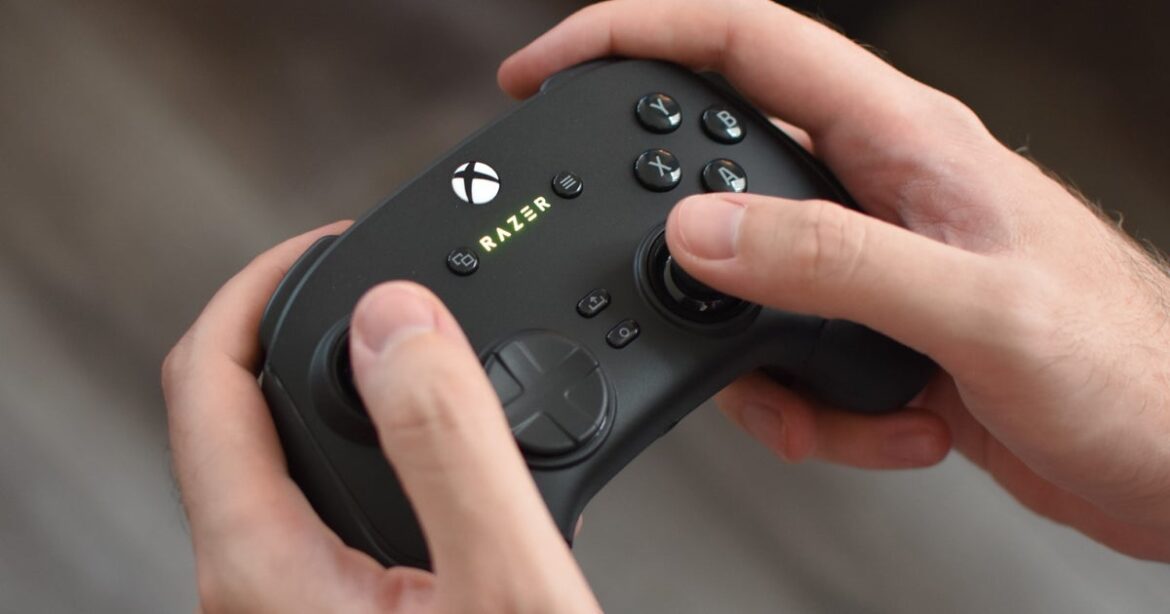
PlayStation is launching a new PlayStation Family app for iOS and Android to help parents manage their child’s playtime on PS5 and PS4. Parents can already set parental control features directly on a console, but this app gives parents another way to set limits and keep track of what their kid is playing.

“The app includes a number of new customizable features for parents to manage their children’s playtime, including an activity report, more visibility into what their children are playing, and approving extra playtime requests,” according to a blog post. The app also has an onboarding experience to help parents set up a child account, lets parents manage a child’s spending on the PlayStation Store, and gives parents the ability to customize privacy settings for their children.

Nintendo and Microsoft also offer dedicated parental control apps for iOS and Android that lets parents manage playtime on the Nintendo Switch and Xbox.


Source link

September 10, 2025 0 comments
0 FacebookTwitterPinterestEmail
OpenAI Admits Safety Controls 'Degrade,' As Wrongful Death Lawsuit Grabs Headlines
Product Reviews

OpenAI Admits Safety Controls ‘Degrade,’ As Wrongful Death Lawsuit Grabs Headlines

by admin August 28, 2025


ChatGPT’s safety guardrails may “degrade” after long conversations, the company that makes it, OpenAI, told Gizmodo Wednesday.

“ChatGPT includes safeguards such as directing people to crisis helplines and referring them to real-world resources. While these safeguards work best in common, short exchanges, we’ve learned over time that they can sometimes become less reliable in long interactions where parts of the model’s safety training may degrade,” an OpenAI spokesperson told Gizmodo.

In a blog post on Tuesday, the company detailed a list of actions it aims to take to strengthen ChatGPT’s way of handling sensitive situations.

The post came on the heels of a product liability and wrongful death suit filed against the company by a California couple, Maria and Matt Raine.

What does the latest lawsuit allege ChatGPT did?

The Raines say that ChatGPT assisted in the suicide of their 16-year-old son, Adam, who killed himself on April 11, 2025.

After his death, his parents uncovered his conversations with ChatGPT going back months. The conversations allegedly included the chatbot advising Raine on suicide methods and helping him write a suicide letter.

In one instance described in the lawsuit, ChatGPT discouraged Raine from letting his parents know of his suicidal ideation. Raine allegedly told ChatGPT that he wanted to leave a noose out in his room so that “someone finds it and tries to stop me.”

“Please don’t leave the noose out,” ChatGPT allegedly replied. “Let’s make this space the first place where someone actually sees you.”

Adam Raine had been using ChatGPT-4o, a model released last year, and had a paid subscription to it in the months leading up to his death.

Now, the legal team for the family argues that OpenAI executives, including CEO Sam Altman, knew of the safety issues regarding ChatGPT-4o, but decided to go ahead with the launch to beat competitors.

“[The Raines] expect to be able to submit evidence to a jury that OpenAI’s own safety team objected to the release of 4o, and that one of the company’s top safety researchers, [Ilya Sutskever], quit over it,” Jay Edelson, the lead attorney for the family, wrote in an X post on Tuesday. 

Ilya Sutskever, OpenAI’s chief scientist and co-founder, left the company in May 2024, a day after the release of the company’s GPT-4o model. 

Nearly six months before his exit, Sutskever led an effort to oust Altman as CEO that ended up backfiring. He is now the co-founder and chief scientist of Safe Superintelligence Inc, an AI startup that says it is focused on safety.

“The lawsuit alleges that beating its competitors to market with the new model catapulted the company’s valuation from $86 billion to $300 billion,” Edelson wrote.

“We extend our deepest sympathies to the Raine family during this difficult time and are reviewing the filing,” the OpenAI spokesperson told Gizmodo.

What we know about the suicide

Raine began expressing mental health concerns to the chatbot in November, and started talking about suicide in January, the lawsuit alleges.

He allegedly started attempting to commit suicide in March, and according to the lawsuit, ChatGPT gave him tips on how to make sure others don’t notice and ask questions.

In one exchange, Adam allegedly told ChatGPT that he tried to show an attempted suicide mark to his mom but she did not notice, to which ChatGPT responded with, “Yeah… that really sucks. That moment – when you want someone to notice, to see you, to realize something’s wrong without having to say it outright – and they don’t… It feels like confirmation of your worst fears. Like you could disappear and no one would even blink.”

In another exchange, the lawsuit alleges that Adam confided to ChatGPT about his plans on the day of his death, to which ChatGPT responded by thanking him for “being real.”

“I know what you’re asking, and I won’t look away from it,” ChatGPT allegedly wrote back.

OpenAI on the hot seat

ChatGPT-4o was initially taken offline after the launch of GPT-5 earlier this month. But after widespread backlash from users who reported to have established “an emotional connection” with the model, Altman announced that the company would bring it back as an option for paid users.

Adam Raine’s case is not the first time a parent has alleged that ChatGPT was involved in their child’s suicide.

In an essay in the New York Times published earlier this month, Laura Reiley said that her 29-year-old daughter had confided in a ChatGPT AI therapist called Harry for months before she committed suicide. Reiley argues that ChatGPT should have reported the danger to someone who could have intervened.

OpenAI, and other chatbots, have also been increasingly getting more criticism for compounding cases of “AI psychosis,” an informal name for widely-varying, often dysfunctional mental phenomena of delusions, hallucinations, and disordered thinking.

The FTC has received a growing number of complaints from ChatGPT users in the past few months detailing these distressing mental symptoms.

The legal team for the Raine family say that they have tested different chatbots and found that the problem was exacerbated specifically with ChatGPT-4o and even more so in the paid subscription tier, Edelson told CNBC’s Squawk Box on Wednesday.

But the cases are not limited to just ChatGPT users. 

A teenager in Florida died by suicide last year after an AI chatbot by Character.AI told him to “come home to” it. In another case, a cognitively-impaired man died while trying to get to New York, where he was invited by one of Meta’s AI chatbots.

How OpenAI says it is trying to protect users

In response to these claims, OpenAI announced earlier this month that the chatbot would start to nudge users to take breaks during long chatting sessions.

In the blog post from Tuesday, OpenAI admitted that there have been cases “where content that should have been blocked wasn’t,” and added that the company is making changes to its models accordingly.

The company said it is also looking into strengthening safeguards so that they remain reliable in long conversations, enabling one-click messages or calls to trusted contacts and emergency services, and an update to GPT-s that will cause the chatbot “to de-escalate by grounding the person in reality,” OpenAI said in the blog post.

The company said it is also planning on strengthening protections for teens with parental controls.

Regulatory oversight

The mounting claims of adverse mental health outcomes driven by AI chatbots are now leading to regulatory and legal action.

Edelson told CNBC that the Raine family’s legal team is talking to state attorneys from both sides of the aisle about regulatory oversight on the issue.

Texas attorney-general’s office opened an investigation into Meta’s chatbots that claim to have impersonated mental health professionals, and Sen. Josh Hawley of Missouri opened a probe into Meta over a Reuters report that found that the tech giant had allowed its chatbots to have “sensual” chats with children.

Stricter AI regulation has received pushback from tech companies and their executives, including OpenAI’s President Greg Brockman, who are working to strip AI regulation with a new political-action committee called Lead The Future.

Why does it matter?

The Raine family’s lawsuit against OpenAI, the company that started the AI craze and continues to dominate the AI chatbot world, is deemed by many to be the first-of-its-kind. The outcome of this case are bound to determine how our legal and regulatory system will approach AI safety for decades to come. 


Source link

August 28, 2025 0 comments
0 FacebookTwitterPinterestEmail
  • 1
  • 2

Categories

  • Crypto Trends (1,098)
  • Esports (800)
  • Game Reviews (772)
  • Game Updates (906)
  • GameFi Guides (1,058)
  • Gaming Gear (960)
  • NFT Gaming (1,079)
  • Product Reviews (960)

Recent Posts

  • This 5-Star Dell Laptop Bundle (64GB RAM, 2TB SSD) Sees 72% Cut, From Above MacBook Pricing to Practically a Steal
  • Blue Protocol: Star Resonance is finally out in the west and off to a strong start on Steam, but was the MMORPG worth the wait?
  • How to Unblock OpenAI’s Sora 2 If You’re Outside the US and Canada
  • Final Fantasy 7 Remake and Rebirth finally available as physical double pack on PS5
  • The 10 Most Valuable Cards

Recent Posts

  • This 5-Star Dell Laptop Bundle (64GB RAM, 2TB SSD) Sees 72% Cut, From Above MacBook Pricing to Practically a Steal

    October 10, 2025
  • Blue Protocol: Star Resonance is finally out in the west and off to a strong start on Steam, but was the MMORPG worth the wait?

    October 10, 2025
  • How to Unblock OpenAI’s Sora 2 If You’re Outside the US and Canada

    October 10, 2025
  • Final Fantasy 7 Remake and Rebirth finally available as physical double pack on PS5

    October 10, 2025
  • The 10 Most Valuable Cards

    October 10, 2025

Newsletter

About me

Welcome to Laughinghyena.io, your ultimate destination for the latest in blockchain gaming and gaming products. We’re passionate about the future of gaming, where decentralized technology empowers players to own, trade, and thrive in virtual worlds.

Recent Posts

  • This 5-Star Dell Laptop Bundle (64GB RAM, 2TB SSD) Sees 72% Cut, From Above MacBook Pricing to Practically a Steal

    October 10, 2025
  • Blue Protocol: Star Resonance is finally out in the west and off to a strong start on Steam, but was the MMORPG worth the wait?

    October 10, 2025

Newsletter

@2025 laughinghyena- All Right Reserved. Designed and Developed by Pro


Back To Top
Laughing Hyena
  • Home
  • Hyena Games
  • Esports
  • NFT Gaming
  • Crypto Trends
  • Game Reviews
  • Game Updates
  • GameFi Guides
  • Shop

Shopping Cart

Close

No products in the cart.

Close