
Laughing Hyena
  • Home
  • Hyena Games
  • Esports
  • NFT Gaming
  • Crypto Trends
  • Game Reviews
  • Game Updates
  • GameFi Guides
  • Shop
Tag:

Cam

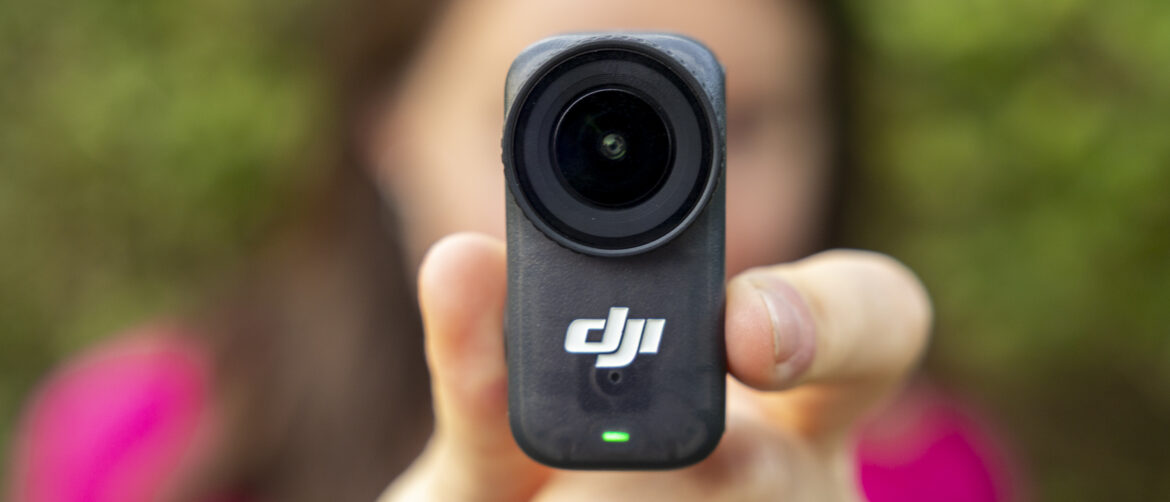
A female photographer holding the DJI osmo Nano
Product Reviews

DJI Osmo Nano review: a tiny modular action cam big that’s big on quality

by admin September 23, 2025


Why you can trust TechRadar


We spend hours testing every product or service we review, so you can be sure you’re buying the best. Find out more about how we test.

DJI Osmo Nano: two-minute review

The DJI Osmo Nano is the latest in the brand’s line of action cameras. Rather than building on a predecessor it’s a whole new concept in its own right, although it shares the same-sized 1/1.3-inch CMOS sensor as the DJI Osmo Action 5 Pro, which landed at the end of 2024.

The range of best action cameras is more diverse today than it was even just a few years ago. The one-block shops of design like the GoPro Hero 13 Black are still popular, for sensible reasons like ruggedness and extended battery times, but modular designs like the Osmo Nano and the new Insta360 Go Ultra are becoming more common.

Why? We don’t just want to hold our action cams or use a fiddly mount to attach them to our bike handlebars anymore. The content creation universe is continuing to grow, and so is the number and variety of places where we need our cameras to go.

In a nutshell, the Osmo Nano is a light, wearable action camera. You can wear it around your neck, on your head, on a hat or helmet, plonk it on your car, bike, or even attach it to your dog. It’s remarkably small, and at 52g it’s a gram lighter than its main competitor, the Insta360 Go Ultra, released a month before it.

The product is modular in design and built as a two-piece system, with a tiny, standalone camera unit that pairs with the Multifunctional Vision Dock underneath. The dock acts as a remote, screen, and charging station, with a small but bright 1.9-inch display to help you compose shots and adjust settings.

(Image credit: Lauren Scott)

These two parts join together via two clips and a strong magnetic system, and it’s this magnet that also allows the camera to snap onto DJI’s various accessories, for a wide range of hands-free, wearable mounting options.

Although the camera is a fully IPX8-rated unit that’s waterproof down to 10m, the dock is only IPX4-rated for splash resistance, which limits its use in heavy rain or near a body of water – a totally rugged design this is not.

Sign up for breaking news, reviews, opinion, top tech deals, and more.

Inside the camera is a 1/1.3-inch CMOS sensor, which captures a dynamic range of up to 13.5 stops according to DJI. I haven’t done any calculations with my test images on this, but I did find great levels of detail and color in bright sky highlights as well as darker, shadowy areas like tunnels. I was genuinely impressed by the level of detail and tone the camera could capture, particularly for a sensor this small (in full-frame terms).

For me, DJI has always been a brand for what I’d call ‘serious’ creators, and that’s something I’m pleased to see the brand has leaned into with the Osmo Nano. There aren’t any ‘fun’ filters or gimmicks in the menus. Instead, the settings are pared back to sensible and helpful options; voice controls and gestures to start recording all work very well to make hands-free shooting that much easier.

A big draw for professionals is the color performance. I was surprised to discover that the Osmo Nano can record in 10-bit color with D-Log M and HLG profiles – a pro-level feature that gives you more leeway for color grading in post-production, if you want to edit manually rather than relying on the automatic outputs from the DJI Mimo app. In 10-bit, I found videos were punchy but still well-balanced.

(Image credit: Lauren Scott)

Performance-wise, the Osmo Nano delivers exceptionally well in some areas but underwhelms in others. The promise of rapid file transfer holds up, with the 128GB version clocking transfer speeds of up to 600MB/s over a USB 3.1 connection. This is a huge time-saver.

Battery life, however, is a clear limitation. While DJI claims up to 90 minutes from the camera and 200 minutes with the dock, I found that shooting at 4K/60fps got me closer to just 60 minutes of continuous recording. On the upside, the dock’s ability to fast-charge the camera to 80% in about 20 minutes means you can be back to shooting in no time.

The RockSteady 3.0 and HorizonBalancing stabilization features work well for walking or light activity, and even when I tried recording star jumps and high-intensity workouts, the footage was stable in sports mode. Audio quality is good all-round too, and two built-in microphones capture immersive stereo sound, with decent but not brilliant wind reduction. Another plus for more advanced creators is the ability to pair the Nano with two mics separately, and you won’t need receivers if they’re from DJI.

While the image quality is good for a camera this small, it’s still bound by the limitations of its form factor. The fixed 143-degree ultra-wide field of view is great for first-person shots, but obviously lacks the versatility of a more zoomed-in lens. And while DJI’s SuperNight mode for low-light shooting is better than ever, it’s limited to 30fps and 8-bit color.

(Image credit: Lauren Scott)

Today’s best DJI Osmo Nano deals

The Osmo Nano is pricing is really aggressive, coming in much cheaper than the Insta360 Go Ultra and the GoPro Hero 13 Black – and that’s with built-in storage too, meaning you can start shooting straight out of the box.

It’s not necessarily the most charming camera I’ve tested, but it’s thoroughly dependable and sensible, and for that reason I found it growing on me, while the low price sweetens the deal. The DJI Mimo app is less intuitive than Insta360’s, and AI edits are a little less exciting, but it’s smart and stable, and puts a clear live feed with access to settings at your fingertips on your smartphone.

DJI isn’t marketing the Osmo Nano for family users, and it lacks some of the fun features of the Insta360 lineup, plus Toddler Titan mode for capturing kids. While charging is fairly speedy it doesn’t charge as quickly as its main competitor, the Insta360 Go Ultra, either, but the camera does last longer.

If you need a fully rugged and all-in-one device for more extreme sports or environments, the GoPro Hero 13 Black or the DJI Action 5 Pro might be a better choice. But this is a well-thought-out, truly wearable action camera for creators who want to experiment with unique perspectives, and need a B-camera for places their main camera can’t go, for a B-cam price.

(Image credit: Lauren Scott)

DJI Osmo Nano: specs

Swipe to scroll horizontallyDJI Osmo Nano specs

Sensor

1/1.3-inch CMOS

Max Resolution

35MP (6880 x 5160) photos
4K, 60fps footage

Weight

Camera: 2.54oz / 53g Vision dock: 3.8oz / 72g

Dimensions

Camera: 57 x 29 x 28mm
Vision Dock: 59 x 42 x 22mm

ISO Range

100–25600

Lens

FOV: 143 degrees
Aperture: f/2.8
Focus: 0.35m to ∞

Operating Time

Camera: 90 mins*
Camera + Multifunctional Vision Dock: 200 mins*

Connectivity

Bluetooth, Wi-Fi, USB-C 3.1

Storage

64GB/128GB built-in
microSD card, up to 1TB

Waterproofing

Camera: 33ft (10m)
Vision Dock: IPX4-Rated

DJI Osmo Nano: Price and availability

  • Launched worldwide on September 23 2025, except US
  • Osmo Nano Standard Combo (64GB) costs £239 / AU$529
  • Osmo Nano Standard Combo (128GB) costs £259 / AU$589

The DJI Osmo Nano was announced on August 23, 2025, and is now shipping from DJI’s online store and authorized retailers, including Amazon. It won’t be available officially in the United States at launch. A DJI Spokesperson told TechRadar that “DJI remains dedicated to the US market and is optimizing our strategy to best serve our customers amidst evolving local conditions.”

There are two standard combos to choose between, broken down by the internal storage capacity: the Osmo Nano Standard Combo at 64GB (£239 / AU$529) or 128GB (£259 / AU$589).

Each combo comes with the same content, including the Osmo Nano Camera, Multifunctional Vision Dock, Magnetic Hat Clip, Magnetic Lanyard, a protective case, USB-C cable (USB 3.1), and a Dual-Direction Magnetic Ball-Joint Adapter Mount. The protective case is more just a plastic sheath rather than substantial padded protection.

That price puts it way below the Insta360 Go Ultra Standard Combo ($449.99 / £369 / AU$759), which is more impressive given that you get built-in storage too. It’s also less than the GoPro Hero 13 Black (now available for around $359.99 / £315).

Image 1 of 4

(Image credit: Lauren Scott)(Image credit: Lauren Scott)(Image credit: Lauren Scott)(Image credit: Lauren Scott)

DJI Osmo Nano: Design

  • Standalone camera is waterproof, dock is splashproof
  • Magnetic base connects easily to mounts
  • The camera weighs 1.83oz / 52g

The DJI Osmo Nano camera is oblong-shaped, about half as wide as it is long. It sits comfortably between your thumb and forefinger in either portrait or landscape mode, but I didn’t find it as pocketable as the Insta360 Go Ultra because of its extra depth.

Without the dock, the Osmo is a light, wearable action camera at just 52g. Adding the dock, by way of two secure mounting clips and a magnetic, adds another 72g and turns the camera into a more complete action companion. It’s small, but I found the combo top-heavy on uneven surfaces, making low-level shots without a mount more difficult.

There’s just one built-in OLED HD touchscreen on the dock, rather than a screen at the front and back, or a flippable design like the Insta360 Go Ultra. This means you have to detach and remount the camera every time you want to go from shooting your environment to talking to the camera (if you want to see yourself, that is). Unlike the Go Ultra, which simply plops back into place with strong magnets, flipping the Osmo Nano around is a bit fiddly.

The design is gray and plastic, which is familiar territory for both DJI and action cams in general. The body is subtly textured though, meaning it’s easy to grab onto with cold, wet or sweaty hands. Ruggedness is key for an action camera, but only the wearable part of the Osmo Nano is waterproof. The camera is IPX8-rated for submersion up to 10 metres underwater.

The dock is only splash, rain and likely sweat resistant, and I wouldn’t fancy its chances in a heavy rain shower. This is a shame, because it limits potential usage and introduces a little caution to creativity when shooting. It’s also a far cry from DJI’s Action 5 Pro, which is verified down to 20m / 65ft.

(Image credit: Lauren Scott)

While the dock isn’t waterproof, you can use the whole product in temperatures of -20C to 45C (-4F to 113F), so you’re good for everything from winter sports to desert treks. A lens cover screws over the main lens, so if you damage or scratch it a replacement costs a fraction of buying a whole new unit.

The Osmo Nano has just two physical controls: there’s a big red record button on the top of the camera and another on one side of the dock. These also act as power switches, and they require some force to push down so that you’re not likely to press them accidentally. That’s it, other than a small flap that opens up on the other side of the dock to reveal the USB 3.1 port for charging and transferring files, plus the microSD slot, which takes up to a 1TB card.

Image 1 of 3

(Image credit: Lauren Scott)(Image credit: Lauren Scott)(Image credit: Lauren Scott)

I didn’t find the DJI Osmo Nano as enjoyable or easy to navigate as other action cameras I’ve tested. You swipe up to access video settings, down for the main menu, and left to change the shooting mode. To toggle Pro Mode on or off, you tap the slider icon on the right side of the screen.

It’s not rocket science, but at 1.96 inches the small screen means you need to be extra precise with your touch gestures to bring up menus and dial in settings. My partner – who has bigger hands and fingers than I – sometimes had to tap the screen a few times to activate settings.

The menus are mainly black and white with yellow accents, and I found this less eye-catching than the GoPro or Insta360 ecosystems, although that may be more a matter of personal preference. Some settings are also overlaid on the live picture and can be difficult to read. The camera doesn’t have the same detailed tutorials and guides that you get when you start using the Insta360 Go Ultra, although I’m sure DJI fans will have no trouble finding their way around.

Image 1 of 1

(Image credit: Lauren Scott)

DJI Osmo Nano: Performance and features

  • Quick-edit videos on the DJI Osmo Mimo app
  • Standalone camera charges 80% in about 20 mins
  • In-built storage and takes microSD cards up to 2TB

The performance of the Osmo Nano is hard to pin down. In some areas I felt it delivered exceptionally well, but in others it was a bit underwhelming. The rapid file transfer ended up being surprisingly helpful, and in my tests with the 128GB version DJI’s claim of up to 600 MB/s transfer speed over USB 3.1 holds up, and I found it a huge time-saver compared to sending lots of files wirelessly.

The camera’s battery life is a limitation, though, particularly when shooting at higher resolutions like 4K/60fps. I got closer to 60 minutes of continuous recording here – rather than the 90 minutes that DJI claims at 1080p/24fps – which isn’t bad for its size, but lags behind the multi-hour endurance of larger cameras like the Osmo Action 5 Pro. The dock can top up the battery on the go, and I was also impressed by its ability to charge to 80% in just 20 minutes, especially if you’re as bad as I am at remembering to charge your gear before a shoot.

You then get up to 200 minutes of 1080p/24fps video from the dock, but in reality, I found this closer to two hours once the screen and Wi-Fi are on and you’ve powered the camera up and down a few times.

If you tend to record short clips throughout a longer day, it’s nothing to worry about. If you’re the type of shooter to record continuously, you may lament the fact that there aren’t replaceable batteries to swap out when you run out of juice. I left the camera running for my battery tests during a particularly warm day, and although it felt hot to the touch during, it never overheated to the point of turning off.

(Image credit: Lauren Scott)

The Osmo Nano is equipped with DJI’s RockSteady 3.0 stabilization and HorizonBalancing. It handles a fair amount of shake, but it’s not on the same level as a dedicated gimbal like the Osmo Pocket series. In footage of fast-paced, high-impact activities like running on trails you’ll still see some micro-jitters, but for walking shots it’s pretty impressive.

Using different mounts will dictate how stable your results are. Using the pendant seemed to cause me more wobbles than handholding the camera, for example, but the head mount gave me super-smooth footage when running. It’s worth noting that there are different levels of stabilization, with daily, sport, or anti-motion blur options. You can also turn off image stabilization to save battery, or if you’re using a secondary DJI product to keep things stable.

The DJI Osmo Nano performs really well in remote shooting scenarios without a phone. The voice commands, like ‘start recording’, work almost instantaneously in a quiet environment, but require you to shout when it’s loud (not a great look in a city center). I found that gestures worked well too, and I liked being able to pat the camera when it was powered off to start recording, or nod my head when it was mounted on my head. Much more subtle.

(Image credit: Lauren Scott)

The Osmo Nano has two built-in microphones for stereo sound, and I found the audio straight out of the camera surprisingly immersive. It picks up sound from a variety of directions when you’re shooting in a public place, but still hones in on your voice when you’re speaking to the camera clearly.

Like all action cameras, the audio quality sounds muffled underwater, but the clarity returns more quickly than others I’ve tested when you pull the camera back out into fresh air. There are lower and stronger wind reduction modes, and both did a decent job of reducing disturbance when I captured some clips on a blustery countryside walk, without removing the noise entirely (see the clips below). My voice was clear and free from distortion, but it’s not the perfect solution for clean audio; for that, you’ll need a separate mic.

A major draw is the ability to connect the Osmo Nano directly to DJI’s wireless microphones without needing a separate receiver. I haven’t been able to try this yet, but I can see it being convenient for creators who want to capture high-quality audio, especially those already with DJI mics.

DJI Osmo Nano: Image quality

  • 1/1.3-inch sensor
  • Video up to 4K/120fps and 35MP photos
  • 10-bit D-Log M and HLG color profile options

The Osmo Nano has a 1/1.3-inch sensor, the same size as you’ll find in the Osmo Action 5 Pro and just a fraction smaller than the one in the Insta360 Go Ultra. Video headlines include 4K at 60fps in 16:9 format, and 4K 120fps slow-mo footage, which expands to 1080p 240fps.

The specs are one thing, but the proof is in the pudding; or in this case, in the videos and shots you get from the camera. Overall, I think the image quality is good for an action camera of this size. As ever, it won’t completely replace a full-sized or full-frame camera, but that’s not the expectation here. The fixed 143-degree ultra-wide field of view is perfect for first-person POV shots, and I could fit a whole wedding group in the frame (I don’t have permission to include the sample shot in the review, sadly), but it’s not easy to zoom in on the scene should you want to get closer in.

I tested the Osmo Nano in all weather and lighting scenarios. DJI touts the wide dynamic range of the Osmo Nano, but in direct sunshine I noticed some banding where the highlights had been clipped. You can see this in the video above, which was a test of the one-tap editing feature in the DJI Mimo app.

4K resolution is sharp and punchy, and even in 8-bit color mode the camera seems to capture vibrant blue skies and leafy greens, and handles quick changes in light (coming out of a dark tunnel, from indoors to outdoors) well; however, while I like a bit of lens flare, this is one area that could be handled better. It tended to keep my face exposed when I was talking to the camera, but this wasn’t set up anywhere in the camera. If I were to generalize, I’d say footage comes out darker than Insta360’s Go Ultra, possibly for greater leeway when editing, where the Insta option is designed for near-automatic use.

DJI’s SuperNight mode does a decent job of reducing noise in low light, but it only works at up to 30fps and with 8-bit color, which might limit its utility for serious cinematographers. It’s the best night image quality in a wearable camera I’ve seen, but it’s still bound by the laws of physics – a smaller lens and sensor will always have certain limitations compared to a larger, more dedicated camera. There’s some AI-smoothing being applied to reduce noise in low-light footage, but this is less obvious to the untrained eye, and less muddy than some night modes I’ve seen on earlier action cameras.

DJI’s automatic horizon leveling (which can be calibrated) is pretty flawless, and the RockSteady image stabilization is most impressive in sports mode. To really test it out, I wore the camera on DJI’s headband mount and recorded the first five minutes of a high-intensity workout. Throughout a gruelling round of burpies, star jumps and squats, the footage was stable and smooth (almost unnaturally so). Trail runs, dog walks, and cycle clips were all just as usable, but the handheld results are slightly more jittery than using a dedicated mount.

Photos from the camera have a medium-range megapixel count (the maximum resolution is 35MP and you can shoot in a 16:9 or 4:3 ratio), and as to their quality, I said the same thing about Insta360 Go Ultra’s photo results: they’re good enough to insert into videos, but I probably wouldn’t use them for standalone social posts or prints as a creator. Consider them as an additive rather than a standalone feature, and you won’t be disappointed.

Image 1 of 4

(Image credit: Lauren Scott)(Image credit: Lauren Scott)(Image credit: Lauren Scott)(Image credit: Lauren Scott)

Impressively, the Osmo Nano gives you the option of recording footage with a flat color profile (DJI’s D-Log M setting), designed to preserve the maximum color and brightness info in the video file, especially in lights and darks.

While the footage out of the camera is desaturated in this mode, I found you had far more wiggle room to adjust the colors, contrast, and saturation to achieve a specific, cinematic look without losing any of the detail captured in the original scene. This is also going to benefit creators shooting a project with the Osmo Nano alongside other cameras who want their edited work to look consistent.

DJI Osmo Nano: testing scorecard

Swipe to scroll horizontallyDJI Osmo Nano

Attributes

Notes

Rating

Price

Much cheaper than the Insta360 Go Ultra, and that includes helpful built-in storage.

5/5

Design

Unexciting but functional, and it’s a shame the dock is only splash-proof. The lens replacement adds ruggedness.

4/5

Performance & features

Fewer filters and modes than the Insta360 Go Ultra, but you get the option of manual controls. The DJI Osmo app makes quick, clever edits.

4/5

Image quality

In daylight, colors are vivid and dynamic range is good. Stabilization is excellent, and low light footage is fine. Slow-mo could be crisper.

4/5

Should I buy the DJI Osmo Nano?

Buy it if…

You want a camera that ‘disappears’
The Osmo Nano is small enough to be worn on a pendant, hat, or headband, thanks to its small size and weight. The magnetic mount allows for quirky mounting solutions like lamp posts, cars, and even washing machines.

You already own DJI products
To boost the sound quality, you can connect the Nano directly to two DJI microphone transmitters without needing a receiver. If you’ve already got a DJI mic, gimbal or camera, sticking with the brand also means greater familiarity with the app.

Don’t buy it if…

You like a roomy LCD screen
At less than two inches, I found the Osmo Nano’s LCD touchscreen a little small for composing shots and reviewing footage. You can use your phone for a larger live view, but this isn’t always convenient.

You want a fully waterproof solution
The Nano’s Vision Dock is only splashproof, and this made me uncomfortable while shooting in the rain or near water. If you’re a real action lover, I’d recommend a camera with a more rugged build.

Also consider

The Insta360 Go Ultra has a similar form factor, with a separate camera and action pod. The flip-up screen is more vlog-friendly and bigger at 2.5 inches, while the camera weighs the same as the Osmo Nano but is more square and shallow (which I found easier to mount). Pricing and image quality are similar, but it’s a slightly more fun action camera that’s great for the whole family.

Read my full Insta360 Go Ultra review

The GoPro Hero 13 Black is still the flagship of action cams and one I’d recommend for serious filmmakers. It’s chunkier than the Osmo, but it also has magnetic mounting. GoPro also has the widest range of mount accessories to open up creative shooting opportunities, and it’s possible to squeeze 1.5 hours of 5.3K video from the battery, for recording with fewer interruptions.

Read our full GoPro Hero 13 Black review

(Image credit: Lauren Scott)

How I tested the DJI Osmo Nano

  • I tested the camera for two weeks pre-embargo
  • I wore it on walks and runs, and mounted it for drives
  • I recorded videos at all settings and in all modes

DJI sent me a full-production Osmo Nano for review around two weeks before its release date, and I used it at least once a day – often much more – during this period. I always like a camera to become a natural part of my workflow, rather than carrying out one intense period of testing, so that I uncover the nuances for a more informed and helpful review.

I tried all the camera’s modes, used it with and without the dock, and mounted it on the magnetic pendant and headband. I mainly used the DJI Mimo app to edit footage right from my iPhone 15 Pro.

  • First reviewed September 2025

DJI Osmo Nano: Price Comparison


Source link

September 23, 2025 0 comments
0 FacebookTwitterPinterestEmail
Rove R2-4K Dual Pro
Product Reviews

Rove R2-4K Dual Pro Dash Cam review: dual channel video for superb value

by admin September 4, 2025


Why you can trust TechRadar


We spend hours testing every product or service we review, so you can be sure you’re buying the best. Find out more about how we test.

Rove R2-4K Dual Pro dash cam: two-minute review

Dash cams are becoming increasingly advanced, but their core job is still to capture video. The Rove R2-4K Dual Pro Dash Cam will certainly do that, and is supposedly the company’s most advanced dual-camera model to date, although the conventional design doesn’t suggest that at all – it looks like a no-frills dash cam bundle.

The package consists of a front-facing 4K camera, supplemented by a rear-facing 2K camera. These boast Sony Starvis 2 IMX678 and IMX675 sensors respectively, both of which are common among many of the best dash cams you can buy.

Rove sells the Rove R2-4K Dual Pro Dash Cam in a bundle that comes complete with a 128GB Rove Pro microSD card, and a CPL filter for improving the video quality further.

It’s presented in a box that, like other Rove models, has some of the busiest artwork you’ll ever see on a product. There is much to flag, however, with a bumper crop of features and functions that make the Rove R2-4K Dual Pro Dash Cam appealing for anyone who prefers a model with a more conventional suction-fit design.

While the looks are pretty conventional, inside the camera has lots of decent tech that makes it a solid windshield-mounted workhorse. There’s built-in GPS for recording vital data such as speed, time and date stamps, 5GHz and 2.4GHz Wi-Fi for quick and easy transfer of files up to 30Mbps on the former setting, plus a supercapacitor power supply that offers more efficient operation.

The bundle also features everything you’d expect from a premium dash cam, with 150-degree and 140-degree field-of-view lenses, loop recording, high dynamic range capability, Sony’s Starvis 2 Night Vision, motion detection, and 24-hour parking surveillance. The latter does require an additional hardwire kit to work, however.

Along with features including voice commands, and easy compatibility with both iPhone and Android handsets via the Rove app, you also get free over-the-air updates on tap that should keep the dash cams up to date for a good while. It’s worth noting, especially considering that this model shoots 4K, which produces larger files, that the download speed is Rove’s fastest – 30Mbps is a definite improvement compared to the Dual non-Pro model that offers 20Mbps, although I’ve tried the Rove R3, and found it to offer similar transfer rates to this model.

On top of the solid specification, the other main area of appeal is this dash cam’s ease of installation. The front camera comes with a suction-mount bracket, which means it can be easily attached to a windshield and detached whenever needed. The rear-facing camera is a more permanent fixture, with a self-adhesive pad fixing it to the rear window.

(Image credit: Future)

Another bonus is just how quickly the Rove R2-4K Dual Pro can be configured, with USB-C cabling connecting the two units together. Both cameras can be run off a standard in-vehicle 12V power source, or be hard-wired as mentioned above.

Inside the box you’ll find everything needed to get up and running, save for the optional hardwire kit. The package includes the two cameras, a long USB-C power cable, 128GB microSD card, CPL filter, windshield suction mount, 3M sticky mounting pads, lens cleaning cloth and an assortment of cables and clips, along with a trim tool for fixing everything firmly into place.

Rove R2-4K Dual Pro dash cam: price and availability

The Rove R2-4K Dual Pro Dash Cam is available now from the Rove website priced at $349.99 (about £260) for a bundle that includes a microSD card and CPL filter. This is a lot more than the $199.99 (approx £150) non-Pro Dual model that’s available via the Rove website, or from Amazon.

It is also, in essence, very similar to the previously released Rove R2-4K Dash Cam without the rear-facing camera unit. That model is still available from the Rove website for $159.99 (about £120) and comes with the same set of features, less the 2K rear unit, which is pretty good value if you only need a single-camera option.

Today’s best Rove R2-4K Dual Dash Cam deals

Rove R2-4K Dual Pro dash cam: specs

Swipe to scroll horizontallyRove R2-4K Dual Pro dash cam specs

Video

Front 4K 3840 x 2160p 30fps; Rear 2K 2560 x 1440p 30fps

Field of view (FOV)

Front 150 degrees / Rear 140 degrees

Storage

MicroSD up to 1TB, Cloud

GPS

Yes

Parking mode

Yes, with constant power cable, not included

App support

Rove app

Dimensions

1.65 x 3.66 x 2.52 inches / 4.91 x 9.29 x 6.4cm

Weight

5.8oz / 164g

Battery

Yes

Rove R2-4K Dual Pro dash cam: Design

The Rove R2-4K Dual Pro Dash Cam isn’t any different to countless other rival models, with a conventional design that offers little in the way of surprises. It’s therefore a good option for anyone wanting to move up from a model with a lowlier specification. The front-facing camera unit is boxy but compact, with dimensions of 1.65 x 3.66 x 2.52 inches / 4.91 x 9.29 x 6.4cm with a weight of 5.8oz / 164 grams and a protruding lens that points towards the windshield. Around at the back, there’s an integral 3-inch IPS colour screen with a row of control buttons underneath. The design is simplistic, but it works to good effect.

Sign up for breaking news, reviews, opinion, top tech deals, and more.

(Image credit: Future)

One of the biggest benefits for me is the design of the mount for the Rove R2-4K Dual Pro. Granted, it all looks a little bit clunky due to the extra angled brackets, but the suction cup is a real boon. There’s a circular screw on the back of this that let me stick it to my windshield and remove it just as easily, which I think is super convenient. I frequently move cameras from car to car, and, in this respect, a suction cup mount is the way to go. The rear camera is neat too, with a self-adhesive sticky pad that fixes it to the glass. Meanwhile, the lens can be moved in situ, so it’ll suit a rear screen with any kind of angle.

(Image credit: Future)

Rove R2-4K Dual Pro dash cam: Performance

The Rove R2-4K Dual Pro cameras offer fairly standard views of the road ahead and behind, with 150-degree field of view from the front and 140-degree field of view from the rear camera. These work using a standard loop recording process, via H.265 and H.264 video codec, storing video files to the removable microSD card or to any cloud storage setup if preferred using the Wi-Fi connectivity and Rove’s supporting app. I was more than happy with the setup and installation procedure, with the standard formatting of the included 128GB microSD card needed prior to use.

(Image credit: Future)

Everything about this bundle is straightforward and that included the installation thanks to the suction cup mount for the front camera. The rear camera required a little more fiddling about, mainly to get the wiring to the front camera tidied away. Once in situ though, the pair performed admirably. I always appreciate a rear screen a dash cam, especially for getting an idea of the view from the lens. The buttons along the bottom were also handy for tweaks and fine-tuning. However, the Rove app that I’ve used before really does offer increased ease of use.

(Image credit: Future)

Up front, the 4K 2160p video is crisp and clear, helped by a 6-layer optical lens, the Sony Starvis 2 chip and 8-megapixel CMOS sensor. The 2K 1440p recording delivered from the 6-layer lens, Sony chip and 5-megapixel CMOS sensor is obviously lesser quality, but it delivers perfectly serviceable footage. Audio levels are good too, offering some context to any incident if it’s ever needed.

Naturally, this model generates larger amounts of content due to the 4K specification, which is where the faster data transfer rate proved really handy. I thought the way the app managed control of files when I wanted to keep anything was as easy as any rival setup I’ve tried. Overall, Rove has everything sorted with this model, though many of its lesser products deliver much the same for a bit less cash.

Should you buy the Rove R2-4K Dual Pro dash cam?

(Image credit: Future)

Buy it if…

Don’t buy it if…

How I tested the Rove R2-4K Dual Pro Dash Cam

  • I installed the dash cam into a test car for an initial period of two weeks
  • I used it for a wide variety of journeys during the day and at night
  • I connected it to my phone and downloaded recordings for comparison

Rove sent me the Rove R2-4K Dual Pro bundle box, which contained the twin cameras, plus it had the benefit of an included 128GB microSD card and CPL filter. They also supplied the optional hardwire kit.

The twin cameras were installed in a test vehicle that I was road testing at the time, which allowed me to try out all the features and functions. This didn’t include the hardwiring option, however, as the car had to be handed back.

Fitment required that all the supplied cables had to be plumbed in around the car, being pushed back behind trim panels where needed using the supplied plastic tool. This allowed me to check that everything would reach, especially where power to the rear camera was concerned.

  • First reviewed August 2025


Source link

September 4, 2025 0 comments
0 FacebookTwitterPinterestEmail
Saints release veteran RB Cam Akers in initial cuts
Esports

Saints release veteran RB Cam Akers in initial cuts

by admin August 25, 2025


  • Katherine TerrellAug 25, 2025, 12:59 PM ET

    Close

      Katherine Terrell came back to ESPN to cover the New Orleans Saints in the summer of 2022. She left the company in 2019 after joining in 2016 to cover the Cincinnati Bengals. Katherine is a graduate of LSU and a Baton Rouge, Louisiana, native, and she has covered the NFL since 2013.

METAIRIE, La. — The New Orleans Saints released veteran running back Cam Akers, the Saints announced Monday.

Akers, a 2020 second-round draft pick, signed with the Saints in June and has been competing for a backup spot behind Alvin Kamara. Akers was released as part of a wave of 14 transactions the Saints made ahead of Tuesday’s roster cut deadline.

“NFL a crazy place,” Akers wrote on X on Monday, adding a crying face emoji to his post.

Editor’s Picks

1 Related

“Difficult one, because he’s a really good running back in this league,” Saints coach Kellen Moore said Monday. “He can contribute for us, we just felt like, the depth of that room, Kendre [Miller] did a phenomenal job. … We have a number of other guys we feel like can provide some roles. We’ll finalize the rest of this running back group, but we feel like we have a really good group there.”

Akers began his career with the Los Angeles Rams and has played for the Houston Texans and the Minnesota Vikings in two separate stints. The Texans traded him to the Vikings last season, and he played in 12 games, carrying the ball 64 times for 297 yards and a touchdown. He also caught 10 passes for 52 yards and two touchdowns while with Minnesota last year.

The Saints have not finalized their 53-man roster, but currently have Kamara, Miller, Clyde Edwards-Helaire, Devin Neal, Marcus Yarns and Velus Jones Jr. in their running back room.


Source link

August 25, 2025 0 comments
0 FacebookTwitterPinterestEmail
The Insta360 GO Ultra camera held by a female photographer against a green wooded backdrop
Product Reviews

Insta360 GO Ultra review: the ultimate tiny hands-free 4K action cam?

by admin August 23, 2025


Why you can trust TechRadar


We spend hours testing every product or service we review, so you can be sure you’re buying the best. Find out more about how we test.

Insta360 Go Ultra: two-minute review

Get drawn in by the fun magnetic system and tiny size, and be genuinely impressed by the quality of the 4K footage. That’s what happened when I tested the Insta360 Go Ultra, a product that takes the advancements made with Insta360’s Ace Pro 2 and GO 3S and turns them into another (really) compact, pocket-sized camera system for adventurous creators.

I’ve been into action cameras since the first GoPros came out (terrifyingly, almost 20 years ago). But until recently, I’ve always found their bulky housings less than ideal in adventure-type scenarios (running up a mountain peak, or learning to surf, for example). The whole point of the Go Ultra is to unlock more creative opportunities without sacrificing portability.

Insta360 might be best known for its innovative 360-degree cameras, but it’s a brand that’s becoming synonymous with challenging the norms of action cams, too. The Go Ultra is a frankly tiny, pocketable camera (at 1.9 oz / 53g), about the same size as an Apple Watch. It’s a natural successor to the Go 3S (released in 2024), but not a replacement. At the time of writing, Insta360 told me that both cameras will remain on sale.

(Image credit: Lauren Scott)

Like its predecessor, the magic of the Go Ultra is its modular design that combines a standalone camera and an Action Pod, giving you unique ways to shoot, charge and play. On the surface, the camera simply looks like a square version of the Go Ultra 3S, and powerful magnets on its base mount to the Action Pod (where the screen and buttons are) or numerous accessories and attachments. I even mounted the camera to our car, but that’s a story for another day.

  • Insta360 Go Ultra at BHPhoto for $449.99

However, inside its dark gray exterior are some notable improvements. The sensor is 221% bigger for better low-light capture, and a new 5nm AI chip delivers benefits to video quality using algorithms. The Go Ultra can shoot 4K60fps video, where the Go 3S was limited to 4K 30fps. And I found the PureVideo mode – that uses said AI algorithms to cut down on noise in low light – delivered good results at sundown, where my previous action cams struggled. The maximum wide 156-degree POV is great for group shots and selfies, vlogs and immersive action alike, and the view can be tailored to avoid a warped perspective.

This is a content companion for people with an active lifestyle rather than professional athletes. I found myself shooting more with the camera overall, simply because in one snap, I could have hands-free recording.

Like the Go 3S, the standalone camera is more rugged than the Action Pod. You can use it in freezing conditions and depths of 33 feet (10 meters) underwater, while the pod is only splashproof, which is a shame. Other rugged points for the camera include a replacement lens cap (helpful if you scratch it during activities) and a push-up cover to keep the memory card slot inside dry.

Sign up for breaking news, reviews, opinion, top tech deals, and more.

I love the simplicity of the Go Ultra’s design. Like the Insta360 Ace Pro 2, the flip-up touchscreen on the action pod is an alternative to the front-and-back solution on GoPro, and I found it more intuitive for vlogging. Handling is a three-button operation, with intuitive swipes for key menus on the touchscreen, and the magnetic mounting system is always satisfying and feels secure.

(Image credit: Lauren Scott)

The Go Ultra’s battery life was a sore point for me, and not as impressive as all-in-one rivals. I got around an hour of 1080p video recording from the standalone camera, but more than double when combined with the Action Pod. USB-C charging takes you from 0 – 80% in around 12 minutes, though, making up for the fact that the battery doesn’t last as long as Insta360 suggests based on their lab tests.

There’s no built-in storage for content like the Go 3S has, but microSD cards up to 2TB are compatible, and it’s so quick and easy to get footage off the camera using the Insta360 app on a smartphone. I don’t think this is a problem (just an extra cost to bear in mind).

Image quality is better than the Go 3S, with photos capped at 50MP instead of 9MP. And you get HDR video mode, too, with the option to apply ‘Dolby Vision’ to shot footage to give it more contrast and color. The usual video modes like Timelapse and Slow Motion work as expected, while new Toddler Titan mode adds fresh, immersive POVs. There are several new features aimed at families, including AI Family Moments to pull content of loved ones into a virtual album.

The camera’s audio quality was surprisingly crisp in most scenarios, and voice-specific modes picked up my rambling very clearly, while a wind-reduction mode helped while running in a breeze. Although I haven’t tested them, Go Ultra is also compatible with several external microphones designed for high-quality sound, including Insta360’s Mic Air, and third-party Bluetooth mics like the DJI Mic Mini and AirPods Pro 2.

The Insta360 Go Ultra is hugely versatile, and I filmed in so many places, with so many perspectives, that wouldn’t have been safe or possible with my iPhone alone. If you’re a family wanting more creative holiday snaps, a creator feeling stuck with what you can shoot with a smartphone, or just someone with an active lifestyle, the Go Ultra feels like the ultimate lightweight and fun solution.

Insta360 Go Ultra: specs

Swipe to scroll horizontallyInsta360 Go Ultra specs

Sensor

1/1.28-inch

Max Resolution

50MP (8192×6144) photos
4K, 60fps

Weight

1.87oz / 53g (camera) 3.8oz / 109g (action pod)

Dimensions

1.8x 1.8 x 0.7 inches / 46 x 46 x18mm (camera)
2.8 x 1.9 x 1.3 inches / 70 x 49 x 33mm (Action Pod)

Gyroscope

6-axis

ISO Range

100–6400

Aperture

f/2.85

Connectivity

Bluetooth, Wi-Fi, USB-C 2.0

Storage

microSD card, up to 2TB

Waterproofing

33ft (10m)

(Image credit: Lauren Scott)

Insta360 Go Ultra: Price and availability

  • Launched worldwide on August 21 2025
  • Standard bundle costs $449.99 / £369 / AU$759
  • Creator bundle costs $499.99 / £409 / AU$839

The Insta360 Go Ultra was announced on August 21 2025 (after being teased on August 18) and is available to order now from DJI’s online store and major retailers like Amazon.

It comes with two different bundle options. The Standard Combo includes the camera, quick-release cord, magnet pendant, magnetic clip and a USB-C charging cable. It costs $449.99 / £369 / AU$759.

The Creator Combo bags you all of the above, plus a Mini 2-in-1 Tripod 2.0, Quick Release Mount and Pivot Stand. It costs $499.99 / £409 / AU$839. Although a lens cap is provided, you’ll need to buy a separate pouch or case, as neither bundle includes one – and this feels a bit mean.

The pricing puts the Go Ultra at just a fraction more than the Іnѕtа360 X3 in the US and UK (when it’s not on offer), which is now three years old, but that does offer 5.7K 360-degree capture over the Go Ultra’s 4K. It’s roughly the same price as the Insta360 Go 3S, but you get double the frame rate with 60fps video capabilities.

I think the Go Ultra is fairly priced. The GoPro Hero 13 Black is a strong competitor at around $359.99/£305, particularly if you want a traditional action camera and don’t mind a bulkier design. There’s no built-in storage, so factor in the cost of buying a microSD card before you can start filming.

Today’s best Insta360 Go 3S and Insta360 Go Ultra deals

Image 1 of 3

(Image credit: Lauren Scott)(Image credit: Lauren Scott)(Image credit: Lauren Scott)

Insta360 Go Ultra: Design

  • Standalone camera is waterproof, operates down to -20C / -4F
  • Strong magnetic base connects to Action Pod and range of handy mounts
  • The camera weighs 1.87oz / 53g and is similar in size to Apple Watch

The Insta360 Go Ultra resembles a square version of its former self, the Go 3S (its only real rival). Where its predecessor was pill-shaped and about the size of a thumb, the Go Ultra is square and more than half as deep as it is wide, sitting neatly between your forefinger and thumb for quick handheld shots. That’s only half of the product, though. Without the Action Pod, the Go Ultra is one of the lightest action cameras you can buy at 1.87oz / 53g (14g heavier than the Go 3S). Using the Action Pod turns the Go Ultra into more of a traditional GoPro-style action camera.

The main difference is that there’s one flip-up LCD touchscreen, rather than a screen at the front and back. As an owner of the GoPro Hero 12 Black, this flip-up screen was a revelation to me, and I found it so helpful when filming walking shots and talking to the camera, or to see how a shot was framed when shooting with the standalone camera remotely.

No doubt it contributes to the Action Pod’s lack of waterproofing, though. The IPX8-rated camera can be fully submerged underwater, but the Pod is only resistant to splashes, limiting where you can take it. On this, I was always careful to dry the camera before popping it back into the Pod.

Image 1 of 4

(Image credit: Lauren Scott)(Image credit: Lauren Scott)(Image credit: Lauren Scott)(Image credit: Lauren Scott)

As far as durability goes, the camera is also freeze-proof down to -4F (-20C), so it’s ripe for snowsports. And a screw-on lens protector added peace of mind for me against lens scratches, given that a replacement is around $20 / £20. I’ve known so many action cameras in the past to fog up when filming underwater or changing temperatures quickly, but the lens guard has an anti-fog coating that avoided this particular pain point well.

I found the operation of the camera simple, which is a great thing because it lets you focus on the fun part of creating. The Action Pod has just three buttons: red up top for recording, a power button and a Q button to quickly switch modes on the right. There’s a raised button to release the standalone camera from its magnetic mount on the left (above a USB-C charging point), and I never found myself pressing this accidentally.

You really have to tug the standalone camera to release it from the Pod’s magnets, which avoids unwanted drops. Underneath the Action Pod, there are two holes to fit the Go Ultra’s specific Quick Release Mount (sold separately, but very solid), for a secure fit to accessories like the brand’s Pet Harness. Attaching the camera to a pet harness was decidedly old school, with an action mount and screw system. But this kept it firmly in place, even after a lot of doggo rolling.

Image 1 of 5

(Image credit: Lauren Scott)(Image credit: Lauren Scott)(Image credit: Lauren Scott)(Image credit: Lauren Scott)(Image credit: Lauren Scott)

Navigating the camera’s menus is easy, too. When you first turn on the Go Ultra, you get a walkthrough of what gestures bring up which settings. It took me a few hours to remember which did which (old dogs), but it soon became second nature. A right swipe brings up playback for footage, and a right swipe lets you dial in more settings and switch between Auto and Manual Mode.

The touchscreen is bright, colorful and responsive, which makes changing settings – even with wet or cold fingers – straightforward. You can buy the Insta360 Go Ultra in either Midnight Black (model tested here) or Arctic White, but either way, the construction is from a rigid, matte plastic that seems scratch-resistant, and like it could take a few knocks and drops. It’s sensible action camera fodder.

Insta360 Go Ultra: Performance and features

  • Quick AI-edited videos via the Insta360 app
  • Standalone camera charges 80% in 12 mins
  • Compatible with microSD cards up to 2TB

The Go Ultra is designed to work alongside the free Insta360 app, which pairs to the camera via its own WiFi network for remote operation. From here, you can also download, preview and edit videos on your smartphone. Other than installing some new firmware (released just before the camera), I was paired and ready to shoot from the app in under 10 minutes.

The standalone camera and Action Pod pair via Bluetooth when they’re apart. I found the connection seamless, with no lag when changing settings or in the real-time view on the screen. Range can be an issue, though, both from the camera to the phone and from the camera to the pod. More than about five meters away, or underwater, the connection would dip out, and the camera would stop recording. It’s not a dealbreaker, but it might limit more complex setups, especially if you’re shooting somewhere wet.

Image 1 of 2

(Image credit: Lauren Scott)(Image credit: Lauren Scott)

The Go Ultra has a 6-axis gyroscope to measure the camera’s movement and rotation, and through an algorithm, makes the video more stable and gives you a more even horizon. Image stabilization isn’t bad, but I found fast-moving objects needed a bit of extra help. When trail running, I got my best results by activating the Jitter Blur Reduction mode, plus Tilt Fix, which corrects uneven mounting by up to 10 degrees. It took me a while to discover both of these, and my first clips with the camera clipped to a hat (including this swimming clip below) were fairly wonky. Once activated, though, the results evened out nicely, and even clips of my dog lolloping at full speed looked stable.

The camera has a built-in microphone, and four modes for picking up sound – Stereo, Voice Enhancement, strong and weak wind reduction. I found the audio quality really impressive while walking in good conditions. My voice was picked up clearly when talking to the camera, and even in a busy city, the camera was able to isolate the sounds nearby rather than heavy traffic noises. If you use the camera in water, the audio will drop out, and the camera will need to dry enough before the clarity returns.

Like most action camera mics, there’s an issue with wind noise disrupting the clarity (especially when running in breezy conditions), but the wind reduction setting did noticeably reduce this. It’s a big advantage for serious creators to be able to boost the sound quality with an external mic like the Insta360 Mic Air, DJI Mic 2 and AirPods 4. Although without testing, it’s hard to comment on the performance this would bring specifically.

I found all the camera’s shooting modes and presets easy to get good footage with, partly because the camera does such a good job of explaining what each one does, without the advice feeling intrusive on the screen. It was also easy to control the camera with voice commands, “turn the camera off”, “mark that” and hand gestures like making a peace sign to trigger a photo. I found that the standalone camera gets very hot after filming. Even after low-resolution clips, I felt it burning a hole in my shorts pocket, but this didn’t cause any interruption in recording, so I don’t think it’s a major issue.

Image 1 of 1

(Image credit: Lauren Scott)

Once my clips were captured, I was ready to start editing my videos. Much like GoPro and DJI’s accompanying editing apps, Insta360’s version also features AI-assisted editing tools to pick out clip highlights. There are tonnes of presets to choose from – with funky names like Vibe City and Tunes and Travel – which do a fair job of creating quick, shareable clips by adding transitions and music.

There are helpful default export settings for platforms like WhatsApp, YouTube, Instagram, and TikTok, although you can customize export parameters. I enjoy editing manually, but the Insta360 app is so intuitive that I can see even total beginners getting creative right away. Some of these end up being a bit cheesy, but you can tailor the music and effects to suit your tastes. I’ve included an example of an AI-edited video below, with clips of my dog wearing the pet harness on walkies.

The Go Ultra’s biggest downfall – and something we struggled with while testing the GO 3S – is battery life. The standalone camera has a 500mAh capacity, and the action pod 1,450mAh capacity – noticeably smaller than the 2,400mAh capacity on the Insta360 X5, but an improvement on the GO 3S’ 310mAh and its 38-minute life. Also, unlike action cams with replaceable batteries, when you run out of juice, that means content creating is on hold until you can find a way to recharge.

Insta360 says you can get 70 minutes of footage out of the standalone camera. Adding the Action Pod gives you 200 minutes. But that’s with Endurance Mode on, the LCD and Wi-Fi off, and for 1080 24fps video – conditions I don’t think most normal shooters are going to replicate. When I tried shooting a video in 1080 30fps from full power, without all the caveats on the specs sheet, I got around 150 minutes with the pod and 45 minutes without. I don’t think that’s dreadful for a camera this small, and it’s worth noting that a 10-minute charge took me from about 0-75% so I was ready to shoot again. But it’s something to consider if you’re away from power for long periods, or looking to shoot continuous cycles, runs and hikes for longer.

Insta360 Go Ultra: Image quality

  • New 1/1.28-inch sensor with AI chip
  • Captures 4K video up to 50fps and 50MP photos
  • Low-light video mode with PureView

Insta360 has given the Go Ultra a bigger 1/1.28-inch sensor than the Go 3S, the idea being that this is capable of capturing more detail in low light. The Go Ultra also supports video capture up to 4K 60fps and 1080 240fps for slow-motion, plus new HDR that can be applied to clips and stills. Unsurprisingly (because this is a super user-friendly camera), there’s no option to shoot in a flat profile for more color grading scope during post-production. But that’s no problem, as I think most users will stick to editing in the Insta360 app anyway. Beyond the specs, what do the results look like in real life?

Going into testing the Go Ultra, I think my expectations were too low for a camera of this size. I found video quality to be brilliant in all 10 modes, but footage was sharpest and most vibrant in abundant sunshine. In the camera’s Standard color preset (there are 8 in total, including Vibrant and Urban) videos were still colorful and had decent detail in the shadow and highlight areas, although the contrast ratio wasn’t good enough to expose a very bright sky like a sunset, and a dark foreground, in one shot.

It’s easy to switch the Go Ultra to Manual exposure mode, where you can take control of the shutter speed, ISO (100–6400) and white balance yourself. I found this most helpful for stationary shots, but wouldn’t recommend it to beginners. In short – and unlike my mirrorelss camera – Auto mode saw me through all shooting scenarios, and I rarely felt the urge to take over. The joy of this camera is in its simple opration.

Image 1 of 2

(Image credit: Lauren Scott)(Image credit: Lauren Scott)

The camera adapts quickly to rapid changes in light, such as coming out of a shady forest into an open field. And I found that useful when I was running in the countryside, moving quickly, where i didn’t want the picture to be shrouded in darkness for a few seconds. Being summer, I did a lot of shooting in direct and dappled sun, and found that lens flare was handled well, too.

Big talking points of the Go Ultra’s video capabilities are the new additions of Active HDR and PureVideo. Like SuperNight on the DJI Osmo 360, it’s designed to enhance the quality and sensitivity of low-light shooting. It’s somewhat limited to automatic settings and 4K 30fps, but you can shift the exposure up and down in increments. Walking around a city at night, I was able to pick up plenty of detail in the buildings, street lights and the sky, although I think there’s some aggressive denoising AI going on inside the camera, as the footage did look a bit muddy at times.

Photos from the camera have a seemingly high megapixel count (the maximum resolution is 50MP or 37MP with a 16:9 aspect ratio), which is a big bump up from the Go 3S’ 12MP in 4:3 (9MP in 16:9). In practice, I’d say that’s more than adequate for slotting into videos, or uploading to social platforms, but I wouldn’t want to make big prints from them. At the camera’s widest field of view, you get a 14.27mm equivalent in 35mm terms – expansive enough to get groups in the frame, or to shoot yourself while walking. If you’re not a fan of the warped action camera look, a Linear POV does a great job at giving you a more natural wide-angle, good for vloggers.

Image 1 of 4

(Image credit: Lauren Scott)(Image credit: Lauren Scott)(Image credit: Lauren Scott)(Image credit: Lauren Scott)

Overall, I’m impressed by the quality of Go Ultra’s footage. It’s in line with an action cam that’s this portable, and the addition of HDR to video as well as photos (with Dolby Vision for an extra boost) delivers polished videos you can safely deliver to friends, family and your social channels.

If I were a professional creator, I wouldn’t rely on this camera to cover all my video needs. But it excels at what it’s designed for – being small, getting places other cams can’t, and remaining user-friendly for beginners. The battery life is lacking for extended shooting durations, and night footage is still overcooked with PureVideo mode. But Go Ultra’s video is good in most areas, and does appear to be an improvement over the 3S in low light (I haven’t tested them side by side, so can’t say for sure). With its kid and pet-friendly design, I think Insta360 has found the right balance for casual creators with an active lifestyle.

Insta360 Go Ultra: testing scorecard

Swipe to scroll horizontallyInsta360 Go Ultra

Attributes

Notes

Rating

Price

Similar cost to the Insta360 Ace Pro 2 and Insta360 Go 3S, but the quality of the package is worth it.

4.5/5

Design

A nearly seamless experience with the Action Pod, plus waterproofing and a protective lens on the standalone camera.

4.5/5

Performance & features

Gets hot, and the battery drains quickly. The Insta360 app makes light work of image transfers and AI edits and there are plenty of tricks and modes.

4/5

Image quality

HDR is a great addition, but it’s still not a class-leader in low light. You sacrifice some quality for portability.

4/5

Should I buy the Insta360 Go Ultra?

Buy it if…

You want to balance performance with portability
Video quality is high, but not the best of all action cameras out there. But the Go Ultra can also go places other action cameras can’t, at least without tonnes of extra mounts.

You don’t mind shorter battery life
I spent time shooting shorter clips on the Go Ultra, and recharging it little and often. If you plan to capture all-day events or sustained activities like rides or hikes, the battery life might be a limiting factor.

Don’t buy it if…

You want the smallest action camera
The Insta360 Go Ultra is small, but not quite as tiny as the Go 3S. At almost 15g less, the Go 3S might unlock even more possibilities.

You want a fully waterproof solution
The Action Pod is only splashproof, a fact that made me uncomfortable while shooting. If you shoot a lot of wet content, I’d go for a fully waterproofed model.

Also consider

The Insta360 Ace Pro 2 is co-engineered with Leica and gives pros something more advanced. A dedicated Leica color profile, bigger sensor with better low-light performance and image quality, and up to 8K resolution make it better for advanced videography and content creation. You still get a vlogger-friendly screen.

Read our full Insta360 Ace Pro 2 review

Cheaper than the Go Ultra, the DJI Osmo Action 5 offers excellent features. It doesn’t have the advantage of a tiny standalone camera, but the all-in-one design provides better battery life, waterproofing (to 20 meters), and 47GB of internal storage. The maximum frame rate maxes out higher, too, at 4K/120p.

Read our full DJI Osmo Action 5 Pro review

How I tested the Insta360 Go Ultra

  • I tested a full production model for three weeks
  • I mounted the camera on my hat, handlebars, and even my dog
  • I recorded videos during the day, sunset and after dark

Insta360 sent me a review sample of the Go Ultra Standard Bundle about three weeks before the official release date. This gave me enough time to test all the camera’s modes and mounting options, including those with and without the Action Pod, as well as with the magnetic clip on my hat and the magnetic pendant on hikes in the countryside.

Insta360 also supplied a large version of their pet harness, and I attached the camera to my dog out on walkies to see what footage looked like from the POV of a bouncy Flatcoated Retriever.

I used the Go Ultra wild swimming in a local river to test the waterproofing, tried it running, and even attached it to our car as we drove along a country lane. I shot in bright sunshine, at sunset and night – essentially, in all the lighting conditions I could think of for creators. I edited content straight from the camera to the Insta360 mobile app on my iPhone 15 Pro, as well as manually taking footage from the built-in SD card and editing it on my iMac.

  • First reviewed August 2025

Insta360 Go Ultra: Price Comparison


Source link

August 23, 2025 0 comments
0 FacebookTwitterPinterestEmail

Categories

  • Crypto Trends (1,098)
  • Esports (800)
  • Game Reviews (772)
  • Game Updates (906)
  • GameFi Guides (1,058)
  • Gaming Gear (960)
  • NFT Gaming (1,079)
  • Product Reviews (960)

Recent Posts

  • This 5-Star Dell Laptop Bundle (64GB RAM, 2TB SSD) Sees 72% Cut, From Above MacBook Pricing to Practically a Steal
  • Blue Protocol: Star Resonance is finally out in the west and off to a strong start on Steam, but was the MMORPG worth the wait?
  • How to Unblock OpenAI’s Sora 2 If You’re Outside the US and Canada
  • Final Fantasy 7 Remake and Rebirth finally available as physical double pack on PS5
  • The 10 Most Valuable Cards

Recent Posts

  • This 5-Star Dell Laptop Bundle (64GB RAM, 2TB SSD) Sees 72% Cut, From Above MacBook Pricing to Practically a Steal

    October 10, 2025
  • Blue Protocol: Star Resonance is finally out in the west and off to a strong start on Steam, but was the MMORPG worth the wait?

    October 10, 2025
  • How to Unblock OpenAI’s Sora 2 If You’re Outside the US and Canada

    October 10, 2025
  • Final Fantasy 7 Remake and Rebirth finally available as physical double pack on PS5

    October 10, 2025
  • The 10 Most Valuable Cards

    October 10, 2025

Newsletter

About me

Welcome to Laughinghyena.io, your ultimate destination for the latest in blockchain gaming and gaming products. We’re passionate about the future of gaming, where decentralized technology empowers players to own, trade, and thrive in virtual worlds.

Recent Posts

  • This 5-Star Dell Laptop Bundle (64GB RAM, 2TB SSD) Sees 72% Cut, From Above MacBook Pricing to Practically a Steal

    October 10, 2025
  • Blue Protocol: Star Resonance is finally out in the west and off to a strong start on Steam, but was the MMORPG worth the wait?

    October 10, 2025

Newsletter

@2025 laughinghyena- All Right Reserved. Designed and Developed by Pro


Back To Top
Laughing Hyena
  • Home
  • Hyena Games
  • Esports
  • NFT Gaming
  • Crypto Trends
  • Game Reviews
  • Game Updates
  • GameFi Guides
  • Shop

Shopping Cart

Close

No products in the cart.

Close