
Laughing Hyena
  • Home
  • Hyena Games
  • Esports
  • NFT Gaming
  • Crypto Trends
  • Game Reviews
  • Game Updates
  • GameFi Guides
  • Shop
Tag:

Brilliant

I spent 30 brilliant days with this powerful pre-built mini gaming PC: Wired2Fire HAL 9000 review
Game Updates

I spent 30 brilliant days with this powerful pre-built mini gaming PC: Wired2Fire HAL 9000 review

by admin October 1, 2025


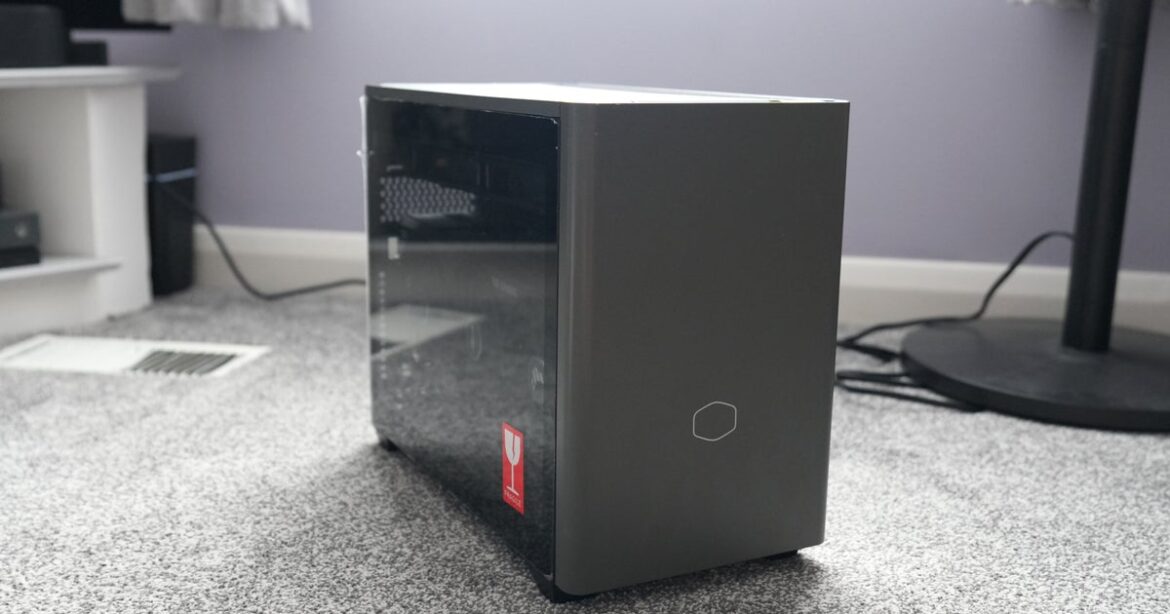
Small form factor gaming PCs are getting ever more popular, but the often fiddly assembly process is one that you don’t need to undertake yourself. This is where the Wired2Fire HAL 9000 Mini PC I’ve been testing recently comes in. It’s a well-specced mini PC with full-size desktop parts, including an AMD Ryzen 7 9700X processor, RTX 5070 Ti graphics card, 32GB of DDR5-6000 RAM and a 2TB Kingston Fury Renegade SSD. All of this fits inside the Cooler Master NR200P Max V2, an 18-litre case that ranks amongst our top Mini ITX PC case recommendations.

The price? From Wired2Fire’s website, this PC will cost you £1924, including the cost of a Windows licence. For context, if you’re willing to shop around and order from various UK retailers, a DIY version of this PC will cost you £1674 at minimum. That works out to a modest £250 premium for a pre-built system with two-week build time, five-year build warranty and two-year part warranty. I particularly like the fact that the use of off-the-shelf parts means that you’ll avoid a lot of the future upgrade woes common to bigger sellers like HP or Lenovo that use bespoke cases, motherboards and power supplies.

In order to be worth recommending though, Wired2Fire needs to deliver on more than just a good parts list. We’ll also be looking at how well the system is packed for delivery, configured in terms of BIOS and software, and supported by its warranty and customer service. And of course, we’ll be checking to see whether we get the expected level of performance from a SFF PC with these particular parts. Click the quick links below or scroll on for our full findings!


To see this content please enable targeting cookies.

Manage cookie settings

Wired2Fire HAL 9000 – Packaging and Cable Management

When it comes to the packaging, we just want a box that prevents any reasonable damage in shipping, and Wired2Fire does hit that standard.

The PC was double-boxed, with the PC case packaging inside a larger cardboard box filled with air bags. The main PC was wrapped in foam, with bubble wrap protecting the internal components. It’s sometimes preferable for GPUs to be shipped separately, but that does require a certain level of knowledge from the end user – so shipping with it installed is fine if that internal protection is present. In taking the PC out of the packaging, I can’t actually find fault with it – Wired2Fire’s attention here is first-rate.

A gallery of the PC packaging and cable management – click to expand.

Alongside the Cooler Master case box, you also get the boxes for the other components, including the ASRock B850I Lighting WiFi motherboard (an upgrade from the MSI B650 choice listed on the website), an envelope with instruction manuals, a Windows 11 Home licence, a kettle plug power cable and a patch cable.

In removing the packaging and the side panels for a closer look, cable management is also excellent, with good channelling and consistent tie-downs using both the case’s built-in wraps and some handy cable ties. It’s certainly a better job than I could do in a few days of trying, so good marks there, too.

Wired2Fire HAL 9000 – Part Selection

On the front of part selection, the parts installed in this PC aren’t totally consistent with those listed on the Wired2Fire website. However, the discrepancies are generally for the better, with our unit coming with a newer B850 motherboard and a well-regarded Asus Tuf Gaming RTX 5070 Ti. In taking a closer look at the innards of the PC, the RAM used is RGB-enabled Adata XPG Lancer Blade DDR5-6000 RAM with relatively loose CL48 timings – a little off the CL30 kits we recommend but not egregiously so.

The AIO cooler and PSU are the Cooler Master ones that come with the NR200P Max case – this isn’t actually a V2 version, as there isn’t a front-panel USB-C connector, in spite of what the Wired2Fire website says. The PSU inside is a Cooler Master V850 80+ Gold SFX unit that beats Nvidia’s recommended minimum wattage for the 5070 Ti and gives a good amount of headroom and efficiency, too. Overall, it’s a sensible selection, though a proper Max V2 case with front panel USB-C and some tighter RAM timings wouldn’t have gone amiss.

Wired2Fire HAL 9000 – BIOS Configuration

One of the things that Wired2Fire mentions when you configure this PC is that by default they provide a “moderate CPU optimisation” package that they say is “suitable for gaming and workstation usage alike”. This is a free option that’s enabled by default when you spec the system out, with a more extreme overclock available for £80.

In our case, this seems to refer to enabling the gaming mode on the ASRock motherboard BIOS, with the “Zen 5 Gaming Optimisation” setting set to the AGESA default and the “Cinebench profile performance boost mode” enabled. I didn’t see evidence of more substantive changes, such as enabling PBO, but the RAM was at least set to its EXPO 6000MT/s 48-48-48-96 setting at 1.10V. This is about what we’d expect for a free “optimisation” package.

Likewise, the PC was shipped with the latest BIOS version, 3.2, available at the time of ordering. The chipset and graphics drivers in Windows were also updated to the latest versions, which is always nice to see.

Wired2Fire HAL 9000 – Warranty and Customer Service

Another advantage of a pre-built gaming PC is having a support network to turn to if you have any issues, rather than needing to trawl through Reddit and other online forums. Wired2Fire’s support page gives the options of a phone number, email address and a web form.

For convenience, I used the web form to see if they could diagnose a couple of issues. First of all, I stated that the RAM wasn’t showing as overclocked in the BIOS, and if they could help me with enabling EXPO. They replied with a short and helpful answer just seven minutes later.

To test them a little harder, I went back and noted that one of the RAM sticks had mysteriously become unseated during shipping, and that one of them wasn’t being recognised in the BIOS. They came back with a link to a YouTube video to help me get the theoretically unseated RAM back in the system a handful of hours after my original message.

The terms of their warranty are stated on the website. Desktop PCs are covered by a “Standard Desktop PC Collect and Return Warranty” that covers the costs of labour charges for any repair work within five years, as well as the process of repair, replacement or refund for faulty parts within two years. Replacement parts will be dealt with like-for-like, or one that is “at least as good in terms of performance as the faulty part”, while for refunds, if before six months it’s the full value and after six months it’s the “equivalent second-hand value” of the item. Where an item is shown to be faulty, Wired2Fire will cover the costs of collection and return. As is typical, there are exclusions, such as accidental damage or items damaged in transit due to inadequate packaging.

Wired2Fire HAL 9000 – Gaming Performance

Arguably, the most important piece of this puzzle is how this Wired2Fire HAL 9000 Mini PC performs. We’ve tested its core components previously, but not necessarily together, so it’ll be interesting to see how it performs. The 5070 Ti is a serious contender for our favourite mid-tier GPU, which Rich equated to in our review as in “4080 territory, or more with an overclock.”

As with my testing with the Ryzen 5 5600 PC, I’ve taken a broad selection of games to best judge how this small form factor PC performs across 1080p, 1440p and 4K resolutions. The tests were run at the highest settings at native resolution in most cases for comparison purposes, so it’s often possible to achieve higher performance by dropping settings and/or enabling upscaling using DLSS, FSR or XeSS. All games were tested on a Philips Evnia 32M2N8900, a 4K 240Hz QD-OLED panel.

To provide some extra context, we also have the returning results from the 5600 and 7800X3D systems with an RX 7800 XT, as games were run at the same settings.

Here are the ray-traced performance graphs – click to expand.

You can see the array of graphs and data above and below, and in short, I was thoroughly impressed with the general performance of the system. We’ve got particularly impressive results in the likes of Indiana Jones and Black Myth Wukong that virtually double that of the 5600 PC, with RT performance being seriously potent. There are also healthy margins in F1 24 and Forza Horizon 5. I felt that Stalker 2 and rasterised Black Myth Wukong might be considered slight disappointments, with results that weren’t as high as expected.

Here are the raster performance graphs – click to expand.

Generally, I think this Wired2Fire system is suited extremely well for 1440p and 4K AAA gaming thanks to that combo of the 5070 Ti, as Rich also noted in our 5070 Ti review. The mid-range Ryzen 7 9700X also provides ample power for these games, while being more efficient than its predecessor and providing a solid uptick in both gaming and content creation performance – as Will highlighted in our 9700X review.

To back this up, I put the 9700X through a couple of industry-favourite synthetic benchmarks, with runs of Geekbench 6, Cinebench R20, R23 and 2024. Those results against the 5600 and 7800X3D can be found in the handy table below.

Benchmark
AMD Ryzen 5 5600
AMD Ryzen 7 7800X3D
AMD Ryzen 7 9700X

Geekbench 6 (Single)
2111
2691
3214

Geekbench 6 (Multi)
9489
14911
14435

Cinebench R20
4375
6878
6320

Cinebench R23 (Single)
1445
1763
2135

Cinebench R23 (Multi)
11224
17541
16073

Cinebench 2024 (Single)
89
110
128

Cinebench 2024 (Multi)
647
1058
832

It seems as if the 9700X is also being adequately cooled by the case’s built-in 280mm AIO, as I noticed a peak average die temperature of 75.6°C when running Cinebench 2024. Likewise, during a run of 4K Furmark, the 5070 Ti hit a 66°C average with the fans at 65 percent utilisation.

Wired2Fire HAL 9000 – Conclusion

The Wired2Fire HAL 9000 Mini PC probably takes the biscuit as one of the most sensible and solid prebuilt PCs I’ve looked at in some time. It’s got a set of components that, for the most part, make a good amount of sense and provide some fantastic gaming and content performance to boot.

It’s also packaged well, with excellent protection. The system itself is logically built and is well cable managed, while its BIOS is pretty much standard. It’s also up-to-date and comes with a clean Windows install you do yourself, complete with product key, so no bloatware or anything is present.

Customer service is also good, with quick and simple responses to the couple of questions I had, while the warranty terms provide a good amount of peace of mind if anything does go wrong.

I think I’d happily put my trust into a smaller builder such as Wired2Fire in this instance, given their excellent attentiveness and attention to detail with the system provided. The markup on the overall cost of the unit isn’t unreasonable either, and it doesn’t seem like they’d take you for a ride. Good job, chaps.



Source link

October 1, 2025 0 comments
0 FacebookTwitterPinterestEmail
Consume Me is a brilliant, funny, harrowing RPG about a girl on a diet, and it's on sale now
Game Updates

Consume Me is a brilliant, funny, harrowing RPG about a girl on a diet, and it’s on sale now

by admin September 27, 2025


I’ve yet to fully consume Consume Me, so please take that headline with a pinch of salt (not too much, because apparently salt can cause short-term weight gain). Still, I thought I’d rush out a quick “on sale now” piece before the weekend because this game is extremely good, and I worry based on the Steam stats that it’s being overlooked.

It’s a fast-talking, mildly anguished pocket RPG about a high schoolgirl, Jenny, who is trying to lose weight while balancing schoolwork, domestic duties, an emerging social life, and her domineering mom. It broadly consists of household tasks and Coming Of Age Milestones couched as a bunch of Wario Ware-style timed minigame puzzles. Among other antics, you’ll fold laundry by clicking on cue, manage a (dis)interest bar during a terrible date, apply your make-up as though doodling yourself in Kid Pix, and surgically arrange food on your plate while passing carbier morsels to your absurdly squishy dog.

Watch on YouTube

The developers are Jenny Jiao Hsia, AP Thomson, Jie En Lee, Violet W-P, and Ken “coda” Snyder. They offer the following cautionary note: “Consume Me is a semi-autobiographical game that depicts dieting, disordered eating, and fatphobia. If you are someone who struggles with or has struggled with disordered eating, it’s possible that Consume Me will be a stressful or even upsetting experience and we won’t begrudge you for giving it a pass.”

I myself have never had an eating disorder, but to borrow a phrase from Eddie Izzard, I am familiar with the experience of sliding up to the mirror and thinking “well I wouldn’t fuck me”. The mirror is indeed home to the Furies in Consume Me – it’s where Jenny gets her quest assignments from her comically unforgiving reflection. I laughed a lot during my first hour with Consume Me. I think I’ll probably cry a bit at some point, too. But even if I reach one of the less-good 13 possible endings, I don’t get the sense I’ll regret the journey.

Consume Me’s visual wit is balanced by a startling emphasis on resource management that is also a critique of the gamification of wellbeing. It’s divided into days, which are divided into scripted and unforeseeable events such as trips to the shops, random hot boy encounters and above all, mealtimes. These see you trying to put enough stuff on Jenny’s plate to fill her Gut gauge, without taking too many Bites. In my current save, I started out piling up objects subject to real-time physics, but then I had Jenny glean a few tips from a dieting mag, and the eating minigame evolved into a process of slotting together random Tetris blocks.

Image credit: Hexecutable / Rock Paper Shotgun

Overeat, and you may wish to burn off the pounds by exercising in Jenny’s room. Exercise takes the form of dragging an elasticated Jenny around with the cursor to fit various poses. Many of the minigames and cutscenes involve the clownish deformation of Jenny’s body. It’s amusing, and also a bit painful to watch. Consume Me does a great job of leaning into Looney Tunes slapstick while making clear that the portrayal contains an element of self-loathing.

As for those resource gauges, you’ve got to worry about your energy (used for physical labours like walking the dog), your mood (strongly affected by hunger), and your cash reserves (see also, buying a new swimsuit before the big neighbourhood pool party). While the minigames may seem flimsy, there’s a bit of strategy to distributing your time efficiently and unlocking activities, buffs and outfits that juice your stats. Again, though, this feels like critique, not an earnest equation of levelling-up with self-improvement. The developers caution in a brief foreword that Jenny’s fortunes may take a turn for the worse even if she masters all these life-hacking gambits.

Image credit: Hexecutable / Rock Paper Shotgun

The character art and interface design are sumptuously daft, with chunky Walkman buttons and a colour scheme suggestive of a virtual pet game, which I guess this sort of is. The audio is possibly even better: there’s different music for each part of Jenny’s day, and the sound effects fit the visual gags superbly. Above all, Consume Me is fast. Even when it’s dealing with more difficult stuff, like your mom body-shaming you, it rarely prolongs a scene for more than a few sentences.

Find the joyful, slightly upsetting thing on Steam. If you want a second opinion, Oisin had some quick thoughts on a demo in May. I suspect one reason Consume Me hasn’t yet made a splash is that it’s launched in the same week as various other brillo experimental games.

In particular, there’s Baby Steps from Bennett Foddy and co, which comes at similar subject matter from a very different direction. I’ve written previously about how that outwardly depressive game sort of celebrates the experience of inhabiting a disagreeable lump of flesh. I get the feeling Baby Steps and Consume Me will make natural companion pieces. We’ll hopefully have more thoughts on both down the road.


Source link

September 27, 2025 0 comments
0 FacebookTwitterPinterestEmail
Three sheep with big guns in Palworld.
Product Reviews

A week after saying it was going quiet for the rest of the year, Palworld announces a crossover with the brilliant and bloodstained shooter Ultrakill

by admin September 23, 2025


Only last week, Palworld developer Pocketpair announced that the hit survival game, which remains in early access, would be going quiet as it prepared for a full launch in 2026. Well well well… it looks like someone had a surprise up their sleeve, because today brought the announcement of an unexpected crossover, albeit with scant detail.

Palworld is collaborating with Ultrakill, a brilliant indie shooter by Arsi ‘Hakita’ Patala that’s still in early access itself, and continuing to blow minds (the game sits at “overwhelmingly positive” on Steam with roughly 120K user reviews). Ultrakill is fast-paced, bloody, and constructed around five weapons and the intricate way their various fire modes can be comboed together. It also boasts the brilliant tagline: “Mankind is dead. Blood is fuel. Hell is full.”

The announcement says that “collaboration gear and weapons from the cult-hit game Ultrakill are coming to Palworld!” Ultrakill’s hardware is fantastic, and you’d expect there’ll be some clever ways to get all your pals tooled-up and combo-ing merrily together.


Related articles

Palworld’s most recent high-profile crossover was with Terraria, which caused a big spike in players, so expect something similar for a collaboration that asks the question “will blood rain upon the Palpagos Islands?” You’d imagine it probably will.

(Image credit: New Blood Interactive)

There’s no release date beyond “later this year,” with Palworld also scheduled for a winter update (which Pocketpair has said won’t be as big as the 2024 equivalent: but that was enormous.) Other than that, the developer’s settling down to get it ready for the full release.

“Beyond just adding new content, there’s a lot of cleanup that needs to be done before Palworld can exit early access,” said Pocketpair community director Bucky last week. “It’s no secret that Palworld has a lot of quirks and jank, and we want to take the time to properly address those before releasing the game. With that in mind, we plan to start this cleanup this year.”

Keep up to date with the most important stories and the best deals, as picked by the PC Gamer team.


Source link

September 23, 2025 0 comments
0 FacebookTwitterPinterestEmail
Devolver's Steam sale is now on, so I'm using it as an excuse to tell you about its brilliant oddball horror adventure Look Outside
Game Updates

Devolver’s Steam sale is now on, so I’m using it as an excuse to tell you about its brilliant oddball horror adventure Look Outside

by admin September 19, 2025


Look Outside starts as it means to go on, hinting at a choice and then standing back smirking. The room’s dark; strange light leaks through closed curtains, and a beady eye poking through a crack in the wall urges you to peek out the window. You don’t have to do it; it’s not a formal decision point as such, just a gently presented possibility – and you can practically hear developer Francis Coulombe cackling as your curiosity wins out and all your innards explode through your eye holes.

Look Outside

  • Developer: Francis Coulombe
  • Publisher: Devolver Digital
  • Platform: Played on PC
  • Availability: Out now on Steam

For reasons that may or may not eventually become clear, Look Outside’s world is in the grip of some cosmically peculiar meteorological phenomena, causing anyone that gazes upon its unnatural light to mutate in the most horrible of ways. Giant eyeballs bulge from gaping wounds as partygoers continue their endless reverie a few doors down from your apartment; teeth sprout through ruptured skin across the hallway, splitting heads into grotesque smiles; even the paintings have gone rogue a couple of floors below. But there’s hope: all this should pass in 15 days, you’re told, so if you can stay inside your apartment building – if you keep the curtains drawn, your fridge stocked, and your sanity in check – you might just make it through.

Despite its jovially cartoonish veneer, Look Outside is a wonderfully, surprisingly grim thing; a smothering, gooey miasma of seeping innards and gut-tightening existential dread that also happens to be a sly, silly, and relentlessly oddball adventure, all the while walking an impressively assured tightrope between humour and horror. Tonally, it’s very much its own thing, but if I had to make comparisons, I’d say its combination of oozing retro dread and top-down, turn-based battling feels something like the lovechild of Jasper Byrne’s cult survival horror hit Lone Survivor and Toby Fox’s ode to old-school JRPGs, Undertale.

Look Outside trailer.Watch on YouTube

There’s definitely something of the classic survival horror feel to Look Outside, as you prowl the shadowy halls and gloomily lit residences of your apartment block while discordant throbs and hums fill out its ambient soundtrack. It’s there too as you fend off its parade of gleefully inventive abominations while hoovering up food, crafting materials, and makeshift weaponry – even if its turn-based battles lend a different sort of rhythm to proceedings. Sure, this might be a game where monsters disguise themselves as hats and you’ll encounter a crossword puzzle so boring it can completely drain you of resolve, but outside the safety of your apartment, things can be tense. Partly, that’s down to its unpredictably weird enemy encounters and the fact your weapons are prone to disintegration, but there’s also a canny XP progression system that rewards you for staying out and avoiding saving for as long as possible, push-your-luck-style.

Image credit: Eurogamer/Devolver Digital

But none of this, really, is what makes Look Outside so fascinating. Rather, it’s the game’s gleefully confounding spirit and relentless, wily narrative invention. As days pass, more of the apartment block opens up to be explored. As it does, more of its oddball residents enter your orbit, and things get brilliantly strange. It’s difficult to say too much without spoiling the fun, but this is a game crammed with imaginative scenarios and unexpected detours. At one point, for instance, you stumble into the domain of a resident apparently so enamoured with taxidermy they’ve decided to remodel their apartment out of themselves. The first floor of the building, meanwhile, has transcended the boundaries of time and space. Elsewhere, an artist’s having a hell of a week as his doppelgangers incessantly paint themselves into existence, and a nice woman upstairs is slowly inching her way along an ever-narrowing passageway, oblivious to the fact she’s started to leak out into the basement. And let’s not talk about the neighbours.

Look Outside’s horror might be softened by a tone that’s more menacing whimsy than outright nasty, but it’s surprising how often its sharp script manages a gut-punch swerve from daft to something genuinely troubling. Its absolutely favourite thing is to complicate a seemingly straightforward objective with a dash of moral ambiguity, then just leaving you to sweat your way to a deeply uncomfortable, often faintly harrowing conclusion. And, boy, does it love to twist the knife. These nine doppelgangers all think they’re alive, you say, and you want me to make friends with them so I can decide which eight to kill? I can sacrifice my shooting arm to get this hungry demon door open or I can feed it this adorable mutant rat baby?

Image credit: Eurogamer/Devolver Digital

There’s a lot of these kinds of decision points seamlessly threaded into the exploratory, turn-based action. Sometimes they’re obviously presented as choices, often they’re not; some prove beneficial, others comically, abruptly fatal. It makes Look Outside feel fascinatingly malleable, even as its mischievous unpredictability means you’re never entirely sure where your actions may take you. Perhaps your shoulder develops an ominous itch that chirps like a bird, or a shadowy creature with a porcelain grin takes a slightly unnerving shine to you – and you’ll wonder how, and why, and whatever next? And that’s without considering exactly why Look Outside might be tracking a strange swirl of slightly opaque stats as you brush your teeth, play video games, and pass time with pals in your apartment.

Even with its slightly one-note combat system, which tends toward serviceable rather than genuinely exhilarating, Look Outside was a real surprise when I played it earlier this year – a brilliantly unpredictable, wildly inventive, and surprisingly chilling little thing (also, it’s got a great synth-horror soundtrack). It’s currently discounted by a whole £1.80 in the Devolver Steam Sale, and it comes highly recommended. And if you fancy something thematically similar but substantially more harrowing, then hey, do I have the game for you.


Source link

September 19, 2025 0 comments
0 FacebookTwitterPinterestEmail
Brilliant retro horror throwback Crow Country has landed on PlayStation Plus, and it's well worth your time
Game Updates

Brilliant retro horror throwback Crow Country has landed on PlayStation Plus, and it’s well worth your time

by admin September 19, 2025


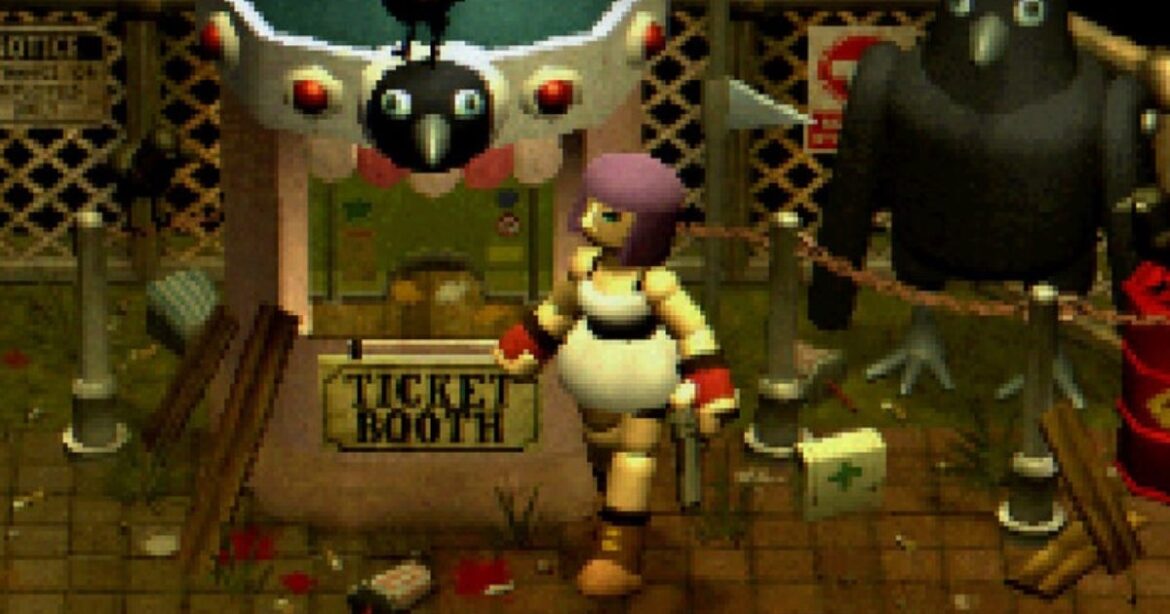
Even without the cloying darkness and lumbering monsters, you get the impression Crow Country would be a pretty awful day out, what with its cramped thoroughfares and tatty décor, its frazzled animatronics and the kind of browning water features you can practically smell through the screen. It’s certainly no Disneyland that’s for sure, but there’s no arguing this delightfully grim Atlanta theme park is a perfect horror setting.

Crow Country

The year is 1990, and you – Agent Mara Forest – are a young (conspicuously young, in fact) law enforcement officer sent to the titular tourist attraction to investigate the disappearance of its owner, one Edward Crow. Not that any of this pre-amble especially matters; the star here is that grotty setting, which makes this survival horror throwback feel refreshingly distinct, even as it leans firmly into nostalgia.

The most obvious affectation here comes with those deliciously chunky visuals; all awkwardly bulbous polygons and low-res filters intended to capture the spirit of yesteryear rather than replicate it fastidiously. It works, though, giving the whole thing the vibe of a long-lost survival horror classic, tumbled straight out of a wormhole for brand-new eyes. And vibes, really, is what Crow Country is all about. This certainly isn’t a scary game, but it still manages to elicit some deliciously spooky tension all the same, as its pudgy meat-creatures shamble awkwardly around corners and spindly legged oddities lurch menacingly into view.

Crow Country trailer.Watch on YouTube

Structurally, too, Crow Country borrows heavily from the earliest iterations of Resident Evil and its ilk. This is a world of locked doors and improbably elaborate security mechanisms, of save rooms and liberally scattered notes, where progress is one of puzzle-solving, backtracking, and the occasional jolts of combat. Combat, frankly, I don’t love; rather than modern-day run-and-gunning, it’s got the staccato rhythm of old, where unholstering your weapons roots you to the spot as you aim wildly and awkwardly in search of a headshot. And if an enemy gets too close, you’re forced to holster up, leg it somewhere out of reach, and try again.

It’s fussy in a way that’s just a bit too retro for my tastes (and I say this as someone who’s been playing games since 1983), but in most other aspects, thanks to its smartly selective design, Crow Country manages to tip a hat to a bygone era without tilting into frustration. The control scheme is mercifully modern away from combat – good riddance tank controls – clues are recorded and easily referenced in safe rooms, and there’s none of that limited save nonsense, where you’re forced to agonise over your last typewriter ribbon, here. Even the likes of ammo and health restoratives are relatively abundant. And puzzles, too, seem pitched just right.

Image credit: Eurogamer/SFB Games

Puzzles, in fact, might just be my favourite bit of Crow Country so far. Sure, its sense of cheerily macabre menace is a hoot, but developer SFB Games (of Snipperclips fame) has crafted a series of delightful conundrums – compass-point tomb stone swivelling, date-matching clock cranking, and hidden code piano tinkling – that manage to feel inventive despite invoking familiar forms. Better yet, they’re involved enough to feel satisfying without resorting to head-spinning abstraction. Yes, I still have battle scars from Silent Hill 3’s Hard puzzle mode.

Granted, I’m only a couple of hours in at this point, but Eurogamer contributor Vikki Blake liked Crow Country a lot when she reviewed it on PC last year, so it feels like we’re on pretty solid ground here. And of course, now that Crow Country has made its way to PlayStation Plus, it’s the perfect opportunity for even remotely curious subscribers to give it some time.


Source link

September 19, 2025 0 comments
0 FacebookTwitterPinterestEmail
Our Brilliant Ruin Starter Set now live on Kickstarter
Esports

Our Brilliant Ruin Starter Set now live on Kickstarter

by admin September 17, 2025


Studio Hermitage has a new Kickstarter for their TTRPG, Our Brilliant Ruin. This new Kickstarter contains a new starter set and an exclusive new version of the core rulebook:

Studio Hermitage returns to Kickstarter with a brand-new campaign to make the new Starter Set a reality and help players around the world get Our Brilliant Ruin to their tabletops faster.

Written by industry veterans Justin Achilli (World of Darkness series, Assassin’s Creed series), Rachel J. Wilkinson (Vampire the Masquerade: Port Saga, Dune: Adventures in the Imperium), and Pam Punzalan (Journeys through the Radiant Citadel, 2022 Nebula Award Finalist) Our Brilliant Ruin is a unique game in a fascinating world. Our Brilliant Ruin is a roleplaying game where the corrosive light of a dead and distant star has befouled the world. Only the Dramark remains, the last vestiges of a gilded society unraveling against the backdrop of this preternatural catastrophe. Here, aristocrats cling to their crumbling estates, truefolk struggle to maintain the status quo, and unbonded rebel against it all while Ruined horrors and rusted machines prowl the countryside.

The Kickstarter offers a brand-new starter set that will allow TTRPG enthusiasts to get right into the action from the first session with a pre-written story and pre-constructed characters, featuring:

  • Abridged Rulebook – A 64 page softcover, full colour rulebook for a quick start in the world of Our Brilliant Ruin.
  • Resources Booklet – A 32 page booklet of character sheets, handouts and in-universe documents from the starter story.
  • Starter Story – A 48 page introductory story revolving around a malfunctioning syllokinetic bridge, which is home to many NPCs, and the risky efforts that must be undertaken to return it to functioning while protecting the identity of the NPCs who understand the secrets of its operation.

An original system uses d6 dice pools driven by a player character’s emotions and motivations to determine if they succeed, triumph, or cause a catastrophe. Personality traits and skills will be combined to accomplish player character goals.

This campaign also makes available an exclusive limited Ruined Edition of the Our Brilliant Ruin core rulebook. It features a vegan leather cover, bookmark ribbons of unknown provenance, and a black-ink edge treatment that absorbs more wholesome light. This limited Ruined Edition won’t be printed again after the campaign, so collectors will need to support the project before it ends on October 2nd if they want to get their hands on it.


Share this article


The link has been copied!


Affiliate Links


Source link

September 17, 2025 0 comments
0 FacebookTwitterPinterestEmail
Astell & Kern A&ultima SP4000 portable music player on a white surface
Product Reviews

Astell & Kern A&ultima SP4000 portable music player review: a brilliant step on the journey but not “the peak of performance and design” promised.

by admin September 6, 2025


Why you can trust TechRadar


We spend hours testing every product or service we review, so you can be sure you’re buying the best. Find out more about how we test.

Astell & Kern A&ultima SP4000: Two-minute review

The Astell & Kern A&ultima SP4000 is the brand’s newest flagship digital audio player, and it is priced accordingly. If you measure the worth of a product by how relatively heavy and remarkably shiny it is, though, you won’t be able to argue with the $3,999 asking price.

The SP4000 goes a distance towards justifying its cost in the way it’s specified to perform, too. Numerous technological highlights abound, none of them in any way ‘affordable’, and between the sheer heft of the physical item and the lengthy list of technologies Astell & Kern has brought to bear, the SP4000 seems about as purposeful as these things ever get.

And in action, it is an uncomplicated pleasure to listen to, fully befitting a place in the best MP3 players around. In every meaningful way, the SP4000 is an extremely accomplished device, able to combine brute muscularity with deft insight, rhythmic positivity with outright scale. No matter what you choose to listen to, the Astell & Kern seems to enjoy it just as much as you do – and it’s not about to sit in judgement on your choice of headphones either.

Astell & Kern A&ultima SP4000 review: Price and release date

(Image credit: Future / Simon Lucas)

  • Priced at $3,999 / £3,799 / AU$6,599

The Astell & Kern A&ultima SP4000 is on sale now, and in the United States it sells for $3,999. In the United Kingdom the asking price is £3,799, and in Australia you’ll have to part with AU$6,599.

Not cheap, is it? Anyone who takes an interest in this sort of thing will know Astell & Kern has no problem in pitching its products as uber-high-end propositions, but no matter how many times I see one of its products priced this way, it remains difficult not to do a double-take…

Astell & Kern A&ultima SP4000 review: Features

(Image credit: Future / Simon Lucas)

  • 4 x AKM4191 and 4 x AKM4499EX DACs in 1:1 architecture
  • 4 x opamps per analogue output
  • Snapdragon 6125 octa-core processor

Something would seem amiss, wouldn’t it, if a digital audio player costing very nearly four thousand of your US dollars wasn’t groaning under the weight of its specification? Well, when you consider the extensive nature of the SP4000, it’s a wonder it’s not even bigger and even heavier than it actually is.

It follows that I should try to be reasonably brief, otherwise we’ll be here all day.

Sign up for breaking news, reviews, opinion, top tech deals, and more.

At its most fundamental, the SP4000 is built around ‘octa’ audio architecture. The digital-to-analogue signal processing is in a 1:1 structure, with one AKM4191 digital processor paired with one AKM4499EX DAC. This allows digital signals to be delivered to a single DAC, four times over – this is a true quad-DAC design, with the aim of allowing precise signal transfer with a vanishingly low signal-to-noise ratio. The ability to deal with PCM resolutions of up to 32bit/768kHz and DSD512 means any realistic digital audio file is catered for.

There are eight opamps deployed, four attending to the unbalanced 3.5mm analogue output and four dealing with the 4.4mm balanced equivalent. The intention is to increase dynamic range and enhance detail retrieval – Astell & Kern calls this arrangement ‘high driving mode’ and suggests it provides powerful and stable signal output.

A newly developed LDO (‘low drop-out’) regulator in the power supply stabilizes battery voltage in an effort to suppress noise. Proprietary ESA (‘enhanced signal alignment’) technology is designed to improve the alignment of frequency signals (sometimes opaquely referred to as ‘timing’) to minimize distortion and enhance clarity. The PCB is a high-end ‘Any Layer HDI’ design that allows for extremely complex circuitry to be laid out in a very small space, minimizing signal loss.

(Image credit: Future / Simon Lucas)

What else? The audio block sits behind a 99.9% pure copper shielding can, offering significant shielding from electromagnetic interference. The audio block itself is Astell & Kern’s ‘Teraton X’ design, which incorporates HEXA-Audio circuitry along with power-efficient amplification and considerable power noise cancellation, to deliver what the company suggests is the ‘ultimate sound solution’.

The entire show is run by a Snapdragon 6125 Octa-core processor that features a high-performance CPU and 8GB of DDR4. CPU, memory and wireless comms circuitry are configured as a single module, and with the digital circuit components arranged in the same area it’s effectively a system on a chip.

I could go on. There are six digital filters available to allow the user to, in a small way, design their own sound. The ‘crossfeed’ feature allows a little of the left-channel mix into the right channel (and vice versa) and, in conjunction with some adjustment options, tries to replicate the effect of listening to speakers when listening to headphones. The second generation of Astell & Kern’s DAR (‘digital audio remaster’) technology, dubbed ‘Advanced DAR’, uses a ‘virtual sound extender’ as part of a two-stage upsampling process that can convert PCM signals of up to 48kHz to 385kHz or to DSD128, and signals of greater than 96kHz to DSD256, for playback.

Surely, though, the broad point is made by now. Astell & Kern didn’t leave space for the kitchen sink, but it has thrown pretty much everything else at the A&ultima SP4000.

Features score: 5 / 5

Astell & Kern A&ultima SP4000 review: Sound quality

(Image credit: Future / Simon Lucas)

  • Epic levels of insight and detail
  • Rhythmic and dynamic positivity
  • Sounds simultaneously open and unified

Yes, you can fiddle around the edges of the way the A&ultima SP4000 sounds – investigate filters, fool around with EQs, you name it – but what you can’t do is alter its overarching sonic character. Which is just as well, because this Astell & Kern digital audio player is a staggeringly direct, informative and, ultimately, complete listen. Few are the sources of audio information, of any type and at any price, that can match its powers of communication – and I have heard plenty.

No matter if you’re listening to a 16bit/44.1kHz FLAC file of Ride’s Leave Them All Behind, a 24bit/48kHz FLAC file of James Holden’s Common Land or a DSD64 file of The Band’s I Shall Be Released: it’s all the same to the SP4000. In every circumstance it’s a profoundly detailed, rhythmically positive, articulate and energetic listen. There really isn’t an aspect of music-making at which it doesn’t prove itself masterful.

And it’s not as if I can offer a “yes, but…” or two in the name of balance. The longer I listen to the SP4000, the more beguiled I become.

Tonal balance? It’s basically impeccable. Frequency response? Smooth and even from way down at the low frequencies to the vertiginous top end. The Astell & Kern sounds naturalistic and unforced, and it’s completely even-handed in the way it presents the frequency range. And at every point, it’s absolutely alive with detail both broad and fine. The minutiae of tone, timbre and texture are made absolutely apparent, and the player loads all of this information onto the listener without being in any way showy or uptight about it. This fanatical attention to detail is simply a way of ensuring you get as complete a rendition of your digital audio files as possible.

The presentation is spacious and well-defined at the same time, and no matter if it’s a large ensemble all packing the stage or just one voice with a single guitar as accompaniment, the SP4000 lays it all out in confident and coherent fashion.

It deals with rhythm and tempo with similar authority, keeping momentum levels high and observing the attack and decay of bass sounds (in particular) with obvious care. It can ease back if necessary, though – nothing gets hurried along, but rather is allowed to proceed at its own chosen speed. Dynamic headroom is, to all intents and purposes, limitless. From the smallest, quietest event in a recording to the last almighty crescendo, the SP4000 is on top of things – the distance between these two states is prodigious. And the smaller, but no less crucial, dynamics of harmonic variation, the attention to the over- and undertones that surround the fundamental when listening to a solo instrument, are given very judicious weighting. Context is everything, and the SP4000 seems to almost instinctively understand it.

And the Astell & Kern even has the decency not to be sniffy either about the music you listen to or the headphones via which you access it. Obviously it does better work (or, rather, its potential is best exploited) by hi-res files and high-end headphones – but if you want to connect your bog-standard true wireless in-ear via Bluetooth and listen to Spotify’s free tier the SP4000 won’t judge you. Not too badly, anyway.

Sound quality score: 5 / 5

Astell & Kern A&ultima SP4000 review: Design

(Image credit: Future / Simon Lucas)

  • Polished 904L stainless steel and PVD-coated ceramic
  • 150 x 85 x 20mm
  • 615g

Ordinarily, a digital audio player is designed to be reasonably compact, and light enough to be slipped into a pocket. Of course, Astell & Kern sets out for its digital audio players to be anything but ordinary.

So the SP4000 is a fairly large (150 x 85 x 20mm) device that weighs a considerable 615g. Too big and heavy, in other words, to be comfortably carried in any pocket smaller and less robust than that of a military greatcoat. This is its naked weight, too. If you add one of the included screen protectors (which is, admittedly, going to make negligible difference to the weight) and slip the player into its supplied Perlinger leather* protective case, it becomes heavier still. At least that case prevents the player’s sharp, pointy corners from digging into hands or pocket linings, mind you.

(*I’m not a vegetarian. I know people who are, though, and some of them are just as interested in high-quality audio as I am. So once again I find myself wondering why companies like Astell & Kern imagine real leather – in this instance, leather made from “the soft, delicate hide of calves under one year old” – to be the untouchable height of luxury. Surely it’s possible to offer a protective case for the SP4000 that looks and feels upmarket but that isn’t going to alienate who knows how many prospective customers? Or is that just me?)

The four sides of the SP4000 are built of 904L stainless steel (the same stuff the likes of Rolex uses, on the basis that it will accept an extremely high polish), and feature some of the angularity and asymmetry that Astell & Kern established as part of its design vocabulary a good while ago. The front is of toughened glass, 152mm on the diagonal, and is almost entirely touchscreen. The rear panel, meanwhile, is finished in PVD-coated ceramic.

It really goes without saying that the standard of build and finish on display here is flawless. With the design of the SP4000, Astell & Kern has set out to deliver a product that blurs the line between ‘electrical hardware’ and ‘luxury accessory’. Or, as the company’s website rather feverishly has it, “a work of art where technology, design, intuition and performance converge”. You may feel that Astell & Kern has done exactly what it set out to do, you may find the design rather self-consciously opulent. Taste is a very personal thing, after all.

It’s worth noting the grandeur of SP4000 ownership starts well before you peel the protective covering off the player itself. It arrives in a branded box that’s a similar size to that which contained a pair of size 10 Tricker’s boots I bought the other day. Inside there is another, branded, clasp-fastening box covered in what I strongly suspect is a further quantity of leather.

Inside that you’ll find the SP4000, along with compartments that contain that Perlinger leather cover, a case with a flap covering into which the player (in its cover) can be slipped (more leather, I presume), various guides and warranty documents, a congratulatory note from the company, and a reasonably heavyweight, branded USB-C to USB-C cable. I am pretty sure this all comes under the heading of ‘the experience’.

Design score: 4 / 5

Astell & Kern A&ultima SP4000 review: Usability and setup

(Image credit: Future / Simon Lucas)

  • 2160 x 1080 touchscreen
  • Supports Full Android OS
  • Qualcomm QC3.0 fast charging

The SP4000 represents the first time an Astell & Kern product has supported full Android OS. The convenience and all-around common sense of the operating system is intended to help the SP4000 be as flexible and convenient as possible, while some of the Snapdragon 6125 octa-core processor’s responsibilities center around rapidity of the OS response and the smooth, comfortable user interface motion.

Happily, it all works very well. The big 2K (2160 x 1080) touchscreen is responsive and swift, smooth-scrolling and consistent. The operating system will be mercifully familiar to anyone whose smartphone isn’t an iOS device, and it’s just as wide-ranging and usable here as it is in its most successful smartphone applications.

Setting up the SP4000 is no kind of hardship. It’s simply a question of connecting it to your local network (its dual-band Wi-Fi is tenacious when it comes to making and maintaining a connection to your router or tethering to your smartphone if you’re out and about), and from there it’s simple to load the apps you require. The ‘AK File Drop’ function makes transferring files from a PC, smartphone or FTP program on a common network faster and easier than before, too.

The Astell & Kern also supports Qualcomm QC 3.0 fast charging, which means it can be charged more rapidly (and more efficiently) than previous flagship A&ultima models. Mind you, ‘fast’ and ‘rapid’ are definitely relative terms in this instance. From ‘flat’ to ‘full’ takes around five hours, which is about half the time it takes for the SP4000 to flatten its battery if you’re listening to ordinary files at ordinary volume levels.

There are a few physical controls arranged around the edges of the SP4000. As you look at its touchscreen, there’s an elaborate volume control/power on/off on the top-right edge – it’s pleasantly shaped and knurled, and a light behind it glows in one of a variety of different colors to indicate the resolution of the audio file it’s currently playing.

On the opposite side there are three buttons that deal with skip backwards/rewind (accessible via ‘press’ or ‘press and hold’ respectively), skip forwards/fast-forward (same) and play/pause. There’s a ‘button lock’ switch on the top edge, to the right of the 3.5mm hybrid optical/unbalanced analogue and 4.4mm balanced analogue outputs, and on the bottom edge you’ll find a USB-C socket and a microSD card slot, which will accept cards of up to 1.5TB.

Usability and setup score: 4.5 / 5

Astell & Kern A&ultima SP4000 review: Value

(Image credit: Future / Simon Lucas)

First things first: you don’t contemplate ownership of the Astell & Kern A&ultima SP4000 because you’re in any way concerned about value for money. Is it the best-sounding DAP out there? Sure. Is it twice as good as alternatives from the likes of FiiO or Astell & Kern itself that cost comfortably less than $2k? Not a chance.

No, the value in the SP4000 comes from its status as the shiny flagship of the Astell & Kern range. It comes from the knowledge that no one you bump into when in the First Class Lounge has a more expensive DAP than you. It comes from the ability to add ‘DAP’ to the list of ‘madly luxurious accessories I own’.

Should I buy the Astell & Kern A&ultima SP4000?

(Image credit: Future / Simon Lucas)

Buy it if… 

Don’t buy it if… 

Astell & Kern A&ultima SP4000 review: Also consider

How I tested the Astell & Kern A&ultima SP4000

  • Tested for over a week
  • Tested with streamed and downloaded content
  • Tested with wired and wireless headphones

I slotted a microSD card filled with hi-res content (up to 24bit/192kHz and DSD64, anyway) into the SP4000, and I downloaded the Tidal and Presto music streaming apps while I was at it.

I used Sennheiser IE900 IEMs connected via the 4.4mm balanced output, Austrian Audio The Composer over-ears via the 3.5mm unbalanced alternative, and tried out the Technics EAH-AZ100 true wireless in-ears and Bowers & Wilkins Px8 wireless over-ears too.

I listened to lots of different types of music, via lots of different file types and sizes – and I did so indoors and (with some trepidation, I don’t mind telling you) outdoors too.

  • First reviewed in September 2025

Astell & Kern A&ultima SP4000: Price Comparison


Source link

September 6, 2025 0 comments
0 FacebookTwitterPinterestEmail
Pragmata's blend of shooting and hacking is the most stressful new idea I've seen in a shooter in generations, and it's brilliant
Game Reviews

Pragmata’s blend of shooting and hacking is the most stressful new idea I’ve seen in a shooter in generations, and it’s brilliant

by admin August 21, 2025


We’ve said it before, here, already: Pragmata represents Capcom at its weird, experimental best. To me, it’s in line with Exoprimal and Kunitsu-Gami: Path of the Goddess as a game that shows the publisher is confident to let its studios run with any ideas they have. Whilst those two may not have been commercial (or in Exoprimal’s case, critical) successes, I think Pragmata has a bigger shot at penetrating through the mainstream thanks to three key things: it’s a shooter, its main character is more of an everydad – his name is Hugh Williams, for goodness sake – and it has one of the most exciting genre hybrids I’ve seen in a while.

Pragmata

  • Developer: Capcom
  • Publisher: Capcom
  • Platform: Played on PS5 Pro
  • Availability: Out 2026 on PC (Steam) and PS5

In a recent demo at Capcom’s offices ahead of Gamescom, the publisher let me loose on a new demo of the game: a slightly beefier version of the Summer Games Fest demo Alex wrote about in the preview above. The main difference took the form of a boss fight against a mechanised walker that stomped all over an arena that’s also an elevator (standard) that put me in mind of Lost Planet, Vanquish, and I guess… Watch Dogs?

Like I said, it’s a really peculiar grab bag of genres glued together with what seems like a plot that would have to have more structure to be paper thin. But that doesn’t matter. I don’t think people are going to be picking this one up expecting a Hugo-winning tale of redemption and loss, to be honest. What you get with Pragmata, instead, is a very video game-y video game. Strafing around shooting a boss that looks like something from Metal Gear’s cutting room floor whilst a young girl that’s also an android hacks into its systems is peak video game. For me, this is a good thing.


To see this content please enable targeting cookies.

Manage cookie settings

Everything about the demo is peak video game. Hugh wanders around gruffly, muttering about whatever as he solves simple environmental puzzles, exchanging a little bit of mumbly dialogue with Diana (the android). Every now and then, the GLaDOS-like security system wakes up some robot goons that you need to kill, and you push on. The mob enemies all have shields, so Diana needs to hack them before you shoot them. It’s pretty, with this nice clean space station sci-fi aesthetic, and a great little training ground for you to figure out the third-person shooting/hacking dichotomy before the boss.

So, enter the boss. It’s here the twin strands of Pragmata’s DNA form into a beautiful helix that shows off what the game is going for. As the walker slams about the platform and you dodge out of the way of missiles and AoE splashes on the floor, you need to use one of your three guns (it looks like there’ll be four in the final game) to inflict damage. There’s a pistol with a relatively low damage output and slow reload time that makes up for its shortcomings by having infinite ammo, a shotgun that has ridiculous damage-per-second but can only hold six shells at once, and a fun little stasis net that slows down your prey and does a little damage over time.

Diana and Hugh fend off a bad robot. | Image credit: Capcom

It’s a nice trio of arms. Swapping between them to maximise damage whilst minimising threat to yourself is the aim of the game, here, and it all ends up feeling a bit like a combat puzzle you solve on the fly as you strafe around the room. It’s not exactly Halo, but that’s where the Lost Planet reference earlier came from. Bosses like the walker have weak points (identified by Diana as you aim down sights), and in the case of this mechanical lump, it was a fuel tank on it’s back.

Once you’ve got the lay of the land, and you’ve identified where to ‘spend’ your limited shotgun shells, you pop out a stasis net, circle around the back, and get to work. I let out a horrible little laugh as everything came together in my preview – after slowing it down with the net, I unloaded a full clip of shotty shells into the tank whilst I used Diana to hack to the machine, immobilising it and spending some of her resources in order to lower its defence. The way it all mingles together under your fingers feels natural, like I’ve done this before. But, of course, I haven’t. Because this whole concept is completely batshit.

You shoot and aim with your standard trigger setup, then use the face buttons to solve a very easy puzzle and hack an enemy mid-fight (there’s the Watch Dogs nod). You can also jump and dodge, using the shoulder buttons, making your fingers hop across the whole pad in a glitchy, frantic little dance. It’s overwhelming, but in a flustering way that scratches the same part of my brain Vanquish did back in 2010. And once you’re au fait with the scheme, that desperate dance you do with hacking and shooting feels surprisingly natural.

Probably not a paranoid android. | Image credit: Capcom

Watching my footage back, I really don’t think what you see on screen does justice to Pragmata; it’s very much the sort of game that you need to feel in your hands in order to understand. I pray Capcom releases a demo (for its own sake), because the elevator pitch may be a little too obscure for some. It represents Capcom’s confidence, though, and hooks onto the same philosophy that Dead Rising did back in 2006: take a well-established genre, take it apart, and put it back together in a wholly new way.

There are still some anachronistic game design decisions in Pragmata (most of the story is told to you via text logs left scattered around the deserted moon base or projected holograms, very is still very 2006), but mixed in with these new ideas and genuinely fascinating combinations of genres. Pragmata is intriguing. I think games like this represent Capcom at its best: experimental, weird, and willing to break away from the triple-A pack in order to do something left-of-centre, a bit bizarre, a bit proggy. And ultimately, to arrive at something that’s all the better for it.


Source link

August 21, 2025 0 comments
0 FacebookTwitterPinterestEmail

Categories

  • Crypto Trends (1,098)
  • Esports (800)
  • Game Reviews (772)
  • Game Updates (906)
  • GameFi Guides (1,058)
  • Gaming Gear (960)
  • NFT Gaming (1,079)
  • Product Reviews (960)

Recent Posts

  • This 5-Star Dell Laptop Bundle (64GB RAM, 2TB SSD) Sees 72% Cut, From Above MacBook Pricing to Practically a Steal
  • Blue Protocol: Star Resonance is finally out in the west and off to a strong start on Steam, but was the MMORPG worth the wait?
  • How to Unblock OpenAI’s Sora 2 If You’re Outside the US and Canada
  • Final Fantasy 7 Remake and Rebirth finally available as physical double pack on PS5
  • The 10 Most Valuable Cards

Recent Posts

  • This 5-Star Dell Laptop Bundle (64GB RAM, 2TB SSD) Sees 72% Cut, From Above MacBook Pricing to Practically a Steal

    October 10, 2025
  • Blue Protocol: Star Resonance is finally out in the west and off to a strong start on Steam, but was the MMORPG worth the wait?

    October 10, 2025
  • How to Unblock OpenAI’s Sora 2 If You’re Outside the US and Canada

    October 10, 2025
  • Final Fantasy 7 Remake and Rebirth finally available as physical double pack on PS5

    October 10, 2025
  • The 10 Most Valuable Cards

    October 10, 2025

Newsletter

About me

Welcome to Laughinghyena.io, your ultimate destination for the latest in blockchain gaming and gaming products. We’re passionate about the future of gaming, where decentralized technology empowers players to own, trade, and thrive in virtual worlds.

Recent Posts

  • This 5-Star Dell Laptop Bundle (64GB RAM, 2TB SSD) Sees 72% Cut, From Above MacBook Pricing to Practically a Steal

    October 10, 2025
  • Blue Protocol: Star Resonance is finally out in the west and off to a strong start on Steam, but was the MMORPG worth the wait?

    October 10, 2025

Newsletter

@2025 laughinghyena- All Right Reserved. Designed and Developed by Pro


Back To Top
Laughing Hyena
  • Home
  • Hyena Games
  • Esports
  • NFT Gaming
  • Crypto Trends
  • Game Reviews
  • Game Updates
  • GameFi Guides
  • Shop

Shopping Cart

Close

No products in the cart.

Close