
Laughing Hyena
  • Home
  • Hyena Games
  • Esports
  • NFT Gaming
  • Crypto Trends
  • Game Reviews
  • Game Updates
  • GameFi Guides
  • Shop
Tag:

brain

Scientists Might Be Looking for Consciousness in the Wrong Part of the Brain
Product Reviews

Scientists Might Be Looking for Consciousness in the Wrong Part of the Brain

by admin September 29, 2025


What gives rise to human consciousness? Are some parts of the brain more important than others? Scientists began tackling these questions in more depth about 35 years ago. Researchers have made progress, but the mystery of consciousness remains very much alive.

In a recently published article, I reviewed over 100 years of neuroscience research to see if some brain regions are more important than others for consciousness. What I found suggests scientists who study consciousness may have been undervaluing the most ancient regions of human brains.

Consciousness is usually defined by neuroscientists as the ability to have subjective experience, such as the experience of tasting an apple or of seeing the redness of its skin. The leading theories of consciousness suggest that the outer layer of the human brain, called the cortex (in blue in figure 1), is fundamental to consciousness. This is mostly composed of the neocortex, which is newer in our evolutionary history.

Figure 1, the human brain (made with the assistance of AI).
Peter Coppola, CC BY-SA

The human subcortex (figure 1, brown/beige), underneath the neocortex, has not changed much in the last 500 million years. It is thought to be like electricity for a TV, necessary for consciousness, but not enough on its own.

There is another part of the brain that some neuroscientific theories of consciousness state is irrelevant for consciousness. This is the cerebellum, which is also older than the neocortex and looks like a little brain tucked in the back of the skull (figure 1, purple). Brain activity and brain networks are disrupted in unconsciousness (like in a coma). These changes can be seen in the cortex, subcortex, and cerebellum.

What brain stimulation reveals

As part of my analysis, I looked at studies showing what happens to consciousness when brain activity is changed, for example, by applying electrical currents or magnetic pulses to brain regions.

These experiments in humans and animals showed that altering activity in any of these three parts of the brain can alter consciousness. Changing the activity of the neocortex can change your sense of self, make you hallucinate, or affect your judgment.

Changing the subcortex may have extreme effects. We can induce depression, wake a monkey from anesthesia, or knock a mouse unconscious. Even stimulating the cerebellum, long considered irrelevant, can change your conscious sensory perception.

However, this research does not allow us to reach strong conclusions about where consciousness comes from, as stimulating one brain region may affect another region. Like unplugging the TV from the socket, we might be changing the conditions that support consciousness, but not the mechanisms of consciousness itself.

So I looked at some evidence from patients to see if it would help resolve this dilemma.

Damage from physical trauma or lack of oxygen to the brain can disrupt your experience. Injury to the neocortex may make you think your hand is not yours, fail to notice things on one side of your visual field, or become more impulsive.

People born without the cerebellum, or the front of their cortex, can still appear conscious and live quite normal lives. However, damaging the cerebellum later in life can trigger hallucinations or change your emotions completely.

Harm to the most ancient parts of our brain can directly cause unconsciousness (although some people recover) or death. However, like electricity for a TV, the subcortex may be just keeping the newer cortex “online,” which may be giving rise to consciousness. So I wanted to know whether, alternatively, there is evidence that the most ancient regions are sufficient for consciousness.

There are rare cases of children being born without most or all of their neocortex. According to medical textbooks, these people should be in a permanent vegetative state. However, there are reports that these people can feel upset, play, recognize people, or show enjoyment of music. This suggests that they are having some sort of conscious experience.

These reports are striking evidence that suggests maybe the oldest parts of the brain are enough for basic consciousness. Or maybe, when you are born without a cortex, the older parts of the brain adapt to take on some of the roles of the newer parts of the brain.

There are some extreme experiments on animals that can help us reach a conclusion. Across mammals—from rats to cats to monkeys—surgically removing the neocortex leaves them still capable of an astonishing number of things. They can play, show emotions, groom themselves, parent their young, and even learn. Surprisingly, even adult animals that underwent this surgery showed similar behavior.

Altogether, the evidence challenges the view that the cortex is necessary for consciousness, as most major theories of consciousness suggest. It seems that the oldest parts of the brain are enough for some basic forms of consciousness.

The newer parts of the brain—as well as the cerebellum—seem to expand and refine your consciousness. This means we may have to review our theories of consciousness. In turn, this may influence patient care as well as how we think about animal rights. In fact, consciousness might be more common than we realized.

Peter Coppola, Visiting Researcher, Cambridge Neuroscience, University of Cambridge. This article is republished from The Conversation under a Creative Commons license. Read the original article.



Source link

September 29, 2025 0 comments
0 FacebookTwitterPinterestEmail
You Like Your Controls Inverted Because Of Science--And Your Brain
Game Updates

You Like Your Controls Inverted Because Of Science–And Your Brain

by admin September 21, 2025


If you’re like me, one of the first things you do when booting up a game is checking out the options in the Settings menu. From audio to subtitles, brightness to performance, you’re fine-tuning the particulars to ensure the game is playing just right for you. Maybe during this, you’re also changing your controller settings from “normal” to “inverted,” and if you’ve ever wondered why you do that, well, science may have an answer for you.

In a new scientific paper reported on by The Guardian (via Eurogamer), Dr. Jennifer Corbett and Dr. Jaap Munneke at Brunel University London have sought to study the neuroscience behind a player’s choice of “normal” or “inverted” controls. Titled “Why axis inversion? Optimising interactions between users, interfaces, and visual displays in 3D environments,” the duo discovered that there are a variety of factors that go into your decision of opting for a particular controller setting in games, and it seems to primarily revolve around how your brain perceives objects in 3D spaces.

Size:640 × 360480 × 270

Want us to remember this setting for all your devices?

Sign up or Sign in now!

Please use a html5 video capable browser to watch videos.

This video has an invalid file format.

Sorry, but you can’t access this content!

Please enter your date of birth to view this video

JanuaryFebruaryMarchAprilMayJuneJulyAugustSeptemberOctoberNovemberDecember12345678910111213141516171819202122232425262728293031Year202520242023202220212020201920182017201620152014201320122011201020092008200720062005200420032002200120001999199819971996199519941993199219911990198919881987198619851984198319821981198019791978197719761975197419731972197119701969196819671966196519641963196219611960195919581957195619551954195319521951195019491948194719461945194419431942194119401939193819371936193519341933193219311930192919281927192619251924192319221921192019191918191719161915191419131912191119101909190819071906190519041903190219011900

By clicking ‘enter’, you agree to GameSpot’s

Terms of Use and
Privacy Policy

enter

Now Playing: Call of Duty Black Ops 7: First Impressions

Initiated during lockdown and published this month, Corbett and Munneke concluded in the study that “personal experiences, favourite games, different genres, age, consoles, which way you scroll with a mouse … all of these things could potentially be involved” in why you choose to invert your controls in-game or not.

“Many people told us that playing a flight simulator, using a certain type of console, or the first game they played were the reasons they preferred to invert or not,” Corbett said. “Many also said they switched preferences over time. We added a whole new section to the study based on all this feedback.”

To understand the phenomenon, Corbett and Munneke asked participants in the study to complete a questionnaire to understand their background and partake in an experiment around spatial awareness.

“They had to mentally rotate random shapes, take on the perspective of an ‘avatar’ object in a picture, determine which way something was tilted in differently tilted backgrounds, and overcome the typical ‘Simon effect’ where it’s harder to respond when a target is on the opposite vs. the same side of the screen as the response button,” Corbett said. “Then we used some machine-learning algorithms to help us sort through all this survey and experiment data and pick out what combination of all of these things best explained whether someone inverted.”

According to Corbett, the assumptions for why people prefer inverted controls were wrong. Instead, the biggest determining factor was how quickly gamers could mentally rotate things and ​​overcome the Simon effect.

“The faster they were, the less likely they were to invert,” Corbett said. “People who said they sometimes inverted were by far the slowest on these tasks. Though [non-inverters] tended to be faster, they didn’t get the correct answer more than inverters who were actually slightly more accurate.”

Essentially, just because a flight simulator may have been your first experience with a game doesn’t mean you’re inherently an inverter. Similarly, just because you’ve always played with normal controller settings doesn’t mean you’re a non-inverter either. In fact, according to the study and Corbett’s musings, switching your preferences could make you a better gamer.

“Non-inverters should give inversion a try–and inverters should give non-inversion another shot,” Corbett said. “You might even want to force yourself to stick with it for a few hours. People have learned one way. That doesn’t mean they won’t learn another way even better. A good example is being left-handed. Until the mid-20th century, left-handed children were forced to write with their right hand, causing some people to have lifelong handwriting difficulties and learning problems. Many older adults still don’t realise they’re naturally left-handed and could write/draw much better if they switched back.”

Next time you’re contemplating your controller settings, whether you should go with your preference (either inverting or not inverting), you may want to reconsider the other option. It could help you last longer in Battlefield 6 or Call of Duty: Black Ops 7.


Source link

September 21, 2025 0 comments
0 FacebookTwitterPinterestEmail
DAAPrivacyRightIcon
Gaming Gear

Elon Musk’s Neuralink plans a brain speech trial in October

by admin September 19, 2025


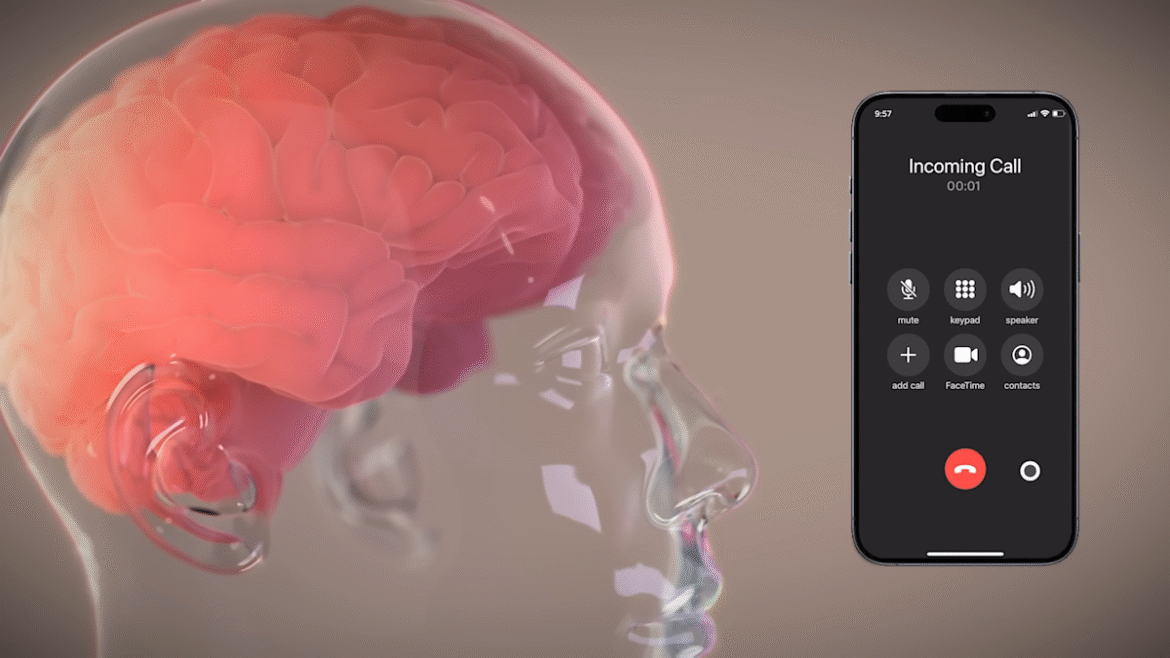
Neuralink plans to begin another US clinical trial in October, using the implant to translate thoughts into text. The study will be held through an FDA investigational device exemption. “If you’re imagining saying something, we would be able to pick that up,” Neuralink president DJ Seo said this week.

The idea is to help people with speech impairments communicate through thought. Neuralink is among the companies testing implants that help patients control a computer with their minds. That can include using virtual keyboards. Translating thought directly from the patient’s speech cortex could speed things up by cutting the middleman.

The company already has five other clinical trials underway. The first was in the US. It has since added studies in Canada, the UK and the United Arab Emirates.

Neuralink / Chey Institute for Advanced Studies / YouTube

Neuralink’s plans for people with severe impairments sound like utopian sci-fi. Regardless of anything else, success in this field could be beyond life-changing for them. Still, this is a commercial company in which Elon Musk owns a majority share. Neuralink’s long-term plans are where it’s hard not to worry a little.

“We’re currently envisioning a world where in about three to four years, there will be someone who’s otherwise healthy who’s going to get a Neuralink,” Seo said. The company president hinted at what that might look like. “We think that it’s actually possible to demonstrate abilities to speak to the latest AI model, or LLM models, at the speed of thought, even faster than how you’re speaking, and being able to potentially get that information back through your AirPods, effectively closing the loop,” he said.

Our world today has revealed where things can go wrong when we turn too much of our humanity over to technology. You can start with smartphone addiction and social media algorithms and quickly move on to (alleged) AI-enabled suicide. Consumer brain implants can conjure the darkest images painted by our great sci-fi works. Think Neuromancer, Star Trek’s Borg or Cyberpunk 2077‘s cyberware.

Add what we know about Musk’s ideas about politics, and it’s hard not to be at least a little cynical. Is it too much to hope that the technology will advance enough to help those in need, but not so much that it devours humanity?


Source link

September 19, 2025 0 comments
0 FacebookTwitterPinterestEmail
Solve your own murder and recover your brain in Blanksword, a roguelike RPG with a demo out today
Game Updates

Solve your own murder and recover your brain in Blanksword, a roguelike RPG with a demo out today

by admin September 17, 2025


There are few occasions where a game tells me it’s combining two genres that typically don’t go together and it convinces me it’s worth paying attention to, but Blanksword, a roguelike RPG, is quite different. In it, you are Blank, an angel stabbed in the head, brain destroyed, who somehow managed to survive such an ordeal – albeit without any memory of who you were. And now, you are on a quest through a series of islands governed by “Literally God” in order to figure out your mysterious past.


Blanksword has been in the works for a little while now, but a Kickstarter for the game just went live today. Taking one look at the game tells you quite quickly that it’s “one of those” kinds of indie RPGs. You like, like Hylics, Felvidek, or the blueprint for many of them, and one that just recently got a rerelease, OFF.

Watch on YouTube


In fact OFF is quite an important frame of reference for Blanksword, as one of the game’s directors, Quinn K., was the original translator for OFF. Not only that, but OFF creator Mortis Ghost is responsible for the game’s lovely key art, and may even design an area of the game if the Kickstarter raises enough funds.


The mechanics sound quite interesting too. Combat, like many RPGs, is turn-based, and you pick up new moves as you go along, all of which vary from run to run. There’s apparently “hundreds” of moves to pickup, alongside different bits of equipment and items.


And then there’s that beautiful thing we call narrative design. With Blank not having a brain and all, you can pick up different Angelic Brain Parts, restoring certain abilities of his. One item might allow Blank to intimidate and heckle his enemies, another will give him the ability to tell if something smells bad. Others might let him understand more complex topics, or grant him the ability to haggle for better prices in certain shops. You keep these brain parts forever, but you can only use a few at a time to keep things balanced.


Best of all, alongside the Kickstarter the game has a demo out on Steam for you to try out. Truth be told, while I’ve had my eye on Blanksword for a good while, I somehow missed that it was a roguelike on top of an RPG. Playing the demo for myself, I soon figured this out, but the roguelike element blended really nicely with the RPG side of it. They aren’t genres you often see combined, and in some ways could even be contradictory, but in my short time with it, I think something quite interesting is being brewed up. Here’s hoping the full game pans out just as well.


Blanksword’s “one of those” indie RPG vibes make it feel quite well positioned for a future fanatical following, a thing that’s often both a blessing and a curse. That all remains to be seen of course, the game needs to get funded first.


A release date hasn’t been set just yet, but the team behind it has conservatively estimated a 2027 release window. You can wishlist it, and try the demo out, on Steam here.


Source link

September 17, 2025 0 comments
0 FacebookTwitterPinterestEmail
Nvidia Unveils High-Tech ‘Brain’ for Humanoid Robots and Self-Driving Cars
Product Reviews

Nvidia Unveils High-Tech ‘Brain’ for Humanoid Robots and Self-Driving Cars

by admin August 26, 2025


Could humanoid robots get a lot more human? Nvidia may have made that possibility a bit realer today with a smarter robot brain that has less energy demands. 

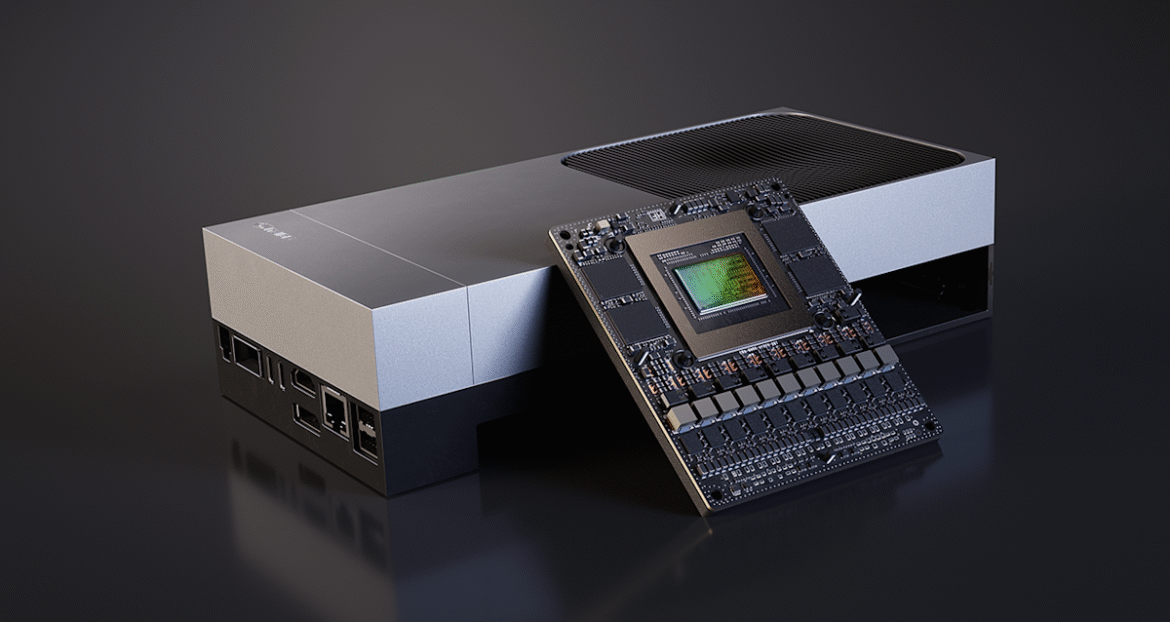
The tech giant’s latest robotics offering is Jetson Thor, a super computer built for real-time AI computation on humanoid robots and smart machines alike, Nvidia announced in a press release on Monday.

The new module is built to handle larger amounts of information at less energy than previous model Jetson Orin. Powered by the latest Blackwell GPUs, Jetson Thor has more than seven times the AI compute power and twice the memory at more than three times speed and efficiency than its predecessor, Nvidia claims.

All this new power is supposed to unlock higher speed sensor data and visual reasoning that can help humanoid robots get better at autonomously seeing, moving, and making decisions.

“Jetson Thor solves one of the most significant challenges in robotics: enabling robots to have real-time, intelligent interactions with people and the physical world,” the company wrote.

It’s a considerable performance leap that Nvidia hopes will appeal to engineers. The company says early adopters include Amazon, Meta, Caterpillar, and Agility Robotics, a startup that makes commercially available humanoid robots for warehouses and other manufacturing facilities. The model is being considered for adoption by John Deere and OpenAI.

It’s also being adopted by research labs at Stanford, Carnegie Mellon, and the University of Zurich, to power autonomous robots in medical research settings and more, Nvidia said in a blog post on Monday.

The developer kit Jetson AGX Thor, which includes the Jetson T5000 module plus a reference carrier board, power supply, and an active heatsink with a fan, is now on sale on the company’s website starting at $3,499.

Coming soon—and available now on pre-order—is Nvidia Drive AGX Thor, a developer kit using the same technology but for autonomous vehicles instead. Deliveries for that are slated to start in September, the company said.

Nvidia’s growing bet on robotics

Although AI chips are Nvidia’s bread and butter, the tech giant is betting big on robotics and autonomous vehicles.

“This is going to be the decade of AV [autonomous vehicles], robotics, autonomous machines,” CEO Jensen Huang told CNBC in an interview in June.

Huang elaborated on his trust in just how much the robotics industry can scale at the company’s annual shareholders meeting later that month.

Along with AI, Nvidia expects robotics to provide the largest growth for the company, and combined, the two represent “a multitrillion-dollar growth opportunity,” Huang told investors.

Earlier this year, the company also released a family of AI models that can be used to train humanoid robots, called Cosmos.

Huang’s bet isn’t an empty one. Humanoid robots are advancing.

Just last week, China, one of the key players in the global robotics race, hosted its first-ever robot Olympics, World Humanoid Robot Games. At the three-day spectacle, companies showcased robots that can complete a 1,500-meter race in just a little over six seconds and achieve practical job skills like sorting medicine or taking food orders.

But still, the technology is hugely limited and far from widespread adoption. Even at the great robotics showcase in China, many of the robots suffered technical difficulties. One robot in the track and field race even ran straight into and knocked over a bystander walking off-course. 

Big week ahead for Nvidia

Nvidia made the announcement at a rather convenient time for the company. The tech giant is reporting fiscal second quarter earnings on Wednesday afternoon, and the market is buzzing already.

Nvidia dominates the AI market, so the company’s earnings always draw huge speculation, but the importance this week is boosted by volatile policy changes and questions around the economic value of wide-scale AI adoption.

The company has been on a policy rollercoaster ride in its efforts to sell AI chips in China amidst the escalating trade war between Beijing and Washington. China is a major market for Nvidia, and the uncertainty is keeping company investors at the edge of their seats.

Also keeping investors occupied is a concerning new AI report from MIT researchers. The report found that despite the bold bets on AI in the corporate world, fewer than one in 10 AI pilot programs have translated to real revenue gains.

Nvidia just hit $4 trillion market value last month, becoming the first public company to achieve the feat. Now, the stakes are high, as it’s up to the tech giant to prove that it’s valuation is not just built on AI hype.


Source link

August 26, 2025 0 comments
0 FacebookTwitterPinterestEmail
DAAPrivacyRightIcon
Gaming Gear

NVIDIA releases the next generation of its cutting-edge ‘robot brain’

by admin August 25, 2025


NVIDIA CEO Jensen Huang is bullish on the future of robotics, and sees it as the chipmaker’s biggest opportunity outside of AI. Today the company announced the next generation of its Jetson AGX system-on-module called Jetson Thor. The developer kit and T5000 production modules are computers designed for physical AI and robotics.

The company has been iterating on these robot brains for a few years now, with each model more powerful than the last. The newest generation is powered by NVIDIA’s Blackwell GPU architecture and offers 7.5 times more AI compute and 3.5 times greater energy efficiency than its predecessor, the Jetson Orin. These chips can run generative AI models, including large language and visual models, to help robots interpret the world around them. “We’ve built Jetson Thor for the millions of developers working on robotic systems that interact with and increasingly shape the physical world,” said NVIDIA CEO Jensen Huang.

The module is powered by NVIDIA’s full-stack Jetson software platform, which is purpose-built for physical AI and robotics applications. The company counts Amazon, Meta, Agility Robotics and Boston Dynamics among its robotics clients using Jetson chips, which should give you an idea of who the target audience for this technology is. The Jetson AGX Thor is now on sale for $3,499 as a developer kit, and NVIDIA will sell the Thor T5000 modules for installation in production-ready robots. These will be sold at a wholesale price of $2,999 per module for a minimum order of 1,000 or more.


Source link

August 25, 2025 0 comments
0 FacebookTwitterPinterestEmail
In Full Bloom isn't just about being a planet-devouring Sarlacc's babysitter, it's my brain on games showcase
Game Updates

In Full Bloom isn’t just about being a planet-devouring Sarlacc’s babysitter, it’s my brain on games showcase

by admin August 20, 2025


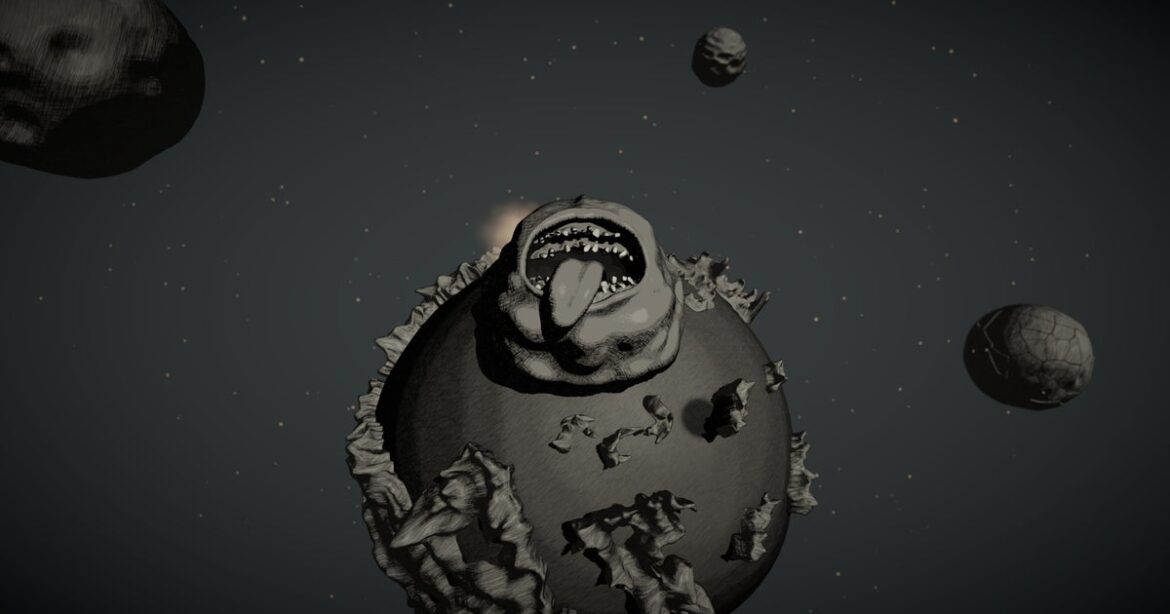
I drop the house into the great maw (not that one). It screams as it falls away from the clutches of my mouse clicker. It disappears from view, but there’s a sickeningly wet crunching that betrays its fate. Oh and the fact that the entity’s jaws immediately flare open once more, teeth and tongue dripping with anguish to cram vegetation, trees, towerblocks into its gullet.

This is In Full Bloom, a game that scores the full 10/10 in the wonderfully ironic naming category. Set in a greyscale universe sucked free of all hope and colour, it tasks you with accomplishing an impossible task. You’ve got to keep the infernal child of constant consumption happy by tossing an unending stream of junk into its mouth.

The demo I’ve just played for it has been out for a little while on Itch.io, while the Steam page foretelling a full release in 2026 went up a couple of months ago. The thing that led me to In Full Bloom today, of all days, was one tweet in a thread, which featured a picture of Swiss studio Obleak Games’ patch of Gamescom. I saw the giant mouth perched atop a dark planet, and decided this was a thing I had to play.

I’m glad I did. In Full Bloom’s described as a Katamari-like, and the truth is that it’s exactly what would happen if the folks who do Katamari were like ‘Right, how can we take everything that doesn’t make the hairs on the back of your neck stand on end in this game, and flip it so that’s a feeling so overwhelming you won’t be able to forget it’. To put it another way, the game’s like jumping into a MeatCanyon video about ASMR. Being not just present among the skin-crawling proceedings, but winding the crank that powers their descent into even more horrific depths.

Ok, I might be being a bit dramatic, but if you dislike the sound of people eating, this isn’t the game for you. The demo has three stages – small mouth, big mouth, and bigger mouth. You start off with the first, feeding it detritus and colourless veg from a garden as it grows with each gulp. The entity’s young at this point, so it makes panicked baby squeals and gurgles amid the slurping and swallowing of its three-toothed maw. I think they get more intense if you stop shovelling food in, but honestly they made me so uncomfortable that I couldn’t entertain slowing down to find out.

Watch on YouTube

Big mouth’s grown up, so it has a full set of human gnashers and can gradually work its way up to chowing down a full cul-de-sac. Fences, trees, screaming houses. There’s also a bus doing merry laps around the creature – you can have your weird son try to catch it by pointing with the mouse, but I didn’t manage it. The lethargy of this movement, while saving In Full Bloom from being a fully static experience and undeniably fitting with the rest of its atmoshere, does mean there’s nothing akin to the frenetic rolling that gives good universe Katamari its upbeat tempo and fuels a lot of the fun.

The sense of satisfaction you get from plucking up increasingly ludicrous amounts and sizes of object is still there, but that sense of satisfaction has become terrifying, as you sacrifice moons to a continent-proportioned pit of despair.

Image credit: obleak games

The demo will need plenty of fleshing out before it’s a game I can see myself playing for more than one sitting. It’s carried a lot by the novelty of the weirdness. As of right now, it’s a top class metaphor for the mechanisms of capital, always desperate for more, demanding constant and unsustainable growth because as the game’s description says, “there is only one way”.

I reckon it’s more universal than just that, though. It might be because the experience is fresh in my mind, but I spent my time with it being reminded of how helping cover the biggest game showcases has often left me feeling so far in my career. I like video games, but when they’re being fired at you one after the other, in a barrage of double digit minutes or hours, they tend to just blend into an overwhelming soup of lights, faces, rambling voices, bangs, booms, instrumental swells, platforms, release dates, jangling Keighs.

By the time your eyes have adjusted to try and take in one, the next has already arrived, like scoops of ice cream being fired from a machine gun. In the rush of the moment, the job’s to be a speedy vessel of information, from the stream to the virtual page. Ice Cream. Vanilla. Travelling at 50mph. Could have been double scoop if £50.99 deluxe edition was bought. Publish.

There’s a great skill to it, and even more of a skill to being able to take all of this in and occasionally give some useful commentary, like ‘the consistency of that mint scoop as it flies by may hint at chocolate chips, which would be an improvement from the last one, the chiplessness of which I and many long-time fans disliked’. As with folks watching at home, there’s a thrill to just seeing which games pop up, but the adrenaline rush is tied to a love of the scramble.

There may well be a day when this work feels more like classic Katamari rolling to me, but for now it’s more like feeding In Full Bloom’s great gob. Speaking of which, oh god, I think it’s hungry again.


Source link

August 20, 2025 0 comments
0 FacebookTwitterPinterestEmail

Categories

  • Crypto Trends (1,098)
  • Esports (800)
  • Game Reviews (772)
  • Game Updates (906)
  • GameFi Guides (1,058)
  • Gaming Gear (960)
  • NFT Gaming (1,079)
  • Product Reviews (960)

Recent Posts

  • This 5-Star Dell Laptop Bundle (64GB RAM, 2TB SSD) Sees 72% Cut, From Above MacBook Pricing to Practically a Steal
  • Blue Protocol: Star Resonance is finally out in the west and off to a strong start on Steam, but was the MMORPG worth the wait?
  • How to Unblock OpenAI’s Sora 2 If You’re Outside the US and Canada
  • Final Fantasy 7 Remake and Rebirth finally available as physical double pack on PS5
  • The 10 Most Valuable Cards

Recent Posts

  • This 5-Star Dell Laptop Bundle (64GB RAM, 2TB SSD) Sees 72% Cut, From Above MacBook Pricing to Practically a Steal

    October 10, 2025
  • Blue Protocol: Star Resonance is finally out in the west and off to a strong start on Steam, but was the MMORPG worth the wait?

    October 10, 2025
  • How to Unblock OpenAI’s Sora 2 If You’re Outside the US and Canada

    October 10, 2025
  • Final Fantasy 7 Remake and Rebirth finally available as physical double pack on PS5

    October 10, 2025
  • The 10 Most Valuable Cards

    October 10, 2025

Newsletter

About me

Welcome to Laughinghyena.io, your ultimate destination for the latest in blockchain gaming and gaming products. We’re passionate about the future of gaming, where decentralized technology empowers players to own, trade, and thrive in virtual worlds.

Recent Posts

  • This 5-Star Dell Laptop Bundle (64GB RAM, 2TB SSD) Sees 72% Cut, From Above MacBook Pricing to Practically a Steal

    October 10, 2025
  • Blue Protocol: Star Resonance is finally out in the west and off to a strong start on Steam, but was the MMORPG worth the wait?

    October 10, 2025

Newsletter

@2025 laughinghyena- All Right Reserved. Designed and Developed by Pro


Back To Top
Laughing Hyena
  • Home
  • Hyena Games
  • Esports
  • NFT Gaming
  • Crypto Trends
  • Game Reviews
  • Game Updates
  • GameFi Guides
  • Shop

Shopping Cart

Close

No products in the cart.

Close