Laughing Hyena
  • Home
  • Hyena Games
  • Esports
  • NFT Gaming
  • Crypto Trends
  • Game Reviews
  • Game Updates
  • GameFi Guides
  • Shop
Tag:

Air

The iPhone Air makes a strong statement
Product Reviews

The iPhone Air makes a strong statement

by admin September 17, 2025


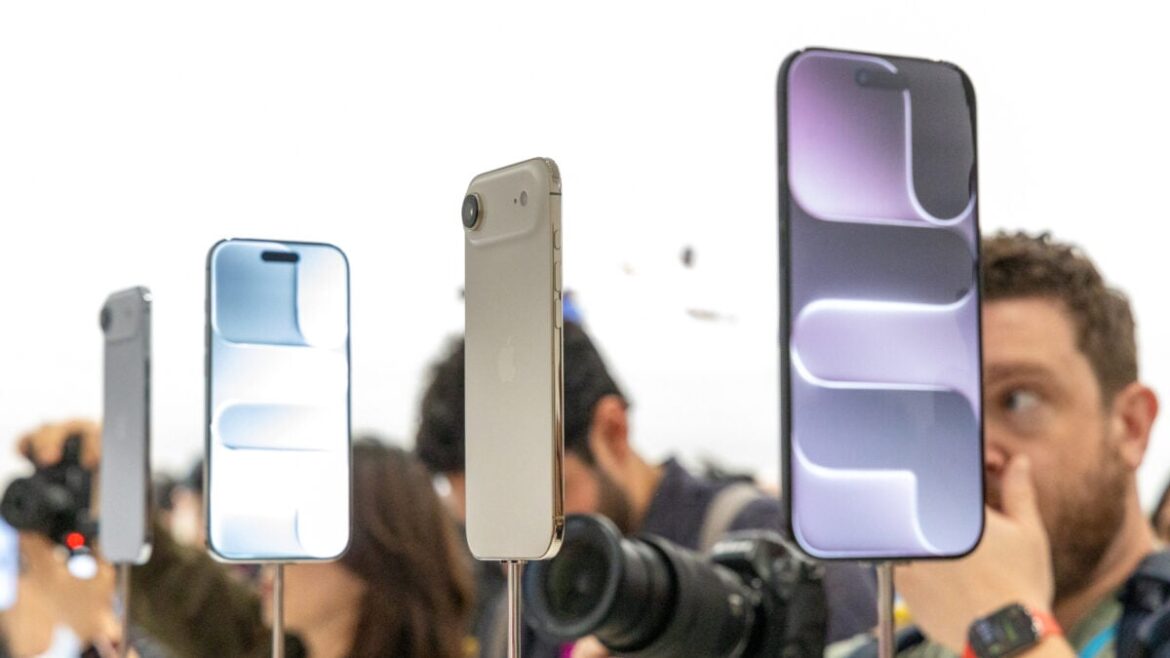
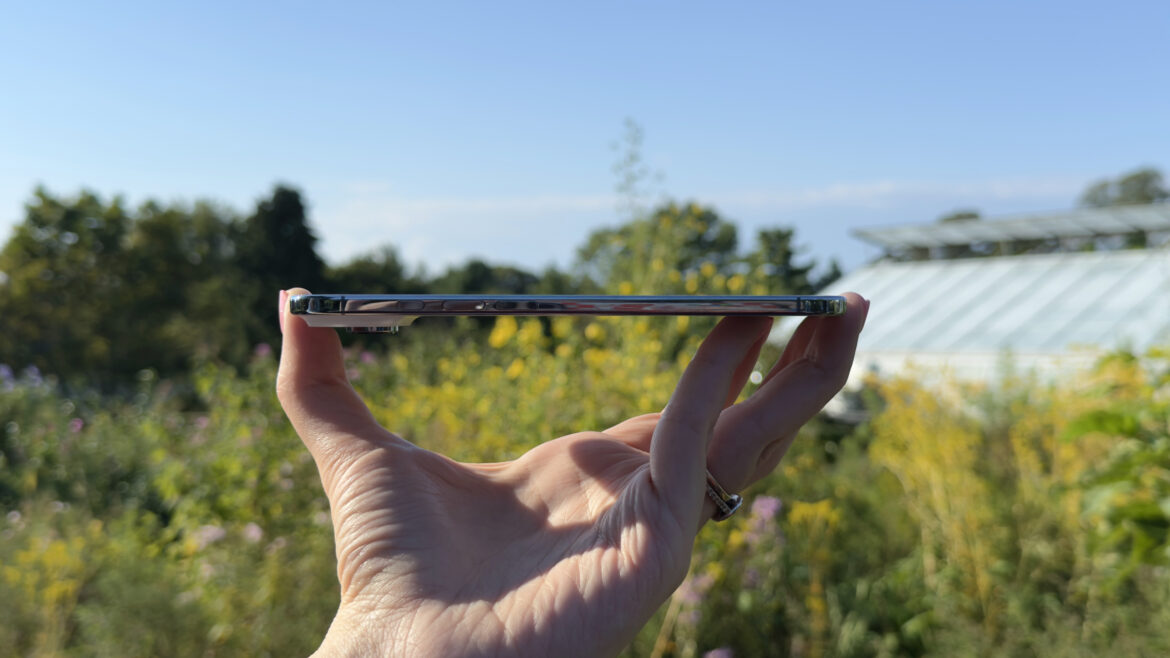
The iPhone Air is as much a statement as it is a phone. It says something about the person using it: that they don’t mind giving up a few things for a phone that’s meaningfully thinner and lighter.

That they can give up all those extra cameras on the back and just live with one. That they, well, went out and bought The New iPhone — one that makes everyone go “Whooooaaa” when they hold it for the first time. That’s a hell of a lot of things for a 6.5-inch slab of titanium and glass to say, but then again, the iPhone Air isn’t your average phone.

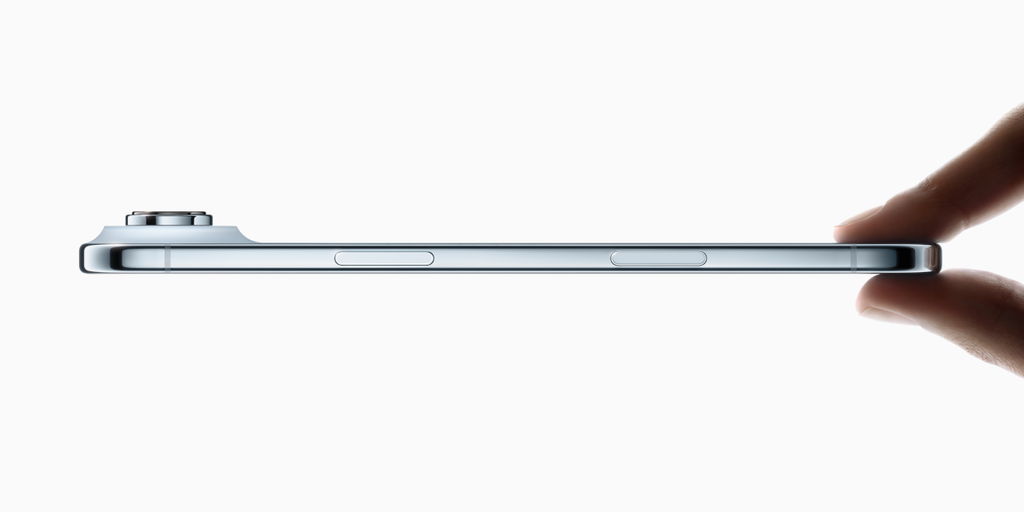
You’ve already heard this a lot, but I’ll go ahead and say it because it bears repeating: the iPhone Air is shockingly thin and light. On paper, its dimensions might not seem dramatically different from your garden-variety phone. It’s 5.64mm thick compared to the 7.95mm iPhone 17, and it weighs 12 grams less. Isn’t this a lot of fuss over a few millimeters? Maybe, but I challenge you to pick up this phone for yourself and not be at least a little surprised at how much lighter it feels in your hand. When it comes to the device that’s constantly in your hand, pocket, or bag, those millimeters make a big difference.

$999

The Good

  • Easier to carry thanks to its slim profile
  • Remarkably light and more pleasant to use for long periods of time

The Bad

  • Battery drains quicker than a standard phone
  • No ultrawide camera

But you don’t get a dramatically thinner phone without giving up a few things. And those things, boiled down to two categories, are battery life and camera versatility. Neither is a disaster. There’s enough battery power to get most people to the end of a day, and image quality from the single rear camera is good enough to satisfy someone who’s not too picky. But if you ask anyone which two things they’d most want improved on their next phone, they’d probably list those very features. Depending on the phone you’re upgrading from, this might be more of a lateral move.

For those two reasons, the iPhone Air won’t be the right device for most people considering a new iPhone. But for someone who’s not too demanding of their phone, the Air is going to feel pretty special.

That Liquid Glass look.

So we’ve established that picking up and holding the iPhone Air for the first time is pretty cool. How about after that initial reaction wears off? After using the Air for the past week, the effect has been similar to the Samsung Galaxy S25 Edge. I got used to the lightness a day or two in, but the Air kept surprising me in little moments here and there, easily fitting into a pocket or a bag where other phones dare not go. Walking around San Francisco, I kept the Air comfortably (without a case) in my jeans’ front pocket, which is something I can usually only get away with using my iPhone 13 Mini.

My overall impression using the Air is the same as with the S25 Edge: the slim profile might be the headline attraction, but the lighter weight is the real benefit. Putting the Air in my backpack’s slimmest pockets is great; holding the phone and scrolling without having to periodically adjust my grip is awesome. And for the occasion where you might actually hold the phone to your ear and talk to someone that way, it’s just a bit more comfortable than usual. Those little moments are when you’ll really appreciate the Air’s weight as its best feature.

That’s not to say this is a small phone. Like the S25 Edge, it’s a big phone with small phone energy. It’s still a stretch getting my thumb all the way across the 6.5-inch screen. It’s a little smaller than the Edge in every dimension — just a little shorter, slimmer, and less wide. But the edges are also slightly curved compared to the flat sides on Samsung’s phone, making the Air feel a little less secure in my hand. I like the look of the Air’s frosted Ceramic Shield back, but it’s hard to get a secure grip on it. I’m not a case person, but I’d make an exception for this phone.

What’s the point of a thin phone if you’re just going to put a case on it? The weight, for starters. Apple’s own MagSafe case for the Air is so light it hardly feels any heavier than without the case. There’s the bumper case, too, which helps with the grip issue. Both cases make it a little harder to get the Air into the slim pockets it could fit into otherwise. But you don’t totally give up the benefits of a thin and light phone if you want to use it with a case.

The bumper is back, baby.

I’ve heard some concerns that the iPhone Air’s camera bar might make it feel off-balance and top-heavy, but it didn’t feel that way to me as I used it over the past week. The phone still wobbles when you set it down on a flat surface and tap the screen, which isn’t unique to the Air. The long camera bump helps mitigate this a bit, and the clear MagSafe case corrects the problem altogether. One more good reason to add a case.

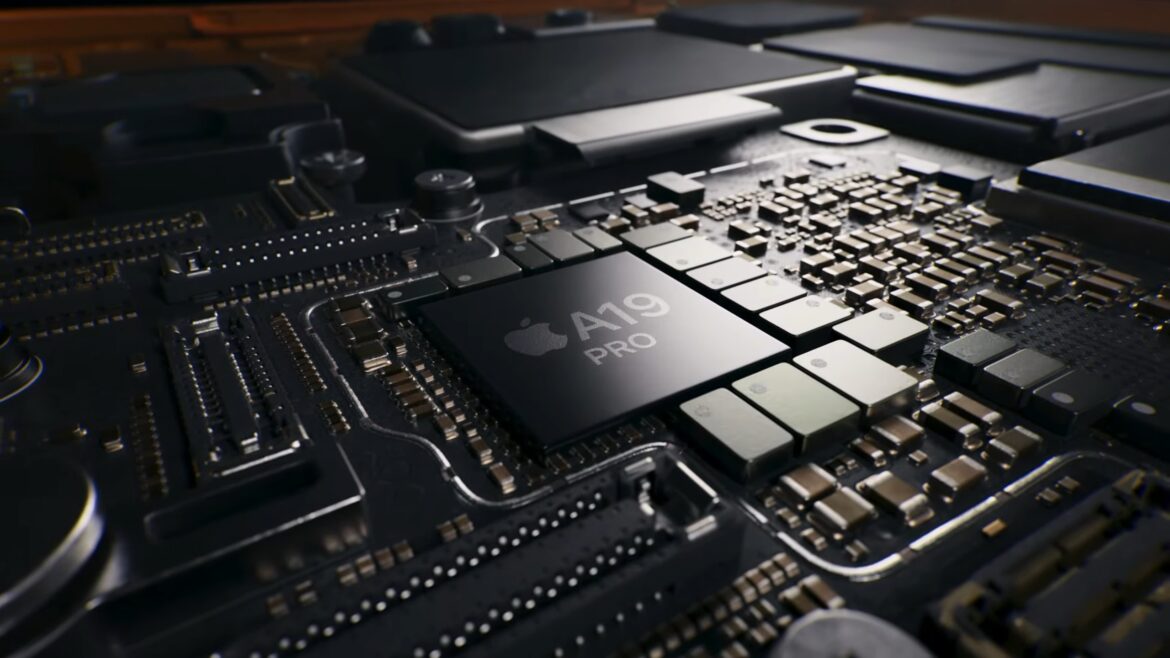
The Air gets Apple’s latest chip, the A19 Pro, minus one GPU core compared to the version of the chipset in the 17 Pro. There’s no vapor chamber cooling here as there is on the Pro models this time, and you’ll feel exactly where the processor is as soon as it starts heating up. I didn’t encounter any workloads in my day-to-day that caused the Air to stutter or drop the screen brightness. A short Diablo Immortal session warmed up the phone considerably, but not enough to impact performance.

In the no-news-is-good-news department: I haven’t noticed any unusual behavior from Apple’s house-made cellular and networking chips. The C1X cellular modem is an updated version of the chip that debuted in the iPhone 16E that doesn’t offer super-fast but hard-to-find mmWave 5G, but does support the sub-6 GHz 5G I use most frequently. Between this and the N1 networking chip, I haven’t seen any red flags waving on this path Apple is taking away from its reliance on Qualcomm chips for connectivity.

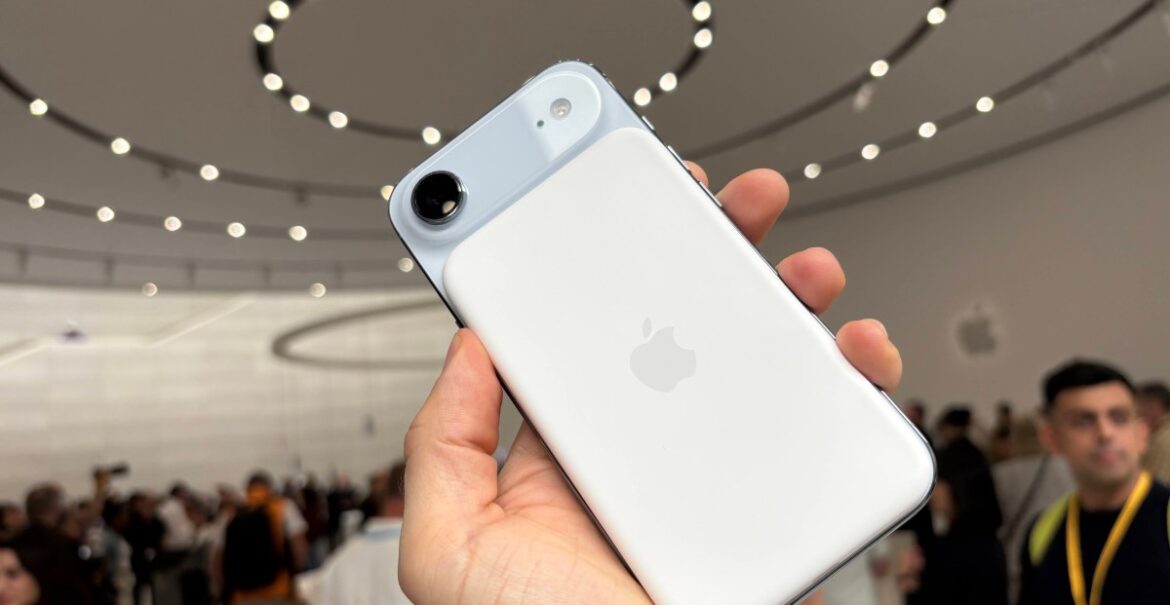
The Air with MagSafe battery pack makes for a thicker phone than the 17 Pro Max.

Now for the less-good news: battery life is just okay. And honestly, that’s a pretty good outcome for the Air; the situation could have been worse. If you’re a light user and you spend most of your time on Wi-Fi, you might never have a problem with the battery.

Personally, it makes me a little too anxious to see that battery indicator drop into the 20s before dinnertime, though in fairness I was going pretty hard on the battery with around five hours of screen-on time. On a much lighter day on my home Wi-Fi, three hours of screen-on time took the battery down to around 40 percent by bedtime. I’d call that within the bounds of acceptable, if a little on the low end for a $1,000 phone.

Decent battery life after week one of using a phone doesn’t really concern me. I worry more about how that battery performance will hold up a year from now. If it’s lackluster now, it’s only going to get worse as the battery naturally degrades. Apple’s recent track record here isn’t stellar, either. That’s something to bear in mind if you’re the kind of person who wants to buy a phone once every five years and not have to think about another purchase in between.

You can buy a little peace of mind in the form of a $99 MagSafe battery pack. Its dimensions are specifically tailored to the Air’s; it doesn’t fit properly on either of the 17 Pro phones. But because the Air’s camera bar is slimmer, there’s more room on the back of the phone for the battery pack. You can put it on a 17 Pro or Pro Max, but it doesn’t align quite right and will hang off the bottom edge of the phone (though it does stay put on a Pixel 10 Pro XL). The battery is itself a lighter, slimmer version of the original MagSafe battery pack, though when you actually put it on the Air you’ll notice that you’re no longer using a super-thin, super-svelte phone. The whole thing is heavy enough that it’s unpleasant to hold and use for too long, but it’s a good enough solution if you’re out and about or want a recharge at home without being tethered to a wall outlet.

You’ll have to make do without an ultrawide.

On the subject of limitations: that camera. I mean, technically there are two of them — the 48-megapixel rear camera and a new 18-megapixel selfie camera that does some cool stuff. But there’s just one sensor and lens on that rear camera bump, even though the Galaxy S25 Edge managed to fit a second one. The single rear camera feels justifiable on the $599 iPhone 16E; on the Air it feels like a real concession.

It’s a tradeoff that a lot of people will be fine with, and the 26mm-equivalent camera includes sensor-shift stabilization to help keep shutter speeds and ISOs lower in dim light. It’s the smaller sensor used by the regular 17 rather than the larger one in the Pros, which is a difference that manifests in edge cases. With the 17 Pro you can manage a decent amount of detail from low light portraits with the 2x crop zoom; on the Air, fine detail gets smoothed away at the 2x setting. Otherwise, portrait mode photos are fine.

In addition to the 2x crop there’s also the 28mm- and 35mm-equivalent settings that use detail from a full-resolution capture to do a kind of digital zoom upscaling without looking too digital zoom-y. But more than the telephoto, I missed the ultrawide — especially in those situations where I couldn’t move back any farther. Some shots just call for the drama of a 13mm-equivalent view, you know?

The loss of the ultrawide bothers me, but the Air gains some selfie camera updates that might matter more to this phone’s target audience. The new front-facing camera on the Air and the 17 series uses a square format sensor that can rotate automatically between portrait and landscape orientations without losing a bunch of resolution in the process. You can rotate or zoom in and out manually, or let Center Stage take the wheel. It’s kind of wild to see it in action, and I think it’s something group selfie-takers will come to rely on without thinking about it.

The other cool new selfie feature is Dual Capture, which records video from the front- and rear-facing cameras at once. You’ve been able to do this in third-party camera apps, but now it’s baked right into the native camera app. The selfie capture is overlaid on the rear-camera video as a picture-in-picture window that you can move to any corner of the frame — but only as you’re recording, not after the fact. Initially I was skeptical that I’d really use this feature, but I can already think of a handful of times in the recent past that I either wish I’d had it or remembered to use it. Mostly, I’m thinking of the videos I take of my kid where I’m just a disembodied voice that he’s talking to. They’re basically the historical record of where we went and what we were doing, so it would be nice to be able to look back on some of them and see that I was actually there too.

Right at home.

There’s one more statement that the iPhone Air makes, and it comes directly from Apple. It’s a declaration of what the company can achieve now, and a hint of what’s to come. After all, if you’ve made one super-slim phone, you can just double that and add a hinge to make a folding phone, right? Even if it’s not that simple, the Air asks us to remember that there’s still innovation going on in mobile hardware, despite the last decade or so of phones looking pretty same-y.

But that’s speculation. In the here and now, I’ve been trying to suss out who exactly the Air is for. And I think this is a device that lends itself to a life of ease. It’s for someone who is unbothered by a short battery and potentially shorter battery lifespan. It’s for someone who can let go of the photos they missed because they couldn’t zoom out. For someone who fits that description, it’s a rewarding device to use. And it sure makes a statement.

Agree to continue: Apple iPhone 17, 17 Pro, 17 Pro Max, and iPhone Air

Every smart device now requires you to agree to a series of terms and conditions before you can use it — contracts that no one actually reads. It’s impossible for us to read and analyze every single one of these agreements. But we’re going to start counting exactly how many times you have to hit “agree” to use devices when we review them since these are agreements most people don’t read and definitely can’t negotiate.

To use any of the iPhone 17 (and iPhone Air) models, you have to agree to:

  • The iOS terms and conditions, which you can have sent to you by email
  • Apple’s warranty agreement, which you can have sent to you by email

These agreements are nonnegotiable, and you can’t use the phone at all if you don’t agree to them.

The iPhone also prompts you to set up Apple Cash and Apple Pay at setup, which further means you have to agree to:

  • The Apple Cash agreement, which specifies that services are actually provided by Green Dot Bank and Apple Payments Inc. and further consists of the following agreements:
  • The Apple Cash terms and conditions
  • The electronic communications agreement
  • The Green Dot Bank privacy policy
  • Direct payments terms and conditions
  • Direct payments privacy notice
  • Apple Payments Inc. license

If you add a credit card to Apple Pay, you have to agree to:

  • The terms from your credit card provider, which do not have an option to be emailed

Final tally: two mandatory agreements, seven optional agreements for Apple Cash, and one optional agreement for Apple Pay.

0 CommentsFollow topics and authors from this story to see more like this in your personalized homepage feed and to receive email updates.

  • Allison JohnsonClose

    Allison Johnson

    Posts from this author will be added to your daily email digest and your homepage feed.

    PlusFollow

    See All by Allison Johnson

  • AppleClose

    Apple

    Posts from this topic will be added to your daily email digest and your homepage feed.

    PlusFollow

    See All Apple

  • Featured VideosClose

    Featured Videos

    Posts from this topic will be added to your daily email digest and your homepage feed.

    PlusFollow

    See All Featured Videos

  • iPhoneClose

    iPhone

    Posts from this topic will be added to your daily email digest and your homepage feed.

    PlusFollow

    See All iPhone

  • Phone ReviewsClose

    Phone Reviews

    Posts from this topic will be added to your daily email digest and your homepage feed.

    PlusFollow

    See All Phone Reviews

  • ReviewsClose

    Reviews

    Posts from this topic will be added to your daily email digest and your homepage feed.

    PlusFollow

    See All Reviews

  • TechClose

    Tech

    Posts from this topic will be added to your daily email digest and your homepage feed.

    PlusFollow

    See All Tech


Source link

September 17, 2025 0 comments
0 FacebookTwitterPinterestEmail
Apple iPhone Air Review
Product Reviews

Apple iPhone Air review: the sexiest iPhone I’ve ever tested

by admin September 17, 2025


Why you can trust TechRadar


We spend hours testing every product or service we review, so you can be sure you’re buying the best. Find out more about how we test.

Apple iPhone Air: Two-Minute Review

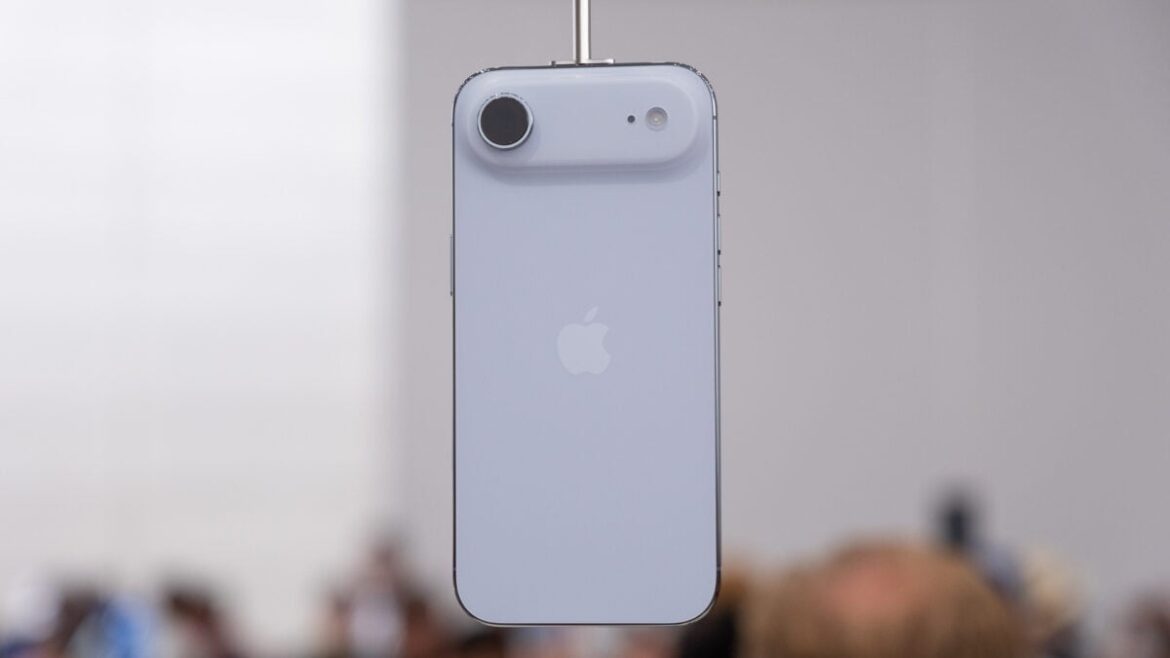
The iPhone Air is, to a degree, exactly what we were expecting: Apple’s thinnest iPhone ever, measuring just 5.64mm. It feels light, balanced, and durable thanks to a grade 5 titanium frame and Ceramic Shield glass. In the hand it’s sleek and refined – I’ve been using my Sky Blue unit for a week now and it’s still turning heads.

The 6.5-inch Super Retina XDR OLED display is excellent: it’s an always-on display that supports ProMotion, HDR, and brightness up to 3,000 nits. It’s slightly bigger than the iPhone 17’s screen, which gives apps, text, and videos more room to breathe, and it looks great whether I’m scrolling TikTok, watching HDR movies, or just browsing outside on a sunny day.

iOS 26 feels tailor made for the Air, with its new Liquid Glass design that looks striking and complements the physical build. Messages now support custom backgrounds, typing indicators, and polls, while the Phone app and Visual Intelligence get useful upgrades. And while Siri’s full AI overhaul isn’t here yet, Apple Intelligence features are starting to appear.

The biggest trade-off comes with the camera setup: there’s just a single 48-megapixel lens on the rear of the phone. It produces sharp, natural-looking photos and impressive portraits, but you’ll miss the flexibility of a telephoto or ultrawide if you’re used to them. The selfie camera is excellent, though, with Apple’s Center Stage smarts for automatic wide and ultrawide framing, and Dual Capture is genuinely fun.

Performance from the A19 Pro is snappy and smooth, and it capably handled everything I threw at it, though the phone does get warm during fast charging or heavy gaming. Battery life is decent but not class-leading: enough for a workday, usually six to eight hours of use, with my best stretch hitting around 10 hours away from the charger. Power users may want to invest in the $99 / £99.00 / AU$159 MagSafe Battery Pack, which matches the phone’s slim profile and adds about 65% more life, but it’s an added cost.

The iPhone Air isn’t the best iPhone for photography or endurance, but as a design statement, it’s a gem. It feels like the most exciting iPhone Apple has released in years, and while it costs more than the iPhone 17 with fewer cameras and shorter battery life, it delivers value in other key areas.

Apple iPhone Air: Price and Availability

Apple unveiled the iPhone Air at its September 9, 2025, ‘Awe Dropping’ event alongside the iPhone 17, iPhone 17 Pro, iPhone 17 Pro Max, AirPods Pro 3, and three new Apple Watches. The Air, though, stands out with its entirely new design, and is a whole new category of iPhone.

Sign up for breaking news, reviews, opinion, top tech deals, and more.

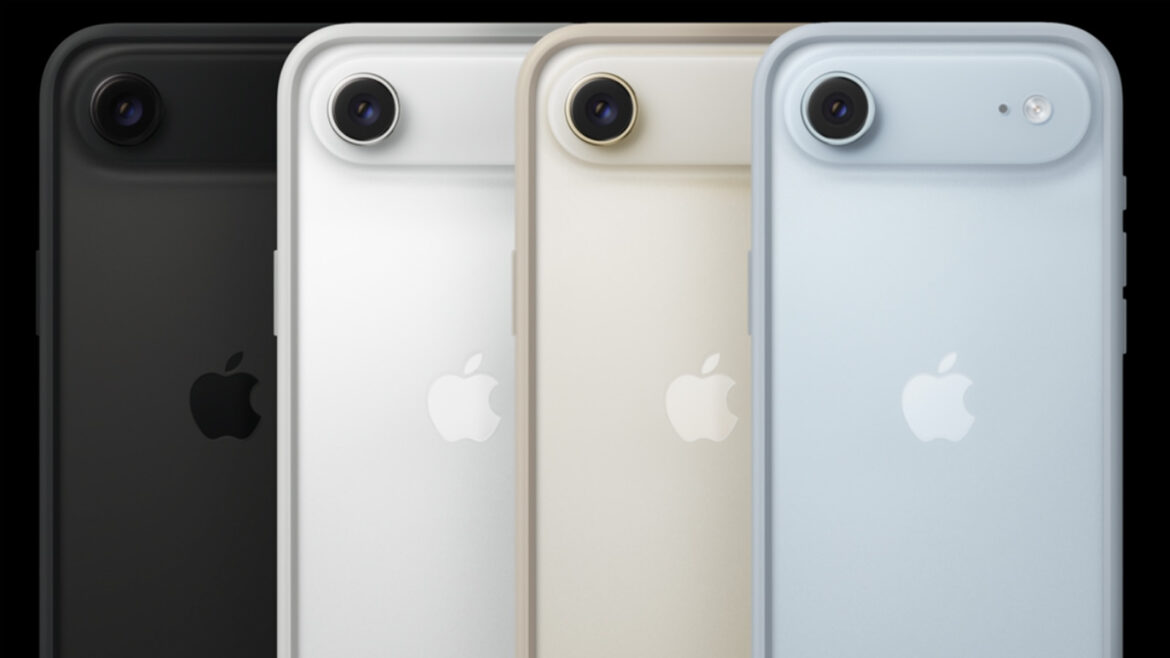
It starts at $999 / £999 / AU$1,799 for 256GB of storage, or you can bump that up to 512GB for $1,199 / £1,199 / AU$2,199, or 1TB for $1,399 / £1,399 / AU$2,599. The iPhone Air is an eSIM-only device worldwide and comes in four colors: Sky Blue, Light Gold, Cloud White, and Space Black. I’ve been testing a 1TB iPhone Air in Sky Blue.

Apple will officially launch the iPhone Air on September 19, 2025, but it’s up for pre-order now from the company’s online store, authorized retailers, and carriers.

Apple iPhone Air: Specs

Swipe to scroll horizontallyHeader Cell – Column 0

iPhone Air

iPhone 17

iPhone 17 Pro

iPhone 17 Pro Max

Weight:

165g

177g

206g

233g

Display:

6.5-inch OLED

6.3-inch OLED

6.3-inch OLED

6.9-inch OLED

Resolution:

2736 x 1260

2622 x 1206

2622 x 1206

2868 x 1320

Refresh rate:

120Hz

120Hz

120Hz

120Hz

Peak brightness:

3,000 nits

3,000 nits

3,000 nits

3,000 nits

Chipset:

A19 Pro

A19

A19 Pro

A19 Pro

Rear cameras:

48MP wide (26mm, ƒ/1.6)

48MP wide (26mm, ƒ/1.6), 48MP ultra-wide (13 mm, ƒ/2.2)

48MP wide (24mm, ƒ/1.78), 48MP ultra-wide (13 mm, ƒ/2.2), 48MP telephoto (8x optical zoom)

48MP wide (24mm, ƒ/1.78), 48MP ultra-wide (13 mm, ƒ/2.2), 48MP telephoto (8x optical zoom)

Front camera:

18MP (ƒ/1.9)

18MP (ƒ/1.9)

18MP (ƒ/1.9)

18MP (ƒ/1.9)

Storage:

256GB, 512GB, 1TB

256GB, 512GB

256GB, 512GB, 1TB

256GB, 512GB, 1TB, 2TB

Colors:

Space Black, Cloud White, Light Gold, Sky Blue

Black, White, Mist Blue, Sage, Lavender

Silver, Cosmic Orange, Deep Blue

Silver, Cosmic Orange, Deep Blue

Apple iPhone Air: Design

(Image credit: Jacob Krol/Future)

  • The freshest look that Apple has delivered in years
  • Unbelievably thin and light
  • Feels great in the hand with proper ergonomics

If you were following the Apple rumor cycle, we were all expecting an ultra-thin iPhone to be released – one that would potentially go thinner than the iPhone 6 or 6 Plus, be more stunning than the iPhone X, and offer a truly refreshed look and feel for the iPhone. The launch event’s ‘Awe Dropping’ tagline set the bar high – and the iPhone Air cleared it with room to spare.

It’s not the first ultra-thin phone – the Galaxy S25 Edge measures in at 5.8 millimeters – but it still feels as stunning, sleek, and sexy in my hand right now after living with it for a week as it did during my brief hands-on session following the launch event. It feels as exciting as the iPhone X, in that it might give us the playbook for the modern iPhone going forward – or at least show us one half of the purportedly incoming foldable iPhone.

The photos released by Apple, and even those shot by me for this review, only do it partial justice. The iPhone Air is the best representation yet of Apple’s vision for an iPhone that’s just glass. It weighs in at just 5.82 ounces, or 165 grams, fully justifying the ‘Air’ moniker. Much like the iPhone 17 or even a Pro Max, it feels balanced – not too top-heavy, not too bottom-heavy. It’s Goldilocks ergonomics.

I don’t know if I’d quite call it awe-dropping, but the thinness is the part that gets people excited. At its thinnest, the iPhone Air is 5.64 millimeters, or 0.22 inches, and the ‘plateau’ (Apple’s new term for the camera bump) only juts out a bit more. I was instantly wowed, and over the course of a week (well, eight days now), I’ve really become accustomed to this look and feel for an iPhone.

(Image credit: Jacob Krol/Future)

While conducting some testing over the week, I showed it to my brother and sister-in-law, who were both visibly impressed when holding it. They asked about durability and were a little stunned at the overall feel. Then came the questions about battery life and the camera – both of which I’ll address below – and whether the USB-C port was thinner.

On that last point – it’s still a regular USB-C port, but to fit it in this frame and get it this small, Apple’s design team started by 3D-printing a custom one. And given how thin this phone had to be, Apple went back to grade five titanium for the shell and sides of the device. To further enhance the looks, it has a polished finish. My Sky Blue review handset is different from the MacBook Air and iPad Air colors of the same name – it’s a bit lighter and pastel-like. I really like it, and the Air also comes in Light Gold, Space Black, and Cloud White.

While the innermost layer of the iPhone Air sandwich is made of that strong titanium, which can bend slightly under pressure but is designed to spring back, it’s topped and bottomed with glass and glass ceramic; specifically Ceramic Shield 2 on the front and Ceramic Shield on the back. The rear, like the iPhone 17, is mostly frosted matte glass, while the top bump gets the glossy finish.

Apple says the Air is three times more scratch-resistant on the front – though I’ve still been careful sliding this in and out of my front or rear jeans pockets – and the back is four times more crack-resistant.

I actually did drop it on concrete paving stones, and the iPhone Air came out completely unscathed. My dog Rosie pulled me suddenly, I dropped the Air, and it hit the ground on the top-left corner and then landed screen-down, single camera-up. Not even a scratch. Rosie was off the hook.

That incident, along with our Editor at Large Lance Ulanoff’s bend test and his fumble with the iPhone Air, gives some credence to Apple’s durability promises. Apple says the iPhone Air is more durable than any model before this and on par with the rest of the 17 lineup. In a test behind closed doors at Apple Park, I saw an iPhone Air put through the wringer, receiving a simulated force of 130 pounds, and bending and then springing back with no visible stress marks left.

It also has the same IP68 rating for resistance to dust and water as the iPhone 17, 17 Pro, and 17 Pro Max – it survived a light drizzle shortly after I unboxed it at Apple Park. The weather’s been wet in my home state of Jersey, and the Air has shown no issues when being used in rain or surviving a dunk test.

Even given the extreme thinness here, you still get the usual buttons you’d expect on an iPhone. Camera Control (still not a button) has been redesigned to live on the right-hand side, and it’s slightly thinner but about the same length as on other iPhones. The power/sleep button sits slightly higher on this side, with the Action Button, volume up, and volume down on the left. The main mono speaker lives at the top with some microphones, and there are two other microphones either side of the USB-C port on the bottom.

This design does, as mentioned, only leave room for a single camera, and likely a smaller battery inside, but Apple has also dropped the SIM card slot worldwide and opted for eSIM to save some space.

The iPhone Air is stunning, attracts a lot of admiring glances, and feels like the biggest refresh in iPhone design we’ve seen in a while. Yes, it’s the same key parts, just compressed; but in use it feels like the perfect showcase for iOS 26. If you’re after Apple’s best design this year, I think it’s clearly the iPhone Air – but there’s a lot more to this iPhone than just looks.

Apple iPhone Air: Display

(Image credit: Jacob Krol/Future)

  • At 6.5 inches the front is virtually all screen
  • It’s on a par with the displays on the Pro and Pro Max

For $999 / £999 / AU$1,799 it would be a little mean of Apple not to include ProMotion or always-on functionality here, and the iPhone Air supports both. As a whole, the screen here is basically in line with those of the iPhone 17, 17 Pro, or 17 Pro Max.

The front of the iPhone Air is nearly all glass, except for a thin black bezel that turns into the sloped polished side. It’s a 6.5-inch Super Retina XDR OLED display with a resolution of 2376 x 1260, which works out to 460 pixels per inch. It tops out at 3,000 nits of brightness when needed, supports the Wide Color P3 gamut and HDR, and features an anti-reflective coating. It also has the same Dynamic Island as the rest of the iPhone 17 line.

In daily use, the display is really the main appeal here – on paper, it’s 0.2 inches bigger diagonally than the iPhone 17 or 17 Pro, but it feels a bit more expansive. It offers more lines of text, or a slightly expanded view when viewing a webpage. Games or movies feel a little more like an event, and it offers a broad canvas for iOS 26. Lay two of these phones side by side and I think you’d have some idea of what Apple is planning to bring us with its long-rumored folding iPhone – and it would look mightily impressive, but we’re not quite there yet. And it’s still smaller than the Pro Max.

Colors looked punchy and vibrant, text was inky black and crisp, and it was a great display for daily use. I found that it got bright enough to battle the bright sunshine of California, the late summer sunshine of New Jersey and New York, as well as bright artificial lighting. I liked scrolling TikTok and Instagram Reels, or watching a video on it, mainly thanks to the super-smooth ProMotion display.

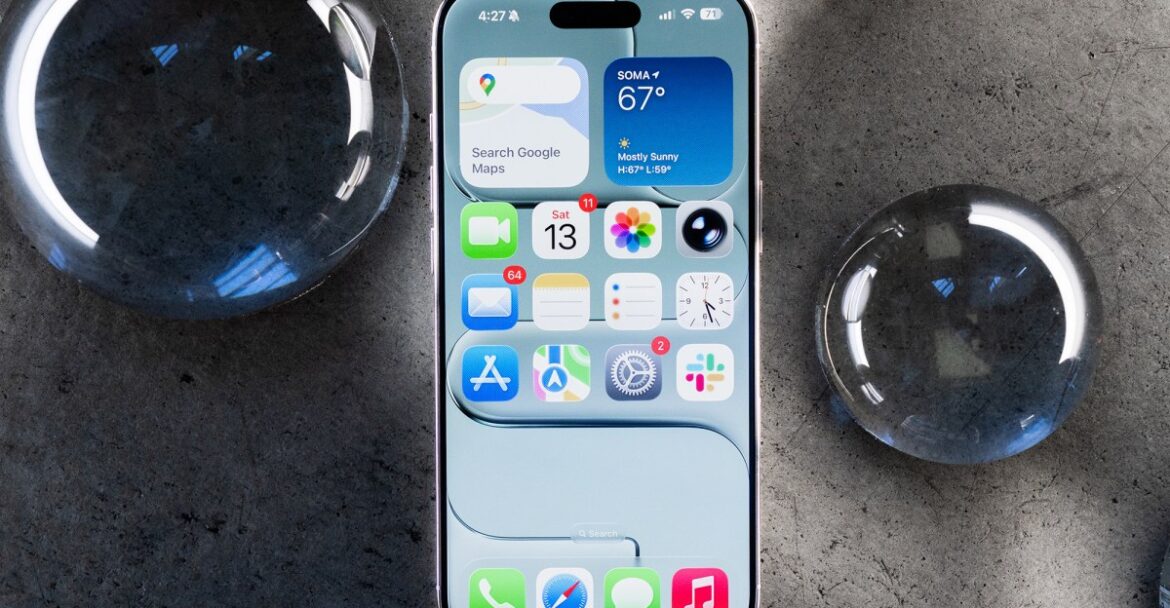
And iOS 26, with its Liquid Glass makeover, looks fantastic here.

Apple iPhone Air: Software and Apple Intelligence

(Image credit: Jacob Krol/Future)

  • Liquid Glass runs well here and feels purpose-built for the design
  • iOS 26 brings with it some really smart features

I have a feeling that the design team at Apple knew the Air was on the roadmap when designing Liquid Glass.

iOS 26 is running on the iPhone Air out of the box, and as on any iPhone, announces itself with a ‘Hello’ on the first boot. You’ll get a sense of the new translucent, glass-like nature of the software pretty quickly. It’s mostly visible in how notifications refract over your wallpaper or up top, with whatever is behind the element. I especially like the way the bottom menu bars look with this, although legibility can be an issue at times, depending on what’s behind the element. You’ll also notice a difference if you use light mode or dark mode.

The redesign is only a portion of iOS 26, as Apple’s latest OS introduces a number of new features. I’m keen to put many of the new parts of Messages to the test with my friends and various group chats. With the latter, you’ll now get typing indicators, and you can set a custom background for any Message group or individual. This will, I have a feeling, be an especially tough test for legibility with the Liquid Glass components. You also have the option to add polls in group messages, which is a fun way to decide on activities or maybe pick a restaurant.

The Phone app is entirely new, though you can switch back, placing your favorites up top and below that is a combined list of outgoing and incoming calls, missed calls, and even voicemails. It can be a lot to process at first, but after months on the beta I’m more or less used to it, although I have switched back to the original setup occasionally, as the new one makes voicemails a little harder to track down. You can also use Live Translation during calls, which can be helpful for international travel, and I especially like the wait-on-hold feature.

Visual Intelligence, which is engaged with a long press of Camera Control, is a bit smarter here, and can now identify events to add to your calendar and integrate with apps that add support with the API. However, we’re still waiting on the full AI-powered Siri, and many of the new Apple Intelligence features aren’t front and center here.

You can check out our full guide to iOS 26 here, as there’s a lot more to dig into.

Apple iPhone Air: Camera

(Image credit: Jacob Krol/Future)

  • Single-lens 48MP Fusion camera on the rear
  • You can get some impressive shots, especially portraits
  • Front-facing camera is 18MP with Center Stage

This is where the compromises necessitated by the iPhone Air’s unfeasibly thin design begin: the iPhone Air only features a single, 48-megapixel Fusion camera on the back. It can shoot at 1x, a sensor crop in 2x, or a maximum digital 10x, but the quality falls off noticeably with the latter.

I’ll cut to the chase here – if you’re after the iPhone with the best cameras, or even just some variety for shooting, this is probably not it.

I was impressed with some of the shots I took, particularly the one taken from 36,000 feet out an airplane window in the gallery below – the Air captured a surprising amount of detail around the engine, wing, and even the clouds, and what appears to be a mountain in the distance. The night mode worked very well when capturing my Bernedoodle, the aforementioned Rosie, and I’m especially impressed with the Portrait mode here, and the work going on behind the scenes to deliver the right bokeh effect in the right spot.

Still, as someone who used a 16 Pro Max before this, I miss the telephoto camera, even if that wasn’t a Super Res Zoom like on a Galaxy or a Pixel; 2x isn’t a lot. The iPhone Air also doesn’t have an ultra-wide or a macro camera. If anything, it’s made me think about the types of shots I’d want to capture with a phone, and if an ultra-wide or zoom is a deal breaker for you, you’ll want to look at the 17 or the 17 Pro duo.

The 48MP Fusion camera here can capture photos at a full 48 megapixels or, by default, a 24-megapixel photo that saves space by combining a 12-megapixel shot and a 48-megapixel shot. It normally does a pretty good job of preserving colors and details, and is something that Apple’s been doing for several generations of iPhone.

The main lens here does an admirable job, and I’m quite happy with some of the images I got – particularly in portrait mode, with the camera keeping colors within a realistic range and not skewing warmer or cooler, as well as capturing plenty of the finer details.

In some cases, photos looked a bit washed out – for instance, landscapes on particularly sunny days, as when I took test shots at a botanical garden (although I was able to capture a sunflower quite nicely, other fauna, and even orange fish below a less-than-crystal-clear pond). Mostly, though, the camera can capture those more vibrant moments, such as a shot of Yankee Stadium or the sunset from a plane window.

Without a true telephoto or an ultrawide, you’re able to take more creative control to capture unique shots. You can see a full gallery of test images – standard photos at 1x or 2x, and some digital zoom ones, as well as Portraits at 1x or 2x – below.

(Image credit: Jacob Krol/Future)

A new feature that takes advantage of the 18-megapixel Center Stage camera on the front and the rear camera is Dual Capture. It’s not a brand-new idea, and essentially this lets you record with the front camera and rear camera at the same time, with stabilization applied. I think it’s a lot of fun, especially for sports events, where you could capture both the on-field action and the reaction of you and your friends, and I imagine it would be a blast at concerts – I could record myself belting out Born to Run along with the Boss – but also for parents with young children.

The 18-megapixel selfie camera uses a larger image sensor than on previous iPhones, and it’s actually super helpful. Essentially, it can automatically adjust a wide or ultra-wide view so you can easily fit everyone into your selfie or video, and with the tap of a button you can rotate between vertical and horizontal without needing to physically rotate your phone. It also delivers a serious, high-quality selfie.

I’ll include some video samples below – the 48MP camera isn’t a slouch here, and performs on a par with the standard iPhone 17. The end result is either up to 1080p HD at up to 60 frames per second, or 4K at up to 60fps.

Image 1 of 24

(Image credit: Jacob Krol/Future)(Image credit: Jacob Krol/Future)(Image credit: Jacob Krol/Future)(Image credit: Jacob Krol/Future)(Image credit: Jacob Krol/Future)(Image credit: Jacob Krol/Future)(Image credit: Jacob Krol/Future)(Image credit: Jacob Krol/Future)(Image credit: Jacob Krol/Future)(Image credit: Jacob Krol/Future)(Image credit: Jacob Krol/Future)(Image credit: Jacob Krol/Future)(Image credit: Jacob Krol/Future)(Image credit: Jacob Krol/Future)(Image credit: Jacob Krol/Future)(Image credit: Jacob Krol/Future)(Image credit: Jacob Krol/Future)(Image credit: Jacob Krol/Future)(Image credit: Jacob Krol/Future)(Image credit: Jacob Krol/Future)(Image credit: Jacob Krol/Future)(Image credit: Jacob Krol/Future)(Image credit: Jacob Krol/Future)(Image credit: Jacob Krol/Future)

Apple iPhone Air: Performance

(Image credit: Jacob Krol/Future)

  • The iPhone Air feels responsive and fast, even with more intense workflows
  • A19 Pro chip should keep it running smoothly for years
  • Can get warm on the camera bump with gaming and other more intensive tasks

Powering the iPhone Air is Apple’s A19 Pro chip, which is a step up from the iPhone 17’s A19, and a slightly less powerful version of the A19 Pro in the iPhone 17 Pro and 17 Pro Max, without the extra cooling technology. The A19 Pro here is a 6-core CPU with two performance and four efficiency cores, a 5-core GPU, and a 16-core Neural Engine.

It’s a good lick faster than the A18 Pro or A18 found in the iPhone 16 Pro Max or 16, especially with various elements of iOS 26 – including spatializing a wallpaper – and in everyday use. Compared to the standard iPhone 17, I’d say performance is about neck and neck. The A19 Pro is arguably being used here to help regulate performance temperature.

I did notice the iPhone Air heating up during the first few days while it was still indexing and charging – especially from 0% to about 50% – before cooling as it slowed near 80%. It also warms up when multitasking with demanding apps at times.

For example, if I’m on a call and launch a game like Asphalt 9, the area around the camera housing on the rear can get noticeably warm, though it cools quickly as performance regulates. The heat doesn’t spread below the Apple logo, and a case, like Apple’s Bumper or Clear option, helps keep it from your fingertips.

Keep in mind that basically all the components do live in the plateau – including the silicon – so it makes sense that the area does heat up. When it comes to non-gaming tasks, though, the iPhone Air handles everything well, and delivers strong performance while keeping cool. That was the case with my daily workflow consisting of calls – audio and FaceTime – as well as Mail, Gmail, Slack, Safari, Chrome, Edits, Capcut, the Camera, and other apps. Even with creating a Genmoji or using Image Playground or another facet of Apple intelligence, the iPhone Air didn’t get especially warm.

In terms of quantitative testing, the iPhone Air scored slightly higher than the iPhone 17 on GeekBench 6.5, at 3,723 on single-core and 9,665 on multi-core. That’s in line with smartphones at this price range, though, as we noted in our Galaxy S25 Edge review, that phone has a thermal solution for keeping things cool.

Apple iPhone Air: Battery

(Image credit: Jacob Krol/Future)

  • It can deliver all-day battery for some, but more likely will last a full workday
  • You’ll likely need to recharge it during the day
  • While costly, the MagSafe Battery is a sound investment

We can only guess at the iPhone Air’s battery size for now, as Apple doesn’t officially release those numbers. It’s clear, though, that the company has squeezed as large a cell as possible inside this ultra-slim smartphone.

Instead of capacity, Apple provides viewing estimates: up to 27 hours of downloaded video playback and 22 hours of streaming. With the $99 MagSafe Battery attached, those numbers rise to 40 and 35 hours, respectively – about a 65% boost.

In my experience, the iPhone Air generally lasts through a workday – six to eight hours depending on use. That’s behind the iPhone 17, 17 Pro, and 17 Pro Max, but it still meets Apple’s “all-day” standard. On one test, I took it off a charger at 7:30am and it lasted until 5:50pm, or 10 hours and 20 minutes. At best, I recorded six hours and 35 minutes of active screen time; on average, I got around four hours and 45 minutes.

During my first few fast charges, the top of the camera plateau and the area beneath it did get warm, mostly between 0% and 50%, before cooling down. This isn’t unusual for fast charging and reflects the component layout.

Power users will likely need to recharge by the time they get home. Apple’s slim MagSafe Battery nearly matches the Air’s profile, adding only a bit more thickness than the camera bump. It recharges intelligently throughout the day, manages heat well, and uses pocket detection to optimize charging times. Optional, yes – but it complements the iPhone Air experience nicely.

Apple iPhone Air: Should you buy?

Swipe to scroll horizontallyiPhone Air Score card

Attributes

Notes

Rating

Design

The iPhone Air is Apple’s most exciting refresh in years.

5 / 5

Display

The iPhone Air’s 6.5-inch Super Retina XDR OLED is punchy, sharp, and smooth with ProMotion and Always-On functionality.

5 / 5

Software

iOS 26 feels tailor-made for the iPhone Air.

4 / 5

Camera

The iPhone Air relies on a single 48MP lens that delivers sharp, natural photos and impressive portraits, but lacks the versatility found on other models.

4 / 5

Performance

The iPhone Air feels fast and smooth in daily use, though it can warm up under sustained heavy gaming.

4 / 5

Battery

The iPhone Air should last a workday, but heavy users will need to recharge.

4 / 5

Value

At $999, the iPhone Air feels like a new kind of Pro – trading camera and battery versatility for design.

4 / 5

Buy it if…

Don’t buy it if…

Apple iPhone Air: How I tested

I’ve been covering smartphones for years — including iPhones since the iPhone 8 lineup — and my first personal iPhone was the 3GS. For this review, I set up the iPhone Air in Sky Blue, moving my number over from an iPhone 16 Pro Max via eSIM and starting fresh.

Over more than a week of testing, I put the Air through everyday use: calls, streaming music, gaming, watching TV and movies, capturing photos, and running my usual suite of work apps. I measured performance using both real-world applications and benchmarks, such as GeekBench 6.5, paying close attention to how it handled multitasking and more demanding workloads. For battery life, I tracked how quickly it drained during different tasks and also ran a standardized assessment.

On the camera side, I pushed the single 48MP rear lens through its paces — testing 1x, 2x crop, Portrait, and Night modes, plus video recording up to 4K at 60fps. I also spent time with the new 18MP selfie camera, trying both portraits and group shots, and had fun with Dual Capture for video.

To get a clearer sense of how it stacks up, I compared the results directly with the iPhone 17, the iPhone 16 and 16 Plus, iPhone 16 Pro and 16 Pro Max, Google Pixel 10 and Pixel 10 Pro, and Samsung’s Galaxy S25 Ultra.

First reviewed September 2025.


Source link

September 17, 2025 0 comments
0 FacebookTwitterPinterestEmail
AppleiPadair
Game Reviews

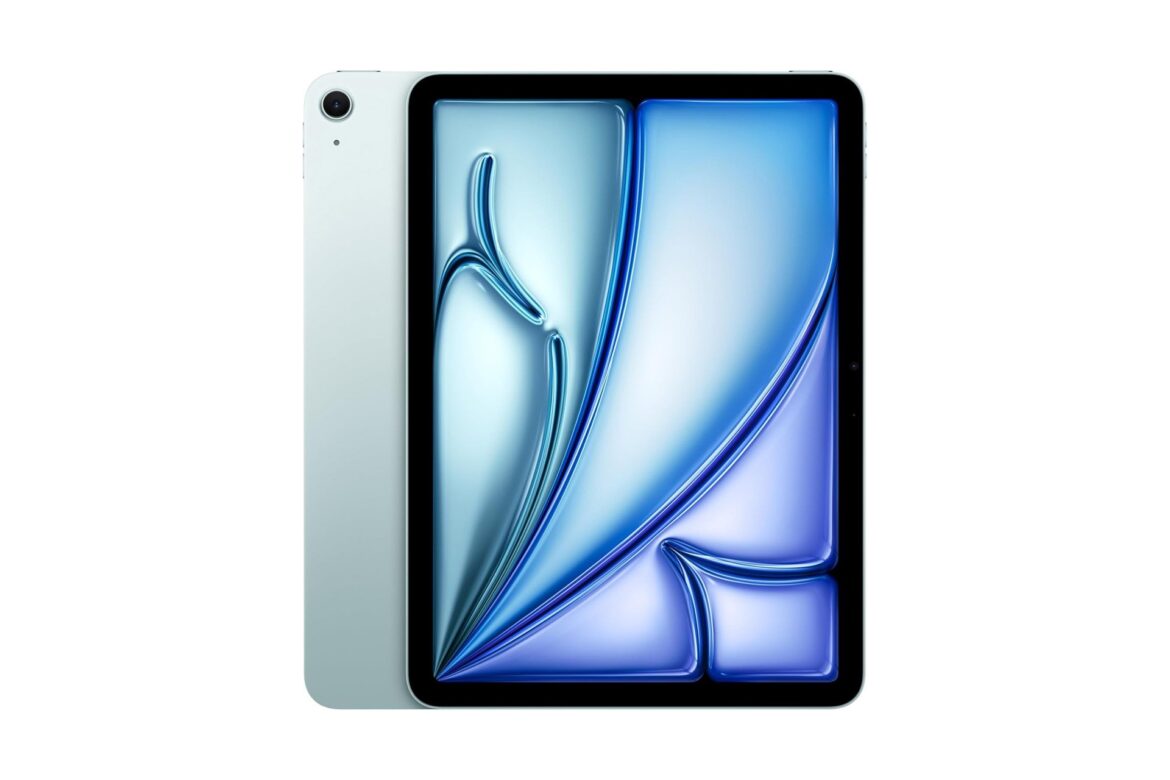
Apple’s 2025 M3 iPad Air Is Back at Its Lowest Price, Likely Gone Before Amazon Prime Big Deal Days

by admin September 17, 2025


As the weather starts cooling down and we start spending incrementally more time indoors week after week, there’s never been a better time to get yourself an iPad. Whether you plan on using it to catch up on emails, to doomscroll on your preferred social media app, or to just pour more hours into Balatro but on a larger screen than your phone, the Apple iPad Air might be what you’re looking for. This 2025 model iPad normally starts at $599, but Amazon is running a limited time deal that’s bringing the price down by 25%. This $150 savings means you’ll only have to pay as low as $449.

This $449 discounted price is for the Wi-Fi-only 128GB model. There are three other storage sizes available—each with their own $150 discount. You can get the 256GB model for just $549, the 512GB model for just $749, or the 1TB model for just $949. If you want to add on cellular, the discounts are slightly different. The 128GB, 256GB and 1TB models are down $150 still but the 512GB model is only down $84.

For all combinations of storage or cellular capabilities, you can choose between four stylish colors. Pick either blue, purple, space gray, or starlight.

See at Amazon

Powerful Performance

So AI has been a pretty big buzzword this past year. Will it be the future of consumer tech? Or is it just a speculative fixation like we went through with NFTs. We’ll find out in due time. Though for right now, Apple and companies like it have promised a ton to consumers with the inclusion of their own proprietary AI models they’re sticking into their products. Apple has Apple Intelligence which can be used to help you craft messages, generate images, and things of the like. The M3 chip is powerful enough to make local processing for Ai models such as this possible.

Beyond AI, the M3 chip allows for improved performance on power-hungry apps, letting you run them side-by-side with each other with no hiccups. Graphically intensive games also get a boost.

To get the full use out of your Apple iPad Air, you can pick up the Apple Pencil Pro (sold separately). Use it to quickly jot down notes, draw or edit photos, and more. It’s compatible with tons of productivity and art apps on the App Store.

Finally get yourself that iPad you’ve been telling yourself you would with the 2025 model iPad Ai powered by Apple’s M3 chipset. Most versions are on sale right now for $150 off.

See at Amazon


Source link

September 17, 2025 0 comments
0 FacebookTwitterPinterestEmail
Kirby Air Riders Amiibo Figure Sets Cost $50, Up For Preorder Now
Game Updates

Kirby Air Riders Amiibo Figure Sets Cost $50, Up For Preorder Now

by admin September 15, 2025


Nintendo is releasing two unique Amiibo figure sets alongside Kirby Air Riders. Unveiled during the September Nintendo Direct alongside a several other new Amiibo, Kirby & Warp Star and Banana Waddle Dee & Winged Star Amiibo figures are up for preorder for $50 each. That’s an unusually high price point, but technically these are bundles with two figures, as Kirby and Waddle Dee each come with their own machine from the game, too. Kirby Air Riders launches November 20 exclusively on Nintendo Switch 2.

The sequel to the 2003 GameCube hit has already had an in-depth Nintendo Direct showcase of its own, but Nintendo announced a second Kirby Air Riders stream will air prior to the racing game’s launch. Kirby Air Riders preorders are available for $70 at Amazon, Walmart, and other major retailers.

$70 | Releases November 20

The physical edition of Kirby Air Riders is available to preorder at Amazon, Walmart, Target, Best Buy and GameStop.

Like all Nintendo-published games for Switch 2 (so far), Kirby Air Riders is a true physical edition with the full game file on the card. If you opt for the digital edition, just be aware that the download size is currently estimated at 25GB, which is over 10% of the Switch 2’s usable storage space.

Kirby Air Riders Amiibo figures have two different in-game functions. You can scan Kirby or Waddle Dee on their own to train and level up your Figure Player (FP). If you place Kirby or Waddle Dee on their machines, you’ll create a Rider & Air Ride Machine. And if you buy both Kirby Air Riders Amiibo sets, you can place Kirby on Waddle’s Winged Star and vice-versa to unlock different character and machine builds.

If you’re worried about storage space for the digital version of Air Riders, you can double your Switch 2 storage for $59 with the officially licensed Samsung 256GB microSD Express from Amazon. Over at Walmart, you can get an exclusive 512GB SanDisk microSD Express Card for $78.

Kirby Air Riders is developed by Bandai Namco and Sora Ltd, the independent studio helmed by Masahiro Sakurai. These days, Sakurai is best known as the director of the Super Smash Bros. series, but he’s also the creator of the Kirby franchise. Kirby Air Riders is the first game in the series directed by Sakurai since Kirby Air Ride. Since Kirby is in every Smash Bros. game, Sakurai has never truly left the character behind, but he hasn’t worked on a dedicated Kirby game since supervising the 2004 Game Boy Advance metroidvania Kirby & the Amazing Mirror.

The Mario Kart-esque racing game expands marquee modes from Kirby Air Ride and adds new ones. The controversial single-button control scheme from the original has been replaced by a two-button layout where B is for boosting and Y activates special moves, perform tricks, and switch machines. New abilities and characters have been added to the roster. Along with Kirby, you’ll be able to play as King Dedede, Bandana Waddle Dee, Meta Knight, Cappy, Starman, Chef Kawasaki, Magolor, Gooey, Susie, and Knuckle Joe.

Skyah, the floating island setting of Kirby Air Riders City Trial mode

The main game mode from the original, City Trial, is back with a bevy of new features. This time around, you’ll be tasked with finding machine upgrades scattered across a large floating island. You only have five minutes to secure your upgrades before heading to the Stadium to compete against computer players or friends in races and battles.

Kirby Air Riders supports local multiplayer for up to four players on one console and eight players wirelessly. Switch Online members can compete in online events for up to 16 players. Need extra Joy-Con Controllers for multiplayer? After Nintendo’s recent price increases, 2-packs of Joy-Con 2 now sell for $100.

Kirby Air Riders’ $70 price point matches other recent and upcoming Switch 2 titles, including Donkey Kong Bananza and Pokemon Legends: Z-A, which is scheduled to launch in October. Outside of Mario Kart World, the only $80 Switch 2 games so far are updated versions of original Switch exclusives with new content. Notably, this includes Kirby and the Forgotten Land + Star-Crossed World, the Switch 2-exclusive version of the superb 3D platformer. Along with overhauled graphics, the Switch 2 Edition has the new Star-Crossed World story campaign. You’re essentially paying for the $60 base game and the new $20 DLC as a bundle, so the comparison to Kirby Air Riders isn’t exactly 1:1.

Kirby games for Nintendo Switch 1/2

Kirby and the Forgotten Land

If you’re looking forward to Kirby Air Riders and want to spend some time with the series before its November release, there are plenty of options on Nintendo Switch. In addition to Forgotten Land–the first 3D platformer for the franchise–there are two traditional side-scrolling-platformers with physical editions: Kirby’s Return to Dream Land Deluxe and Kirby Star Allies. Kirby has also starred in multiple digital-only Switch games and numerous classic titles are on Nintendo Switch Online. One of the best Kirby spin-offs in recent years is Kirby’s Dream Buffet ($15), which also happened to inspire a couple of the cutest Club Mocchi-Mocchi Kirby plushies around.

If you’re interested in the Nintendo Switch 2 Edition of Forgotten Land, existing owners can buy the DLC and upgrade for $20. Newcomers can also save $15 by picking up the Switch edition and Star-Crossed World separately. Multiple of the best Kirby game deals right now are for UK editions at Amazon-owned retailer Woot. Switch consoles can play games from any region, so the only difference with these Kirby games is the ratings board logo on the cover is PEGI instead of ESRB.

Kirby Game Deals


Source link

September 15, 2025 0 comments
0 FacebookTwitterPinterestEmail
The iPhone Air Looks Like a Wild Preview for Apple AR Glasses
Product Reviews

The iPhone Air Looks Like a Wild Preview for Apple AR Glasses

by admin September 11, 2025


Apple had a lot of announcements this week, but arguably none was bigger (and paradoxically thinner) than the iPhone Air. For one, there’s the fact that this is Apple’s first-ever phone with “Air” branding, marking a rare new category of iPhone, both present and future. Then, there’s the fact that the iPhone Air is very slim—5.64mm to be exact. Gizmodo’s Senior Editor, Consumer Tech, Raymond Wong, got some hands-on time with the iPhone Air, and he says it feels as thin as it looks—even thinner than Samsung’s Galaxy S25 Edge, to be exact. Think Ozempic, but for iPhones.

But as exciting as all of that is, it’s not the newness or even the thinness that turned my head—it’s what the iPhone Air says about the future. And to see that, you have to look at what’s going on inside.

This is HIGH signal of the future to come.

For context, the entire computer. Modems, Antennas, everything needed to compute on the iPhone Air fits inside the camera bump.

The rest of the phone is screen and battery.

My thoughts.

Ever since Apple made the first watch, they… pic.twitter.com/UfjAVNA52p

— Linus Ekenstam (@LinusEkenstam) September 10, 2025

If you’ve been paying attention to X, you may have seen this picture in your feed. That’s the inside of the iPhone Air you’re looking at, and it’s significant for one reason. You see all of that stuff at the top? That’s basically the whole phone—or all of the computing power, at least. Apple managed to stuff basically everything that makes its iPhone an iPhone (camera and compute) into one tiny section at the top of the chassis. The rest of the phone? One big and very thin battery. It’s a feat of engineering, really, but beyond that, also a template for what Apple could do next.

There are a lot of implications of being able to cram a powerful computer in a space that small, but the one that intrigues me the most is a pair of AR glasses. Why AR glasses, specifically? Well, they’re a perfect case of miniaturization getting in the way of a bright new future. It’s not that we don’t have the tech (in theory) to make AR glasses work—we can put screens in a glasses display, we have apps and UI, and camera sensors are smaller than ever—but it’s doing all of that in a form factor that people are ready and willing to wear on their faces that throws a wrench in things. We need to make things smaller if we’re going to think bigger. Write that down, Apple marketing.

It just so happens that’s exactly what the iPhone Air does. It crams a powerful computer into a space that formerly felt too confining. And what makes me even more excited about the miniaturization inside the iPhone Air is the fact that Apple has long been rumored to be developing a pair of AR glasses.

In February, Bloomberg’s Mark Gurman revised earlier claims that Apple stopped developing AR glasses, reporting instead that it killed a “stopgap product” that would have competed with Meta’s Ray-Ban smart glasses. To me, that says Apple isn’t disinterested in AR, only that it’s waiting until it has a product that actually moves the needle—perhaps a pair of AR glasses that resemble regular glasses in size and weight but can still run apps and act as secondary screens for messaging, calls, and navigation. You know, the ideal pair of smart glasses. With the miniaturization of iPhones and the computer inside them, it feels like it’s one step closer to that goal, though there are other concerns with making a gadget of that caliber that the iPhone Air doesn’t necessarily address.

They call this an “Air Drop” in the industry. © Adriano Contreras / Gizmodo

One of those hurdles is the battery. Apple did a good job of (at least on paper) making the iPhone Air battery suitable for most people, claiming that it lasts “all day,” which in this case means about 27 hours of offline video playback and 22 hours of streaming playback. That being said, it still bothered to release the iPhone Air alongside a MagSafe Battery pack that extends the phone’s battery. Maybe I’m reading into that too much, but it seems to me that Apple could be getting out ahead of something. That same issue could extend to a pair of AR glasses, too.

Even if Apple could cram a whole computer inside a pair of lightweight glasses, running everything would still need to be very efficient, especially if there’s a screen inside with high brightness, audio capabilities, and the ability to run apps. All of that stuff eats up battery—and fast. That’s all to say that shrinking down a computer is huge, but powering the damn thing is equally important. Even with that piece of the puzzle potentially unsolved, it’s hard not to believe that Apple could make it work… eventually.

Just a few years ago, we would have looked at the idea of an iPhone Air and said, “No way.” It’s not durable enough; there’s not enough battery; Moore’s Law is dead; yadda, yadda. But here it is. An iPhone that’s thin and light and even has Apple’s most powerful A19 Pro chip. If I were a betting man, I’d wager that Apple is already looking at ways to up that ante, improving battery life, cameras, and making its Air just as capable as its base model iPhone. And who am I to bet against them at this point? Call me crazy, but if the iPhone Air is any indication, my money is on a pair of Apple AR glasses that do it all—and maybe sooner than you think.


Source link

September 11, 2025 0 comments
0 FacebookTwitterPinterestEmail
A19 Pro
Gaming Gear

Apple debuts A19 and A19 Pro processors for iPhone 17, iPhone Air, and iPhone 17 Pro

by admin September 10, 2025


Apple announced a suite of four new iPhones today, and with them, new processors to power the devices. Additionally, the company also has new networking and cellular chips.

The phones include the iPhone 17, iPhone Air (a new 5.6-mm thin design), iPhone 17 Pro, and iPhone 17 Pro Max.

The base iPhone 17 will be powered by the A19 system on a chip, while the rest of the lineup relies on the more powerful A19 Pro. These chips are likely built on TSMC’s latest N3P process node, which is also expected to be used for Apple’s upcoming M5 chips for iPads and Macs.

A19

Image 1 of 4

(Image credit: Apple)(Image credit: Apple)(Image credit: Apple)(Image credit: Apple)

The A19 boasts six CPU cores and five GPU cores. The processor has four efficiency cores and two performance cores, while the GPU continues advancements in hardware-accelerated ray tracing, mesh shading, and MetalFX upscaling.

A19 Pro

Image 1 of 3

(Image credit: Apple)(Image credit: Apple)(Image credit: Apple)

The A19 Pro will power the new iPhone Air alongside the iPhone 17 Pro line. Like the A19, its six-core CPU utilizes two performance and four efficiency cores. The performance cores have better branch prediction and increased front-end bandwidth, while the new efficiency cores have a 50% increase in last-level cache.


You may like

On the iPhone Air, there’s a five-core GPU with the second generation of Apple’s Dynamic Caching, with faster floating point math and better image compression. Each GPU core has its own Neural Accelerators, which Apple claimed allows for MacBook Pro-level performance in an iPhone.

The iPhone 17 Pro and Pro Max get a more powerful 6-core GPU. Apple is promising a 40% increase in sustained performance over the previous generation.

(Image credit: Apple)

On the iPhone 17 Pro and Pro Max, the chip will be cooled by a new thermal system in a unibody design. This should help disperse heat and avoid the problems that iPhone 15 Pro users remember from launch in 2023.

The thermal system utilizes a vapor chamber filled with deionized water, which directs heat throughout the system. Apple says the aluminum unibody is 20 times better at cooling than the titanium used in the iPhone 15 Pro and iPhone 16 Pro. Unsurprisingly, Apple didn’t compare the A19 Pro in the iPhone Air to the version in the 17 Pro and Pro Max, which have the vapor chamber and additional GPU core.

N1 and C1X

Image 1 of 3

(Image credit: Apple)(Image credit: Apple)(Image credit: Apple)

Apple is continuing its expansion into all of the chips in its phones. On the iPhone Air, Apple has built its own networking chip, N1. This chip will allow for Wi-Fi 7, Bluetooth connections, and Thread. The new N1 chip is found on all of Apple’s latest iPhones.

Complementing the iPhone Air’s new A19 Pro is a new Apple-designed N1 chip. This chip takes over wireless duties, including Wi-Fi 7, Bluetooth 6, and Thread support. Apple states that this integrated chip design will yield performance and efficiency benefits for functions such as AirDrop and Personal Hotspot.

Get Tom’s Hardware’s best news and in-depth reviews, straight to your inbox.

Apple also announced an update to its in-house C1 modem, which was first introduced with the iPhone 16e. The new C1X modem promises up to a 2x boost in performance, but it still doesn’t include high-bandwidth, high-capacity mmWave technology. The iPhone 17 and iPhone 17 Pro models still feature Qualcomm 5G modems, so they retain mmWave support. Apple also boasts of an improvement in efficiency with the C1X.

iPhone 17, iPhone Air, iPhone 17 Pro pricing and availability

(Image credit: Apple)

All of the iPhones will see pre-orders on Friday, with availability beginning on September 19. The iPhone 17 will start at $799, while the iPhone Air will begin at $999. The iPhone 17 Pro and Pro Max will start at $1,099 and $1,199, respectively. All of the phones will start with 256GB of storage. For the first time, the 17 Pro Max will also offer a 2TB option.

In addition to the iPhones, Apple today also announced the AirPods Pro 3, Apple Watch Series 11, Apple Watch SE 3, And Apple Watch Ultra 3.

Image 1 of 3

(Image credit: Apple)(Image credit: Apple)(Image credit: Apple)


Source link

September 10, 2025 0 comments
0 FacebookTwitterPinterestEmail
What’s the Real Difference Between the iPhone Air and iPhone 16?
Product Reviews

What’s the Real Difference Between the iPhone Air and iPhone 16?

by admin September 10, 2025


Thin phones are in. The iPhone Air (not the iPhone 17 Air, as rumors previously suggested) will be the thinnest iPhone ever, or at least that’s what Apple claimed at its “Awe Dropping” product debut Tuesday. Whether that matters to you depends on the size of your pocket, though. If you were wondering just how this compares to the last-gen iPhone 16, we have most of the specs necessary to offer a point of comparison. The iPhone Air effectively replaces the usual Plus model in the latest smartphone lineup. If you were thinking about jumping on the upgrade, perhaps you should hold your horses and consider if you’ll be giving anything up for the sake of a cake-cutting iPhone.

The closest comparison to what you can get in the U.S. is the $1,100 Samsung Galaxy S25 Edge. That device’s 5.8mm thickness is slim enough to cut a slice of pie, but it also gives up flagship-level battery life with its 3,900mAh battery. The first iPhone Air will also miss out on the battery life Apple fans have come to expect from their phones. It’s better to think of the Air as an alternative device, a phone with a very specific use case (extremely thin pockets) and a user base with specific needs (wanting to be the cool kids on the block with the latest iPhone design).

But we’ll need to put the new Air through its paces. Perhaps, with time, it will prove as landmark a device as the original MacBook Air was close to two decades ago. Or maybe China-based companies like Tecno will figure out slim devices with good batteries far faster than the engineers in Cupertino. Time—as always—will tell.

iPhone Air Versus iPhone 16: Design

Your regular iPhone 16 came with several new features that would normally be relegated to the Pro models. For one, it featured an all-new Camera Control capacitive button used for snapping photos or modifying photo settings without having to touch the screen. It included Apple’s A18 chip, which sported a beefed-up CPU and GPU with enough power to handle on-device ray tracing; being close enough to the iPhone 16 Pro, the device felt like a bargain. The good news is the iPhone Air still has the Camera Control button as well as the Dynamic Island on the main display, rather than any sort of notch.

The iPhone Air boasts Ceramic Shield 2 on the glass and back for better scratch and crack resistance, plus titanium sides that are supposed to keep the device from bending under pressure. Apple’s older phone from 2024 was 7.8mm thin, which is standard for a phone that weighs in at just 170g, or .37 pounds. Few people would call that thick or heavy. Compared to the Air, the 16 is a brick. The iPhone Air weighs in at 165g, or .36 pounds. The difference in weight is so minimal, though at 5.6mm thick, the Air is many times thinner than the 16. If you want a point of comparison, glance at this video showing off the S25 Edge at 5.8mm versus the Air.

iPhone Air thinned comparison with Samsung Galaxy S25 Edge #AppleEvent pic.twitter.com/BlujtA6wV1

— Ray Wong (@raywongy) September 9, 2025

The major distinction between the old and new devices is what lies inside. Apple designed the Air from the ground up with new in-house 5G modems and wireless chips. The iPhone 16, by comparison, uses a Qualcomm-made 5G modem. The new device also comes stock with 256GB of storage for its base price, whereas the iPhone 16 makes do with 128GB. While the iPhone 16 and iPhone 17 sport a host of calming colors (pink, teal, and ultramarine blue), the base 17 also comes in calming lavender and sage hues. The iPhone Air will seem a little more mundane with black, white, light gold, plus a “sky blue” hue, which I imagine is similar to the gray-blue of the MacBook Air with M4.

iPhone Air Versus iPhone 16: Battery

If you’re looking for the main distinction between Apple’s new phone category and its battery. The iPhone 16 was rated for up to 22 hours of battery life in video playback tests, but in real life, we’ve seen the iPhone 16 go for more than a full day after regular use and still have some juice for the following morning. The iPhone 16’s battery capacity sits at 3,561mAh, which doesn’t seem especially high until you consider the limited refresh rate and Apple’s good standby power savings on the base iPhone.

Apple has yet to share precise specs for the iPhone Air’s battery capacity. Instead, the company repeatedly promised the device would have a “full-day” battery life. On the specs page, Apple said the Air managed to hit 27 hours in video playback tests, though only 22 hours when streaming. That’s better than a base iPhone 16, though not nearly as good as the iPhone 16 Plus, which the Air is effectively replacing in Apple’s 2025 iPhone lineup. Apple emphasized all the extra work it did to maximize battery efficiency.

iPhone Air with battery pack pic.twitter.com/dSy3jy8LAx

— Carolina Milanesi (@caro_milanesi) September 9, 2025

The iPhone Air promises to support a separate “iPhone Air MagSafe Battery” sold separately from the main unit. This battery, which is three-quarters the size of the actual phone, should push the battery life further at the cost of the thin frame. At least, the new device is compatible with the Qi2 standard up to 20W as well as MagSafe.

iPhone Air Versus iPhone 16: Camera

The iPhone Air is supposedly very durable, but you’ll need to give up on an ultrawide sensor. © Raymond Wong / Gizmodo

The older iPhone contained a 48-megapixel Fusion camera as well as a 12-megapixel ultrawide. The main sensor also enabled 12-megapixel 2x telephoto pictures. The device also made use of the TrueDepth camera for Face ID. The iPhone Air is notable since it contains a single camera bump, just like the iPhone 16e. The new device sports the 48-megapixel Fusion main camera that also allows for 2x, 12-megapixel telephoto shots. Unfortunately, there’s no ultra-wide lens to speak of. The new device can also handle 4K video up to 60 FPS, the same as the iPhone 16.

The Air has one sensor that beats the 16. The slim device sports an 18-megapixel “Center Stage” front camera compared to 12 megapixels on the iPhone 16. Apple suggested users would end up spending more time with the front camera with the inclusion of better image stabilization.

iPhone Air Versus iPhone 16: Display

With a 6.3-inch OLED display at 2,556×1,179 resolution, the regular iPhone was still a looker even compared to the larger, higher-resolution Plus model. The device was limited to a 60Hz refresh rate, which miffed some users when comparing their phones to mainline Android devices. Still, that means the device lasts longer compared to other devices.

The iPhone Air is slightly larger at 6.5 inches, less than the iPhone 16 Plus, though it sports a big, 2,736×1,260 resolution screen at 460 PPI, or pixels-per-inch—the same as the older phone models. However, the Air features a much faster screen at a 120Hz refresh rate that can go down to 1Hz if you enjoy an always-on display blazing from your nightstand.

First look at how thin the iPhone Air is #AppleEvent pic.twitter.com/0uMLAJayOi

— Ray Wong (@raywongy) September 9, 2025

The Air may have a brighter display at both HDR and SDR brightness for viewing outside, though the device is not designed to share screens over USB. Compared to the iPhone 16, which supported DisplayPort over USB-C, the iPhone Air doesn’t.

iPhone Air Versus iPhone 16: Chip

The iPhone 16’s A18 chip was one of Apple’s best for the regular iPhone, often meeting benchmarks of the A18 Pro-level chip except in intensive situations, like ray tracing scenarios when gaming. The A18 was built on a six-core CPU and five-core GPU design with a 16-core neural engine.

Not much has changed in configuration, though Apple swears the Air’s A19 Pro is a true next-gen chip despite it all. The A19 Pro uses a six-core CPU with two performance and four efficiency cores, alongside a five-core GPU (the iPhone 17 Pro devices make use of a six-core GPU, which will make them slightly better for graphics tasks). The device still supports hardware-accelerated ray tracing.

The A19 Pro is supposed to make the phone more energy efficient while improving on single-thread performance, which is how Apple is implying it should be able to handle simple tasks faster than before. How well it performs in the field, especially considering its awkward battery life specs, will determine if the thin frame is worth all the other small trade-offs.


Source link

September 10, 2025 0 comments
0 FacebookTwitterPinterestEmail
The iPhone Air’s battery pack is slim, but not as slim as the iPhone Air
Product Reviews

The iPhone Air’s battery pack is slim, but not as slim as the iPhone Air

by admin September 10, 2025


I took a first look at the battery pack this afternoon, and it has a significantly slimmer design than the old version. This version of the battery pack is thinner and longer, stretching as far across the back of the phone as it can before bumping into the camera bar. Slimming it down reduces the potential battery size, but it makes the pack more appropriately balanced with the phone as a result. The new model didn’t feel goofy to hold in the same way that the thick old version did.

Applying a battery pack to the super-slim iPhone Air comes with some drawbacks. Namely, it makes the phone bigger again. With the battery pack on, the iPhone Air feels a lot more like any other iPhone and makes it thicker than other iPhones, too. The battery pack is slightly thicker than the iPhone Air. In my brief time with it, the pack didn’t feel overwhelmingly bulky, but it tempered some of the benefits of the new phone’s design.

Another drawback: this battery pack is exclusive to the iPhone Air. While it can technically snap onto anything with magnets, it’s sized to fit the iPhone Air specifically. That means it might fit onto Apple iPhone Pro Max, but the smaller model — with a 6.3-inch screen compared to the Air’s 6.5-inch — likely won’t work.

Beyond that, the battery pack is styled much like the original. It’s light to hold and has a soft matte exterior. There’s a small light near the bottom that glows to show charging status when it attaches to a phone. I get the sense that many people will want Apple to bring this design to its other phone models. Or they’ll choose an Air so they can get this, regardless of whether the overall battery gains actually add up.


Source link

September 10, 2025 0 comments
0 FacebookTwitterPinterestEmail
Apple Reveals Ultra-Thin iPhone Air Alongside Smarter Wearables
GameFi Guides

Apple Reveals Ultra-Thin iPhone Air Alongside Smarter Wearables

by admin September 9, 2025


In brief

  • New Center Stage camera adds smarter framing, 4K HDR, and dual capture across iPhone 17 models.
  • iOS 26 brings on-device AI tools, including live translation, smart screenshots, and spam filters.
  • Final Cut Camera 2.0 adds ProRes RAW, genlock, and Apple Log 2 to iPhone 17 Pro for pro video work.

Apple’s new iPhone Air, its slimmest smartphone yet, led a slate of product announcements Tuesday, as the company focused on design, performance, and somewhat restrained emphasis on artificial intelligence across its devices.

Instead of spotlighting a major AI overhaul, humanoid robots, or a Siri reboot, the company leaned on thinner and more efficient phones—including enhanced iPhone 17 models alongside the Air—higher-performance chips, and incremental steps toward embedding AI and machine learning into its health, fitness, photo, and video applications.

One example: The new AirPods Pro 3 will offer a feature called Live Translation, enabling the earbuds to translate speech in real time through Apple Intelligence. They also include upgraded ANC, heart-rate monitoring, and extended battery life.

Apple also highlighted the expanded use of recycled titanium and aluminum after the company said in August it would bring iOS device glass manufacturing back to the United States. Here is what was announced on Tuesday.

iPhone 17 and iPhone Air

The iPhone 17 introduced several upgrades, including a 6.3-inch Super Retina XDR display with slimmer borders, 3,000 nits of peak brightness, and a second-generation Ceramic Shield that Apple claims triples scratch resistance. A 48-megapixel Dual Fusion camera system now includes a new square-sensor front camera, offering wider fields of view and AI-assisted group framing.

Powering the device is Apple’s A19 chip, a six-core CPU paired with integrated Neural Accelerators. Apple said it enables on-device generative AI tasks and doubles graphics performance compared with the iPhone 13. Battery life stretches to 30 hours of video playback, with fast charging via a 40W adapter.

The iPhone 17 starts at $799 with 256GB of storage and comes in black, lavender, mist blue, sage, and white. Preorders open Sept. 12, with availability beginning Sept. 19.

iPhone Air. Image: Apple

More notably, Apple introduced the iPhone Air—a 5.6-millimeter device that repositions internal components to maximize battery life in what it calls its lightest, most durable frame yet. The Air features a 6.5-inch display with ProMotion support up to 120Hz and uses the same Ceramic Shield on both front and back.

The phone runs on the A19 Pro chip and adds a new C1X modem that Apple says is twice as fast while drawing 30% less power. Connectivity includes Wi-Fi 7, Bluetooth 6, Thread, and faster 5G. The camera array includes a 48-megapixel main sensor with what Apple says is optical-quality 2x telephoto and Focus Control for portraits.

A magnetic battery pack accessory can extend use by up to 40 hours. The iPhone Air starts at $999.

iPhone Pro models

The iPhone 17 Pro and Pro Max round out the lineup, built with aerospace-grade aluminum, a vapor chamber cooling system, and the new A19 Pro chip. Both models feature Super Retina displays—6.3 inches for the Pro, 6.9 inches for the Max—and maintain the 3,000-nit brightness standard.

The Pro cameras go fully triple-lens: 48-megapixel main, ultra wide, and a telephoto with a tetraprism lens capable of 4x optical zoom at 100mm and 8x digital zoom at 200mm. Pro-level video tools include ProRes RAW, Apple Log 2, and genlock syncing.

Apple claims the Pro Max delivers the longest battery life of any iPhone, with up to 39 hours of video playback. Both models support eSIM in select markets. The iPhone 17 Pro starts at $1,099; the Pro Max at $1,199, with capacities up to 2TB.

Apple iPhone 17 Pro. Image: Apple

Apple’s new Center Stage front camera, available across the iPhone 17 Pro, Pro Max, and iPhone Air, introduces the first square sensor on an iPhone and brings several AI-driven improvements to both photography and video.

The upgraded 18-megapixel camera offers a wider field of view and allows users to capture photos and videos in portrait or landscape—even while holding the phone vertically. The system uses AI to detect subjects and automatically adjust framing during group selfies, expanding the field of view and rotating orientation to include everyone in the shot.

Video tools now include ultra-stabilized 4K HDR recording and a new Dual Capture mode that records from the front and rear cameras simultaneously—aimed at creators filming reaction or commentary content while capturing action in the background.

During FaceTime and third-party video calls, Center Stage uses subject tracking to keep users centered and in frame, adapting as they move or shift positions.

Final Cut Camera 2.0

Apple also announced Final Cut Camera 2.0, a major update to its pro video app that brings ProRes RAW and genlock support to the iPhone 17 Pro and Pro Max.

ProRes RAW lets users capture raw sensor data for flexible post-production editing, while genlock enables frame-accurate sync across multiple devices for professional multi-cam setups. The update also adds open gate recording, Apple Log 2 for expanded dynamic range, and 200mm telephoto capture at up to 4K60 fps.

Final Cut Camera 2.0 integrates with the new Center Stage front camera, offering manual control over orientation and framing for creators recording with the front lens. The app also supports timecode modes and pairing with Final Cut Pro for iPad via Live Multicam.

AirPods Pro 3 and Apple Watch

Apple also upgraded its line of wearables. The AirPods Pro 3, priced at $249, introduce real-time translation powered by Apple Intelligence. Spoken results play through the earbuds, with contextual text appearing on paired iPhones.

The earbuds now include a custom heart-rate sensor, support for 50 workout types, and a new “Workout Buddy” feature that offers voice coaching during exercise. Battery life hits eight hours, or 10 in hearing-aid mode. Foam-infused tips come in five sizes, including an XXS fit.

On the wrist, the Apple Watch Series 11 adds a new ceramic coating, liquid glass face, and a circular 5G antenna for improved efficiency. Battery life reaches 24 hours. Health features include AI-powered hypertension detection, with FDA clearance pending, and new sleep tracking with quality scoring.

The Apple Watch SE 3 gets an always-on display, the S10 chip, and faster 5G, with sleep tracking, ovulation history, and apnea notifications.

At the top end, the Apple Watch Ultra 3 adds a larger, wide-angle OLED display, 42 hours of battery life (72 hours in low power mode), and two-way satellite messaging for emergency communication. It’s positioned for endurance athletes, with enhanced GPS, cycling metrics, stroke detection for swimmers, and offline hiking maps. Pricing starts at $799.

Apple Intelligence

Apple continued its measured rollout of artificial intelligence with iOS 26, introducing new features under the “Apple Intelligence” label that rely on on-device processing and privacy-first design.

Live Translation, one of the flagship additions, enables real-time text and audio translation across Messages, FaceTime, and Phone—with results delivered both audibly and on-screen. Apple said the feature works entirely on-device and does not require an internet connection.


New visual intelligence tools allow users to take screenshots and immediately search or act on what’s shown—such as identifying landmarks, extracting text, or navigating to settings. These updates build on Apple’s approach of integrating machine learning into existing workflows rather than overhauling the interface.

The company also introduced screening tools for phone calls and messages designed to filter out spam and unwanted interruptions, using AI to prioritize relevant contacts.

Under the hood, iOS 26 features Apple’s own foundation model—running locally on-device—which is now accessible to third-party developers. Apple said apps can leverage these capabilities to deliver personalized, private AI functions, even when offline.

Despite the new tools, Apple Intelligence stops short of offering a conversational assistant or chatbot. Instead, the company framed the features as utility-focused enhancements, embedded within apps and designed to avoid dependence on the cloud.

Generally Intelligent Newsletter

A weekly AI journey narrated by Gen, a generative AI model.


Source link

September 9, 2025 0 comments
0 FacebookTwitterPinterestEmail
iPhone 15 lineup
Esports

iPhone Air revealed as Apple’s thinnest phone yet

by admin September 9, 2025


Apple has lifted the lid on the iPhone Air, a new addition to its lineup measuring just 5.6mm thick. Tim Cook described it as delivering “pro performance in a thin and light design.”

The phone sports a 6.5-inch ProMotion display that hits 120Hz and 3,000 nits peak brightness. Apple says durability is improved with a ceramic shield and titanium frame. Inside, it runs on the new A19 Pro processor, paired with a faster C1x modem and the N1 chip for Wi-Fi 7, Bluetooth 6, and Thread support.

Article continues after ad

Battery life is rated for “all day,” with up to 40 hours of video playback. The thin build means only e-SIMs are supported, while adaptive power mode in iOS 26 aims to stretch charge further.

Apple

Cameras, accessories, and release

The iPhone Air features a 48MP dual system with a 12MP telephoto lens. A new function combines the front and rear cameras for simultaneous recording, and the 18MP selfie camera includes Center Stage support.

Article continues after ad

It launches in black, white, beige, and light blue, alongside new accessories like a translucent case, a reinforced bumper, and a cross-body strap. Pricing starts at $999 for 256GB, and the device releases on September 19.

Article continues after ad

This new iPhone comes alongside the AirPods Pro 3, which Apple has finally released with a new Heart Rate sensor and improved active noise cancelling.


Source link

September 9, 2025 0 comments
0 FacebookTwitterPinterestEmail
  • 1
  • 2
  • 3
  • 4

Categories

  • Crypto Trends (1,098)
  • Esports (800)
  • Game Reviews (772)
  • Game Updates (906)
  • GameFi Guides (1,058)
  • Gaming Gear (960)
  • NFT Gaming (1,079)
  • Product Reviews (960)

Recent Posts

  • This 5-Star Dell Laptop Bundle (64GB RAM, 2TB SSD) Sees 72% Cut, From Above MacBook Pricing to Practically a Steal
  • Blue Protocol: Star Resonance is finally out in the west and off to a strong start on Steam, but was the MMORPG worth the wait?
  • How to Unblock OpenAI’s Sora 2 If You’re Outside the US and Canada
  • Final Fantasy 7 Remake and Rebirth finally available as physical double pack on PS5
  • The 10 Most Valuable Cards

Recent Posts

  • This 5-Star Dell Laptop Bundle (64GB RAM, 2TB SSD) Sees 72% Cut, From Above MacBook Pricing to Practically a Steal

    October 10, 2025
  • Blue Protocol: Star Resonance is finally out in the west and off to a strong start on Steam, but was the MMORPG worth the wait?

    October 10, 2025
  • How to Unblock OpenAI’s Sora 2 If You’re Outside the US and Canada

    October 10, 2025
  • Final Fantasy 7 Remake and Rebirth finally available as physical double pack on PS5

    October 10, 2025
  • The 10 Most Valuable Cards

    October 10, 2025

Newsletter

About me

Welcome to Laughinghyena.io, your ultimate destination for the latest in blockchain gaming and gaming products. We’re passionate about the future of gaming, where decentralized technology empowers players to own, trade, and thrive in virtual worlds.

Recent Posts

  • This 5-Star Dell Laptop Bundle (64GB RAM, 2TB SSD) Sees 72% Cut, From Above MacBook Pricing to Practically a Steal

    October 10, 2025
  • Blue Protocol: Star Resonance is finally out in the west and off to a strong start on Steam, but was the MMORPG worth the wait?

    October 10, 2025

Newsletter

@2025 laughinghyena- All Right Reserved. Designed and Developed by Pro


Back To Top
Laughing Hyena
  • Home
  • Hyena Games
  • Esports
  • NFT Gaming
  • Crypto Trends
  • Game Reviews
  • Game Updates
  • GameFi Guides
  • Shop

Shopping Cart

Close

No products in the cart.

Close