
Laughing Hyena
  • Home
  • Hyena Games
  • Esports
  • NFT Gaming
  • Crypto Trends
  • Game Reviews
  • Game Updates
  • GameFi Guides
  • Shop
Author

admin

admin

Decrypt logo
Crypto Trends

New Study Shows AI Outpaces Humans in Game Testing

by admin September 30, 2025


In brief

  • A new study has unveiled Titan, an LLM agent that tests MMORPGs by reasoning and exploring game states.
  • Titan found four previously unknown bugs and completed 95% of tasks in two commercial games.
  • Already deployed in QA pipelines, Titan may reshape how games are tested across PC and mobile.

Game studios have long treated testing as an unavoidable bottleneck—slow, repetitive, and costly. But a new study suggests that one of game development’s most human-intensive jobs may be ripe for automation.

Researchers from Zhejiang University and the NetEase Fuxi AI Lab introduced Titan, an AI-powered testing agent that uses large-language-model reasoning to explore and evaluate vast online role-playing worlds.

In trials across two commercial titles, Titan not only completed 95% of assigned tasks but also identified four previously unknown bugs—outperforming human testers in terms of speed, coverage, and discovery.


Testing is one of the most expensive phases of game production, consuming millions of dollars in labor and months of turnaround time. According to market research firm Dataintello, the global game testing service market alone is expected to reach $5.8 billion by 2032.

Titan’s results suggest that generative AI can shoulder a share of that burden, bringing automation to a discipline once thought too open-ended and unpredictable for machines.

The study suggests a future in which AI agents not only mimic players but also reason like them—identifying glitches, balancing mechanics, and navigating dynamic virtual environments more efficiently than human QA teams.

“We design the workflow of Titan by mirroring how expert testers operate the MMORPG testing: perceive the game state, choose meaningful actions, reflect on progress, and diagnose issues,” the researchers wrote. “At its core, a foundation model drives high-level reasoning, while supporting modules provide perception, action scaffolding, and diagnostic oracles for closed-loop interaction.”

In the experiment, a perception module translated complex game states into simplified text, allowing the program to reason through objectives. The agent also used screenshots to review its own progress and recover from stalled progress.

Why It Matters

Titan is the latest example of how AI is moving into the gaming industry and filling roles typically handled by humans. In August, a Google Cloud survey said nearly nine in 10 game developers say they’ve already built AI agents into their work.

“If you’re not on the AI bandwagon right now, you’re already behind,” Kelsey Falter, CEO and co-founder of indie studio Mother Games, recently told Decrypt.

The research comes amid broader efforts to integrate AI more deeply into development workflows. In August, Jack Buser, global games director at Google Cloud, warned that studios unable to adopt AI tools “won’t survive.”

A new kind of game tester

Human testers often followed familiar paths, the report noted, while existing bots struggled to generalize across game versions. However, the researchers acknowledged they did not solely rely on AI to complete the study.

“We work with professional testers and designers to identify the key state factors relevant to general progress in MMORPGs, which serve as template references,” the researchers said.

These template references include player location, current game objectives, and player vitals such as health and mana, while “irrelevant data” like other players’ information is filtered out unless needed.

GG Newsletter

Get the latest web3 gaming news, hear directly from gaming studios and influencers covering the space, and receive power-ups from our partners.



Source link

September 30, 2025 0 comments
0 FacebookTwitterPinterestEmail
KFC potato wedges
Esports

Man claiming to be Colonel Sanders’ relative ‘leaks’ KFC’s secret recipe

by admin September 30, 2025


A man claiming to be the great-great-great-nephew of Colonel Sanders has ‘revealed’ KFC’s secret fried chicken recipe. The 11 herbs and spices were ‘leaked’ after KFC accounts blocked him on social media.

Tracing the history of Kentucky Fried Chicken back to the 1930s, the story begins with Colonel Sanders opening his first establishment in Kentucky. It wasn’t until 1952, however, that the first proper KFC opened its doors with a fried chicken recipe shrouded in mystery.

Article continues after ad

The ever-so-secretive 11 herbs and spices have been alluring millions of customers around the globe ever since. And while some ‘leaks’ over the years have allegedly pointed out each of the ingredients, there’s never been official confirmation.

Now, an alleged relative of the founder, a nephew three generations on, has claimed to have revealed the official list of herbs and spices, as relayed to him through family sources, if it’s to be believed.

Article continues after ad

Alleged Colonel Sanders relative ‘leaks’ KFC secret recipe

The individual in question simply goes by ‘The Colonel’ across social media. Dressing similarly to their alleged relative, they claim to be the great-great-great-nephew of the franchise founder. Their aim is to “defend the legacy through history and facts.”

Article continues after ad

After arguing the KFC brand had been exploiting his ancestry for various “sexualized” marketing campaigns in recent years, the figure with over 400,000 followers on TikTok claimed they were blocked by official accounts.

In retaliation, they ‘leaked’ the family’s biggest secret, the original KFC recipe.

“Do you want to know how to make their chicken?” He said in a TikTok video. “Truly, genuinely their chicken? This recipe I put together through facts.”

According to this alleged relative, the following ingredients make up KFC’s famous 11 herbs and spices mix:

Article continues after ad

  • Sage
  • Cloves
  • Nutmeg
  • Cinnamon
  • Red pepper / Cayenne pepper
  • Coriander
  • Ginger
  • Garlic powder
  • White pepper
  • Black pepper
  • Cardamon

TikTok: realcolonelsandersThe full list of ingredients and measurements.

This recipe allegedly came from family sources, but of course, it’s well worth adding a serving of salt to the news. There’s no guarantee it’s legitimate, and the list differs greatly from a recipe found on the back of a family member’s last will and testament in 2016.

Article continues after ad

Regardless, the video ‘exposing’ the KFC recipe has exploded, drawing over eight million views on TikTok alone and drawing out a litany of follow-ups.

Article continues after ad


Source link

September 30, 2025 0 comments
0 FacebookTwitterPinterestEmail
Polkadot'S Community Supports Plans For A Dot-Backed Stablecoin
GameFi Guides

Polkadot’s Community Supports Plans For a DOT-Backed Stablecoin

by admin September 30, 2025


Polkadot is seeing strong backing regarding a proposal to create a new native algorithmic stablecoin backed only by DOT tokens. 

The plan was introduced on Sunday by Bryan Chen, co-founder and CTO of Acala, a project in the Polkadot network. The proposed stablecoin will use the ticker pUSD and aims to provide a native option for Polkadot users.

The proposal explained that that stablecoin would use Acala’s decentralized stablecoin protocol, Honzon, which allows users to lock DOT tokens as collateral. This system is meant to reduce reliance on popular stablecoins like Tether’s USDT and Circle’s USDC. 

Community Votes Show Strong Support

Voting on the proposal has already started, and most votes are in favor. Over three-quarters of votes support it. More than 1.4 million DOT, worth about $5.6 million, have already been used to vote. The ballot will remain open for 24 more days, allowing the Polkadot community to weigh in before a final decision.

The proposed stablecoin would be an overcollateralized debt token. This means users can lock DOT as collateral to mint pUSD. There will also be a savings option, so people can lock their pUSD and earn extra interest from fees.

Why a DOT-Backed Stablecoin Matters

Algorithmic stablecoins like pUSD do not operate the same as other stablecoins. They keep the value of a fiat currency without the assistance of traditional reserve bases held by banks or central entities. Instead, blockchain-based smart contracts administer the collateral and change the supply to keep the value static.

However, algorithmic stablecoins remain controversial, especially after the collapse of TerraUSD (UST) which caused widespread losses to those who invested in it 

But some experts still see potential. Ki Young Ju, CEO of crypto analytics firm CryptoQuant, said in early May that algorithmic stablecoins could help create “dark stablecoins” that do not follow traditional regulations or sanctions.

Also Read: Solana, XRP ETF Applications Withdrawn Per New SEC Generic Rule


Source link

September 30, 2025 0 comments
0 FacebookTwitterPinterestEmail
Lego Is Retiring One Of The Most Popular Star Wars Sets
Game Updates

Lego Is Retiring One Of The Most Popular Star Wars Sets

by admin September 30, 2025


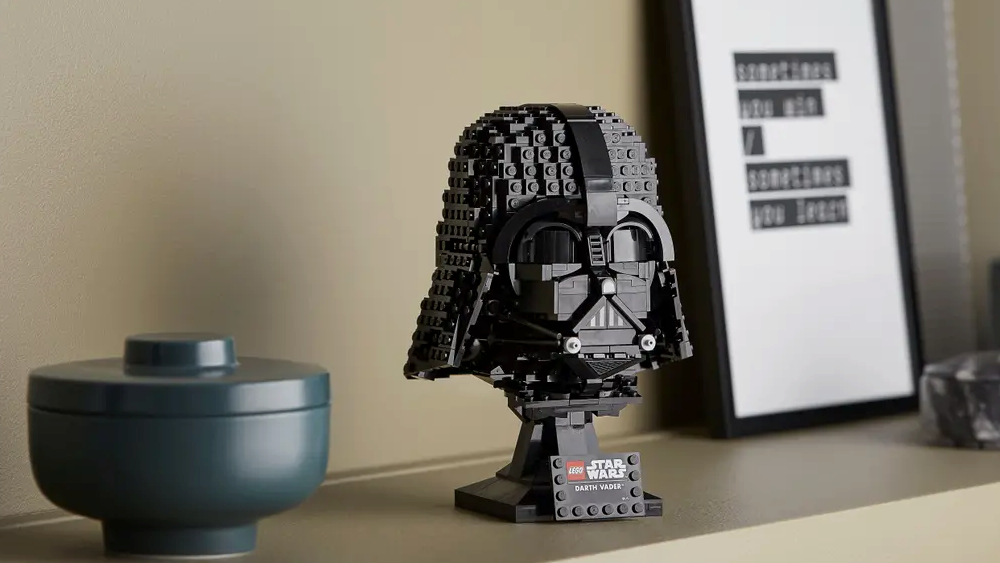
Not many Lego sets have the type of run the Darth Vader Helmet has enjoyed. Released way back in March 2021, the 834-piece display model of the classic Sith Lord from the Original Trilogy has outlived many Star Wars Lego sets released after it. The Darth Vader Helmet is practically ancient in Lego years, but it remains one of the best-selling Star Wars sets at major retailers to this day. Just in the last month, Amazon says it has sold over 2,000 Darth Vader Helmets, which is a higher total than a bunch of recently launched sets. But Dark Lord Vader’s life-support system can’t keep him alive in the Lego Star Wars universe forever. Lego has marked the Darth Vader Helmet as “retiring soon,” which means it’ll likely be sold out at major retailers before the end of the year.

If you want to add the set to your personal collection or are looking for an always-popular gift for a Star Wars fan this holiday season, the Lego Darth Vader Helmet is on sale for $62 (was $80) at Amazon and Walmart ahead of Prime Big Deal Days. This isn’t the all-time lowest price, but it’s one of the better discounts offered this year. We wouldn’t be surprised if both retailers sold out, and there’s no guarantee it would be restocked again. For context, the Lego Store is selling the set for full price, but it’s on backorder and won’t ship for two months.

You can pair the Darth Vader Helmet with deals on other Lego Star Wars Helmets, including The Mandalorian and Captain Rex, which are likely next in line for retirement. Walmart also has a stellar bundle deal featuring Kylo Ren’s Helmet and Command Shuttle that saves you over $40.

Lego Star Wars Helmet Models

Check out all five of the active Lego Star Wars Helmet sets as well as one retired model that has randomly popped back up on Amazon below.

After checking out the Star Wars Helmets, take a look at some of the other deals on soon-to-be-retired Lego Star Wars sets at the end of this story.

$62 (was $80) | Retiring soon

The Darth Vader Helmet is an 834-piece build measuring 8 x 5.5 x 5.5 inches. Designed for experienced builders, this model utilizes more advanced building techniques than some of the other smaller character helmets in the lineup. Along with the detailed exterior plating, the build includes Vader’s life-support system. The brick-built display stand includes a detachable nameplate with the Lego Star Wars logo.

Walmart was offering two different bundles with the Darth Vader Helmet earlier this month–one with the new UCS AT-ST and one with the Kylo Ren Helmet–but both are currently sold out.

$70 | Bundle with Kylo Ren’s Command Shuttle for $98 (was $140)

Speaking of the Kylo Ren Helmet, the 529-piece model of the helmet worn by Lord Vader’s grandson is still available in a bundle deal at Walmart. You can pair it with Kylo Ren’s Command Shuttle, a 386-piece model of the villain’s stealthy starship, for $98 (was $140). You’re essentially getting both Kylo Ren $70 sets for only $49 each.

Outside of the bundle deals, Kylo Ren’s Helmet hasn’t received any discounts since launching in May for Star Wars Day. The 529-piece build is exclusive to Walmart and the Lego Store. The completed model measures 7 x 4.5 x 5 inches.

$56 (was $70)

The Mandalorian Helmet released back in early 2022 and probably won’t be sticking around for much longer either. The 584-piece build recreates Mando’s Beskar plate armor. When connected to the stand, The Mandalorian Helmet measures 7 x 4 x 4.5 inches.

The Mandalorian Helmet is on sale for $56 (was $70) at Amazon and Walmart.

$56 (was $70)

The replica of the popular 501st Legion Clone Commander’s Helmet actually has the highest piece count of the Star Wars Lego Helmets actively being produced today. The 854-piece Captain Rex Helmet measures 8 x 5 x 5 inches and does a stellar job recreating the unique armor plating from The Clone Wars film and follow-up TV series.

You can get the Captain Rex Helmet for $56 (was $70) at Amazon.

$65 (was $70)

The 616-piece Jango Fett Helmet released alongside the Kylo Ren Helmet for Star Wars Day, so it’s not surprising that discounts on this one are small so far. The completed model measures 8.5 x 4.5 x 4 inches and has an adjustable rangefinder antenna.

Jango Fett has received a lot of attention from Lego this year. The bounty hunter’s starship from Attack of the Clones joined the UCS lineup for Star Wars Day, and a smaller playset version of the Firespray-Class Starship launched in August.

$70 | Retired / In stock at Amazon

Lego discontinued the Clone Commander Cody Helmet in February 2025. Since then, the helmet has disappeared from most major retailers, but Amazon recently restocked the 766-piece set for its original $70 MSRP. Clone Wars and Bad Batch fans should check it out while they can. The completed model with display stand is 8 x 5 x 5.5 inches.

Lego Star Wars: Droideka & Mos Espa Podrace Diorama

Walmart has one other in-stock Lego Star Wars bundle deal featuring a set that’s retiring soon, too. Darth Maul’s Sith Infiltrator is normally $70 on its own, but you can pair it with the Darth Maul Mech for only $62 (was $88). Another notable Star Wars set on its way out is the popular 583-piece Droideka Destroyer Droid for $52 (was $65). Two Ultimate Collector Series Star Wars Lego sets are being discontinued: Luke Skywalker’s X-Wing Starfighter and massive Razor Crest Starship from The Mandalorian. The latter is on sale for a slight discount at Amazon.

There are currently 23 Lego Star Wars sets on the brink of retirement. Outside of the UCS builds, the list below focuses on the ones you can save money on right now. Multiple dioramas recreating scenes from the movies are discounted, including the Mos Espa Podrace from The Phantom Menace for $57 (was $80) and Boarding the Tantive IV from A New Hope for $44 (was $55). You can also get the 654-piece Tantive IV Starship display model for $64 (was $80). Those three sets and numerous others in the list below were part of the Lego Star Wars commemorative 25th anniversary series.

Heads up: The price of Lego Star Wars Mechs tends to jump considerably after retirement. So while the Luke Skywalker X-Wing Mech is selling for its full $16 MSRP, you won’t want to wait to long to snag one. Plus, look how cool this buildable action figure is:

Sign up for GameSpot’s Weekly Deals Newsletter:


Source link

September 30, 2025 0 comments
0 FacebookTwitterPinterestEmail
bitcoin btc btcusd
NFT Gaming

Crypto ETFs Suffer Worst Streak Since Launch as Bitcoin and Ethereum Record Heavy Outflows

by admin September 30, 2025


Trusted Editorial content, reviewed by leading industry experts and seasoned editors. Ad Disclosure

Bitcoin and Ethereum ETFs experienced their worst weekly stretch since debut, as risk appetite declined and investors de-risked heading into quarter-end.

U.S. spot Bitcoin ETFs saw approximately $902.5 million in net outflows for the week of Sept. 22–26, ending a four-week inflow streak. Ethereum ETFs lost about $795.6 million, marking their largest weekly redemptions since launch.

The outflows were uneven: Fidelity’s FBTC led BTC outflows, while BlackRock’s IBIT and Invesco’s BTCO defied the trend with $173.8 million and $10 million of inflows, respectively. On the ETH side, several issuers experienced large single-day withdrawals, showing how quickly flows can reverse when macro risk increases.

Macro Headwinds Keep Buyers Cautious

The reversal came as traders weighed new U.S. tariff announcements and lingering uncertainty about the Fed’s rate cuts ahead of key inflation data. Those headlines revived fears of a growth and liquidity squeeze, driving a quick reset across risk assets.

Bitcoin briefly slipped below pivotal support intraday before rebounding, while Ethereum mirrored the move with a shallow bounce. Despite the week’s pain, September still shows net inflows for Bitcoin ETFs ($2.57B), a notable improvement from August’s outflows, evidence that institutional adoption remains intact.

For now, the market’s message is clear: without a more dovish macro backdrop or cleaner inflation prints, allocators may remain selective, trimming core BTC/ETH exposure when it is strong and adding only on clear confirmations.

BTC’s price trends to the upside on low timeframes. Source: BTCUSD on Tradingview

Alternative Crypto ETFs Take Spotlight Over Bitcoin and Ethereum

Beneath the headline of redemptions, some desks report rotations toward thematic or alternative crypto ETFs (e.g., Solana, XRP) as allocators seek uncorrelated catalysts.

That discussion overlaps with speculation about a potential BlackRock XRP spot ETF, with market models suggesting $4–$8B of first-year inflows if such a product were filed and approved. Although no filing has been confirmed, XRP’s quick settlement times and low fees keep it on institutions’ radar.

Nevertheless, the week’s outflows serve as a reminder: macro factors outweigh micro in the short term. As October progresses, focus on whether BTC funds resume steady inflows, if ETH redemptions decrease, and how upcoming inflation data influences Fed expectations.

Until these factors align positively, volatility will remain high, and ETF flow reports will continue to be the best real-time indicators of institutional confidence.

Cover image from ChatGPT, BTCUSD chart from Tradingview

Editorial Process for bitcoinist is centered on delivering thoroughly researched, accurate, and unbiased content. We uphold strict sourcing standards, and each page undergoes diligent review by our team of top technology experts and seasoned editors. This process ensures the integrity, relevance, and value of our content for our readers.


Source link

September 30, 2025 0 comments
0 FacebookTwitterPinterestEmail
Wall Street’s RWA bet could break on crypto infrastructure
Crypto Trends

but experts warn of risks

by admin September 30, 2025


The IPO wave is sweeping through crypto. However, experts warn that Wall Street exposure brings both opportunities and risks.

Summary

  • Wall Street exposure brings potential centralization risks
  • Stablecoins are becoming a core part of the financial infrastructure
  • Firms will have to navigate increased regulatory scrutiny

The crypto industry no longer operates on the fringes. The latest fundraising efforts and IPOs have shown an increasing appetite for systemic players that benefit from favorable regulation. This includes Circle’s blockbuster IPO, Tether’s reported fundraising at a staggering $500 billion valuation, and Kraken’s pre-IPO bid to secure $500 million in funding.

For some, this is a sign of the industry’s legitimacy. However, some experts warn about questions of decentralization and governance as crypto meets Wall Street’s standards.

“Circle’s USDC IPO earlier this year demonstrated that mainstream investors are now willing to pay a premium for exposure to regulated digital assets platforms when its stock climbed tenfold from $30 to $300,” said Farzam Ehsani, CEO and co-founder of VALR told crypto.news.

Ehsani added that similar moves by Tether and Kraken show investor appetite for well-regulated crypto firms that provide critical infrastructure. However, he also noted that Wall Street’s involvement creates added risks of centralization, which can impact innovation as shareholders pursue narrow interests.

Crypto is becoming core financial infrastructure

According to Shawn Young, chief analyst at MEXC Research, the IPO wave shows that the crypto industry is becoming a core part of financial infrastructure, especially for stablecoins.

“The macro narrative is equally compelling. Stablecoins in circulation are already collectively valued at over $296 billion and now account for over 1% of the U.S M2 money liquidity supply,” Young said. “CITI projects stablecoins to hit $4 trillion in a bull market scenario by 2030,” he added.

Lionel Iruk, senior advisor to Nav Markets and managing partner at Empire Legal, points out that further integration with Wall Street will bring both legitimacy and scrutiny. Under these conditions, firms will have to balance innovation with transparency.

“Public listing and fundraising bring heightened shareholder operational scrutiny, demanding rigorous reporting, governance, and adherence to securities laws across multiple jurisdictions,” Lionel Iruk, Nav Markets.


Source link

September 30, 2025 0 comments
0 FacebookTwitterPinterestEmail
The OpenAI logo next to a picture of a woman wearing sunglasses, which was generated by the company's Sora AI model.
Gaming Gear

OpenAI’s New Social Network Is Reportedly TikTok If It Was Just an AI Slop Feed

by admin September 30, 2025


Welcome to the age of anti-social media. According to a report from Wired, OpenAI is planning on launching a standalone app for its video generation tool Sora 2 that will include a TikTok-style video scroll that will let people scroll through entirely AI-generated videos. The quixotic effort follows Meta’s recent launch of an AI-slop-only feed on its Meta AI app that was met with nearly universal negativity.

Per Wired, the Sora 2 app will feature the familiar swipe-up-to-scroll style navigation that is featured for most vertical video platforms like TikTok, Instagram Reels, or YouTube Shorts. It’ll also use a personalized recommendation algorithm to feed users content that might appeal to their interests. Users will be able to like, comment, or “remix” a post—all very standard social media fare.

The big difference is that all of the content on the platform will be AI-generated via OpenAI’s video generation model that can take text, photos, or existing video and AI-ify it. The videos will be up to 10 seconds long, presumably because that’s about how long Sora can hold itself together before it starts hallucinating weird shit. (The first version of Sora allows videos up to 60 seconds, but struggles to produce truly convincing and continuous imagery for that long.) According to Wired, there is no way to directly upload a photo or video and post it unedited.

Interestingly, OpenAI has figured out how to work a social element into the app, albeit in a way that has a sort of inherent creepiness to it. Per Wired, the Sora 2 app will ask users to verify their identity via facial recognition to confirm their likeness. After confirming their identity, their likeness can be used in videos. Not only can they insert themselves into a video, but other users can tag you and use your likeness in their videos. Users will reportedly get notified any time their likeness is used, even if the generated video is saved to drafts and never posted.

How that will be implemented when and if the app launches to the public, we’ll have to see. But as reported, it seems like an absolute nightmare. Basically, the only thing that the federal government has managed to find any sort of consensus around when it comes to regulating AI is offering some limited protections against non-consensual deepfakes. As described, that kind of seems like one feature of Sora 2 is letting your likeness be manipulated by others. Surely there will be some sort of opt-out available or ability to restrict who can use your likeness, right?

According to Wired, there will be some protections as to the type of content that Sora 2 will allow users to create. It is trained to refuse to violate copyright, for instance, and will reportedly have filters in place to restrict certain types of videos from being produced. But will it actually offer sufficient protection to people? OpenAI made a big point to emphasize how it added protections to the original Sora model to prevent it from generating nudity and explicit images, but tests of the system managed to get it to create prohibited content anyway at a low-but-not-zero rate.

Gizmodo reached out to OpenAI to confirm its plans for the app, but did not receive a response at the time of publication. There has been speculation for months about the launch of Sora 2, with some expectation that it would be announced at the same time as GPT-5. For now, it and its accompanying app remain theoretical, but there is at least one good idea hidden in the concept of the all-AI social feed, albeit probably not in the way OpeAI intended it: Keep AI content quarantined.


Source link

September 30, 2025 0 comments
0 FacebookTwitterPinterestEmail
Lynx's yearlong pursuit of WNBA title ends early in semifinals
Esports

Lynx’s yearlong pursuit of WNBA title ends early in semifinals

by admin September 30, 2025


  • Michael VoepelSep 29, 2025, 10:42 AM ET

    Close

      Michael Voepel is a senior writer who covers the WNBA, women’s college basketball and other college sports. Voepel began covering women’s basketball in 1984, and has been with ESPN since 1996.

PHOENIX — Kayla McBride covered her face with her shirt, trying to soak up the tears. A season she and her Minnesota Lynx teammates envisioned would bring a trophy and champagne instead ended Sunday with sadness and frustration.

This wasn’t in the script the Lynx had been authoring so diligently for the past 4½ months. They were the WNBA’s best team. They won a franchise-record 34 games and had the No. 1 seed in the playoffs. And then Minnesota’s season transformed from a feel-good musical to a shocking horror movie.

In the Lynx’s must-win Game 4, Cheryl Reeve, the WNBA’s longest-tenured head coach, wasn’t on the sidelines, serving a one-game suspension for a Game 3 ejection and criticism of the officiating. Napheesa Collier, an MVP favorite for most of the season and by far Minnesota’s most important player, had to watch from the bench after an ankle injury late in Friday’s game.

The Lynx blew multiple double-digit leads and lost 86-81 to the Phoenix Mercury, ending this playoff campaign and the promise of a season that held championship aspirations. At a somber postgame news conference, veteran guard McBride tried to sum up the heartbreak.

“To be close two years in a row,” said McBride, who scored 31 points in Game 4.

“S— f—ing hurts.”

Editor’s Picks

2 Related

Last season, minutes after a 67-62 overtime loss to the New York Liberty in Game 5 of the WNBA Finals on Oct. 20, the Lynx came to their news conferences with angry comments about the officiating and how they felt it had cost them the championship.

The Lynx vowed then to run it back in 2025, but this time claim the franchise’s fifth title. And for nearly five months, it seemed as if they did everything right: They returned their entire starting five, made some key additions, had the league’s best regular-season record and clinched home-court advantage for the playoffs with five games still left on their schedule.

They started the postseason with a 2-0 sweep of Golden State in the first round. They won Game 1 of the semifinals against Phoenix and had a 48-32 lead at halftime in Game 2 of the best-of-five series.

Then things spun out of control. For the first time in franchise history, the Lynx lost a game in which they led by at least 16 points at halftime; they had been 61-0 previously. And that 89-83 overtime loss to the Mercury last Tuesday wasn’t just a speed bump the Lynx needed to overcome to continue their mission.

It was the beginning of the end.

Napheesa Collier suffered a left ankle injury in the final minute of Game 3 and had to watch from the bench as Phoenix eliminated her top-seeded Lynx on Sunday. Christian Petersen/Getty Images

In Friday’s Game 3 in Phoenix, the Lynx had a 67-63 lead after three quarters. But Minnesota lost the fourth quarter 21-9, as well as someone even more significant: Collier, who was injured on a steal by Phoenix’s Alyssa Thomas with 23.8 seconds left.

Reeve, seeing her franchise player on the floor in pain, lost her temper. She was ejected from the game, which the Mercury won 84-76, and again castigated the league’s officiating in a brief postgame address to the media.

The play on which Collier was injured was just the spark that lit a long-built fuse for Reeve. She is still bothered almost a decade later by a missed shot clock violation committed by Los Angeles in Game 5 of the 2016 WNBA Finals, which the Sparks then won by one point for the championship.

Then, of course, last season’s late call against the Lynx in Game 5 against New York prompted Reeve to say afterward, “This s— was stolen from us.”

Reeve thought this season could be a salve for that. Instead, it leaves the Lynx with another wound.

“You want it for the people [you’re around] every single day,” McBride said. “In pro sports, it doesn’t get any better than what we have in our locker room. We lay it out for each other. It’s never been about anything else but each other.”

play

1:56

Cheryl Reeve rips officiating after Lynx’s Game 3 loss

Minnesota coach Cheryl Reeve sounds off on the referees after the Lynx’s Game 3 loss to the Mercury.

To understand the depth of the disappointment, look at how long it has taken to build this foundation. Seven years have passed since the retirement of the three key players from Minnesota’s four championship teams from 2011 to 2017 — Maya Moore, Lindsay Whalen and Rebekkah Brunson. The Lynx started a new era in 2019 by drafting Collier, who dropped to No. 6 in what has proven to be likely the biggest draft underestimation in league history.

“She was the type of person who was exactly an extension of the Lynx culture that was built before her,” Reeve said during a postgame news conference on Sept. 6. “Without that — if you have a superstar that isn’t somebody people want to be around — people aren’t as interested in coming to Minnesota to play.”

In Collier’s first three seasons, the Lynx never made it past the second round of the playoffs. In 2022, the team missed the playoffs altogether for the first time since 2010. After a first-round loss in 2023, the Lynx still faced questions headed into 2024. But they answered those, building a team around Collier as the superstar. They won a Commissioner’s Cup title in June, then came agonizingly close to the WNBA title in October.

All of ESPN. All in one place.

Watch your favorite events in the newly enhanced ESPN App. Learn more about what plan is right for you. Sign Up Now

“I call it the honeymoon. People didn’t necessarily see us in the space we were in last year,” Reeve said at a pregame news conference on Sept. 21. “So we started the season from a much different perception about us. The expectations were much greater.”

This season, the Lynx returned their top six players from 2024: forwards Collier, Alanna Smith and Bridget Carleton, and guards Courtney Williams, McBride and Natisha Hiedeman. They brought back forward Jessica Shepard, who had missed the 2024 season because of her overseas commitment.

They also made strategic changes. They added Maria Kliundikova, a free agent signing on June 6, and another 6-foot-4 post player like Smith and Shepard who brings more size in the paint. On Aug. 3, they traded for guard DiJonai Carrington, the league’s Most Improved Player last season and known for her high-level defense.

The Lynx appeared to have planned for every eventuality. Even when Collier injured her ankle in August and missed seven games, the Lynx stayed on track. They lost the Commissioner’s Cup final to Indiana on July 1, but that only strengthened their resolve to win the season championship.

And Collier, at least publicly, seemed to brush away the disappointment of coming up short in the race for MVP — A’ja Wilson took her fourth after a fantastic second half — saying her real goal was the championship.

“I feel like I am still focused on the championship,” Collier said Sept. 21, the day the MVP winner was announced. “That has been my main goal the whole season. Of course, I want to win MVP. But the championship is what I really want for this season.”

play

1:21

Reeve ejected, Collier limps off on Mercury’s game-sealing sequence

Reeve ejected, Collier limps off on Mercury’s game-sealing sequence

What went wrong? Reeve and her staff will dissect that all offseason. Losing both Collier and Carrington — who suffered a season-ending foot injury in Game 2 of the first round — took a big toll.

But the Lynx also saw some of their killer instinct wane. They squeaked by Golden State in Game 2, 75-74. They trailed 47-40 at halftime of their Game 1 semifinal before rallying against Phoenix. Then they lost three in a row. They had not had more than two consecutive defeats in the regular season — and did that only once, in August when Collier was out.

After a strong start in Game 4 on Sunday, and a 13-point lead going into the fourth quarter, the Lynx seemed poised to force Game 5 back in Minneapolis.

But for the third time in six days, the Mercury took over — and the Lynx saw their dream season evaporate. They became the 11th team in WNBA history to have the league’s best record but not win the championship, and the sixth of those teams to not even make the WNBA Finals.

“I [didn’t] look at this season and say, ‘Oh, this is hard because we’ve got a target on our back,'” Williams said Sunday of carrying the favorites tag ever since starting 9-0. “That’s what we wanted, right? We got hit with that injury bug, and, you know, it’s hard. Shout out to us not giving up.”

Because so many of the league’s players will be free agents for next season — a new collective bargaining agreement is needed first — the Lynx are unsure what their roster will look like in 2026, a fact that makes this season’s painful finish even more poignant.

“As a vet, somebody who’s older, I feel everything,” said McBride, 33. “I just care. But I would feel like this 100 times over to be with the people I’ve been with. You just want it to keep going.”


Source link

September 30, 2025 0 comments
0 FacebookTwitterPinterestEmail
Coinbase CEO Warns Banks Want to Kill Your Crypto Rewards
GameFi Guides

Coinbase CEO Warns Banks Want to Kill Your Crypto Rewards

by admin September 30, 2025


Coinbase CEO Brian Armstrong recently took to the X social media network to slam “big banks” for trying to reverse the ability of cryptocurrency trading platforms to offer rewards in Circle’s USDC stablecoin. 

Armstrong argues that banks are attempting to preserve their monopoly over deposits.

“They want to undo your right under the GENIUS Act law to earn USDC rewards. Don’t let them,” Armstrong said. 

I’ve never been more bullish about clear rules for crypto. It’s obvious that market structure is a freight train that’s left the station.

But that hasn’t stopped the big banks from coming for another handout – this time paid by your crypto rewards. They want to undo your right… pic.twitter.com/hmPYmagDhj

— Brian Armstrong (@brian_armstrong) September 29, 2025

The Coinbase executive has stressed that bailing out big banks, which are enjoying record-breaking profit margins, “is not gonna fly.” “That would be a foolish thing to do politically because there’s 50 million Americans like you who have now used crypto,” he stressed. 

Clamping down on stablecoin yield 

Coinbase and other cryptocurrency firms, including Kraken, Gemini, and BitGo, are currently leading an intense lobbying push that is meant to prevent banks from banning crypto rewards. 

You Might Also Like

The Bank Policy Institute wants to bar exchanges from being able to offer stablecoin yields, which is part of an aggressive behind-the-scenes campaign. 

The banking industry claims that stablecoins pose a threat to deposits and credit markets. 

Earlier today, the Blockchain Association launched a campaign to protect the landmark GENIUS Act from banks. 

The pro-crypto lobbying and advocacy group claims that stablecoins actually strengthen the market by enabling instant settlement and making transactions substantially cheaper. 


Source link

September 30, 2025 0 comments
0 FacebookTwitterPinterestEmail
‘The Last Starship’ Picks Up on Two of the Biggest Missed Opportunities in Modern ‘Star Trek’
Product Reviews

‘The Last Starship’ Picks Up on Two of the Biggest Missed Opportunities in Modern ‘Star Trek’

by admin September 30, 2025


When IDW announced its latest Star Trek comic, The Last Starship, much of the focus was on the fact that the series would, somehow, resurrect Captain James T. Kirk for a story set in the 31st-century timeline introduced in Star Trek: Discovery. Now the series is here; the premise is much more than nostalgia for the original Trek captain but instead a fascinating way to explore not one but two different major plotlines developed in contemporary Star Trek‘s streaming age—ideas that Star Trek largely abandoned on TV.

The first issue of The Last Starship—written by Jackson Lanzing and Collin Kelly, with art by Adrian Bonilla and Heather Moore, and lettering by Clayton Cowles—is set in the first of those two missed opportunities: the immediate outbreak of “The Burn” in the early 31st century. The cataclysmic, galaxy-wide destabilization of dilithium (and with it, the near-instantaneous breaching of every active warp core) formed a major backstory element across Discovery‘s third season after the titular ship was shot into its far future and into the mid-32nd century, into a galaxy that had already largely grappled with the new status quo of a heavily diminished Federation and limited interstellar FTL travel.

But while Discovery‘s third season largely formed itself around solving the problem of the Burn and its mysterious origin (and allowed the ship to negate the issues around FTL travel by and large with its own alternate spore-drive-based systems), setting The Last Starship in the direct aftermath of the Burn itself gives the series a fascinating sense of drama. The first is the fact that, no matter what happens, we by and large know that the Starfleet crisis is not going to be resolved, because that’s Discovery‘s job a century after all this takes place, without a dramatic time jump or two.

© Adrian Bonilla and Heather Moore/IDW

The other is that we’re given an incredible chance to see Starfleet officers grapple in real time with the loss of a Star Trek status quo that had existed for millennia and what that loss can do to even its best and brightest. Last Starship does not give us a stagnant Federation in the moments before it is laid low, but one that was absolutely ascendant: the issue opens with the U.S.S. Sagan in pursuit of a Gorn ship, but not for any regular issue, but because the ship’s crew has a chance to convince the Gorn to join the Federation as the last outstanding known species in the galaxy. Even if we know everything is about to go to hell for Captain Delacourt Sato and his crew, for the briefest of moments, Star Trek‘s Federation is on the cusp of a complete utopian society, the ultimate achievement of goals the franchise at large has wanted to champion for almost 60 years, an idea of Star Trek without external conflict the series has rarely considered before.

Of course, things don’t last: in the exact moment the Sagan achieves this watershed moment of diplomacy, the Burn happens. The Sagan, alongside Starfleet’s primary fleet and hundreds of thousands, if not millions, of ships, Starfleet or otherwise, across the galaxy, explodes. Sato and three of his bridge crew are some of the scant number of Starfleet personnel still alive and become key figures in the Federation’s response to an almost complete shattering of galactic civilization in an instant. Unlike Discovery, there is no flash forward to a changed but still largely similar status quo. There are no people here who are used to this; there are not yet the thriving pockets of society or isolationist worlds we see across the series, waiting for the hope of unity in the Federation that will eventually be provided by the Discovery crew’s mission.

© Adrian Bonilla, Heather Moore, and Clayton Cowles/IDW

Everything in The Last Starship is raw and in the moment, and enough to lay even the most idealistic of Starfleet’s surviving members low. And not only do we get to sit with that horror, but The Last Starship‘s first issue almost luxuriates in it, Bonilla and Moore’s art wreathed in thick, sketchy linework and heavily inked shadows. Last Starship almost feels like a horror comic as much as it does a Star Trek one, but the dread is existential: the horror is in the collapse of a society that has been a given in almost every work of Star Trek ever made.

It’s what people are suddenly willing to do in that kind of horrifying situation that leads to Last Starship‘s other twist and its other riff on a missed Star Trek opportunity. While the remnants of Starfleet’s command convene on Earth to navigate what comes next for the galaxy, they’re interrupted by the arrival of a familiar emissary: a masked, cybernetic figure, tendrils swirling around them, who eventually reveals their name, face, and identity… Star Trek: Picard‘s Agnes Jurati, the ambassador of her own Borg cooperative, not seen for almost a thousand years, ready once more to work with the Federation as it had been at its inception.

© Adrian Bonilla, Heather Moore, and Clayton Cowles/IDW

One of the biggest, weirdest disappointments about the transition from Picard‘s second season to its third was just how much potential was squandered in its sudden step into a nostalgic Next Generation reunion (even though it was, ultimately, a pretty good reunion). The ballsy imagining of an entirely new faction of Borg not just willing to be at peace with the Federation but even potentially joining it was the kind of bold thinking that Star Trek hadn’t contemplated in years—not since TNG itself had transformed the Klingons from antagonists to allies. But the show never did anything with it: Jurati was just one original Picard character among several that never appeared in season three, which reunited the TNG crew to confront the Borg threat we already knew and had seen confronted plenty of times before.

Borg-Jurati’s role in The Last Starship is just as delicious as her brief appearance in the Picard season two finale was. While Starfleet had largely wiped out the Borg Collective, Agnes’ cooperative is a very different beast, offering to aid Starfleet’s remnants in building a new flagship to try and bring hope to the galaxy, operating on Borg transwarp technology rather than dilithium-based FTL travel. On the surface, she’s amicable, pushing a desperate Federation into alliance to live up to the ideals it’s represented for thousands of years—she’s not there to kick Starfleet while it’s down or finish the job. But it’s immediately clear by the end of Last Starship #1 that the cooperative has its own goals rather than simply goading Starfleet into putting its latinum where its mouth is: not wholly villainous or heroic, but playing a longer game across the course of the new series.

© Adrian Bonilla, Heather Moore, and Clayton Cowles/IDW

It’s only there that the Captain Kirk of it all comes into play. After helping Starfleet almost literally cobble together a new flagship—the U.S.S. Omega, a scrappy hybrid of dozens of Starfleet ship hulls and Jurati’s transwarp engineering—does Jurati reveal her reward out of the bargain is none other than a blood sample of Kirk stored on Daystrom station for centuries. Using advanced Borg nanites, the sample creates a wholly real Jim Kirk. Not memories in a new body, or a clone, as she dismissed, but Kirk in his prime, a Kirk breathing, thinking, and remembering as if his final moments in Star Trek: Generations were not final at all. The way Jurati narrates the resurrection, as it were, is hopeful: she believes this moment in Star Trek requires someone like Kirk, a frontier diplomat who boldly explored and fought for the Federation’s future, rather than being trapped in resting on the laurels of its past as her grief-stricken Starfleet contemporaries are. But there is something, again, presented as almost horrifying by what she’s done: a Borg playing god with one of the most revered figures of Star Trek, even if it is in an hour of great need.

How The Last Starship builds on this from here remains to be seen. The debut issue closes on a tease of a very familiar conflict for this reborn Kirk and the Omega‘s crew to confront, in a faction of Klingons using the chaos of the Burn to try and return their people to their ancestral warrior roots and finish Starfleet off once and for all. What will remain interesting is not how it manages to reshape the familiar of Star Trek‘s history, but how it builds on the vast potential it’s begun to mine from Star Trek‘s more recent era to create something new and exciting instead.

Want more io9 news? Check out when to expect the latest Marvel, Star Wars, and Star Trek releases, what’s next for the DC Universe on film and TV, and everything you need to know about the future of Doctor Who.


Source link

September 30, 2025 0 comments
0 FacebookTwitterPinterestEmail
  • 1
  • …
  • 84
  • 85
  • 86
  • 87
  • 88
  • …
  • 764

Categories

  • Crypto Trends (1,098)
  • Esports (800)
  • Game Reviews (772)
  • Game Updates (906)
  • GameFi Guides (1,058)
  • Gaming Gear (960)
  • NFT Gaming (1,079)
  • Product Reviews (960)

Recent Posts

  • This 5-Star Dell Laptop Bundle (64GB RAM, 2TB SSD) Sees 72% Cut, From Above MacBook Pricing to Practically a Steal
  • Blue Protocol: Star Resonance is finally out in the west and off to a strong start on Steam, but was the MMORPG worth the wait?
  • How to Unblock OpenAI’s Sora 2 If You’re Outside the US and Canada
  • Final Fantasy 7 Remake and Rebirth finally available as physical double pack on PS5
  • The 10 Most Valuable Cards

Recent Posts

  • This 5-Star Dell Laptop Bundle (64GB RAM, 2TB SSD) Sees 72% Cut, From Above MacBook Pricing to Practically a Steal

    October 10, 2025
  • Blue Protocol: Star Resonance is finally out in the west and off to a strong start on Steam, but was the MMORPG worth the wait?

    October 10, 2025
  • How to Unblock OpenAI’s Sora 2 If You’re Outside the US and Canada

    October 10, 2025
  • Final Fantasy 7 Remake and Rebirth finally available as physical double pack on PS5

    October 10, 2025
  • The 10 Most Valuable Cards

    October 10, 2025

Newsletter

About me

Welcome to Laughinghyena.io, your ultimate destination for the latest in blockchain gaming and gaming products. We’re passionate about the future of gaming, where decentralized technology empowers players to own, trade, and thrive in virtual worlds.

Recent Posts

  • This 5-Star Dell Laptop Bundle (64GB RAM, 2TB SSD) Sees 72% Cut, From Above MacBook Pricing to Practically a Steal

    October 10, 2025
  • Blue Protocol: Star Resonance is finally out in the west and off to a strong start on Steam, but was the MMORPG worth the wait?

    October 10, 2025

Newsletter

@2025 laughinghyena- All Right Reserved. Designed and Developed by Pro


Back To Top
Laughing Hyena
  • Home
  • Hyena Games
  • Esports
  • NFT Gaming
  • Crypto Trends
  • Game Reviews
  • Game Updates
  • GameFi Guides
  • Shop

Shopping Cart

Close

No products in the cart.

Close