
Laughing Hyena
  • Home
  • Hyena Games
  • Esports
  • NFT Gaming
  • Crypto Trends
  • Game Reviews
  • Game Updates
  • GameFi Guides
  • Shop
Author

admin

admin

Waylay dashing in, VALORANT
Esports

Mosquito duelist comp in VALORANT, explained

by admin September 30, 2025


Mosquitoes are universally annoying, so why not take some inspiration from them to give your enemies a bad time? If you’re wondering what a “mosquito comp” looks like in VALORANT, we’ve got your back.

VALORANT esports is a breeding ground for creative team comps and outlandish strategies—and the mosquito comp is one of its ingenious creations. If you’re tired of being a Jett main and have a duo to back you up, an innovative pro setup like this one may help you stack more wins, or even be your ticket out of Elo hell. It may take some time to understand and master it before you begin to find value.

Our guide below explains what the mosquito comp in VALORANT features, how it works, and how to make the most of it.

What is the VALORANT mosquito comp?

A mosquito VALORANT comp features Yoru and Waylay in a double duelist team setup. Now, you’re probably wondering, how are these two related to mosquitoes? Let us explain.

First is deception. Image via Riot Games

Yoru’s Gatecrash lets him send a tether portal to any point along a free path, and when required, he can simply activate the ability to teleport (or fake teleport) to the portal’s location. Teammates and enemies can hear a sound cue only if they’re situated near the portal. Yoru’s deceiving kit also offers a clone that can blind enemies, and an information-gathering ultimate that lets him go invisible and invulnerable for a short time. 

Now, combine Yoru’s notorious kit with Waylay’s, which lets you dash into an area and then instantly teleport out at lightspeed. She’s also equipped with an instant basic ability, and an Ultimate that “hinders” enemies, letting her use the dash-and-teleport combo even more effectively.

Second is lightspeed. Image via Riot Games

Yoru and Waylay can instantly teleport in and out of situations, which almost becomes unfair to deal with when they’re playing in tandem. The duo combines speed and deception, making space taking easier against enemies who aren’t prepared to tackle the unpredictability. It’s like two mosquitoes hitting you at the same time: Which one do you focus on?

Both Yoru and Waylay excel in solo duelist comps when played to their strengths, but when combined together, they can work like magic. Individually, their pick rates in VALORANT Champions Paris have surpassed that of Jett and Raze, who were once the undefeated champions of the duelist meta. 

Best ways to use the mosquito comp in VALORANT

The mosquito comp was first popularized by DRX, one of Pacific’s best, during the VALORANT Champions Paris 2025. If you’re looking for a general rundown of how to use the mosquito comp successfully in your VALORANT games, however, here are my learnings from the times I tried it:

  • It works well on all maps in the current rotation—particularly on Abyss, Corrode, and Lotus, where taking early fights is crucial.
  • Plan combos with your duo. For example, Waylay can use her ultimate and let Yoru teleport inside to find value as she follows to trade if necessary. Yoru can use his ultimate to offer information, which Waylay can follow up with her Saturate and dash in—or vice versa, where Waylay Saturates an enemy and Yoru instantly teleports to follow up. And my personal favorite, both Yoru and Waylay tease enemies with their dash and teleport combos while the rest of the team rushes in to trade.
  • Make sure your team has a scan initiator like Sova or Fade, which further boosts the efficacy of a mosquito comp. Both Yoru and Waylay act as pseudo initiators, so your team will basically have three initiators and a whole lot of information to work with.
  • Waylay’s kit is a bit defensive, but Yoru can help her shine in an aggressive setup by initiating the entry process.
  • The mosquito comp is great against defensive players who like setting up predictable traps and sitting in a corner. You can’t really predict the pathing of a flying Waylay or catch a teleporting Yoru that easily.
  • On defense, Waylay and Yoru can work with ranged weapons like the Outlaw or Operator. You can lock down entry points with ease and slide out of a risky situation with your teleports whenever necessary. Their kits are particularly useful in retakes when the team work together to take advantage of the distraction they create.

All that said, no strategy in VALORANT is invincible—and the mosquito comp isn’t any different.

Limitations of a mosquito comp in VALORANT

If you’re up against a mosquito VALORANT comp and want to counter it, a thoughtful sentinel setup can make all the difference. Deadlock’s wall and trap setups, when combined with well-timed GravNet throws, can effectively deny space and bait out Yoru and Waylay’s utilities. Vyse is also a strong counter, as is Chamber, who can hunt for first blood on one of the duelists with an aggressive Operator and teleport setup.

Additionally, Yoru and Waylay players must have good mechanics and sense of ability usage, or else, the mosquito comp won’t be able to provide much value to the team.

These are just my learnings, but you’ll understand the mosquito comp a lot more by observing DRX’s games. We recommend checking out their matches against Team Liquid in the group stage of Champions Paris. Flashback and HYUNMIN combined for some of the tournament’s most entertaining plays, showcasing never-before-seen combos that left the EMEA superstars in shambles—not once, but twice.

Dot Esports is supported by our audience. When you purchase through links on our site, we may earn a small affiliate commission. Learn more about our Affiliate Policy



Source link

September 30, 2025 0 comments
0 FacebookTwitterPinterestEmail
Decrypt logo
GameFi Guides

The Debate Raging Over Bitcoin’s Future

by admin September 30, 2025


In brief

  • Core v30 raises the OP_RETURN limit, letting transactions carry far larger amounts of non-payment data like messages, proofs, or files.
  • Critics say the change risks abuse and legal exposure, while supporters argue it provides a cleaner, safer way to handle data.
  • Figures including Adam Back and Jameson Lopp have flagged the idea spans ideology, legal questions, and developer politics.

Bitcoin is heading into a pivotal month as its Core v30 update prepares to roll out in October, but its arrival has reopened a long-running dispute over how the network should operate and respond to new pressures.

Core v30 is the upcoming October 2025 release of Bitcoin Core, the network’s reference software client. It introduces a highly contested change: raising the OP_RETURN limit so transactions can carry much larger amounts of non-payment data, such as messages, proofs, or files, that nodes will relay and accept.

OP_RETURN is the feature that makes this possible, allowing extra data to be attached to a transaction without affecting spendable coins.


Supporters of OP_RETURN expansion argue that it provides individuals with a cleaner, safer means of attaching extra data to Bitcoin without clogging up the system, as it remains provably unspendable.

Critics argue that it opens the door to abuse, ranging from spam to illegal content, and risks pushing Bitcoin away from its core purpose as a medium of exchange toward a general data-storage network.

The debate had been around since at least 2010, according to BitcoinTalk forum discussions documented by BitMEX Research.

Some, like Luke Dashjr, have advocated for stricter relay rules, calling non-financial data “spam” and pushing to “filter” and minimize what he sees as misuse of block space. Dashjr is the lead maintainer of Bitcoin Knots, a fork of Bitcoin Core that offers an alternative implementation of the same rules with added features and stricter policy defaults.

Others, including Blockstream CEO Adam Back, warn that introducing moderation or selective filtering sets a dangerous precedent, arguing that it could leave Bitcoin vulnerable to censorship and threaten its survival.

In May, allegations surfaced that the increase in OP_RETURN’s limits is motivated by specific projects that stand to benefit from the changes, with at least one leaked email pointing to Jameson Lopp, chief security officer of Bitcoin custody firm Casa. Lopp denied the allegations that same month. Decrypt has approached Lopp for comment.

Something old, something new

“Since ‘bad transactions’ and ‘bad arbitrary data’ have been hosted by Bitcoin for over a decade now, I see few new questions here, moral or otherwise,” Andrew M. Bailey, professor of philosophy at the National University of Singapore and senior fellow at the Bitcoin Policy Institute, told Decrypt.

Still, the most interesting legal issues the debate has produced are “underdetermined by extant case or statutory law,” Bailey said, pointing to whether legal protections like Section 230 would shield node operators from liability for hosting harmful data.

The changes in Bitcoin Core’s upcoming update also raise questions on whether there is “a difference in legal liability for data stored in signatures or other witness items, addresses, multiple OP_RETURN outputs, or single OP_RETURN outputs,” Bailey said.

Asked about Core v30’s immediate impact, Bailey said the relay policies that performative node-runners implement “will have next to no effect on which transactions are included in blocks, and which arbitrary data is smuggled within them.”

Pseudonymous developer Leonidas, creator of Bitcoin-native meme coin DOG, told Decrypt that the Bitcoin Knots community wants to “censor Ordinals and Runes transactions from the Bitcoin network.”

He accused Dashjr of a “recent reframing of the conversation” around child sexual abuse material on the Bitcoin blockchain in an effort to “manufacture a moral panic and smear anyone who stands in his way.”

Decrypt has approached Dashjr for comment.

“The reality is that this data cannot be removed from Bitcoin, no matter what the anti-Core group says,” Erin Redwing, CEO of Ordinals-based events firm Inscribing Atlantis, told Decrypt.

There is no way “to filter data that already exists on Bitcoin’s blockchain,” Redwing said. “Miners can choose what transactions to include in new blocks they mine, but they cannot remove data that already exists on Bitcoin.”

Still, on a technical level, efforts to “preserve and maintain Bitcoin’s immutable nature are entirely reasonable,” Lorenzo, core contributor to Fractal and founder of UniSat Wallet, told Decrypt.

“We see blockchains as reliable carriers of trust, built on cryptographic algorithms,” he said, adding that, “It is precisely this trust in mathematics—rather than in human discretion—that has allowed such systems to develop long-term value.”

Daily Debrief Newsletter

Start every day with the top news stories right now, plus original features, a podcast, videos and more.


Source link

September 30, 2025 0 comments
0 FacebookTwitterPinterestEmail
Best instant cameras for 2025
Product Reviews

Best instant cameras for 2025

by admin September 30, 2025


Editor’s note: Amazon’s fall Prime Day event kicks off on October 7th; however, if you want to shop ahead of the two-day sale, we’ve rounded up the best early Prime Day deals you can already get.

Even with the ability to take excellent photos with our phones and instantly share them across the world, there’s something magical about the old-school instant camera. With just a click of a button, you can capture a moment in a photo that you can see and touch almost immediately. Images captured by an instant camera aren’t as pristine or perfect as those produced by modern digital cameras, but their soft images and imperfections are often a big part of the allure.

Yet not all instant cameras are the same, and some of them are better suited for different needs and budgets. That’s why we tested some of the most popular instant cameras on the market from brands like Fujifilm, Polaroid, Leica, Canon, Kodak, and others.

All the models featured in our instant camera buying guide are enjoyable to use, but each offers a distinct set of features at a different price point. As a result, some are more appropriate for a child or budding photographer, while others are more advanced and provide added creative control (for a price). When it comes down to it, though, we consider print quality, ease of use, and affordability to be the hallmarks of a quality shooter. That’s why we picked Fujifilm’s Instax Mini 12 as the best instant camera for most people, as it ticks all three boxes wonderfully.

What I’m looking for

How we test instant cameras

Collapse

Typically, I try to spend at least a couple of weeks — if not months — testing each camera to get an idea of what it would be like to actually own one. I’ll use them to capture photos of loved ones while hanging out, or subjects and scenes I stumble across as I’m exploring Los Angeles and its many beaches. I shoot indoors and outside, with and without the flash, allowing me to compare how each camera performs in both bright and low-light environments.I also ask friends and family — both young and old — for their input on image quality, and I have them take photos with the instant camera to get their thoughts on usability. If the camera comes with extra features, such as filters or support for a companion app, I’ll make sure to put them to the test in real-life situations. I note how easy it is to pull up and navigate the app, apply the effects, and, of course, how the results look.

Photo quality

Collapse

Instant cameras aren’t known for producing high-quality, sharp photos, and most of them struggle with low-light conditions. However, the photos should at least be clear and bright enough that the subject is discernible and the picture looks relatively true to life.

Ease of use

Collapse

How easy is it to set the instant camera up and take photos with it? Ease of use is a big part of what makes instant cameras fun and accessible to people of all ages. You shouldn’t need a professional photography background just to enjoy an instant camera.

Value

Collapse

Instant cameras come with different features at various price points. Generally, the more feature-rich cameras tend to be pricier, but do the extra capabilities justify the added cost? Some cameras, for example, pair with a companion app or feature a built-in selfie mirror, while others include the ability to print images from your phone. None of these are essential, though the added niceties may be worth it for some people.

Suitability

Collapse

Some instant cameras aren’t as well-suited for certain situations and / or people as others. For example, there are instant cameras that print old-fashioned Polaroid photos that aren’t very clear. They frustrate me, but retro lovers might find them charming. Other cameras come with advanced creative modes that allow you to edit photos and even print smartphone pictures, but a young child might find them difficult to use.

Film

Collapse

Each instant camera requires a different kind of film, which means that the sticker price of the camera isn’t the true price. This is something you should take into account before making a purchase, as the cost of film can quickly add up. Depending on the brand, you may have to pay anywhere between 50 cents and $2 a shot.It’s also important to take into account that some film is easier to find. The Instax Mini 12, for example, uses credit card-size Instax Mini film that’s sold at most major retailers. Other types of film, including the film needed for Kodak’s Mini Shot 3 Square Retro, are available on Amazon but aren’t sold by as many retailers.Finally, most instant camera brands sell films of varying quality in a range of styles. Some are decorated with colorful frames and patterns, while others are black and white. They also vary in shape and size, from small rectangular prints you can stick in your wallet to square-shaped ones. You can also buy wider prints, and some brands even sell film with an adhesive backing that allows you to use the resulting images as stickers.

If you’re looking for more creative control or features like filters, however, the Instax Mini Evo is our choice, one that boasts great image quality and allows you to choose which photos you’d like to print. Other instant cameras, like Kodak’s Mini Retro 3, also offer a variety of advanced creative modes for those who desire more.

Take a look at this list of our instant camera recommendations to find the best fit for you.

The best instant camera for most people

$90

The Good

  • Produces relatively true-to-life photos
  • Terrific ease of use
  • Very affordable

The Bad

  • Instax film can get pricey
  • Minimal creative control
  • Flash can be overpowering

Film type: Fujifilm Instax Mini film (sold separately) / Film size: 2 x 3-inches / Weight: 306 grams / Charging method: AA batteries / Companion app: None / Other features: Built-in selfie mirror, film counter

If all you’re looking to do is just click a button and get a decent print for a reasonable price, we recommend Fujifilm’s Instax Mini 12. It’s a basic instant camera that’s similar to our former pick, the Instax Mini 11, but with some minor updates. It still takes less than five minutes to start shooting, but the setup process is easier since all you need to do is twist the lens to either “on” or “off.” Such ease of use, combined with the camera’s thinner build, makes it particularly well suited for those new to photography and kids.

For an instant camera, Fujifilm’s Instax Mini 12 produces vivid, relatively true-to-life photos. Image: Sheena Vasani / The Verge

For an instant camera, image quality is also better than most of the other cameras I tested, producing relatively true-to-life photos. Most of the cameras I tested struggled to capture low-light conditions well, and this one is no exception, but the built-in flash does help. Fujifilm claims the Mini 12 optimizes image quality in both dark and bright environments better than its predecessor, but I didn’t notice much of a difference. The flash — which you can’t disable — is also still overpowering in some instances, resulting in a few overexposed images. If anything, the photos actually seemed a little darker and less vivid than before.

However, at least the Instax Mini 12 captured my features and skin color more accurately when I used the included selfie feature — which is really just a small mirror mounted on the front of the camera.

Fujifilm’s Instax Mini 12 features a new lens structure that’s fun and more intuitive to play with. Image: Sheena Vasani / The Verge

You can also now zoom in a little easier thanks to a new lens structure, which you can twist to enter the Close-Up Mode in lieu of pressing a button. When in this mode, you can take advantage of the camera’s new “Parallax Correction” feature, which is supposed to result in a more aligned photo. The lens was fun to play with and reminded me of a traditional point-and-shoot, but actually using it to take quality photos takes some time to figure out. As with the Mini 11, it’s still somewhat tricky to center your subject in the frame using this mode, even with the updated lens. Thankfully, it became easier to properly align photos after a couple of attempts (as well as some composition guidance from the manual).

The Mini 12 also offers a number of other niceties. I appreciated the larger-than-average viewfinder and the fact that the camera comes with a small counter that displays the remaining number of shots, which is a feature many of the other instant cameras I tested lacked. It’s easy to lose track of how many photos you’ve taken, especially when out for drinks or while sightseeing on vacation. Yet given each print costs about $1, it’s important to be mindful of how many shots you’ve got left.

All in all, the Instax Mini 12 is a basic camera that caters to all ages and experience levels and gets the job done — and done relatively well. It doesn’t feature Bluetooth or pair with a companion app that allows you to edit photos (only scan them), and it also doesn’t offer advanced features like filters, lens options, or portrait modes. But if you’re looking for an instant camera that offers a great traditional analog experience, this is it.

Best premium instant camera

$234

The Good

  • Great use of dials and buttons
  • Lots of printing flexibility
  • Good battery life

The Bad

  • Internal storage is limited
  • Micro USB port is annoying
  • No viewfinder

Film type: Fujifilm Instax Mini film (sold separately) / Film size: 2 x 3-inches / Weight: 285 grams / Charging method: USB-C (on newer models) / Companion app: Yes / Other features: LCD screen, smartphone printing

One of Fujifilm’s newest instant cameras, the Instax Mini Evo, was a favorite of my former colleague Becca Farcase — and it’s mine as well. A hybrid camera that bears a resemblance to Fujifilm’s more expensive Fujifilm X100 line of cameras, it looks good and boasts vintage dials and buttons so stylish that they even caught the attention of passersby as I walked around Los Angeles taking photos. I tested the black camera, but Fujifilm also sells a brown version and limited edition models in silver and gold.

It’s easy to balk at its $216.95 price tag, but this camera offers a level of flexibility that could save you money in the long run if you use it a lot. That’s because the Instax Mini Evo includes a full-color three-inch LCD screen that lets you preview and select which images you want to print, which can help you avoid wasting film on unwanted shots. The added flexibility gave me more room for creative experimentation, too, as I wasn’t worried about running out of film. I also loved using the Instax Mini Evo app to print photos from my smartphone. Plus, unlike the Instax Mini 12, the Evo now uses a USB-C port (though older black models still use the Micro USB port) for charging, so you don’t need to keep buying new batteries.

The Instax Mini Evo comes with a large LCD screen that doubles as a viewfinder and allows you to choose which photos to print. Image: Becca Farsace / The Verge

Unlike Fujifilm’s Instax Mini 12, the Mini Evo comes with a few extra features that can help you capture better photos. For example, you can actually turn off the flash on the Mini Evo and use the three-inch LCD screen as a viewfinder. You can also use the menu to adjust how bright you want the film to look when it’s printed out, which was helpful given neither the Evo nor the Mini 12 are particularly great at capturing dark environments.

Additionally, there are dials you can use to apply various lens options and filters, ranging from retro to monochrome shades, as well as a mirror lens, vignette, soft focus, and more. You can take app-based remote shots, too, which adds an extra element of photographic control that can help you take better selfie shots than the selfie mirror in the front.

Being able to adjust the brightness of the prints helped me capture night photos and a low-light immersive exhibit a little more clearly and realistically, which is a feature the Instax Mini 12 doesn’t offer. Image: Sheena Vasani / The Verge

Of course, it’s not a perfect device, and there are some downsides to consider outside the price. For instance, although you can add some filters and make a few edits using Fujifilm’s companion app, it just isn’t as feature-rich as some of the apps available for the other digital and hybrid instant cameras I tested. The Evo’s extensive menu system isn’t particularly easy to navigate, either, and it took me some time to figure out how to turn the flash on and off. Plus, if you rely on internal storage solely, you can only take 45 images before the device is full. Still, all of these are minor issues, and I was very happy overall with how portable the stylish camera is, as well as how easy it is to take good photos quickly.

Read our Fujifilm Instax Mini Evo review.

The best instant camera for social occasions

$150

The Good

  • Lets you print photos from your phone
  • Entertaining companion app
  • Comes with film

The Bad

  • So-so image quality
  • Unable to store images
  • Not as stylish as the Instax Mini Evo

Film type: Kodak Instant Print 3 x 3-inch cartridge (included) / Film size: 3 x 3-inch square prints / Weight: 467 grams / Charging method: Micro USB / Companion app: Yes / Other features: LCD screen, smartphone printing

Whereas the Instax Mini Evo’s companion app is more functional, Kodak’s hybrid Mini Shot 3 Retro is all about fun. The camera’s accompanying mobile app allows you to apply frames, stickers, filters, and a plethora of customization options to photos, making the camera great for scrapbooking. There’s even a beauty feature within the app to conceal blemishes, as well as a set of Snapchat-like filters you can use to add, say, dog ears, making this a fun instant camera to use as a mini photo booth of sorts at parties.

With its feature-rich app, Kodak’s Mini Shot 3 Retro is more modern than retro. It’s also a ton of fun. Image: Sheena Vasani / The Verge

Like the Instax Mini Evo, Kodak’s Mini Shot 3 Retro comes with an LCD screen (albeit a much smaller one) you can use to decide whether or not you want to print a shot. It also supports Bluetooth, and you can use the Kodak Photo Printer app to upload photos to social media or print decent, relatively crisp photos from your smartphone. Unlike the Mini Evo, however, Kodak’s Mini Shot 3 Retro retails for around $170 and includes a pack of a film (it’s also often on sale for a lot less). It also uses cheaper film; you can currently pick up a 60-sheet cartridge for about $17.99, which equates to roughly $0.33 a shot. The fact that the film is cheaper arguably encourages play and creative experimentation, even if the large 3 x 3-inch square prints feel lower in quality and more flimsy than both Fujifilm’s and Polaroid’s.

Photos taken with the Kodak Mini Shot 3 aren’t particularly sharp and can have an excessive pink tint. Image: Sheena Vasani / The Verge

However, there are notable drawbacks to the Kodak Mini Shot 3. My biggest issue is that the resulting prints of photos taken with the camera aren’t nearly as crisp or clear as those taken with a smartphone. Photo quality wasn’t consistently as good as the Mini Evo’s or Mini 12’s nor, for the most part, as clear and sharp. The photos also sometimes had an excessive pink tint that can interfere with quality. It doesn’t store images the way the Mini Evo does, either, which means you can’t decide whether you’d like to print them later. It’s also noticeably heavier than the Mini Evo and, frankly, nowhere near as stylish.

Nonetheless, if you don’t mind compromising on photo quality and want a relatively affordable hybrid camera with fun app features, the Kodak Mini Shot 3 Retro is a good choice.

The best instant camera for retro fans

$220

The Good

  • Attractive, retro design
  • Prints dreamy, vintage-style photos that are relatively sharp for a Polaroid photo
  • Several creative modes
  • USB-C

The Bad

  • Struggles in low light
  • Film takes up to 15 minutes to develop
  • Bulky and relatively heavy

Film type: Polaroid i-Type Color Film (sold separately) / Film size: 4.2 x 3.5-inch prints / Weight: 648 grams / Charging method: USB-C / Companion app: Yes / Other features: Flip-up lid, scene analysis feature

If you’re looking for an instant camera that offers the most old-fashioned, instant-film experience, the Polaroid Flip is the camera for you. It resembles vintage instant cameras like the Polaroid 600 more than any other camera on our list, thanks to its classic, retro-inspired design and flip-up lid. Its square I-Type film prints and iconic white frame give photos an authentically vintage look, while modern touches like Bluetooth, USB-C charging, and a beginner-friendly companion app add greater convenience and creative control.

Compared to the third-gen Polaroid Now Plus, my former retro pick, the Flip delivers clearer shots with fewer wasted photos, making the extra $50 worthwhile given that eight I-Type sheets are a spendy $16.99. The increased clarity can be attributed to several factors, including the Flip’s sonar autofocus and a four-lens hyperfocal system — which result in sharper, more focused images — along with its excellent flash. It’s the most powerful of any Polaroid camera, and while it can sometimes overexpose images, you can adjust exposure directly from the camera or app. The Scene Analysis feature also helps by warning if a shot is likely to be over- or underexposed, or if you’re too close to your subject. In my experience, the warnings didn’t always prevent overexposure, but they did leave me with shots that looked less blown than those from the Now Plus.

If there’s one thing the Polaroid Flip isn’t known for, it’s portability. Given it’s relatively heavy and awkwardly sized, it’s not the kind of instant camera you can easily slip into your purse or carry around. Additionally, it takes up to 15 minutes for prints to develop, and you must ensure they’re not exposed to light during this process. That’s quite an inconvenience if you’re out with friends, say, at the beach on a sunny day.

A few outdoor examples I captured with the Polaroid Flip. Image: Sheena Vasani / The Verge

Low-light performance is another weak spot. Although it does a better job than the Now Plus, I still struggled to capture crisp indoor shots. Even in daylight, both contrast and color saturation levels are lower in comparison to Instax film. Admittedly, this gave my pictures a more dreamy, vintage look that felt artistic, and you can use the Polaroid Lab to slightly adjust the saturation and exposure settings. However, doing so is time-consuming.

Truth be told, however, you could argue that many of these shortcomings are typical of a retro Polaroid-inspired instant camera and, thus, part of the experience. If that’s what you’re looking for, the Polaroid Flip is the perfect camera for you.

Despite its flip-up design, the Polaroid Flip is relatively bulky and not the easiest model to tote around.

The best instant camera for portability

$80

The Good

  • Tiny and lightweight
  • Prints vintage-like photos just like the Polaroid Flip
  • USB-C charging

The Bad

  • Struggles in low light
  • Film takes up to 15 minutes to develop
  • No Bluetooth support or companion app

Film type: Polaroid i-Type Color Film (sold separately) / Film size: 2.6 x 2.1-inch prints / Weight: 239 grams / Charging method: USB-C / Companion app: No / Other features: Self-timer, selfie mirror, film counter

Whereas the Polaroid Flip is huge, the second-gen Polaroid Go is tiny. It easily fits into the palm of my hand — which is saying a lot, given I’m petite and a little over five feet tall — making it easily the most portable instant camera on our list. It also produces the smallest prints of all the instant cameras I tested, which could be nice if you’re trying to save some space and want something more compact than Instax Mini prints.

Weighing just over a pound, the latest Polaroid Go is also the lightest instant camera I’ve ever held, and you can easily use it with one hand. That’s actually pretty convenient, given I sometimes struggled to take pictures with the heavier Polaroid Flip and, to a lesser extent, some of the other instant cameras I tested. In fact, if the images produced looked more true-to-life and didn’t require you to hide them from light for about 15 minutes while developing, I’d be tempted to call this the best instant camera for travel or small children.

At $89.99, the latest Polaroid Go is the most affordable Polaroid camera on the market, even with its recent $10 price increase. Its film also costs just a little more than Fujifilm’s Instax Mini shots (or about $19.99 for a 16-sheet pack). The camera also sports a small number of upgrades over the last-gen model despite retailing for less. The most significant is USB-C support, which allows for faster charging and prevents you from having to spend money on AA batteries.

Polaroid also claims the camera produces clearer stills than its predecessor, but truthfully, I didn’t see a significant difference from one generation to the next. The photos are a little brighter, but if anything, the original Polaroid Go produced warmer pictures that I thought were truer to life. Still, the photos are charming in the way only a Polaroid photo can be. Contrast and color saturation levels are still low but in a way that exudes the vintage, almost dreamy look of the photos taken with the Flip.

The second-gen Polaroid Go produces charming photos but with a cooler tone. Photo by Sheena Vasani / The Verge

Unlike the Flip, however, the Go lacks creative modes and more advanced features, although it does offer a helpful self-timer and a larger selfie mirror. There’s also no Bluetooth support and, thus, no fancy app that will allow you to add extra effects. Instead, it’s just a simple point-and-shoot camera, just like the Instax Mini 12, which makes it a little easier to use. In addition, as mentioned, the prints are smaller than those of the Instax Mini, which could be a drawback for those who prefer larger, more traditional Polaroid photos. While it produces similar vintage-style shots, design-wise, it doesn’t look anything like old-school Polaroid cameras, which could also take away from the retro experience some desire.

The Polaroid Go is easy to hold with one hand. Photo by Sheena Vasani / The Verge

That said, none of the older Polaroid cameras came with an app, either. All in all, the Go’s simplicity makes it a suitable candidate for those seeking an easy-to-use camera that provides a more traditional instant film experience — one they can take advantage of just about anywhere for less than half the price of the Polaroid Flip.

Other instant cameras to consider

In April, Fujifilm announced the $107.99 Instax Mini 41, the long-awaited follow-up to the Mini 40. The updated model retains the retro design found on the prior model but introduces parallax correction, a feature borrowed from the Instax Mini 12 to help users avoid off-center shots when taking close-ups.

It didn’t take long testing the Mini 41 for me to realize it’s simply the Mini 12 for adults. With its black-and-silver body and flatter, squarer edges, the Mini 41 looks sleeker and more stylish. The two cameras are nearly identical, aside from the design, with the same solid photo quality and feature set. Both battery-powered options turn on with a simple twist of the lens, and each comes equipped with a selfie mirror, a close-up mode, and a flash (which cannot be disabled).

There are a few subtle upgrades to the Mini 41, however. A textured grip in the front makes it easier to hold, and its shape makes shooting in landscape mode more comfortable. But those are small differences, and at their core, the cameras offer the same experience. Since the Instax Mini 12 retails for less, I ultimately believe it’s the better value; however, if a fashionable, mature look appeals to you, the Mini 41 is a great alternative, especially if you can find it on sale.

If you’re looking for an advanced analog instant camera, Fujifilm’s Instax Mini 99 is one to consider. At $214, Fujifilm’s latest instant camera is not as affordable as the Instax Mini 12 or the Mini 41, but it’s certainly a step up from the one-button point-and-click cameras given it has multiple brightness settings, focus zones, color effects, and even two shutter buttons for greater creative control. The camera even comes with a tripod socket and an aluminum extension column, as well as a Sports Mode designed to further reduce blur while capturing fast-moving subjects.

Thanks to the added level of customization, I was able to capture higher-quality photos that looked truer to life than those from the Instax Mini 12, Mini 41, and Mini Evo. Granted, the Mini 99 is an analog camera and not a hybrid like the Evo, meaning you shouldn’t buy it if you also want to print smartphone photos. The newer model is also less user-friendly than the Mini 12 and Mini 41, so I wouldn’t recommend it for young children. Still, for an advanced analog instant camera, it’s relatively easy to set up and use, rendering it as much fun for budding photographers as more experienced shooters.

The Kodak Smile Plus is another hybrid instant camera that allows you to print smartphone photos. It’s smaller and less expensive than Kodak’s Mini Shot 3 Retro 3 at $99.99, and it’s available in a variety of vibrant colors that should appeal to children. It also comes with a physical filter-changing lens and prints on Zinc paper, allowing you to use your photos as stickers.

However, it lacks a built-in display, so you can’t choose which images you want to print directly on the camera itself. This often results in more wasted shots, especially since image quality is so-so at best, even when compared to those of the Retro 3. Photos are nowhere near as clear as the Instax Mini 12’s, either, especially in areas that are either too bright or too dark.

That being said, the Smile Plus does offer a microSD card slot, so you can store and view photos elsewhere. It pairs with an app that’s similar to the Retro 3’s as well, and although the software is not as snappy or feature-rich, it still allows you to add a variety of filters and frames. Ultimately, I’d recommend the Retro 3 since it can often be found for less than $120, but the Smile Plus is a good, budget-friendly alternative.

From photo quality to the lever you pull to print photos, Leica’s Sofort 2 is a terrific camera that’s remarkably similar to the Instax Mini Evo. In all of my tests, the photos I took with both looked identical. The two hybrid cameras also print smartphone photos via Instax Mini film and offer 10 film and lens effects, along with a macro mode for those who want more creative control. The Sofort 2’s minimalistic look is stylish, too, even if it’s not as charming as the retro-inspired Evo.

The drawback to the Sofort 2 is that it’s twice the price of the Evo. It’s challenging to recommend at $399, as most people would likely consider the differences between the two cameras relatively minor. The user interface is easier to navigate on the Leica, though, and I appreciate the included lens cap and extended two-year warranty. I also appreciate that it allows you to print photos taken with other Leica cameras via the companion app — a nice perk for Leica fans. Nonetheless, I don’t think those perks are enough to justify spending nearly $200 more.

While it didn’t make the cut, the Instax Square SQ1 is also worth a brief mention. Like the Mini 12, the Square SQ1 produces good-quality shots, is easy to set up and use, and features a built-in selfie mirror. The reason we didn’t include it above, however, is that it costs nearly twice as much as the Mini 12 at $159.95, though we do sometimes see it on sale for $100.

That said, it might be worth a look if you prefer large 2.4 x 2.4-inch square prints and relatively true-to-life photos over vintage-looking stills. After all, the SQ1 is still cheaper than the Polaroid Flip and produces higher-quality images than the Kodak Mini Shot 3 Square Retro, which also prints similarly sized square shots.

Fujifilm also sells the newer Instax Square SQ40. It’s similar to the Instax Square SQ1 but with a vintage look that’s more visually striking, yet it’s also more expensive at $199.95. Given it produces similarly good-quality photos, I’d recommend the Instax Square SQ1 or the more capable Instax Mini Evo for $50 more.

Fujifilm’s Instax Wide Evo Hybrid is nearly identical to the Instax Mini Evo. You can use it to print photos directly from your smartphone, though the $409.95 camera also comes with a 15.67mm lens — the widest used on any Instax camera — for taking wide-format pictures.

Ultimately, I preferred the smaller, more travel-friendly Mini Evo, but if you’re into wide prints (and don’t mind spending twice as much), the Wide Evo Hybrid is rather fun. The photo quality is solid and on par with both the Instax Mini Evo and Instax Mini 12. The main difference is that the Wide Evo’s lens captures a broader field of view. It also offers a few additional lenses and film effects, giving users a bit more creative control. I especially liked the Degree Control feature, which lets you fine-tune the intensity of each lens effect applied to your image.

Plus, unlike the Wide 400, the Wide Evo Hybrid is a hybrid camera equipped with an LCD screen — a helpful feature that can reduce wasted shots. However, at $379.95, it costs significantly more than both the Mini Evo and the Wide 400. My other main complaint is that there’s a slight delay between pressing the shutter and the photo being taken — something I didn’t notice with the Mini Evo. It’s not a dealbreaker, but it can be frustrating when trying to capture fast-moving subjects, such as a dog or hyperactive toddler.

If you’re into wide-format instant cameras but don’t want to spend $349 — or prefer a more traditional analog experience — the $175.95 Instax Wide 400 is a solid pick. The basic point-and-shoot produces similar photos to the Wide Evo, and in some ways, it’s easier to use, thanks to its stripped-down feature set. That simplicity, however, comes at the cost of customization, making it harder to capture the perfect shot. It also swaps an LCD display for a large viewfinder and is noticeably heavier than the Instax Mini Evo. Nonetheless, if you’re after wide prints at a more affordable price, it’s a worthwhile option.

Update, September 29th: Adjusted to reflect current pricing / availability and include the Polaroid Flip as a new recommendation.

Follow topics and authors from this story to see more like this in your personalized homepage feed and to receive email updates.

  • Sheena VasaniClose

    Sheena Vasani

    Posts from this author will be added to your daily email digest and your homepage feed.

    PlusFollow

    See All by Sheena Vasani

  • Buying GuidesClose

    Buying Guides

    Posts from this topic will be added to your daily email digest and your homepage feed.

    PlusFollow

    See All Buying Guides

  • Camera ReviewsClose

    Camera Reviews

    Posts from this topic will be added to your daily email digest and your homepage feed.

    PlusFollow

    See All Camera Reviews

  • CamerasClose

    Cameras

    Posts from this topic will be added to your daily email digest and your homepage feed.

    PlusFollow

    See All Cameras

  • GadgetsClose

    Gadgets

    Posts from this topic will be added to your daily email digest and your homepage feed.

    PlusFollow

    See All Gadgets

  • ReviewsClose

    Reviews

    Posts from this topic will be added to your daily email digest and your homepage feed.

    PlusFollow

    See All Reviews

  • TechClose

    Tech

    Posts from this topic will be added to your daily email digest and your homepage feed.

    PlusFollow

    See All Tech


Source link

September 30, 2025 0 comments
0 FacebookTwitterPinterestEmail
Silent Hill f is selling faster than the Silent Hill 2 Remake so far
Game Reviews

Silent Hill f is selling faster than the Silent Hill 2 Remake so far

by admin September 30, 2025


Silent Hill is doing good business for Konami at the moment. The just-released Silent Hill f is off to an even stronger start, sales wise, than the widely acclaimed Silent Hill 2 Remake released last year.

Konami announced today that worldwide shipments of Silent Hill f have passed 1m units – a figure that includes shipments of packaged versions of the game and downloaded versions sold. That figure was recorded by Konami on 26th September, a day after the game’s release (25th September).

『SILENT HILL f』

全世界累計出荷本数※が100万本を突破しました。
プレイいただいた皆さまありがとうございます。

■ゲームはこちら: https://t.co/msZNoMHzVg

※2025年9月26日時点 当社調べ
※パッケージ版出荷数とダウンロード版販売数の合計#SILENTHILL #サイレントヒル pic.twitter.com/P6jl93zhGW

— SILENT HILL (@silenthill_jp) September 29, 2025
To see this content please enable targeting cookies.

Manage cookie settings

Konami announced a similar milestone for the Silent Hill 2 Remake three days after the game’s October 2024 release. The remake went on to pass the 2m sales mark in January this year, and Konami announced in May that Silent Hill, as a franchise, had passed the 10m sales mark.

These sales figures aren’t massive but are encouraging nonetheless. And together with the quality of the recent Silent Hill games – Silent Hill f received a hearty four-stars in our review, and the Silent Hill 2 Remake received five stars in our review – they combine to create something of a renaissance effect for the iconic horror series. Which, in more plain terms, I expect means “there’s more to come”.

Love Eurogamer? Make us a Preferred Source on Google and catch more of our coverage in your feeds.


Source link

September 30, 2025 0 comments
0 FacebookTwitterPinterestEmail
Exchange Review August
NFT Gaming

OKX SG Brings USDT and USDC Scan-to-Pay to Singapore’s Everyday Shopping

by admin September 30, 2025


OKX SG, the Singapore-based unit of OKX, said it is bringing the crypto exchange’s integrated payments service, OXK Pay, to the city-state through a stablecoin-powered scan-to-pay service tie-up with Southeast Asia’s “everyday everything” app, Grab.

OKX SG, which received a major payment institution license from the country’s central bank just over a year ago, will work with crypto infrastructure provider StraitsX to allow customers to pay for everyday expenses using the two largest U.S. dollar-pegged stablecoins, USDT, issued by Tether, and USDC, issued by Circle Internet (CRCL).

The launch of OKX Pay is a sign of the increasing adoption of stablecoins in commercial networks across Asia and beyond. StraitsX’s XSGD stablecoin is already integrated with Alipay+ and Grab, which enables wallets like GCash, KakaoPay and Touch ’n Go e-wallets. In some emerging markets, stablecoins are already widely used for remittances and day-to-day commerce, often preferred for their lower transaction fees and faster settlement times than conventional money transfers through traditional banking channels.

“OKX Pay addresses real needs for customers by expanding DPTs’ use beyond trading and investing to everyday payments — from a morning coffee to dining out with friends,” Gracie Lin, CEO at OKX SG, said in a press release shared with CoinDesk.

The system allows users to scan GrabPay SGQR codes at participating merchants and converts their USDT or USDC into XSGD, StraitsX’s Singapore dollar-pegged stablecoin. The XSGD is then converted in the fiat currency and passed to merchant.

Stablecoins are tokens whose values are pegged to an external reference, typically a fiat currency. This pegging mechanism minimizes the price volatility typically seen in other cryptocurrencies, providing users with a digital asset that functions similarly to traditional money while offering the benefits of blockchain technology such as faster cross-border transactions and payment modes.

According to JPMorgan, stablecoin transaction volumes have zoomed to over $800 billion a month from less than $100 billion in five years. The overall use of stablecoins in real world transaction is slowly picking up.

According to a BCG white paper on stablecoins released in May 2025, stablecoins’ payments-related uses such as cross-border remittances, merchant transactions and on-chain settlements now make up approximately 4%–6% of total activity. Meanwhile, trading related activities make up for 88% of the total.

The OKX Pay’s three-step conversion ensures that merchants benefit from a simple, compliant way to accept stablecoin payments without having to handle digital payment tokens (DPTs) themselves.

Every OKX Pay transaction is executed as a blockchain transfer using the Monetary Authority of Singapore’s purpose bound money (PBM) framework, which applies programmable logic to ensure compliant and conditional settlement.

“The future of payments will be defined by trust, speed, and interoperability – and stablecoins are at the heart of this shift,” Tianwei Liu, StraitsX CEO & co-founder, said in the statement. “The launch of OKX Pay is more than a new service but a blueprint for how stablecoins will underpin global commerce in the years ahead.”


Source link

September 30, 2025 0 comments
0 FacebookTwitterPinterestEmail
Crypto
Crypto Trends

Crypto Kings: Singapore And UAE Dominate Global Digital Currency Usage – Study

by admin September 30, 2025


Trusted Editorial content, reviewed by leading industry experts and seasoned editors. Ad Disclosure

Singapore and the United Arab Emirates have climbed to the top of recent crypto adoption lists, with different reports placing the city-state and the Gulf federation among the most digital currency-friendly places on earth.

According to Henley & Partners and surveys compiled by industry trackers, Singapore holds the number one spot in some indexes, while the UAE posts some of the highest ownership rates recorded.

Based on reports, about 24.4% of Singapore’s population is estimated to own crypto, and the UAE shows about 25.3% ownership — figures that are far above the global average.

Singapore’s Position And Policy Mix

Singapore’s lead is tied to its mix of clear rules and strong finance infrastructure. Regulatory sandboxes, licensing for exchanges, and a banking system that works with digital currency firms are often cited as factors.

Meanwhile, the ApeX Protocol study shows that nearly a quarter of Singaporeans—24.4%—own digital assets, a figure that has more than doubled from 11% the year before.

This surge is also mirrored online, with the country generating about 2,000 crypto searches per 100,000 people, the highest level seen anywhere in the world.

Source: Apex

UAE’s Tax Edge And Rapid Uptake

The UAE is pushing hard to attract users and companies. Based on reports, the country scored a perfect 10/10 on tax-friendliness in one index, and its zero-tax stance on trading, staking, mining, or selling bitcoin across many emirates is a major draw.

Dubai’s Virtual Assets Regulatory Authority (VARA) and other local initiatives have created licensing paths and special zones for digital asset firms.

BTCUSD trading at $113,738 on the 24-hour chart: TradingView

Henley & Partners lists the UAE among the top jurisdictions for crypto wealth, often placing it in the top five for investor-friendly climates. Those policies appear to help explain why roughly a quarter of people in the UAE are reported to hold crypto assets.

Ownership Numbers And What They Mean

Reports place the global number of crypto users in the hundreds of millions — around 562 million by some counts — but that figure hides big differences. Some countries show high ownership because many people treat crypto as an investment.

In others, crypto is used more for payments or savings. Methodologies differ: some studies count any wallet with activity, others rely on surveys asking people if they own crypto.

Featured image from Roslan Rahman/AFP/Getty Images, chart from TradingView

Editorial Process for bitcoinist is centered on delivering thoroughly researched, accurate, and unbiased content. We uphold strict sourcing standards, and each page undergoes diligent review by our team of top technology experts and seasoned editors. This process ensures the integrity, relevance, and value of our content for our readers.


Source link

September 30, 2025 0 comments
0 FacebookTwitterPinterestEmail
The First Berserker: Khazan
Gaming Gear

The best deals in the 2025 Steam Autumn Sale

by admin September 30, 2025


This year’s Steam Autumn Sale started a little earlier than usual, putting it closer to the actual start of autumn, and leaving a bigger gap between it and the Steam Winter Sale. Sensible!

Below, we’ve picked out Autumn Sale games that are hitting all-time low prices, that just released this year, or that we just like and would recommend at any price.

For even more recommendations, we compiled a list of great games that always get Steam sale discounts, and you can check out guides to the best RPGs, best FPS games, best strategy games, and best survival games for even more inspiration. To see when the next sale is expected, check out our Steam sale calendar.

Icon key

🔺— Costs more than it did in the previous Steam sale
💸— Costs less than it did in the previous Steam sale

Prices are in USD.

Lowest price yet

A selection of recent and notable games that’ve seen a sale or two already, and whose price has hit a new historical low in this one.

Steam Autumn Sale: 2025 games

In this section, you’ll find popular and acclaimed games that released this year and are already on sale. Most of these discounts will be in the 20% range, but now and then you find a bigger drop. Doom: The Dark Ages is already 33% off, for instance, and Assassin’s Creed Shadows has now hit 40% off.

Keep up to date with the most important stories and the best deals, as picked by the PC Gamer team.

Games we scored 90% and up:

Other popular 2025 games on sale:

Steam Autumn Sale: Best of 2024

Here you’ll find some of the best games last year, as determined by our annual Game of the Year awards.

Steam Autumn Sale: $10 and under

Steam Autumn Sale: 10 years of GOTY winners

10 years of greats. Read about why these games are so special in our Game of the Year awards archive.

Prices on a number of these have stayed the same or gone up since the Summer Sale, so you may consider waiting for the Winter Sale if any are on your wishlist.

  • 2024: Balatro | $13.49 (10% off) | Steam
  • 2023: Baldur’s Gate 3 | $44.99 (25% off) 💸 | Steam
  • 2022: Elden Ring | $59.99🔺| Steam
  • 2021: Valheim | $9.99 (50% off) | Steam
  • 2020: Death Stranding: Director’s Cut | $19.99 (50% off) 🔺 | Steam
  • 2019: Disco Elysium | $9.99 (75% off) 🔺 | Steam
  • 2018: Into the Breach | $4.49 (70% off) 💸 | Steam
  • 2017: Divinity: Original Sin 2 | $13.49 (70% off) | Steam
  • 2016: Dishonored 2 | $5.99 (80% off) | Steam
  • 2015: Metal Gear Solid 5: Definitive Experience | $29.99🔺| Steam


Source link

September 30, 2025 0 comments
0 FacebookTwitterPinterestEmail
QMMM stock halted by SEC after crypto treasury plan surge
GameFi Guides

QMMM stock halted by SEC after crypto treasury plan surge

by admin September 30, 2025


The U.S. Securities and Exchange Commission has suspended trading in QMMM Holdings after its stock jumped nearly tenfold on plans to build a $100 million cryptocurrency treasury.

Summary

  • SEC suspends QMMM after sharp rally.
  • Stock jumped 959% on $100M crypto treasury news.
  • Concerns raised over social media-driven manipulation.

QMMM Holdings Ltd. stock soared almost tenfold in less than three weeks on news of a planned cryptocurrency treasury.

According to a Sept. 30 report from Bloomberg, the suspension took effect after the Hong Kong-based advertising firm’s stock jumped 959% following its Sept. 9 announcement that it would build a $100 million diversified cryptocurrency treasury. 

QMMM stock sudden rally triggers scrutiny

The company said the strategy would initially focus on Bitcoin (BTC), Ethereum (ETH), and Solana (SOL) while exploring blockchain and artificial intelligence integrations.

The disclosure sparked heavy retail buying, with QMMM’s shares peaking above $260 intraday before pulling back to $119 at the time of the halt. Even at that level, the stock remained up more than 2,100% for the year. 

The SEC said it was concerned about “potential manipulation,” pointing to online posts by unidentified promoters urging investors to buy the stock. The suspension runs until 11:59 p.m. ET on Oct. 10. Nasdaq, where the company trades, declined to comment, while QMMM has yet to respond.

Crypto treasury trend under watch

QMMM is the latest firm to join a growing list of companies pursuing crypto treasury strategies, a trend popularized by MicroStrategy’s high-profile Bitcoin purchases. Supporters argue that digital assets can serve as reserves or yield-bearing holdings, but critics warn the moves can fuel speculation and expose firms to extreme volatility.

The SEC also halted trading in Smart Digital Group Ltd. for similar reasons after it announced plans to create its own cryptocurrency asset pool. Meanwhile, regulators have stepped up scrutiny across the sector, with the Wall Street Journal reporting ongoing probes into unusual trading linked to crypto-related corporate announcements.

Nasdaq has already tightened requirements, mandating shareholder approval for equity raises tied to crypto purchases. Analysts say the QMMM suspension highlights regulators’ intent to curb hype-driven rallies and could make exchanges more cautious when listing companies pursuing crypto treasury strategies.

When trading resumes in mid-October, QMMM may face sharp volatility, or further regulatory risk, depending on the outcome of the SEC’s review.


Source link

September 30, 2025 0 comments
0 FacebookTwitterPinterestEmail
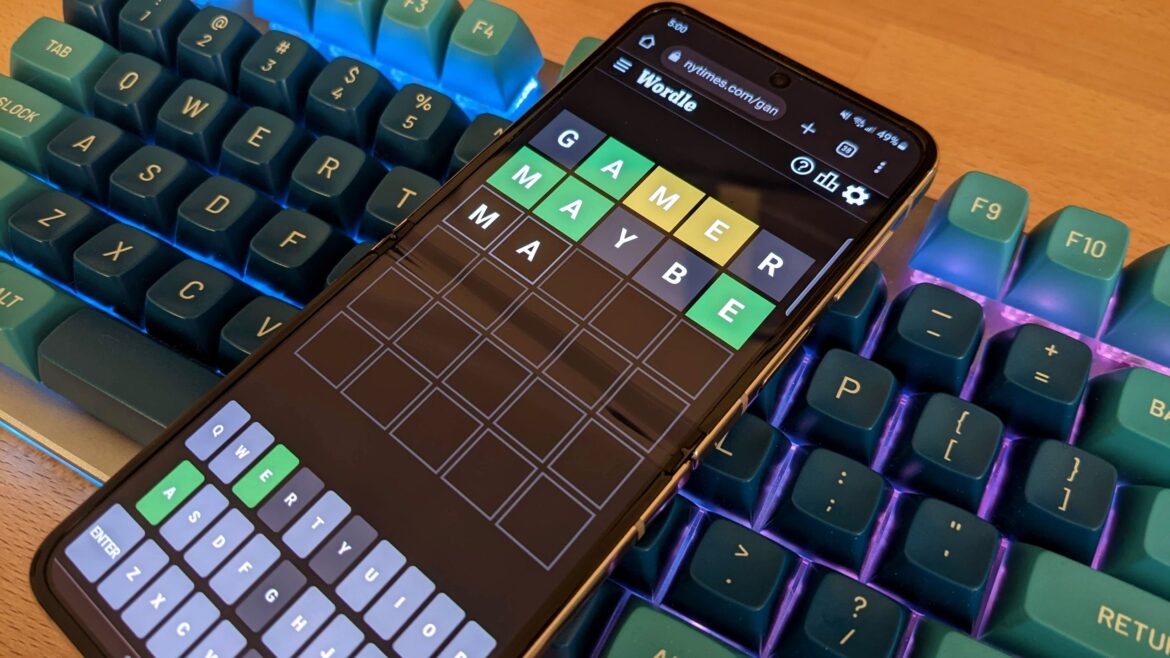
Today's Wordle clues, hints and answer for September 30 #1564
Product Reviews

Today’s Wordle clues, hints and answer for September 30 #1564

by admin September 30, 2025


What’s that, it’s the end of the month already? Are you sure? Wow. OK. If you’re as perplexed by the passage of time as we are, you might want a little extra help to go with your daily Wordle. Our new clues can point you towards the right word, today’s hints can polish up your guesses, and the September 30 (1564) answer is on hand if the alphabet’s not your friend this Tuesday.

A clue for today’s Wordle

Stuck on today’s Wordle? Here’s a clue that pertains to the meaning of the word.

If you’re still just as stuck after our clue, scroll down for further hints.


Related articles

Hints for the September 30 (#1564) Wordle

Our Wordle hints will start vague so as to just give you a bit of a nudge in the right direction at first.

As you scroll down, they’ll offer more and more help towards figuring out today’s word without fully giving it away.

Are there any repeated letters in today’s Wordle?

There’s a letter in here that’s used more than twice.

How many vowels are in today’s Wordle?

Technically, you only need to find one vowel today.

Keep up to date with the most important stories and the best deals, as picked by the PC Gamer team.

What letter does today’s Wordle begin with?

You need to use a “G” at the beginning this time.

It’s always really obvious once you’ve been told the answer, isn’t it?

The September 30 (#1564) Wordle answer is…

(Image credit: NurPhoto (Getty Images))

This is it. No turning back now!


Related articles

The solution to today’s Wordle puzzle is…

The meaning behind today’s Wordle answer

Breeds include the buff back, cotton patch, and fighting goose. May we never meet the latter.

Previous Wordle answers

Past Wordle answers can give you some excellent ideas for fun starting words that keep your daily puzzle-solving fresh. They are also a good way to eliminate guesses for today’s Wordle, as the answer is unlikely to be repeated.

Here are the last 10 Wordle answers:

  • September 20: DEFER
  • September 21: COVEN
  • September 22: QUILL
  • September 23: MOUTH
  • September 24: BLUNT
  • September 25: DRAPE
  • September 26: DALLY
  • September 27: FRITZ
  • September 28: GOOEY
  • September 29: CIVIL

Learn more about Wordle 

(Image credit: Future)

How to play Wordle

Wordle’s a daily guessing game, where the goal is to correctly uncover today’s five letter word in six goes or less. An incorrect letter shows up as a grey box. A correct letter in the wrong space turns up yellow. And the correct letter in the right place shows up as green. There’s no time limit to worry about, and don’t forget that some letters might be used more than once.

Get better at Wordle!

What’s the best Wordle starting word?

Generally you want to pick something with a good mix of common consonants and vowels in it as your Wordle opener, as this is most likely to return some early green and yellow letters. Words like SLATE, CHIME, and REACT all work, but feel free to find your own favourite.

Is Wordle getting harder?

(Image credit: Valve)

Wordle is not getting harder!

There will always be the occasional day where the answer is the name of a body part, has a sneaky double vowel, or a word obscure enough to send everyone rushing off to a dictionary. But the daily answers, edited by Tracy Bennett, are still a good mix of common terms and tougher challenges.

Remember that if you’re craving more of a challenge, you can enable Hard Mode under the ⚙️ options menu. This option doesn’t make the words themselves harder, but it requires that “any revealed hints must be used in subsequent guesses.”

How did Wordle begin?

Wordle is the creation of Josh Wardle, and began life as a small personal project before its public release in 2021. From there it’s gone on to become a global phenomenon, attracting a dedicated daily audience, billions of plays, a whole host of competitors, and even a seven-figure sale to the New York Times where it’s become a mainstay of daily games alongside the crosswords and Connections.


Source link

September 30, 2025 0 comments
0 FacebookTwitterPinterestEmail
Amazon Fire Max 11 Tablet Hits Lowest Price Yet Ahead of Prime Big Deal Days, Hundreds Cheaper Than an iPad
Game Reviews

Amazon Fire Max 11 Tablet Hits Lowest Price Yet Ahead of Prime Big Deal Days, Hundreds Cheaper Than an iPad

by admin September 30, 2025


We’d be telling you that this limited-time deal on the Amazon Fire Max 11 tablet is hot, or that it’s fire, or that it’s a scorcher, but honestly, would you still respect us in the morning? So we’ll dispense with the terrible puns and cut straight to the deal, because it’s one of the better ones we’ve seen in a while on this great, affordable tablet. It’s 32% off for a limited time, turning a very good $280 price into a great one at just $190.

To put things in perspective, the Amazon Fire Max 11 is an 11-inch tablet with an octa-core processor, 14-hour battery life, expandable storage of up to 1TB via microSD card, and 2.4 million pixel resolution. As an Amazon product it blends seamlessly with the rest of the Amazon ecosystem, including Prime Video, Kindle, Audible, and Luna, along with your smart home devices via either Alexa or the Device Dashboard. And here’s the kicker — at this sale price it’s over $700 less than the 11-inch M4 iPad Pro, and $375 less than the 11-inch M3 iPad Air.

See at Amazon

Premium Features, Not Price

There are probably metrics and benchmark tests that put those pricier iPads ahead of the Fire Max 11, but not nearly enough to quantify the price difference. The octa-core processor at the heard of the Fire Max 11 is certainly no slouch when it comes to streaming, multitasking, and gaming on Luna. The 128GB of storage is small, but so easily and inexpensively expandable thanks to the microSD card slot that the Apple tablets lack.

Wi-Fi 6 speeds, a robust 14-hour battery life, 8MP camera, and options to expand into a more laptop-like experience with the sold-separately Fire Max 11 Keyboard Case — which also happens to be way more affordable than Apple’s Magic Keyboard — all make the Fire Max 11 highly competitive even before you do a price comparison. Once you check out those numbers, this isn’t even a fair contest.

Beautifully Basic

When you look at the Fire Max 11 — and this is the latest, most updated iteration of the Fire Max — in the context of being a fully integrated part of the massive Amazon ecosystem, it’s a brilliant tablet, especially for just $190. It’s not going to compete with a laptop as a productivity machine, although this deal does come with a free 3-month Microsoft 365 trial, but as an e-reader, streaming device, smart-home control panel, and light gaming device, it’s an exceptional tablet.

This model of the Amazon Fire Max currently on sale for just $190 has the max 128GB storage and also comes with lockscreen ads deactivated. The $90 savings on this deal are great, and even greater when you tack them onto the hundreds you save by avoiding the super-bougie competitor tablets.

See at Amazon


Source link

September 30, 2025 0 comments
0 FacebookTwitterPinterestEmail
  • 1
  • …
  • 83
  • 84
  • 85
  • 86
  • 87
  • …
  • 764

Categories

  • Crypto Trends (1,098)
  • Esports (800)
  • Game Reviews (772)
  • Game Updates (906)
  • GameFi Guides (1,058)
  • Gaming Gear (960)
  • NFT Gaming (1,079)
  • Product Reviews (960)

Recent Posts

  • This 5-Star Dell Laptop Bundle (64GB RAM, 2TB SSD) Sees 72% Cut, From Above MacBook Pricing to Practically a Steal
  • Blue Protocol: Star Resonance is finally out in the west and off to a strong start on Steam, but was the MMORPG worth the wait?
  • How to Unblock OpenAI’s Sora 2 If You’re Outside the US and Canada
  • Final Fantasy 7 Remake and Rebirth finally available as physical double pack on PS5
  • The 10 Most Valuable Cards

Recent Posts

  • This 5-Star Dell Laptop Bundle (64GB RAM, 2TB SSD) Sees 72% Cut, From Above MacBook Pricing to Practically a Steal

    October 10, 2025
  • Blue Protocol: Star Resonance is finally out in the west and off to a strong start on Steam, but was the MMORPG worth the wait?

    October 10, 2025
  • How to Unblock OpenAI’s Sora 2 If You’re Outside the US and Canada

    October 10, 2025
  • Final Fantasy 7 Remake and Rebirth finally available as physical double pack on PS5

    October 10, 2025
  • The 10 Most Valuable Cards

    October 10, 2025

Newsletter

About me

Welcome to Laughinghyena.io, your ultimate destination for the latest in blockchain gaming and gaming products. We’re passionate about the future of gaming, where decentralized technology empowers players to own, trade, and thrive in virtual worlds.

Recent Posts

  • This 5-Star Dell Laptop Bundle (64GB RAM, 2TB SSD) Sees 72% Cut, From Above MacBook Pricing to Practically a Steal

    October 10, 2025
  • Blue Protocol: Star Resonance is finally out in the west and off to a strong start on Steam, but was the MMORPG worth the wait?

    October 10, 2025

Newsletter

@2025 laughinghyena- All Right Reserved. Designed and Developed by Pro


Back To Top
Laughing Hyena
  • Home
  • Hyena Games
  • Esports
  • NFT Gaming
  • Crypto Trends
  • Game Reviews
  • Game Updates
  • GameFi Guides
  • Shop

Shopping Cart

Close

No products in the cart.

Close