Laughing Hyena
  • Home
  • Hyena Games
  • Esports
  • NFT Gaming
  • Crypto Trends
  • Game Reviews
  • Game Updates
  • GameFi Guides
  • Shop
Author

admin

admin

The World of 'Dark Crystal' May Not Be as Finished as We Thought
Gaming Gear

The World of ‘Dark Crystal’ May Not Be as Finished as We Thought

by admin October 3, 2025


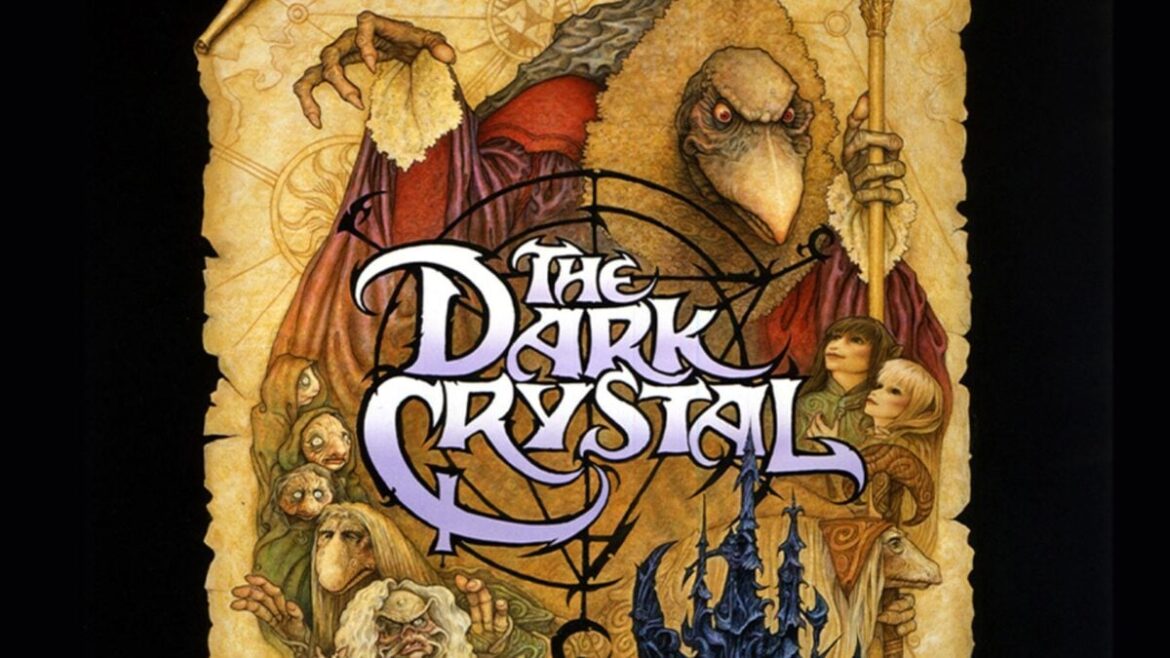
Jim Henson’s incredible fantasy film, The Dark Crystal, is returning to theaters next week, but that may not be the last time audiences see it on the big screen. Speaking to io9 about the Fathom re-release, filmmaker Brian Henson teased that even though Netflix’s prequel series The Dark Crystal: Age of Resistance is unlikely to come back, that isn’t necessarily the end of the franchise.

“I can’t really comment on development, but what I will say is we will continue to create within this universe,” Henson said. “We’ve looked at several potential tracks and a movie might be one of them… You still have a lot of moving parts in the world of Dark Crystal that can create drama and conflict that can generate another story in that world.”

So what exactly does that mean? Could we be getting a new Dark Crystal movie? As Henson said, he wouldn’t comment on development. But that there’s more story to be told in the world of The Dark Crystal is simultaneously obvious and unexpected.

It was back in 2019 when Netflix released its incredible prequel series, Age of Resistance. That series took everything fans knew and loved about the 1982 original and made it bigger, better, and more engrossing. It was clear the world of Thra was ripe for further explanation, especially when the story begged for a second season. Unfortunately, that second season is unlikely to happen, and Henson admitted he wasn’t surprised.

“Netflix [was] really great,” he said. “They allowed the money to be spent that was needed to really do it right, and [Age of Resistance] is a beautiful, beautiful piece. But… they’re a streamer. Their whole point is to get a whole bunch of subscribers that we wouldn’t otherwise get. So they knew by making Age of Resistance that we’re going to get all of the hardcore fantasy fans who weren’t subscribed to subscribe. Season two? It’s the same group. So I was disappointed but not at all surprised that they didn’t want to drop that much money again for another season.”

So who might drop money for more Dark Crystal, if not Netflix? Again, there’s no comment. But clearly, if you look at the rumors surrounding another big Henson fantasy film, Labyrinth, you see that there is certainly interest out there. Fingers crossed we get back to Thra sooner rather than later.

And, as we mentioned, you can go back next week. Fathom Events is rereleasing the film in 4K on October 12 and 13 with a special new introduction by Henson. Get tickets and showtimes here. Then, check back next week for more Dark Crystal.

Want more io9 news? Check out when to expect the latest Marvel, Star Wars, and Star Trek releases, what’s next for the DC Universe on film and TV, and everything you need to know about the future of Doctor Who.

Source link

October 3, 2025 0 comments
0 FacebookTwitterPinterestEmail
Tokyo Game Show: Flashy booths mask economic and industry anxiety | Opinion
Esports

Tokyo Game Show: Flashy booths mask economic and industry anxiety | Opinion

by admin October 3, 2025


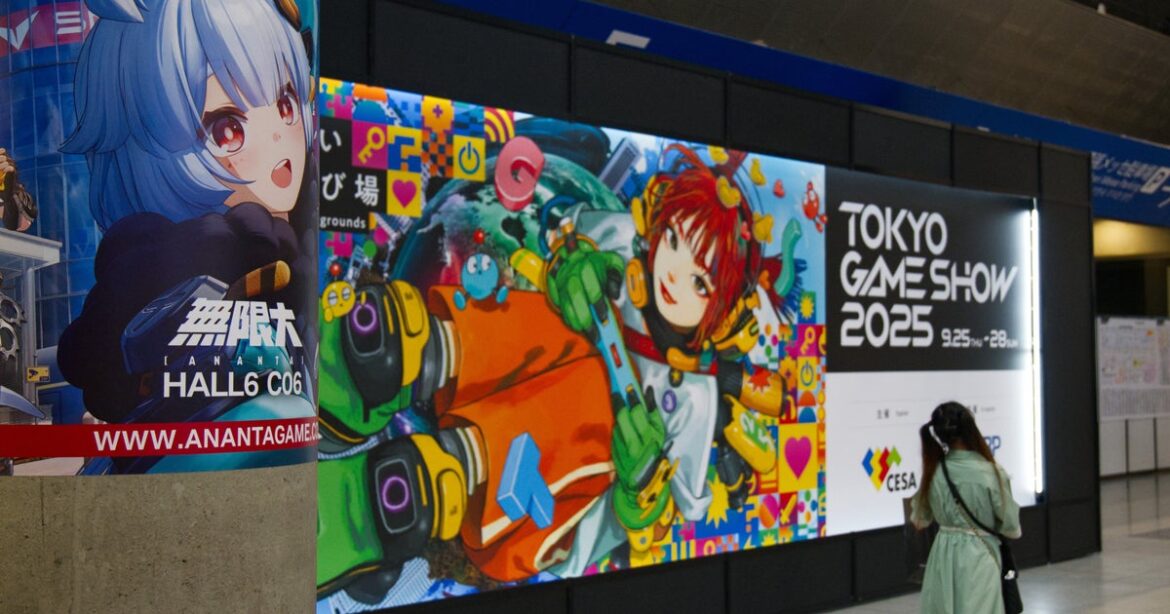
Although Japanese games are finding increasing presence in the global gaming marketplace, something felt off when visiting Makuhari Messe for this year’s Tokyo Game Show (TGS).

Many of the big companies in Japanese console and PC gaming held relatively light showcases, limited to already released titles or games set to release within the coming weeks and months.

Sega’s biggest games on display were Sonic Racing: Crossworlds, which was released on day one of TGS, and Like a Dragon 3: Kiwami, the newly announced remake of the early PS3 title. Konami had the Japan-only latest entry in the Momotaru Densetsu series, a sequel to the best-selling third-party title in Japan and set for release in just six weeks’ time, along with Silent Hill f, another title that had already been released by the time the show kicked off.

Silent Hill f | Image credit: Konami

Level-5 were present at the event to showcase Inazuma Eleven: Victory Road and Professor Layton and the New World of Steam, set for release in November and 2026, respectively. But the company had already showcased these two games at last year’s event, where Level-5 also had Fantasy Life i on show. Other titles on their slate – such as Decapolice, showcased with a public demo at TGS in 2023 but delayed to 2026 to address feedback – were nowhere to be seen.

Similar summaries can be given for Sony, Square Enix, and Bandai Namco: the latter’s showcase was limited to new entries releasing this autumn in the Digimon, Little Nightmares, and Katamari series.

Rather than offering a glimpse into the future of next year or beyond, the show felt absent of anything exciting for those playing on console or PC. Indeed, aside from Capcom – whose booth was by far the most popular as it shared the first domestic glance of their 2026 lineup, including Resident Evil: Requiem (with a global-debut preview of the Switch 2 version) and Pragmata – Japanese publishers and developers were not the draw for many fans attending TGS.

Why were Japanese developers lacking in new titles, and what was capturing the imagination of fans instead? To understand that, it may be worth first leaving the showfloor and looking elsewhere.

Akihabara may have lost some of its lustre as Japan’s otaku capital on the cutting-edge of Japanese anime and gaming culture, but it’s still a strong indicator of what hardcore audiences of these mediums are engaging with most. Visit the city recently, however, and you’ll notice something has changed. Billboards that were once plastered with promotions for major upcoming anime and games are near-permanently rotated between an array of promotions for in-game events for ongoing free-to-play titles from East Asian studios based outside Japan, like Genshin Impact.

Animate Akihabara, Japan’s biggest anime retailer, currently promotes the Nikke collaboration with Resident Evil at its entrance. The central exit of Akihabara Station has even been renamed after Yostar, the Shanghai-based developer and publisher of Azur Lane and Blue Archive.

While the mobile free-to-play boom of the 2010s may have reached its apex with a strong recovery of traditional gaming propelled by the Nintendo Switch, that’s not to say these games don’t remain a dominant part of the Japanese gaming landscape. In-app purchases for mobile games reached $11 billion in 2024 according to Sensor Tower, and considering the growing trend of these free-to-play titles finding an audience on console and PC alongside the minimal appetite for premium titles, it’s likely the true spend on free-to-play games in Japan is higher than these reported numbers.

What differentiates the free-to-play market today in Japan compared with ten or even five years ago is how much more difficult it is to launch a successful new title against established favourites in the sector. Without brand recognition at the developer or IP level, you need to do something to get your game in front of as many people willing to spend money as possible.

Anything that can help a title to stand out and increase brand awareness can make a difference, and TGS is a high-profile way to make an impression. That said, it’s a risk – while a 3m x 3m booth can cost as little as 385,000 yen, a large-scale booth can cost millions of yen before staffing and construction.

In a preview of the 2025 CESA Video Game Industry Report handed to the press attending TGS, one thing stood out: while the Japanese games industry did grow by 3.4% last year to 2,396 billion yen, this growth can mostly be attributed to the mobile gaming market. Indeed, the console market has shrunk from 395 billion yen to 383 billion yen since 2020. The market for non-mobile gaming has only grown overall in this period thanks to the more than 100% growth in the PC market, from 122 billion yen to 265 billion yen in the same period.

For every demographic between 5 and 60 years old, mobile player counts among Japanese players either remain in line with players on console or, for those aged 15 years or older, exceed it.

While the most common primary or secondary platform for console or mobile players is Nintendo Switch, even the Nintendo DS and 3DS era of consoles is more popular than both the PS4 and, below that, PS5 in the eyes of the general population, where much of the high-budget headline-grabbing major games are being developed. With a PS5 costing 80,000 yen, compared with the 50,000 yen for a Switch 2, it’s simply too pricey for many players (something that’s also a factor in terms of the player base for the console skewing older).

The big money is in mobile gaming, and getting even a small slice of that pie can lead to big returns. The risk is worth taking.

Every year at TGS, alongside the typical line-up of major Japanese publishers and select international partners, a few free-to-play titles take to the show floor. By spending big on a flashy booth with even flashier female models handing out fliers and freebies, they hope to generate word of mouth on their upcoming or already launched free-to-play games. This year, it felt overwhelming seeing how many of these booths littered the show floor, and to what extreme lengths they would go to provoke attention from the hordes of players attending the event.

Lots of the buzz on the show floor centred around Ananta

They filled the void left by a lack of eye-catching games to command long lines from major studios. Instead, in terms of already released titles, fans flocked to booths for Love and Deepspace, Infinity Nikki, Nikke, and more in order to take photos with their favourite characters, snag exclusive merchandise, and interact with other fans. Among the unreleased games vying for the attention and anticipation of attending fans, lots of the buzz on the show floor centred around Ananta, the new free-to-play open-world action game developed by Naked Rain and published by NetEase, targeting PC, PS5, and mobile.

The game consistently enjoyed long lines throughout the event, with large backpacks designed after the game’s main character ever present on the show floor throughout. While online reactions have noted the game’s many similarities to the likes of Insomniac’s Spider-Man titles, Like a Dragon, Uncharted, Grand Theft Auto, and more, reaction from those playing the demo was relatively positive. For all that it aped these popular games from other studios (personally, I felt it also wasn’t fully able to mesh these ideas or refine them enough to be enjoyable in their own right or feel cohesive in the same project), many relished the idea of enjoying these mechanics within a more appealing anime aesthetic tailored to the Asian and Japanese markets.

Among the other free-to-play games enjoying long lines at the show were Smilegate’s Miresi: Invisible Future and another NetEase title, Sword of Justice.

Players at Tokyo Game Show 2025 | Image credit: Alicia Haddick

There are other reasons these games are once again growing in the post-COVID Japanese market, years after the initial mobile boom came to an end. Though the huge player numbers and overall market spend are eye-catching figures for studio executives, the spend per user on mobile games is significantly lower than those who are primarily console or PC players. High revenue is offset by high spenders, a point emphasized by a recent survey noting 18.8% of respondents admitted prioritizing gacha spending over essentials including rent.

While Japanese players are more willing to spend money on free-to-play games – Sensor Tower research noted that although 80% of Japanese mobile game downloads came from overseas, revenue for these titles came 70% from domestic players – there remains a significant portion of the Japanese player base for these games that engages with these titles without spending anything.

With the trend for more high-budget free-to-play titles, like Hoyoverse’s Genshin Impact and Honkai: Star Rail alongside many of the titles on display at this year’s TGS, these games offer cash-strapped players a chance to still enjoy high-budget, flashy action and graphics without needing to buy a new device beyond the essential phone they already own, at a time where many Japanese people are cash-strapped in economically strained times.

Some who choose against in-game spending will instead spend money on merchandise

After decades of relative price and wage stagnation, inflation without similar increases in the average wage (the cost of rice has increased by 100% in just 12 months to above 4,000 yen for a 5 kg bag) has left many Japanese people struggling to spend money on luxuries such as gaming. Coupled with the fact that the most successful free-to-play games enjoy a vast multimedia empire peppered with pop-up stores and merchandising, cafe collaborations, and more, these games offer a chance for players to embrace not just a game, but a lifestyle.

Some who choose against in-game spending will instead spend money on merchandise centring their favourite characters, allowing people to show off their hobbies to friends without the initial high cost of entry. They can meet and participate in in-person activities that merge their hobbies with socializing. It’s luxury on a budget – a chance to go out eating and do fun events with friends, without sacrificing other hobbies in order to do so.

In such a market, the key to success comes in encouraging the most intense players to part with their money, something that translates to more extreme public showcases. Sex sells, and in a flashback to the 2000s, a number of sexually demeaning booths sought to attract the eyes of hardcore players with raunchy displays and fan service.

Nikke’s booth, for the second year running, offered a “human gacha,” where players could simulate the roll for new characters in-game by pressing a button to reveal suggestive cosplayers in boxes reminiscent of the in-game character reward screen.

Nikke’s booth at Tokyo Game Show 2025 | Image credit: Alicia Haddick

Miresi: Invisible Future – found on the show floor directly next to the family-friendly offerings of Sonic proudly showcasing its Minecraft collaboration – grabbed attention by showcasing “the artistic vision of AD Kim Hyung-seop (Hyulla)” on a 5.5 metre LED cube. This mostly resulted in the rather scantily clad main character’s butt and chest jiggling endlessly and unavoidably for all to see.

It felt demeaning, but if these can attract the players who will spend the excesses of money needed to pull these characters in-game and keep the game afloat, this will be viewed as a success regardless.

In an attempt to earn maximum money and cut budgets in a time when game spending is tight, it should be no surprise that the same 2025 games industry report found that 51% of Japanese developers stated they are embracing generative AI in development. Indeed, there was a full pavilion on the TGS show floor dedicated to the technology: a pavilion that pushed the actual artistic output of a curated selection of indie games away from the main show floor and into the corridors above the convention floor itself, demeaning it to a sideshow outside the view of most attendees.

The rise of AI, the exploitative nature of the manner in which these free-to-play titles were being showcased, alongside the lack of major titles from Japanese publishers and developers, made this an uncomfortable TGS to visit on both business and public days.

It’s no secret that as the industry undergoes a post-COVID realignment of expectations, companies are slashing budgets and cancelling games. While firms like Square Enix are publicly acknowledging the fact they are adjusting their approach to games development and cancelling titles, the true scale of cancellations is likely to be far larger, with many titles that have never been publicly announced getting the chop.

It’s hard not to view TGS in 2025 as representing the anxieties of the industry and its players

Layoffs in Japan are not as prevalent as has been seen internationally (in part due to local labour laws), thus helping studios to retain institutional knowledge that is being lost elsewhere. But many developers I’ve spoken to acknowledge that they are choosing not to renew the contracts of temporary workers instead of letting full-time employees go.

However, it would be naive to pin this year’s shift in balance on a temporary course correction rather than a decade-long trend of economic uncertainty, which has forced players to reconsider their spend on new games and instead find experiences within the rising free-to-play market. Far from needing a full trade show to expose it, the popularity of free-to-play mobile titles has been easy to spot online and by glancing at the phones of people playing on the train. To ignore this trend would be to ignore the more existential concerns facing the future of gaming both inside and outside Japan.

While respect for Japanese games and media is growing, it’s hard not to view TGS in 2025 as representing the anxieties of the industry and its players, rather than its virtues. The worries of developers about budgets and the need to scale back, the worries of players about how to afford new consoles and games, and how to keep enjoying a hobby they love. Solving these issues will require economic intervention that goes far beyond gaming.

In the meantime, how will the games industry adjust to this financial and social realignment? I’m not sure TGS 2025 had the answers, but it sure staked a claim at the future.


Source link

October 3, 2025 0 comments
0 FacebookTwitterPinterestEmail
Decrypt logo
GameFi Guides

How Coinbase Profits on Bitcoin-Backed Loans as a ‘Technology Provider’

by admin October 3, 2025


In brief

  • Steakhouse, a curator on Morpho, is sharing performance fees with Coinbase.
  • The fees are derived from user repayments toward Bitcoin-backed loans.
  • People are tapping the product to pay for cars and home improvements.

Coinbase’s newest lending product is generating profits for the crypto exchange in several ways, but not all are reflected clearly on-chain.

As the firm lets customers deposit wrapped Bitcoin and Circle’s USDC into “vaults” on decentralized finance protocol Morpho, it’s earning cash from stablecoin reserves and transaction fees indirectly. It’s also taking a cut of performance fees that are designed to incentivize risk managers on the platform, Coinbase has confirmed to Decrypt.

DeFi offers the promise of a more transparent financial system, but it’s unclear whether the arrangement poses conflicts of interest or could potentially put user funds at greater risk. Coinbase says that the initiative is addressing investors’ growing appetite for ways to use digital assets, unlocking financial empowerment.

In a statement to Decrypt, a Coinbase spokesperson said that the company “is committed to the sustainable success of its products.”

“We firmly maintain this philosophy when searching for collaborators that can help us bring simple, secure on-chain financial products to our users.”


The specifics of Coinbase’s arrangement with a so-called curator on Morpho named Steakhouse, through which users are effectively paying the exchange, are not referenced in an FAQ for its product. The FAQ does say that “there are no Coinbase fees,” and interest rates are set by “open lending markets.”

Vaults on Morpho allow Coinbase users to do two things: They can post Bitcoin as collateral for loans, or they can deposit USDC to earn yield. In essence, it resembles a circular market, which crossed $1 billion in originations on Tuesday.

As users make payments toward loans, a percentage of the yield that vaults generate is directed to “curators,” who serve as chief risk officers and strategists, according to Morpho’s documentation. It’s called a performance fee, and it’s customizable vault-to-vault.

The vault with the most deposits on Morpho is curated by a DeFi project called Spark. It is providing liquidity for Bitcoin-backed loans on Morpho, while taking a 10% slice of the 6% APY (annual percentage yield) that around $700 million in USDC deposits is currently generating.

Steakhouse, meanwhile, is curating a vault that currently lets Coinbase users earn 5.6% APY on USDC. Most of those funds are going toward providing liquidity for Bitcoin-backed loans as well, but the vault collects a 25% performance fee, among the highest on Morpho.

Steakhouse and Coinbase “share” the fee, the Coinbase spokesperson confirmed to Decrypt.

“Steakhouse USDC was selected as a starting vault on account of its collateral exposure being generally very liquid crypto assets which—along with the overcollateralization of the loan positions—creates an additional buffer for lenders,” they added, while highlighting an overview of Steakhouse’s risk management framework.

Decrypt has reached out to Steakhouse for comment.

‘Scale Infinitely’

As firms across the U.S. are integrating DeFi into their businesses, some onlookers are comparing the trend to mullets—centralized in the front, yet permissionless in the back. Morpho itself made the comparison on X on Thursday.

From Coinbase’s perspective, it’s acting as a “technology provider,” enabling users to access decentralized protocols like Morpho, Max Branzburg, head of consumer products at Coinbase, told Decrypt. 

“Coinbase is not lending to users. Coinbase is not facilitating the financing itself,” Branzburg said. “This is really about connecting users as a technology platform with DeFi.”

Branzburg compared the initiative to Coinbase’s recent support of trading on decentralized exchanges, allowing users to natively access more than 40,000 assets through its mobile app, beyond the 330 currently listed on its platform.

With borrowed funds, Branzburg said that Coinbase is seeing people fund large purchases like cars or home renovations, without needing to sell their Bitcoin, “empowering people to help grow their wealth in ways that they couldn’t otherwise.”

The product is far different from a centralized lending service that Coinbase previously offered, which required a patchwork of state licenses. (Coinbase stopped issuing Bitcoin-backed loans in 2023 amid industry-wide, regulatory scrutiny.)

“If we’re trying to lend off our balance sheet, for example, or build some centralized financing product, it just has inherent limitations,” he said. “A technology platform to connect people with decentralized protocols can scale infinitely.”

Boosted

Crypto firms servicing users as technology providers is commonplace. Companies that offer self-custodial wallets, for example, fit the description. They are not considered intermediaries in the U.S. because users are solely responsible for controlling and securing their assets.

Although Coinbase’s newest lending product has been tapped by more than 14,200 wallets since its introduction in January, that still equates to less than 1% of the firm’s users, Branzburg said. The average loan size that users are taking out is around $50,000, he added.

User activity is taking place on Base, Coinbase’s Ethereum layer-2 network, so the exchange is earning fees indirectly through the network’s centralized sequencer, which orders transactions before they are passed on to the underlying network.

Coinbase’s newest lending product uses cbBTC, a version of wrapped Bitcoin offered by the exchange, and Circle’s USDC, which earns Coinbase income. Earlier this year, Circle’s public debut revealed that Coinbase earns 50% of the “residual payment base” generated by USDC’s backing.

Last month, Branzburg said that USDC lending rates for Coinbase users were temporarily “boosted” by Morpho. That means Morpho’s platform doesn’t entirely reflect what Coinbase users are receiving either.

In 2022, former SEC Chair and crypto skeptic Gary Gensler cautioned investors that some yields in the cryptosphere appeared “too good to be true.” He also said the public benefits from “full and fair disclosure.”

This year, crypto lending is rallying in the U.S. against a more supportive regulatory backdrop. Coinbase plans to raise loan limits for users to $5 million from $1 million, potentially unlocking what Branzburg described as billions in assets.

“We’re always thinking about the regulatory environment that we’re building in,” he said. “It’s been great to see an environment that is leaning into crypto and believes in the power of Bitcoin, DeFi, and self-custody.”

Daily Debrief Newsletter

Start every day with the top news stories right now, plus original features, a podcast, videos and more.


Source link

October 3, 2025 0 comments
0 FacebookTwitterPinterestEmail
Payday Developer Cancels Its Dungeons & Dragons Game Project Baxter, Resulting In Layoffs
Game Updates

Payday Developer Cancels Its Dungeons & Dragons Game Project Baxter, Resulting In Layoffs

by admin October 3, 2025


Payday developer Starbreeze announced yesterday that it has ceased development of Project Baxter, its cooperative game set in the Dungeons & Dragons universe. The cancellation will result in layoffs at the studio.

Project Baxter was first announced in December 2023 with a 2026 launch window, and was billed as an Unreal Engine 5-developed cooperative multiplayer Dungeons & Dragons game. It was also described as a live-service game, though the extent of which was never made clear. Project Baxter was slated to launch on all major platforms and would have supported cross-play.

Although we don’t know what state Project Baxter was in for Starbreeze to abandon the game, the company states that after a strategic review, its management and the board of directors determined it would be financially healthier to divert the resources allocated to Project Baxter to “accelerate the growth” of its flagship Payday franchise.

“This was a difficult but necessary decision,” said Adolf Kristjansson, CEO of Starbreeze. “Our strategy is clear: Payday is one of the most iconic IPs in gaming, with unmatched reach and potential. By focusing our investment and talent here, we can accelerate delivery, engage players with more content, and reinforce Starbreeze’s position as the clear leader in the heisting genre. This is about sharpening our focus to create the strongest long-term value for our players, our people, and our shareholders.”

Payday 3

Although Starbreeze states that some of the Project Baxter development team will be reassigned to other projects (mostly Payday), it plans to let go of 44 employees and contractors in an effort to “enable Starbreeze to become cash-flow positive in 2026.”

“I want to sincerely thank the Baxter team for their passion and creativity, and express appreciation to Wizards of the Coast for their support,” says Kristjansson. Though we have made the decision to not continue forward with this project, we are proud of what was achieved in Baxter, and those contributions will carry forward into Payday and the future of Starbreeze. By concentrating our efforts on Payday we give Starbreeze and all our employees the best chance to succeed.”

Starbreeze’s last release, Payday 3, was released in September 2023 in a troubled state and failed to hit sales expectations (here’s our review). This resulted in the departure of then-CEO Tobias Sjögren less than six months later. In December 2024, 15 percent of Starbreeze’s staff were laid off. Kristjansson became the new CEO in March of this year. 

Project Baxter joins several high-profile cancellations this year, which include Monolith Productions’ Wonder Woman, EA’s Black Panther, Square Enix’s Kingdom Hearts: Missing-Link, Xbox’s Perfect Dark and Everwild, and Avalanche’s Contraband. 


Source link

October 3, 2025 0 comments
0 FacebookTwitterPinterestEmail
DAAPrivacyRightIcon
Product Reviews

The Roku Streaming Stick Plus drops to only $29 in this Prime Day deal

by admin October 3, 2025


The Roku Streaming Stick Plus is on sale for just $29. That’s a discount of 27 percent and the lowest we’ve ever seen it.

Roku has held the top spot in the TV OS market for years thanks to its user-friendly interface, an affordable range of streaming devices and its own lineup of TVs. We picked the Streaming Stick Plus as the best streaming device for free and live content, thanks in large part to The Roku Channel app that accompanies it. The Roku Channel features over 500 free TV channels with live news, sports coverage and a rotating lineup of TV shows and movies.

Roku

In our hands-on review of the Roku Streaming Stick Plus, we thought it was perfect for travel thanks to its small size and the fact that it can be powered by your TV’s USB port, nixing the need for a wall adapter. Menu navigation and opening or closing apps won’t happen at quite the same speeds as more expensive streamers, but it’s quick enough for what is ultimately a pretty low-cost option. The Wi-Fi range on this one is also weaker than Roku’s pricier devices, but unless you are placing it exceedingly far from your router, it shouldn’t be an issue.

The Roku Streaming Stick Plus supports both HD and 4K TVs, as well as HDR10+ content. It doesn’t support Dolby Vision, however; for that you’ll need to upgrade to Roku’s Streaming Stick 4K or Roku Ultra. It comes with Roku’s rechargeable voice remote with push-to-talk voice controls. Roku’s remote can also turn on your TV and adjust the volume while you’re watching.

If you’ve been thinking about getting a Roku device, or you already love the platform and want a compact and convenient way to take it with you when you travel, then this sale provides a great opportunity. If you’d prefer a more powerful and slightly more stationary device, the Roku Ultra is on sale for $79 right now, too.


Source link

October 3, 2025 0 comments
0 FacebookTwitterPinterestEmail
Taylor Swift laying in a tub of water.
Game Reviews

The Internet Reacts To Taylor Swift’s New Album

by admin October 3, 2025


Every time Taylor Swift, the country star turned pop royalty, releases a new album, it’s a cultural event, whether you’re a Swiftie or not. This is because the algorithm will no doubt feed you reactions and commentary just because you are, at most, one degree removed from the Band Hero star’s fandom at all times. The Life of a Showgirl is Swift’s 12th album, and turns the dial back into radio/TikTok-ready pop after The Tortured Poets Department went for a more melancholic, folky sound. But is it any good? Well, Swifties are sorting through their feelings.

Like most of Swift’s work, The Life of a Showgirl is pretty transparent in its references to her personal life. As that personal life has become so well-known in and out of her music, it’s usually pretty obvious who a song is about. So there’s some lore to unpack with a lot of these songs, but the ones that are getting the most attention right now are the ones that seem to reference her fiancé Travis Kelce’s hog and seem to escalate an apparent feud between her and pop star Charli XCX that, at least publicly, appears largely one-sided at the moment.

Let’s start with the song that is all about how well-endowed the Kansas City football player is. “Wood” starts out with a funky riff and a catchy beat, and you can already hear the Sabrina Carpenter influence in the composition. Then you hear the lyrics and you can tell that Swift is trying to emulate the Short n’ Sweet singer’s trademark graphic, sexual punchlines. Here, let’s look at the lyrics of the second verse.

Forgive me, it sounds cocky

He ah-matized me and openеd my eyes

Redwood tree, it ain’t hard to see

His lovе was the key that opened my thighs

Girls, I don’t need to catch the bouquet, mm

To know a hard rock is on the way

And baby, I’ll admit I’ve been a little superstitious

The curse on me was broken by your magic wand

Seems to be that you and me, we make our own luck

New Heights of manhood

If the clear reference to Kelce’s New Heights podcast wasn’t enough to make it clear that this is about her man’s schlong, the reference to a “hard rock” like the one on her finger would make it pretty clear. There’s an episode of How I Met Your Mother in which Marshall (Jason Segal) realizes he can’t tell any sexy stories from his dating life to his friends without everyone knowing they’re about his long-time partner Lily (Alyson Hannigan) because she’s the only one he’s really been with. Part of what makes love songs such a popular genre of music is that there’s a universality to them that people can project onto their own relationships. Who among us wouldn’t love to sing about a man’s dick lifting a curse and solving all our problems? But Swift’s very public personal life and clear references to her husband-to-be mean that I can’t hear this song without knowing whose dick it’s about.

That being said, the song is pretty catchy. What Swift may lack in Carpenter’s clever jokes, she makes up for in a fun song about love and lust. And hey, Kelce seems cool with it?

One song I have a less charitable read on, however, is “Actually Romantic,” which takes the other side of “everyone knowing your business” and seems to be essentially a diss track against Charli XCX. For those who don’t know, Charli has a song called “Sympathy Is a Knife” on the album Brat that addresses her insecurities in the pop girl space, and seemingly references Swift specifically triggering those feelings of comparison in her. “Actually Romantic” is being called a diss track aimed at the “360” singer, and at first blush, some think Swift may have straight-up misunderstood the intent behind “Sympathy Is a Knife,” which is actually fairly complimentary to her. 

However, “Actually Romantic” does seem to gesture at further drama behind the scenes, even as Swift has been publicly supportive of Charli. Specifically, it references Swift’s past relationship with Matty Healy of the band 1975, which also includes Charli’s husband George Daniel, and things Charli has allegedly said about Swift in private.

I heard you call me ‘Boring Barbie’ when the coke’s got you brave 

High-fived my ex and then said you’re glad he ghosted me 

Wrote me a song saying it makes you sick to see my face

Some people might be offended 

But it’s actually sweet 

All the time you’ve spent on me.

I guess I can buy that maybe there’s more happening than “Sympathy Is a Knife” lets on. It’s giving Reputation era, when Swift was very publicly calling out other public figures like Kanye West and Kim Kardashian, or 1989’s “Bad Blood” which referenced her now-ended feud with pop star Katy Perry. Again, it’s the effect of someone’s personal life being so public that these songs end up weaving a story that’s already playing out on social media and in gossip magazines. Though if this is all spun off from “Sympathy Is a Knife,” then it feels like punching down.

The problem with Life of a Showgirl is that Swift’s status as a billionaire mega-celebrity clashes against the “relatable” persona she exhibits in her music here more than ever before. “Eldest Daughter” laments how mean everyone on the internet can be, when she’s enveloped in a massive cocoon of wealth and status. Like, girl, why are you even reading TikTok comments when you could be doing literally anything else with all that money?

lol https://t.co/a78pUaSvCU pic.twitter.com/quyrERr07R

— grace spelman (@GraceSpelman) October 3, 2025

Another song that really sticks out as an expression of Swift imagining threats to her status is “CANCELLED!” which I saw someone say is destined to become the new anthem of MAGA wine moms, and I can’t stop thinking about it. As the title suggests, the song is all about perceived judgments of her for who she chooses to associate with, with her singing that she likes her friends “cancelled” and cloaked in “scandal.” Broadly, this could be a song about cancel culture and how Swift is unwilling to drop people just because they run afoul of public scrutiny, but given that she has friends who are public Trump supporters, that feels like underselling or minimizing people’s criticism as some kind of petty scandal, rather than a legitimate concern.

Ultimately, all of these reactions are born from the relationship with her fandom that Swift has cultivated over her decades-long career. When your personal life is the source of the characters and stories people listen for references to in each song, every album is like a new season of a television show for which millions of people tune in just to lap up every new lore drop. But is the music any good? In my first listen, I came away thinking that Life of a Showgirl is an obvious low point in Swift’s discography. I don’t think I’m alone in that assessment, but the album has been out for all of 12 hours at this point, and people will sort their feelings out over the next few weeks or months. Tonight, Swift is putting out a movie in theaters called The Official Release Party of a Showgirl, which will include commentary and context for the album from Swift. Maybe that will work in its favor. For now, the music is speaking for itself. For better or worse.

pic.twitter.com/fEAu5T8XnL

— emily (@grIgenius) October 3, 2025

every year a taylor swift album comes out and she goes roses are red grass is green i love travis and my haters are mean and her fans go Omgggggg the lyricism

— zade (@zadtwt) October 2, 2025

she did it omg https://t.co/pRaiOFRgtG pic.twitter.com/idYwgDuRH0

— Wendell (@RhodeToLove) October 3, 2025

yall im CRYINGNSIDNDHF pic.twitter.com/nC25tp2KcZ

— allypally (@allypallyxcx) October 3, 2025

https://t.co/3CIXeCfhyy pic.twitter.com/NAQvUVy9Qp

— The Coke That Made Charli xcx Brave (@Neil_McNeil) October 3, 2025

https://t.co/O23bECsSMr pic.twitter.com/iK8u3dO19T

— keira (@kettlevinyl) October 3, 2025

These aren’t lyrics born of depth, just reference points engineered to ride the current wave internet talking points like ‘eldest daughters suffer more than jesus’ and spark a shallow ‘she’s just like me’ emotion from its listener. Not moved https://t.co/cXsllaedbn

— Ara (@lefilmara) October 3, 2025

IDGAF what yall saying! I’m vibing! I’m a showgirl baby pic.twitter.com/6vupKDLFEJ

— 💫 (@heyjaeee) October 3, 2025

why should taylor have to be a girls girl when nobody shows her the same courtesy? why is it iconic when other people create mess but she has to be persecuted? pic.twitter.com/kkQCeTuMKw

— jobless men #1 hater is a showgirl (@taylorenthusian) October 2, 2025

it’s honestly so freeing being a folklore stan who isn’t chronically negative cause while y’all are acting like showgirl murdered your family i’m twirling to ophelia

— kam⸆⸉ ❤️‍🔥 (@kamirrorball) October 3, 2025

Anyway, did you know that Coheed and Cambria also put out the special edition of their excellent album Father of Make Believe today? It’s got four new songs that are all pretty good, though maybe not quite as good as the best stuff on the main album.


Source link

October 3, 2025 0 comments
0 FacebookTwitterPinterestEmail
XLM/USD (TradingView)
NFT Gaming

Consolidation in Tight Range After Early Volatility

by admin October 3, 2025


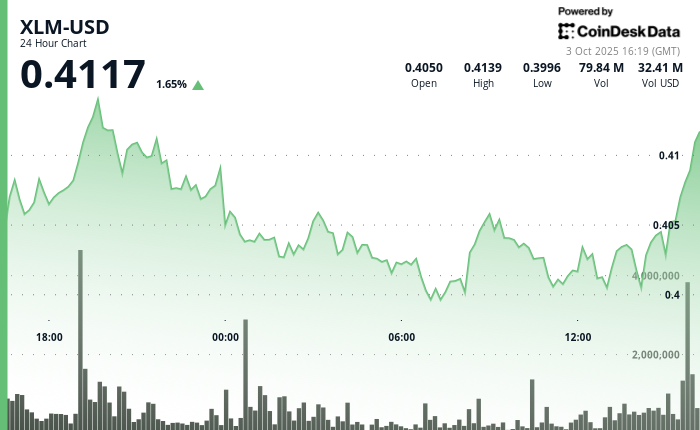
Stellar’s XLM token reversed sharply on Oct. 3 after briefly testing new highs. The token rose to $0.4041 in afternoon trading, but heavy selling after 14:00 UTC dragged it back to $0.4015, erasing earlier gains.

Volumes spiked during the sell-off, with more than 1.4 million tokens traded in a single minute, signaling institutional selling at resistance and raising the risk of further downside.

The move comes as Bitcoin.com Wallet integrated Stellar and its DeFi protocols, expanding XLM’s payments reach. Seasonal trends may provide support, with October historically a strong month for crypto, though near-term pressure remains.

XLM/USD (TradingView)

Technical Indicators Summary
  • Volume analysis revealed increased activity during initial advance with exceptionally strong selling volume exceeding 1.4 million during the 14:00-14:01 timeframe.
  • Resistance formed around $0.41-$0.41 zone where price repeatedly encountered selling pressure.
  • Support levels identified near $0.40-$0.40 where buying interest materialized multiple times.
  • Consolidation formation developed between $0.40-$0.40 indicating potential accumulation.
  • Bearish reversal pattern validated by institutional distribution at session peaks.

Disclaimer: Parts of this article were generated with the assistance from AI tools and reviewed by our editorial team to ensure accuracy and adherence to our standards. For more information, see CoinDesk’s full AI Policy.


Source link

October 3, 2025 0 comments
0 FacebookTwitterPinterestEmail
Rebounds 6%, Breaks Resistance as DeFi Market Hits Record Size
Crypto Trends

Rebounds 6%, Breaks Resistance as DeFi Market Hits Record Size

by admin October 3, 2025


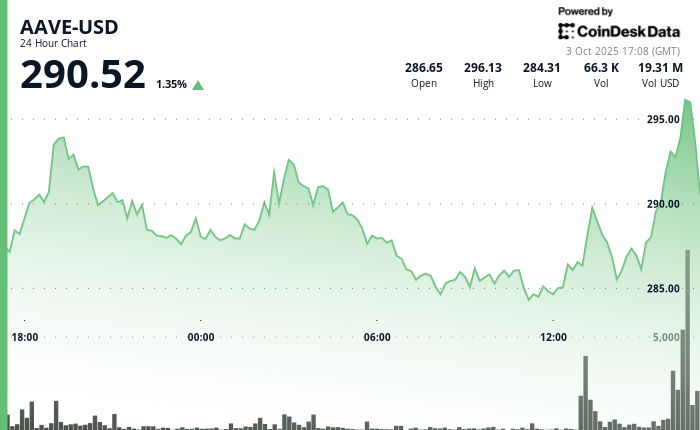
Aave AAVE$291.56, the native token of the largest decentralized finance (DeFi) lending protocol, strongly rebounded from last week’s lows breaking through key resistance levels on Friday afternoon.

The token gained another 2% over the past 24 hours and is up 6% this week. It has established support at the $284-$285 levels, while it’s currently consolidating around $290.

The move occurred as the broader crypto market rallied, with gains across the board and bitcoin BTC$122,498.24 breaking above $122,000, inching closer to its August record high. The broader DeFi market also accelerated, hitting a $219 billion in assets across protocols, a fresh record level, DeFiLlama data shows.

Total value locked across DeFi protocols at record highs. (DeFiLlama)

Deposits on Aave also climbed to a record $74 billion, cementing its top position among DeFi protocols, per DeFiLlama data. The platform enjoyed fresh inflows due to a recent partnership with up-and-coming stablecoin-focused chain Plasma. The Plasma lending market on Aave swelled above $6 billion in less than a week.

Technical Analysis Shows Strong Momentum

Technical indicators point to upside potential despite short-term profit-taking pressure at current levels, the CoinDesk Data research model shows. However, resistance levels hold firm between $290-$294 following repeated rejections.

  • Price gains 2.33% in 24-hour session.
  • Trading range spans $15.17 between $279.16 and $294.33 extremes.
  • Volume spikes to 143,188 units, well above 37,000 average.
  • Support level confirmed at $284-$285.
  • Resistance zone established between $290-$294.
  • Intraday high reaches $290.37 before reversal.
  • Consolidation pattern develops at current levels.


Source link

October 3, 2025 0 comments
0 FacebookTwitterPinterestEmail
Best Smart TV of 2025
Gaming Gear

Best Smart TV of 2025

by admin October 3, 2025


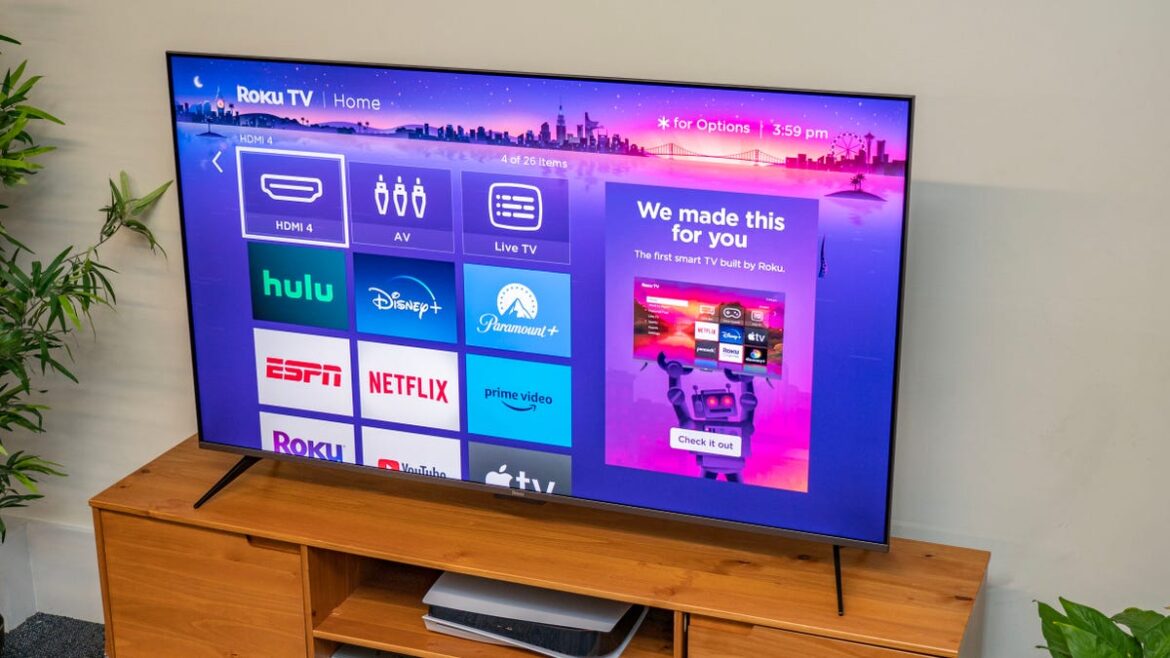
With all of the TVs available today and the technical terms and jargon, it can be tough to figure out what’s important. Here’s a quick guide to help cut through the confusion.

Price: TVs range in price from $100 to more than $2,000. Smaller screens are cheaper, well-known brands are more expensive and spending more money can also get you better image quality. Most entry-level TVs have a good enough picture for most people, but TVs last a long time, so it might be worth spending more to get a better picture. It’s also best to shop for a TV in the fall when prices are lower.

Screen size: Bigger is better in our book. We recommend a size of at least 43 inches for a bedroom TV and at least 55 inches for a living room or main TV, though 65 inches or larger is best. More than any other “feature,” stepping up in TV screen size is the best use of your money. One of the most common post-TV-purchase complaints we’ve heard is from people who didn’t go big enough. We almost never hear people complain that their TV is too large.

Capability: Among entry-level TVs, the most important feature is what kind of smart TV system the TV uses. Among midrange models, look for features including full-array local dimming, mini-LED and 120Hz refresh rate, which (unlike some other extras) do actually help improve the picture. Among high-end TVs, OLED technology is your best bet.

For more TV buying advice, check out our guide on how to buy a TV.


Source link

October 3, 2025 0 comments
0 FacebookTwitterPinterestEmail
Digimon Time Stranger reminds me of the best (and worst) of PS2 era RPGs, and that's why I can't put it down
Game Updates

Digimon Time Stranger reminds me of the best (and worst) of PS2 era RPGs, and that’s why I can’t put it down

by admin October 3, 2025


I think Digimon Story: Time Stranger is secretly a PS2 era Shin Megami Tensei game. That’s very much my taste in RPGs. Given this is sort-of a kid’s game (OK, it’s got a PEGI 12 rating because of ‘bad language’, ‘in-game purchases’, and – bafflingly – ‘sex’), that is a pretty big surprise. I’ve come to this conclusion after sinking a good 50 hours into the game, and being taken on a surprisingly volatile journey as a result. The story is pretty guff, with a lot of shōnen-style anime filler injected into the meat to make it appear more succulent, but most of my emotive response has been to its design philosophy, its approach to dungeons, and some unbelievable pacing choices. I can close this game either loving it, or hating it. But, for the past two weeks, I’ve not been able to stop going back to it.

I adore Atlus’ Shin Megami Tensei (or MegaTen) games, for all their flaws. I have a particular soft spot for the PS2 era of games – Nocturne, Digital Devil Saga and its sequel, and Persona 3 are highlights. You can see the thumbprints of the parent series even in games as late as Metaphor Refantazio: between demons, a doomed Tokyo, cerebral reflections on the nature of humanity, and impossible philosophical choices about the fate of the universe, it’s all pretty standard RPG fodder at this point. But just as instrumental to the series are lengthy and often-unwieldy dungeons, difficulty spikes and plateaus, boss fights that feel like masochistic puzzles, and combat systems as infuriating as they are spellbinding.

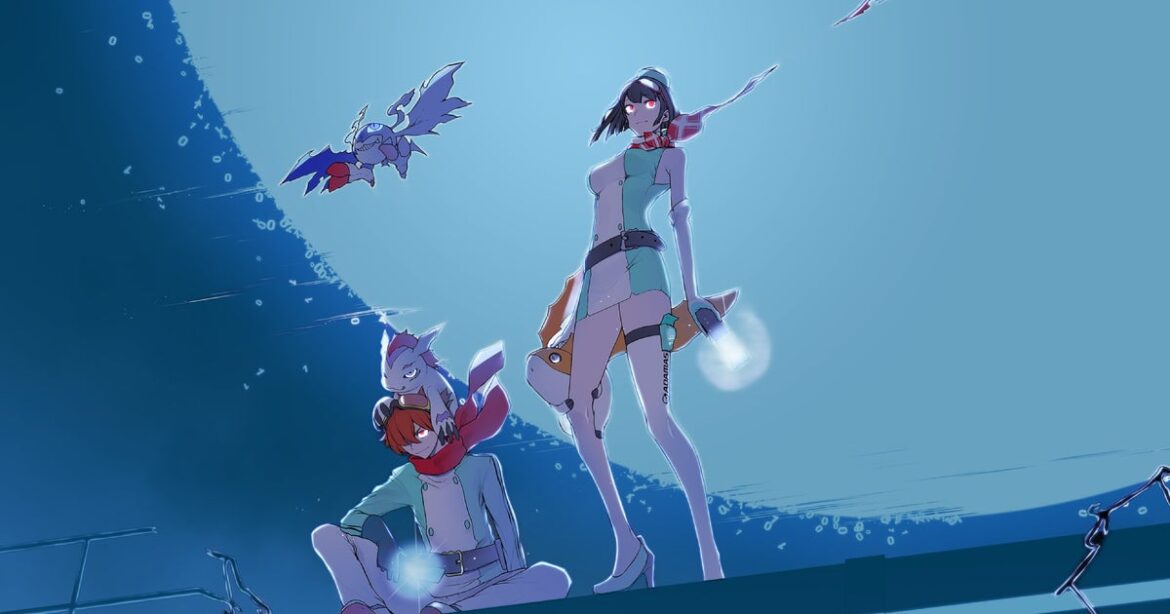
Digimon Story: Time Stranger has all of this. Even down to the doomed Tokyo. But instead of demons and creatures from the pantheon of human mythology, the game is populated with the eponymous Digimon – fascinating and varied creatures that range from cute little guys made out of bubbles to leather coat-wearing dominatrixes with G-cups and a pair of desert eagles. Instead of negotiating with demons to try and get them to join your cause, you’re defeating Digimon and converting their data into living beings that can join your team.

About half the game is set in the real world, real Tokyo. | Image credit: Bandai Namco

From here, you can either train them up and add them to your ranks, or have your other allies cannibalise them to gain their power. It’s not quite the sacrificial/fusion mechanic of MegaTen, but it’s not far off. And the weird complexity in how you get your pals to evolve and grow is just as abstruse as Persona or MegaTen’s fusion systems, too. ‘What do you mean I need to Digivolve then de-Digivolve my allies in order to get the result I want?’, I’d ask my TV screen, as entertained as I am flummoxed. ‘What do you mean I need to socially engineer their personalities to get the most iconic ‘mon?’, I’d shout. ‘What do you mean my only Virus-type is now another Vaccine-type?’, I’d despair, as I get soft-locked into a battle I now have very little chance of winning.

The game is often galling, always surprising, and constantly caught me off guard. I would sleepwalk through one of the many, many beautiful biomes, dispatching Digimon like some teleplay sheriff, gobbling up their data to empower my team of devils, angels and rocket launcher-wielding werewolves. But then I’d come to a boss that would have an absurd health bar, moves that are dirty and cheap, and AI companions that were as useless as the sentient poops that I’d been grinding my team against for the past half hour.

There’s a constant level of surprising tension to Time Stranger that just kept on reminding me of the ‘too-edgy-for-you’ MegaTen games that I am enamoured with. I can imagine Young Dom (who picked up Nocturne as a teenager just because they saw Dante from the Devil May Cry Series on its cover in a games rental shop) would love this game, too: the disarming and lurching difficulty spikes and gated progression puts me in mind of the most arrhythmic PS2 RPGs. This is praise, I think. Digimon speaks to my inner child – who’d have thought?

Lots of Digimon are weirdly human, many overly sexualised. | Image credit: Bandai Namco

But every time I’d start falling in love with this peculiar, high-budget realistation of the Digital World, it would do something to aggravate me. The general pattern for progression looks like this: go to a hub, speak to loads of Digimon, figure out there’s a realm that needs saving, go to the realm. The core conceit in the game is time: maybe you’ll go somewhere, and it’s all messed up and apocalyptic. Story beats send you back in time to where it’s a bit nicer, and you figure out where the timeline schism is, then you go to fix it up. Zone complete. The next area might be the same, or it might start in a better state of repair, then you need to figure out how to stop it getting messed up. It’s linear, it’s braindead, it’s a popcorn RPG. I’m happy with that.

But whilst the earlier biomes (forests made of gears, oceans teeming with data, endless real-world sewers) are fairly straightforward RPG dungeons, the later-game zones are appalling. One area – which looks like something from anime Dark Souls – needs you to convince a frog to teleport you towards a Transylvania-esque castle. Pick the wrong dialogue option and you’re back to the beginning. D’oh! Not too bad on its own, but the dialogue takes an age to complete, the animations are atrocious and slow, and there’s no real indication of what the right answer is. Immediately after this, you’re in a zone caught between heaven and hell (read: ice and fire) that requires an unbelievable amount of backtracking, and seems to be populated exclusively with elevators that take 15 whole years to complete their animation cycle. It absolutely destroys any sense of momentum you have as you approach some story-critical climax markers.

Why? Why? I thought we left this kind of game design back in the 00s. But, for all my adult impatience, there’s something in it that reminds me of the final dungeons of my favourite MegaTen games – areas littered with atrocious teleportation devices, riddled with sadistic traps that reduce your party’s HP to practically nothing, bosses that gain sudden immunity to moves you’ve been using without pause for the past 60 hours. Digimon Story Time Stranger is the same. After breezing through most fights (even if they took a while, in some cases), later bosses suddenly ambush you with baffling modifiers: you can’t heal in this fight, you can’t use items in this one.

I play these games as a completionist: wrapping up every side mission and bonus quest as they become available. If the game had given me any indication that I might not be able to heal or use items in the later fights, I’d have baked strategies acknowledging that into my playstyle. Instead, I often found myself in situations where the only way to proceed was to de-evolve, re-evolve, and retrain all my best ‘mon just to dispatch one boss. Just as I had to, say, fuse and level a whole team of Physical Repellant demons in Nocturne, some 20 years ago, to overcome one unavoidable fight. Go figure.

I’m glad I’m not scoring Time Stranger. My experience with the game ranged from a two-star to a five-star, and it could flip on a dime. Yet, I can’t put it down. There’s something compelling about these egregious ‘gotchas’ that makes me despair as much as it galvanises me. ‘You’re not gonna beat me that easily, you cheap bastard’, I mutter to myself as I begrudgingly DNA Digivolve two of my best ‘mon into one superbeast (that proves just as ineffective as my last setup). Back to the drawing board.

I’ll defeat you with the power of friendship and this gun I found. | Image credit: Bandai Namco

In combat, in level design, in its seemingly utter disrespect for your time, Time Stranger feels like a relic of the PS2 era. Yet I know that there are a lot of people, myself included, that get a cheap thrill from this kind of anachronistic game design. When I first saw Time Stranger announced earlier this year, I assumed it’d be an easy romp, a nice, warm hug from times gone by that would remind me of playing Digimon World and puzzling how to further improve my meat farm back on the PS One. I didn’t expect it to throw up half-buried trauma memories from getting soft-locked by one of the four horsemen of the apocalypse in Nocturne on the PS2.

I got what I asked for, I suppose, even if it is a bit of a Faustian pact. I think I’m also going to go for the Platinum trophy on this absurd, unpredictable, and unexpectedly huge game. I might not be the same person at the end of it, but there’s a stubborn 13-year-old inside me that refuses to let go. And I really wasn’t expecting to have that strong a reaction to a Digimon game after the half-baked experiences in Next Order, Survive, and even the slightly (slightly) better runs through Hacker’s Memory and Cyber Sleuth.

Whatever illicit catnip developer Media Vision has laced Time Stranger with, it’s got its hooks in me, and I just pray that it lets go in time for Pokémon Legends Z-A. But, honestly, I doubt it will.


Source link

October 3, 2025 0 comments
0 FacebookTwitterPinterestEmail
  • 1
  • …
  • 26
  • 27
  • 28
  • 29
  • 30
  • …
  • 764

Categories

  • Crypto Trends (1,098)
  • Esports (800)
  • Game Reviews (772)
  • Game Updates (906)
  • GameFi Guides (1,058)
  • Gaming Gear (960)
  • NFT Gaming (1,079)
  • Product Reviews (960)

Recent Posts

  • This 5-Star Dell Laptop Bundle (64GB RAM, 2TB SSD) Sees 72% Cut, From Above MacBook Pricing to Practically a Steal
  • Blue Protocol: Star Resonance is finally out in the west and off to a strong start on Steam, but was the MMORPG worth the wait?
  • How to Unblock OpenAI’s Sora 2 If You’re Outside the US and Canada
  • Final Fantasy 7 Remake and Rebirth finally available as physical double pack on PS5
  • The 10 Most Valuable Cards

Recent Posts

  • This 5-Star Dell Laptop Bundle (64GB RAM, 2TB SSD) Sees 72% Cut, From Above MacBook Pricing to Practically a Steal

    October 10, 2025
  • Blue Protocol: Star Resonance is finally out in the west and off to a strong start on Steam, but was the MMORPG worth the wait?

    October 10, 2025
  • How to Unblock OpenAI’s Sora 2 If You’re Outside the US and Canada

    October 10, 2025
  • Final Fantasy 7 Remake and Rebirth finally available as physical double pack on PS5

    October 10, 2025
  • The 10 Most Valuable Cards

    October 10, 2025

Newsletter

About me

Welcome to Laughinghyena.io, your ultimate destination for the latest in blockchain gaming and gaming products. We’re passionate about the future of gaming, where decentralized technology empowers players to own, trade, and thrive in virtual worlds.

Recent Posts

  • This 5-Star Dell Laptop Bundle (64GB RAM, 2TB SSD) Sees 72% Cut, From Above MacBook Pricing to Practically a Steal

    October 10, 2025
  • Blue Protocol: Star Resonance is finally out in the west and off to a strong start on Steam, but was the MMORPG worth the wait?

    October 10, 2025

Newsletter

@2025 laughinghyena- All Right Reserved. Designed and Developed by Pro


Back To Top
Laughing Hyena
  • Home
  • Hyena Games
  • Esports
  • NFT Gaming
  • Crypto Trends
  • Game Reviews
  • Game Updates
  • GameFi Guides
  • Shop

Shopping Cart

Close

No products in the cart.

Close