
Laughing Hyena
  • Home
  • Hyena Games
  • Esports
  • NFT Gaming
  • Crypto Trends
  • Game Reviews
  • Game Updates
  • GameFi Guides
  • Shop
Author

admin

admin

New PlayStation 6 tech all but confirmed by Sony and AMD - and it looks like it'll make its way into other hardware too
Game Reviews

New PlayStation 6 tech all but confirmed by Sony and AMD – and it looks like it’ll make its way into other hardware too

by admin October 9, 2025


Sony and AMD just announced three key technologies that look likely to come to the PlayStation 6 and future AMD graphics cards, with PS5 system architect Mark Cerny and AMD senior vice president Jack Huynh teaming up to deliver the news. The talk is fairly technical, but the three core features – Neural Arrays, Radiance Cores and Universal Compression – look set to make a big impact on future AMD-based hardware. The main goal is speeding up computionally-expensive ray tracing and path tracing in some novel ways, as well as reducing the cost of the upscaling and denoising techniques they rely on.

Let’s start with Neural Arrays. In short, this is a new arrangement of the dozens of Compute Units (CUs) that make up a graphics processor like that in the PS5 Pro. Normally each of these CUs work alone on a bite-sized piece of the puzzle, which makes sense for most tasks, but can be inefficient for upscaling techniques like FSR or PSSR. Neural Arrays therefore link multiple CUs together in a “smart, efficient way”, like a “single, focused AI engine”.

The benefit is that this ought to allow for bigger (and therefore higher quality) machine learning models, with less overhead and better scalability. To say it another way, it means that an upscaling algorithm like PSSR ought to run faster at a given quality level, or accomplish more in a given time frame. The same speed-up also applies to denoising algorithms, which are important for ray-traced or path-traced graphics.

Here’s the full announcement. Watch on YouTube

Huynh also promises that Neural Arrays will allow for new features, including “dedicated innovations that bring cinematic rendering to an entirely new level.”

Radiance Cores are the second new technology, and they’re firmly a hardware change. Essentially, this is a new dedicated hardware block in next-generation AMD graphics processors that’s “designed for unified light transport”, ie ray tracing and path tracing. In the PC space, Nvidia has long held a ray tracing performance advantage thanks to its RT cores, and it looks like finally AMD is adopting a similar strategy.

Just as other dedicated hardware we’ve seen appear in graphics cards over the years, such as those that deal with media encoding or AI processing, Radiance Cores accomplish their given task faster than doing the same thing on more generic hardware. This speeds up the intensive work of ray traversal – “digging through complex data structures to locate where the millions of rays being cast hit the millions of triangles in the scene geometry”.

As well as the speed-up from having dedicated hardware, this change also unburdens the CPU and the rest of the GPU – so that they can perform the things they’re best suited for, such as simulation and geometry on the CPU and shading and lighting on the GPU.

Neural Arrays link up Compute Units in the GPU into larger groups to work on upscaling or denoising more efficiently.

Radiance Cores include dedicated hardware for every part of ray traversal, speeding up processing and reducing load elsewhere in the GPU and CPU.
Image credit: Sony

The final bit of tech Sony and AMD announced is called Universal Compression, and thankfully it’s a bit easier to explain. In short, it’s a system that compresses everything that goes out to GPU memory, rather than just a few data types like textures, as is currently the case on the PS5 and PS5 Pro. Again, this is along similar lines to an existing Nvidia technology, in this case Neural Texture Compression.

By adding this compression step, effective GPU memory bandwidth is much higher. That means frame-rates might increase if you’re bandwidth-limited, but more importantly it allows for higher-quality assets and reduces power consumption too. This technique has broad positive implications, but it also specifically helps make both Neural Arrays and Radiance Cores more effective.

These technologies currently exist only in simulation, according to Cerny, but clearly both parties are confident enough to detail them at this early stage. Huynh also mentions that AMD is aiming to bring the technologies to developers “across every gaming platform”, which would follow in the company’s general approach of open-sourcing its graphics innovations.

Universal Compression is a more extreme version of the Delta Color Compression used on the PS5 and PS5 Pro, which compresses all data sent to graphics memory. | Image credit: Sony

It will be fascinating to see how these technologies work when they start to be realised in real hardware, and given the Project Amethyst partnership thus far, it seems reasonable to assume that the two companies will make further announcements over the next few years as the tech gets closer to completion – and when the expected PlayStation 6 is officially announced.

Beyond the rumoured PlayStation 6, we could also see these approaches being used in a PlayStation or Windows-based gaming handheld. Power consumption and memory bandwidth limitations are key challenges for any mobile form factor, so no doubt the likes of Valve, Asus and Lenovo would be mighty interested in any significant advancements. Valve has famously said that they’re waiting for a “generational leap” to justify a Steam Deck 2, and this might just qualify.

Similarly, this is huge news for fans of AMD desktop graphics cards, which have traditionally offered great price to performance in rasterised games and plenty of VRAM, but have fallen behind Nvidia alternatives in terms of RT performance and other features. AMD could massively close the gap here, and that’s an exciting prospect.

Either way, I’m happy to see Sony and AMD share the fruits of their partnership so openly, and it’s certainly food for thought when it comes to seeing how Sony, AMD and other tech giants are looking to circumvent the rise in silicon costs that has prevented faster, cheaper models from arriving this console generation.
Source link

October 9, 2025 0 comments
0 FacebookTwitterPinterestEmail
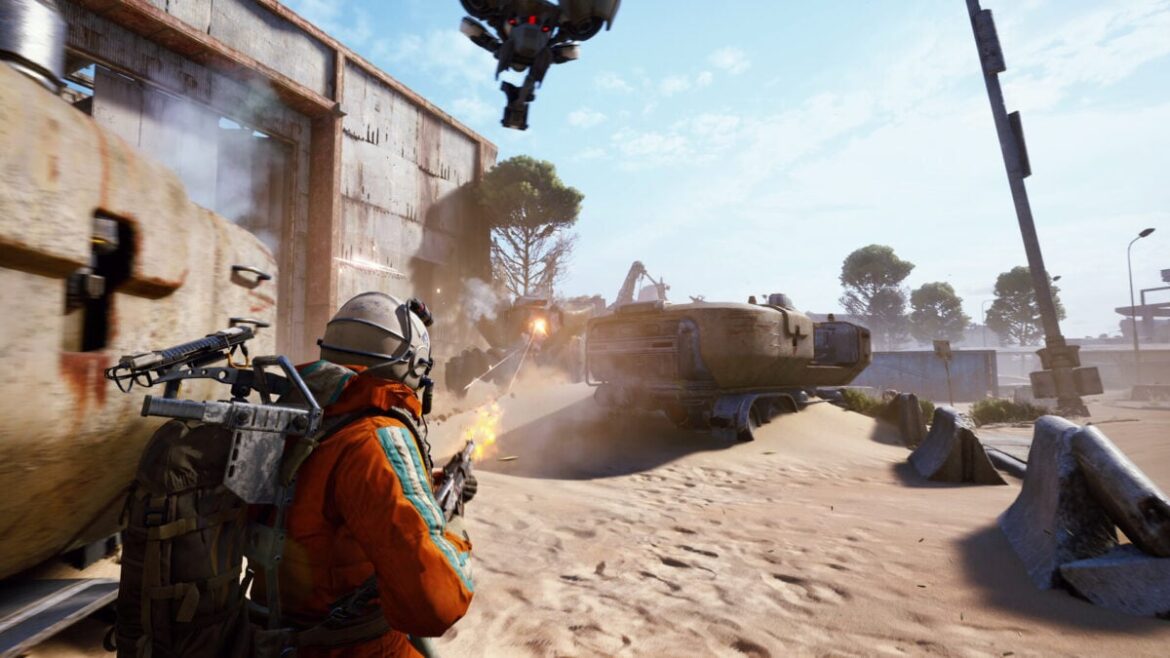
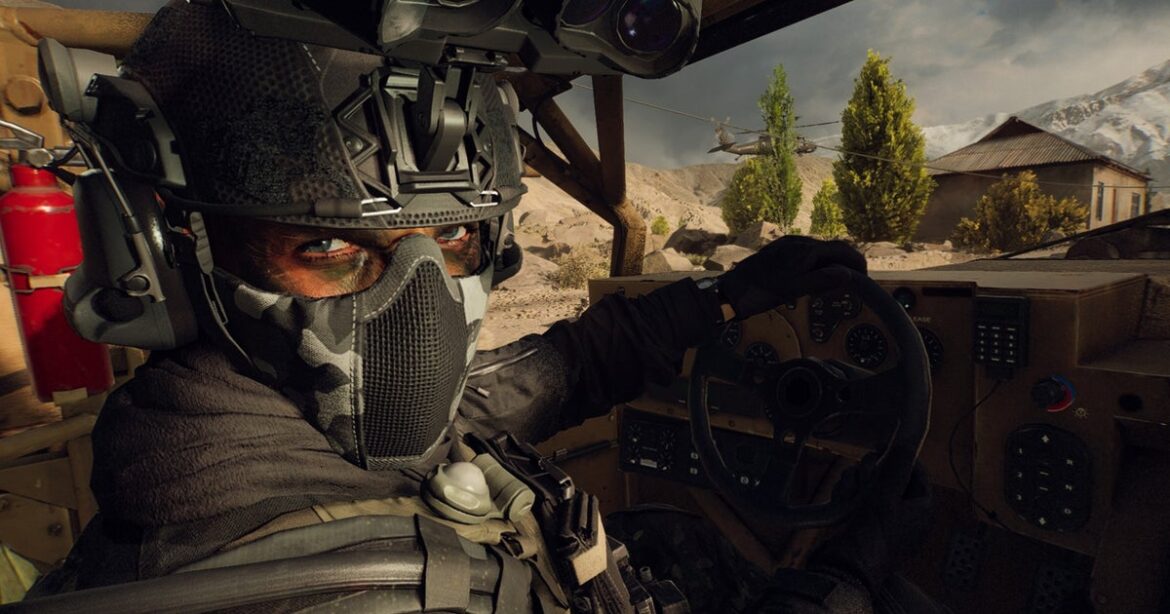
A player character opens fire in the desert.
Game Reviews

Arc Raiders Wants To Make Progression Wipes Less Unfair

by admin October 9, 2025


In most extraction shooters, as well as a number of online survival games, players are all-too-familiar with the necessary evil known as a global wipe, in which everyone’s inventory and stats get reset to start all players off again on the same footing. It can sting a bit, but it helps balance out the game for newcomers, as folks who’ve been playing for years could otherwise build up a virtually limitless stockpile of goodies to maintain supremacy. Upcoming PvPvE extraction shooter Arc Raiders, however, has some different ideas on how to implement this in a way that won’t cost everyone their precious, hard-won loot.

In particular, the developers are trying to solve one of the biggest problems with mandatory wipes: It’s really unfair to those who only have limited windows of opportunity to play the game. It sucks when you log a few hours in one week, get tied up with life stuff for the remainder of a month, then come back to find out even the meager earnings you scored during that first week are now gone due to the wipe. Arc Raiders developer Embark is aiming to solve that.

In a blog post titled “Expedition Project,” Arc Raiders’ design director Virgil said that the studio “absolutely [sees] the benefits a global wipe provides [but] one thing a mandatory wipe does not do is respect the investment of those players who do not have as much time to play overall.”

Enter “Projects,” a feature that unlocks after level 20 with a scheduled eight-week window to complete, after which you’ll unlock the ability to reset your character. Should you fail to finish your project within the eight-week window, you can hold on to all of the progress you made, including your gear. You can then continue your progress during the next eight-week period that opens up.

Read More: Arc Raiders’ 2-Year Delay Explained: Game Was Boring

Rewards for completing a Project include unique cosmetics and buffs that get activated when the next expedition rolls around. “Completing a reset,” the dev blog states, “should never give a player a power or combat advantage over anyone who has not completed a reset.” That last point is particularly important given that Arc Raiders is embracing PvP which, in an extraction context, can often result in some unfair situations anyway.

Wipes can make for a rough introduction to this genre of game, and in the end sort of ensure that the game only appeals to those who have considerably more time to play them. Hopefully Arc Raiders’ Projects will solve that dilemma.


Source link

October 9, 2025 0 comments
0 FacebookTwitterPinterestEmail
Battlefield 6 Review - Good Company
Game Reviews

Battlefield 6 Review – Good Company

by admin October 9, 2025


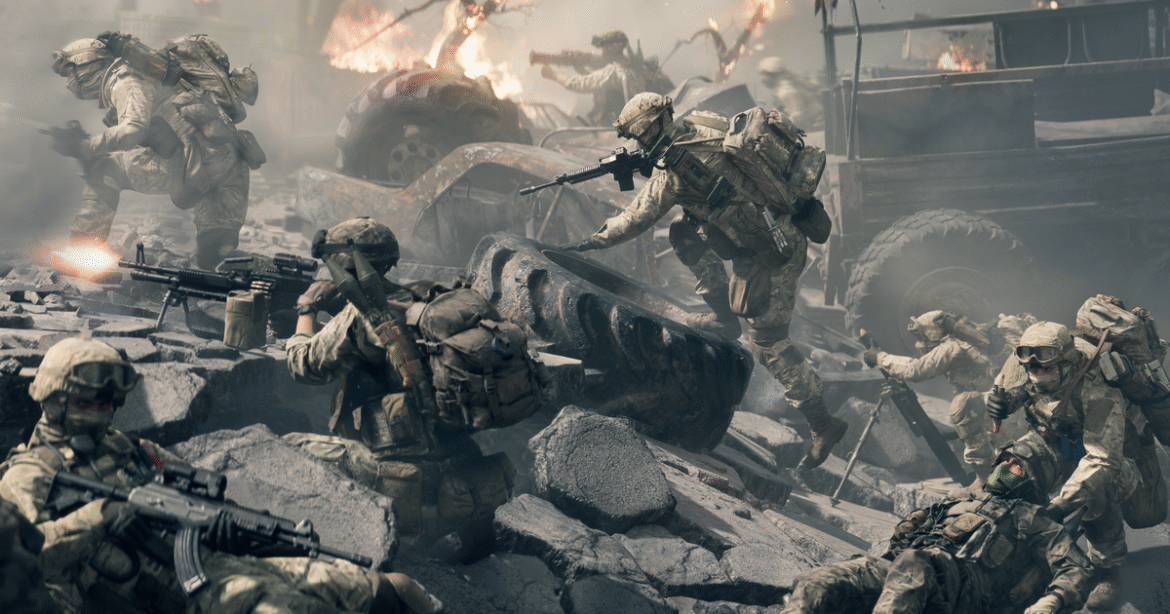
At its best, Battlefield 6 is everything you could ask for from a Battlefield game. Intense, close-quarters firefights transition into long-range skirmishes as control points change hands and the action moves from the tight confines of half-destroyed buildings to open stretches of land. As fighter jets and helicopters swoop overhead, a medic pulls out a defibrillator and rushes into a hail of bullets to revive a squadmate who was just blown up trying to destroy a tank with a handful of C4.

Elsewhere, a sniper taking residence in a high-rise building is snuffed out by a well-placed RPG, blowing a hole in their nest until the entire building eventually collapses in on itself, while just a few yards away, the burnt husk of a helicopter drops out of the sky as its previous occupants parachute to the ground amidst a salvo of gunfire. Battlefield 6 is a return to form for a multiplayer shooter that thrives on emergent chaos.

Size:640 × 360480 × 270

Want us to remember this setting for all your devices?

Sign up or Sign in now!

Please use a html5 video capable browser to watch videos.

This video has an invalid file format.

Sorry, but you can’t access this content!

Please enter your date of birth to view this video

JanuaryFebruaryMarchAprilMayJuneJulyAugustSeptemberOctoberNovemberDecember12345678910111213141516171819202122232425262728293031Year202520242023202220212020201920182017201620152014201320122011201020092008200720062005200420032002200120001999199819971996199519941993199219911990198919881987198619851984198319821981198019791978197719761975197419731972197119701969196819671966196519641963196219611960195919581957195619551954195319521951195019491948194719461945194419431942194119401939193819371936193519341933193219311930192919281927192619251924192319221921192019191918191719161915191419131912191119101909190819071906190519041903190219011900

By clicking ‘enter’, you agree to GameSpot’s

Terms of Use and
Privacy Policy

enter

Now Playing: Battlefield 6 – Good Company (Review-In-Progress)

For myriad reasons, Battlefield 2042 didn’t evoke these moments often enough, leading Battlefield Studios–the collective name for developers DICE, Criterion, Motive, and Ripple Effect–to look to the past for the series’ future. It’s well-documented that Battlefield 3 and 4 were key inspirations in designing the series’ latest iteration, and that’s certainly reflected in how it plays. It’s a safe approach, which isn’t surprising given the negative reception to Battlefield 2042, especially when so many fans have been clamoring for a direct sequel to the series’ fourth mainline entry. As a result, there’s very little about Battlefield 6 that feels particularly fresh or new, but there’s also no denying that it’s quintessentially Battlefield. There’s still nothing else quite like its multipronged chaos, so a return to form is more than enough to get pulses racing, even if it doesn’t necessarily push the series forward.

Of course, the same sentiment doesn’t apply when referring to the game’s single-player campaign. For the most part, Battlefield’s past campaigns have been middling at best. There are standout moments–like Battlefield 3’s jet-fighter sequence and a mission focusing on the Senegalese Tirailleurs in Battlefield 5–but they’re mostly forgettable. One of the few exceptions is 2008’s Battlefield: Bad Company, partly because it successfully satirized the “Oorah” military shooters of the time.

Battlefield 6, by comparison, is one of those shooters to a tee. Full of military terminology and the kind of self-serious dialogue that reads like it was written just to be quotable, it’s an explosive, globe-trotting blockbuster that runs the gamut of expected tropes in both its narrative and mission design.

Set in 2027, the story unfolds in a near-future where the NATO alliance is on the verge of collapse. With geopolitical turmoil at the heart of the matter, several major European countries have chosen to defect from the alliance, allowing a private military corporation called Pax Armata to step into the resulting power vacuum. Pax Armata is armed with deep pockets and the latest technology, prompting countries to turn to the corporation for protection, kicking off a war against what remains of NATO’s forces. Amidst this globe-spanning conflict, you play as various members of Dagger 13, an elite squad of US Marine raiders fighting back against the formidable PMC.

It’s a potentially interesting setup, but despite the politically loaded nature of the entire premise, Battlefield 6 follows the trend of recent military shooters by being as intentionally vague as possible. Pax Armata are a nondescript enemy, filling the role of amorphous cannon fodder in the campaign while providing the game’s multiplayer with a “bad guy” faction. There’s no intent to reflect the real world or answer questions like why France is one of the countries withdrawing from NATO. It’s all shallow set dressing that negatively contributes to a run-of-the-mill story revolving around a villain you need to stop before they do something bad. The ending teases that there might be slightly more to it, but it feels like this is being saved for a sequel or narrative backdrop for a future multiplayer season, so all you’re left with is another bland and forgettable story in a series known for them.

The missions themselves don’t fare much better either. Call of Duty is the obvious comparison point, but while that series has experimented with open-ended missions and social stealth, Battlefield 6 is firmly entrenched in the same linear design of its predecessors. This isn’t an inherently bad thing, but the execution is dated and uninspired, and there isn’t a single mission that’s not overwhelmingly dull. From a night vision-equipped stealth section that’s the closest thing to being on rails without putting you on an actual track, to a standard sniper mission, obligatory tank section, and more than a few instances where you’re firing from a turret, there’s nothing here you haven’t played already, and better, in other shooters.

Gunplay is solid, impactful, and satisfying, but the enemy AI either hunkers down behind cover or charges straight at you, so the moment-to-moment action lacks any sort of dynamism. Even the game’s vaunted destruction is predominantly used just to eliminate snipers and enemy turrets.

Fortunately, Battlefield 6’s multiplayer is “Classic Battlefield” in a more positive sense. The controversial hero-shooter-style Specialists from 2042 are gone, reverting back to a familiar class system featuring four well-defined tentpoles. The Assault is a frontline fighter, breaching through walls with a grenade launcher and shrugging off explosions and flash grenades with a quick jab from an adrenaline injector. The Engineer is vital during vehicular combat, using a blowtorch to repair friendly tanks while launching attacks against enemy armor with various launchers and landmines. The Support is the squad’s medic, able to quickly revive downed soldiers and replenish everyone’s ammunition with bags of extra ammo. Finally, the Recon excels as a sniper, marking enemy units by peering down a long-range scope before landing a few headshots of their own.

You know what you’re getting with these classes, but the signature traits and specialist gadgets tied to each one also help them sing. The Support class, for instance, can lay down deployable cover, giving you something to hide behind when reviving teammates or a surface to mount your LMG on. Meanwhile, the Assault class can capture objectives faster than others and is also supplemented by gadgets–such as a ladder and breaching projectile launcher–that give you more ways to approach defended areas. There’s an enjoyable synergy behind each class and the various loadout combinations you can create, and there’s a definite sense that your individual contributions are helping the team and impacting the result of matches, even if you aren’t necessarily racking up a bunch of kills.

Each class also has a signature weapon type associated with it, providing you with various bonuses for, say, equipping a sniper rifle while playing as a Recon. Whether it’s reduced weapon sway or improved hip-fire accuracy, these buffs are palpable, incentivizing you to use certain weapon types when playing as particular classes.

In a minor shake-up to the traditional class structure, however, any class can use any weapon, unless you’re in a “closed weapon” playlist. This proves useful for completing challenges to rack up experience points from using different weapons, since you can change weapon types without having to switch to an entirely different class, but other than giving you more freedom, there aren’t any other obvious benefits. I appreciate being able to use an assault rifle instead of an SMG when playing as an Engineer, but having the ability to use any weapon with any class does somewhat dilute the class system.

As a result, signature weapon types feel like a minor addition to an otherwise familiar package, and the same is true of the game’s new movement system. Dubbed the “Kinesthetic Combat System,” this buzzword vomit essentially means you now have more control over your mobility and a few new tactical options when opening fire.

Aside from being able to mount your weapon and lean around corners, the most interesting impact of this reworked system is on your movement. Being able to sprint while crouching is especially useful on Battlefield’s large-scale maps, and grabbing a wounded buddy and dragging them to safety through a barrage of enemy gunfire makes for some hilariously cinematic moments. It’s nothing groundbreaking, but for a game that’s aping past glories, small wrinkles like this move the needle towards establishing an identity.

I want to spend some time on fully populated servers before sharing my full impressions of the game’s various modes and maps. So far, it excels where you would expect it to, with classic, large-scale objective modes like Conquest and Rush being the highlights. Truncated modes such as Team Deathmatch and King of the Hill still feel like square pegs in a round hole, essentially stripping away much of what makes Battlefield click–but they’re easy to avoid. There are still a few maps I’m not overly familiar with yet, but the map selection seems pretty strong across the board, offering intense chokepoints through narrow city streets, undulating terrain perfect for vehicular warfare, and plenty of battlegrounds for infantry skirmishes. Check back next week for the final review.


Source link

October 9, 2025 0 comments
0 FacebookTwitterPinterestEmail
BF6 Review: The first Battlefield game I can recommend without reservations
Game Reviews

BF6 Review: The first Battlefield game I can recommend without reservations

by admin October 9, 2025


When you’re as much of a longtime fan of a series as I am of Battlefield, successive fumbles, broken promises and a gradual loss of identity can make you jaded. I’ve been playing Battlefield since the first time I randomly came across BF1942 at an internet cafe circa 2004.

I showed up for almost every single launch since. I vividly remember booking time off from work so I can be up to play Battlefield 3 as soon as servers went live, and arguing with friends over Mumble that the skyscraper Levolution event on Siege of Shanghai crashing servers about 60% of the time was really a minor issue that shouldn’t detract from how good Battlefield 4 was.

I’ve stuck with Battlefield through all of its many, many instances of questionable technical states, troubled launches and what felt like an insistence to needlessly reinvent the wheel with each new game. I’ve kept the faith for as long as I could, until Battlefield 2042 broke me.


To see this content please enable targeting cookies.

Manage cookie settings

Despite that, the idea of a new Battlefield game never stopped getting me excited, even when I could feel that passion diminishing with each new hype cycle. I lost faith that EA, DICE and co could deliver a complete, functional product on day one that honoured the past without shying away from innovation. After decades of waiting, Battlefield 6 is finally that game.

It’s hard to distil my thoughts on Battlefield 6 into one or two sentences. It’s especially challenging to explain to people, many of whom have already played the game in its various pre-launch forms, that it is as good as their first impressions suggested. So let’s get this out of the way early: BF6 is a relatively bug-free game that does away with so much of the unnecessary frustration that’s practically become synonymous with Battlefield launches. This is a polished, competent product that (mostly) delivers on its promises, even if I may not agree with everything it does.

I’ve been playing the launch build for about ten days, and I’ve only had a single crash. There’ve been smaller bugs like tank zoom optics misbehaving, missiles sometimes ignoring flares, and a funny one that would occasionally send me flying after stepping over too much rubble – but I’ve not had to force a respawn a single time to get the game to behave correctly, or quit a match to reset it.

Image credit: Battlefield Studios, EA.

The multiplayer action – the bulk of what you come to Battlefield for – is sharper and more satisfying than it’s ever been. It is simply a joy to move around this world, interact with its tools, shoot weapons, deploy gadgets, drive (or hop into) its many vehicles, and occasionally break walls.

The most impactful changes come to the structure and higher-level design of the experience, and they remain the most disappointing. The Support class now encompasses the Medic role as well as the Support role from past games. It’s the class you go to if you want to dispense ammo as well as medkits. Consolidating roles isn’t necessarily a bad idea, but the result is that you end up with four classes instead of five, which raises the value of some over others, and takes away an element of specialisation and variety that used to exist.

What really saddens me is the erosion of class cohesion through the Open Weapons system, which means that all classes have access to the full complement of weapons in the game. With the exception of BF2042, all previous games locked each class to certain weapon archetype(s). Players never agreed on which one did it best, so believe me when I say it wasn’t a golden solution.

But the point is that there used to be an element of friction that’s now gone. No developer could ever force players to stick to their class’ intended role in a class-based shooter, but Battlefield Studios just gave up trying altogether. The game attempts to get around that by offering Training Paths, which are sub-classes that exist within each of the four. Each path’s associated bonuses somewhat replicate roles from past BF games, but they’re quiet enough that you don’t have to seriously consider them.

Image credit: Battlefield Studios, EA.

The game’s biggest gambit is trying to incentivise players to stick to their class’ assigned weapon archetype. So called Signature Weapons (ARs for the Assault class etc.) gain certain benefits when used by the appropriate class. It’s a bandaid with a small shelf life.

I can confidently say that most players won’t care about those bonuses when it means having to give up the weapon they actually want you to use. Both Training Paths and Signature Weapons merely exist as a suggestion, sort of like recommending you use ice camo on snow maps.

Beyond the tactical shortcomings of this class system, there’s also the element of how it’s going to shape the future of the game. I anticipate BF6 to be very popular, which means it’s going to attract players from Call of Duty and beyond. For years, CoD players have highly-optimised their experience to crowd-source the best weapons and equipment for their builds, ensuring a flat meta where everyone is on the same page.

There’ve been attempts to do the same with BF in the past, but it never quite worked. Battlefield 6’s approach, however, all but welcomes that level of optimisation. I really hope four weeks from now everyone isn’t using the same weapon with every class because, well, why would you use anything else?

Image credit: Battlefield Studios, EA.

Battlefield campaigns have never been the highlight of the experience for me, but I always felt like the teams behind them never got to create something on their own terms – save for maybe Bad Company. I really hoped the same confidence that guided multiplayer would carry over to the single-player this time around, but that sadly isn’t the case.

The BF6 campaign is clearly unfinished. It’s very common to run into scripting events taking too long to trigger, and for audio tracks to overlap or mismatch animations. Encounter design seems to entirely revolve around spawning AI enemies around you until you hit a script trigger. It does, at least, try to be true to Battlefield by offering class gameplay. In almost every mission, each character is assigned a class, and you get to order your squadmates to perform actions you’ll be familiar with from multiplayer.

Teammates can revive, resupply you and put down suppressive fire. They can even blow up walls at the press of a button. The most powerful ability, however, is the Scout’s spot-everyone-in-the-level move. I suspect many of those trying to get through the campaign, just so that they’ve at least played it, will rely on that ability more than any other.

The biggest tell of how quickly the campaign came together is its narrative, which is clearly missing significant chunks. You thankfully never hear characters reference something you don’t/didn’t get to do, so it’s covering its tracks there. But I couldn’t help but be flabbergasted at how impotent of a villain it has, a character who shows up and disappears just as quickly. The game doesn’t give you much reason to empathise with their cause, or enough reason to hate them.

Pre-launch reports have revealed a troubled development for the campaign, and it really shows. It’s a good showcase of the game’s stunning visuals and exceptional sound design on a big TV; the sort of thing you call someone into the room to see, but it’s not something anyone will be thinking about by the end of this year, let alone the end of BF6’s live service.

Image credit: Battlefield Studios, EA.

It’s hard to say whether or not having the campaign in the package boosts or diminishes the overall value of Battlefield 6. There’s also Portal, the second iteration of the mode that lets players create their own experiences using game assets. We didn’t get a chance to play that during the review period, but much like it was in BF2042, I don’t imagine it’s going to be anything but a nice distraction you jump into when you’re looking for a bit of a break from All Out Warfare.

As it is right now, with the quality and quantity of content in the launch package of Battlefield 6, it is incredibly easy to recommend the game to anyone who enjoys multiplayer shooters. It’s an especially exciting proposition for those of us who just cannot keep up with Call of Duty’s rollerskates-based movement and its instantaneous time-to-kill. There’s finally a compelling middle ground between the indecipherability of tactical shooters and the yearly slop of CoD, and it’s one you won’t have to convince yourself to play simply because it’s there, you’ll do it with a big grin on your face because of how fun it is.

Reviewed on PC, code provided by publisher.


Source link

October 9, 2025 0 comments
0 FacebookTwitterPinterestEmail
Battlefield 6 review | Rock Paper Shotgun
Game Reviews

Battlefield 6 review | Rock Paper Shotgun

by admin October 9, 2025


Battlefield 6 review
The new Battlefield is a tale as old as the FPS genre: a vapid military fable salvaged from total irrelevance by a robust albeit unsurprising multiplayer.

  • Developer: Battlefield Studios
  • Publisher: EA
  • Release: October 10th 2025
  • On: Windows
  • From: Steam, Epic Games Store, Microsoft Store
  • Price: $70/£60/€70
  • Reviewed on: Intel Core-i7 12700F, 16GB RAM, Nvidia RTX 3060, Windows 11


All hail the Battlefools! They fan out efficiently from spawn and are instantly massacred in a hail of rifle fire and grenades. Arguments erupt in the chat. Who’s watching the flanks? Were you watching the flanks? I’m not supposed to watch flanks, I’m an engineer – my two defining passions are blowing tanks up and fixing them, a clash of loyalties that routinely gets me run over. You’re a recon – shouldn’t you be reconnoitring? Blame gives way to frantic improvisation as the attackers turn defender. People switch classes, get cut down, switch classes again. Support players plant lines of barricades that somehow avail them nothing against the snipers. Squad leaders ping the objective icon furiously, like babies banging the arms of their prams. One squad tries crawling behind a line of parked cars and is promptly squished by hammer-wielding exterminators.


Then, it happens. A single friendly player gets the better of somebody holding a corner. That player hoots and hollers into the enemy base and scurries under a table like a naughty kitten. Somebody else spawns on the naughty kitten, skips down the hall and wastes three more with a shotgun. Viewed from the spawning lobby, the two infiltrators are flecks of blue hope upon the sullen red box of the objective. The swarm reacts. Bodies move or teleport into the breach. The other side grudgingly gives way.


This is Battlefield 6, a big team combined-arms shooter in which visibility is king and death comes from all angles, elevations and distances. A woozy cacophony in which you live for those moments when the gods of Brownian motion smile, and you somehow become part of a greater whole that has focus and direction. A return to the smoky azure-tangerine stylings and class setups of Battlefields 3 to 4, after the abortive hero-shootiness of Battlefield 2042. A comfortably furnished, very loud, basically unsurprising multiplayer sequel, encumbered by what could be the worst singleplayer FPS campaign I’ve ever sat through – an aggressively bland piece of war porn that fails to hurdle even the low bar set by previous Battlefields. We’ll circle back to the campaign. First, we have to take Bravo.

Image credit: EA / Rock Paper Shotgun


Battlefield 6’s maps are places of meticulously petrified realism where the fires of history never gutter out. Each is an emblem of forever war with an undead soundtrack of baked-in artillery blasts and a generous, but noticeably selective budget of buildings that can be degraded or destroyed for tactical advantage.

Operation Firestorm – restored from Battlefield 3 – is a great, gleaming oilfield. Picture the workers in overalls and hard hats among the pipes, tapping dials and checking their clipboards. Picture the stooped elders walking between the red-capped houses of Tajikistan’s mountainsides, where you still find patterned carpets thrown over compound walls, and the remains of what could be walnut tree groves. In Gibraltar’s Old Town, you lurk behind ornamental fountains and sun-worn shutters, aiming at the heads among the hanging flower baskets. All these shows of location research come second, however, to the letters marking the map objectives. Glorious letters of tomb-grey or obstinate red, which need to be invaded and painted blue.


In Battlefield’s flagship Conquest mode, each objective is a map within the map that drains the other side’s respawn flags when you control enough of them. The objectives develop their own personalities as each match goes on. Here’s Alpha, the haven that never falls: opulent and imperial, gazing proudly from its stoic perch above the Brooklyn pier. There’s Bravo, the cosmopolitan heart of the war, switching sides at a reassuring, almost-seasonal cadence – a roomy marketplace of constant yet somehow judicious murder. There’s Charlie, the lost: a sunken abscess of recon diehards and anti-personnel mines. “We don’t go to Charlie anymore,” grizzled commanders ominously explain to the recruits joining mid-round. And then, of course, Delta, that filthy rat. That flip-flopping appeaser, trembling between loyalties with a half-full capture wheel, never quite conquered, never quite out of reach. “Pick a fucking colour, Delta,” both sides roar, as they charge into each other’s bullets.

Image credit: EA / Rock Paper Shotgun


Sometimes the letters are strewn all over, and we call this Conquest or Domination – the freest of the modes, where an awful player can often make a contribution (and earn some XP) by walking away from the more obvious explosions and locking down an objective everybody’s forgotten about. Sometimes they form a corridor, creating more desperate attrition across a palpable frontline, and we call this Rush or Breakthrough. Escalation is the new kid on the blockbuster: it’s Conquest, but when you capture enough objectives, the lethal twilight zone that surrounds every Battlefield mission area pulls closer. It’s an attempt to blend Battlefield with Fortnite, offering matches that segue from baggy tank and plane skirmishes into shellshocked close quarter mayhem. I think it works well enough, though I think the average round of Conquest offers much the same interplay of scales already, and less rigidly.


And then there are the garden variety FPS modes – deathmatch, team deathmatch, king of the hill. Battlefield 6 does a fair job of them, but they remain Call of Duty’s turf. Certain classes, like the slow-shooting, vehicle-painting recon troops, simply make less sense in these cramped and spiralling, figure-of-eight engagements, however much you tinker with loadouts. In general, it’s always intriguing to follow Battlefield’s attempts to grab some of the “it’s 5.30pm and I fancy a cheeky killstreak” audience, while clinging onto its identity as a game for people who put sustained teamwork ahead of personal gratification. This extends to the limber, but not too agile movement, which (depending on the heft of your equipment) offers just enough leeway to Keanu Reeves your way out of an ambush by means of spasmodic ducking and sliding.

Image credit: EA / Rock Paper Shotgun


The same existential struggle to be, and not to be COD is found in the classes and loadouts. Battlefield 2042’s Operator customisation is gone, and the four broad class archetypes from previous Battlefields are back. The key thing to know about the classes is that they are all bastards. The engineer is that bastard firing the MG turret on the tank coming up the road. You score a very palpable hit on the tank with your launcher, and the engineer slinks out like a spider and fixes it with a magic blowtorch, while the tank driver puts an armour-piercing shell through your ear.


The recon is that bastard somewhere above you who won’t let you stand or run in a straight line. You head to the rooftop to even the odds, and the recon spies you climbing the ladder through an inch-wide gap and swats you back down into rubble. You try some mindgames, doubling back behind cover to throw the sniper off, but the fucker appears to be psychic – either that, or you’re being discreetly monitored through a drone or deployable camera. The support is that bastard behind the self-deployed barricade who just resurrected four guys with her electric paddles, and is currently power-washing your position with mounted LMG fire. The assault is that bastard who just came through the window care of a creatively deployed sloping ladder. You shoot her three times but only in the legs, and she pirouettes irritably and murders you where you lie.


If you’re a returning Battlefield pervert, you may sneer at me for this display of my evident skill deficit. Bad news, General Patton – EA want 100 million people to play this, according to reports, which means you have to let the dirty casuals in. You have to make room in your elite tactical snuffbox for the folks with two left hands who react to the fall of a pin by bouncing a frag off the wall they’re hiding behind and galloping out into the sights of a helicopter.

Image credit: EA / Rock Paper Shotgun


Let me digress into guide writer territory and offer some advice to the greenhorns. My top tip is to unlock the weapon stocks that lessen recoil, as soon as you can. Also, stop trying to shoot people and focus on playing the objective and using your gadgets. If you’re an engineer, chuck down mines at every junction. If you’re support, get used to playing rearguard and laying on your lightning hands. Even if you’re not a support, prioritise reviving people – in Battlefield 6, you can drag KO’d players into cover before stabbing them with your adrenaline pen, and in a shooter where lives are currency, this can be more impactful than taking the point yourself.


It varies by the mode, but all nonlethal actions earn XP and ensure you have toys to pick from when you decide it’s time to give those bunny-hopping streamers a run for their subscriber money. It’s hard to judge off the back of around six hours in EA-organised pre-launch multiplayer sessions, but I think Battlefield 6’s progression and customisation strike a decent balance between the omni-tinkering of COD and the vegetables-before-pudding, know-your-role strictness of the older Battlefields. There are closed playlists that lock classes to certain guns, and open playlists that let you equip weapons to classes they are statistically less capable with. Each class also has a choice of skill paths that let you skew the emphasis slightly – making the support more offensively-inclined, for example, or the recon even harder to see.


The sole saving grace of the campaign – yes, I guess we should finally talk about the campaign – is that it’s an introduction to some of the boomsticks and boondoggles you’ll use in multiplayer. Every individual fight against scripted waves is bookended by crates of replacement weapons, gleaming in the dust of butchered houses like boxes of eggs freshly laid by some kind of Lockheed Martin chocobo. I estimate that at least 30% of my deaths came about while I was in the grip of choice paralysis – urgh, this laser-pointed SMG seems ideal for the tunnels ahead, but that scoped jobbie with the bipod isn’t without its charms. Mind you, it’s also true that I lingered too long over the guns because I had no interest in advancing the story, and no interest in killing the soldiers trying to kill me.

Image credit: EA / Rock Paper Shotgun


To announce that a blockbuster military shooter has a terrible story mode is like saying that water is wet. Next you will tell me that it has a jump button! Next you will tell me that EA’s new owners in Saudi Arabia have a complicated relationship with the press! Fair enough, but I think Battlefield 6’s campaign is uniquely bad, and not just because it’s another fan letter to the US military with a couple of canned Thoughtful Moments. It’s bad because the concept is tedious, the characters have no character, the pacing is non-existent, and the writing is unbearable.


All hail the Battlefools! They fan efficiently out of their base in near-future Georgia, right into a hail of bullets and shells, and in a terrible stroke of misfortune, do not die immediately. The perpetrators this time are Pax Armata, a paramilitary group backed by a formless coalition of ex-NATO countries, who exclusively employ people in balaclavas save for one lairy Scottish badnik whose motivation never really evolves beyond being miffed that he was left behind in some other war. We know Pax Armata are the baddies because the 60-second prologue full of mashed-together TV broadcasts tells us they are, and that’s all the groundwork you’re getting, bucko, now please kill 100 Paxmen during the scripted jeep getaway.


This kind of disdain for dramatic build-up characterises Battlefield 6 throughout. Beyond the opening bash with Pax Armata, you’re whisked off to the house of a CIA agent who is being held hostage by some of the main soldier people. The gunfolk have questions about missions the spook sent them on, which supplies a basis for flashbacks that bounce you between operations. Somebody says “You don’t understand, intercepting that shipment of Cadbury’s Creme Eggs overrode all other priorities.” And then somebody bellows “THAT’S NOT WHAT YOU SAID IN SOUTHEND-ON-SEA,” so off we fuck back to Southend-on-Sea to drone-strike a million ice cream van drivers with terrorist sympathies.

Image credit: EA / Rock Paper Shotgun


For clarity, Battlefield 6 doesn’t have a mission set in Southend-on-Sea – I am trying to avoid spoilers. But it wouldn’t be any the worse for it. The changes of scenery have no meaning because the premise and structure are so childish and brittle. They could set the campaign inside an IKEA store and it would be exactly as exotic, and probably more surprising. I’ll take the Gruen effect over this game’s torn-up, restitched playbook of two-note stealth, innumerable last stands and tank missions that feel like kiss-chase with Dodgems. I’ll definitely take it over saving the President yet again.


The story might get away with more if the writing and tone weren’t so smug. The thundering soundtrack has this inexplicable air of gloating bad-assedness that had me reaching out to give somebody, anybody a wedgie. The dialogue is half “INCOMING” and half smirk. “I don’t know what’s more impressive, the view or the firepower,” somebody announces on a clifftop, and alas, there is no option to immediately kick him into the sea, scream gibberish at his corpse and throw an exploding barrel after him for good measure. “Oh for fuck’s sake, Murph – you going to make us look like heroes?” somebody else yells, causing me to shoot him in the face for 30 seconds in the hope of persuading the game to register friendly fire.


The story theoretically deals in war trauma, but none of the cast are as psychologically twisty as they sometimes propose to be. There’s a character called Hemlock who is Battlefield 6’s equivalent for Modern Warfare’s mystery-man Ghost. He’s regarded as “crazy” by squadmates, because he says stuff like “this sure beats training”. At one point, a comrade loses his cool and shoots wildly at a dead sniper. It’s a brief, awkward effort at demonstrating that your otherwise Terminator-esque squad have souls, but then you’re handed some kind of robot firework and ordered to play whack-a-mole with the tanks up the road.

Image credit: EA / Rock Paper Shotgun


Battlefield 6 sporadically queries its own taste for violence, but here as in many Call of Duties, these bursts of apologia have no real impact on the business of popping skulls like bubblewrap, and just feel like insulting disclaimers. One of the Gibraltar missions takes you through an underground WW2 museum, and gosh, the Strangelovely irony of blasting your way through a memorial to the last time the island was at war. “Seems like it never ends for these people,” somebody mourns later, as you rock the local villages with quadrotor bombs and C4.


Pissed-Off Scottish Badman dutifully ladles out a few moments of who’s-the-real-villain-here convolution towards the finish – a critique of the game’s oorah patriotism that is basically akin to dusting a tank with pistol fire. “Don’t you want to die for something real?” he asks, declining to share specifics. The greater failure is the overall characterisation of Pax Armata, who are literally described in-game as an omnipurposeful grab-bag of all the mercenary nutters and zealots who hate the United States and the NATO world order – a framing that usefully saves the developers from dealing with specific malcontents, and exploring their grievances.


You can set your watch to the script’s cliches. “Storm’s passed,” somebody says, and I had to fight the urge to unplug the PC before somebody else could say, “No, it’s just a break. The worse is still to come”. Helpfully, this turned out to be the end of the campaign. I’m partial to cliffhangers, but this one does feel rather abrupt. Battlefield 6’s singleplayer has reportedly been a troubled project, and it doesn’t seem impossible that what we’re playing is the scorched stump of a more expansive story. Assuming the numbers add up for now-private EA, Battlefield 6 is definitely getting a narrative sequel, or at least some story DLC.

Image credit: EA / Rock Paper Shotgun

Battlefield 6’s campaign makes the most sense when you uninstall it, boot up the online again, and realise that the ensemble flashback story is essentially a very tedious argument over which multiplayer map to load up next. Multiplayer has always been the point here; the singleplayer is just a means of getting certain people through the door. That door swings both ways, however. Battlefield 2042 got it in the neck from some players for not having a singleplayer mode, but Battlefield 6 is evidence that often a singleplayer story is the worst thing you can inflict on a game that just wants to be a massive round of paintball.

The game’s online sandbox spaces have an eerie vitality in their mangling together of realism and colour-coded objective design. I am perennially fascinated by how the swarm thinks in Battlefield online, how that little pebble tumbling through a gap in the fortifications becomes an avalanche. Add a narrative component, however, and you create expectations of meaningful context, consequence and even introspection that the creators of military shooters are seldom able to fulfil.


Source link

October 9, 2025 0 comments
0 FacebookTwitterPinterestEmail
Battlefield 6 Review - Battle Ready
Game Reviews

Battlefield 6 Review – Battle Ready

by admin October 9, 2025


Following Battlefield 2042’s troubled launch, EA rallied the troops (DICE, Criterion, Ripple Effect, and Motive), establishing a unified front with Battlefield Studios. Fortunately, the veteran task force hit the ground running with Battlefield 6, reintroducing the franchise’s tried-and-true traditions, such as an operator-less role system, a manageable 64-player limit, and an original single-player campaign. Most maps are dazzling sandboxes just waiting to be leveled, firearms feel impactful with detectable recoil patterns, and a bevy of demanding progression challenges keep the grind loop fresh. But like in most hard-fought victories, not every wartime decision yields a winning result.

Battlefield 6 pushes the limits of cinematic sensory overload to great effect, even in multiplayer. After narrowly escaping detection by an enemy squad, I sneak into a sniper’s lookout and pile-drive him into the ground with my sledgehammer. Rifle caked with blood, I peer out of a nearby window only to be met by the business end of a tank cannon. I dive, though it’s too late; the rocket pierces the building’s thin walls, and the floor caves beneath me. Suddenly, a brave medic drags my body out of the rubble to patch me up, bullets whizzing past us and cracking against the pavement. Adrenaline-pumping war stories like mine are commonplace, making heady firefights or daring escapes all the more personalized and unforgettable.

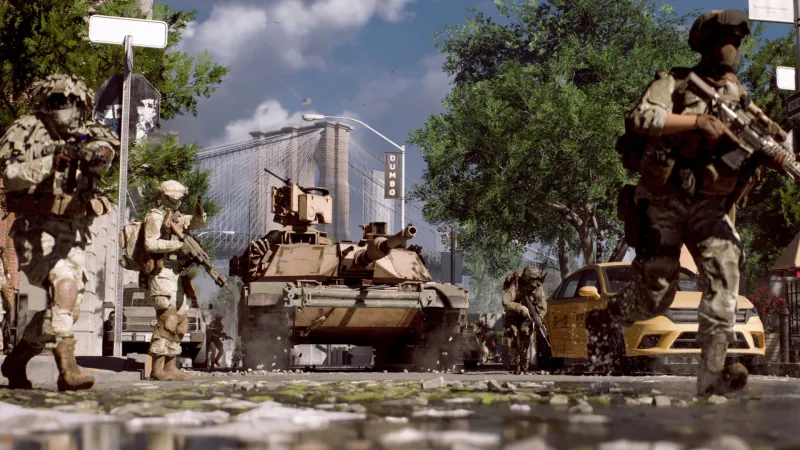
As a globetrotting soldier, you’ll battle in the shadow of the Brooklyn Bridge, under Cairo’s scorching sun, and amid the ever-burning oil fields of Iran, among other arenas. For the most part, these locales are awe-inspiring, brimming with destructible, multi-floored structures, ranging from urban museums to remote construction yards. As a New Yorker, I was floored by the East River views I got from an attack chopper as Dumbo’s ritzy brownstones crumbled into dust below. Contrarily, Liberation Peak, with its mountain-side villages and military installations, and Iberian Offensive, a war-torn district in Gibraltar, failed to impress, featuring dreary, grayscale environments and unremarkable points of interest, like parking lots and rocky outcroppings.


But you’ll be hard-pressed to find a moment of solace to even take in such sights, because the action is so satisfyingly frenetic. Battlefield Studios’ newly implemented “Kinesthetic Combat System” smartly augments mobility and gunplay. When I missed my chance to spawn in a tank at match start, I grappled onto its backplate, avoiding the early-game marathon that previous entries in the series are notorious for. Wanting to drop on an unsuspecting enemy from an elevated vantage point, I recklessly leapt from the ledge and, with a perfectly-timed button press, rolled as I hit the ground, limiting fall damage and closing the distance for a melee takedown in seconds. Moreover, peeking/leaning as well as mounting weapons on practically any surface empowered me to make smarter rotations and prioritize optimal sightlines. I enjoyed contending with the mental gymnastics of mindlessly rounding corners or rushing chokepoints, giving every tactical decision the appropriate weight.

Classic modes like Conquest, Rush, and Breakthrough make a welcome return, offering the same high-octane, all-out warfare experiences that endeared fans to the Battlefield IP many moons ago. These awesome playlists remain fundamentally unchanged and for good reason: If it ain’t broke, don’t fix it. However, Battlefield 6 introduces a new way to play with Escalation, a territorial tug-of-war where two teams clash to control a smattering of points on a map until the number of contestable objectives dwindles. Escalation deftly redefines Conquest’s ruleset by funneling players toward one last, epic battle. Whenever a match neared its end, the electric medley of desperation and excitement was palpable.

Team Deathmatch, Domination, and King of the Hill offer small-scale options for troopers who prefer intimate engagements, especially with shotguns and SMGs. Saints Quarter, the infantry-only map made for these modes, might be the next great close-quarters arena akin to Battlefield 3’s spectacular Noshahr Canals, but spotty spawn points still give rise to cheap instadeaths. At least Portal’s return is slated to assuage my concerns with these less-enticing peripherals through detailed scripting tools that players can use to upload anything from custom horde modes to zany obstacle courses, which still astonishingly award experience. Like the upcoming battle royale mode, I didn’t get any hands-on time with the latest iteration of Portal, so it’s tough to gauge how successful it’ll be this go around, but giving the community game-editing capabilities is always an ambitious creative choice. 

Teamplay remains essential to progression, and this is best exemplified by Battlefield 6’s overhauled class system. Each role – Assault, Engineer, Support, and Recon – has its own signature trait (passive), weapon, gadget (tactical ability), and active ability (ultimate) that level the playing field. I appreciated having improved aim-down-sights speed with LMGs while playing Support, but Assault’s access to deployable ladders added newfound levels of verticality that led to more eliminations and, consequently, significant lead changes. Training Paths (specializations) also make role selection nuanced. The Engineer’s Anti-Armor path increased my rocket count by two, allowing me to handily turn armored motorcades into scrap metal, and when I opted for the stone-cold assassin approach with Recon, I benefited from the Sniper path, which incentivized landing headshots, as victims couldn’t be revived. I loved experimenting with each class, tinkering with gadgets and paths to help catalyze much-needed momentum swings.


Daily, weekly, and career challenges drip-feed unlockable rewards, including numerous attachments, dog tags, badges, and more. Even though Battlefield 6 touts lengthy progression systems, a swath of XP boosts and accessible tasks, like simply netting assists or traveling long distances, nicely balances legendary assignments like nailing a clip-worthy “rendezook” (destroying an enemy aircraft with an unguided rocket while exiting and reentering your own). A fresh assortment of vertical grips, charms, and playercards should make up for the battle scars, but don’t expect to look chic when running and gunning. Weapon, vehicle, and character cosmetics are shockingly uninspired, with several amounting to basic camo designs. At first glance, a whopping 30 woodland skins might seem enticing until you realize the minute differences between them. I know war is hell, but after many hours of exemplary service, I ought to look good while waging it.

Battlefield 6’s weakest link is its narrative. Alongside a hardened crew of Marine raiders supervised by a mysterious CIA liaison, I begrudgingly took the fight to private military company Pax Armata after it violently ousted NATO. In one mission, I hopped out of a transport plane, a thick bed of clouds giving way to a piercingly beautiful afternoon sun. However, the dazzling spectacle was short-lived, as I tried and failed to recall why I was even there in the first place. Major themes, namely, survivor’s guilt, embracing leadership, and expendability, are buried beneath weak dialogue, wooden cutscenes that often stripped control from me during the most exciting action sequences, and a frustratingly bland villain. Beyond completing challenges, there aren’t enough compelling reasons to endure the story. Having a curated single-player offering should add more breadth to the overall package, but this particular element is only puddle deep.

There’s nothing quite like trudging through slick mudfields, down metropolitan streets, and past eroded craters as shells lay waste to abandoned farmsteads, scorching the last vestiges of greenery. The latest entry in the Battlefield series is an amalgamation of immersive moments like this. I only wish some of the postwar rewards matched my many acts of valor and that the campaign reflected the grittiness of its multiplayer counterpart. Despite some military blunders, Battlefield 6 has successfully turned the tide.


Source link

October 9, 2025 0 comments
0 FacebookTwitterPinterestEmail
Battlefield 6 review - the best entry in ages, when it's actually being Battlefield
Game Reviews

Battlefield 6 review – the best entry in ages, when it’s actually being Battlefield

by admin October 9, 2025


Battlefield 6 delivers a thrilling multiplayer reset and a decent, if derivative single-player. But it still displays nagging doubts about what makes Battlefield special.

After the muddled innovations and watered-down warfare of Battlefield 2042, Battlefield 6 was pitched as a return to what made the series great. And it is that…mostly. Gone are the ponderous 128-player maps that stretched 2042’s action too thin, and the pseudo-futuristic setting with gimmicky hero shooter-like abilities. Back are the rollicking 64-player slugfests, the more grounded quartet of soldier classes, the lowercase modern warfare setting, and even the single-player campaign. All this infused with a fetching burned-orange aesthetic and a renewed emphasis on crumbling, billowing destruction.

Battlefield 6 review

When it’s firing on all cylinders, jets screaming overhead, rockets whizzing past your ear, building facades sloughing off their foundations before your eyes, Battlefield 6 is tremendous – undoubtedly the closest EA has got to the series’ heyday in a decade. Yet hidden beneath this confident surface is a series still wrestling with its identity. There’s a nervous desire to please everyone in Battlefield 6, visible in its oddly heavy catering to small and midsize maps and modes, the weird compromise between fixed classes and free weapon selection, and the peculiar sight of camo-clad soldiers who can knee-slide into battle and perform a 180 spin at the touch of a button.

In all of this and more, you can feel Call of Duty breathing down Battlefield’s neck. Luckily, this doesn’t detract from the experience too much, and even improves it in some areas. But it’s frustrating nonetheless, because Battlefield 6 is unquestionably at its best when it embraces its identity wholesale.

Battlefield 6’s marginally speculative setting pitches NATO forces against Pax Armata, a politically inoffensive pan-national private military company named like a deluxe wristwatch. Its globetrotting conflict transports players to Cairo, New York, Gibraltar, and Tajikistan, along with a slightly incongruous return to Iran in fan-favourite map Operation Firestorm.

Here’s a Battlefield 6 launch trailer.Watch on YouTube

Each location provides multiple themed maps for Battlefield’s centrepiece modes like Conquest, Rush and the newly introduced Escalation – which is basically Conquest with the added ability for teams to claim control points for good. While all wonderful to look at, only three of them use the full spectrum of Battlefield’s arsenal, giving you large expanses of terrain and a sky crisscrossed by both jets and helicopters.

From this trio, I’m primarily partial to Tajikistan’s Mirak Valley, which starts one team in an area that looks like No Man’s Land in World War 1, all scorched earth and blackened trees riven by muddy trenches. Its central area comprises two office buildings in construction, with a giant crane situated between them that players can bring crashing down. While not as map-changing as Battlefield 4’s “Levolution” scenes, it’s quite the sight nonetheless.

Elsewhere, the snowy valley of Liberation Peak isn’t quite as distinctive as Mirak Valley, but it’s still a rock-solid Conquest theatre, its craggy undulations riddled with military bases and deliciously destructible villages. Operation Firestorm, meanwhile, is Operation Firestorm, as fundamentally brilliant as it ever was.

Image 1: The campaign uses the desctruction tech to reasonable effect, though it still falls short of Bad Company 2. 2: You’ve got something stuck in your vest. Don’t worry, I’ll pull it out. 3: As well as looking consistently great, BF6 is also superbly optimised, with nary so much as a hitched frame even on my ancient, decrepit rig. 4: Vehicle wreckage quickly becomes a natural part of BF6’s landscape. | Image credit: Eurogamer / EA

All three maps eagerly facilitate Battlefield’s core appeal – that dynamic, open ended warfare that quite literally drops moments of emergent storytelling on you, usually with concussive force. The destruction tech elevates this. The way buildings collapse into rubble is mightily impressive, and blowing out walls to deny objective cover in Rush is every bit as satisfying as it was back in the early 2010s. Practically, it isn’t that much of a leap from Battlefield 3, however. More extensive and granular in its detail, perhaps, but otherwise it doesn’t feel wildly different.

Arguably more important is how BF6 rewards finding your place within the rumbling conflict. Mainly, I was drawn to the engineer role this time around, supporting vehicle assault on control points, taking out pockets of enemy cover with rocket-propelled grenades, sneaking up on enemy tanks and dropping mines beneath their armoured caboose, and sometimes rolling out in armour myself to give enemy positions a good drubbing. That said, medics feel slightly less essential than before, since any player can revive a downed comrade, and even drag them out of the line of fire to help them to their feet in cover.

In any case, those big haymaker maps deliver the goods, and the mid-sized maps mostly do too. These lack the jets and occasionally the helicopters, and are more prone to funnelling you through city streets rather than rolling countryside. New Sobek City is the most open of the mid-table with you battling around and through a cluster of apartment blocks as the Great Pyramids loom in the distance. But I nonetheless have time for the urban warfare of Siege of Cairo and, in particular, Manhattan Bridge, where you battle through New York’s gentrified brick high-rises beneath the vast iron bulk of the Brooklyn Bridge.

Image 1: It goes without saying at this point, but the audio design remains unparalleled. When stuff explodes in BF6, you’ll feel it in your liver. 2: Why play deathmatch when you can play a mode that rains helicopters? 3: Sometimes you’ve just gotta stop fighting and watch what’s going on above you. 4: You can skip this screenshot if you want. | Image credit: Eurogamer / EA

At the smaller scale, however, Battlefield 6 starts to feel defanged. Its infantry-only selection brings two bland flavours of deathmatch, rendering much of the game’s toolset redundant, alongside Domination, which is just Conquest without the vehicles, and King of the Hill, where teams compete to hold a single objective that rotates across the map every few minutes. I quite like King of the Hill. The constant switching between establishing and rooting out defensive positions suits Battlefield’s mode of play well. But I’d happily forgo it and all other infantry modes if it meant having more full-fat Battlefield to guzzle.

There are also a few other elements to BF6 that I’m not wholly sold on, such as that new large-scale mode, Escalation. The idea is that, as control points are wiped off the map by teams claiming them, the action is funnelled into fewer areas, thereby intensifying it. But in my experience, the action never escalated all that much, and these matches ultimately panned out as shorter, less satisfying rounds of Conquest.

I also question EA’s decision to let classes select whatever weapon they choose, rather than mandating they use a specific weapon-type. EA has tried to balance this by making each class proficient in certain guns—Engineers with SMGs, Recon players with sniper rifles, etc. But I’m not convinced this will stop BF6 from becoming Assault-rifle City on launch. Even in the review period—during which maps were heavily filled out by bots—I noticed a distinct lack of LMGs among player medics.

Image 1: Movement and aiming is incredibly slick, though sometimes it’s a little too acrobatic. 2: I think that’s a write off. 3: Don’t worry Mr President, I’ll be your human…Shield. I’ll see myself out. | Image credit: Eurogamer / EA

Then again, the open-weapon mechanic is less annoying than watching players knee-slide through BF6’s meticulously crafted warzones like schoolkids in a freshly varnished gym-hall. This forms part of BF6’s new “Kinesthetic Combat System”, which enables far more responsive movement. To be clear, this is a big improvement overall—mantling over objects has never been slicker. But it strays into being too arcade-y at times. EA has already toned the knee-sliding down in the runup to launch, but frankly, they should remove it entirely. Even in a game where everyone carries a parachute, it feels incongruous and obnoxious, like if Tom Hanks whipped out a skateboard and did a nosegrind along a tank trap in Saving Private Ryan.

It’s worth noting that the modes that were testable during review don’t represent the full suite of options. Battlefield Portal, which allows players to create their own game modes and customise maps, wasn’t available to test prior to launch, while the highly anticipated Battle Royale mode won’t be available until later in the year. What BF6 does have, of course, is a single-player campaign, which sees you play as NATO special forces unit Dagger 13 as they search for the shadowy leadership behind Pax Armata.

This represents the first proper single-player offering BF6 has had in a long time, after the scattershot efforts of BF1 and BFV, and the absence of single-player in 2042. I’m in two minds about it. On the one hand, it does a decent job of using the game’s various locales to create interesting missions. Highlights include a dramatic HALO drop onto the rock of Gibraltar, and a gnarly scramble through New York City as you strive to protect the President (played with admirable sincerity by Benito Martinez) from repeated assassination attempts by drone, by car, and then by massive assault on the shore of the east river.

The campaign delivers lavish first-person cutscenes almost as often as it delivers explosions. They’re a bit annoying, to be honest. | Image credit: Eurogamer / EA

Not every mission is a winner. The level prior to this starts with an inferior rerun of Modern Warfare 2019’s ‘Clean House’—another example of Battlefield 6 aping CoD with dubious results. The obligatory open-world mission also falls weirdly flat, and I actually preferred the campaign when it channelled BF6’s dynamic firefights and explosive destruction through more linear set-pieces. Indeed, the final mission is phenomenal, pulling out all the stops in a way that just about legitimises the whole endeavour. It recalls the older style of cinematic military shooter campaigning, which threw you into a vast, sensorially overloading meat-grinder, and I like to see more of this from both Battlefield and Call of Duty in their single-player offerings.

Battlefield 6 accessibility options

Menu narration toggle, subtitles toggle and various settings. Tinitus SFX and relief frequency sliders. Various colour profiles, camera effect settings. Various hold/toggle settings for controls. Controller vibration toggle and intensity slider. Text-to-speech settings for chat. Menu tutorials, in-game tutorials and reset tutorial toggles. Hint toggles for controls/actions.

The way the campaign ties these missions together is less convincing. It starts with a disconcertingly timely inciting event, namely NATO failing to adequately respond to Pax Armata incursion in eastern Europe. But it quickly devolves into another entry in the adventures of Spec-Ops Man and the Tier 1 Troopers, all falling over one another to be the most patriotic, self-sacrificing psychopaths in military history. It also constantly futzes with timelines and flashbacks and playable characters in a way that makes the story difficult to follow, culminating in a limp ending that presumptuously sets things up for a sequel (or possibly some additional campaign DLC—it wouldn’t be the first time EA has pulled that trick).

Ultimately though, Battlefield 6 clearly understands what makes the series special, even if it occasionally seems reluctant to accept it. Unlike 2042, the fun is easy to find from the outset, and what problems it has are much simpler to fix. It could be more ambitious, and I’d like more of those larger sandboxes to play in, but overall Battlefield 6 is a reliable reset – and, crucially, a very strong foundation for EA to build upon.

A copy of Battlefield 6 was provided for this review by EA.


Source link

October 9, 2025 0 comments
0 FacebookTwitterPinterestEmail
Asustuff16
Game Reviews

ASUS TUF Gaming Laptop (NVIDIA RTX 4050) Still at an All-Time Low With Hundreds Off, but Returning to Full Price Soon

by admin October 9, 2025


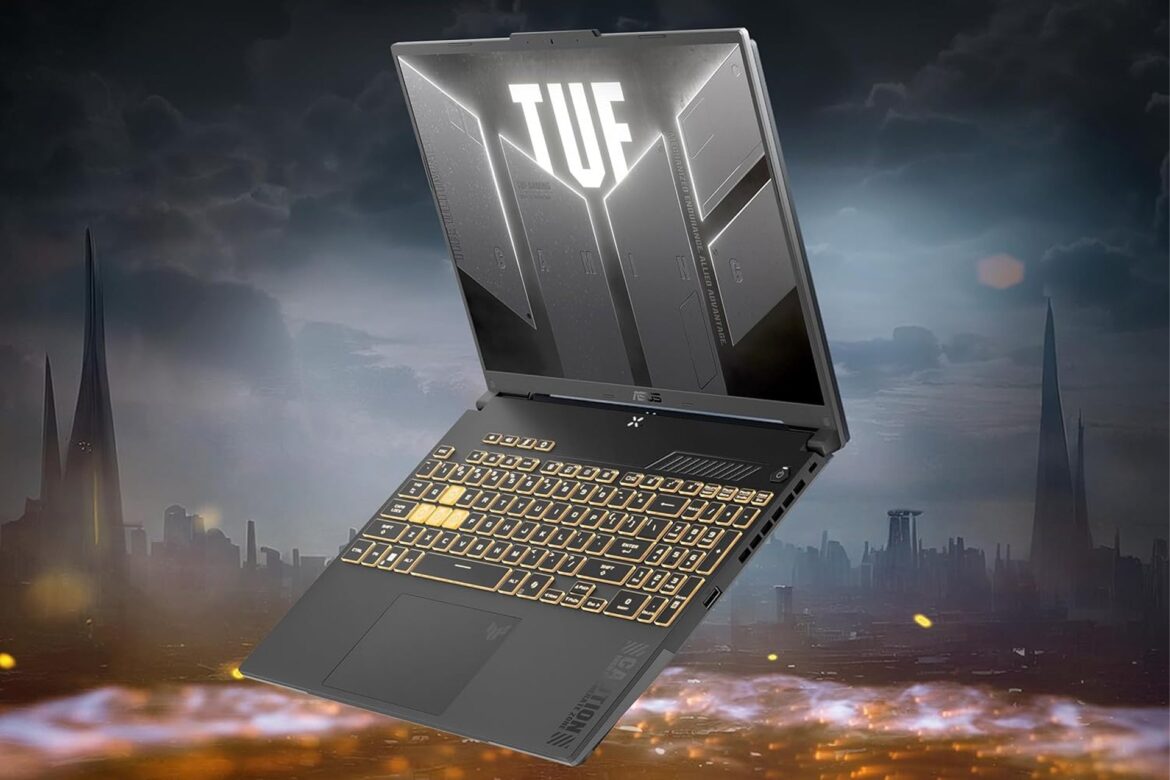
PC gaming handhelds have taken off dramatically in the last several years with the advent of the Steam Deck and then later competitive devices in the form of the Lenovo Legion Go and well as the Asus ROG Ally. While convenient, they really are just designed for gaming and not so much any of the other expectations that come with a PC. That’s why PC gaming laptops still prove themself to be a fine option for gaming on the go while also providing the full capabilities of, well, a laptop. Right now, Amazon has the Asus TUF F16 gaming laptop on sale for an even 23% off. Normally listed at $1,000, the price has come down to just $770. That saves you a whopping $230 for a limited time.

See at Amazon

Specs Deep Dive

What’s we’re looking at here is a 16-inch gaming laptop capable of a 16:10 Full HD resolution with a refresh rate of up to 144Hz and a response time of 7ms. The laptop employs Adaptive-Sync which helps to reduce lag, minimize stuttering, and eliminate visual tearing. That leaves you with a smooth gaming experience. The screen has a thin bezel to maximize screen real estate at 90% while keeping a small form factor so the laptop remains portable.

This model of the Asus TUF F16 is powered by an Intel Core 5 210H processor and is equipped with an NVIDIA GeForce 4050 laptop GPU. It has 8GB of RAM with a PCIe Gen4 SSD with a storage of 512GB. All and all, it’s not the most robust gaming hardware on the market, but at it’s price point, it’s perfectly serviceable to support almost any indie game and a number of larger AAA titles at medium settings.

This gaming laptop works hard to stay cool while you play. It’s equipped with four exhaust vents , 84-blade Arc Flow Fans, and five dedicated heat pipes, plus an anti-dust filter to keep the airflow system clear of debris. You laptop can cool itself without becoming excessively noisy.

Designed for portability, this Asus TUF F16 gaming laptop has been rigorously tested to meet military grade standards. This durable device can withstand vibrations, shock, high altitudes, and extreme temperatures both high and low.

Battery life is reliable and can charge quickly. The 56Wh battery can be fast-charged from nothing back up to 50% in just 30 minutes.

For a limited time, you can save yourself a whole $230 representing 23% of the price of this Asus TUF F16 gaming laptop.

See at Amazon


Source link

October 9, 2025 0 comments
0 FacebookTwitterPinterestEmail
Absolum Review - A Sleeper Hit
Game Reviews

Absolum Review – A Sleeper Hit

by admin October 9, 2025


I have a pet theory about roguelikes: The play-die-repeat loop has been fused with almost every genre imaginable, but the ones that pair best are genres that have always revolved around repeated play. Balatro’s gonzo approach to poker or Hades’ riff on the isometric action game took the core of games that had been built from the start to accommodate repeated runs and then added the incentives of stacking, iterative power-ups and progression on top of them.

Absolum is a game that is fundamentally built around the classic beat-’em-up. That genre is among the earliest, virtually a cave painting in video game history–the classic quarter-muncher. Beat-’em-ups were built for repeated fun because they needed to keep attracting you back to plunk in another coin, but they were also built to be remarkably hard. These qualities, which developers have sometimes struggled to modernize, make the roguelike element fit like a glove. As a result, Absolum is an absolute blast to play, over and over again.

Size:640 × 360480 × 270

Want us to remember this setting for all your devices?

Sign up or Sign in now!

Please use a html5 video capable browser to watch videos.

This video has an invalid file format.

Sorry, but you can’t access this content!

Please enter your date of birth to view this video

JanuaryFebruaryMarchAprilMayJuneJulyAugustSeptemberOctoberNovemberDecember12345678910111213141516171819202122232425262728293031Year202520242023202220212020201920182017201620152014201320122011201020092008200720062005200420032002200120001999199819971996199519941993199219911990198919881987198619851984198319821981198019791978197719761975197419731972197119701969196819671966196519641963196219611960195919581957195619551954195319521951195019491948194719461945194419431942194119401939193819371936193519341933193219311930192919281927192619251924192319221921192019191918191719161915191419131912191119101909190819071906190519041903190219011900

By clicking ‘enter’, you agree to GameSpot’s

Terms of Use and
Privacy Policy

enter

Now Playing: Absolum Review: A Sleeper Hit

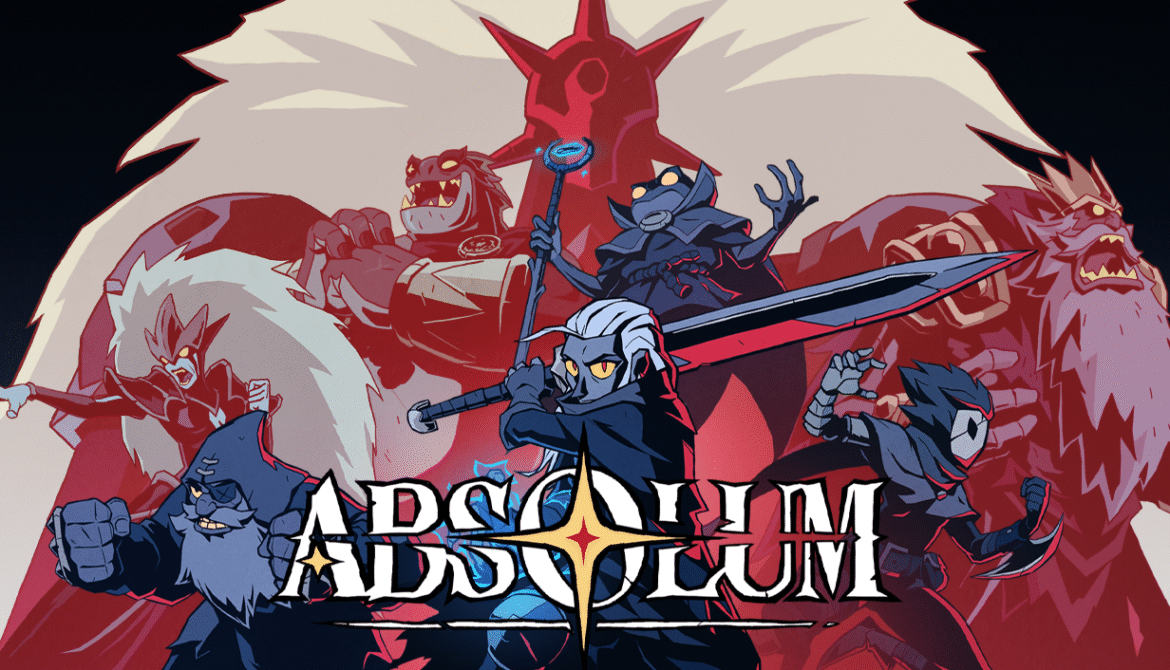
It shouldn’t be surprising that Absolum hews so closely to its beat-’em-up roots. This is an original world from Guard Crush Games, the studio behind Streets of Rage 4. But rather than cleaning up the mean streets in a retro-modern setting, Absolum borrows liberally from swords-and-sorcery classics like Golden Axe. This is a fresh fantasy world in which a cataclysm resulted in the outlawing of all magic in the land of Talamh. A totalitarian ruler, the Sun King Azra, rules the land with an iron fist, and he hypocritically instrumentalizes magic to keep rogue wizards in check. As a small band of rebel wizards, you wage war on the Sun King, making your way to his imperial tower with the blessing of the Root Mother Uchawi, who revives you after each unsuccessful run.

The underlying structure of the story–a scrappy band of rebels against an oppressive regime–is fairly standard, but Absolum excels at the details. The worldbuilding and culture of this magical society is both broad and deep, and it treats magic with a sort of wistful air of mystery. These are forces that are strange and incomprehensible, and the way characters talk about it reflects that they don’t fully understand what they’re tapping into. That accentuates the contrast between your band of freedom fighters, who are innately so tied to nature that they’re practically a part of it, and the steel-ribbed techno-magic of Azra’s forces. Where Azra wants to cage and control this force, your rebels want to let it run wild and free. You get the sense that this is inherently dangerous, which makes your freedom fighters not entirely in the right.

That visual language, shorthanding your struggle as wild and potentially hazardous natural beauty against the suffocating weight of metallic subjugation, is just one way that the beautiful 2D art makes Absolum shine. Characters and enemies have smooth and sometimes comical animations. The environments are lush and drenched with fall colors and wood grains. In fact, the whole game has a very autumnal feeling to it–not just in the setting but the vibes: the sense of something ephemeral and unknowable residing in the changing of nature and the passage of time.

However, this is far from a reflective stroll through the autumn leaves. It’s a beat-’em-up, so you spend the majority of your time knocking heads. Each land you explore on your way to Azra’s tower has its own distinct cultures, enemy types, allies, rideable mounts, and hazards. Your base of operations is permanently affixed to the first area, a woodland filled with hostile goblins, so you’ll get plenty of experience taking them down repeatedly as you progress to later areas filled with lizardmen, living plants, skeleton warriors, and of course, imperial soldiers.

As you might expect from this pedigree, the battle mechanics are rock-solid, with a fighting game level of precision. You’re not just mashing the attack button as in classic beat-’em-ups. Your combo meter rewards you for differentiation, and some enemy attacks need to be dodged or parried to maximize your effectiveness and manage crowd control. As you start to customize your character through a run, you can even purchase Trinkets that will grant you bonuses for Punish (counter) damage or well-timed dodges, so it’s worthwhile to practice the full suite of skills.

Cider taking down fools with style in Absolum

Your class selection is a familiar mix of classic archetypes. You begin Absolum with a choice of just two fighters–the well-balanced swordfighter Galandra, and the rough-and-tumble, blunderbus-wielding Karl. As you explore deeper into Talamh, you meet and eventually befriend the two other playable characters: the agile Cider with her clockwork prosthetic parts, and the ranged frog-wizard Brome. I had suspected I would play mostly as Brome, as I tend to prefer glass cannons, but after experimenting with the different characters, I gravitated heavily towards Cider. Her ability to dart around the battlefield just clicked, and I always enjoyed hearing her hilariously boastful voice lines.

Unlocking characters is just one of many side quests you’ll discover as you explore the branching lands throughout Talamh. Sometimes you’ll be able to complete an entire side quest in one run, but more often than not, characters you meet will hint at exploring in a particular direction to find something new. These could give you even more branching paths, big loot rewards, or even other characters who make home back at your base camp and help you between runs. It’s all very intuitive, as once you start mapping out the branching paths of Talamh, it’s easy to tell if you should take the high or low road out of a stage to reach your intended destination. And even aside from side quests, there’s a steady occurrence of random surprises to keep you on your toes. Absolum nudges you just enough in new directions to constantly be discovering new things and keeping your runs fresh. After several hours I was still discovering new things, and even having completed it, there’s still more I left unfinished.

During a run, you’ll gather gold for buying gear and crystals for unlocking more abilities at camp, but the most-prized treasures are Rituals. These are the power-ups of Absolum, infusing your abilities with magic, and letting you mix them as you please. One ability might create a fiery trail when you dash, while another could build up electric static that bursts across the battlefield when it gets full, or catch enemies in a mini-tornado and lift them off the ground, or summon an army of undead to fight for you.

You never know exactly what you’ll be offered in a given run, but you’ll certainly find some you prefer. My absolute favorite was a Bramble build, which would spawn powerful, throwable daggers and rose-thorn turrets. When mixed with Cider’s agility, dashing away to create distance and then quickly flitting daggers through a gaggle of enemies was just spectacular. And of course, you’ll naturally mix and match some abilities. Later unlocks start to combine Rituals together, letting you summon, for example, a fire-tornado. Some Rituals are gated behind side quests or story progression, giving you that much more reason to explore in different directions.

Choose your fighter in Absolum

Gallery

Once your run has finished, you’re revived by Mother Uchawi and tally your Radiance, aka your experience points from the previous run. Those in turn unlock items that can be used for permanent upgrades, along with the crystals you gathered from your last run. Then it’s time to do it all again, perhaps this time making a few different path choices if you want to pursue a particular side quest, until the Sun King is defeated and beyond.

It’s a joy every time. I didn’t want to put Absolum down, and I slightly resented when life would make me. By tapping into a primordial part of gaming history, Absolum has created something that feels revelatory. The beat-’em-up genre feels changed, now, and I don’t know if there’s any going back.


Source link

October 9, 2025 0 comments
0 FacebookTwitterPinterestEmail
Little Nightmares 3 review | Rock Paper Shotgun
Game Reviews

Little Nightmares 3 review | Rock Paper Shotgun

by admin October 9, 2025


Little Nightmares 3 review

Little Nightmares 3 is a heartbreakingly competent cover act of the series previous entries. It’s got a few truly brilliant moments, but a comparative dearth of imagination.

  • Developer: Supermassive Games
  • Publisher: Bandai Namco
  • Release: Out now
  • On: Windows
  • From: Steam
  • Price: £35/€40/$40
  • Reviewed on: Intel Core i5-12600K, 32GB RAM, Nvidia RTX 4060 Ti, Windows 11

The code Bandai Namco were kind enough to send me for puzzle platformer Little Nightmares 3 included a swathe of bonus costumes resembling characters and monsters from the previous games. Another way to phrase this would be that, before I’d had a chance to get to know this game’s duo of very brave, very doomed children, the game offered me a way to paint over their identities with something I recognised from a time I enjoyed myself in the past.

Hmmmmm, thought I. Then I thought it again. But longer.

Little Nightmares 3 is the first game in its series not made by its creators, Tarsier studios. You’re telling me a tarsier made two of mine (and RPS’s) favourite horror games? Best news I’ve had since the shrimps, thank you. This time, duties fall on Supermassive, of spending a decade forgetting why Until Dawn was good fame. I’ve enjoyed many of Supermassive’s games, but the handover concerned me. Little Nightmares traditionally had a bit more life in its DNA than might well be captured through a series of replicable signifiers related to genre, perspective, and those little elves with conical hats. How would they do?

Watch on YouTube

Reader, they did fine. Little Nightmares 3 is – in a word preceding a second word that makes the second word do things it was not originally intended to do – heartbreakingly competent. Picture the sort of time you roughly assume you might have with a Little Nightmares game not as good as the other two, and you’re most of the way there. To be blunt, I think the game largely displays a real dearth of imagination, intentionality, and most crucially, heart. It does, however, have some neat ideas, an oddly good final encounter, some beautifully creepy environmental art, and at least one moment of pure terror. It’s little as in diminutive, like diminished, as in shrunk, as in less than. But also as in, you know, good job little buddies. You did fine.

Whoaaaa. What if food, but like, too much? | Image credit: Rock Paper Shotgun/Supermassive

That last line was obviously a joke about how patronising I am. I felt it necessary to point this out because, even as I’m about to grouse limerickal about a certain predictability and dryness that hangs over this thing like a frayed rope holding the twelfth pushable crate in the last fifteen minutes, I would like to spend a moment gushing about a kind of storyboarding genius that easily fades into invisibility. The game is about six hours long, and a stunning amount of forethought is needed to keep even an experience of that length progressing at a good, tense clip, with all its crests and lulls and aesthetic and tonal switch ups. It is not the tracks of this ghost train I mourn as much as the bolts keeping them together, so when I whine about ‘intentionality’, I’d just like to make clear that I do not believe something like this can be made without serious intention.

Still, when you make the first set-piece threat in the game a giant creepy infant doll, and later follow this up with a series of disconnected locales, including Spoopy Fairground and Spoopy Asylum, with more scary puppets and scary dolls, I must admit, I start weary and get wearier. The first two Little Nightmares embody a lasting, lingering sadness that elevated them above an easy Burtonesque, Hot Topic creepy-cute. So much of the threat feels either abstract or plain or recycled here. And, when the grotesque becomes commonplace, the grotesquerie starts to resemble a Halloween themed Mario level, dangerous plants and all.

Image credit: Rock Paper Shotgun/Supermassive

Unfortunately, this kind of predictability also extends to a lot of the puzzle design and navigation. I was about halfway through when I realised that I kept having the same experience, over and over. I’d walk into a room full of fascinating and strange objects and marvel at what elaborate scene I’d have to concoct, only to get stuck because I’d been overlooking that the solution was usually just to climb up a thing and push a door to the next bit.

What is somewhat interesting is that both kids have different tools here: a big wrench for Alone and a bow for Low. The AI companion is exceptionally competent at doing what they need to in a given scene, to the point where they basically solve around a third of the puzzles for you. If you’re playing solo, then, you’ve got two playthroughs with distinct demands on your timing and co-ordination during certain scenes, and it might be worth swapping characters with a mate after you’ve finished, too.

Image credit: Rock Paper Shotgun/Supermassive

Scores are obviously anathema to what we do at RPS, although I’m not so strong a person that I can avoid pointing out that if someone were to show me a picture of original series protagonist Six right now, I’d nod sagely and say “indeed”. Again, there’s a couple of really inspired scenes and more than a couple of arresting sights here, good enough to drag me from ‘meh’ to ‘oh damn!’ a few times. It plays like what it is, really: a cover act. A tribute. A flatpack knock-off of a trendy piece. Good quality. Well built. You could hit it with a wrench and it’d barely shake. Then again, I do have to ask whether it’s a good thing that I find myself assessing a game like a piece of furniture.


Source link

October 9, 2025 0 comments
0 FacebookTwitterPinterestEmail
  • 1
  • 2
  • 3
  • 4
  • …
  • 764

Categories

  • Crypto Trends (1,098)
  • Esports (800)
  • Game Reviews (772)
  • Game Updates (906)
  • GameFi Guides (1,058)
  • Gaming Gear (960)
  • NFT Gaming (1,079)
  • Product Reviews (960)

Recent Posts

  • This 5-Star Dell Laptop Bundle (64GB RAM, 2TB SSD) Sees 72% Cut, From Above MacBook Pricing to Practically a Steal
  • Blue Protocol: Star Resonance is finally out in the west and off to a strong start on Steam, but was the MMORPG worth the wait?
  • How to Unblock OpenAI’s Sora 2 If You’re Outside the US and Canada
  • Final Fantasy 7 Remake and Rebirth finally available as physical double pack on PS5
  • The 10 Most Valuable Cards

Recent Posts

  • This 5-Star Dell Laptop Bundle (64GB RAM, 2TB SSD) Sees 72% Cut, From Above MacBook Pricing to Practically a Steal

    October 10, 2025
  • Blue Protocol: Star Resonance is finally out in the west and off to a strong start on Steam, but was the MMORPG worth the wait?

    October 10, 2025
  • How to Unblock OpenAI’s Sora 2 If You’re Outside the US and Canada

    October 10, 2025
  • Final Fantasy 7 Remake and Rebirth finally available as physical double pack on PS5

    October 10, 2025
  • The 10 Most Valuable Cards

    October 10, 2025

Newsletter

About me

Welcome to Laughinghyena.io, your ultimate destination for the latest in blockchain gaming and gaming products. We’re passionate about the future of gaming, where decentralized technology empowers players to own, trade, and thrive in virtual worlds.

Recent Posts

  • This 5-Star Dell Laptop Bundle (64GB RAM, 2TB SSD) Sees 72% Cut, From Above MacBook Pricing to Practically a Steal

    October 10, 2025
  • Blue Protocol: Star Resonance is finally out in the west and off to a strong start on Steam, but was the MMORPG worth the wait?

    October 10, 2025

Newsletter

@2025 laughinghyena- All Right Reserved. Designed and Developed by Pro


Back To Top
Laughing Hyena
  • Home
  • Hyena Games
  • Esports
  • NFT Gaming
  • Crypto Trends
  • Game Reviews
  • Game Updates
  • GameFi Guides
  • Shop

Shopping Cart

Close

No products in the cart.

Close