

Laughing Hyena
  • Home
  • Hyena Games
  • Esports
  • NFT Gaming
  • Crypto Trends
  • Game Reviews
  • Game Updates
  • GameFi Guides
  • Shop
Author

admin

admin

How to Watch 'Bluey' Without a Streaming Service
Gaming Gear

How to Watch ‘Bluey’ Without a Streaming Service

by admin September 23, 2025


No matter what is happening in the world, the state of entertainment within the digital landscape has locked consumers into dependence on streaming services to access their favorite shows and movies, rather than owning anything outright. For instance, Bluey dominates as the Australian indie animation studio phenomenon that could. In the United States it’s one of the most watched television shows… and happens to be distributed by Disney.

When a public boycott against Disney emerged over the suspension of Jimmy Kimmel, the move struck the public as a knee bent toward the United States’ current administration’s ongoing attacks on free speech; his freshly allowed return still comes as too little too late to get back in the goodwill of a public whose trust has been broken.

Complicated circumstances like this (and other public boycotts with major corporations placed on the BDS movement’s list of targeted companies for complicity in Israel’s genocidal invasion of Gaza) may only become more frequent as conglomerates are bought by other mega-corporations in a tumultuous political climate. Public action targeting subscription cancellations, among other things, clearly remains a viable response and tactic on collective levels. In leveraging that as fans of stories and pop culture, we have been once again reminded of the power of how physical media is still a viable option to reduce our reliance on streaming subscriptions.

Now more than ever, because we don’t know how governments or studios themselves may choose to retaliate, there’s a potent reminder to build out and preserve your physical media collections, and there are many ways to do it—even for huge streaming shows like Bluey. Luckily in this case, in spite of its importance to Disney’s bottom line, the show isn’t made at a major in-house studio, so if you want to reduce your online media consumption or participate in boycotts while not directly supporting streaming platforms, here’s how in the case of one Australian Heeler in particular.

Buy Bluey Seasons on DVD

© Ludo Studio

You can buy Bluey seasons on DVD (most are available) and Blu-ray at major retailers such as Best Buy, Target, Walmart, and Amazon. Plus, you can also probably nab not only home DVD players but also portable ones too, if you need Bluey on the go.

Purchase Bluey online

All three seasons of Bluey can also be purchased digitally directly through Apple, Amazon Prime, YouTube, and Fandango at Home. Since episodes start at $1.99 a pop, it’s still cheaper to buy the DVDs and rip them onto your own personal drive (through services like Plex) for owned digital access.

Rent Bluey with your library card

© Ludo Studio

Support your local library; they need that now more than ever! There you can rent Bluey, as well as any movie, show, or book you want to enjoy and protect community spaces where access to media and knowledge should still thrive for generations to come. You’ll have to check with your local library to see if they have copies of the show—you can use tools like the federal library finder or the third-party libraryfinder.org to find out where your local library is.

Want more io9 news? Check out when to expect the latest Marvel, Star Wars, and Star Trek releases, what’s next for the DC Universe on film and TV, and everything you need to know about the future of Doctor Who.





Source link

September 23, 2025 0 comments
0 FacebookTwitterPinterestEmail
Game Developer Conference rebrands as GDC Festival of Gaming: "the industry is changing and so are we"
Esports

Game Developer Conference rebrands as GDC Festival of Gaming: “the industry is changing and so are we”

by admin September 23, 2025


The Game Developer Conference is rebranding as GDC Festival of Gaming, with the next event taking place March 9-13, 2026, in San Francisco, California.

Announcing the change on social media, the organization claimed it was “changing the game” as “the industry is changing and so are we.”

“The landscape has transformed. Budgets are tighter. Attention is fractured. Discovery is harder than ever. New tech and tools have redefined who can create. Our community needs more connection, visibility, and support,” the organizers explain.

“The Festival of Gaming exists to meet your needs — bringing the entire industry together at a moment that matters. More Connection. More Opportunity. More Relevance.

“From conference to industry game changer, [GDC is] the full game-making journey, in one place.”

There will be a new pass structure for March 2026’s event, with “more access” and “no more trade-offs” so full access is “the baseline – not the exception.” The Festival Pass replaces All Access at a “dramatically” lower price, with start-up and academic discounts available.

The next GDC conference — now GDC Festival of Gaming, of course — is scheduled to take place from March 9, 2026 to March 13, 2026 at San Francisco’s Moscone Center.

The organizers of this year’s Game Developers Conference revealed that almost 30,000 people were in attendance. This matches 2024’s figure, but there was an increase in exhibitors at San Francisco’s Moscone Center from 325 to 400.

Over 1,000 speakers took part in the event, which hosted 750 sessions, workshops, roundtable discussions, and networking opportunities. GDC 2025 also introduced the first annual GDC Nights after-hours event, which ran on March 17 and March 20, which welcomed more than 6,000 attendees.


Source link

September 23, 2025 0 comments
0 FacebookTwitterPinterestEmail
New AI System Predicts Risk of 1,000 Diseases Years in Advance
GameFi Guides

New AI System Predicts Risk of 1,000 Diseases Years in Advance

by admin September 23, 2025


In brief

  • Researchers unveiled Delphi-2M in Nature, an AI that forecasts risk for 1,000+ diseases up to 20 years out.
  • The model outperformed single-disease tools, predicting co-morbidities and generating synthetic health trajectories from medical records.
  • Trained on UK Biobank and validated on 1.9M Danish health records, Delphi-2M shows promise but faces bias, privacy, and deployment hurdles.

Researchers have built an AI system that predicts your risk of developing more than 1,000 diseases up to 20 years before symptoms appear, according to a study published in Nature this week.

The model, called Delphi-2M, achieved 76% accuracy for near-term health predictions and maintained 70% accuracy even when forecasting a decade into the future.

It outperformed existing single-disease risk calculators while simultaneously assessing risks across the entire spectrum of human illness.


“The progression of human disease across age is characterized by periods of health, episodes of acute illness and also chronic debilitation, often manifesting as clusters of co-morbidity,” the researchers wrote. “Few algorithms are capable of predicting the full spectrum of human disease, which recognizes more than 1,000 diagnoses at the top level of the International Classification of Diseases, Tenth Revision (ICD-10) coding system.”

The system learned these patterns from 402,799 UK Biobank participants, then proved its mettle on 1.9 million Danish health records without any additional training.

Before you start rubbing your hands with the idea of your own medical predictor, can you try Delphi-2M yourself? Not exactly.

The trained model and its weights are locked behind UK Biobank’s controlled access procedures—meaning researchers only. The codebase for training your own version is on GitHub under an MIT license, so you could technically build your own model, but you’d need access to massive medical datasets to make it work.

For now, this remains a research tool, not a consumer app.

Behind the curtain

The technology works by treating medical histories as sequences—much like ChatGPT processes text.

Each diagnosis, recorded with the age it first occurred, becomes a token. The model reads this medical “language” and predicts what comes next.

With the proper information and training, you can predict the next token (in this case, the next illness) and the estimated time before that “token” is generated (how long until you get sick if the most likely set of events occurs).

For a 60-year-old with diabetes and high blood pressure, Delphi-2M might forecast a 19-fold increased risk of pancreatic cancer. Add a pancreatic cancer diagnosis to that history, and the model calculates mortality risk jumping nearly ten thousandfold.

The transformer architecture behind Delphi-2M represents each person’s health journey as a timeline of diagnostic codes, lifestyle factors like smoking and BMI, and demographic data. “No event” padding tokens fill the gaps between medical visits, teaching the model that the simple passage of time changes baseline risk.

This is also similar to how normal LLMs can understand text even if they miss some words or even sentences.

When tested against established clinical tools, Delphi-2M matched or exceeded their performance. For cardiovascular disease prediction, it achieved an AUC of 0.70 compared to 0.69 for AutoPrognosis and 0.71 for QRisk3. For dementia, it hit 0.81 versus 0.81 for UKBDRS. The key difference: those tools predict single conditions. Delphi-2M evaluates everything at once.

Beyond individual predictions, the system generates entire synthetic health trajectories.

Starting from age 60 data, it can simulate thousands of possible health futures, producing population-level disease burden estimates accurate to within statistical margins. One synthetic dataset trained a secondary Delphi model that achieved 74% accuracy—just three percentage points below the original.

The model revealed how diseases influence each other over time. Cancers increased mortality risk with a “half-life” of several years, while septicemia’s effect dropped sharply, returning to near-baseline within months. Mental health conditions showed persistent clustering effects, with one diagnosis strongly predicting others in that category years later.

Limitations

The system does have boundaries. Its 20-year predictions drop to around 60-70% accuracy in general, but things will depend on which type of disease and conditions it tries to analyze and forecast.

“For 97% of diagnoses, the AUC was greater than 0.5, indicating that the vast majority followed patterns with at least partial predictability,” the study says, adding later on that “Delphi-2M’s average AUC values decrease from an average of 0.76 to 0.70 after 10 years,” and that “iIn the first year of sampling, there are on average 17% disease tokens that are correctly predicted, and this drops to less than 14% 20 years later.”

In other words, this model is quite good at predicting things under relevant scenarios, but a lot can change in 20 years, so it’s not Nostradamus.

Rare diseases and highly environmental conditions prove harder to forecast. The UK Biobank’s demographic skew—mostly white, educated, relatively healthy volunteers—introduces bias that the researchers acknowledge needs addressing.

Danish validation revealed another limitation: Delphi-2M learned some UK-specific data collection quirks. Diseases recorded primarily in hospital settings appeared artificially inflated, contradicting the data registered by the Danish people.

The model predicted septicemia at eight times the normal rate for anyone with prior hospital data, partly because 93% of UK Biobank septicemia diagnoses came from hospital records.

The researchers trained Delphi-2M using a modified GPT-2 architecture with 2.2 million parameters—tiny compared to modern language models but sufficient for medical prediction. Key modifications included continuous age encoding instead of discrete position markers and an exponential waiting time model to predict when events would occur, not just what would happen.

Each health trajectory in the training data contained an average of 18 disease tokens spanning birth to age 80. Sex, BMI categories, smoking status, and alcohol consumption added context.

The model learned to weigh these factors automatically, discovering that obesity increased diabetes risk while smoking elevated cancer probabilities—relationships that medicine has long established but that emerged without explicit programming. It’s truly an LLM for health conditions.

For clinical deployment, several hurdles remain.

The model needs validation across more diverse populations—for example, the lifestyles and habits of people from Nigeria, China, and America can be very different, making the model less accurate.

Also, privacy concerns around using detailed health histories require careful handling. Integration with existing healthcare systems poses technical and regulatory challenges.

But the potential applications span from identifying screening candidates who don’t meet age-based criteria to modeling population health interventions. Insurance companies, pharmaceutical firms, and public health agencies may have obvious interests.

Delphi-2M joins a growing family of transformer-based medical models. Some examples include Harvard’s PDGrapher tool for predicting gene-drug combinations that could reverse diseases such as Parkinson’s or Alzheimer’s, an LLM specifically trained on protein connections, Google’s AlphaGenome model trained on DNA pairs, and others.

What makes Delphi-2M so interesting and different is its broad scope of action, the sheer breadth of diseases covered, its long prediction horizon, and its ability to generate realistic synthetic data that preserves statistical relationships while protecting individual privacy.

In other words: “How long do I have?” may soon be less a rhetorical question and more a predictable data point.

Generally Intelligent Newsletter

A weekly AI journey narrated by Gen, a generative AI model.


Source link

September 23, 2025 0 comments
0 FacebookTwitterPinterestEmail
Silksong's latest public update fixes its worst boss, but not as much as you're likely hoping
Game Updates

Silksong’s latest public update fixes its worst boss, but not as much as you’re likely hoping

by admin September 23, 2025


Hollow Knight: Silksong’s hitherto beta-only update 1.0.28650 is now a fully public release that any dang fool can download without switching to a Steam playtest branch. I’m still noodling my way through the lower levels of Team Cherry’s new metroidvania, blissfully unbothered by any pressure to review it or write Silksong walkthroughs. As such, I asked our reviewer James to have a look at the patch notes and pluck out any important changes, based on his many, many hours in Pharloom.


A shadow glided over James’s face, then returned and took up residence in one earhole. Wordlessly he outstretched a gnarled finger towards item 3 on the list: “Fixed Savage Beastfly in Far Fields sometimes remaining below the lava.”


Thus my introduction to the Savage Beastfly, an optional Silksong boss that has two iterations. I’ve now done some background reading on Savage Beastfly and – inasmuch as it’s safe to extrapolate from all-caps forum posts – it appears to be Silksong’s most-hated NPC. Not simply a challenging fight but a crushingly unfair and unpredictable one, in the eyes of many players, with complaints lodged against the inconsistency of the creature’s hitbox, its two-mask damage output, its habit of summoning minions, and the whiteknuckle RNG effect of mixing all these things together.

It doesn’t even look that good, the detractors howl. It’s not like Malenia in Elden Ring. It’s just a mallet with wings. Nobody wants to Rule 34 that thing. Well, some people probably do, because that’s the point of Rule 34, but this particular intersection of masochism and formicophilia seems like a rare gift, indeed.


And all of this merely describes the first iteration of the boss. The second introduces lava and destructible platforms, just for funsies. As such, the now-fixed technical issue above with the Savage Beastfly diving into lava and never returning could be styled a positive. Let the bastard stay in the magma, if it loves magma so much. Let it burn forever in a hell of its own creation.


The loathing is so extreme that there is a whole subreddit dedicated to Savage Beastfly and all its works, with 34,000 weekly visitors. Be warned that the subreddit contains a lot of fake reporting about undiscovered, even tougher Savage Beastfly variants, because if there’s one thing Silksong players like doing, it’s rustling each other’s jimmies.


While the Savage Beastfly does appear to savagely beastfly in the face of sporting boss design, I do inevitably wonder whether a piss-boiling abomination like this is a marketing asset for a game such as Silksong. Bosses that are merely ‘good’ and ‘well-designed’ don’t tend to attract dedicated subreddits. Malenia doesn’t have one, as far as I can tell. Nor do Giygas, Psycho Mantis or Sephiroth. I’m surprised I haven’t seen Savage Beastfly cited more in the on-going discussion of whether Silksong’s overall difficulty is key to the mood, or just contrived.


Anyway, the full patch notes are below. They are essentially unchanged from the beta test last week.

  • Added Dithering effect option in Advanced video settings. Reduces colour banding but can slightly soften the appearance of foreground assets. Defaults to ‘Off’.
  • Updated Herald’s Wish achievement description to clarify that players must both complete the wish and finish the game.
  • Fixed Savage Beastfly in Far Fields sometimes remaining below the lava.
  • Fixed rare cases of Shrine Guardian Seth getting out of bounds during battle.
  • Fixed rare case of Second Sentinel knocking the player out of bounds during battle.
  • Added catch to prevent Lugoli sometimes flying off screen and not returning during battle.
  • Further reduced chance of Silk Snippers getting stuck out of bounds in Chapel of the Reaper battle.
  • Fixed various instances of dying to bosses while killing them causing death sequences to play messily or out of sync.
  • Fixed Shaman Binding into a bottom transition causing a softlock.
  • Cocoon positions in some locations updated to prevent it spawning in inaccessible areas.
  • Fixed Liquid Lacquer courier delivery not being accessible in Steel Soul mode.
  • Fixed some NPCs not correctly playing cursed hint dialogues in certain instances.
  • Fixed Pondcatcher Reed not being able to fly away after singing.
  • Fixed Verdania memory orbs sometimes replaying layered screen-edge burst effects.
  • Fixed the break counter not working for certain multihitter tools eg Conchcutter.
  • Fixed Volt Filament damage multiplier not applying for certain Silk Skills.
  • Fixed Cogflies and Wisps inappropriately targeting Skullwings.
  • Fixed Cogflies incorrectly resetting their HP to full on scene change.
  • Fixed Curveclaw always breaking on the first hit after being deflected.
  • Fixed Plasmium Phial and Flea Brew sometimes not restoring as intended at benches.
  • Various other smaller tweaks and fixes.


Source link

September 23, 2025 0 comments
0 FacebookTwitterPinterestEmail
DAAPrivacyRightIcon
Product Reviews

Facebook adds an AI assistant to its dating app

by admin September 23, 2025


Facebook Dating has added two new AI tools, because clearly a large language model is what the search for love and companionship has been missing all this time. The social media platform introduced a chatbot called dating assistant that can help find prospective dates based on a user’s interests. In the blog post announcing the features, the example Meta provided was “Find me a Brooklyn girl in tech.” The chatbot can also “provide dating ideas or help you level up your profile.” Dating assistant will start a gradual rollout to the Matches tab for users in the US and Canada. And surely everyone will use it in a mature, responsible, not-at-all-creepy fashion.

The other AI addition is Meet Cute, which uses a “personalized matching algorithm” to deliver a surprise candidate that it determines you might like. There’s no explanation in the blog post about how Meta’s algorithm will be assessing potential dates. If you don’t want to see who Meta’s AI thinks would be a compatible match each week, you can opt out of Meet Cute at any time. Both these features are aimed at combatting “swipe fatigue,” so if you’re 1) using Facebook, 2) using Facebook Dating, and 3) are really that tired of swiping, maybe this is the solution you need.


Source link

September 23, 2025 0 comments
0 FacebookTwitterPinterestEmail
15 Tips And Tricks To Know Before Playing
Game Reviews

15 Tips And Tricks To Know Before Playing

by admin September 23, 2025


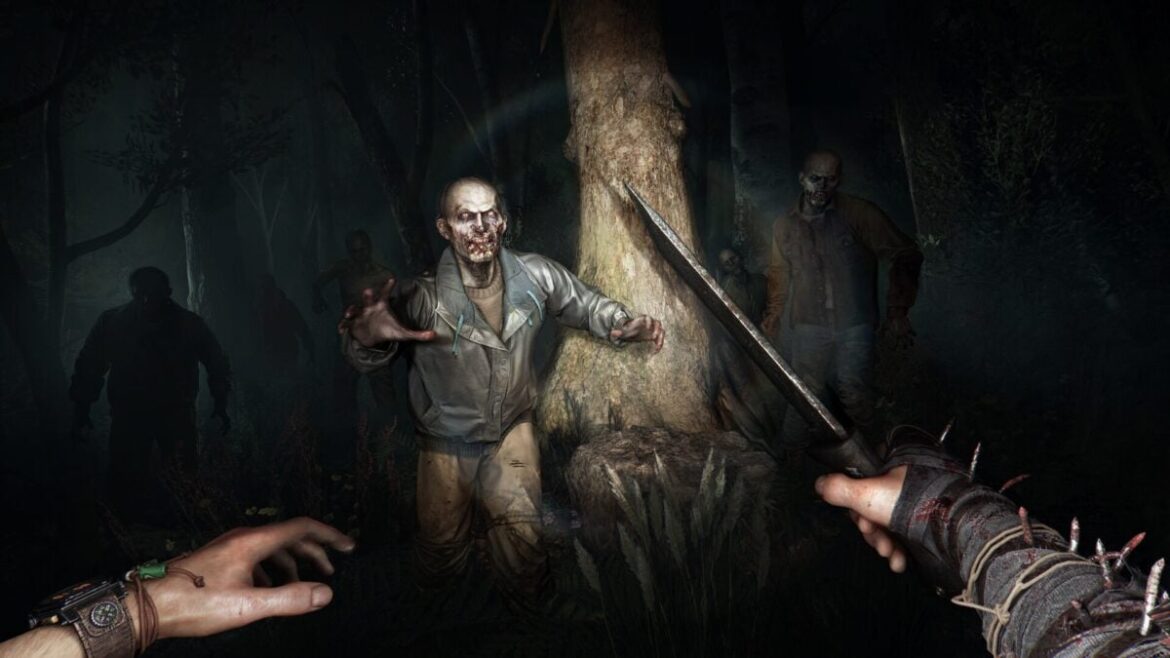
Dying Light: The Beast is here, and despite some odd issues with super rain (which should be all fixed up now), I’ve been having a wonderful time with Techland’s open-world zombie RPG. After spending over a dozen hours with it, as well as playing the past games in the series, I have some tips to share with folks either hopping in for the first time or looking for some extra help during their next zombie-killin’ session.

Kick! Kick! And Kick Some More! 

As with past Dying Light games, you have a kick button. And you should use it and use it often. Kicking the undead doesn’t use much stamina and can keep them from grabbing you, something they love to do in this game. Plus, you can kick them off roofs and ledges for easy kills that never stop being funny.

Grab The Drop Kick Skill ASAP

Speaking of kicking zombies, very early on in Dying Light: The Beast, you gain access to the game’s skill tree. Once that happens, prioritize getting the drop kick ability. This lets you do a more powerful two-footed jump kick that can send multiple zombies and human baddies flying far away. I love to drop-kick zombies into other zombies.

..And Then Get The Safe Landing Skill Next

Oh, and on the topic of great skills to grab early on, I’d also shout out the safe landing skill found in the top section of the skill tree. It lets you drop from extreme heights and take no damage by holding the crouch button right before you land. It saved my ass many times, and it will save your zombie-killing butt, too. Trust me.

©Techland

Don’t Get Attached To Weapons

You’ll likely find some really powerful and deadly melee weapons in Dying Light: The Beast. Big hammers, flaming machetes, etc. All of that stuff is fun to use and can mow down zombies quickly. But don’t get too attached. Weapons can only be repaired so many times, as identified in the menu and weapon wheel, and once you’ve used up their repairs, that’s it. If you have a specific weapon’s blueprint, then you can craft it repeatedly, but if not, you might want to be cautious with the cool exotic knife you found in a random apartment.

How To Throw Weapons In Dying Light: The Beast

When a weapon is out of repairs and about to break, you could dismantle it, or you could just toss it at a zombie, giving it one last hurrah. But for some reason, The Beast does a poor job of explaining that you can toss weapons. To do so on a controller, hold the attack button and then click the right stick. On keyboard, hold the attack button and then hit F. If done correctly, you’ll toss your hammer or sword or whatever at the zombie ahead of you and hopefully crack it in the face.

Always Unlock New Safehouses And Towers

When out and about in The Beast, you’ll occasionally spot towers and safehouse icons on the map. Head to these the moment you see them, no matter what you’re doing. Once you activate these locations, they become safe zones that can save you from the night, which is very dangerous in the game, and can also act as a spawn point when you die.

When Farming Loot, Walk Away From The Bodies To Save Time

Here’s a trick I’ve been using since the first Dying Light game. If you’ve just killed a large horde of zombies and have a dozen or more corpses to search, don’t waste your time searching each one for loot. This takes a while and is tedious. Instead, run away at least a few hundred feet or so and then turn back around. When you return, the corpses should all be gone and replaced with little grey bags containing whatever loot each zombie was carrying. These can just be picked up instantly, no annoying animation needed. And better yet, if a zombie had nothing on them, then no bag is left behind, saving you even more time.

©Techland / Kotaku

You Get Double XP At Night, But Be Careful

And hey, if you’re going to farm hordes of zombies using Molotov cocktails and then pick up all their little loot bags, I’d recommend doing so at night. You get double XP for all your actions during the night, which helps you level up much faster.

Sure, when the sun goes down in Dying Light: The Beast, you have to avoid deadly, fast, and hard-to-kill super zombies. But if you stick near a safehouse or tower and use the method I outlined above, you can always just run back to safety before they get you and farm a lot of loot, resources, and XP in the process.

Use Your Survivor Sense Ping To Quickly Spot Loot

Kyle Crane has a nifty and useful “Survivor Sense” ability from the moment you start Dying Light: The Beast. Use this! It will mark loot and searchable containers near you, making it easier to grab some supplies and get out. It also marks human enemies and special infected, too, which can help you avoid them or get the drop on them and take them out like a ninja.

Pick Up Every Weapon And Dismantle Them For Extra Resources

Yes, grab that crappy crowbar or the shitty broken bat. Grab it all. Then head to your inventory and dismantle those items. You’ll get a lot of extra resources that you can use to craft better gear and weapons, and repair the weapons you actually use.

©Techland / Kotaku

Keep An Eye Out For Random Events

While running around the city and countryside, you might spot a blue icon on your compass. This is a random event, and you should try, if you can, to check these out whenever they appear. Sometimes you’ll find armed guards and good loot. Other times, it might be a person being held hostage by raiders. Or it might just be a random survivor being attacked by a zombie. Completing these awards gives you XP and other goodies.

… Maybe Kill Hostages After Saving Them

Okay, listen, you don’t have to do this. But, as far as I can tell, once you’ve saved a hostage and grabbed the reward from them, the game doesn’t track what happens next. So if you were to kill them and take their weapon so you can dismantle it for some extra resources, nobody in the game will ever know or care. Do I do this? Maybe. Do I feel bad? Yes. Do I have lots of scrap and screws? You better believe it, bucko.

You Can Unlock Safes Without The Code

Sometimes you’ll encounter locked safes in Dying Light: The Beast. You might think that the only way to unlock them is to find the safe’s combination. But you can also just unlock them by slowly turning the safe’s dial and feeling for a vibration. This will let you crack any safe without the combination. This feature is carried over from Dying Light 2, and it’s great.


Source link

September 23, 2025 0 comments
0 FacebookTwitterPinterestEmail
Bitcoin
NFT Gaming

Crypto Sees $1.7 Billion Flush As Bitcoin Crashes To $112k

by admin September 23, 2025


Trusted Editorial content, reviewed by leading industry experts and seasoned editors. Ad Disclosure

Data shows the cryptocurrency derivatives market has seen liquidations of a whopping $1.7 billion as Bitcoin and other assets have plunged.

Bitcoin Has Erased Its Recent Recovery With A Drop Under $113,000

Last week, things looked to be on the up for Bitcoin as its price approached the $118,000 level, but the end of the week brought a setback for the coin. The new week appears to have only accelerated the decline, as the cryptocurrency has opened Monday with a sharp plummet to the low $112,000 levels.

The below chart shows how Bitcoin’s recent performance has looked.

The price of the asset appears to have gone downhill since its Thursday high | Source: BTCUSDT on TradingView

The bearish momentum hasn’t been limited to Bitcoin. Ethereum (ETH) and the altcoins have also plummeted during the past day, with most of them observing larger losses than BTC. Among the top coins, Dogecoin (DOGE) and Chainlink (LINK) have suffered the largest drops at 10.5% and 9%, respectively.

Like is usually the case, the market-wide volatility has meant that chaos has ensued over on the derivatives exchanges.

Crypto Market Liquidations Have Neared $1.7 Billion

According to data from CoinGlass, the cryptocurrency derivatives market has witnessed an extraordinary amount of liquidations during the past day. “Liquidation” here refers to the forceful closure that any open contract undergoes after it has amassed losses of a certain degree (as set by the platform).

Since the price action has been majorly to the downside during the past day, the positions incurring losses would be the bullish bets. And indeed, as the below table shows, the latest liquidations have been extremely lopsided toward long contracts.

The data for the crypto-related liquidations that have occurred over the last 24 hours | Source: CoinGlass

In total, the cryptocurrency market has seen a flush of $1.67 billion inside this window, out of which $1.59 billion of the liquidations involved long positions. Only about 5% of the liquidations ($83 million) affected shorts.

In terms of the individual symbols, Ethereum seems to have contributed the most to the squeeze with $496 million in liquidations.

The breakdown of the liquidations by symbol | Source: CoinGlass

Bitcoin generally tops this chart, but the asset has seen a flush of just $285 million, more than $200 million less than ETH’s figure. The latter’s dominance may be a result of its sharper price decline of 7%, as well as the fact that the cryptocurrency has been getting more speculative attention lately.

Solana (SOL) has been the third largest asset in terms of the metric, with a figure of about $95 million. XRP (XRP), which has a larger market cap than SOL, is behind at $78 million. Dogecoin rounds out the top five with liquidations of $61 million.

Mass liquidation events aren’t exactly a rare sight in the cryptocurrency sector, owing to the fact that coins can be volatile, and leverage can be easily accessible. Even for the standards of the market, however, this latest squeeze has been an outlier in its scale.

Featured image from Dall-E, CoinGlass.com, chart from TradingView.com

Editorial Process for bitcoinist is centered on delivering thoroughly researched, accurate, and unbiased content. We uphold strict sourcing standards, and each page undergoes diligent review by our team of top technology experts and seasoned editors. This process ensures the integrity, relevance, and value of our content for our readers.


Source link

September 23, 2025 0 comments
0 FacebookTwitterPinterestEmail
Crypto Market Prediction: Shiba Inu (SHIB) to Hit 2025's Bottom, XRP: Hope for $3 Recovery Not Lost, Bitcoin Not Losing $100,000, Yet
Crypto Trends

Crypto Market Prediction: Shiba Inu (SHIB) to Hit 2025’s Bottom, XRP: Hope for $3 Recovery Not Lost, Bitcoin Not Losing $100,000, Yet

by admin September 23, 2025


The market has entered a long-term correction period and might lose a serious portion of its valuation. Shiba Inu is getting ready to test out 2025’s bottom at around $0.00001, and Bitcoin is already eyeing $100,000 level. But in the case of Bitcoin and XRP, the correction might not aggravate and keep the overall state of the market neutral.

Shiba Inu weak

There are indications of weakness on Shiba Inu, which could push the token down to its lowest levels in 2025. The asset’s recent break from its long-standing symmetrical triangle structure has put it in a technical position, indicating that more losses are probably next. The 200-day EMA is still acting as strong overhead resistance, and SHIB has dropped below both its 50-day and 100-day moving averages, currently trading at about $0.00001213.

SHIB/USDT Chart by TradingView

The failure to stay above these levels indicates that buyers are losing market control and that bearish momentum is developing. The sell-offs, volume spikes, provide additional evidence that this decline is the result of a wider change in market sentiment rather than just a low liquidity event. With little indication of a reversal, the RSI has fallen near oversold territory, indicating intense selling pressure.

The most likely scenario going forward is a test of deeper levels of support. The next critical area is around $0.00001050, which might represent a new local bottom for 2025 if SHIB is unable to stabilize above $0.00001200. The possibility of SHIB starting a protracted downward trend, and possibly wiping out a large portion of its previous annual gains, would be indicated by a break below this level.

The outlook for SHIB remains pessimistic, due to the lack of significant catalysts in the near future and cautious market conditions. In the coming weeks, Shiba Inu looks set to revisit, or even set, its lowest price of 2025, unless there is a significant resurgence in buying interest or a significant shift in the general sentiment toward cryptocurrencies.

XRP: Things are not so bad

With XRP falling below its most recent support, traders are worried that the asset might be headed for even more declines. Although a breakdown is suggested by the drop below the descending resistance line, the situation may not be as clear-cut as it seems. Notwithstanding the technical flaw, a number of indicators suggest that the breakdown might be a hoax, which would allow for a speedy recovery.

XRP is currently trading close to $2.86, touching levels around the 100-day EMA, which frequently serves as strong support in trending markets, and falling below the 50-day EMA. The absence of notable exchange inflows indicates that major holders are not in a rush to sell off tokens, despite the fact that this move initially appears bearish. This lack of panic selling is a crucial indicator that the market might still level off.

XRP/USDT Chart by TradingView

Volume should also be taken into account. Even though selling pressure caused XRP to crash, the activity spike was not as severe as it has been in the past during liquidation events. This gives rise to the possibility that long-term holders are still in a position to recover, while short-term traders may have been flushed out. The $2.80-$2.85 range will be critical in the future.

The token may return to its previous trading channel if XRP can swiftly regain the $2.95-$3.00 range. But failing to do so puts the market at risk of retesting deeper supports close to $2.60. Although it should not be interpreted as a clear indication of collapse, the breakdown should be handled carefully for the time being.

Bitcoin backpedaling

At $112,916, Bitcoin is clearly weak after recently retreating from the $115,000-$116,000 range. Traders are worried that the top cryptocurrency may lose its six-digit psychological threshold of $100,000 as a result of the correction. However, that risk is still far off for the time being.

BTC is consolidating on the daily chart near $111,800, just above the 100-day EMA, while the 200-day EMA is much lower at about $105,000. It would be premature to worry about a collapse below $100,000 unless Bitcoin makes a clear break below this level, which serves as a crucial long-term support zone. The difference between the 200 EMA and the current price levels indicates that Bitcoin has a significant amount of room to withstand volatility before any existential downside risks materialize.

The fact that volume has decreased during this decline suggests that there may not be strong conviction behind the selling pressure. In addition, the Relative Strength Index (RSI) has cooled, hovering around 45, indicating that Bitcoin is neither overbought nor oversold. Instead of a sudden decline, this neutral momentum suggests a possible stabilization. However, the overall technical setup does have a bearish bias.

After failing to reach new highs, the market is waning, and Bitcoin might continue to face pressure as altcoins also exhibit weakness. With the 200 EMA at $105,000 serving as the make-or-break level to monitor, a further decline toward $108,000-$106,000 will put investor confidence to the test.

All things considered, Bitcoin is losing ground but is not yet in danger of crossing the $100,000 threshold. At $105,000, the structural support offers a sizable buffer. The discussion will only turn to Bitcoin losing six figures if this level fails; this is still a possibility, but not the current situation.


Source link

September 23, 2025 0 comments
0 FacebookTwitterPinterestEmail
ViewSonic's XG275D-4K Gaming Monitor Review: Bright Colors, Muddy Shadows
Gaming Gear

ViewSonic’s XG275D-4K Gaming Monitor Review: Bright Colors, Muddy Shadows

by admin September 23, 2025


Pros

  • Excellent color accuracy out of the box
  • Good build quality and an adjustable stand
  • Fantastic motion clarity
  • The 25-inch 1080p/320Hz mode is a nice perk for esports gamers

Cons

  • No USB hub
  • Poor off-angle viewing
  • Low peak brightness with just average contrast
  • More expensive than the competition when not on sale

Just a few years ago, it would have been impossible to find a high-refresh-rate, 27-inch, 4K gaming monitor like the $500 ViewSonic XG275D-4K, a DFR — dynamic frequency and resolution — monitor that can operate at 160Hz in its native 4K resolution or 320Hz in a 1080p, 25-inch window. Now, you can choose from myriad similar competitors at this size for under $400, many of which offer the excellent text and image sharpness delivered by 4K resolution plus refresh rates par for an IPS display in its price class. 

But, while $500 is a lot for what it delivers, when the ViewSonic is discounted to compete with models like the Acer Nitro XB273K V5bmiiprx — for instance, at review time it was around $390 at Amazon and Best Buy — it may offer enough no-nonsense style for gamers who want a display that can pull double duty at the office. 

Design and features

Why don’t you want to buy it at the manufacturer’s list price? The monitor skimps on features that less expensive monitors tend to include. It has speakers, though they’re low-power, 2W versions which are typically found on cheap monitors (if they include speakers at all). Speakers are always appreciated, though, because they’re at least good for system notifications. But the monitor lacks a built-in USB hub. There’s a single USB-C port with 65 watts of power delivery for mobile devices and video input, but that’s it. And even for the discounted price, it’s disappointingly dim.

ViewSonic XG275D-4K specifications

Price $500Size (diagonal) 27 in/69cmPanel and backlight IPS with LEDFlat or curved FlatResolution and pixel density 3,840 x 2,160, 163ppiAspect ratio 16:9Maximum gamut 94% P3Brightness (nits, peak/typical) 300 nitsHDR HDR10Adaptive sync FreeSync Premium, G-Sync CompatibleMax vertical refresh rate 320Hz (1080p), 160Hz (4K)Gray/gray response time (milliseconds) 2Connections 1 x DP 1.4, 2 x HDMI 2.1, 1 x USB-C in (65W PD)Audio 2W stereo speakers, headphone jackVESA mountable Yes, 75 x 75mmPanel warranty 3 yearsRelease date March 2025

Setting up the ViewSonic XG275D-4K is straightforward, and I was struck by how solid, if simple, the screen’s construction and accompanying stand are. The stand is very sturdy, meaning the panel doesn’t wobble while typing, and has a large opening for routing cables. Its adjustability is top-notch for a gaming monitor, allowing you to adjust height, swivel and tilt, as well as pivot the screen vertically. The display and stand both seem very durable.

The ViewSonic has the bare minimum of ports.

Lori Grunin/CNET

Navigating the built-in on-screen display is simple, and helpfully, the battery life of the attached device is shown at the bottom of the menu where applicable, as is the current brightness level. When you open the OSD for the first time, it prompts you to enter your country, and if you’re in the US, it automatically enables Eco Mode and caps the brightness. This is an easy change to revert, though.

Performance

It’s a good thing the XG275D-4K’s performance largely makes up for the lack of features. At 4K/160Hz, there’s little discernible motion blur when tracking fast-moving objects. I typically test fast displays with games like Hades and Enter the Gungeon, where reaction time is critical, and the monitor held up admirably. For esports players, or gamers with systems that aren’t powerful enough to drive a high-refresh-rate display at 4K, the aforementioned 1080p mode is a great way to push more frames. It requires enabling the mode in the OSD and then restarting the attached system to switch between resolutions, which can be awkward.

Lori Grunin/CNET

The color accuracy is more impressive. I measured an average delta E of 1.7 at maximum brightness, both in a 10% center window and full screen, as well as a maximum delta E of 4.7. That’s an excellent out-of-the-box result and makes the XG275D-4K a strong contender for a display one can both game and use for color-sensitive photo or video work after calibration. ViewSonic doesn’t provide a factory calibration report anywhere; however, as this is technically a gaming monitor (though more and more manufacturers offer them these days).

Color gamut coverage is about average for an IPS display, although there’s no way to clamp the gamut to sRGB, a disappointing oversight that means colors appear oversaturated in the default viewing mode, especially reds. But it also means that colors pop in games, and bright titles like Avowed, the Spider-Man series, and Hearthstone look vibrant and lively, while the high pixel density makes edges especially sharp. 

But contrast is mediocre at a little more than 1,000:1 out of the box (at 70% brightness), about what is normal for an IPS panel. Those used to OLED displays with their deep blacks and virtually infinite contrast ratio may find dark areas in games and scenes in movies hazy or muddy, and even the five-year-old Gigabyte M27Q I use daily measures 1,200 to 1. Shadows in Alan Wake 2 look washed out, and exploring the city of Nokron in Elden Ring was underwhelming, not atmospheric.

Color measurements

Preset Gamut (% coverage)White pointGammaPeak brightness (full screen in nits)Accuracy (DE2K average/max)Default/Native 93% P3 (128% sRGB)6400K2.32901.4/2.0FPS n/a6980K2.7284n/aRTS n/a6400K3.3287n/aMOBA n/a6500K3.3288n/aMovie n/a7000K2.5287n/a

The XG275D-4K isn’t very bright, either, topping out at a measured 290 nits at maximum brightness. Although the display is listed as supporting HDR10, that just means it can do the math for tonal mapping; the low brightness precludes any HDR usage and might require that users modulate the amount of light coming into the room. The low maximum brightness is especially egregious considering the $300 MSI MAG 274URFW is VESA DisplayHDR 400 certified, as is the $349 Asus ROG Strix XG27UCS — and neither will provide a great HDR experience, but they will at least hit 400 nits and pack the same specs.

ViewSonic uses a very effective anti-glare coating on the panel, but this has the unintended side effect of hurting the viewing angles. Looking at the monitor dead-on is great, but viewing from above, below or from the sides washes the picture out. That’s a potentially important consideration for multimonitor setups or off-center placement.

For the price, there are plenty of gaming monitors with effectively the same specs from Asus, Acer, and Amazon-only brands like KTC and KOORUI. And I wouldn’t be surprised if they were all using the same IPS panel. The fact is, the ViewSonic XG275D-4K is just alright, and though it’s color-accurate out of the box, it’s simply more expensive and not as bright as the competition. Even the 1080p, 320Hz mode isn’t unique; most of the monitors linked above can also pull that trick off. Unless you find it for around $350, gamers looking to get the most for the money should look elsewhere.

How we test monitors

All measurements are performed using the most recent version of Portrait Display’s Calman Ultimate software, an X-Rite i1Display Pro Plus (rebranded as Calibrite ColorChecker Display Plus HL), and a variety of included patch sets. Additional HDR testing is performed using a Murideo Six-G pattern generator and/or the Client3 HDR patterns within Calman. We periodically spot-check the colorimeter’s accuracy against the Konica Minolta CS-2000 spectroradiometer used for our TV testing. 

Core tests — those we run on every display, regardless of intent or price — include: 

  • The white point, brightness (peak and minimum), contrast and gamma for sRGB and the native color space were measured across 21 gray patches (0 to 100%), reported rounded down to the nearest 50K if there are no big variations. A plus or minus 200K variation around the target color temperature is considered acceptable for all but the most color-critical displays.
  • Color gamut coverage and accuracy for sRGB and the native color space using Calman’s standard Pantone patch set, plus grayscale and skin tone patches.
  • We add Blur Busters’ motion tests for gaming monitors to judge motion artifacts (such as ghosting) or refresh rate-related problems. 

You can find a more detailed description of our test methodology on our How CNET Tests Monitors page. 


Source link

September 23, 2025 0 comments
0 FacebookTwitterPinterestEmail
Solana’s Alpenglow upgrade vote passes with 98% approval
GameFi Guides

Solana’s stablecoin supply nears $13b: Marinade Labs exec explains why

by admin September 23, 2025


Solana’s stablecoin supply is nearing $13 billion, with the network increasingly dominating stablecoin volumes.

Summary

  • Solana is becoming dominant in stablecoins, with supply nearing $13 billion
  • The network processes nearly 50% of all USDC transfers
  • Nicky Scannella from Marinade Labs explains why users are choosing Solana for stablecoins

Stablecoins are quickly becoming the backbone of crypto, and Solana is capturing an ever-larger share of the pie. The network now hosts $12.8 billion in stablecoins, a figure that may soon surpass its April 2025 highs at $13 million.

Stablecoin market cap on Solana | Source: DeFiLlama

What is more, the Solana network processes almost half of all USDC transactions, with Circle recently minting an additional 250,000 USDC on the network. To explain why Solana is starting to dominate stablecoins, crypto.news reached out to Marinade Labs, a native Solana protocol with over $2.4 billion locked.

Nicky Scannella, in charge of Business Development at Marinade Labs, explained what makes Solana so attractive for stablecoin transfers.

Crypto.news: Solana now hosts over $12B in stablecoin supply — what’s driving this inflow compared to Ethereum or other L1s?

Nicky Scannella: Solana combines liquidity, security, and efficiency at scale, with the highest on-chain activity of any major chain. That makes it the best home for stablecoins. Add in momentum from SOL ETF approvals and fresh institutional interest from firms like BlackRock and Grayscale, and the inflows make sense.

CN: How do you think the changing U.S. and global regulation of stablecoins will affect protocols like Marinade?

NS: Marinade welcomes regulatory frameworks — we’re prepared, especially with Marinade Select. Clear rules build trust without sacrificing Solana’s decentralized nature. As stablecoin adoption grows, it also pushes us to expand our product line with more stablecoin-focused solutions, which is an exciting direction for us.

CN: TradFi institutions and big tech projects are increasingly eyeing launching their own stablecoins. Given that many of these firms control user on-ramps, how can DeFi compete in the stablecoin realm?

NS: These launches aren’t competition; they’re bridges between TradFi and crypto. DeFi’s edge is openness and inclusivity. Marinade helps power Solana by making it more decentralized, which creates the foundation stablecoins need to grow in a sustainable way.

CN: Marinade recently integrated with Paxos’ USDG stablecoin. What is the significance of this move, and what motivated you to pursue the partnership?

NS: We’re working with USDG because it promotes aligned incentives — the core ethos of Solana. At the same time, USDG fits perfectly with our push to build more stablecoin-based products, which is a growing need as adoption accelerates. This integration makes staking more accessible while reinforcing decentralization on Solana.


Source link

September 23, 2025 0 comments
0 FacebookTwitterPinterestEmail
  • 1
  • …
  • 195
  • 196
  • 197
  • 198
  • 199
  • …
  • 764

Categories

  • Crypto Trends (1,098)
  • Esports (800)
  • Game Reviews (772)
  • Game Updates (906)
  • GameFi Guides (1,058)
  • Gaming Gear (960)
  • NFT Gaming (1,079)
  • Product Reviews (960)

Recent Posts

  • This 5-Star Dell Laptop Bundle (64GB RAM, 2TB SSD) Sees 72% Cut, From Above MacBook Pricing to Practically a Steal
  • Blue Protocol: Star Resonance is finally out in the west and off to a strong start on Steam, but was the MMORPG worth the wait?
  • How to Unblock OpenAI’s Sora 2 If You’re Outside the US and Canada
  • Final Fantasy 7 Remake and Rebirth finally available as physical double pack on PS5
  • The 10 Most Valuable Cards

Recent Posts

  • This 5-Star Dell Laptop Bundle (64GB RAM, 2TB SSD) Sees 72% Cut, From Above MacBook Pricing to Practically a Steal

    October 10, 2025
  • Blue Protocol: Star Resonance is finally out in the west and off to a strong start on Steam, but was the MMORPG worth the wait?

    October 10, 2025
  • How to Unblock OpenAI’s Sora 2 If You’re Outside the US and Canada

    October 10, 2025
  • Final Fantasy 7 Remake and Rebirth finally available as physical double pack on PS5

    October 10, 2025
  • The 10 Most Valuable Cards

    October 10, 2025

Newsletter

About me

Welcome to Laughinghyena.io, your ultimate destination for the latest in blockchain gaming and gaming products. We’re passionate about the future of gaming, where decentralized technology empowers players to own, trade, and thrive in virtual worlds.

Recent Posts

  • This 5-Star Dell Laptop Bundle (64GB RAM, 2TB SSD) Sees 72% Cut, From Above MacBook Pricing to Practically a Steal

    October 10, 2025
  • Blue Protocol: Star Resonance is finally out in the west and off to a strong start on Steam, but was the MMORPG worth the wait?

    October 10, 2025

Newsletter

@2025 laughinghyena- All Right Reserved. Designed and Developed by Pro


Back To Top
Laughing Hyena
  • Home
  • Hyena Games
  • Esports
  • NFT Gaming
  • Crypto Trends
  • Game Reviews
  • Game Updates
  • GameFi Guides
  • Shop

Shopping Cart

Close

No products in the cart.

Close