
Laughing Hyena
  • Home
  • Hyena Games
  • Esports
  • NFT Gaming
  • Crypto Trends
  • Game Reviews
  • Game Updates
  • GameFi Guides
  • Shop
Author

admin

admin

3 reasons the IREN stock price may crash soon
Crypto Trends

3 reasons the IREN stock price may crash soon

by admin September 25, 2025


IREN stock price is in a strong bull run this year as investors cheer its strong earnings and the ongoing diversification into the artificial intelligence industry.

Summary

  • IREN stock price has jumped as the company targets $500 million ARR in AI revenue in Q1.
  • It also jumped after the recent $17 billion deal between Microsoft and Nebius.
  • However, IREN has become overbought and could go through a mean reversion.

IREN has moved from the April low of $5.17 to $50, bringing its market capitalization to $13 billion.

IREN, one of the top Bitcoin (BTC) mining companies, has jumped after it published strong results and shared his vision of becoming a major AI data center operator. 

The results showed that its Bitcoin mining operations generated $180 million in Q4 2025, an increase from the $141 million it made in the same period last year. Its AI cloud revenue doubled to $7 million, and management expects its annualized run rate to hit $500 million in the current quarter.

In addition to this strong revenue growth, the company shared its vision of being a major AI data center provider. It recently announced that it had doubled its capacity to 23,000 GPUs.

IREN stock has also jumped after some notable announcements that showed demand for AI computing power remains strong.

For example, Microsoft recently inked a $17 billion deal with Nebius, a company that provides similar services. OpenAI has a $12 billion deal with CoreWeave, and Nvidia is partnering with OpenAI to boost data center spending. 

As such, investors believe that one or more Big Tech companies will also announce IREN as a partner in a multiyear deal. Also, there is hope that it could become a buyout target. CoreWeave recently announced a buyout of Core Scientific, a similar company.

Why IREN share price may crash soon

The first main reason why the IREN share price may crash is that the data center industry is a capital‑intensive one. For example, it recently spent $676 million on buying GPUs from Nvidia and AMD.

As such, funds from its Bitcoin mining operations will not be enough to fund its growth. Therefore, there is a possibility that management will use the elevated stock price to raise capital. Such a move will be highly dilutive to existing investors.

Second, there are concerns about its valuation as it now trades at a forward P/E ratio of 50.

IREN technicals point to a pullback

Meanwhile, technical analysis suggests that the IREN stock price has become significantly overbought as the Relative Strength Index and the Stochastic Oscillator have moved to overbought levels. It is common for overbought assets to have a pullback.

The other reason is that the stock’s standard deviation has soared in the past few months. As a result, it remains much higher than the 50‑, 100‑, and 200‑day exponential moving averages.

IREN stock price chart | Source: TradingView

Therefore, the stock will likely go through mean reversion, a situation where it falls back to its traditional averages. This mean reversion happens as investors start to book profits.


Source link

September 25, 2025 0 comments
0 FacebookTwitterPinterestEmail
‘It’s Moving Slower Than We Want.’ Qualcomm's Still Trying to Figure Out PC Gaming
Gaming Gear

‘It’s Moving Slower Than We Want.’ Qualcomm’s Still Trying to Figure Out PC Gaming

by admin September 25, 2025


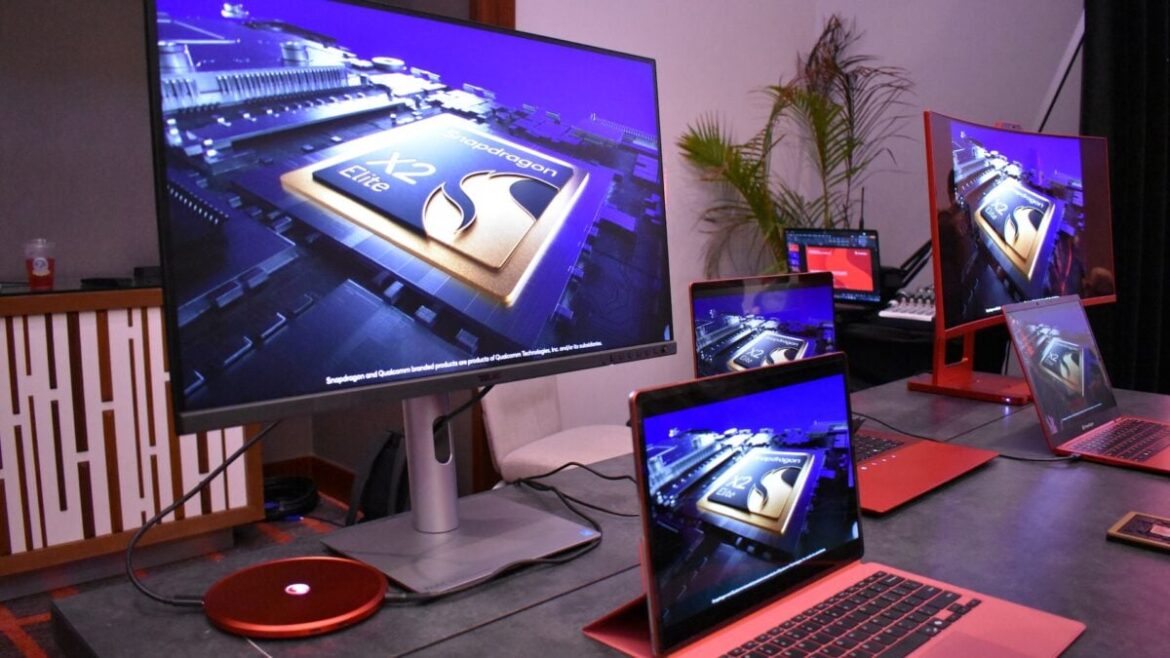
PC gaming has become Qualcomm’s white whale. The company wouldn’t put it in those terms, but it’s clear the company wants users to know its new Snapdragon X2 Elite Extreme chip will be gaming capable. It’s far from the ideal, and Qualcomm seems to know it. It wants to show off the new chip’s GPU abilities, but for one of the most common uses of graphics processing, Qualcomm will still be behind everyone else.

The looming elephant in the room is the chip microarchitecture Qualcomm is beholden to. Whereas Intel and AMD use x86, Snapdragon is based on ARM. Whatever PC you buy with a Snapdragon X2 chip will run into game compatibility issues. While Qualcomm claims it has 1,400 games optimized for Snapdragon, the actual list of modern AAA titles is relatively small. During its Snapdragon Summit keynote in Hawaii (full disclosure: travel and lodging were paid by Qualcomm, and Gizmodo did not guarantee any coverage as a condition of accepting the trip), the chipmaker showed off a list of games compatible with the platform. This included a few relatively recent games, such as Baldur’s Gate III and Hogwarts Legacy, plus a heap of 10-year-old games and remasters. You won’t port your entire Steam library to these new PCs whenever they come along. If you’re feeling a bit of déjà vu, that’s because Apple’s been suffering from the same incompatibility issues with its ARM-based M-series chips. If you’re being compared to Apple in terms of gaming, you’re already in a rough spot.

A great GPU that can’t play all your games

Who wants to play Raid Shadow Legends on PC? © Kyle Barr / Gizmodo

Qualcomm’s chief of mobile and compute, Alex Katouzian, said in a Q&A, “[Gaming on PC] is moving slower than we want.” The 20-year Qualcomm veteran reiterated the anti-cheat compatibility with the original Snapdragon X series, which essentially locked out many of the most popular multiplayer games from its PCs.

“You have to chisel away at that until the game developer or the engine developer who actually works with us on mobile realizes we have the same capabilities coming through on PC,” he said.

Back with the first-gen Snapdragon X launch, Qualcomm made sure to tell buyers these devices were not built for gaming. The messaging has changed. Now they’re good for “casual gaming.” The new top-end Snapdragon X2 Elite Extreme PC chip boasts enhanced CPU cores and an upgraded GPU, promising to beat the competition. Qualcomm claims the GPU can top out at higher performance, while drawing less power than either AMD or Intel’s high-end laptop chips.

© Kyle Barr / Gizmodo

Kedar Kondap, Qualcomm’s senior vice president and general manager of compute and gaming, told media that new devices running Snapdragon X2 Elite Extreme could hit around 60 fps in some compatible games, whereas the Snapdragon X could only get 30 fps. And still, “We’re very cautious about how we position these devices in the market; they are not gaming platforms.”

Qualcomm can cajole and entice developers to port their games to ARM. It managed to convince Epic Games to enable compatibility with the game’s anti-cheat. The only other option is with emulation or a full compatibility layer. Currently, Windows on ARM depends on Microsoft’s Prism emulator, which simulates the x86 hardware as software. This leads to performance hiccups that make playing unsupported games less than ideal. Katouzian reiterated it was sticking with Prism for the sake of emulation. However, multiple rumors suggest Valve is porting games to ARM for the sake of a supposed standalone VR headset. Qualcomm could ride on Valve’s coattails and make a handy sum off the maker of Steam. If they’re considering it, Qualcomm isn’t yet saying so.

We still have to see what next-gen chips Intel and AMD carve out for tomorrow’s laptops. Qualcomm has promised that by “early next year” we’ll have the opportunity to test devices with the Snapdragon X2 Elite. Which is to say, by CES 2026 we’ll probably have a slew of new Intel, Qualcomm—and perhaps AMD—devices to compare each other to. The other two major PC chipmakers will still try to push battery life and power efficiency just like they did last year, just like Qualcomm is doing now.

Qualcomm has an odd place in gaming

Qualcomm spent a little too much time in its keynote talking about how its new PC chip isn’t meant for gaming, as Qualcomm implied. © Kyle Barr / Gizmodo

This week, I sat down with Durga Malladi, Qualcomm’s general manager of technology and edge. After a long conversation about the advent of 6G and on-device AI, he told me the company was working directly with a few gaming hardware makers on future projects. No, of course he wasn’t willing to say with whom. “It’s early days,” he said.

Qualcomm’s chips are some of the most popular for gaming. That’s not a controversial statement. Mobile gaming eclipses both console and PC gaming combined. Qualcomm chips are found in some of the most popular Android phones, including Samsung Galaxy devices. The Snapdragon 8 Elite Gen 5 should be better for gaming than the company’s previous chip and potentially better than the A19 Pro found in the iPhone 17 Pro.

There’s another end to Qualcomm gaming endeavors that the chipmaker rarely acknowledges publicly. Its chips are found in some of the more popular retro emulation devices around. At Snapdragon Summit, the company laid out several devices from companies like OneXPlayer, Ayaneo, and Retroid, all running Snapdragon chips. These are devices I have yet to handle myself, including the OneXSugar transforming dual-screen handheld, the Game Boy-like Retroid Pocket Classic, and the Ayaneo Pocket DS meant to recreate the feel of the Nintendo DS. The handhelds can run plenty of Android games, but their real benefit is with retro emulators—software recreations of older hardware. Qualcomm doesn’t want to stick its toes in the piranha-infested waters of illegal ROM downloads, so it will simply let the handhelds speak for themselves.

Qualcomm’s narrow focus of working with its tech giant partners, Google and Microsoft, has left the company with tunnel vision. Its work on Android has cemented ARM for mobile gaming, but players are looking for something different than yet another showcase of Honkai: Star Rail or Fortnite.


Source link

September 25, 2025 0 comments
0 FacebookTwitterPinterestEmail
Splash Damage breaks away from Tencent
Esports

Splash Damage breaks away from Tencent

by admin September 25, 2025


Splash Damage is now no longer owned by the Chinese video-game giant Tencent, having been acquired by private-equity investors.

The UK-based studio confirmed in a statement that it would continue to operate under its existing leadership team, but added that it would “not be providing further comment at this time.”

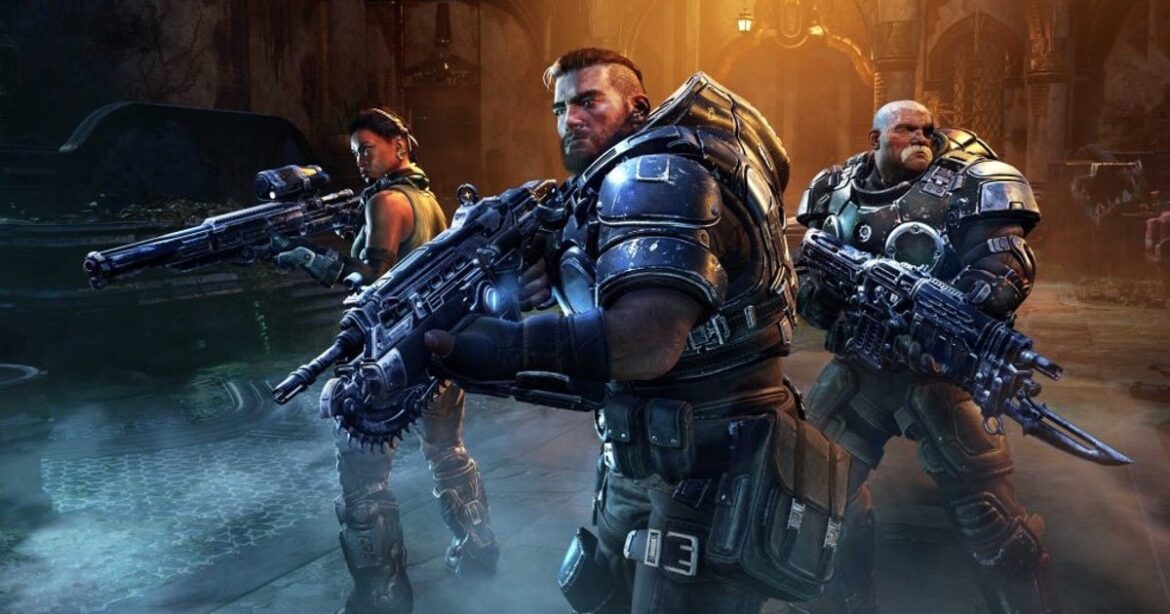
Splash Damage was formed in 2001, and rose to fame for its work on the Wolfenstein expansion Enemy Territory. The firm later worked with Microsoft as a support studio for various titles in the Gears of War franchise.

In 2016, Splash Damage was acquired by the Chinese poultry firm Leyou, which had previously bought a majority stake in Warframe developer Digital Extremes.

Then, in 2020, Tencent bought Leyou Technologies for around $1.3 billion, adding Splash Damage to its extensive portfolio of studios.

In 2021, in an interview with GamesIndustry.biz, Splash Damage CEO Richard Jolly was bullish about the studio’s prospects following the takeover.

“Looking ahead, we’ve got some very ambitious plans for our next decade that we had already started on before the acquisition,” he said. “Now, we’re able to accelerate those. As one of the founders of the studio, I can honestly say that this is the most excited I’ve ever been for where we’re headed.”

The following year, Splash Damage announced it was working on Transformers: Reactivate. Then in 2023, it revealed it was also working on an open-world survival game codenamed Project Astrid.

However, in January this year, Splash Damage announced that Transformers: Reactivate had been cancelled, putting a number of roles at the studio at risk of redundancy. No reason for the cancellation was given.

Yong-yi Zhu, VP and head of business operations, strategy, and compliance at Tencent Games, recently emphasised Tencent’s commitment to Western studios in an interview with GamesIndustry.biz.

“I will speak from the perspective of my division,” he said. “We have no plans at the moment to pull out. You may see a reduction in investment in certain places, and I think part of that is just the realities of the industry and the dynamics of the industry.”


Source link

September 25, 2025 0 comments
0 FacebookTwitterPinterestEmail
A trader in front of screens. (sergeitokmakov/Pixabay/Modified by CoinDesk)
GameFi Guides

Stablecoin Market Could Reach $4 Trillion by 2030, Citi Says in Revised Forecast

by admin September 25, 2025


The stablecoin market is expanding faster than expected, with issuance volumes rising from about $200 billion at the start of 2025 to $280 billion as of Thursday, according to a report by Citi.

The bank has lifted its 2030 forecast for stablecoin issuance to $1.9 trillion in its base case and $4 trillion in a bull case, up from $1.6 trillion and $3.7 trillion respectively.

If stablecoins circulate at a velocity comparable to fiat currencies, they could support up to $100 trillion in annual transactions by 2030 under the base scenario and double that in the bull case. Citi argued this growth reflects blockchain’s “ChatGPT moment” as digitally native companies lead adoption in real-world commerce.

Yet the report suggests stablecoins may not dominate all on-chain finance. Bank tokens — such as tokenized deposits — could ultimately see higher transaction volumes, driven by corporate demand for regulatory safeguards, real-time settlement and embedded compliance. A small migration of traditional banking rails on-chain, Citi estimated, could push bank token turnover beyond $100 trillion by the end of the decade.

The forecast also underscored the continued role of the U.S. dollar. Most on-chain money remains dollar-denominated, fueling demand for Treasuries, though hubs like Hong Kong and the UAE are emerging as centers of experimentation.

Citi framed the rise of stablecoins not as a battle to replace banks but as part of a broader reimagining of financial infrastructure. Different forms of digital money — stablecoins, bank tokens and CBDCs — are likely to coexist, each finding its niche.


Source link

September 25, 2025 0 comments
0 FacebookTwitterPinterestEmail
'The Astronaut' Teases a Returned Space Traveler's Worst Sci-Fi Nightmare
Product Reviews

‘The Astronaut’ Teases a Returned Space Traveler’s Worst Sci-Fi Nightmare

by admin September 25, 2025


A person who thinks they’re home alone starts to suspect there might be an unnatural presence lurking around: that’s a pretty classic horror movie setup. What makes The Astronaut extra eerie is that the main character is a NASA astronaut whose most recent voyage ended with a rough re-entry. And that presence just might be something extraterrestrial that hitched a ride to Earth.

Here’s the new trailer for The Astronaut, starring Kate Mara as the understandably freaked-out title character. Is it real or in her mind—and which scenario would actually be worse?

Here’s the official synopsis:

“When astronaut Sam Walker (Kate Mara) crash lands back to Earth, she’s discovered alive in a punctured capsule off the Atlantic coast. General William Harris (Laurence Fishburne) places her in quarantine under strict NASA surveillance for rehabilitation and testing. But as disturbing events escalate, she begins to fear that something extraterrestrial has followed her home.”

While Mara is often seen in drama roles, she’s no stranger to genre; while she’d probably rather leave 2015’s Fantastic Four behind, she was also in the standout Black Mirror episode “Beyond the Sea” (coincidentally also about space-travel oddities), the overlooked android thriller Morgan, the first season of American Horror Story, and she does a voice on Invincible, to name a few credits.

The Astronaut is the debut feature from writer-director Jess Varley. It also stars Gabriel Luna (The Last of Us), Ivana Milicevic (The 100, Gotham), Macy Gray, and Scarlett Holmes, and it hits theaters October 17.

Want more io9 news? Check out when to expect the latest Marvel, Star Wars, and Star Trek releases, what’s next for the DC Universe on film and TV, and everything you need to know about the future of Doctor Who.


Source link

September 25, 2025 0 comments
0 FacebookTwitterPinterestEmail
Ghost Of Yotei Review - Lone Wolf
Game Reviews

Ghost Of Yotei Review – Lone Wolf

by admin September 25, 2025


In 2020’s Ghost of Tsushima, protagonist Jin Sakai is a samurai, part of Japan’s ruling class during the Kamakura period in which the game is set. When Khotun Khan and his Mongolian army attack Jin’s home island of Tsushima, the samurai is unable to repel the invading force as the noble warrior he was forged to be, and must instead sever his honor by becoming the fearsome “Ghost.” Yet adopting underhanded tactics to gain the edge comes at a cost, as Jin is forced to grapple with sacrificing his relationships, his moral code, and everything he once stood for in an effort to defeat an unconventional foe.

In Ghost of Yotei, protagonist Atsu doesn’t have to make such choices. She’s not a samurai, but a wandering mercenary from an ignoble family–a family that was slaughtered at the hands of a gang of violent outlaws known as the Yotei Six. With everything taken from her, Atsu’s gender and lowly status mean she has no fixed standing in Japanese society during the early 1600s.

Alone and consumed by revenge, she carves her own path forward, adopting the mantle of the onryo, a vengeful spirit from Japanese folklore that’s able to inflict harm in the world of the living. Like Jin, Atsu becomes a symbol–one that strikes fear into the hearts of her enemies as her legend grows. But while this parallel is notable, it’s the differences between Jin and Atsu that stand out the most.

Though the game’s foundation remains largely unchanged from its predecessor, the shift from samurai to roaming sellsword introduces a number of interesting changes and fresh ideas in what is a marked improvement on Ghost of Tsushima. Exploring the natural beauty of Sucker Punch’s romanticized depiction of Feudal Japan is enjoyable in and of itself, but the activities you’ll discover are also much more meaningful than before–tying together Atsu, her home, and her family–while the precise brutality of its highly stylized combat has been expanded upon with a diverse arsenal of tools and melee weapons, resulting in tense and thrilling battles ingrained with cinematic flair.

Like its predecessor, Ghost of Yotei is a classic tale of revenge, inspired by samurai cinema. You can see the influence of legendary filmmakers like Akira Kurosawa, Masaki Kobayashi, and Kenji Misumi in facets of its cinematography, melee combat, and storytelling, but it’s Toshiya Fujita’s Lady Snowblood that comes to mind as the most thematically similar. After Atsu’s family is massacred and she’s left for dead, the young orphan spends the next 16 years away from home, honing her skills on the Japanese mainland by fighting in peasant armies as the country raged war with itself. After the famous Battle of Sekigahara, Atsu returns home to the northern island of Ezo (modern-day Hokkaido), prepared to enact her revenge on the Yotei Six by any means necessary.

At the beginning of the game, Atsu doesn’t care whether she lives or dies, so long as the Yotei Six meet their end. But while she spent the past 16 years transforming into a fearsome warrior, the targets of her ire grew stronger too. Now, the Yotei Six have legions of soldiers to call on, with the group’s leader–the antagonistic Saito–proclaiming himself the Shogun of the north.

Although Atsu is comfortable being alone and knows how to fend for herself, it becomes clear that she’s an underdog and must learn to rely on others if she hopes to defeat the Yotei Six. While the world at large might perceive her as a terrifying ghost, she’s also someone who’s gradually shaped by the brutal cost of revenge and the influence of the people she meets. Atsu’s character arc is compelling and offers an interesting juxtaposition to Ghost of Tsushima’s story. It’s still a fairly conventional revenge tale, but one that’s well told, with memorable characters, excellent performances from its optional Japanese voice cast (at least to my non-speaker ears), and a plethora of stunning moments and unexpected twists.

One of the more effective aspects of the narrative is Atsu’s relationship with her family. Almost everything she does is influenced by them in some way. By visiting her home and specific locations around Ezo, you can step into the past and revisit fond memories from her childhood, such as practicing sword fighting with her brother and working with her weaponsmith father in the family’s forge. These windows into the past create further empathy for a character who eventually goes on to inflict brutal violence. You can feel the weight of her loss in each moment, and this persists throughout the game as you explore more and more of Ezo.

Bamboo strikes, fox dens, hot springs, and Shinto shrines return, though they’re fewer in number than before. Crucially, there are also new activities that further Atsu’s characterization and relationship with her family. It’s easy to note the differences with Jin here once again. While he was a scholarly samurai–taking contemplative moments to express himself through haikus–Atsu’s interests are shaped by her upbringing. Her father taught her the art of Sumi-e, which literally translates to “black ink painting,” and her love of the craft is reflected in moments when you are asked to use the DualSense’s touchpad to paint the various animals and landscapes you encounter throughout your journey.

Atsu also travels with a shamisen–a three-stringed instrument played with a large plectrum called a bachi–which was passed down from her grandmother to her mother, then from her mother to her, along with the wisdom that music can still reach those who have passed. Yet playing and learning new songs on the shamisen doesn’t merely serve as a way to connect Atsu with her mother and lineage–it connects her to her homeland and its people, too.

Ghost of Yotei is set over 300 years after the events of Ghost of Tsushima, right at the beginning of Japan’s Edo period. After winning the aforementioned Battle of Sekigahara, the renowned warrior Tokugawa Ieyasu hunted down and executed anyone who opposed him, folding those who accepted into his shogunate. With so many daimyo losing their domains, around 150,000 samurai became ronin around this time, with many of those fleeing to Ezo as a place to live free from the oppressive rule of the Tokugawa shogunate. With the Yotei Six already causing disruption, Ezo feels a lot like the Wild West. As Atsu’s fame grows, so does the number of ronin hoping to cash in her bounty. But as a sellsword, Atsu can also take on a variety of bounty contracts herself, hunting down the island’s most fearsome warriors.

Many of these targets are distinct; there’s one involving a murderous musician that’s actually quite touching, and another about a killer who drowns his victims, akin to a kappa. Sometimes you need to use clues to figure out where they’re hiding; other times they’ll come to you, like a particular serial killer who preys on weary travellers making camp for the night. Most of these encounters conclude with an exciting one-on-one duel, but there are some unexpected outcomes, too. Like much of Ghost of Yotei’s side content, these bounty missions are relatively brief but engaging. It’s just a shame that a few of them are rather generic, asking you to defeat a regular enemy within an occupied camp, for instance. For a game that often avoids this pitfall, these missteps are more obvious.

However, picking up bounties is just one of the ways you’ll interact with Ghost of Yotei’s world. The Guiding Wind mechanic returns from the first game, directing you to your chosen objective with gusts of wind, flying leaves, and bending grass. Five years on, it’s still the best way to navigate an open world, ensuring that you’re fully absorbed in the space you’re inhabiting rather than constantly staring at a mini-map or objective marker. You’re also more likely to spot points of interest this way, such as smoke from a campfire or an alluring building on the horizon. Atsu even has a Breath of the Wild-style spyglass, which automatically adds locations to the in-game map once you’ve spotted them through the telescopic lens. It’s a great way to make you pay attention to your surroundings and internalize key landmarks.

Like Jin, Atsu becomes a symbol–one that strikes fear into the hearts of her enemies as her legend grows. But while this parallel is notable, it’s the differences between Jin and Atsu that stand out the most

The people of Ezo are eager to share information, too. Upon arriving in a new village, a merchant might tell you about an onsen that’s not too far away. You can set up camp to eat food and craft ammo, and a passerby may join you and mention a fox den, while interrogating an enemy could reveal a nearby camp. Your exploration is gently guided, but it feels very natural. Instead of looking at a map filled with markers, you’re left to discover things on your own, even if you’re sometimes nudged in the right direction. You’re peering into the world rather than staring at a UI, so there’s an inherent sense of discovery that persists throughout the game and is very rewarding.

It’s incredibly easy to get sidetracked, even when you have a specific objective in mind. Exploring and engaging with whatever you find is just as fulfilling as playing through the main story, mainly because Ezo feels so alive and lived-in–from a village where people are fishing, conversing around a campfire, and playing music, to the diverse natural landscapes and wildlife of Japan’s northernmost island. Hokkaido is renowned for its natural beauty, and Sucker Punch has certainly captured that with Ghost of Yotei’s open world, further enhancing the distinct visual identity introduced in Ghost of Tsushima. It’s grandiose and almost fantastical at times, but it’s a constant treat for the eyes, full of bold, saturated colors and an abundance of flying particles that make each and every frame feel full of life.

Great plains stretch as far as the eye can see, lakes and streams in the wetlands reflect the glistening moon, and the sea violently clashes against the jagged cliffs on the coast. Vibrant red and auburn trees sit atop rolling green hills, cherry blossom trees paint the south of the island pink, while the north is blanketed in freezing ice and snow. Duels are frequently framed against a backdrop of picturesque mountains, turgid waterfalls, and centuries-old trees–their branches twisting outward like undulating rivers. Colorful butterflies, dragonflies, and flower petals swirl as steel clashes, caught in the howling wind, and each purposeful step forward kicks up fallen leaves and splashes of water. As blood hits the pristine snow, Lady Snowblood springs to mind once again. If nothing else, Ezo is a land of striking contrasts.

Technically, it’s as impressive as Sony’s first-party titles often are. Ezo’s map is divided into sections, with new locations splintering off from a large starting area. When you climb aboard your horse’s saddle, black bars appear at the top and bottom of the screen, reducing the picture size but framing the environment to really show off the superb art direction. There aren’t any noticeable frame drops using the game’s performance mode on a base PS5. Outside of cutscenes, which are locked at 30fps, it runs at a stable 60fps throughout.

It’s the hunt for the Yotei Six that brings you to almost every corner of the island, where you’ll also discover more about each member of the gang as you plot out their demise. The Oni, for instance, resides in a hilltop castle overlooking the entire Ishhikari Plain. He’s a mountain of a man with an army behind him, so the burned villages and widows left in their wake reveal his abject cruelty. The Kitsune, on the other hand, works in the shadows. As the head of a clan of shinobi, their methods are more clandestine, forcing you to solve puzzles to uncover secret hideouts. Their foot soldiers emerge from beneath the snow, and the terror they inflict on the people of Teshio Ridge isn’t as obvious as the Oni’s fire and brimstone approach, with millers and blacksmiths simply disappearing in the night.

Ghost of Yotei’s mission design is similarly varied, whether you’re posing as an anonymous bounty hunter to infiltrate a fortress or pursuing a target through a mountain range as they pepper you with gunfire–and that’s just the main story missions. Side quests take you on a few unexpected adventures involving rumors of terrifying yokai, a brush with a near-indestructible bear, and some enlightening platforming with Ezo’s indigenous Ainu people. The end result is often the same: You’ll typically utilize stealth or combat to solve most problems. But there’s much more flavor than before, making for a more interesting game from one moment to the next, as it ditches the rigidity that frequently plagued Ghost of Tsushima’s mission design.

Combat is also improved, and molded, once again, by Atsu’s singular nature. She fights to win by any means necessary, even if that means picking up a fallen enemy’s weapon and throwing it through another’s chest, chucking dirt into her opponent’s eyes, or lighting her weapon on fire to break through a staunch defense. She’s also not averse to using a variety of different melee weapons, trading Jin’s four katana stances for five distinct armaments. You begin with a katana, and then, by visiting various teachers, gradually unlock an odachi, a kusarigama, dual katanas, and a yari spear.

There’s a rock, paper, scissors dynamic in play where certain weapons are better suited against particular enemies and their chosen equipment. The kusarigama, for instance, can destroy shields with consecutive blows from its heavy attack, while the relentless speed of the dual katanas is ideal for dealing with opponents wielding yari. As one of your teachers puts it, every weapon can kill but won’t necessarily always shine. A single katana can still best a yari user, but you won’t deal as much damage, and breaking through their guard is much tougher. Using the wrong weapon feels inefficient, so you’ll want to frequently cycle through your arsenal depending on who you’re facing to cleave through enemies with style and precision. Throw in new ranged weapons like the slow-loading Tanegashima rifle and a flintlock pistol that’s useful for interrupting enemy attacks, and there are quite a few considerations to make when engaged in combat.

Whichever weapon you’re wielding can fell opponents in a few quick slices, but the same is also true of Atsu. Whether you’re dueling a single opponent or dealing with a one-versus-many situation, you’ll want to master blocking, parrying, and dodging to survive and create openings for your own deadly offense. This manifests in a terrific ebb and flow as you alternate between being active and reactive. Atsu’s fragility creates tension, but she also feels decidedly deadly. It’s a satisfying combination, especially when you factor in a suite of fluid animations and the terrific sound design that accompanies the clashing of weapons and splitting of flesh.

Combat isn’t without its flaws, however. Like the first game, Ghost of Yotei there are a few instances where enemies will slip out of view, forcing you to awkwardly pull your fingers away from the face buttons to manually adjust the camera with the right stick. This isn’t ideal when you need to react quickly to unblockable attacks and incoming projectiles, but it’s rare enough that it isn’t a significant problem.

Gallery

Of course, you can also avoid combat entirely in some situations. Ghost of Yotei’s stealth is played fast and loose; it’s more about taking out everybody as quickly and violently as possible rather than slipping by unnoticed. Chaining together assassinations never tires, and using the kusarigama to yank enemies out of sight is particularly gratifying. The stealthy route might be relatively uncomplicated for the most part, but that doesn’t prevent how enjoyable it is to sweep through an enemy camp as a silent assassin.

Ghost of Yotei builds and improves upon its predecessor with a gripping story, rewarding exploration, and fantastic combat, with each aspect emphasizing the characteristics of a new protagonist. As a sequel, familiarity is baked in, but every alteration is in service of Atsu and her profound differences, making for a game that manages to feel distinct even when what you’re doing is so recognizable. The Ghost is just a mask; what matters is who’s behind it.


Source link

September 25, 2025 0 comments
0 FacebookTwitterPinterestEmail
BTC faces "cloud resistance." (geralt/Pixabay)
Crypto Trends

Centrifuge Launches Tokenized S&P 500 Index Fund on Coinbase’s Base Network

by admin September 25, 2025


Real-world asset specialist Centrifuge has launched what it calls the first licensed S&P 500 index fund on blockchain rails, opening one of the world’s most recognized equity benchmarks to on-chain investors.

The Janus Henderson Anemoy S&P 500 Fund, dubbed SPXA, went live on Thursday on Base, an Ethereum layer-2 network developed by crypto exchange Coinbase.

The offering is the first tokenized index fund licensed by the S&P Dow Jones Indices. It allows the S&P 500, a wide basket of the largest publicly traded U.S. companies that covers roughly 80% of the U.S. equity market, to trade around the clock with transparent holdings.

FalconX, a digital asset brokerage, was an anchor investor in the product, while Wormhole, a cross-chain messaging protocol, will handle future expansion to other blockchains. Janus Henderson, a London-based global asset manager with nearly $500 billion in AUM, is serving as sub-investment manager, while Centrifuge’s asset management arm Anemoy oversees the fund.

The initiative fits into a broader trend of bringing traditional financial instruments such as bonds, funds and equities, often called real-world assets (RWA), onto blockchain rails. Proponents explore tokenization for operational gains, speedier settlements and around-the-clock trading.

Centrifuge, which has built infrastructure for tokenizing private credit and fixed income since 2017, sees SPXA as its entry point into equities, a tokenization trend that has recently taken off.

“Indices are the best way to bring stocks on-chain,” Bhaji Illuminati, CEO of Centrifuge, said in a statement. “They’re simple, collateral-ready and unlock liquidity in ways individual securities can’t.”

For S&P Dow Jones Indices, the offering is a stepping stone to “build the future of index-linked financial products” traditional finance products are beginning to migrate to blockchain environments, said Cameron Drinkwater, chief product officer at S&P DJI.

Read more: Blockchain-Based RWA Specialists Bring $50M to Apollo’s Tokenized Credit Strategy


Source link

September 25, 2025 0 comments
0 FacebookTwitterPinterestEmail
NYT Mini Crossword game
Gaming Gear

Today’s NYT Mini Crossword Answers for Sept. 25

by admin September 25, 2025


Looking for the most recent Mini Crossword answer? Click here for today’s Mini Crossword hints, as well as our daily answers and hints for The New York Times Wordle, Strands, Connections and Connections: Sports Edition puzzles.

Need some help with today’s Mini Crossword? Some of the clues, like 1-Down, took me a while. Want the answers? Read on. And if you could use some hints and guidance for daily solving, check out our Mini Crossword tips.

If you’re looking for today’s Wordle, Connections, Connections: Sports Edition and Strands answers, you can visit CNET’s NYT puzzle hints page.

Read more: Tips and Tricks for Solving The New York Times Mini Crossword

Let’s get to those Mini Crossword clues and answers.

The completed NYT Mini Crossword puzzle for Sept. 25, 2025.

NYT/Screenshot by CNET

Mini across clues and answers

1A clue: Item found behind someone’s ear in a classic magic trick
Answer: COIN

5A clue: Do the Floss or the Griddy
Answer: DANCE

6A clue: Helpful pointer
Answer: ARROW

7A clue: Moody sorts, often
Answer: TEENS

8A clue: Sums up
Answer: ADDS

Mini down clues and answers

1D clue: Gave a hoot
Answer: CARED

2D clue: “No Turn ___” (street sign)
Answer: ONRED

3D clue: App images
Answer: ICONS

4D clue: One “N” of CNN
Answer: NEWS

5D clue: Numbers to crunch
Answer: DATA


Source link

September 25, 2025 0 comments
0 FacebookTwitterPinterestEmail
XRP Solana ETF news
GameFi Guides

Final Spot XRP And Solana ETF Amendments Expected This Week

by admin September 25, 2025


Trusted Editorial content, reviewed by leading industry experts and seasoned editors. Ad Disclosure

The US crypto ETF market is bracing for a decisive stretch after the SEC’s approval of “generic listing standards” last week opened a streamlined path for spot XRP and Solana ETFs—alongside products beyond bitcoin and ether. With exchanges now able to list qualifying commodity-based ETPs without a bespoke 19b-4 approval, applicants for spot XRP and Solana funds are rushing to lodge final amendments—filings that several industry participants say are already substantially baked.

Countdown To Launch For Spot XRP And Solana ETFs

On September 24, ETF Store president Nate Geraci signaled the inflection point in a series of posts on X. “Final wave of amendments could be filed by end of this week on various spot crypto ETFs incl xrp & sol,” he wrote, adding that “those filings are pretty far along in the review process” and that the “countdown to launch is on,” citing a Reuters report on the SEC’s new framework.

Here we go…

Hashdex Nasdaq Crypto Index US ETF *approved* under SEC’s new generic listing standards.

Will now be able to own crypto assets beyond btc & eth.

Looks like xrp, sol, & xlm. pic.twitter.com/OyZO9MLnMx

— Nate Geraci (@NateGeraci) September 25, 2025

In a separate post, Geraci flagged the Hashdex Nasdaq Crypto Index US ETF: “Here we go…Hashdex Nasdaq Crypto Index US ETF *approved* under SEC’s new generic listing standards. Will now be able to own crypto assets beyond btc & eth. Looks like xrp, sol, & xlm.”

Reuters, which first detailed the regulator’s accelerated pathway on Sept. 18 and followed up on Sept. 24, reported that, since the SEC initially floated the rules in July, issuers have “scrambled to update their new product filings and respond to specific comments and questions from the SEC.” A “final wave of amendments could be filed by the end of this week,” three people familiar with the matter told the wire service. “Those filings are pretty far along in the review process,” Bitwise president Teddy Fusaro said. “These are the rules we had been anticipating.”

The rule change is foundational. By blessing generic listing standards at NYSE Arca, Nasdaq and Cboe BZX, the Commission shifted spot-crypto ETF approvals from an adjudicative, proposal-by-proposal slog to a rules-based regime. In the SEC’s own words, exchanges may now list Commodity-Based Trust Shares that meet the criteria “without first submitting a proposed rule change” to the Commission—compressing timelines to roughly 75 days in straightforward cases and removing duplicative reviews that historically bottlenecked non-BTC/ETH products.

For XRP in particular, a compressed and crowded calendar now looms. The SEC’s final deadlines line up across seven days in October: Grayscale on Oct. 18, 21Shares on Oct. 19, Bitwise on Oct. 20, CoinShares and Canary Capital on Oct. 23–24, and WisdomTree on Oct. 24–25.

Solana sits in the same slipstream. According to Galaxy Digital Research, Solana is the leading candidate for the first-wave approvals under the generic regime, reflecting the maturity of filings and the exchanges’ preparedness to list them. Issuers including Bitwise and 21Shares have spent the summer revising staking, custody and in-kind transfer language to fit within the exchanges’ rulebooks and the SEC’s evolving expectations.

At press time, XRP traded at $2.84.

XRP faces downward pressure, 1-day chart | Source: XRPUSDT on TradingView.com

Featured image created with DALL.E, chart from TradingView.com

Editorial Process for bitcoinist is centered on delivering thoroughly researched, accurate, and unbiased content. We uphold strict sourcing standards, and each page undergoes diligent review by our team of top technology experts and seasoned editors. This process ensures the integrity, relevance, and value of our content for our readers.


Source link

September 25, 2025 0 comments
0 FacebookTwitterPinterestEmail
Forza Horizon 6 Takes Players To Japan Next Year
Game Updates

Forza Horizon 6 Takes Players To Japan Next Year

by admin September 25, 2025


Forza Horizon 6 was the main headliner of Xbox’s Tokyo Game Show broadcast, which served as a fitting venue given that the next entry brings the Horizon Festival to Japan. 

Developer Playground Games released a short teaser trailer and is keeping gameplay details to a minimum; don’t expect to see Forza Horizon 6 in action until early next year, according to an Xbox Wire developer interview. In the meantime, the studio teases locations such as Tokyo and Mt. Fuji, as some of the recognizable spots players will race in and around. 


Although we don’t know what the vehicle roster looks like, expect Japanese car culture to play a prominent role in this entry. In Horizon tradition, seasonal weather changes will shake up the visuals while also affecting how players drive. 

Forza Horizon 6 will launch first on Xbox Series X/S (including day one on Game Pass) and PC via Windows and Steam in 2026. The game will also be released on PlayStation 5 sometime post-launch. You can read our review of the series’ previous entry, 2021’s Forza Horizon 5, here. 


Source link

September 25, 2025 0 comments
0 FacebookTwitterPinterestEmail
  • 1
  • …
  • 152
  • 153
  • 154
  • 155
  • 156
  • …
  • 764

Categories

  • Crypto Trends (1,098)
  • Esports (800)
  • Game Reviews (772)
  • Game Updates (906)
  • GameFi Guides (1,058)
  • Gaming Gear (960)
  • NFT Gaming (1,079)
  • Product Reviews (960)

Recent Posts

  • This 5-Star Dell Laptop Bundle (64GB RAM, 2TB SSD) Sees 72% Cut, From Above MacBook Pricing to Practically a Steal
  • Blue Protocol: Star Resonance is finally out in the west and off to a strong start on Steam, but was the MMORPG worth the wait?
  • How to Unblock OpenAI’s Sora 2 If You’re Outside the US and Canada
  • Final Fantasy 7 Remake and Rebirth finally available as physical double pack on PS5
  • The 10 Most Valuable Cards

Recent Posts

  • This 5-Star Dell Laptop Bundle (64GB RAM, 2TB SSD) Sees 72% Cut, From Above MacBook Pricing to Practically a Steal

    October 10, 2025
  • Blue Protocol: Star Resonance is finally out in the west and off to a strong start on Steam, but was the MMORPG worth the wait?

    October 10, 2025
  • How to Unblock OpenAI’s Sora 2 If You’re Outside the US and Canada

    October 10, 2025
  • Final Fantasy 7 Remake and Rebirth finally available as physical double pack on PS5

    October 10, 2025
  • The 10 Most Valuable Cards

    October 10, 2025

Newsletter

About me

Welcome to Laughinghyena.io, your ultimate destination for the latest in blockchain gaming and gaming products. We’re passionate about the future of gaming, where decentralized technology empowers players to own, trade, and thrive in virtual worlds.

Recent Posts

  • This 5-Star Dell Laptop Bundle (64GB RAM, 2TB SSD) Sees 72% Cut, From Above MacBook Pricing to Practically a Steal

    October 10, 2025
  • Blue Protocol: Star Resonance is finally out in the west and off to a strong start on Steam, but was the MMORPG worth the wait?

    October 10, 2025

Newsletter

@2025 laughinghyena- All Right Reserved. Designed and Developed by Pro


Back To Top
Laughing Hyena
  • Home
  • Hyena Games
  • Esports
  • NFT Gaming
  • Crypto Trends
  • Game Reviews
  • Game Updates
  • GameFi Guides
  • Shop

Shopping Cart

Close

No products in the cart.

Close