

Laughing Hyena
  • Home
  • Hyena Games
  • Esports
  • NFT Gaming
  • Crypto Trends
  • Game Reviews
  • Game Updates
  • GameFi Guides
  • Shop
Author

admin

admin

Decrypt logo
NFT Gaming

Bitcoin Flat as Core US Inflation Holds at 2.9% in August

by admin September 26, 2025


In brief

  • Bitcoin rebounds slightly to $109,300 after dipping below $109,000 late last night. It’s down 1.5% in 24 hours amid August inflation data showing 2.9% year-over-year increase in core inflation.
  • Over $970 million in crypto futures contracts liquidated in past day, with $852 million being long positions betting on price increases.
  • Some 69% of users now predict Bitcoin will fall to $105,000 before reaching $125,000, amid new Trump tariff announcements and Fed uncertainty.

Bitcoin gained slightly as the Bureau of Labor Statistics reported that inflation increased 2.7% year-over-year in August, coming in only a bit hotter than July’s 2.6% reading. Core consumer spending, which excludes volatile food and energy prices, shows that inflation has risen 2.9% compared to the same period last year.

“While this reinforces the Fed’s narrative of gradually easing price pressures, it still leaves policymakers balancing sticky inflation with signs of a softer labor market,” Fabian Dori, chief investment officer at Sygnum Bank, told Decrypt.

“For investors, the implications are twofold: If inflation trends lower, risk assets may find support from confidence in the Fed’s easing cycle; but any upside surprises in coming data could push back short-term rate cut expectations, weighing on equities and boosting the dollar,” he added.

Bitcoin dipped as low as $109,000 in the past 24 hours, but has rebounded slightly to about $109,300 early Friday morning. BTC has fallen 1.5% in the past day and 5.9% over the past week, according to data from crypto price aggregator CoinGecko.

It’s been a tough week for the world’s oldest cryptocurrency. At one point yesterday, more than $1 billion worth of crypto futures contracts had been liquidated over the previous 24 hours, as asset prices broadly fell alongside Bitcoin.

Things were little improved early this morning. In the past 24 hours, $970 million worth of contracts have been forced to close. Of those, $852 million of them were long contracts betting that prices would improve. The largest single liquidated position was a $19.2 million ETH-USDT contract on Singapore-based exchange HTX, according to CoinGlass.

That’s left users on Myriad, a prediction market owned by Decrypt parent company DASTAN, more pessimistic about the direction the Bitcoin price will head next. There’s now 69% of users predicting that BTC will fall to $105,000 before it’s able to break out to $125,000. Two days ago, the bears and bulls had been evenly tied.


That could be in part because of new tariffs President Donald Trump said will go into effect October 1. The new policy, which he announced late Thursday night on Truth Social, adds a 100% duty on branded drugs and 25% on heavy-duty trucks. Trump also said he would implement 50% tariffs on kitchen cabinets and bathroom vanities, and a 30% tariff on upholstered furniture.

Dean Chen, an analyst for crypto derivatives exchange Bitunix, told Decrypt that inflation coming in at its forecasted level helped keep market reactions muted.

“However, the recently announced high tariffs remain an uncertain factor that could deliver one-off inflationary pressure while weighing on growth,” he said. “Overall, capital flows remain cautious, with risk assets under pressure and inflation-hedging sentiment persisting.”

He added that the tariffs will be a key concern for Bitcoin traders.

“Traders should keep leverage strictly controlled, scale into positions gradually, and validate breakouts/fake-outs through capital flows,” Chen added. “For BTC, focus on $108,000 as support and $111,000 as the near-term resistance zone.”

The president has also been using the social media platform, which is majority-owned by the Donald J. Trump Revocable Trust,  to antagonize Federal Reserve Chair Jerome Powell.

“If it weren’t for Jerome ‘Too Late’ Powell, we would be at 2% right now, and in the process of balancing our budget,” the president wrote. “The good news is that we’re powering through his incompetence, and we’ll soon be doing, as a country, better than we have ever done before!”

Bitcoin investors pay close attention to consumer spending because it’s the primary inflation gauge for the Federal Open Markets Committee. A surprise in spending data can shift rate expectations and yield curves. When there’s a big shift one way or another, it can set off volatility for equities, fixed income products, foreign exchange rates, and BTC.

Traders have also been looking to public comments from Fed chair for hints on how the FOMC may lean the next time it meets in October.

The CME FedWatch Tool now shows that traders give 87.7% odds to the FOMC approving another 25-basis point cut next month. That’s fallen slightly from 91.9% last week. The CME data skews more optimistic than users on Myriad. Participants in markets predicting how the FOMC will set policy in October show that 68% of users think there’ll be another 25-basis point decrease.

In a speech at the Greater Providence Chamber of Commerce in Rhode Island on Tuesday, Powell sounded less alarmed about tariffs than he did earlier this year.

“The overall economic effects of the significant changes in trade, immigration, fiscal and regulatory policy remain to be seen,” he said. “A reasonable base case is that the tariff-related effects on inflation will be relatively short lived—a one-time shift in the price level.”

Editor’s note: This story was updated to add comments from Sygnum Bank and Bitunix analysts.

Daily Debrief Newsletter

Start every day with the top news stories right now, plus original features, a podcast, videos and more.


Source link

September 26, 2025 0 comments
0 FacebookTwitterPinterestEmail
A magnifying glass shows a fingerprint displayed on a background of ones and zeroes.
Crypto Trends

Kraken Raises $500M in Funding Round Valuing Crypto Exchange at $15B: Fortune

by admin September 26, 2025


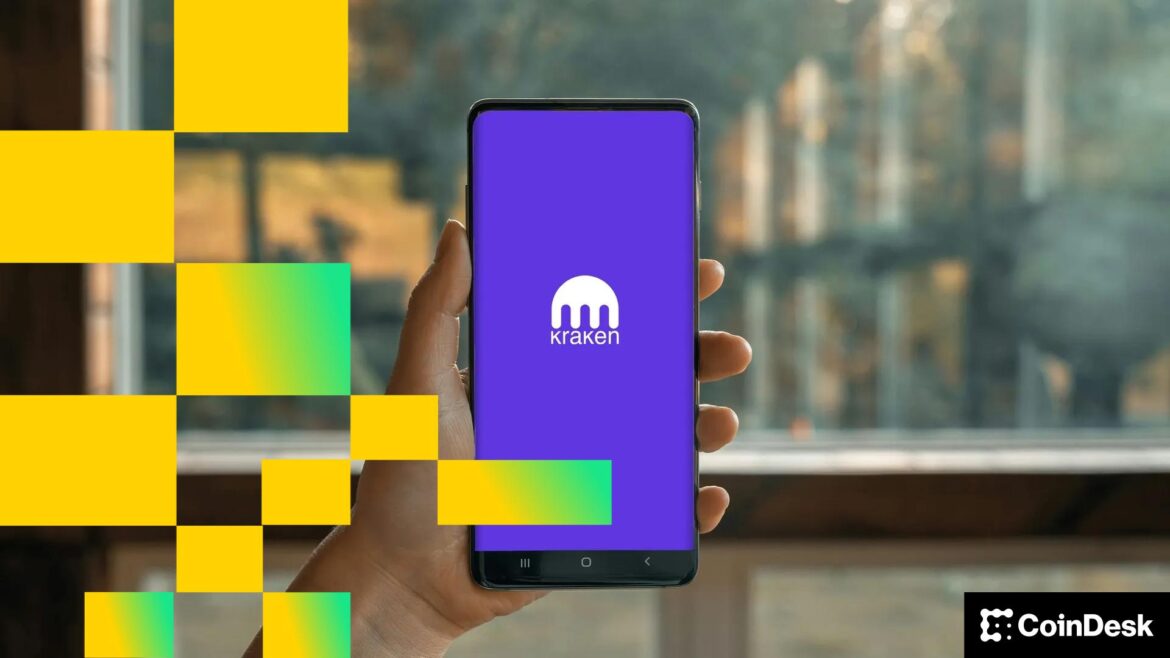
Popular cryptocurrency exchange Kraken closed a $500 million funding round, setting the stage for a long-awaited IPO now expected in 2026, Fortune reported.

The round did not feature a lead investor and was closed on Kraken’s terms valuing the firm at $15 billion, Fortune said, citing a person who was not authorized to discuss the matter publicly. Backers included investment managers, venture capitalists and Kraken co-CEO Arjun Sethi, who also participated via his Tribe Capital investment firm.

Founded in 2011, Kraken had reportedly raised only $27 million in venture capital funding until this year. It generated $411 million in revenue and nearly $80 million in post-Ebitda earnings in the second quarter, according to the report.

Much of Kraken’s transformation over the last year has been steered by Sethi, who, despite sharing the CEO title with Dave Ripley, is widely seen as the company’s strategic leader.

Under him, Kraken acquired U.S. futures platform NinjaTrader for $1.5 billion, expanding its customer base by 2 million and bolstering its presence in traditional finance.

Behind the scenes, Kraken has seen a wave of executive turnover, with four senior executives recently leaving the company as it trims jobs ahead of the planned initial public offering.


Source link

September 26, 2025 0 comments
0 FacebookTwitterPinterestEmail
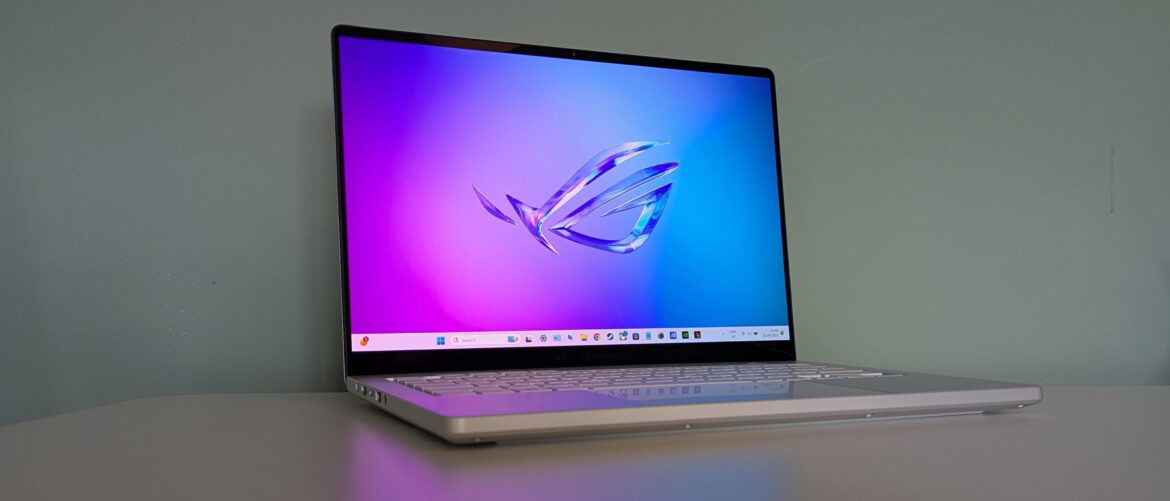
Three-quarter view of Asus ROG Zephyrus G14 (2025) open on desk with green wall in background
Gaming Gear

Asus ROG Zephyrus G14 (2025) review: a small but mighty gaming laptop with plenty of heat

by admin September 26, 2025


Why you can trust TechRadar


We spend hours testing every product or service we review, so you can be sure you’re buying the best. Find out more about how we test.

Asus ROG Zephyrus G14 (2025): Two-minute review

The Asus ROG Zephyrus G14 (2025) is a thin and lightweight gaming laptop with a small design but a large spec, allowing it to perform as well as its bigger rivals.

To look at, it seems more like an everyday machine than a gaming powerhouse. The only giveaway is the diagonal LED strip across the lid, which does little to add interest.

It has an impressively compact form, though, making it a contender for the best gaming laptop that’s practical to carry around. It lacks the bulk usually associated with such devices, being exceptionally thin and light by gaming laptop standards.

The lid is especially lightweight, and it opens easily yet remains stable once in place. Also, the bezel around the display is about as thin as it could possibly be, which helps to maximize screen space.

For such a compact device, the Zephyrus G14 (2025) has a generous selection of ports, even putting much larger gaming laptops to shame. There are two USB-C and two USB-A connections, as well as an HDMI port, a headset jack, and a microSD card reader.

More importantly, though, the performance of the Zephyrus G14 (2025) is also impressive. The 5070 Ti in my review unit provided very high frame rates, even with maximum graphics settings.

The 120Hz OLED display contributed to the smoothness, and also rendered scenes with plenty of vibrancy, brightness, and contrast. What’s more, the 3K resolution offered a super sharp image, which was great for gaming as well as other tasks.

Sign up for breaking news, reviews, opinion, top tech deals, and more.

(Image credit: Future)

  • Asus ROG Zephyrus G14 (2025) (14-inch 1TB) at Amazon for $1,579

However, you’ll have to contend with a fair amount of fan noise and blistering heat in the pursuit of this high-end performance. Temperatures around the keyboard are kept to reasonable levels, but the rear and underside of the unit can get uncomfortably hot, even at the slightest provocation.

The keyboard of the Zephyrus G14 (2025) is another highlight. The switches are deep and tactile, offering enough resistance to provide feedback without being onerous to use. The large size of the key caps and their comfortable spacing also makes them good for typing.

The touchpad is similarly excellent, thanks to its large area and smooth surface, although you probably won’t be using this while gaming. What’ll deter you even more is the fact that it can get in the way when using the WASD keys. Thankfully, there’s a shortcut to easily disable its functionality.

Battery life is poor, though. It only managed a little over two and a half hours in our movie playback test, which is short even by gaming laptop standards. The Razer Blade 14 (2025) and the Acer Nitro V 15 can both outlast it by a considerable margin.

At over $2,000, the Zephyrus G14 (2025) doesn’t come cheap. It’s close to more premium models, such as the Razer Blade 14, which is about the best compact gaming laptop we’ve tested. For some – or perhaps many – it may be worth spending that bit more for the Blade, but the Zephyrus G14 (2025) remains a fine pick if you’re after a compact and capable gaming machine.

Asus ROG Zephyrus G14 (2025) review: Price & Availability

(Image credit: Future)

  • Starts from $2,099.99 / £2,699.99 / AU$3,899
  • Available now
  • Premium end of the market

The Zephyrus G14 (2025) starts from $2,099.99 / £2,699.99 / AU$3,899 and is available now. Various models are available with varying Ryzen 9 CPUs and RTX GPUs, from the 5060 to the 5080. RAM and storage capacities alternate between 16GB and 32GB, and 1TB and 2TB, respectively.

It’s cheaper than the Razer Blade 14 (2025), even though both base models get an RTX 5060. However, the price gap isn’t huge, and the Blade 14 is one of the best gaming laptops around right now, impressing us with its incredible performance, design, and display.

If you’re looking for the best budget gaming laptop, the Acer Nitro V 15 is a fine choice. You’ll have to settle for an RTX 5050, but it can still game with aplomb. In fact, when I reviewed the Nitro, I was impressed with its 1080p performance. Like the Zephyrus G14 (2025), it can get quite hot in certain areas, but not to the same degree.

Asus ROG Zephyrus G14 (2025) review: Specs

Swipe to scroll horizontallyRow 0 – Cell 0

Asus ROG Zephyrus G14 Base Config

Asus ROG Zephyrus G14 Review Config

Price

$2,099.99 / £2,699.99 / AU$3,899

$2,499.99 / £2,699.99 / AU$4,999

CPU

AMD Ryzen 9 270 (8 cores, 4.0GHz)

AMD Ryzen AI 9 HX 370 (12 cores, 2.0GHz)

GPU

Nvidia GeForce RTX 5060, 8GB

Nvidia GeForce RTX 5070 Ti, 12GB

RAM

16GB LPDDR5X

32GB LPDDR5X

Storage

1TB PCIe 4.0 NVMe M.2 SSD

1TB PCIe 4.0 NVMe M.2 SSD

Display

14-inch (2880 x 1800) OLED, 16:10, 120Hz, G-Sync / Adaptive-Sync

14-inch (2880 x 1800) OLED, 16:10, 120Hz, G-Sync / Adaptive-Sync

Ports and Connectivity

2x USB-A 3.2 Gen 2, 2x USB-C (1x 3.2 Gen 2, 1x USB 4), 1x HDMI 2.1 FRL, 1x microSD, 1x 3.5mm combo audio, Wi-Fi 7 and Bluetooth 5.4

2x USB-A 3.2 Gen 2, 2x USB-C (1x 3.2 Gen 2, 1x USB 4), 1x HDMI 2.1 FRL, 1x microSD, 1x 3.5mm combo audio, Wi-Fi 7 and Bluetooth 5.4

Battery

73Wh

73Wh

Dimensions

12.24 x 8.66 x 0.63 ~ 0.64in (311 x 220 x 15.9 ~ 16.3mm)

12.24 x 8.66 x 0.63 ~ 0.72in (311 x 220 x 15.9 ~ 18.3mm)

Weight

3.31lbs / 1.50kg

3.46lbs / 1.57kg

Asus ROG Zephyrus G14 (2025) review: Design

(Image credit: Future)

  • Non-gaming looks
  • Remarkably small and light
  • Surprising number of ports

One of the most impressive aspects of the Asus ROG Zephyrus G14 (2025) is that it looks like a normal laptop, lacking the bulk and brash aesthetic of those designed for gaming. This is also helped by the light silver colorway of my review unit, which I found to be an uplifting antidote to the dour shades of many of its rivals (although such a finish is available).

What marks the Zephyrus G14 (2025) out as a gaming device is the diagonal LED strip across the lid and the small shiny embossed logo in the corner. Both are relatively subtle, although the strip is quite incongruous.

Not only is the screen size small for a gaming laptop, but so are all of its dimensions. The lid is especially thin, even beating some of the best MacBooks in terms of how sleek it is. The bezel around the display itself is also about as thin as I’ve ever seen in this class of laptop.

However, the chassis is thicker than you’ll find on many other laptops, and there are a few juts and sharp angles, as well as the thick rubber bars underneath, that sully the smooth planes somewhat. But all things considered, the Zephyrus G14 (2025) remains impressively elegant for its class.

Build quality is also quite good. All the materials feel premium and solid, and there’s only a small amount of wobble to the lid. Crucially, it remains stable once set in position.

(Image credit: Future)

Despite its small size, the Zephyrus G14 (2025) has a generous keyboard layout. There are some useful shortcut keys, including those for disabling the touchpad and toggling performance modes, and even four customizable M buttons. However, some peripheral keys are truncated in size, with the arrow keys being the worst casualty in this regard from a gamer’s perspective.

The LED backlighting on the keyboard is a nice touch, although it can be hard to make out at times, especially when certain colors and RGB patterns are displayed. This appears to be caused by the narrow openings of the key markings and a lack of overall brightness.

The touchpad on the Zephyrus G14 (2025) stretches right from the back edge of the space bar to the very end of the chassis, offering a larger surface area than you’ll find on other laptops this size.

Another surprise is just how many ports there are on the Zephyrus G14 (2025), putting many gaming laptops much larger to shame. It features two USB-C ports, which both support Power Delivery and DisplayPort standards each, although only one supports G-Sync/ Adaptive Sync displays. There are also two USB-A ports, an HDMI port, a headset jack, and even a microSD reader.

Asus ROG Zephyrus G14 (2025) review: Performance

(Image credit: Future)

  • Great gaming at max resolution
  • Fantastic OLED display
  • Gets very hot in places

Asus ROG Zephyrus G14 (2025) benchmarks

Geekbench 6
(Single Core): 2,939 (Multi Core): 15,680

Cinebench R23
(Single Core): 2,017 (Multi Core): 20,803

Cinebench R24
(Single Core): 117 (Multi Core): 1,192

Crossmark Overall: 1,974

3DMark
Fire Strike: 32,113 Steel Nomad: 3,488 Solar Bay: 71,022 Speed Way: 4,031 Port Royal: 10,119

BlackMagicDisk
Read: 4125MB/s Write: 4015MB/s

25GB Copy Test: 1,729MB/s

Civilization VII
(1080p, Medium): 193fps
(Max Resolution, High): 123fps
(Balanced Upscaling, Max Resolution, High): 94fps

Shadow of the Tomb Raider
(1080p, Medium): 168fps
(Max Resolution, Highest): 118fps
(Balanced Upscaling, Max Resolution, Highest): 158fps

Total War: Warhammer III: Mirrors of Madness
(1080p, Medium): 119fps
(Max Resolution, Ultra): 47fps

Cyberpunk 2077
(1080p, Medium): 371fps
(Max Resolution, Ultra): 143fps
(Balanced Upscaling, Max Resolution, Ultra): 133fps

F1 2024
(1080p, Medium): 256fps
(Max Resolution, Max Quality, No RT): 127fps
(Balanced Upscaling, Max Resolution, Max Quality with RT): 93fps

I found the performance of the Zephyrus G14 (2025) to be excellent. My review unit was equipped with an RTX 5070 Ti, and it handled the AAA titles I threw at it very well. When I played Cyberpunk 2077, I got between 200-230 frames per second on average. This was with the Ray Tracing: Ultra preset selected (which the game chose by default for the laptop) and DLSS Auto scaling and Frame Generation enabled.

This was also with the Zephyrus G14 (2025) running in Turbo mode. As you might expect, this causes the fans to produce a fair amount of noise, but it was nothing the best PC gaming headsets couldn’t drown out.

Dropping down to Performance mode didn’t seem to make much difference to frame rates, and only marginally decreased fan noise. Despite the raucous, though, the fans weren’t able to disperse heat as effectively as I would’ve liked.

During my sessions with the Zephyrus G14 (2025), it became very hot in places. The keyboard and front section of the chassis only remained tepid (thankfully, since this is where you’ll be making the most contact), but the area above the keyboard became too hot to handle.

(Image credit: Future)

The same was true of the underside of the Asus ROG Zephyrus G14 (2025). Despite the aforementioned ground clearance created by the rubber bars, there’s still not enough for optimal cooling it seems; this is certainly a laptop I’d recommend using with one of the best laptop cooling pads if you can.

The OLED display is pleasingly sharp and vibrant, which makes it great for all kinds of tasks, not just gaming. That aforementioned ultra-thin bezel means the 14-inch display projects a bigger image than you might expect, too.

The keys are tactile, thanks to their surprising resistance and deep travel relative to those of other laptops, even ones designed for gaming. This makes them well suited to the task, while still being light and snappy enough for comfortable typing.

The touchpad is great as well. Its impressive size, along with its very smooth surface, makes navigation easier. However, this will likely be irrelevant for most gamers, since it’s still no match for the best gaming mouse.

What’s more, it gets in the way when you’re using the keyboard, even if you stick to the WASD position. This means you’ll likely want to disable it when gaming, but you’ll be more reluctant to do so while typing, given its usefulness for productivity purposes.

Asus ROG Zephyrus G14 (2025) review: Battery Life

(Image credit: Future)

  • Poor battery life
  • Quick to charge

The battery life of the Zephyrus G14 (2025) is quite poor. When we ran a movie on a continuous loop, its battery lasted just over two and a half hours. This is way down on its key rivals, such as the Blade 14 and the Nitro V 15, both of which manage over twice that duration.

Thankfully, the Zephyrus G14 (2025) is quick to charge, taking about 90 minutes to fully replenish via the included power adapter.

Should I buy the Asus ROG Zephyrus G14 (2025)?

Swipe to scroll horizontallyAsus ROG Zephyrus G14 (2025) Scorecard

Attributes

Notes

Rating

Value

The Zephyrus G14 (2025) is at the higher end of the market, and there are slightly better rivals for not much more.

3 / 5

Design

The Zephyrus G14 (2025) is surprisingly compact and elegant for a gaming laptop. It also seems built to a high standard.

4.5 / 5

Performance

The RTX 5070 Ti in my review unit handled AAA titles brilliantly, and the display rendered them in their full glory. There’s a worrying amount of heat in places, though.

4.5 / 5

Battery Life

Poor even by gaming laptop standards; there are plenty of rivals that can outlast it. At least it’s quick to charge.

2.5 / 5

Total

The form factor, performance, and display are all excellent, but the heat, noise, and steep price mean you’ll have to assess your priorities before determining whether it’s the right gaming laptop for you.

4 / 5

Buy the Asus ROG Zephyrus G14 (2025) if…

Don’t buy it if…

Asus ROG Zephyrus G14 (2025) review: Also Consider

How I tested the Asus ROG Zephyrus G14 (2025)

  • Tested for a week
  • Used for gaming and other tasks
  • Plentiful gaming laptop experience

I tested the Zephyrus G14 (2025) for a week, using it for gaming, working, and general browsing. I also connected various peripherals to it.

I played AAA titles such as Cyberpunk 2077 with various graphics settings, and conducted our series benchmark tests designed to test multiple facets of gaming laptops. I also ran our battery test, playing a movie continuously until the battery depleted.

I’ve been PC gaming for over a decade, and have used numerous machines in that time, both desktop and laptop. I’ve also have plenty of experience reviewing gaming laptops, as well as those made for productivity and everyday use.

  • First reviewed: September 2025
  • Read more about how we test

Asus ROG Zephyrus G14 (2025): Price Comparison


Source link

September 26, 2025 0 comments
0 FacebookTwitterPinterestEmail
Is MrBeast Really Loading up on ASTER, 'New BNB' That Surged 8,000%?
GameFi Guides

Is MrBeast Really Loading up on ASTER, ‘New BNB’ That Surged 8,000%?

by admin September 26, 2025


  • What is ASTER, and what does Binance have to do with it?
  • Bottom line

Lookonchain claims that a wallet associated with MrBeast transferred $1 million USDT into Aster and withdrew 538,384 ASTER at an average cost of $1.87. These transactions occurred in the same week that Aster became one of the most-talked-about launches of 2025.

Nothing has been confirmed, but this claim is now fueling headlines: is MrBeast betting on what traders are calling the “new BNB?”

Aster’s debut was meteoric. Launched on Sept. 17 at just above two cents, it surged by almost 7,000% in four days, reaching $2 before cooling to $1.80. Its market capitalization reached $3 billion, with a 24-hour trading volume above $2.5 billion. 

Nearly 80,000 wallets now hold the token. For context, Aster moved from the status to becoming one of the top 40 cryptocurrencies in less than 10 days.

What is ASTER, and what does Binance have to do with it?

Aster is a decentralized perpetual exchange incubated by YZi Labs, formerly Binance Labs. CZ boosted the launch on X by posting side-by-side mentions of Aster and BNB. This kind of open endorsement from Binance’s founder is rare, and the market took it as a green light.

Beyond the hype are tokenomics. The supply is capped at eight billion ASTER. Currently in circulation are 1.65 billion tokens. More than half of the total tokens are reserved for community programs, while the rest will vest over seven years.

Bottom line

Hyperliquid has dominated perpetuals all year, but Aster’s success has forced a rethink. Regardless of whether MrBeast is behind the wallet, traders’ perception of the token is already being influenced by this question.


Source link

September 26, 2025 0 comments
0 FacebookTwitterPinterestEmail
The Witcher 3's final patch delivering cross-platform mod support has been delayed until 2026
Game Updates

The Witcher 3’s final patch delivering cross-platform mod support has been delayed until 2026

by admin September 26, 2025


In May this year, despite being deep in development on The Witcher 4 and Cyberpunk 2, CD Projekt revealed that they’d be whipping out one more patch for The Witcher 3 in honour of its tenth birthday. Said update was originally set to drop in 2025, but has now been pushed back into 2026.

It’s a little bit of an extra wait for cross-platform mod support, and given what the studio have been like witch Cyberpunk 2077’s seemingly never-ending string of last updates, I’m not ruling out them having secretly decided to add more new stuff to the RPG masterpiece while they’re at it.

“We originally planned to introduce cross-platform mod support for The Witcher 3: Wild Hunt on PC, PlayStation 5 and Xbox Series X/S later this year, but the rollout is now shifting to 2026,” the studio announced in a tweet. “We apologise for the delay and will share more details as we get closer to the release. Thank you for your patience!”

While the update’s arguably bigger news for console players who’ll be getting access to Witcher 3 mods for the first time, as we saw with Baldur’s Gate 3’s built-in mod support, having another way for us PC folks to mod up our games is never a bad thing. As in that case, this official Witcher modding support will be done via Mod.io, which might be a preferable route for some, especially for relative modding newbies.

We originally planned to introduce cross-platform mod support for The Witcher 3: Wild Hunt on PC, PlayStation 5 and Xbox Series X|S later this year, but the rollout is now shifting to 2026.

We apologize for the delay and will share more details as we get closer to the release.… pic.twitter.com/klXCkudiz1

— The Witcher (@thewitcher) September 25, 2025

To see this content please enable targeting cookies.

Manage cookie settings

Obviously sticking to established modding setups will still be an option on PC. Odds are a lot of the most popular works will end up on both Mod.io and Nexus Mods, with more advanced mods likely remaining PC exclusive due to the added restrictions console modding entails. PC’ll also remain the sole place you can fire up the REDkit tools CD Projekt released a little while ago to create mods.

If you fancy giving the full FAQ CD Projekt released alongside their initial announcement of the update a read or re-read, you can find it here. Otherwise, here’s a cool Witcher 3 mod you can play right now.


Source link

September 26, 2025 0 comments
0 FacebookTwitterPinterestEmail
WASHINGTON, DC - JUNE 9: A U.S. Department of Commerce sign is displayed at the Herbert C. Hoover Federal Building on June 9, 2025 in Washington, DC. (Photo by Kevin Carter/Getty Images)
Product Reviews

Trump administration is reportedly planning to tariff US tech firms that don’t source equal numbers of imported and American chips

by admin September 26, 2025


Every tech firm in the US heavily relies on the likes of China and Taiwan for its products, whether it involves the wholesale manufacturing of them or the supply of the vast number of semiconductor chips and components required. However, if a purported idea being considered by the Trump administration comes to fruition, they will all need to massively reduce imports and switch to locally-made chips to avoid being hit with a fresh tariff.

That’s according to a report by the Wall Street Journal, which claims that Commerce Secretary Howard Lutnick has already mooted the idea with various executives within America’s semiconductor industry. If we use Nvidia as an example, it currently relies almost exclusively on companies outside of the US for all the chips and other electronic components that are used to manufacture its graphics cards and AI data servers.

Its GPUs and CPUs are made by TSMC in Taiwan, with circuit boards and the host of parts that are fitted to them produced in China. Nvidia tends to use Micron for VRAM chips more than any other firm, and while that company is US-based, it also has production facilities in Singapore and China.


Related articles

To comply with a mandate that requires it to maintain a 1:1 ratio of locally-produced semiconductor chips versus those that it imports, Nvidia would need to drastically change its supply chain somehow. Either that, or it would have to rely on the majority of its suppliers having facilities within the US to produce said components.

At the moment, there’s no indication of the nature or size of the tariff that would be applied if companies failed to reach the ratio target, but even if the threat of it is big enough to make all US tech companies immediately comply, one question remains unanswered. And it’s because there is no answer for it.

TSMC’s chip foundry in Arizona. America’s going to need a lot more of these. (Image credit: TSMC)

How is America’s semiconductor industry supposed to match the combined output, breadth of products, and level of technological accomplishment of Taiwan, South Korea, China, Japan, and Singapore? Despite having the likes of Intel, GlobalFoundries, and Micron, as well as fabrication plants from Samsung and TSMC, the supply chain for the global tech market is predominantly based outside of the US.

If one assumes that it can be scaled up to the level required to meet the 1:1 demand, it certainly can’t happen overnight, and the cost for adjusting the supply chain to this extent is likely to be enormous. So much so that it’s possible that any tariff would pale in comparison.

Keep up to date with the most important stories and the best deals, as picked by the PC Gamer team.

WSJ’s report also claims that the plan would allow companies to make manufacturing pledges, to give themselves sufficient time to build the required infrastructure in America, without incurring the tariff. There may also be a relief period if and when the plan is introduced, to allow for US-based production to be ramped up.

While it can be argued that having a more equally distributed semiconductor supply chain is beneficial for stability and security reasons, the economic impact of forcing it to significantly adjust so rapidly could be too much for the industry to bear; at the very least, tech companies that are currently struggling with uncertain revenues or low profit margins would not welcome the plan.

For the US tech industry, this could ultimately be good news or catastrophic news, but until any official statement is made by the Trump administration, we’re just left with speculation. Any move to significantly reduce chip imports might seem like a great idea, but with the devil being in the details, and details being thin on the ground right now, tech firms are probably feeling a tad jittery about all of this.

Best PC build 2025

All our favorite gear


Source link

September 26, 2025 0 comments
0 FacebookTwitterPinterestEmail
Puffpals 2
Game Reviews

$2.6 Million Cozy Game Wipes Its Websites, Ghosts Its Backers

by admin September 26, 2025


How could a game with a name as fluffy as PuffPals: Island Skies ever do anything wrong? How could a company called Fluffnest be anything other than the cuddliest love-bunnies on the internet? It’s too implausible to even consider. Except… Launched on Kickstarter in April 2022, PuffPals: Island Skies promised to bring the experience of a game like Animal Crossing to the PC, with the very modest goal of just $75,000. But people were excited, the project got a lot of buzz, and in the end it raised an incredible $2.6 million (kinda). Today, the website for the game is gone, backer refunds are being ignored, and multiple lawsuits against the company behind the project have been lodged.

Two people, David Pentland and artist usLily, started Fluffnest—also via Kickstarter—in 2020. As superbly documented by Mujin on YouTube (thanks PCG) it became an instant success, created gorgeous plushies that developed a large fanbase, with hundreds of thousands of followers on social media, and a drop-based store that meant each plush was only available for a limited time. In 2022, the pair began the project to create a game set in the world of their plushies, an Animal Crossing-like cozy game with all the fishing, farming and friendship that cozy gamers crave.

That $75,000 figure may seem like a warning sign from the start. It’s not enough to develop the loading screens, let alone a game. But over the years, that’s kinda how Kickstarter’s become. Projects don’t receive any funds at all if their target isn’t met, so if you put your actual forecast costs, say $5 million, you’ll almost definitely not raise and it not get a penny. So developer’s come in very low, ensuring that they get something, with stretch goals in place to encourage more pledges that could actually deliver the game. And that’s obviously a disastrous model, meaning games that need $5m might raise $100,000 and keep, and then clearly can’t deliver, resulting in abandoned projects and furious backers. It happens all the time.

But in the case of PuffPals, it seemed to work. $75,000 became $2.56 million, more than double their top stretch goal figure. As Mujin reveals, however, a lot of that figure was extremely fudged: You could back the project for $20 to get the game on release, but afterward there were “add-ons,” where you could pay another $40 or so to get a plush toy too, and those plushies were ones that had sold out and were highly sought after by collectors. The money still counted toward the Kickstarter total, but a significant portion of it was going toward the toy and its shipping. Which is to say, that $2.6m figure was by far not what they had to spend on the game.

The project then began to follow the failing Kickstarter playbook to the letter. Updates started to slow down, promises would be forgotten or explained away, and wild excuses would be given for why communication had been bad, all always accompanied by new promises that all these things would improve. You’ll always get the six month silence, followed by the “Sorry we’ve been so quiet, we’ve been working so hard!” update accompanied by scant few gifs and a bunch of concept art to “prove” it. And then, of course, a promised alpha build will get delayed and delayed, each missed milestone accompanied by an excuse that contradicts the last. Next you get the heartfelt apologies and promises to improve communication, along with a boast that the build is just moments away, before another stretch of silence ending in claims that the build, due years before, is “on track.” It’s all so painfully common.

© Kickstarter / Kotaku

But the PuffPals debacle took it all to a new level, by seemingly not only messing their Kickstarter backers around, but customers of their main business too. During the waits, Reddit sleuths spotted that PuffPals trademarks had expired a year ago, and that the game was seemingly being entirely created by outsourcing company Room 8, while the plushies side of the business started having its own major troubles, customers not receiving shipments, claiming they had been overcharged, and delivery prices being almost tripled. It then became apparent the company was being sued for failure to pay back business loans.

Then things got even worse. Fluffnest was going out of business. Blaming rising shipping costs, the company declared it was coming to an end. And yet even here, in this statement, it said, “Island Skies production is secured and will not be affected.” Which, given it hadn’t given any substantial proof of life in years, and it had already been revealed that the entire game was being created by outsourced companies, was quite the claim.

The last update to appear on PuffPals appeared May 21 this year, which was an extraordinary screed of excuses and blame laid at the feet of the company they’d paid (and then not paid) to develop the game. And, of course, every word of it contradicts the promises made in previous posts, even as recently as a month earlier.

Today, the game’s pre-order page is an Expired Domains landing page, the Kickstarter has been abandoned for four months, and people who worked on the game have reported going unpaid. And obviously no one is getting refunds—but it’s important to remember that Kickstarter backing doesn’t guarantee a delivered project, so that’s always murky ground.

Various lawsuits reported by Mujin show judgments being made against Fluffnest, ordering the company to repay owed money totaling hundreds of thousands of dollars. Meanwhile, the company hired to actually make the game, Room 8, is now suing Fluffnest and David Pentland for $1.9 million.

While the various litigations drag through the courts, it’s impossible to know how a super-cute cozy game became such a multi-million dollar disaster. Was this begun in good faith, before collapsing around their ears? Was it a deliberate scam? Was Alpha 2 ever actually a thing that existed? We don’t know, and given court dates stretch as far away as summer 2027, we likely won’t know for a very long time. Either way, it’s astonishingly unlikely anyone will get any of their money back, whether a backer or a developer hired on the project, or even a bank providing one of the many loans. Meanwhile, people will just have to play one of the other 72,482 cozy village life games on PC instead.


Source link

September 26, 2025 0 comments
0 FacebookTwitterPinterestEmail
Kraken on phone (PiggyBank/ Unsplash)
NFT Gaming

Elliptic Warns of Industrial-Scale Pig Butchering Scams Laundering Through Crypto

by admin September 26, 2025


Pig butchering, a form of romance fraud in which victims are groomed into sending money to fake crypto investment schemes, has grown into a multibillion-dollar industry, according to blockchain analytics firm Elliptic’s 2025 Typologies Report.

The study points to increasingly organized methods of laundering stolen funds using practices that resemble professional financial operations.

Elliptic’s investigators found that scammers often pool victims’ deposits into self-hosted wallets used only to consolidate and move funds. From there, the money flows through chains of transactions designed to obscure its origin, sometimes passing through cross-chain bridges or payment processing services that offer a veneer of legitimacy.

A common tactic involves using mule accounts at regulated crypto platforms. These accounts frequently share suspicious markers such as identical residential addresses, repeated IP logins, and patterns of transfers between accounts.

Photos submitted for compliance checks sometimes show operators working out of call centers or warehouses in Southeast Asian countries where pig-butchering operations are known to originate.

The report underscores that, unlike cash-based crime, blockchain leaves behind visible transaction trails. This transparency gives regulators and platforms new tools to spot suspicious activity even as scammers refine their methods.

Elliptic also warns that pig butchering is only one piece of a broader picture. The report also detailed how individuals facing official sanctions are increasingly turning to stablecoins for cross-border transactions.


Source link

September 26, 2025 0 comments
0 FacebookTwitterPinterestEmail
Best Time to Try Best Wallet
Crypto Trends

Best Time to Try Best Wallet

by admin September 26, 2025


Trusted Editorial content, reviewed by leading industry experts and seasoned editors. Ad Disclosure

Stablecoins are rapidly becoming one of the dominant use cases linking crypto and tradfi.

Recent forecasts, institutional moves, and regulatory efforts suggest the sector is reaching an inflection point. And now, at least one analysis believes the stablecoin market cap alone could reach $4 trillion by 2030.

That’s twice the current size of the entire crypto economy in stablecoins alone.

Forecasting a Stablecoin Boom

That projection originates from Citi, whose analysts now estimate a base case of $1.9 trillion in stablecoin issuance by 2030, up from earlier forecasts. In a bullish scenario, the bank predicts issuance reaching $4 trillion.

If stablecoins were to be integrated everywhere, the analysts suggest they could support as much as $100T of annual transaction volume, a scale dwarfing today’s markets.

Citi tempers its optimism with caution. Many firms remain hesitant to adopt stablecoins in core operations, treating them as experimental tools rather than foundational infrastructure. In many domestic markets, conventional payment systems already operate at low cost and in near real time. Still, as legislation finally catches up, stablecoin utility has steadily grown.

The biggest real opportunity is in cross-border settlement, where inefficiencies still exist. Even so, Citi highlights that tokenized bank deposits may surpass stablecoins in usage by 2030.

Bank tokens are tokenized deposits, deposit tokens, and other bank-issued tokenized assets. They provide the trust, familiarity, and regulatory safeguards of bank money, and many corporations prefer them over stablecoins.

The final takeaway from the report highlights just how big the market could be. Still, just how much growth remains – even in a bullish case of $100T in payments annually, stablecoins would be a small percentage of the $5T-$10T leading banks send and receive daily.

The current stablecoin market grew from around $200B in early 2025 to nearly $280B, despite experiencing significant market swings. Governments and regulators are actively discussing how to regulate the issuance, backing, and redemption of these asset instruments.

Beyond market risk, stablecoins carry macro and geopolitical stakes.

If dollar-pegged stablecoins maintain dominance, capital flows and payments globally may increasingly favor U.S. influence.

The more stablecoins proliferate, the more issuers will likely hold U.S. Treasuries as reserve backing.

This creates a strategic vulnerability for Europe: a foreign digital currency could undermine domestic monetary control.

Europe’s Move: Consortium for a Euro-Backed Stablecoin

In response, nine European banks — including UniCredit, ING, CaixaBank, SEB, and Raiffeisen — have teamed up to launch a euro-denominated stablecoin, aiming for a debut in late 2026.

Incorporated in the Netherlands, the initiative will operate under a regulated license framework, with room for additional participants.

The goal is more than technological innovation; it is part of a broader strategy for European payment sovereignty in the midst of concerns over a growing US stablecoin lead.

The stablecoin project aligns with the enforcement of the EU’s MiCA regulation and complements efforts by the European Central Bank to push forward a digital euro.

There’s a bit of urgency to the project – the dominance of U.S. dollar tokens could erode monetary control and expose Europe to external leverage. U.S. stablecoin incumbents like Tether ($USDT) and Circle ($USDC) already command massive network effects and liquidity.

For the European project to succeed, it must overcome regulatory barriers, build trust, and provide liquidity – and fast.

Best Wallet Token ($BEST) – The Best Non-Custodial Wallet for Stablecoins and Crypto Presales

Best Wallet Token ($BEST) is the latest offering in a growing, powerful Best Wallet ecosystem. At the core, there’s a non-custodial Web3 wallet where users can safely store, swap, and send their tokens.

Next comes the $BEST utility token. With $BEST, investors get lower transaction fees and higher staking yields. There’s also access to the best crypto presales, where investors can find a curated selection of upcoming projects. Research and purchase tokens directly within the app.

What is Best Wallet token? It’s the key to powering up a vibrant wallet-based suite of tools. The upcoming Best Card will make it even easier to spend your crypto. In the meantime, learn how to buy $BEST and see why our price prediction thinks the token could reach $0.72,

Visit the Best Wallet token presale page for the latest information.

The coming years may well decide whether stablecoins become pillars of a hybrid financial future or remain niche infrastructure. Citi’s forecasts hint at the scale and ambition of stablecoins, and Best Wallet gives investors the tools they need to navigate a stablecoin future.

Authored by Bogdan Patru on Bitcoinist — https://bitcoinist.com/stablecoins-$4-trillion-by-2030-best-time-to-try-best-wallet

Editorial Process for bitcoinist is centered on delivering thoroughly researched, accurate, and unbiased content. We uphold strict sourcing standards, and each page undergoes diligent review by our team of top technology experts and seasoned editors. This process ensures the integrity, relevance, and value of our content for our readers.


Source link

September 26, 2025 0 comments
0 FacebookTwitterPinterestEmail
An image of the Great Mute of Habbo Hotel, with many Habbos holding up torches.
Gaming Gear

Habbo Hotel’s answer to WoW Classic is coming to Steam

by admin September 26, 2025


As a former child with unrestricted access to the internet in the 2000s, Habbo Hotel did irreparable damage to my psyche, as I’m sure it did for many other late millennials. Nostalgia is a hell of a drug though, which makes the fact that Habbo Hotel: Origins is heading to Steam all the more enticing.

Origins is essentially Habbo Hotel’s answer to WoW Classic—a stripped-back version of the social MMO that’s closer to its original browser days than… whatever NFT nonsense it was touting around back when that was a thing. It’s described as “Habbo as it was in 2005, lovingly restored,” launching last summer as a standalone launcher for PC.

Our own Harvey Randall dove in to try it out when servers went live, writing that Origins felt like “some ancient insect preserved in amber.” Of course, it had taken no time at all for folks to resurrect bygone traditions like blocking the pool ladder while declaring it to be closed, a scenario old Habbo heads will be all too familiar with.


Related articles

“Habbo Hotel: Origins, truthfully, feels like stepping into a portal to a time where the internet was wild, anachronistic, and had an entirely different set of ways in which it’d scar unsupervised children for life,” Harvey summarised.

It seems as though the year since launch has been fruitful enough for the team to want to take things to Steam. “Habbo Hotel: Origins is in a solid spot feature-wise,” a blog post on the Habbo website reads. “So now comes the fun party: spreading the word and pulling back some of the Habbos who’ve drifted away (and finding legendary new ones too). One big step? Steam. It’s only the biggest PC and MacOS game store on the planet.”

The game’ll be getting its big Steam launch “later this year,” so sometime in the next three months. I can’t lie, I’m tempted. I haven’t had the opportunity to check out Origins yet, and a Steam release feels like the perfect opportunity to relive my youth a little. Even if it’ll inevitably be 20 minutes of me poking around, going “I remember that!” to myself before logging off and never playing again. For the memories.

Keep up to date with the most important stories and the best deals, as picked by the PC Gamer team.


Source link

September 26, 2025 0 comments
0 FacebookTwitterPinterestEmail
  • 1
  • …
  • 140
  • 141
  • 142
  • 143
  • 144
  • …
  • 764

Categories

  • Crypto Trends (1,098)
  • Esports (800)
  • Game Reviews (772)
  • Game Updates (906)
  • GameFi Guides (1,058)
  • Gaming Gear (960)
  • NFT Gaming (1,079)
  • Product Reviews (960)

Recent Posts

  • This 5-Star Dell Laptop Bundle (64GB RAM, 2TB SSD) Sees 72% Cut, From Above MacBook Pricing to Practically a Steal
  • Blue Protocol: Star Resonance is finally out in the west and off to a strong start on Steam, but was the MMORPG worth the wait?
  • How to Unblock OpenAI’s Sora 2 If You’re Outside the US and Canada
  • Final Fantasy 7 Remake and Rebirth finally available as physical double pack on PS5
  • The 10 Most Valuable Cards

Recent Posts

  • This 5-Star Dell Laptop Bundle (64GB RAM, 2TB SSD) Sees 72% Cut, From Above MacBook Pricing to Practically a Steal

    October 10, 2025
  • Blue Protocol: Star Resonance is finally out in the west and off to a strong start on Steam, but was the MMORPG worth the wait?

    October 10, 2025
  • How to Unblock OpenAI’s Sora 2 If You’re Outside the US and Canada

    October 10, 2025
  • Final Fantasy 7 Remake and Rebirth finally available as physical double pack on PS5

    October 10, 2025
  • The 10 Most Valuable Cards

    October 10, 2025

Newsletter

About me

Welcome to Laughinghyena.io, your ultimate destination for the latest in blockchain gaming and gaming products. We’re passionate about the future of gaming, where decentralized technology empowers players to own, trade, and thrive in virtual worlds.

Recent Posts

  • This 5-Star Dell Laptop Bundle (64GB RAM, 2TB SSD) Sees 72% Cut, From Above MacBook Pricing to Practically a Steal

    October 10, 2025
  • Blue Protocol: Star Resonance is finally out in the west and off to a strong start on Steam, but was the MMORPG worth the wait?

    October 10, 2025

Newsletter

@2025 laughinghyena- All Right Reserved. Designed and Developed by Pro


Back To Top
Laughing Hyena
  • Home
  • Hyena Games
  • Esports
  • NFT Gaming
  • Crypto Trends
  • Game Reviews
  • Game Updates
  • GameFi Guides
  • Shop

Shopping Cart

Close

No products in the cart.

Close