

Laughing Hyena
  • Home
  • Hyena Games
  • Esports
  • NFT Gaming
  • Crypto Trends
  • Game Reviews
  • Game Updates
  • GameFi Guides
  • Shop
Author

admin

admin

Decrypt logo
Crypto Trends

UK’s New Digital ID Scheme ‘Target for Hackers’

by admin September 27, 2025


In brief

  • The UK government has unveiled a mandatory Digital ID scheme, set to be introduced by 2029 at the latest.
  • Some experts highlighted privacy and security risks, particularly if biometric data is included.
  • Other ID and verification experts suggest that a nationwide scheme consolidates personal data, making it less exposed to potential hacks.

The announcement of the UK’s nationwide Digital ID scheme has divided tech experts, with privacy advocates highlighting the dangers of mission creep and security risks.

British Prime Minister Sir Keir Starmer this week announced the mandatory Digital ID scheme, requiring anyone who wishes to work in the UK to carry digital identification on their mobile phones.

Unveiled by Starmer at the Global Progressive Action Conference in London, the Digital ID is expected to be rolled out by the end of the current Parliament, which is scheduled to close in 2029.

Yet figures working within the tech sector have mixed views on whether the scheme will be a net gain for data security.

“Putting all of someone’s identity, biometrics, and access to services into one central system doesn’t just create a bigger target for hackers—it means that if that system is breached, everyone is at risk,” said Rob Jardin, chief digital officer at privacy-first decentralized VPN platform NymVPN.

Jardin underlined the risk that would come from including any biometric data—which cannot be changed in the event of a hack—in the ID scheme, while pointing to the possibility of mission creep.

“A digital ID might start as a simple way to prove who you are, but over time, it could quietly expand into tracking where you go, what you do, or even controlling access to services,” he said.

How will the UK’s Digital ID work?

The digital ID is expected to include a person’s photo, name, date of birth and residency status.

The UK Government is considering ways of enabling non-smartphone users to participate in the scheme, and will be launching a three-month consultation later in the year on best practice for delivering the service. The consultation will explore whether additional information such as addresses should be included.

Speaking at the Global Progressive Action Conference, Starmer said that the scheme is necessary to reduce illegal immigration and, in particular, the numbers of people working illegally in the UK.

I know you’re worried about the level of illegal migration into this country.

Digital ID is another measure to make it tougher to work illegally here, making our borders more secure.

Ours is a fairer Britain, built on change, not division.

— Keir Starmer (@Keir_Starmer) September 26, 2025

“Digital ID is an enormous opportunity for the UK,” he said. “It will make it tougher to work illegally in this country, making our borders more secure.”

Members of opposition parties in the UK have criticized the plans, with Liberal Democrat leader Sir Ed Davey saying that the scheme would “add to our tax bills and bureaucracy, whilst doing next to nothing” to reduce the migrant boat crossings that have become a hot topic in England.

Addressing security concerns

While some tech experts have highlighted the potential security risks involved in the Digital ID scheme, others working in relevant areas suggested that a properly designed Digital ID system could end up being more secure than existing methods for identification.

“When security concerns are addressed with advanced cryptography and continuous monitoring, they create a more resilient national infrastructure,” said Cindy van Niekerk, CEO of UK-based ID and verification firm Umazi.

As an example, Van Niekerk suggested that digital ID will save the need to email a scan of your passport to service providers and/or prospective employers, something which can be exposed to hacks and data leaks.

“Digital ID eliminates this by using cryptographic credentials that prove identity without exposing personal data,” she told Decrypt. “Citizens control what information is shared and when, creating genuine privacy protection rather than the illusion of it.”

Elaborating on this point, van Niekerk said that UK citizen data is currently stored across “hundreds of insecure databases” in the public and private sector, and that an adequate Digital ID system would consolidate verification while distributing storage, reducing the risk of mass data breaches.

“Estonia’s digital ID system, which has been in operation since 2002, today has approximately 1.4 million users and in the 23 years, has only had one incident, but emerged stronger because its decentralised architecture prevented wholesale data loss,” she explained.


Decentralizing digital IDs

The example of Estonia could be instructive, since some experts argue that decentralization may be vital in delivering an ID scheme in a robust and secure way.

“Strong legal protections and transparency matter, but the real safeguard is building systems in a decentralized way—meaning no single authority controls all the data, and individuals always hold the keys to their own data,” said Jardin. “Done right, decentralised digital IDs could deliver convenience and trust without turning into a tool of surveillance we later regret.”

This emphasis on decentralization is something that van Niekerk largely agreed with, although she also underlined the important role that quantum computing could end up playing in any nationwide ID system.

“The UK can deploy quantum-resistant algorithms from day one, avoiding the billions of retrofitting costs other countries will face later,” she said.

She also explained that a decentralized architecture would enhance any quantum resilience the UK digital ID scheme could ultimately include.

“Distributed systems using post-quantum cryptography create multiple protection layers,” she said. “Even if one cryptographic method is compromised, redundant quantum-safe protocols maintain system integrity.”

Daily Debrief Newsletter

Start every day with the top news stories right now, plus original features, a podcast, videos and more.




Source link

September 27, 2025 0 comments
0 FacebookTwitterPinterestEmail
The Beast, New Accolade Trailer and Breaking Figures
Esports

The Beast, New Accolade Trailer and Breaking Figures

by admin September 27, 2025


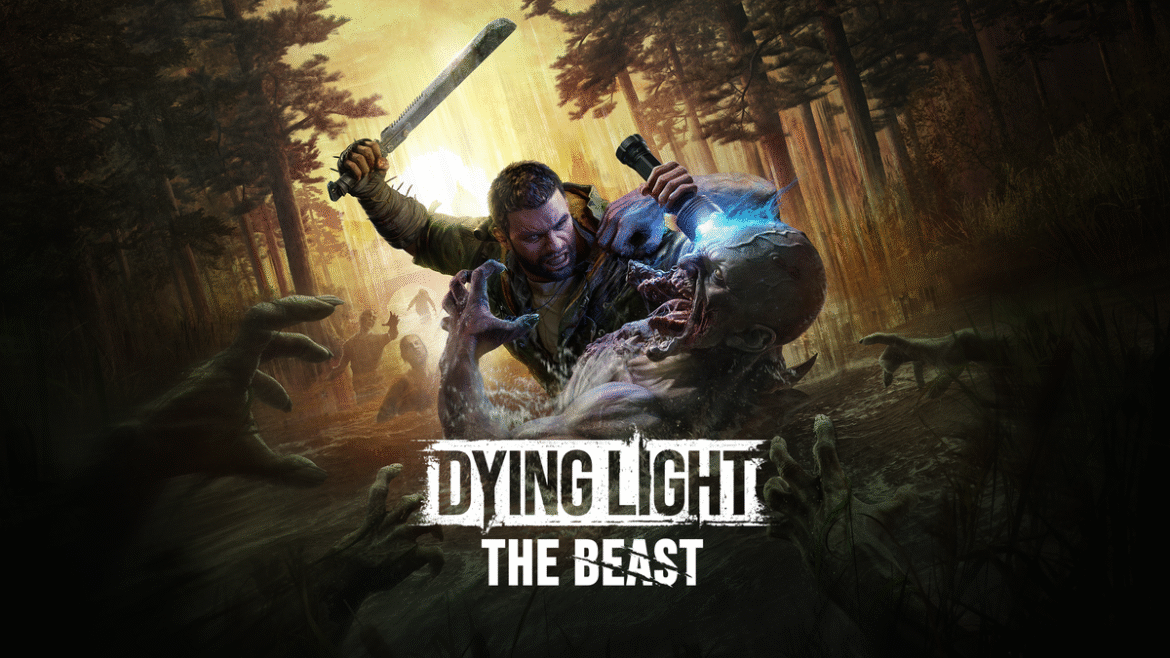
Wrocław, Poland – Sept. 26, 2025 – Techland is proud to announce that Dying Light: The Beast has enjoyed an outstanding global launch, receiving an overwhelmingly positive response from both players and media and achieving #1 position on Top Sellers chart on Steam.Just 48 hours after release, the game achieved an impressive 90% positive review score from players on Steam and reached a peak of 121,222 concurrent players during its first launch weekend, showcasing the strength of its global community. The positive momentum extends across platforms, with the game rated 4.7/5 on PlayStation, 4.4/5 on Xbox, and 4.7/5 on the Epic Games Store.Tymon Smektała, Dying Light Franchise Director, shared:

“Our entire studio poured two years of hard work into this project, always keeping players at the heart of every decision we made. We listened closely to community feedback when shaping creative and design choices. Seeing such a positive reception from players at launch proves that this approach truly makes sense.

Techland would like to thank its passionate community and media partners for making the launch of Dying Light: The Beast such a milestone moment in the franchise’s history.


Share this article


The link has been copied!


Affiliate Links


Source link

September 27, 2025 0 comments
0 FacebookTwitterPinterestEmail
Kraken
GameFi Guides

Kraken In Investment Talks, Targeting $20B Valuation Ahead of IPO: Report

by admin September 27, 2025


Trusted Editorial content, reviewed by leading industry experts and seasoned editors. Ad Disclosure

Crypto exchange Kraken is reportedly in talks with a strategic investor to raise capital that pushes its valuation to $20 billion ahead of a potential initial public offering (IPO). This development comes amid the crypto firms’ IPO frenzy in the US under a rather supportive administration of President Donald Trump.

Kraken Stays Focused, Follows $500M Raise With New Funding 

On Friday, Bloomberg reported that Kraken has begun advanced negotiations to boost its value to $20 billion as part of fundraising efforts in view of a planned IPO. Impressively, this move follows a recent $500 million raise, which took Kraken’s valuation to $15 billion.

Bloomberg first reported on Kraken’s IPO valuation in March 2025, stating the exchange was targeting a public listing in the first quarter of 2026. Beyond capital raising, the US-based trading platform has displayed other behaviors seen in IPO preparation, such as financial statement disclosure. 

Furthermore, Kraken has also expanded its product line beyond digital asset trading to include access to stocks and exchange-traded funds. While the reported funding talks remain in progress. Bloomberg expects a $200 to $300 million commitment according to sources familiar with the matter, allowing Kraken to potentially reach its target $20 billion valuation ahead of 2026. 

The media house also reports that the crypto exchange has engaged the advisory services of Morgan Stanley and Goldman Sachs Group Inc. in regard to this planned IPO. Kraken is now expected to soon file an S-1 registration statement with the US Securities and Exchange Commission, as expected of any entity aiming to launch a public offering.

Crypto IPO Frenzy Continues 

Kraken joins a growing list of crypto/blockchain firms seeking public funding. In 2025 alone, four other companies, namely USDC issuer Circle, blockchain lender Figure, and exchanges Bullish and Gemini, have successfully launched IPOs, indicating a significant step-up in wider investors’ interest in digital asset-focused firms. 

This public market approach is widely buoyed by the pro-crypto policies of Trump. Notably, the Republican has upheld promises of creating a friendly regulatory environment for digital assets operations, as indicated by strategy changes by regulators, including the SEC and CFTC.

The 47th US President has also popularly established a Federal Bitcoin Reserve, prompting similar actions from state governments. In terms of regulations, Trump also famously signed the GENIUS Act into law, creating a regulatory framework for stablecoin issuance, operations, and use. 

At press time, the total crypto market cap is valued at $3.73 trillion following the market crash seen in the last week. Notably, there has been a slight recovery of 1.11% in the past 24 hours.

Total crypto market cap valued at $3.73 trillion on the daily chart | Source: TOTAL chart on Tradingview.com

Featured image from Flickr, chart from Tradingview

Editorial Process for bitcoinist is centered on delivering thoroughly researched, accurate, and unbiased content. We uphold strict sourcing standards, and each page undergoes diligent review by our team of top technology experts and seasoned editors. This process ensures the integrity, relevance, and value of our content for our readers.


Source link

September 27, 2025 0 comments
0 FacebookTwitterPinterestEmail
Marvel’s Wolverine Comes Out Swinging In Gameplay Trailer
Game Updates

Marvel’s Wolverine Comes Out Swinging In Gameplay Trailer

by admin September 27, 2025


Today’s State of Play offered some fresh looks at a number of games, but one of the most exciting appearances was for Insomniac’s hotly antipated Wolverine game. The newly revealed trailer offers plenty of action to sink one’s claws into, and also hints heavily at some of the characters and locations that will play a central role.

The development studio that brought us the Marvel’s Spider-Man games is clearly taking a very different direction with Wolverine as it relates to mature content. Specifically, Wolverine is, without a doubt, an M-rated title that includes some extreme levels of brutal violence. Logan is seen throughout the video using his claws to dismember, stab, and otherwise eviscerate his foes, and it’s clear that Insomniac has invested heavily in creating believable tech around the battles, including the lifelike appearance of blood.

Evidently, the mutant warrior will be taking on a globe-trotting adventure, as we see locations as far-flung as a Japanese cityscape, the wilds of Canada, and the mysterious land of Madripoor – a fictional mainstay of Wolverine adventures in the comic books. We also see several familiar faces show up, including the likes of Omega Red and Mystique.


After revealing the trailer, Insomniac introduced us to the man who’ll be voicing Wolverine this time around. Liam McIntyre is set to bring Logan’s gruff but emotionally fraught persona to your gaming screen. McIntyre is best known for his work on the Spartacus TV series, but he also has video game experience, having played JD Fenix in Gears of War 4 and 5. He’s also done voice work in various animated properties.

Marvel’s Wolverine is still a good way off from its release on PlayStation 5 in the fall of 2026, roughly a year from now. However, Insomniac made a point to call out plans to share more about the game this spring. Until then, we’ll all have to be the best there is at what we do: waiting for more details. 

Check out the full trailer above, and a breakdown of what was shown in the “Behind the Claws” video below. 


Source link

September 27, 2025 0 comments
0 FacebookTwitterPinterestEmail
The LA Fires Spewed Out Toxic Nanoparticles. He Made It His Mission to Trace Them
Product Reviews

The LA Fires Spewed Out Toxic Nanoparticles. He Made It His Mission to Trace Them

by admin September 27, 2025


Spada’s is one of the hardest projects to tune the beam for. “The beam is way over-powered to run my samples, at baseline,” Spada said, comparing the amount of power he needs to a couple drops of water, “but the beam, it’s like Niagara Falls.”

The technique Spada relies on, particle-induced x-ray emission (PIXE), is a focused stream of protons to knock electrons out of atoms embedded in the sample. As those atoms stabilize, they emit x-rays—and each element gives off a signature energy. “It’s like a fingerprint,” Spada said. “Every metal shows up in a different color of x-ray.”

Because PIXE is nondestructive, Spada can scan the same filter multiple times, looking for metals like lead, arsenic, cadmium, and antimony—elements he frequently finds in urban wildfire debris. The beam line at Crocker is one of only a handful in the country equipped for this kind of environmental work.

“It’s not fast,” Spada said. “Sometimes it takes a couple of minutes just to scan a pinhead-sized area. But it’s precise, and it tells us what’s really in the air people are breathing.”

Spada is still in the process of running each of the filters from his monitoring areas through thermal-optical analysis for organic carbon, and spectroscopy that could detect molecular structures, in addition to the PIXE process.

Just the thermal-optical carbon analysis alone takes an hour per sample and gives just two numbers—how much elemental carbon and how much organic carbon.

Spada had droves of samples to get through.

“We turn everything into methane. We use a methanator, which sounds like something out of Phineas and Ferb, but it’s how we detect the organic carbon fractions,” said Spada. Each type of carbon burns off at a different temperature, revealing its origin—wildfire, diesel, gasoline, building materials. Because the signatures from the LA fires weren’t consistent with typical wildland burns, he noticed a strange pattern in one of the samples early on—high sulfur, high chlorine.

“We think it was from PVC pipes,” he said. “That’s one of the only materials that would give you both those elements. And it was from the Altadena set, so in a residential area.”

He flagged the findings for Baalousha. They have been reviewing each other’s results as an expedited substitute for formal peer review, and drafting community updates together.

“It was really important to him that we not just publish something academic,” Knack said. “He wanted it readable—like, for families, not scientists.”

Spada has been releasing reports on the ash samples on a rolling basis since he and Baalousha got the first results back in March. Each report went out with links to cleanup guidance, recommendations on protective gear, and a glossary.

He hopes to be able to release a preliminary report on the air conditions during the fires shortly. In mid-August, over seven months after they tore through LA, Spada was finally able to review his preliminary PIXE data while on leave from work, recovering from a routine outpatient surgery.

So far he’s found that the majority of nanoparticles were created and circulated in the air during the active fire phase, and once the fire had been contained and transitioned to the smoldering phase, the number dropped off steeply. “For example, in Pasadena, silicon in the 0.09- to 0.26-micrometer size range was 8 times higher during the active fire period,” Spada said via email.


Source link

September 27, 2025 0 comments
0 FacebookTwitterPinterestEmail
Seasonality, Strategy (MSTR), Nvidia (NVDA) And Others Offer Mixed Signals
NFT Gaming

Seasonality, Strategy (MSTR), Nvidia (NVDA) And Others Offer Mixed Signals

by admin September 27, 2025


This is an analysis post by CoinDesk analyst and Chartered Market Technician Omkar Godbole.

As we approach the final quarter of 2025, the following key charts provide valuable insights to help crypto traders navigate the evolving market landscape.

Bullish seasonality

Seasonal trends suggest a bullish Q4 outlook for both BTC$109,398.64 and ETH$4,010.26, the top two cryptocurrencies by market capitalization.

Since 2013, BTC$109,398.64 has delivered an average return of 85% in the final quarter, according to data from Coinglass, making Q4 historically the strongest period for bulls.

Seasonality leans bullish for BTC and ETH. (Coinglass)

November stands out as the most bullish month, with an average gain of 46%, followed by October, which typically sees a 21% increase.

ETH$4,010.26 also tends to perform well in the last three months of the year, although its strongest historical returns have been in the first quarter since inception.

BTC’s 50-week SMA support

Bitcoin’s price has dropped by 5% this week, consistent with the bearish technical signals and looks set to extend losses to late August lows near $107,300. If bulls fail to defend that, the focus will shift to the 200-day simple moving average at $104,200.

The ongoing price decline, combined with bitcoin’s historical pattern of peaking approximately 16 to 18 months after a halving event, may scare bulls.

However, such concerns may be premature as long as prices remain above the 50-week simple moving average (SMA). This moving average has consistently acted as a support level, marking the end of corrective price pullbacks during the current bull run that began in early 2023.

BTC’s weekly chart in candlesticks format. (TradingView/CoinDesk)

Traders, therefore, should closely watch the 50-week SMA, which is currently positioned around $98,900, as a key level for broader market direction.

XRP/BTC compression

XRP, often called the “U.S. government coin” by firms like Arca, has surged 32% this year. However, despite this strong rally, the payments-focused cryptocurrency remains confined within a prolonged sideways trading range against Bitcoin (XRP/BTC), showing limited relative strength.

The XRP/BTC pair has been confined within a narrow trading range since early 2021, resulting in over four years of low-volatility compression.

Prolonged range play in XRP/BTC. (TradingView/CoinDesk)

Recent price action near the upper boundary of this channel suggests that bulls are gradually gaining control. A breakout from such a prolonged consolidation could trigger a powerful rally in XRP relative to BTC, as the accumulated energy from this squeeze is released.

Now, let’s turn to charts that call for caution.

Breakout in Defiance Daily Target 2x Short MSTR ETF (SMST)

The leveraged anti-Strategy ETF (SMST), which seeks to deliver daily investment results that are -200%, or minus 2x, the daily percentage change in bitcoin-holder Strategy’s (MSTR) share price, is flashing bullish signals.

The ETF’s price climbed to a five-month high of $35.65, forming what appears to be an inverse head-and-shoulders pattern, characterized by a prominent trough (the head) flanked by two smaller, roughly equal troughs (the shoulders).

Defiance Daily Target 2x Short MSTR ETF (SMST). (TradingView/CoinDesk)

This pattern often signals a potential bullish reversal, suggesting the ETF may be gearing up for a significant upward move.

In other words, it’s flashing a bearish signal for both BTC and Strategy, which is the largest publicly listed BTC holder with a coin stash of 639,835 BTC.

Dollar Index’s double bottom

Last week, I discussed the dollar’s post-Fed rate cut resilience as a potential headwind for risk assets, including cryptocurrencies.

The dollar index has since gained ground, establishing a double bottom at around 96.30. It’s a sign that bulls have successfully established the path of least resistance on the higher side.

Dollar Index. (DXY). (CoinDesk/TradingView)

A continued move beyond 100.26, the high of the interim recovery between the twin bottoms around 96.30, would confirm the so-called double bottom breakout, opening the door for a move to 104.00.

Watch out for the pattern failure below 96.00, as that could lead to increased risk-taking in financial markets.

NVDA topping?

Nvidia (NVDA), the world’s largest listed company by market value, and a bellwether for risk assets, continues to flirt with the upper end of the broadening channel identified by June 2024 and November 2024 highs and lows hit in August 2024 and April 2025.

NVDA’s bull run has stalled at key resistance. (TradingView/CoinDesk)

The rally has stalled at the upper trendline since late July in a sign of bullish exhaustion. Should it decline from here, it could signal the onset of a risk-off period in global markets, including cryptocurrencies.


Source link

September 27, 2025 0 comments
0 FacebookTwitterPinterestEmail
Building the future of tokenized finance: What will it take?
Crypto Trends

Building the future of tokenized finance: What will it take?

by admin September 27, 2025


Disclosure: The views and opinions expressed here belong solely to the author and do not represent the views and opinions of crypto.news’ editorial.

While real-world asset tokenization began as a fringe experiment in crypto, that reality is quickly changing now. Investors are actively piling into tokenized treasuries, real estate, and commodities. 

Summary

  • RWAs are transforming finance — with over $7B in U.S. Treasuries on-chain and projections of $2–4T by 2030, tokenized assets promise faster settlement, fewer intermediaries, and greater efficiency.
  • Custody risks remain — weak key management, immature custody standards, and lack of global regulation pose serious threats to trust and adoption.
  • Hybrid future ahead — tokenized assets won’t replace TradFi outright; interoperability (with players like SWIFT as neutral infrastructure) will be critical for scaling global liquidity.
  • Winners vs. laggards — firms that treat RWAs as more than just a system upgrade, rebuild processes from the ground up, and integrate risk expertise will lead the next financial era.

With over $7 billion in U.S. Treasuries already on-chain and major players like Goldman Sachs pushing into this space, RWAs are shaping up as the most transformative force in digital finance since the early 2020s. The real question at this point is not if RWAs will change market infrastructure — it’s how. 

Value drivers vs. risks

For all the attention RWAs get these days, the biggest impact is happening behind the scenes. Tokenized assets settle nearly instantaneously, can operate 24/7, and cut out layers of intermediaries that have weighed down traditional markets for decades.

So from my perspective, the most important driver behind their growth has little to do with reinventing finance. In reality, it’s more about finally fixing long-standing back office headaches. Reduced settlement risk, faster reconciliation, and fewer intermediaries are not just technical wins; they increase market efficiency and directly affect profitability.

McKinsey projects that tokenized assets could potentially reach $2-4 trillion by 2030. The sheer scale of what’s at stake is staggering. Exchanges and asset managers that streamline these processes will see big competitive advantages long before the mass retail market catches on. 

That said, there’s a glaring blind spot that could get in the way of continued RWA adoption. Specifically, I am talking about storage architecture and custody procedures. Because the truth is: we’re nowhere near enterprise-grade standards in this field. Key management, incident response, and sub-custody controls still remain immature, and a single mishandled key could erase years of progress and create staggering legal liabilities.

Regulators are making efforts to catch up, but so far, any possible legal frameworks are in their infancy. There is no global baseline standard to speak of for this field. And until we get it, every new tokenized treasury or property deal is going to be built on fragile foundations. Without proper infrastructure in place, there is a considerable risk that trust in RWAs may be undermined, and the industry will lose momentum just as it’s beginning to scale.

A hybrid future: TradFi meets tokenization

I don’t see tokenized markets just replacing traditional ones outright. The infrastructure and support behind legacy markets are too entrenched in global society for that. Instead, looking three to five years ahead, it’s far more likely that we’ll see a hybrid model where the two systems coexist and complement each other.

The key to building such a hybrid system will be interoperability. Without different systems, chains, and ledgers being able to talk to each other, tokenized assets risk staying trapped in silos. I’ve long believed that SWIFT could — and should — take center stage here. Given its global reach and existing trust with financial institutions across the world, it can act as a neutral switchboard for tokenized finance.

Its role wouldn’t be to hold or control assets in its custody, but rather to provide the messaging, routing, and compliance checks that let those assets flow across borders and networks seamlessly.

I envision it as a single connection that can move any asset across any ledger, while the assets themselves remain on their own native chains. If done right, this approach would give institutions the ability to “plug in” once and scale everywhere — trading across different systems and gaining easy access to global liquidity.

How to not get left behind

The unfortunate reality that I see often is that many banks, exchanges, and enterprises are approaching RWAs as if this were just another system upgrade. It is not. Developing in this space requires a ground-up rebuild. This is new technology, and that requires new processes, systems built for purpose, and, perhaps most importantly, a new mindset.

If your strategy assumes RWAs are simply an enhancement of your current stack, in two years or so, you will be at a strategic disadvantage and ripe for displacement. The real winners will be forward-thinking firms willing to commit to bold strategies and the discipline to follow through on them. And it would also be wise of those firms to bring in risk professionals who understand both the opportunities and pitfalls of financial innovation so they can lean on their guidance.

The rise of tokenized RWAs is not just a passing trend. Yes, there is still a lot of work to be done, but that wave is coming — no doubt about it. If firms stick with a “bolt-on” approach, they’ll quickly fall behind. But those who proactively prepare and innovate will shape industry rules, set benchmarks, and be the leaders of the next financial era.

Dave Ackerman

Dave Ackerman is the Chief Operating Officer of Currency.com, the global digital finance platform. Mr. Ackerman is a transformative global compliance executive and licensed attorney with over 20 years of experience. He steers disruptive technologies through the intricacies of operational compliance, government relations, and regulatory landscapes. In 2024, David joined Currency.com  as Chief Compliance Officer, playing a key role in guiding the company through complex regulatory landscapes during its U.S. market entry and global expansion. Following Currency.com’s acquisition in 2025, he was appointed Chief Operating Officer in the U.S., where he now oversees day-to-day operations across compliance, legal, product, and customer experience. David leads post-acquisition integration, drives global growth initiatives, and builds the operational infrastructure needed to scale. He works closely with the executive team to align strategy with execution, fostering a performance-driven culture rooted in transparency and regulatory excellence.


Source link

September 27, 2025 0 comments
0 FacebookTwitterPinterestEmail
Get a Fascinating Look at Some of Nacelle's New 'Star Trek' Figures
Gaming Gear

Get a Fascinating Look at Some of Nacelle’s New ‘Star Trek’ Figures

by admin September 27, 2025


Even without a single one of them actually released and in our grubby little hands yet, the thing we love most about Nacelle’s line of Star Trek action figures is the company’s willingness to get as weird and dorky about its lineup as any Trekkie would. Picard and Kirk before calling it a day? Not here: how about Tuvix and Weyoun? How about Captain Janeway, but a version of her very specific to one episode? What about Jellico? What about Bem?

Nacelle’s desire to cover the whole breadth of Star Trek means we’ve had a look at three waves’ worth of wonderfully deep-cut action figures the company has plans for so far (wave three, at least, acquiesces to Trek‘s 60th anniversary next year, with a round dedicated entirely to the main crew of the original Star Trek). And while we know the lineups already, io9 has beamed in your first actual look at two more highlights from one of those waves in the form of T’Pol and Bem.

Revealed to audiences today at Nacelle’s panel at FanX Salt Lake (and in T’Pol’s case, timed to Enterprise‘s 25th anniversary), these two new renders of Bem and T’Pol join wave two alongside Generations Captain Kirk; Worf and Geordi in their sailor uniforms from the same movie; Captain Janeway from the iconic “Year of Hell” two-parter; Ensign Nog from Deep Space Nine; Valeris from The Undiscovered Country; Carol Marcus from Wrath of Khan; and the Romulan Commander from one of the greatest episodes of Star Trek ever made, “Balance of Terror.” The wave is due to ship out next year, but check out more looks at T’Pol and Bem below!

T’Pol

© Nacelle © Nacelle © Nacelle

Enterprise‘s no-nonsense science officer and XO aboard the NX-01, T’Pol comes with a host of accessories inspired by the back half of the show. Wearing her season three jumpsuit, T’Pol comes with four sets of alternate hands; she includes a PADD and extra data module, a phase pistol, a communicator, a Vulcan hand scanner and book, a canister of Trellium-D ore from “Impulse,” and her mother’s Syrrannite IDIC pendant from “Awakening.”

Bem

© Nacelle © Nacelle © Nacelle

The very first Animated Series figure in Nacelle’s line, Ari bn Bem faithfully recreates the mysterious Pandronian commander from the TAS season two episode “Bem” down to a tee—including the fact that his head, torso, and legs can be split apart as they did in the show and connected back together by magnets. Bem’s accessories include an alternate head, two sets of type-1 phasers and handheld communicators, and two sets of inner, noodly arms. If that wasn’t enough, he even comes with a piece of wooden caging to replicate the rudimentary prison he found himself in on Delta Theta III.

Each figure, alongside the rest of Wave Two, will retail for around $29. They’re available to pre-order now, ahead of expected shipping sometime next year.

Want more io9 news? Check out when to expect the latest Marvel, Star Wars, and Star Trek releases, what’s next for the DC Universe on film and TV, and everything you need to know about the future of Doctor Who.


Source link

September 27, 2025 0 comments
0 FacebookTwitterPinterestEmail
Microsoft "ceases and disables" some of its services to Israel Ministry of Defence
Esports

Microsoft “ceases and disables” some of its services to Israel Ministry of Defence

by admin September 27, 2025


Microsoft has “ceased and disabled a set of services” to part of the Israel Ministry of Defence (IMOD) following an ongoing review.

The firm’s vice chair and president Brad Smith informed employees that it reviewed a report by The Guardian that alleged a unit within the Israeli Defence Forces (IDF) was “using Azure for the storage of data files and phone calls obtained through broad or mass surveillance of civilians in Gaza and the West Bank.”

Smith said Microsoft had “found evidence that supports elements of The Guardian’s reporting”, and that it includes “information relating to IMOD consumption of Azure storage capacity in the Netherlands and the use of AI services.”

“We therefore have informed the IMOD of Microsoft’s decision to cease and disable specified IMOD subscriptions and their services, including their use of specific cloud storage and AI services and technologies,” said Smith.

“We have reviewed this decision with the IMOD and the steps we are taking to ensure compliance with our terms of service, focused on ensuring our services are not used for mass surveillance of civilians.”

Smith clarified that this choice “does not impact the important work Microsoft continues to do to protect the cybersecurity of Israel and other countries in the Middle East, including under the Abraham Accords.”

Pro-Palestine group No Azure for Apartheid described Microsoft’s decision as “a significant and unprecedented win for the campaign and [its] organising.”

“Within less than a month of our sit-in in Brad Smith’s office, Microsoft has taken the significant decision to become the first US tech company to stop the sale of some technologies to the Israeli military since the start of the genocide in Gaza,” said No Azure for Apartheid organiser Hossam Nasr (via The Verge).

“The vast majority of Microsoft’s contract with the Israeli military remains intact. [This decision] only motivates us more to continue our organising until all of our demands are met, and until Palestine is free.”

Earlier this year, Microsoft announced it had conducted an internal review following an investigation by the Associated Press.

Reporting claimed that the firm’s commercial AI products were being used by the IMOD “to target civilians or cause harm in the conflict in Gaza.”

The tech giant acknowledged that it provided the IMOD “with software, professional services, Azure and Cloud AI services” but concluded there was “no evidence to date” that its AI technology had “been used to target or harm people” in the ongoing Gaza conflict.

Microsoft emphasised that it had a “standard commercial relationship with the IMOD” and it was “bound by Microsoft’s terms of services and conditions of use”.

This includes the prohibition of using its cloud and AI services “in any manner that inflicts harm on individuals or organisations or affects individuals in any way that is prohibited by law.”

Last month, 18 members of No Azure for Apartheid were arrested outside of Microsoft HQ in Redmond, Washington, during the second day of protests.

Members claimed that Microsoft and Redmond police retaliated against its “peaceful opposition of war crimes” with “the brutal mass arrest of 18 protestors, chemical weapons, and physical violence.”

The police department confirmed the arrests took place, and claimed protestors “resisted and became aggressive” and were arrested on charges including alleged “trespassing, malicious mischief, resisting arrest, and obstruction.”


Source link

September 27, 2025 0 comments
0 FacebookTwitterPinterestEmail
Sonic Racing: CrossWorlds review - an exquisite handling model saves an overly disruptive karting offering
Game Updates

Sonic Racing: CrossWorlds review – an exquisite handling model saves an overly disruptive karting offering

by admin September 27, 2025


A fun arcade karting experience is often too chaotic for its own good, but a tight handling model with a high skill ceiling offers surprising depth.

I’ve recently decided to embrace my interests more, so I binned all my old polo shirts that made me look like a lower-middle class wannabe golf pro who works as the manager of a regional carpet store. To replace them I bought a Pac-Man baseball cap and a truckload of image-heavy t-shirts, most of which make references to video games, films, and popular culture. OK, so this sounds like I’ve become the fashion embodiment of Ready Player One, but some of these shirts are pretty nice. Long story short, my daughter wanted me to buy a Sonic the Hedgehog shirt to match her Sonic hoodie. I did. I am a Sonic fan – there, I’ve admitted it!

Sonic Racing: Crossworlds review

A side-effect of this is how popular I am at parties for pre-schoolers – an age group that, it seems, absolutely adores the Blue Blur. A few months back I happened to wear my Sonic t-shirt, completely coincidentally, to a Sonic-themed birthday party, and at points I was more popular than the magician. Kids parties are always a lot, but this one had an extra level of chaos. Not dissimilar, then, to Sonic Racing: CrossWorlds, a kart racer that has the unpredictable energy of someone unintentionally wearing themed merch to a five-year-old’s party. To use a phrase that probably died off at least two generations ago: this pops off.

CrossWorlds at its core is as you’d expect a fun-focused kart racer to be: you pick your character and vehicle (cars and hoverboards) to determine your basic stats, such as how strong you are, your top speed, acceleration, and all the rest, and then duke it out over a grand prix of four races alongside 11 other racers. Speed and a good racing line only go so far, with there rarely being more than a few seconds between power-up attacks or on-course obstacles. So far, so kart racer… but one that’s even more unrelenting than the norm with its power-up fueled carnage.

Rivals appear at the start of each race, smack talking in an age-suitable way. | Image credit: SEGA/Eurogamer

More options to shape your vehicle come from purchasable items (using the easily obtained in-game currency) that can be equipped in the customisation menu, plus a load of perk-like gadgets that give you stat boosts or special abilities. While these gadgets are simple at first and your options are limited, you’ll quickly unlock more and be able to equip extra in each race, making them more useful than they initially appear to be. While I found a gadget that gets you going quicker after falling off the track to be quite useful as I was learning the tracks, I ended up focusing more on stat boosts and didn’t tinker too much once I had a set I was happy with.

Classic karting is the core driving style, complete with power-sliding, boosts, slipstreaming, and more, but at points you’ll also transform into planes and boats. Planes are fine as brief moments of respite from the more frenetic grounded racing, but the boat sections are exceedingly flat in comparison. A tweaked boost mechanic while on water sees your craft also hop into the air, which does open up some shortcuts when used correctly, but compared to Mario Kart World’s boat sections this is less dynamic and is almost devoid of thrills.

Sonic Racing: CrossWorlds is visually bright and bold, but it’s rough in places. | Image credit: SEGA/Eurogamer

The CrossWorlds from the title, then, might be the game’s headline feature, but while racing it doesn’t really add all that much to the experience. For the second lap of each three-lap race the leader gets to choose if they want themselves and the entire pack to be teleported (via a large golden ring) to either a specific CrossWorlds track (there are 15 of these that are separate to the core tracks found on the course selector) or a random track, in a left or right choice not dissimilar to the branching course selection in Out Run. There’s no obvious benefit to the leader, here, outside of some minor gains from having a vehicle potentially suited to what’s chosen, and the teleportation is handled in a rather unspectacular way, but it’s a neat enough gimmick and the CrossWorlds are enjoyably more on the novelty end of the course spectrum.

The same mechanic is used in the final of the four grand prix races, with the three laps comprising the trio of courses you’ve raced up to that point, the course changing as you teleport at the end of each lap. I don’t love repeating previous courses to end a grand prix, nor is the course-swapping handled in a particularly unique way, so I found myself zoning out during many of these final races – which cost me a win on a handful of occasions. A rival system, which pits you against a foe for increased rewards, adds some extra spice, but once I’d won each of the grand prix my interest quickly waned.

It’s all good fun, though, with the chaos made more enjoyable when playing against real people – either online or in local four-player split-screen. Multiplayer isn’t limited to grand prix, either, with a slightly oversold Race Park offering a bunch of team-based events that twist the races. One, for example, gives you a speed boost for driving into one of your team mates, another gives bonus points for rings collected, and another only includes the heavy power-ups. Rewards can be earned for performances against the other teams, but this is still essentially a set of custom game modes.

Make your choice over the CrossWorlds track you want to be teleported to. | Image credit: SEGA/Eurogamer

While I’m not bowled over by the Grand Prix mode (which, to be clear, is the key offering here – there’s no open world to explore, or story mode), there is a Time Trial mode complete with ghost racing against the world’s best players. I’m a sucker for these modes, and CrossWorlds offers a very tidy handling model that only really comes clearly into view when you aren’t swearing endlessly due to being knocked off your stride. I appreciate that purely racing for the fastest times isn’t for everyone, and highly likely not a reason most people care about kart racers, but there’s a lot to learn here if you are that way inclined.

Forget about the slower race speeds, though, as they can feel like you’re driving through treacle. Sonic Speed (the third option in most of the modes) and Super Sonic Speed are your only choices in Time Trial, which is fine as they are what I’d recommend you choose if you truly want to feel alive. Combine this speed with some high-level boost controls tied to drifts and tricks, circuit shortcuts, and optimal racing lines and you’ve got everything you’ll need for a jolly good time. Simply put, drifting builds your boost meter, to a maximum level of 3, but you can retain your boost meter while changing directions if you go from one drift directly into another, and also boost via simple tricks performed in the air. To get the best times you’ll need to know when to build a boost and when you use it, and when to take a route that offers trick potential, even if it’s not the most direct path forward.

I really didn’t get on with the on-water sections, finding them dull compared to the rest of the racing, but the flight sequences are fun. | Image credit: SEGA/Eurogamer

Hardcore Sonic fans may wish ill on my Sonic t-shirt for saying this, but I’ve always found the modern soundtracks to be wildly uneven. Sonic Racing: CrossWorlds features a broad selection of classic songs which run the gamut from annoyingly catchy pops to almost causing actual damage to my ears. This inelegant mix is true of the visuals, too – the courses are big and bold, but details are rougher than I expected for a game releasing onto modern consoles in their fifth year on the market. Similarly, the aforementioned CrossWorlds portal rings are presented with lower frame rates than the rest of the game runs at, at a lower resolution, and end up feeling hamstrung by needing to function on the now ancient Switch hardware.

A small point, perhaps, but I’m also not enamored with the way all the crossover elements with non-SEGA games are tied to paid DLC. Pac-Man, Minecraft, and SpongeBob Squarepants are all announced, all tied to the Season Pass – racers and tracks. Free updates are coming from SEGA, but thus far that is only said to be new racers, including Joker (Persona), Ichiban Kasuga (Yakuza), and Hatsune Miku (not SEGA-owned but SEGA has developed games using the character). There’s not a shortage of tracks or racers in the core game, but the crossover courses look to be some of the more visually interesting of the entire lot.

Sonic Racing: CrossWorlds accessibility options

Subtitles,Steering assist, Auto-accelerate, Trick assist

How much you are going to enjoy Sonic Racing: CrossWorlds really depends on what you want from an arcade racing game. If Mario Kart (let’s say World, but all of them work) is Jaws, a refined and lauded take on the shark attack film, Sonic Racing: CrossWorlds is Under Paris, a more ludicrous entry in the genre that pushes excess without a modicum of restraint. That comparison might feel odd, given Mario Kart World is a rather joyous celebration of kart racing, but CrossWorlds at times feels like you’re playing a proper arcade game, strapped into the hydraulic moving seat, but also having to contend with the wheel being turned by an overly enthusiastic small child. A child that loves Sonic and anyone who happens to be sporting a high-fashion Sonic t-shirt.

A copy of Sonic Racing: CrossWorlds was provided for review by Sega.


Source link

September 27, 2025 0 comments
0 FacebookTwitterPinterestEmail
  • 1
  • …
  • 125
  • 126
  • 127
  • 128
  • 129
  • …
  • 764

Categories

  • Crypto Trends (1,098)
  • Esports (800)
  • Game Reviews (772)
  • Game Updates (906)
  • GameFi Guides (1,058)
  • Gaming Gear (960)
  • NFT Gaming (1,079)
  • Product Reviews (960)

Recent Posts

  • This 5-Star Dell Laptop Bundle (64GB RAM, 2TB SSD) Sees 72% Cut, From Above MacBook Pricing to Practically a Steal
  • Blue Protocol: Star Resonance is finally out in the west and off to a strong start on Steam, but was the MMORPG worth the wait?
  • How to Unblock OpenAI’s Sora 2 If You’re Outside the US and Canada
  • Final Fantasy 7 Remake and Rebirth finally available as physical double pack on PS5
  • The 10 Most Valuable Cards

Recent Posts

  • This 5-Star Dell Laptop Bundle (64GB RAM, 2TB SSD) Sees 72% Cut, From Above MacBook Pricing to Practically a Steal

    October 10, 2025
  • Blue Protocol: Star Resonance is finally out in the west and off to a strong start on Steam, but was the MMORPG worth the wait?

    October 10, 2025
  • How to Unblock OpenAI’s Sora 2 If You’re Outside the US and Canada

    October 10, 2025
  • Final Fantasy 7 Remake and Rebirth finally available as physical double pack on PS5

    October 10, 2025
  • The 10 Most Valuable Cards

    October 10, 2025

Newsletter

About me

Welcome to Laughinghyena.io, your ultimate destination for the latest in blockchain gaming and gaming products. We’re passionate about the future of gaming, where decentralized technology empowers players to own, trade, and thrive in virtual worlds.

Recent Posts

  • This 5-Star Dell Laptop Bundle (64GB RAM, 2TB SSD) Sees 72% Cut, From Above MacBook Pricing to Practically a Steal

    October 10, 2025
  • Blue Protocol: Star Resonance is finally out in the west and off to a strong start on Steam, but was the MMORPG worth the wait?

    October 10, 2025

Newsletter

@2025 laughinghyena- All Right Reserved. Designed and Developed by Pro


Back To Top
Laughing Hyena
  • Home
  • Hyena Games
  • Esports
  • NFT Gaming
  • Crypto Trends
  • Game Reviews
  • Game Updates
  • GameFi Guides
  • Shop

Shopping Cart

Close

No products in the cart.

Close