Laughing Hyena
  • Home
  • Hyena Games
  • Esports
  • NFT Gaming
  • Crypto Trends
  • Game Reviews
  • Game Updates
  • GameFi Guides
  • Shop
Author

admin

admin

Decrypt logo
NFT Gaming

Did Michael Saylor Rebut a Controversial Bitcoin Proposal? It’s Complicated

by admin September 28, 2025


In brief

  • Strategy’s Michael Saylor appeared to endorse Bitcoin Knots on X on Wednesday.
  • The CEO of a prominent firm doubts that was Saylor’s intention.
  • Saylor has acknowledged the debate surrounding OP_RETURN elsewhere.

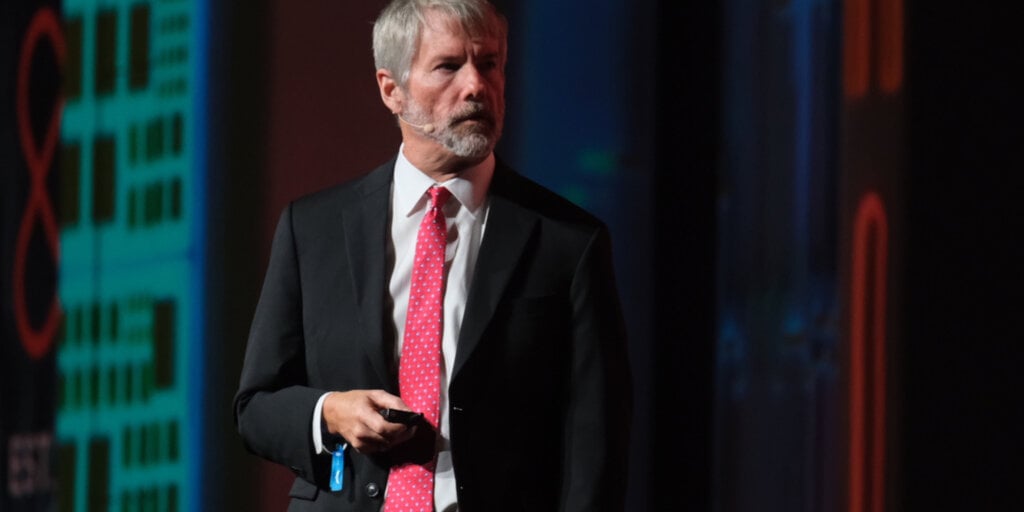
When Michael Saylor speaks, Bitcoiners often listen. But on Thursday, they couldn’t seem to agree on whether Strategy’s co-founder and executive chairman meant to weigh in on a controversial change to Bitcoin’s codebase that’s split the community in recent months.

On Wednesday, Saylor reposted a stylized video on X of him speaking on The Peter McCormack Show. The episode, which debuted over a year ago, showcased his thoughts on how changes to Bitcoin’s protocol could potentially lead to unintended and negative consequences.

The 10-minute clip that Saylor reposted included a call to action at the very end, which Saylor has never made publicly himself. The video prompted users to “Run Knots,” a form of software for Bitcoin node operators flouting changes set for its prevailing alternative.


Bitcoin Core currently accounts for 70% of machines that validate Bitcoin transactions, according to data from Clark Moody Bitcoin. And Bitcoin Core v30, which is scheduled to be released next month, is expected to modify how a so-called Bitcoin opcode can be used. Following months of debate, Bitcoin Core developers committed to the change in June.

Bitcoin opcodes are predefined functions that form the bedrock of Bitcoin’s codebase, and OP_RETURN allows people to store data in transactions. In Bitcoin Core v30, the amount of data that can be stored through OP_RETURN is set to increase to 100,000 bytes from 80 bytes.

Advocates argue that the shift will unlock more complex applications on Bitcoin, while making current workarounds obsolete. Critics argue that it could result in a more congested network, or even incentivize the storage of problematic or illegal content on Bitcoin’s network.

Bitcoin Knots’ supporters immediately portrayed Saylor’s social media activity as evidence of his support, but Saylor has yet to clarify his stance, and some doubt the message was intentional.

In some ways, the debate around OP_RETURN echoes controversy surrounding Ordinals. As the NFT-like assets gained (temporary) popularity in 2023, some cheered the development as innovative, while others argued that Bitcoin should stick to its monetary focus.

“If you believe the government should do the minimum to control your life, you [should] believe that the protocol should do the minimum,” Saylor said in the video that he reposted on Wednesday.

At a gathering of Bitcoin-buying firms in New York earlier this month, Saylor made comments echoing that conservative sentiment, according to a video posted on X by an account that goes by Señor 11s around a week ago.

“I think this debate we see right now over OP_RETURN limits, this is actually a second-order or maybe even a third-order change,” Saylor said. “But the reaction of the community, which is to reject it, an inflammatory reaction, I thought was a healthy response.”

To be sure, Saylor hasn’t publicly come out in favor of Bitcoin Core or Bitcoin knots. In 2023, Saylor told Decrypt that the discussion surrounding Ordinals was important because it could help miners be successful over the long term or bolster Bitcoin’s adoption.

On Wednesday, several accounts beckoned for clarification from Saylor on X, raising questions as to whether the influential CEO watched the clip he reposted to the end. The pro-Knots message is shown for exactly three seconds.

Decrypt has reached out to Strategy for comment.

The CEO of a prominent financial services firm, who requested anonymity to speak about the controversy, told Decrypt that he is certain Saylor would not have reposted the clip had he known that there was a pro-Knots message included at the end of the clip.

“He would never weigh in on something like that,” they said, arguing that Saylor is in a bind now because taking the post down would also make it look like he’s taking a side.

Even if Saylor reposted a pro-Knots message unintentionally, the individual said one thing seems certain: “The sides keep getting more and more vicious.”

Daily Debrief Newsletter

Start every day with the top news stories right now, plus original features, a podcast, videos and more.


Source link

September 28, 2025 0 comments
0 FacebookTwitterPinterestEmail
Decrypt logo
Crypto Trends

Korean Actor Hwang Jung-eum Gets Suspended Term In $3 Million Crypto Case

by admin September 28, 2025


In brief

  • South Korean actor Hwang Jung-eum received a suspended prison sentence for embezzling $3 million from her agency to invest in crypto.
  • The Jeju District Court showed leniency after Hwang repaid the entire embezzled amount and was deemed a first-time offender.
  • The scandal derailed her career, with TV shows editing her out and advertisers dropping her from campaigns.

South Korean actress Hwang Jung-eum walked out of Jeju District Court in tears Thursday after receiving a two-year suspended prison sentence for embezzling $3 million from her own agency to invest in crypto.

The court handed Hwang the suspended sentence, meaning she will serve no jail time unless she commits another crime within four years, for violating Korea’s Act on the Aggravated Punishment of Specific Economic Crimes, according to a Korea JoongAng Daily report.

Prosecutors had sought a three-year jail sentence in August, but judges cited her repayment of the full amount and her status as a first-time offender who had made full restitution.


Hwang embezzled about 4.34 billion won ($3.1 million) from her agency in early 2022, as per the indictment cited in the report.

Approximately 4.2 billion won of that sum was invested directly in crypto, while the remainder was used to pay property and local taxes via credit card payments, Decrypt reported earlier.

Kadan Stadelmann, CTO at Komodo, told Decrypt that East Asian and Western regulators now show “similar outcomes when it comes to enforcing the law against crypto embezzlers,” though the West has historically had an edge in “blockchain analytics.” 

Asia is “catching up,” he noted, suggesting South Korea could look to U.S. financial controls where the FTC enforces “transparency, disclosure, and accountability” in celebrity crypto promotions, standards that could guide oversight of talent agencies and sports firms.

In Hwang’s case, the company involved was a family-run corporation solely owned by her, with only one actor under management, herself. At her first trial on May 15, Hwang admitted to all charges and requested additional time to repay the full amount.

The court showed leniency after Hwang sold personal assets and repaid the entire embezzled amount in installments. 

She had returned about 3 billion won by her first trial, then covered the remainder on May 30 and June 5. 

“I was just trying to work hard and live honestly, but I neglected financial and tax matters, which led to this situation,” Hwang said during her final hearing on August 21. “I am remorseful.”

Her legal team said that the misused funds originated from her personal entertainment income and were temporarily held in her name because corporations are restricted from holding crypto directly, according to the report.

“Since the agency’s profits ultimately stem from the defendant’s own work, they can be seen as rightfully belonging to her,” Hwang’s attorney said in court.

Daily Debrief Newsletter

Start every day with the top news stories right now, plus original features, a podcast, videos and more.


Source link

September 28, 2025 0 comments
0 FacebookTwitterPinterestEmail
Robotic arm sorting items into four boxes
Gaming Gear

China Outpaces Rest of World in Working Robots

by admin September 28, 2025


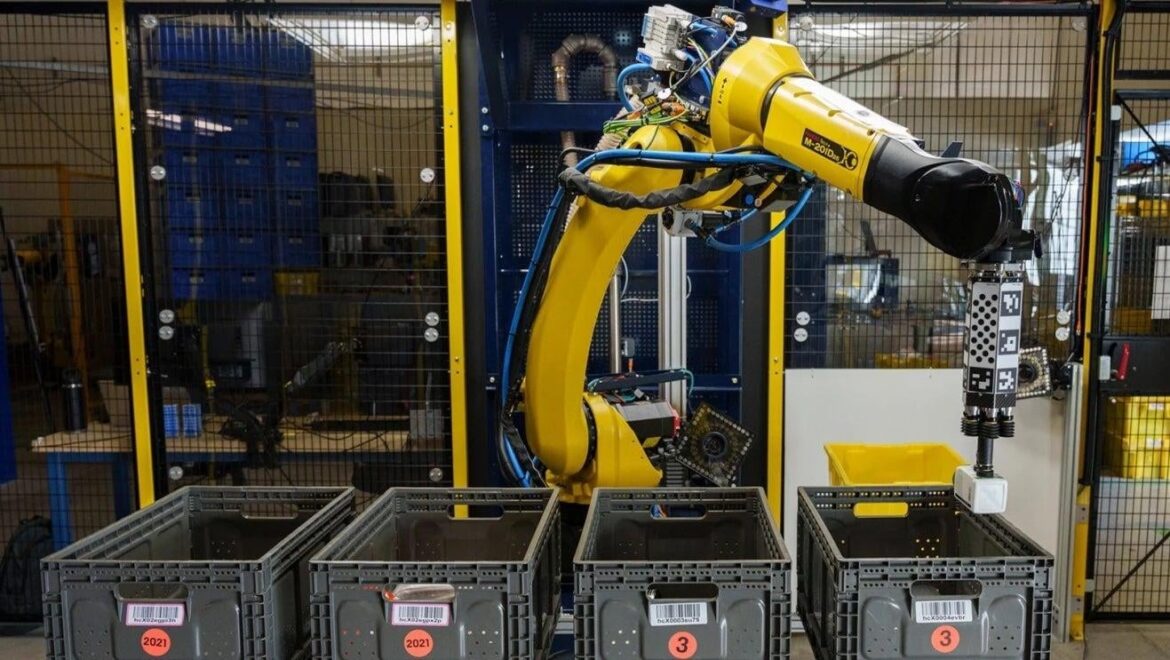
There are an estimated 4,664,000 working industrial robots in the world, according to the International Federation of Robotics. More than two million of them are in China. And don’t count on anyone catching up soon. According to the report, the country installed nearly 300,000 new robots last year, and was responsible for 54% of all robotic deployments across the globe in 2024. For comparison’s sake, the United States managed about one-tenth that figure, adding 34,000 industrial bots during the same time frame.

China’s robot boom coincides with the country taking on the role of a global manufacturing leader. According to the New York Times, China now holds just under one-third of all global manufacturing output, up from just 6% of the pie at the turn of the 21st century. That makes China’s current output bigger than the combined manufacturing power of the United States, Germany, Japan, South Korea and Britain.

That gap seems likely to continue to widen. While China’s robotic installations increased year-over-year by about 7%, according to the International Federation of Robotics, the next-biggest robo-reliant nations all saw their total installations dip. Japan declined by 4%, the US dropped by 9%, South Korea slumped by 3%, and Germany slipped by 5%.

The IFR doesn’t see China’s automation adoption stopping any time soon, either. It projects the country will see an average of 10% growth annually through 2028, driven primarily by the introduction of industrial robotics into new markets. China’s biggest areas of growth in the last year included food and beverage, rubber and plastic, and textile production, whereas the United States continues to see robotics primarily applied to more traditional manufacturing fields like automotives.

Interestingly, while China’s robotics domination does appear driven in part by new technological developments like artificial intelligence, the country isn’t that into humanoid robots compared to other industrial forces. The New York Times attributed that to the fact that it’s difficult to build a humanoid bot entirely within the Chinese supply chain, where domestically made sensors and semiconductors can be harder to come by. Meanwhile, companies like Tesla and Boston Dynamics keep promising humanoid industrial workers that’ll likely carry a steep price tag.

Maybe the biggest enabler of China’s robot boom, though, appears to be human labor. According to the Times, the country has produced a large workforce of skilled electricians and programmers who can install and maintain robots. America is slowly catching up on that front, with the employment of electricians booming—though there remains a massive programmer shortage unlikely to be eased by the fact that the Trump administration’s new, boosted fee for H1-B visa applicants will keep skilled labor overseas.


Source link

September 28, 2025 0 comments
0 FacebookTwitterPinterestEmail
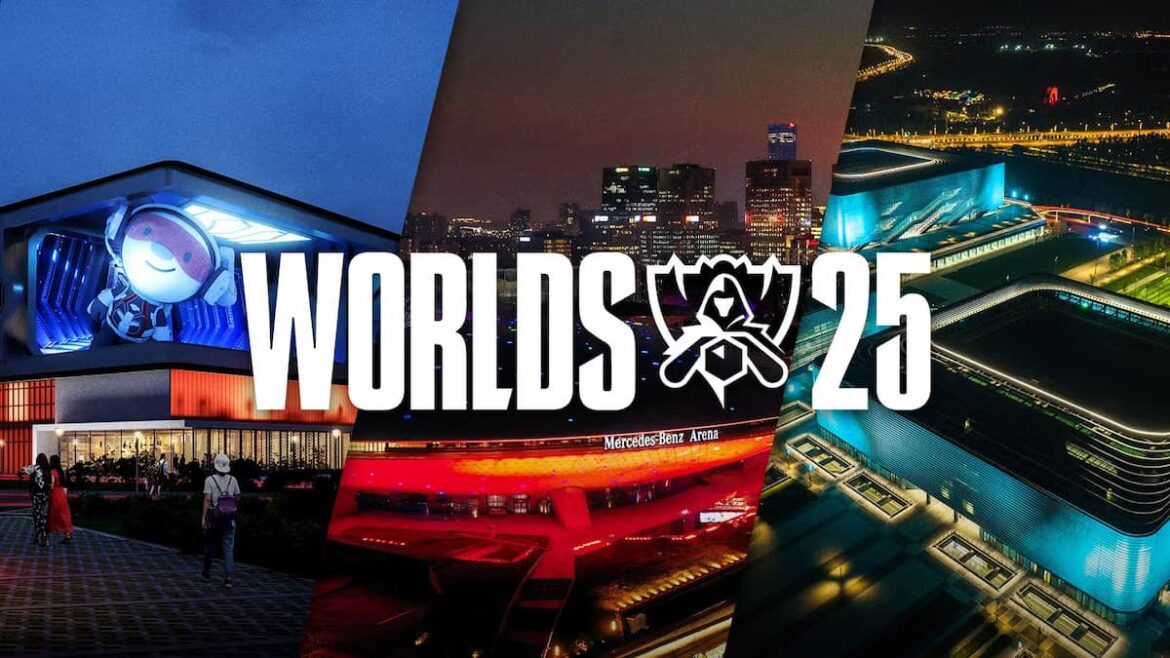
Picture showing all the three venues for Worlds 2025.
Esports

All teams qualified for LoL Worlds 2025

by admin September 28, 2025


After four years of waiting, the League of Legends Worlds Championship is heading back to China. It’ll be the last international tournament of the year for the best teams to stake their claim at the Summoner’s Cup.

Worlds 2025 will feature teams from major regions, like Korea, China, Europe, and America, but it will also feature teams from the minor regions, who will get their chance to write the best underdog storyline and cause a few upsets.

Worlds 2024 became the most-watched esports tournament with 6.94 million peak viewers, and if the trend continues, it’s likely to break the record again in 2025, delivering breath-taking action as the best players lock their horns to get the ultimate glory of becoming a World Champion.

All teams qualified for Worlds 2025

T1 successfully defended their Worlds title last year. Photo by Colin Young-Wolff via Riot Games

A total of 17 elite teams from around the world will participate in Worlds 2025. These teams will battle for the championship title on the biggest stage in esports, and the confirmed names so far are listed below:

Korea (LCK)

  • KT Rolster
  • Hanwha Life Esports
  • Gen.G 
  • T1

China (LPL)

  • Bilibili Gaming
  • Anyone’s Legend
  • Top Esports
  • Fourth Seed.

Europe (LEC)

  • G2 Esports
  • Movistar KOI
  • Fnatic

America (LTA North) 

South America (LTA South)

Pacific (LCP)

  • CTBC Flying Oyster
  • Secret Whales
  • PSG Talon

We’ll update the article as more teams qualify for Worlds 2025.

Dot Esports is supported by our audience. When you purchase through links on our site, we may earn a small affiliate commission. Learn more about our Affiliate Policy


Source link

September 28, 2025 0 comments
0 FacebookTwitterPinterestEmail
Ethereum Whales Awakens After 8 Years, Moves $785M In Eth
GameFi Guides

Ethereum Whales Awakens After 8 Years, Moves $785M In ETH

by admin September 28, 2025


Two Ethereum (ETH) wallets that had been dormant for over eight years have become active, moving a combined 200,000 ETH, worth approximately $785 million, into newly created addresses. Blockchain data shared by the analytics account Lookonchain, indicates these addresses were originally funded via Bitfinex, linking the activity to early Ethereum participants.

The same entity now holds 736,316 ETH (around $2.89 billion) distributed across eight wallets, raising questions around the motives behind such a substantial transfer; the largest moves came from 0xbF3 and 0x057. Movements of this scale from long-dormant wallets are rare and tend to draw heightened market attention due to the potential impact on liquidity and investor sentiment.

Two wallets that have been dormant for over 8 years just woke up and moved 200K $ETH($785M) to 2 new addresses.

This Ethereum OG originally sourced their $ETH primarily from #Bitfinex, currently holds a total of 736,316 $ETH($2.89B) across 8 wallets.

Wallets:… pic.twitter.com/wVFzXZcL0o

— Lookonchain (@lookonchain) September 26, 2025

While it doesn’t confirm any selling intention, it does suggest potential custody restructuring, institutional onboarding, or updates to security practices. With ETH currently trading at $3,942 according to CoinMarketCap, any signs of distribution from early holders could quickly alter short-term price dynamics.

Ethereum cofounder shifts Millions

Before the sleeping whales grab headlines, Ethereum co-founder Jeffrey Wilcke quietly transferred 1,500 ETH (worth approximately $6 million) to Kraken on Thursday, as reported by Lookonchain. The transaction occurred while ETH was slipping from $4,000 to $3,900, triggering speculation about potential distribution.

Despite the small size move compared to whale flows, the timing drew attention. On-chain data suggests Wilcke still holds hundreds of millions in ETH across various wallets, positioning him among the most influential individual holders since Ethereum’s early days.

Whale activity can boosts tokens

Early this week, decentralized derivatives platform Aster has seen significant whale movement surrounding its ASTERtoken. The asset is now trading up to 50% in 24 hours, with a $1.52B market cap and $698M in daily trading volume.

These transfers suggest continued whale presence without signs of large-scale dumping, possibly pointing to early accumulation strategies post-launch. The pattern stands in contrast to typical post-token-launch behavior, where large holders rapidly offload positions.

In contrast, this week’s whale activity hid the co-founder’s move. The billions moved, raised larger questions about strategic custody changes or upcoming institutional use.

Also read: Whales Eye Plasma’s XPL Token A Day After Its Launch


Source link

September 28, 2025 0 comments
0 FacebookTwitterPinterestEmail
Genshin Impact devs' next game looks so much like Animal Crossing I'm almost not sure why it exists
Game Updates

Genshin Impact devs’ next game looks so much like Animal Crossing I’m almost not sure why it exists

by admin September 28, 2025


I am genuinely unsure if MiHoYo are capable of making a game that doesn’t heavily borrow from a different game you probably already love at this point in time. Denying The Legend of Zelda: Breath of the Wild’s influence on Genshin Impact is like denying the sky is blue! Only recently was Honkai: Nexus Anima revealed, a game that takes Pokemon and shoves it into a blender with Auto Chess. And now there is Petit Planet, a game I can only describe as Animal Crossing but if it was in space, I guess.


There are a few differences between the Nintendo classic and MiHoYo’s borderline wholesale ripoff. For one, the animal people feel much more akin to fursonas than just anthropomorphic animals. And there’s the fact that, rather than living on an island like in AC: New Horizons, you live on tiny planets, of which there are a number you can visit.

Watch on YouTube


It looks like there’s a lot of customisation options too, from different clothes, to houses that can be built and interiors that can be designed. You can also visit other players’ islands, go fishing, grow vegetables. Honestly, it’s a bit hard to figure out just how different Petit Planet is from Animal Crossing aside from aesthetics. Which kind of begs the question, why does this even exist?


Well, the likeliest answer is that Animal Crossing: New Horizons was removed from sale in China following in-game protests performed by people in Hong Kong. That means there’s a wide open market for a big budget game like that! For the rest of us, it looks like just more of the same thing you already like, but with a higher chance of getting more updates than New Horizons did. Congratulations to those of you that think games that don’t need infinite updates should get them anyway!


In any case, if you are still curious about the game, and want to see if it truly is just an Animal Crossing clone, you can sign-up to beta test the game here.


Source link

September 28, 2025 0 comments
0 FacebookTwitterPinterestEmail
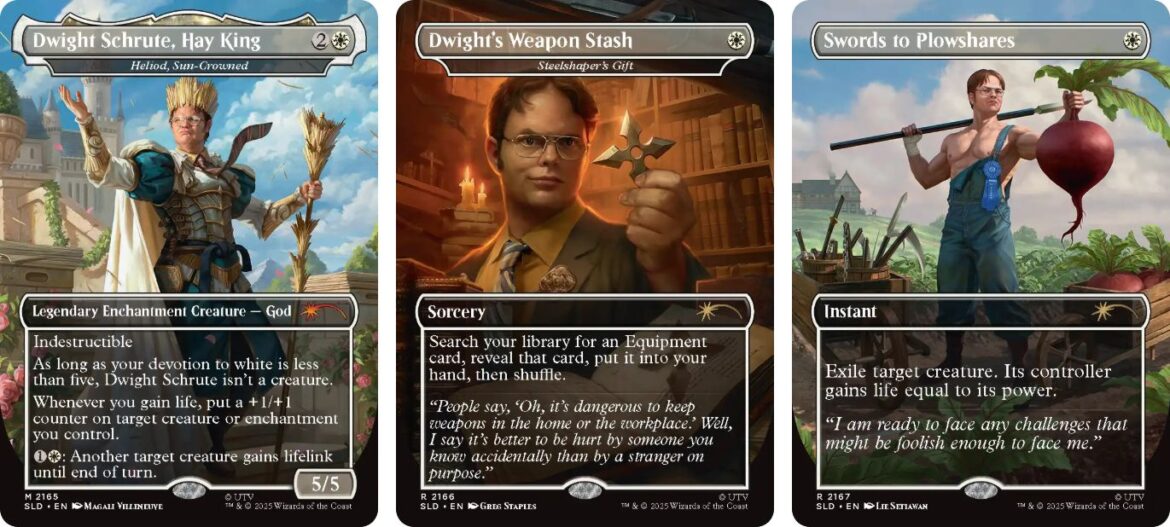
Dwight from The Office appears on official Magic: The Gathering cards
Product Reviews

Magic: The Gathering cards featuring Dwight from The Office are a step too far for some, though others think they’re ‘so bad its circling back to being funny’

by admin September 28, 2025


“I’m rarely at a loss for words,” says Saffron Olive on the hive of scum and villainy formerly known as Twitter, “but I honestly have no idea what to say about the Dwight from the Office Secret Lair drop.”

Others have eagerly stepped in to fill the gap. Over on the MagicTCG subreddit, HiroProtagonest says, “I don’t wanna associate with someone who’d buy merch for The Office”, though in another thread Raevelry says, “This is so bad its circling back to being funny Like, this is a HIGH QUALITY shitpost cringe, its almost impressive, all of these fit his ‘lore’, they’re well drawn, amazing lore text”.

Secret lairs are mini-sets containing a handful of cards a regular Magic expansion wouldn’t have room for. A lot of them present alternate art, with guests like Junji Ito invited to present their own take on iconic cards, though since the best-selling Walking Dead secret lair back in 2020 they’ve often been crossovers. While more thematically matching crossovers like Final Fantasy tend to get full-size sets, secret lair crossovers provide a space for something smaller and often a bit more light-hearted, like Hatsune Miku or Monty Python.


Related articles

And this is how now Dwight from The Office arrives in Magic. As announced in a roundup of October’s secret lairs, he’ll be getting his own six-card “drop” alongside fantasy artist Kieran Yanner, Iron Maiden, Jaws, and Furby. You might expect the Furby cards to attract the most controversy, but apparently it’s Rainn Wilson as a muscular farmer holding a giant turnip on a reskin of the Swords to Plowshares card that crosses the line.

Admittedly I’ve never seen the American version of The Office, but I’m struggling to have an opinion about this. Magic did a Fortnite-themed secret lair in 2021, so complaints about “Fortnite-ification” are a bit late to the party, and as someone who has read a bunch of Magic comic books and short stories I don’t think the sanctity of the game’s official setting is really worth preserving. I’m just going to shrug and move on with my day if that’s OK with you.

Keep up to date with the most important stories and the best deals, as picked by the PC Gamer team.


Source link

September 28, 2025 0 comments
0 FacebookTwitterPinterestEmail
U.S. Congress (Jesse Hamilton/CoinDesk)
NFT Gaming

What Would a Government Shutdown Mean for Crypto?

by admin September 28, 2025


Some of crypto’s momentum in Washington D.C. has stalled, a situation that may become worse if the U.S. government shuts down next week.

You’re reading State of Crypto, a CoinDesk newsletter looking at the intersection of cryptocurrency and government. Click here to sign up for future editions.

The narrative

The U.S. government seems headed toward a shutdown. While that won’t directly affect crypto, the reverberations from the government shutting down will affect policymaking in the crypto world.

Why it matters

There are three major questions right now when it comes to market structure legislation: Will Congress pass a bill; when might Congress pass a bill; and how will a government shutdown affect this process?

Beyond just Congress, a shutdown might affect regulators’ rulemaking efforts, though that may not be as big an issue at the moment (depending, of course, on how long the shutdown lasts).

Breaking it down

Congress has until Sept. 30, 2025 — in other words, Tuesday — to pass a budget bill, or at least a continuing resolution that would keep funding the government. Republicans control the White House, House of Representatives and Senate, but they still need some Democrat support to move a budget bill. Senate Minority Leader Chuck Schumer and House Minority Leader Hakeem Jefferies seemed set to meet and negotiate with President Donald Trump, but Trump canceled the meeting earlier this week. And on Friday, Punchbowl News reported that the House of Representatives’ leadership might not bring the body back into session at all until the Senate passes a bill.

A shutdown will likely slow down progress on crypto market structure legislation. The chances of market structure making it through Congress and to the president’s desk this year are already growing slim even without the looming shutdown threat, according to multiple people I spoke to this week. A planned markup hearing for the Senate Banking Committee’s draft bill was pushed from its tentative Sept. 30 date to late October, and the Senate Agriculture Committee has yet to publish any draft legislation. Any bill addressing market structure would need support from both committees before it moved to the overall Senate and then the House of Representatives.

The individuals said they still expected to see progress next year, if Congress isn’t able to move the market structure bill through the Senate and House before Dec. 31.

These chances, however, grow more slim in the face of a shutdown. Locking up the federal government is often remedied with quick, short-term spending deals that only push the drama a few weeks or months further down the road and promise future congressional tie-ups.

If the government does shut down, the Senate committees may have to push back plans for a markup, said Blockchain Association Senior Director of Government Relations Jessica Martinez.

“While there has been good faith negotiation on both sides, a shutdown would stall critical progress on crypto policy,” she said in a statement. “Despite a possible delay, our leaders in Congress are committed to getting bipartisan market structure legislation across the finish line.”

Kristin Smith, the president of the Solana Policy Institute, said she was optimistic that the legislation would continue to receive bipartisan attention, saying that a shutdown would be a “setback, but it’s clear [lawmakers] remain committed” to passing a market structure bill.

Senator Kirsten Gillibrand (D-N.Y.), speaking at CoinDesk’s Policy and Regulation event earlier this month, has already tried to tamp down expectations that Congress had to act by the end of September, a deadline previously set by Senate Banking Committee Chair Tim Scott.

“I don’t want to put an artificial deadline on anything, because we’re in the middle of negotiations about whether we’re going to have a bipartisan budget,” she said. “The most important issue that Congress has to deal with right now is the fiscal cliff on September 30. That is a much more important deadline that the entire country is relying on … I really urge you, please don’t give market structure an artificial deadline, because it is so important for this industry that we get this right and that we do it on a bipartisan basis.”

The bright spot for the crypto industry may come from the regulators. While the federal regulators — the Securities and Exchange Commission, Commodity Futures Trading Commission and Treasury Department entities — will all have to stop anything non-critical, a lot of the ongoing rulemaking efforts have already been set in motion. Some of these efforts are in the public comment phase.

Didier Lavallee, the CEO of Canadian firm Tetra Digital, said in a statement that a shutdown might affect SEC Chair Paul Atkins’ agenda “in the medium term,” but the momentum around crypto policymaking still enjoys bipartisan support.

“So while there may be short-term delays in policy timelines, it’s unlikely to fundamentally derail progress in the long run,” he said.

Monday

  • 17:00 UTC (1:00 p.m. ET) The SEC and CFTC are holding a joint roundtable on Sept. 29, 2025, to discuss ways of uniting their regulatory efforts.

Tuesday

  • Post-trial motions in the Department of Justice’s case against Roman Storm are due. As a reminder, Storm was convicted of conspiring to operate an unlicensed money transmitter last month, but the jury did not convict him of two other charges.

If you’ve got thoughts or questions on what I should discuss next week or any other feedback you’d like to share, feel free to email me at nik@coindesk.com or find me on Bluesky @nikhileshde.bsky.social.

You can also join the group conversation on Telegram.

See ya’ll next week!


Source link

September 28, 2025 0 comments
0 FacebookTwitterPinterestEmail
Wall Street’s RWA bet could break on crypto infrastructure
Crypto Trends

Wall Street’s RWA bet could break on crypto infrastructure

by admin September 28, 2025


Disclosure: The views and opinions expressed here belong solely to the author and do not represent the views and opinions of crypto.news’ editorial.

Real-world asset tokenization has surged to $27 billion, making it the fastest-growing corner of crypto. But while headlines boast about trillion-dollar potential, most platforms still fall short of the institutional standards needed to unlock real capital. The next phase of tokenization isn’t about hype — it’s about building rails institutions can actually trust.

Summary

  • RWA tokenization grew 118% YoY to $27B, led by BlackRock’s $1.7B BUIDL fund.
  • Institutions like Franklin Templeton and KKR are testing tokenization, but major allocators remain cautious.
  • Current gaps include asset commingling, weak auditability, and a lack of regulated custody and insurance.
  • To attract trillions in institutional capital, platforms must embed compliance, real-time audits, and ironclad custodial safeguards from day one.

Real-world asset tokenization is now the fastest-growing segment in crypto, clocking in at $27 billion, a 118% year-over-year surge. In the past year alone, BlackRock’s BUIDL fund crossed $1.7 billion in tokenized U.S. Treasuries, while institutional players like Franklin Templeton, Apollo, and KKR are rushing to tokenize everything from private credit to real estate on-chain. 

The institutional growth has arrived, and now the challenge is clear: RWA platforms must build infrastructure that meets the unique standards of institutional capital if this gold rush is to deliver on its potential for investors and markets alike. When trillions in institutional assets start migrating onto blockchains, the quality of the rails matters for everyone.

As more players rush in, the gap between what is being built and what is actually needed deepens, growing more dangerous. With more at stake than ever, it’s time for platforms to focus on embedding the controls, transparency, and reliability that institutional capital requires. Only by adopting these standards can RWA tokenization deliver lasting benefits for end investors, borrowers, and overall financial stability, unlocking institutional capital at the scale needed to drive this trillion-dollar market. Forward-looking RWA platforms, however, recognize that serving institutions means evolving beyond early crypto playbooks. The next phase is about building the features needed to welcome and safeguard major capital.

The institutional standard: Where RWA infrastructure still falls short

In financial services, there are certain standards that are baseline; for example, client assets must be kept in legally distinct accounts. Meaning that if a custodian fails, the assets are recoverable and protected by regulations that have been used for decades.

On-chain, many RWA platforms still rely on pooled or omnibus wallets, a shortcut that blurs the line between client holdings and platform funds. This approach introduces a systemic risk: if a protocol is compromised, client assets may be mixed in ways that make legal recovery or restitution highly uncertain. On-chain, where such protections are usually absent, commingling turns a technical breach into a potential operational and legal nightmare.

Just as critical is auditability. Blockchain may promise transparency, but for institutional players, visibility without audit‑ready oversight is meaningless, and most RWA platforms still fall short.

It’s no surprise that many traditional hedge fund managers remain hesitant to crypto exposure, due to concerns over auditability and reporting standards, with 76% of those not currently invested in digital assets unlikely to enter the space within the next three years, up from 54% in 2023. Failing to meet these rigorous standards means locking out the very institutional capital poised to transform this market.

If RWA tokenization delivers on its promise, the industry can no longer settle for shortcuts. Infrastructure built for institutions means inherited safeguards, not just innovation. These safeguards include meticulous asset segregation, real-time auditability, and ironclad regulatory compliance, the same protections that have underpinned traditional finance for decades. Without them, institutional allocators will simply not move. This shift is what is needed if the next wave of capital is to be both substantial and sustainable.

Custody and compliance struggles

Behind every major allocation of institutional capital sits a base of regulated custody and insurance. Pension funds and sovereign wealth managers are not going to entrust billions to a browser extension wallet. Instead, institutions expect highly certified custodians (SOC2 or ISO) who provide both regulatory protection and robust insurance protecting clients in case of loss.

In short, while custody infrastructure is steadily improving, and leading providers are showing what’s possible, the broader market still has a way to go. Elevating these standards industry-wide is essential. Without insured, regulated custody at scale, even the most innovative platforms may find doors to major institutional capital remain firmly shut.

The same gap shows up in compliance. DeFi’s promise of permissionless access was once its boldest selling point. This same promise is ringing alarm bells for institutional allocators. Without built-in KYC, AML controls, and whitelisted investor pools, institutional allocators cannot participate — the risk profile is simply untenable. Expanding these frameworks will be key to unlocking broader institutional engagement going forward.

Until RWA platforms give regulated custody, insurance, and compliance the same priority as technical innovation, the sector will be stuck on the sidelines of true institutional finance. For tokenization to scale safely, these core systems must be foundational, or the promise of bringing real-world assets on-chain will not become a market reality.

The rift between headlines and reality

Even as the RWA tokenization market now exceeds $27 billion, the vast majority is held by crypto-native investors, hedge funds, and stablecoin issuers, not by the banks, insurers, or pension funds that move true institutional capital. Among the Fortune 100, only a handful have run tokenization pilots, and even fewer have allocated real balance sheet capital.

While some platforms have ticked off compliance boxes, earned accredited certifications, and landed custody partnerships, most of the industry still faces stiff regulatory scrutiny in the United States. As of today, the SEC continues to press for deeper disclosures, stronger investor protections, and clearer legal structures before it greenlights RWA tokenization for broad investment.

The real test is just beginning

Crypto is now at the same crossroads. The next wave of institutional capital will flow to platforms designed from day one with transparency, real-time auditability, segregated and insured custody, and with compliance woven into every layer. However, these platforms are still the exception, not the rule, at a time when the sector desperately needs robust, institution-ready rails. The few platforms taking a compliance-first approach, embedding safeguards and institution-ready custody from the outset, are the ones best positioned to meet Wall Street’s bar.

And as capital pours in, it’s only getting more selective. Institutional allocators will not move billions onto rails they cannot trust. The next leaders in RWA tokenization will be the ones embedding compliance, auditability, and custodial safeguards into their architecture from day one.

Abdul Rafay Gadit

Abdul Rafay Gadit is the Co-Founder of ZIGChain, a next-generation Layer 1 blockchain protocol created to provide the core infrastructure for real-world financial applications. At ZIGChain, Rafay oversees the development of foundational blockchain components, including the Wealth Management Engine and a $100 million ecosystem fund that supports builders and institutions bringing traditional financial products on-chain. In addition to his role at ZIGChain, Rafay is also the Co-Founder and Chief Financial Officer of Zignaly, a leading Web3-native investment platform that connects everyday investors with top-performing fund managers through blockchain-powered profit sharing.


Source link

September 28, 2025 0 comments
0 FacebookTwitterPinterestEmail
A phone with an Instagram post made by an AI Agent
Gaming Gear

I Just Posted to Instagram Using Only an AI Agent. I’m Not Sure I Would Again

by admin September 28, 2025


The big promise of AI agents is that they’ll be able to handle tasks for you — using their knowledge and understanding of you and what’s stored in your phone to suggest, predict and automate what you need, to ease the burden on you. 

For the most part, the situations in which we’d use AI agents in our day-to-day lives have so far been largely hypothetical. But at Qualcomm’s Snapdragon Summit in Hawaii, I got a first-hand look at how we might use an agent to complete a routine task: uploading content to social media.

Using a prototype phone packing Qualcomm’s new Snapdragon 8 Elite Gen 5 chip, I asked the device, using my voice, to find all pictures of beaches stored in the Photos app. A large language model (LLM) running on the device picked up what I was saying and interacted with a vision model that classifies all the photos on the phone. It pulled up two options.

Don’t miss any of our unbiased tech content and lab-based reviews. Add CNET as a preferred Google source.

“I like the second option,” I told the agent. “Please post it to Instagram with the hashtag #lovethecolor.” Without my touching the screen, the agent opened the Instagram app on the phone and posted the photo as a Reel (which is what it had been preprogrammed to do). Again, the LLM kicked in, but rather than sending a command to the photo classifier, this time it sent the command to the Instagram API.

An AI agent did this (according to my instructions).

Katie Collins/CNET

After posting, the agent also asked me if I’d like to check for new comments. I’m pretty sure this is what notifications are for, but this was just an example to show how proactive the agent was able to be.

In fact, the whole demo was just an example of how an agent could assist you in your daily phone business. In the US, most social platforms, including Instagram, don’t currently allow access to their APIs that would make this process possible. Qualcomm built the demo together with AI company ModelBest and is going to launch it in China on the popular social site Weibo.

After my demo, I’m not in a particular rush to engage the services of an agent to upload to Instagram for me. I appreciated the image classification tool most of all, since being able to describe a photo in your camera roll to post rather than having to scroll to find it was a definite time saver. But posting to Instagram is already a pretty slick and seamless process that I’m not sure warrants automating.

I’d also want the option to post to either Stories, Reels or the main grid, and give more complex instructions about editing, filters and captions before I’d be willing to hand over the reins to an agent.

For now, I’m happy to continue uploading to Instagram under my own steam, but I’m keen to see how agentic AI evolves to be able to handle more complex tasks and commands over time. 

Qualcomm and many other tech companies are convinced that agents are gradually going to become the de facto way we interact with our technology. The jury’s still out for me, but I’ll keep an open mind.


Source link

September 28, 2025 0 comments
0 FacebookTwitterPinterestEmail
  • 1
  • …
  • 115
  • 116
  • 117
  • 118
  • 119
  • …
  • 764

Categories

  • Crypto Trends (1,098)
  • Esports (800)
  • Game Reviews (772)
  • Game Updates (906)
  • GameFi Guides (1,058)
  • Gaming Gear (960)
  • NFT Gaming (1,079)
  • Product Reviews (960)

Recent Posts

  • This 5-Star Dell Laptop Bundle (64GB RAM, 2TB SSD) Sees 72% Cut, From Above MacBook Pricing to Practically a Steal
  • Blue Protocol: Star Resonance is finally out in the west and off to a strong start on Steam, but was the MMORPG worth the wait?
  • How to Unblock OpenAI’s Sora 2 If You’re Outside the US and Canada
  • Final Fantasy 7 Remake and Rebirth finally available as physical double pack on PS5
  • The 10 Most Valuable Cards

Recent Posts

  • This 5-Star Dell Laptop Bundle (64GB RAM, 2TB SSD) Sees 72% Cut, From Above MacBook Pricing to Practically a Steal

    October 10, 2025
  • Blue Protocol: Star Resonance is finally out in the west and off to a strong start on Steam, but was the MMORPG worth the wait?

    October 10, 2025
  • How to Unblock OpenAI’s Sora 2 If You’re Outside the US and Canada

    October 10, 2025
  • Final Fantasy 7 Remake and Rebirth finally available as physical double pack on PS5

    October 10, 2025
  • The 10 Most Valuable Cards

    October 10, 2025

Newsletter

About me

Welcome to Laughinghyena.io, your ultimate destination for the latest in blockchain gaming and gaming products. We’re passionate about the future of gaming, where decentralized technology empowers players to own, trade, and thrive in virtual worlds.

Recent Posts

  • This 5-Star Dell Laptop Bundle (64GB RAM, 2TB SSD) Sees 72% Cut, From Above MacBook Pricing to Practically a Steal

    October 10, 2025
  • Blue Protocol: Star Resonance is finally out in the west and off to a strong start on Steam, but was the MMORPG worth the wait?

    October 10, 2025

Newsletter

@2025 laughinghyena- All Right Reserved. Designed and Developed by Pro


Back To Top
Laughing Hyena
  • Home
  • Hyena Games
  • Esports
  • NFT Gaming
  • Crypto Trends
  • Game Reviews
  • Game Updates
  • GameFi Guides
  • Shop

Shopping Cart

Close

No products in the cart.

Close