

Laughing Hyena
  • Home
  • Hyena Games
  • Esports
  • NFT Gaming
  • Crypto Trends
  • Game Reviews
  • Game Updates
  • GameFi Guides
  • Shop
Author

admin

admin

DAAPrivacyRightIcon
Product Reviews

Martin Shkreli has to face claims of copying one-of-a-kind Wu-Tang Clan album

by admin September 28, 2025


Martin Shkreli, better known as Pharma Bro for his price-gouging antics with AIDS medication Daraprim, is going to have to defend against claims of misappropriating trade secrets with the unique Wu-Tang Clan album, Once Upon a Time in Shaolin. Earlier this week, US District Court Judge Pamela Chen wrote in a decision that Shkreli has to face a lawsuit that accuses him of improperly saving copies and playing the one-of-a-kind album for followers, which reduced its value and exclusivity.

The lawsuit was filed by PleasrDAO — which, according to its own website, is a collective of people involved with cryptocurrency, NFTs and digital art. Once Upon a Time in Shaolin has a strange ownership history, starting with Shkreli purchasing the one-of-one studio album in 2015 for $2 million. After a fraud conviction, Shkreli had to forfeit his assets, including the album, leading to PleasrDAO acquiring it in a government auction for $4 million.

On top of the album’s highly exclusive nature, it has a condition where it can’t be “commercially exploited for 88 years” by any subsequent owners. The collective’s argument stems from claims that Shkreli admitted in livestreams that he made copies of the album and played it for his followers, even allegedly posting “LOL i have the mp3s you moron” in response to a member of PleasrDAO posting a photo of the album. If PleasrDAO wins the case, Shkreli will have to give up any copies of the album, as well as provide info on all copies, who they were distributed to and what profits he made from it.

Source link

September 28, 2025 0 comments
0 FacebookTwitterPinterestEmail
Pavel Durov Declines To Censor Moldova Election Content on Telegram
Crypto Trends

Pavel Durov Declines To Censor Moldova Election Content on Telegram

by admin September 28, 2025


Telegram co-founder Pavel Durov claimed that French intelligence services asked him to censor content related to the election in Moldova in 2024 in exchange for saying “good things” to the judge overseeing his trial, which he declined to do.

Durov said the messaging platform initially took down some posts that “clearly” violated Telegram’s terms of service, but declined to remove any additional content for political reasons. Durov wrote in a Sunday Telegram post:

“Shortly thereafter, the Telegram team received a second list of so-called ‘problematic’ Moldovan channels. Unlike the first, nearly all of these channels were legitimate and fully compliant with our rules. 

Their only commonality was that they voiced political positions disliked by the French and Moldovan governments. We refused to act on this request,” he continued.

Source: Pavel Durov

The crypto industry rallied behind Durov following his August 2024 arrest in France, and the related developments in his ongoing case, as the battle for free speech between tech platforms and state governments attempting to impose censorship polices unfolds. 

Related: Telegram founder Pavel Durov says case going nowhere, slams French gov

French and European authorities previously asked Telegram to censor political content

In May 2025, Durov pointed to a previous incident in which French intelligence services pressured Telegram into censoring Romanian election content, which he also declined to do.

“You can’t ‘defend democracy’ by destroying democracy. You can’t ‘fight election interference’ by interfering with elections. You either have freedom of speech and fair elections — or you don’t,” he wrote. 

Following his 2024 arrest, which drew widespread condemnation from the crypto community and human rights activists, he became highly critical of the French government and the direction of the European Union.

France is inching toward societal collapse due to state censorship and the failed policies of the current government, he warned in June.

He also stated that Telegram will exit jurisdictions, including France, before compromising user privacy by handing over encryption keys or building a backdoor into the messaging platform for state surveillance.

Durov’s repeated warnings about state-led attacks against online free speech and privacy came to a head in 2025, when an EU proposal to monitor all chat messages, including encrypted user communications, gained support from 19 member nations of the EU.

Magazine: Did Telegram’s Pavel Durov commit a crime? Crypto lawyers weigh in


Source link

September 28, 2025 0 comments
0 FacebookTwitterPinterestEmail
How to Choose the Right Gaming Laptop (2025): What You Need to Know
Gaming Gear

How to Choose the Right Gaming Laptop (2025): What You Need to Know

by admin September 28, 2025


ROG Strix is Asus’s performance-focused subbrand. This is where the company’s thicker, more conventional gaming laptops are found. Pricing can range widely, as it includes affordable options like the ROG Strix G16 with the RTX 5050, which starts at just $1,300.

TUF Gaming is the company’s entry-level gaming laptop subbrand. These TUF gaming laptops used to be some of the most affordable gaming laptops you could buy, but they’ve gone up in price over the past few years. There aren’t any Asus gaming laptops under $1,000 that feature the latest RTX 50-series GPUs, though you can find plenty of older models for less on Amazon or Best Buy.

Dell’s gaming laptop lineup is fairly sparse these days. All of Dell’s gaming laptops fall under the Alienware brand, which the company acquired back in 2006. Alienware has been through many cycles of reinvention with its gaming laptops, but in 2025, there’s really only four laptops in the stack right now: the Alienware 16 Aurora, Alienware 16X Aurora, Alienware 18 Area-51, and Alienware 16 Area-51. I like the simplicity of the new lineup, which focuses on what Alienware has always been known for: its brash, gamer style and higher-end performance.

The Alienware 16 Aurora is the company’s attempt to reach a cheaper demographic, starting the laptop at just $1,100 right now for an RTX 5050 configuration.

HP’s Omen gaming brand has been around for over a decade, but it really feels like the company has started to build some momentum around it over the past few years. Interestingly, HP breaks down its options into three categories of thickness and performance. Omen Max is the chunkiest at almost an inch thick, and supports up to an RTX 5080. Omen 16 is the middle ground, capping out at an RTX 5070. Omen Transcend, which offers a 14-inch model, still supports up to an RTX 5070, but brings the thickness down to 0.7 inches. There are 16-inch size options available across all three subbrands; however, none of the laptops are as thin as some of the competition. There’s also an Omen 16 Slim, which blurs the lines a bit.

Apart from Omen, HP also launched its “Victus” subbrand in 2021, which represents its budget-oriented options. HP only has a few configurations of the HP Victus 15 and Victus 16 available right now.

Razer, MSI, Acer, and Others

Photograph: Luke Larsen

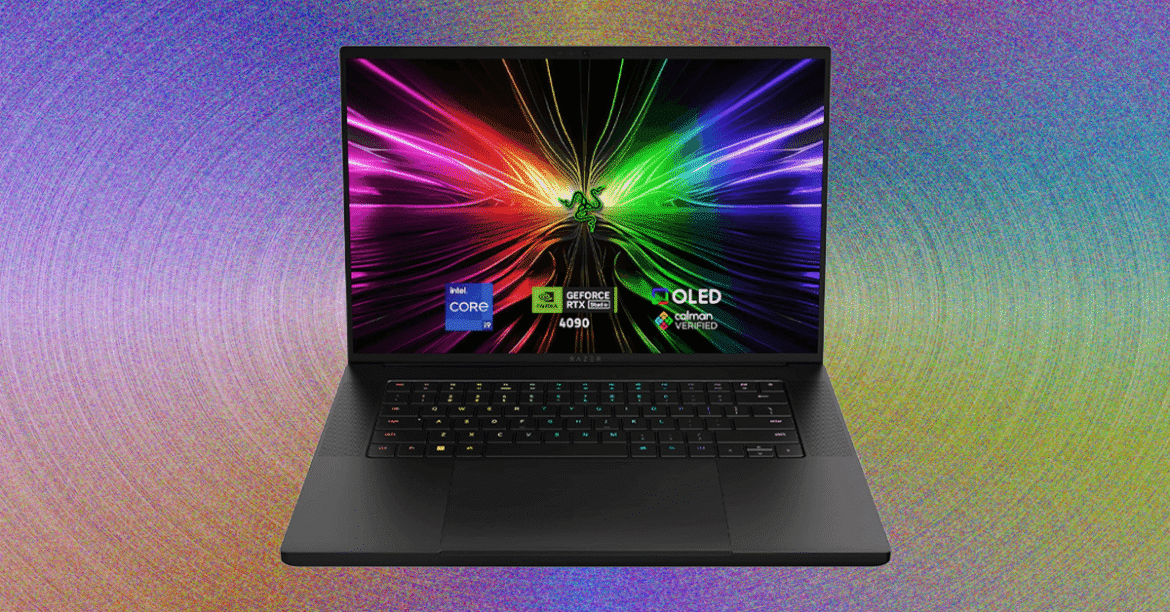
  • Razer is solely committed to PC gaming, unlike many of the laptop brands on this list. Its Blade gaming laptops have become iconic in the industry for their minimalist aesthetic. Like many companies, Razer has a Blade 14, Blade 16, and Blade 18, which all have an identical design, but scale up in terms of size and performance.
  • MSI has made quite a name for itself in the gaming space, especially with its high-end, performance-focused, monster gaming laptops like the MSI Titan HX. Beyond Titan, MSI has a mind-boggling amount of other options, though, including the Raider, Stealth, Vector, Katana, Sword, and its budget-oriented Cyborg series. There’s a lot to dig into.
  • Acer’s Predator line has its own fanfare about it. Predator Helios is its high-end, performance-driven line with tons of options across 14-inch, 16-inch, and 18-inch sizes. Triton is its thin-and-light sub-brand, but it hasn’t been updated in 2025 so far. The company also has its Nitro budget brand, which comes in 14-, 15-, and 16-inch options and with support up to an RTX 5070.

Beyond these mainstay brands, you also have PC gaming companies that have dipped into gaming laptops, such as Gigabyte, Origin, and Maingear. Just stay away from the no-name brands that have popular listings on Amazon despite lacking discrete graphics cards—like this.

Gaming on Non-Gaming Laptops

  • Photograph: Luke Larsen

  • Photograph: Luke Larsen

  • Photograph: Luke Larsen

  • Photograph: Luke Larsen

While there’s an entire ecosystem of laptops marketed toward gamers, that doesn’t mean you can’t play games on other devices. Laptops with dedicated graphics cards can often play games just as well as gaming laptops, but they’re often targeted more at creatives who need better graphics to run creative applications. These include laptops like the Dell 14 Premium, Acer Swift X 14, and the Asus ProArt P16.

If you’re buying a laptop primarily to play games, though, I wouldn’t recommend one of these. They usually don’t support the higher-tier GPUs like the RTX 5080 or 5090, and you won’t get super-fast refresh rates beyond 120 Hz. If you’re more of a casual gamer and just want a high-end laptop that can do it all, these are good options. They’re especially good if you despise the “gamer” aesthetic and want something a bit more subtle.


Source link

September 28, 2025 0 comments
0 FacebookTwitterPinterestEmail
Bitcoin ETFs
GameFi Guides

US Bitcoin ETFs Post $900M Net Outflows In Past Week – Details

by admin September 28, 2025


Trusted Editorial content, reviewed by leading industry experts and seasoned editors. Ad Disclosure

The US spot Bitcoin ETFs (exchange-traded funds) endured some of the most difficult days in recent months over the past week. With the market sentiment flipping and the BTC price stalling, several US investors cashed out on their positions in the world’s largest cryptocurrency by market cap.

After posting strong performances over the past few weeks, the tides appear to be shifting for the Bitcoin exchange-traded fund market, with investor appetite in the United States seemingly waning. This latest round of withdrawals ended an inflow streak of four consecutive weeks for the spot Bitcoin ETFs.

Bitcoin ETFs Register $418 Million Net Inflows

According to the latest market data, the US Bitcoin ETFs registered a daily total net inflow of $418.25 million on Friday, September 26. This performance continued the terrible run of form for the crypto-linked investment products, which recorded only a positive inflow day in the past week.

Breaking things down, Fidelity Wise Origin Bitcoin Fund (with the ticker FBTC) posted the most significant daily net outflows, losing more than $300 million on the day. BlackRock’s iShares Bitcoin Trust came in second, with a total daily withdrawal of $37.25 million to close the week.

Bitwise Bitcoin ETF (BITB) recorded a daily total net outflow of $23.79 million on Friday, while Ark & 21Shares Bitcoin ETF (ARKB) lost $17.81 million in value on the day. Grayscale Bitcoin Mini Trust (BTC) and Bitcoin Trust were the only other Bitcoin ETFs with double-digit outflows ($17.14 million and $12.57 million, respectively) on the day.

VanEck Bitcoin ETF (HODL) was the only exchange-traded fund to record any activity on Friday, with a daily net outflow of $9.28 million. This negative $418.25 million performance amounted to a cumulative $902.5 million net outflow in the past week.

Source: SoSoValue

This negative weekly performance marked the end of a streak of four consecutive weeks of positive inflows. In the previous two weeks, the US spot Bitcoin ETFs registered more than $3 billion in capital inflows, as the macroeconomic conditions shifted in favor of risk assets.

Bitcoin Price Overview

However, the crypto market seems to have cooled off, as seen with the price of Bitcoin over the past week. The premier cryptocurrency lost over 5% in its value, falling from around $116,000 to beneath the $110,000 level in the last seven days.

With the Bitcoin price struggling at the moment, it is no shock that the Bitcoin ETFs have seen massive withdrawals in the past week. As of this writing, the price of BTC stands at around $109,690, reflecting no significant movement in the past 24 hours.

The price of BTC on the daily timeframe | Source: BTCUSDT chart on TradingView

Featured image from iStock, chart from TradingView

Editorial Process for bitcoinist is centered on delivering thoroughly researched, accurate, and unbiased content. We uphold strict sourcing standards, and each page undergoes diligent review by our team of top technology experts and seasoned editors. This process ensures the integrity, relevance, and value of our content for our readers.


Source link

September 28, 2025 0 comments
0 FacebookTwitterPinterestEmail
I spent three months with Telly, the free TV that’s always showing ads
Product Reviews

I spent three months with Telly, the free TV that’s always showing ads

by admin September 28, 2025


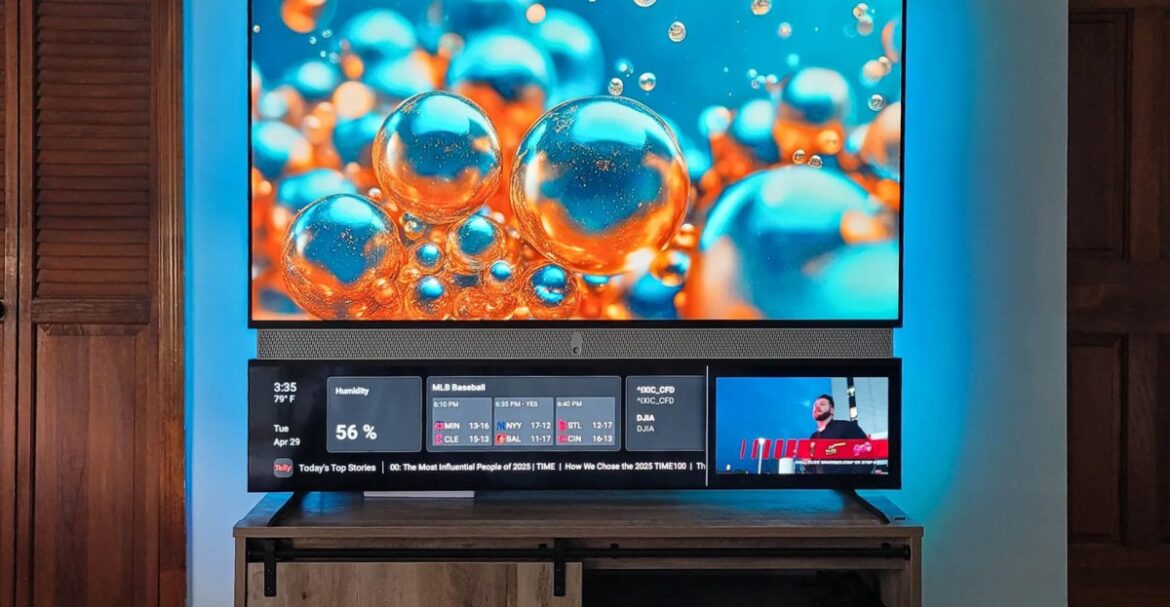
The last few months, I’ve felt like I’m living in a cyberpunk movie. Each night, when I get ready to wind down, I reach for the remote to turn on a TV I got for free. When I hit the power button, a 55-inch screen lights up, but so does a smaller display beneath it. Widgets fill the secondary screen alongside a rotating ad that you can’t dismiss.

Before I can even navigate to the Netflix app, I hear something. “Hello, hello friends!” A smiling woman appears on the screen wearing a gray dress, her brown hair neatly styled into gentle waves. It’s the host of the TV’s built-in news segment, which uses the AI likeness of actress Alison Fiori to deliver today’s top stories on a loop.

This is the future of TV, according to Telly, a company that offers a free TV in exchange for the privilege of constantly blaring ads in your face. It puts the ads in a 10-inch-wide “smart” display that sits just below a built-in sound bar and runs the entire length of the TV. The screen stays on at all times — while you watch shows, movies, YouTube videos, and play video games. Even when you turn off the TV with a tap of the remote’s power button, the secondary screen remains illuminated. It will only turn off if you hold the power button for three seconds.

The bottom display shows you everything from sports scores, the current weather, and stock prices. Photo by Emma Roth / The Verge

Despite my attempts to tune out the lower display, video ads and moving widgets draw my eyes in. Along with displaying the date, time, and current weather conditions, it shows a constant stream of headlines in a news ticker, plus stock prices and even links to news stories from outlets like Fox News, which you can click into and read on the top screen. You can remove or add widgets, but there’s no way to get rid of the ad on the right side that refreshes every so often. Under Telly’s terms of service, you can’t cover up the display. Even if you tried, it just wouldn’t be practical, since you need the secondary screen to navigate to different apps and control inputs. There are settings you can use to decrease the brightness of the secondary display’s backlight, but I found that turning it down to “0” doesn’t make much of a difference.

Some of the ads shown on the bottom screen prompt you to scan a QR code, or will show a prompt to press a button on your remote to move it up to the top display for more information. The ads often appear as videos, which can draw your eyes away from what’s on the screen even more. There is no sound for video ads, but Telly will still display small subtitles that are hard to read if you’re far away from the TV. I’ve seen a range of ads on the little screen, such as some from Sunglasses Hut and Old Navy, as well as location-specific commercials from a nearby crematorium and car dealerships. I saw these no matter what I was watching — whether it was 90 Day Fiancé, Carême, or Law & Order reruns. The ads just kept rolling.

To reserve a Telly, you must agree to use the device as the main TV in your home, constantly keep it connected to the internet, and regularly watch it. If the company finds that you violate these rules, Telly will ask you to return the TV (and charge a $500 fee if you don’t send it back). I’m not sure how strictly Telly tracks the usage of its TVs. At one point, I left my TV unplugged for three weeks while away from home and received no warning from Telly.

The ads just keep rolling. Photo by Emma Roth / The Verge

“We’re not here to micromanage short-term dips but to ensure Telly continues to be a great fit over time,” Dallas Lawrence, Telly’s chief strategy officer, told The Verge. “And if it ever stops being the right match, we’ll pick it up at no cost.”

The first time my TV arrived, the FedEx delivery driver marveled at its size. But he was immediately suspicious when I said it was a free TV. Just minutes after wheeling it up my driveway, he returned to my door after doing some research on his phone, saying he heard the TV might take my data. “I know,” I said, “That’s basically part of the deal.”

When I finally got the TV out of its massive box, lugged it onto my stand, and turned it on, I realized the screen was completely cracked. I was more disappointed by having to repackage the entire thing than by having to wait a little longer to use it. Besides the physical labor involved, the return process was fairly simple. I emailed Telly, filled out a return form, and my new TV was on its way.

Once I actually got to use the TV, I found that the picture quality on Telly’s 4K HDR display is decent, though some low-light scenes can appear grainy. The six-driver soundbar has great audio, and the TV has customizable RGB backlighting. Telly runs a custom version of Android that’s preloaded with only a few apps you might recognize, like Spotify and Zoom, so you’ll need to use the included Google TV dongle to gain access to Netflix, Disney Plus, Max, and other streaming apps.

Allison Fiori’s AI avatar is the centerpiece of Telly’s homepage. Photo by Emma Roth / The Verge

The TV defaults to Telly’s home screen each time you turn it on. That’s where you’ll find the lovely Telly Today news segment, which resets every time you turn off the TV or navigate away from the home screen — meaning you have to hear all the same news stories, in the same order. Fiori often goes over celebrity news, showcases the latest trailers, and shares lighthearted viral videos, like a dog showing a piglet how to use its doggy door.

Lawrence confirmed to The Verge that Telly cast Fiori “specifically for this role.” He added, “We work closely with Allison to shape the experience, blending her on-screen presence with cutting-edge AI technology.” During my time with the TV, I found that a secondary host, which appears to be the AI likeness of a comedian named Vinny Fasline, shows up to highlight viral posts from around the internet or do trivia.

In between these segments, Telly shows a series of ads, which you can conveniently mute by pressing the Telly remote’s “A” button. The mix of ads isn’t always relevant or fresh – I once watched three of the same ads in Spanish (which I don’t speak) in a row.

Telly’s built-in camera comes with a privacy shutter. Photo by Emma Roth / The Verge

The TV also comes with a built-in camera with a privacy shutter and a microphone. The company’s terms of service state that it “may collect information about the audio and video content you watch, the channels you view, and the duration of your viewing sessions,” as well as detect the “physical presence of you and any other individuals using the TV at any given time.” This isn’t exactly comforting, and I found myself becoming paranoid that my viewing habits, conversations, and even footage from the built-in camera would somehow get directly in front of Telly employees.

Telly only opens the privacy shutter on its camera when you select an app that uses it, like Zoom. While trying out the built-in video conferencing app, I found that Telly’s camera is probably about as good as the webcam on my 2020 MacBook Air — meaning it’s a bit grainy but not distractingly so. I barely got to test Telly’s microphone, though; it cut off just moments after I started testing it. When I tried again at a later date, Telly’s microphone just emitted a buzzing sound.

The TV is quite tall. Photo by Emma Roth / The Verge

In addition to holding meetings, you can use Zoom to set up watch parties with people on other devices, whether it’s another Telly TV, smartphone, or laptop. You can use the feature to watch a show or movie on the upper screen, while seeing a video feed of your friends or family members on the secondary display. This is pretty neat, but checking out Zoom quickly made me realize how unwieldy it can be to navigate between Telly’s dual screens. It took me several minutes — and lots of button mashing — to select the “Leave Call” button on the opposite display. Oh, and Telly still displays ads on the bottom screen while you’re in meetings, too.

Telly also uses its camera for a preloaded fitness app, called Gofa, which uses Xbox Kinect-style motion tracking during workouts, along with a set of random games, like Flappy Bird and Wheel of Fortune. Some games, like Whack-a-Mole, use the TV’s camera as you, well, furiously whack moles as they appear on your screen. Most of these games are pretty corny, but I don’t really mind them as a big Kinect fan back in the day.

Another interesting use case for the secondary display is having it function as a playback bar while using the Live One music streaming app, allowing you to continue using the upper display. Unfortunately, you can’t do the same with the Spotify app, as it occupies the entire main screen once you link your account and start playing music.

All of these features point to big ideas for the future of Telly, and I commend the company for trying something far different than your typical TV experience. It’s great that you can get a completely free TV with a bunch of features out of the box, like a soundbar, RGB lighting, and a camera. But the continuous ads and software snags made me realize: TVs are worth paying for.

Follow topics and authors from this story to see more like this in your personalized homepage feed and to receive email updates.

  • Emma RothClose

    Emma Roth

    Posts from this author will be added to your daily email digest and your homepage feed.

    PlusFollow

    See All by Emma Roth

  • EntertainmentClose

    Entertainment

    Posts from this topic will be added to your daily email digest and your homepage feed.

    PlusFollow

    See All Entertainment

  • GadgetsClose

    Gadgets

    Posts from this topic will be added to your daily email digest and your homepage feed.

    PlusFollow

    See All Gadgets

  • Hands-onClose

    Hands-on

    Posts from this topic will be added to your daily email digest and your homepage feed.

    PlusFollow

    See All Hands-on

  • ReviewsClose

    Reviews

    Posts from this topic will be added to your daily email digest and your homepage feed.

    PlusFollow

    See All Reviews

  • TechClose

    Tech

    Posts from this topic will be added to your daily email digest and your homepage feed.

    PlusFollow

    See All Tech

  • TVsClose

    TVs

    Posts from this topic will be added to your daily email digest and your homepage feed.

    PlusFollow

    See All TVs


Source link

September 28, 2025 0 comments
0 FacebookTwitterPinterestEmail
Crypto launchpads have a broken implementation strategy
NFT Gaming

Crypto launchpads have a broken implementation strategy

by admin September 28, 2025


Disclosure: The views and opinions expressed here belong solely to the author and do not represent the views and opinions of crypto.news’ editorial.

Crypto launchpads have missed the opportunity to make investing accessible for retail investors. Although launchpads helped standardize token sales in the post-ICO chaos and provided a better entry point compared to CEX listings, they were not designed to onboard retail. The problem is not with launchpads per se — it’s more about a flawed implementation strategy.

Summary

  • Launchpads are broken for retail investors: High staking thresholds, long vesting periods, and weak due diligence make participation risky and exclusive, despite 64% of retail investors wanting in.
  • Barriers hurt small investors: Complex ROI metrics, token lockups, and inflation risks leave everyday investors at a disadvantage, while failed projects amplify losses.
  • Next-gen launchpads shift the model: Some platforms are ditching staking requirements, offering refundable token sales, and lowering entry thresholds so even $100 investors can join.
  • Quality and inclusivity are the future: With rigorous vetting, open access, and investor-friendly terms, launchpads can finally rival VC-style opportunities while protecting retail participants.

Most launchpads have steep entry barriers for retailers with long token vesting periods, steep staking benchmarks, uncertainty of failed project investments, and weak due diligence procedures. Consequently, everyday investors, with limited capital reserves, find it difficult to participate in fundraising, despite 64% of them demonstrating eagerness to invest. 

Launchpads must reinvent themselves and undergo a complete overhaul if they want to cater to retail investors. And that will happen when the next-gen launchpads become an open, inclusive space without a long list of prerequisites for the low to mid-range investors.

Launchpads have an implementation problem

Originally, launchpads served as a platform for investors to access opportunities that were previously exclusively reserved for VC funds and angel investors. But launchpads often come with elaborate vesting requirements to ensure participants’ skin in the game.

Resultingly, a substantial chunk of purchased tokens is not available during the token generation event, or TGE. Rather, they’re distributed over a long-drawn-out schedule with complicated terms and conditions for unlocking tokens. Although staking provides some safeguard against pump-and-dump scams, high staking thresholds restrict widespread participation from retail investors. 

Compulsory staking undermines the inclusive ethos of launchpads. For low-potential projects, staking can also be a problem for investors. The gradual inflation in token supply leads to further price depreciation if the project demand doesn’t increase with time. Consequently, investors run the risk of a loss if their investments don’t generate substantial returns.

There are two parameters for investors to determine the efficacy of project launches on launchpads —  an average all-time high ROI and current ROI. But for the layman, such complicated metrics often create barriers to a seamless investment. Instead, a refundable token sale model provides a better safety net and peace of mind for retailers, even if their investment fails.

Not all projects will have a good ROI, especially those that overpromise and underdeliver. New investors may get swayed by the expectations of outsized returns, but it often doesn’t come true. This happens because the projects create hype before TGE and then fail to follow the roadmap or keep up with product launches.

Most launchpads are now onboarding projects without filters or due diligence checks. Without the necessary infrastructure and experience in incubating new projects, launchpads are bound to fail. Lack of vetting can be detrimental for investors since they lack the resources to do a full background analysis of new project launches.

Therefore, crypto launchpads need fixing — by rethinking compulsory vesting schedules, token sale models, and lowering entry barriers for retail investors.

Making crypto launchpads accessible for everyone

Some launchpads have identified the problems early on. And they’re actively trying to make crypto fundraising an open and inclusive space for everyday investors.

Future-proof launchpads won’t have native token staking-based allocation tiers. Instead of gated participation, new launchpads will have open access without requiring platform tokens.

These launchpads don’t force investors to stake collateral for participation. So, even if someone has just $100, they can own a portion of the next crypto unicorn. Lowering the investment benchmark is a critical step towards opening up the space for small and medium retailers.

Launchpads that don’t require token vesting free up liquidity. This empowers cash-strapped investors to participate without any constraints. Further, investors needn’t worry about unsuccessful or failed project tokens because they won’t remain locked out for months.

A few launchpads even offer refundable token sale models. Such refundable mechanisms give investors the freedom to redeem their investments if they’re not satisfied with a project’s token performance.

By positioning the investor at the centre of the fundraising economy, launchpads are reinventing themselves. As investors have more power over their decisions, early-stage projects will be forced to be responsible towards their roadmap and product launches.

Consequently, launchpads must also introduce rigorous checks and due diligence to ensure projects perform well. High-quality startups will provide investors with long-term revenue generation and prevent scams.

VC firms and angel investors have experienced, qualified teams that invest in promising, high-potential projects. It’s time for launchpads to also provide the same rigorous vetting for retail investors, prioritizing quality over quantity. Coupled with an easy onboarding and signup process, future launchpads must break away from complexities and high barriers, without compromising on their standards.

While a few launchpads have already started the transformation to fix existing problems, it hasn’t yet reached mass adoption. Until all launchpads start executing the solutions, retail-driven crypto fundraising will always lag.

If the crypto industry has to progress, it must bring retail capital into its fold. And thus retail-friendly launchpads will play a key role in helping crypto come of age.

Hatu Sheikh

Hatu Sheikh is the founder of Coin Terminal. He previously co-founded DAO Maker. He has been involved in web3 since 2017, having advised dozens of teams, including NEM, Injective, and MultiversX, while seed investing in over 100 projects, including Mantra, Avalanche, and Big Time Studios. In 2024, he began construction of a $100M, 250,000 sqft luxury business park for startups in Dubai. 


Source link

September 28, 2025 0 comments
0 FacebookTwitterPinterestEmail
Bse Bars Jetking’s Vda Plan, Stalling India’s Crypto Push
Crypto Trends

BSE Bars Jetking’s VDA Plan, Stalling India’s Crypto Push

by admin September 28, 2025


India’s cautious stance on cryptocurrencies has put a new kind of business model at risk. Jetking Infotrain, an IT training company that wanted to become the country’s first listed firm with a major crypto treasury, has been stopped by the Bombay Stock Exchange (BSE) from listing its shares after it raised money to invest in virtual digital assets (VDAs).

This decision shows that even as digital asset treasury companies, which hold Bitcoin and other cryptocurrencies on their balance sheets, are gaining traction worldwide, India is still reluctant to let public funds move into this space.

BSE Blocks Jetking’s Listing Over Bitcoin Strategy

Jetking had secured in-principle approval from BSE on May 9, 2025, to issue shares through a preferential allotment. On May 23, its board cleared the allotment of over 3.96 lakh shares worth more than ₹6 crore. The company’s filings listed education and skill development, general corporate purposes, and acquisition of VDAs as objectives.

Nearly ₹3.96 crore, around 60% of the proceeds, was to be deployed into cryptocurrencies. Jetking already holds crypto in its treasury, and under current rules, Indian companies can invest in VDAs much like mutual funds or securities, as long as they disclose holdings to the Registrar of Companies.

However, BSE rejected the listing application, stating that “the policy on investment in virtual digital assets (VDAs) is under review and till a final view emerges, we would not be able to process the applications of this nature.”

Regulatory Grey Area Exposed

The decision underscores a deeper policy gap. While companies are allowed to buy crypto directly using profits or internal accruals, capital market authorities are uncomfortable with listed companies raising equity to invest in digital assets.

A BSE spokesperson explained, “We had processed the application in the normal course as per extant norms. Final approval was kept on hold to take up the issue of fundraising for investment in VDA at the policy level with the Regulator. Subsequently, as per the revised norms, a decision was taken to reject the application.”

Jetking’s joint MD and CFO, Siddharth Bharwani, said the company is reviewing legal options, including approaching the Securities Appellate Tribunal. He pointed out that “it has been five years since the Supreme Court said that cryptos were not illegal but require regulations.”

The situation also creates complications around reversing share allotments and refunding investors after funds have already been deployed.

Crypto Treasury Model Faces a Setback

BSE’s stance could derail plans by Indian entrepreneurs to launch crypto treasury companies modeled after global leaders like Strategy (formerly MicroStrategy), XXI in the US, and Metaplanet in Japan. These companies hold large amounts of Bitcoin and other crypto assets on their balance sheets and are known as DATs.

Unlike exchange-traded funds (ETFs), which issue units backed by crypto, DATs can raise equity and debt and also stake their crypto — locking up tokens to help secure networks while earning newly minted rewards.

But India’s legal treatment of crypto as “intangible assets” rather than securities or currency complicates the picture. Without clearer classification, such entities fall outside traditional financial services rules and face additional hurdles under laws like FEMA.

“There’s an increasingly urgent need for clearer classification of virtual digital assets under various existing laws. An approach of express regulatory guidance would be preferred to policy uncertainty,” said Jaideep Reddy, partner at Trilegal.

Banks are also grappling with this uncertainty. Some wealthy Indians have invested in US crypto ETFs through the RBI’s Liberalised Remittance Scheme, but local banks remain divided on whether such investments are permissible since the underlying assets are crypto.

“Exchanges have wide discretion to deny listing where the use of funds looks speculative and policy is unsettled until there’s a formal regulatory framework on how listed companies can deploy capital into crypto or other VDAs,” said Moin Ladha, partner at Khaitan & Co.

Industry Pushback: “Stop Gatekeeping”

CoinDCX CEO Sumit Gupta reacted strongly to BSE’s move, pointing out that globally “over 145 companies from Metaplanet in Japan to Tesla in the U.S. have added Bitcoin or crypto on their balance sheets.”

He cited Strategy — “a roughly $90 billion enterprise” holding “over 620,000 BTC” — which “posted more than $14 billion in unrealized gains in Q2 2025 alone.”

Gupta highlighted Jetking’s efforts: the company spent months planning its crypto treasury strategy, secured in-principle approval, raised ₹6.1 crore, deployed ₹3.96 crore into Bitcoin, and planned further investments, only to see the plan overturned overnight.

He questioned the rationale for the decision, asking, “The Supreme Court has already affirmed that crypto trading and investing are legal and subject to taxation, so it will be interesting to know on what basis BSE wishes to bar a company from this activity?”

Gupta added that it was ironic to block a “profit-generating company aiming to adopt a proven global model” while allowing many loss-making startups with unsustainable business models to raise large sums.

Warning that such decisions could leave India behind, he wrote, “This is exactly how India ends up playing catch-up with every new technology wave. We hesitate, we restrict, and by the time others have figured it out, we’re left behind.”

With BSE’s rejection of Jetking’s listing, the future of crypto treasury companies in India looks uncertain. The case has once again highlighted the urgent need for clear regulations on how Indian companies can engage with digital assets, and whether the country is ready to embrace business models already flourishing abroad.

Also Read: India’s ED Charges Raj Kundra Over ₹150 Crore in Gain Bitcoin Scam


Source link

September 28, 2025 0 comments
0 FacebookTwitterPinterestEmail
DAAPrivacyRightIcon
Gaming Gear

Apple is reportedly nearing production for its latest M5-powered MacBooks

by admin September 28, 2025


The latest Apple silicon is about to hit the assembly lines, according to Bloomberg‘s Mark Gurman. In the latest Power On newsletter, Gurman said that Apple “is nearing mass production of its next MacBook Pros, MacBook Airs and two new Mac monitors.” Gurman added that these upgraded products are scheduled for release sometime between the end of this year and the first quarter of next year.

Earlier this year, Gurman noted that Apple was expected to start production on the M5 MacBook Pro during the second half of 2025. All signs seem to point toward Apple following its typical release schedule, where the latest MacBook Pro makes its fall debut, followed by the reveal of the upgraded MacBook Air in the spring. However, Gurman previously mentioned in a July edition of his newsletter that “Apple is now internally targeting a launch early next year” for the MacBook Pro instead.

Beyond the upcoming MacBooks, we’re expecting one of the two Mac monitors to be the upgraded Studio Display. First released in March 2022, Apple’s Studio Display could use a refresh, which some rumors say will include a mini-LED display, along with overall improvements to brightness and color quality.


Source link

September 28, 2025 0 comments
0 FacebookTwitterPinterestEmail
Underground Jonesy angry in Fortnite
Esports

Fortnite removes controversial Peacemaker emote while investigating “creative intentions”

by admin September 28, 2025


Epic Games has removed the Peacemaker Season 2 Peaceful Hips emote from Fortnite following controversy around its design.

Peacemaker, the DC series starring John Cena, first aired in 2022 with its over-the-top dance intro quickly becoming a signature part of the show. The sequence changes slightly across episodes and has been described by director James Gunn as a deliberate storytelling device that hints at characters and themes, with Season 1 even foreshadowing its villain through butterfly-like movements.

We’re disabling the Peaceful Hips Emote in Fortnite as we inquire into our partner’s creative intentions in this collab emote. Assuming it’s not coming back, we’ll issue refunds in the next few days. Sorry folks.

— Fortnite Status (@FortniteStatus) September 28, 2025

The collaboration between Peacemaker and Fortnite introduced cosmetics inspired by the series, including the Peaceful Hips emote. The dance was based on the Season 2 intro, where Cena waves his arms in exaggerated motions. However, some fans noticed that the arm shapes resembled half a swastika, which they speculated was another example of the show teasing its antagonist through choreography.

Article continues after ad

Fortnite emote removed while under investigation

On September 28, the official Fortnite Status account confirmed the emote’s removal. “We’re disabling the Peaceful Hips Emote in Fortnite as we inquire into our partner’s creative intentions in this collab emote,” the statement read. “Assuming it’s not coming back, we’ll issue refunds in the next few days. Sorry folks.”

Article continues after ad

PEACEMAKER DANCE IS DISABLED FROM FORTNITE

“We’re disabling the Peaceful Hips Emote in Fortnite as we inquire into our partner’s creative intentions in this collab emote. Assuming it’s not coming back, we’ll issue refunds in the next few days. Sorry folks.” pic.twitter.com/sdC3aAlmx0

— HYPEX (@HYPEX) September 28, 2025

While it has not been confirmed whether the swastika-like design was intentional or a coincidence, Epic is investigating the matter. Given that the show’s previous season used similar dance cues to foreshadow its villain, many fans believe the gesture was deliberate. If that’s the case, the emote is unlikely to ever return to Fortnite, with refunds already set to be processed for players who purchased it.

Article continues after ad

If that’s the case, then Peacemaker’s emote will join the likes of Rue and the Washington “Redskins” outfits, which have been removed from Fortnite for being potentially offensive to others.


Source link

September 28, 2025 0 comments
0 FacebookTwitterPinterestEmail
Decrypt logo
GameFi Guides

Why Elon Musk, Sam Altman and Other Billionaires Are Betting On Brain-Computer Interfaces

by admin September 28, 2025


In brief

  • Elon Musk’s Neuralink and the Sam Altman-backed Merge Labs are driving a new wave of billionaire-backed brain-computer interface ventures.
  • Current BCI progress remains medical, with only five Neuralink patients implanted as of September 2025.
  • Experts warn BCIs are far from “thought reading,” and billionaire ambitions risk overshadowing real therapeutic potential.

Elon Musk already has rockets, cars, AI, and humanoid robots. Musk’s rival Sam Altman runs OpenAI, the company behind the leading AI chatbot, ChatGPT. Now, both men and other billionaires want a piece of the human brain.

Their latest bets on brain-computer interfaces, or BCIs, reveal less about today’s medical breakthroughs and more about a looming contest over who owns the neural on-ramp to digital life. As founders and experts in the space told Decrypt, billionaire attention “elevates the whole industry” even as it distorts priorities.

For billionaires, brain-computer interfaces are not just medical devices—they represent the next potential platform shift, a way to control the gateway between human thought and digital systems.

Owning that interface could mean owning the future of computing. That is why some of the most powerful people in the world are pouring money into BCIs: They see them as a hedge against artificial intelligence, a new control point in the tech stack, and perhaps the ultimate frontier for profit and influence.

Musk and Altman make moves

Musk founded Neuralink in 2016 with the goal of merging with machines, which he claimed may be the only way to keep pace with artificial intelligence. The company recently raised a $650 million Series E, placing it among the best-funded players in the field. Neuralink’s first patient, Noland Arbaugh, has shown he can control a cursor and browse the internet by thought alone.

The results have been mixed, but so far, five patients have now been implanted, with trials expanding to speech impairment and vision restoration. Musk keeps framing BCIs as not just medical devices, but a safeguard for humanity in an AI-dominated future.

Meanwhile, Altman has surfaced as a co-founder of Merge Labs, a new venture aiming to raise around $250 million at a valuation that could reach $850 million. Early reports suggest Merge may pursue non-invasive interfaces, a different path than Neuralink’s brain implants.

For Altman, who already commands one of the most powerful AI companies, the move signals that the next battle is not only about who builds the smartest models but who controls the pipeline that connects them to humans.

Other major bets

The circle extends beyond Musk and Altman. Prominent biohacker Bryan Johnson, who made his fortune in payments, poured $100 million into Kernel in 2016. Kernel develops neurotech platforms for measuring brain activity, positioning itself as an infrastructure play rather than a flashy implant company.

Neuralink’s investors also include Peter Thiel’s Founders Fund, evidence that Silicon Valley’s venture elite is preparing for the possibility that brain-computer links become the next foundational layer of computing.

“For me, their involvement is a good sign,” Tetiana Aleksandrova, CEO and co-founder of neurotechnology startup Subsense, told Decrypt. “When billionaires step into BCI, they bring visibility and capital that elevate the whole industry. Suddenly, more funds are planning to allocate resources to neurotechnology, more companies are founded, and more engineers discover that this is an exciting space worth dedicating their careers to.”


But Aleksandrova cautioned that billionaire involvement cuts both ways.

“Their funding can accelerate progress at a pace public funding rarely allows,” she explained. “At the same time, the pressure to deliver at startup speed can lead to unrealistic promises that put trust at risk. And in science, trust is just as critical as capital.”

Andreas Melhede, co-founder of neuroscience DAO Elata Bioscience, told Decrypt that while billionaire involvement accelerates interest and funding, it also narrows the agenda.

“The priorities tend to reflect the vision of a single individual or a gatekept corporate agenda, rather than the broader scientific community,” he said. “That means research often skews toward ‘moonshot’ projects designed to capture attention, rather than significant collaborative advances that actually move the field forward.”

Melhede agreed that billionaire rhetoric can both be good for and do harm to the industry, risking overshadowing important but less glamorous work. The bigger risk, he said, is centralization of power over something as important as human brains.

“If one company owns the infrastructure, code, and data, they own the keys to an individual’s thoughts and intentions,” he said. “This discourages transparency [and] slows independent validation and scientific progress. Access to BCI technology—and cognitive autonomy—is subject to the business decisions of a handful of high-profile figures. That is too much risk in too few hands.”

Speculation vs. reality

That tension defines the field. The billionaire pitch is sweeping—control the neural interface, control the future. But the present reality is narrower: coarse signals, fragile hardware, and systems that cannot “read thoughts” in the way public rhetoric sometimes suggests.

Still, such a breakthrough could occur “conceivably some day,” Gary Marcus, a cognitive scientist and professor emeritus of psychology and neural science at New York University, told Decrypt. “For now, we just don’t understand the neural code well enough. Of course, there are already interventions that make sense for people who are paralyzed and with few other options.”

Companies like Synchron and Inbrain continue pilot trials, with Inbrain’s graphene-based BCI platform receiving FDA Breakthrough Device designation. But these remain early-stage efforts, far from mass-market enhancement.

The stakes

The question is less whether brain-computer interfaces will work at scale, and more whose vision defines them. Musk frames BCIs as an existential safeguard. Altman positions them as strategic control points. Johnson and Thiel treat them as infrastructure bets.

For patients, the technology is about restoring lost abilities. For billionaires, it is about shaping the next human-machine platform—one where whoever owns the gateway may one day set the rules for how thought itself becomes data.

Generally Intelligent Newsletter

A weekly AI journey narrated by Gen, a generative AI model.


Source link

September 28, 2025 0 comments
0 FacebookTwitterPinterestEmail
  • 1
  • …
  • 106
  • 107
  • 108
  • 109
  • 110
  • …
  • 764

Categories

  • Crypto Trends (1,098)
  • Esports (800)
  • Game Reviews (772)
  • Game Updates (906)
  • GameFi Guides (1,058)
  • Gaming Gear (960)
  • NFT Gaming (1,079)
  • Product Reviews (960)

Recent Posts

  • This 5-Star Dell Laptop Bundle (64GB RAM, 2TB SSD) Sees 72% Cut, From Above MacBook Pricing to Practically a Steal
  • Blue Protocol: Star Resonance is finally out in the west and off to a strong start on Steam, but was the MMORPG worth the wait?
  • How to Unblock OpenAI’s Sora 2 If You’re Outside the US and Canada
  • Final Fantasy 7 Remake and Rebirth finally available as physical double pack on PS5
  • The 10 Most Valuable Cards

Recent Posts

  • This 5-Star Dell Laptop Bundle (64GB RAM, 2TB SSD) Sees 72% Cut, From Above MacBook Pricing to Practically a Steal

    October 10, 2025
  • Blue Protocol: Star Resonance is finally out in the west and off to a strong start on Steam, but was the MMORPG worth the wait?

    October 10, 2025
  • How to Unblock OpenAI’s Sora 2 If You’re Outside the US and Canada

    October 10, 2025
  • Final Fantasy 7 Remake and Rebirth finally available as physical double pack on PS5

    October 10, 2025
  • The 10 Most Valuable Cards

    October 10, 2025

Newsletter

About me

Welcome to Laughinghyena.io, your ultimate destination for the latest in blockchain gaming and gaming products. We’re passionate about the future of gaming, where decentralized technology empowers players to own, trade, and thrive in virtual worlds.

Recent Posts

  • This 5-Star Dell Laptop Bundle (64GB RAM, 2TB SSD) Sees 72% Cut, From Above MacBook Pricing to Practically a Steal

    October 10, 2025
  • Blue Protocol: Star Resonance is finally out in the west and off to a strong start on Steam, but was the MMORPG worth the wait?

    October 10, 2025

Newsletter

@2025 laughinghyena- All Right Reserved. Designed and Developed by Pro


Back To Top
Laughing Hyena
  • Home
  • Hyena Games
  • Esports
  • NFT Gaming
  • Crypto Trends
  • Game Reviews
  • Game Updates
  • GameFi Guides
  • Shop

Shopping Cart

Close

No products in the cart.

Close